
Bimota
- From beginning to end
by Murray Barnard
While living in Rimini, Italy, in the early 70s, Massimo Tamburini could not help but be keen about bikes. His hobby of building special frames for road bikes soon caught the attention of local sporting enthusiasts and his hobby became a full-time passion.
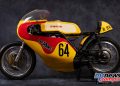
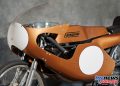
Bimotas real interest and passion was racing and in 1973 Amando Corecca rode a
Paton engined Bimota in the Grand Prix. The 500cc Paton four-stroke twin produced 65bhp at
10,500rpm but it could not compete with the MV or racing two stroke Suzukis and Yamahas.
Also attracting attention that year were Bimota framed mono-shock Morbidelli engined 250s. In 1976 a machine of this caliber was capable of 260km/h pumping out 64bhp from a water-cooled two-stroke twin. Bimota built an Aermacchi H-D 500cc race bike in March 1976 which used a 500cc twin water-cooled two-stroke engine with 4 carburetors and 90bhp. The machine was extremely quick but very temperamental. H-D preferred to concentrate on its 250s and 350s with Walter Villa.
The success of this machine led to the GS750 Suzuki powered SB2
Although Bimota again came to attention on the race scene, when Jon Ekerold won the 1980 350cc World Championship on a YB3 Yamaha, the company chose to concentrate on the road market. The result a string of high priced Honda, Kawasaki, Yamaha, Suzuki and Ducati exotica. Building their own fuel injected 500cc water-cooled two-stroke engined GP/road bike in the late 90s (the V-Due) led to financial collapse when the bike proved unreliable. The company was then bailed out after going into receivership only for them to go belly up again a few years later. The last remaining Bimota stocks are being sacrificed by up to $10,000 off their previous prices. Which caused major heartache for owners of later model Bimota machinery, who saw thousands knocked off the resale value of their motorcycles overnight. Some of the last Bimotas - The YZF1000 powered YB11 |
![]() |
![]() |
MCNEWS.COM.AU