

2026 Triumph Street Triple 765 RX tested at Barber
For nearly two decades, Triumph’s Street Triple has been one of the defining bikes in the middleweight naked category, built around low weight, sharp steering and one of the most charismatic engines in production motorcycling.
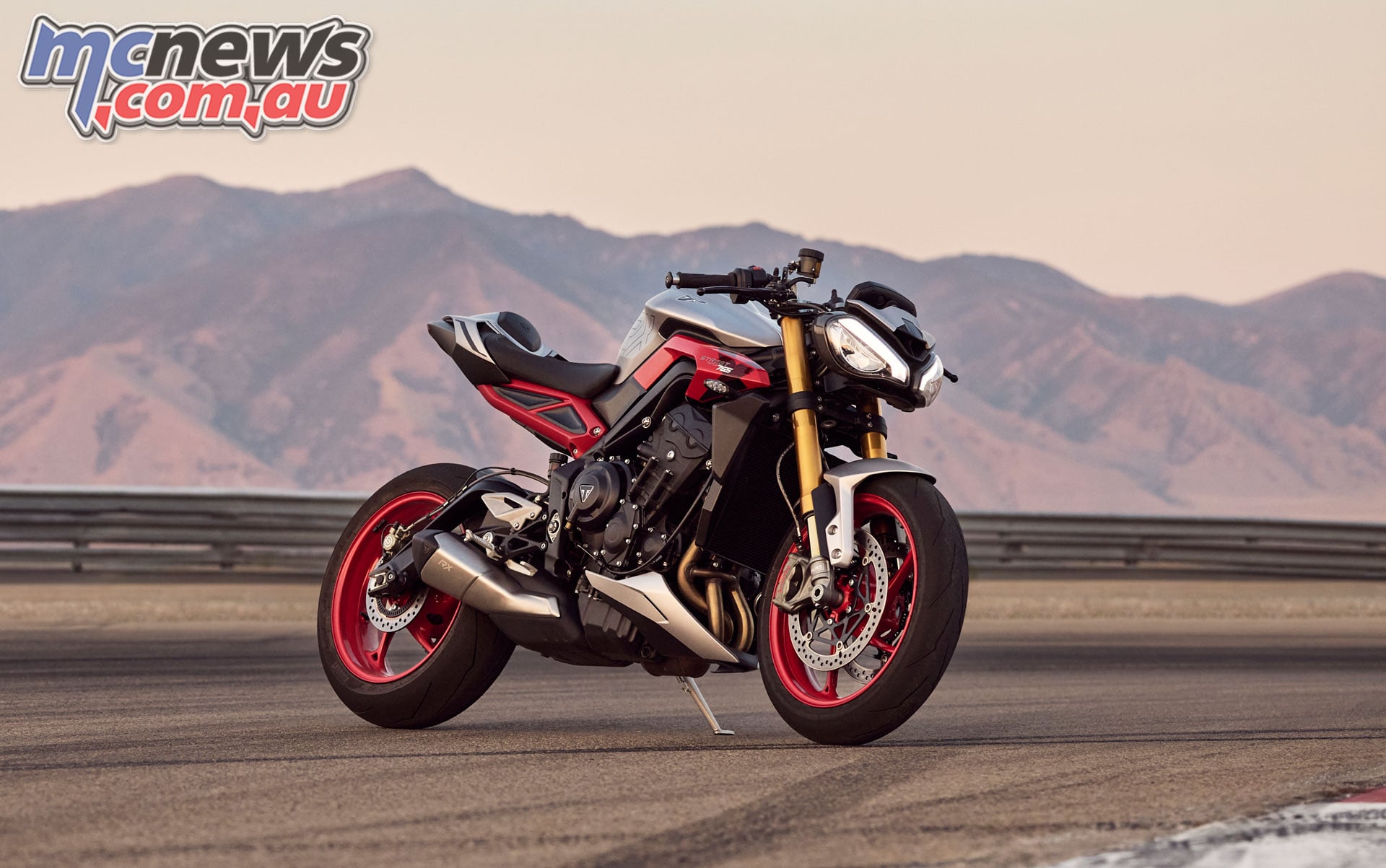
For 2026, Triumph has pushed that formula further towards the performance end of the spectrum with the one-year-only Street Triple 765 RX. It keeps the familiar 765 cc triple and core RS platform, but adds Öhlins NIX30 forks, clip-on handlebars, RX-specific detailing and a sportier riding position designed to give the Street Triple a harder edge.

That makes the RX a more specific proposition than a Street Triple RS in a different paint scheme. It is Triumph’s attempt to bring some of the old Daytona spirit back into a nakedbike package, and Barber Motorsports Park was a pretty decent place to find out whether the idea stacks up.
This was a circuit test rather than a full road evaluation, so the RX’s everyday manners will need a proper road ride before drawing too hard a conclusion on commuting or longer-distance comfort.
765 triple remains the star
Powering the RX is Triumph’s proven 765 cc inline three-cylinder engine, the same Moto2-derived platform found in the RS. The liquid-cooled DOHC triple continues to be one of the defining features of the Street Triple range, blending strong midrange performance with an eagerness to rev that few rivals can match.
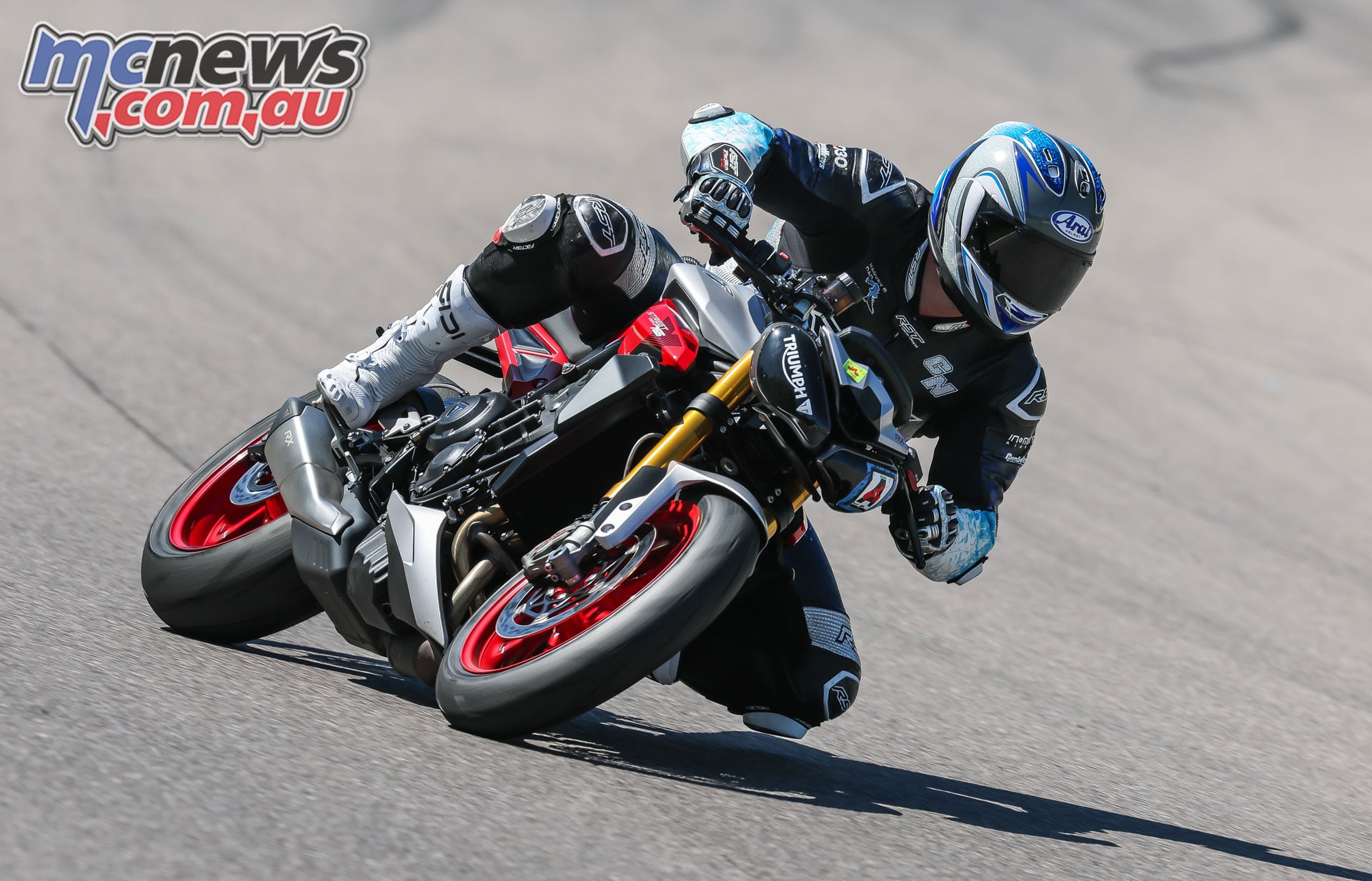
Triumph claims 130 PS / 128.2 hp / 95.6 kW at 12,000 rpm and 80 Nm at 9500 rpm, keeping the RX among the more potent machines in the middleweight naked class.
The three-cylinder layout gives the RX a broad, flexible spread of power that works nearly everywhere in the rev range. Below 6000 rpm, the bike pulls cleanly and smoothly, but like many modern emissions-compliant middleweights, the RX still carries a slight lull before the engine really comes alive through the upper mid-range. A pipe and tune should sort that out.
Once you burst through that 6000-7000 rpm barrier, the engine transitions into an urgent top-end rush that feels far more serious than its displacement suggests.
With the engine spinning north of 7000 rpm, there’s an immediacy to the throttle connection that makes the RX addictive on track. Drive out of corners is strong, linear and predictable, while the engine’s willingness to rev encourages you to chase the upper reaches of the tacho simply because it sounds and feels so good doing it.
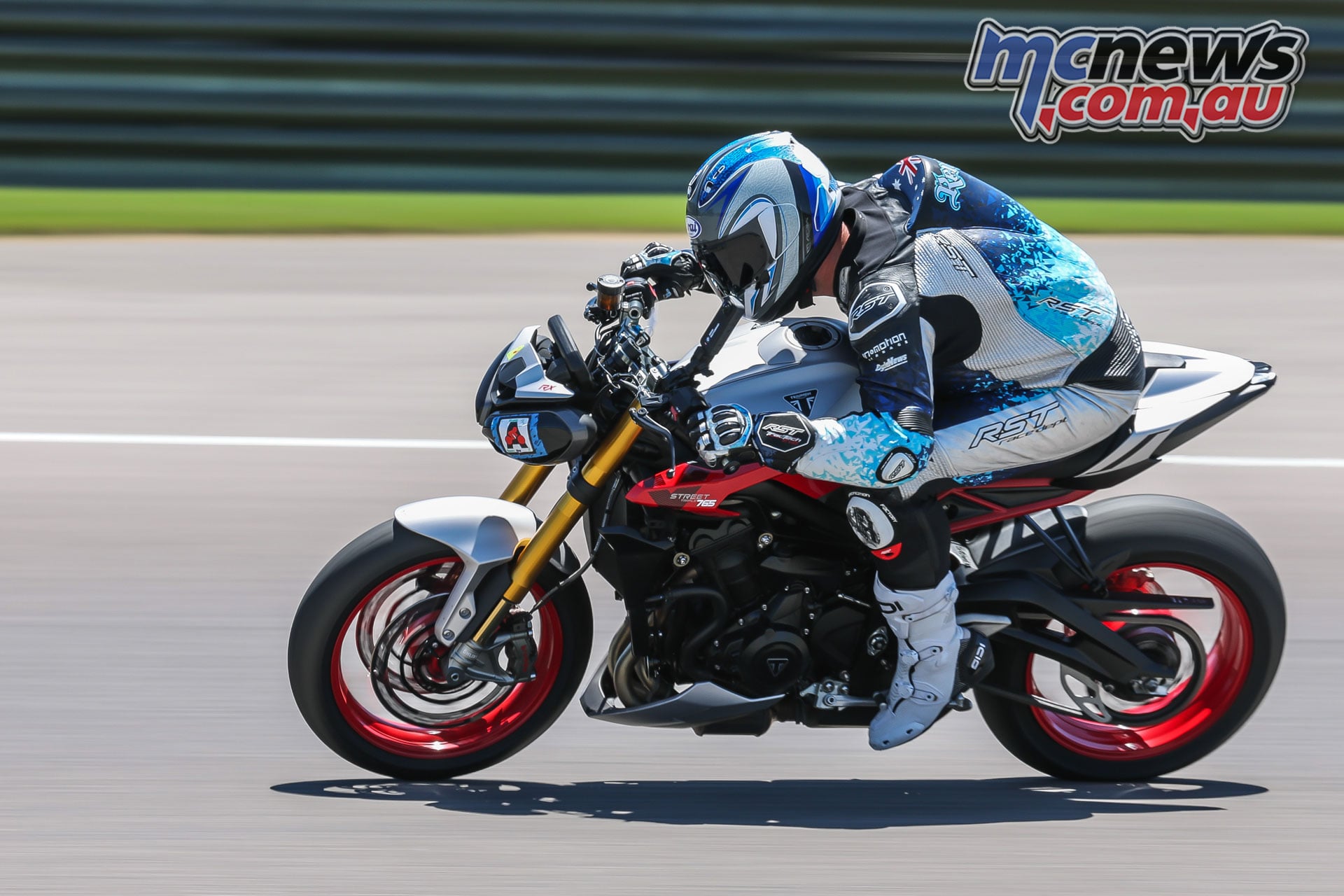
The RX is thus (in my humble opinion), the ultimate mid-size track engine. The penchant for revs is something earlier iterations of the Street Triple could only dream of, and it’s coupled with mid-range torque, making it less tiring to ride than an equivalent four-cylinder.
The soundtrack that accompanies the revs remains one of the Triumph’s defining traits. The intake howl hardens as revs climb, while the exhaust note carries the distinct raspy tone only a triple seems capable of producing, and a British one at that. It has personality in abundance, something increasingly rare in a world of highly refined performance motorcycles.

Unfortunately, low-rpm fuelling leaves a little to be desired in standard trim, as there’s a bit too much throttle twist before you get the go juice. I have, however, ridden many tuned/race versions of the Street Triple and know this is something that can be easily fixed.
On the plus side, Triumph’s standard up/down quickshifter continues to rank among the best available on a production motorcycle. Upshifts are smooth and immediate under hard acceleration, while clutchless downshifts remain controlled and precise during aggressive braking zones. It’s a light shift, so you need to be positive in your gearshifts—if you’re lazy, you’ll miss a shift and the lap time will be gone.

Öhlins suspension sharpens the RX
The biggest transformation for the RX, however, comes in the chassis package. While the aluminium twin-spar frame architecture carries over from the RS, Triumph has equipped the RX with premium Öhlins suspension components designed to elevate front-end feel and cornering precision. Up front sits an Öhlins NIX30 setup, while the rear receives an Öhlins STX40 piggyback shock, both fully adjustable.
Compared to the RS—a light-footed and quick steering motorcycle in its own right—the difference in feel to the RX is immediately noticeable.

The RX steers with remarkable accuracy yet never feels nervous or overly reactive. Initial turn-in is quick but with tangible stability and once leaned over the chassis remains calm and composed unless you really cock up your cornering.
Perhaps more impressive is the level of feel reaching the rider. Matched to the Pirelli Supercorsa SP, the Öhlins front end on the Triumph delivers clear feedback during hard braking and cornering, inspiring you to brake deeper, turn later, and pick up the throttle earlier on corner exit.

The Öhlins NIX30 fork and STX40 shock make for a proper high-end suspension package, and once both ends are dialled in for rider weight and pace, the improvement in feel is obvious. The more feel you get, the more confidence will flow your way, and you’ll thus end up going faster. And, let me tell you, there’s nothing more satisfying than ripping around the outside of a 200 hp superbike on a bike with almost half the horsepower.
Brembo brakes and Barber track manners
The RX’s braking hardware is equally high-end. Twin 310 mm front discs are paired with Brembo Stylema monoblock calipers and a Brembo master-cylinder that delivers outstanding lever feel. The initial bite is powerful but controllable (plus, it’s easy to change the set-up at the master-cylinder to your tastes).

Regardless of that, the Brembo set-up, combined with the NIX30 fork and Pirelli rubber, provides excellent feel when trail braking into tighter corners like the tight turn four at Charlotte’s Web.
Clip-ons give the Street Triple a Daytona edge
A big part of the RX’s altered character comes from the clip-on handlebars. Rather than the conventional upright bar arrangement used on the RS, the RX places the rider further forward, shifting more weight towards the front tyre and creating a noticeably sportier stance. It’s like a halfway position between a full race and a sporty stance. This change transforms the character of the motorcycle.

On track, the RX has one of the more comfortable sporting riding positions in recent memory. It gives you more connection to the front tyre than a conventional nakedbike, but without folding you into the sort of wrist-heavy stance that can make some supersports hard work. You can carve lap after lap after lap and never get tired.
Wrist or back fatigue becomes a thing of the past, which is great news if you’re above 40 and not as flexible as you may have once been.
For riders accustomed to full-on sportbikes, the RX will feel refreshingly manageable. For traditional nakedbike riders, however, the lower ’bars may require some adjustment.

The seat itself is firm enough to support aggressive riding but still comfortable over a half hour session at Barber Motorsports Park. At 838 mm tall, it’s a relatively lofty height, although the narrow mid-section of the chassis helps you reach the ground easier than the numbers might suggest.
Electronics and rider aids
Like the RS, the RX uses a six-axis IMU to govern cornering ABS and lean-sensitive traction control. Five riding modes—Rain, Road, Sport, Track and Rider—allow adjustment of throttle response and electronic intervention levels depending on conditions or rider preference, but there’s no electronic suspension to have to worry about.

Rain mode softens power delivery and increases traction control assistance, while Track mode goes the other way, significantly sharpening throttle response and backing off the TC and wheelie control settings so you can get the most out of your knee-dragging session.
Triumph has always been good at reducing the impact of their electronic interventions, and the RX is no different, even if, at face value, the TC isn’t as sophisticated as some of the competition. It’s not a multi-level system like you’d get on a Panigale.

Instead, TC intervention varies with the selected ride mode, starting at the highest level in Rain and decreasing to the lowest in Track mode. You can also switch it off if you wish. With the standard Pirelli Supercorsa SP tyres fitted, Track mode felt more than permissive enough, and I did not feel the need to switch everything off.
The TFT display remains familiar from the RS and is easy enough to navigate via the left switchblock, although it is not the easiest dash to read at speed. Smartphone connectivity is also available through Triumph’s My Triumph system, adding navigation and media functionality, though that is unlikely to matter much on track.

Street Triple 765 RX styling and value
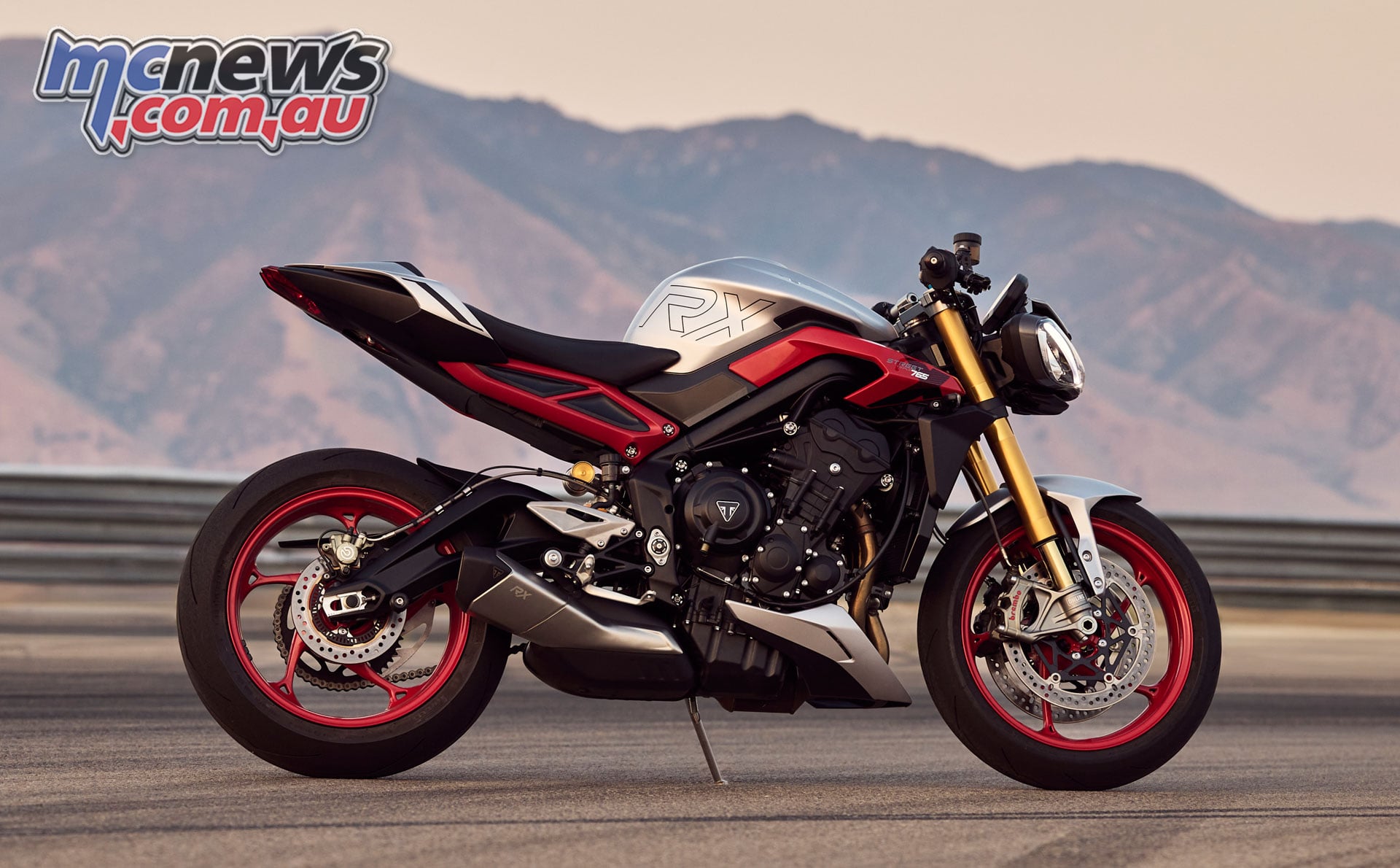
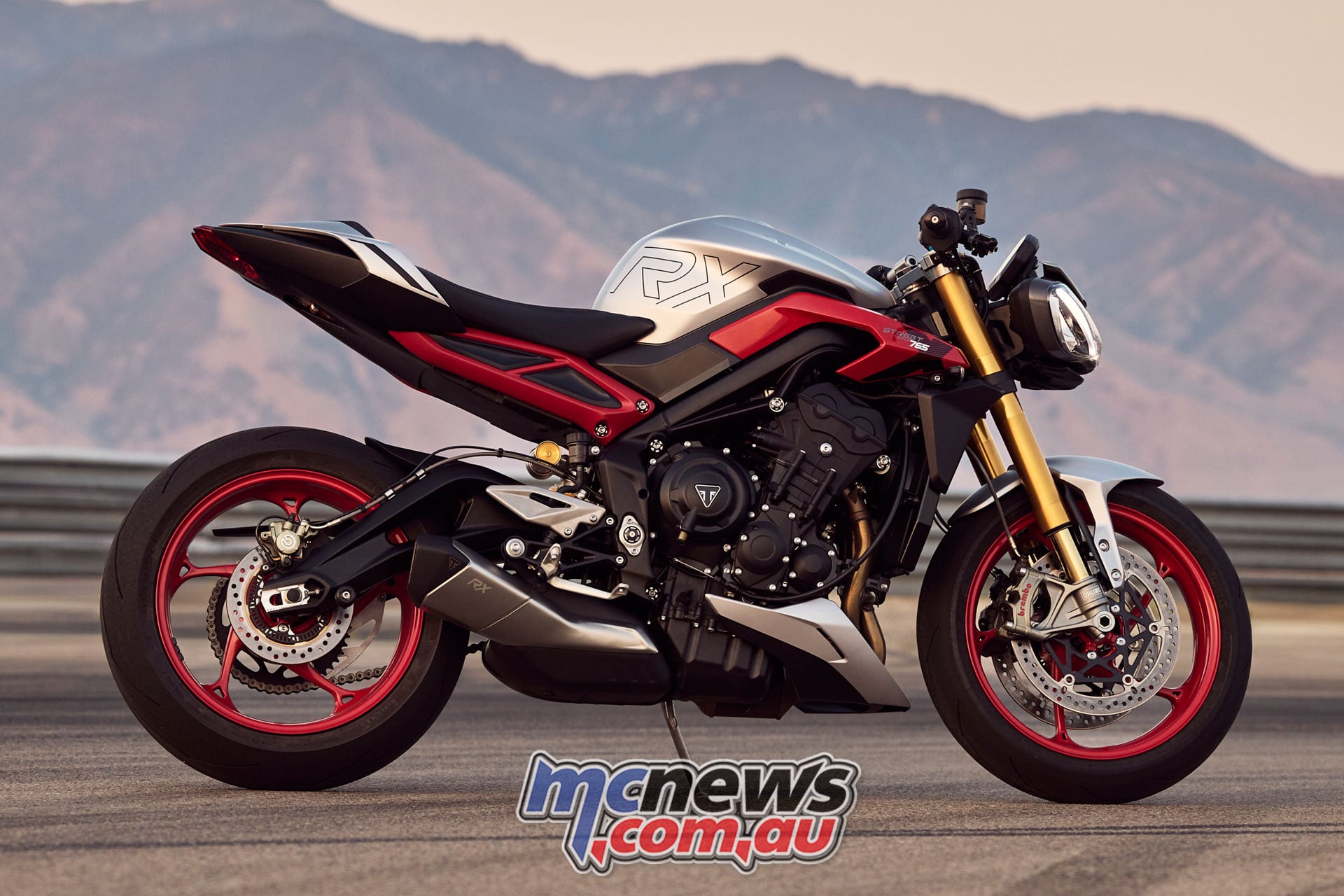
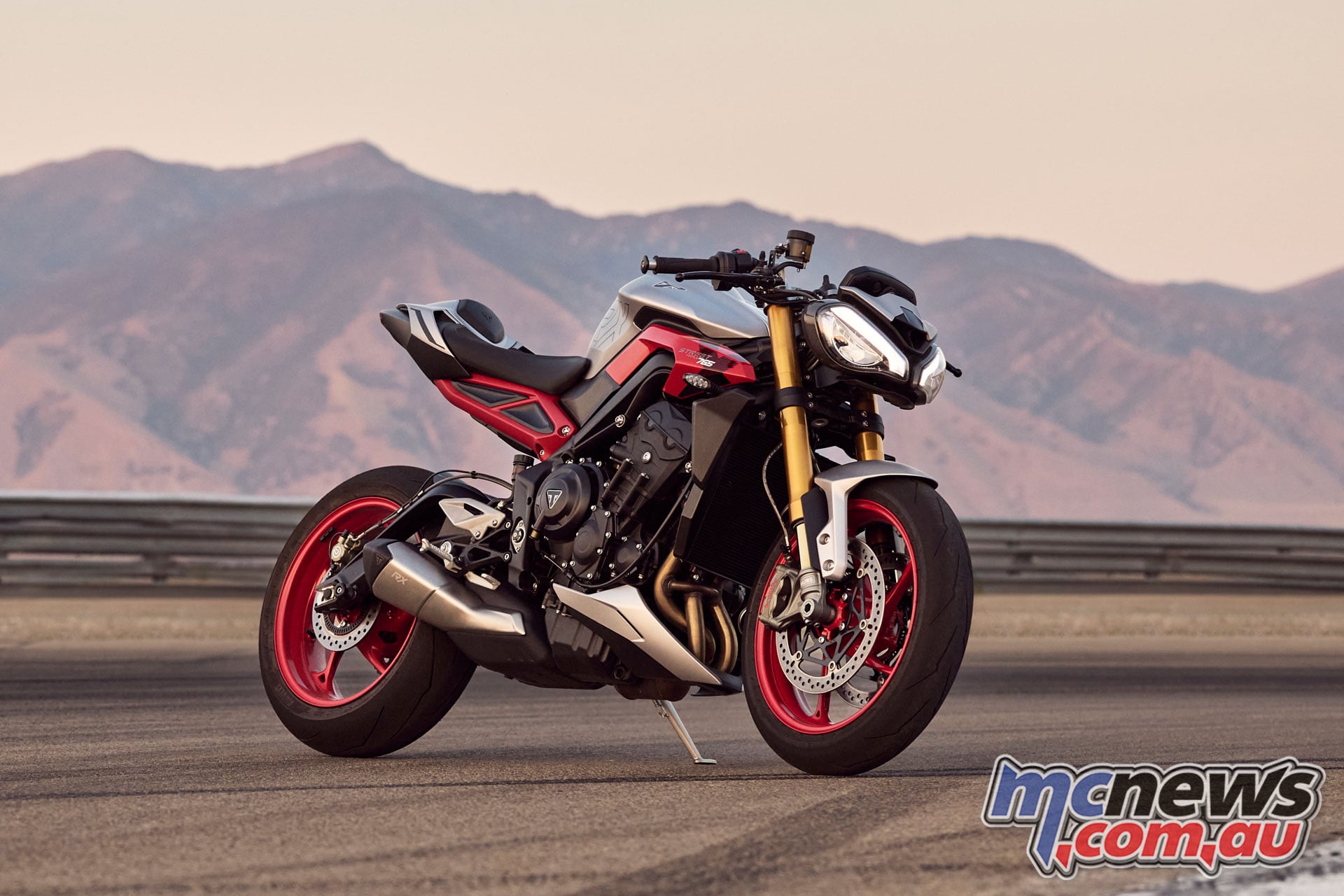
Visually, the RX carries a more focused appearance than the Street Triple RS. The combination of Matte Aluminium Silver bodywork with red accents and matching wheels gives the motorcycle a factory-built racebike flavour without crossing into excess. In the metal, the bike looks awesome.
Details such as the RX-specific seat branding, a beautiful machined top yoke and teeny-tiny flyscreen help reinforce the bike’s premium positioning at the head of the Street Triple family.

Priced $1500 above the $21,490 Street Triple RS, the RX asks a reasonable premium given the move to Öhlins NIX30 forks, clip-on handlebars, the machined top yoke and RX-specific finish. It also remains well below some higher-spec European alternatives, including Ducati’s top-spec Streetfighter V2 S.
More importantly, the RX delivers a distinctly different riding experience compared to the RS.
2026 Triumph Street Triple 765 RX verdict
The RX is aimed at riders who prioritise cornering precision, front-end feel and aggressive ergonomics over outright comfort. It blurs the gap between nakedbike and supersport in a way few current motorcycles manage successfully.
In many respects, the RX feels like a modern interpretation of the much-missed Daytona: lighter, more versatile and less extreme, but still deeply engaging when ridden hard.

After a full day at Barber Motorsports Park, the RX never felt intimidating or exhausting. That usability is one of its greatest strengths, even if a proper road ride will be needed before judging its broader everyday manners.
The RX will only be around for one model year, and there is every chance the next major Street Triple update will move the game on again. That does not make this RX any less special.
The Street Triple has always been an excellent motorcycle. The RX simply turns the intensity up another notch.
2026 Triumph Street Triple 765 RX Specifications
| 2026 Triumph Street Triple RX Specs | |
| ENGINE AND TRANSMISSION | |
| Type | Liquid-cooled, 12 valve, DOHC, inline 3-cylinder |
| Capacity | 765 cc |
| Bore | 78.0 mm |
| Stroke | 53.4 mm |
| Compression | 13.25:1 |
| Max Power EC | 130 PS / 128.2 bhp (95.6 kW) @ 12,000 rpm |
| Max Torque EC | 80 Nm @ 9,500 rpm |
| System | Multipoint sequential electronic fuel injection with electronic throttle control |
| Exhaust | Stainless steel 3 into 1 header system with low single sided stainless steel silencer |
| Final Drive | X-ring chain |
| Clutch | Wet, multi-plate, slip & assist |
| Gearbox | 6 speed |
| CHASSIS | |
| Frame | Aluminium beam twin spar frame with 2 piece high pressure die cast rear subframe |
| Swingarm | Twin-sided, cast aluminium alloy |
| Front Wheel | Cast aluminium alloy 5 spoke, 17 x 3.5 in |
| Rear Wheel | Cast aluminium alloy 5 spoke, 17 x 5.5 in |
| Front Tyre | 120/70 ZR 17 |
| Rear Tyre | 180/55 ZR 17 |
| Front Suspension | Öhlins NIX30, adjustable compression and rebound damping, and preload adjustment. 115mm wheel travel. |
| Rear Suspension | Öhlins STX40 piggyback reservoir monoshock, adjustable compression and rebound damping, and preload adjustment. 131.2mm wheel travel. |
| Front Brakes | Twin 310 mm floating discs, Brembo Stylema 4-piston radial monobloc calipers, OC-ABS, Brembo MCS radial master cylinder |
| Rear Brakes | Single 220 mm disc, Brembo single piston caliper, OC-ABS |
| Display | Full colour 5″ TFT instruments |
| DIMENSIONS & WEIGHTS | |
| Length | 2051 mm |
| Width Handlebars | 765 mm |
| Height Without Mirror | 1051 mm |
| Seat Height | 839 mm |
| Wheelbase | 1397 mm |
| Rake | 23.0° |
| Trail | 95.3 mm |
| Wet Weight | 188 kg |
| Tank Capacity | 15 litres |
| SERVICE | |
| Service Interval | 6,000 miles (10,000km)/12 months (whichever comes first) |
| CONSUMPTION AND EMISSIONS | |
| Fuel Consumption | 5.2 litres / 100km (54.3 mpg) |
| Emissions | 119 g/km EURO 5+ CO2 emissions and fuel consumption data are measured according to regulation 168/2013/EC. Figures for fuel consumption are derived from specific test conditions and are for comparative purposes only. They may not reflect real driving results. |