

Moto2 prepares for its third major engine era
Grand Prix racing’s intermediate category has already undergone two fundamental engine revolutions this century.

The first came in 2010, when more than six decades of 250 cc two-stroke Grand Prix racing gave way to the new Moto2 control-engine formula. The second arrived in 2019, when Triumph’s 765 cc three-cylinder engine replaced the Honda CBR600RR-derived inline-four that had powered every Moto2 race since the category’s creation.
A third chapter will begin in 2027.
Triumph has revealed an all-new race engine that promises around six per cent more peak power, greater torque throughout the rev range and a two-kilogram reduction in engine weight.
The capacity will also change, although Triumph is keeping the final figure, along with the engine’s outright power and torque outputs, under wraps for now.
This is no simple cylinder-head or electronics update. The location of the intake and engine mounting points will change, requiring Moto2 chassis manufacturers to design completely new machines around the powerplant.
From 250 GP prototypes to control Honda power
The arrival of Moto2 in 2010 represented a profound change in the philosophy of the intermediate Grand Prix category.
The outgoing 250 cc class had been built around lightweight, purpose-designed two-stroke prototype engines and intense technical competition between manufacturers. The machines were highly specialised, with narrow powerbands, minimal weight and a level of engineering that had little direct connection to contemporary road motorcycles.
Moto2 took a very different approach.
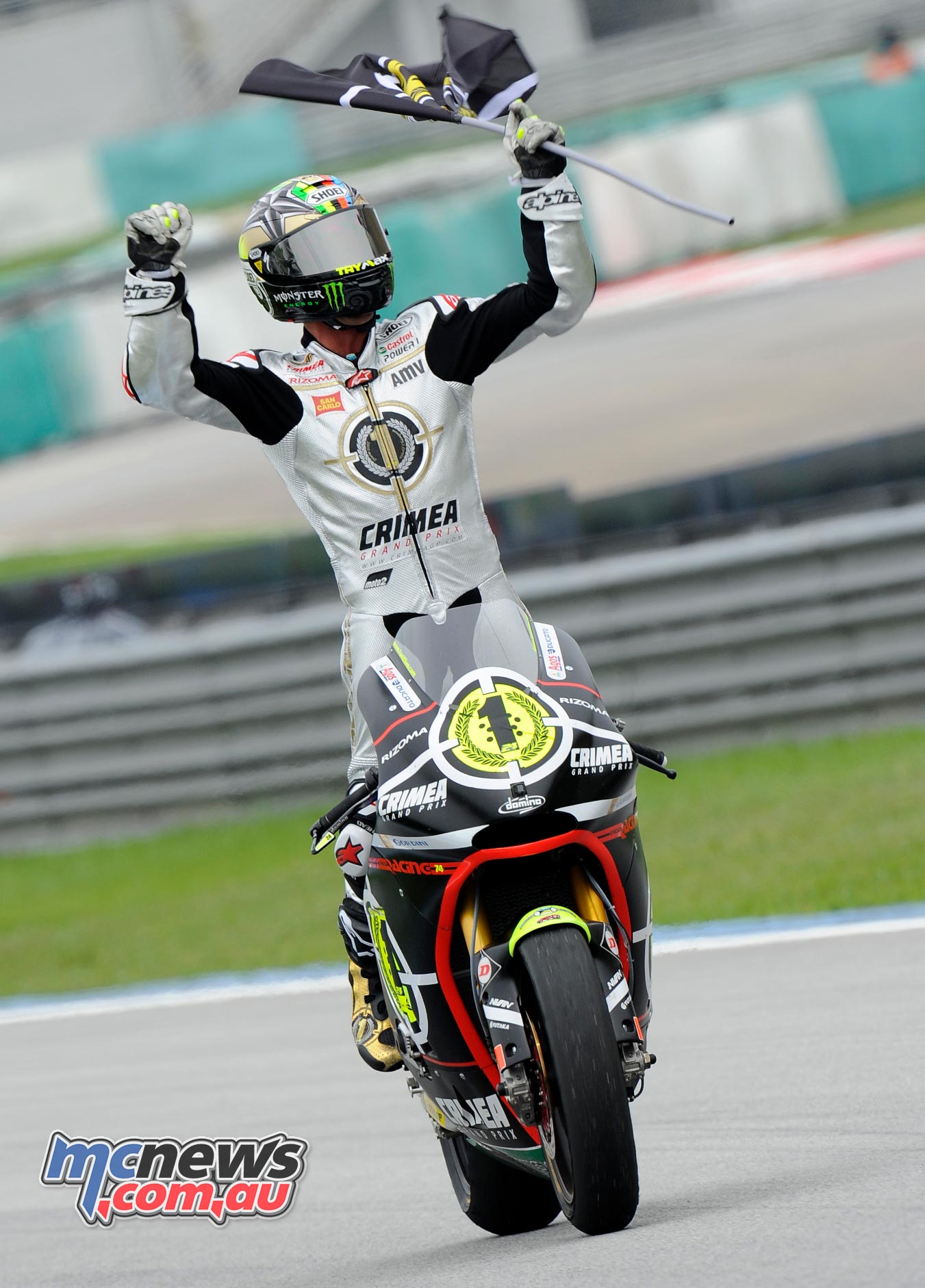
Instead of allowing manufacturers to develop competing engines, every entrant received a sealed, centrally supplied Honda four-cylinder powerplant based on the CBR600RR road bike. Teams remained free to choose or construct their own chassis, suspension, brakes and bodywork, but engine performance was controlled to contain costs and improve parity.
The Honda engines were more than completely standard road-bike units, but they remained relatively lightly modified. HRC race-kit components included ported cylinder heads, camshafts, valve springs, a specific ECU, revised alternator and taller first gear, while the pistons, crankshaft, connecting rods and much of the transmission remained standard CBR600RR hardware.
Peak output was just under 130 horsepower, with the rev limiter set at 15,900 rpm.
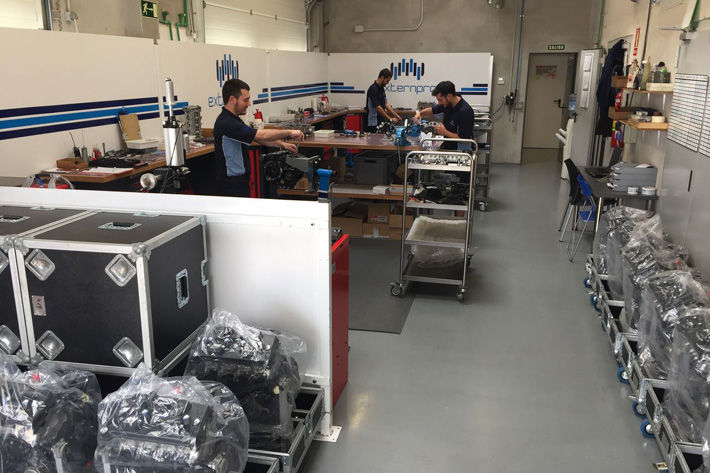
Since 2013, the Spanish specialist ExternPro has been responsible for preparing, maintaining, and distributing the engines. Around 200 powerplants circulated between the paddock, ExternPro’s rebuild benches and its dynamometers, with each rider generally receiving a new or reconditioned engine every third Grand Prix.
Engines were allocated by lottery, sealed to prevent internal modifications and carefully matched for output. MCNews previously took a detailed look behind the scenes at ExternPro’s preparation of the Honda Moto2 engines, where batches of engines were routinely brought within little more than one horsepower of each other.
The formula proved extremely reliable and delivered close racing, but the characteristics of the CBR600RR-based engine left a sizeable performance and technical step between Moto2 and MotoGP.
Triumph brings more torque, power and electronics
Triumph was announced as Honda’s replacement in 2017, before its 765 cc triple-cylinder engine made its competition debut at the beginning of the 2019 season.
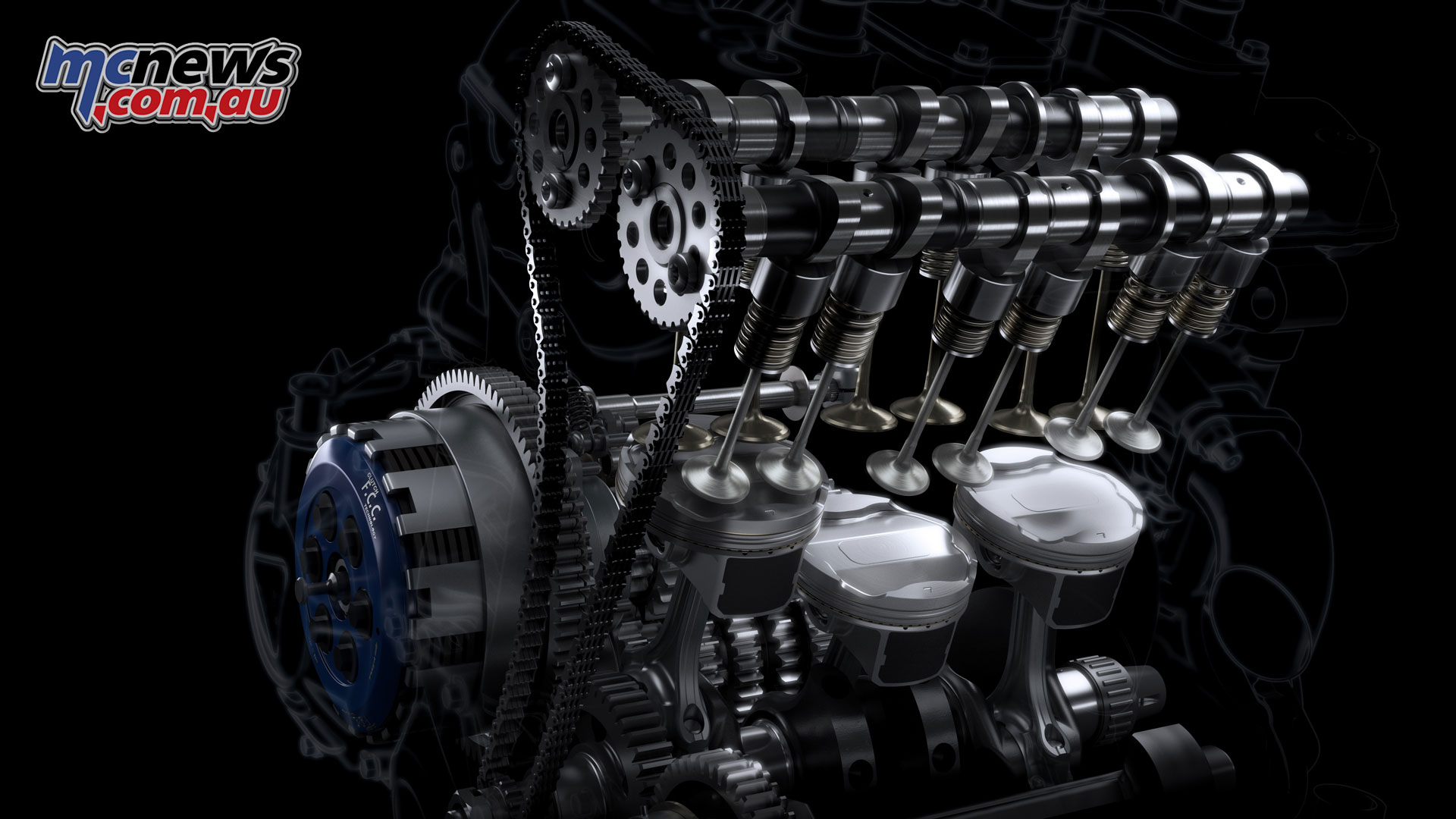
Although based on the Street Triple 765 RS powerplant, the Moto2 engine was substantially re-engineered for Grand Prix use.
More than 80 components were changed, including the crankshaft, pistons, connecting rods, balancer shaft, cylinder head, valves, valve springs, gearbox, alternator, clutch, engine covers and sump.
MCNews covered Triumph’s original appointment as Moto2 engine supplier, before later examining the package as the paddock prepared for the first Triumph-powered season.
The initial race engine produced around 140 horsepower, but its increased torque and broader power delivery were arguably just as important as its higher peak output.
The Triumph era also introduced ride-by-wire throttle control and a more sophisticated Magneti Marelli electronics package. Riders and engineers could work with torque maps, engine-braking strategies and other systems more representative of those encountered in MotoGP.
That helped position Moto2 more clearly as the technical bridge between Moto3 and the premier class, rather than simply a larger and faster category using the same fundamental control-engine philosophy.
The 765 has continued to evolve
The Moto2 triple has not remained frozen in its original 2019 specification.
In 2022, Triumph announced another substantial development programme focused on increasing top-end performance. A new cylinder head raised the compression ratio, while revised camshaft profiles, increased valve lift and new valve springs allowed the engine to breathe more effectively and rev harder.
Pistons, connecting rods, and the crankshaft were also strengthened to withstand increased cylinder pressures from 85 to 90 bar. MCNews detailed those Moto2 engine performance upgrades here.
The changes developed through the racing programme also flowed back into Triumph’s road-bike range, influencing the latest generation of Street Triple 765 engines.
Another major mechanical change arrived for 2025 with the introduction of a dedicated race gearbox.
Its revised shift pattern placed neutral above sixth gear, rather than between first and second. A mechanical lockout allowed riders to shift freely between first and sixth without risking a false neutral, with neutral selected separately through a handlebar-operated release when required in pit lane or on the starting grid.
The gearbox required a new selector drum and was housed in a crankcase developed specifically for the updated Moto2 engine. MCNews covered the system in its 2025 Moto2 season preview.
Triumph says its engines have now completed 1,926,132 kilometres of Moto2 running since 2019. Just short of 100 outright and race lap records have also been broken during the Triumph period, although chassis, electronics and tyre development have naturally played important roles in those improvements.
An all-new engine for 2027
The 2027 powerplant represents a much larger step than those progressive updates.
Triumph’s engineers have focused heavily on increasing airflow into the cylinders. The engine receives a completely new cylinder head incorporating higher-flow intake ports, redesigned combustion chambers and a low-inertia valvetrain.

Those changes allow a higher compression ratio and are claimed to produce more torque throughout the rev range, in addition to the approximate six per cent increase in peak power.
The crankcases and internal components have also been redesigned to withstand the increased power and torque while maintaining the reliability expected from a control engine.
Despite those stronger components, Triumph claims the complete engine is two kilograms lighter.
The manufacturer has not yet disclosed the new capacity, bore and stroke dimensions, rev limit, compression ratio or final power and torque figures. It has only confirmed that the capacity will change and that additional technical information will be released later.
That makes any attempt to predict the final specification premature. It is not yet known whether Triumph has increased capacity, reduced it as part of a higher-revving design, or taken another route entirely.
New engines mean new Moto2 chassis
The revised engine will not fit directly into the existing generation of Moto2 machinery.
Changes to the intake position and engine mounting points mean chassis manufacturers must develop entirely new motorcycles for 2027.
Triumph says it has been working with the chassis manufacturers for the past 12 months, providing the dimensions and technical information required for that development.
The mounting changes may offer constructors an opportunity to revisit frame stiffness, packaging, and weight distribution, while the new intake arrangement will affect the placement of the airbox and surrounding components.
How much freedom manufacturers will have to exploit those changes will become clearer once the complete engine and chassis regulations are released.
The first engines are due to be supplied to Moto2 teams shortly. Private testing will continue before the new powerplant makes its public on-track debut later in 2026.
Steve Sargent – Triumph Motorcycles Chief Product Officer
“Today’s announcement marks a significant step forward in the partnership between Triumph Motorcycles and MotoGP. We have always strived to develop the Moto2 World Championship ever since we began powering the middleweight class in 2019.
“We’ve introduced more power, we’ve seen gearbox changes and now we’ve introduced a brand-new, high-performance race engine that will be powering the Moto2 series from 2027.
“Updates to the cylinders, bringing in more air, achieving higher compression ratios and more torque have all been expertly crafted, and we’re really excited by the results we’ve seen.”
Alfonso Cartujo – MotoGP Sporting Director
“This is a great step for the Moto2 World Championship and underlines the commitment to the class that makes Triumph such a valuable partner for the class and for the MotoGP paddock.
“Their ambition to evolve and improve only continues to grow, and its rewards are proven on track as Moto2 only gets better. Now, it will get even more powerful and we’re excited to see these new engine developments take to the track.”
More than a six per cent power increase
The headline figure is an approximate six per cent increase in peak power, but the wider implications appear considerably more substantial.
This is a new-capacity engine with different mounting points, revised intake packaging, reduced weight, increased torque, and enough dimensional changes to require every chassis constructor to start over.
It will also arrive during a broader technical reset for Grand Prix racing. MotoGP moves from 1000 to 850 cc machinery in 2027 under a sweeping new premier-class regulation package, although Triumph has made no suggestion that the undisclosed Moto2 capacity is directly connected to that change.
Moto2 began as a cost-controlled replacement for the exotic 250 cc Grand Prix prototypes. It then evolved from the dependable Honda four-cylinder era into the faster, torquier and more electronically sophisticated Triumph triple period.
The 2027 engine now promises the first wholesale mechanical reset of the Triumph era.
Until Triumph reveals the capacity and complete performance figures, the six per cent power increase tells only part of the story. The clearest indication of the scale of the change is that the Moto2 manufacturers will need to build entirely new motorcycles around it.