

Max Fricke on professional Speedway
How to make a career in Speedway
Speedway is often reduced to a highlight reel: four laps, no brakes, steel shoes skimming the dirt and elbows brushing at 130 km/h. What rarely makes the highlight packages is the infrastructure behind it. The planning, logistics, financial risk and technical precision required to sustain a career at the top level.

In this in-depth conversation, Australian star Max Fricke pulls back the curtain on the realities of professional speedway. From the global travel schedule to engine and staffing costs, chassis setup and track-specific clutch setup and jetting decisions, Fricke details the preparation that underpins those explosive 60-second contests.
The discussion also ventures into the business architecture of a sport that entails contracts across multiple leagues, sponsorship structures, prize-money distribution, and the balance between risk and reward.

We also show how Speedway can offer a commercially viable pathway for elite riders who manage their programs correctly. Fricke explains how the equation works, what margins actually look like, and why the discipline continues to attract riders who see it as both a competitive and a financial opportunity.
The result is a candid look at what it really takes to operate as a professional speedway rider in 2026, not just as an athlete, but as a business.
Max Fricke Interviewed

Trev: You’ve been a full-time professional for a long time now, and you’re no longer the young bloke trying to establish himself in Europe. The 2025 season had its ups and downs, but you still did enough to finish eighth in the FIM Speedway GP World Championship, which in turn secured your place among the 15 permanent riders again for 2026. How much of a relief was it when you received confirmation that the SGP Commission had locked you in for another season at the top level?
Max: “It is a bit of a relief, obviously it’s stressful, we’re trying to always get higher and higher up that leaderboard. Eighth was the best we could do last year, but we continue to work and push the whole way through. In some rounds, I achieved some really good results, and in others, they didn’t work out so well. We’re always pushing, trying to increase the number of good rounds we have and get rid of all the bad ones.
“Easier said than done sometimes, but overall it’s a relief to make the lineup, and it’s nice to be back in again next year. It’s where we want to be. We want to be battling for that world championship, so we just need to try and get ourselves a little bit further up the leaderboard next year to secure our spot going forward.”
Trev: And if you could put your finger on one thing from this season that probably held you back a little bit, what was that, do you think?
Max: “It’s a tough game, trying to get the settings and everything right for every track we go to. I think across the board, my issue was just not being quite consistent enough or quick enough to identify a good setting on one particular evening or another.
“You can go to one round and do quite well, then you’ll go the next night on a different track and maybe struggle a little bit. So, trying to find a little bit better base setting at a lot of the places we go and being able to build from there would definitely help us a little bit going forward.”
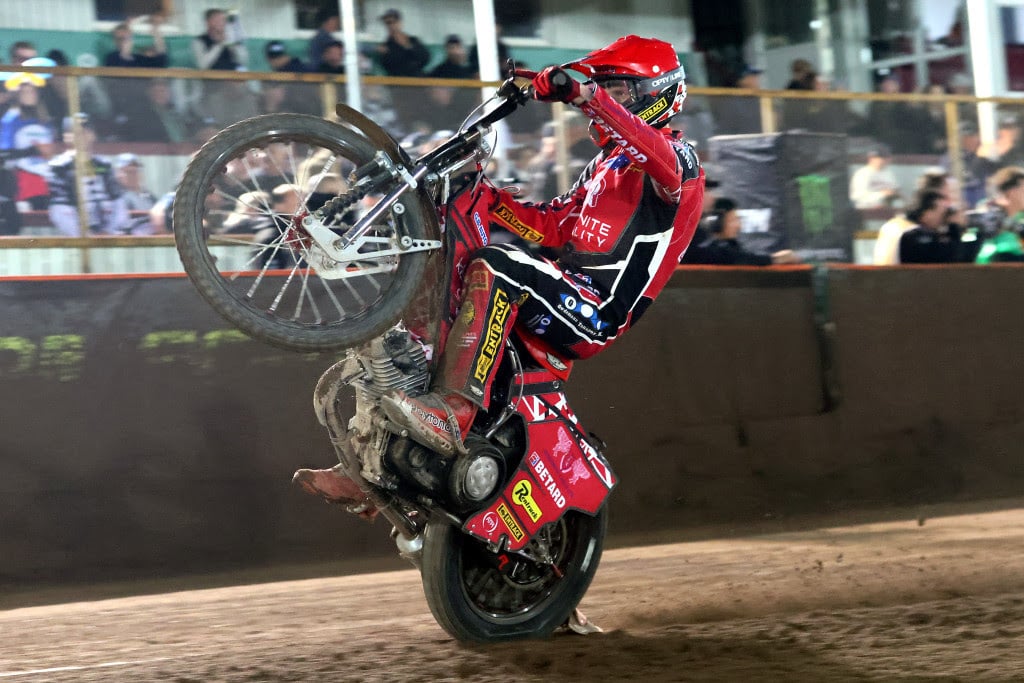
How to become a professional speedway rider
Trev: There was a time when a hard-working speedway rider could earn a solid living by racing across three European leagues – typically the UK, Sweden and Poland – sometimes clocking up close to, or even more than, 100 meetings a year. Is that still a realistic model today, or do you really need to be part of the Speedway GP series now to have a genuine shot at earning a six-figure income?
Max: “Yeah, definitely. I think Speedway is a really unique sport because obviously, especially from Australia, we don’t hear a great deal about it, and especially from a professional point of view, there isn’t really anything here in Australia. The whole system is very different in how it works with our league racing abroad, but overall, the Grand Prix is a labour of love. We don’t really make much money from that.
“We’re there because we want to be World Champion and we’ll do whatever it takes and spend the money required to make sure we are competitive at that level, and to try and get ourselves further up the leaderboard. When it comes to our league racing, there are loads of guys who are doing pretty well out of Speedway. I’m not saying everyone, of course, it’s a tough game, and it’s very performance-based, but there are different levels of where you can race the different league levels, and this is reflected in your pay rate.
“Poland is really big nowadays. That’s our main source of income, let’s say. But the UK is still quite solid. They’ve had a few issues recently, but the lower league in the UK is still really strong. That is much more consistent, especially for younger guys starting out, moving over to Europe and getting started in professional racing.
“They can pay their way as I did as a 16-year-old going overseas. It’s not easy, and every cent I earned for the first few years went back into my racing, but if they want to try their luck overseas, really commit themselves and are showing good potential, they will be able to support themselves as they work their way up through the leagues as they continue to improve.
“Again, it’s the same in Poland. There are multiple leagues at different levels, with different expectations. The tougher the league, the better financial possibilities, but with that comes an expectation to perform consistently. Overall, I think Speedway, without knowing a great deal about many of the other disciplines, is very healthy for those trying to do it professionally at a lower level.
“Potentially, if you do okay within a year or two, earn a bit of money once you’ve established enough equipment and things like that, of course, you can do quite well. There aren’t too many sports out there that can put you in that position.”

Trev: I am glad to hear that is still the case, that’s how I understood it. A couple of decades ago, there were a lot of, well, not a lot, but there were quite a few Aussies earning a good living in Europe across the three leagues that most racing fans have never even heard of, even those into motorcycles.
Max: “There are a lot of guys, even Australians, who just ride in the UK, and they’ll ride both leagues in the UK, and they earn a good living just doing that. So there are definitely options, and you don’t even need to go abroad to continue developing and growing yourself.
“I think that is kind of the direction that you would look at initially, but overall, there are different opportunities. There are a lot of guys who just go straight to Poland now. They have started developing a different system for bringing guys in at a younger age as well, so there are different opportunities across countries for getting yourself established. There isn’t just one set way of how to do it.”

Trev: How much do you think it would cost a young bloke to go over there and have a crack for a year? For example, on the tarmac, Aussie youngsters trying to have a go in road racing for a mid-level European Moto3 round, so not World, Moto3 European, you are talking up €150,000 to get a reasonable ride. Then there’s crash damage on top of that, and all the living and travel expenses being based a long way from home in Europe. So what would you think it would cost to set you up for a year in the UK and have a crack?
Max: “It’s hard for me to say. I went 13 years ago, and a lot has changed since then. Obviously, speedway is really different to road racing. We are essentially contractors; we build our own bikes, buy our own engines, build support crews, provide vehicles and everything we need to compete. There is a lot of great secondhand stuff on the market, too, that is competitive enough for a young guy getting started. So it can be done; however, if you want to, you can easily spend €150,000. But it can also be done a lot cheaper. Again, when you get signed to a team and compete weekly in the league meetings, as long as you’re performing, you’ll be earning a bit of money to go towards your expenses, bike costs, living expenses, etc.
“Realistically, over the course of a season, I think a young fellow probably should be able to pay their way; otherwise, maybe they aren’t at the level required to be in Europe. But the guys who are doing well enough here in Australia, they should be able to go over there and look after themselves in my opinion. But again, it’s been a while since I’ve been in that position and I can’t exactly put a figure on it myself.”

Trev: Would it be doable for €50K?
Max: “Yeah, in my opinion, as long as they are able to perform at a level that will provide them with an OK income. But, it’s really hard for me to say definitively because your pay is performance-based, but if you can win your races, you should be ok, if you reinvest in your equipment and spend your money wisely.
The true cost of competing in professional speedway
Trev: How much does a competitive engine cost, how long does it realistically last at Grand Prix or top-league intensity, and how often does it need to be refreshed? Do the bikes still run on methanol with a carburettor and make around 85 horsepower from their 500 cc four-stroke singles?
Max: “You can spend as much as you want to or think you need to to ensure you can perform at a level you are happy with. You can go directly to GM and buy a standard engine for €4,000, or spend significantly more if you want a particular tuner. The engines are run on methanol; the engine, CC, horsepower, everything is all the same.
“In relation to services, English League can do close to 40 heats on an engine. Polish League and Grand Prix machinery would be looking at 25-30 heats between services.”

Trev: And what does a service involve? Piston, ring, valve seals and that kind of stuff?
Max: “They’ll check the valve seats, and they’ll put a ring in it, a bottom end bearing, they’ll change the roller bearing in the bottom, obviously it’s much simpler, there’s no gearbox or anything to get through, and just check everything over, that’s the main thing. But generally, every service is the bottom end bearing and rings.”
Trev: Is there any talk of any sort of wholesale shake up in regards to the technical rules coming any time soon? Do you think there should be?
Max: “Not particularly. I think that’s one of the things, in my opinion, that makes Speedway so great – is how raw it is. No brakes, no gears, carby, 500 cc single, no gearbox… It doesn’t get any simpler, and sometimes that’s what makes it so difficult, the small changes and the way you chase your tail trying to get everything correct.
“There’s talk of development in different ways, shapes, or forms, but I don’t see anything happening soon. But I don’t really know. I leave a lot of those decisions up to the people in charge, and I’m there to ride my bike.”

Trev: Beyond engines, what are the less obvious costs that most fans never see – mechanics, freight, travel, accommodation, insurance, downtime – and how quickly do those add up across a full European season? What does it cost you to do the three leagues across the season? That’s without taking any prize money into account or give us a ballpark what it would cost, you know, a range perhaps…
Max: “Well, I’ve got three guys full-time abroad, another guy full-time in the UK, and one part-time. I’ve got five bikes in Poland, another two plus spares in the UK. I have multiple engines on the go at any one time: vehicles, flights, and accommodation for my crews and myself when we’re on the road, travelling to and from different leagues. We’re in a different country most days of the week. So it is a very expensive exercise.
“They’re just some of the things, engine services, new engines, general bike costs, tyres, we’re pumping through a lot of tyres nowadays, just some of the expenses that just go into running a team. But of course, we have lots of great partners and people to take a little bit of that financial pressure off in a lot of areas, but most of it comes down to myself and what we earn. Basically, our earnings go straight back into running the team. Hopefully, at the end of the season, you come out on the green. But it’s a pretty expensive exercise.”
Trev: We’re talking probably €300-400K?
Max: “Yeah, I would say in the region.”

Trev: It sounds pretty busy organising all the logistics, is that all down to you?
Max: “That is all on me. That’s the hard part about kids going over, as much as you can be a very capable motorcyclist. There’s a lot of day-to-day life you have to sort out and work out for yourself, which can be really challenging as well. A new country, new place, new people all add to that.
“A lot depends on how different families do it, but in most circumstances for Australians competing in Speedway, there’s no mum and dad, there’s no coming home to a nice cooked meal, if you don’t score points, you’re not eating that night. That’s a simple fact and reality of Speedway, so it can be very brutal in that regard, but then it can be very rewarding in other ways.”
Setting up a modern speedway bike
Trev: Speedway is so much about getting the start, in this day and age what are the most important areas of tuning that can help decide whether you will be a hero or zero on any particular night? I imagine engine tuning doesn’t change much, or is it still a crucial factor that needs to be tuned to track conditions, with jets, needles, and float heights all changing throughout the night?
Max: “Yeah, exactly. We have our engines; I have multiple engines. Most of my stuff comes from the one guy at the moment, Peter Johns, in the UK. But I have had engines from other people, and different engines have their own different characteristics, some you like, some not so much, some you’re persevering with and changing, different cams, different valve springs, compressions, and other things. We’re constantly trying to evolve and improve to get more out of our engines.
“It can be very confusing at the same time, something that’s so simple, with the small tweaks we can do with the jetting, the ignition, the sprockets, the wheel length, stuff like that.”
Trev: Like a removable crank counterweight or something like that to change the crank weight?
Max: “No, crank weight is left the same, that’s done more in… we’ll say, ‘In Factory’ with the engine tuner. We have different flywheel weights we’ll try, but once it’s in an engine, we don’t really adjust it at the track. Again, there’s only so much time.”
Trev: It’s a pretty busy schedule on a speedway night…
Max: “Yeah, exactly. Ideally, once we have a setup we like, that’s the base, and then we’re looking for small changes from there. Jetting, timing and the sprocket on the wheel and wheel length is the main go-to.”
Trev: What goes into setting up the clutch? Is it a multi-plate dry? From meeting to meeting, or set-and-forget?
Max: “Not exactly, not a huge amount for track conditions, more so down to rider preference, different plates, different brands of plates, different way you’ve laid it and put it together, everyone has their own favourite cocktail, let’s say. Different parts that go into it, different springs and things that each individual likes.
“And again, things wear out over the course of the night and evening, modern-day bikes, they got a lot more traction, different tyres, different from how maybe they used to be, so all that puts a lot more pressure on the clutch as well. So sometimes we’ll be changing our clutches throughout the evening as well, trying to keep things fresh and in a good spot over the course of the night.”
Trev: How important are tyres? I imagine you run tubes with multiple beadlocks? Is there anything special about the setup? Do the rules allow any experimentation with mousse or other variations on standard tubes?
Max: “Tyres are a bit of a thing at the minute. Currently, Anlas is the Grand Prix supplier, and most of the guys are using Anlas. Anlas gives us a couple of options: a tube-type tyre and a tubeless tyre, maybe a couple of different tube-type tyres in different compounds, potentially. But mostly everyone’s been using tubeless for the last couple of years, but I think the Polish League are going to come in with something different.
“British League has a different tyre rule to the ones that we’ve been using in the Grand Prix and Polish League, so it really depends on where we’re racing at what time and just fitting into the rules really.”
Trev: And what does a rear tyre cost? I imagine you don’t go through many fronts, or would I be wrong?
Max: “I go through a few fronts a year, but again, nowhere near like the rear. On the back, we have a new edge every heat. So every two heats we’ll have a new tyre, so we’re going through three to four tyres a night in the Polish League and Grand Prix. In the English League, there is a single tyre rule, so one tyre will last us the evening.
“A rear tyre, it depends a little bit on which compound you have and stuff, but the tubeless ones that we’ve been running, I think are $200 a tyre, probably four an evening, similar to a practice day, close to 20 tyres a week.”
Trev: 20 years ago or so, I had a spin on Steve Johnston’s bike at a country circuit in WA, and also put a speedway bike on the dyno. I was incredulous at how much the frame stretched and flexed as the power was wound on and off, it was like a slinky, the whole bike visually stretched back and forth a few inches at a time before my eyes. Visually, the frames don’t appear to have changed much over the years, and the same goes for the basic rubber-band-style front suspension. Or are the optics deceiving, and the frames and suspension set-up more critical than ever?
Max: “We do have a lot of small chassis changes and things that are tested. Different types of chassis and different shocks, different engine plates and rear-end parts that change how stiff and flexible the frame is in certain areas, the basic setup that you’re talking about actually works pretty well.
“But yeah, there are a few small things that you can individualise and personalise your own bikes, and that’s why speedway bikes, we generally build them piece by piece, from all the little bits that we like, from an individual perspective. There are a few different options from different companies to give you the choice of how much flex you want, but again, they’re all still pretty soft, and they do flex quite a lot around the track.”
Speedway in Australia – health and reality
Trev: From your perspective, how is speedway tracking in Australia right now, both at the grassroots level and at the elite end of the sport?
Max: “I think Australia is a weird one, and again, I can look through the years a little bit now, but it seems to come and go in waves. You will get a wave of really good juniors come through, and it might die off for a little bit, or in certain areas of the country, there will be a good group of juniors, and they’ll grow out. Then maybe they’ll come from somewhere else, but I feel like it really does come through in waves.
“I think since my generation came through, Jack (Holder), Brady (Kurtz), and I were all the same age, there are a couple of other guys, a bit younger than us, that came through. But then there was a bit of a lull for a few years. More recently, we have started to see a few more guys coming through and testing the waters.

“I did an FIM training school with the FIM in Adelaide last year and also a couple of years before that. I think they usually try to come out every three years or so. It was encouraging to see how good some of the juniors really are out here. There are some really talented kids in Australia, and their families are putting in a lot of work to help them progress.
“We’ve started to see a few of them coming over at a junior level into the world championship and having a go. They do really well. Some of the guys who’ve come out for the 250 World Championship and the 80 or the 125s have been placing on the podium, and they’re the guys who have come out from Australia.
“When they stay at home, they don’t see the inner workings of how Speedway actually operates abroad. It’s completely different to how it is in Australia. I was one of those kids who came over at a young age and dabbled a little bit as a junior, and that’s really what opened my eyes to the fact that this is actually something you can do as a profession, because here in Australia, I didn’t realise that was even the case. Until I got over there and saw it in person, and met a lot of the contacts and the great people who helped me get started at a young age.
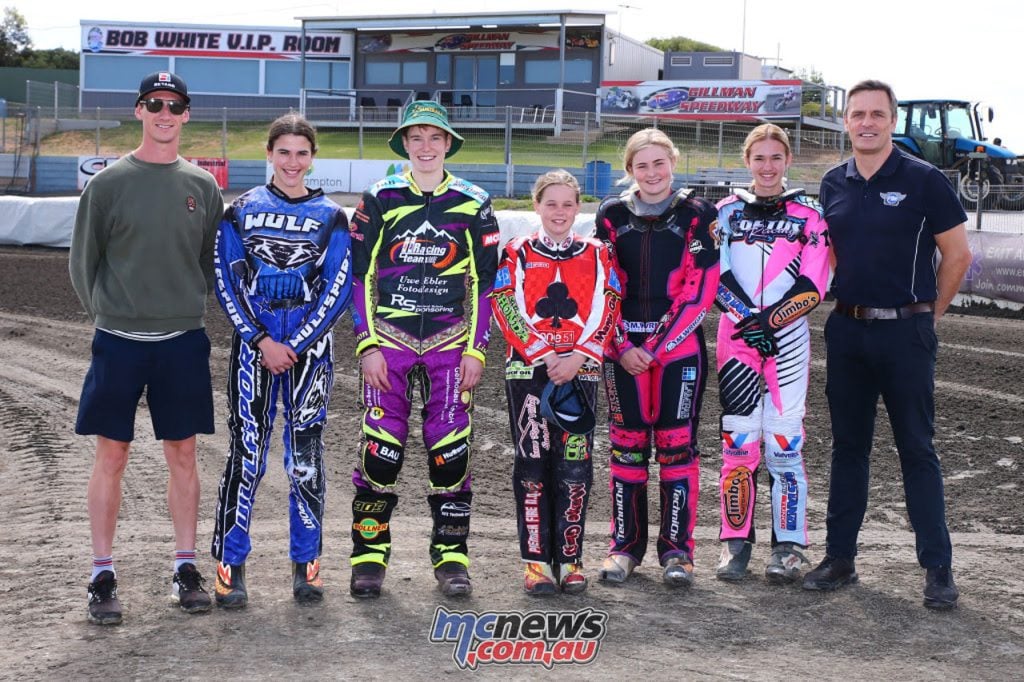
“We do have a lot of good talent; there could always be more at the tracks, and I’m sure numbers do fluctuate from year to year. Some years, there aren’t enough kids to do an Australian title; other years, there’ll be almost too many. It’s hard because it fluctuates a lot. But over the course of the years, we have produced a lot of really good talent, and I think even now, you can see there are four of us in the Grand Prix, and there are a lot of guys in the top leagues in Poland.
“I don’t know what kind of numbers exactly, but I think there are over 25, or more of us, just in the UK alone, who are making a living and racing professionally. Being able to make a living riding your bike is pretty cool.
“So that’s what I tried to push upon a lot of the kids who are racing in Australia and their families, especially the ones that look like they have a fair bit of talent. This is a possible career opportunity for a lot of these guys, and they don’t even know it, just like I didn’t even know it until I went over and saw it with my own eyes. Again, it may not be on Marc Marquez’s wages, as such, but it is something that you can do as an occupation.”
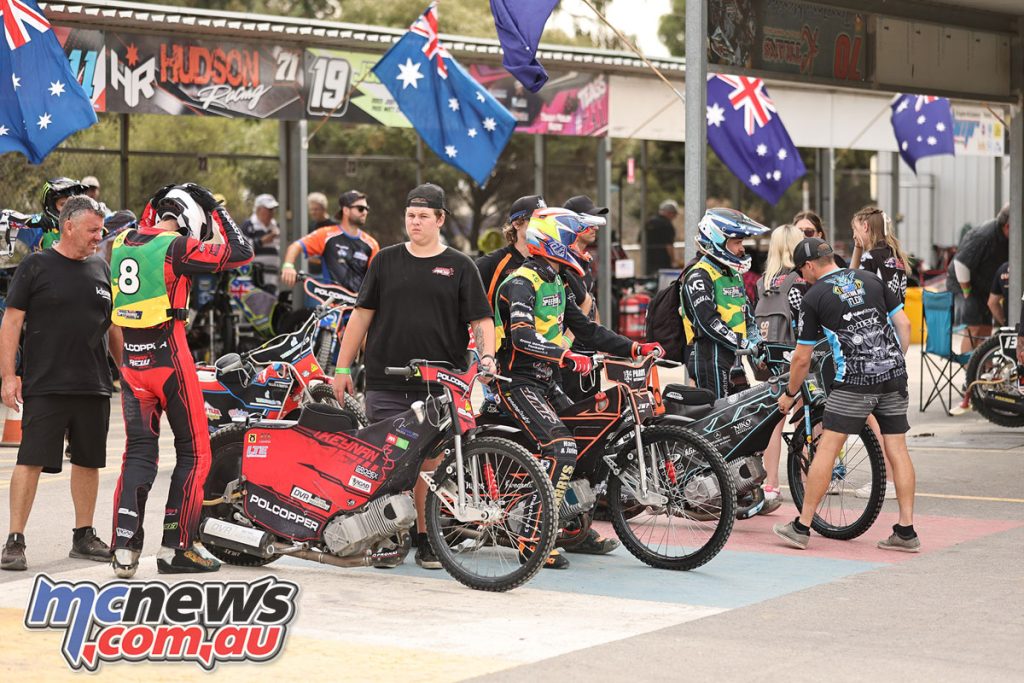
Trev: This year, a number of leading Australian riders, yourself included, didn’t contest the Australian Championship. From the outside, that can be difficult for fans to understand. Can you explain the practical, logistical and financial realities behind that decision? I imagine it would cost you maybe $30-40-50K to do the Aussies..?
Max: “It’d be pretty close by the time we send out flyouts, fly out ourselves, send out a couple of bikes, a couple of competitive engines. You probably need two engines, and if you’re going through all that expense, you probably want a backup as well, so probably three engines that are competitive. Which have to be serviced before and after they come out, and then tyres, travel – Australia’s a big country.
“This year was slightly simpler because they scheduled two rounds at Albury-Wodonga and two in Adelaide. The last time I did it, I think it was Adelaide, Mildura, Albury, Kurri Kurri, Brisbane, which makes for a pretty busy two-week period. I can’t really speak for anyone else on why they did or didn’t choose to do the Aussies this year, but I know for myself. I’ve done it almost every possible year I could since I was 16, and for myself, I’ve got a young son, and my partner wanted to give our son his first Christmas in the UK this year with her family.
“The Aussies start eight days after Christmas or something like that, or the first couple of days of the New Year, and it just didn’t really give me the time to be able to logistically put it together and do the series properly. Given the time frame, I’d have a couple of days to put a bike together and go to the races without any testing or practice to make sure things go to plan.
“We have so much going on the rest of the year too, and again it’s not just that week or two of the Australian Championship, it’s months of preparation and planning, just organising. So, for me personally, this year it’s been nice to have a little bit of an extended off-season or a normal off-season for most people and just get refreshed, look after myself and enjoy a little bit of time with the family this off-season. Things might look a little bit different next year, and I might be able to come back and do the whole series again, but it really just comes down to time for me this year.”
British leagues and structural change
Trev: The UK has traditionally been a key gateway for Australians heading overseas, and a crucial part of many riders’ development. There’s a growing sense that British speedway is under pressure and some sort of shake-up is underway. Help us understand what seems to be going on there, from your point of view?
Max: “I think it’s just a bit of change going on in the top league itself with rule changes designed to make it financially viable. I would say the lower leagues in the UK are very stable, with the same clubs returning.
“More clubs probably want to ride in that league because they pay the riders less, they get pretty much the same crowds, and there are more teams and therefore, more meetings in that lower league. The top league requires you to spend a lot more money to attract the better riders.
“It used to be Elite League and Premier League, now it’s called Premiership and Championship, just to match up with football, trying to get it the same. The lower league is quite healthy in the UK, where the top league, as I said, requires more financial output from the riders’ point of view, and some clubs weren’t getting enough turnout or enough sponsors to make it last. And then also, there have been a few clubs that have lost the rights to their stadium over a period of time. So things have compounded all at basically the wrong time for the top league at the moment.
“One or two clubs have gone in the last couple of years just due to… probably three clubs actually, just due to stadium owners making changes to what they want for their asset.”

Q: It’s interesting that tier two is a lot healthier and more viable than tier one.
Max: “Purely down to expenses, expenses are high in the top league, and in theory they are getting a similar type of turnout in both leagues, around 1500, depending on the stadium or club, paying 20-24 quid each to get in.”
A week in the life of Max Fricke
Trev: During the busiest part of the European season, what does a typical week look like for you in terms of travel, training, racing and recovery?
Max: “I’ve dropped down to two leagues in the last 12 months, with my son coming along. But before that, I was doing Sweden as well. So I was doing England, Sweden, Poland, plus Grand Prix. Now I’m just doing England, Poland, and the Grand Prix. But then again, throughout the year, if I feel like I want to race a little more, I could always pick up some Danish League or Swedish League on top of it. This means racing in each league weekly, then the GPs on the weekend, so there is a LOT of travel and time commitment required to ride in three or more leagues.

Trev: Was there an Italian league at some point?
Max: “Not so much, they used to have a couple of Grand Prix there. I’d say the main leagues are Poland, with the UK, Sweden and Denmark all very similar on the next tier. They do a little bit in France, but mostly at the start and end of the season, since a lot of people use it for a bit of practice. There is also a little bit of the Czech League, and I think Slovakia might also join the Czech League with a couple of tracks. But yeah, that’s the majority of it.”
Training, fitness and life in Andorra
Trev: You’re based in Andorra, surrounded by elite athletes and riders from a wide range of motorcycle disciplines. What does that environment bring to your preparation, both physically and mentally?
Max: “It’s a really nice place to be, but once the season comes around, logistically, it’s not always the easiest place to get back to. But when I’m up there, starting into the year mostly, it’s pretty cool.
“My brother-in-law lives up there as well, which is Ayumu Sasaki. I see Chaz Davies and Leon Camier a bit. There was Jonas Kilmerkorpe, the speedway rider, and Freddie Lindgren was also up there. My cousin actually lives up there, too. He works for one of the cycling teams and he’s literally just down the road. I’ve seen a lot of the world’s top motorcycling athletes on a day-to-day basis, hanging around the streets and, obviously, at the coffee shops. But I don’t know many of them because it’s the off-season. They generally go home, and that’s pretty much when I spend more time there.
“I’ve been out on the trials bike with a few different riders and stuff like that, which is pretty cool. Like Johnny Walker, I’ve been out with Sam Sunderland before. They’re all just really nice people in their home environment, hanging out. It’s cool to be surrounded by many like-minded people who are trying to get the best out of themselves day to day. So I think that also helps.”
Other sports of interest
Trev: What other forms of motorcycle sport do you passionately follow? MotoGP? WorldSBK? MXGP? AMA SX/MX? And what sports outside of two wheels also pique your interest?
Max: “Two-wheels is generally my interest. I do watch the Supercross and Motocross in America quite closely; I generally watch all the MotoGPs, and I see the Superbikes a little bit from time to time. I enjoy doing some Enduro and Motocross myself and things like that, just the things that I’ve grown up with, but in general, two-wheel sports are definitely an easy one for me to watch, follow and to participate in. It is always something that I’ve enjoyed.”

Looking ahead – career and life after racing
Trev: Looking beyond the next season or two, where do you see your speedway career heading from here?
Max: “All going well, I’d like to say 10 to 15 more years in me. Look at Jason Doyle, he’s in the Grand Prix right now, a fellow Australian, and he turned 40 last year.
“I think Greg Hancock won his last World Championship at 45, and he was still racing after that as well at the top level, and I think the only reason he stopped was due to family health reasons; otherwise, he probably would have still gone another year or two.
“I think in general, similar to what you see in AMA right now and some of the other sports, I think career longevity is trending right now, in my opinion, and I think you see a lot of athletes continuing to compete longer and longer, which I think is a good thing from our side, especially. I definitely like to think that I’ve got at least another 10 years left in me. Which would put me nearly 40. Then anything after that would be a bonus, and that would be an ideal situation.”