

Suzuki SV-7GX and SV-7GXV take SV650 DNA in a new direction
Suzuki has given one of motorcycling’s great middleweight engines a new lease on life, unveiling the new SV-7GX and SV-7GXV sport-crossover models around the long-serving 645 cc 90-degree V-twin that has underpinned the SV650 and DL650/V-Strom 650 families for more than a quarter of a century.
These images and the information we provide here are sourced from official releases issued overseas as we await any official confirmation, pricing and arrival schedule from Suzuki Australia for our market.
In a middleweight market now awash with parallel-twins, Suzuki is leaning back into one of its genuine points of difference. The SV engine might not be the newest thing in the class, but few powerplants in modern motorcycling have earned the same reputation for character, durability and sheer dependability.
Across SV650 roadsters, SV650S machines, Gladius variants and V-Strom 650 adventure-tourers, that 645 cc V-twin has powered a huge number of riders across an equally huge number of kilometres. It has been a commuter engine, a club racer’s friend, a learner’s stepping stone in restricted form, a backroad toy and a budget tourer. Plenty of them have also lived fairly hard lives and simply kept coming back for more.

The SV-7GX takes that familiar foundation in a different direction, moving the SV family away from its minimalist naked-bike roots. Instead, Suzuki has wrapped the platform in a taller, broader, more touring-focused package that sits somewhere between the old SV roadster ethos, the V-Strom 650’s everyday usefulness and the GSX-S1000GX’s sport-crossover styling language.
A rare middleweight V-twin
The engine remains the key talking point. Suzuki describes the SV-7GX as using a refined version of its trusted 645 cc liquid-cooled DOHC V-twin, now brought up to date with ride-by-wire throttle control, selectable riding modes, traction control and a bi-directional quick-shifter.
Peak output is listed overseas at 72 horsepower (54 kW), with 64 Nm of torque. That is familiar SV territory, but the electronics bring the engine into line with modern expectations. The Suzuki Drive Mode Selector offers three throttle response settings, while the traction control system provides riders with multiple intervention levels and the option to switch it off.

The appeal here is not headline horsepower. A 90-degree V-twin rocks to a different beat than the parallel-twins that now dominate this part of the market. There is a natural primary balance, a narrow crankcase, uneven firing character and a pulse that gives the bike some mechanical identity before the rider has even left the driveway.
The middleweight sector has become increasingly homogenised in recent years, with many manufacturers gravitating towards parallel-twin engines primarily for packaging and affordability concerns. Some of those engines are excellent, but there is no escaping the fact that the class has started to feel a little same-same.

From roadster to road-focussed crossover
While the engine carries a lot of SV650 DNA, the rest of the motorcycle has clearly been repositioned. The SV-7GX is a road-focused crossover rather than a bare-bones naked. It runs 17-inch wheels at both ends, a 120/70ZR17 front and 160/60ZR17 rear, and Suzuki is pitching it at riders who want everyday commuting ability, weekend backroad fun and some touring comfort without stepping into a large-capacity adventure-tourer.
The steel trellis frame remains part of the SV story, but the new model adds a stronger rear subframe to cope with passenger and luggage duties. Suspension travel is listed at 125 mm up front and 129 mm at the rear, while the rear shock has seven-step preload adjustment.
Seat height is a friendly 795 mm, which should help keep the bike approachable despite the taller crossover stance. Wet weight is listed at 211 kg, which tells us this is not going to feel like an old SV650 naked in the shed or when changing direction quickly. The SV-7GX clearly trades some of that old roadster simplicity and lightness for wind protection, touring comfort, luggage practicality and a more substantial road presence.
A 17.4-litre fuel tank should also give it decent legs between fills, particularly given the generally frugal reputation of the 650 V-twin platform.

More equipment, more comfort
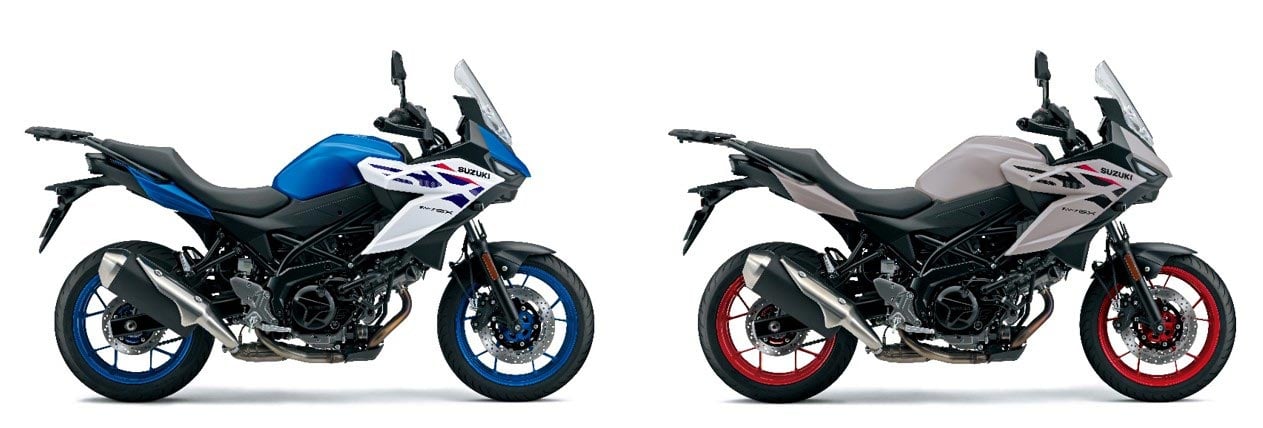
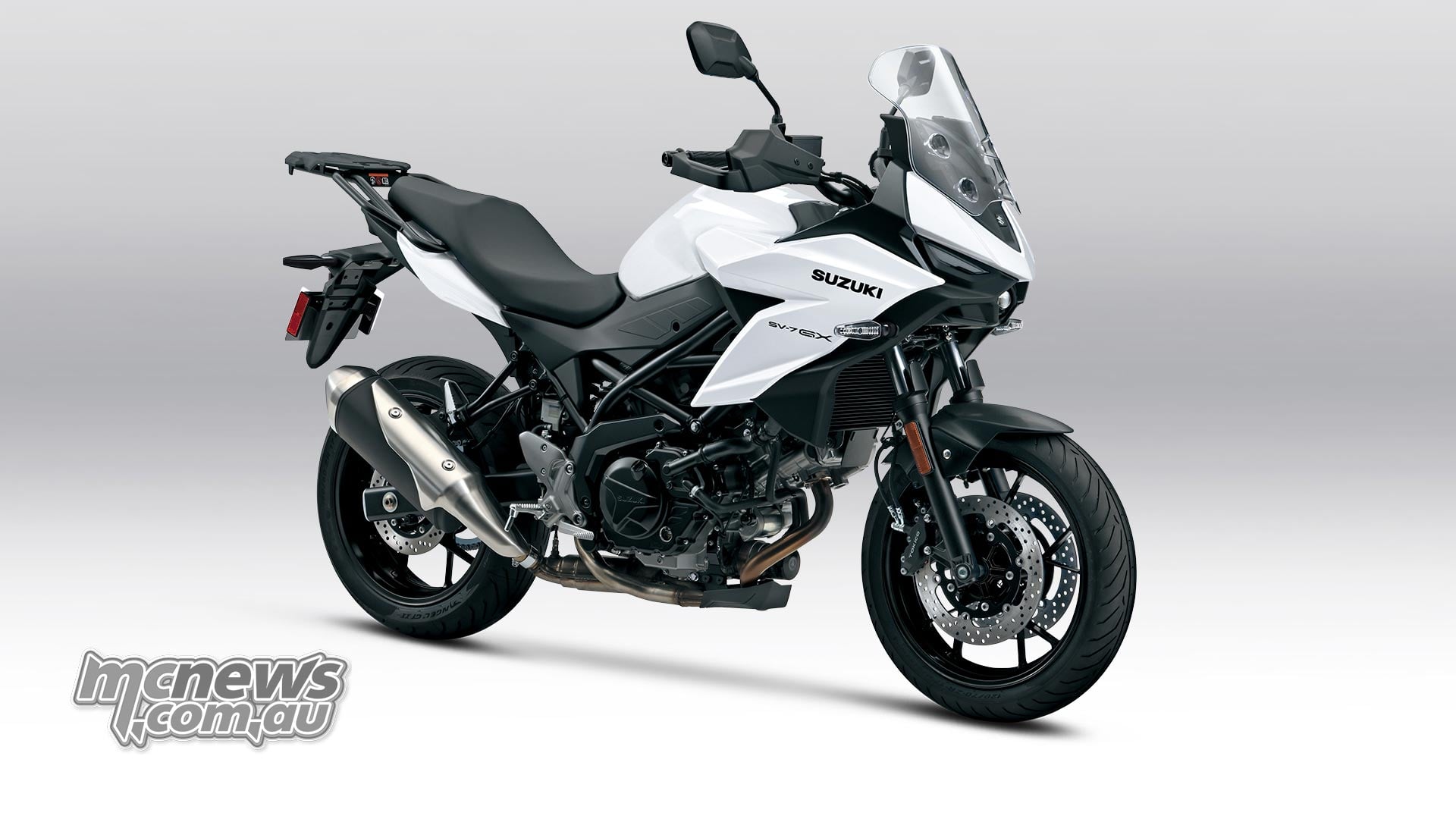
The SV-7GX gains a three-position adjustable windscreen, integrated knuckle guards, full LED lighting, a rear carrier and more generous rider and passenger seat padding than the naked SV formula of old.
Instrumentation is via a 4.2-inch colour TFT display, with Suzuki Ride Connect+ smartphone compatibility that offers turn-by-turn navigation, notifications, weather alerts, and other connected functions when paired with a compatible phone. A USB-C power outlet is also included.

The standard quick-shifter works in both directions, and Suzuki has retained rider-friendly features such as Easy Start and Low RPM Assist, the latter helping reduce the risk of stalling when pulling away or crawling through traffic.
The styling direction is clearly borrowed from the GSX-S1000GX, with a sharp front fairing, a projector headlight arrangement, and a taller adventure-tourer silhouette. It is more sport-tourer than adventure bike, though, with the 17-inch road tyre package making it clear where Suzuki expects the bike to spend its life.
SV-7GX and SV-7GXV
Two versions have been announced, the SV-7GX and SV-7GXV.
Australian availability, local specifications, colour choices and pricing have not yet been confirmed.
Should either model arrive in LAMS specification, the SV-7G range could prove very appealing to new riders chasing something comfortable, practical and stylish, while still offering the character and proven dependability of Suzuki’s long-serving V-twin.
The SV650 legend was built on value, reliability, friendliness and a cracking little V-twin. The SV-7GX carries that bloodline into a very different era.