

2027 Ducati Multistrada V4 S Grand Tour
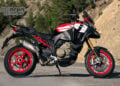
Ducati has expanded the Multistrada family with the new Multistrada V4 S Grand Tour, effectively rolling much of the long-distance touring catalogue into one comprehensively equipped factory package.
Rather than softening the Multistrada into a conventional luxury tourer, Ducati has retained the 170 hp V4 Granturismo engine, semi-active suspension, serious Brembo hardware and expansive electronics suite, then added the luggage, heating, radar and convenience equipment most high-mileage owners would otherwise be ticking on an options list.
Australia is scheduled to receive the 2027 Multistrada V4 S Grand Tour from April 2027.
170 hp V4 Granturismo
At the heart of the Grand Tour remains Ducati’s 1,158 cc V4 Granturismo engine, producing 170 hp – 125 kW – at 10,750 rpm and 124 Nm at 9000 rpm.
The V4 uses a counter-rotating crankshaft and twin-pulse firing order, while Extended Cylinder Deactivation can shut down the rear cylinder bank not only while stationary, but also under particular riding conditions.
Ducati claims the latest cylinder-deactivation strategy can reduce fuel consumption and emissions by as much as six per cent compared with the previous generation.
The six-speed transmission is matched with Ducati Quick Shift 2.0 for clutchless up and down shifts.
Long service intervals also remain a major Multistrada V4 strength. Oil servicing is specified at 15,000 km or 24 months, with valve-clearance checks stretched all the way out to 60,000 km.
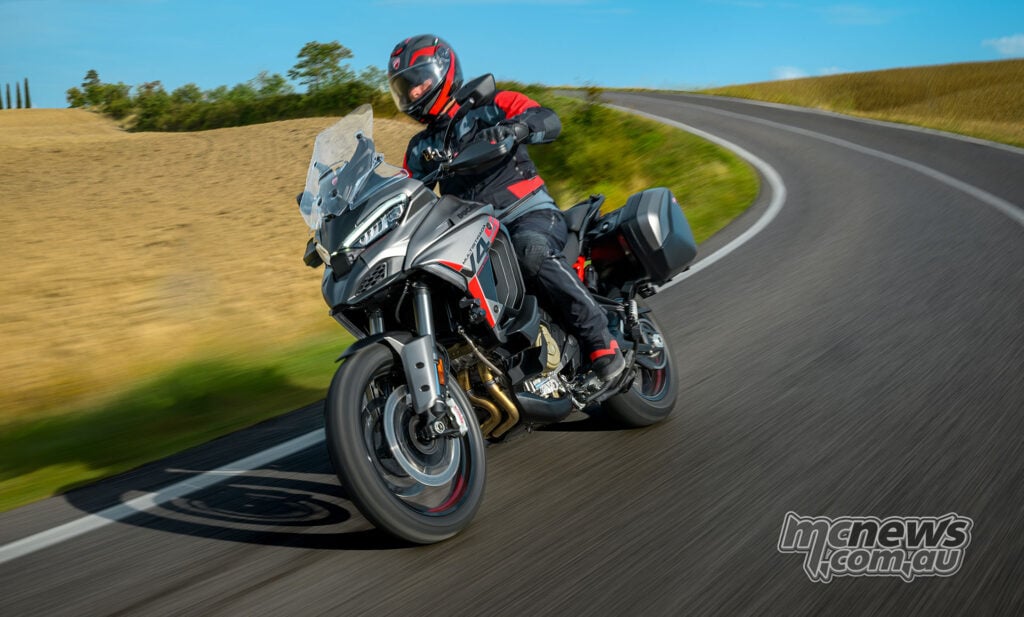 Grand Tour equipment as standard
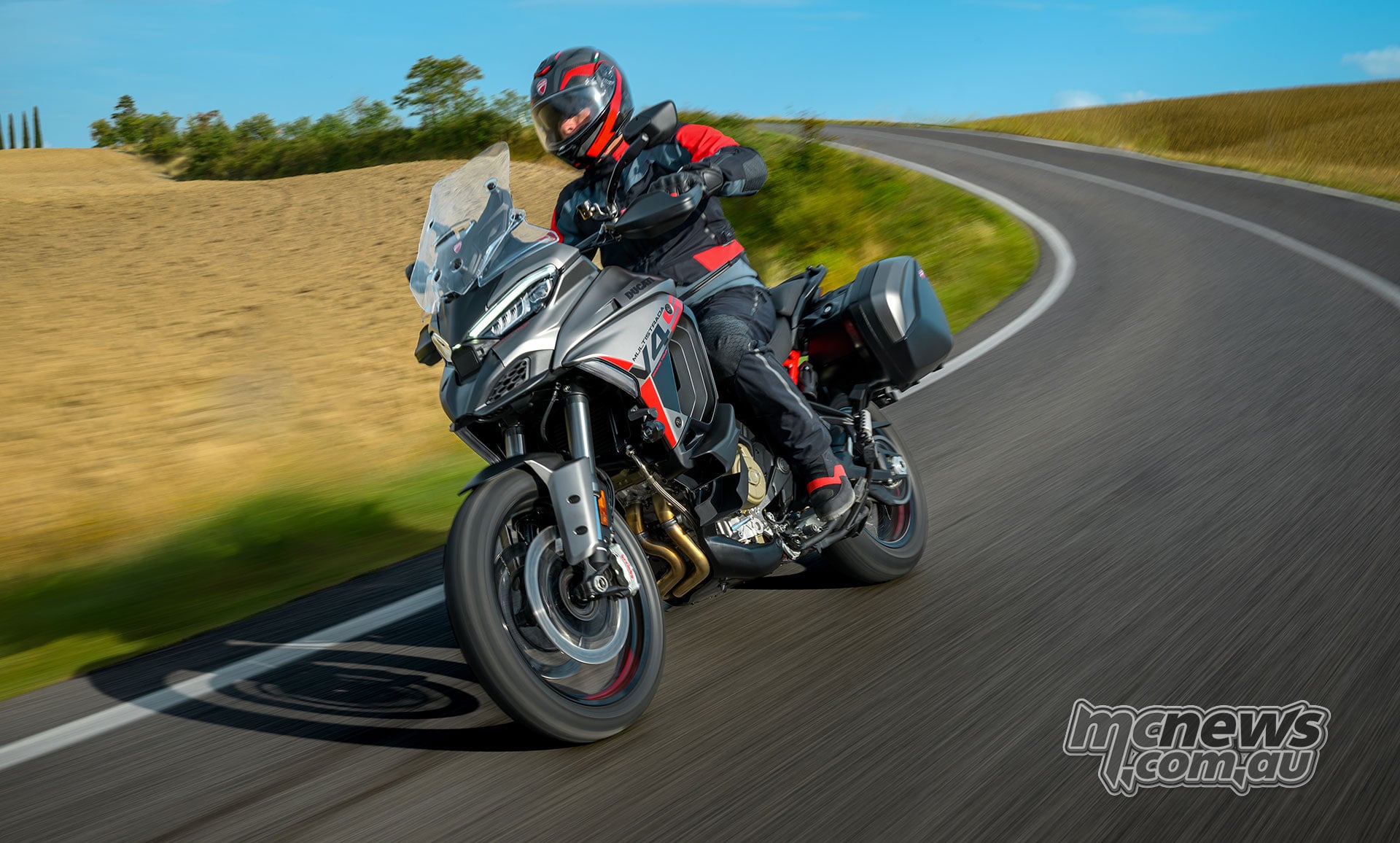
It is the standard equipment list, though, that really defines the Grand Tour.
Front and rear radar bring Adaptive Cruise Control, Blind Spot Detection and Forward Collision Warning, while tyre-pressure monitoring, auxiliary LED lights and a rear fog light are also fitted as standard.
Heated grips are joined by heated seats for both rider and passenger, while the hands-free fuel filler means there is no need to retrieve the key every time the 22-litre tank needs filling.
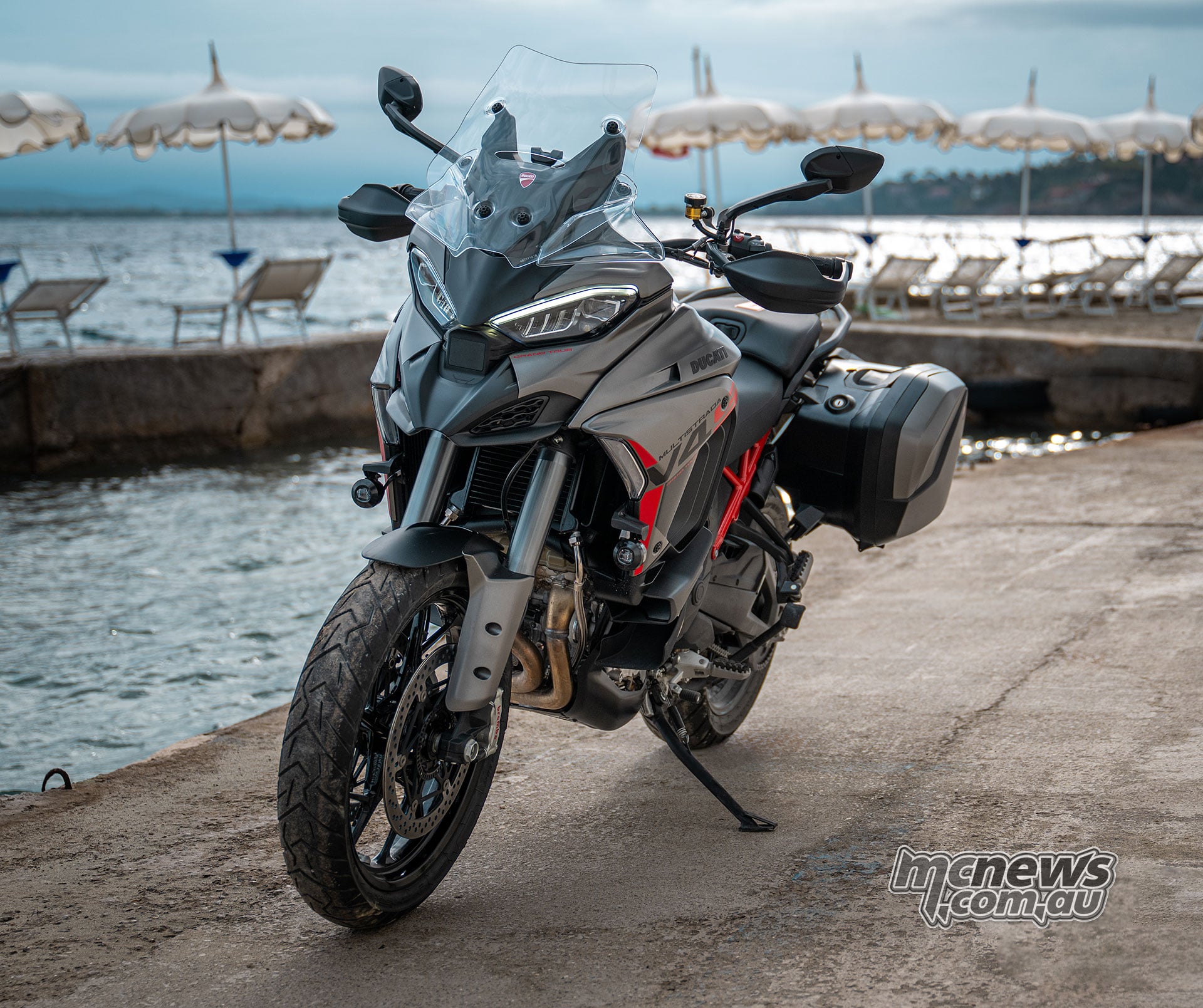
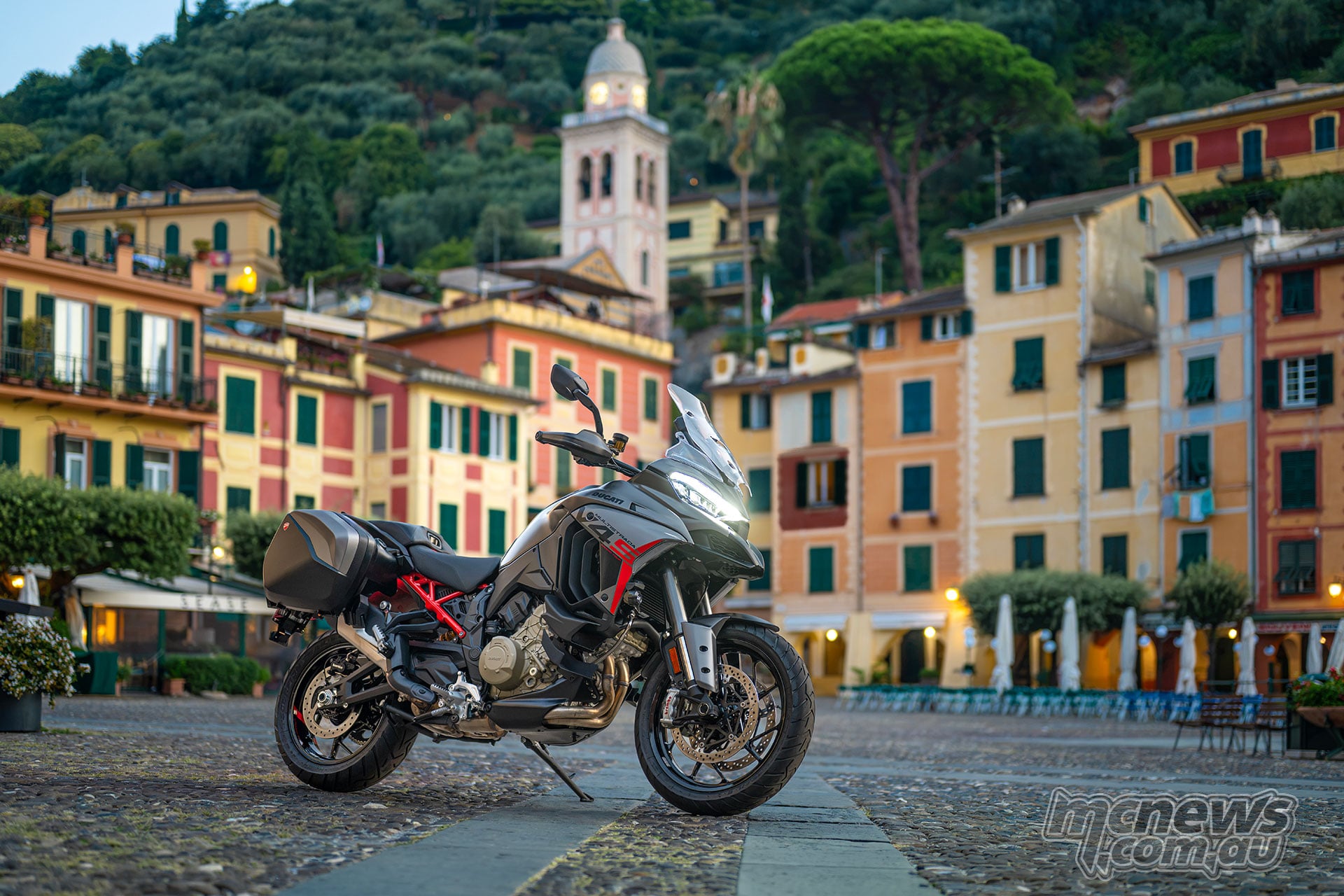
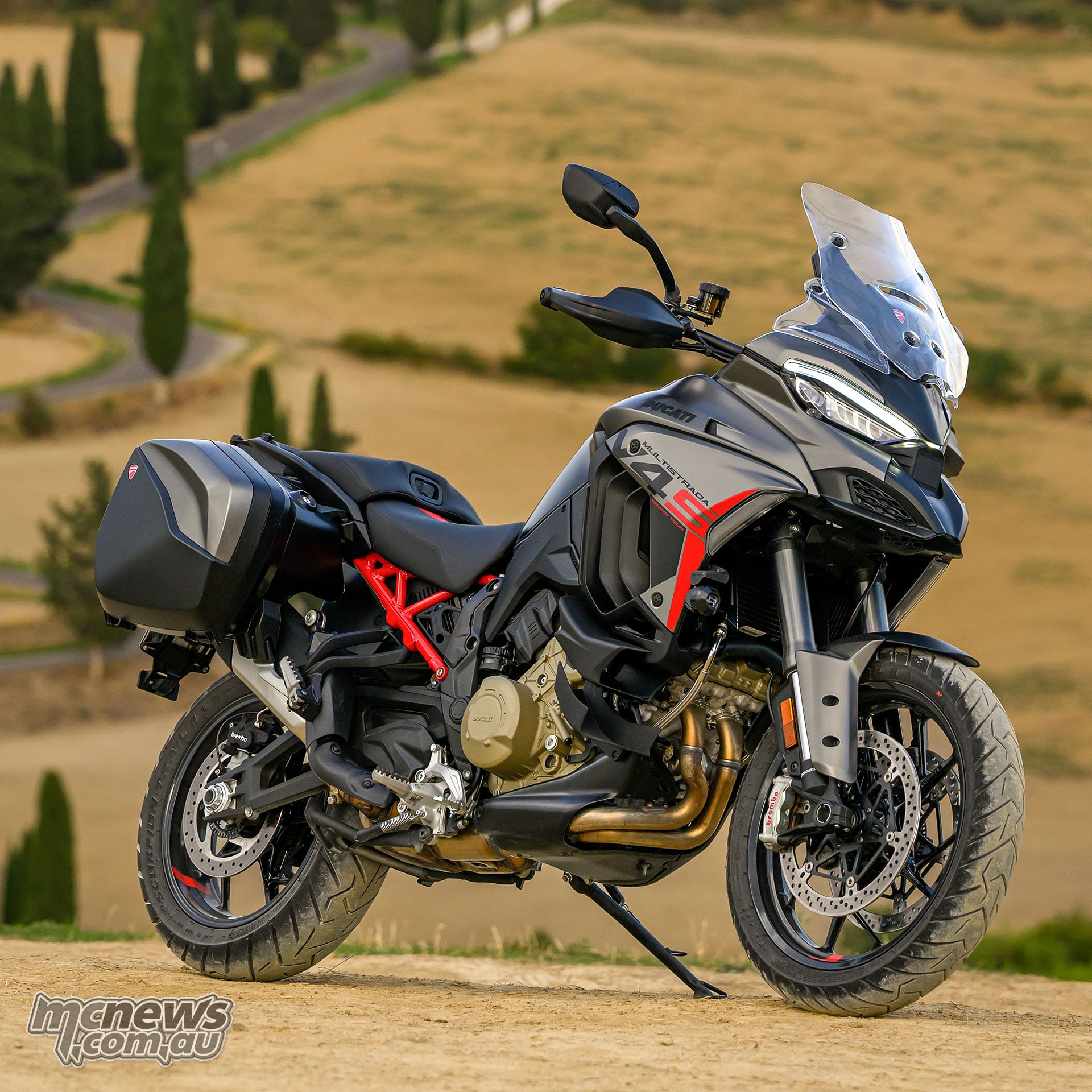
A centre stand is standard, as are the colour-matched technopolymer side panniers. Their combined 60-litre capacity should swallow a useful amount of luggage, while Ducati has moved the luggage mounting position rearwards to provide more space and freedom of movement for the passenger.
A more robust die-cast mounting arrangement is also used for the optional top case.
The 6.5-inch colour TFT incorporates Ducati Connect functionality and full-map navigation, along with phone and music integration.
Radar-equipped for the long haul
The radar package is particularly relevant to the Grand Tour brief.
Adaptive Cruise Control can manage speed and distance to traffic ahead, while Blind Spot Detection monitors vehicles approaching from behind and alongside.
Forward Collision Warning adds another layer to the package by warning the rider when the system identifies a potential collision risk ahead.
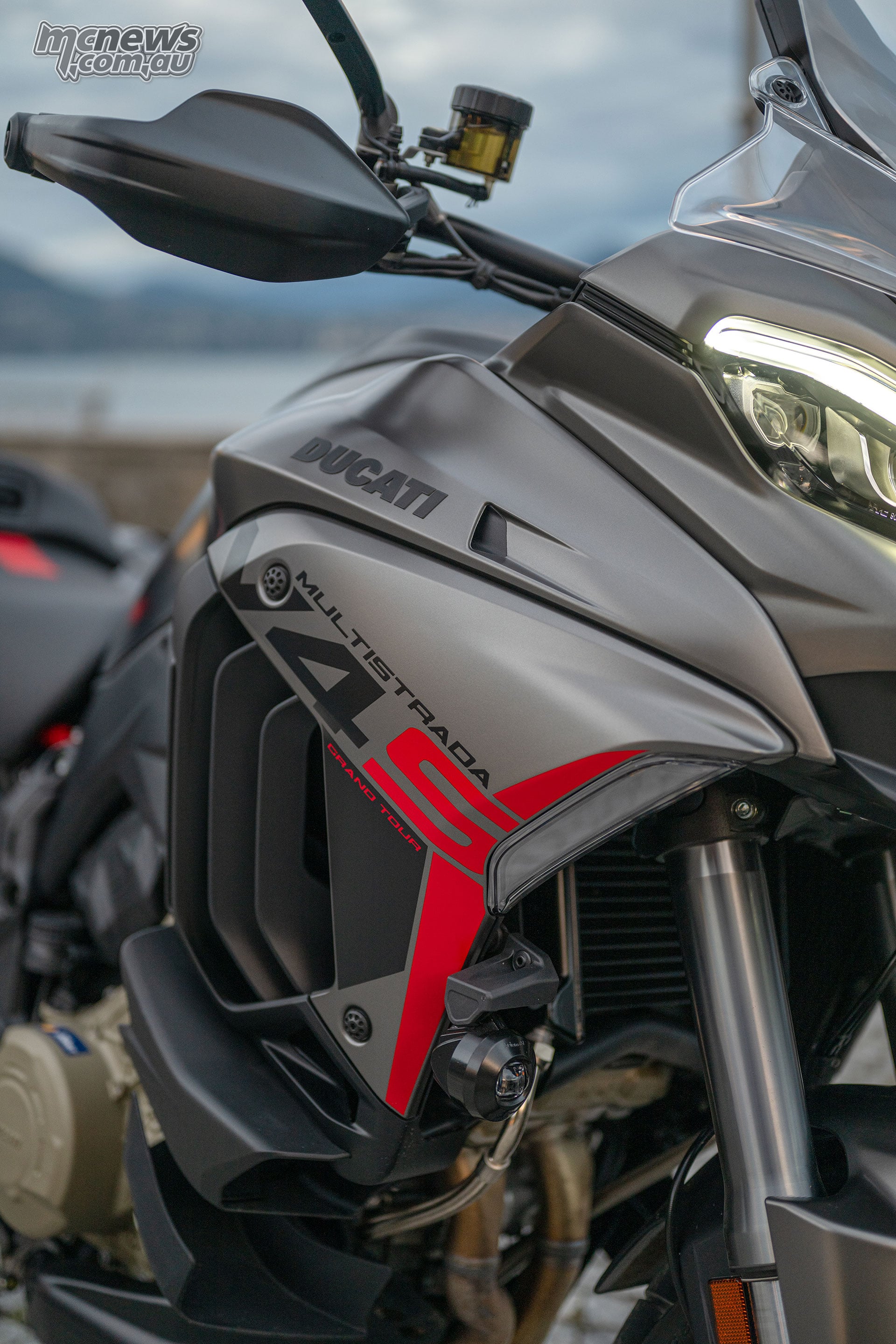
Those systems sit alongside Ducati’s existing suite of electronic rider aids rather than replacing them.
Skyhook Suspension EVO
Ducati’s Skyhook Suspension EVO semi-active suspension is another central part of the package.
A 50 mm fully-adjustable USD fork works with an electronically controlled rear monoshock, with 170 mm of front wheel travel and 180 mm at the rear.
A fork-position sensor feeds additional information into the semi-active suspension system, while predictive Bump Detection logic can adjust suspension behaviour according to the road surface.
Auto-levelling compensates for different loads, an important consideration on a motorcycle designed to regularly carry a passenger and luggage.
Suspension behaviour can also be altered while riding from the left switchblock.
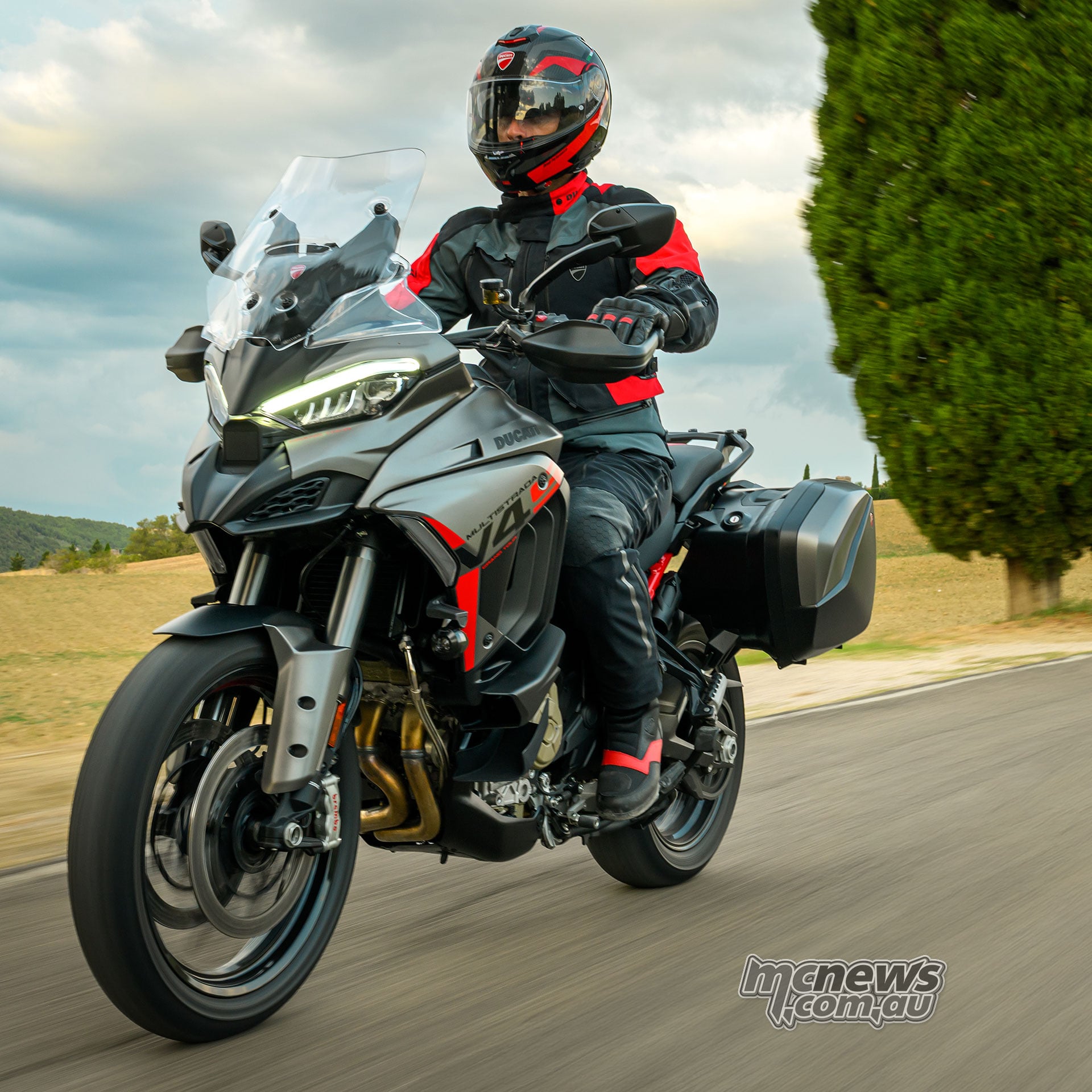
Low-speed management receives plenty of attention as well. The Automatic Lowering Device can reduce ride height by as much as 30 mm once speed drops below 10 km/h, before returning the motorcycle to its normal riding height above 50 km/h.
Easy Lift also opens the suspension hydraulics when the ignition is switched on to reduce the effort required to lift the Grand Tour off its side-stand.
870 mm standard seat height – as low as 805 mm possible
Standard seat height can be adjusted between 870 and 890 mm, although Ducati offers several alternative seat and suspension combinations.
A mid/low seat reduces that range to 855-875 mm, while the low seat brings it down to 825-845 mm.
Combining the low seat with the accessory lowered suspension kit takes that further again to 805-825 mm.
That breadth of adjustment should considerably widen the pool of riders able to comfortably manage what remains a fairly substantial motorcycle.
Ducati lists wet weight without fuel at 240 kg.
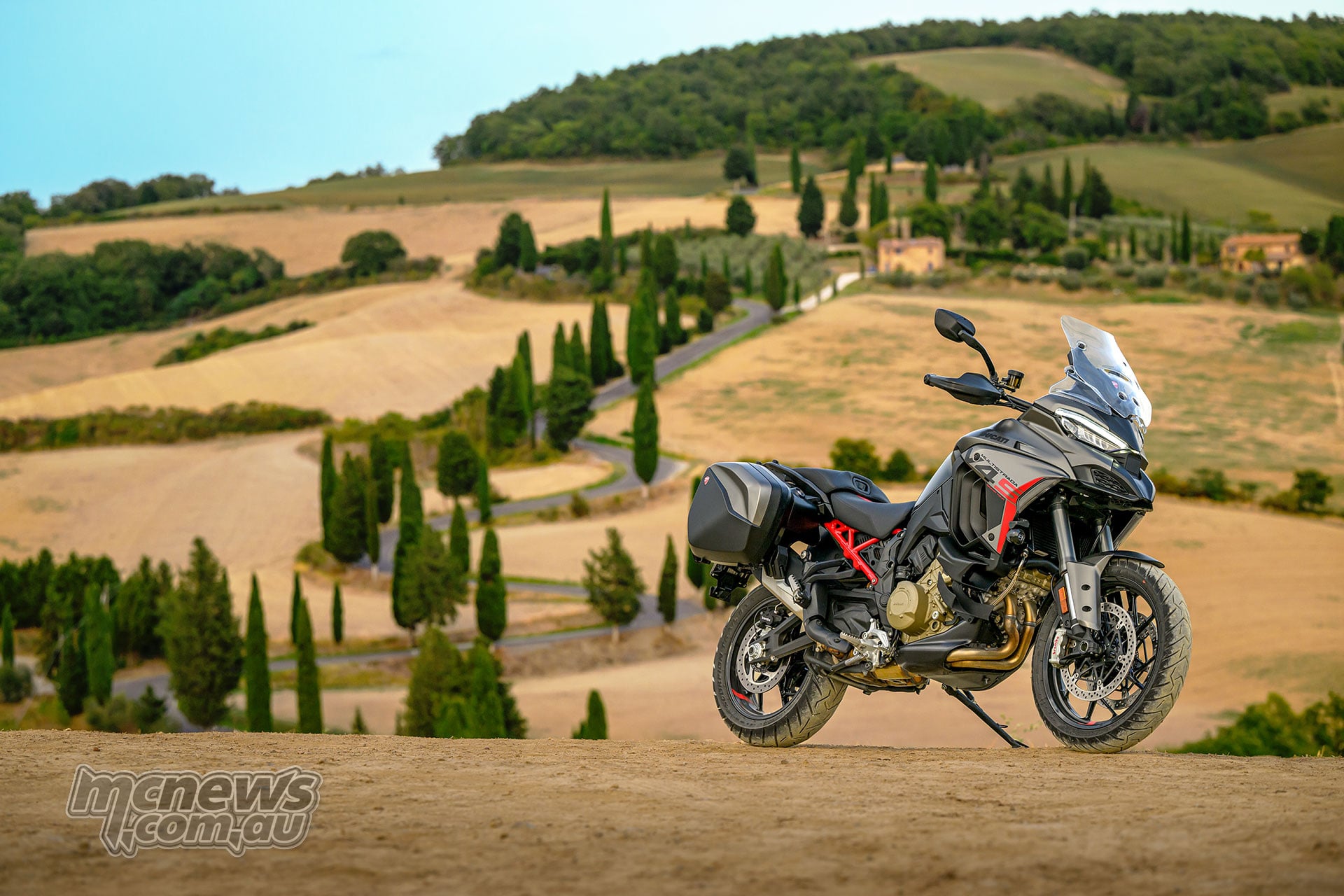
Latest Multistrada electronics
The Grand Tour receives Ducati’s latest-generation electronic rider aids, including Ducati Vehicle Observer.
DVO uses data modelling to estimate forces acting on the motorcycle through a series of virtual sensors, with that information then used to refine systems including Cornering ABS and Ducati Wheelie Control.
Electronic Combined Braking manages the distribution of braking force between the front and rear according to conditions and load.
Engine Brake Control provides three selectable levels, while Ducati Brake Light EVO can activate the indicators during hard emergency braking to provide additional warning to following traffic.
There are four Power Modes and five Riding Modes – Sport, Touring, Urban, Wet and Enduro – along with Ducati Traction Control, Ducati Wheelie Control, Vehicle Hold Control and Cornering ABS.
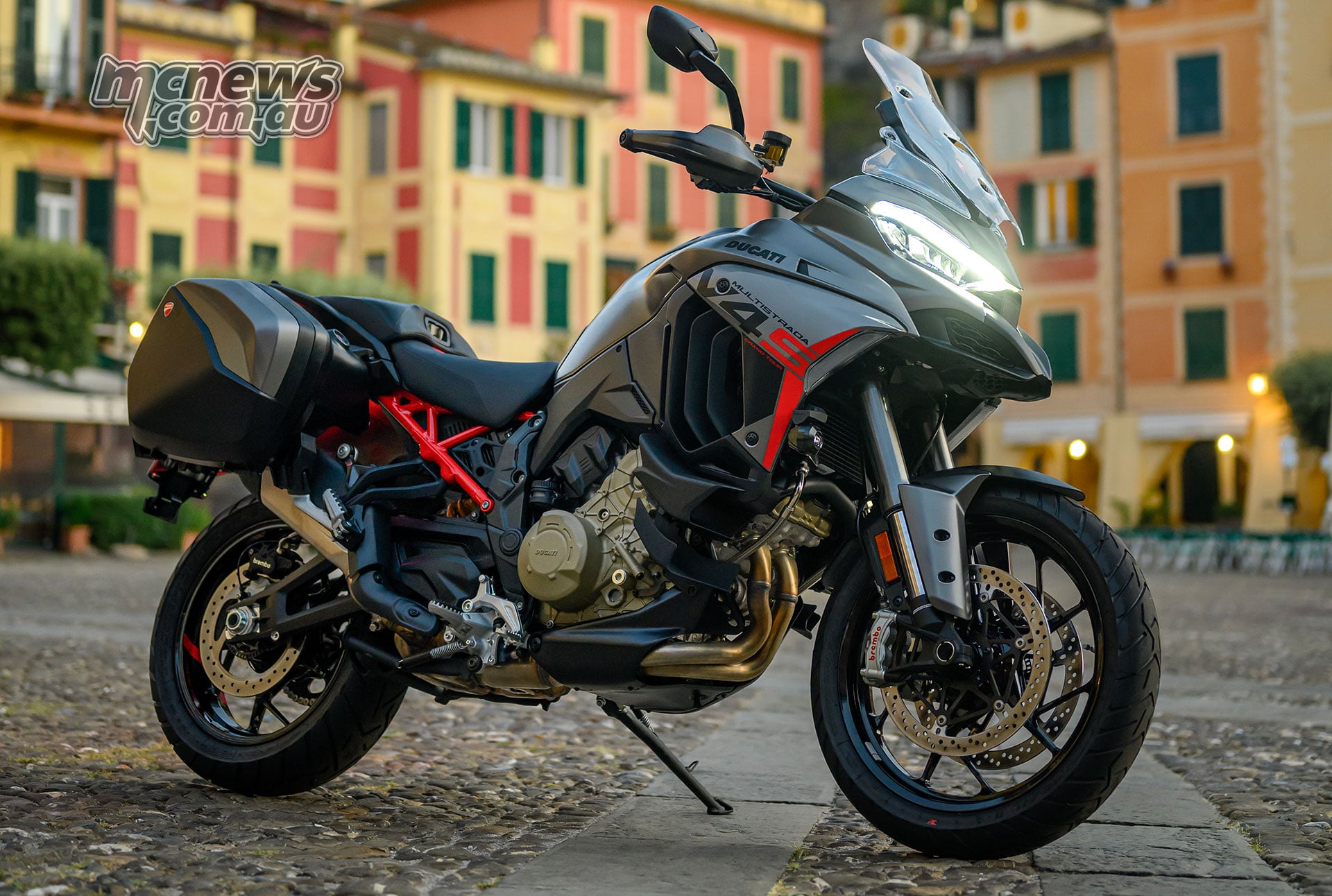
19-inch front, 17-inch rear
The Grand Tour runs an aluminium monocoque main frame, steel-tube subframe and aluminium double-sided swingarm.
Ducati has repositioned the swingarm pivot to increase anti-squat, with the stated aim of improving behaviour when carrying a heavy touring load.
Cast alloy wheels measure 19 inches at the front and 17 inches at the rear, wearing Pirelli Scorpion Trail II rubber in 120/70 R19 and 170/60 R17 sizes.
Braking hardware is suitably serious for a 170 hp touring machine, with twin 330 mm semi-floating front discs and radial-mount Brembo Stylema four-piston monobloc calipers.
A 280 mm rear disc is matched to a two-piston Brembo caliper.
Distinct Grand Tour treatment
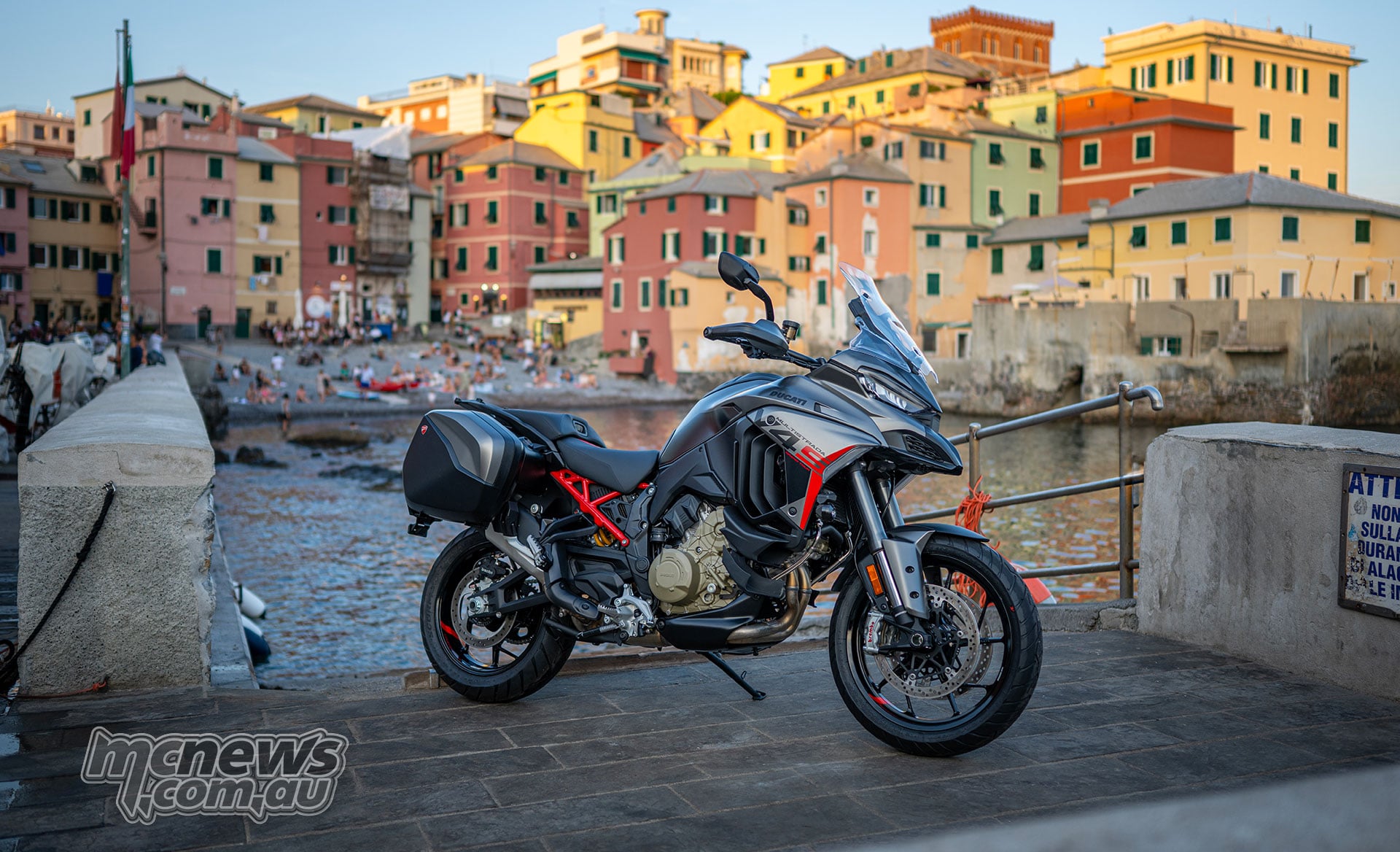
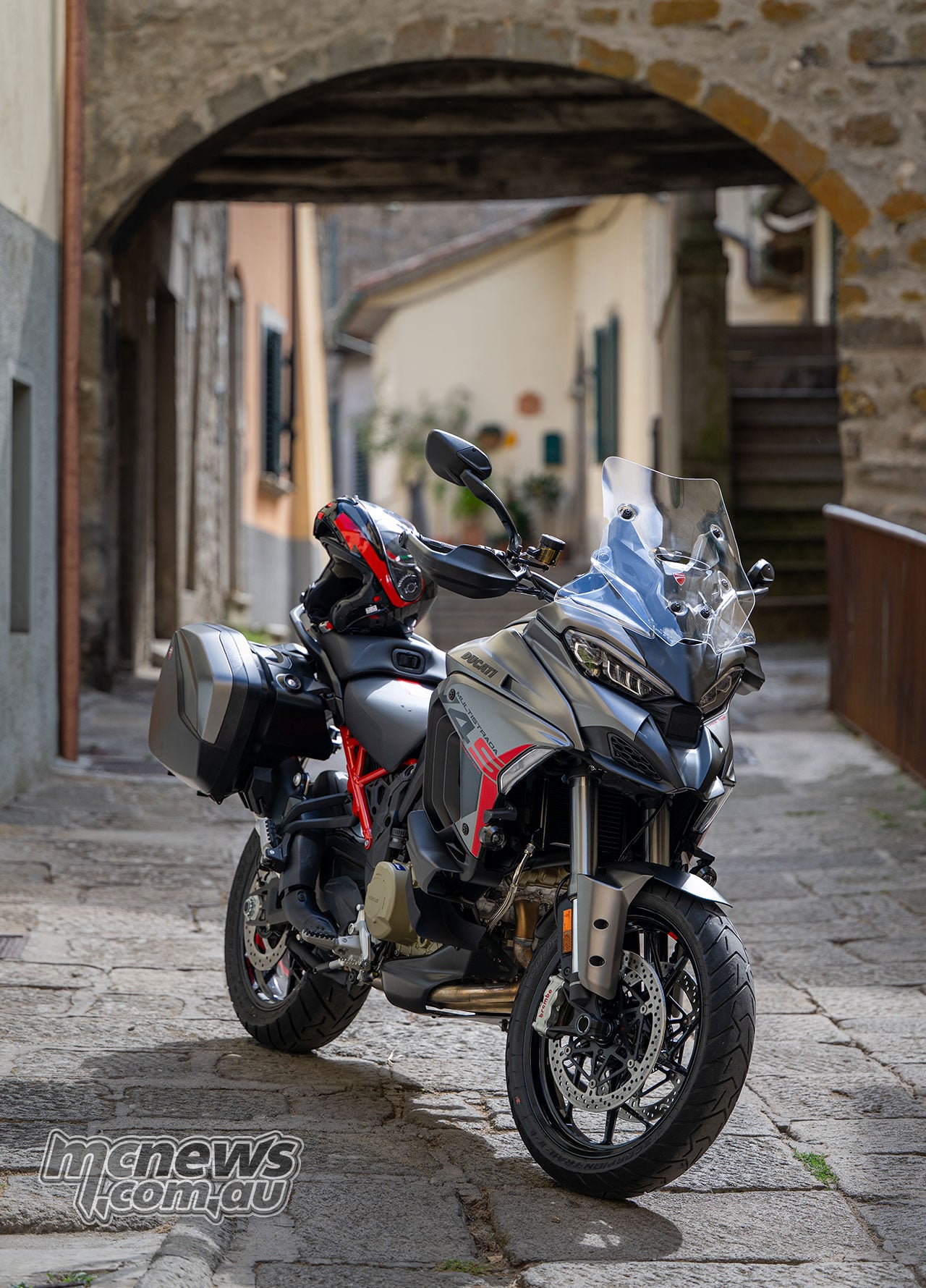
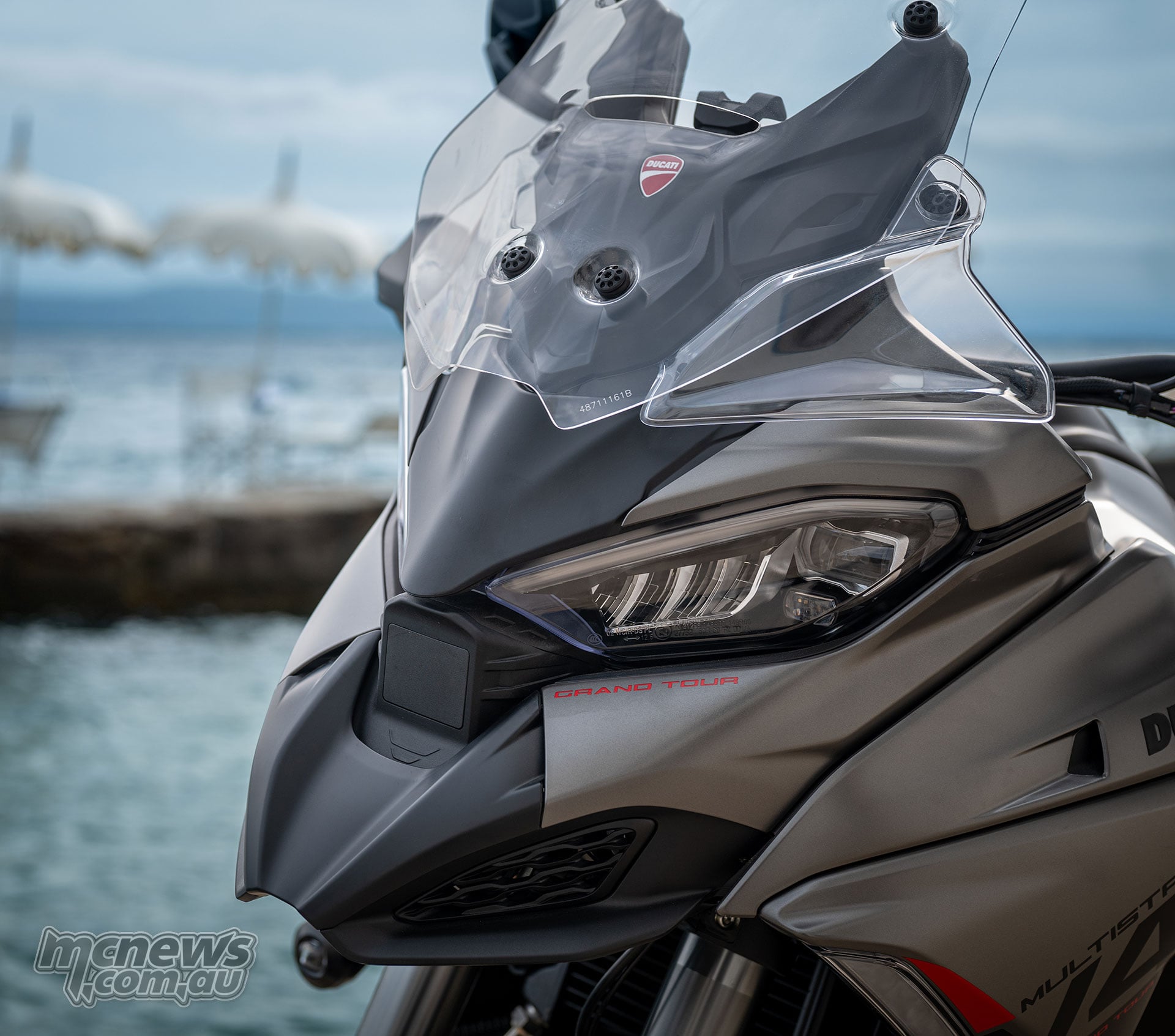
Ducati has given the new variant its own Grand Tour colour scheme rather than simply bolting touring accessories onto a regular V4 S.
Red Grand Tour detailing is contrasted against black finishes across the frame, swingarm, handlebar, risers and triple clamps, while Grand Tour branding also appears on the wheels.
The rider and passenger seats receive model-specific detailing and the panniers are integrated into the overall colour scheme.
Ducati’s Factory Made programme will allow buyers to take the specification further, including different brake-caliper colours, alternative seat and suspension heights and various carbon-fibre components.
Australian arrival in April 2027
European deliveries are scheduled to begin in November 2026, followed by the United States in December, with Australia and Asian markets due to receive the new Grand Tour from April 2027.
Australian pricing has yet to be announced.
Ducati also promotes its four-year, unlimited-mileage Multistrada 4EVER warranty as part of the European Grand Tour proposition, although the company’s own release specifically notes that the programme is valid only in Europe.
For Australian riders, the more relevant story is therefore the specification itself: 170 hp performance, radar-assisted touring, semi-active suspension, heated rider and pillion accommodation, integrated luggage and 60,000 km valve-clearance intervals, bundled into what is effectively Ducati’s factory-ready long-distance Multistrada.
2027 Ducati Multistrada V4 S Grand Tour Specifications
| Engine | 1,158 cc V4 Granturismo |
| Power | 170 hp / 125 kW at 10,750 rpm |
| Torque | 124 Nm at 9000 rpm |
| Transmission | Six-speed, DQS 2.0 up/down |
| Frame | Aluminium monocoque |
| Front suspension | 50 mm USD, Ducati Skyhook Suspension EVO |
| Rear suspension | Skyhook Suspension EVO monoshock |
| Travel | 170 mm front / 180 mm rear |
| Front wheel | 19-inch alloy, 120/70 R19 |
| Rear wheel | 17-inch alloy, 170/60 R17 |
| Front brakes | Dual 330 mm discs, Brembo Stylema |
| Rear brake | 280 mm disc, two-piston Brembo |
| Seat height | 870-890 mm standard |
| Weight | 240 kg wet, without fuel |
| Fuel capacity | 22 litres |
| Valve inspection | 60,000 km |
| Australian arrival | April 2027 |