

2027 KTM 690 Rally Review
There’s something slightly full-circle about standing in Greece looking at the new KTM 690 Rally.
Long before adventure bikes became the enormous market they are today, KTM was building big single-cylinder rally and adventure machines and taking them to places like Dakar. The 640 Adventure became something of an icon in its own right, but somewhere along the way that formula largely disappeared.
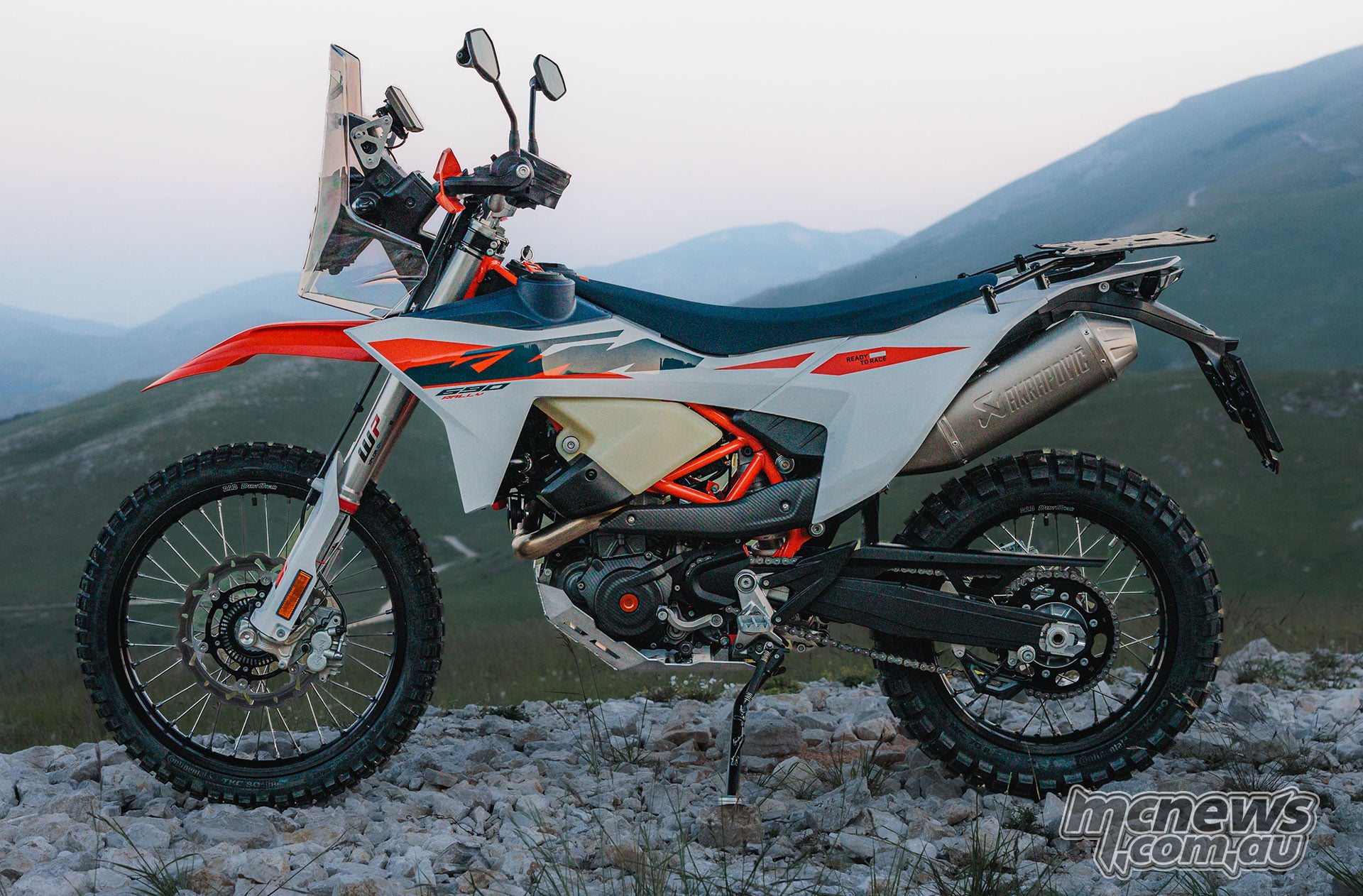
The big LC4 single lived on, eventually becoming the 690 Enduro R we know today, but the rally and adventure side of the equation was increasingly left to the owner.
And owners certainly took up that challenge.
For years people have been buying 690 Enduro Rs and then adding bigger tanks, rally towers, screens, navigation gear, better seats and all manner of farkles – some useful, some not – in an attempt to create something KTM didn’t actually sell: a genuinely lightweight, long-distance adventure bike that still behaved like a dirt bike when the going got rough.
I was one of them.
I bought a 690 Enduro R because, on paper, it sounded like exactly the bike I wanted. Something I could ride further than a conventional enduro bike, but which wouldn’t become a handful when the trails got gnarly.
The engine was brilliant, and the bike was certainly capable, but as an adventure bike I never really gelled with it. The seat was narrow and hard, there was virtually no wind protection, the cockpit was pure enduro, and the rear-mounted fuel tank gave the bike handling characteristics that meant it never quite felt as nimble as I’d hoped.
Eventually I sold it.
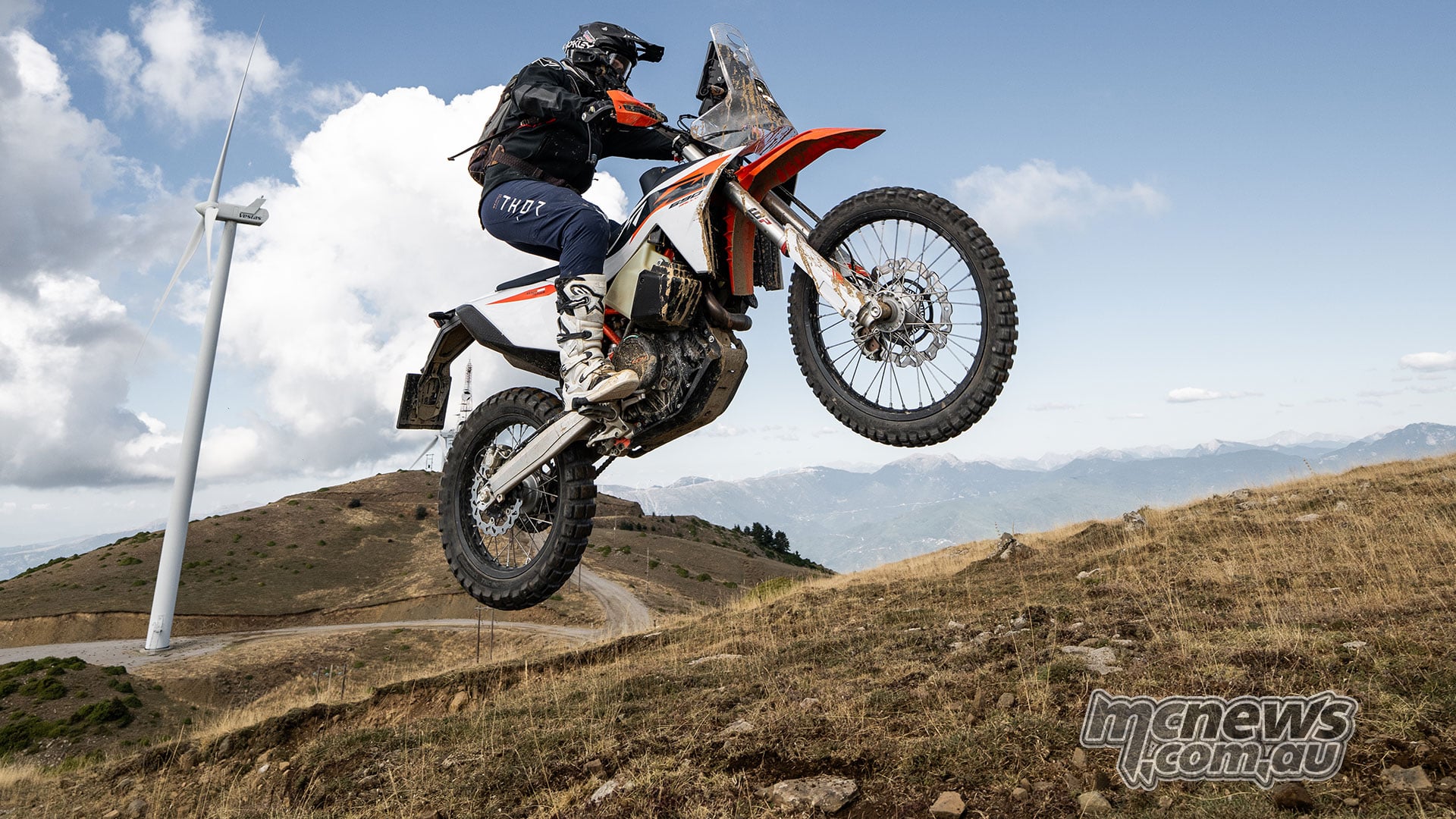
Which made KTM’s announcement of the 690 Rally particularly interesting.
Because when you look at what they’ve done – rally tower, windscreen, 20 litres of fuel, long-travel suspension, proper navigation provisions, a more adventure-focused cockpit and a quoted 161.5 kg without fuel – it looks suspiciously like KTM has spent some time looking inside 690 owners’ sheds.
KTM itself describes the new Rally as the spiritual successor to the 640 Adventure, but importantly this isn’t a retro exercise. Underneath is the latest-generation 690 Enduro R platform, wrapped in what is essentially a properly engineered, factory-integrated version of the rally/adventure conversion owners have been building for themselves for years.
Trev posed the question when MCNews first covered the 690 Rally: Has the 690 finally found its role?
After riding it through Greece, we can finally start nutting that out.
First, forget the spec sheet
161.5 kg sounds impressive for an adventure bike, but weight figures can also be fairly meaningless until you ride the thing. Where the 690 Rally surprised me wasn’t really in the number, but where that weight now feels like it’s being carried.
KTM has retained the rear fuel-tank arrangement from the Enduro R, where the self-supporting plastic tank also effectively performs the role of the rear subframe, but added another seven litres of capacity up front, split between two tanks. That takes total fuel capacity to 20 litres.
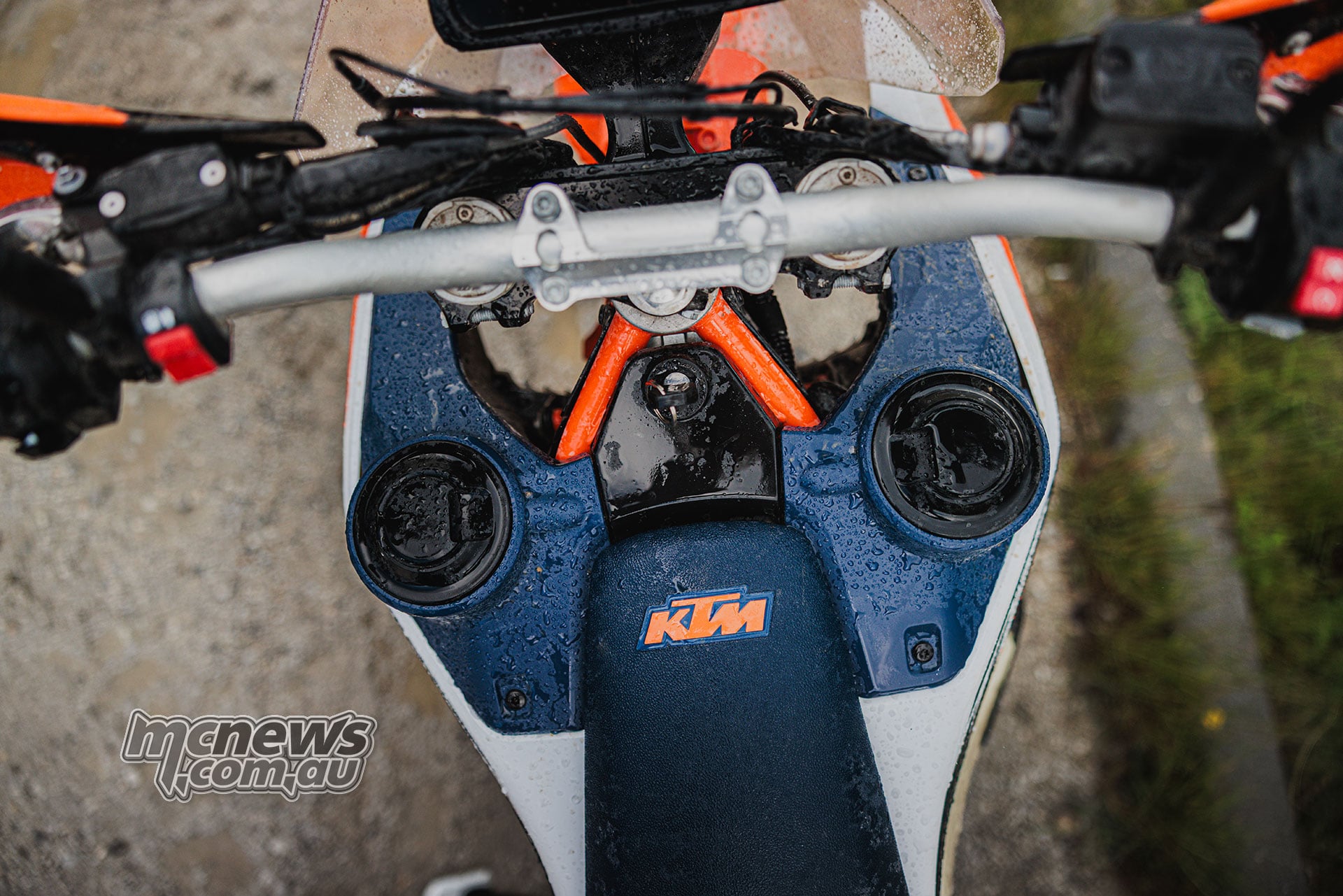
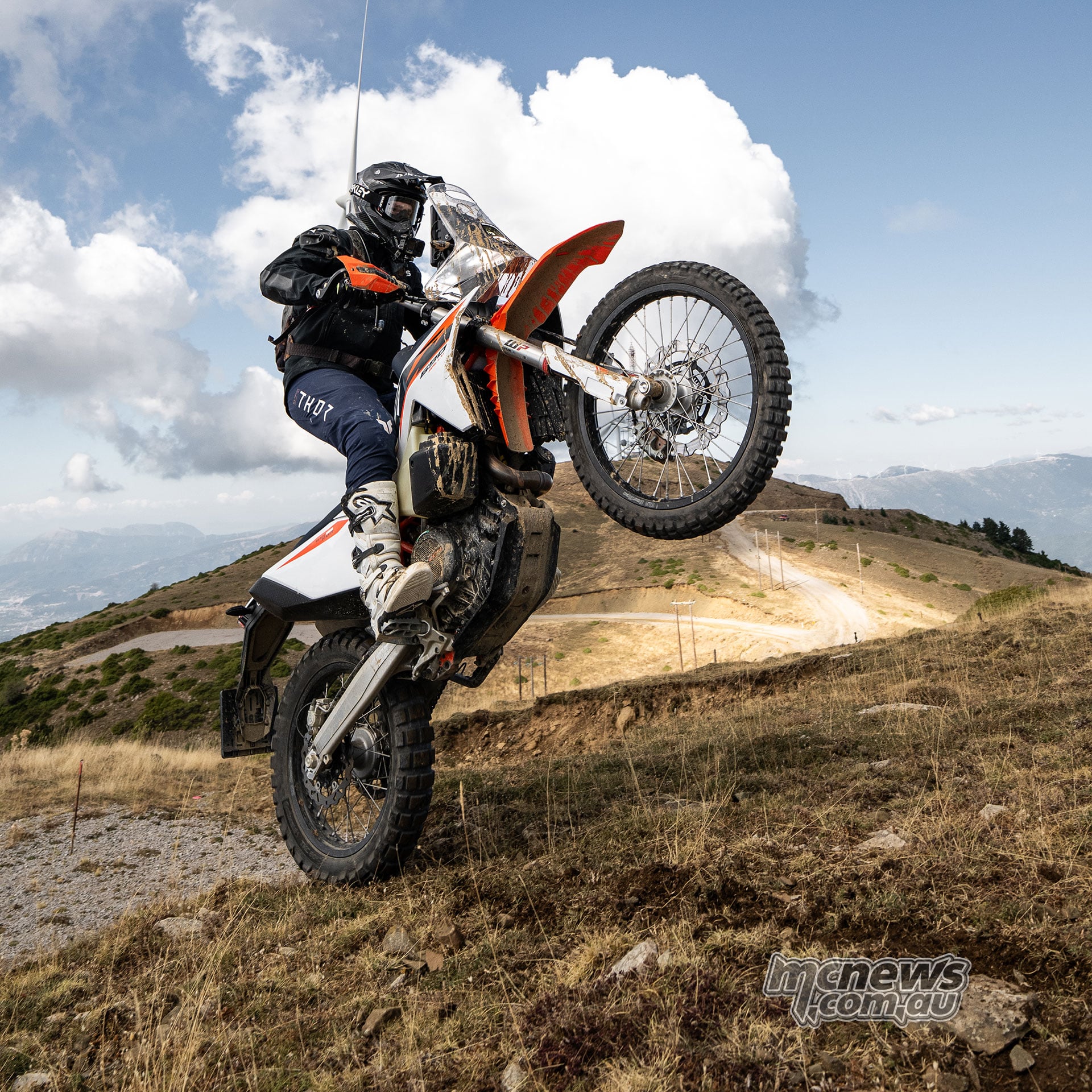
The difference in the bike’s balance compared with my old Enduro R is immediately noticeable. It feels more agile and playful.
You can move it around underneath you; it responds quickly when you change direction and, most importantly, when the trail starts getting tighter or rougher, it doesn’t suddenly feel like you’re wrestling an adventure bike.
It gives you confidence to keep exploring rather than turning around because you’re starting to wonder what happens if the track gets worse.
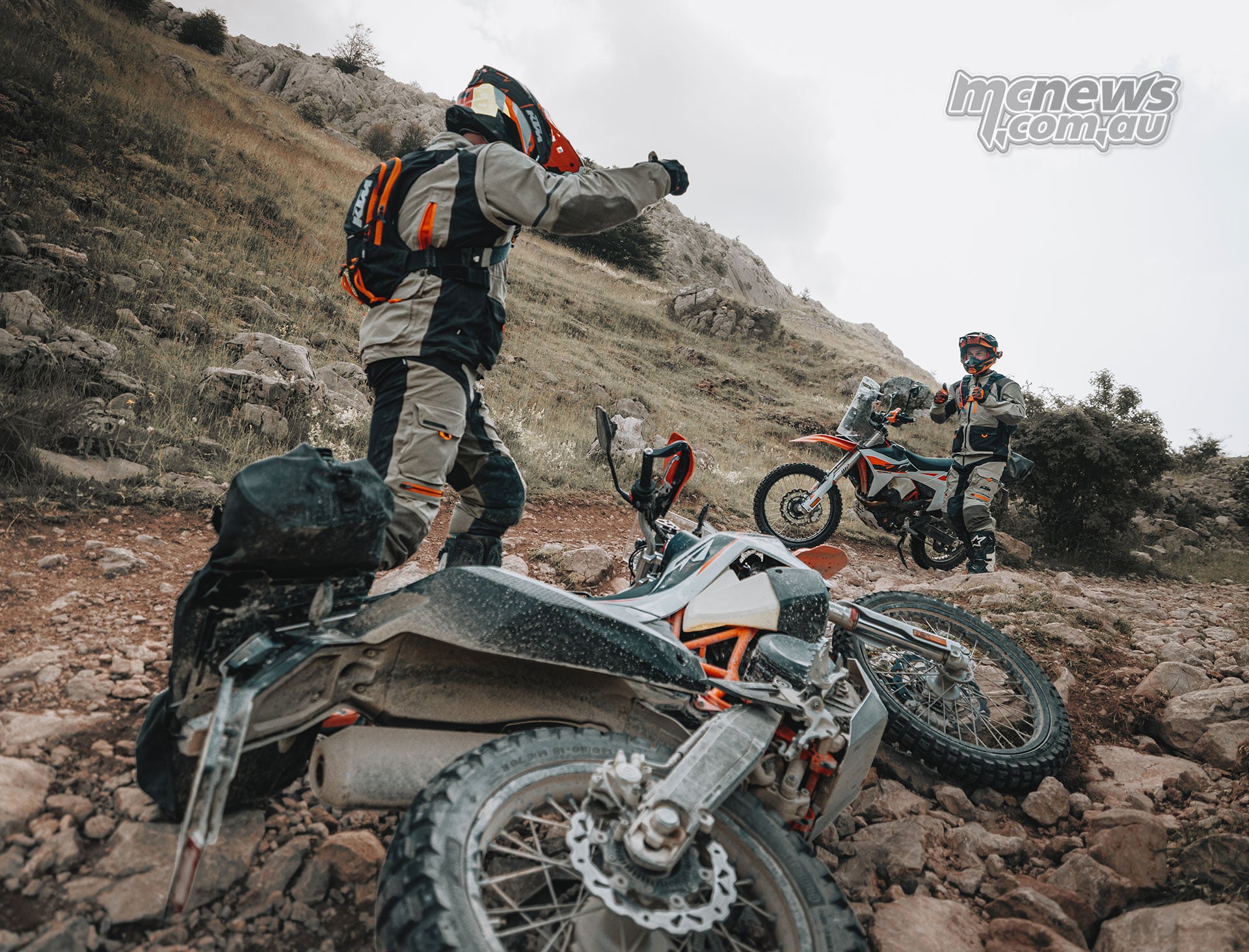
Dropping a 160 kg-plus motorcycle on the side of some snotty hill and dropping a 200-plus kilogram adventure bike in a similar scenario can lead to two very different afternoons.
One interesting comparison kept coming back to me, though. As much as I liked the balance of the 690 Rally, it doesn’t give me quite the same planted feeling through the front wheel that an 890 Adventure R does. The 890 R is remarkably good in that respect. For a much bigger motorcycle, you can tip one into loose terrain and feel confident in what the front tyre is doing.
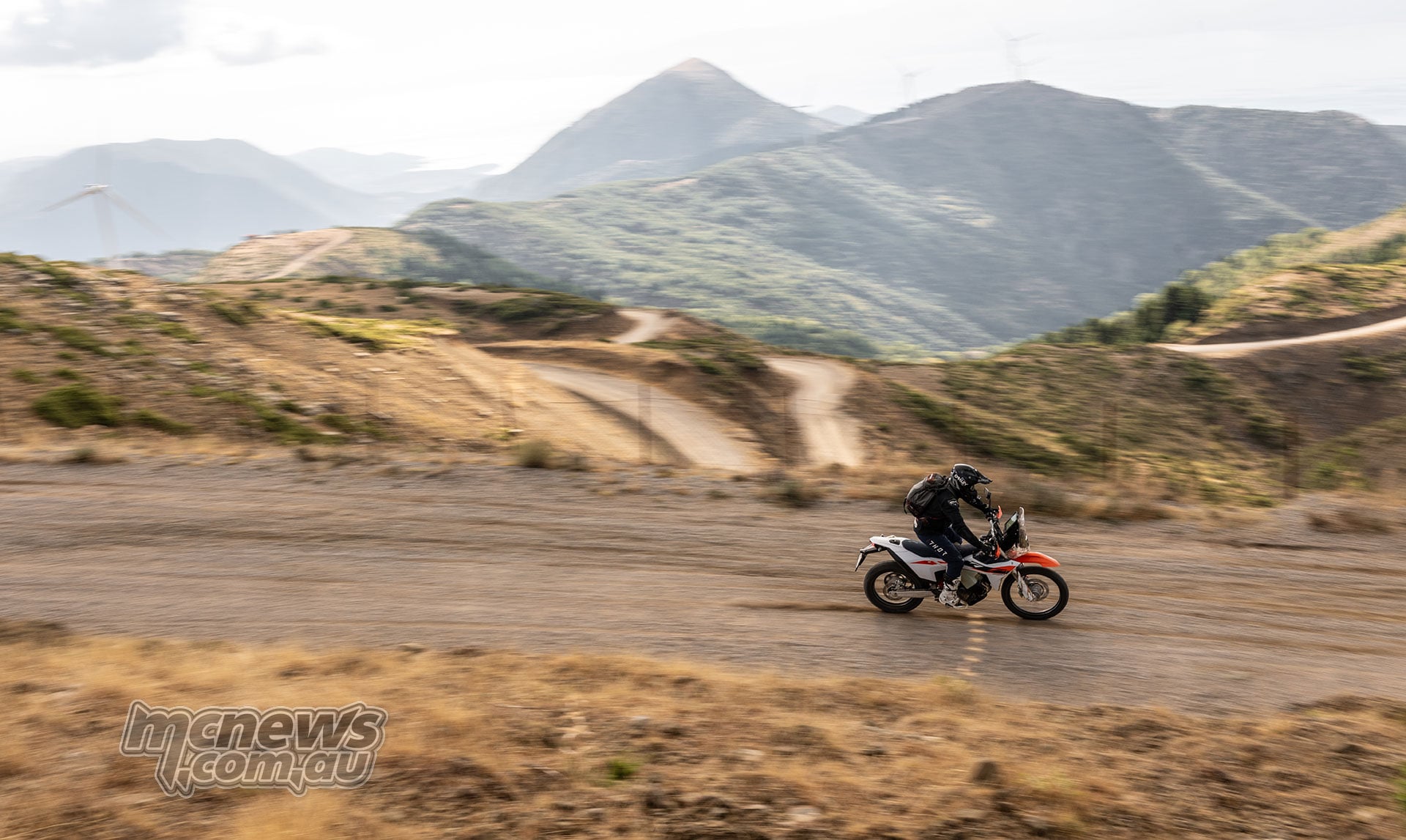
The 690 wasn’t quite as confidence-inspiring up front for me, and it came up in conversation a few times among riders during the launch. There is an important qualification to that.
The bikes were running Continental TKC 80s. They’re a very sensible adventure tyre and probably fairly representative of what plenty of owners will actually run, but they’re still not an aggressive enduro knobby. They work remarkably well on the tar and last thousands of kilometres, as designed, since they are marketed as a 50-50 tyre. So I’m certainly not going to put all of that feeling down to the motorcycle itself.
The other consideration is fuel.
Even though KTM has moved seven litres of capacity forward, there’s still plenty of fuel carried at the back of the bike. How much you’re carrying, and where you’re carrying it, will obviously influence how the motorcycle feels.
Choose where the fuel comes from
The good thing is KTM gives you some control over that. Rather than plumbing all 20 litres together and leaving you with no say, you can select between the front and rear fuel supply via a handlebar-mounted switch.
The reserve warning also corresponds only to whichever tank is currently selected, something worth remembering before assuming the light means you’re almost out of the entire 20 litres.
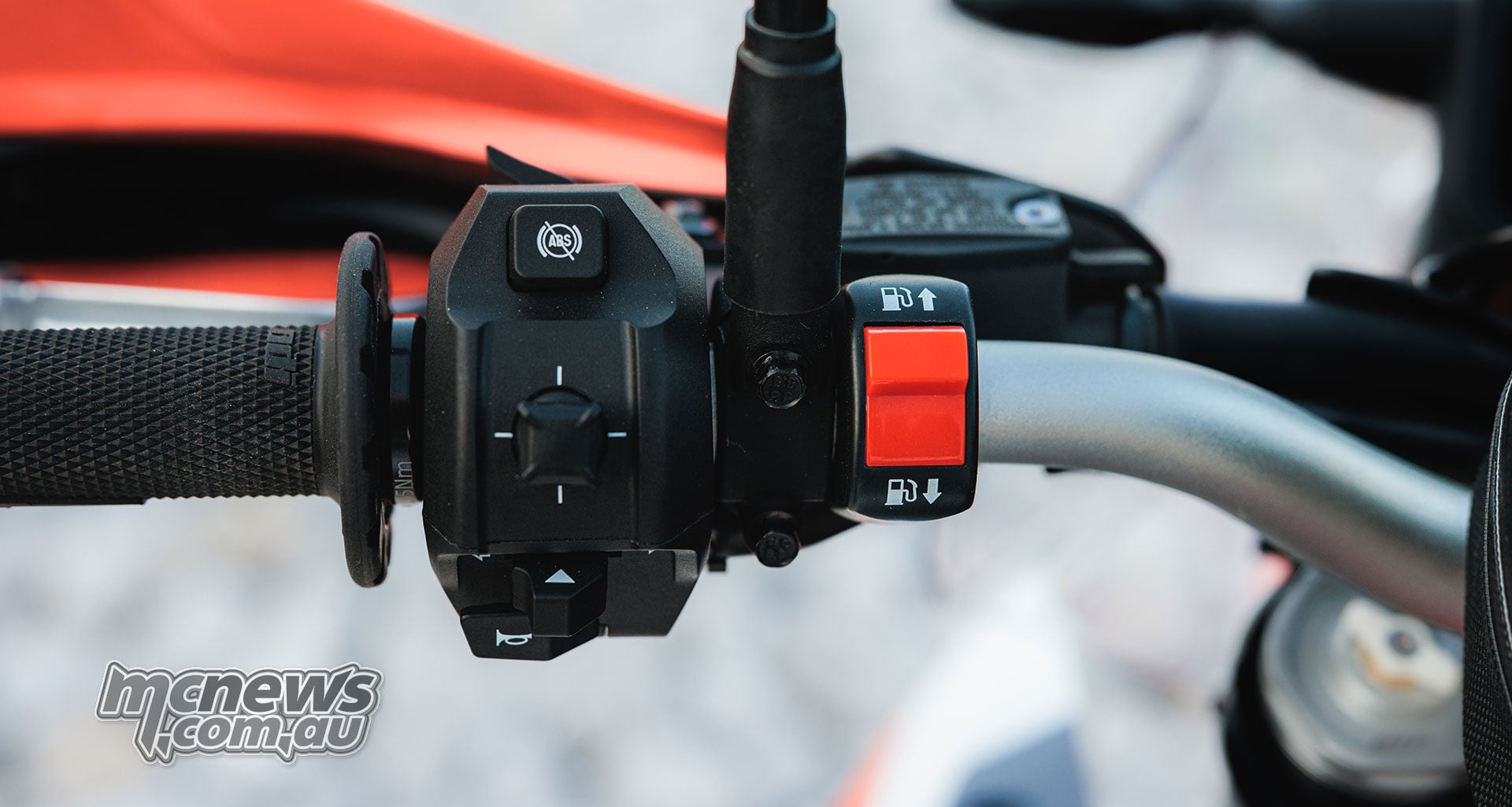
For a shorter ride, I’d be inclined to carry what I needed up front and see how the bike felt. If I’m heading properly remote, fill the lot.
At KTM’s quoted consumption of around 4.3 litres per 100 km, 20 litres theoretically puts the bike comfortably beyond 400 kilometres.
Real-world Australian dirt, luggage and a bloke enjoying a very healthy LC4 single will obviously have something to say about that number, but genuine 350-ish kilometre potential is a bloody useful thing when you’re travelling in this country.
More importantly, you have the choice.
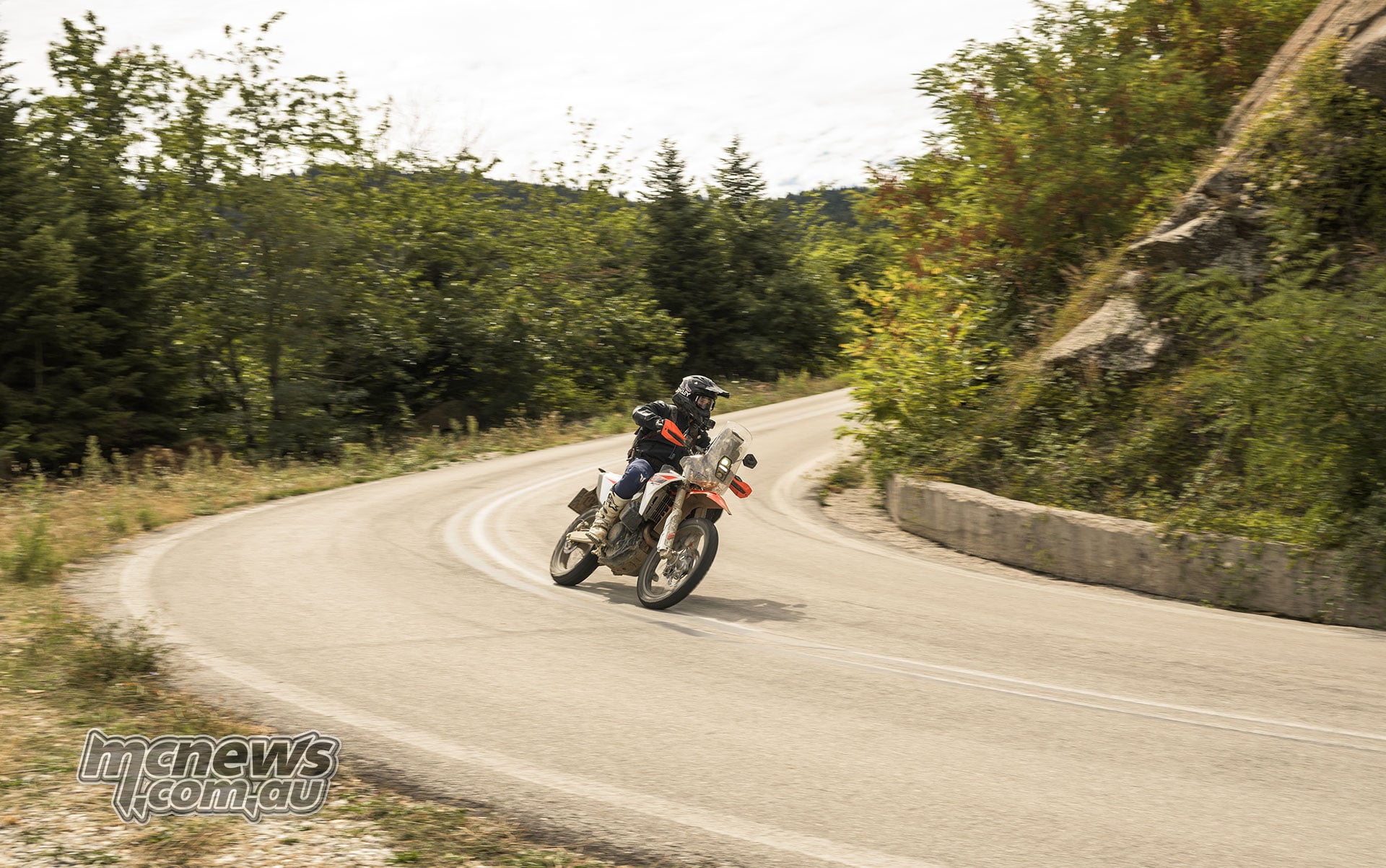
Still very much a 690
Making it easier to manage hasn’t turned the Rally into some soft, friendly trailbike.
The latest 692.7 cc LC4 single produces 78 horsepower at 8000 rpm and 73 Nm at 6750 rpm.
That is a serious amount of mumbo from one cylinder.
The latest LC4 isn’t simply an old engine dropped into new bodywork, either. This generation has a redesigned crankcase, revised oiling system, updated intake and airbox, and revised fuelling to combine its performance with Euro 5+ compliance.
There’s a sizeable 50 mm Keihin throttle body, ride-by-wire engine management and dual ignition, while a hydraulically operated PASC slipper clutch connects that big single to the six-speed gearbox.
I can see the relatively low 161.5 kg no-fuel weight attracting riders who don’t want to wrestle a big twin in the dirt, and that’s completely understandable.
But I wouldn’t confuse light weight with beginner-friendly.
Even with the electronics helping you out, the 690 still has a fairly aggressive engine. There isn’t really a setting that turns it into a sleepy trail bike.
Street and Off-road ride modes are standard, while the optional Rally Mode opens up more adjustability over traction control and throttle response.
Cornering MTC and cornering ABS use information from KTM’s 6D sensor, while Rally Mode also brings Dynamic Slip Adjust into play. That system is quite clever.
Rather than rigidly enforcing the same amount of wheelspin regardless of what’s underneath you, it can automatically allow additional slip when the terrain requires more wheelspin to find traction, then returns to your chosen setting as conditions improve.
There’s also proper Off-road ABS, allowing you to lock the rear wheel while retaining ABS assistance at the front, and KTM sensibly provides a dedicated button to turn ABS completely off when you want to. Experienced riders will love that.
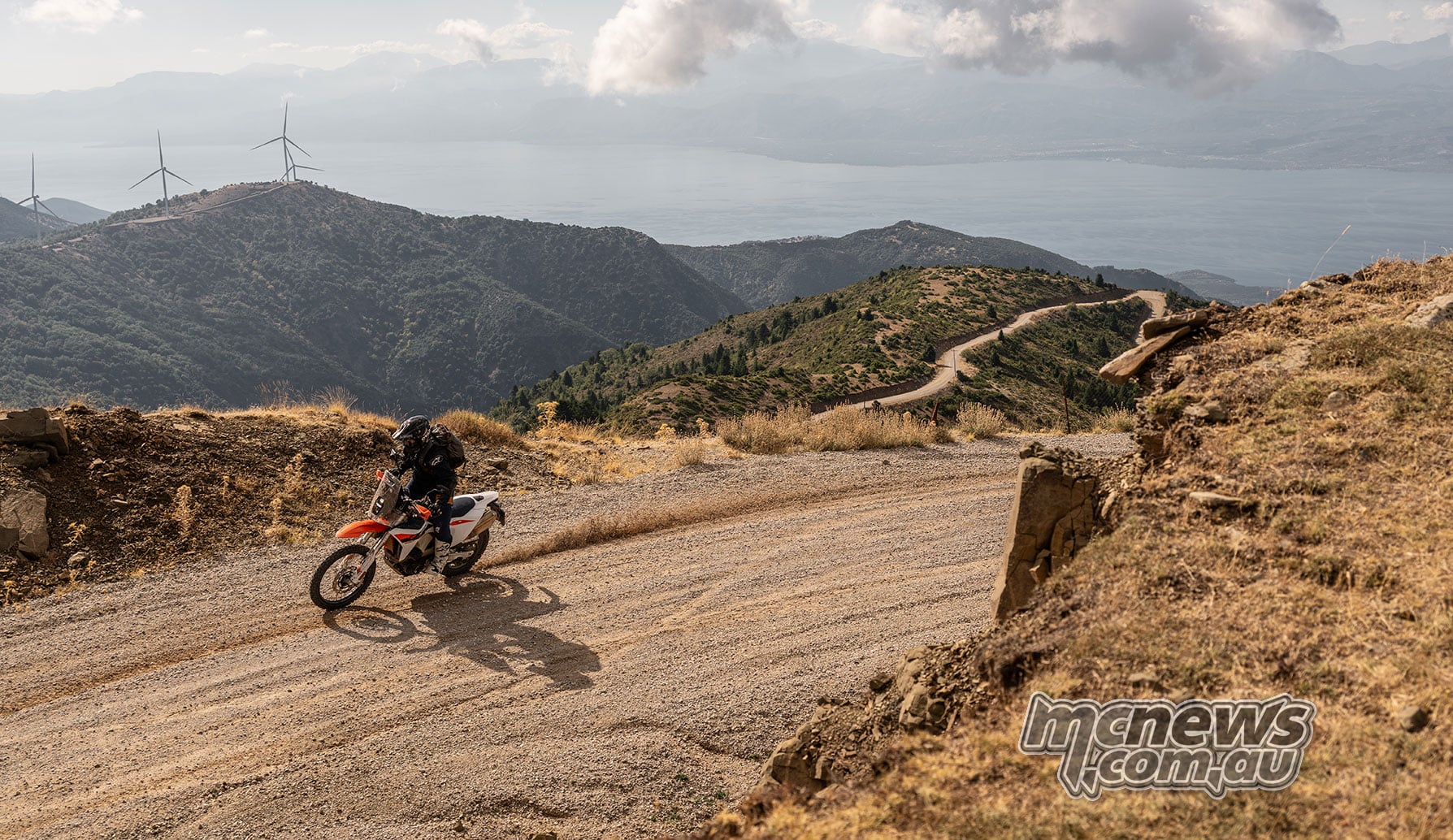
You can cover road kilometres without feeling like you’re wringing the neck of an enduro bike and, once you hit the dirt, there’s more than enough power to uncork your inner dickhead when the opportunity presents itself.
For someone relatively new to off-road riding, though, I’d still have some respect for it. It’s a light adventure bike. It’s certainly not a slow one… There is more than enough mumbo to get you into trouble.
Proper dirt-bike intent underneath
The chassis and suspension are equally serious about the dirt side of the equation.
The chromoly-steel trellis frame is based on the latest 690 Enduro R chassis, which already received revised stiffness characteristics aimed at improving rider feedback and control.
For the Rally, KTM has then engineered dedicated mounting points into that platform for the front tanks and rally tower, rather than hanging a collection of aftermarket brackets from it.
The 48 mm WP XPLOR fork delivers 265 mm of travel, using the familiar split-damping arrangement with compression adjustment in the left leg and rebound in the right. Both offer 30 clicks of adjustment from dials at the top of the fork.
At the rear, a linkage-equipped WP XPLOR shock provides 250 mm of travel along with adjustment for preload, rebound and both high- and low-speed compression damping.
Ground clearance is 265 mm, and the wheels are the proper dirt-bike combination of 21 inches up front and 18 at the rear.
Those numbers also contribute to that 935 mm seat height. It’s tall. There’s no getting around that.
But once you’re moving, the bike’s narrowness and relatively low overall mass help disguise it.
More importantly for me, as a lifetime bush, motocross and hard-enduro rider, standing up and riding the thing properly feels natural.
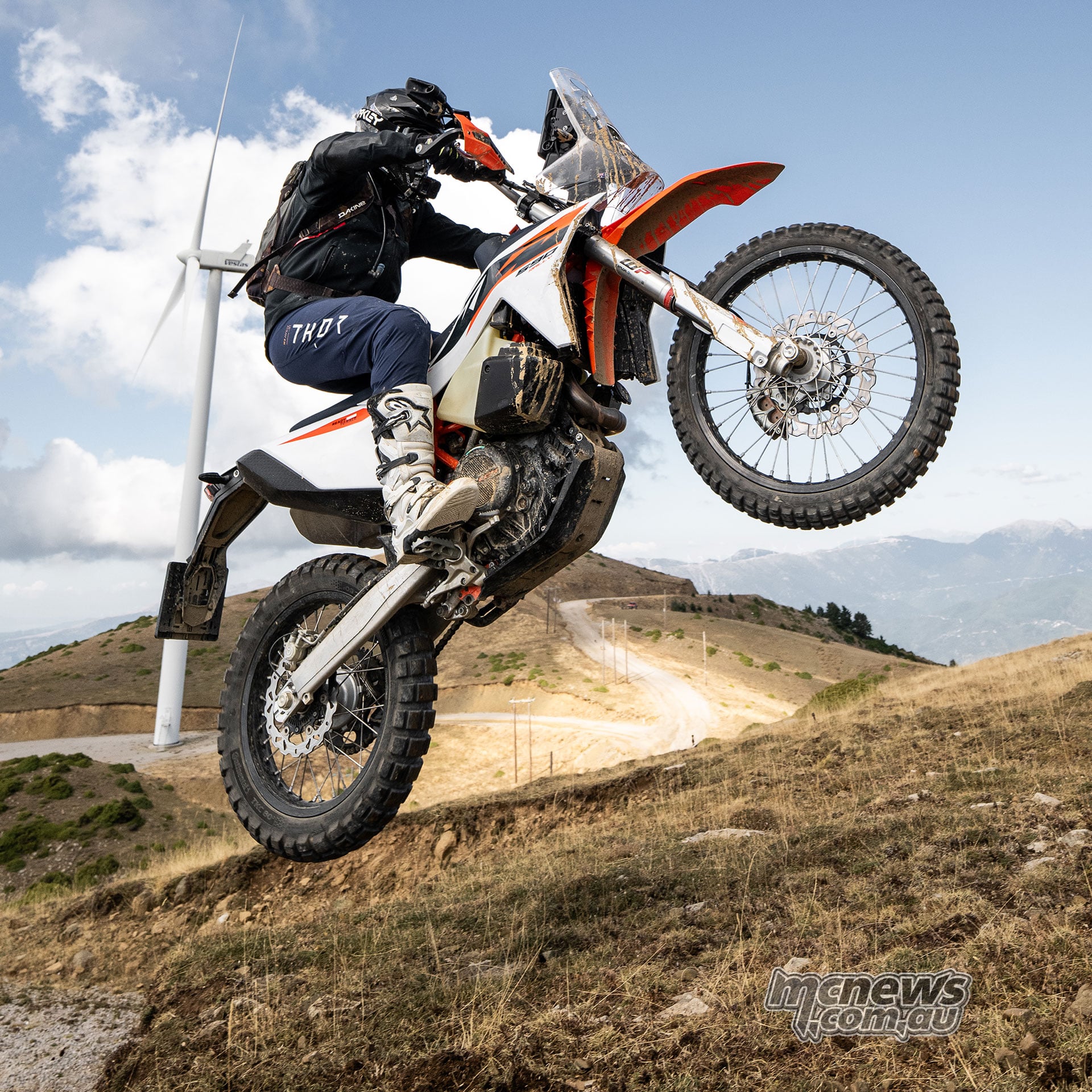
KTM hasn’t built something that merely looks like a rally bike. You can tell the dirt side of the equation has remained the priority.
The bike people were already building
That brings us back to why this motorcycle exists in the first place.
People have been throwing a lot of money at 690 Enduro Rs for years. Buy the bike. Add a tower. Bigger tanks. Screen. Navigation mounts. Better seat. Protection. Luggage. By the time you’re finished, you’ve potentially spent thousands on top of the purchase price, with a collection of aftermarket parts all trying to turn the Enduro R into the motorcycle you actually wanted.
The Rally changes that equation.
The tower and screen are properly integrated into the motorcycle, rather than a collection of brackets hung from an Enduro R. The LED headlight arrangement comes from KTM’s pukka 450 Rally machine, and you get a proper 4.2-inch TFT cockpit rather than the sparse instrumentation traditionally associated with the 690.
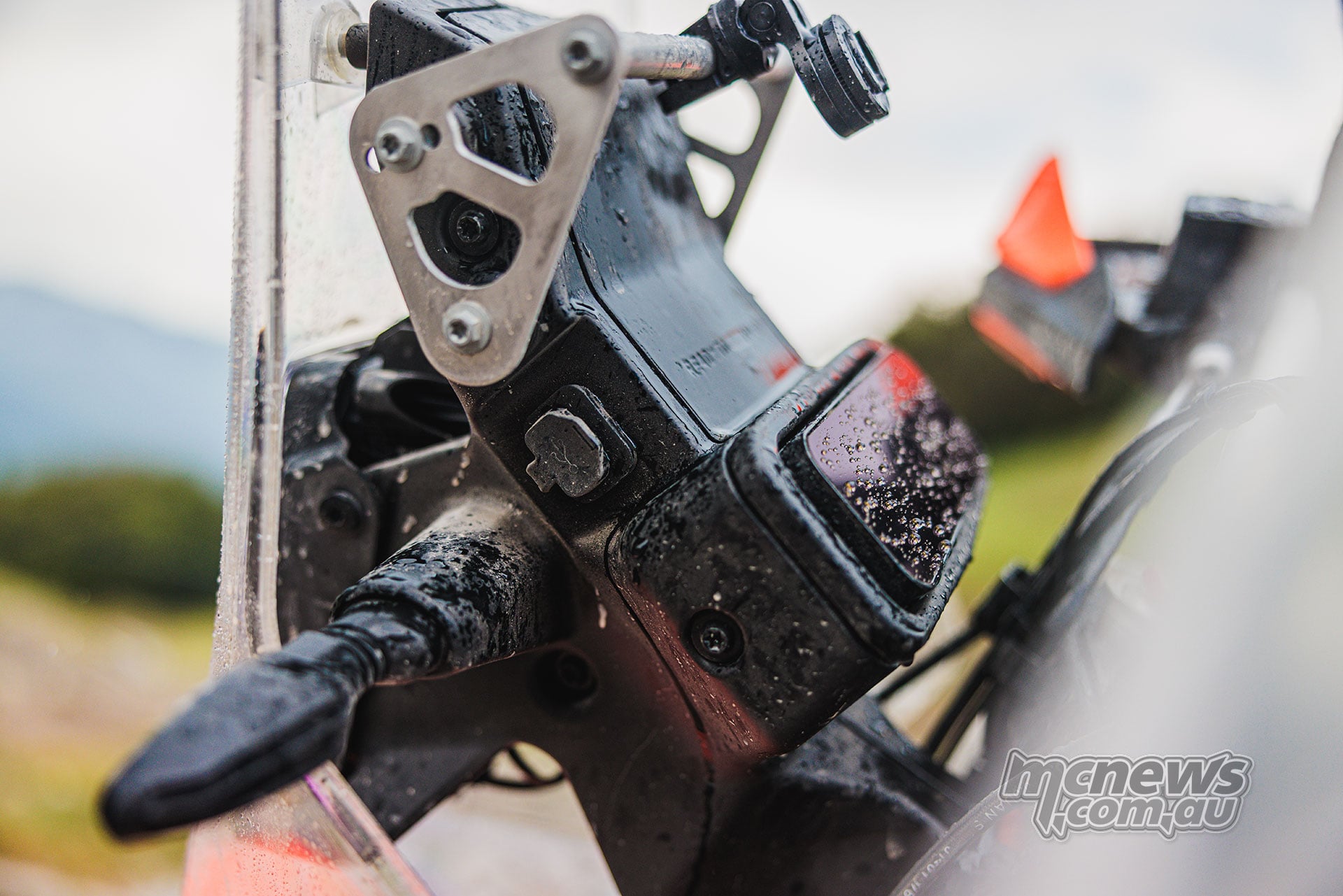
KTMconnect adds smartphone connectivity, turn-by-turn navigation, music and call management, while USB-C and a conventional 12-volt outlet give you sensible options for powering navigation gear and other accessories.
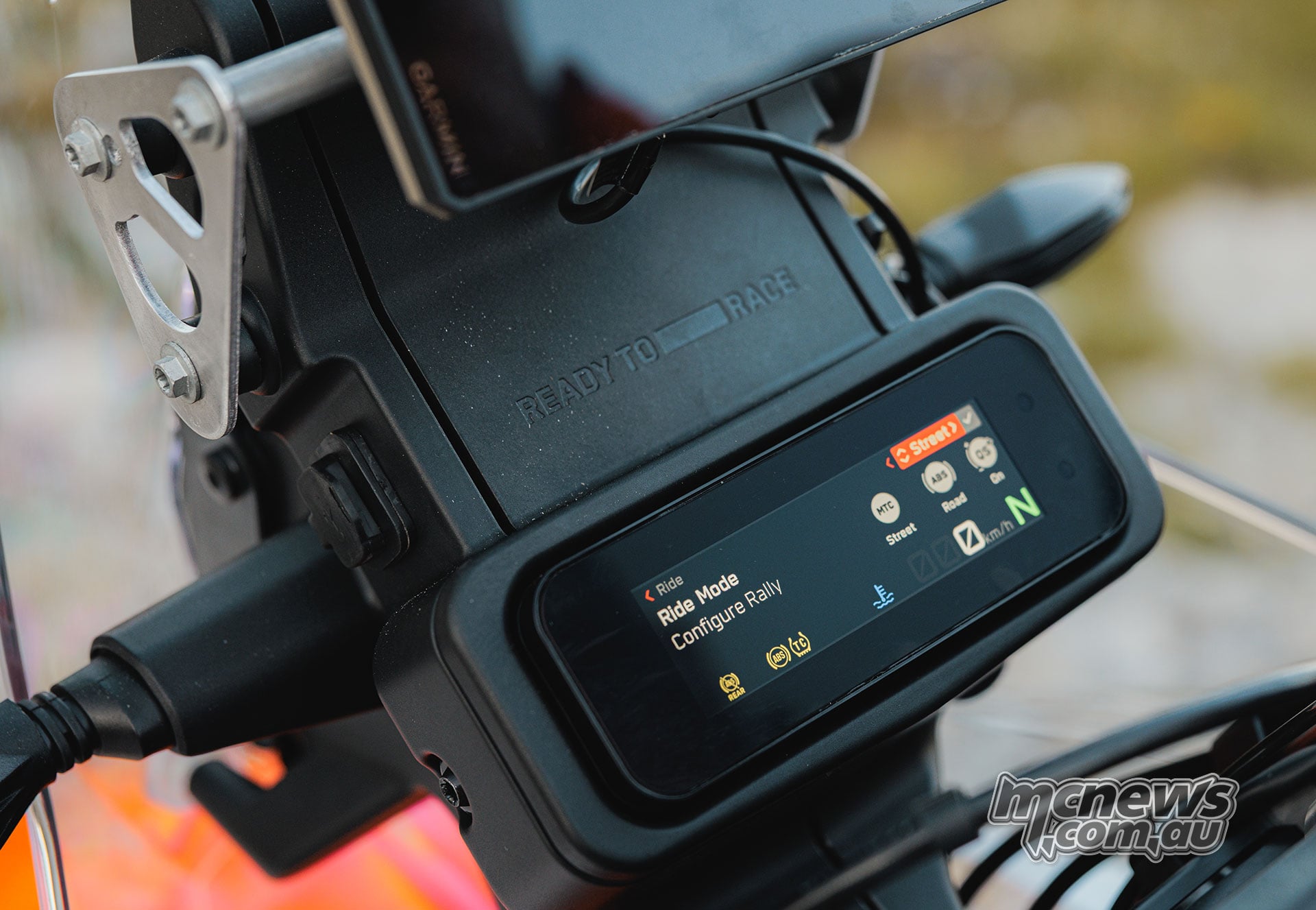
There’s even a protected mounting point for the tool pouch tucked behind the right-side front tank fairing, where it’s accessible without removing the seat or half the motorcycle.
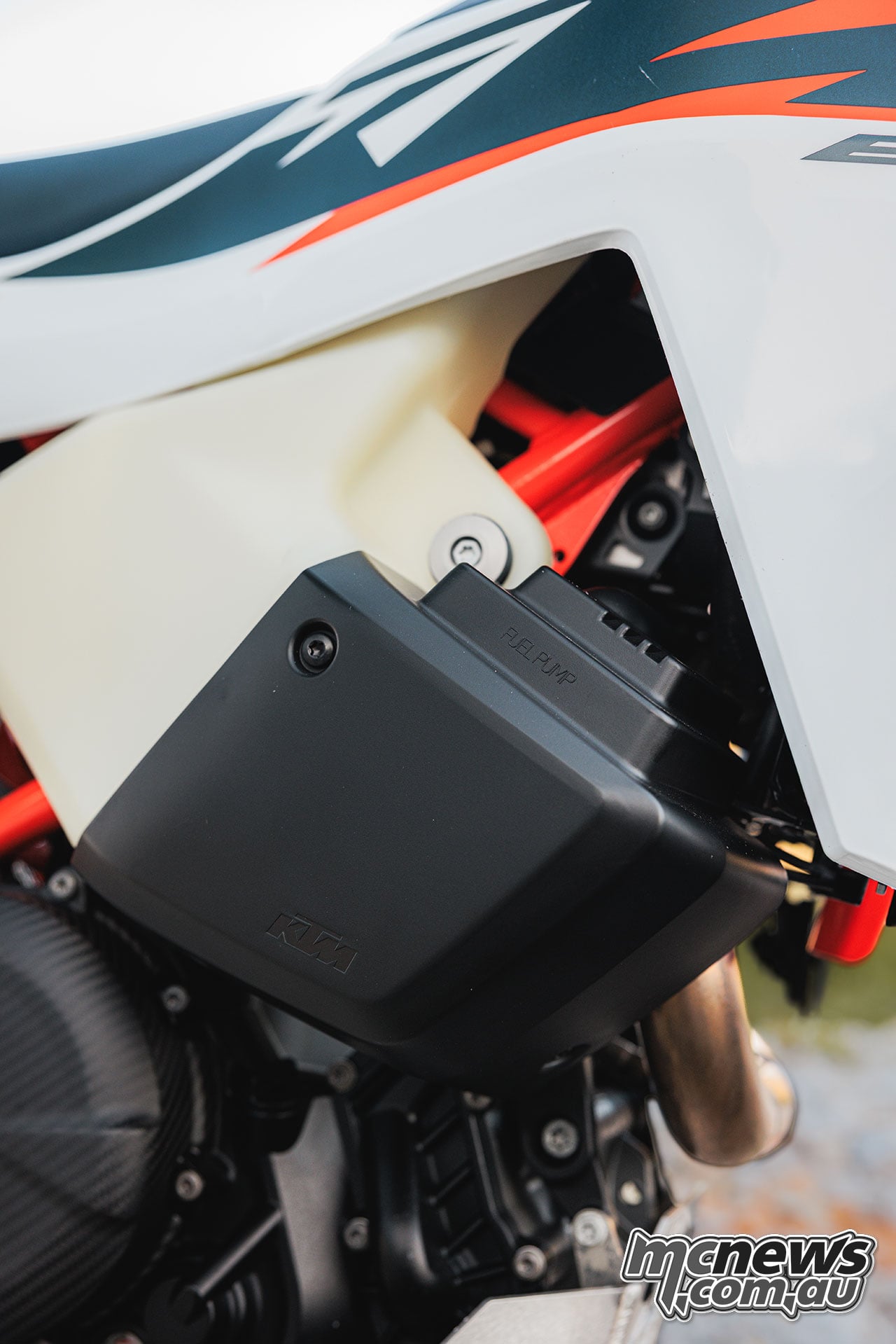
Optional cruise control becomes pretty important once you start talking about Australian adventure riding.
Cruise control isn’t something I care about while I’m standing on the pegs, but Australia involves some bloody long transport sections before you get to the interesting stuff.
Being able to give your throttle hand a rest is worth having and might even be the difference between getting home with your licence intact.
Quickshifter+ is another available electronic option for those who want it.
Then there is the price
This is where the factory-built argument becomes particularly interesting.
The 2027 KTM 690 Rally is $23,595 ride-away in Australia. The current 690 Enduro R is $21,195 ride-away.
That’s only $2400 between them before you’ve bought a single aftermarket tank, rally tower, screen, headlight assembly, navigation bracket or any of the other hardware people have traditionally fitted to turn the Enduro R into an adventure bike.
Through that lens, the Rally starts making financial sense pretty quickly.
Australian deliveries are expected from December 2026.
Four-year warranty and serious service intervals
Another part of the ownership equation is easy to overlook when we’re all talking about suspension travel and horsepower.
The 690 Rally is eligible for KTM’s Premium Manufacturer’s Warranty, providing up to four years of coverage provided the scheduled servicing requirements are maintained through an authorised KTM dealer.
For a motorcycle explicitly intended to disappear into the distance, that is not an insignificant part of the proposition.
Neither are the service intervals. KTM specifies oil changes at 15,000 km and valve-clearance inspections at 30,000 km on this latest LC4.
Would I personally leave oil in a big single for 15,000 kilometres after flogging it through Australian dust? Probably not. But the number itself tells you something about what KTM expects this engine to do.
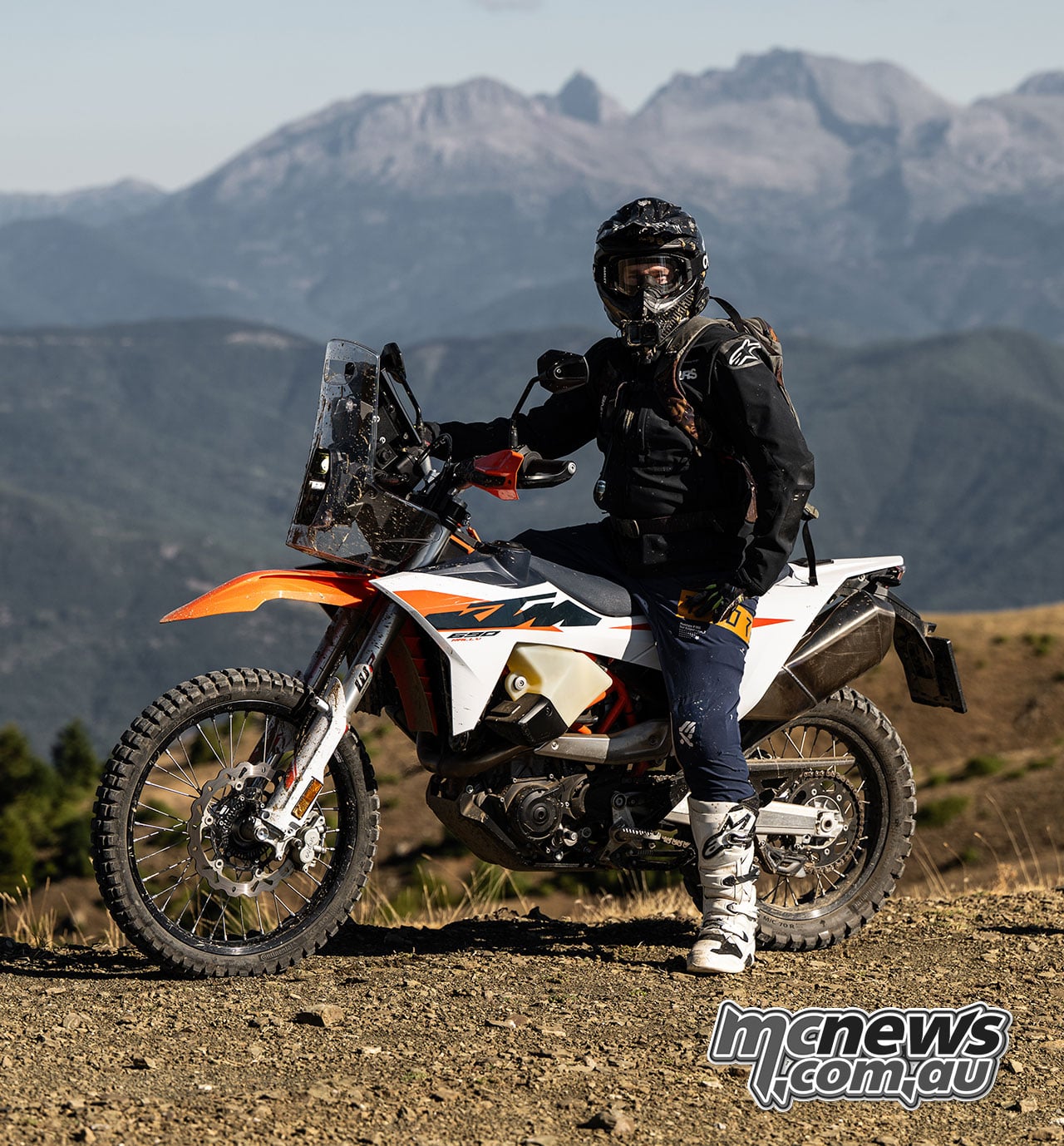
Ready to Race… after Saturday morning in the shed
It is interesting, though, that even after KTM has done so much of the work for us, there’s still a little bit I’d do before calling mine finished.
KTM has been telling us its motorcycles are Ready to Race for a long time.
For Australian adventure riding, I’d probably call this one Ready to Race with a Saturday morning in the shed first.
I’d fit heated grips.
They might not be necessary in every country this bike will be sold in, but for Australian alpine riding, winter mornings and the conditions we regularly encounter at home, I’d want them.
I’d also put a proper bash plate underneath it.
KTM already has protective options in its PowerParts catalogue, and there’ll undoubtedly be plenty of aftermarket choices soon enough, but personally I’d like to have seen something substantial fitted standard to a motorcycle carrying the Rally name.
The next job would be filtration.
For Australian conditions, I’d want a quality foam filter, and I’d be making sure the airbox was properly sealed before spending days following other bikes through bulldust.
That’s not necessarily a criticism of the 690 Rally. It’s simply part of setting up an adventure bike for the conditions we ride in.
And finally, I’d probably put a slip-on muffler on it. Not because it needs more power. It doesn’t.
But the standard Euro 5+ compliant stainless exhaust system is substantial, and if I could take some weight off while giving that big single a nicer note, I’d do it.
So despite everything people have traditionally done to turn a 690 into an adventure bike, we’re now really talking about electronics, heated grips, protection, filtration and possibly a muffler.
That’s hardly rebuilding the motorcycle.
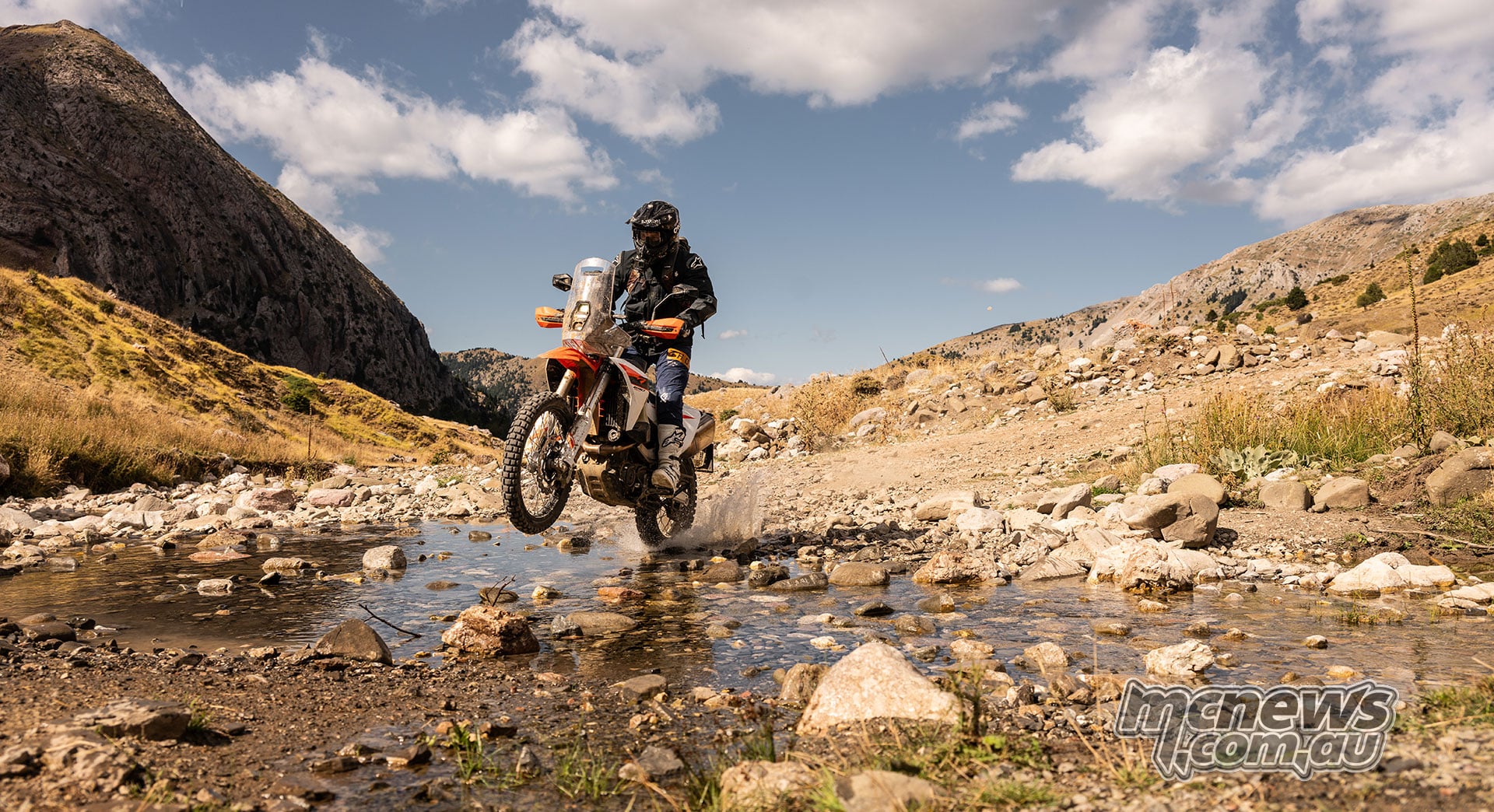
Why not start with a 500?
The other bike that inevitably enters this conversation is the 500 EXC-F, and it’s a fair comparison.
A 500 is much lighter and already an exceptional off-road motorcycle. In recent years, it has also proven its mettle over the long haul, with many riders logging 20,000 kilometres or more on what is essentially a competition-bred enduro machine. Still, plenty of Australian riders have converted them into adventure bikes with bigger tanks, towers, navigation equipment, seats and luggage.
I’ve ridden 500s plenty and completely understand the attraction. Start with something incredibly light and add only what you need. But there’s a point where that philosophy starts working against itself. Put a tower on it. Add fuel. Navigation gear. Luggage. Camping gear.
Pretty soon that beautifully light enduro bike isn’t quite as light anymore, and everything underneath it is still fundamentally designed around a competition enduro platform.
That’s where the 690 starts making more sense. The LC4 is designed to do distance. Again, we’re talking 15,000 km oil-change intervals and 30,000 km valve-clearance inspections.
Compare that with a competition-derived enduro platform where maintenance is traditionally measured in hours rather than tens of thousands of kilometres.
Then there are all the other bits people don’t necessarily think about when they’re comparing weights. Wheel bearings. Chain and sprockets. Suspension components. Chassis.
Everything gets asked to work harder once you load a bike with extra fuel and adventure gear, then smash it across corrugations for thousands of kilometres.
The 690 starts with a heavier-duty platform.
Yes, you pay for that on the scales, but you also benefit when the objective shifts from riding an enduro loop on Sunday to disappearing across Australia for a week.
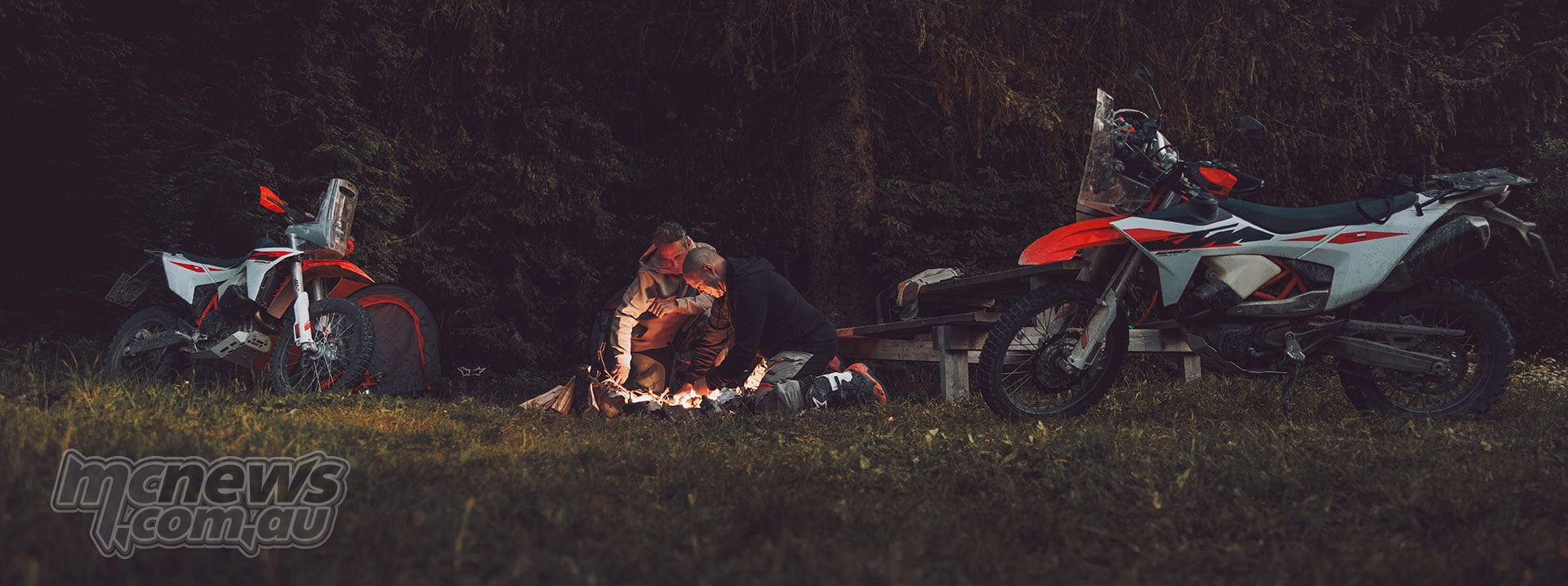
The engine is another part of that equation.
A 500 has plenty of performance when it’s a 500 enduro bike. Start loading it with rally equipment, extra fuel and luggage, though, and you’re asking that engine and chassis to do a job they weren’t primarily designed around.
The 690’s 78 horsepower and mountain of torque give you plenty in reserve. Load it up, and you can still sit comfortably on the highway, overtake without planning it three days in advance, and then hit the dirt with enough performance left to have some fun.
After riding the Rally, I think KTM chose the right platform.
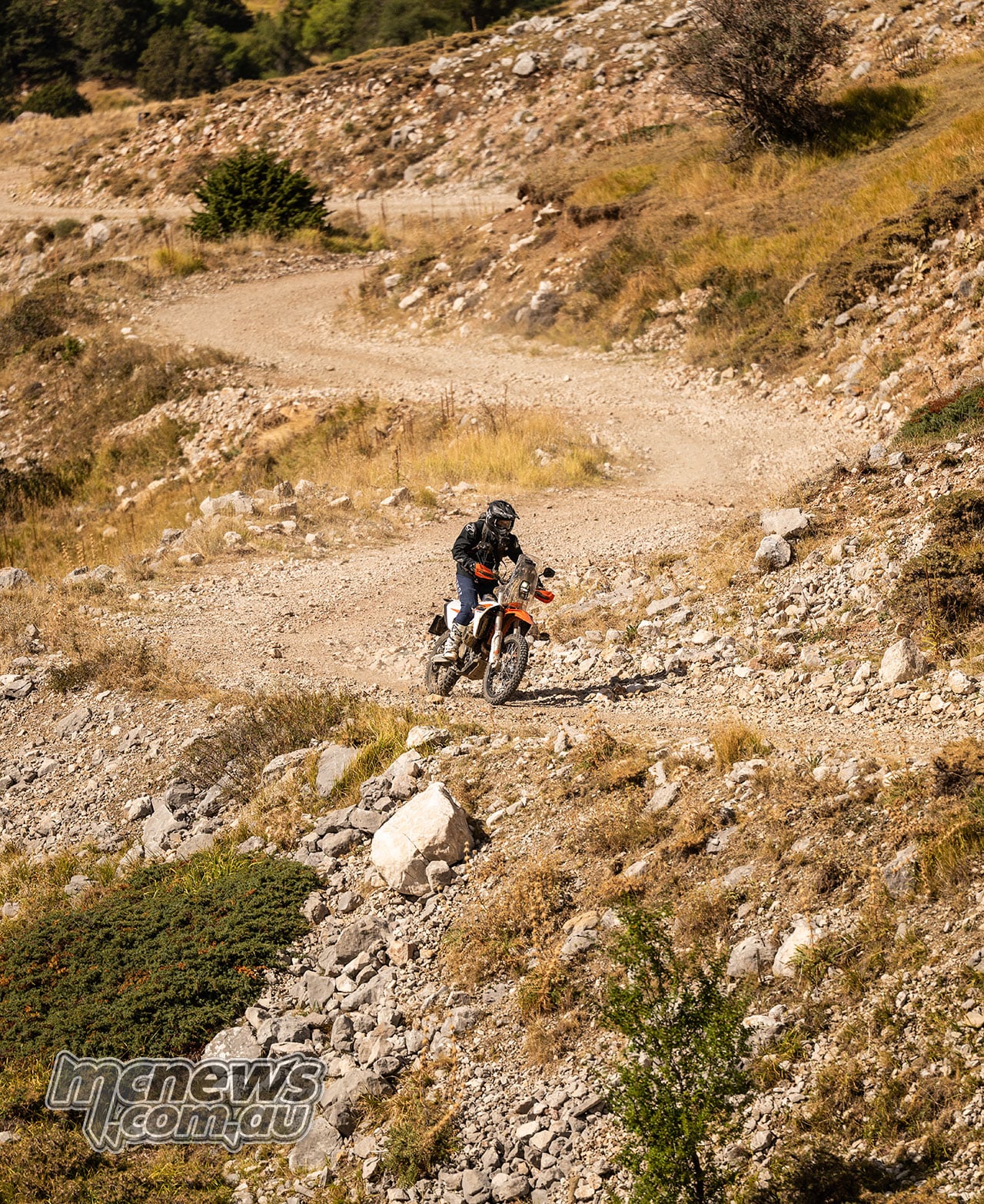
Somewhere between a 500 and an 890
And that’s really where the whole motorcycle starts to make sense.
A 500 EXC-F is still the thing I’d rather have if the day was predominantly proper enduro terrain.
An 890 Adventure R gives you more comfort and road presence if the trip involves big kilometres, luggage and faster open-country adventure riding.
There’s a pretty substantial gap between those two motorcycles.
The 690 Rally lands right in it.
You can knock over 100 kilometres of twisting bitumen without feeling like you’re punishing yourself just to get to the good stuff.
Then when the road disappears, you haven’t suddenly got a massive motorcycle underneath you.
If the track gets worse, you want to keep going and find out where it leads.
And we’ve all got that mate that will lead you down a track rougher than a pair of hessian undies. (Editor’s Note: And that bloke is named Aiden Gale!)
Which brings me back to my old 690 Enduro R.
When I bought that bike, I was hoping it would bridge that same gap. Obviously I knew it didn’t have the tower or the tanks, but in my head I wanted it to sit somewhere between an enduro motorcycle and a large adventure bike.
It never quite did.
Eventually I sold it because I always felt like I was asking an enduro bike to become something else.
The Rally is different.
KTM hasn’t ruined the 690 by trying to make it into a smaller 890, either.
It still feels like a big dirt bike.
It still has the punchy LC4 engine.
But now you’ve got wind protection, proper fuel range, navigation provisions, a more useful cockpit, serious suspension travel and enough comfort to actually contemplate spending days on it.
It finally feels like the middleweight single-cylinder adventure bike the 690 platform always had the potential to become.
Would I spend $23,595 of my own money on one?
That’s ultimately the question that matters.
It’s easy to like a motorcycle when you’ve flown to Greece, someone has handed you the keys, and there’s a fleet of mechanics making sure everything is perfect.
It’s another thing entirely to walk into a KTM dealer at home, pull out your own wallet and part with $23,595 of your hard-earned cash.
I’ve already done that once with a 690 Enduro R, and eventually I sold it because it wasn’t quite the motorcycle I wanted it to be.
This time I reckon KTM has built that motorcycle.
That’s probably the biggest difference between the Rally and every 690 adventure build that came before it.
You don’t have to buy a 690 and then spend thousands trying to turn it into the motorcycle you actually wanted.
KTM has done most of the work for you.
Would I walk into a dealer and spend my own money on one?
Yep. I would.
Because for the sort of riding I enjoy – enough bitumen to get somewhere interesting, followed by absolutely no guarantee what sort of track I’m going to find when I get there – this is probably the 690 I was hoping KTM would build when I bought my first one.
It’s taken them a while.
But in a funny sort of way, KTM and the LC4 have finally gone full circle.
The 690 is a rally bike again.
2027 KTM 690 Rally Specifications
| 2027 KTM 690 Rally Specifications | |
| Engine | Liquid-cooled, four-stroke, single-cylinder |
| Displacement | 692.7 cc |
| Bore x Stroke | 105 x 80 mm |
| Power | 58.1 kW (79 PS) @ 8000 rpm |
| Torque | 73 Nm @ 6750 rpm |
| Compression Ratio | 12.7:1 |
| Valve Train | 4-valve OHC |
| Fuel System | Keihin EFI, 50 mm throttle body |
| Engine Management | Keihin EMS, ride-by-wire, dual ignition |
| Transmission | 6-speed |
| Clutch | PASC slipper clutch, hydraulically operated |
| Final Drive | 15:46, X-Ring 520 chain |
| Fuel Capacity | Approx. 20 litres |
| Fuel Consumption | 4.3 L/100 km |
| CO2 | 99 g/km |
| Frame | Chromium-molybdenum steel trellis, powder-coated |
| Front Suspension | 48 mm WP XPLOR USD fork, fully adjustable |
| Front Suspension Travel | 265 mm |
| Rear Suspension | WP XPLOR shock with linkage, fully adjustable |
| Rear Suspension Travel | 250 mm |
| Front Wheel | 21-inch spoked wheel, 1.85-inch rim |
| Rear Wheel | 18-inch spoked wheel, 2.50-inch rim |
| Front Tyre | 90/90 R21 |
| Rear Tyre | 140/80 R18 |
| Front Brake | 300 mm disc, Brembo two-piston axial caliper |
| Rear Brake | 240 mm disc, Brembo single-piston floating caliper |
| Steering Head Angle | 62.3 degrees |
| Trail | 121 mm |
| Ground Clearance | 265 mm |
| Seat Height | 935 mm |
| Weight | 161.5 kg without fuel |
| Oil Change Interval | 15,000 km |
| Valve Clearance Check | 30,000 km |