

2027 Ducati Multistrada V4 Pikes Peak
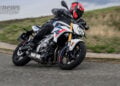
Ducati has given the Multistrada V4 Pikes Peak a new look for 2027, but the graphics are really just the wrapping around what remains one of the most formidable real-world road motorcycles on the planet.
The Pikes Peak has always been the Multistrada for riders who look at the standard model’s adventure-bike stance and think less about gravel roads and more about how quickly they can get from one side of a mountain range to the other.
Seventeen-inch forged wheels, proper sports rubber, Öhlins semi-active suspension, Panigale-grade braking hardware, a more aggressive riding position and 170 horsepower from the beautifully tractable V4 Granturismo make this a very different proposition to a conventional big-bore adventure bike.
There are faster motorcycles in a straight line and plenty that are lighter. There are also more extreme Multistradas, most notably the V4 RS. But when the road is bumpy, twisting and unpredictable, and you factor in vision, leverage, suspension travel, comfort and an engine that can be used hard without demanding superbike revs, there is still a very strong argument for the Pikes Peak being among the fastest point-to-point real-world streetbikes money can buy.
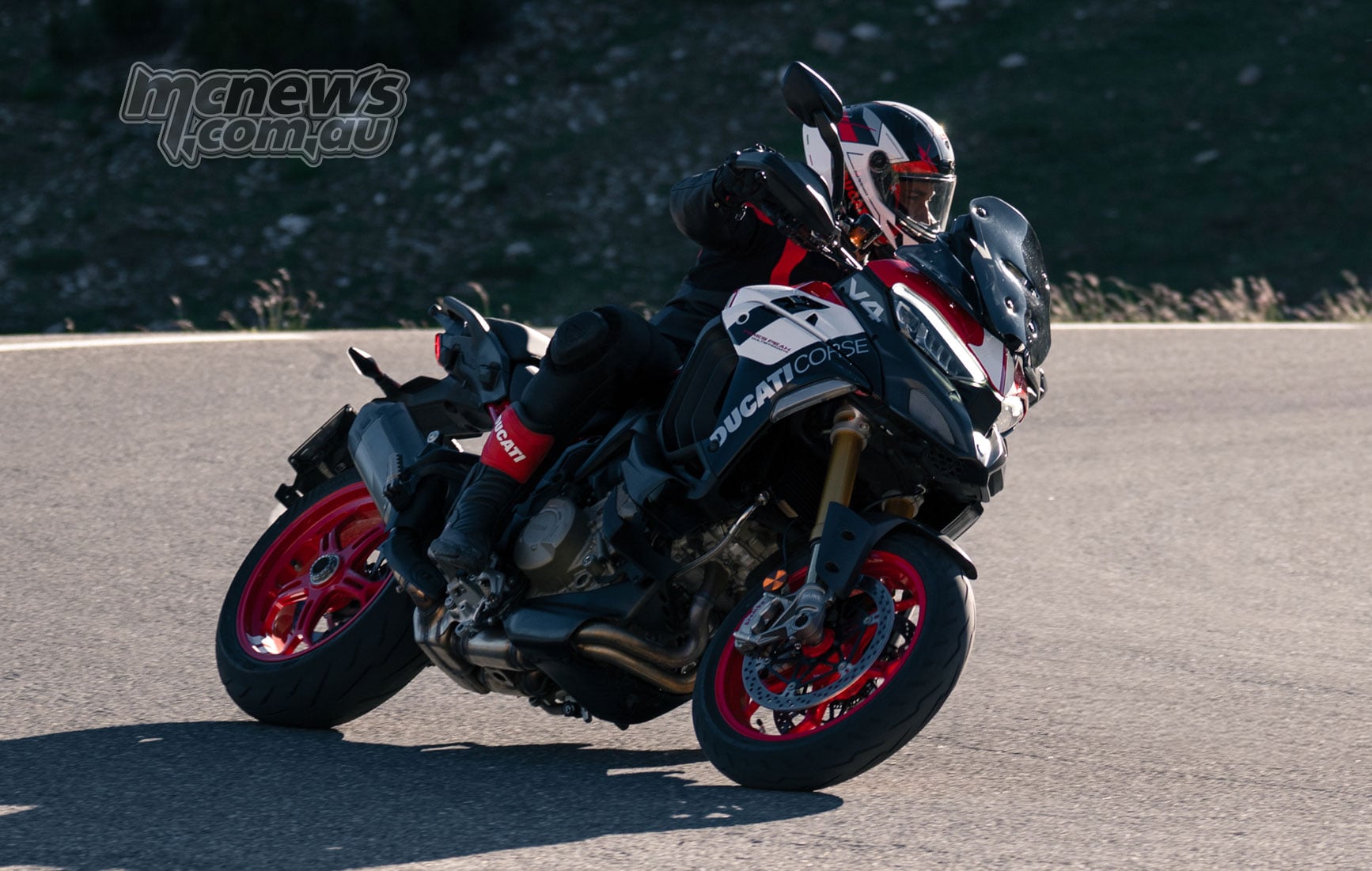
A point-to-point weapon
We have been down this road before. When we tested the Multistrada V4 S in 2021, we came away thinking a more road-focussed version of that platform could be the fastest real-world point-to-point motorcycle on the planet. Ducati subsequently produced exactly that motorcycle in the form of the Pikes Peak.
You can revisit our Multistrada V4 S review here, along with our original coverage of the first V4 Pikes Peak.
Since then Ducati has also introduced the considerably more exotic Multistrada V4 RS, and we have previously made much the same point-to-point argument for that machine. The RS brings 180 horsepower, a Desmosedici Stradale engine and a more uncompromising specification, and you can read our Multistrada V4 RS analysis here.
The Pikes Peak takes a slightly different route. It retains the wonderfully broad and civilised V4 Granturismo powerplant, longer suspension travel and the long-distance usability that makes the Multistrada such a devastating road bike in the first place. For imperfect public roads rather than a billiard-table-smooth circuit, that combination has plenty going for it.
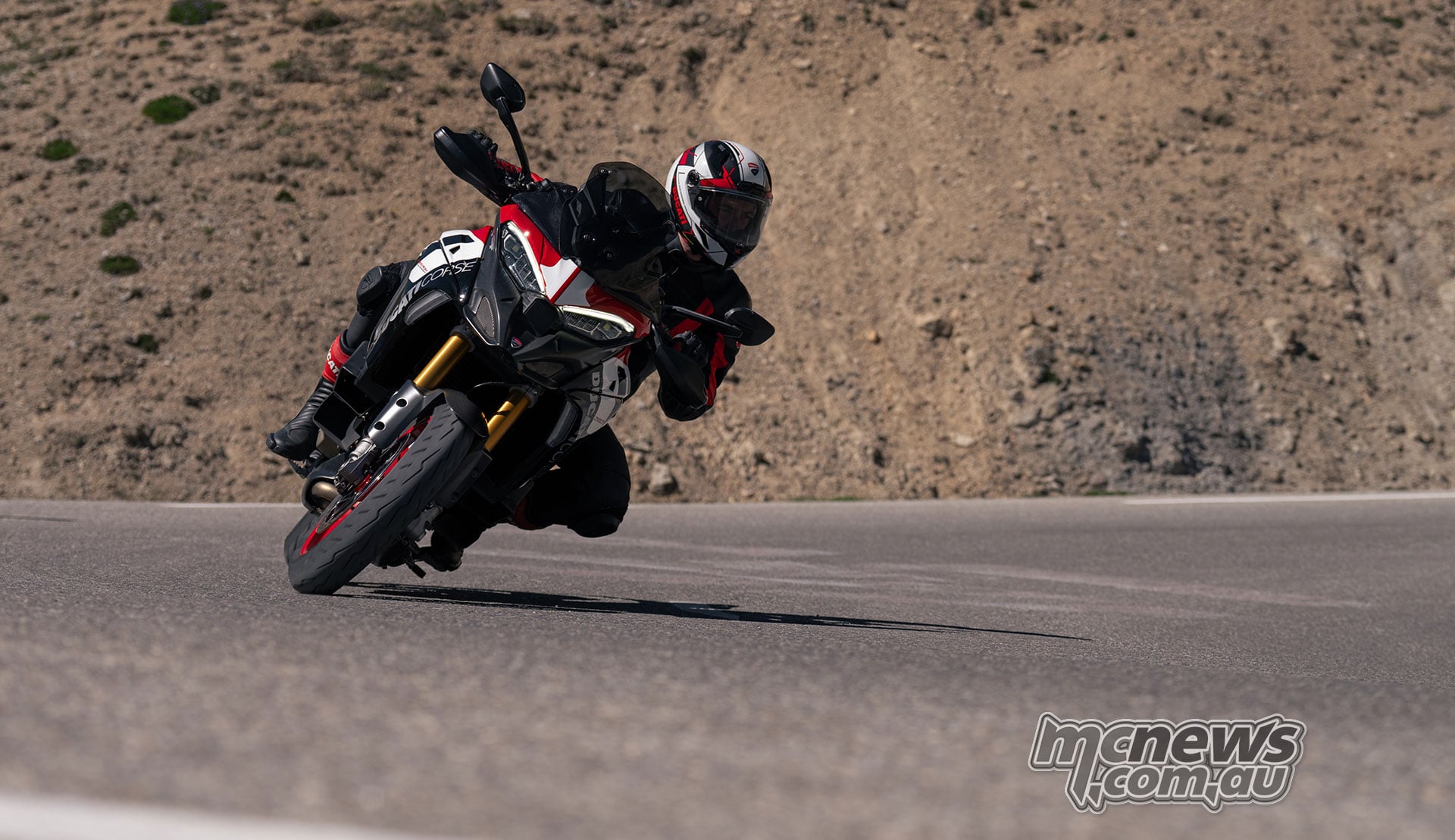
What actually changes for 2027?
Mechanically, Ducati has not reinvented the Pikes Peak for 2027. The important changes are visual and configurational rather than a wholesale chassis or engine redesign.
For Ducati’s Centenary year, Centro Stile Ducati and Drudi Performance have developed a new colour scheme inspired by the Desmosedici GP and Panigale V4 R raced by Ducati’s factory MotoGP and WorldSBK teams.
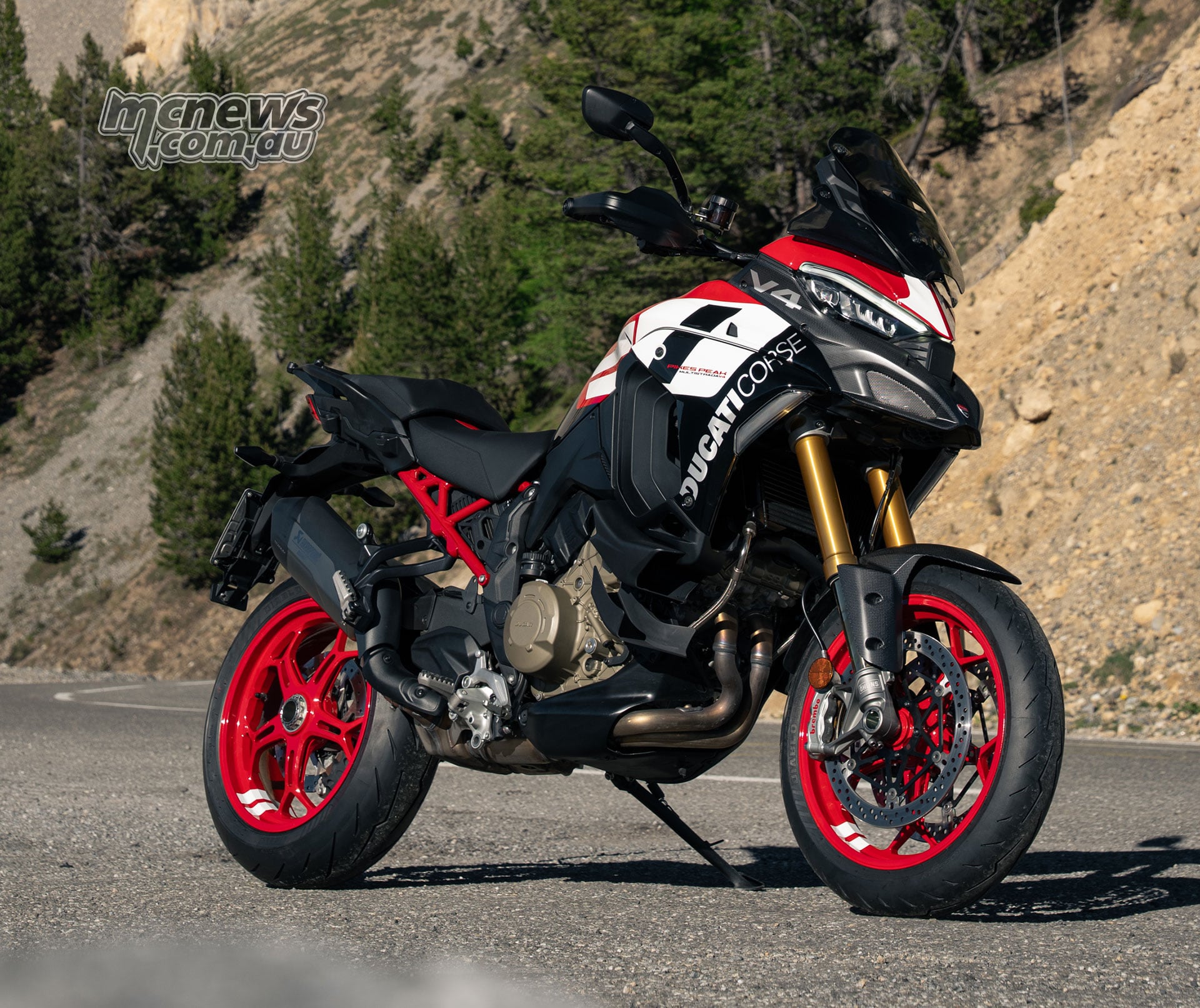
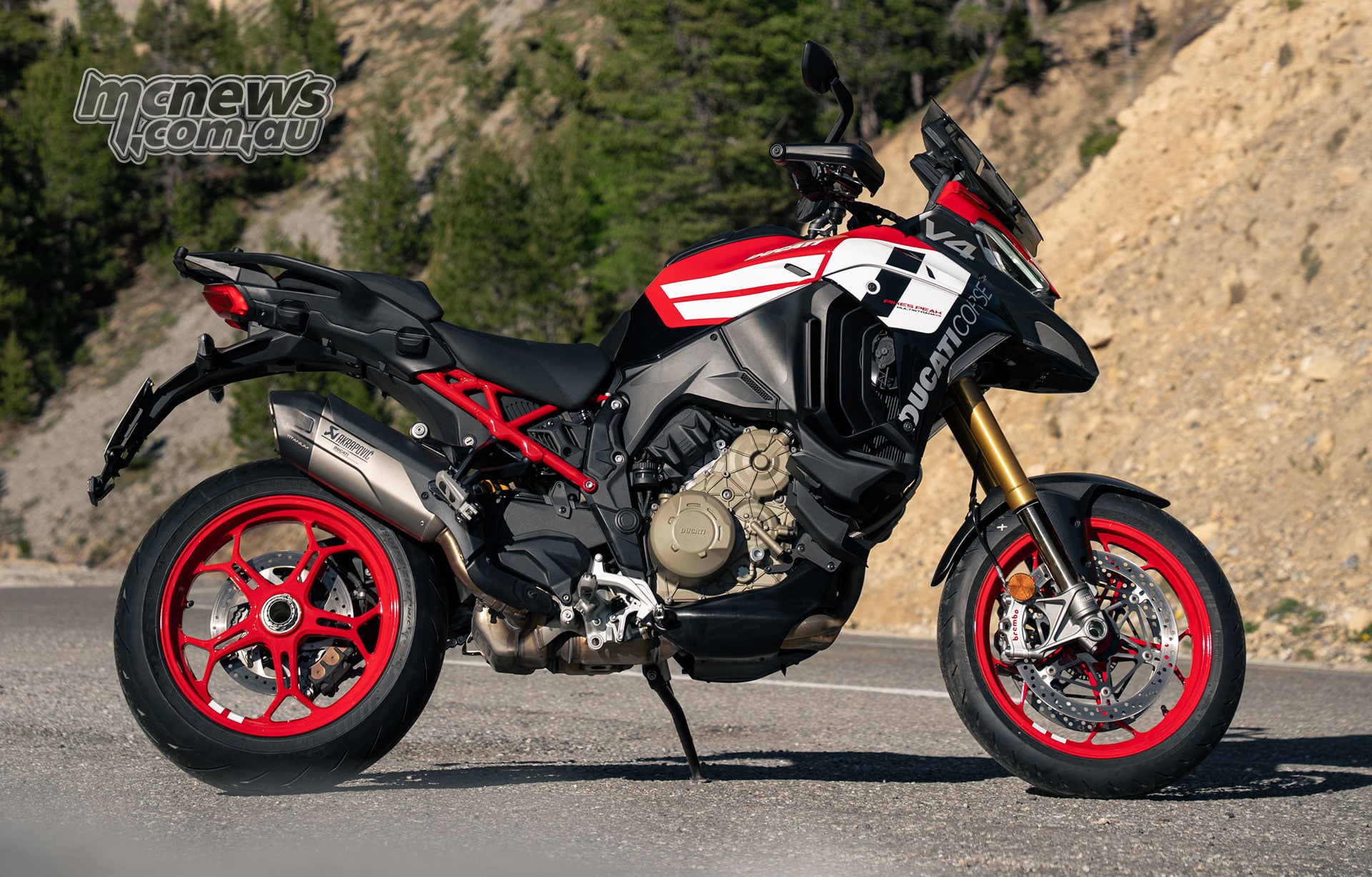
The white, red and black scheme incorporates racing-style number panels and sits alongside the model’s familiar carbon-fibre trim, low smoked screen, gold-anodised Öhlins fork legs, V4-branded seat and Ducati Corse detailing.
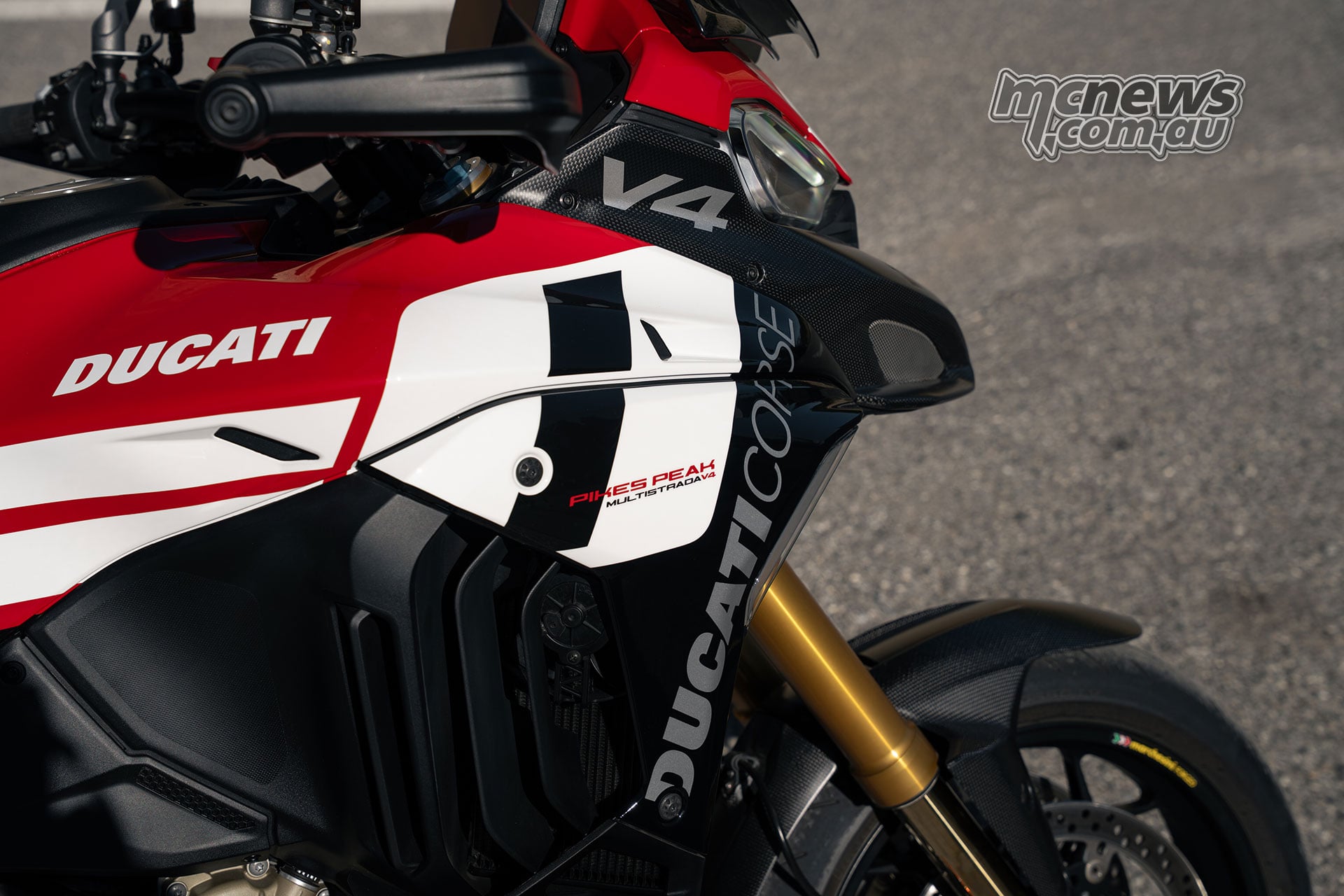
The 2027 model also becomes part of Ducati’s Factory Made programme, allowing customers to configure the bike with considerably more factory-finished personalisation before delivery.
Options include the striking red forged wheels seen in many of these images, red or black brake calipers, alternative-height seats, additional carbon-fibre components, auxiliary lights and a complete luggage package comprising panniers and top box.
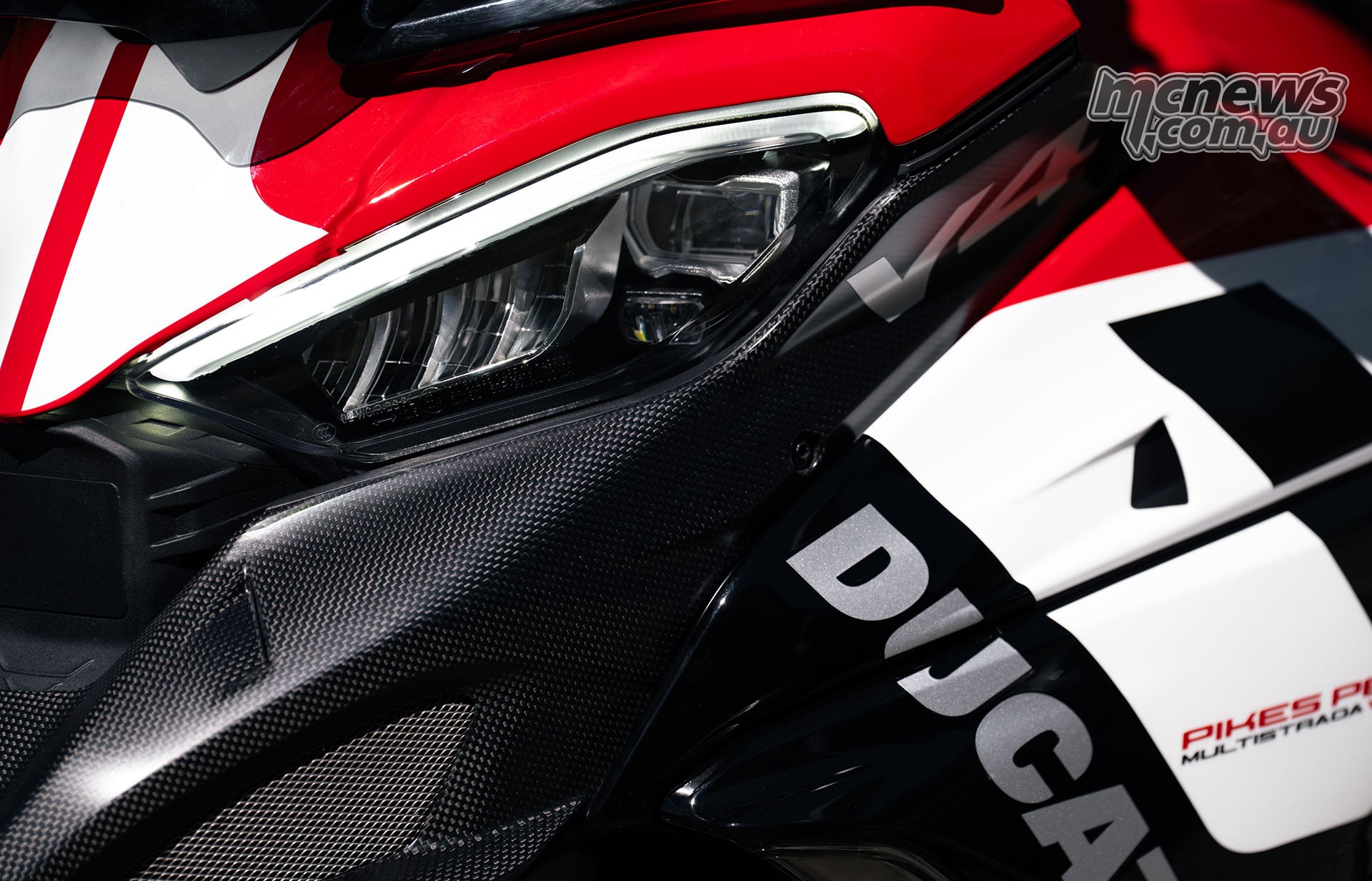
The V4 Granturismo remains the ace card
At the heart of the Pikes Peak is Ducati’s 1158 cc V4 Granturismo, producing 170 horsepower at 10,750 rpm and 123.8 Nm of torque at 9000 rpm.
Those figures do not tell the full story. One reason the Granturismo engine works so well on the road is its exceptionally progressive delivery. There is serious performance at the top end, but you don’t need to live near the limiter to make rapid progress.
The 90-degree V4 runs a counter-rotating crankshaft, a concept honed through Ducati’s MotoGP experience. By working against some of the gyroscopic effect generated by the wheels, it assists changes of direction and helps disguise some of the mass inherent in a large-capacity touring motorcycle.
The extended rear-cylinder-bank deactivation strategy can shut down the rear pair of cylinders not only when stationary but also while travelling at low engine speeds under suitable conditions. When you demand more power, all four cylinders come back into play.
Then there are the maintenance intervals. Oil servicing is scheduled every 15,000 km, while valve-clearance inspection stretches right out to 60,000 km. That is an important distinction between the Granturismo-powered Pikes Peak and the more exotic Desmosedici Stradale-powered RS.
Seventeen inches changes everything
The key to the Pikes Peak formula is the 17-inch front wheel.
While the regular Multistrada V4 is designed to retain genuine all-road capability, the Pikes Peak commits to bitumen. It runs 17-inch forged aluminium wheels at both ends, with a 120/70 ZR17 Pirelli Diablo Rosso IV up front and a serious 190/55 ZR17 at the rear.
The standard wheels are black, while the red versions pictured on several of these bikes are part of the Ducati Factory Made personalisation programme.
The aluminium monocoque frame uses Pikes Peak-specific geometry, with a 25.75-degree steering-head angle, 120 mm of trail and a 1595 mm wheelbase.
Ducati has also raised the single-sided swingarm pivot by one millimetre compared with the previous Pikes Peak configuration to increase anti-squat under acceleration, helping maintain chassis accuracy when the rider starts asking serious questions of the rear tyre.
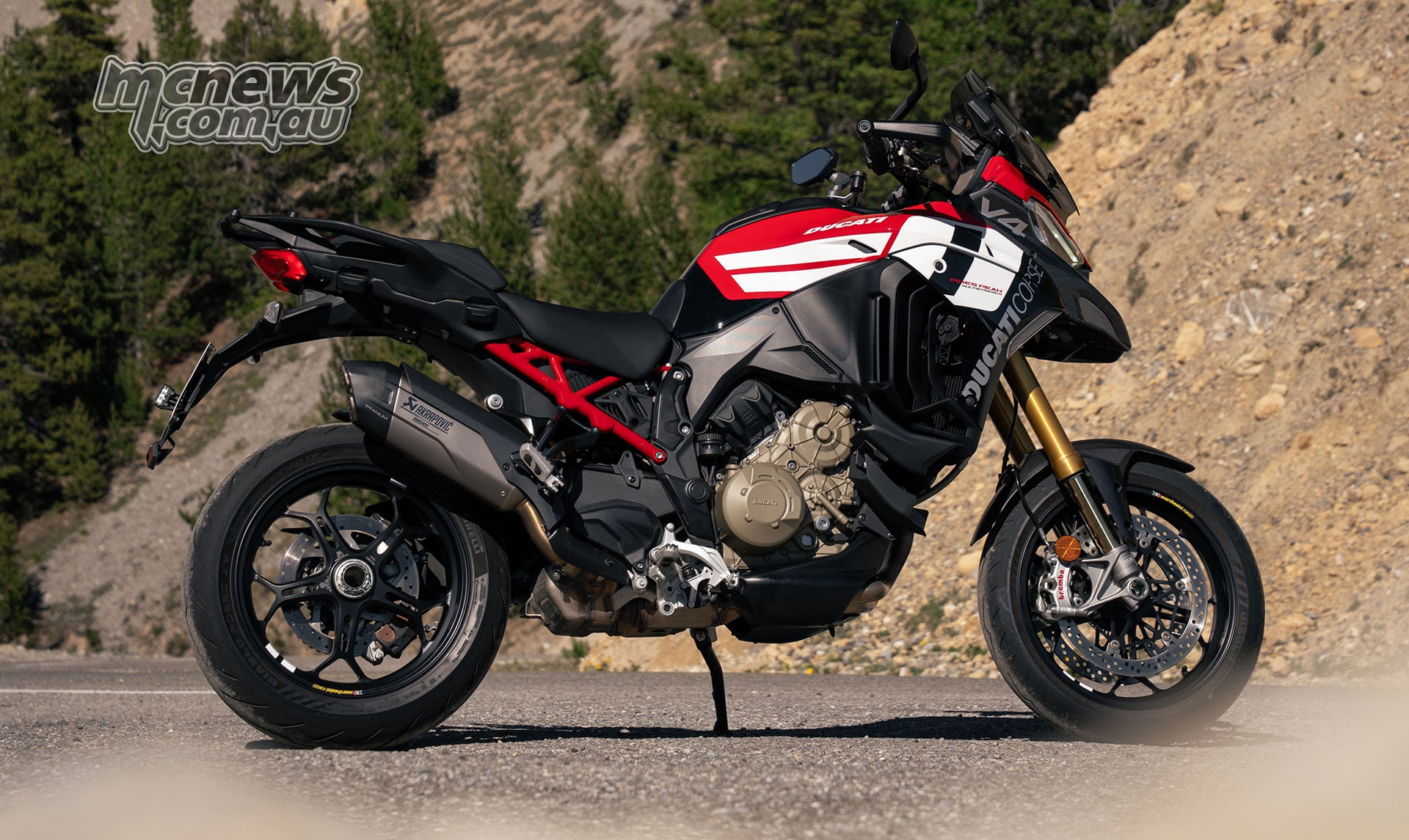
The Pikes Peak weighs 227 kg wet but without fuel. Fill the 22-litre tank and it is certainly no lightweight, but an upright riding position gives the rider much more leverage over that mass than a conventional sportsbike.
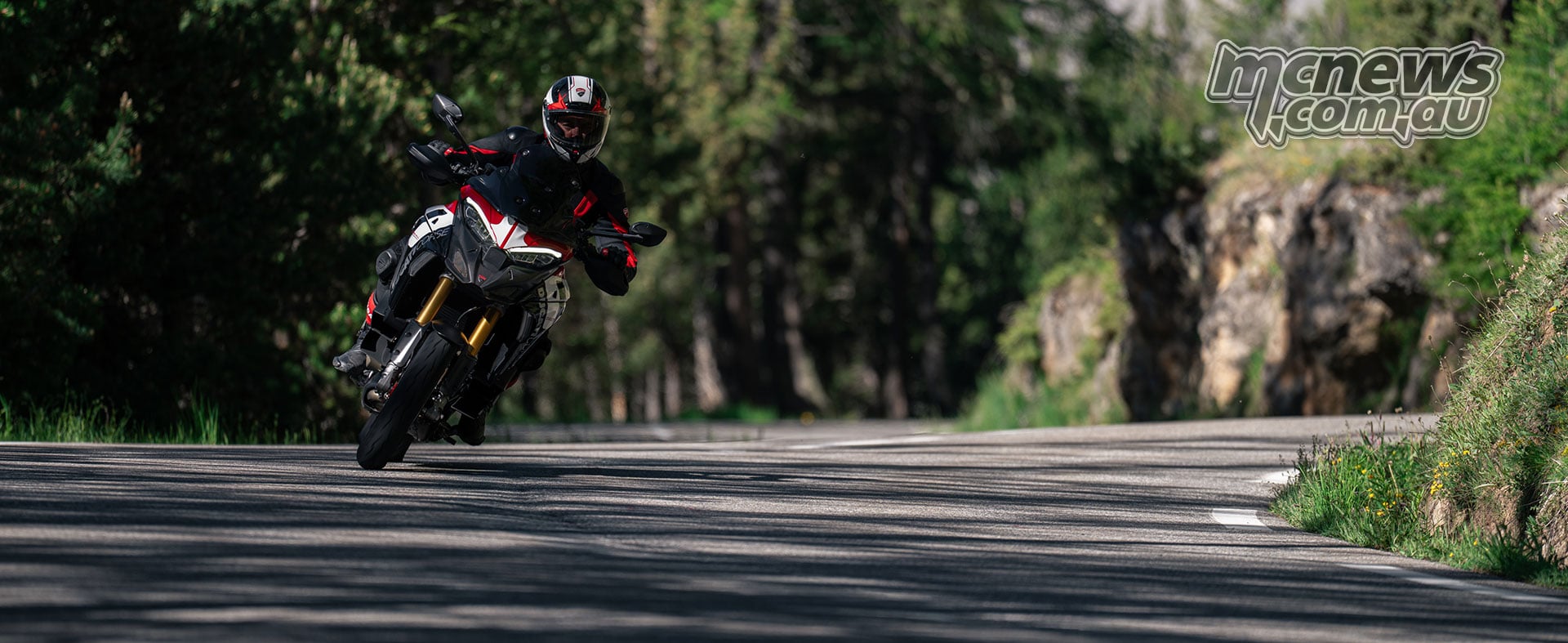
That same seating position also provides a better view through and around corners. On an unfamiliar road, the ability to see further, move the bike quickly and absorb bumps without being kicked out of the seat can matter a lot more than another 20 or 30 horsepower.
That is where the point-to-point argument starts making sense.
Öhlins Smart EC 2.0
Suspension is by Öhlins at both ends, with a 48 mm electronically controlled fork and TTX36 rear shock operating through the Smart EC 2.0 semi-active system.
Both ends offer a generous 170 mm of travel. That sounds like adventure-bike territory, but Ducati’s event-based control logic is derived from the philosophy used on machines such as the Panigale V4 S and Streetfighter V4 S.
Rather than simply selecting a fixed compromise, the system continually adjusts damping according to what the motorcycle is doing at that moment — braking, accelerating, cornering or cruising.
Ducati has also separated Suspension Mode adjustment from the Riding Mode selection. That means a rider can retain a chosen engine and electronics strategy while altering suspension response on the move, firming things up for a smooth section of fast corners or adding compliance when the road starts to resemble a patchwork quilt.
Brakes with Panigale influence
Twin 330 mm front discs are grabbed by Brembo Stylema four-piston radial monobloc calipers, with Ducati specifying Panigale V4-derived brake pads to give the Pikes Peak the sort of initial response and deceleration expected of a much more conventional sportsbike.
The 280 mm rear brake also received considerable attention in the latest generation, including a six-millimetre-thick disc, revised pedal geometry and a larger pedal surface to improve power and modulation.
The Electronic Combined Braking System can automatically contribute rear brake pressure when the rider uses the front lever, with its strategy varying according to Riding Mode and motorcycle load.
In Sport and Race modes the ABS strategy will even permit controlled rear-wheel lift under hard braking. Riders wanting more freedom can select ABS Level 1, where rear-wheel ABS is disabled and the front retains non-cornering ABS intervention.
Race mode means business
Race mode is another clear statement of intent. It accesses the full 170 horsepower with the most direct throttle relationship available through the High Power setting, while minimising traction-control and wheelie-control intervention.
The rev limiter also uses a more competition-oriented strategy. Instead of simply arriving abruptly at the ceiling, intervention starts progressively to give the rider a clearer warning and make it easier to time shifts when using the upper reaches of the rev range.
The Ducati Quick Shift system receives its own aggressive calibration for the Pikes Peak, including the ability to accept harder downshifts as the rider attacks the braking zone.
Sport mode also retains the full 170 horsepower but adds a slightly greater electronic safety net. Touring continues to provide all 170 horses with a softer throttle response, while Urban and Wet reduce maximum output to 115 horsepower.
A lot of electronics, but for a reason
Behind all of that sits Ducati’s extensive electronics suite and Bosch inertial measurement hardware.
The Ducati Vehicle Observer algorithm, developed from Ducati Corse know-how, estimates dynamic parameters that cannot be measured directly and effectively supplements the physical sensor data available to the control systems.
Ducati says the system can reproduce the informational effect of around 70 sensors, allowing Ducati Traction Control, Ducati Wheelie Control and Cornering ABS strategies to work with a more detailed picture of what the bike is actually doing.
Engine Brake Control is adjustable through three levels, while traction control and wheelie control each offer eight intervention settings.
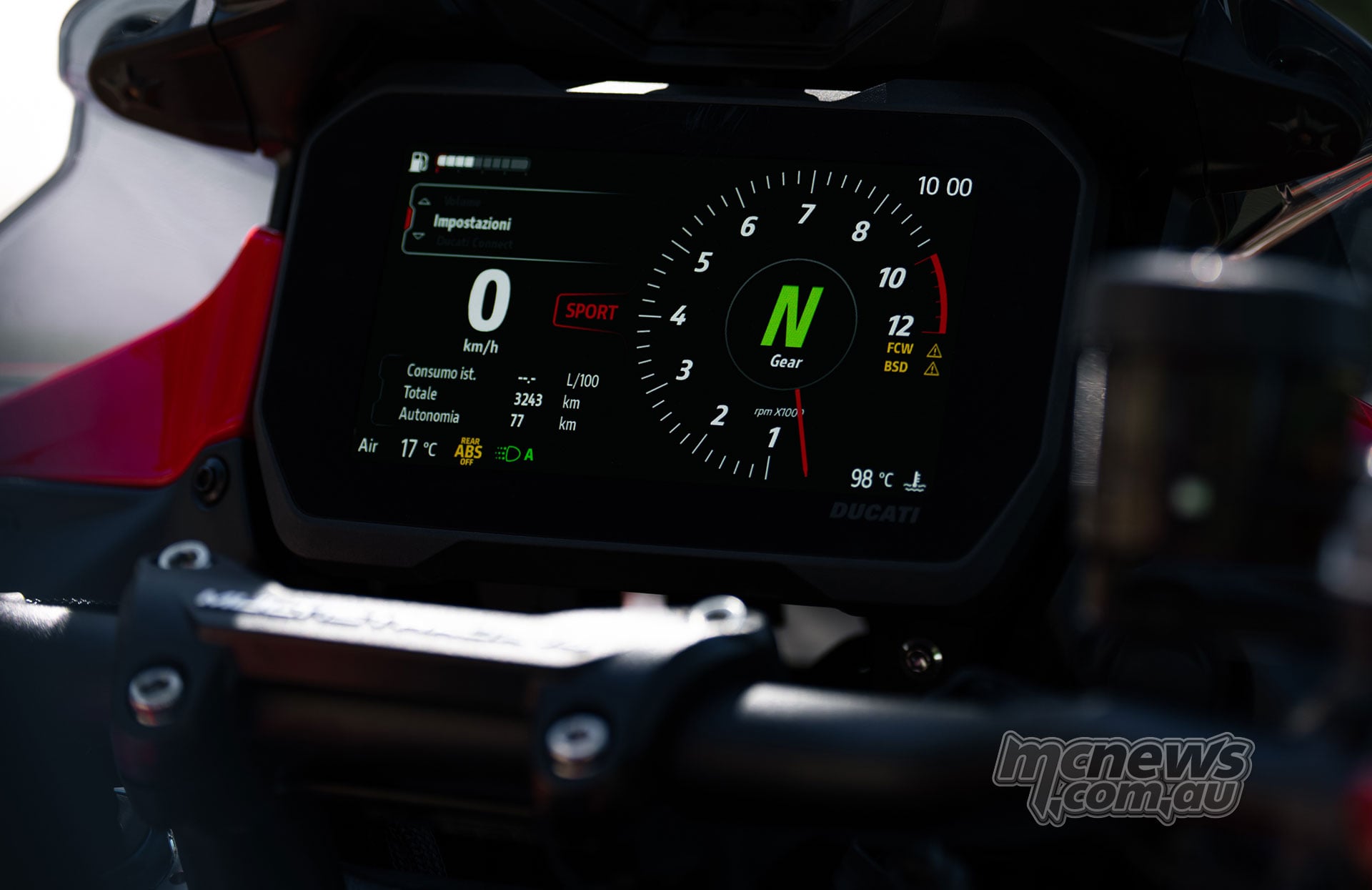
Front and rear radar are standard, bringing Adaptive Cruise Control and Blind Spot Detection, while Forward Collision Warning is also included.
That radar package might appear somewhat at odds with a motorcycle carrying Race mode and Panigale brake pads, but it is exactly the sort of breadth that makes the Pikes Peak such an interesting road motorcycle.
Sportsbike intent without sportsbike punishment
The riding position also separates the Pikes Peak from the standard Multistrada. The footpegs are higher and further rearward to provide greater ground clearance and make it easier to move around the motorcycle at lean, while the handlebar is lower, narrower and flatter.
Yet it remains fundamentally upright. You are not spending a 1000-kilometre day folded over the front wheel with your wrists carrying half your body weight.
The seat is adjustable between 840 and 860 mm, the fuel tank carries 22 litres, cruise control is standard and luggage can be fitted without turning the motorcycle into an engineering afterthought.
That ability to cover large distances without destroying the rider is another factor that matters when talking about genuine real-world speed. A motorcycle that allows its rider to remain relaxed, comfortable and mentally fresh can be a very rapid thing indeed.
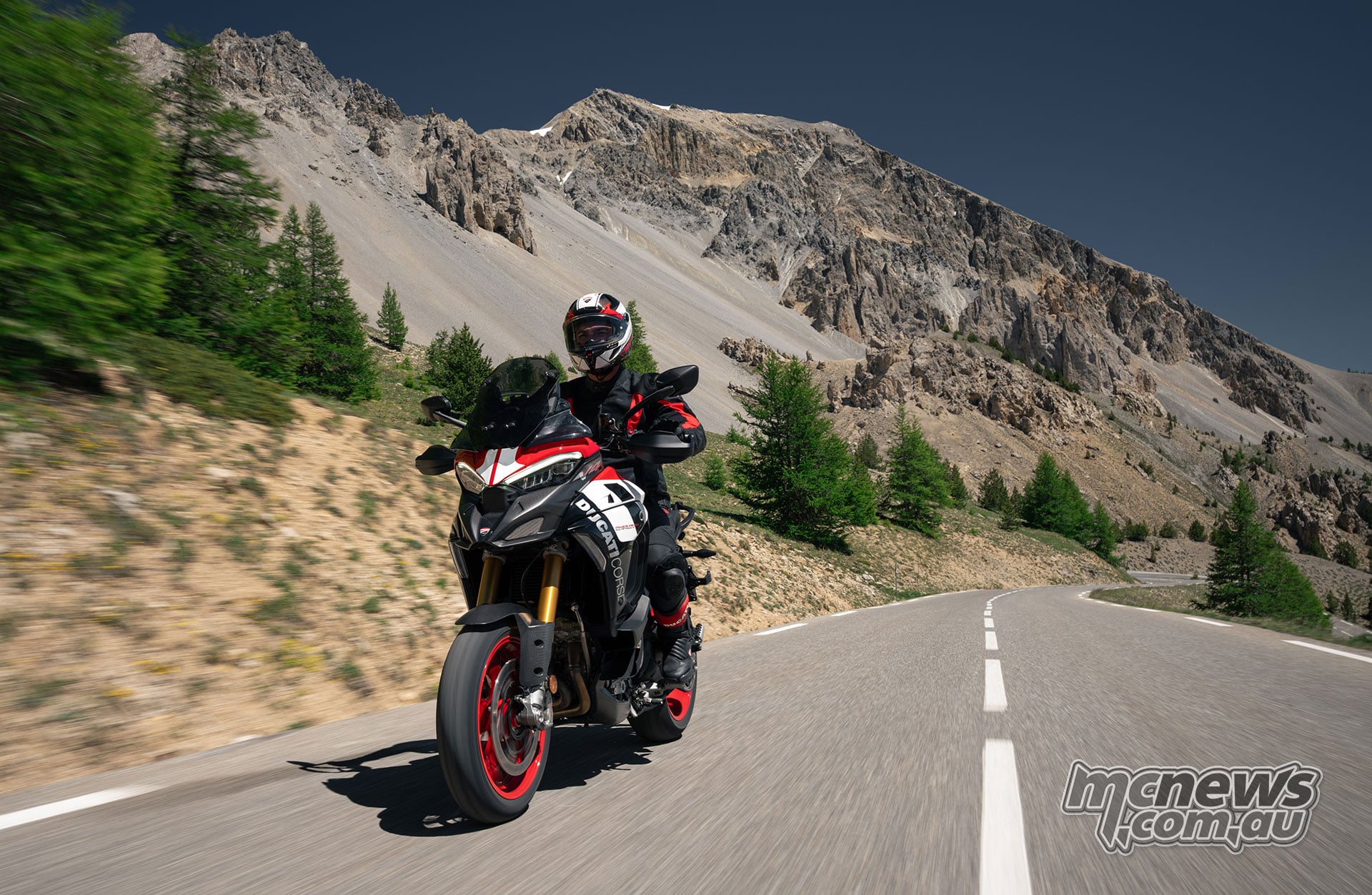
Where does it sit beside the V4 RS?
The Multistrada V4 RS makes any claim that the Pikes Peak is the ultimate sporting Multistrada a little more complicated. The RS has another ten horsepower, weighs fractionally less and uses the higher-revving Desmosedici Stradale engine. In outright performance terms, it is the more exotic motorcycle.
But the Pikes Peak counters with the V4 Granturismo’s broader road manners, much longer 60,000 km valve-clearance intervals, generous suspension travel and a specification that is arguably easier to exploit on ordinary Australian back roads.
Rather than making the Pikes Peak redundant, the RS perhaps helps define it more clearly. The RS is the special-occasion hot rod. The Pikes Peak is the motorcycle you could ride interstate, unload your bags and then spend the afternoon terrorising a mountain road.
Which one is faster from Point A to Point B would depend heavily on the road and the rider. The fact the question can even be asked of a 22-litre, luggage-capable crossover says a lot about how capable the Pikes Peak has become.
2027 Ducati Multistrada V4 Pikes Peak price
Ducati Australia is currently listing the new Multistrada V4 Pikes Peak at a suggested ride-away price from $49,625.
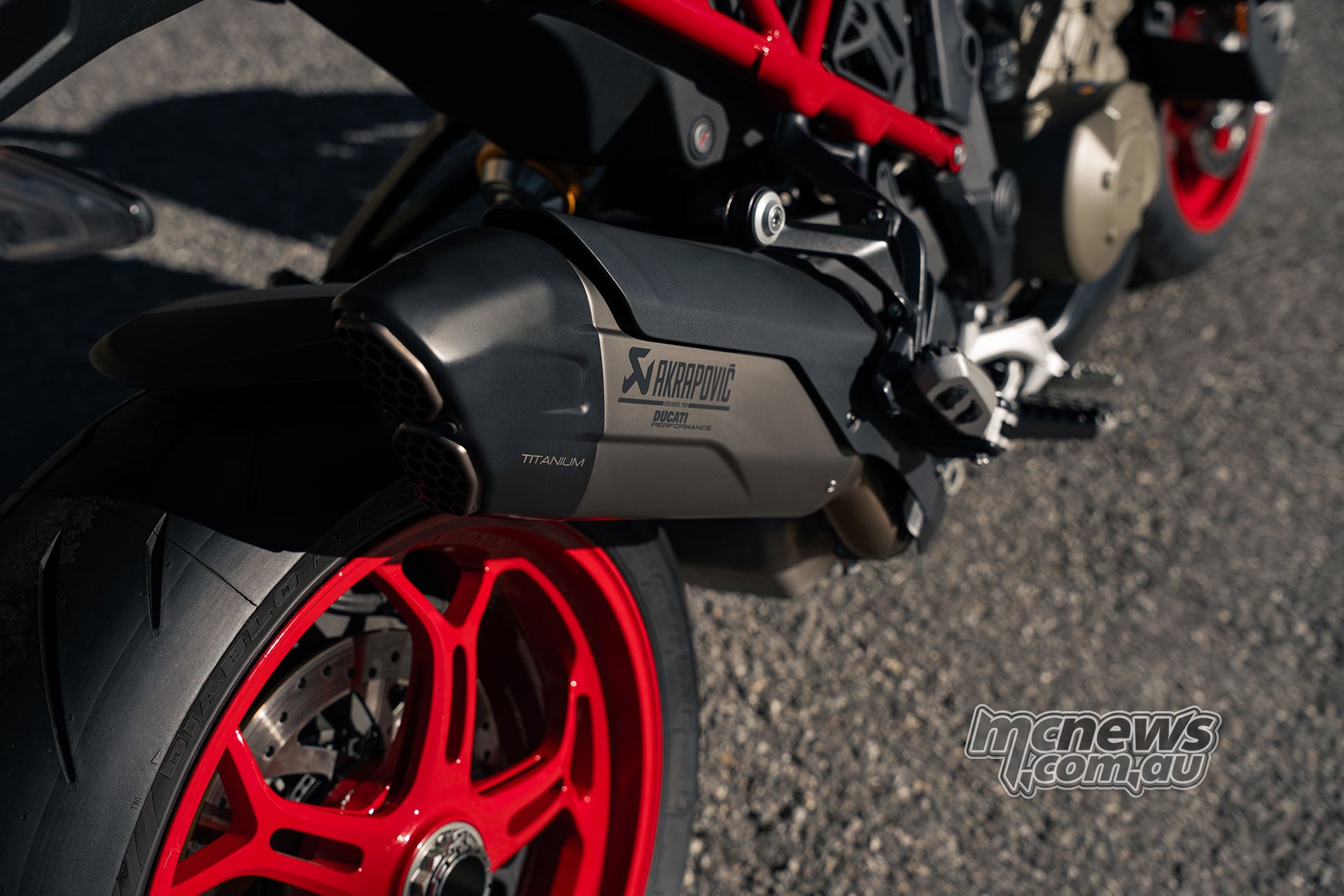
That puts it well into premium motorcycle territory, although the standard equipment list goes some way towards explaining the figure: forged wheels, Öhlins electronic suspension, Brembo Stylemas, titanium Akrapovič, carbon-fibre components, front and rear radar, navigation-capable 6.5-inch TFT and the extensive electronic suite are already on board.
Then again, nobody ever accused the Pikes Peak of being the sensible Multistrada.
It is the one for riders who want the commanding riding position, comfort and versatility of the Multistrada platform but have little interest in taking their $50,000 Ducati down a rocky fire trail.
Give it smooth enough tarmac, though, and there are few motorcycles we would expect to cover ground more effectively.
2027 Ducati Multistrada V4 Pikes Peak specifications
| Engine | Ducati V4 Granturismo, 90-degree V4, liquid-cooled |
| Capacity | 1158 cc |
| Bore x stroke | 83 x 53.3 mm |
| Compression | 14.0:1 |
| Maximum power | 170 hp / 125 kW @ 10,750 rpm |
| Maximum torque | 123.8 Nm @ 9000 rpm |
| Gearbox | Six-speed, Ducati Quick Shift up/down |
| Final drive | Chain, 16/42 |
| Frame | Aluminium monocoque |
| Front suspension | 48 mm Öhlins USD fork, Smart EC 2.0 electronic damping |
| Rear suspension | Öhlins TTX36, Smart EC 2.0, electronic preload |
| Suspension travel | 170 mm front / 170 mm rear |
| Front wheel | 17 x 3.5-inch forged aluminium |
| Rear wheel | 17 x 6.0-inch forged aluminium |
| Front tyre | Pirelli Diablo Rosso IV 120/70 ZR17 |
| Rear tyre | Pirelli Diablo Rosso IV 190/55 ZR17 |
| Front brakes | Twin 330 mm discs, Brembo Stylema four-piston radial calipers |
| Rear brake | 280 mm disc, Brembo two-piston caliper |
| Wheelbase | 1595 mm |
| Rake | 25.75 degrees |
| Trail | 120 mm |
| Seat height | 840-860 mm adjustable |
| Fuel capacity | 22 litres |
| Wet weight, no fuel | 227 kg |
| Service interval | 15,000 km / 24 months |
| Valve-clearance interval | 60,000 km |
| Fuel consumption | 6.6 L/100 km WMTC |
| Australian price | From $49,625 ride-away |