

2027 Honda CBR500R FOUR
Honda has unveiled an all-new CBR500R FOUR for 2027, bringing a 502 cc inline-four engine, a 12,500 rpm redline and standard E-Clutch to the middleweight sportsbike class.
The familiar CBR500R badge has taken a very different direction. While the model currently listed in Australia uses a 471 cc parallel-twin, this new FOUR draws on Honda’s smaller-capacity four-cylinder heritage, pairing a much more rev-hungry engine with a new chassis and a considerably expanded electronics package.
Honda quotes 51.8 kW, 70 horsepower in old money, at 11,000 rpm and 46.3 Nm at 10,500 rpm, with a kerb weight of 189 kg. A 780 mm seat height, smartphone connectivity and clutch operation that can be handled electronically are intended to keep the package accessible for everyday riding.
A 35 kW version has also been announced for European A2 licence holders. At this stage, MCNews.com.au does not believe the CBR500R FOUR has been earmarked for the Australian market just yet, although that is subject to change.
A new 502 cc four with a 12,500 rpm redline
The liquid-cooled DOHC engine has four valves per cylinder and develops from the 400 cc four-cylinder unit used in the Japanese-market CB400 SUPER FOUR. Bore and stroke measure 60 x 44.4 mm, with a 12.3:1 compression ratio.
Both peak power and peak torque arrive above 10,000 rpm, which gives a clear indication of the character Honda is chasing. The company nevertheless says it has worked to retain smooth delivery lower in the rev range, so the engine can serve the weekday commute as well as a spirited weekend ride.
There is some substantial engineering behind that brief. Nickel-silicon-carbide plating lets the cylinders dispense with conventional sleeves, while diamond-like-carbon coatings on the valvetrain reduces friction. Honda has also arranged the engine shafts to shorten the unit from front to rear and concentrate mass.
Two ram-air ducts beneath the headlights feed a 5.8-litre airbox above the engine. The downdraft intake uses 70 mm funnels for the outer cylinders and 90 mm funnels for the inner pair, with the intake layout developed for throttle response as well as its soundtrack.
On the exhaust side, four headers merge into two pipes, then into one, which is completed by a two-chamber silencer.
E-Clutch comes as standard
The CBR500R FOUR uses a six-speed gearbox and chain final drive, with Honda E-Clutch fitted as standard. Riders still choose each gear with the foot lever, but the system can operate the clutch when pulling away, changing gear or coming to a stop.
That means the rider can leave the clutch lever alone through stop-start traffic, while retaining control over gear selection. The lever remains in place and can be used conventionally at any time.
Throttle-by-wire adds another element to the system. On downshifts, E-Clutch can partially disengage the clutch while the throttle is blipped to match engine speed. Honda says it can also respond to rear-wheel hop during hard braking and rapid downchanges by modulating clutch engagement.
Two electric motors operate the clutch through an actuator on the left-hand side of the engine. Riders can choose Soft, Medium or Hard shift-pedal effort independently for upshifts and downshifts, and the dash can prompt a downchange when the selected gear is too high for the road speed.
An assist/slipper clutch remains part of the mechanical package. E-Clutch can also be switched off through the handlebar controls when the bike is stationary and in neutral, allowing fully manual operation.
Five riding modes and adjustable traction control
Three preset modes, Standard, Sport and Urban, adjust power delivery, engine braking and Honda Selectable Torque Control. Two additional User modes let riders save their own combinations of the three available levels for each parameter.
Standard uses the middle setting throughout. Sport combines maximum engine output with the lowest engine-braking and traction-control intervention settings, while Urban softens power delivery and increases traction-control intervention. Traction control can be switched off within the User modes.
Honda’s specification sheet also lists wheelie control, alongside standard two-channel ABS.
New chassis, KYB suspension and Pirelli rubber
A new steel diamond frame uses the engine as a stressed member. Wheelbase measures 1408 mm, with 25 degrees of rake and 99 mm of trail, while Honda’s claimed kerb weight is 189 kg.
Suspension comprises a non-adjustable 41 mm KYB inverted fork and a Pro-Link rear monoshock with five-position spring-preload adjustment. An aluminium swingarm completes the rear end.
Twin 296 mm front discs are gripped by Nissin radial-mount two-piston calipers. A 240 mm rear disc is paired with a single-piston caliper, with ABS covering both ends.
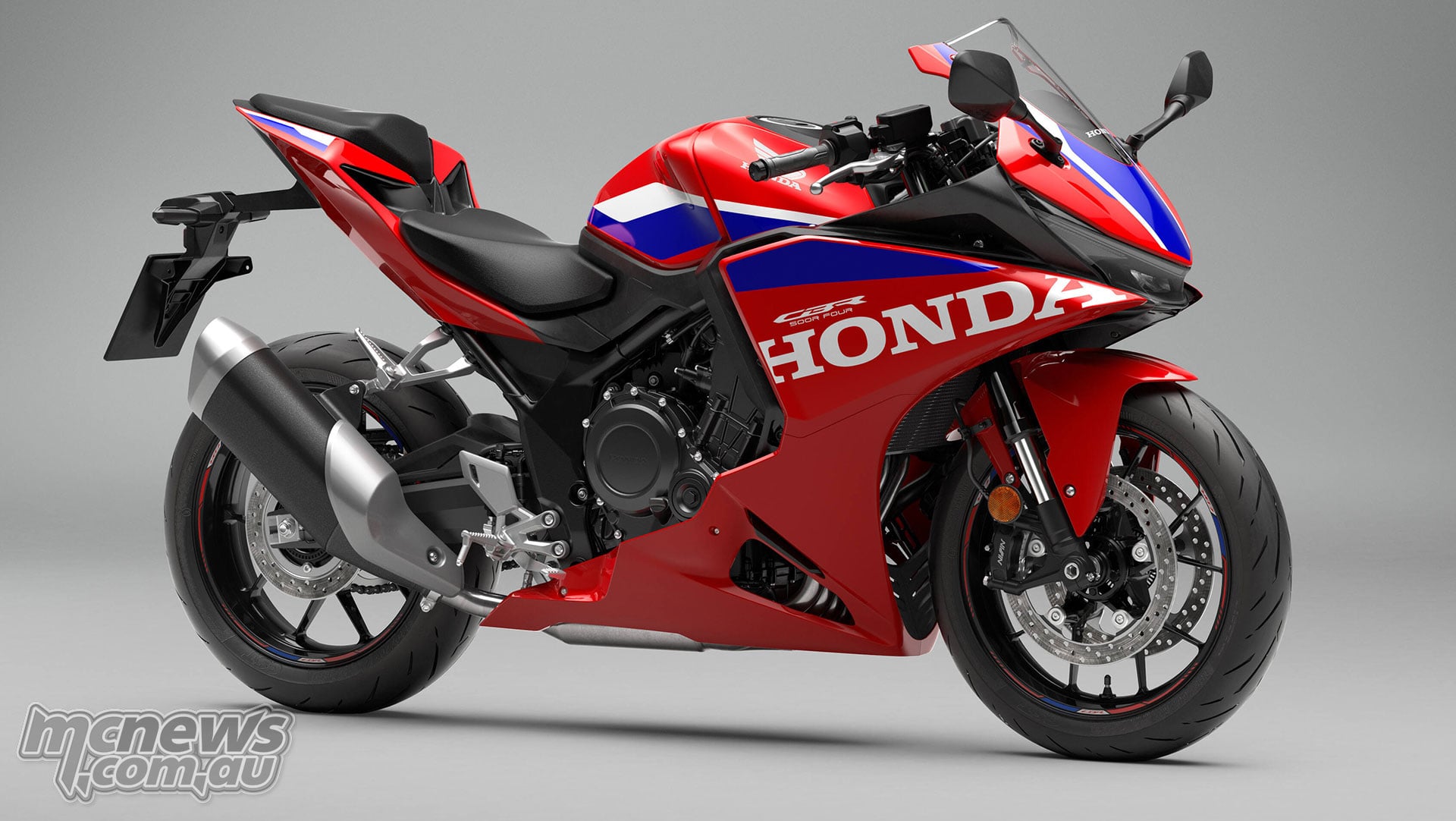
Cast-aluminium wheels use a five Y-spoke design and wear Pirelli Diablo Rosso IV tyres in 120/70 ZR17 front and 160/60 ZR17 rear sizes.
Clip-on handlebars create a forward-leaning riding position, but the 780 mm seat and narrow subframe are intended to make reaching the ground easier. Honda also quotes a 2.9-metre turning radius, a useful consideration for a machine expected to spend time negotiating city streets.
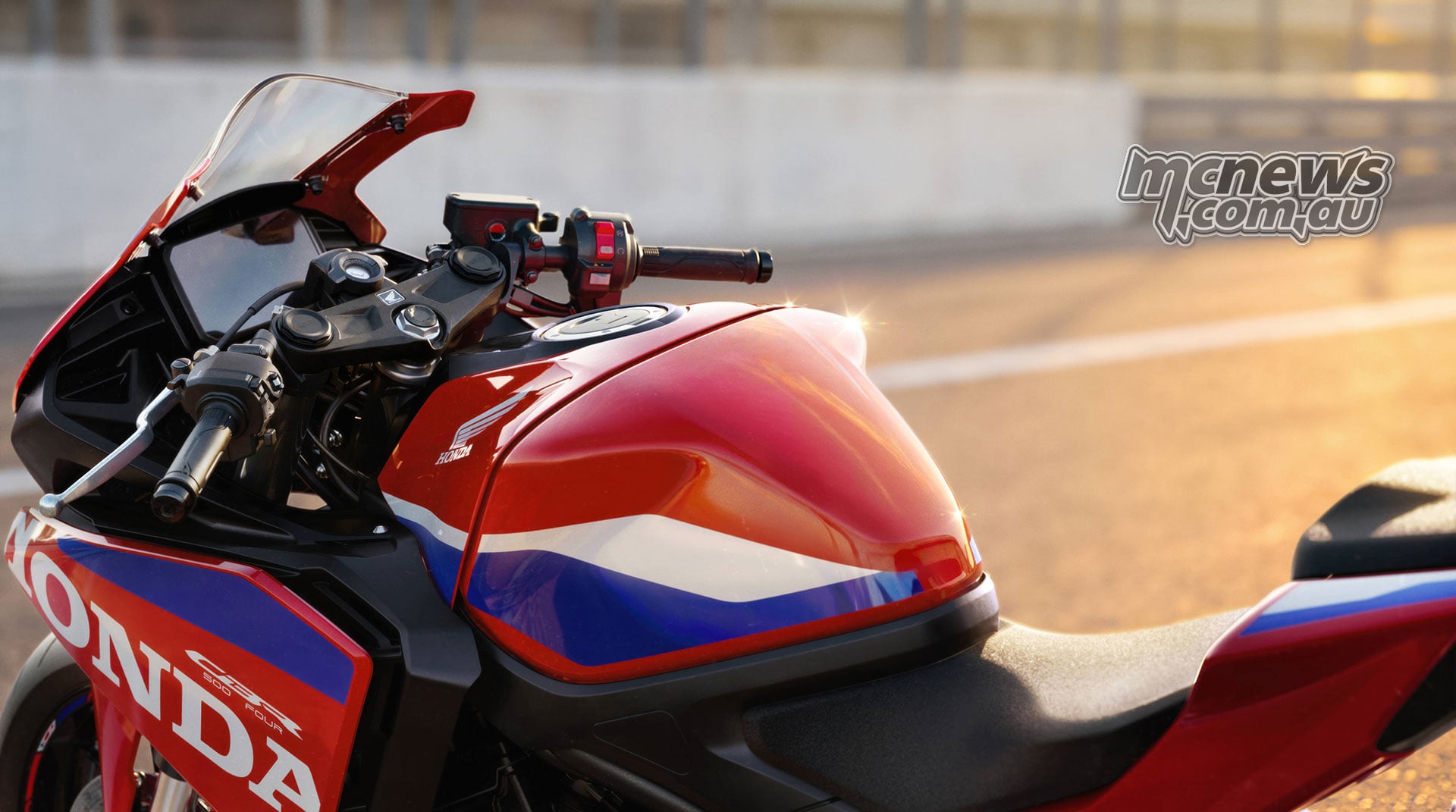
Fuel capacity is 14 litres, with claimed WMTC consumption of 4.5 litres per 100 kilometres. Honda also lists a maximum speed of 210 km/h in its provisional specifications.
A fresh look for Honda’s smaller sportsbike
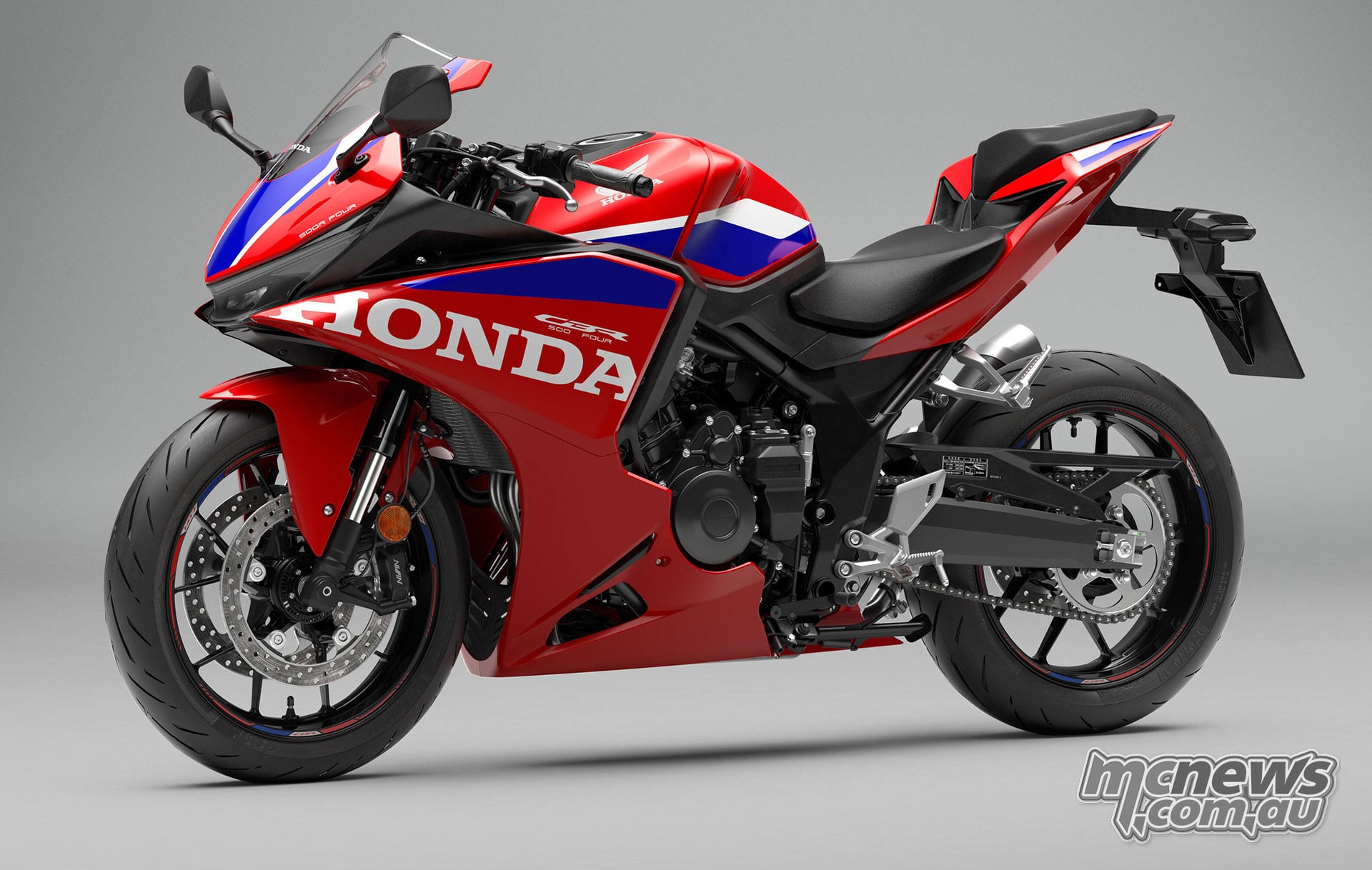
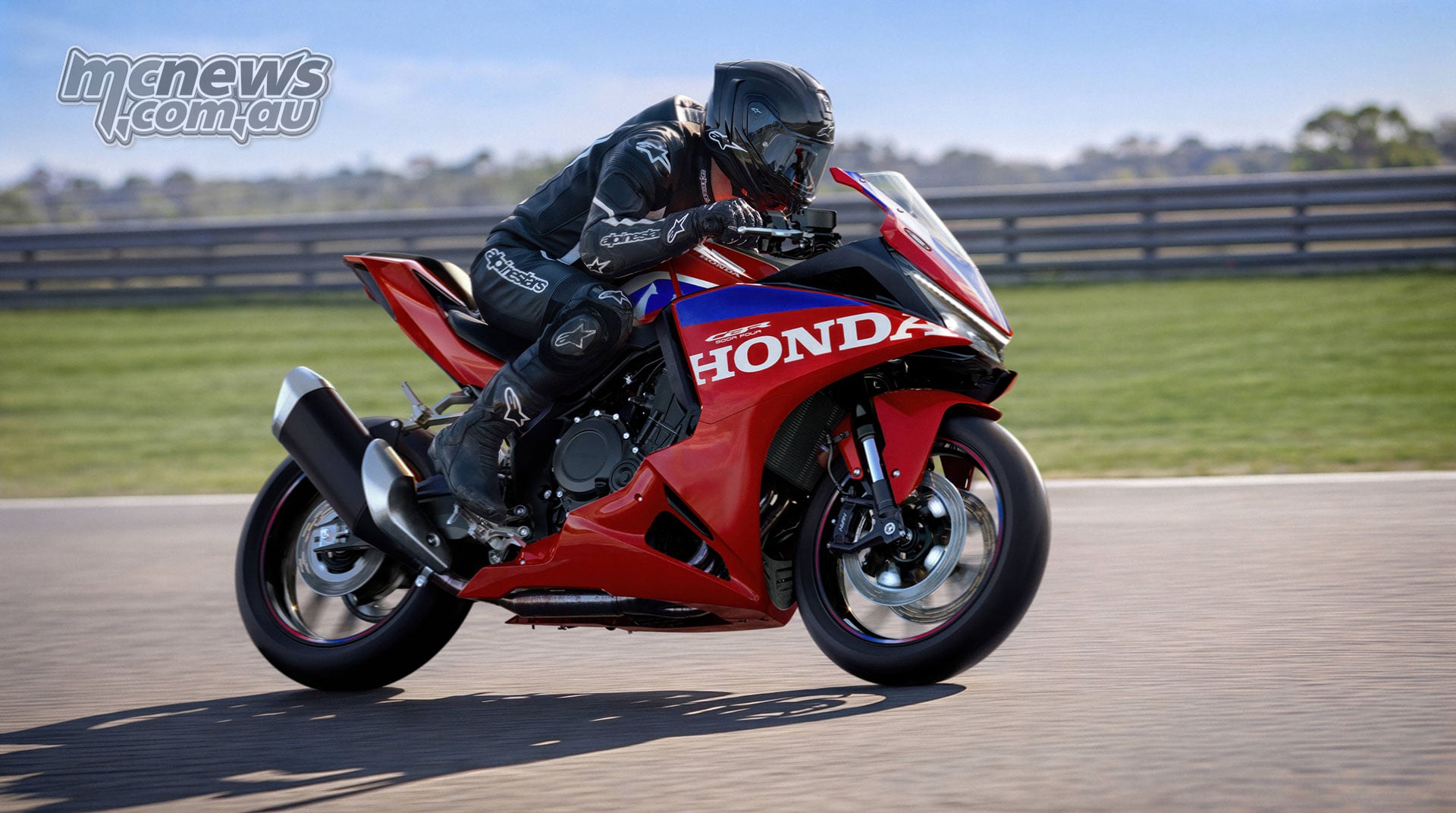
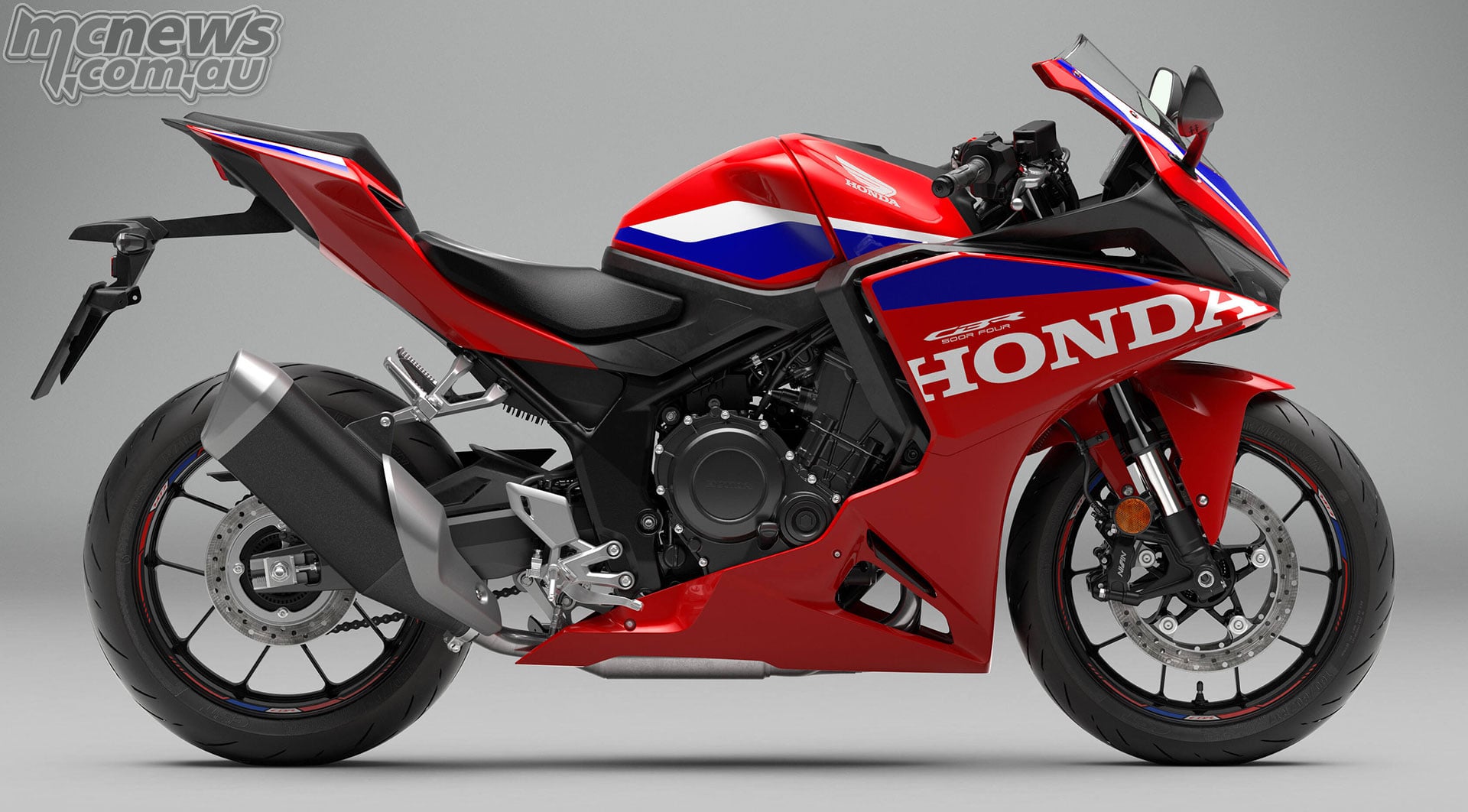
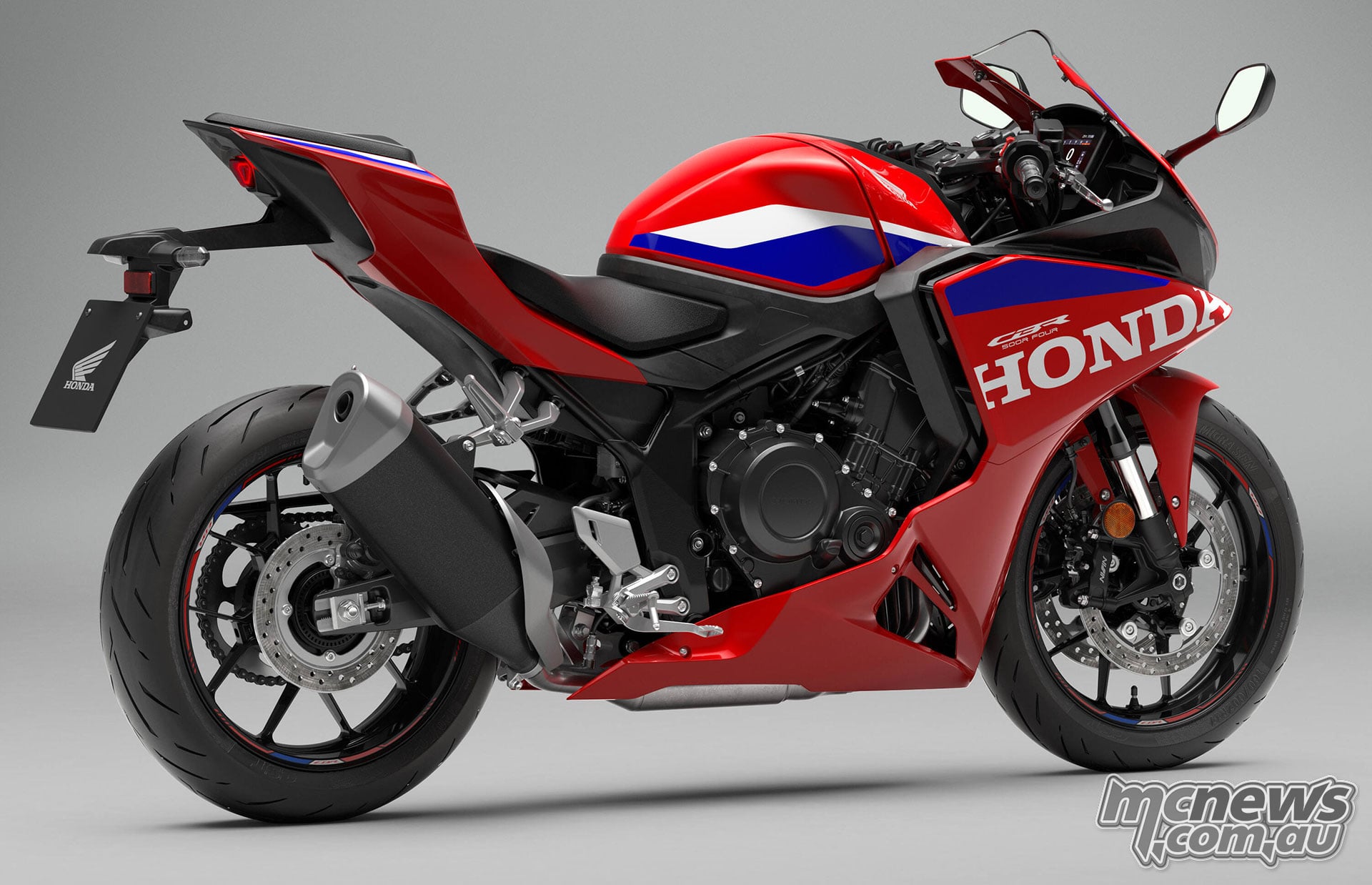
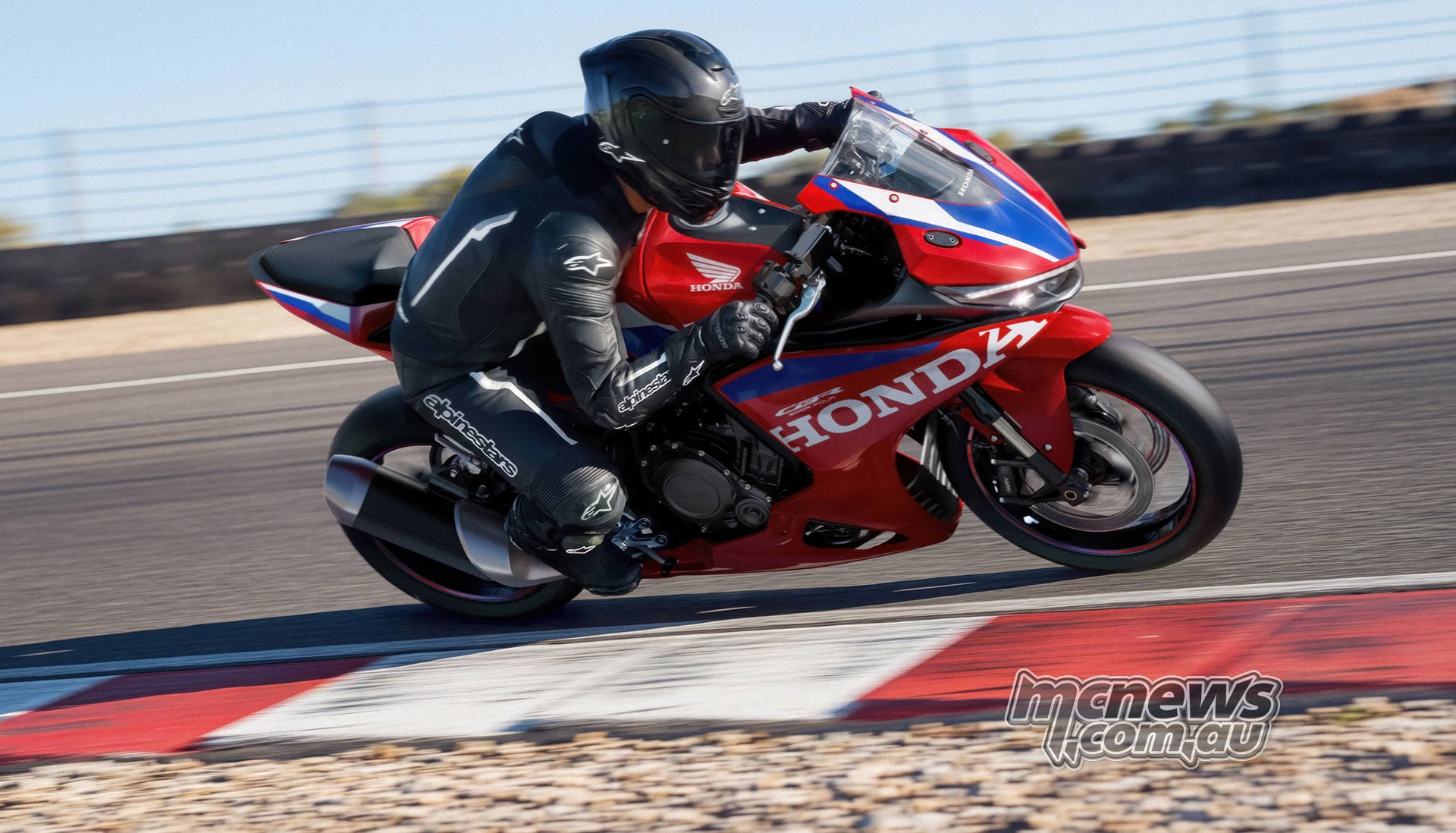
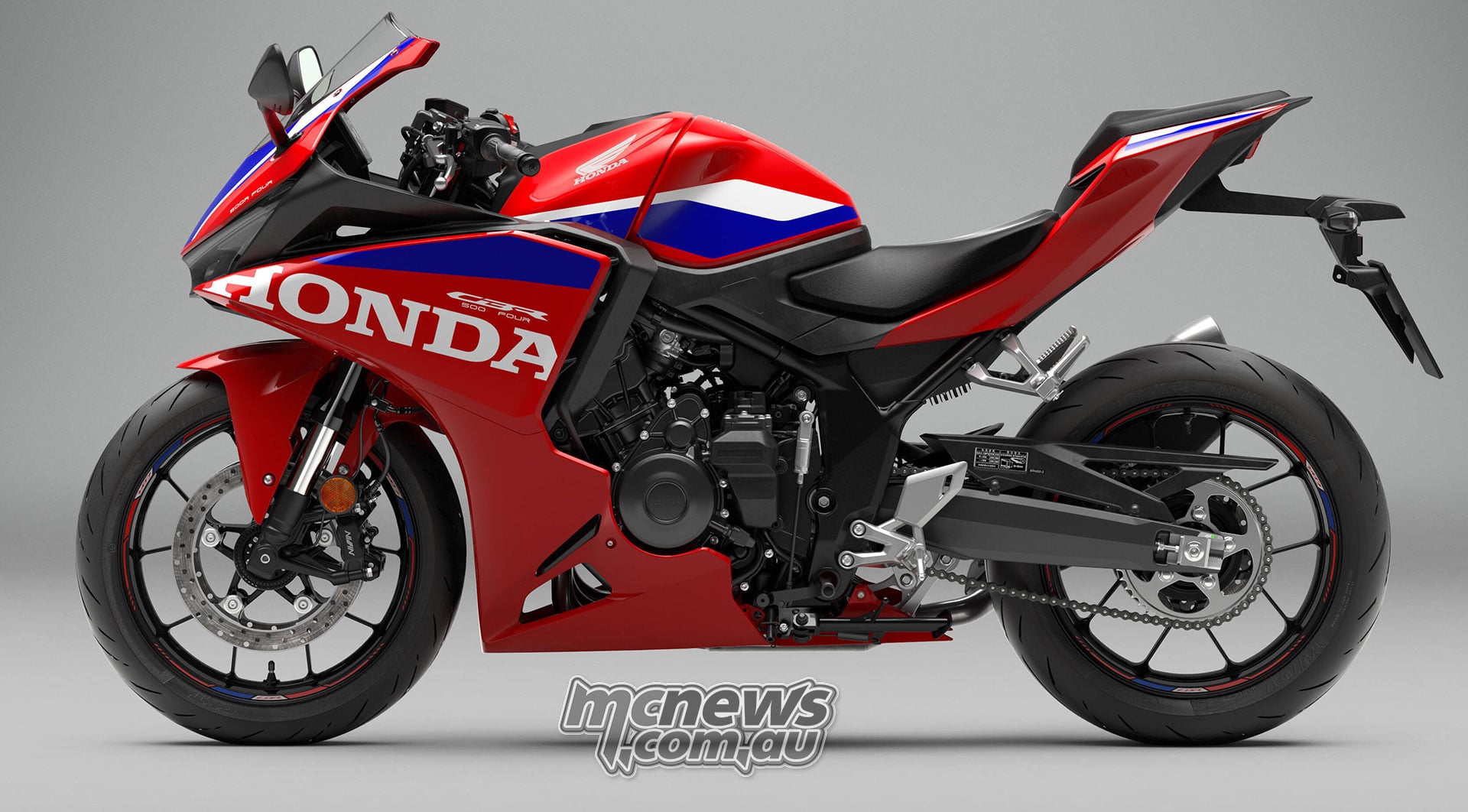
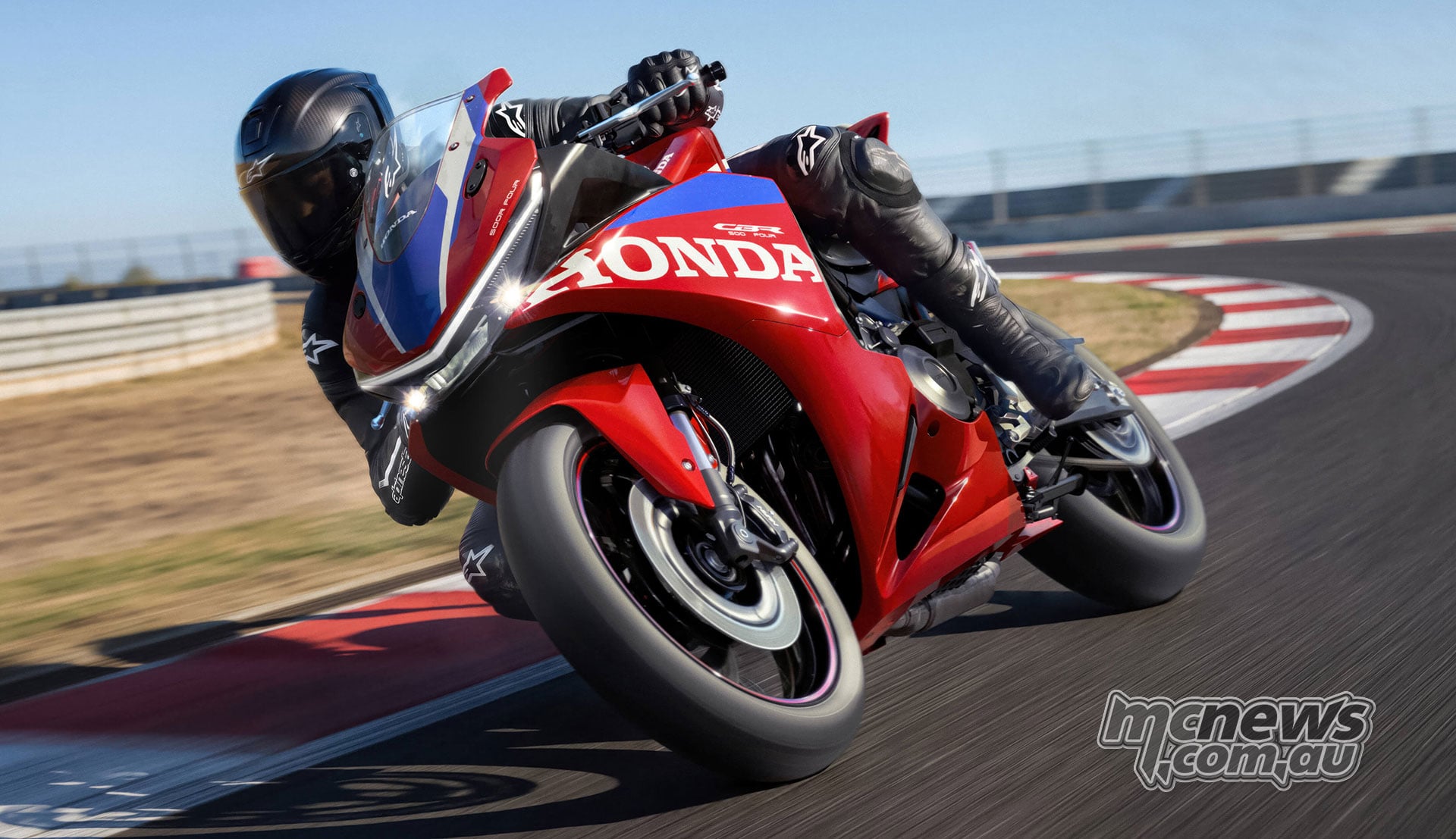
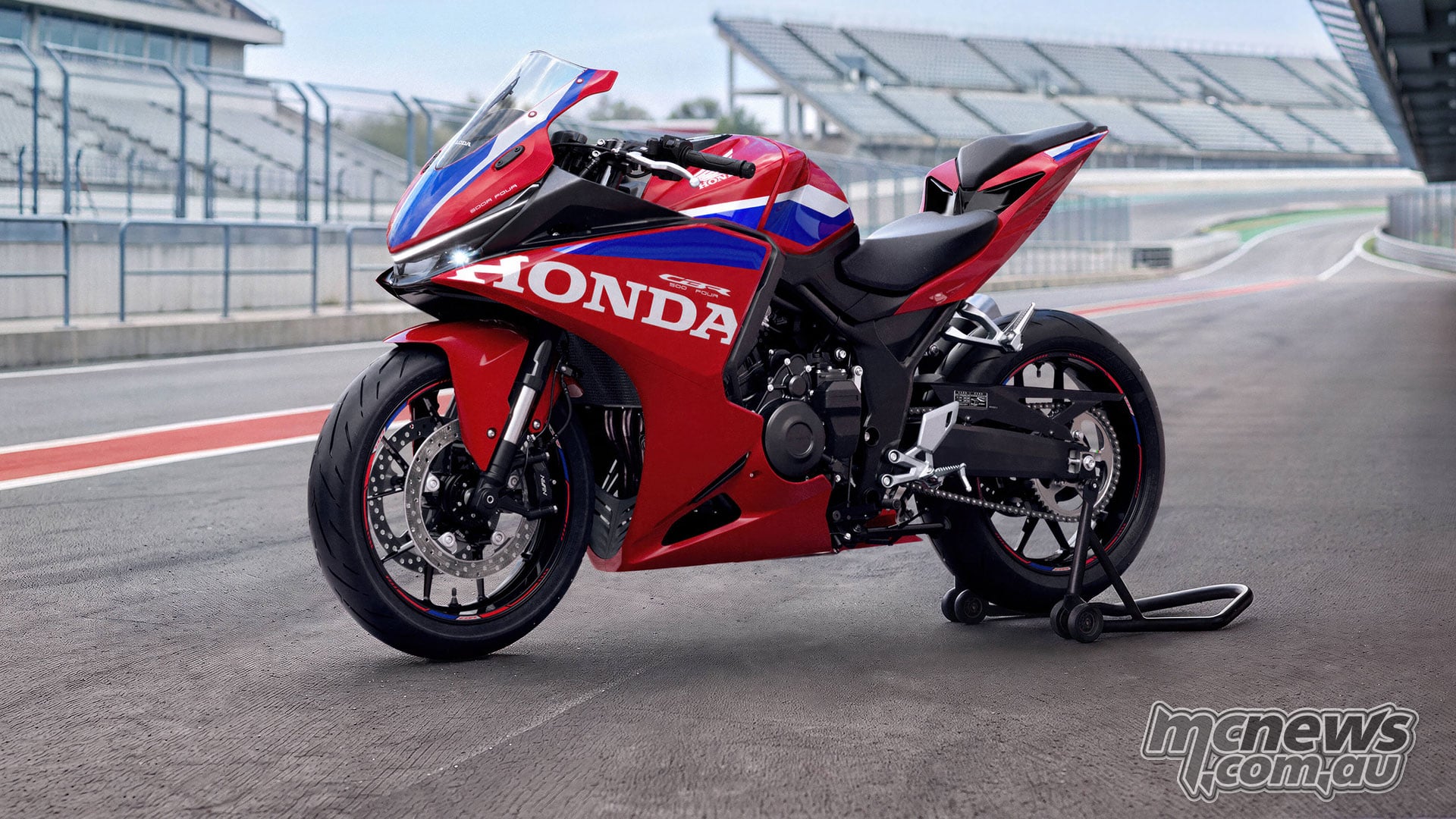
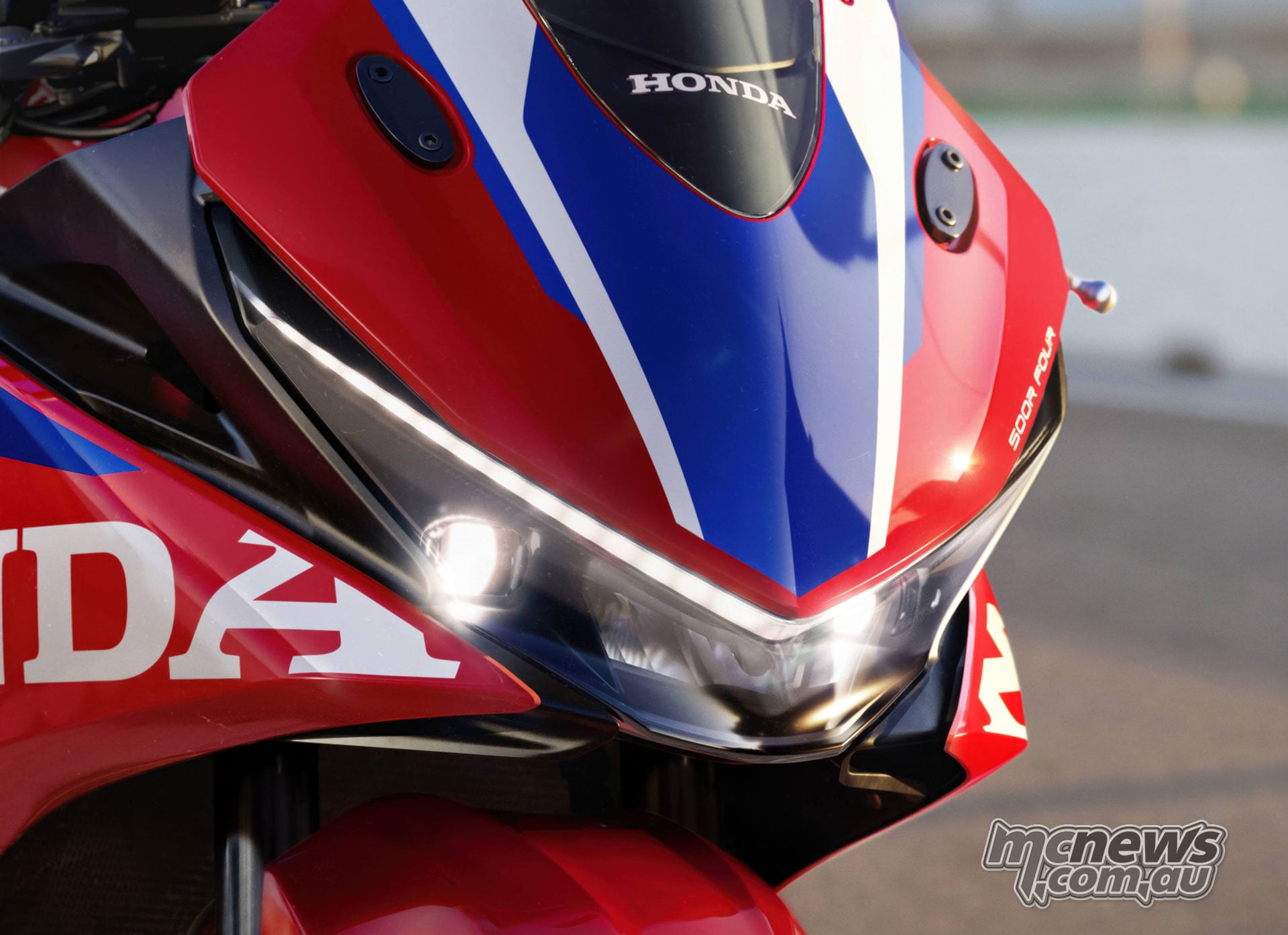
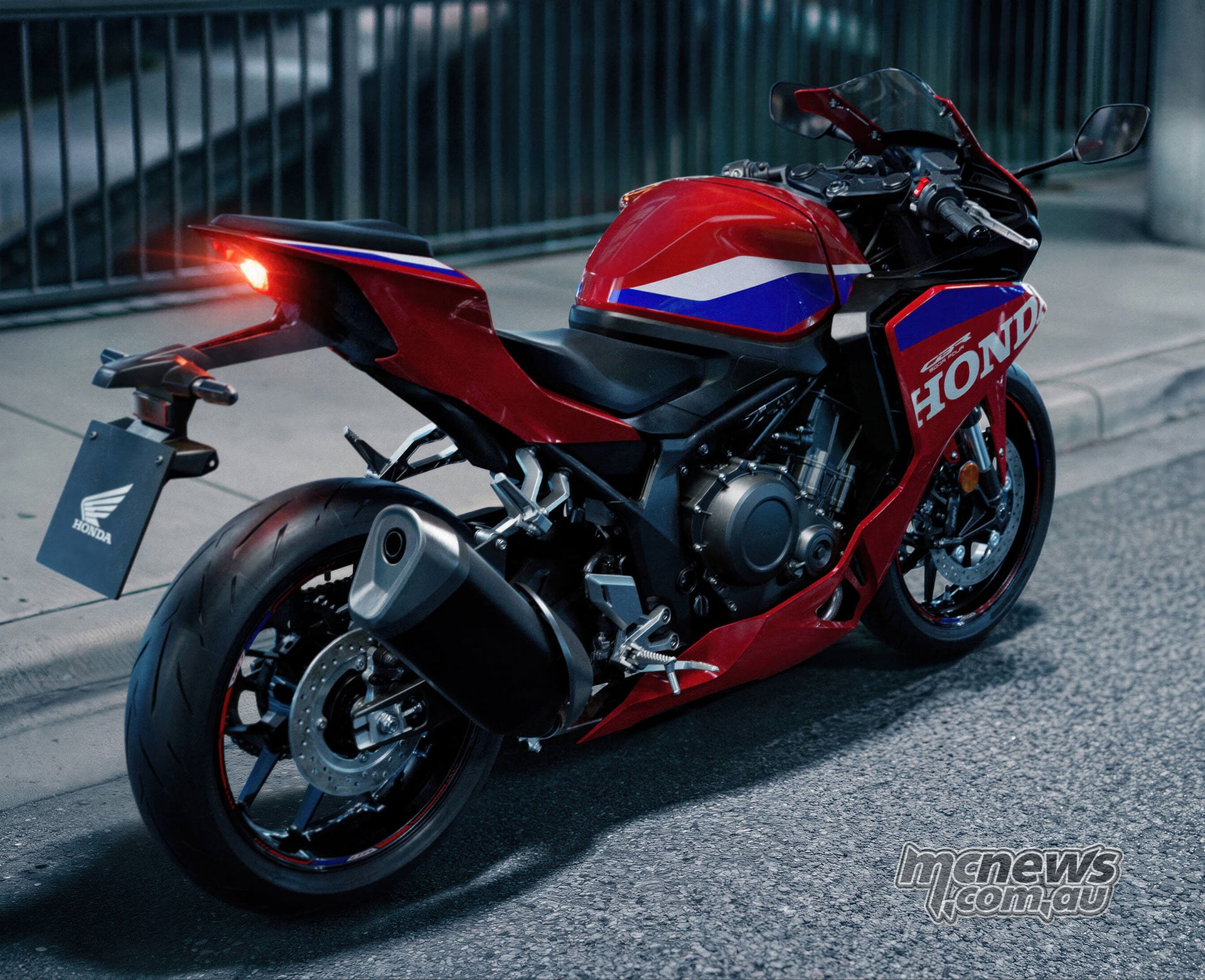
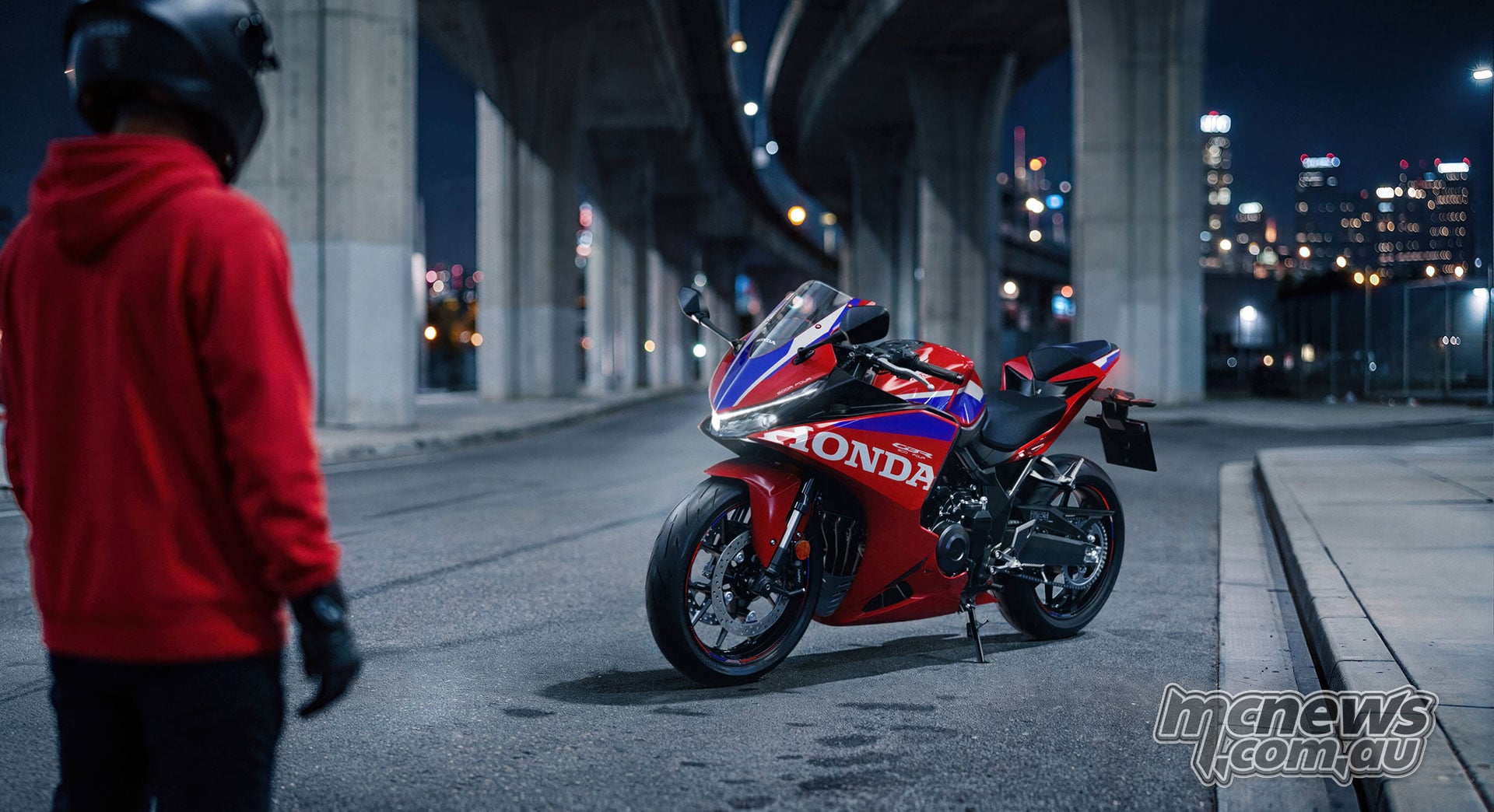
The FOUR introduces its own styling treatment, with a low nose, deeply shaped side panels and a pronounced rise from the rider’s seat to the tail. In the Ignition Red tricolour scheme, large white Honda lettering dominates the fairings beneath blue panels and white tank stripes.
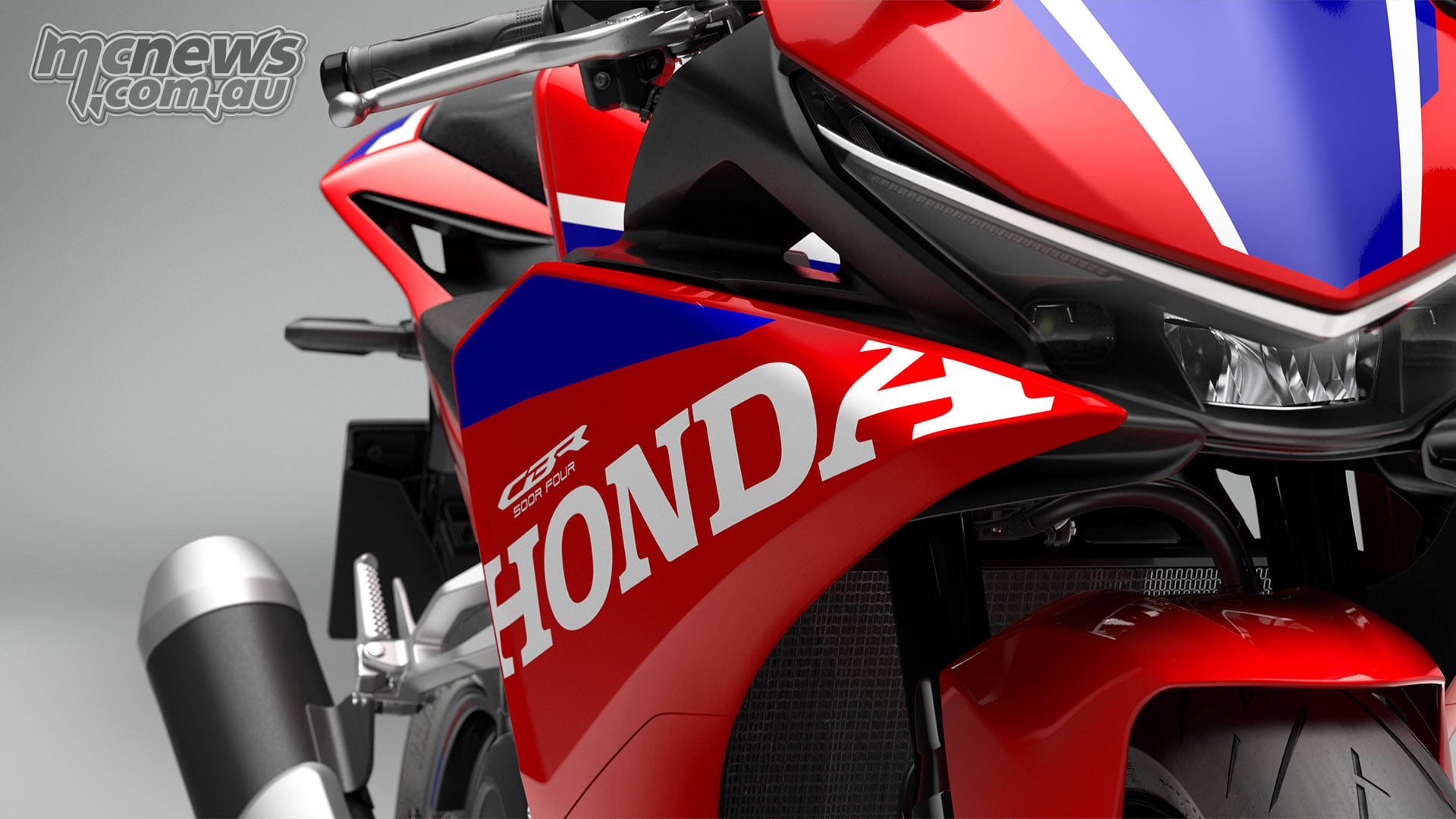
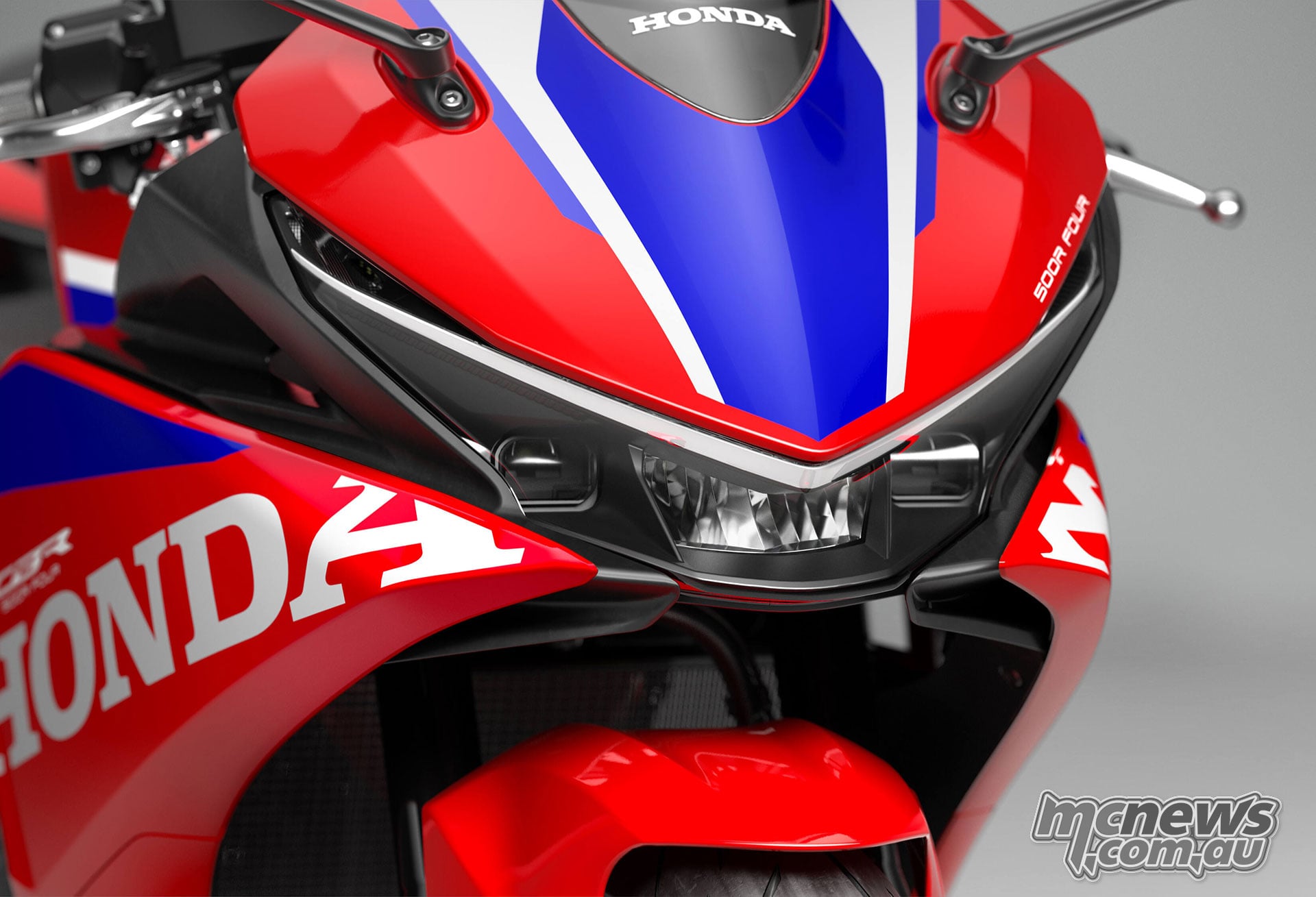
Twin LED projector headlights sit beneath a slim daytime-running light signature, with the front indicators integrated into the bodywork. The ram-air openings sit below the lighting assembly.
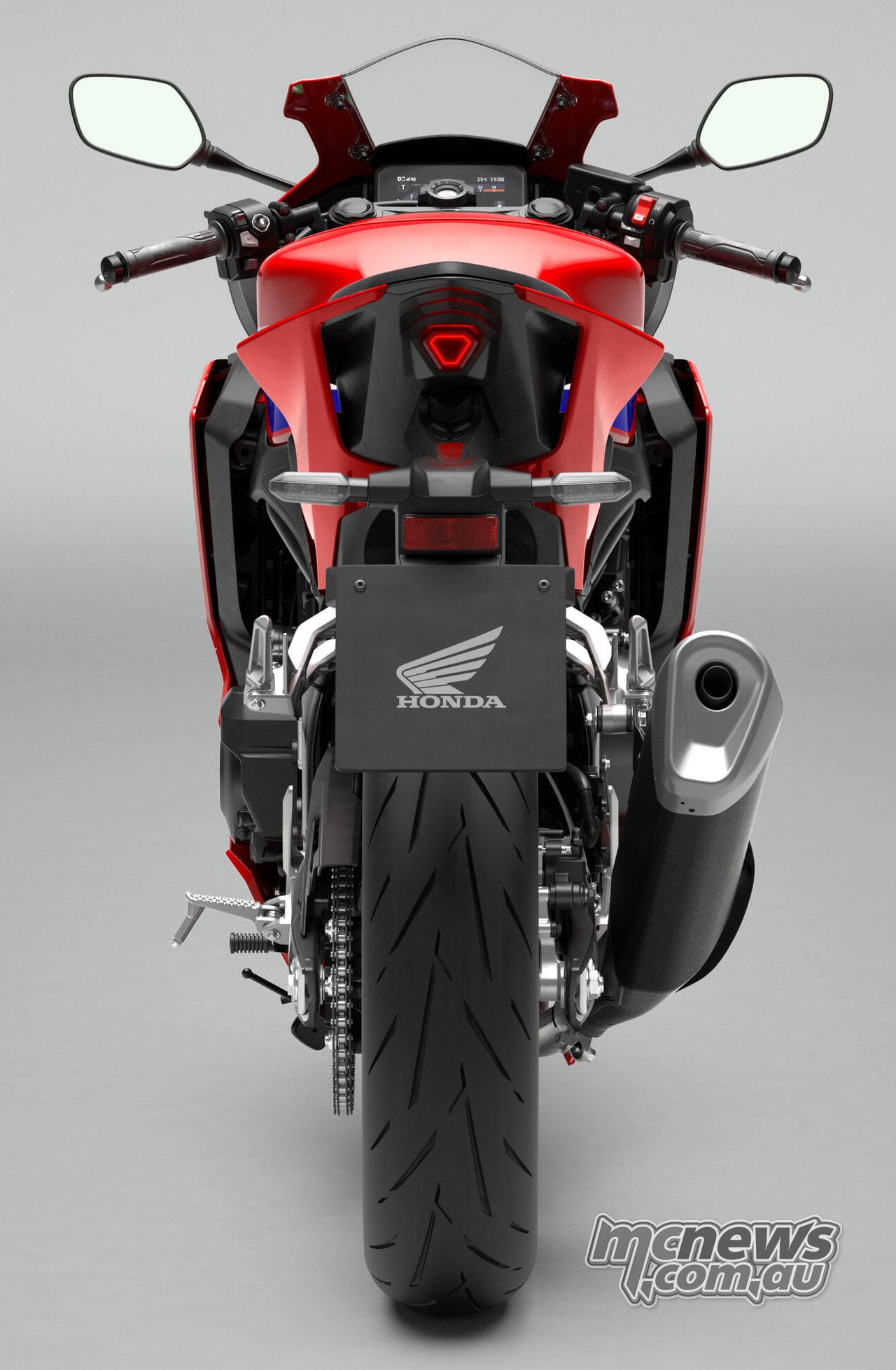
The rear is similarly angular, with a separate pillion perch, LED tail light and a conventional numberplate carrier extending behind the bodywork.
TFT display, RoadSync and everyday equipment
A five-inch colour TFT offers Bar, Circle and Simple display layouts. Optical bonding between the screen and cover glass is intended to reduce glare, while a backlit four-way switch on the left handlebar manages the menus.
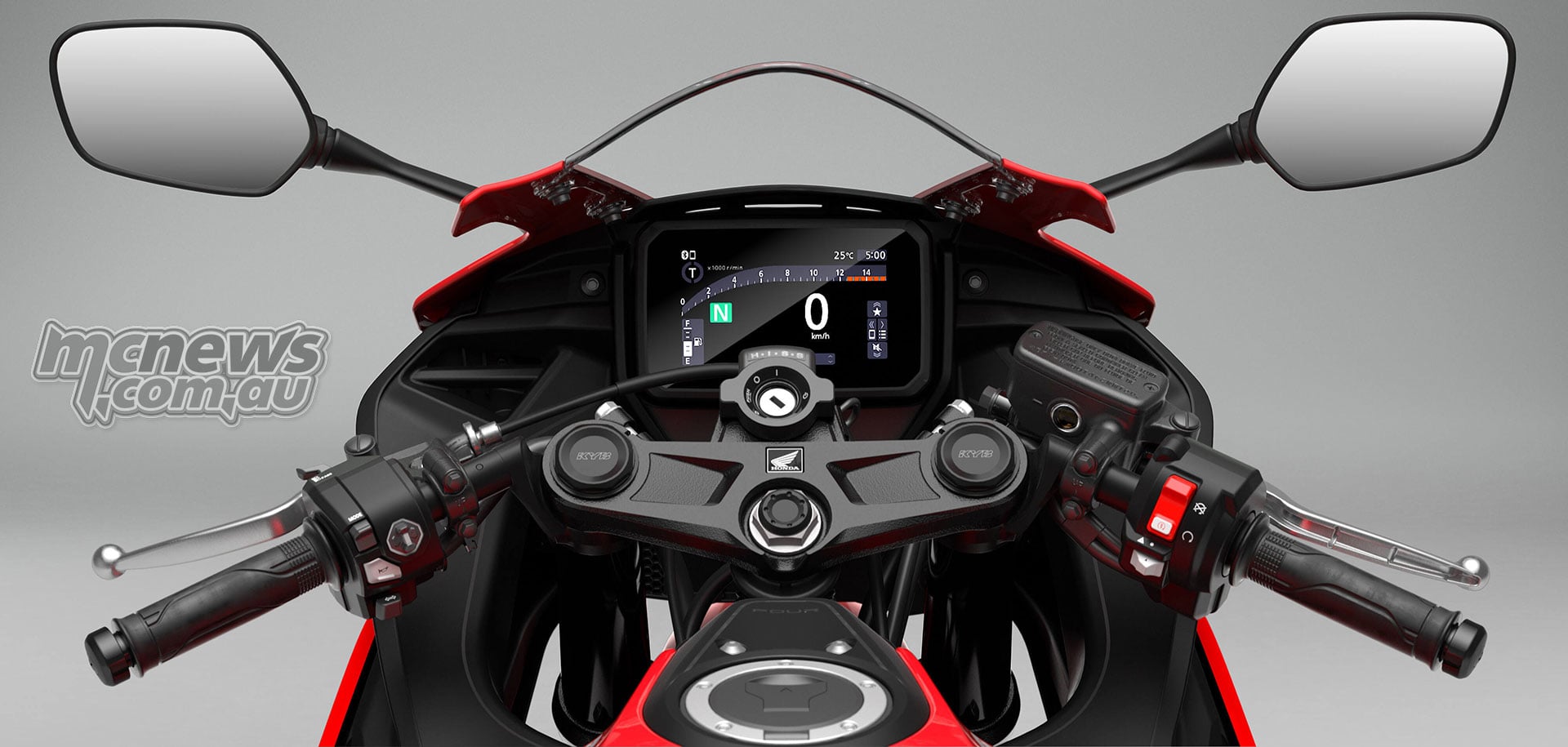
Honda RoadSync supports compatible iOS and Android smartphones, with turn-by-turn navigation on the display and calls or music through a Bluetooth helmet headset. A USB-C charging socket sits at the lower right of the screen.
The specification also includes Honda’s HISS immobiliser and Emergency Stop Signal. Announced accessories include a rear-seat bag, heated grips, a taller screen, tank and knee-grip pads, and an alarm.
Colours and Australian availability
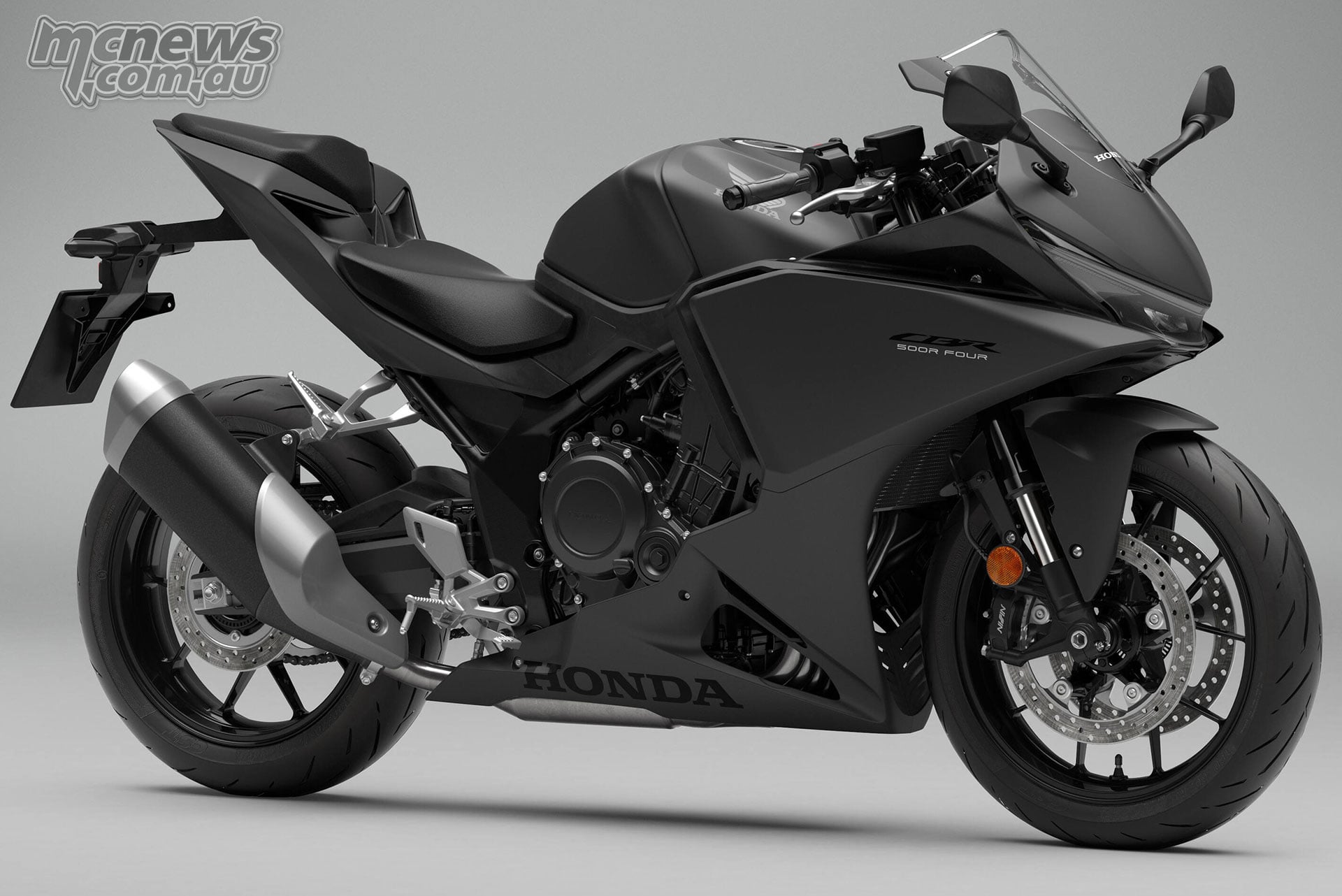
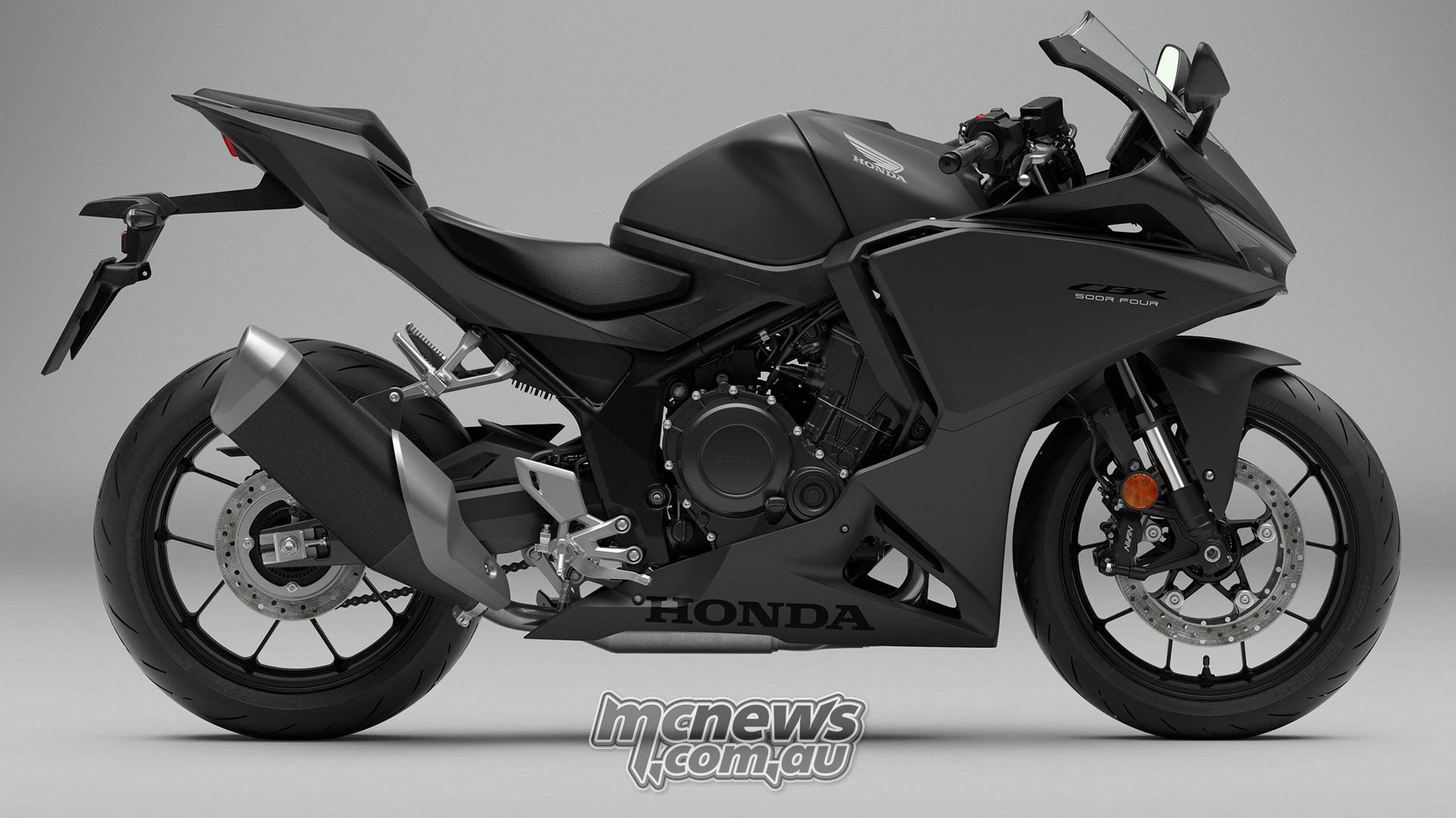
The European line-up has two colour options: Ignition Red tricolour and Mat Ballistic Black Metallic. The latter gives the new fairing shapes a much more understated treatment, with dark branding in place of the red bike’s prominent white Honda lettering.
Honda is positioning the CBR500R FOUR as an accessible way into four-cylinder sportsbike ownership, although the European release does not provide a price.
With an Australian introduction not currently expected by MCNews.com.au, local pricing, arrival timing and any potential LAMS specification remain open questions. That position could change, but the European 35 kW A2 announcement should not be read as confirmation of an Australian learner-approved version.
2027 Honda CBR500R FOUR specifications
| Engine | 502 cc liquid-cooled DOHC inline-four, 16 valves |
| Bore x stroke | 60 x 44.4 mm |
| Compression ratio | 12.3:1 |
| Claimed maximum power | 51.8 kW at 11,000 rpm |
| Claimed maximum torque | 46.3 Nm at 10,500 rpm |
| Redline | 12,500 rpm |
| European A2 option | 35 kW version announced |
| Transmission | Six-speed, standard Honda E-Clutch, assist/slipper clutch |
| Final drive | Chain |
| Frame | Steel diamond, engine used as a stressed member |
| Front suspension | 41 mm KYB inverted fork, non-adjustable |
| Rear suspension | Pro-Link monoshock, five-position spring-preload adjustment |
| Swingarm | Aluminium |
| Front brake | Twin 296 mm discs, Nissin radial-mount two-piston calipers |
| Rear brake | 240 mm disc, single-piston caliper |
| ABS | Two-channel |
| Tyres | Pirelli Diablo Rosso IV; 120/70 ZR17 front, 160/60 ZR17 rear |
| Wheelbase | 1408 mm |
| Rake / trail | 25 degrees / 99 mm |
| Seat height | 780 mm |
| Ground clearance | 135 mm |
| Claimed kerb weight | 189 kg |
| Fuel capacity | 14 litres |
| Claimed WMTC fuel consumption | 4.5 L/100 km |
| Riding modes | Standard, Sport, Urban, User 1 and User 2 |
| Instruments | Five-inch TFT, Honda RoadSync, USB-C socket |
| European colours | Ignition Red tricolour; Mat Ballistic Black Metallic |
Specifications are Honda’s provisional European figures and remain subject to change.