

Phillip Island 1989–2026
The races and riders that made a MotoGP legend
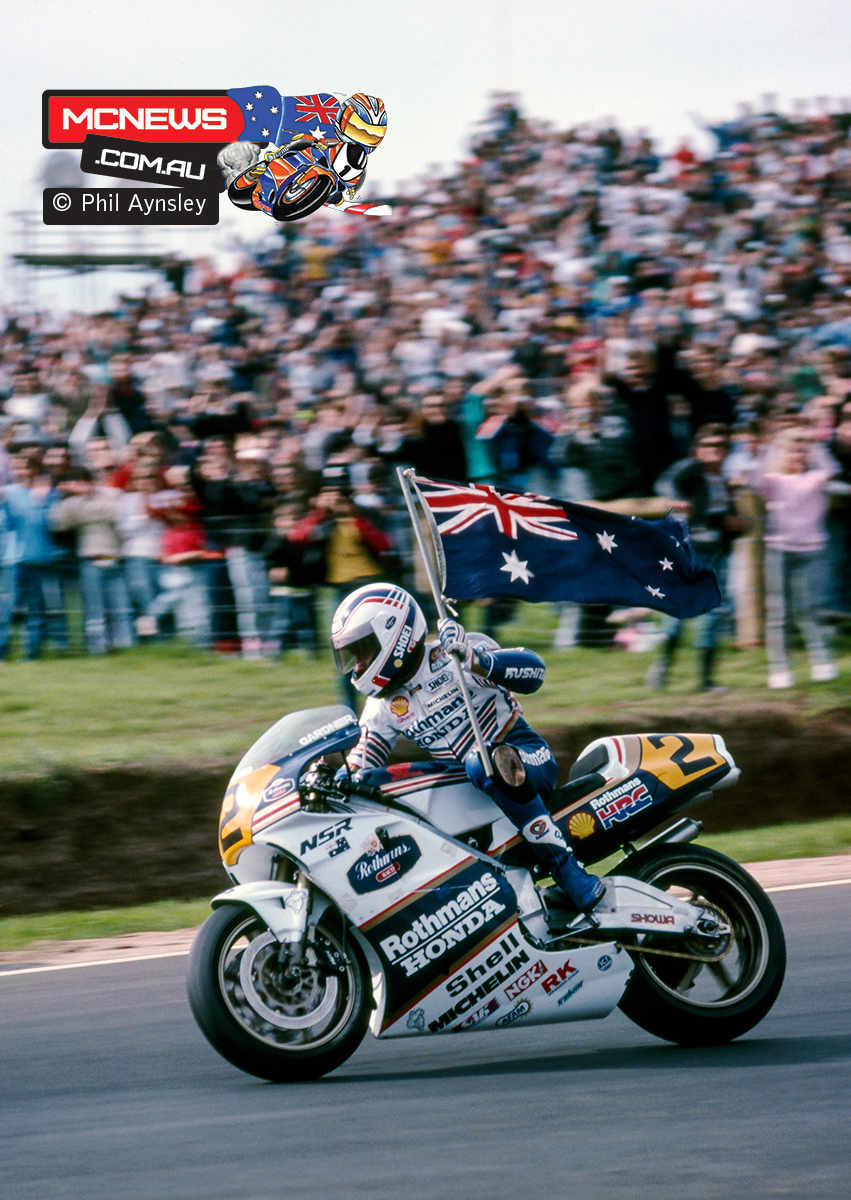
Wayne Gardner with an Australian flag streaming behind his Honda. Mick Doohan securing championship number five. Casey Stoner making the world’s fastest riders look like they were racing for second as he slid through the turn that now bears his name. Phillip Island has supplied Australian motorcycle racing with a remarkable collection of memories.
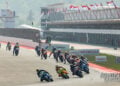
On October 23–25, 2026, the world championship returns for the final Australian Motorcycle Grand Prix at the circuit before the event moves to Adelaide in 2027. It brings a different feeling to a familiar weekend: one more trip over the bridge, one more walk around the spectator banks, one more chance to watch Grand Prix motorcycles short-shift out of MG before being thrown onto their left side and slid through turn 11.
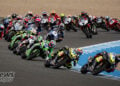
The Island’s world championship story began in April 1989. Across the decades that followed, it accommodated the last great years of the 500s, the arrival of four-stroke MotoGP, careers beginning and ending, and championships settled within sight of the sea.
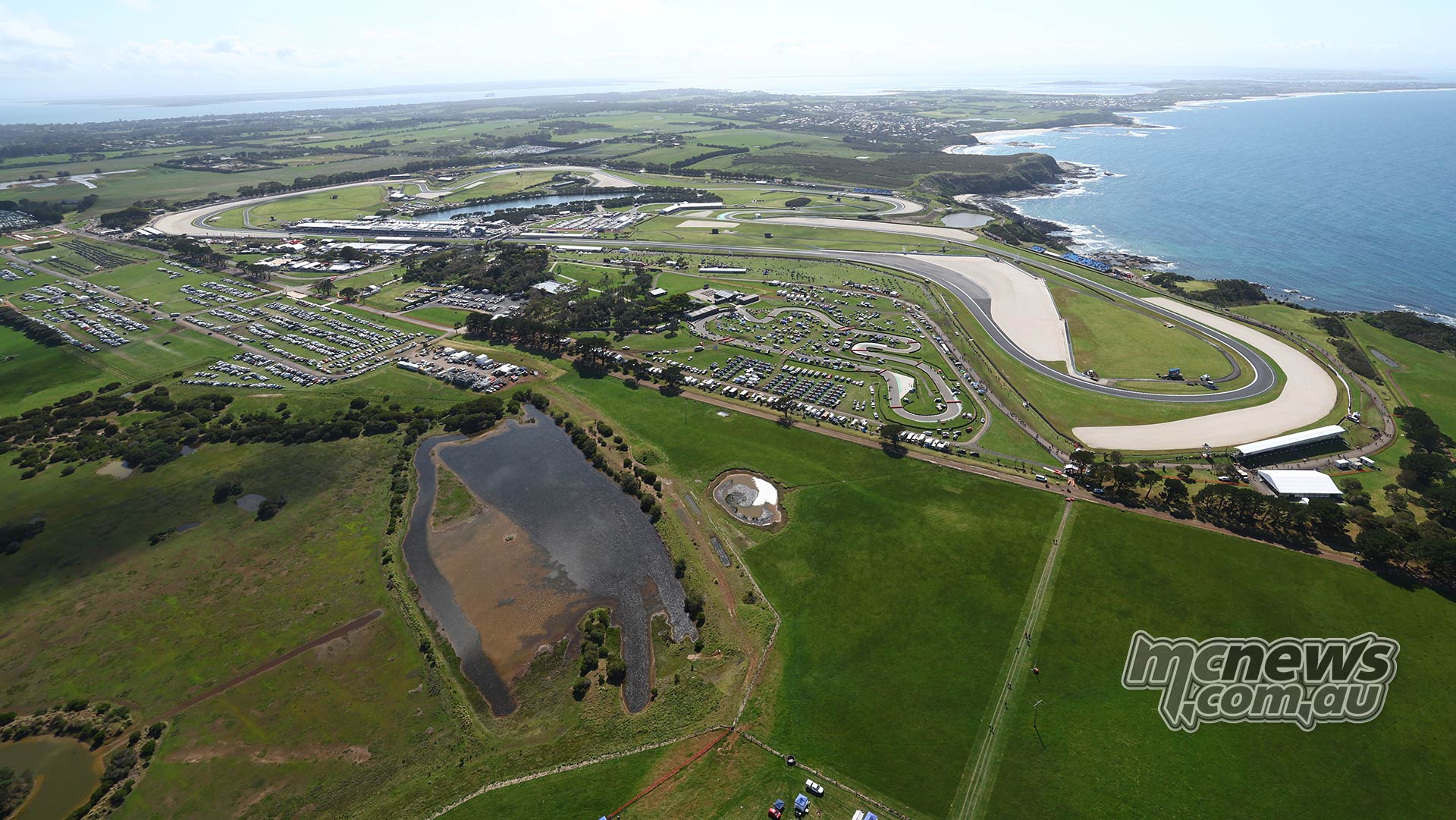
Before the Island became a tradition
Looking back from 2026, it is easy to treat a Grand Prix at Phillip Island as something that was always going to happen. Bringing the world championship here took considerably more work than that.
Promoter and engineer Bob Barnard was central to the project. The circuit required extensive restoration, while Gardner’s international success gave the event a rider around whom Australians could rally. His 1987 500 cc World Championship made the prospect of seeing him take on the world’s best at home enticing.
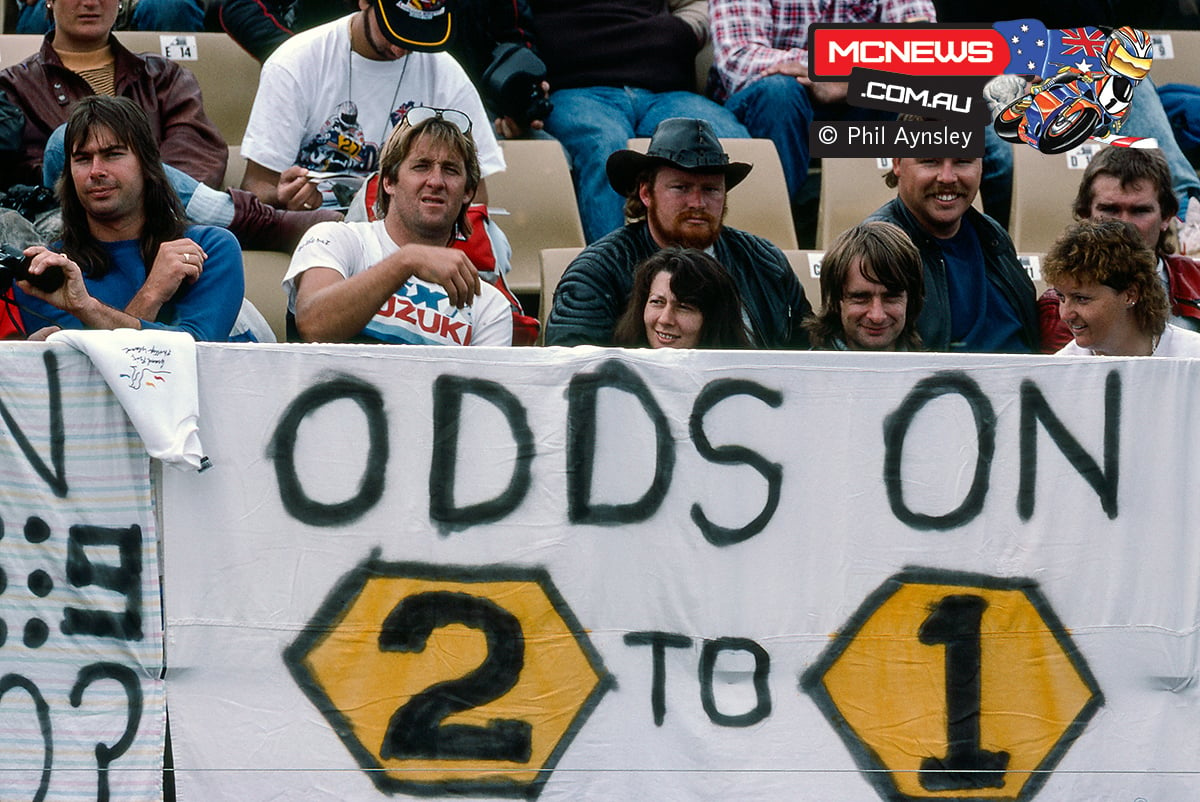
1989 | Gardner gives Australia the start it wanted
The first Australian Motorcycle Grand Prix, the first World Championship event, was held on April 9, 1989. The paddock brought together a cast that still stops an enthusiast in their tracks: Gardner, Eddie Lawson, Freddie Spencer, Wayne Rainey, Kevin Schwantz and Randy Mamola, with Kevin Magee and a young Mick Doohan adding to the Australian interest.
Phil Aynsley’s photographs preserve much of the excitement of that first encounter. The familiar factory colours, the riders who had previously seemed a world away, the crowds, and the less glamorous business of getting through practice in one piece.
When Phil revisited the meeting in our 1989 Australian GP pictorial, published in 2017, his opening observation captured the mood.
Phil Aynsley
“This was my, and I suspect most Aussie’s, first experience of what a Grand Prix was like. And gee it was good!”
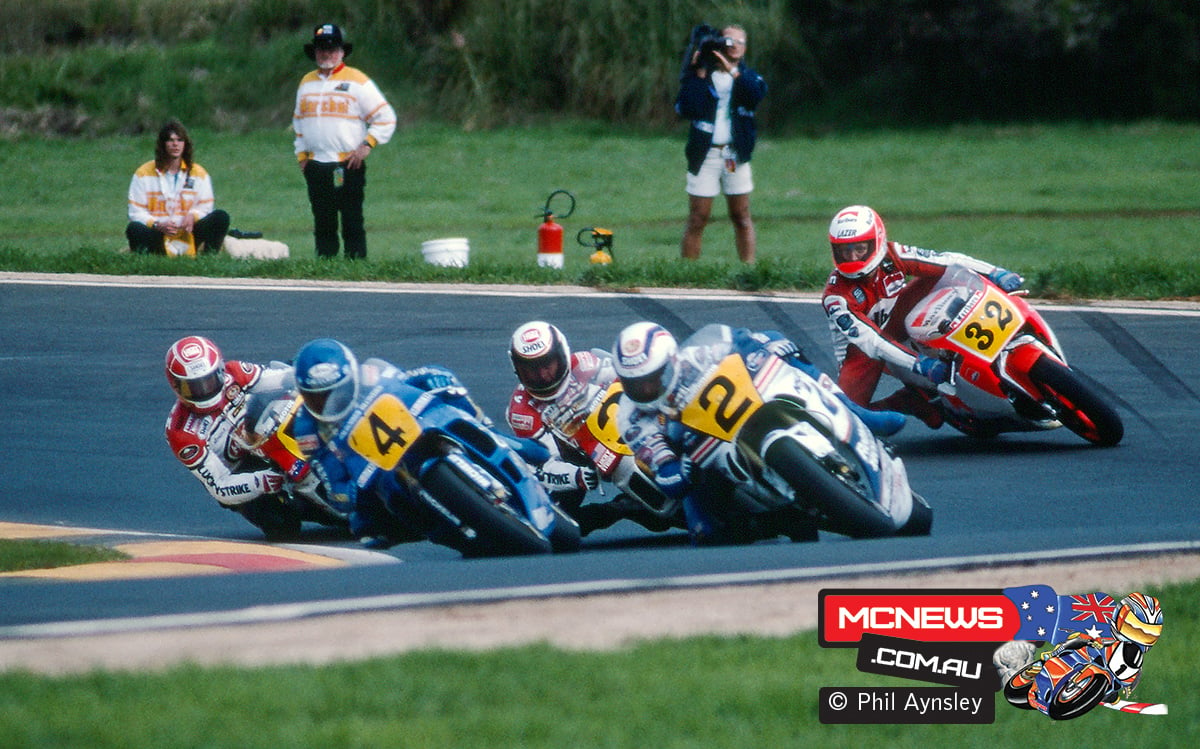
Schwantz took pole on the Pepsi Suzuki but crashed out early. Gardner and Rainey then led the main battle, with Christian Sarron joining the fight and Magee keeping the leading group in reach.
It was a wonderful introduction to the sort of racing the circuit could produce: different lines converging, the advantage changing lap after lap, and very little space between riders, each intent on reaching the next corner first.
Gardner won by 0.350 seconds from Rainey. Sarron was third, Magee fourth, and Doohan finished his first home world championship Grand Prix in eighth, ahead of fellow Australian Michael Dowson.
The flag lap became an enduring image of the occasion. The first meeting had delivered a home winner and a race worth remembering long after the crowds had left.
1990 | A damaged Honda and another Gardner victory
Gardner’s second Island victory was an altogether more battered affair. Riding with a wrist injury, he survived a near highside that damaged a fairing mounting, leaving the bodywork loose as the race continued.
Somehow, the combination remained together long enough to beat Doohan by less than a second. The two Australians gave the home crowd a Honda one-two, while Gardner added another defining performance to his relationship with the place.
There was significant history in the smaller classes, too. John Kocinski won the 250 cc race and championship, while Loris Capirossi took the 125 cc victory and became world champion at just 17.
Those first two meetings established much of the Island’s appeal: close racing, enormous emotional investment in the Australians, and the ability to produce a remarkable result even when a rider’s afternoon seemed to be falling apart.
Eastern Creek, the return and Doohan’s unfinished business
The Australian Grand Prix moved to Eastern Creek in 1991 and stayed there for six seasons. Despite the sense of permanence that later developed around Phillip Island, the event’s first stay lasted only two years.
Doohan won the Australian GP at Eastern Creek in 1992 and 1995. However, when the race returned to Phillip Island in 1997, a home victory at the Island still eluded him.

Already assured of his fourth consecutive world title, Doohan crashed out of the lead on the Island’s return. Alex Criville won, leaving the crowd to wait another year for the result it wanted.
In 1998, Doohan put that right. He beat Simon Crafar to win the race and secure his fifth consecutive 500 cc championship. For a rider whose dominance had become a defining feature of the sport, securing that final title at home made the occasion particularly satisfying.
It remained his only premier-class victory at Phillip Island. In a recollection published in 2015, Doohan made clear how much it meant.
Mick Doohan
“That victory in 1998 is one of my fondest memories.”

Title deciders and Rossi’s Island years
The Island could be just as unforgiving when the title belonged to somebody else. In 2000, Olivier Jacque and Shinya Nakano arrived for the final 250 cc race of the season separated by two points. Team-mates, title rivals, and effectively racing for everything.
Nakano led out of the final corner. Jacque used the slipstream and won the race by fourteen-thousandths of a second, taking the championship with it. A season’s work had come down to the run along Gardner Straight.
One year later, Valentino Rossi secured his first premier-class title by winning the 500 cc race. Less than three seconds covered the first nine finishers, a measure of how little room there had been for anyone to relax.
The machinery changed, but the Island continued to spring surprises. In the first year of the four-stroke MotoGP formula in 2002, Jeremy McWilliams put the three-cylinder, two-stroke Proton on pole. Rossi won the race on Honda’s RC211V, while the outgoing generation had supplied one last reminder of its capabilities in qualifying.
Rossi’s 2003 victory was extraordinary even by his standards. Given a ten-second penalty for overtaking under yellow flags, he built enough of an advantage to win anyway.
In 2004, now riding for Yamaha, he beat Sete Gibernau by less than a tenth to clinch the championship in his first season with the manufacturer. Phillip Island set the stage for another major shift in the sport’s balance of power.

In Yamaha’s account of the 2004 race, Rossi summed up a championship sealed with a proper last-lap contest.
Valentino Rossi
“Today was a fantastic finish to a fantastic championship. This track is great and today there was a hard battle up until the last lap.”
He won again in 2005, completing five consecutive premier-class victories at the Island. Alongside his 250 cc wins in 1998 and 1999, those performances built a connection that would keep bringing yellow flags to the spectator banks for years.
2006 | A change in the weather, a change of motorcycle
Weather has repeatedly complicated Phillip Island weekends. In 2006, rain brought the first MotoGP race in which riders changed motorcycles under the flag-to-flag rules.
Marco Melandri won for Honda, with Chris Vermeulen second on the Suzuki. It was the first Australian premier-class podium at the Island since Doohan’s 1998 victory.
For the riders and their crews, judging when to come in had become part of the contest. For spectators, the pit stops added another way for the race order to be turned upside down.

2007–2012 | Stoner makes the Island his own
Casey Stoner arrived at the 2007 Australian Grand Prix having already won the world championship for Ducati. He then won at Phillip Island, beginning a run that became one of the circuit’s greatest sporting achievements.
Six consecutive victories, from 2007 through to 2012. Four on a Ducati, then two on a Honda. Different motorcycles and changing rivals produced the same winner.
Stoner’s speed through the Island’s fast corners gave spectators something to watch in awe each year as he made it look easy.

His 2011 victory brought a second world title, this time with Honda, on his 26th birthday. A fifth successive win at home, a championship and a birthday: few riders have had a more complete Sunday.
In 2012, the occasion was his final home Grand Prix before retirement. Stoner won again, finishing more than nine seconds clear of Jorge Lorenzo, who secured that year’s championship in second place.
Afterwards, in comments carried in our 2012 Australian GP coverage, Stoner described looking at the crowd as the remaining laps counted down.
Casey Stoner
“I was watching the crowd and it was fantastic to see everyone cheering me on, it made me very proud to be Australian.”

Pit stops, Miller and another generation of classics
Stoner’s departure left a sizeable hole in the home crowd’s expectations. The races that followed kept people coming back.
In 2013, tyre durability concerns on the resurfaced track led to a shortened race and a mandatory motorcycle change. Marc Marquez missed the permitted pit-stop window and was disqualified; Lorenzo won. It was an unusual afternoon in which counting laps correctly became as important as finding speed.
Rossi won the premier-class race again in 2014, his first Island victory since 2005. Earlier that day, Jack Miller gave the Australians a celebration of their own, beating Alex Marquez to the Moto3 win by just 0.029 seconds.

The 2015 MotoGP race deserves a place in any conversation about the Island’s finest. Marquez, Lorenzo, Andrea Iannone and Rossi fought for the lead, with the Ducati’s straight-line speed adding another complication to a contest already full of overtakes.
Marquez produced the decisive final lap to beat Lorenzo. Iannone held off Rossi for third, with little more than a second covering all four at the flag. It rewarded attention to every part of the lap: a pass completed at one corner could be undone before the next.

Cal Crutchlow added his name to the winners in 2016, Marquez won another fiercely contested race in 2017, and Maverick Vinales won for Yamaha in 2018. In 2019, Miller returned an Australian to the premier-class podium with a third-place finish.
The winners changed, but the attraction remained easy to understand. Phillip Island let riders challenge one another through fast corners and carry those battles onto the straight. Watching someone race there could be just as rewarding as watching them win.
The silence, then the return
The Australian rounds were cancelled in both 2020 and 2021 because of the COVID-19 pandemic. A fixture that had seemed to anchor the spring disappeared from the calendar, and two years passed without a Grand Prix crowd gathering at the Island.
The 2022 return delivered a race worthy of the wait. Alex Rins won for Suzuki ahead of Marquez and Francesco Bagnaia, delivering a memorable result as Suzuki approached the end of its MotoGP programme.

2023 and 2024 | The Island keeps delivering
The weather intervened again in 2023. With severe conditions forecast for Sunday, the full-distance MotoGP race was brought forward to Saturday.
Johann Zarco seized the unusual opportunity to take his first premier-class victory. Jorge Martin’s early advantage faded as his soft rear tyre wore out, and Zarco made his move on the final lap. Martin finished fifth; Zarco finally stood on the top step.
The Sprint, moved to Sunday, was subsequently cancelled. The weekend reminded everyone how much influence the weather can have on racing beside Bass Strait.

Marquez supplied the next remarkable recovery in 2024. A tear-off under his rear tyre spoiled his launch, leaving him entering the first corner in 13th. He worked his way back through the field, caught Martin and won on the Gresini Ducati.
It was another performance that added to the Island’s reputation for giving a rider a chance to recover from a bad start.

2025 | New winners and another Australian celebration
The most recent completed Australian Grand Prix produced a first MotoGP victory for Raul Fernandez and Trackhouse in 2025. It also gave Aprilia its 300th Grand Prix win across the classes, adding another manufacturer’s milestone to the circuit’s history.

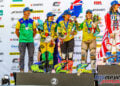
For the home crowd, Senna Agius’s Moto2 victory carried particular significance. Twelve months after taking his first world championship podium at Phillip Island, he returned to win, becoming the first Australian to take a Moto2 victory on home soil.
His delight in the post-race comments we published that day was immediately recognisable. Different rider, different class, the same pleasure in doing it in front of the people who had helped him get there.
Senna Agius
“It’s fantastic to do this in my home country, where my whole family and all my friends are here.”

One more weekend beside Bass Strait
Gardner, Doohan and Stoner each gave Australians victories to celebrate at Phillip Island. Miller, Agius and Kelso continued that connection in the smaller classes. Around them came generations of visiting riders who found winning here worth remembering.
The circuit also gave fans a place to return to: familiar campsites, meetings with friends, a preferred corner, and a walk around the circuit to see how the riders approached another part of the lap.

The final chapter of this period at Phillip Island remains to be written. The 2026 meeting will supply its own winners, disappointments and moments for people to take home.
As the Australian Grand Prix prepares to leave, there is plenty to look back on: Gardner’s flag lap, Doohan’s fifth title, Rossi finding a way to win with ten seconds added to his time, and Stoner disappearing into the distance. Add a championship decided by fourteen-thousandths, first victories, last appearances, and the crowd noise when an Australian got to the front.
Those memories will travel with the people who made them. For one more October weekend, they can add to them at Phillip Island. And as Phillip Island so often does, the weather again might play its part in making things memorable…