
Friday, October 16, 2026
MCNews
  • NEWSLatest
  • REVIEWS
  • LATEST BIKES
  • RACING
  • FEATURES
  • TOURING
  • PRODUCTS
  • MEDIA
    • GALLERY
  • MORE
    • POPULAR ARTICLES
    • MCNEWS COMMENTS
    • MAIN FORUM
    • CONTACT US
    • ABOUT US
No Result
View All Result
MCNews
  • NEWSLatest
  • REVIEWS
  • LATEST BIKES
  • RACING
  • FEATURES
  • TOURING
  • PRODUCTS
  • MEDIA
    • GALLERY
  • MORE
    • POPULAR ARTICLES
    • MCNEWS COMMENTS
    • MAIN FORUM
    • CONTACT US
    • ABOUT US
No Result
View All Result
No Result
View All Result
MCNews

Kawasaki Versys 900 expected in Australia around mid-2027

Kawasaki's new Versys 900 pairs a 948 cc inline four with an all-new trellis frame, radar assistance and a touring-equipped SE variant. Australian arrival is expected around mid-2027, with pricing not expected to be announced until late 2026.

Trev by Trev
October 16, 2026
in Kawasaki, Kawasaki News, Latest Bikes, Motorcycle News

2027 Kawasaki Versys 900 SE

Kawasaki’s new Versys 900 is expected to reach Australia around mid-2027, bringing a 948 cc inline four-cylinder engine, a purpose-built steel trellis frame, and the first radar-assistance systems fitted to a Versys.

Standard and SE versions have been detailed, emphasising a blend of upright touring comfort and luggage capacity, with a chassis built for sporty road riding and powered by a 120-horsepower in-line four. Australian pricing is not expected until late 2026, and final local equipment specifications are still to be confirmed.
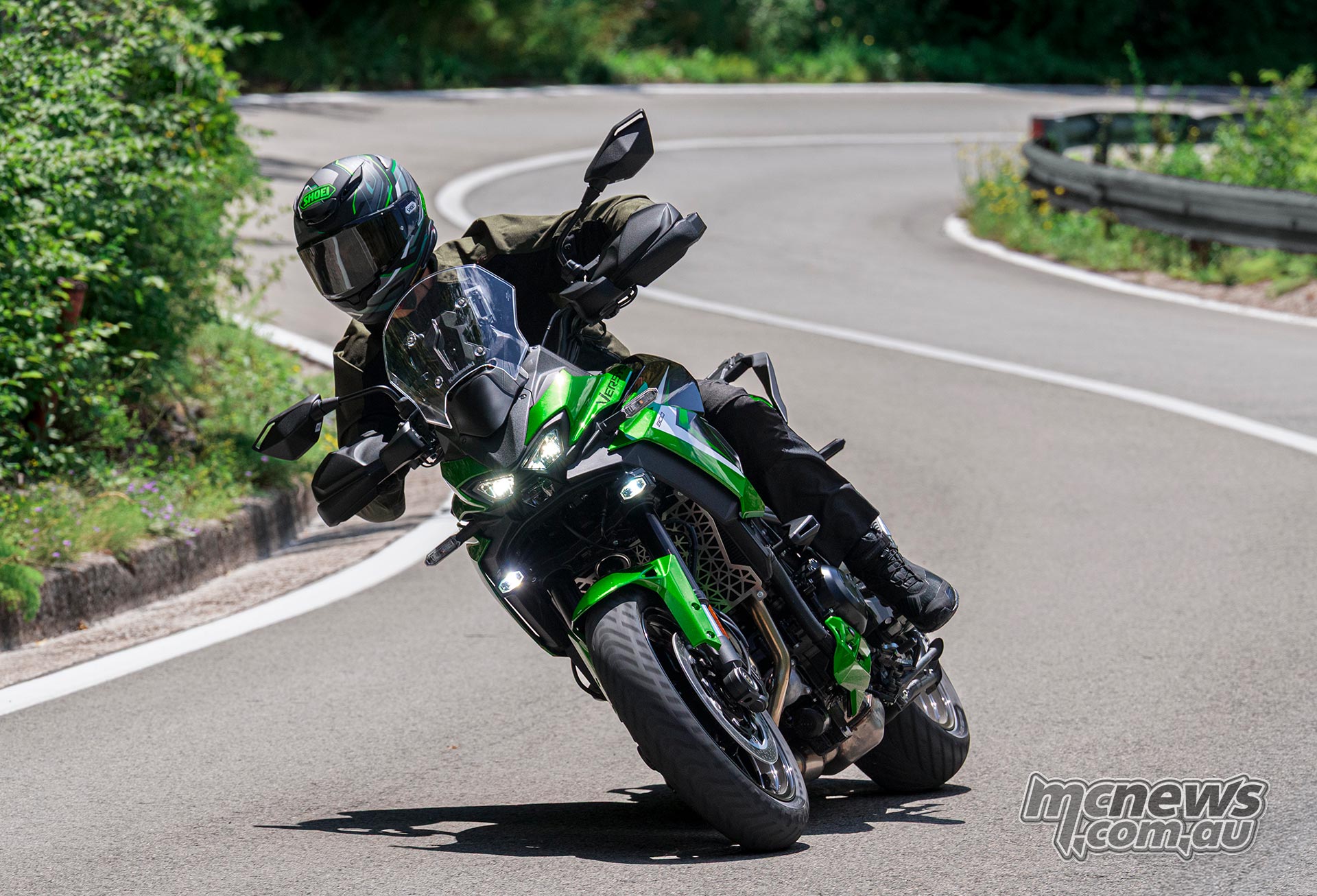
Rider leaning a green 2027 Kawasaki Versys 900 SE through a winding road bend
The new Versys 900 combines a 948 cc inline four with 17-inch wheels and a purpose-built steel trellis frame.

948 cc four-cylinder engine

The liquid-cooled, DOHC, 16-valve four shares its 73.4 x 56.0 mm bore and stroke with the Z900. Kawasaki has tailored the intake, exhaust and engine settings to the Versys brief, aiming to combine smooth low- and mid-range response with stronger acceleration as the revs rise.
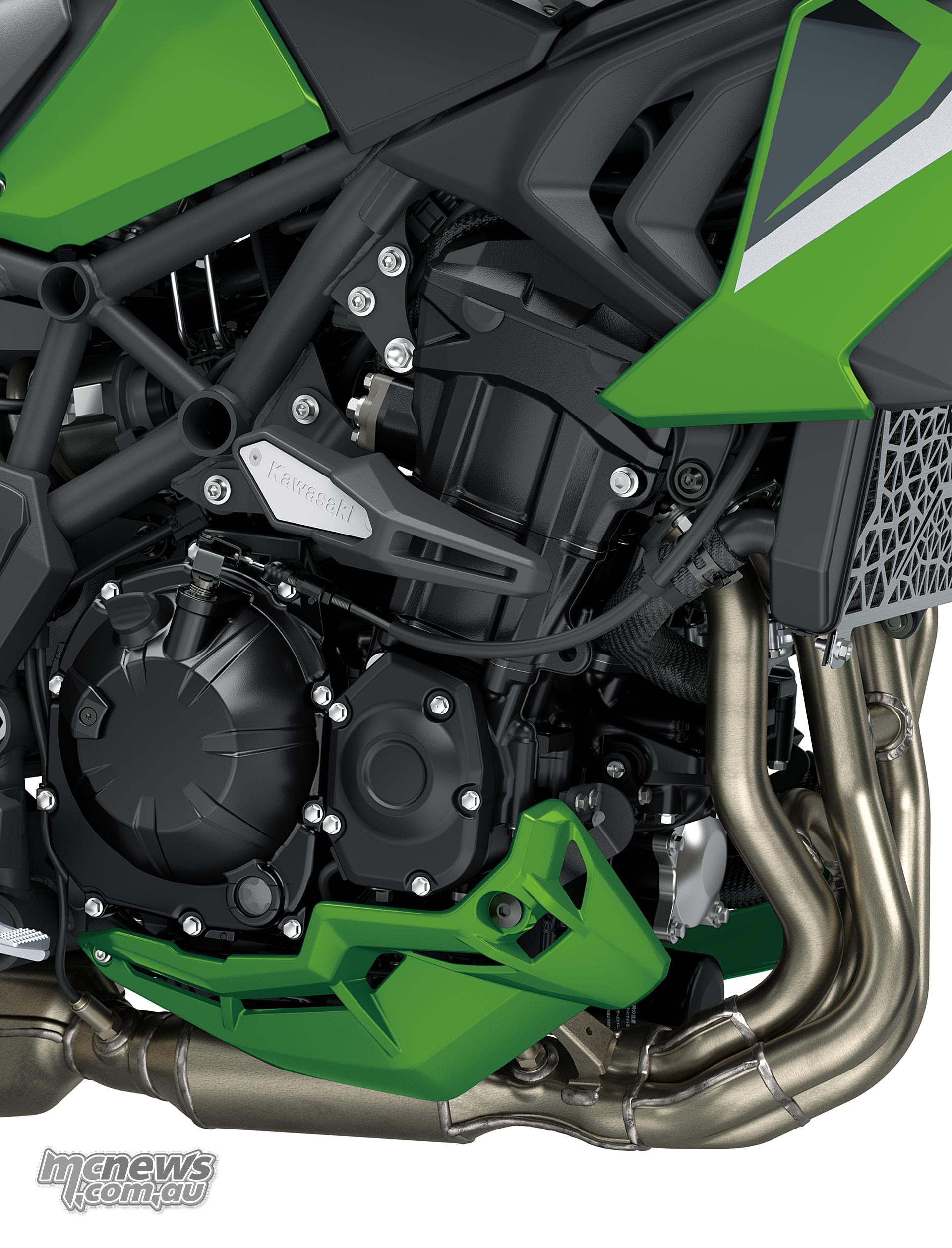
Kawasaki Versys 900 SE engine with four curved exhaust headers and a green lower cowl
The 948 cc four-cylinder engine uses 36 mm throttle bodies and a four-into-one exhaust system.

Long, slim intake funnels and 36 mm throttle bodies contribute to that delivery, while electronic throttle control supports the riding modes and cruise functions. Kawasaki describes a linear response between 6000 and 10,000 rpm.

A 42/15 final drive ratio is intended to keep engine speeds down during highway riding and reduce the need to change gears. An assist and slipper clutch is fitted, along with a bidirectional quickshifter that operates from 1500 rpm.
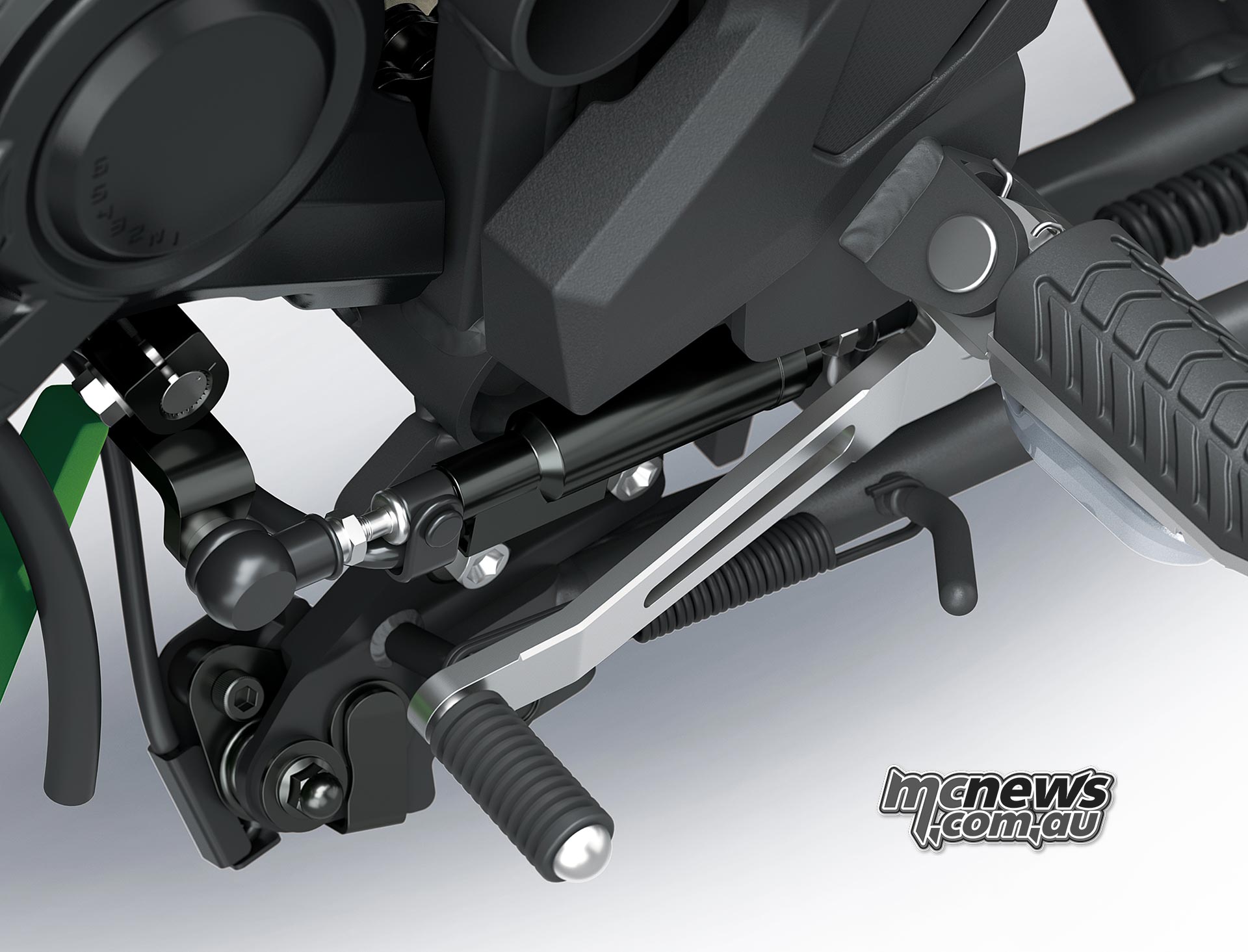
Left footpeg, gear lever and quickshifter linkage on the Kawasaki Versys 900 SE
The bidirectional quickshifter operates from 1500 rpm, alongside an assist and slipper clutch.

The exhaust uses a four-into-one arrangement, with a 5.5-litre pre-chamber allowing a relatively compact silencer.
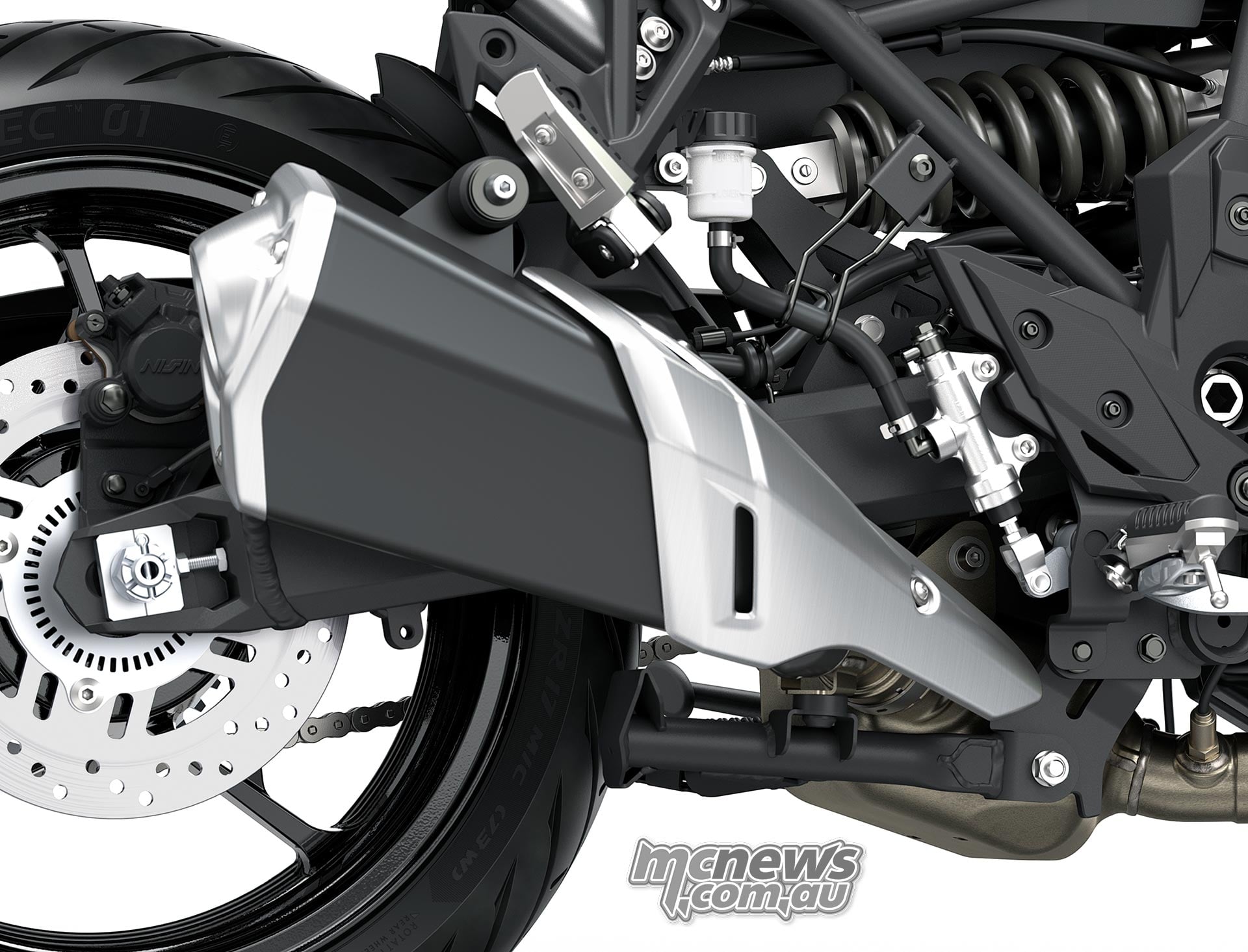
Black Kawasaki Versys 900 SE silencer with a metallic heat shield beside the rear wheel
A 5.5-litre exhaust pre-chamber allows Kawasaki to use a relatively compact silencer.

Radar assistance comes to the Versys

The Versys 900 introduces Kawasaki’s Advanced Rider Assistance Systems to the Versys family, using front and rear radar sensors for Adaptive Cruise Control Lite, Forward Collision Warning and Blind Spot Detection.
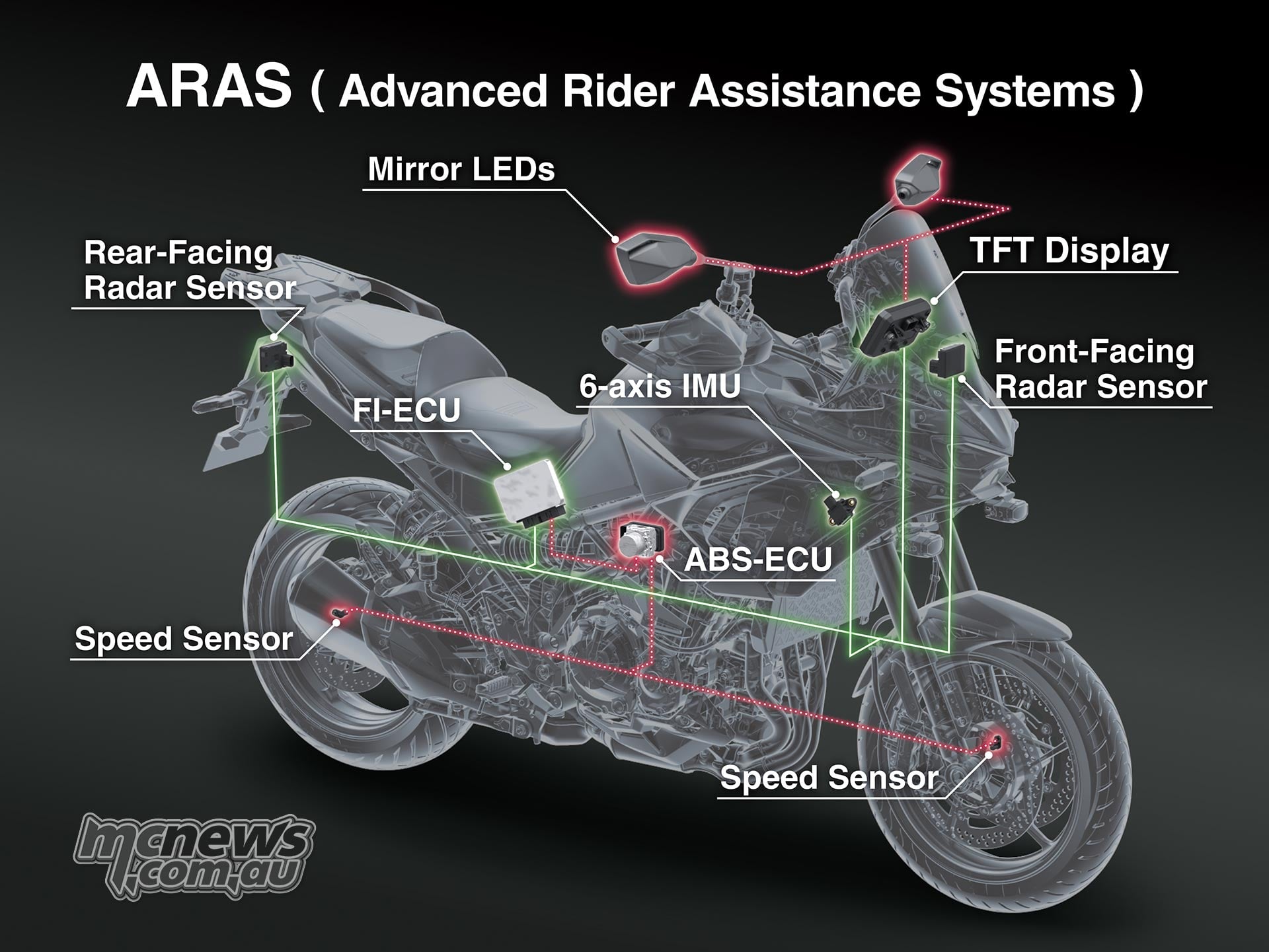
Labelled Kawasaki Versys 900 diagram showing the front and rear radar sensors, mirror LEDs, IMU and electronic control units
The radar assistance package combines front and rear sensors with alerts in the mirrors and TFT display.

Adaptive Cruise Control Lite adjusts the electronic throttle to help maintain a selected following distance behind traffic. Riders can choose Near, Medium or Far distance settings, and the motorcycle returns towards the set cruising speed when the road ahead clears.

The system can close the throttle to reduce speed, but it cannot apply the brakes. The rider must brake whenever stronger deceleration is required. Applying the brakes cancels cruise control, which can subsequently be resumed using the switchgear.
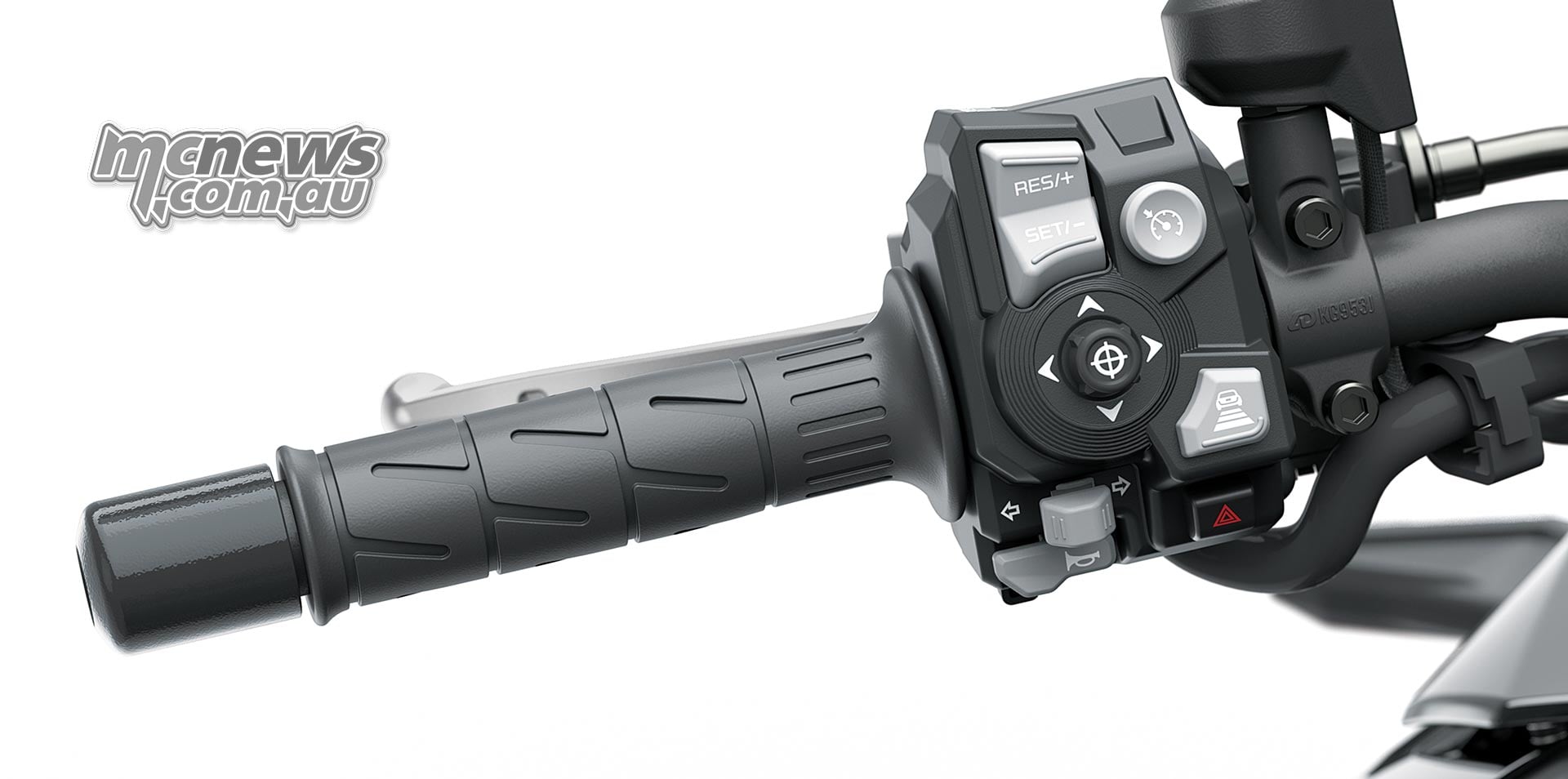
Left handlebar switchgear on the 2027 Kawasaki Versys 900 showing the joystick, cruise switches and following-distance button
The standard model’s left switchblock combines the display joystick with cruise and following-distance controls.

Forward Collision Warning uses the front radar to assess the distance and speed of a vehicle ahead, displaying a warning on the TFT when it detects a potential collision risk. The rider can select early, medium or late warning timing.

Rear radar supports Blind Spot Detection, with LEDs in the mirrors alerting the rider to approaching vehicles in adjacent lanes. If the rider indicates towards an occupied blind spot, the relevant warning LED flashes.
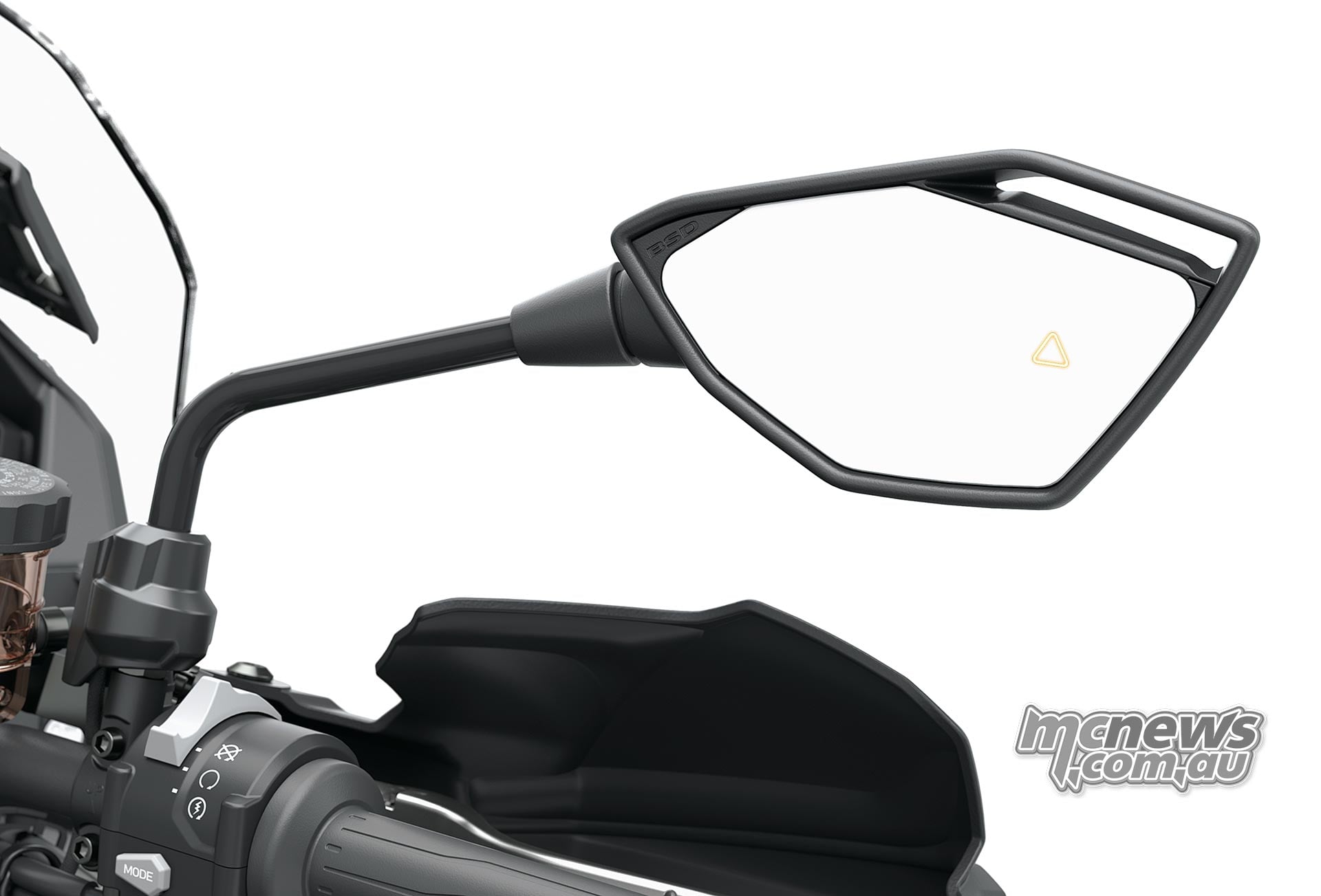
Kawasaki Versys 900 SE mirror with an illuminated amber triangular blind-spot warning above the right handguard
Blind Spot Detection uses an LED in the mirror to alert the rider to an approaching vehicle in an adjacent lane.

An Emergency Stop Signal function flashes the indicators rapidly during hard braking to alert following traffic.

All-new steel trellis frame

The steel trellis frame is an all-new design, developed to balance feedback and agility during sporty riding with stability when carrying a passenger and luggage. The engine is rigidly mounted at five points and acts as a stressed member.
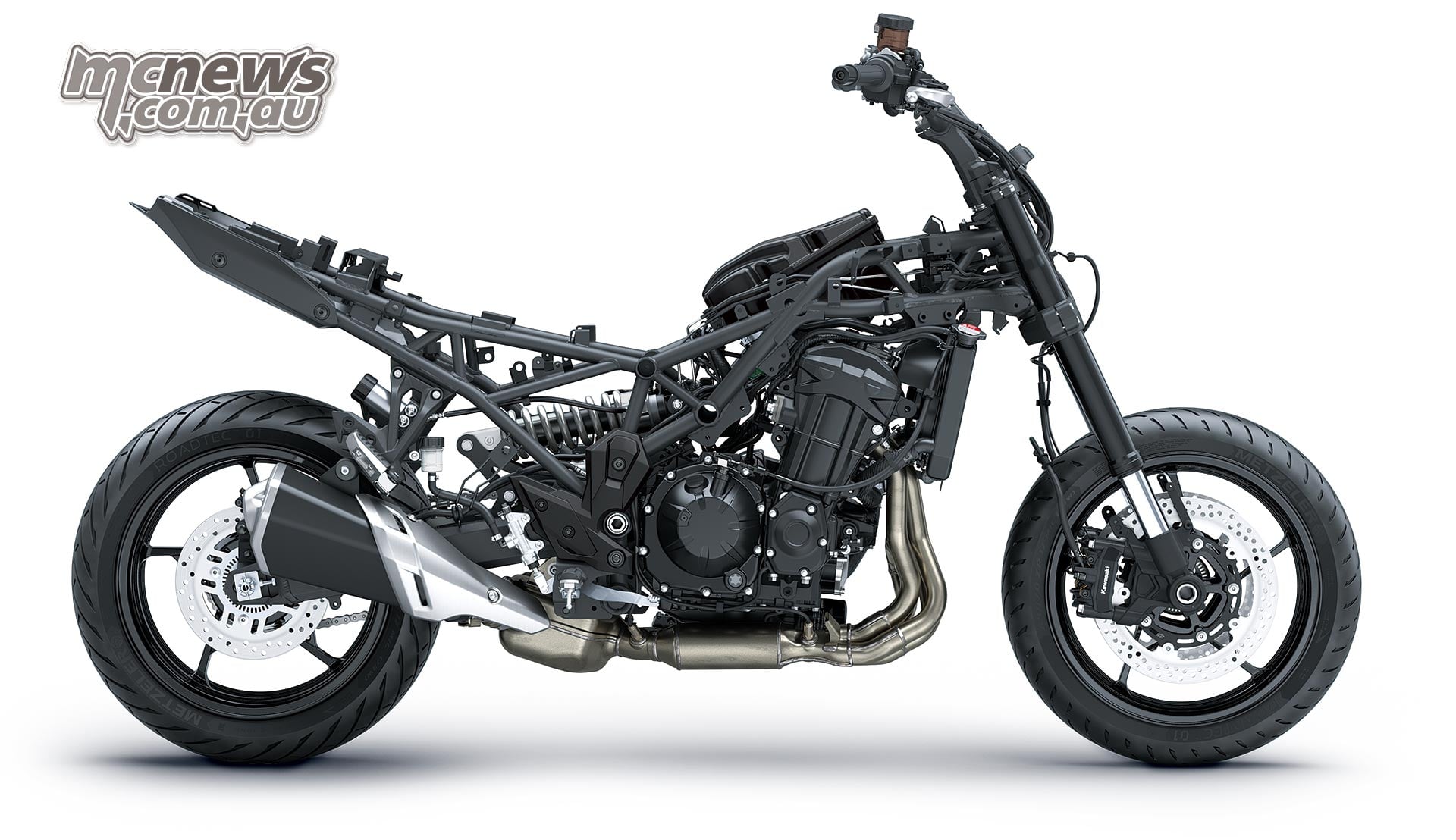
Right-side view of the Kawasaki Versys 900 chassis with the bodywork removed to expose the trellis frame, engine and suspension
The all-new steel trellis frame uses the engine as a stressed member and is designed to accommodate a passenger and luggage.

Kawasaki says development drew on analysis of the Versys 1100’s aluminium twin-tube frame. The rear trellis structure also incorporates ideas from the Z900 and Ninja H2 SX, with its lower tubes extending towards the swingarm pivot.

The quoted maximum payload is 220 kg, matching the Versys 1100. An aluminium swingarm with extruded arms completes the main chassis structure.
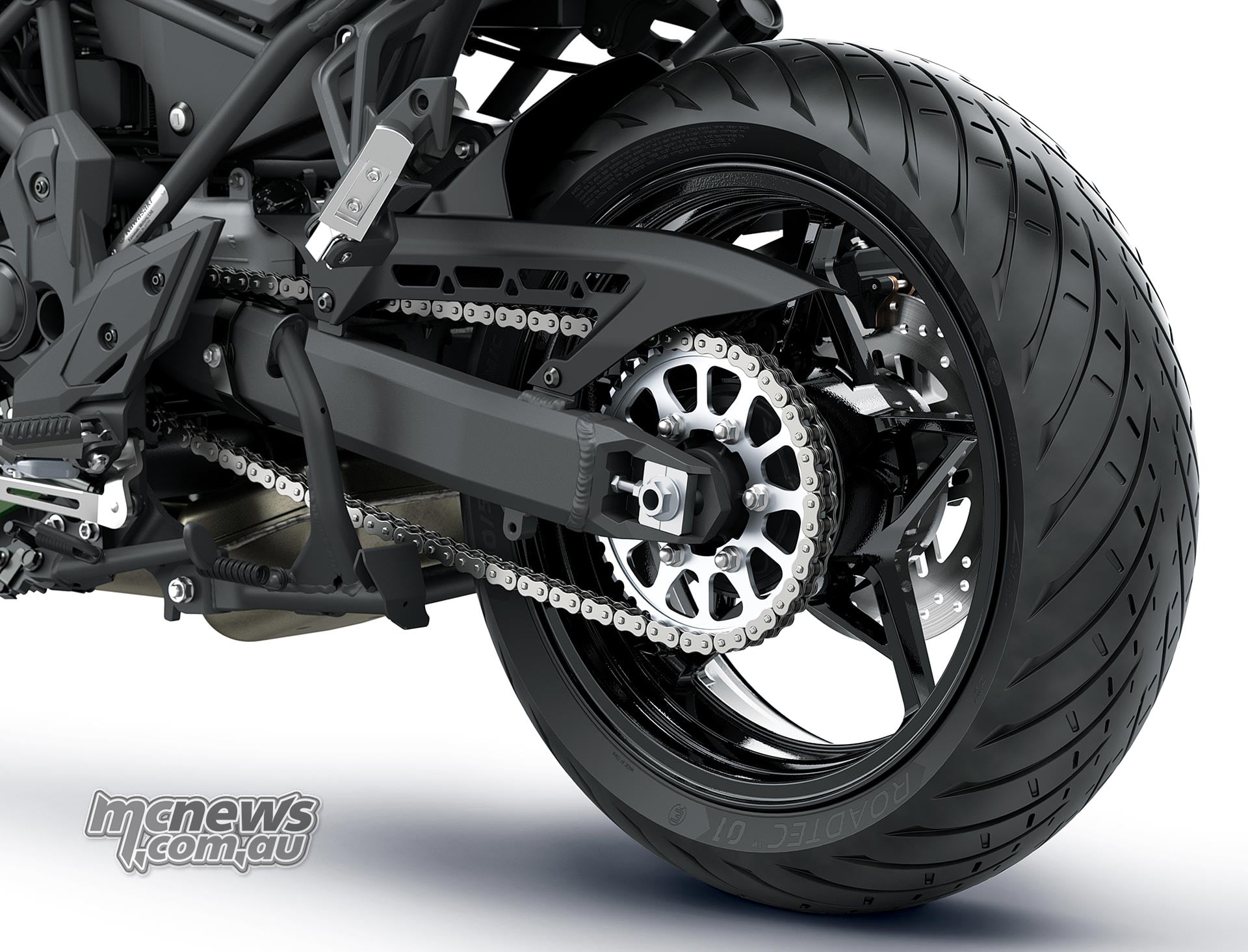
Kawasaki Versys 900 SE rear wheel, aluminium swingarm, drive chain and rear sprocket
An aluminium swingarm forms part of the chassis package, with a 1550 mm wheelbase.

Geometry comprises a 24.5-degree rake, 106 mm trail and a 1550 mm wheelbase. Kawasaki quotes a 50:50 front-to-rear weight distribution, aided by the rider position, swingarm pivot location and the positioning of fuel towards the front of the tank.

Long-travel suspension and road wheels

A 43 mm inverted fork provides 150 mm of travel, with rebound damping and spring preload adjustment. Both adjusters are positioned at the top of the right fork leg.
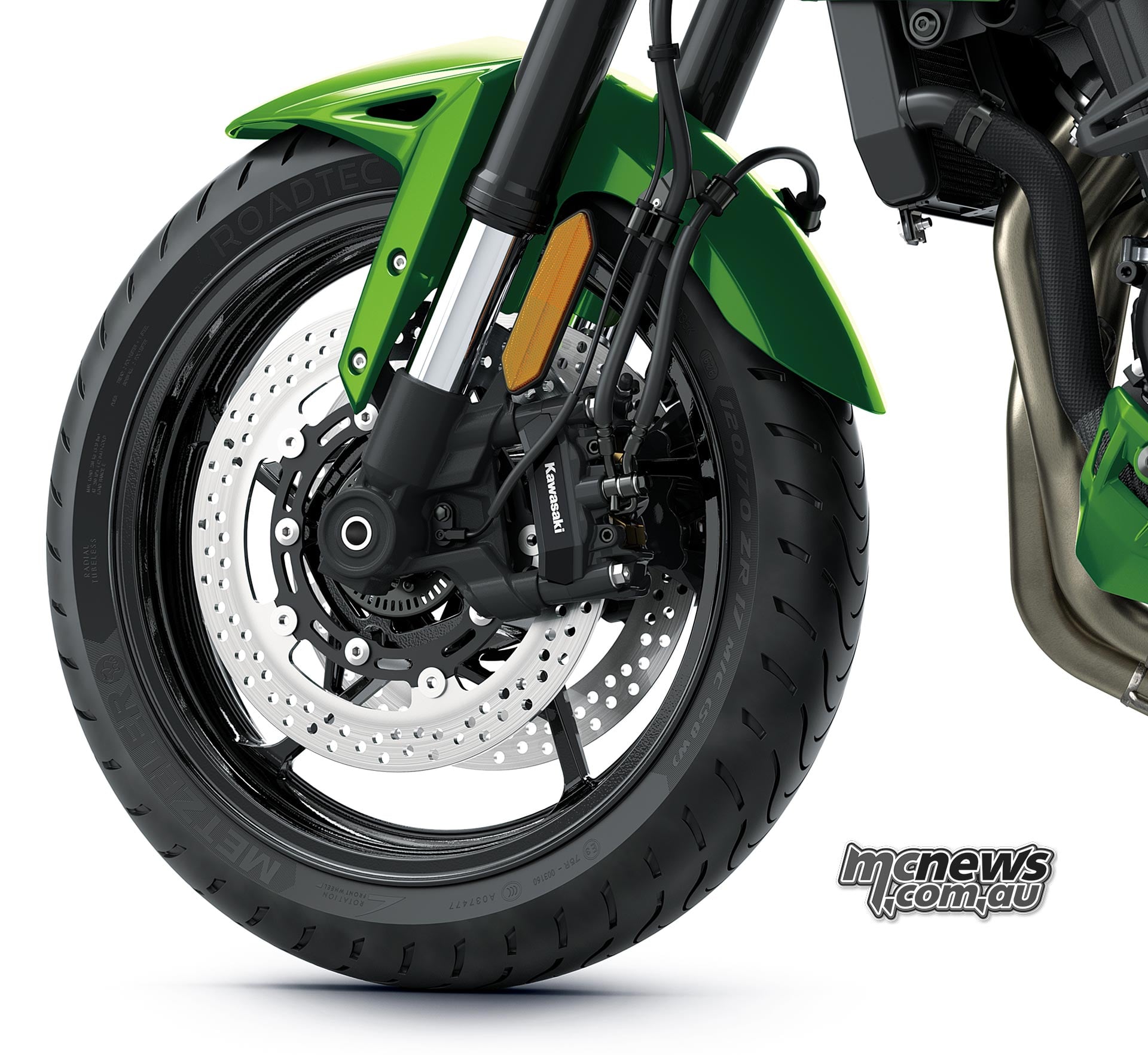
Kawasaki Versys 900 SE front wheel showing the inverted fork, green mudguard, brake discs and radial-mount caliper
The 43 mm inverted fork provides 150 mm of travel, while twin 310 mm discs work with radial-mount four-piston calipers.

The horizontal back-link rear suspension offers 159 mm of wheel travel, rebound adjustment and a remote spring preload adjuster. The shock and linkage sit above the swingarm, away from exhaust heat.
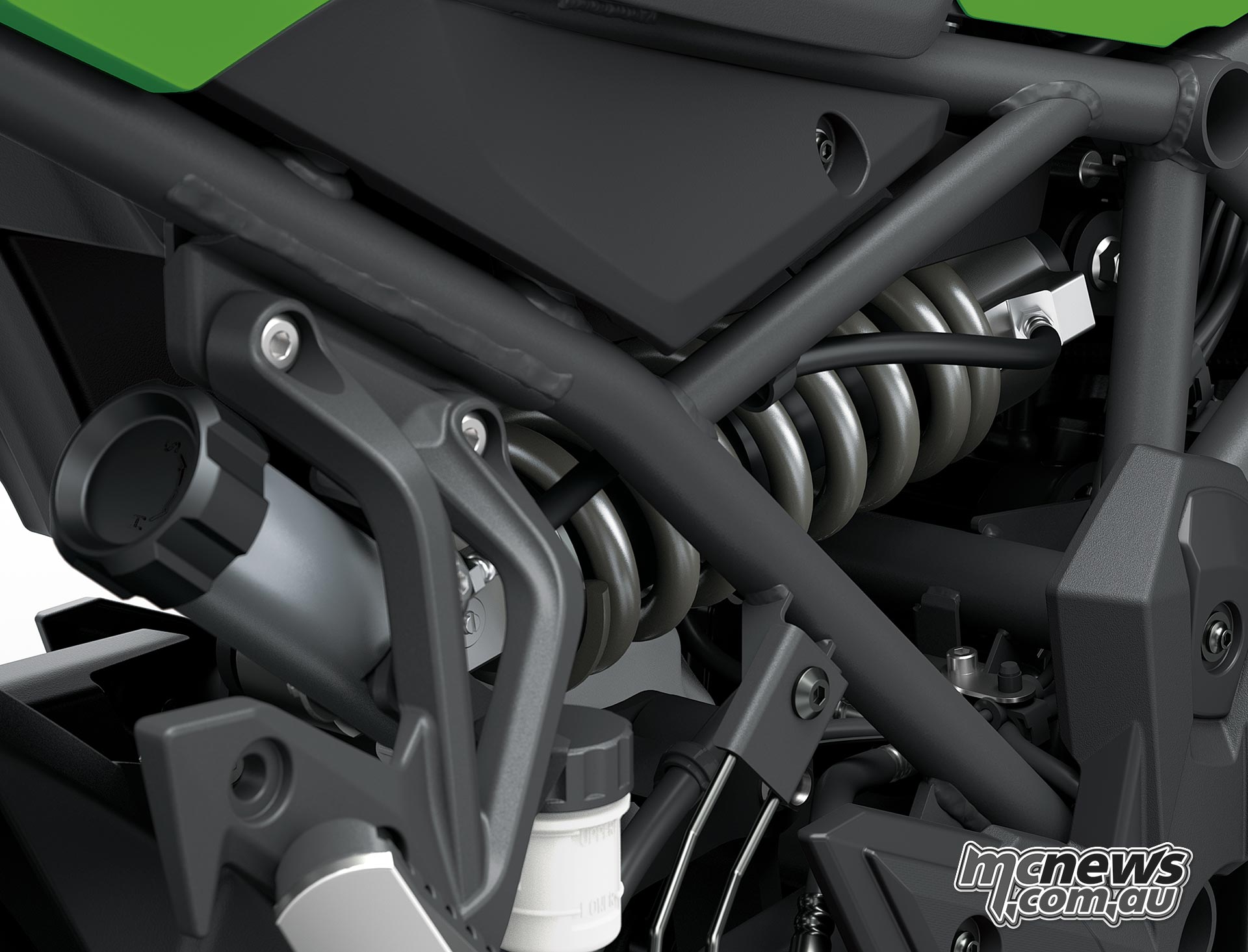
Horizontal rear shock and spring inside the Kawasaki Versys 900 SE trellis frame with the remote preload adjuster alongside
The rear shock offers rebound adjustment and remote spring preload control, with 159 mm of rear wheel travel.

Braking comprises twin 310 mm front discs with radial-mount, four-piston monobloc calipers and a radial-pump master cylinder, plus a 260 mm rear disc and single-piston caliper.

Five-spoke 17-inch wheels wear Metzeler Roadtec 01 tyres.
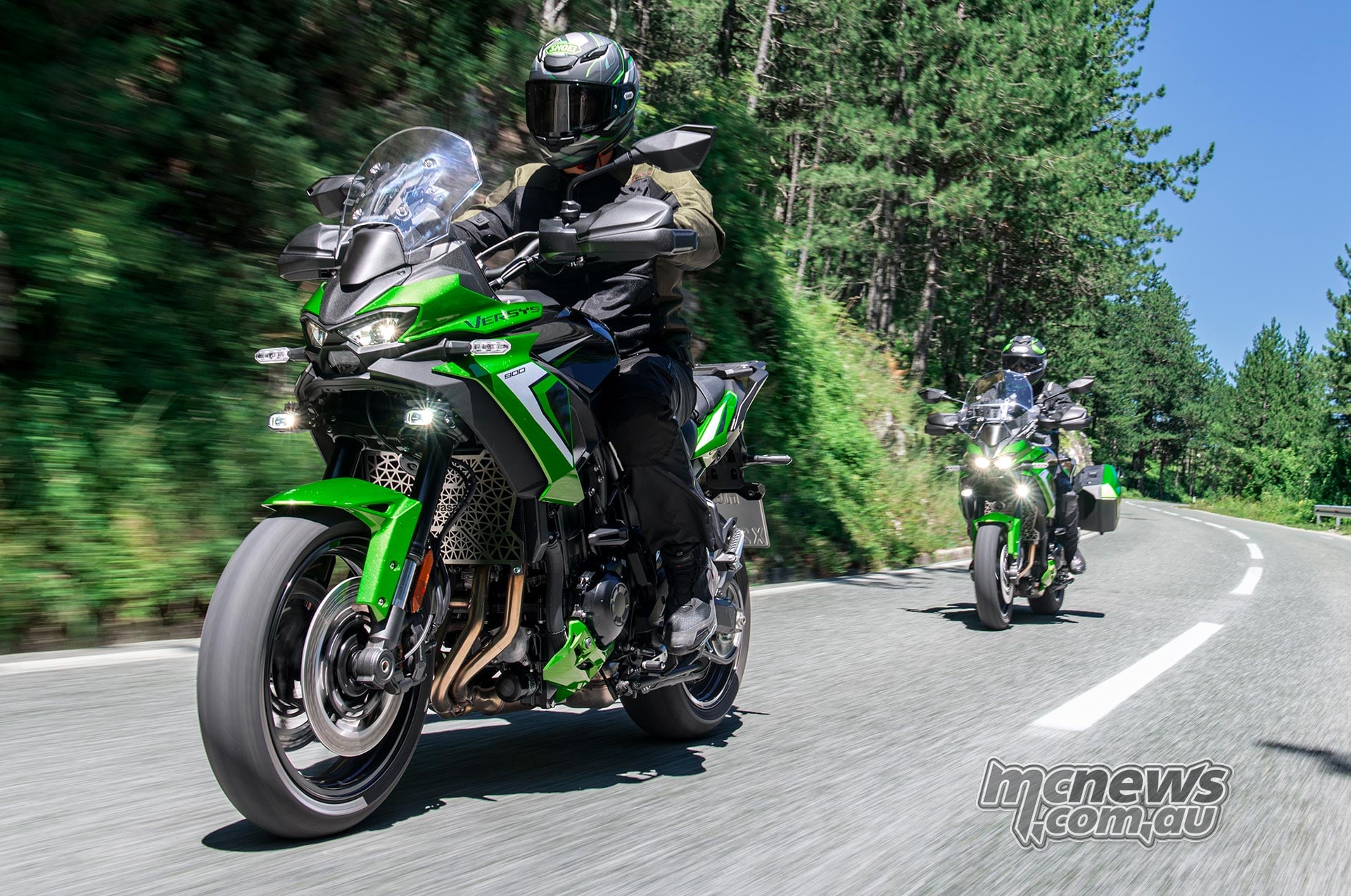
Two riders on green Kawasaki Versys 900 SE motorcycles travelling along a winding tree-lined road
Long-travel suspension and an upright riding position underpin the Versys 900’s road touring brief.

Upright ergonomics and adjustable seat

The rider’s seat can be set at 825 mm or 845 mm without tools, using spacers beneath the seat. Its flatter seating area allows movement through the bends, while a narrow front section is intended to help riders reach the ground.
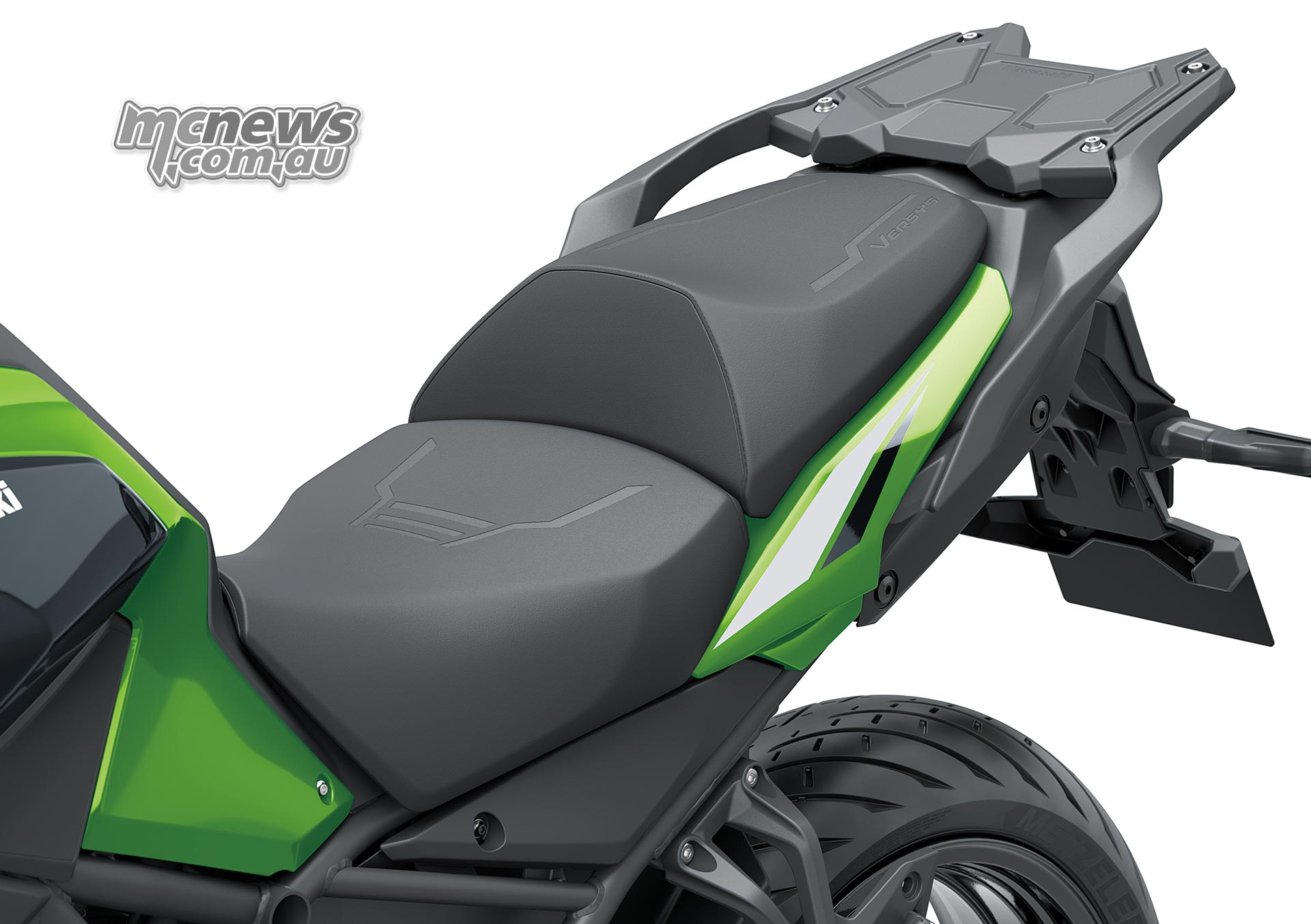
Two-piece black seat on the Kawasaki Versys 900 SE with green side panels and a rear luggage carrier
The standard rider seat can be set at 825 mm or 845 mm without tools.

Fuel capacity is 20 litres. The tank’s outer panels are shaped to provide slim contact areas for the rider’s knees and legs, while its internal shape helps position fuel towards the front of the motorcycle.
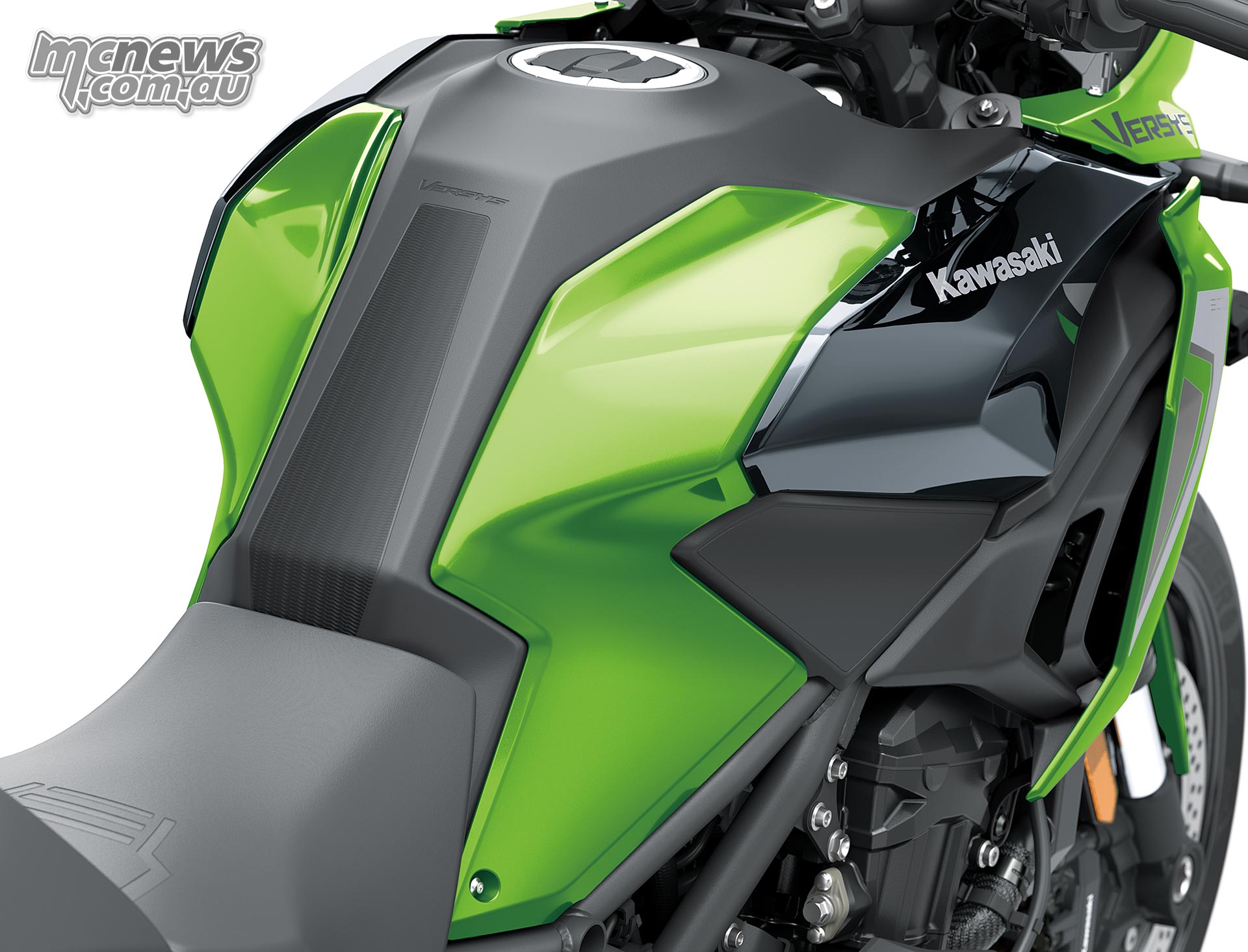
Narrow junction between the black rider seat and green fuel tank panels on the Kawasaki Versys 900 SE
The 20-litre tank has narrow contact areas intended to help knee grip and reach to the ground.

A wide, rubber-mounted handlebar creates an upright riding position. Rubber mounting is also used for the footpeg brackets, while rubber footpeg pads and bar-end weights help limit vibration reaching the rider.
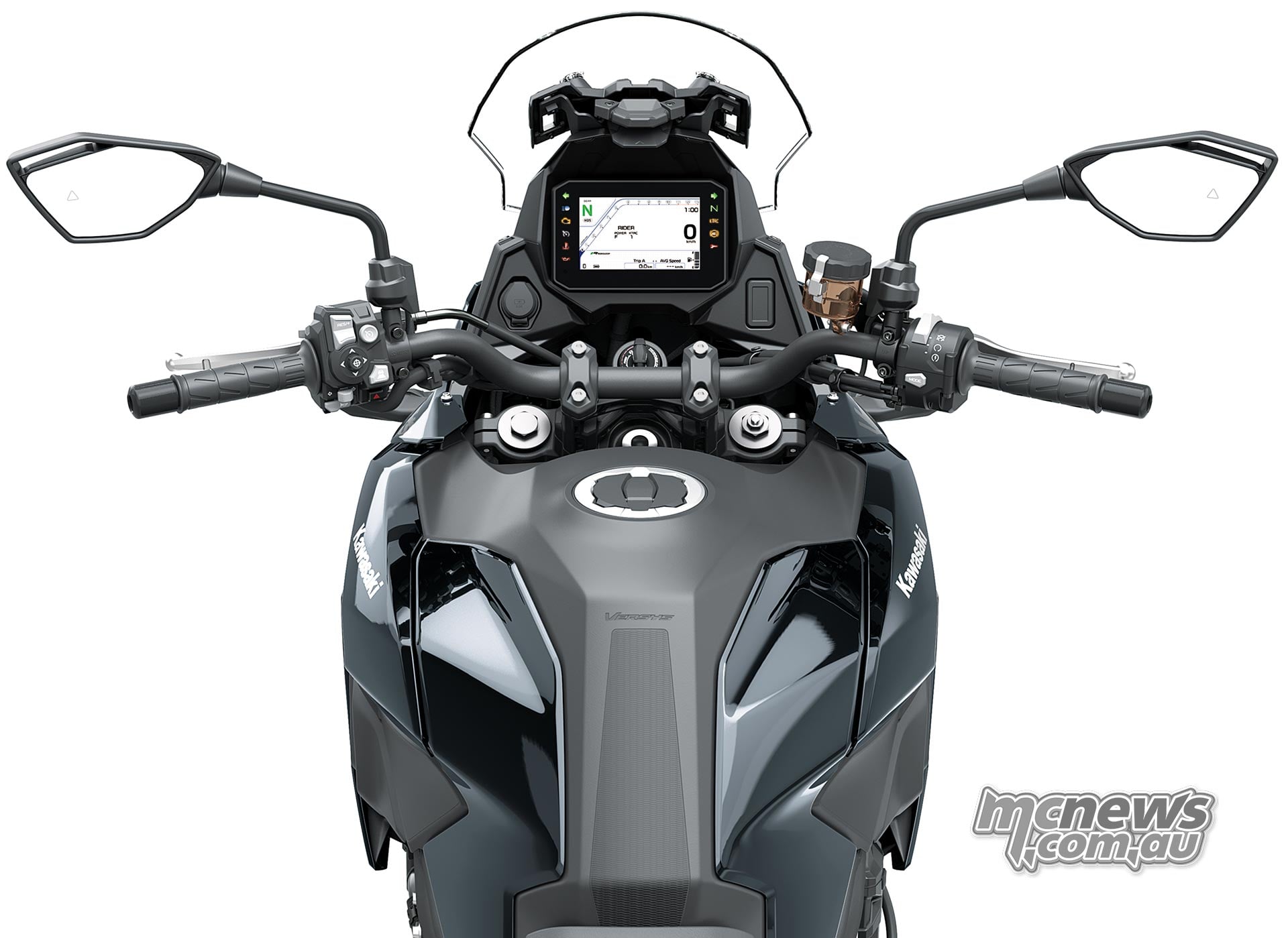
Rider view over the black fuel tank of the standard Kawasaki Versys 900 showing the handlebar, mirrors and TFT display
The standard Versys 900 cockpit features a wide handlebar, five-inch TFT and upright riding position.

The front brake lever offers six-position adjustment and the clutch lever five positions. Separate rider and passenger seats use cushioning selected for longer rides, with the rider’s seat also designed to accommodate movement during more active riding.
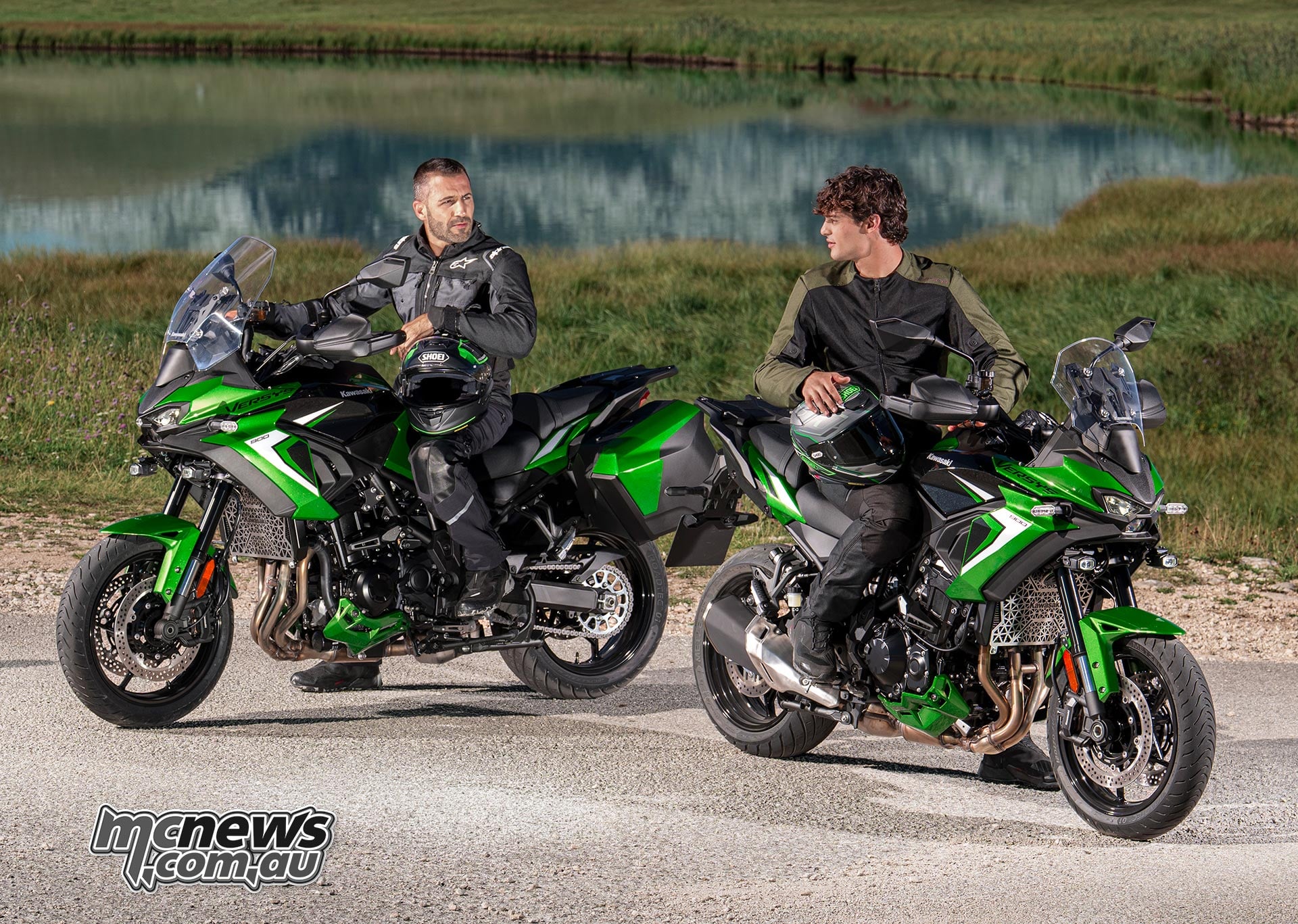
Two riders sitting on green Kawasaki Versys 900 SE motorcycles parked beside a lake
The Versys 900’s upright ergonomics are intended to suit commuting, day rides and longer touring trips.

Wind protection and new styling

The standard screen adjusts manually through seven positions in 8 mm steps, covering a total height range of 48 mm. Kawasaki says more than 100 wind-tunnel tests were used to assess airflow around the rider, balancing wind protection with a relatively compact screen.
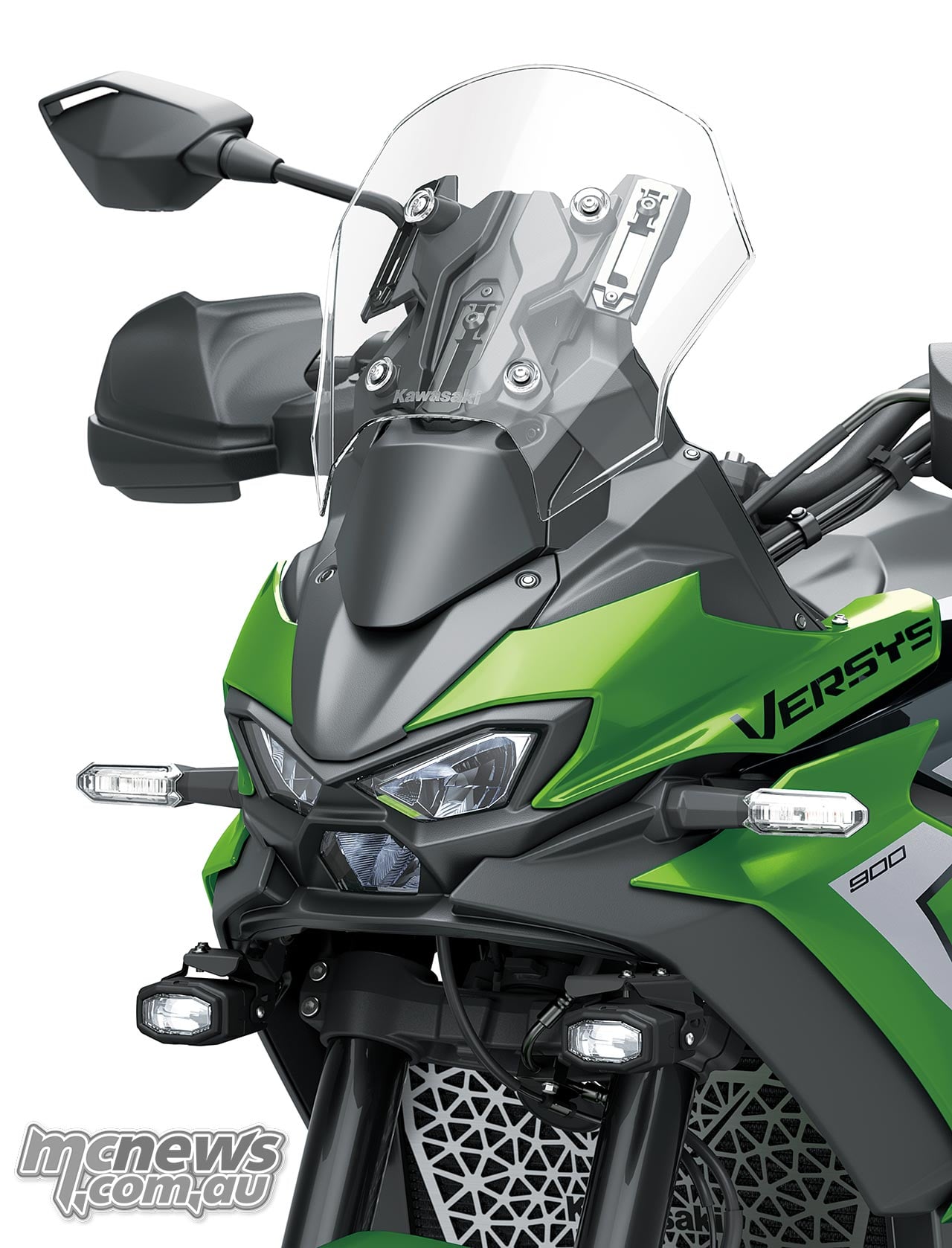
Front three-quarter detail of the Kawasaki Versys 900 SE showing the clear screen, LED headlights and fog lamps
The standard clear screen adjusts through seven height positions over a 48 mm range.

The front end uses a triple-LED headlight arrangement, with the two upper lamps providing low beam and the lower lamp high beam. Layered panels, air vents and exposed sections of engine and frame form part of what Kawasaki calls its Aero Edge styling concept.

Five-inch TFT and riding modes

A new five-inch colour TFT offers two display layouts. One gives greater prominence to engine speed for sporty riding, while the other makes navigation, vehicle information and radar assistance notifications more prominent for touring.
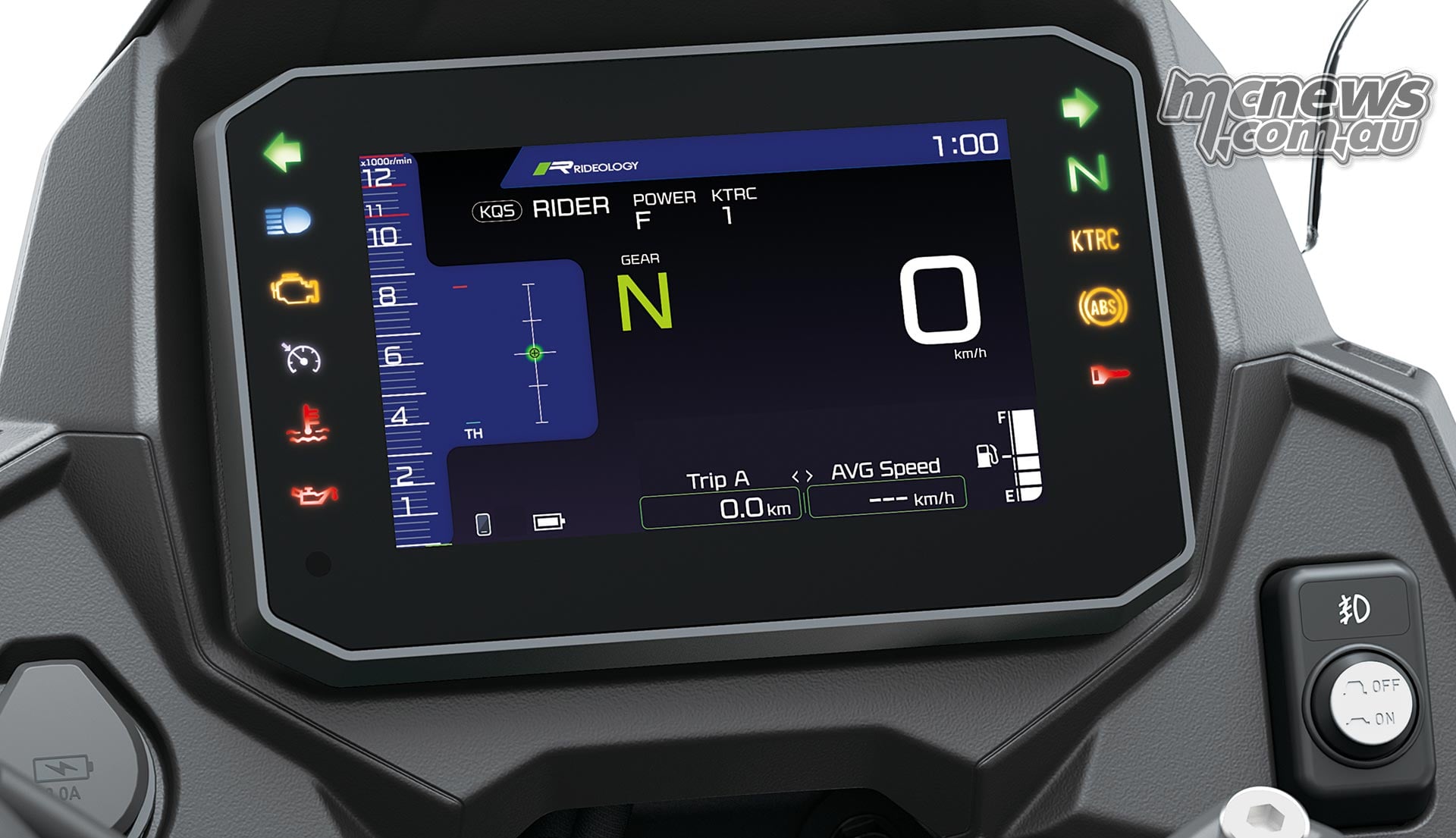
Kawasaki Versys 900 SE TFT in its dark theme showing neutral gear, speed, engine revs and Rider mode settings
The dark display brings riding mode, power and traction control settings together with speed and engine information.

Riders can choose light or dark backgrounds, with automatic changes according to ambient light. Screen brightness also adjusts automatically, with two rider-selectable brightness levels available.
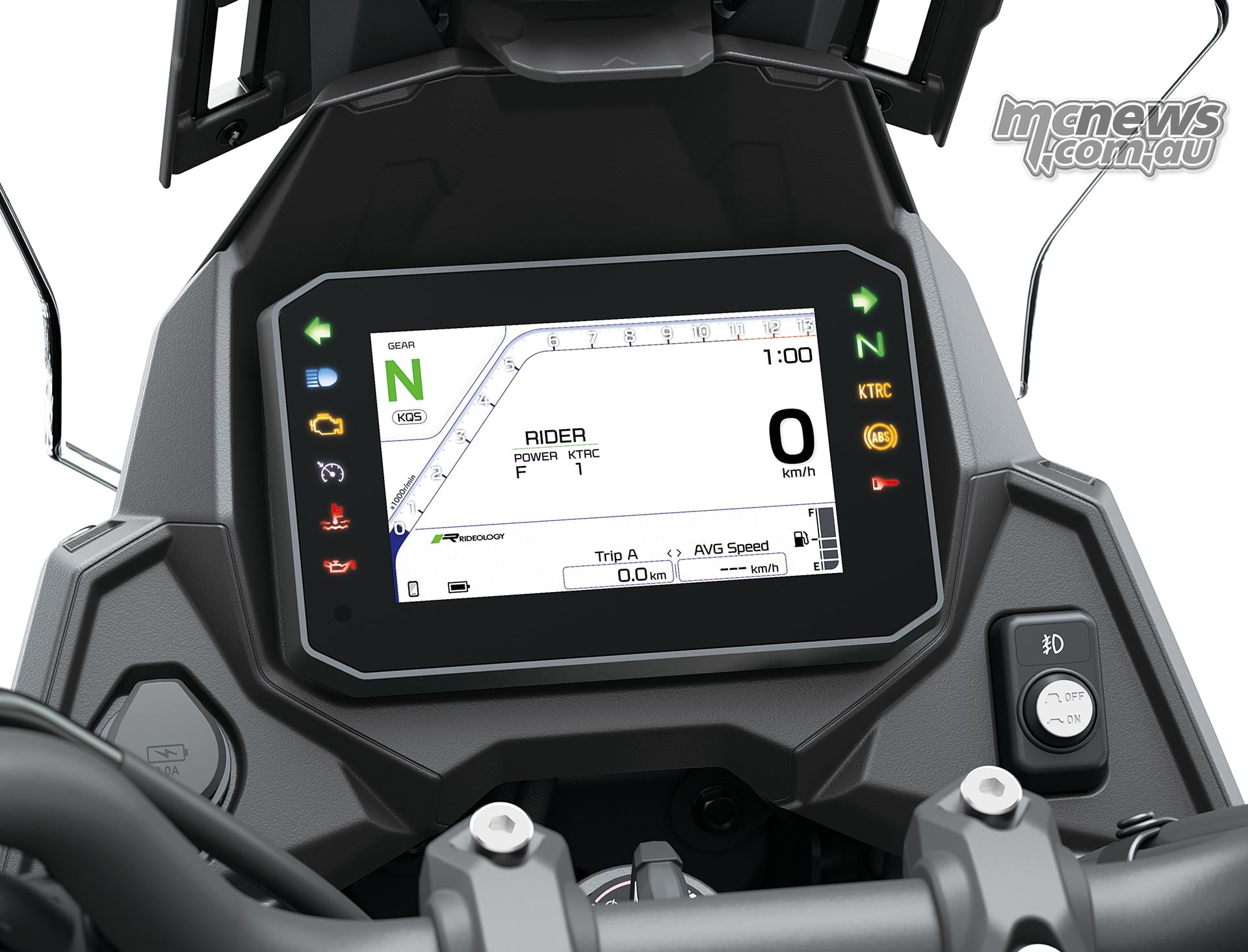
Kawasaki Versys 900 SE TFT in its light theme showing the diagonal tachometer, neutral gear and zero road speed
Riders can select light or dark backgrounds, with automatic adjustment to ambient light also available.

A joystick on the left switchblock handles menu navigation and display selection. Vehicle information, service reminders and rider-assistance settings can be accessed through the instruments.
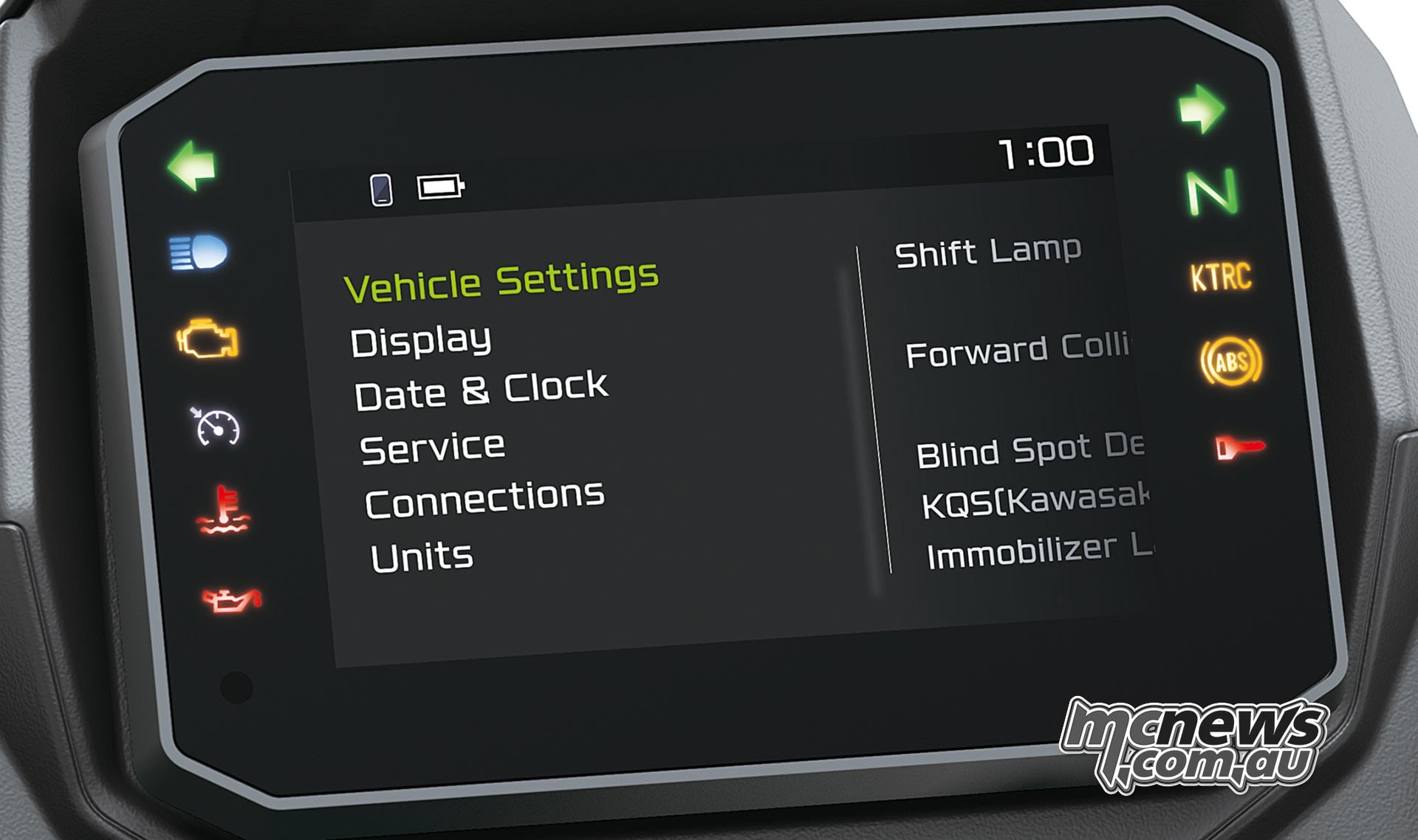
Kawasaki Versys 900 TFT vehicle settings menu showing display, connections and rider-assistance options
Display and rider-assistance settings can be accessed through the TFT’s vehicle settings menu.

The electronics package includes IMU-informed cornering ABS, rear-wheel lift management, three traction control settings and the option to switch traction control off. Sport, Road and Rain modes combine power and traction control settings, while a configurable Rider mode permits individual selection.

Full and Low power settings are available, with Low limiting output to approximately 75 per cent, depending on engine speed and throttle position. Riding modes are selected through a dedicated button on the right switchblock.
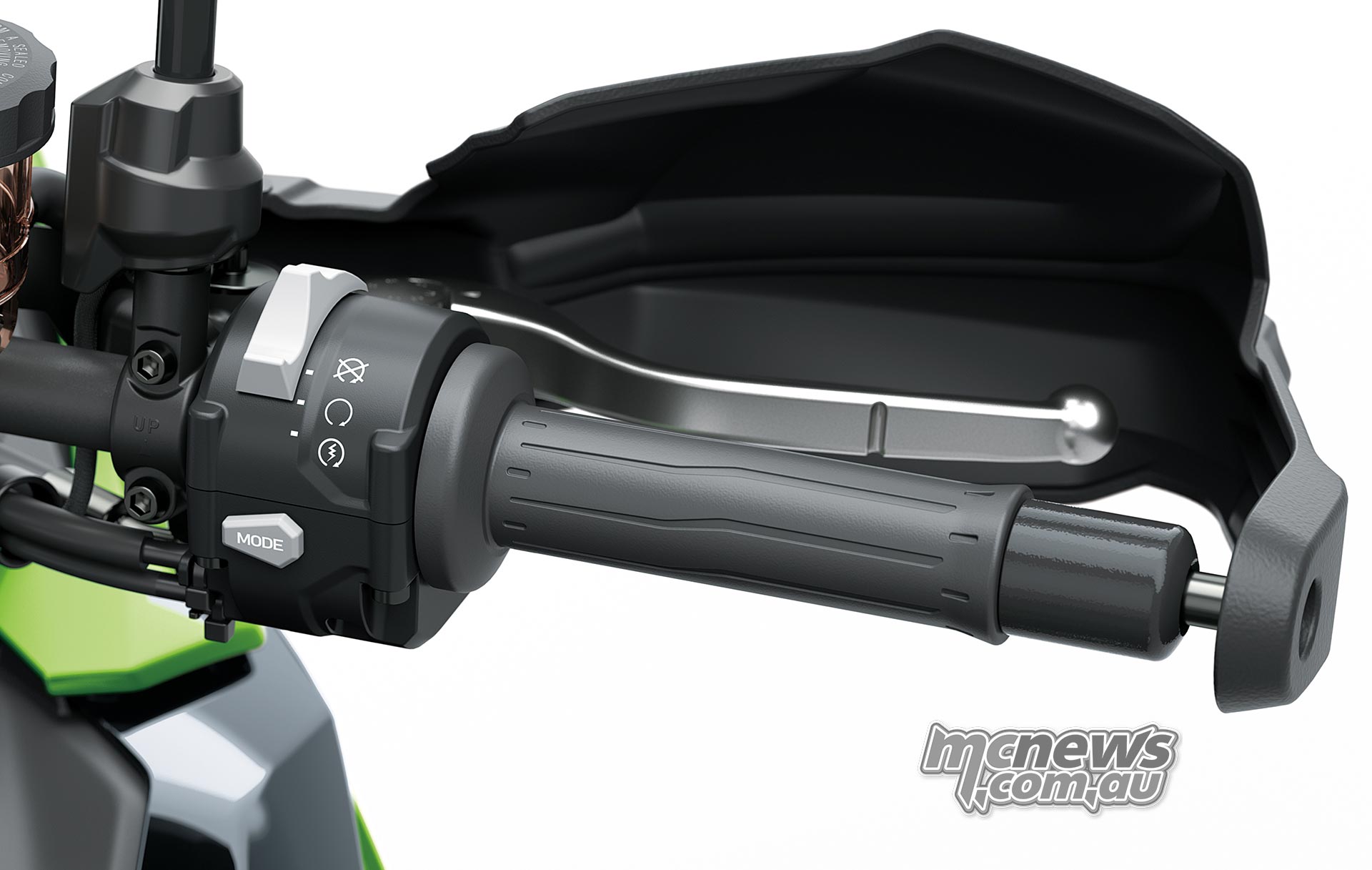
Right handlebar of the Kawasaki Versys 900 SE showing the throttle grip, brake lever, handguard and Mode button
The right switchblock includes the riding mode button, while the front brake lever offers six-position adjustment.

Connected navigation and charging

Smartphone connectivity is provided through Kawasaki’s Rideology app, with support for riding logs, vehicle information, turn-by-turn navigation and voice commands. Navigation and voice functions require the relevant licence, and availability varies by country.
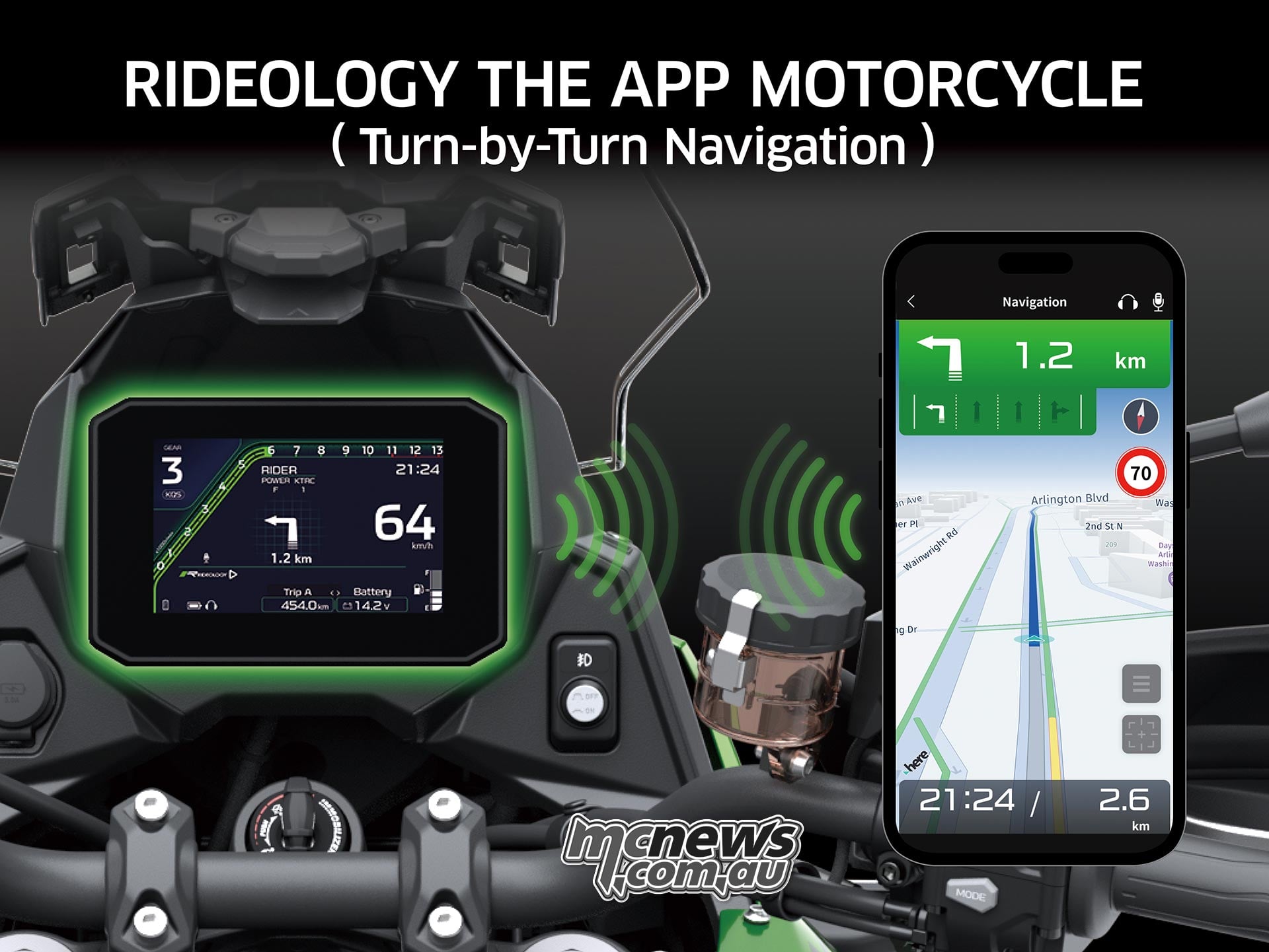
Kawasaki Rideology graphic linking navigation prompts on the motorcycle TFT to a smartphone map
Rideology connectivity supports turn-by-turn navigation on the TFT, subject to local availability and the required licence.

The app can also be used to prepare riding mode settings and adjust a range of instrument functions. A USB-C outlet near the TFT provides power for a phone or other device.
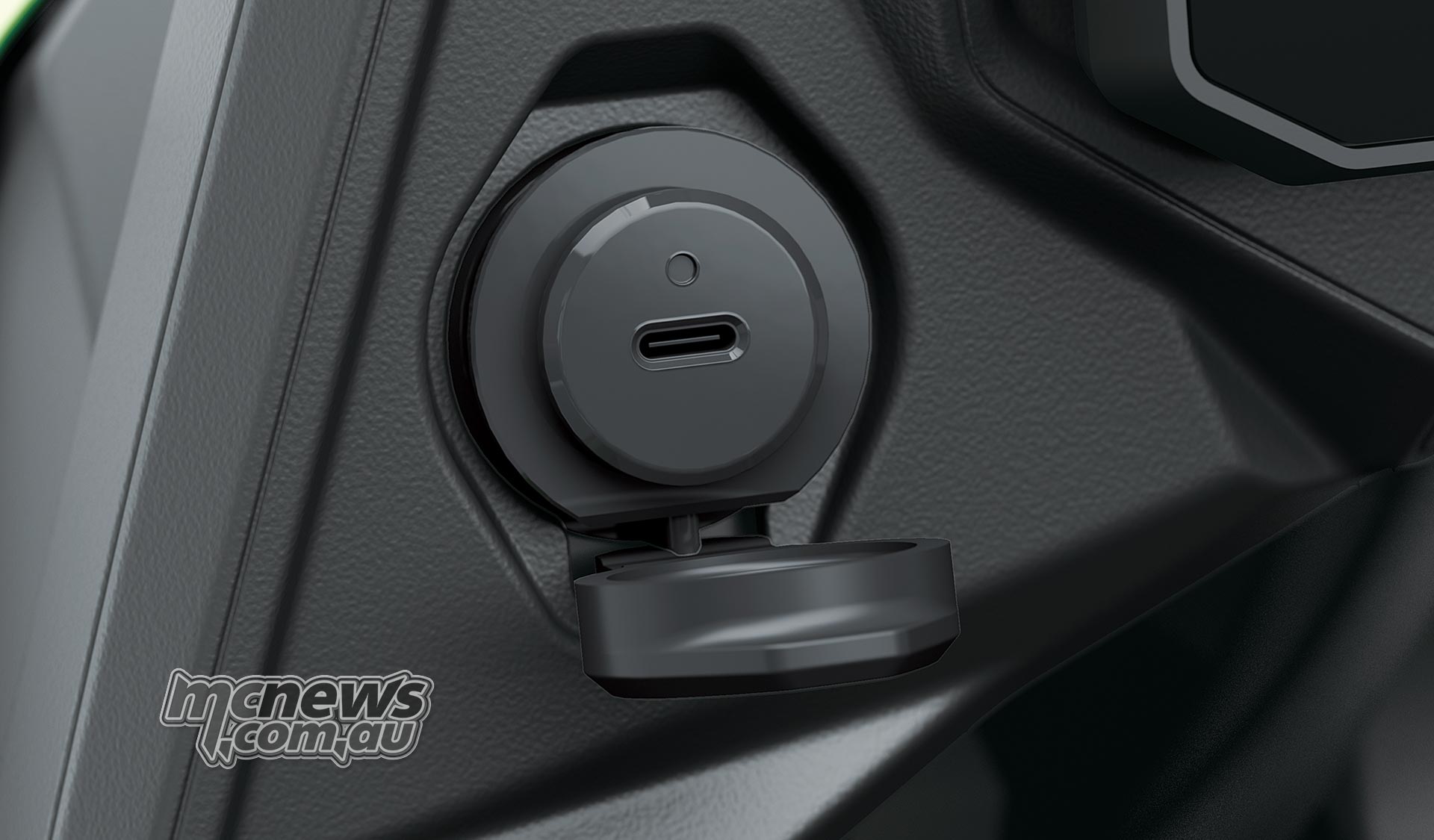
Close-up of the Kawasaki Versys 900 SE USB-C socket with its protective cover open
A USB-C socket beside the instruments provides power for phones and other devices.

A navigation device mounting bracket is included in the accessory range, placing the mounting point above the handlebar clamp.
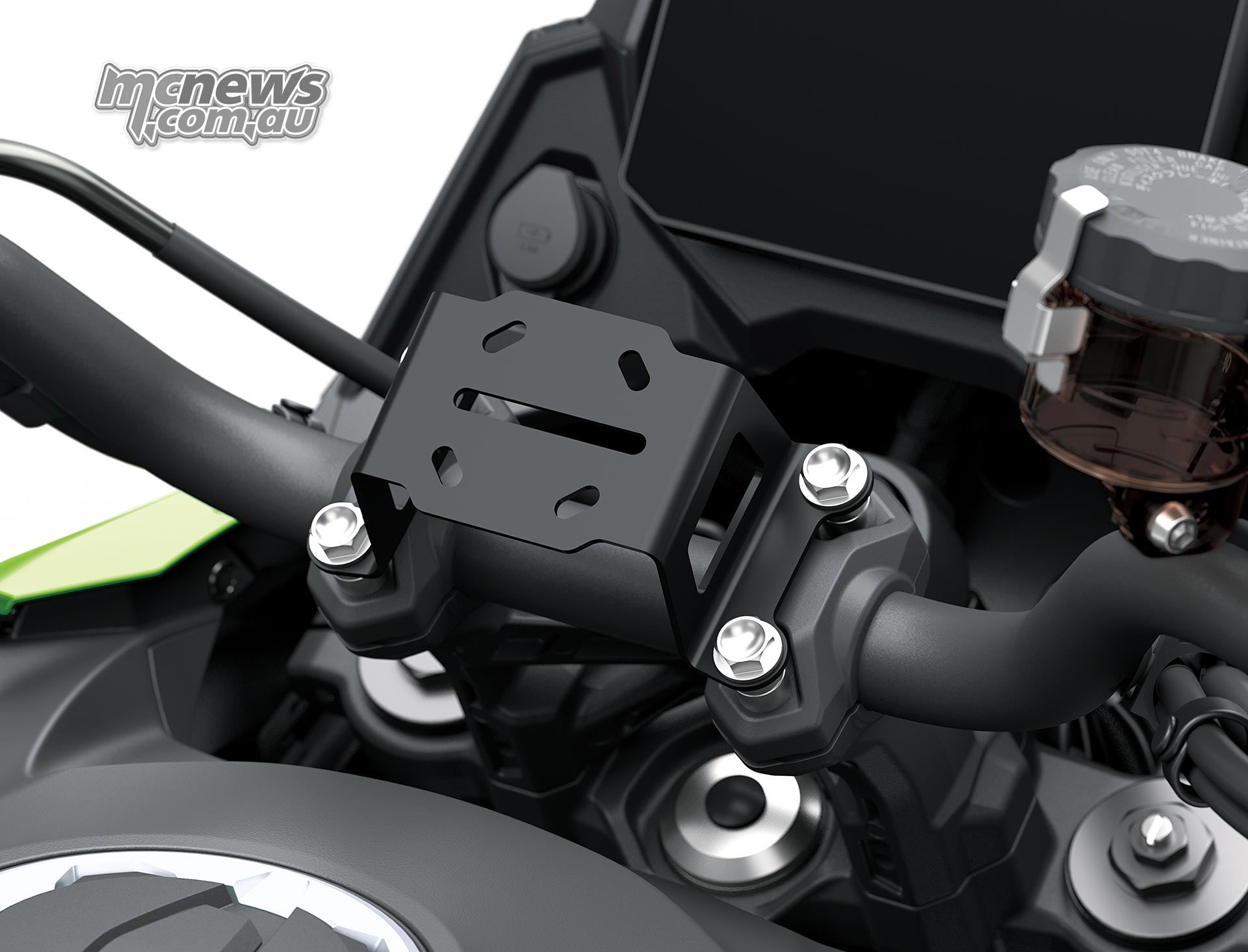
Black slotted navigation device mounting bracket above the Kawasaki Versys 900 SE handlebar clamp
An accessory bracket provides a mounting point for a navigation device above the handlebar clamp.

What the Versys 900 SE adds

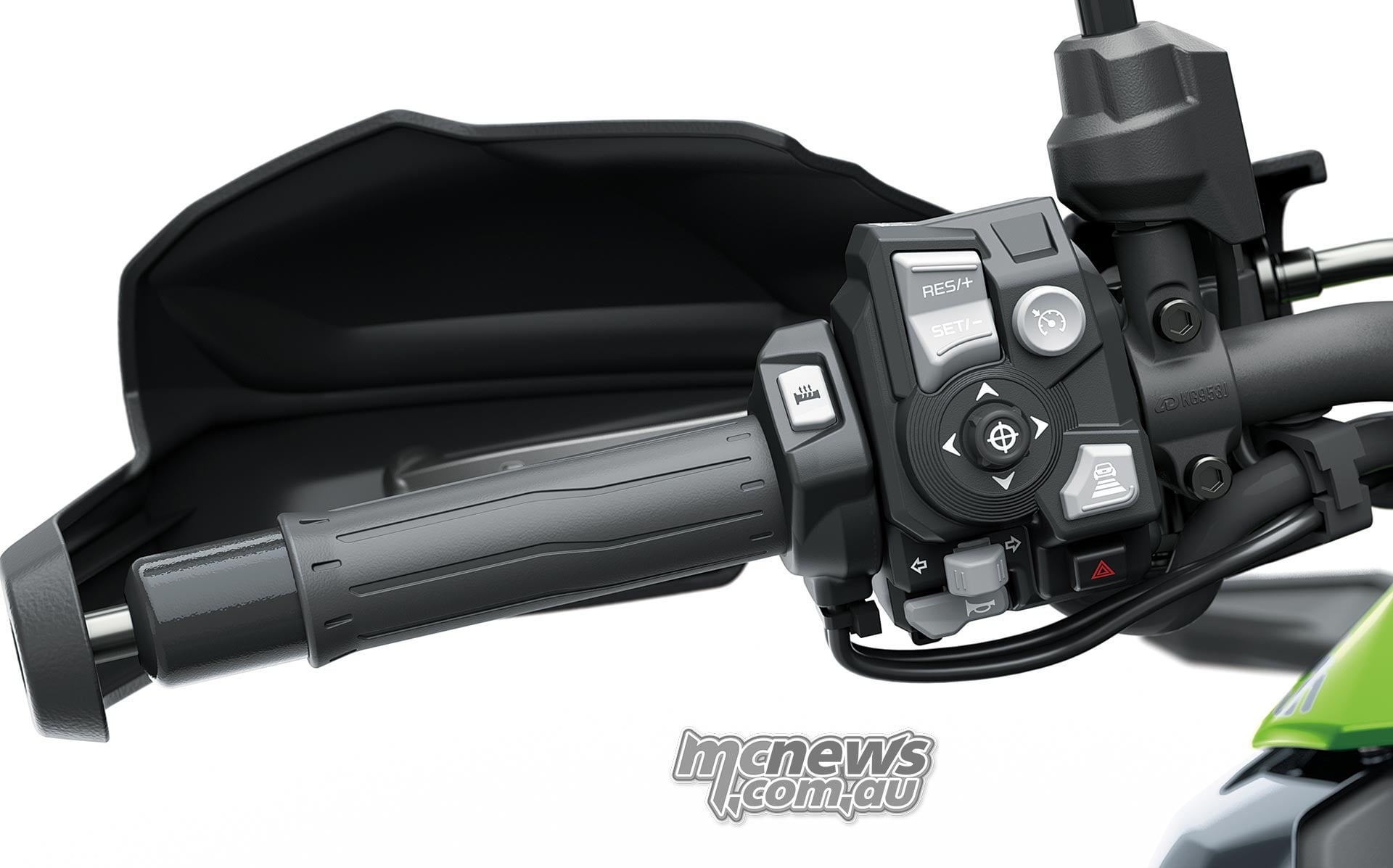
The SE’s listed additions focus on touring comfort and protection. Heated grips and handguards are included, with the grip heater control positioned beside the left grip.
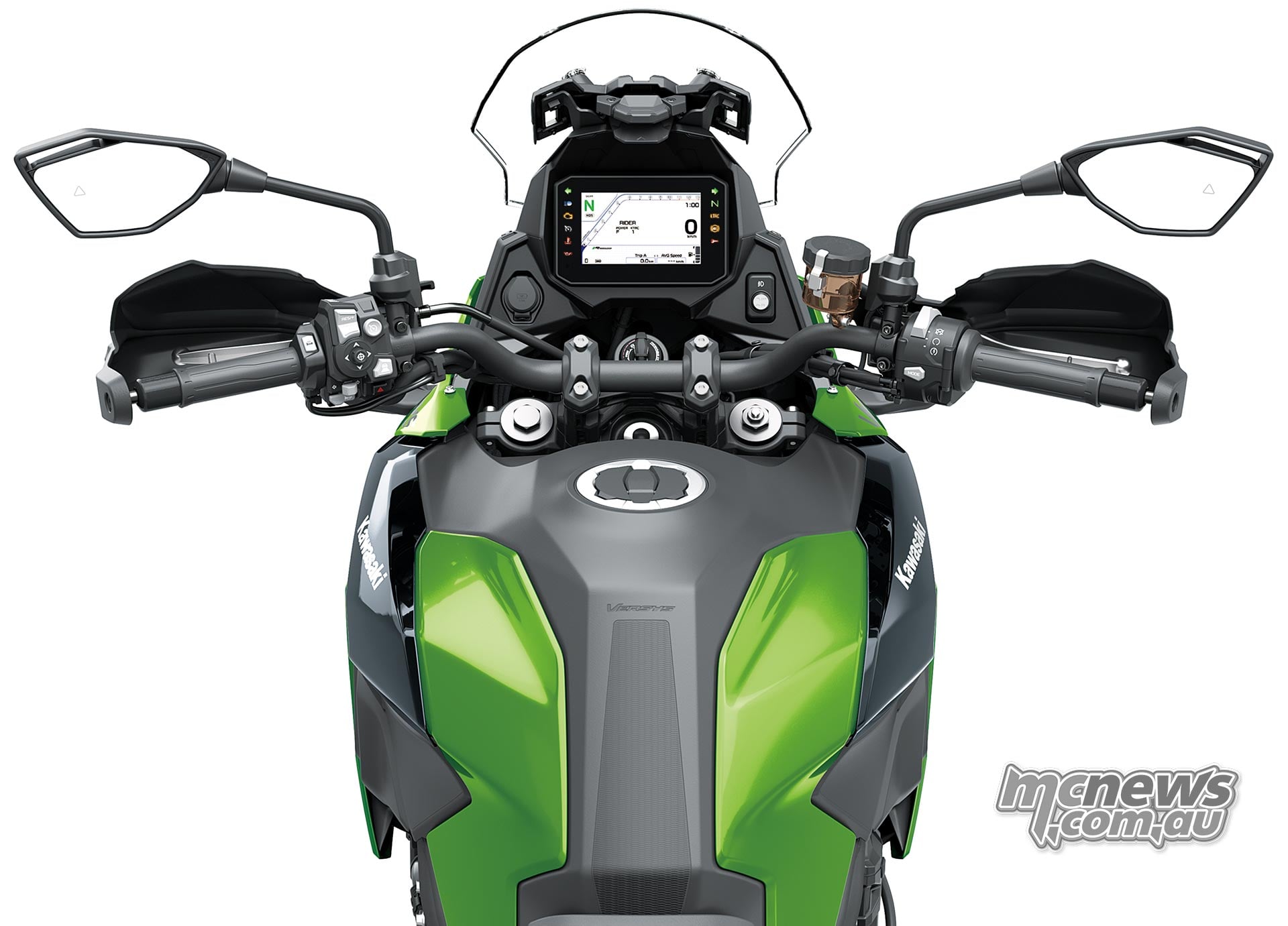
Rider view over the green Kawasaki Versys 900 SE tank showing the handlebar, handguards, mirrors and TFT display
The SE cockpit adds handguards and heated grips to the upright riding layout.
Close-up of the Kawasaki Versys 900 SE left heated grip, heater control, handguard and switchgear
The SE adds heated grips and handguards, with the grip heater control positioned beside the left grip.

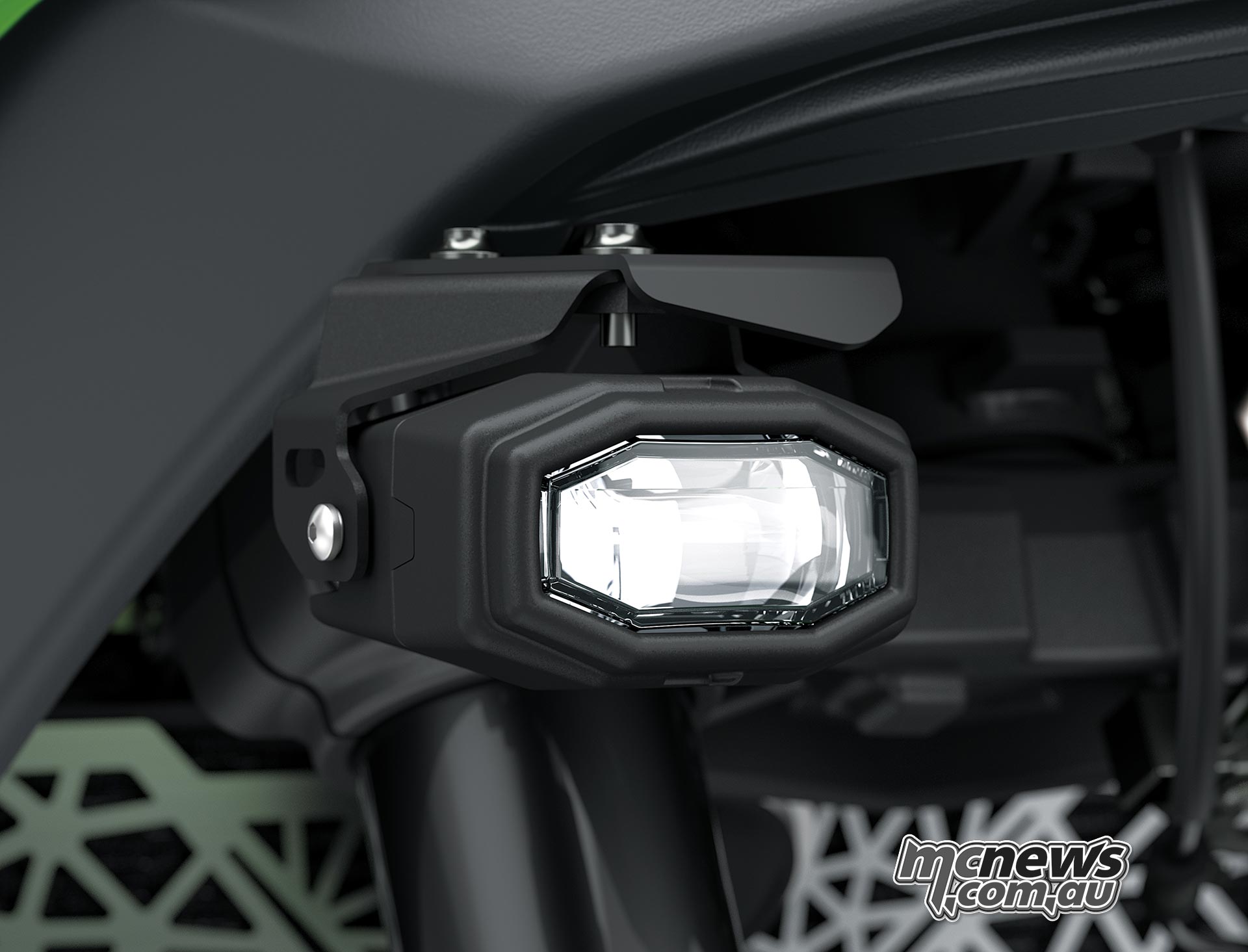
The handguards provide additional wind protection for the rider’s hands, while compact LED fog lamps are mounted directly to the frame.
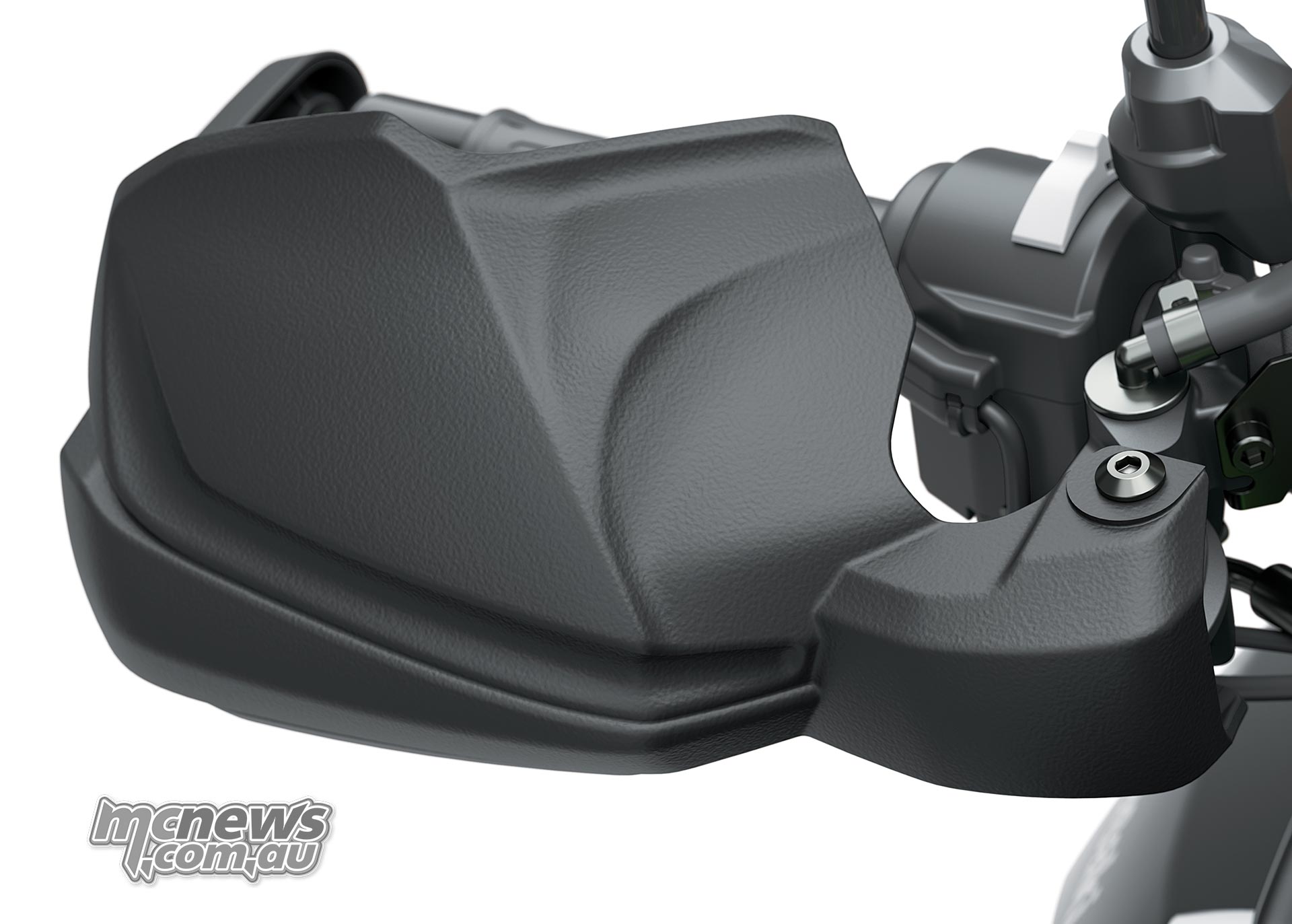
Close-up of the textured black handguard covering the left grip of the Kawasaki Versys 900 SE
The SE’s handguards help reduce wind exposure during colder rides.
Rectangular LED fog lamp mounted beneath the Kawasaki Versys 900 SE front bodywork above the radiator screen
Compact LED fog lamps are included on the SE and listed as accessories for the standard model.

A radiator screen and resin frame sliders are also included, together with a lower cowl.
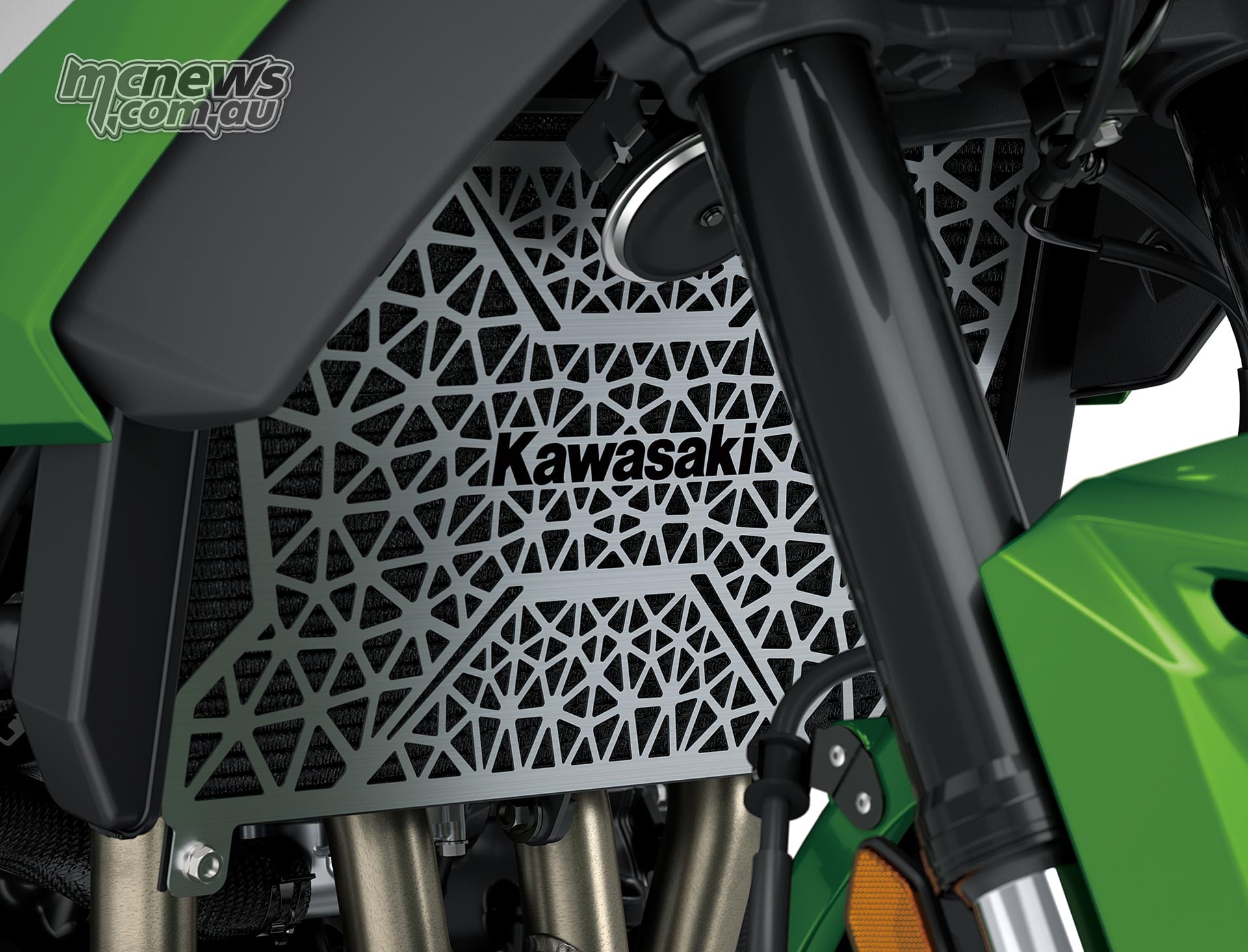
Perforated radiator screen with a Kawasaki logo behind the front fork of the Versys 900 SE
A patterned radiator screen is included in the SE equipment list.
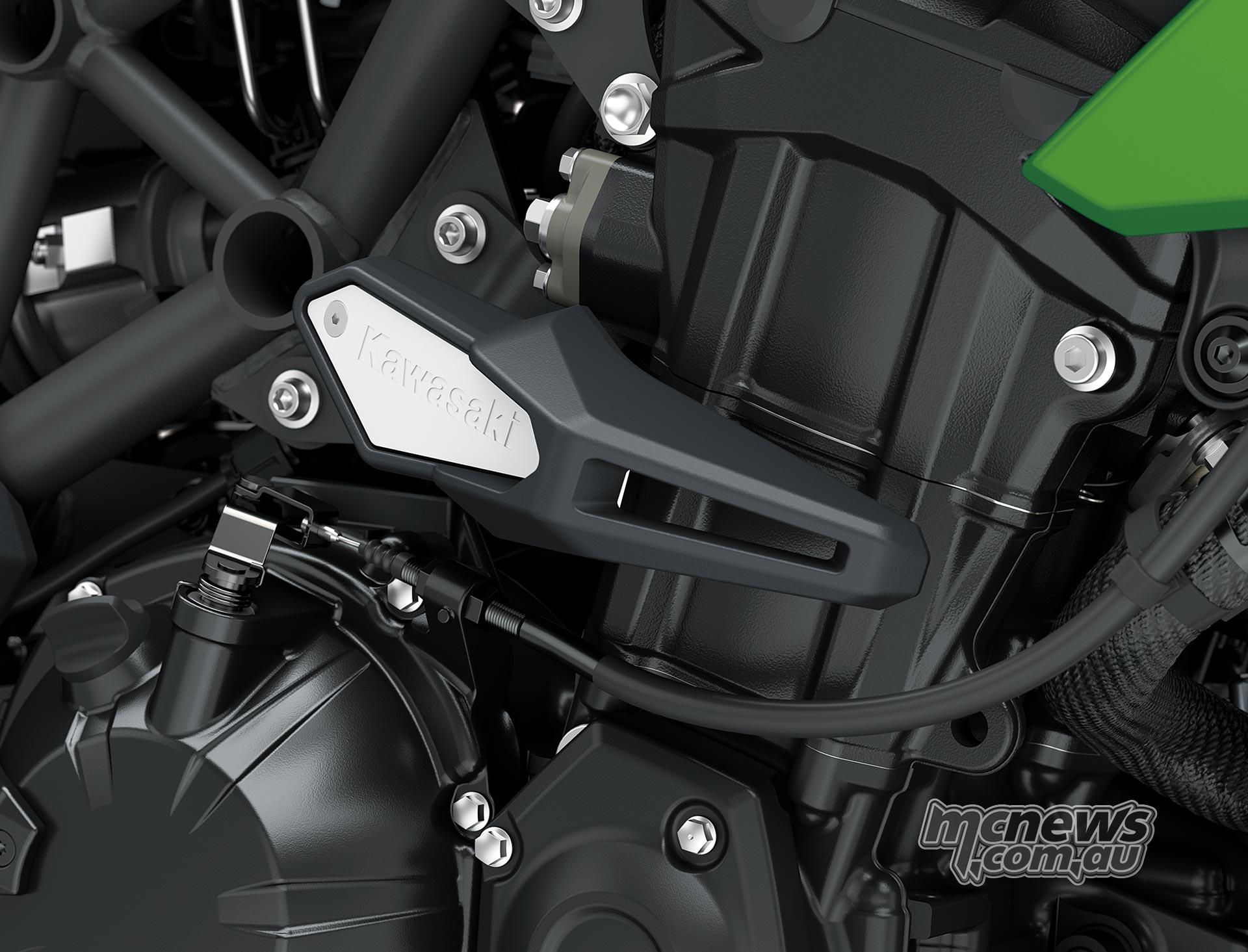
Black frame slider with a silver Kawasaki badge mounted beside the Versys 900 SE engine and trellis frame
Resin frame sliders are part of the SE’s listed protection equipment.

The SE gains a centre stand to assist with maintenance and parking. The SE equipment items are also listed as accessories for the standard Versys 900, while the suspension detailed for both versions is manually adjustable.
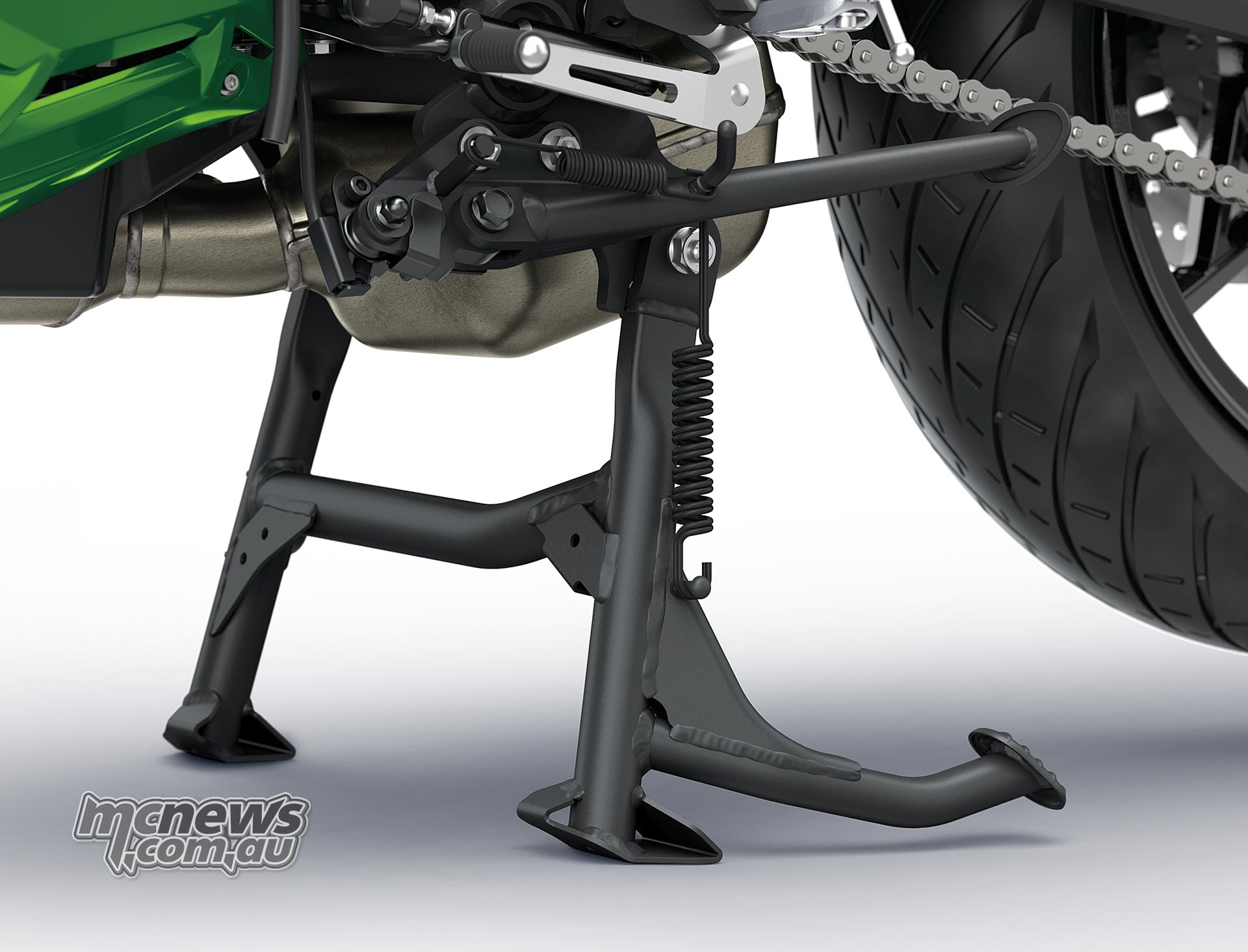
Deployed black centre stand beneath the Kawasaki Versys 900 SE beside the rear wheel and chain
A centre stand is included in the SE equipment package and is listed as an accessory for the standard model.

The standard model is shown in Metallic Spark Black, while the SE is presented in Plasma Lime Green with Metallic Spark Black. Final Australian colours and equipment remain to be confirmed.
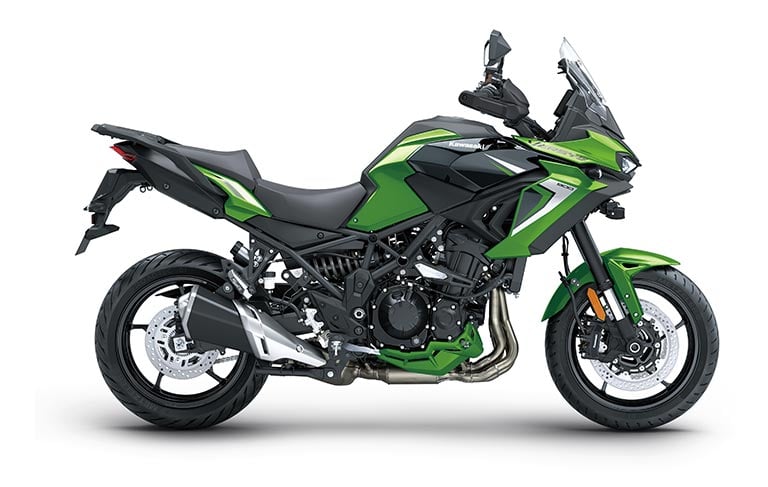
Right-side studio profile of the green and black 2027 Kawasaki Versys 900 SE
The Versys 900 SE is shown in Plasma Lime Green with Metallic Spark Black.

New SHAD luggage system

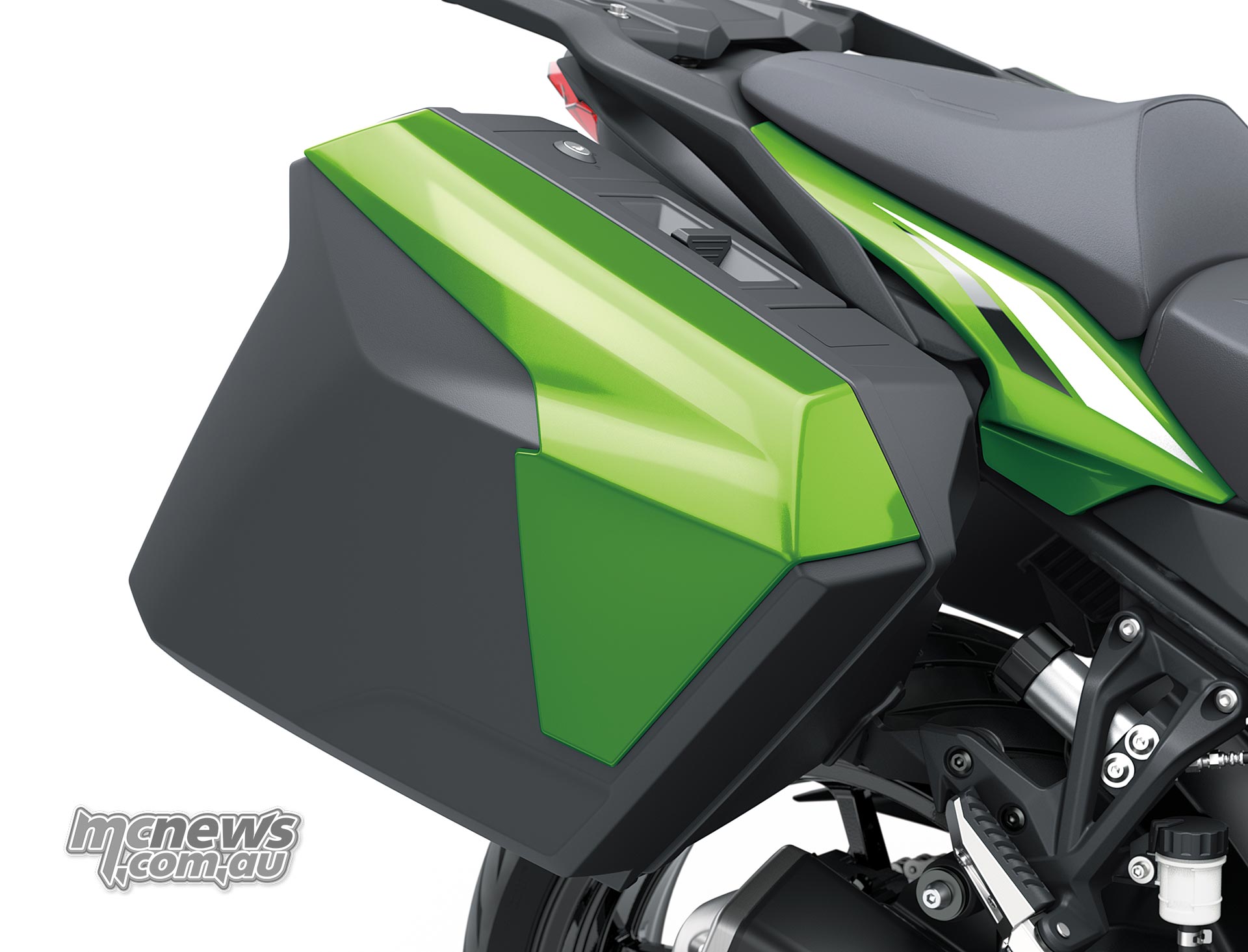
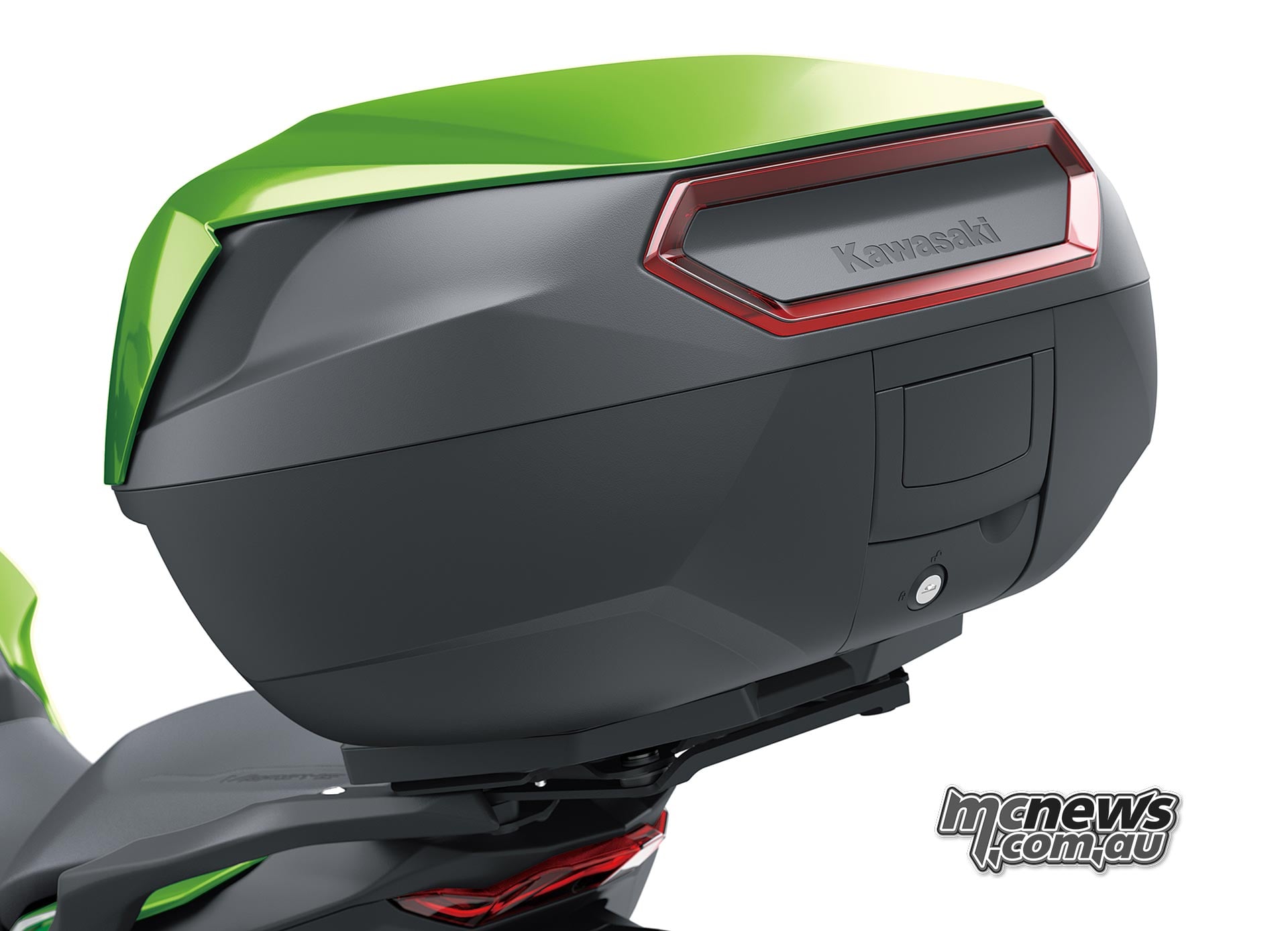
Accessory SHAD luggage has been developed alongside the motorcycle, allowing a top case and panniers to be fitted simultaneously. Each pannier provides 32 litres of storage, while the top case holds 47 litres, giving a combined capacity of 111 litres.
Green colour-matched hard pannier mounted beside the Kawasaki Versys 900 SE passenger seat
Each SHAD pannier provides 32 litres of storage and has a 5 kg load limit.

Each case has a quoted maximum load of 5 kg. Kawasaki says the top case can accommodate two full-face helmets, while a one-key system allows the cases to be locked and removed using the motorcycle’s ignition key.
Green-topped Kawasaki hard top case fitted to the Versys 900 SE rear luggage rack
The 47-litre top case has a 5 kg load limit and, according to Kawasaki, room for two full-face helmets.

The mounting systems incorporate damping elements intended to reduce the effect of vibration and chassis movement when loaded. The panniers sit close to the motorcycle’s centre of mass, with the aim of limiting their effect on handling and overall width.

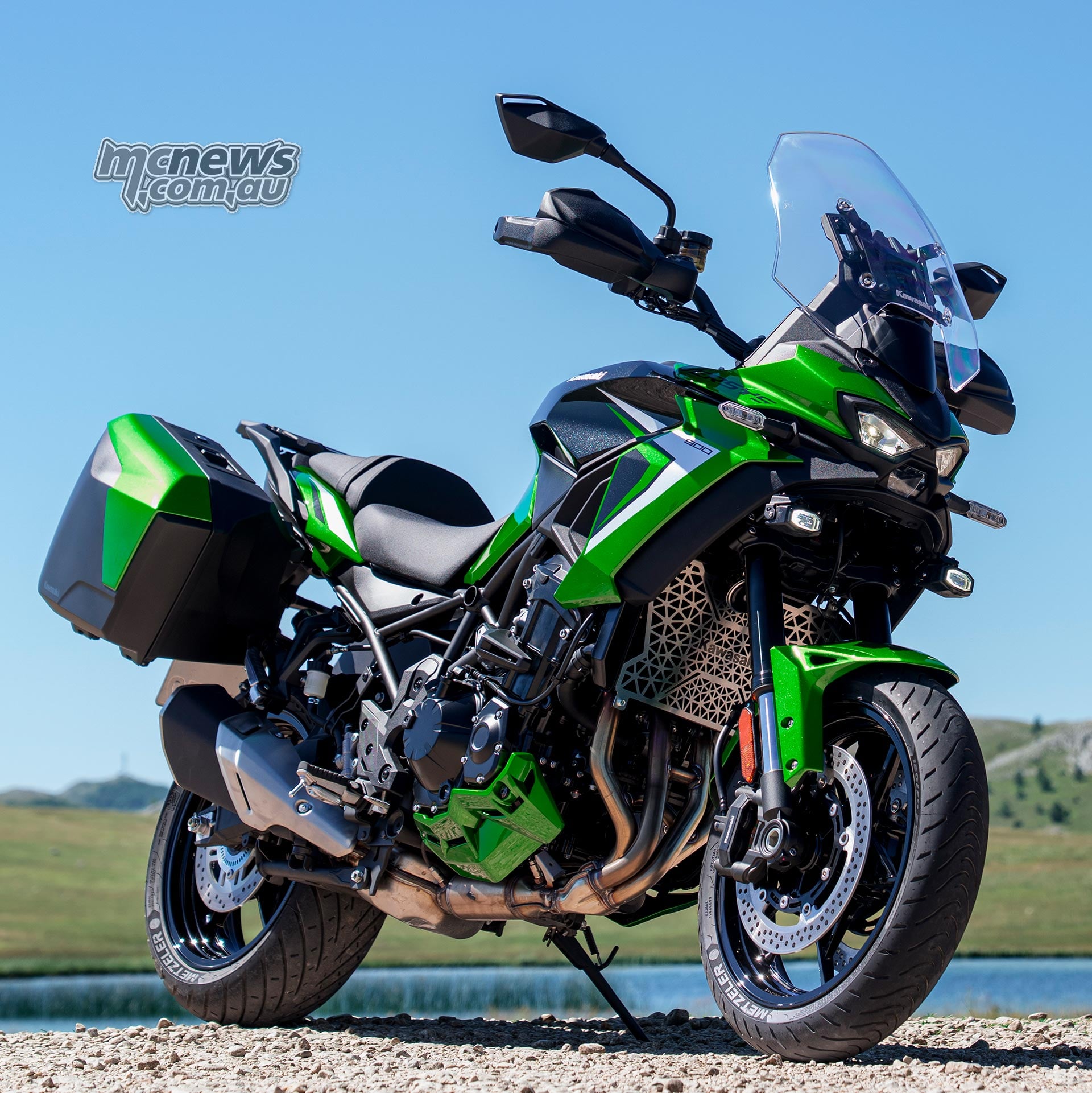
Optional inner bags allow luggage to be carried away without removing the cases from the motorcycle. The 220 kg maximum payload provides scope for a rider, passenger and touring luggage.
Low front three-quarter view of a green Kawasaki Versys 900 SE with panniers parked on gravel
The Versys 900 SE shown with accessory panniers. Kawasaki lists a maximum payload of 220 kg.

Screens, seats and protection options

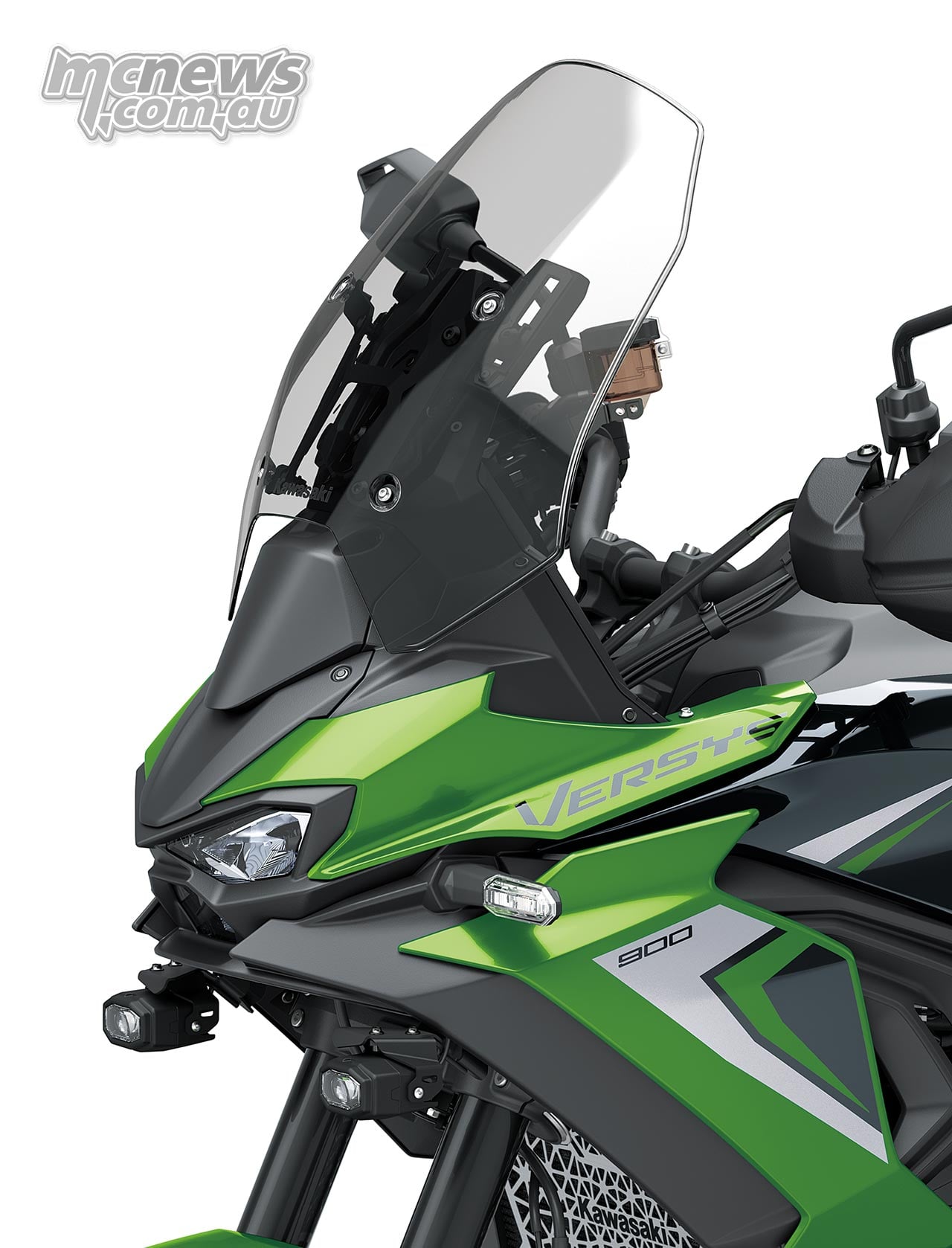
A larger accessory screen is 98 mm taller than the standard item and is offered in clear or smoked finishes. A smoked screen is also listed among the options for riders wanting an alternative to the standard clear finish.
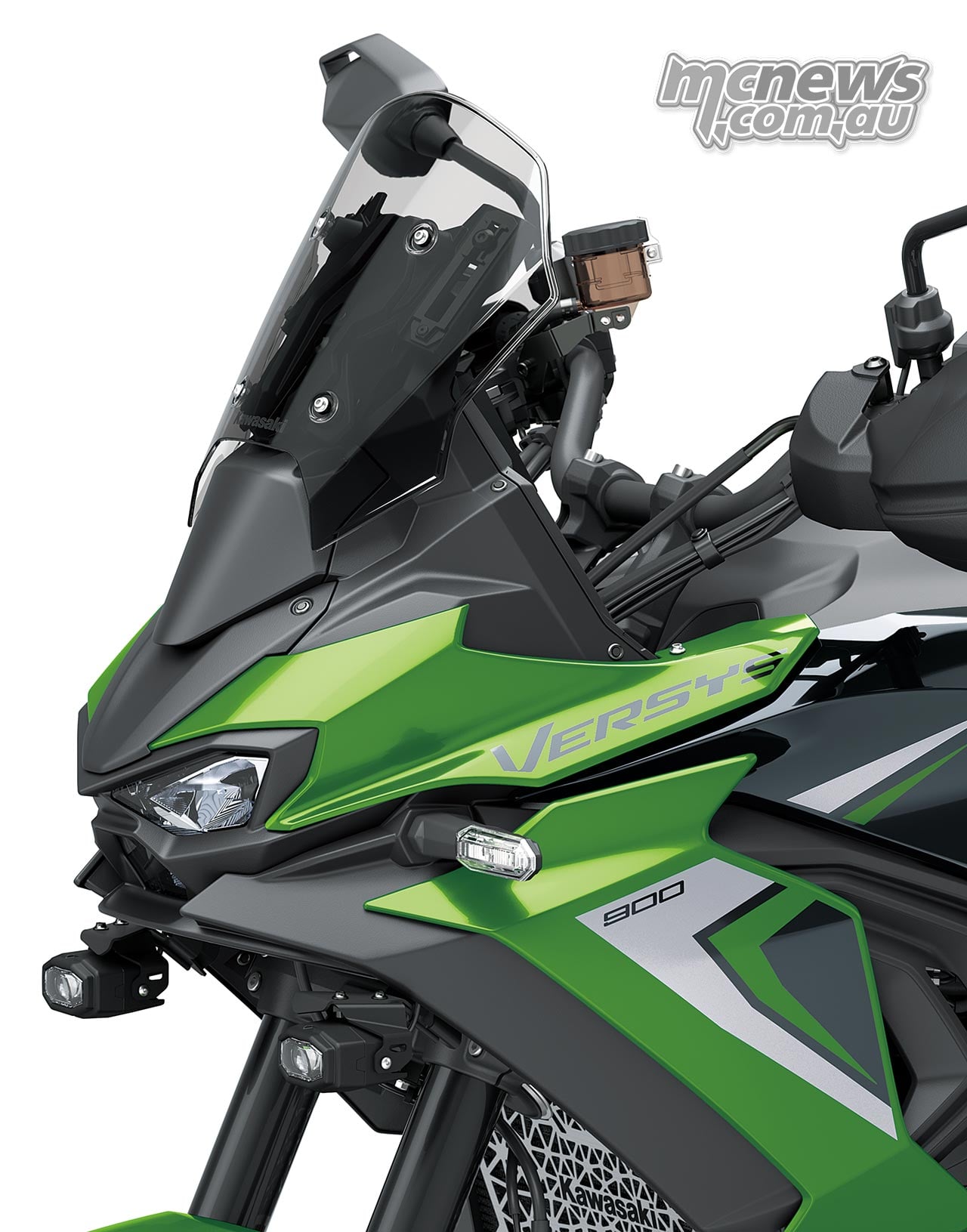
Green Kawasaki Versys 900 SE shown with the taller smoked accessory windscreen
The larger accessory screen is 98 mm taller than standard and is offered in clear or smoked finishes.
Front three-quarter detail of a Kawasaki Versys 900 SE fitted with a smoked windscreen
A smoked accessory screen provides an alternative to the standard clear finish.

An accessory High Seat raises the rider’s seating position by 20 mm, while a separate Comfort Seat option is listed for the passenger.
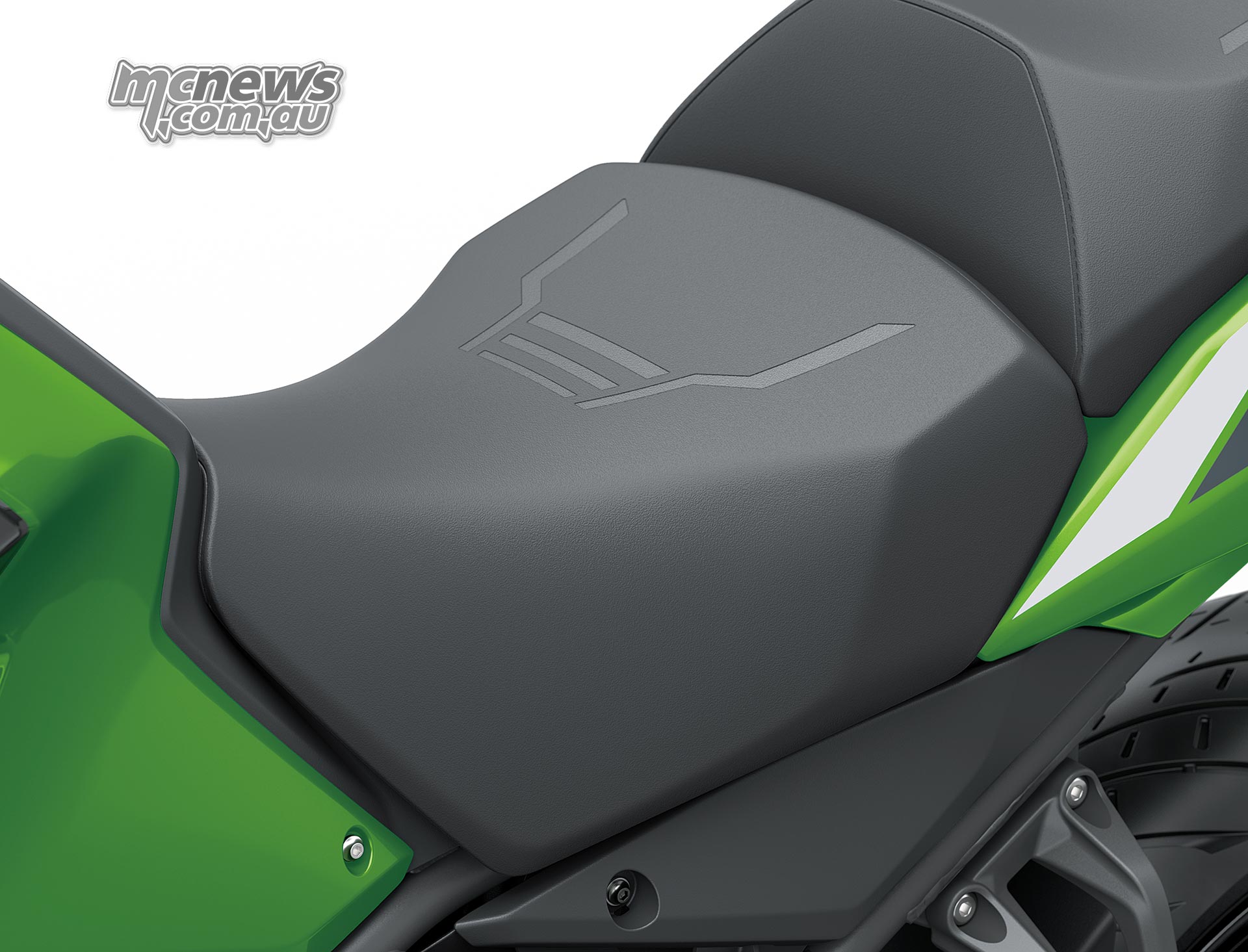
Close-up of the accessory tall black rider seat on a green Kawasaki Versys 900 SE
The accessory High Seat raises the rider’s seating position by 20 mm.

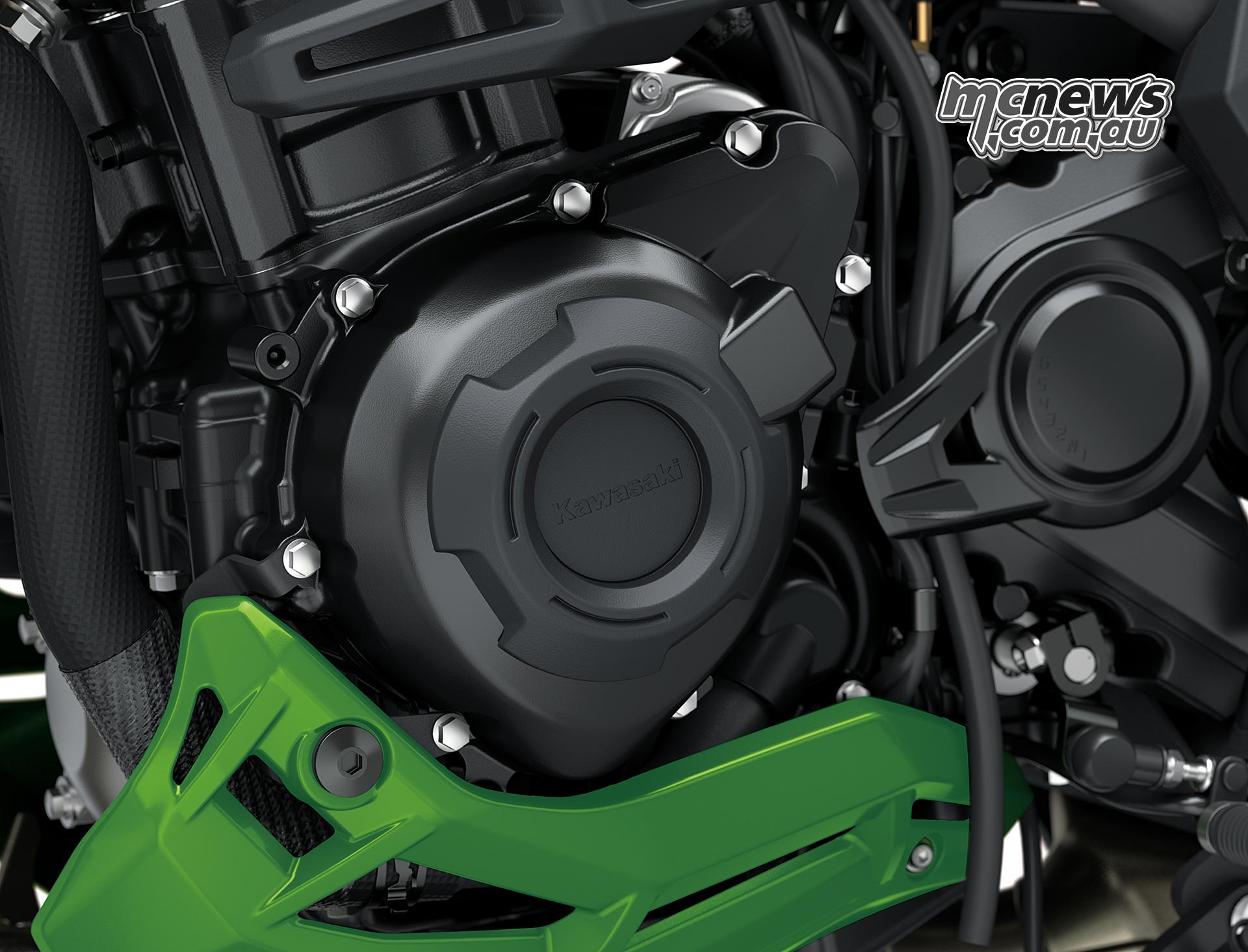
The accessory range also includes engine cover rings and front axle sliders, along with items such as knee grip pads, a tank pad and instrument protection film.
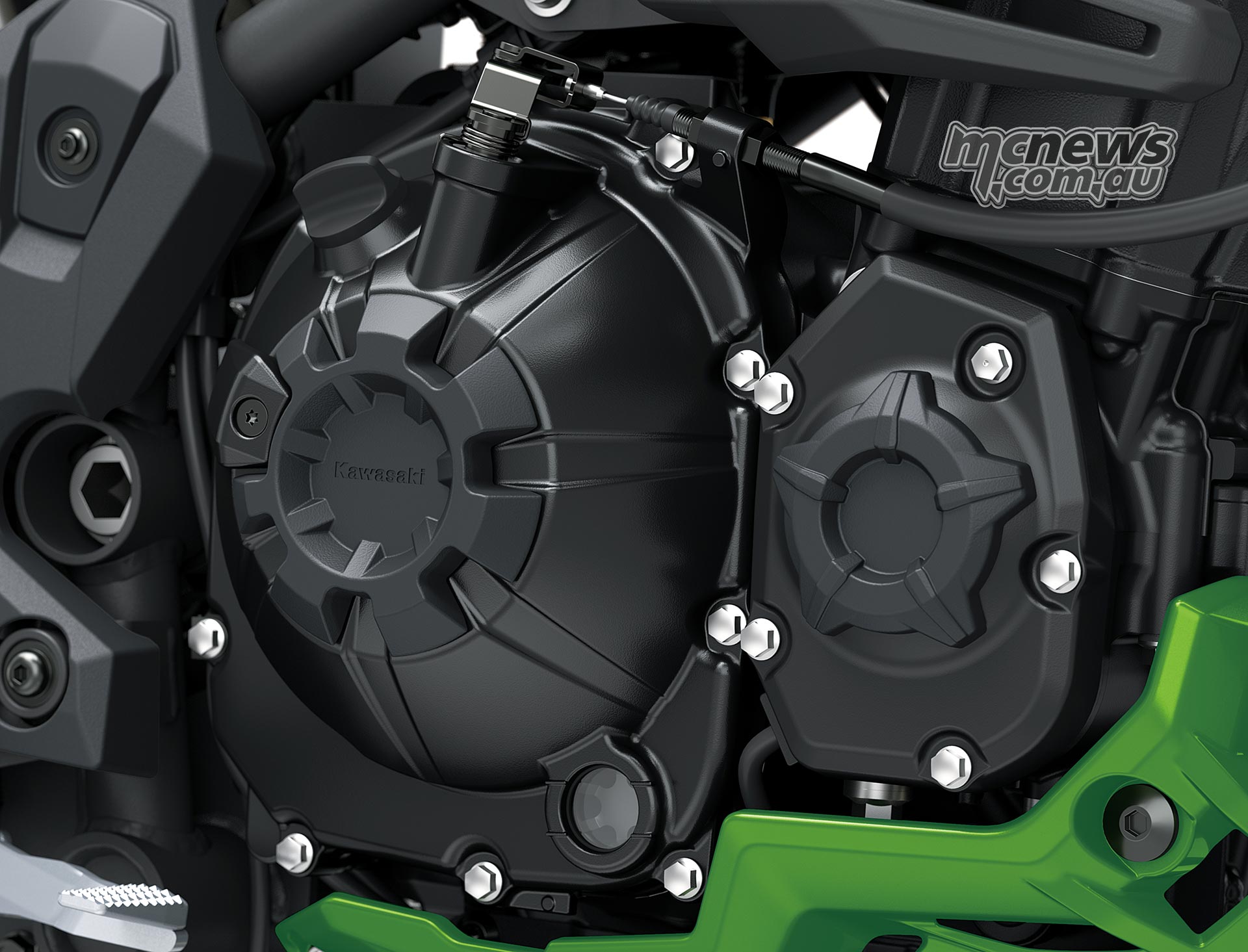
Accessory black rings fitted around two engine covers on the Kawasaki Versys 900 SE
Engine cover rings are among Kawasaki’s genuine accessories for the Versys 900.
Black accessory ring around a circular Kawasaki Versys 900 SE engine cover above the green lower cowl
The accessory engine cover rings follow the contours of the engine casings.
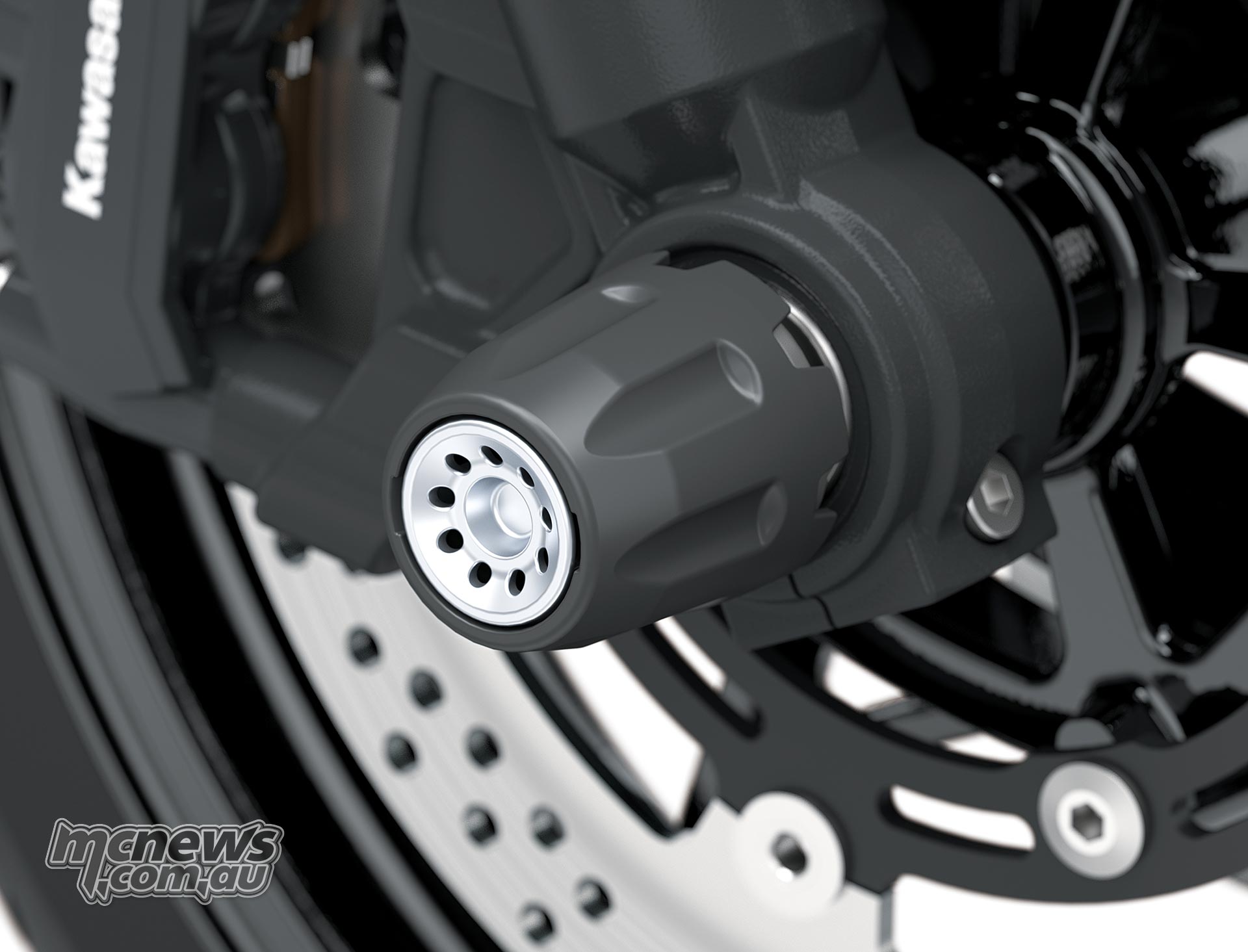
Cylindrical black front axle slider beside the Kawasaki Versys 900 SE fork leg and brake disc
Front axle sliders are also included in the genuine accessory range.

Australian arrival expected mid-2027

Australian arrival for the new Versys 900 is expected around the middle of 2027. Pricing is not expected to be announced until late 2026.
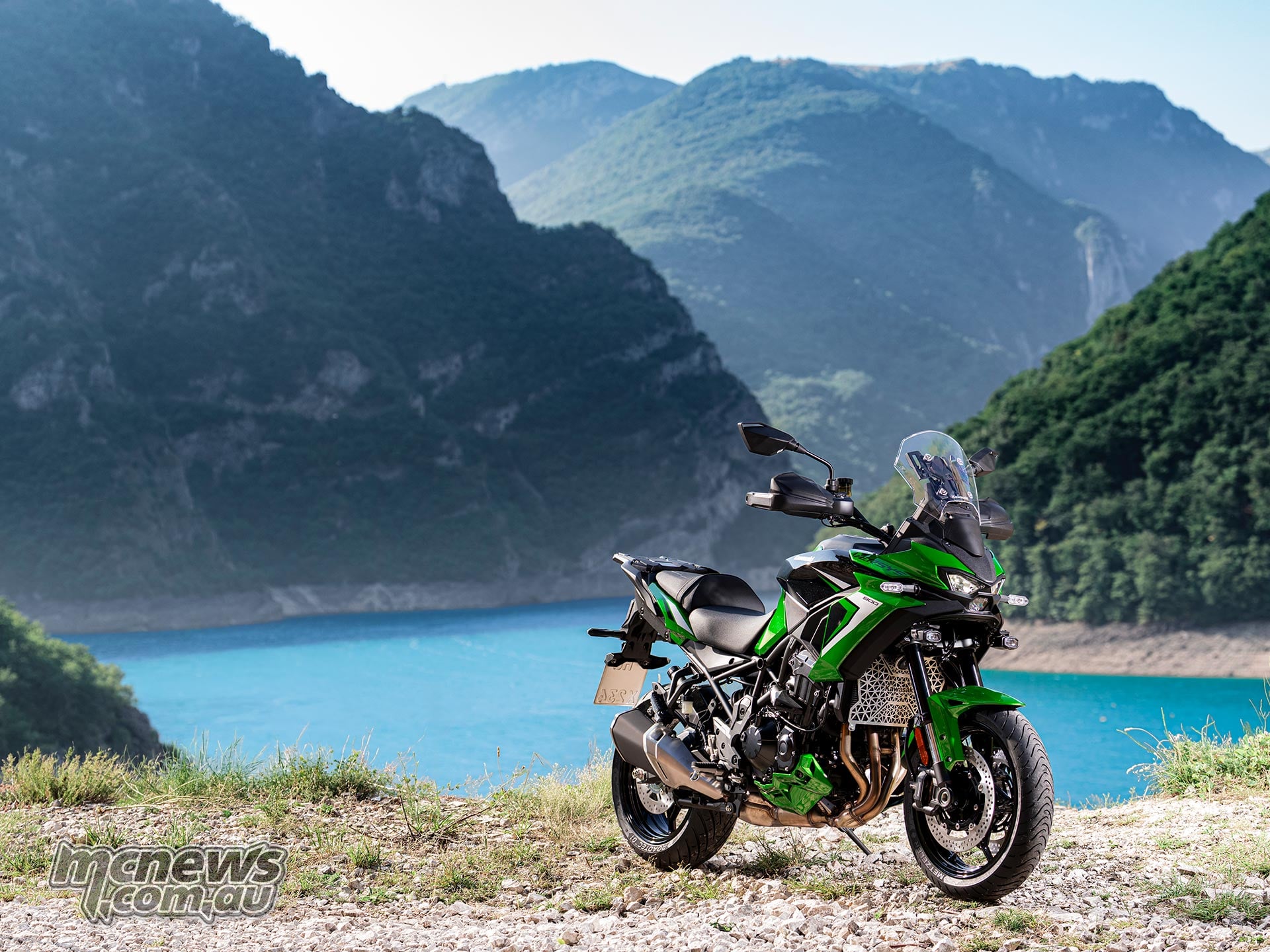
Green Kawasaki Versys 900 SE parked beside a turquoise lake with mountains in the background
Australian arrival is expected around the middle of 2027, with pricing not expected to be announced until late 2026.

Final Australian equipment specifications, maximum torque and kerb weight remain to be confirmed.

2027 Kawasaki Versys 900 preliminary technical details

Engine 948 cc liquid-cooled DOHC 16-valve inline four-cylinder
Bore x stroke 73.4 x 56.0 mm
Quoted power 89.6 kW (122 PS), European specification
Maximum torque To be confirmed
Transmission Six-speed, assist and slipper clutch, bidirectional quickshifter
Frame Steel trellis
Front suspension 43 mm inverted fork; rebound and preload adjustment; 150 mm travel
Rear suspension Horizontal back-link; rebound and remote preload adjustment; 159 mm travel
Front brakes Twin 310 mm discs; radial-mount four-piston monobloc calipers
Rear brake 260 mm disc; single-piston caliper
Wheels 17-inch front and rear
Original-equipment tyres Metzeler Roadtec 01
Rake / trail 24.5 degrees / 106 mm
Wheelbase 1550 mm
Seat height 825 / 845 mm
Fuel capacity 20 litres
Maximum payload 220 kg
Kerb weight To be confirmed
Australian arrival Expected around mid-2027
Australian pricing Announcement not expected until late 2026

Technical details above are drawn from preliminary model information. Final specifications and equipment may vary by market.
RelatedPosts

2027 Ducati Panigale V4 gains power and smarter braking

2027 Ducati Panigale V4 gains power and smarter braking

October 16, 2026
Herlings and Sacha Coenen master Montevarchi at MXGP of Italy

2026 Kawasaki KLE500 Review | Part One: The stock SE

October 15, 2026
Tags: 2027 motorcyclesKawasakiKawasaki Versys 900Kawasaki Versys 900 SESports-TouringTouring MotorcyclesVersys
ShareTweetShare
Previous Post

Adventure Awaits | CFMOTO Launches Exclusive MT Trek for MT and MT-X Owner

Trev

Trev

Motojourno - Founder of MCNews.com.au - Australia's leading resource for motorcycle news, reviews and race coverage for over 20 years.

Related Posts

Adventure Awaits | CFMOTO Launches Exclusive MT Trek for MT and MT-X Owner

Adventure Awaits | CFMOTO Launches Exclusive MT Trek for MT and MT-X Owner

October 16, 2026
White and red BMW F 450 RR motorcycles parked beside red and white barriers at night

2027 BMW F 450 RR | 48 hp twin joins BMW’s RR family

October 16, 2026
Inside Brembo Hyction: Why WorldSBK is leaving steel brakes behind

Inside Brembo Hyction: Why WorldSBK is leaving steel brakes behind

October 15, 2026
Why Shoei PFS could change how riders choose their next helmet

Dainese Smart Air explained: Modes, price and servicing

October 14, 2026
Load More
Leave Comment

Subscribe to Latest News

Subscribe to MCNews

* indicates required
MCNews

MCNEWS.COM.AU is a specialist on-line resource that provides motorcycle news for motorcyclists. MCNews covers all areas of interest for the motorcycling public including news, reviews and comprehensive racing coverage.

©2026 MCNews

No Result
View All Result
  • NEWS
    • ALL NEWS
    • ALL NEWS CONDENSED
    • POPULAR ARTICLES
    • BMW News
    • Honda News
    • Husqvarna News
    • KTM News
    • Suzuki News
    • Yamaha News
    • Triumph News
    • CFMOTO News
    • Ducati News
    • Moto Guzzi News
    • Royal Enfield News
    • Kawasaki News
    • Aprilia News
    • Harley News
    • Indian News
    • MV Agusta News
    • Benelli News
    • GASGAS News
    • BETA News
    • Norton News
    • Victory News
    • EBR News
    • Rieju News
    • Sherco News
    • Bimota News
    • Zero Motorcycles News
    • EV Electromobility News
    • Scooter News
    • LAMS News
    • ATV / SSV News
  • REVIEWS
    • All Bike Reviews
    • LAMS Reviews
    • KTM Reviews
    • Honda Reviews
    • Yamaha Reviews
    • Triumph Reviews
    • BMW Reviews
    • Suzuki Reviews
    • CFMOTO Reviews
    • Ducati Reviews
    • Kawasaki Reviews
    • Husqvarna Reviews
    • Aprilia Reviews
    • Benelli Reviews
    • BETA Reviews
    • EV Electromobility Reviews
    • EBR Reviews
    • GAS GAS Reviews
    • Harley Reviews
    • Indian Reviews
    • Kymco Reviews
    • Moto Guzzi Reviews
    • MV Agusta Reviews
    • Norton Reviews
    • Royal Enfield Reviews
    • Scooter Reviews
    • Sherco Reviews
    • Victory Reviews
    • Rieju Reviews
    • Bimota Reviews
    • Zero Motorcycles Reviews
  • NEW PRODUCTS
  • LATEST BIKES
    • ALL LATEST BIKES NEWS
    • BMW
    • Honda
    • Husqvarna
    • KTM
    • Suzuki
    • Yamaha
    • Triumph
    • CFMOTO
    • Ducati
    • Moto Guzzi
    • Royal Enfield
    • Kawasaki
    • Aprilia
    • Harley
    • Indian
    • MV Agusta
    • Benelli
    • GAS GAS
    • BETA
    • Norton
    • Victory
    • Bimota
    • EV Electromobility
    • Scooters
    • LAMS Learner Approved Motorcycles
    • Rieju
    • Sherco
    • Zero Motorcycles
  • RACING
    • ALL RACING
    • ROAD
      • MotoGP
      • WorldSBK / SSP / SPB / WCR
      • ASBK
      • BSB
      • Baggers
      • Real Road / TT
      • Historic Road Racing
      • Japan / Asian Road Racing
      • Endurance Road Racing
      • American Road Racing
      • NZ Road Racing
      • Supermoto
      • ATC / Rookies / Junior GP / MiniGP /Moto4
    • DIRT
      • Supercross
      • AMA MX
      • Australian MX
      • MXGP
      • Enduro / Rally
      • Dirt / Flat Track
      • Speedway
  • FEATURES
  • TOURING
  • GALLERY
  • LATEST COMMENTS
  • CONTACT
  • ABOUT US
  • COMMUNITY FORUM

©2026 MCNews