

Inside CFMOTO HQ
An eye-opening look inside a motorcycle giant
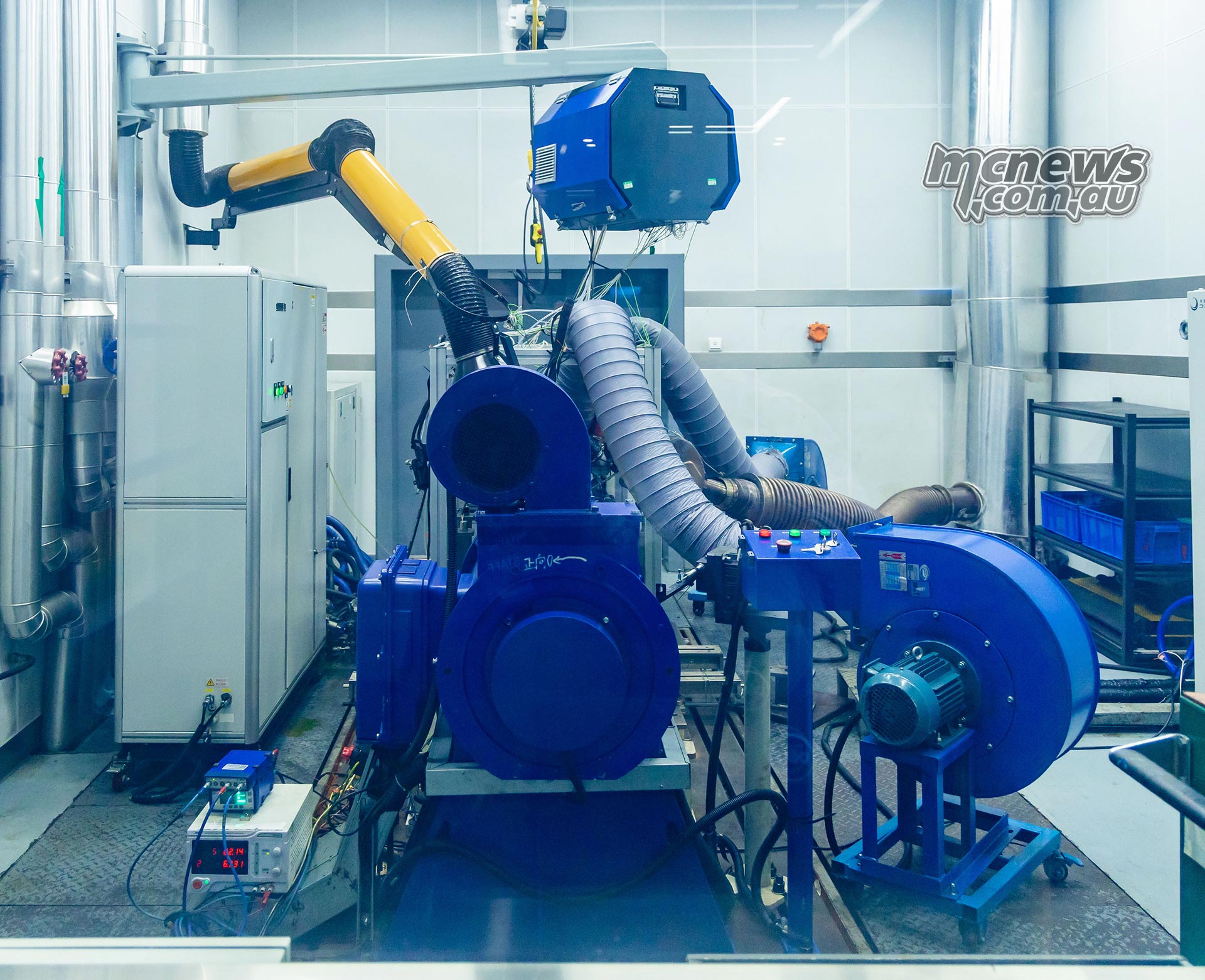
Room after room after room. That was the impression that stayed with me from CFMOTO’s engineering facilities in Hangzhou: sealed engine dynamometer chambers stretching down the R&D building corridor, complete engines running inside, and engineers at computer workstations outside the glass monitoring what was happening within.
I lost count with everything going on during the visit, but there were more than ten dynamometer test stations operating in the R & D building, most with two people at each monitoring desk in front of the viewing windows of each dyno room. It was a much more convincing demonstration of engineering investment than another PowerPoint slide about research and development expenditure.
And that was only the combustion engine testing operation. Elsewhere, we saw electric powertrain development equipment, component vibration rigs, and acoustically treated noise, vibration, and harshness laboratories. CFMOTO is plainly spending serious money on the systems needed to develop, validate and manufacture increasingly sophisticated vehicles.
From workshop to global business
CFMOTO traces its origins to 1989, when the business began building engines and machinery in Wenzhou, China. The company now spans motorcycles, off-road vehicles and electric mobility, serving more than 100 countries and regions through a network of more than 9,000 dealers.
Its 2025 group turnover exceeded US$2.8 billion, with worldwide sales surpassing one million units for the first time. First-half 2026 results show revenue of 13.39 billion yuan, up 35.82 per cent from the equivalent period in 2025. Profit attributable to shareholders rose by a more modest 6.26 per cent, a reminder that rapid expansion and the investment required to sustain it do not come cheaply.
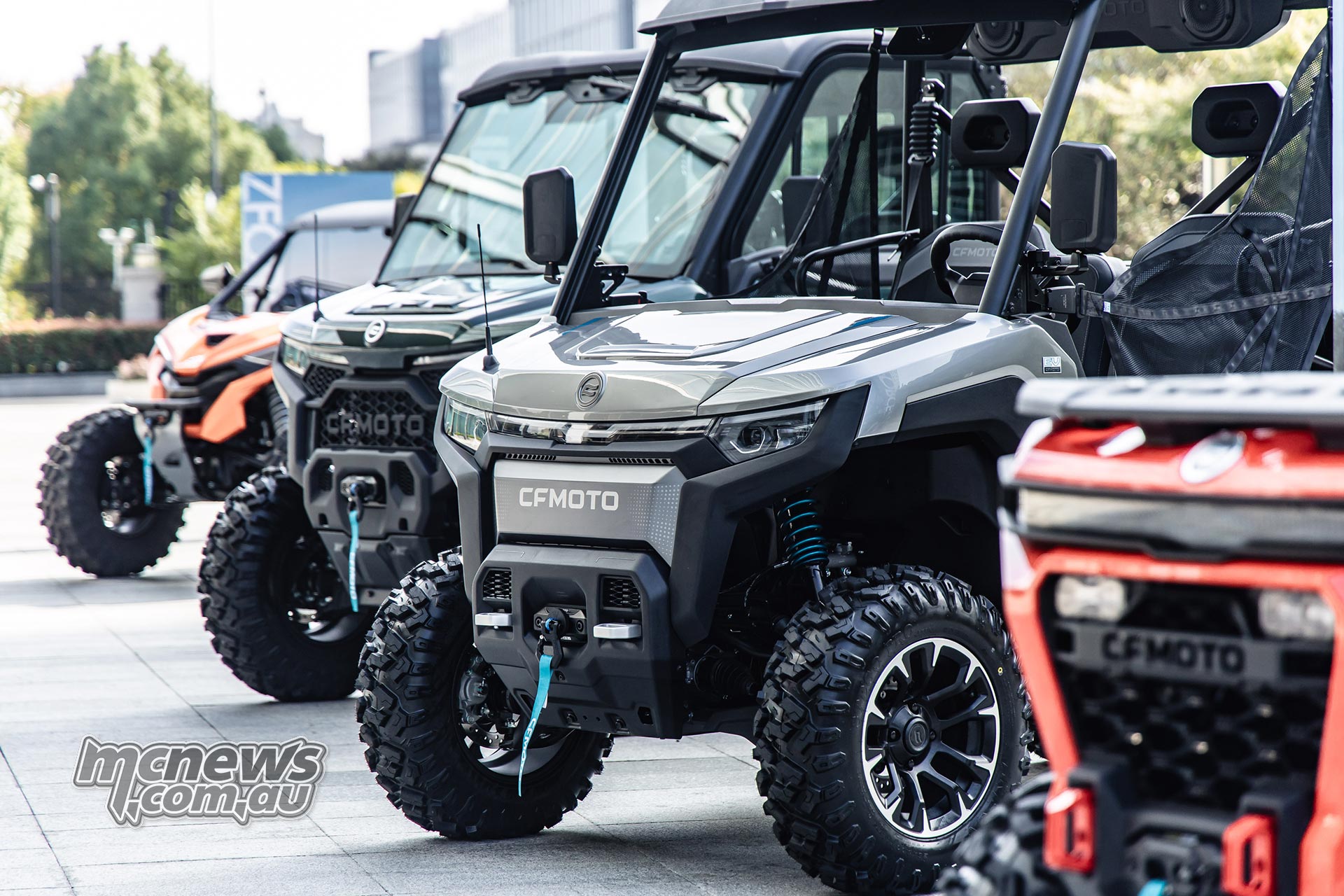
What is sometimes overlooked is that motorcycles are not the largest contributor to the group’s turnover. Off-road vehicles, including ATVs, utility side-by-sides and sporting side-by-sides, generated more than US$1 billion in revenue during the first half of 2026.
Markus Ferch
“In many countries, we have an (ORV) market share that is bigger than the next three combined.”
Those are extraordinary figures, even allowing for the fact that the market-share estimates come from CFMOTO management rather than independently audited figures provided for this report. They underline a point motorcyclists can easily miss: in the ORV sector, CFMOTO is not merely chasing established manufacturers. Across many markets it is already the dominant player, and by a substantial margin. Ferch told us CFMOTO is the #1 ORV brand across 19 European countries.
Australia appears to be another stronghold, although obtaining directly comparable national sales figures is more difficult. CFMOTO does not participate in the Federal Chamber of Automotive Industries (FCAI) sales audit, so its sales aren’t included in the regularly published industry figures, and that source doesn’t provide a complete market-share comparison. However, Australian distributor Mojo Motorcycles has told MCNews.com.au that CFMOTO is the clear number one in Australia’s ORV market. They wouldn’t make such a claim to MCNews.com.au without solid evidence to back it up.
Back on two wheels, motorcycle revenue reached about US$587 million, while the ZEEHO electric mobility division reported more than 330,000 unit sales in those six months.
So when we talk about the resources being committed to the motorcycles that are becoming increasingly familiar on Australian roads, we are talking about the resources of a much broader powersports organisation.
The motorcycles are changing the perception
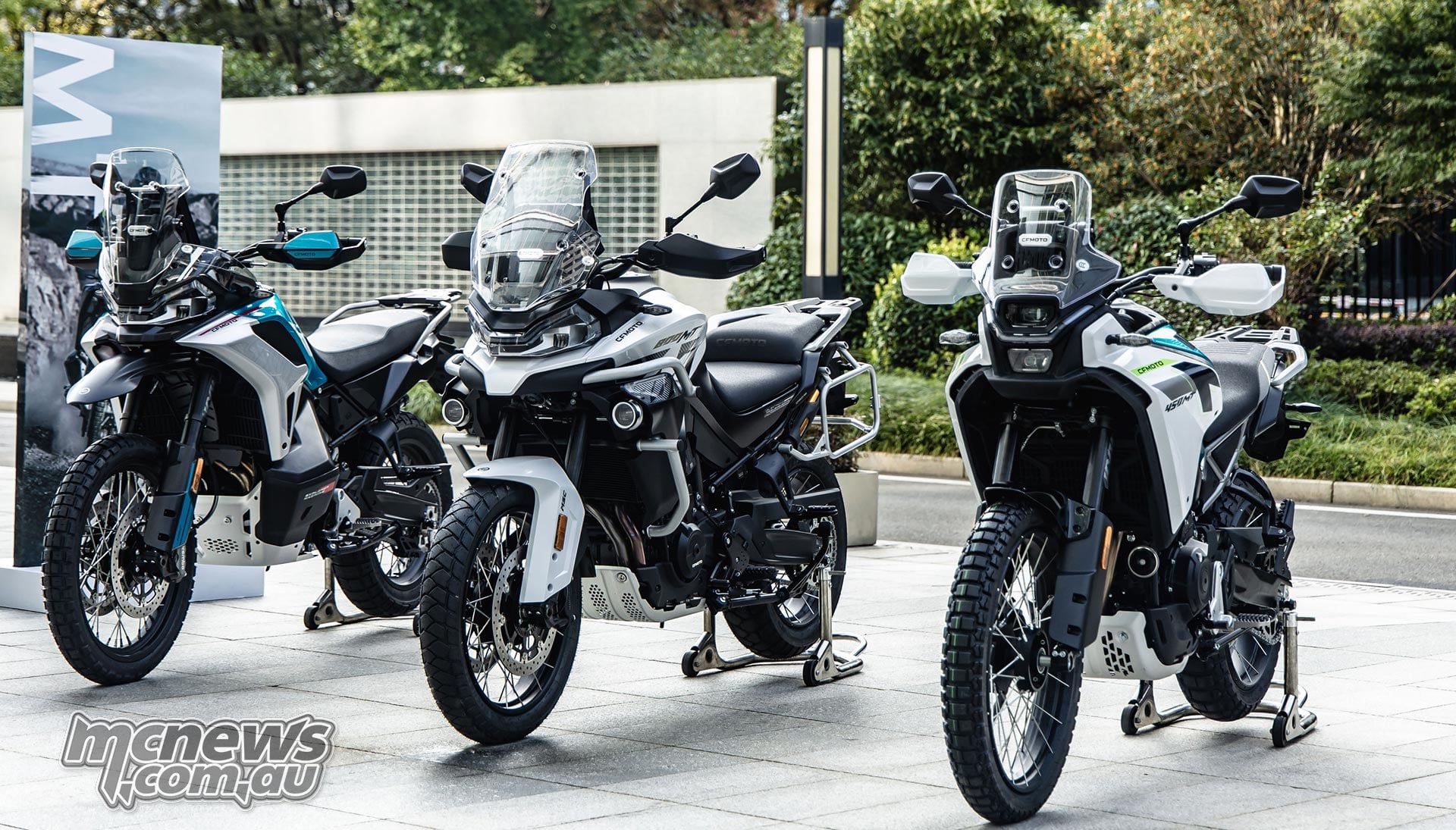
The 450MT might be the clearest demonstration of what has changed. Australia has embraced the small adventure twin, but its success has been international. During our discussions at CFMOTO headquarters, European sales executive Markus Ferch said the company sold more than 12,000 450MTs in Europe in 2024, despite the model arriving partway through the year.
The reception exceeded the company’s initial expectations. It also confirmed a sizeable audience for a manageable adventure motorcycle that could be taken off the bitumen without the size, expense, or commitment of a big-bore machine.
That success has brought competitors into the segment, and Ferch made it clear that CFMOTO is already preparing its response. We look at that story separately, but the 450MT has done something important for the brand: it has persuaded plenty of customers to consider the motorcycle on its merits, not merely because of a low price.
Our earlier Australian 450MT road test explained why it proved such an appealing package.
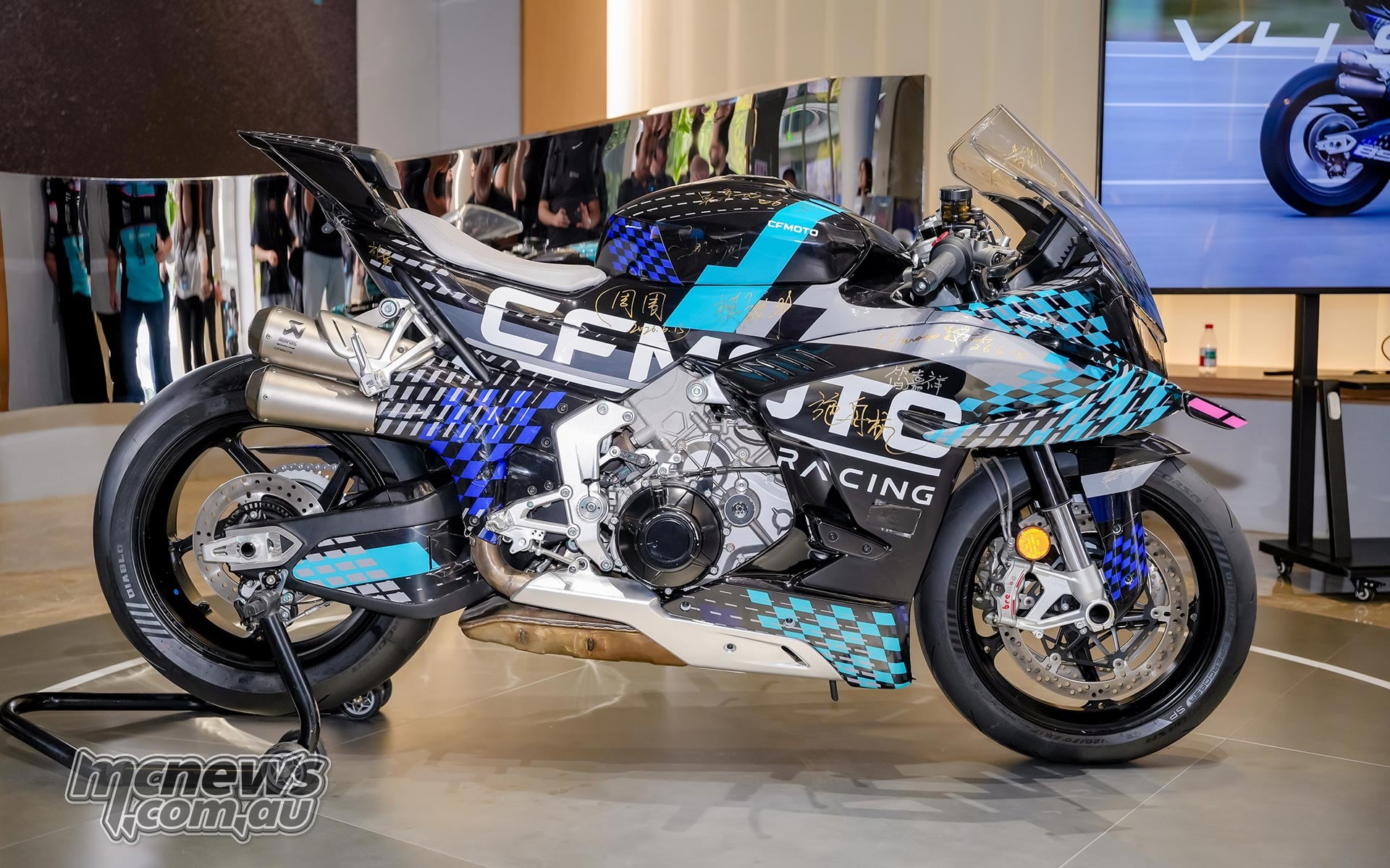
At the opposite end of the performance spectrum sits the V4 SR-RR, a 997 cc superbike project with more than 210 horsepower. The prototype has recorded a GPS-measured 315.82 km/h, but CFMOTO insists its primary target is circuit performance rather than a straight-line speed headline.
The V4 is not being developed as a volume seller. It is an engineering and brand flagship, designed to show what the company can achieve. In a separate technical feature, we will examine the remarkable engine redesign, lightweight valve train, chassis strategy and testing programme described by former engine chief engineer Joe Zhou.
A very different kind of manufacturing footprint
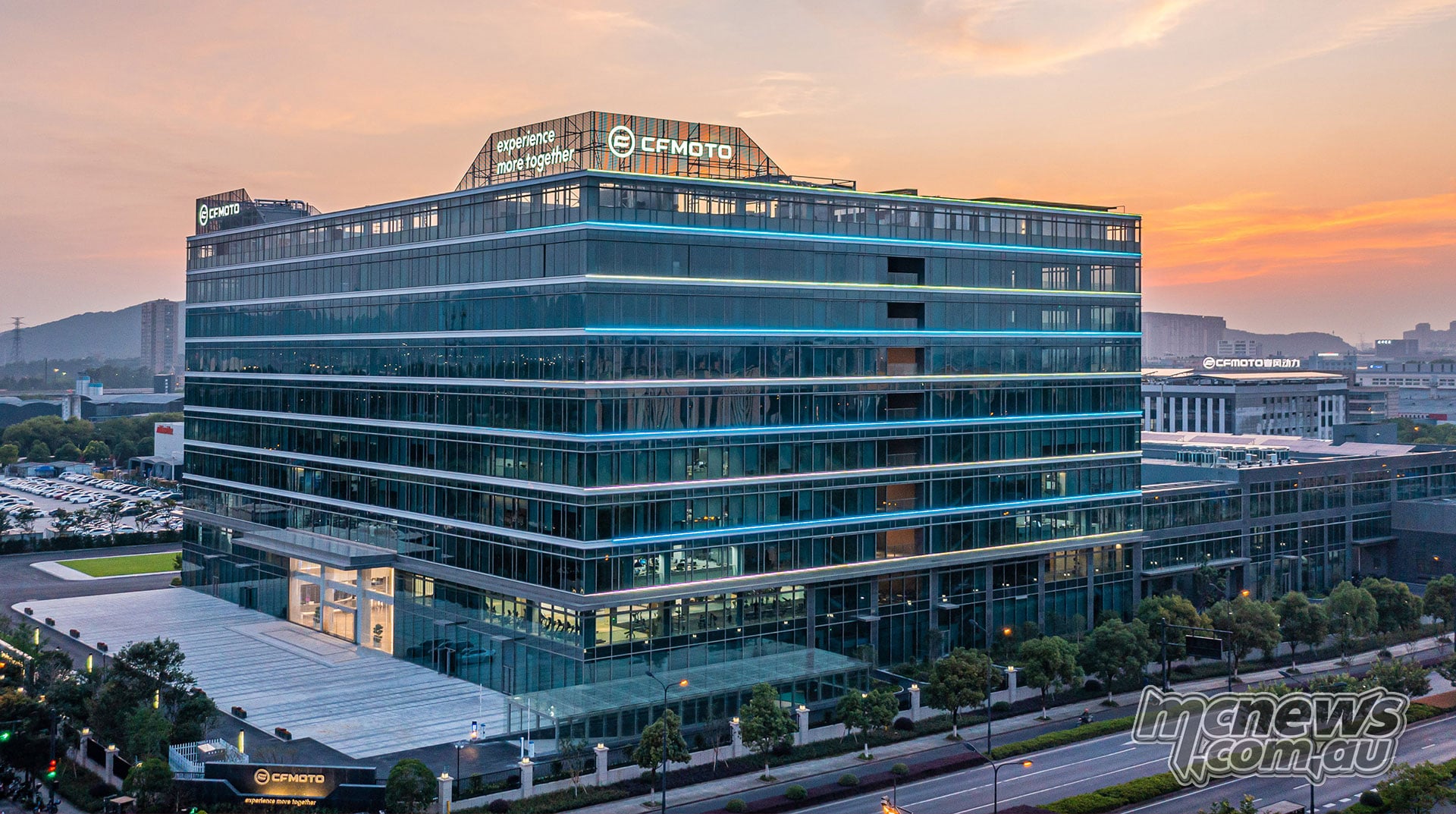
CFMOTO outlined five major production bases across China, Thailand and Mexico, with combined planned annual capacity exceeding four million vehicles. The new Jiaxing factory is especially significant, with approximately 320,000 square metres of floor area and reported investment of 3.5 billion yuan.
The company subsequently clarified to MCNews that the three-million-unit annual capacity planned for Jiaxing is entirely for two-wheelers. That does not mean three million combustion-engined motorcycles are presently being produced: the figure is design capacity and includes electric two-wheelers.
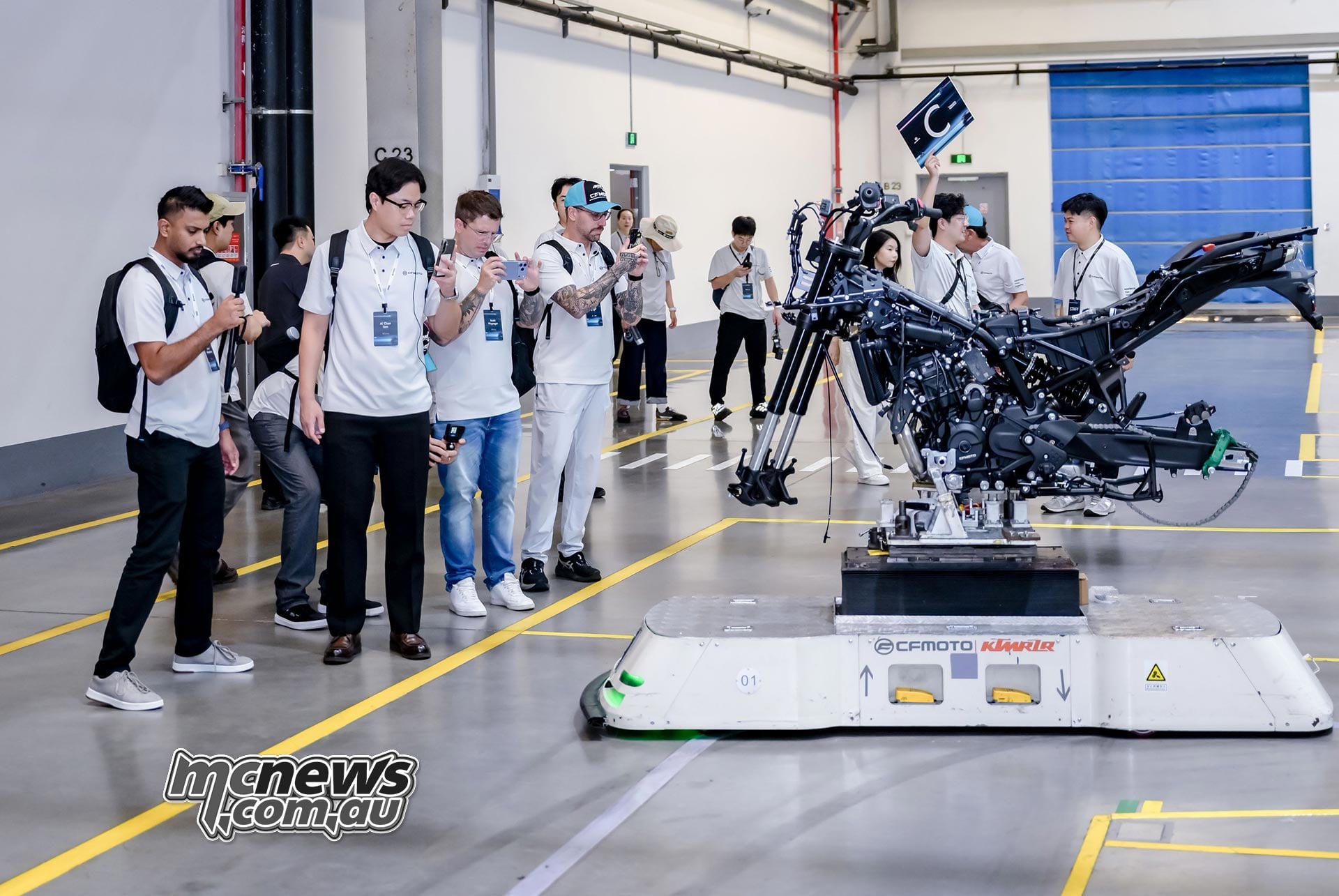
During the factory visit, we saw complete engines arranged in production areas, partially assembled motorcycles on automated mobile platforms and staff explaining the methods employed to move vehicles through the manufacturing process. CFMOTO also confirmed that structural items including motorcycle frames and steel body components are manufactured internally, although it did not provide a percentage of total parts sourced in-house.
R & D
CFMOTO’s published first-half 2026 figures show research and development expenditure of approximately 786 million yuan, or 5.87 per cent of revenue, an increase of more than 43 per cent year on year.
The company’s engineering organisation now includes work in vehicle-level integration, computer simulation, software, powertrain design, manufacturing processes and physical validation. The noise-testing chambers and dynamometer rooms we witnessed were an important part of that last stage: developing a promising prototype is one thing; demonstrating consistent operation over an extended range of conditions is another.
CFMOTO’s development direction also presents an interesting contradiction. A Chinese manufacturer with access to the world’s most sophisticated electric-vehicle supply chains might seem the obvious candidate to make a wholesale push into electric motorcycles. It does have ZEEHO and substantial electric drivetrain capabilities. Yet the company is putting enormous effort into new combustion engines, from its 675 cc triple to the new V4, and the MT450 successor that will be unveiled at EICMA in a few weeks, among others…
Management’s position appears pragmatic: build electric competence, pursue the urban and utility markets where demand exists, but continue developing combustion engines for riders who still want them. When riders tell them they want broader EV offerings, CFMOTO will be ready to deliver.
The more difficult part of becoming premium
Chief Brand Officer Ferdinand Klauser described CFMOTO’s ambition to become a premium global powersports manufacturer. During our management interview, Ferch explained that premium status is not necessarily about having the highest price. It is about quality, residual values, parts supply, and customers wanting a CFMOTO because it is a CFMOTO.
That is the genuine challenge. The company can invest in engineering equipment, build another factory and create another very fast motorcycle, but it cannot instantly manufacture the decades of consumer confidence enjoyed by the most established motorcycle marques.
CFMOTO says its global dealer and distributor systems increasingly feed problems and customer requests directly back into the engineering organisation. Consumers will judge whether that process produces better long-term ownership outcomes over time.
The scale of the effort cannot be ignored. We came to Hangzhou expecting to learn more about a fast-growing Chinese manufacturer. What we saw was a company assembling much of the industrial machinery, engineering capability and international infrastructure needed to become something considerably bigger.
The real test now is whether all that investment turns into motorcycles people want to own for years, before eventually replacing them with another CFMOTO…