

2027 Honda CBR600RR
Honda has given the CBR600RR another round of attention for 2027, adding Fireblade-derived front brakes and ABS modes, a larger TFT display and revised aerodynamics to one of the sweetest sportsbikes ever made. For Australian riders, however, the announcement raises a significant question mark.
At this stage, MCNews.com.au believes the updated model is unlikely to be suitable for Australian registration in its announced form, making an Australian introduction unlikely. That remains our assessment, rather than a confirmed Honda Australia announcement, and the situation could change. We hope we are wrong.
We also suspect this could be one last hurrah for the CBR600RR as we know it. Honda hasn’t called it a final edition or announced the end of production, but losing a motorcycle this good to ride deserves more than a passing glance at a spec sheet.
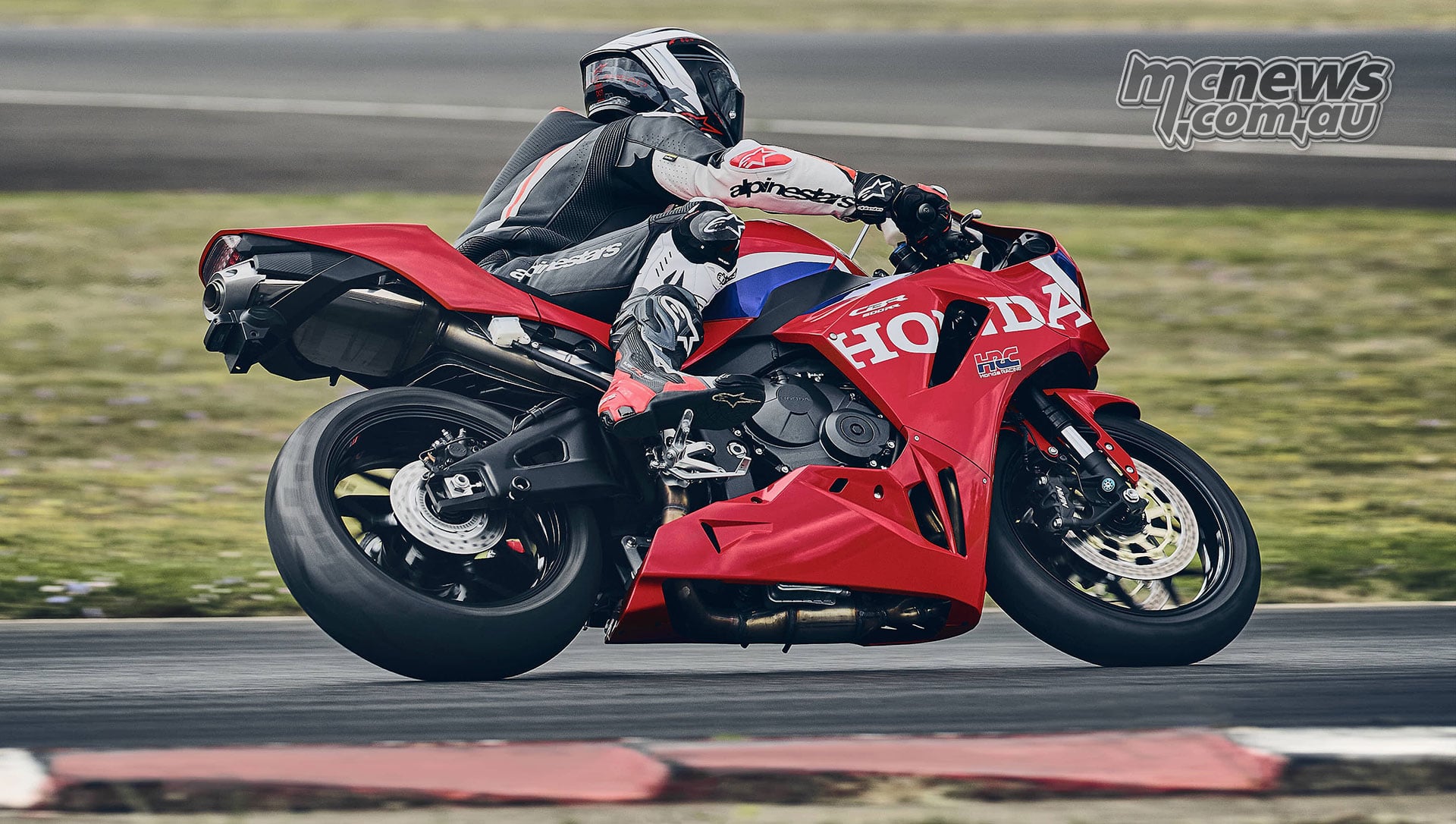
When the 600s were the sweet spot
In the heyday of the four-cylinder 600 cc Supersport class, litre bikes were often unruly beasts that demanded considerable skill to tame. The original Yamaha YZF-R1 might only have made around 130 horsepower at the rear wheel, but holy shit, those were Clydesdale-sized horses. Quite demented ones, with a serious attitude problem.
Getting their power to the ground took judgement, finesse and a right hand that understood the consequences. No sophisticated electronic safety net quietly sorted out your enthusiasm. A big handful of throttle could turn a corner exit into a fairly robust discussion about who was actually in charge. Today’s litre sportsbikes are pussycats by comparison, despite horsepower figures that make the original litre bikes look seriously underpowered.
The 600 cc fours offered a different kind of satisfaction. You could work the gearbox, use the revs and enjoy the way a beautifully balanced motorcycle flowed from one corner to the next. You had more room to explore the engine and chassis, and more opportunity to build confidence without constantly negotiating a surplus of torque.
They rewarded riders across a broad range of experience. A developing sportsbike rider could appreciate their precision and manageable delivery, while a very good rider could extract an extraordinary amount from them. The appeal was how much of the motorcycle you could enjoy using.
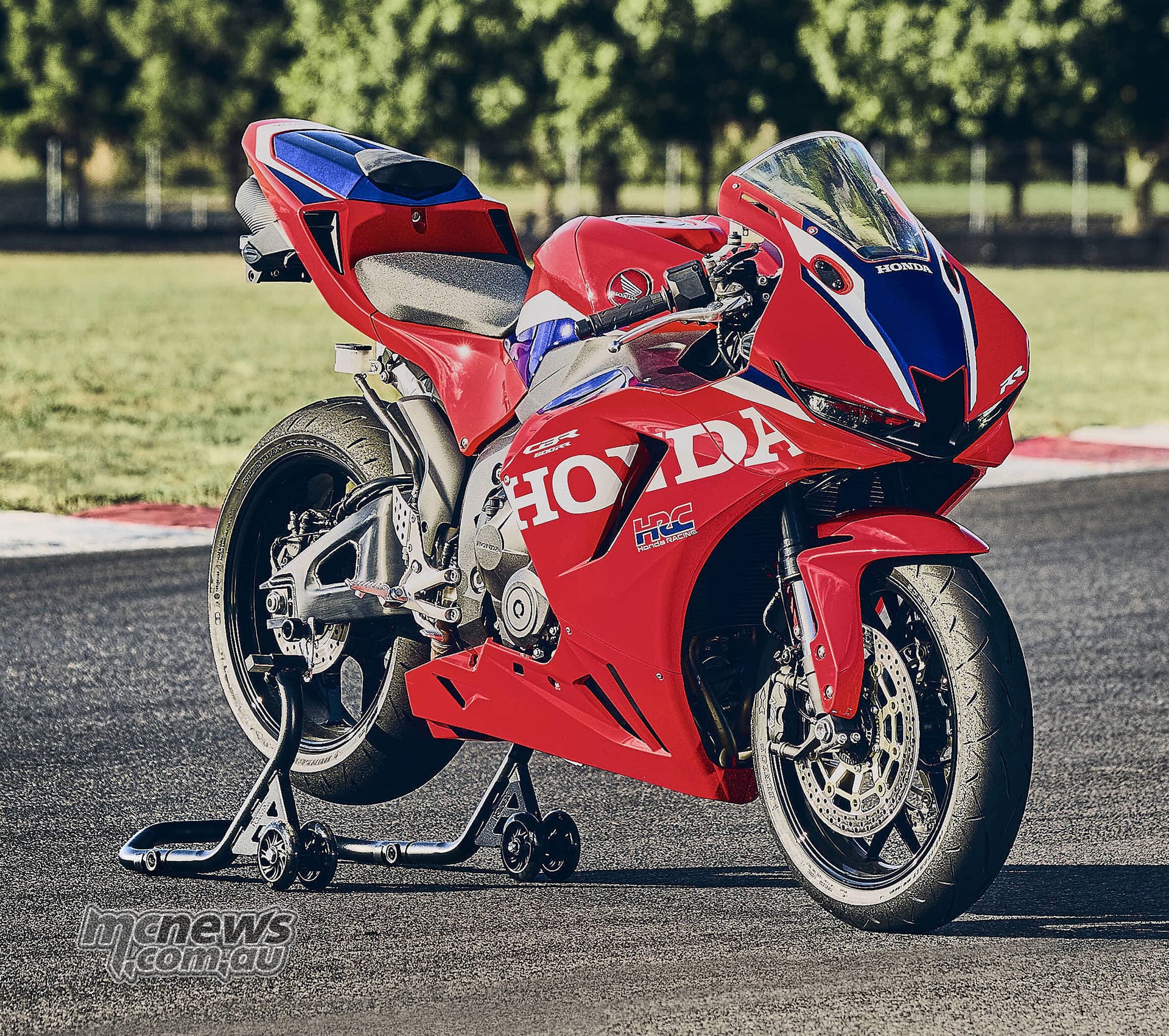
Since its debut in 2003, the CBR600RR has been among the sweetest of that breed. For us, it belongs in any conversation about the most beautiful motorcycles ever made to ride. The balance, the feedback, the way the engine and chassis worked together: those qualities mattered far more than winning an argument over the biggest number on a dyno chart.
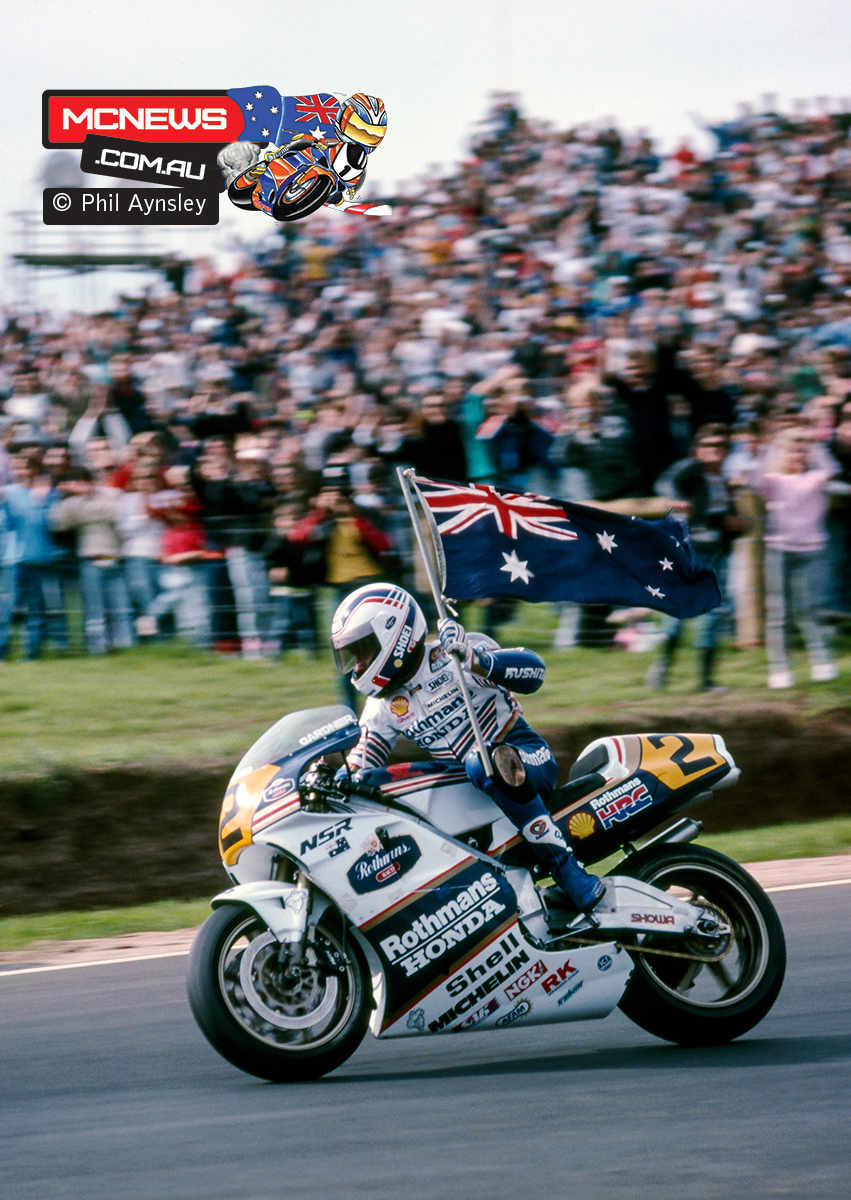
There was substance behind the affection, too. Chris Vermeulen won the 2003 World Supersport Championship on the CBR600RR in its debut season, beginning six consecutive riders’ titles for the model. Its engine subsequently powered the entire Moto2 field from 2010 through 2018.
What changes for 2027?
The latest update concentrates on braking, aerodynamic integration and the rider interface. The core 599 cc engine and aluminium chassis architecture continue, with claimed peak power and torque unchanged from the previous European specification.
The headline additions are Nissin front calipers and an ABS module derived from the CBR1000RR-R Fireblade, bringing Standard, Track and Race ABS modes. The display grows to five inches, while the previous front winglets are reworked into a spoiler integrated beneath the headlights.
Honda has also announced three HRC race kits for different levels of circuit use, alongside the two familiar red-and-black colour themes.
Fireblade brakes and three ABS modes
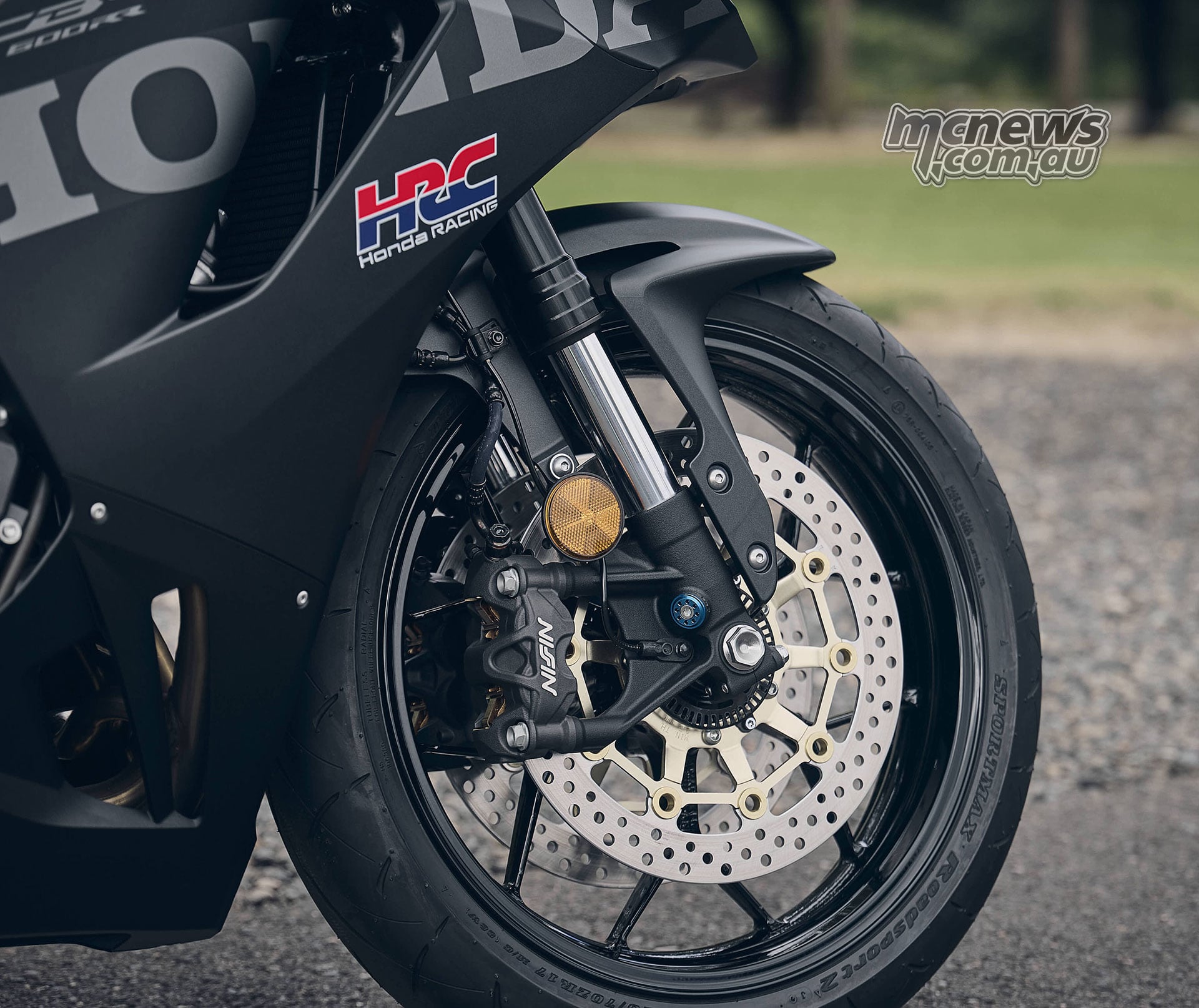
The new radial-mount Nissin four-piston front calipers are taken from the Fireblade, with Honda claiming improved resistance to heat and the braking control required for circuit use. They grip twin 310 mm floating discs, with a radial master cylinder supplying the pressure.
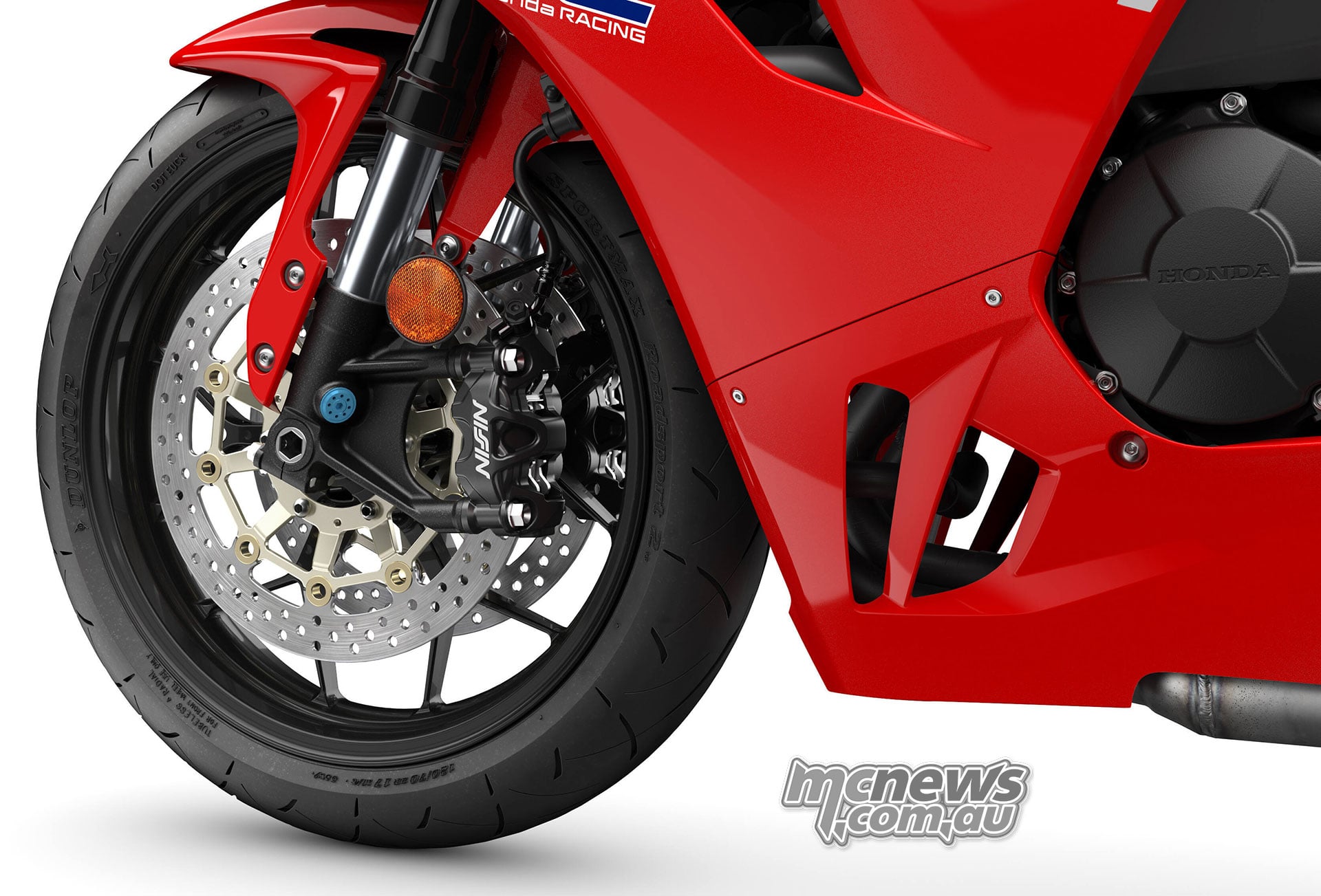
A single-piston caliper and 220 mm rear disc complete the hardware. The more significant change in how the system can be used comes from the updated ABS module and its three selectable settings.
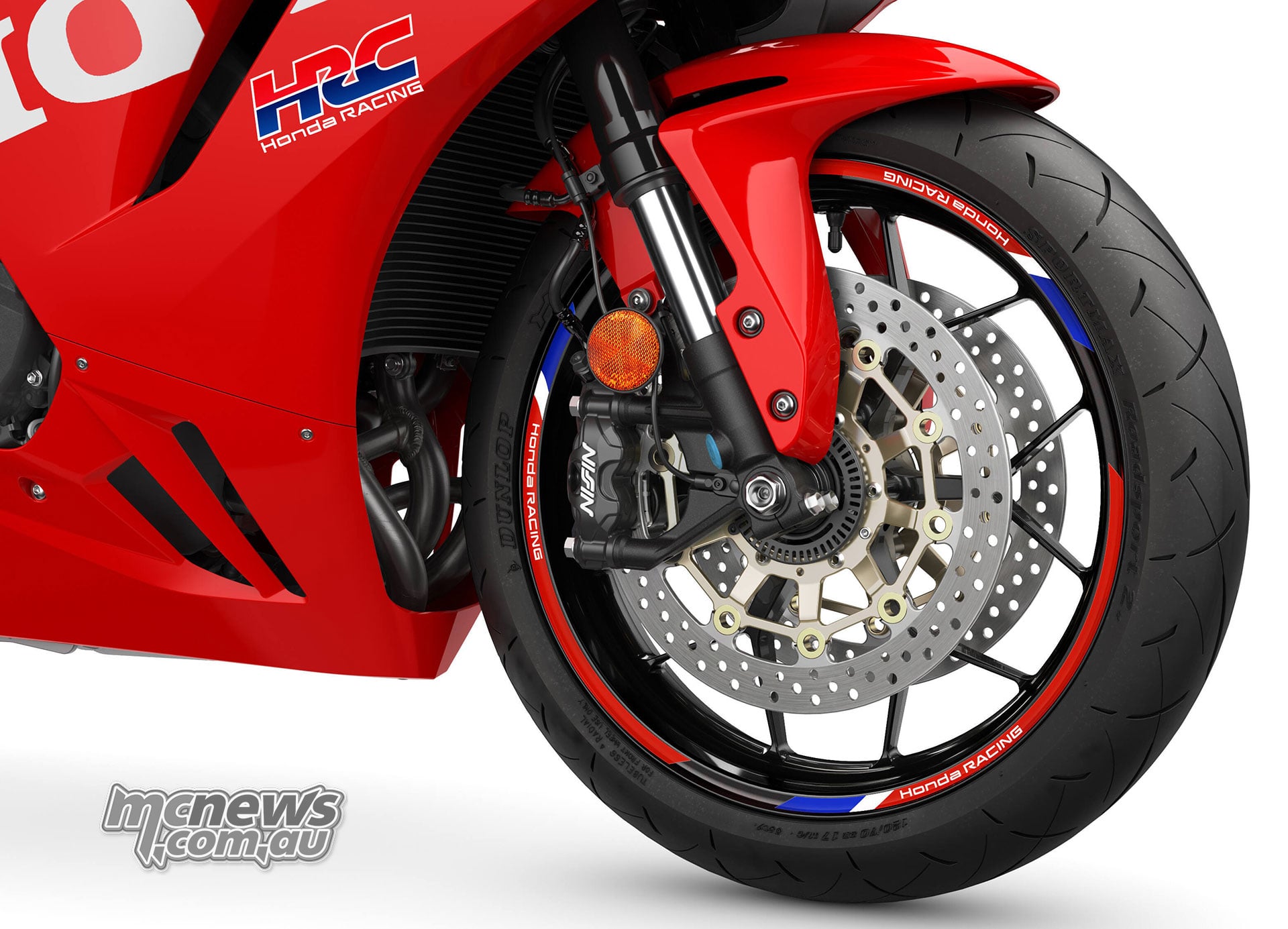
Standard prioritises stability across a broad range of conditions, including wet weather. Track removes rear-lift control, allowing a more aggressive approach to circuit braking. Race goes further by also disabling rear-wheel ABS, leaving the system to manage front-wheel slip.
Cornering ABS remains part of the wider electronics package, informed by the six-axis IMU. These are meaningful changes for riders who spend time at the track, giving them more control over how much assistance remains active under braking.
The high-revving four remains the heart of it
The 599 cc liquid-cooled DOHC inline-four continues to produce a claimed 120 horsepower at 14,250 rpm, with peak torque of 63 Nm arriving at 11,500 rpm. Those figures tell you plenty about where this engine wants to spend its time.
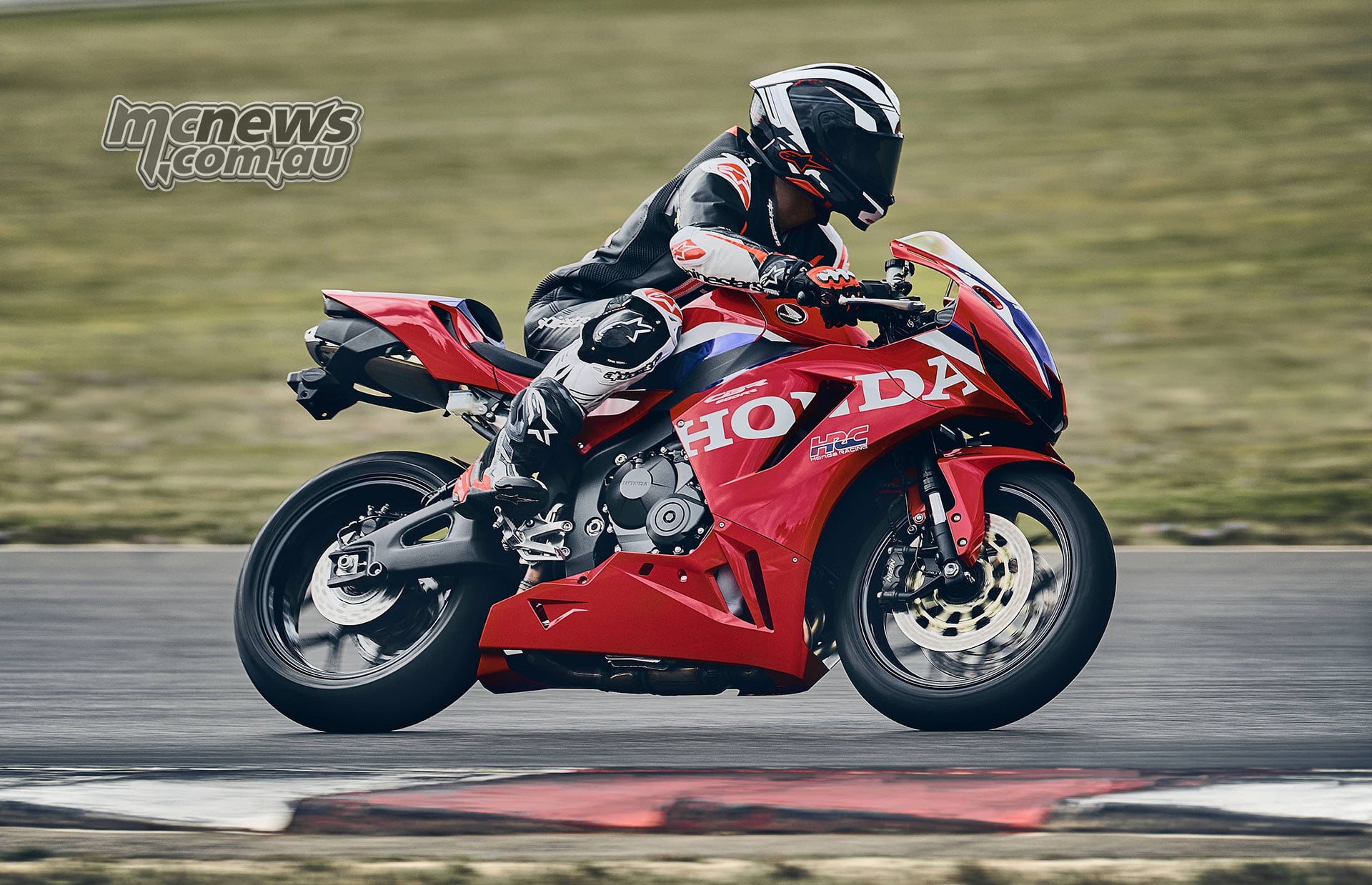
Bore and stroke remain 67 x 42.5 mm, with a 12.2:1 compression ratio and 44 mm throttle bodies. The engine retains the intake, valve-train and exhaust development introduced with its previous European return; Honda has not announced an increase in peak output for 2027.
A six-speed gearbox, standard quickshifter and assist/slipper clutch complete the drivetrain. The quickshifter offers three levels of adjustment for feel, while the slipper function helps manage rear-wheel disturbance during hard braking and rapid downshifts.
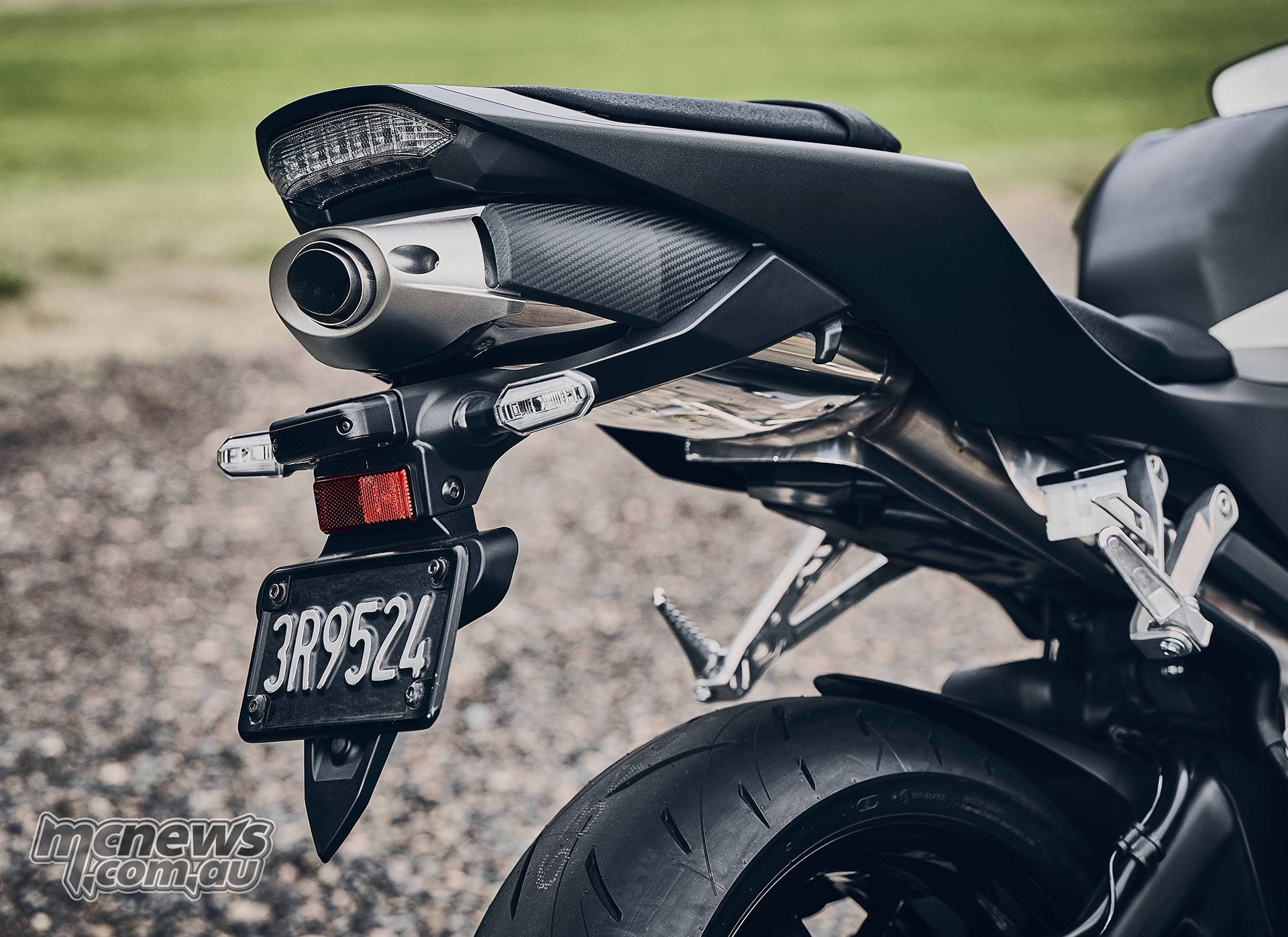
The four-into-two-into-one exhaust still finishes beneath the seat. It is one of the CBR600RR’s defining visual signatures, and a welcome survivor on a motorcycle whose proportions remain unmistakably those of a focused 600.
A familiar chassis with proper suspension adjustment
The chassis centres on a hollow die-cast aluminium twin-spar frame and aluminium swingarm. Wheelbase is 1370 mm, trail is 100 mm and claimed kerb weight is 194 kg.
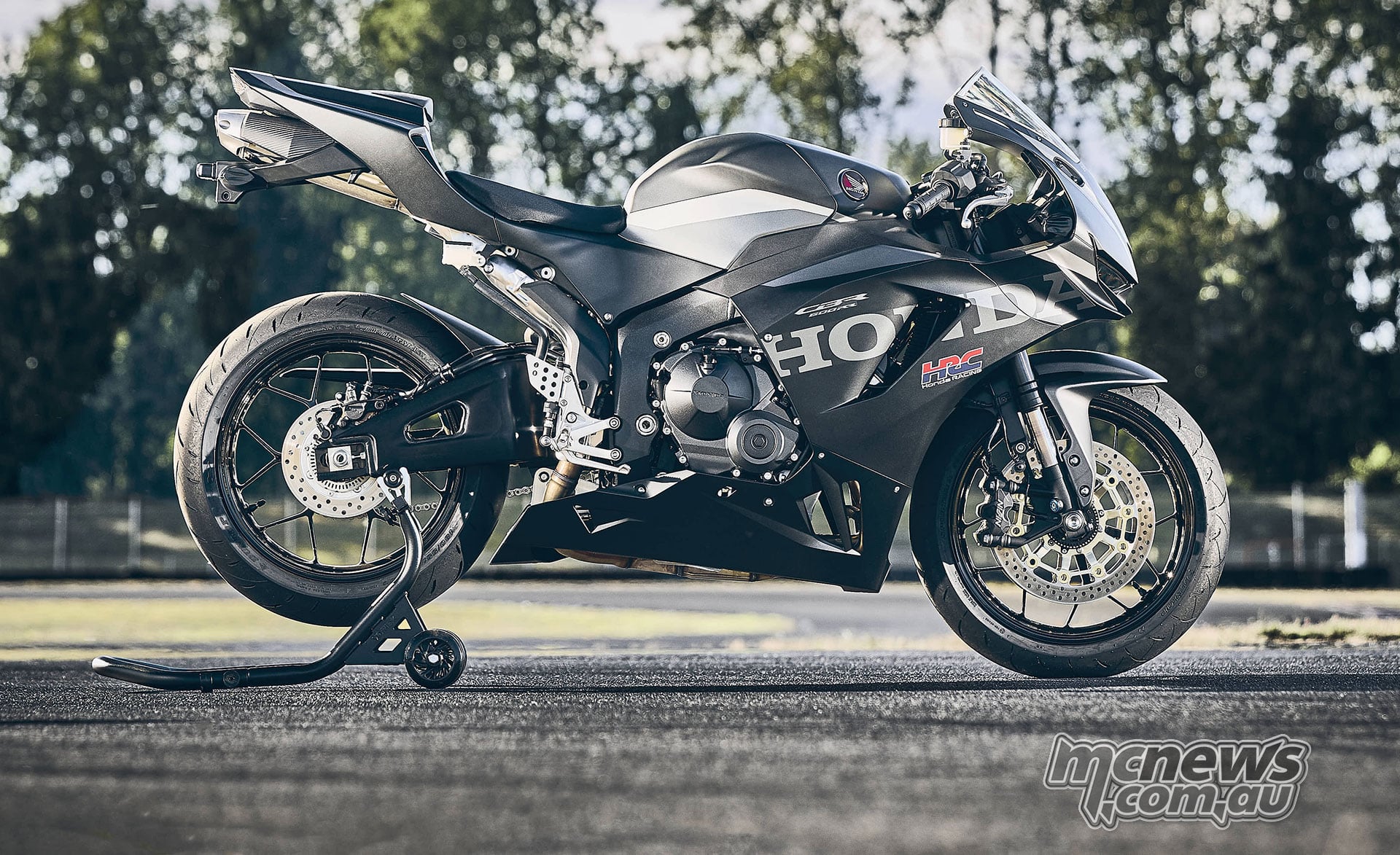
Showa’s 41 mm Big Piston inverted fork is fully adjustable and has 120 mm of stroke. At the rear, a fully adjustable Showa shock works through Honda’s Unit Pro-Link arrangement, with 128 mm of rear-wheel travel.
The Honda Electronic Steering Damper varies its damping according to speed, easing steering effort at lower speeds and increasing damping as speed rises. Cast-aluminium 17-inch wheels wear 120/70 front and 180/55 rear tyres.
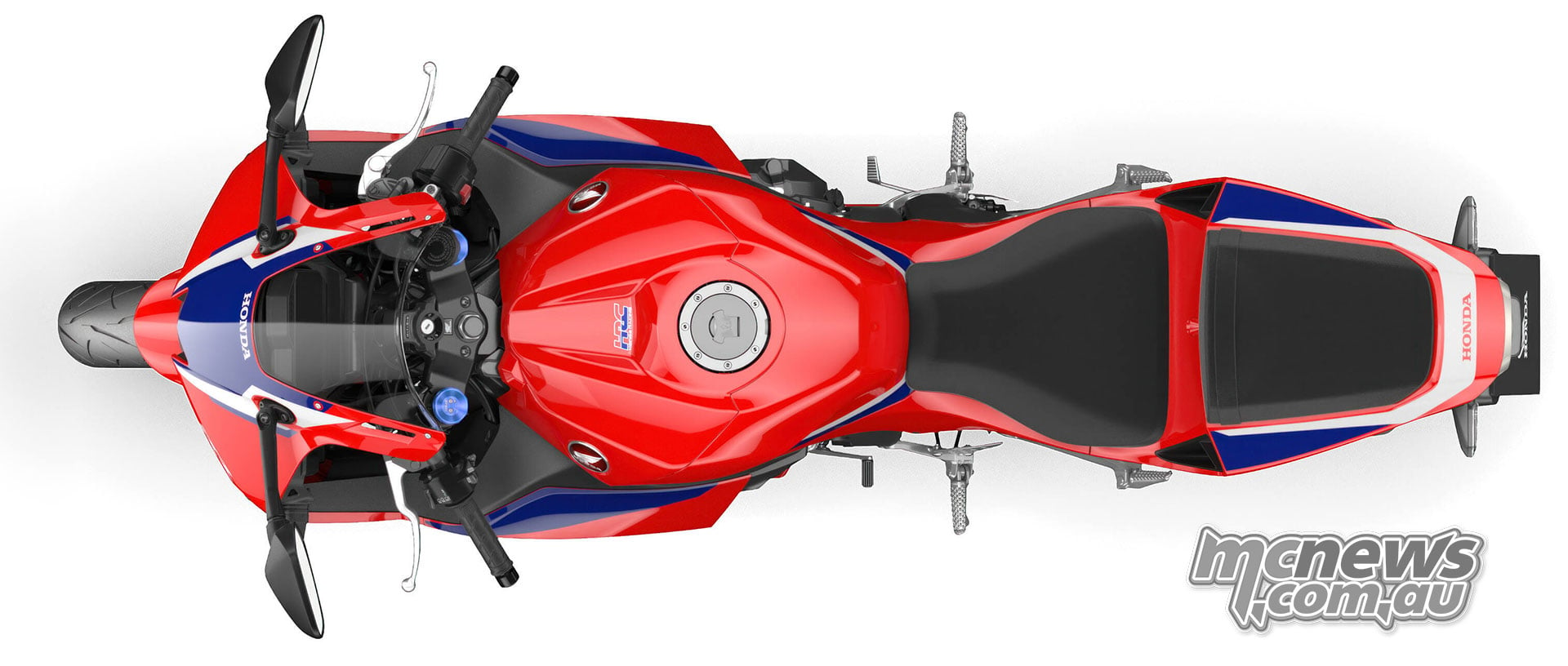
The riding position is unchanged for 2027. Seat height remains 820 mm, and the shaped tank gives the rider room to tuck in behind the screen. Fuel capacity is a useful 18 litres, with Honda quoting WMTC consumption of 5.5 litres per 100 kilometres.
Modern electronics around a traditional supersport engine
The current CBR600RR has considerably more electronic assistance than the bikes that established its reputation. Throttle-by-wire works with a Bosch six-axis IMU, nine-level Honda Selectable Torque Control, wheelie control and adjustable engine braking.
Three preset riding modes are joined by two customisable User modes. Riders can select from five power settings, three engine-braking settings and three wheelie-control levels, with traction and wheelie control also able to be switched off.
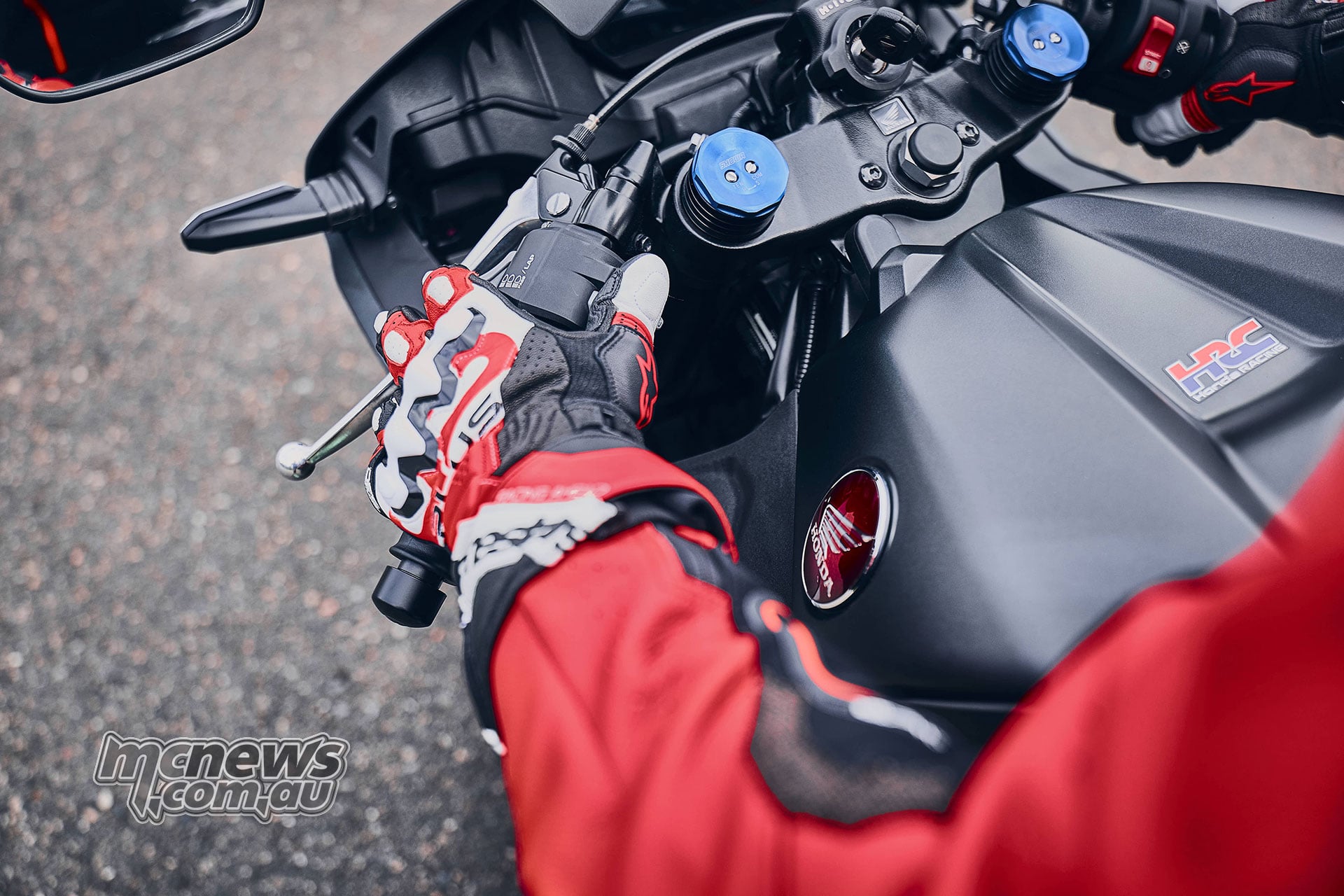
Honda’s traction-control strategy monitors how quickly the relationship between front and rear wheel speeds is changing, allowing it to respond to developing wheelspin. The IMU also supplies the information used by the cornering ABS and rear-lift control functions.
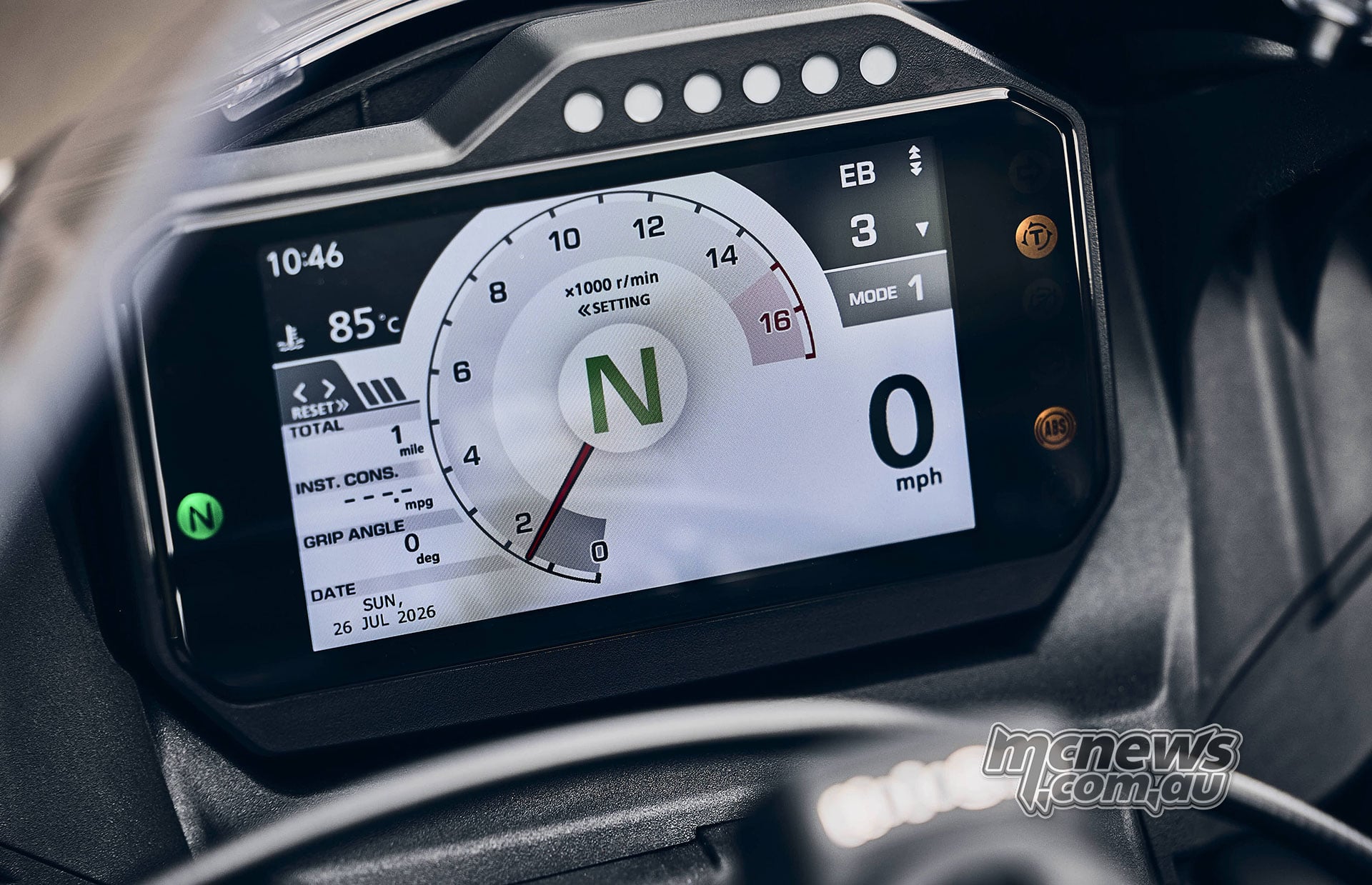
The main cockpit change for 2027 is the larger five-inch colour TFT. A row of five white shift lights sits above it, with the shift indication set to the rider’s chosen rpm. The display also provides lap timing, lap count and fastest-lap information.
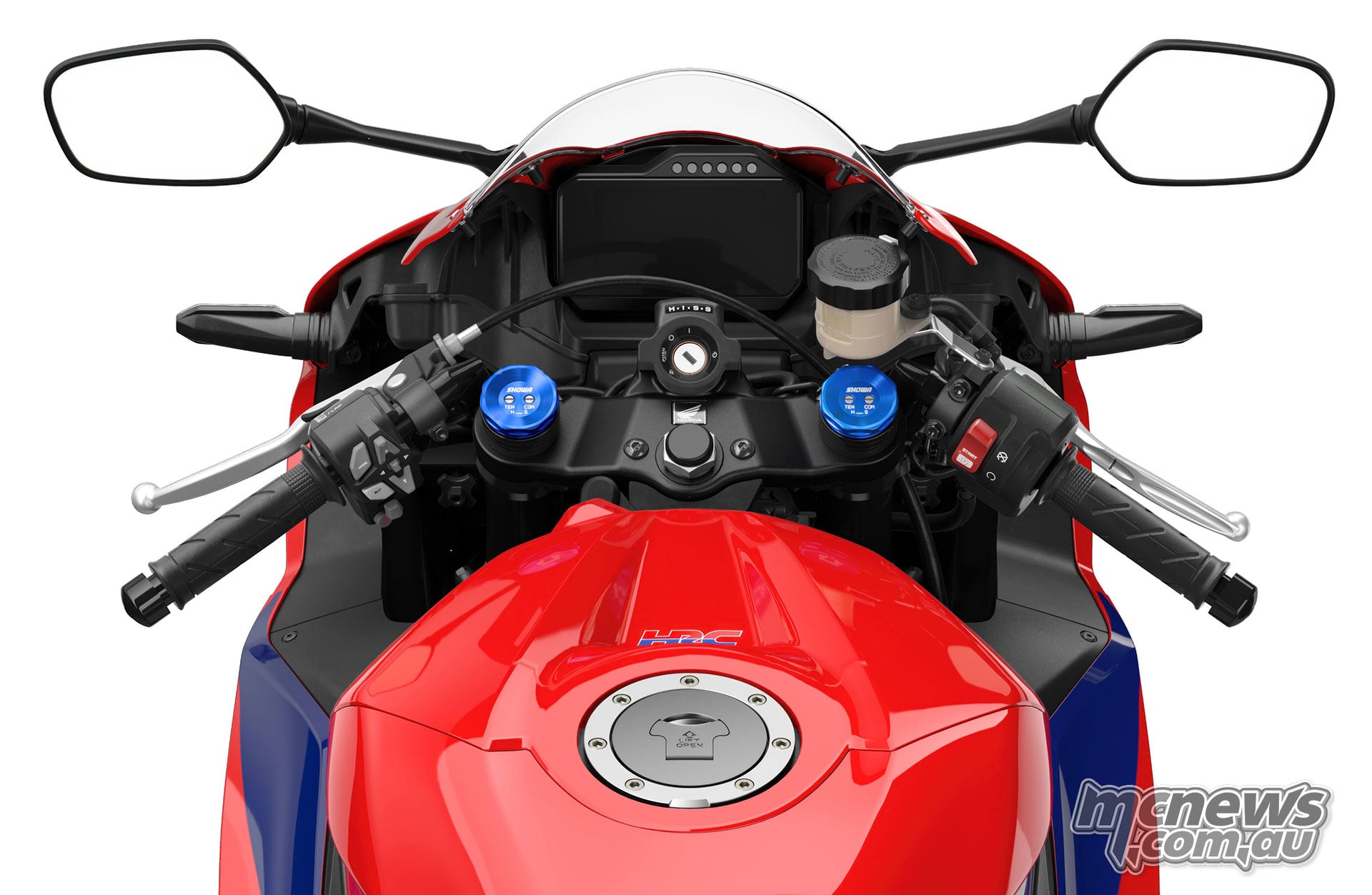
LED lighting, Honda’s Emergency Stop Signal and HISS immobiliser remain part of the equipment. A USB-C charging socket is available as an accessory.
A cleaner nose without losing the aero
The front-end redesign brings the aerodynamic elements closer into the bodywork. The previous winglets have been reshaped into a frontal spoiler beneath the headlights, producing a less cluttered appearance.
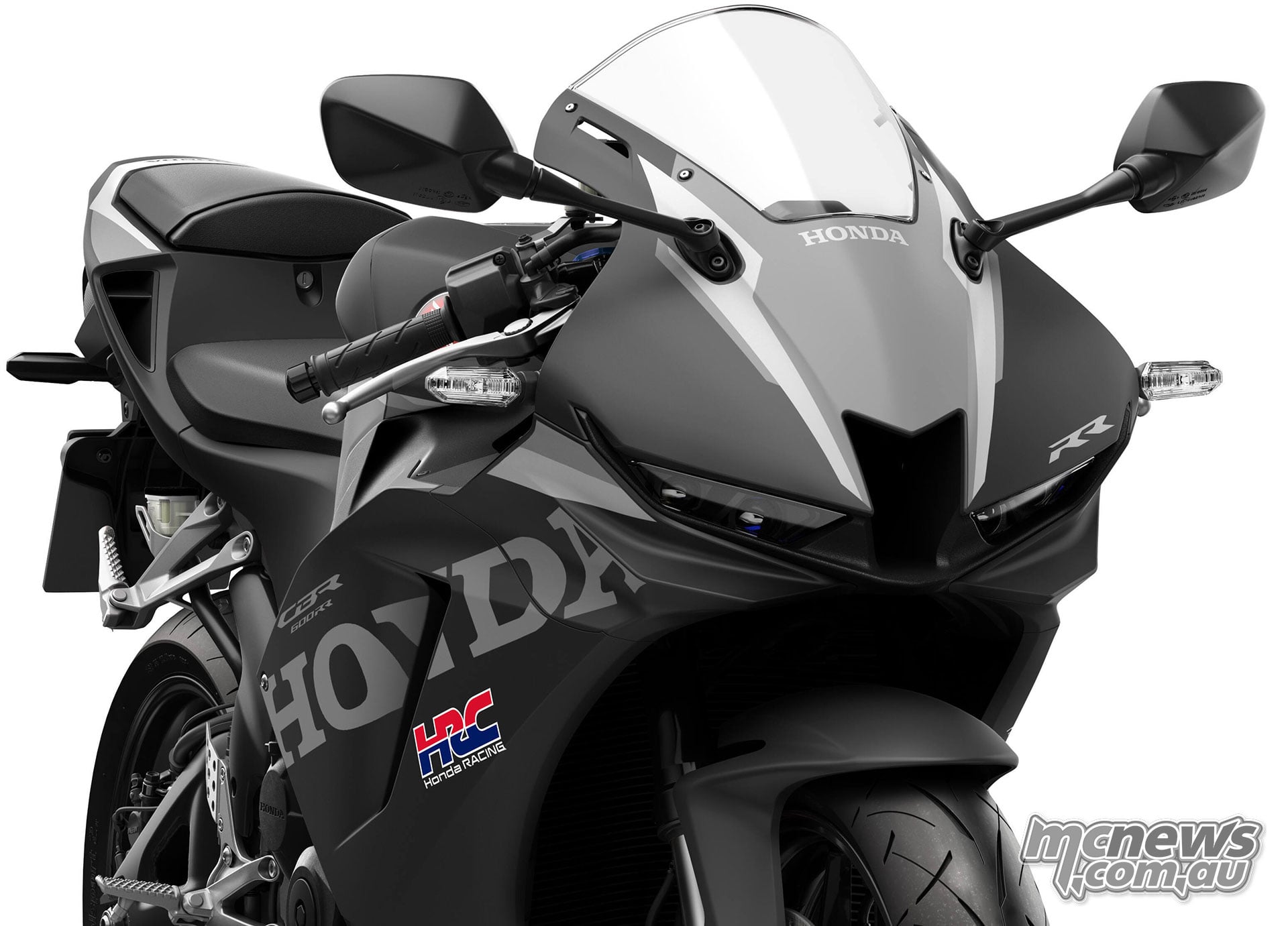
Honda says the change preserves downforce without increasing drag, while also directing airflow away from the rider’s arms to reduce buffeting. The central ram-air intake remains between the headlights.
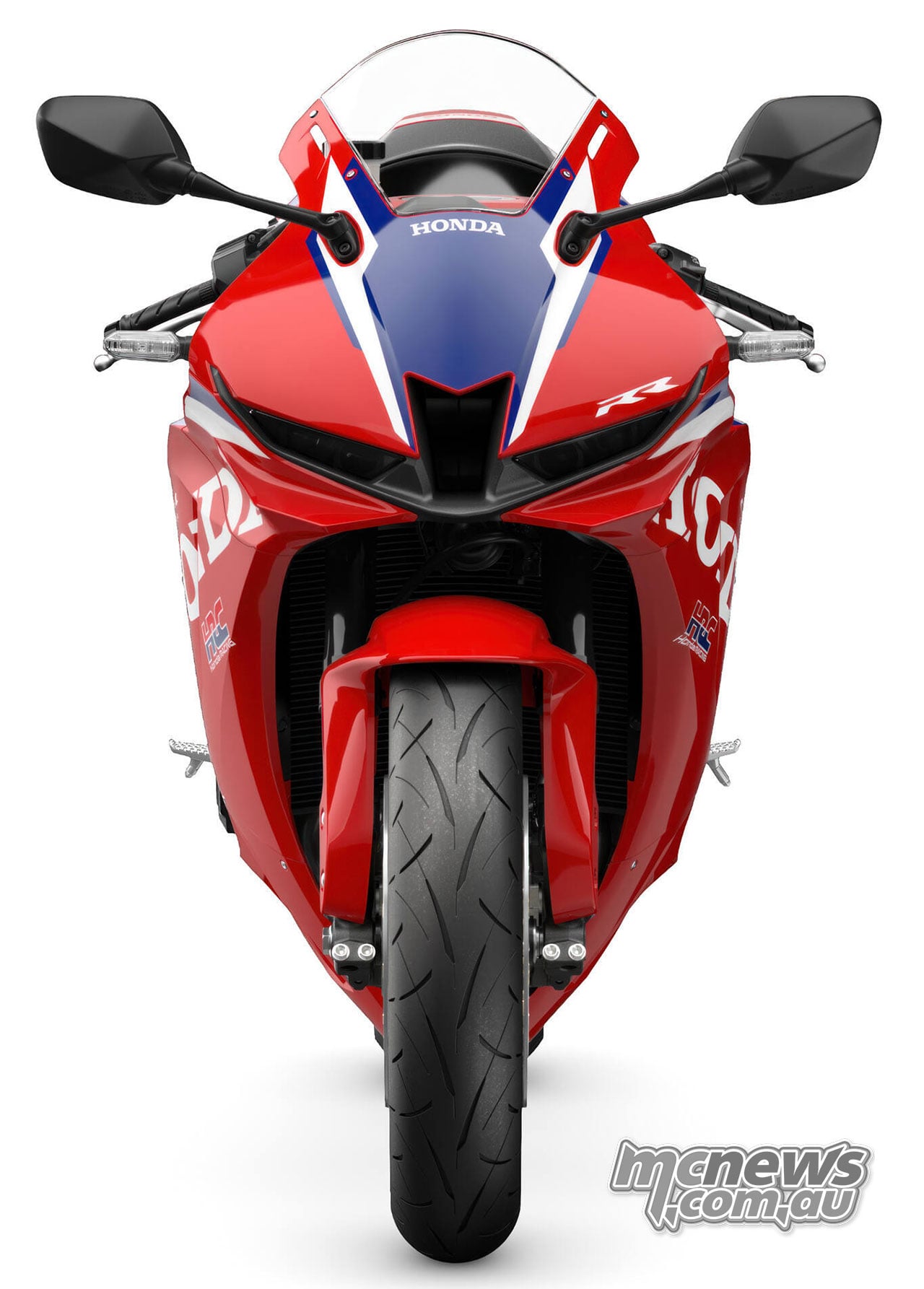
The fairing continues to manage airflow through the radiator area and around the wheels. The lower panels extend back towards the rear wheel, with their shape intended to reduce direct air pressure on the tyre.
HRC colours, race kits and road accessories
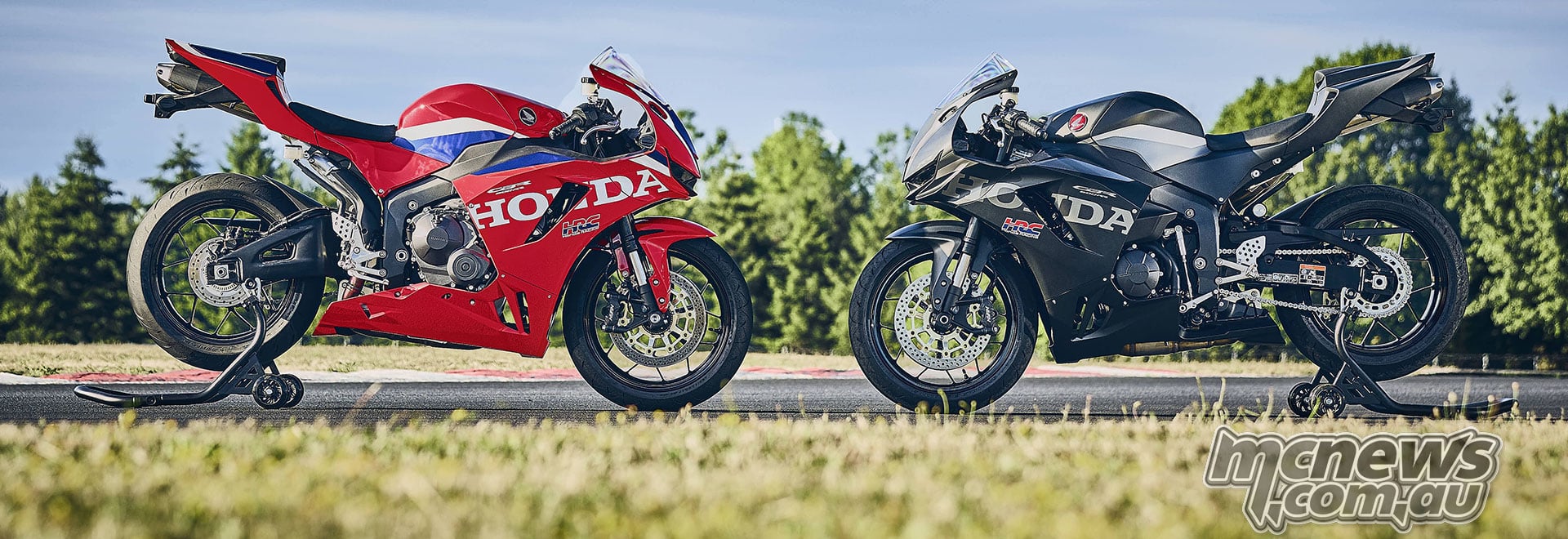
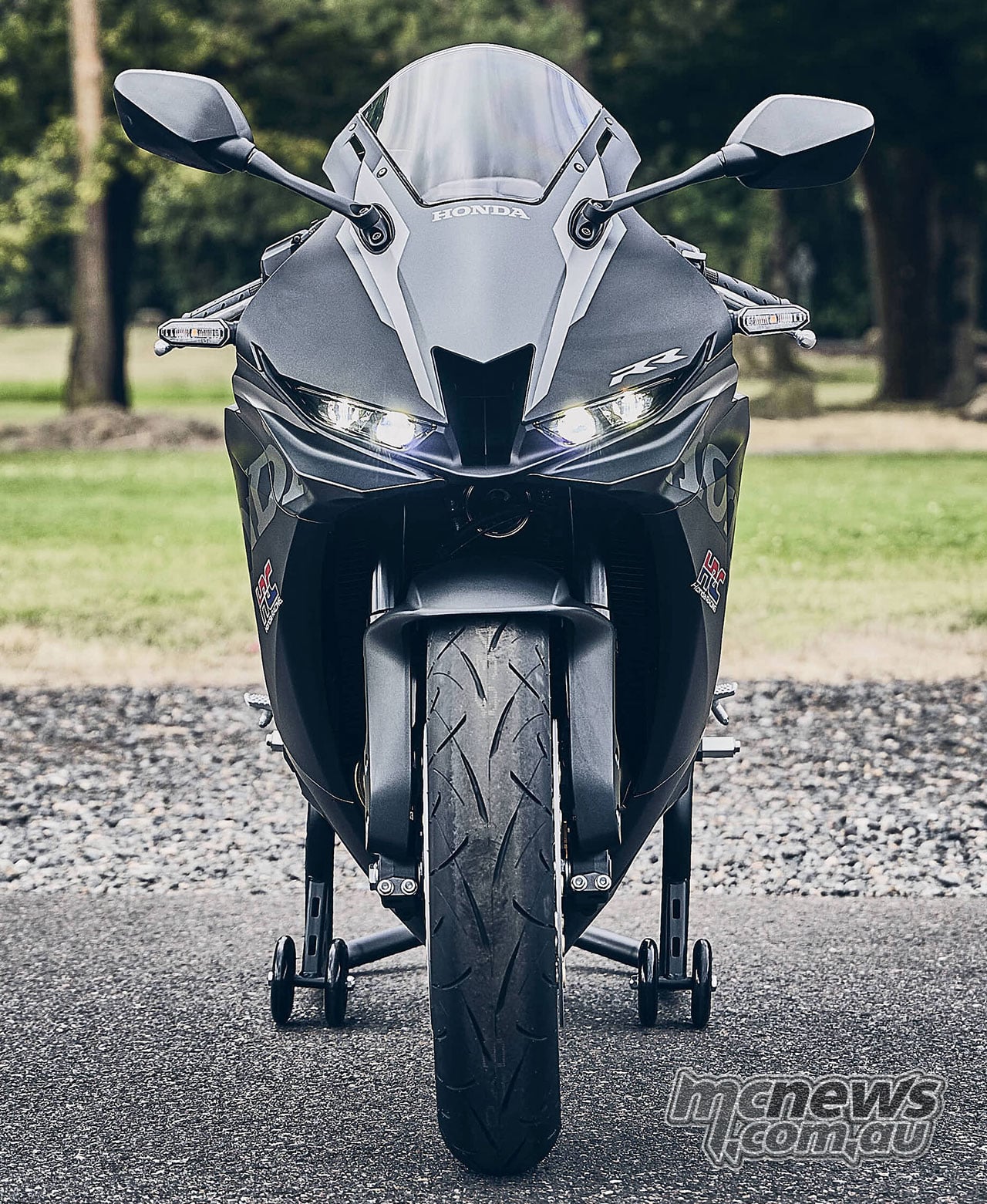
Ignition Red HRC TriColour and Matt Ballistic Black Metallic are the two announced finishes. The red version wears the familiar blue and white racing colours, while the black bike combines muted Honda lettering with coloured HRC logos.
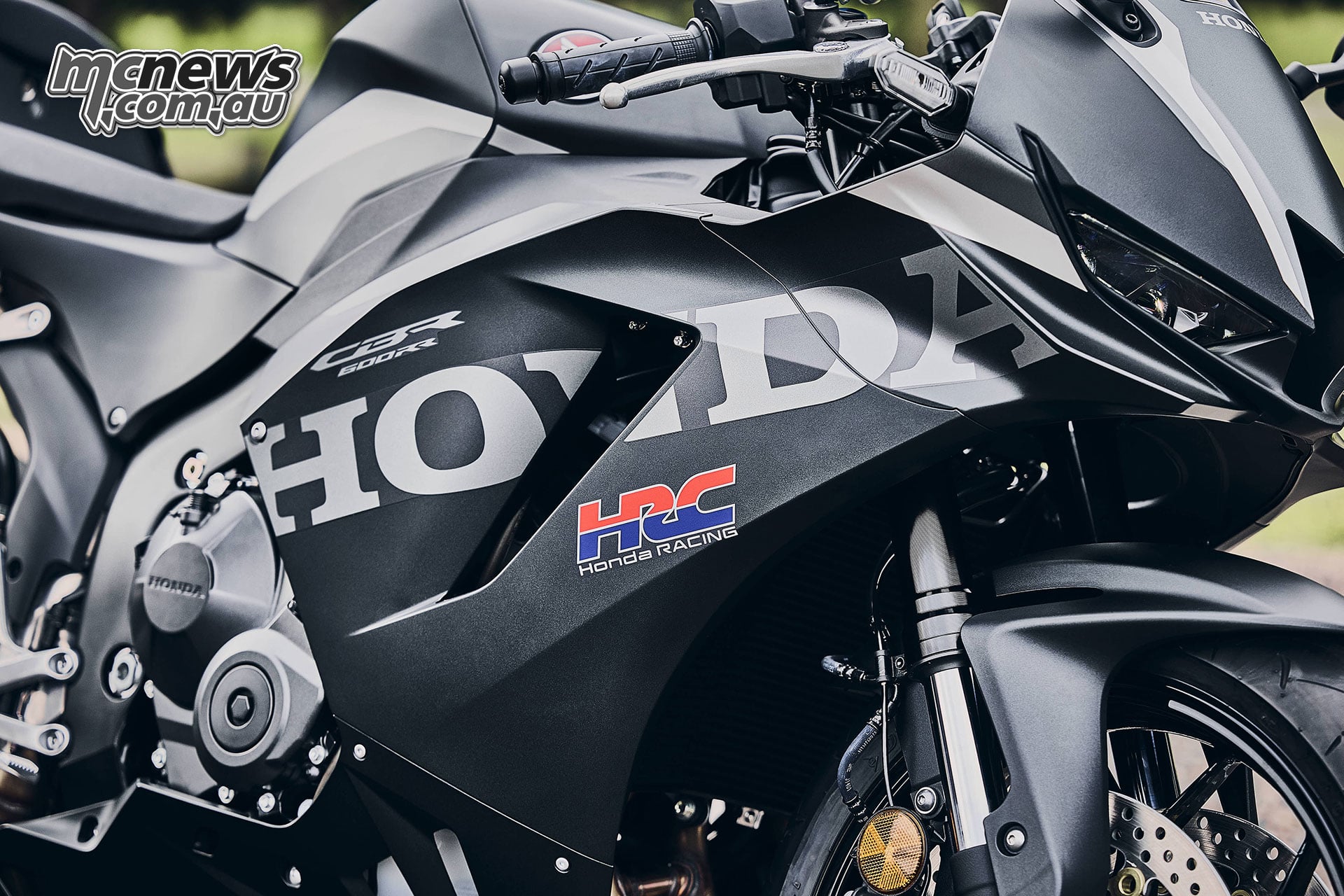
HRC’s three circuit-only race kits offer different levels of preparation for track-day riders and racers. Listed kit components include an ECU and wiring harness, cylinder-head gasket, larger radiator, racing exhaust, front and rear suspension, and brake discs. Parts will also be available individually.
Honda says the kits increase performance and reduce weight, but the announcement does not provide individual power figures, prices or complete specifications for each package.
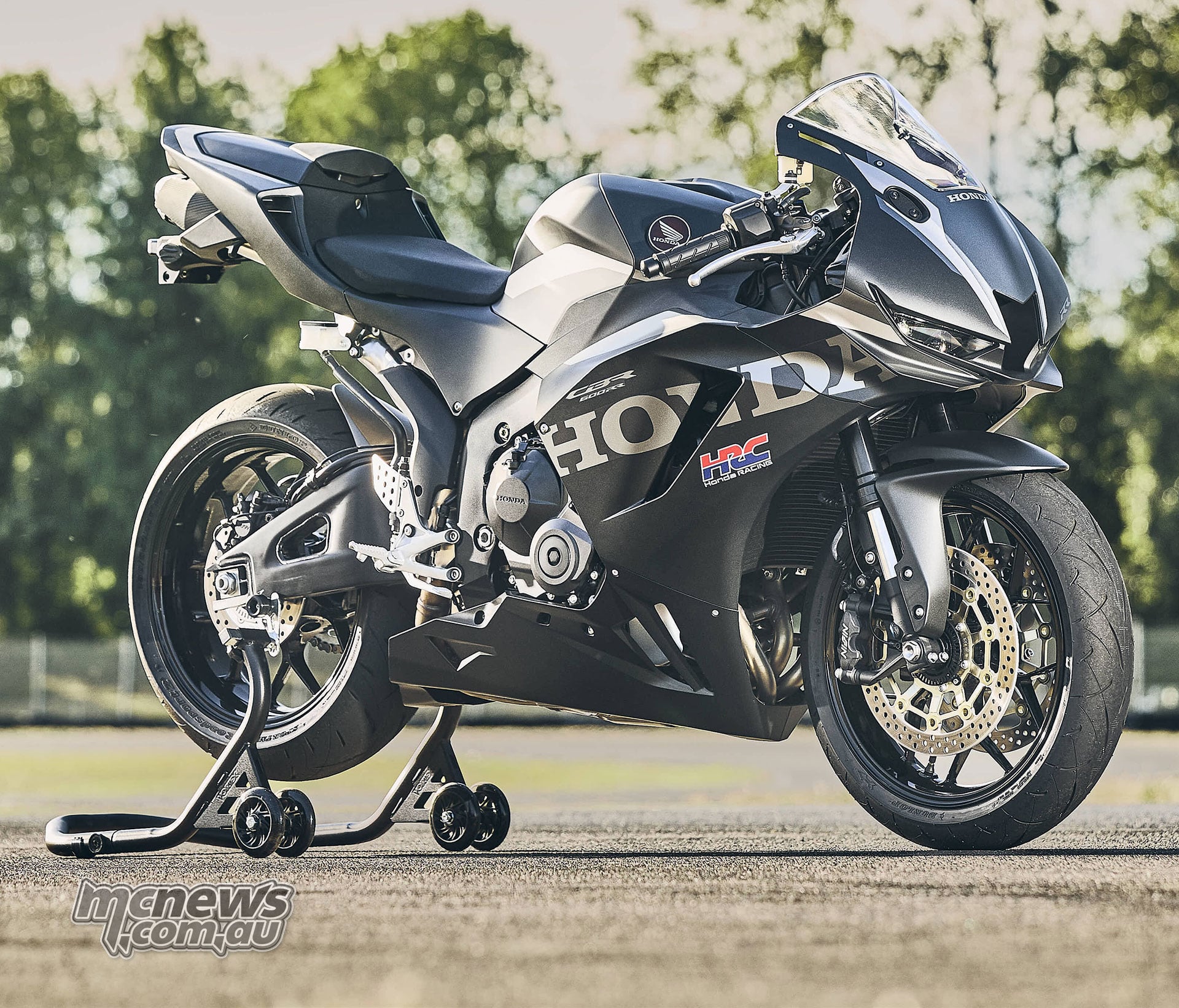
Separate road accessories include a Racing Pack with cosmetic additions and a pillion-seat cowl, plus a Comfort Pack with heated grips, USB-C charging and a rear-seat bag that expands from 15 to 22 litres.
One last hurrah?
Our present view is that the updated CBR600RR is unlikely to make it to Australia as a road-registerable model. Whether Honda develops a suitable local specification or its plans change remains to be seen.
We hope the broader suspicion of a last hurrah proves wrong as well. The CBR600RR has spent more than two decades demonstrating how rewarding a compact four-cylinder sportsbike can be, and these updates show there is still worthwhile development to be done.
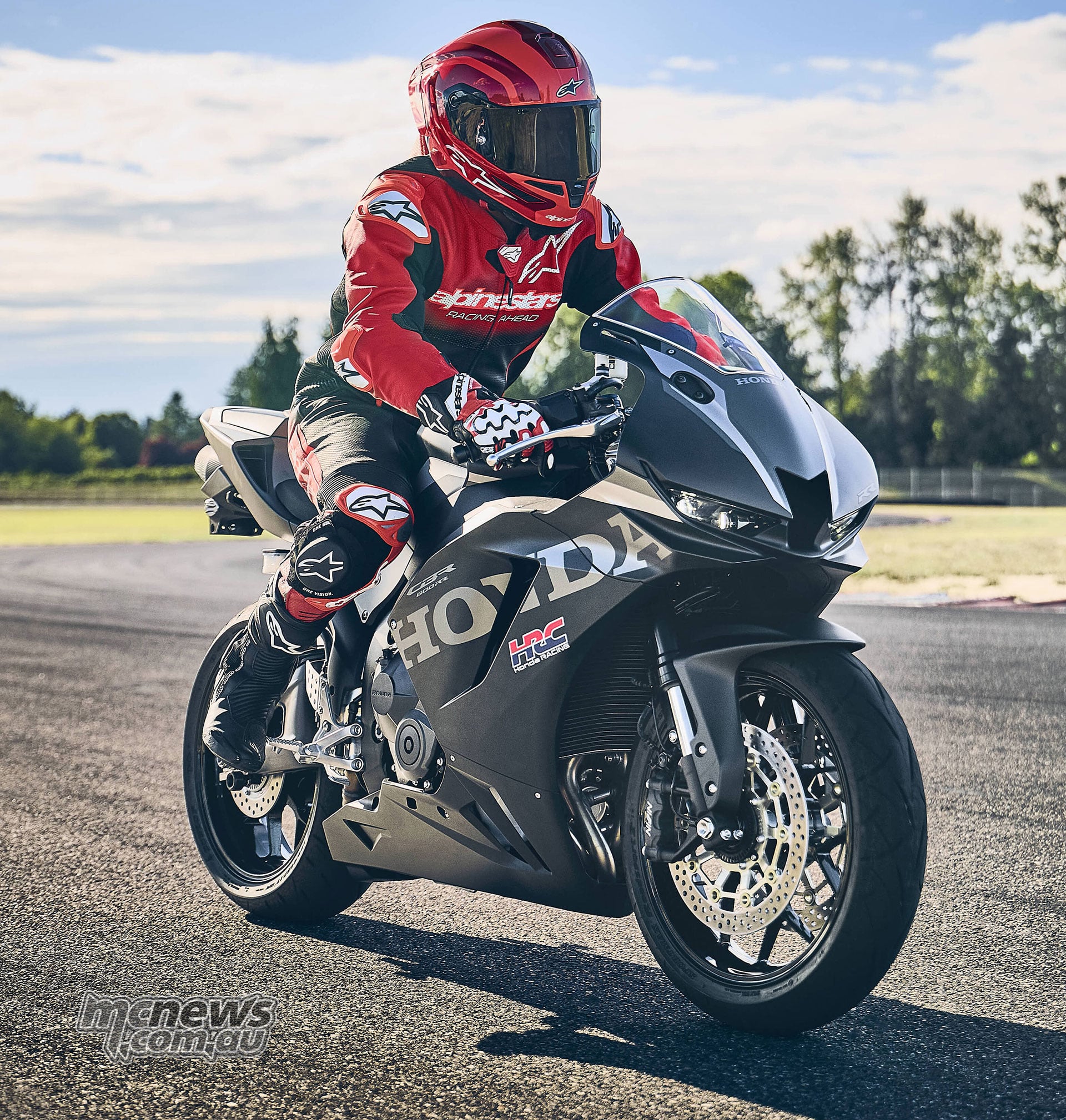
More power is easy to put in a headline. The feeling of a sweet 600 working with you through a succession of corners is harder to quantify, but it is why these bikes inspired such affection. If this does prove to be a closing chapter, we will miss that feeling terribly.
2027 Honda CBR600RR specifications
| Engine | 599 cc liquid-cooled DOHC inline-four, 16 valves |
| Bore x stroke | 67 x 42.5 mm |
| Compression ratio | 12.2:1 |
| Claimed maximum power | 89 kW at 14,250 rpm |
| Claimed maximum torque | 63 Nm at 11,500 rpm |
| Transmission | Six-speed, standard quickshifter |
| Clutch | Wet multiplate with assist/slipper function |
| Final drive | Chain |
| Frame | Aluminium twin-spar |
| Front suspension | Fully adjustable 41 mm Showa Big Piston inverted fork, 120 mm stroke |
| Rear suspension | Fully adjustable Showa shock, Unit Pro-Link, 128 mm wheel travel |
| Front brakes | Twin 310 mm floating discs, Nissin radial-mount four-piston calipers |
| Rear brake | 220 mm disc, single-piston caliper |
| ABS | Cornering ABS with Standard, Track and Race modes |
| Steering damper | Honda Electronic Steering Damper |
| Tyre sizes | 120/70 ZR17 front; 180/55 ZR17 rear |
| Wheelbase | 1370 mm |
| Trail | 100 mm |
| Seat height | 820 mm |
| Ground clearance | 125 mm |
| Claimed kerb weight | 194 kg |
| Fuel capacity | 18 litres |
| Claimed WMTC fuel consumption | 5.5 L/100 km |
| Riding modes | Three presets and two customisable User modes |
| Instruments | Five-inch TFT with five shift-indicator LEDs |
| Colours | Ignition Red HRC TriColour; Matt Ballistic Black Metallic |
Specifications are Honda’s provisional European figures and remain subject to change.