

2027 Dakar Rally
The Middle East conflict has forced Dakar out of Saudi Arabia for 2027, with plans for a European start and a return to Africa taking the rally back towards the geography that shaped its beginnings.
Almost half a century after the first competitors set off from Paris for Senegal, the prospect of another crossing from Europe into Africa gives an enforced relocation an unmistakable connection with Dakar’s past.
Amaury Sport Organisation and Saudi Motorsport Company have confirmed that the 2027 rally will go ahead outside the Kingdom. The replacement territory has yet to be named in their public announcement, but reports point towards a prologue in Spain or Portugal before a ferry crossing and the main competition in Morocco.
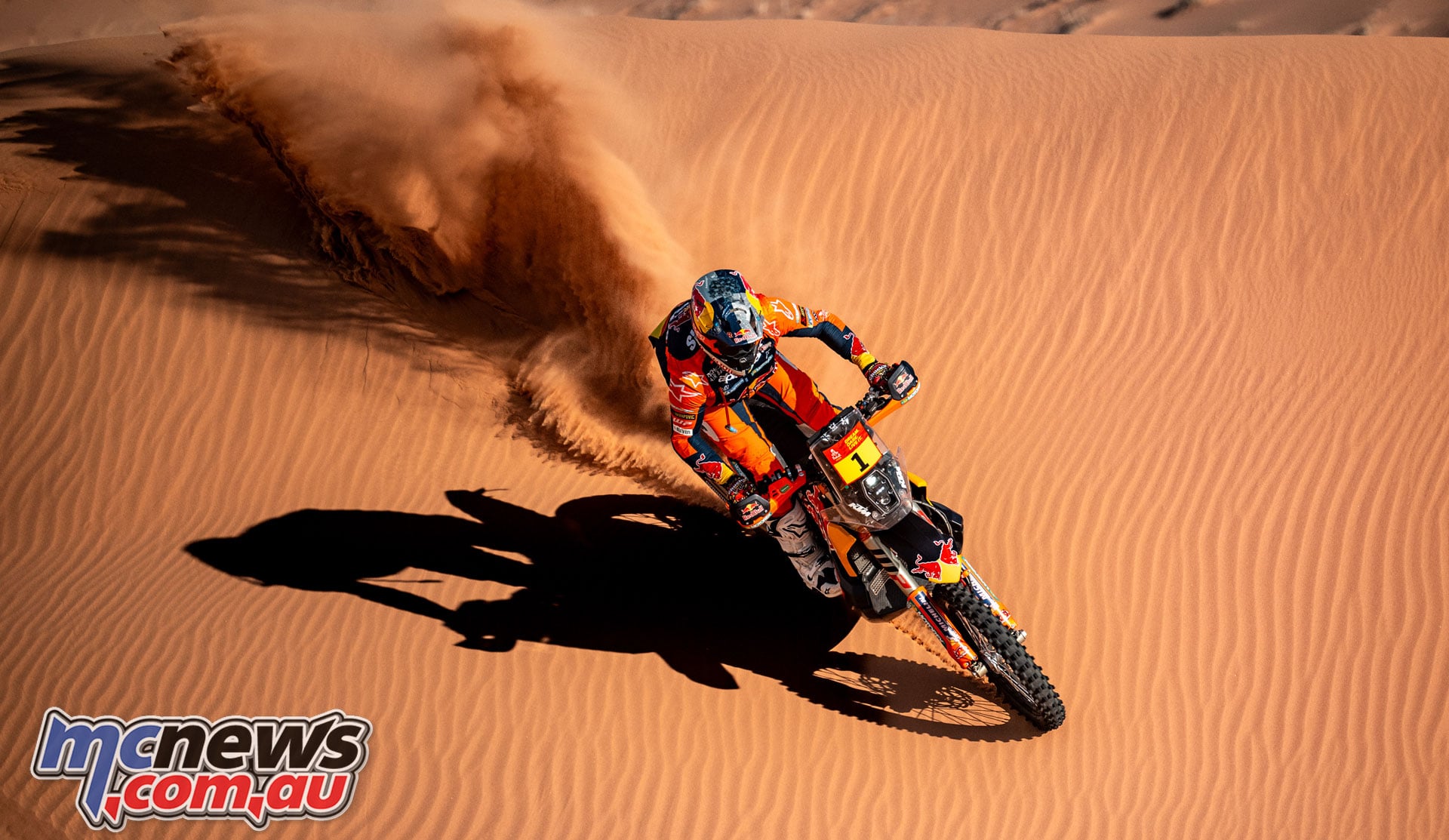
If that plan is confirmed, Dakar will return to Africa for the first time since 2007. There is a considerable historical irony in that journey: security concerns drove the rally away from the continent after the cancelled 2008 event, and regional conflict is now sending it back towards its old surroundings.
Saudi departure confirmed, 2027 route still taking shape
The joint statement issued on October 25 described the Saudi withdrawal as an exceptional, one-off decision following recent developments in the region. It comes against the backdrop of the wider Middle East conflict and escalating Houthi attacks on Saudi Arabia.
Saudi Arabia has hosted seven consecutive editions since 2020. ASO and its Saudi partners say the rally will return to the Kingdom for its 50th edition in 2028, making the proposed African return a temporary reconnection with Dakar’s roots.
The original 2027 route had been unveiled in May as a January 1–15 event starting and finishing in King Abdullah Economic City. It promised 5,320 kilometres of timed competition, the highest special-stage distance of the Saudi era.
Reuters reported on October 21, citing two drivers and a team manager, that the replacement rally would open in Spain or Portugal before moving to Morocco, with dates of January 9–22 and approximately 12 stages.
Swiss assistance outfit TimeOut Racing says ASO briefed it directly on October 19. Its account describes a January 9 European prologue, a ferry transfer, the first African stage on January 10 and a January 22 finish. A prologue, 12 stages and more than 4,000 kilometres of specials are envisaged.
Those dates would replace the original Saudi schedule. The detailed route, host cities and revised official itinerary are still awaited, along with the final arrangements for checks and transport.
For competitors, that means adapting months of preparation to a different journey. The proposed crossing from Europe into Africa would also restore an important part of the original Dakar experience.
From Paris to the African desert
Dakar’s origins lie in Thierry Sabine’s experience of becoming lost in the Libyan desert during the Abidjan–Nice rally. The experience inspired an event that would invite others to discover the desert for themselves.
The first Paris–Dakar departed the French capital on December 26, 1978, and reached Senegal in January 1979. Cyril Neveu won on a Yamaha XT500, an early demonstration of how a relatively simple motorcycle, a determined rider and the ability to keep finding the way could carry someone through an extraordinary undertaking.
As the rally grew, the motorcycles became increasingly specialised. Neveu later joined Honda, winning for the Japanese manufacturer in 1982 before its NXR750 helped establish another chapter of African Dakar history. Our look back at Honda’s Dakar story traces that evolution from early singles to the big desert twins.
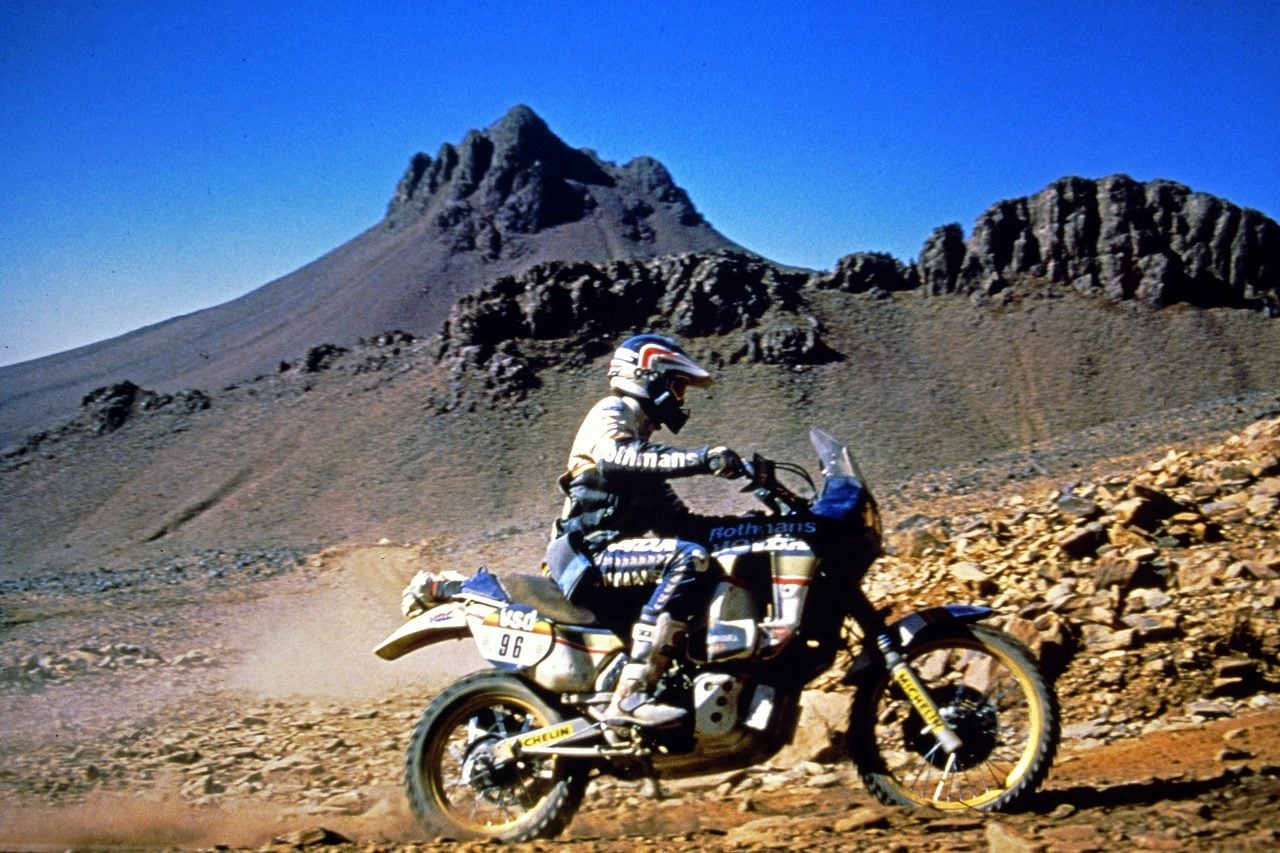
European departures, the crossing into Africa and the long journey south became central to Dakar’s identity. The route evolved over the years, but the prospect of reaching Senegal gave the event a destination that meant far more than the final timing control.
That chapter ended abruptly when the 2008 rally was cancelled on the eve of its scheduled Lisbon start following warnings about the terrorist threat to the event. Dakar moved to South America in 2009 and remained there through 2019, before Saudi Arabia became its home in 2020.
Those later chapters created their own history. Toby Price became the first Australian Dakar winner in 2016 during the South American era, while Daniel Sanders took his first Dakar victory in Saudi Arabia in 2025.

Australia’s first Dakar win came during the South American chapter.
The proposed 2027 move would reconnect the rally with its African setting and the act of travelling there from Europe. No confirmed plan yet extends the route through Mauritania or into Senegal, however, so the destination that supplied the Dakar name remains outside the announced picture.
Morocco gives the form guide fresh significance
Morocco offers familiar terrain for the leading motorcycle teams, although the composition of a new Dakar route will determine how useful that familiarity proves. The latest Rallye du Maroc has suddenly become a more relevant reference point for January. It tested the leading teams across Moroccan tracks, rocks, dunes and demanding navigation, and produced a result that strengthened KTM’s position while adding another name to the list of credible winners.
KTM has won all four rounds of the 2026 World Rally-Raid Championship contested so far: Luciano Benavides at Dakar, Sanders in Portugal and Argentina, and Edgar Canet in Morocco.
As detailed in our Rallye du Maroc report, the Austrian squad’s strength now extends across three riders with recent overall victories. Honda remains close enough to make any assumption of another KTM Dakar win premature.
Sanders remains the season’s benchmark
Sanders heads the championship on 87 points, 13 ahead of Benavides and Tosha Schareina, with Ricky Brabec another four points back. His victories in Portugal and Argentina demonstrate the breadth of his current form.
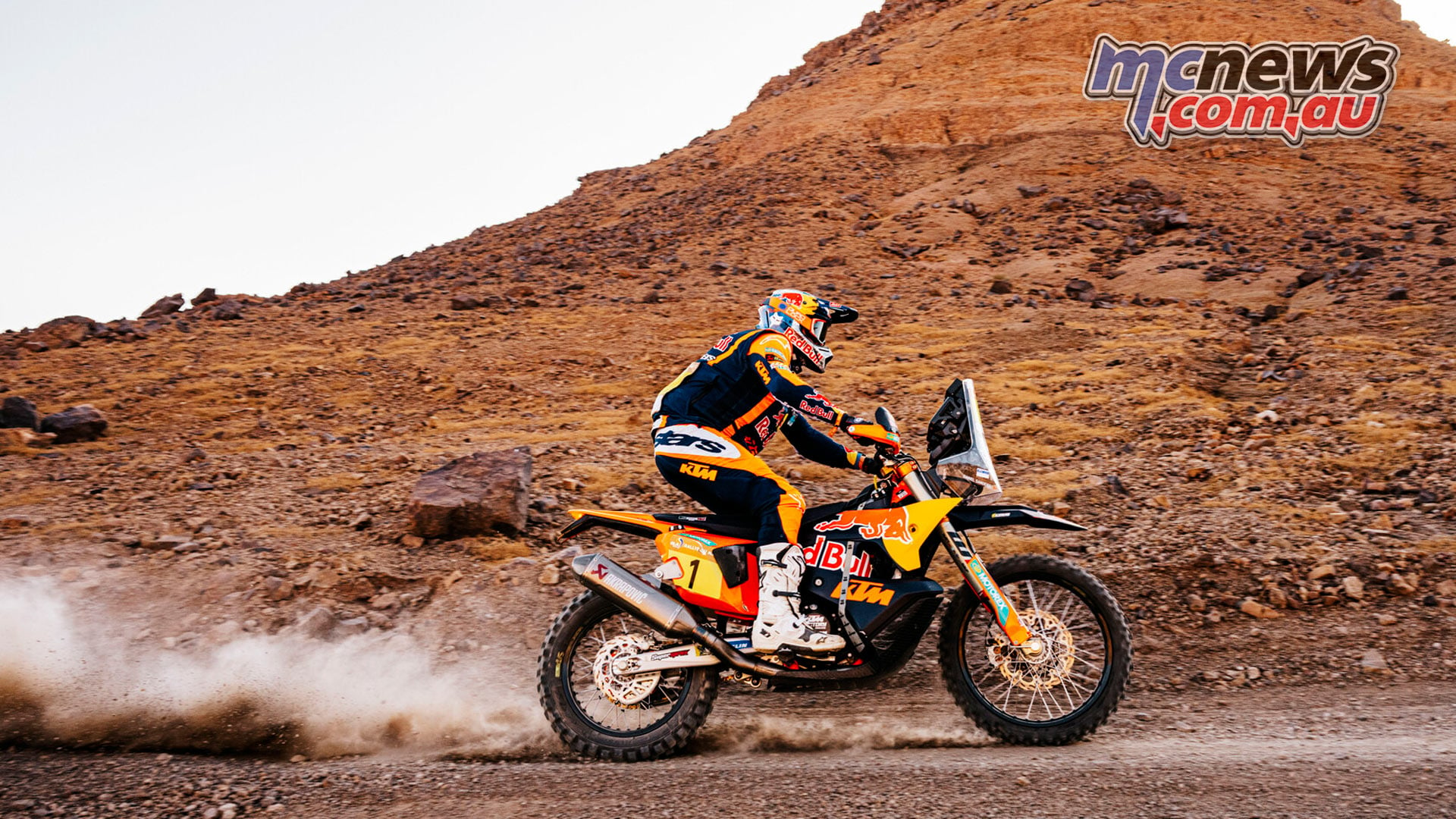
The Australian was also fast enough to win Morocco’s prologue and two full stages. He finished second overall, just 1m02s behind Canet, after a rally in which navigation and roadbook problems repeatedly influenced the contest.
That combination makes Sanders the strongest season-long reference heading towards January, while also underlining how little protection outright speed provides against a costly wrong turn.
His physical preparation remains part of the picture. Sanders continued to fifth at Dakar 2026 after a shoulder injury compromised his challenge, and he reported a hand/wrist injury following his Stage Four crash in Morocco. His recovery will be an important part of the remaining build-up.
Benavides defends, Canet steps forward
Benavides approaches the next Dakar with the authority of the defending champion. His two-second victory over Brabec in January was the closest finish in the event’s history and a striking reminder of the value of remaining in contention until the final kilometres.
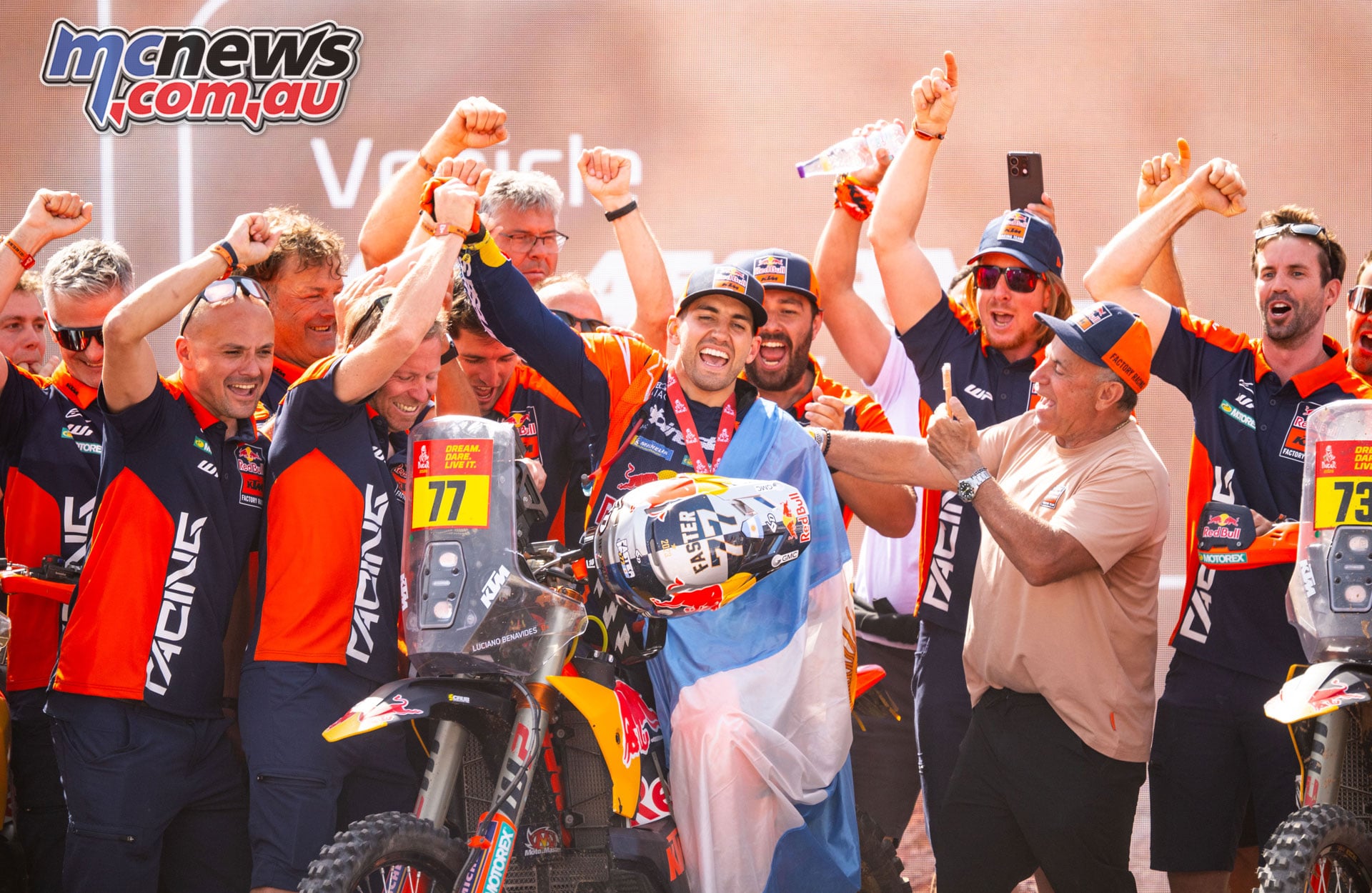
He heads towards the next edition as the defending champion – Image by Edo Bauer.
Fourth in Morocco, with a stage victory along the way, keeps the Argentine firmly among the leading prospects. He has already demonstrated that he can sustain a Dakar-winning challenge and seize an opportunity when the race changes at the end.
Canet’s Moroccan victory adds a different dimension to KTM’s line-up. At 21, the former Rally2 champion has now beaten the established factory leaders across a complete RallyGP event.
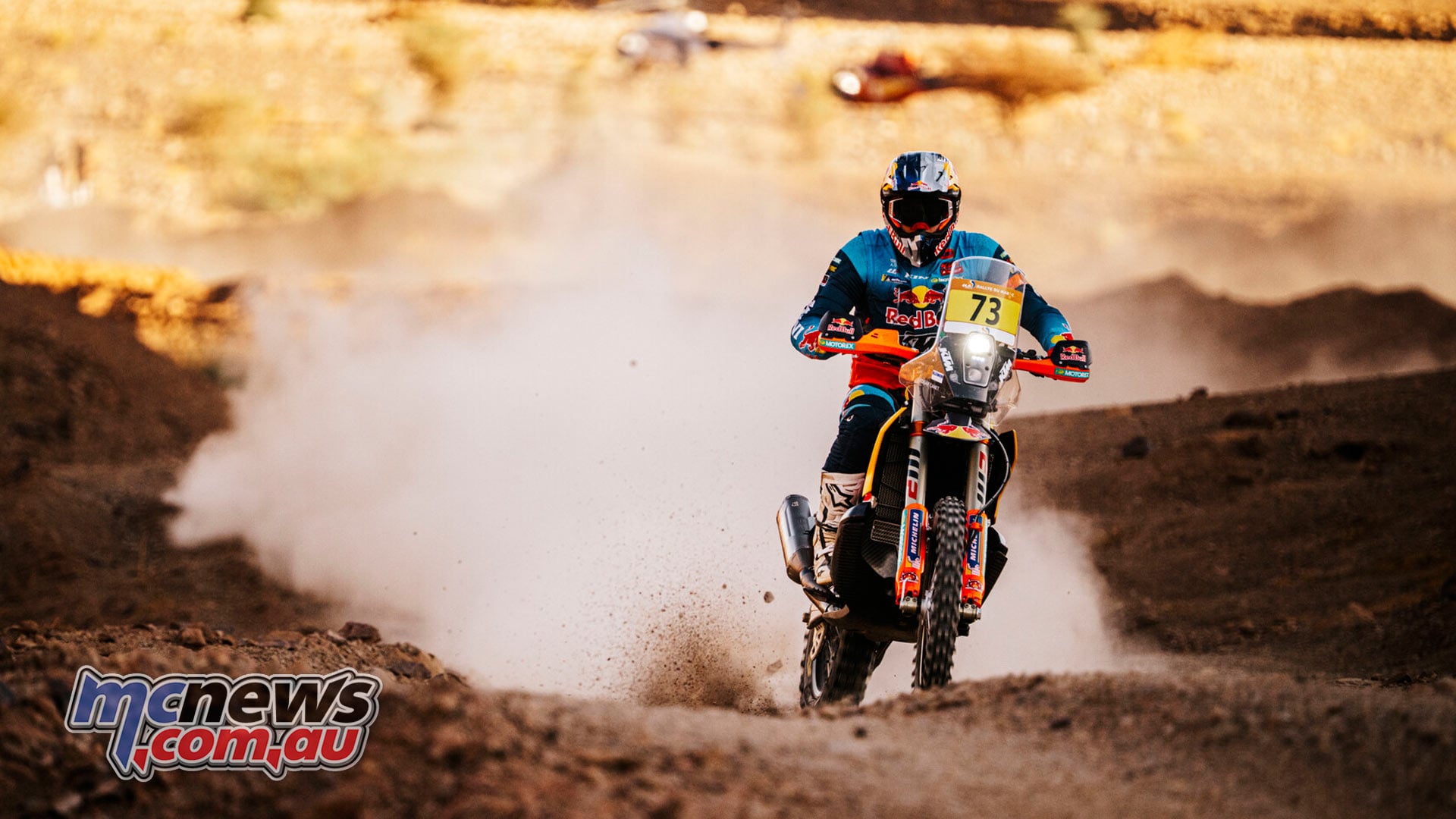
He achieved it without winning a full stage, finishing each of the five specials inside the top four. That consistency put him in position to overturn Sanders’ final-day advantage and claim his maiden RallyGP victory.
A full Dakar will ask more of him than Morocco’s five-stage test, but his latest result moves him beyond the role of a promising youngster gathering experience. He now has evidence that he can put an overall victory together.
Honda has a two-second score to settle
Brabec’s Dakar defeat provides one of the strongest sporting threads heading into 2027. The two-time winner was only seven kilometres from the finish when the navigation error that cost him the 2026 victory occurred.
His Moroccan performance confirms that he remains a direct threat. Brabec won the opening and closing full stages, finished third overall and ended the rally only 3m32s behind Canet.

Schareina’s sixth in Morocco needs to be viewed alongside his recovery over the closing stages. After a difficult opening, he rebuilt speed and confidence, taking second on Stage Three and third on the finale.
The Spaniard finished third at Dakar 2026 and remains level with Benavides in the world championship. His latest overall result therefore gives only part of the picture when assessing his prospects.

Adrien Van Beveren finished fifth in Morocco and sixth at the last Dakar. His experience keeps him in the wider podium conversation, although Brabec and Schareina currently provide Honda’s strongest combination of recent results and championship position.
Hero, Sherco and a developing ZXMOTO challenge
Ignacio Cornejo finished seventh in RallyGP in Morocco for Hero, while teammate Ross Branch missed the rally through injury. The 2024 world champion’s return to competition is an important part of Hero’s build-up. Lorenzo Santolino placed eighth for Sherco.
Skyler Howes is another rider whose prospects need to be considered alongside changing circumstances. Fourth at Dakar in January on a Honda, the American has since joined the new ZXMOTO Joyride Factory Rally Team.
He finished ninth in RallyGP on the new motorcycle’s Moroccan debut, with fifth on Stage Two providing an encouraging indication of its potential. Bringing the bike through its first world-level rally gives the project a foundation for development, while its current stage of progress makes it difficult to rank alongside the established KTM and Honda favourites.
MACBOR has also announced a Dakar 2027 motorcycle team with Gerard Farrés, adding another point of interest as the field takes shape.
Rally2 has its own unfinished business
Martim Ventura carries considerable momentum after winning four of Morocco’s five full stages and taking the Rally2 victory ahead of Hero’s Michael Docherty and Honda teammate Preston Campbell.

Ventura leads the World Cup on 94 points, ahead of Toni Mulec on 76 and Campbell on 68. Mulec won the Dakar Rally2 class in January, while Campbell and Ventura finished second and third, giving all three a strong recent Dakar reference.
The class therefore has an appealing contest between the reigning Dakar winner and Honda’s increasingly competitive challengers, with Docherty’s Moroccan runner-up finish adding to the interest.
Another test before January
The next scheduled test is the Abu Dhabi Desert Challenge on November 22–27, where the 2026 championship will be decided before attention turns fully towards Dakar’s revised January challenge.
That provides another substantial examination of form and preparation before Dakar. The leading RallyGP positions after Morocco are:
| Pos | Rider | Motorcycle | Points | Rallye du Maroc result |
|---|---|---|---|---|
| 1 | Daniel Sanders | KTM | 87 | 2nd, +1m02s |
| 2 | Luciano Benavides | KTM | 74 | 4th, +7m52s |
| 3 | Tosha Schareina | Honda | 74 | 6th, +25m08s |
| 4 | Ricky Brabec | Honda | 70 | 3rd, +3m32s |
| 5 | Edgar Canet | KTM | 58 | 1st, 15h41m55s |
| 6 | Adrien Van Beveren | Honda | 52 | 5th, +23m08s |