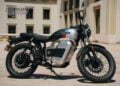


Garelli Motorcycles
Engineer Adalberto Garelli established his company in Milan in 1919 after a decade of steadily accumulated experience in the Italian motor industry. He began his career at Fiat, where he focused on two-stroke engine development at a time when such designs were still evolving.

In 1912 he moved to Bianchi and designed a practical two-speed motorcycle gearbox, a notable contribution in an era when many motorcycles were still adapting basic bicycle technology. From 1915 to 1918, he served as director at Stucchi, which manufactured motorcycles and three-wheelers. These roles gave him a wide understanding of design, production and the growing appetite for motorised transport.


During the winter of 1914, while still refining his own engineering ideas, Garelli tested a personal prototype with a 500 cc engine by riding it up the Mont Cenis pass to an altitude approaching 2000 metres. The road was unsealed and had never before been travelled by motorcycle. The ride was a demonstration of both mechanical reliability and the potential practicality of his approach to two-stroke design.


Garelli patented this two-stroke concept, and variations of it were adopted by other manufacturers for many years. Puch and DKW became the most recognised users of these derivatives, although many smaller firms also experimented with the layout. The central idea was the split-single configuration, which placed two pistons in separate cylinders sharing a common combustion chamber. Intake and exhaust ports were separated between the cylinders, which produced more efficient scavenging and improved fuel economy when compared with conventional piston-port engines. Although Garelli did not invent the split-single principle, his solution of using a single connecting rod and a long wrist pin to link both pistons was distinctive and influenced later interpretations of the design.


The first production motorcycle to emerge from the new company was a 350 cc model. It quickly found success when it won the inaugural Nord-Sud Milano-Napoli long-distance race in 1919. Further victories followed, including the 1921 Circuito del Lario and the first Italian Grand Prix in 1922. The 350 cc engine became the basis of all Garelli models until 1936, reinforcing its importance to the company’s early identity.


In 1928, the business diversified and expanded into the production of compressor motors and related equipment for military and industrial use. This diversification helped sustain the company through changing economic periods.


After the Second World War, Garelli shifted attention to the growing need for practical, affordable transport. In 1946, it introduced the Mosquito 38A micromotor, designed to transform an ordinary bicycle into a powered vehicle by driving the rear wheel through a roller. The small 38 cc two-stroke unit became extremely popular, and hundreds of thousands were produced over the following years. The 49 cc 38B version arrived in 1953. It was supplied to various moped manufacturers and was also fitted to Garelli’s own Velo Mosquito model.


Through the 1950s and early 1960s the company broadened its range with a series of small-capacity motorcycles. Among them were the 50 cc Junior and the later Monza Junior, the latter producing 5 horsepower with a four-speed gearbox and capable of 85 km/h. Models of 70, 98 and 100 cc followed, along with a 70 cc three-horsepower outboard motor. During this period Garelli was absorbed into the Agrati Group, whose Capri scooters already used a fan-cooled Garelli engine.
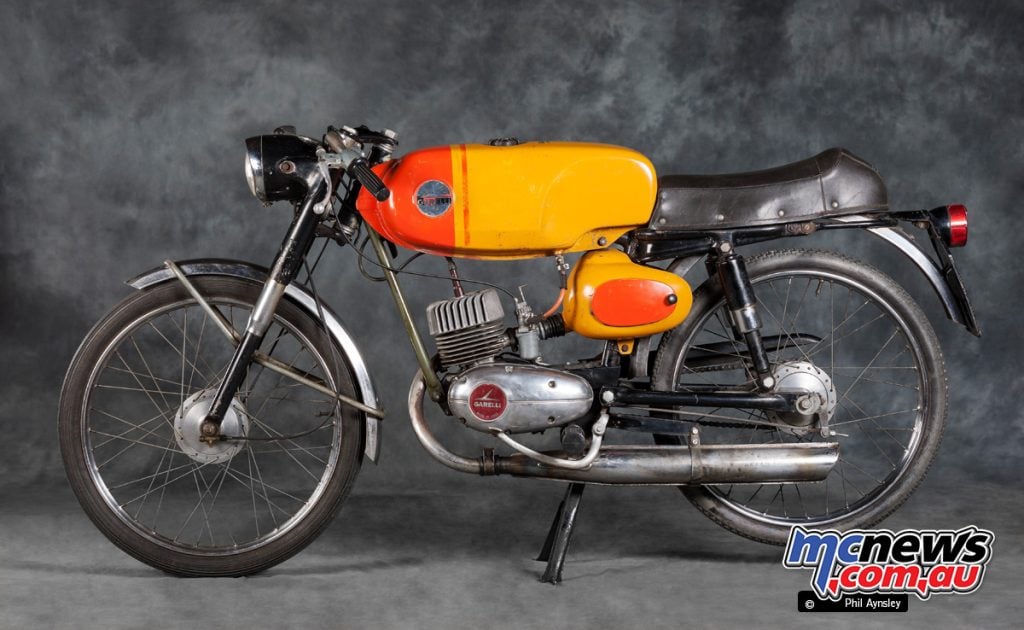


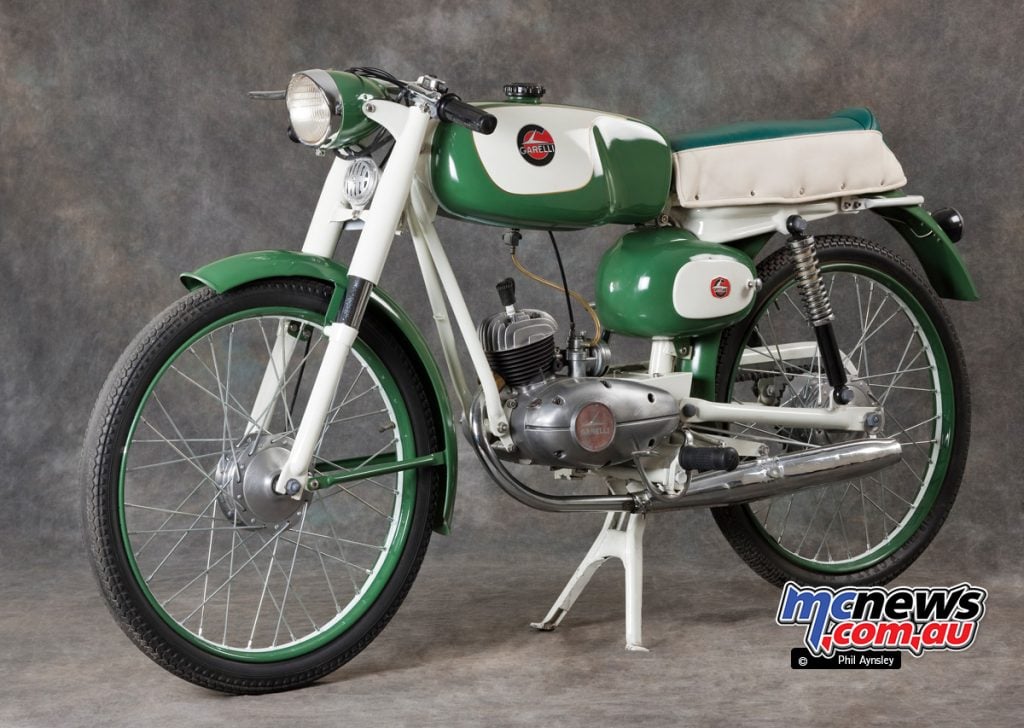


Although the company had a long history in competition, its most accomplished period came in the 1980s when it secured six consecutive 125 cc World Championships between 1982 and 1987. These titles were won by Angel Nieto, Fausto Gresini and Luca Cadalora and established Garelli as a central figure in small-capacity Grand Prix racing of that era.
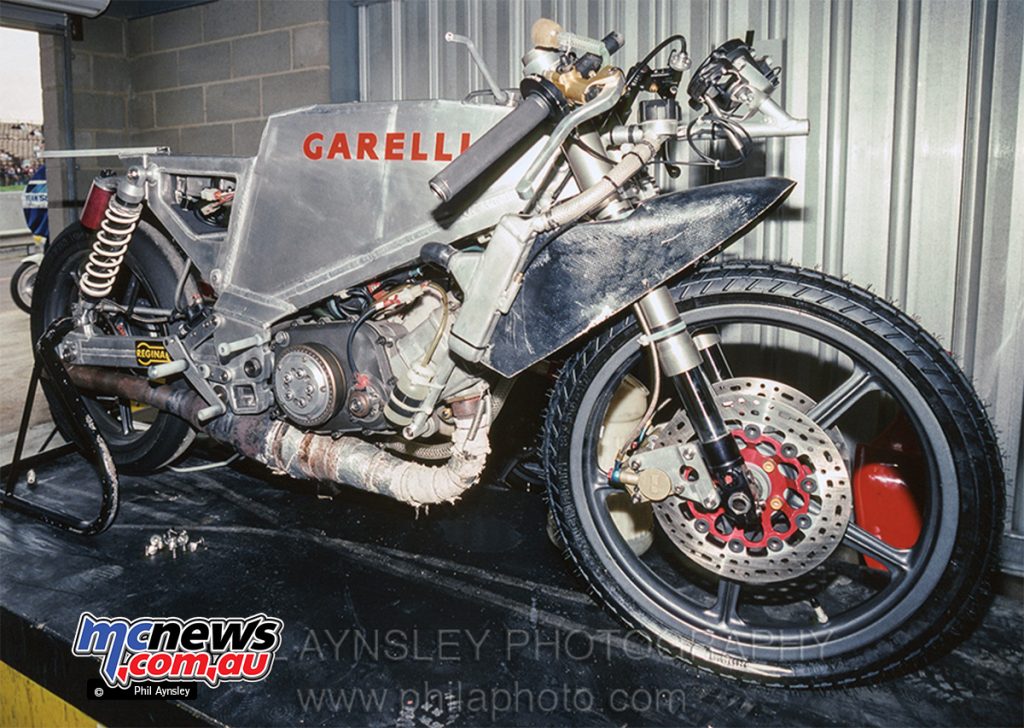
In the later 1980s Garelli models increasingly relied on Minarelli engines, and the company eventually closed in 1992. A limited revival followed in the late 1990s under the name New Garelli S.p.A., which marketed scooters manufactured in China. Since 2018, a new iteration of the brand has focused on electric mobility, offering e-bikes and small electric motorcycles that connect the historic name with modern urban transport.