

Norton Atlas Review
The Norton that needs to sell
Some motorcycles announce a rebirth. Others have to pay for it.
The new Norton Atlas belongs to the latter camp. We rode the top-spec Atlas Apex at its global launch in Iceland, where the wind was strong enough to add a few unwanted lines to every corner, and the rain ensured there was nowhere for a brand-new chassis, tyre or electronics package to hide.
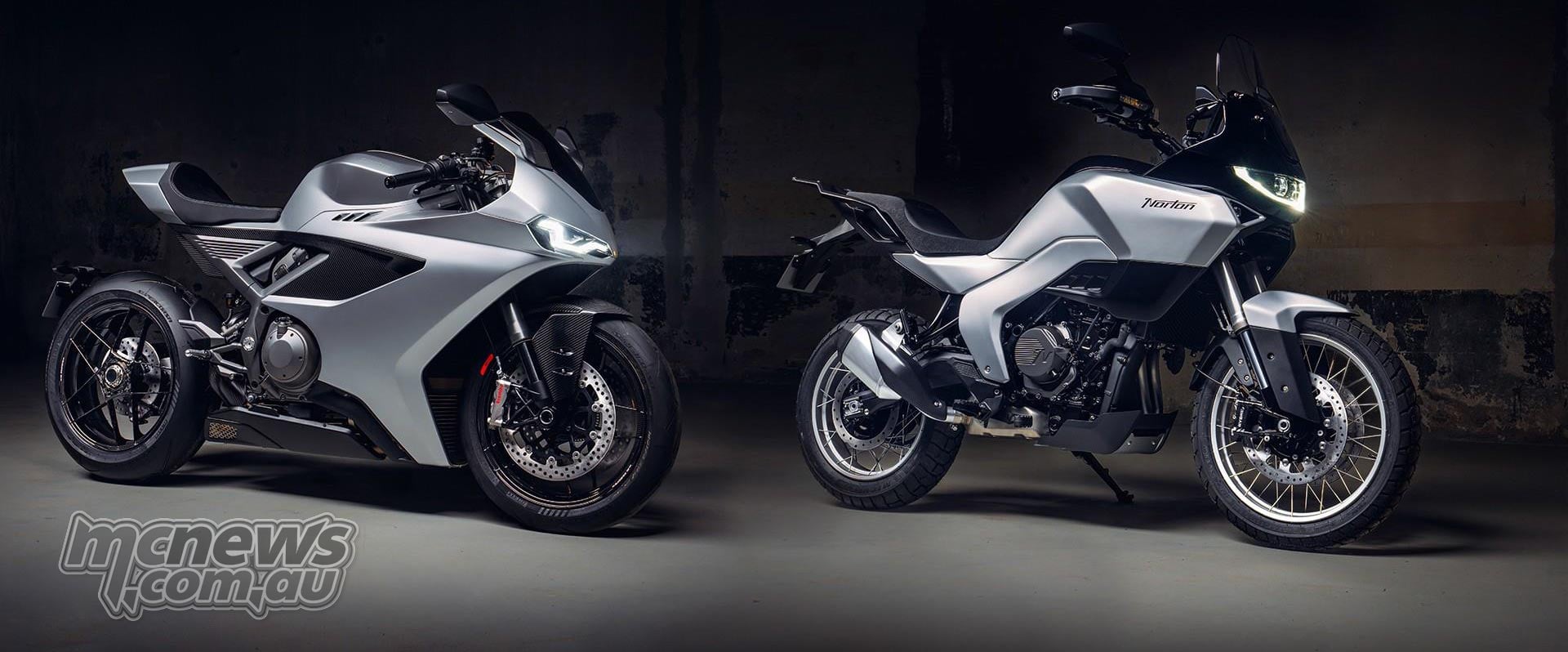
The 206 hp Norton Manx R was the dramatic statement piece for Norton’s latest rebirth. The Atlas is a completely different proposition and, commercially, arguably the more important motorcycle. It is the attainable middleweight intended to put some genuine volume through the brand rather than simply put Norton back on bedroom walls.
Indian motorcycle powerhouse TVS brings manufacturing scale, technical resources and the financial muscle to make this Norton revival fundamentally different from the previous rounds of heritage, hope and crossed fingers.
That distinction is important because people were burned last time around. At the Manx R launch, we asked Norton Executive Director Richard Arnold some of the hard questions about parts supply, customer support and how buyers could invest in the brand with confidence. You can read that Richard Arnold interview here.
Unlike the Manx R, which is finished in Britain, the Atlas is manufactured within TVS’s Hosur operation in India, alongside smaller-capacity BMW models including the new F 450 GS. Design and engineering leadership remains at Norton’s Solihull headquarters, where the majority of development and testing was carried out.
Atlas, Atlas GT and Apex explained
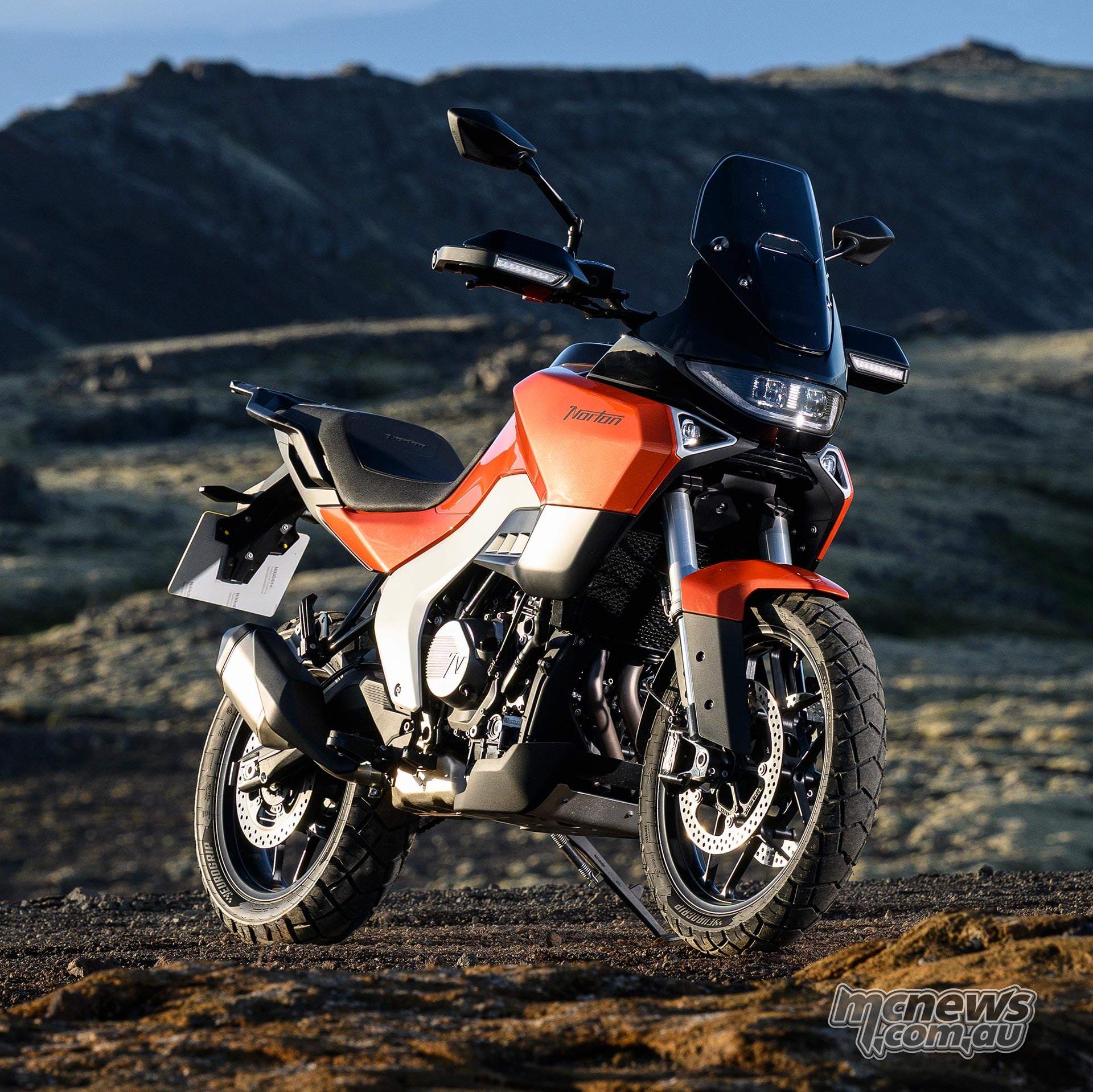
Norton has shown two takes on the platform. The Atlas is the more adventure-biased version, with a 19-inch front wheel, 180 mm of suspension travel and an 845 mm seat height. The Atlas GT sits lower, runs 17-inch wheels, uses 140 mm of suspension travel and is more clearly aimed at the road. Norton also says the GT uses a shorter wheelbase for sharper steering, although its complete final specification has not yet been released.
We covered the initial technical reveal and model split in our Norton Atlas and Atlas GT preview.
It is also important not to confuse the model and equipment designations. Atlas and Atlas GT define the chassis and riding focus, while Apex is the higher equipment grade available across the range.
Even the base bike has a Bosch six-axis IMU, cornering ABS and traction control, five ride modes, cruise control, a two-way quick-shifter, KYB suspension, radial ByBre brakes and an eight-inch touchscreen TFT.
Apex adds electronic combined braking, vehicle hold control, cornering lights, a puddle lamp, heated grips, tyre-pressure monitoring, an easy-adjust screen, an integrated rear rack and an aluminium insert for the bash plate.
Australian pricing and arrival timing remain unknown, as does the identity of the local distributor. UK pricing starts at £8250 for the Atlas and £9450 for the Atlas Apex. As a very loose Australian guesstimate, I reckon that might translate to somewhere around $16,000 and $18,000 respectively. Do not take that to the bank, though; banks already take enough. GT pricing has not yet been announced.
A new 585 cc twin
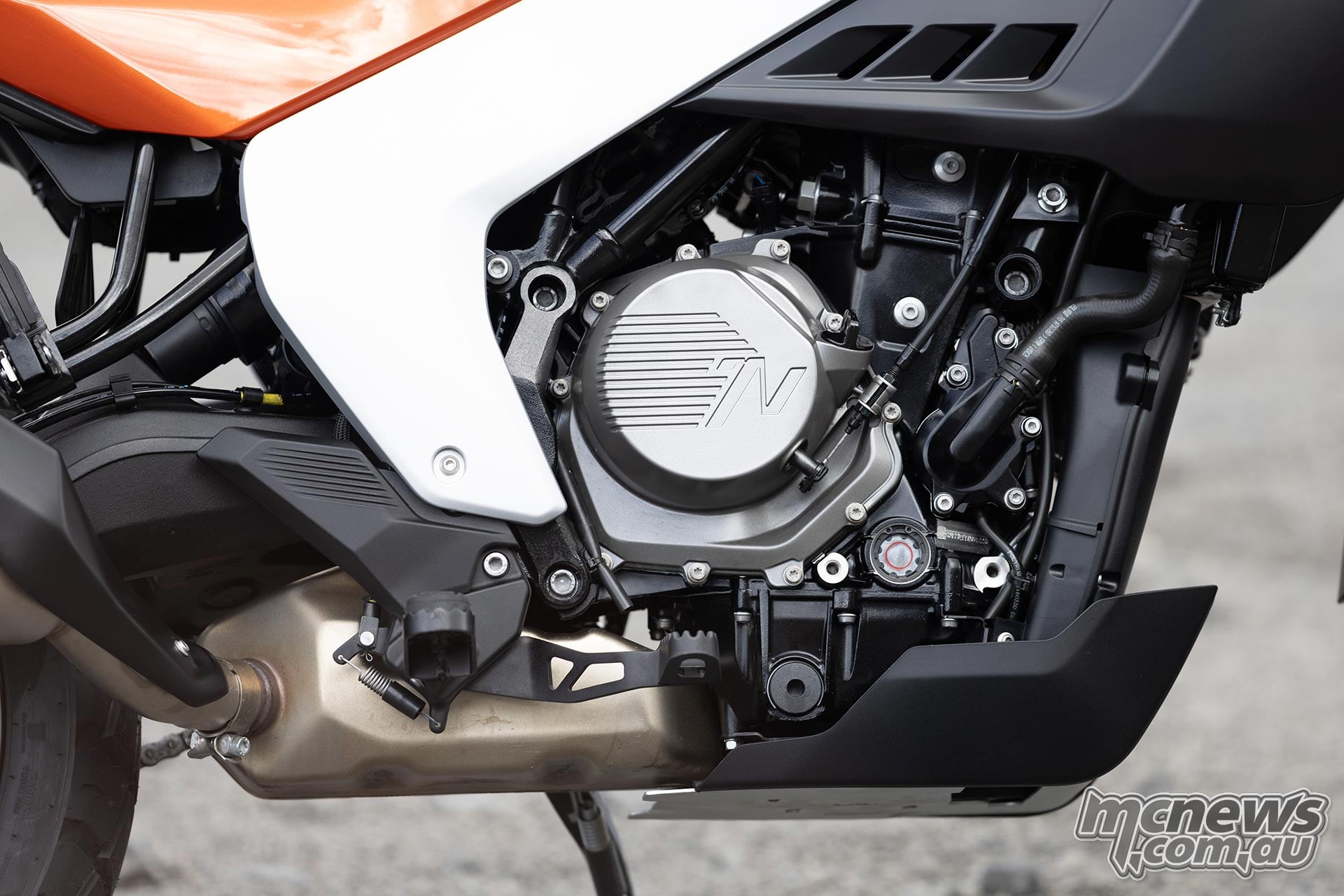
At the centre of the Atlas is a clean-sheet 585 cc parallel-twin. Its 270-degree crank spins into action with a fairly gruff bark before settling into a fast idle from cold.
Pulling away for the first time, I was immediately impressed by the effortless urge available. It could easily fool you into thinking the engine is a fair bit larger than the 585 cc written on the tin.
The headline numbers are 69 horsepower at 9300 rpm and 57.5 Nm at 7300 rpm. Norton told us 98 per cent of that maximum torque is available by 4700 rpm and, on the road, the engine did indeed prove extremely flexible.
The Atlas gives away 100 cc to Yamaha’s Ténéré 700 but is only a couple of ponies shy at the top end. It is about 10 horsepower down on the Tuareg 660, however Honda’s larger again 750 Transalp has its measure by 20 neddies and sports a more entertaining top end power delivery.

On the road, the Atlas felt as torque-laden as the supplied dyno chart suggested. I think most would be surprised with the urge on tap from what amounts to not much more than half a litre of parallel twin.
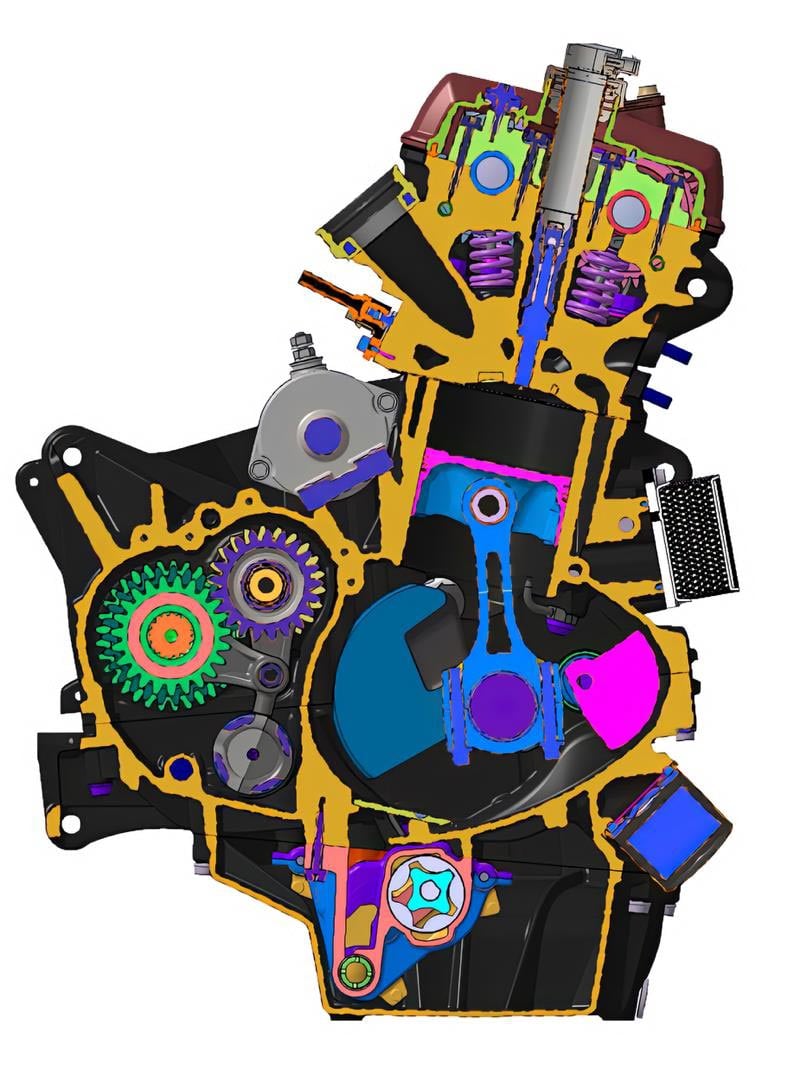
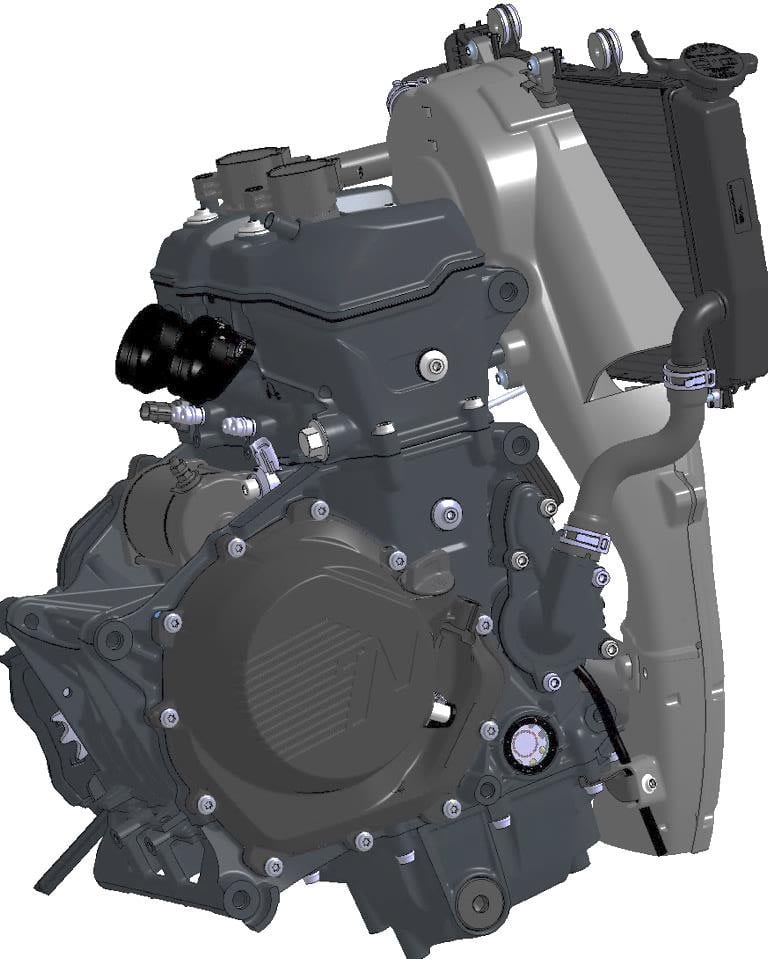
The Atlas powerplant uses atmospheric plasma-sprayed cylinder surfaces to reduce weight and friction compared to Nikasil. It also sports twin oil pumps, a knock sensor, downdraft intake ports and a compact single-sprocket DOHC arrangement.

As you would expect, it is Euro5+ compliant and also ready for the next set of restrictions, so there is still a catalytic converter and muffler large enough to give the designers and engineers a headache. The end can itself does very little of the job. I should also note that some riders with particularly large hoofs found that when riding on the balls of their feet, their heels made contact with the leading edge of the muffler.

I also liked the amount of rotational inertia engineered into the mill. It makes low-speed work a doddle and, combined with the motorcycle’s balance, makes the Atlas feel very confidence-inspiring. That should help less-experienced riders, while the same friendly manners also encouraged me to let myself off the leash later in the day.
The delivery feels almost completely linear. There is no pronounced step in the mid-range and no storming top-end rush waiting to ambush you near the redline; it simply keeps building cleanly and progressively until it meets the limiter. The engine also feels impressively smooth throughout that sweep, with no obvious patch of vibration or roughness that would discourage you from using the full rev range.
Iceland supplies the weather
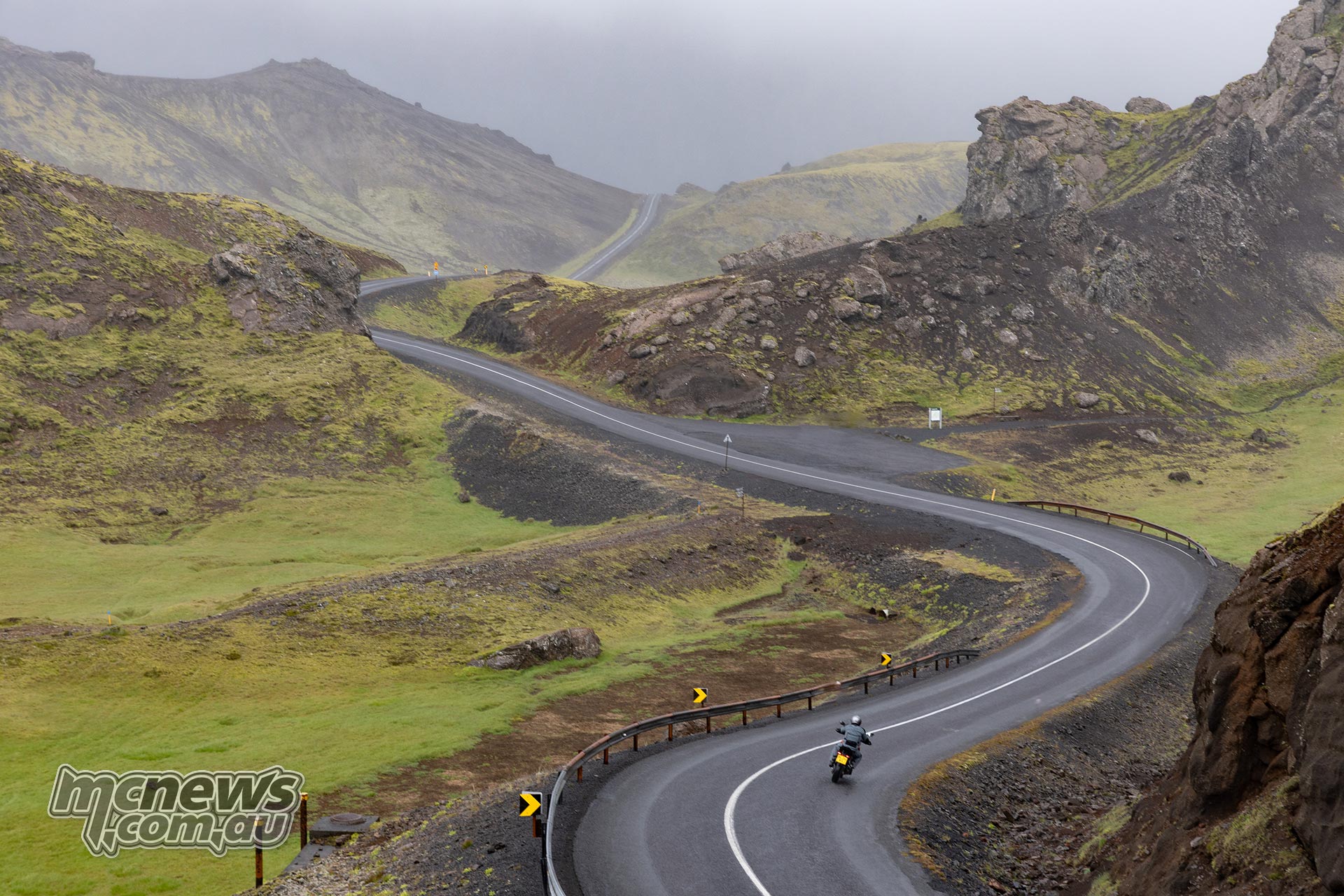
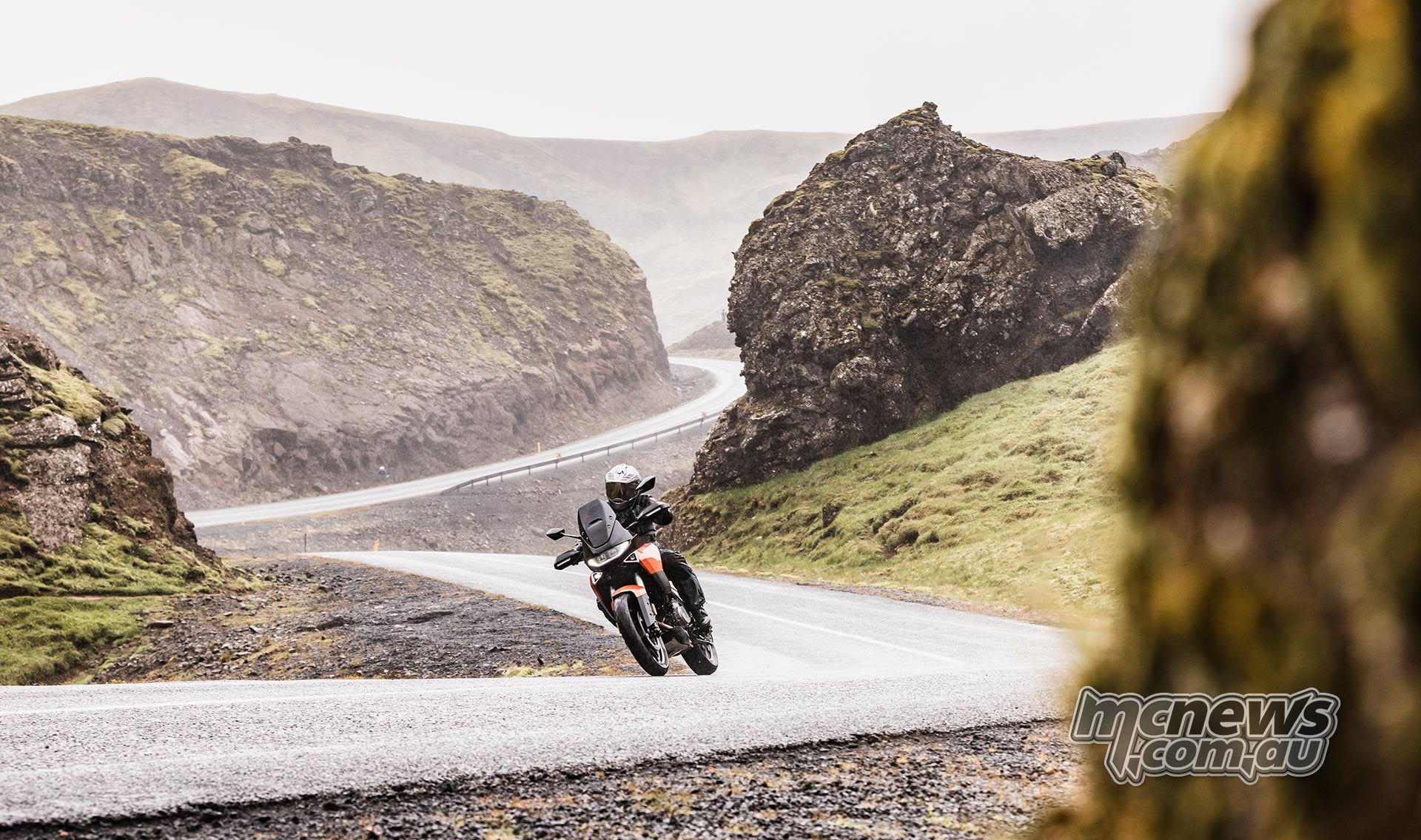
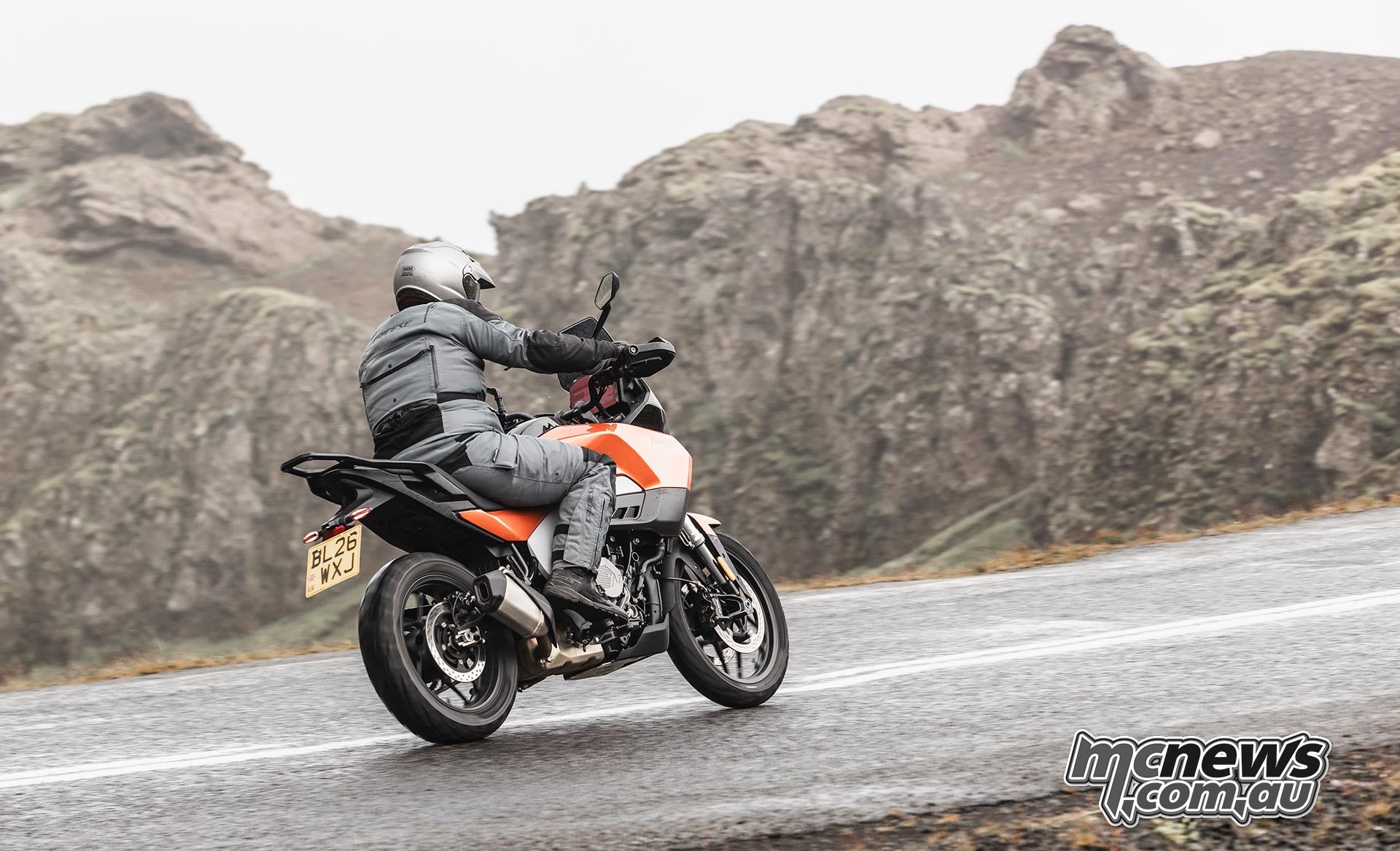
Conditions were far from ideal on the road loop. Blustery winds had me taking about 14 more lines through each corner than I would generally prefer, while the roads remained thoroughly wet. How the photographers held onto their cameras during the first photo runs I will never know.
Despite that, the Icelandic road surface seemed to offer a decent amount of grip and the Atlas remained composed, even when I didn’t. The more revealing part of the ride came late in the day, away from the photography stops, on the final stretch of gravel.
The gravel revealed a playful side
The rev-limiter is a very soft-touch affair, which became a surprisingly valuable asset while sliding around at the end of the day.
With traction control switched off, I was enjoying keeping the rear spinning. As the level of slip increased, the engine would often brush the limiter without really interrupting the slide. There was no brutal ignition cut to have you head-butting the screen when it intervened. It simply softened the delivery enough to keep the engine spinning hard without forcing another gearshift or killing the fun.

That might sound like a minor detail, but it was a huge boon in the moment. I could keep the throttle pinned, hold the rear spinning and let the limiter quietly sweep up the mess without snapping the bike back into line. It was an absolute hoot and easily the highlight of the day. Yes, I could have hooked another gear and kept it blazing, but 130 km/h drifts felt like a reasonable upper limit when home was almost 40 hours away by airport lounge and aluminium tube. That journey is miserable enough when all your limbs still point in their intended directions.
That section also exposed a surprisingly playful side to the chassis. The Atlas allowed me to back it in and slide it out with a fair bit of aggression, yet it remained easy to read and bring back into line.
Our time with the bike was too brief for any grand declarations, but early indications suggest the Atlas could be a proper fun thing to have a crack on when things get real down and dirty. The 19-inch front wheel and 180 mm of travel put it on the road-biased side of the adventure spectrum, but 220 mm of ground clearance is reasonably generous for a bike treading the middle ground in this category.
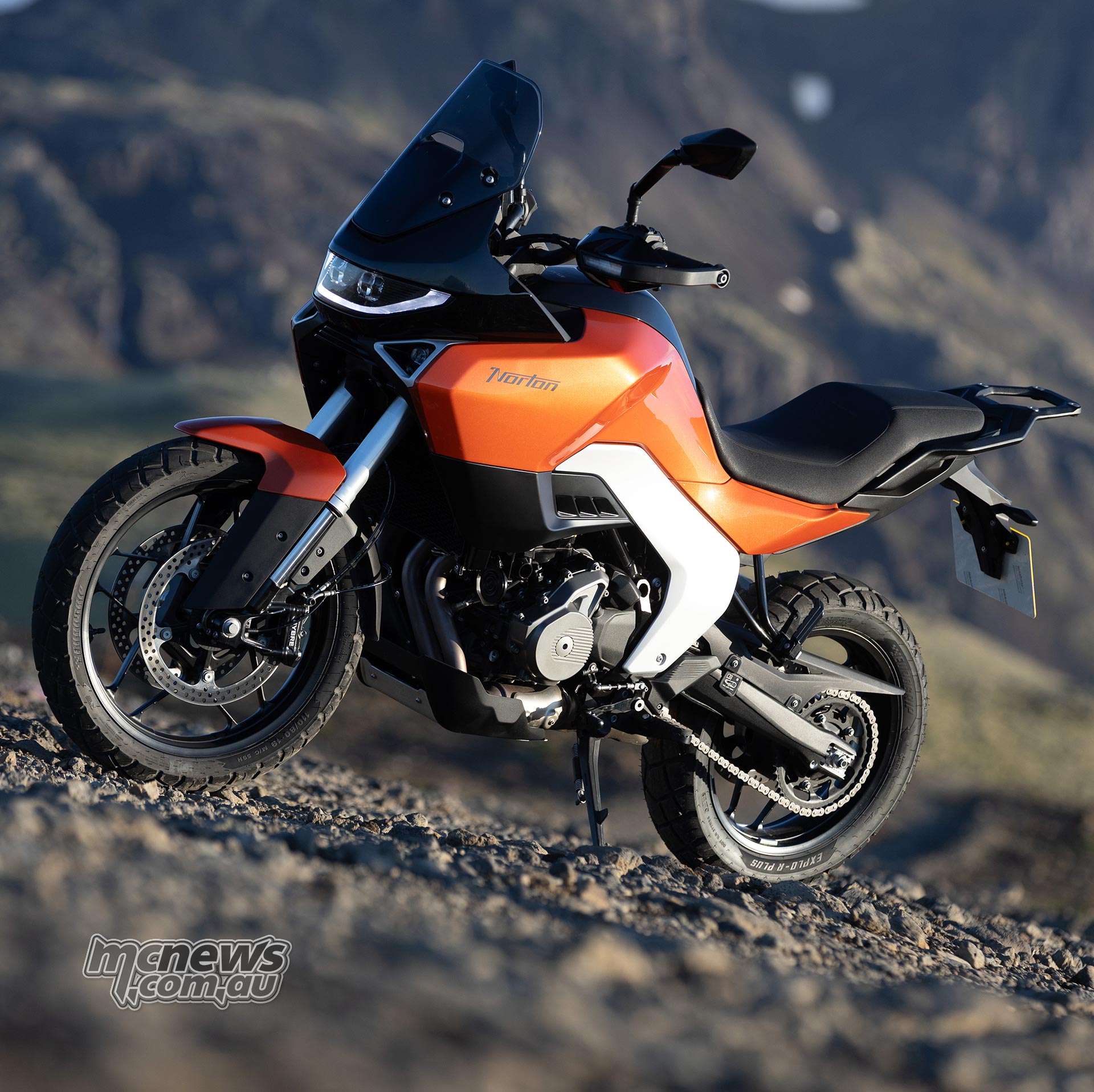
I am keen to see what Wayne thinks when we eventually get one back in Australia and send it around his regular Anglesea off-road test loop. Norton says the GT is much more road-focussed, with 40 mm less suspension travel, but we are still waiting for the confirmed ground-clearance figure and full specifications for the more road-slanted Atlas GT.
Wheelies, gearing and the quick-shifter
To be honest, on the test loop we rode, the only thing I would have done with more power is pull more wheelies from higher speeds.
As it stands, the Atlas will pick the front up off the throttle in first if you provoke it with purpose, while a quick dip of the clutch will have it sitting up in second.
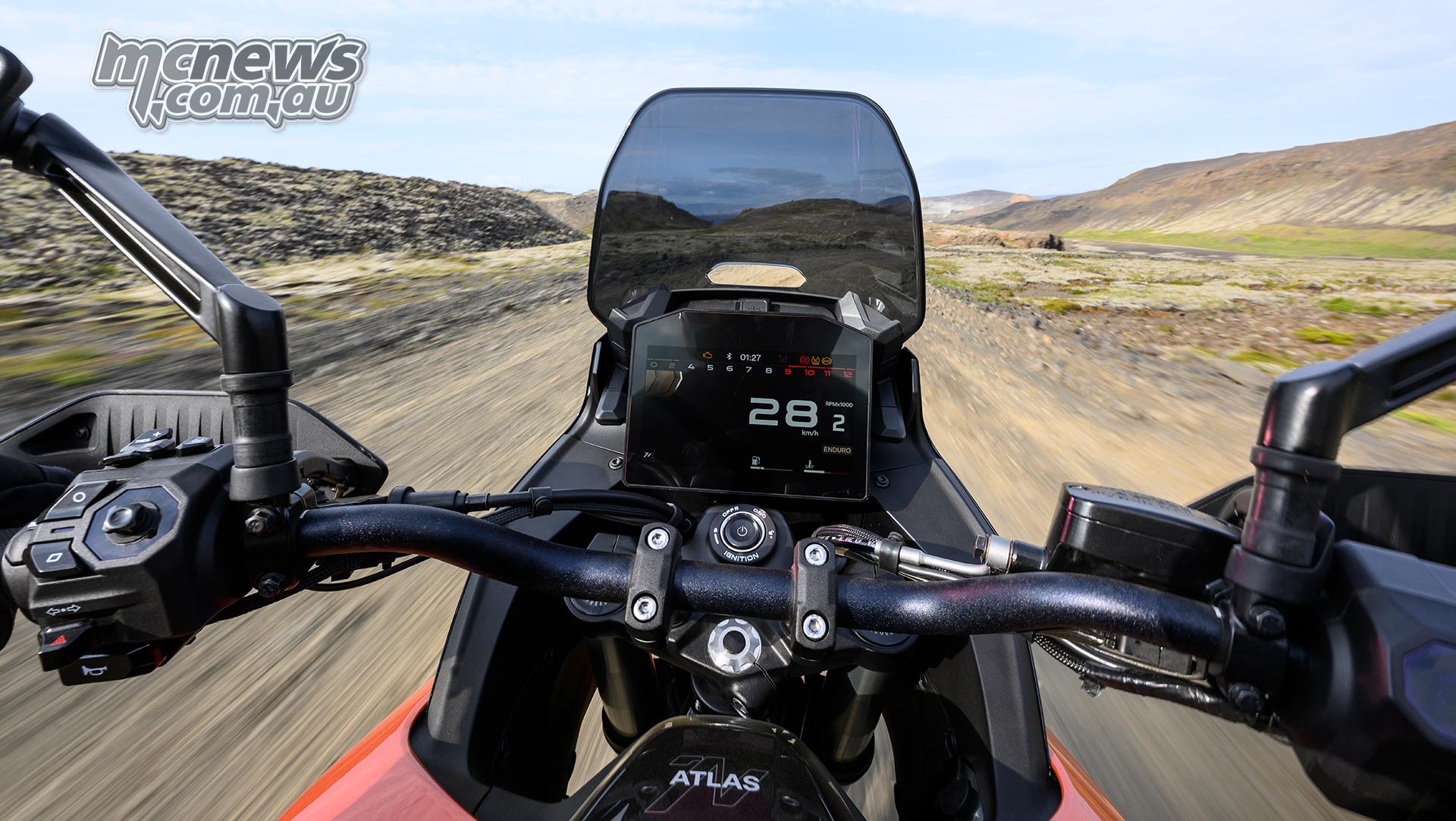
While doing this, I discovered that the small slit in the lower half of the screen can serve as a porthole to view the trail ahead when the bike is at full tilt. This made me giggle like a kid and pull more wheelies simply so I could laugh at it again. Small things, small minds and all that.
There will be no Wheelie Wednesday evidence, unfortunately. The content crew told us they could not supply any wheelie shots. Cue booing from the bleachers.
The engine is flexible enough to carry a relatively tall first gear that runs just beyond 70 km/h if you insist. The remaining ratios are more tightly spaced, with second reaching the limiter at around 100 km/h, while the engine turns a leisurely 4500 rpm in sixth at highway speeds.
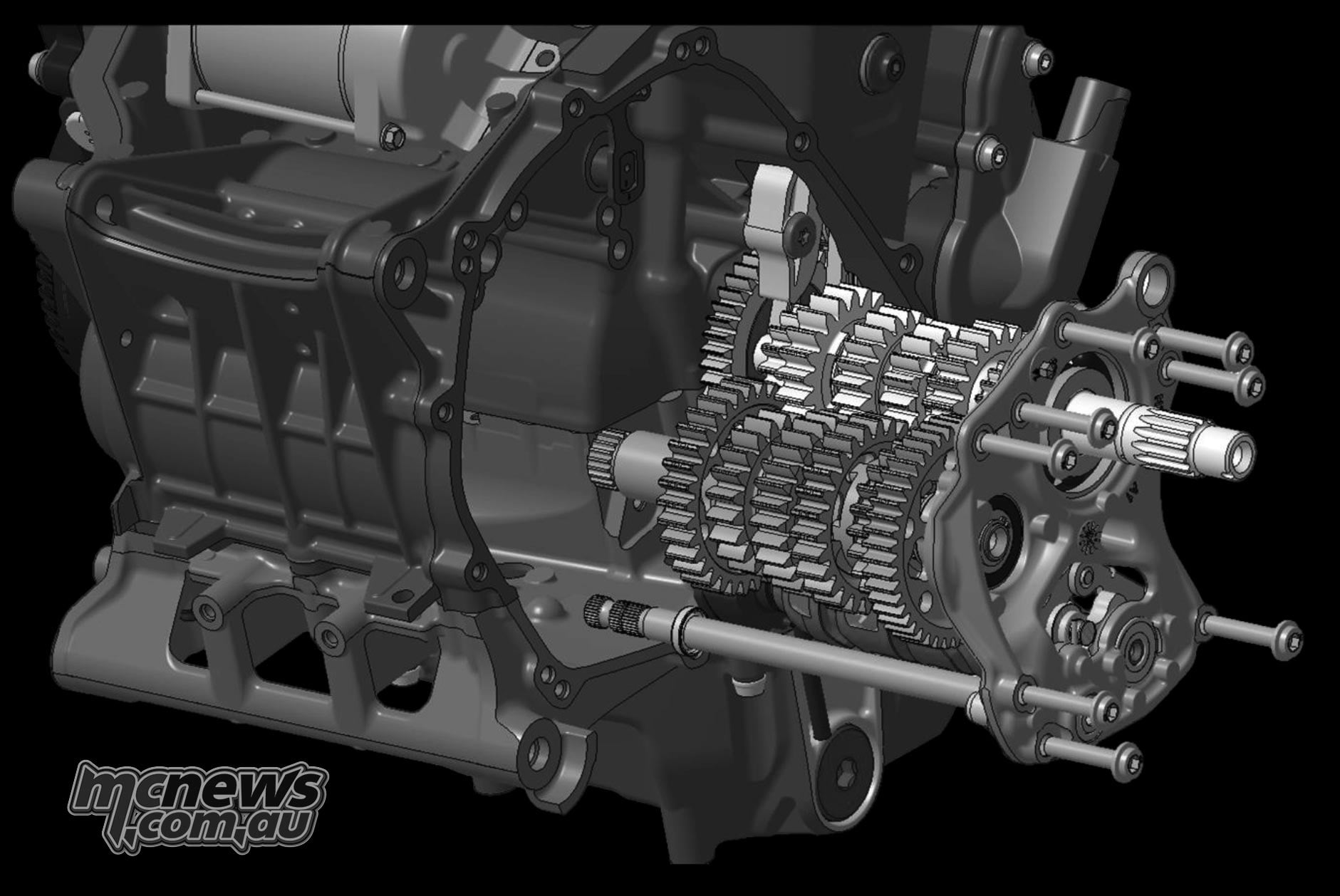
The six-speed gearbox uses a cassette-style arrangement and feels reassuringly solid. Much of it is stacked behind the cylinders, helping reduce engine height and contributing to the useful ground clearance without pushing the seat into nosebleed territory.
A cable-operated assist-and-slip clutch keeps lever effort low without the added complication of hydraulics. Both the clutch and brake levers are nicely finished and adjustable for reach.
I did end up switching off the two-way quick-shifter because I kept accidentally triggering an ignition cut when my boot brushed the gear lever. The sensor was too sensitive for my liking, but it was easily disabled through the touchscreen and, importantly, the bike remembered that choice after the ignition was cycled.

It also remembers the last ride mode used. Enduro mode switches off rear ABS, while traction control can be deactivated through a dedicated button. There is no need to scroll through three menus, perform four pirouettes and recite the owner’s manual backwards. Hallelujah.
Chassis and suspension

The Atlas is built around a steel trellis frame that uses the engine as a stressed member, paired with a cast-aluminium swingarm. Norton says both were tuned to achieve the desired flex characteristics and provide useful feedback. They would say that, of course, but I have no complaints from this first ride.
KYB supplies 43 mm fully adjustable USD forks with 180 mm of travel. Compression and rebound each offer 20 steps of adjustment, while fork preload requires a spanner. At the rear, the direct-acting KYB shock provides rebound adjustment and a very convenient hydraulic preload handwheel.

There is no rear linkage, which means the shock has to do more of the work normally shared with a rising-rate linkage. That is an unavoidable packaging trade-off, but KTM and Ducati have demonstrated that it can be made to work. Norton says the shock uses stroke-dependent damping, with a separate circuit coming into play through the final 20 per cent of travel to improve bottoming resistance.
The standard settings worked well enough for my 100 kg mass across the wet roads and gravel we encountered. We did not have the terrain or time to test the limits of the suspension, but it remained controlled and communicative during the harder riding late in the day.

Looking at the bike, it appears as though the rider sits quite far rearward. From the saddle, it does not feel remotely like that. The reach to the bars is logical while seated and remained workable when standing, while the pegs offered decent purchase even with their rubber inserts still in place despite the wet conditions.
The Atlas seat height is 845 mm, but I found it very easy to get on and off. For reference, I am around 177 cm tall and am a little shorter in the leg than that figure might suggest, particularly on the right side, where a fused ankle leaves that leg almost an inch shorter than the left.

The side-stand is easy to find and does not lean the bike over excessively. That sounds like a small thing until you are tired, loaded with luggage and trying to wrestle a tall adventure bike off its stand on uneven ground.
Brakes, hill hold and wheels
Given the conditions, I cannot claim to have tested the ByBre brakes to their limits. They are generally good hardware, though, and I found no reason to doubt their suitability here.
A pair of 310 mm semi-floating front discs are gripped by radial calipers, while a large 270 mm rear rotor adds useful support. The system uses braided-steel lines and provides progressive rather than overly sharp initial bite.

Apex models add electronic combined braking and vehicle hold control. The hill-hold functionality is among the best I have sampled. A firm squeeze of the front brake lever while stopped on an incline engages it when the six-axis IMU recognises that the bike is on an incline.
Many systems release automatically after five or ten seconds. The Norton seemed happy to hold itself stationary for as long as required and only released the brake as I rode away. Nice.
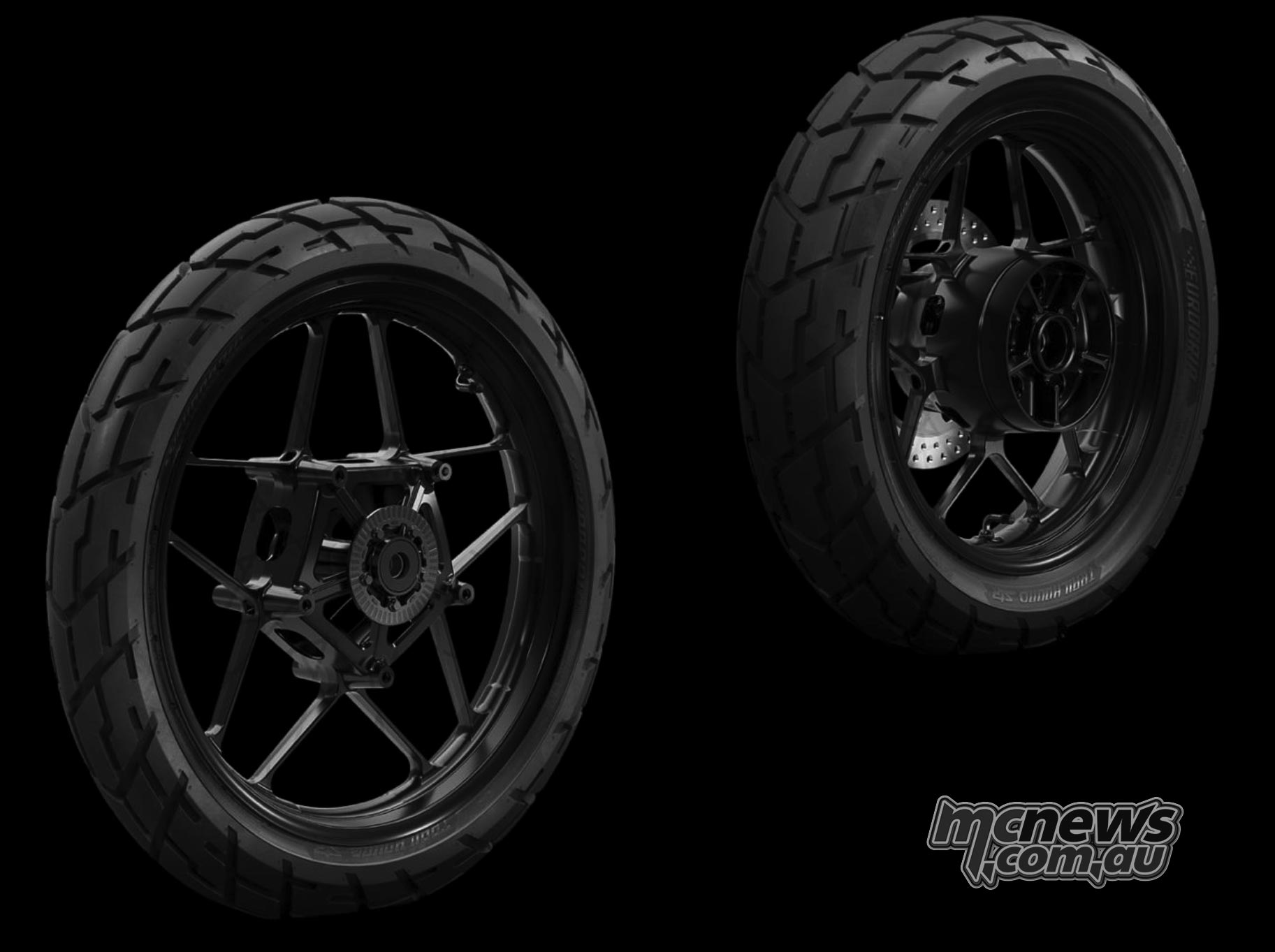
All the launch bikes rolled on the standard dual-heat-treated alloy rims, wearing a 110/80-19 front and 150/70-17 rear. Tyre-pressure monitoring is standard on Apex models and is easily read on the large display. A pair of 90-degree valve stems would have made life a little easier when it comes time to add air, in a perfect world.
The GT is even more street-biased, with 17-inch wheels at both ends. Norton told us the Atlas wheel set is engineered to withstand harder off-road use than the road-oriented cast wheels fitted to the GT.
Eurogrip tyres and off-road limitations
The Eurogrip tyres are produced by a TVS-owned tyre company, with development work carried out through its Italian engineering operation.
They found plenty of grip on the wet Icelandic roads and remained predictable on gravel. When the rear did break away in the dirt, it did so progressively and could be brought back into line without drama.
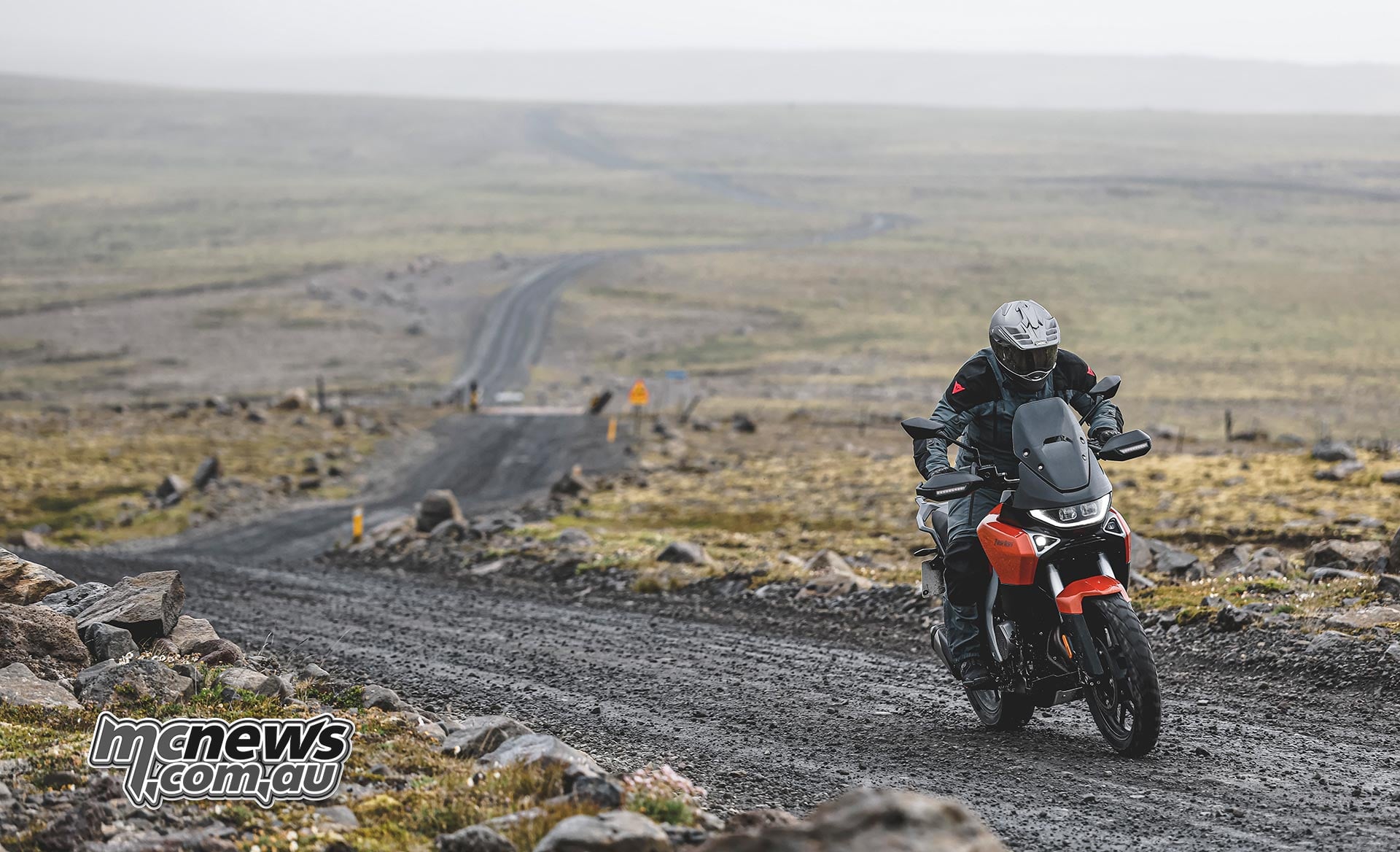
They were hardly subjected to a proper torture test on tarmac or dirt, and I would not want to take them into serious mud or slop. In fairness, the Atlas is not really aimed at that sort of terrain either. It is more Transalp than Tuareg, you could say.
There is no facility to mount the front mudguard in a higher position to make room for a serious knobby, so that will be an ask for the aftermarket crowd who like to go full farkle. A Norton representative told me Pirelli Scorpion Rally STR rubber had been fitted without clearance problems. Even so, if a more aggressive tyre started packing with mud, I suspect the guard would soon lose the argument and disintegrate quite quickly.
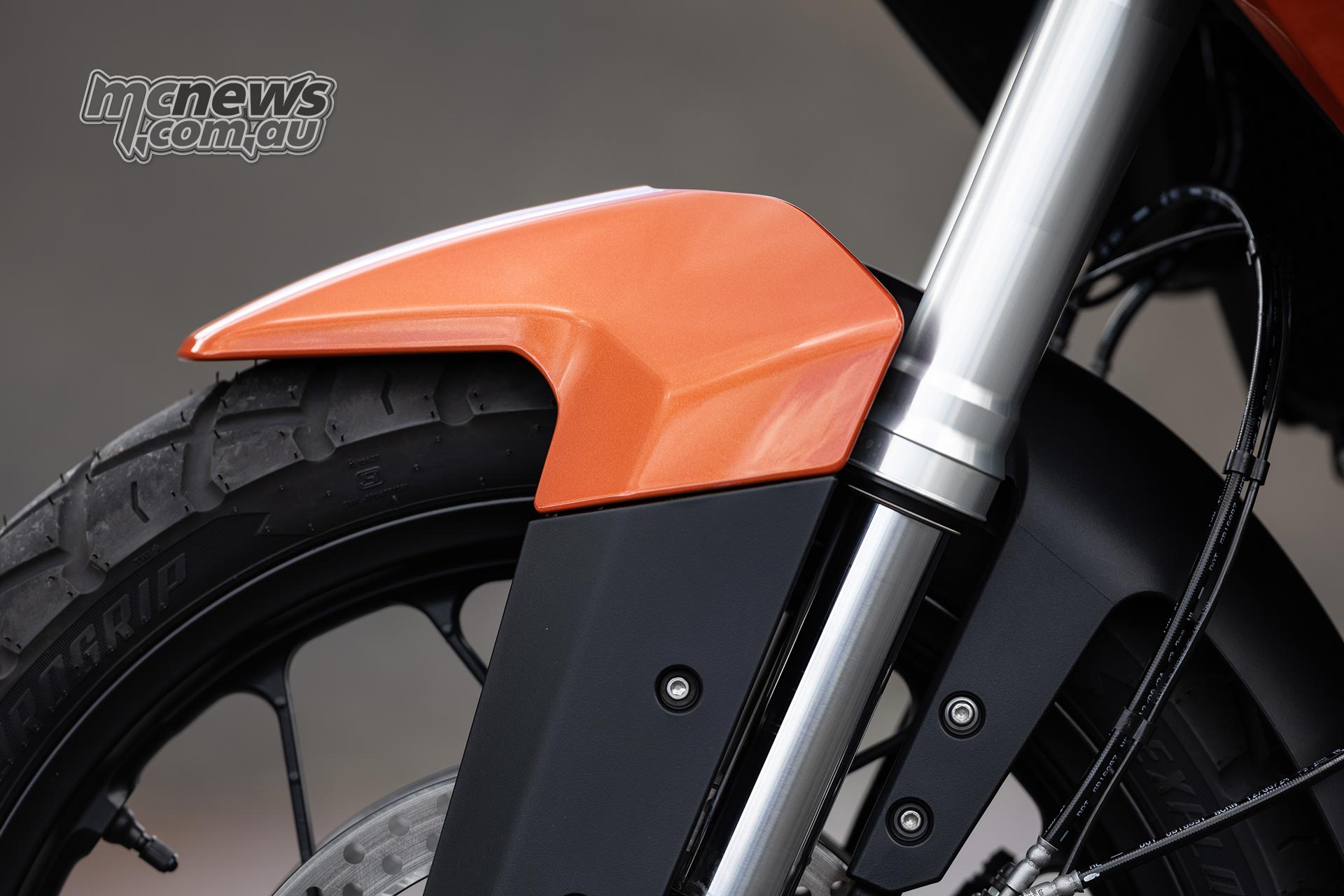
The plastic bash plate will keep some grime off the engine, but that is about the extent of its ambitions. Apex adds a thin aluminium insert, although neither piece looks man enough to fend off a remotely serious impact. Norton lists a more substantial all-terrain sump-protection kit and engine guards among the accessories.
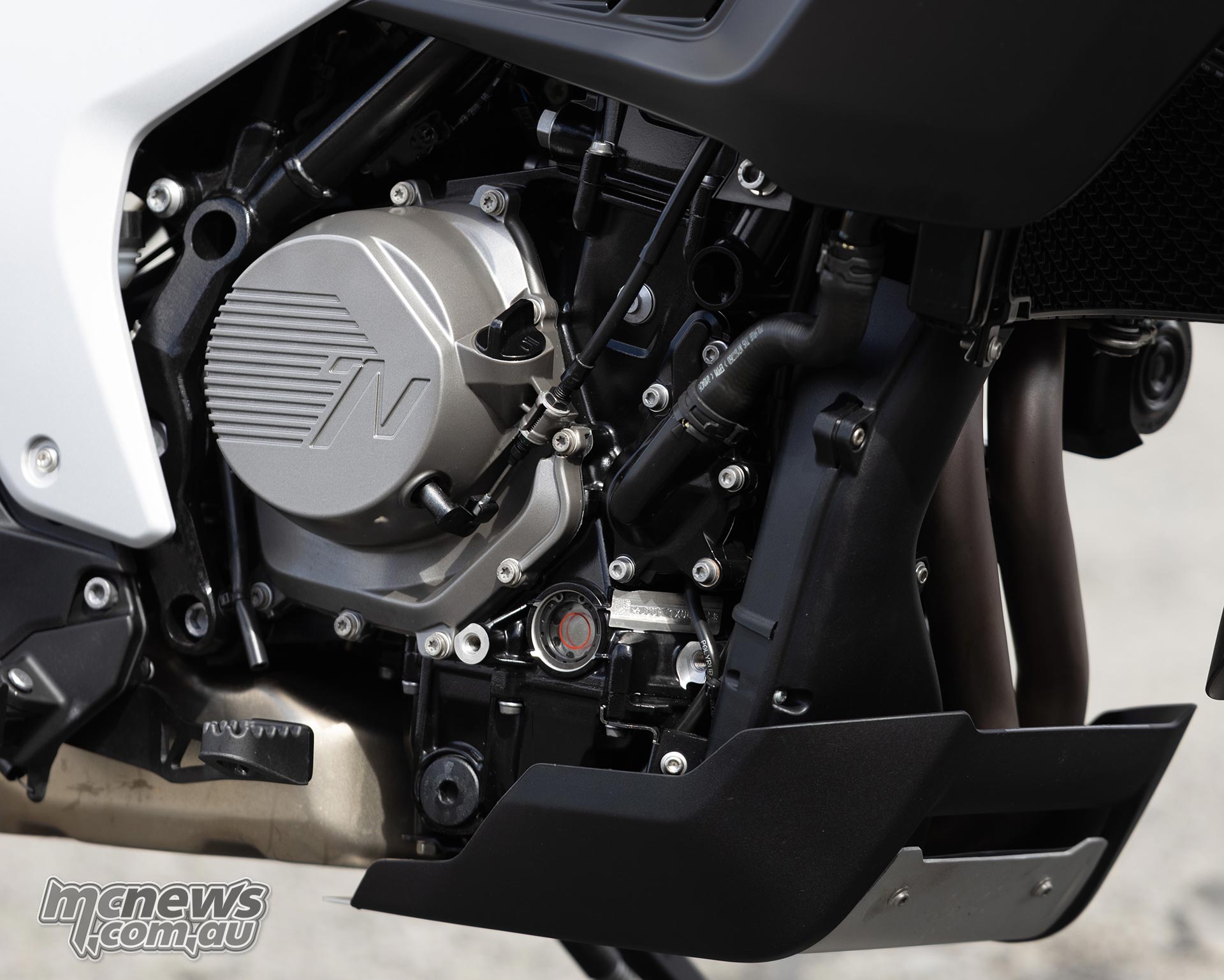
Heat management, air filtration and water
Radiator fan shrouding and ducting directs hot air down through an exit beneath the engine, meaning heated air should leave the bike below even your boots.
It is a thoughtful piece of packaging, although some of the ducting looks a little vulnerable at first glance. Iceland was hardly the place to judge its effectiveness, but TVS knows a thing or two about heat and traffic congestion in India, so I suspect it has been tested in conditions rather more demanding than a cool, wet Icelandic afternoon.
The same applies to dust. From what I could see, the pleated panel air filter did not look particularly large, but access is straightforward.

The airbox mouth sits directly beneath your family jewels. Press a button on the dash or lift the manual release lever on the right side of the bike, and the seat pops off, exposing the airbox lid. An Allen key is then required to remove the lid and reach the filter. It appeared the battery might need to be loosened slightly to extract the filter element, but Norton staff had already tolerated enough of my prodding and poking for one day.
The low intake position means care will be required during water crossings. Intake height, crossing length, bow wave and speed all matter if one is to take that gamble.
Comfort and airflow
We hardly completed a proper big day on the bike, but I found the one-piece seat comfortable and supportive across roughly 200 kilometres in some pretty shitful conditions.
The stepped pillion section rises markedly, so a passenger will need a reasonable degree of flexibility and athleticism to climb onto the rear perch. Once aboard, they do at least have sturdy and well-positioned grab handles.

The Apex screen adjusts through three positions, although it is a manual, two-handed affair and therefore not something you should attempt while moving. Well, you could, but I would prefer not to explain the resulting incident report.
Norton studied airflow through CFD, wind-tunnel and rolling-road testing. From my time on the bike, that effort appears to have been worthwhile. Despite the wild crosswinds, I did not encounter any obvious helmet buffeting generated by the screen itself.
Design and build detail
Like the Manx R, the Atlas bodywork has virtually no visible fasteners. The main side panel is almost a metre long, which helps the profile flow without the usual collection of exposed bolts and overlapping plastics.
The panel gaps on the launch machines were impressive and rely heavily on tightly controlled butt joints. Subtle flutes in the side panels also carry over the design language established by the Manx R flagship.
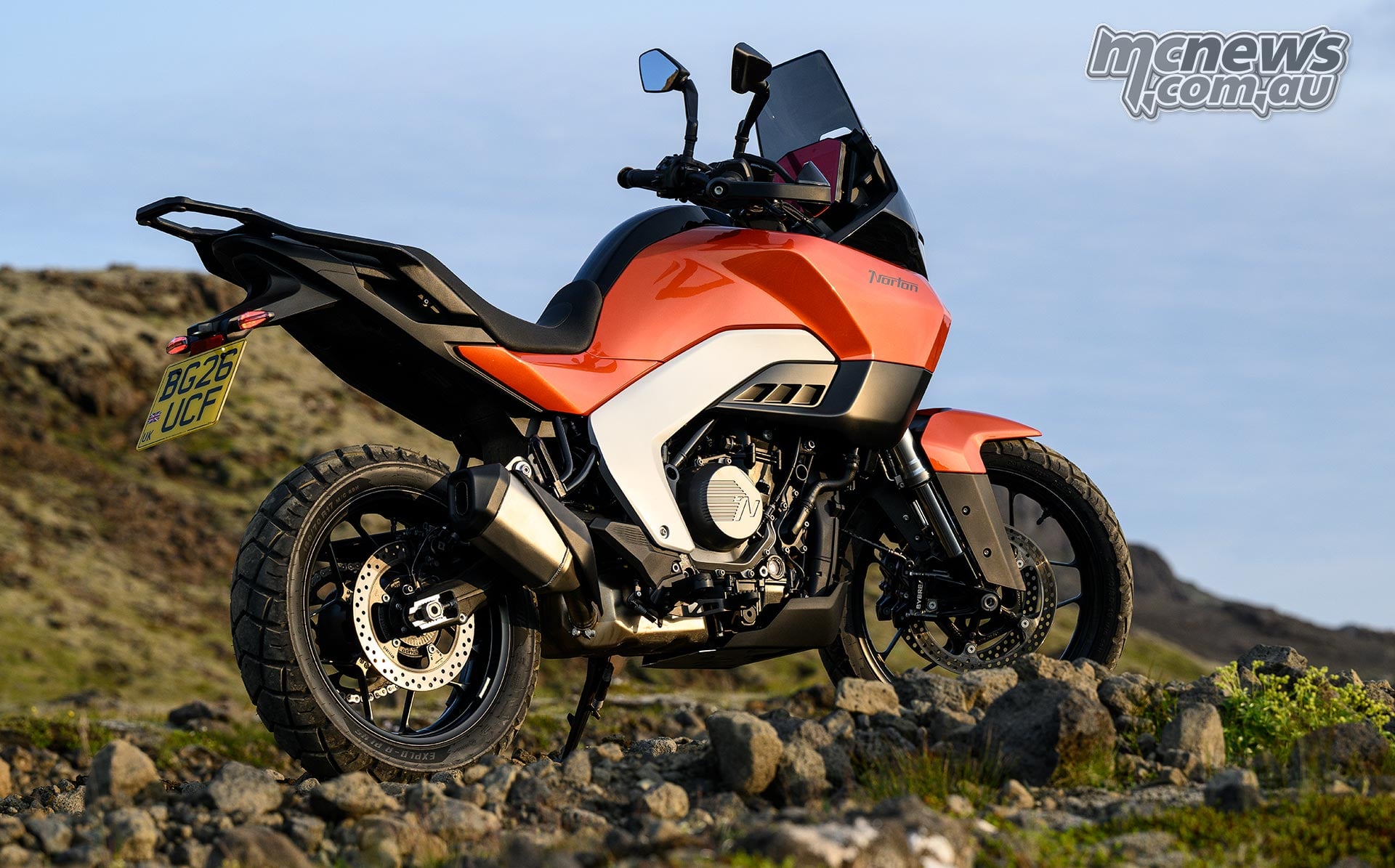
If I had more time, I would have asked Norton staff to remove the bodywork and show me how hard that process actually is. By that stage, however, I had already driven them close enough to distraction and thought they might get a bit stabby if I asked for one more impromptu workshop demonstration.
I am sure they would have obliged, but they had been pulling long hours and dealing with an endless procession of entitled journos for a couple of weeks, so I decided to cut them a break.
Luggage: Good bags, ordinary mounting
It probably says a lot about how much I liked the Atlas that one of my biggest bugbears is the lack of properly integrated pannier mounts.
The optional semi-rigid SW-Motech panniers require external tubular steel stays. That is a major fail in my book. The racks look ugly, as they nearly always do, add weight and push the luggage farther away from the bike’s centreline than hangers tightly integrated into the subframe would. Positioning the panniers further away from the centreline can take away from the chassis dynamics and balance of the machine quite dramatically.

How integrated sub-frame pannier mounts are not standard design practice on almost every touring-capable motorcycle remains a constant source of frustration for me. At a guess, this was one of the arguments between designers, engineers and accountants that the beancounters actually won. To be fair, though, Norton are not on their own on this score, as plenty of adventure bikes on the market, including some other new arrivals, also require various extended bracketry to fit proper luggage.
The Atlas top-box mount is alloy rather than steel tube. I do like the luggage itself. SW-Motech gear is generally top-notch, and the semi-rigid fabric construction suits the Atlas far better than a pair of giant aluminium filing cabinets.
The top box holds 34 litres, while the panniers provide 25 litres per side. That gives an OEM-tested total capacity of 84 litres, which is generous enough for proper touring.
Lighting and handguards
The headlights seem to be a love-or-hate item for most people. Unusually for me, I sit somewhere in the middle. I do not love them, but I do not mind them either.
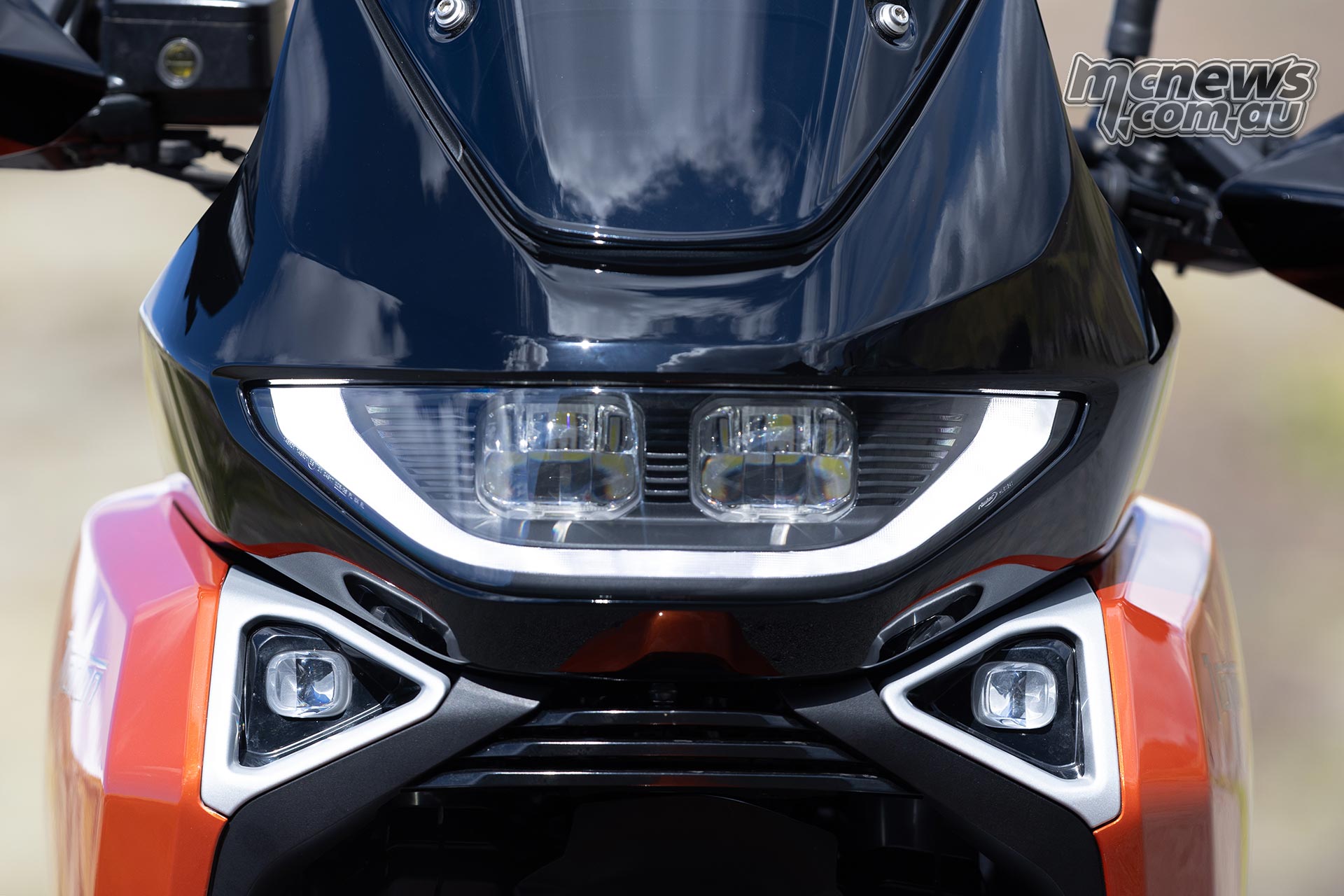
Apex models add cornering lights, which I saw operating during the photo runs, although the conditions did not allow a meaningful assessment of their value for kangaroo and wildlife spotting. That is what we Aussies really care about, and there is no such thing as too many lumens when something furry and indecisive is waiting in the bushes beside the road.
The Apex also has a puddle light that projects a Norton logo onto the ground when the bike is unlocked. Somehow that survived the beancounters, but properly integrated pannier mounts did not. Go figure.
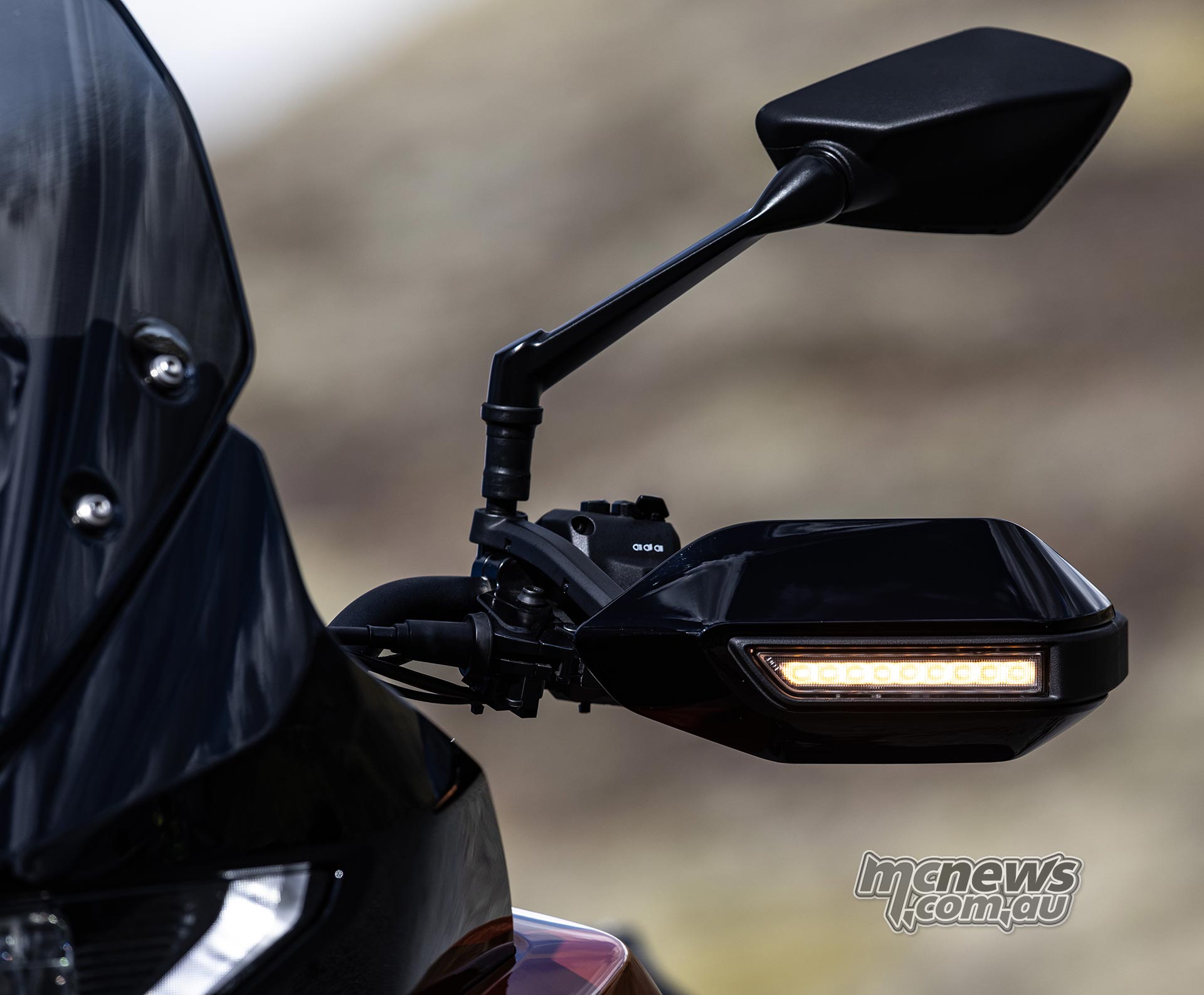
Indicators integrated into the handguards help preserve the clean lines, but the guards themselves appear to be more styling item than barkbuster.
In my four-rider group, one rider went down during a slow turn and broke a handguard, while another dropped a bike while stationary and achieved the same result. Hopefully the original parts are inexpensive until aftermarket manufacturers develop alloy-backed replacements that can mate up with the indicators.
Eight-inch TFT and rider electronics
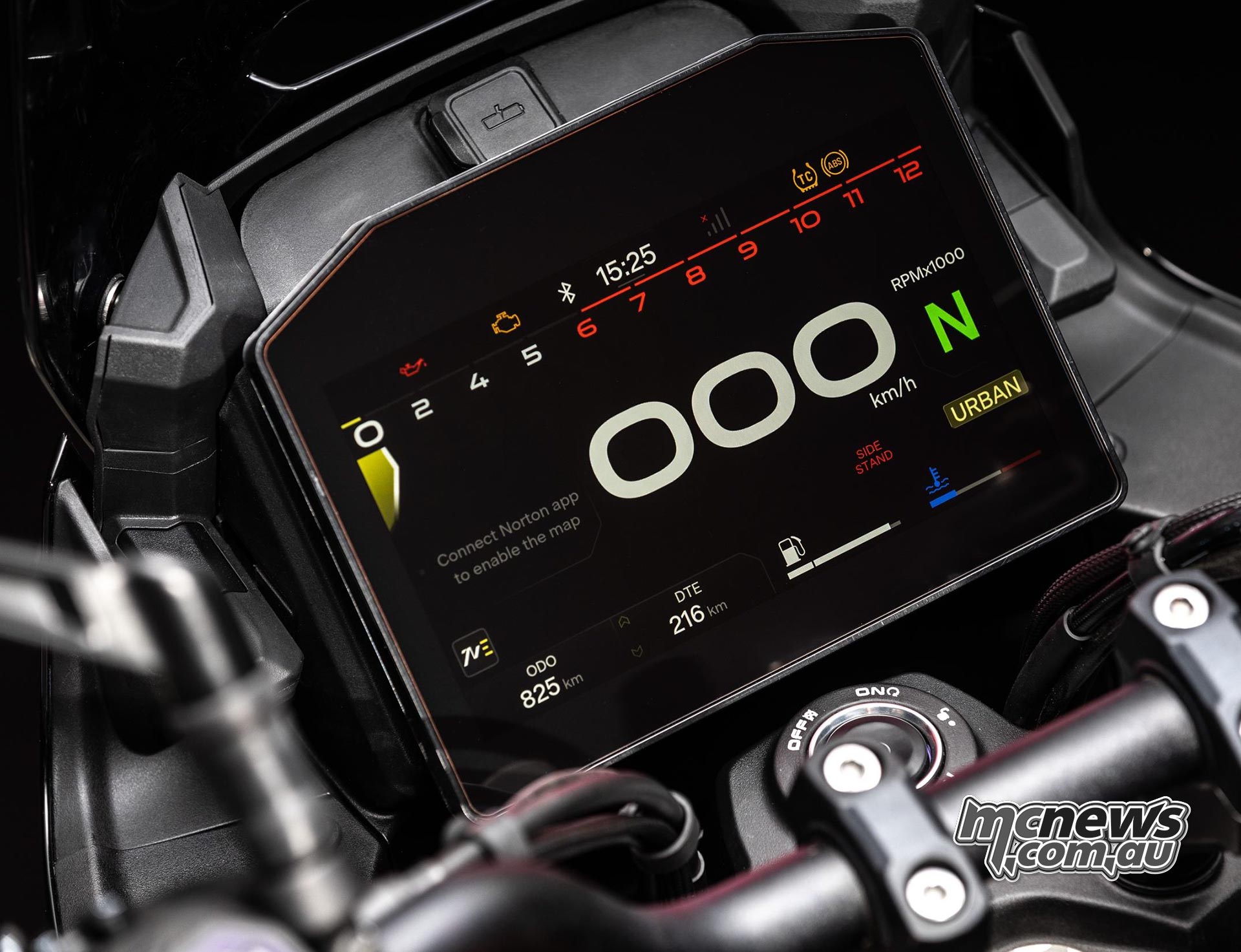
The eight-inch TFT is huge, crisp and one of the visual centrepieces of the Atlas. Touch functionality works with gloved fingers while stationary, while most functions can be controlled on the move through a fairly intuitive left switch block.
The five ride modes are Urban, Rain, Tour, Sport and Enduro, and the system allows useful adjustment without requiring a doctorate in menu navigation. Two buttons on the switch blocks can also be assigned functions by the rider.
The dedicated traction-control button deserves another mention. It is exactly the sort of simple, direct control that riders want when the road turns to gravel.

The Norton Rider app can handle navigation, ride statistics, post-ride review, service information and much of the bike’s setup, which then synchronises when the motorcycle is started. The system also supports over-the-air software updates, Bluetooth, Wi-Fi, multimedia and GoPro control. A 27-watt USB-C fast-charging port sits directly above the display.
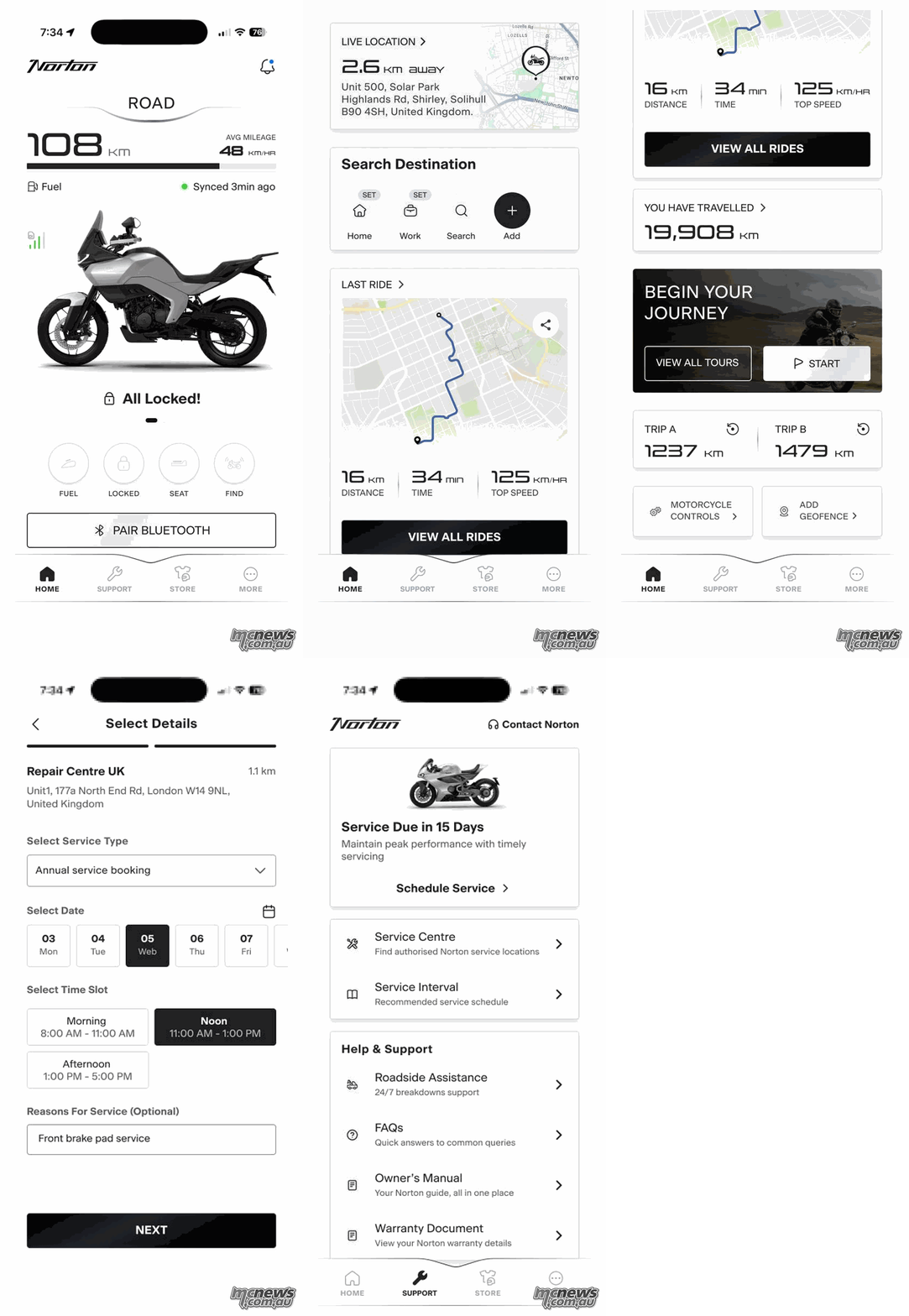
The tin-foil-hat brigade might have puppies at the thought of a motorcycle carrying Bluetooth, Wi-Fi and its own embedded internet connection. The same connectivity supports security features and geofencing, as well as software updates and ownership functions.
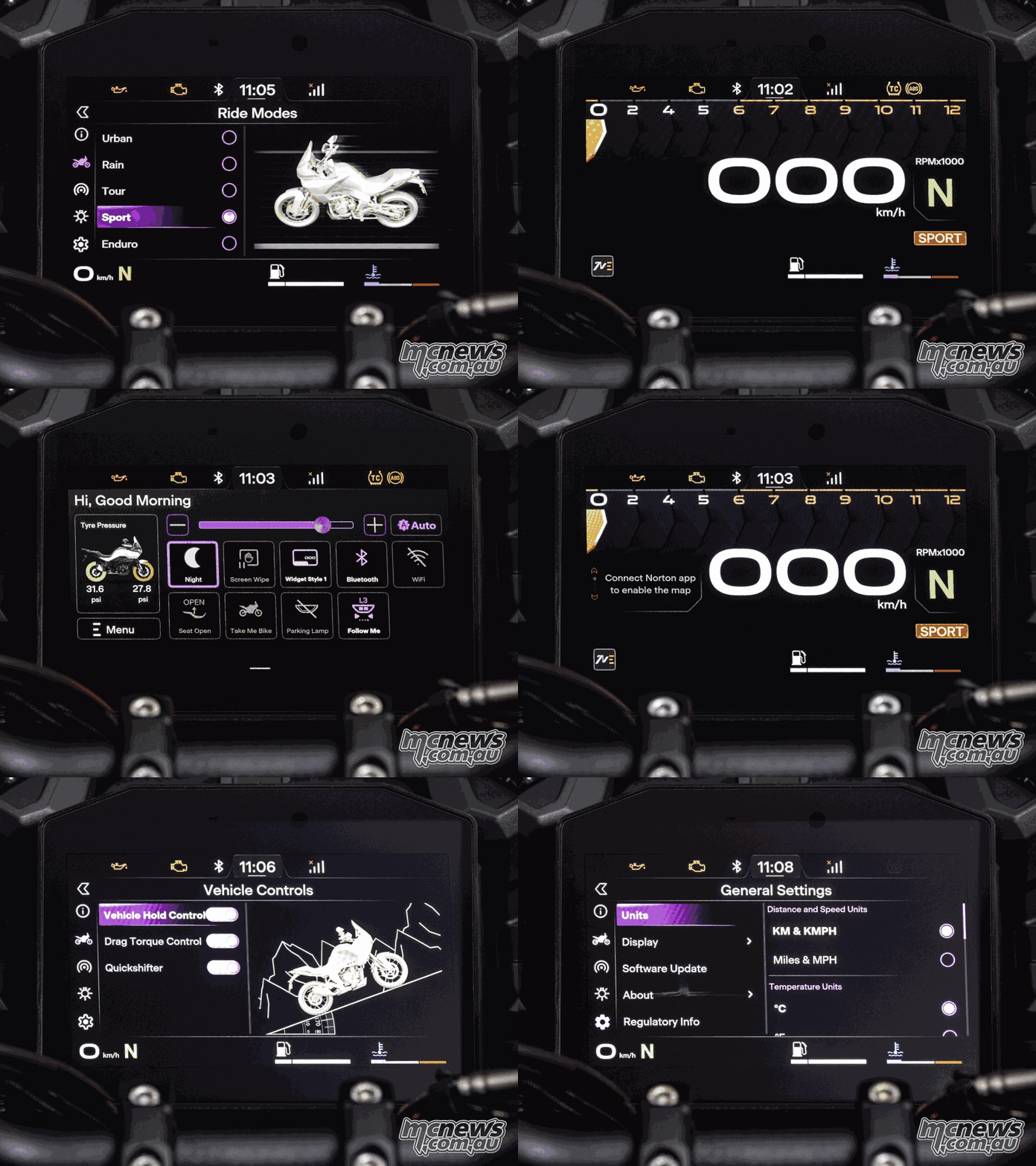
I would need another 2500-word essay to cover everything on offer when it comes to riding modes, and app functionality, but the important point is that it all appeared to be implemented with reasonable logic. TVS has access to a 1.5 billion strong Indian technology talent pool operating on a scale we can barely comprehend in Australia, and some very clever people have clearly been involved.

Keyless, but not quite keyless
The key works much like a modern car fob. A button press is required to unlock the bike, but the fob can then remain in your pocket while the ignition, steering lock, seat and fuel cap operate electronically.
That extra button press is a minor inconvenience compared with a completely passive keyless system. On the upside, the fob appeared to work from well beyond 50 metres. You can unlock the bike while approaching, watch the lights wake up, pocket the key and then put on your helmet and gloves without further faffing about. And I absolutely detest faffing about, I just want to get on and ride.
Weight, servicing and warranty
Norton quotes the base Atlas at 188 kg wet but without fuel. The Atlas Apex ridden in Iceland is 192 kg in the same condition. Add the 15.4-litre fuel load and the Apex should sit a little over 200 kg ready to ride.
It disguises that mass well at low speed and remained easy to manage during tight manoeuvres. The centralised feel was one of the most reassuring parts of the package.
Service intervals are 12 months or 10,000 kilometres. Norton is advertising a three-year warranty and roadside assistance in its initial launch markets, although Australian warranty terms and support arrangements cannot be confirmed until the local distribution plan is announced.

Norton Atlas verdict
The global launch answered the most important initial question: does the Atlas feel like a properly developed motorcycle, or merely a famous badge attached to an exercise in market expansion?
On this first ride, it felt properly developed.
The engine is more flexible and entertaining than its 585 cc capacity suggests, the chassis has a playful streak, the ergonomics work and the electronics are comprehensive without being needlessly hostile to the rider.

There are reservations. The quick-shifter was too sensitive for my boots, the handguards proved fragile, the standard underbody protection is light-duty and the pannier mounting arrangement irritates me more than it probably should. We also need far more time to assess heat management, air filtration, suspension control under sustained punishment and, perhaps most importantly, the broader ownership experience once Norton’s Australian distribution arrangements are confirmed.
While we only rode the Atlas Apex, the differences between the Atlas and Atlas GT are substantial. On paper, riders with no intention of leaving sealed roads will probably find the lower, sharper GT the obvious choice. We have not ridden it, however, and Norton has not yet supplied its complete final specification, so that judgement remains provisional.
The Atlas, meanwhile, appears more genuinely capable off-road than a quick glance at the specification might suggest. It is not a hard-enduro refugee with indicators, but it has enough ground clearance, balance and chassis feedback to make gravel roads much more than something merely endured between stretches of bitumen.
Another potentially important piece of the puzzle is Norton’s confirmation that an A2-compliant version will be offered in overseas markets. That gives us good reason to expect a LAMS-eligible Atlas for Australia, although Norton has not yet confirmed one.
I made a point of stressing to one of the senior Indian engineers that simply sending us the European A2 calibration would be a missed opportunity. Australia’s learner-approval system is based around power-to-weight calculations rather than merely adopting the European A2 output limit, so a bespoke Australian tune could potentially retain more of the engine’s character while still meeting our local requirements.

The engine in the full-power guise we tested pulls cleanly, carries its torque across a broad spread, and continues to reward the rider as the revs rise. A blunt restriction that lets it use half the tacho before running headlong into an electronic wall would rob it of much of what makes the engine appealing in the first place.
A carefully developed LAMS tune could instead preserve the response, flexibility and willingness to rev that impressed me in Iceland, while making the Atlas accessible to a much broader group of Australian riders. Considering its manageable manners, low-speed balance, generous equipment and practical adventure-bike layout, that variant could ultimately be one of the most important models in Norton’s local range.
Because Australia calculates LAMS eligibility using the motorcycle’s homologated tare mass plus 90 kg, Norton may have room to offer appreciably more than the 35 kW European A2 calibration while still meeting our 150 kW-per-tonne limit.
We look forward to getting our dirty little hands on one in Australia and finding the rest of the answers. At this stage, we do not know how long that wait will be, what it will cost, or precisely which versions will make the journey.
The Manx R might put Norton back on posters, but if the Australian price, support package and LAMS calibration all stack up, the Atlas is the bike that could put Norton back on Australian roads in real numbers.

Norton Atlas Specifications
| Specifications |
Atlas
|
Atlas Apex
|
|
Engine
|
Liquid-cooled 585cc DOHC 270º crank parallel twin
|
|
|
Bore × Stroke
|
78 mm × 61.2 mm
|
|
|
Compression Ratio
|
12.2:1
|
|
|
Fuel Injection
|
Multi-point sequential, ride-by-wire
|
|
|
Max Power
|
69 BHP / 70 PS / 51.5 kW @ 9,300 rpm
|
|
|
Max Torque
|
57.5 Nm / 42 ft-lb @ 7,300 rpm
|
|
|
Exhaust
|
Steel 2-into-1 with upswept silencer
|
|
|
Gearbox
|
6-speed with bi-directional Quick Shift
|
|
|
Clutch
|
Cable-operated Assist & Slip multiplate wet
|
|
|
Primary Drive
|
Constant mesh; 40:81
|
|
|
Final Drive
|
X-ring 116 Chain, 16T front / 47T rear
|
|
|
Gear Ratios
|
1st: 16.445 … 6th: 5.678
|
|
|
Frame
|
Steel trellis
|
|
|
Swingarm
|
Cast aluminium
|
|
|
Seat
|
One-piece rider & pillion
|
|
|
Front
|
KYB 43 mm USD forks, 180 mm travel, fully adjustable
|
|
|
Rear
|
KYB monoshock RSU, 180 mm travel, adjustable tension + hydraulic preload
|
KYB monoshock RSU, 180 mm travel, full hydraulic adjustment
|
|
Front
|
2 × 310 mm semi-floating discs, radial Bybre
|
2 × 310 mm floating discs, radial Bybre
|
|
Rear
|
270 mm disc, Bybre
|
Same
|
|
Front Wheel
|
19” × 2.50”
|
19” × 3.00”
|
|
Front Tyre
|
110/80 ZR19 Eurogrip Explo R Plus
|
Same
|
|
Rear Wheel
|
17” × 4.00”
|
17” × 4.50”
|
|
Rear Tyre
|
150/70 ZR17 Eurogrip Explo R Plus
|
Same
|
|
Wet Weight (no fuel)
|
188 kg
|
192 kg
|
|
Fuel Tank
|
15.4 litres
|
15.4 litres
|
|
Seat Height
|
845 mm
|
|
|
Ground Clearance
|
220 mm
|
|
|
Wheelbase
|
1465 mm
|
|
|
Rake / Trail
|
25.7° / 101.7 mm
|
|
|
Service Interval
|
12 months / 6,000 mi / 10,000 km
|
|
|
Warranty
|
36 months (unlimited km UK/EU, etc.)
|
|
|
Fuel Economy
|
23 kmpl / 65 mpg Imp / 54 mpg US
|
|
|
Emissions
|
EURO5+, BS-VI, California & US
|
|
|
Levers & Footpegs
|
Adjustable brake/clutch levers, aluminium footpegs
|
Adjustable hand & foot levers, aluminium footpegs
|
|
Protection
|
Plastic cover (Base) / Aluminium bash plate (Apex)
|
Rugged plastic bash plate + All-terrain sump protection kit (aluminium insert)
|
|
Other
|
—
|
Easy-adjust windscreen, Rear luggage & pillion handle kit
|
|
Headlamps & Indicators
|
LED twin-projector + DRL, LED indicators
|
|
|
Taillight
|
LED 3-in-1
|
|
|
Additional
|
—
|
LED cornering lights, LED puddle lamp
|
|
Display & Connectivity
|
8” TFT 720p, Bluetooth/Wi-Fi, music/calls/nav/GoPro, OTA, Norton app
|
|
|
Ignition & Charging
|
Keyless + electronic locks, USB-C
|
|
|
Additional
|
—
|
Tyre Pressure Monitoring System (TPMS), Integrated heated grips
|
|
Modes
|
Urban, Rain, Sport, Tour, Enduro
|
|
|
IMU
|
Bosch 10.3MB 6-axis
|
Bosch 10.3ME 6-axis
|
|
Systems
|
N-DTC, N-ABS, N-TEC, N-DCC, N-TWC, N-RLC, N-RSC
|
Same + N-VHC (Vehicle Hold Control), N-ECB (Electronic Combined Braking)
|
|
Standard
|
Matrix Black, Trophy Silver
|
Matrix Black, Trophy Silver, Verona Green, Sinopia Orange
|
|
Cost Option
|
Verona Green, Sinopia Orange
|
Glacier Blue
|