

Richard Arnold Norton interview
TVS, Manx R and brand rebirth
Norton’s latest rebirth will not be judged on romance alone. The badge still carries enormous weight, but for many riders the harder questions are about reliability, parts supply, dealer support, resale confidence and whether this TVS-backed version of Norton can finally deliver at a genuine global OEM level.
Richard Arnold sits right in the middle of that challenge. Norton’s Executive Director looks after sales, marketing and distribution, bringing commercial experience from a long stint at Manchester United, as well as a lifelong enthusiasm for motorcycles. That mix makes him a useful person to quiz on where Norton goes from here.
The Manx R is the first major product statement of this new era, but Arnold’s answers make it clear the bike is also a proof point. It has to show that Norton can build something desirable, modern and premium, while also giving buyers confidence that the company behind it is now strong enough to support them properly.
We sat down with Arnold in Spain to talk TVS, the Manx R, Australia, racing, parts supply, the Norton name and why this latest comeback has to be about much more than heritage.

From Manchester United to Norton
Trev – Let’s get straight into it. Richard, so your background, you’re a Norton enthusiast and your lour last role was with Manchester United… That’s a big deal. What did you do there?
Richard Arnold – “It was a big job. 17 years there. The first 15 were on the commercial side, running the commercial sales and marketing. Before that, technology. Before, before, before that, from three years old, riding bikes. So it’s been a lifelong love. A little bit lucky because it’s the second job of my life, where you’re doing something, to be honest, you’d pay to do. So it’s amazing.”
Trev – All right, I won’t tell your boss about that. And so, how long have you been with Norton now, and in your position as Executive Director? Is that what you’re doing?
Richard Arnold – “Two years, Executive Director. So I look after sales, marketing, distribution, all of that sort of stuff. So loving it.”
Why this Norton revival is different
Trev – Okay, let’s get stuck in. Norton has a magnificent history, as you’re well aware, but also some recent baggage. What do you say to riders who love the badge but need proof that the new Norton is just not another romantic restart?
Richard Arnold – “I think TVS is the word there. TVS have won eight J.D. Power awards. They’re the only manufacturer BMW chooses to manufacture its products, and they’ve become number three in the world, with their bikes running in the hardest environments. Anyone who’s ridden in India knows the roads are pretty challenging.
“So the difference is we start with an organisation making six million bikes a year, logistics, parts, service, the purchasing framework with all of the world’s major suppliers, the ability to get anything you need in 90 countries in the world, that all starts right from the beginning.
“What we’re bringing is British design, British engineering, the amazing bikes and V4 capacity, but we have that operating excellence to start off with. It’s been amazing working with TVS; their only business is making motorbikes. So, everybody on the board lives and breathes bikes.
“Total focus on it, it’s intergenerational. Sudarshan [Venu], the current chairman, is the third generation; his father and grandfather were in this business before him. For them, Norton is a passion project, a love, and something they’re committed to passing on to the next generation. So I ride them, I’m not at all worried, it’s pretty amazing.”

Why lead with the Manx R?
Trev – The Manx R, that first major statement of the TVS-backed era. Why jump in at the deep end, why lead with a premium V4 superbike rather than something more commercially conservative? Hit the road running with a bang?
Richard Arnold – “I think this is a demonstration of what we’re capable of. First off, moving to a different space with the brand, in terms of being modern. The bike’s technology is state-of-the-art. Part of that relationship through TVS we have with all of the world’s major manufacturers, Bosch, for example, as well as Brembo. We’re getting the very latest technology. So there’s stuff on that bike no one else has got.
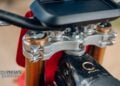
“For example, the way the potentiometers work to measure what’s happening with the front forks. Superbikes stick those on the outside; that’s embedded on our bikes. The engine and the brakes and the rear wheel all know what’s going on from that, so you’ll experience that on the track.

“A lot of superbikes, they’ll talk about the power figures, but you’re at sort of 12,000 revs plus, where you’ve already lost your license, so being able to get phenomenal performance at speeds you can actually use it. The Manx R is designed to be torque-leading in its class and to provide usable power. Most riders aren’t getting above 8,000 revs, except maybe on the slip road to the motorway; most of the time, you’re lower.
“This bike blows the socks off everything else in that range, and in slowing down. It’s got some new technology that uses how the engine works and the body’s position to keep both wheels on the ground when you’re full-on anchoring. So you slow down much, much quicker; it’s the first production bike that you get more than one G-force braking. But it also means that, with full anchors, you can still steer into the corner.
“So it’s when you’ve got that capability, it sets a statement about what Norton’s about. We’re serious. We’re going to be an OEM on a global scale and stand toe to toe with the best.”

British design, Indian backing and global ambition
Trev – So Norton is now Indian-owned, UK-based, but global in ambition. How do you explain that identity without letting the conversation become a simplistic British-brand-Indian-owner narrative?
Richard Arnold – “All our bikes are designed and engineered in the UK. The bike you’re going to be riding the next couple of days was built in the UK, and we’re expecting to be at full capacity in Solihull. For some of the smaller-capacity bikes, and for the next bike we launch, the Atlas, which will use the same factory we’re using for the BMW products. It guarantees quality right from the very beginning. Making sure we’re using the very best of the best in the world, not just in the UK – engines and engineering.
“So really, global leaders in terms of the skillset we brought in and then the strength and scale of our parent company, means we’re just able to do things that we wouldn’t be able to on our own. But very distinctive, very British in the feel, with more than a quarter of a billion invested in the Solihull factory operations and an increase in staff numbers by more than 25 per cent. If anything, it’s a strengthening of the UK operations.”

Using the Manx name on a modern V4
Trev – The Manx name is one of the most valuable names in Norton history. Was there any internal debate about whether it should be used on such a modern V4 superbike? As an example, I published an intro to the bike midweek after the full tech was revealed. A reader commented, ‘Stay in your lane, make a decent Commando and a new 70-horsepower retro single Manx.’ What do you say to that?
Richard Arnold – “So listen, the fact that people already know the name, love the brand, and are passionate about it, is a great start. I’ve got a mix of modern and classic bikes, and no manufacturer can stay in their lane – to use his words – and stay making the same bikes over and over. It’s just not a strategy for the decades to come, which is the TVS approach.
“I think, in terms of the links and the heritage, it’s quite interesting. When you look at Norton’s design and innovation, the Manx, when it came out, was ground-breaking. The shape of it, the way the engineering worked. It was as radical then as this bike is now. It was the same with the rotary engine that came out, and all the other bits and pieces. Norton has always been at the edge of designing, the cutting edge of design engineering, and we’re doing the same again.

Where Norton wants to sit
Trev – Where do you want Norton to sit in a buyer’s mind? Ducati rival, British luxury marque, boutique performance brand or something deliberately outside those categories?
Richard Arnold – “No, those three are pretty good. You should come and help us out. For most people, motorcycles are mostly a leisure product. There’s commuting, but the people who have been buying these bikes want to really enjoy them. That’s the dynamics in terms of how they perform, the details, the little bits of engineering and the visibles, and then the overall design. All sorts of things you can take pleasure in.
“That’s what we’re looking to provide with the bikes we make, at all capacities. We’re bringing out smaller capacities than we have in recent years to open it up to more people. Whilst it will still be a luxury product, just like you can have all sorts of luxury items, it doesn’t make it horrifically expensive. We published the pricing this week and again, coupled with that capacity, be accessible to a lot more people than they’ve been in the past.”
[Note – The base Manx R starts from £20,250 in the UK, roughly AUD$38,000, before any Australian taxes, compliance, freight, distributor margin or dealer costs.]
Keeping character at scale
Trev – TVS gives Norton scale and discipline, but Norton still needs to feel special. How do you prevent the manufacturing process from sanding the character off the product?
Richard Arnold – “I think we’re sat next to some evidence that’s not happening. Not only have we put that name on and started with that bike, but we’ve started with a track day as our first journalist event, and that’s a testament to the confidence we’ve got in the quality.
“In terms of bringing scale, you’ve got to come see the new factory, it’s the very latest technology, that not only checks that one of the lads working on their production line picks up the right bit and uses the right tool, it also watches, it also checks whatever you do with that tool and records what has happened. If anything in that combination is wrong, it won’t let you proceed to the next stage. That is recorded by bike at the nut and washer level.
“You’ve got complete traceability for every bike that’s coming out. That’s just one example of the things that are being done in the factory that just give you that confidence that you can really take it on.”

What success looks like for the Manx R
Trev – What does success look like for the Manx R? Is that down to a number of sales volume, how many customers you conquer from other brands, credibility from early adopters, or simply proving that Norton can now execute at this level?
Richard Arnold – “We already know from having launched at EICMA, we opened up a waiting list, and that’s massive. So our biggest challenge this year is actually just keeping up with demand, but that’s quite a nice problem to have in the market at the moment.
“I think for us, what we’re looking for is that this communicates what Norton’s about, that people love the bike. If you’re expecting another Norton Commando, it takes you a minute to actually appreciate what this is, rather than what you might have thought it was going to be.
“Once you make that adjustment, anyone who sits on and rides the bike will really understand what we’re about. You’re going to experience that in terms of making world race capability accessible to every rider and to give you that confidence to do it.
“You go into a corner, and the technology we’ve put on with the braking is totally unobtrusive, but it means that even if you get it a little bit wrong, which on another bike would really cause you a problem, it’s helping you through. You come out of it thinking you’re a much better rider than you really are. The bike really allows you to go out and enjoy the road; it allows you to enjoy the bike. You’re not aware of the technology, but it’s allowing you to have confidence to do things you wouldn’t be able to otherwise.”

Will Norton race again?
Trev – Norton’s path’s been shaped by racing, the TT, the Manx, the rotary era. Does the new company need racing again?
Richard Arnold – “It’s certainly in the frame of discussion, I think it’s most likely we’ll look at a single series type approach and the reason for that is when we were looking at the design template for the bike, we looked at how every rider will use it, all of the customers will use it, and how you really make that an amazing experience for them.
“We didn’t take the FIM rulebook and say rev it to this, make it weigh this. You can’t use this technology, you can’t do that. So it’s a very different design philosophy, and you can’t then sort of shove the one into the other later on. So we’ve gone with a bike that’s designed for the people that will be sitting on it, with them at the heart of it.”

What Norton needs to get right in Australia
Trev – Australia has a long memory for British motorcycles, and a healthy premium sportsbike and track-day market, but we also have a very practical attitude to support, parts supply and resale given the tyranny of distance. What does Norton need to get right before asking Australians to take the plunge, and how far away is a local physical footprint or point of contact?
Richard Arnold – “We’ve been working on that for about the last year, in terms of choosing the right partner and again, as you said, having boots on the ground that are really doing what you need them to do. The parts, every single dealer or country they’re operating in, before a bike leaves the factory, the parts will already be there. The tools will already be there, and all technicians at the dealerships will already have been trained.
“As soon as the journalists finish here, next week is dealer mechanics out doing what you guys are doing and then getting first-hand training on the bike. Parts already lined up, ready to go before we ship bikes and again, that comes back to that; that’s how TVS has got eight J.D. Power awards. There’s a central team that looks after if anyone has an issue. Of course, the dealers are the first line of every relationship. People normally have a really good relationship with the mechanic at their local garage.
“That’s who we want to make sure are totally happy with the bike and can pass that confidence on to customers. In terms of timing, we’ve been working on that for more than a year, and we’re very hopeful of getting all of that put in place as we go into this coming season for Australia.”
Trev – So will there be any Australian techs at the event next week? Are you that far along yet?
Richard Arnold – “Not next week, but there’s another event later on in the UK that they’ll be coming to.”

Standing toe-to-toe with Ducati and BMW
Trev – Five years from now, what would disappoint you more: Norton being dismissed as too expensive and too niche, or Norton growing so much that it loses the edge and rarity people associate with the name?
Richard Arnold – “I’ve got to be honest, I’m not contemplating either of those disappointments as options. We’re really committed to the quality of the bikes. The feedback we’re getting has exceeded our hopes. In terms of what Norton stands for, engineering, design, excellence, detail, and pricing, you’ll have seen in the last 24 hours. We’ve brought it well within many, many more people’s reach. But it’s still a super premium product. I think by far the best in its class for what it’s going to be used for, and so in terms of stepping away from who Norton is, that’s not a contemplation.
“In terms of driving commercial success, my vision for what I want to bring to Norton is to put the brand on a long-term sustainable future, standing toe-to-toe with Ducati, BMW and going at it with them.”
Trev – Thanks for your time. I am looking forward to the ride.
Arnold’s answers make it clear that Norton’s latest rebirth will be judged as much in workshops and dealerships as it will be on spec sheets. The Manx R makes a dramatic first statement for the brand, but the bigger test will be whether TVS-backed Norton can deliver the consistency, parts support, and customer confidence required to make the badge properly credible again. For Australian buyers, that means the local partner, dealer training and parts pipeline will matter every bit as much as the bike itself.