

Suzuki GSX-8S Review
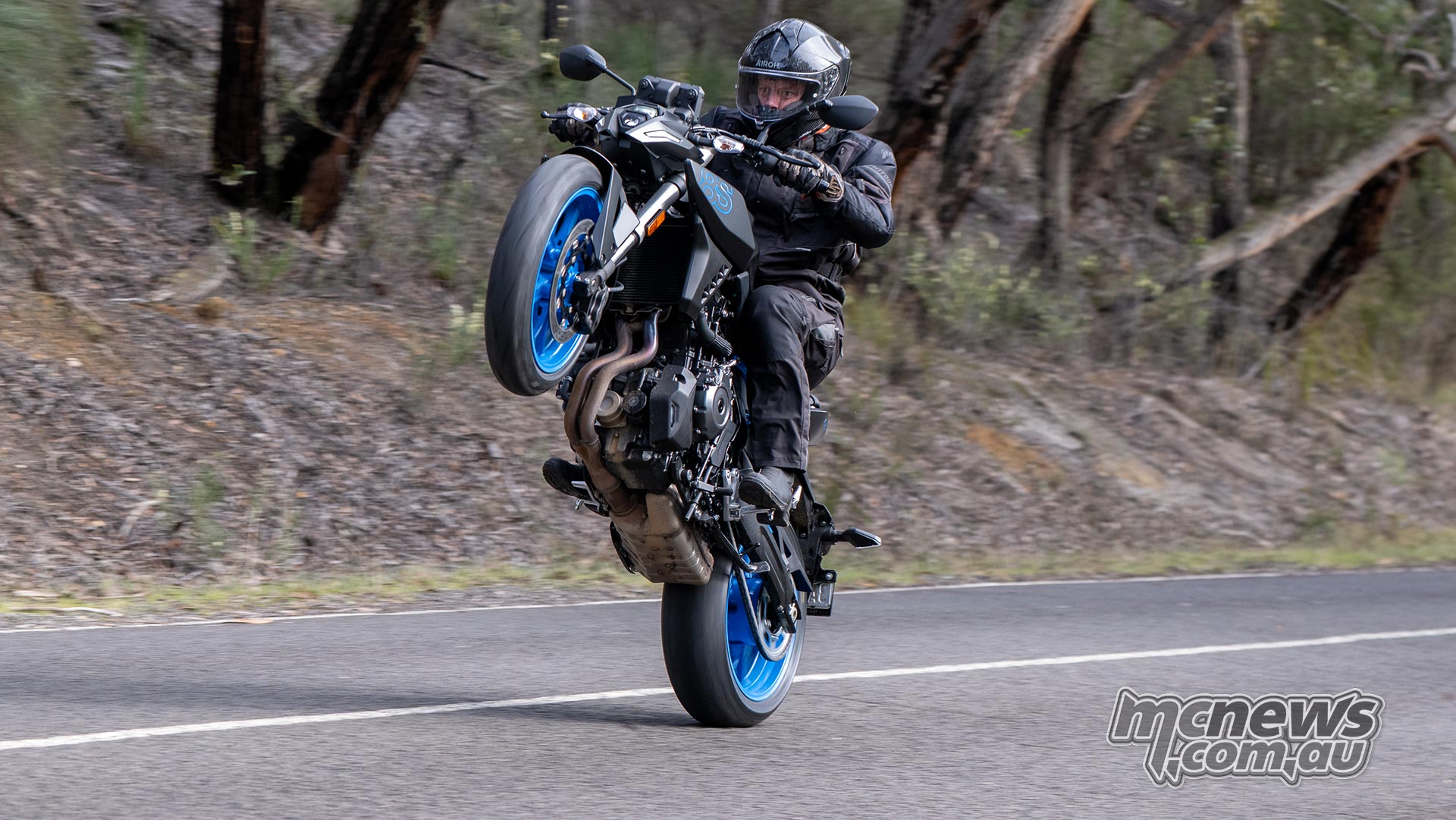
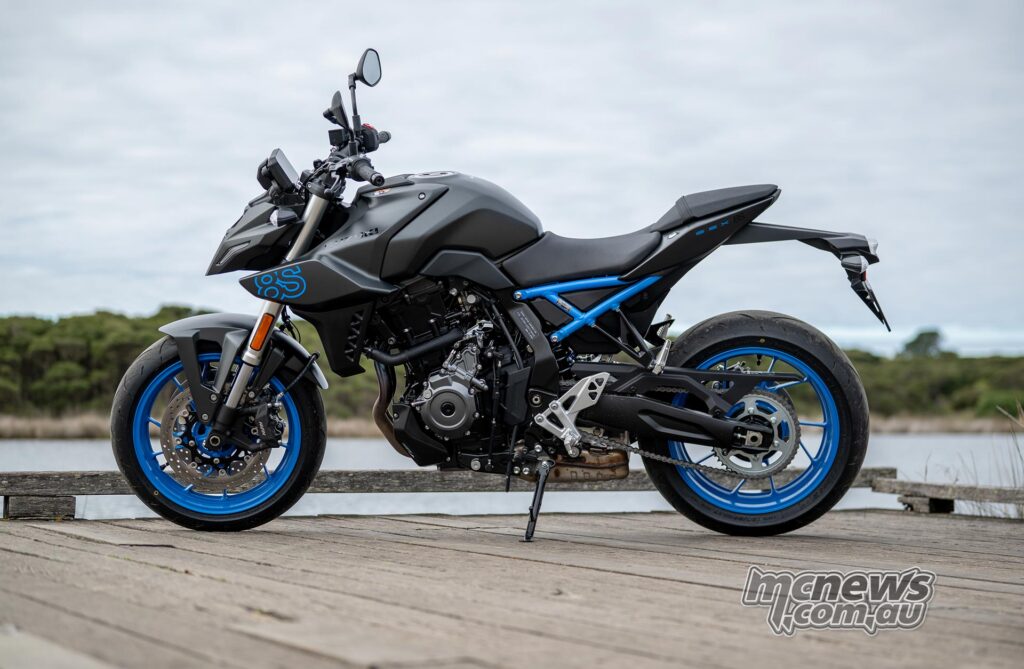
From one great little Suzuki to another, having just stepped off the SV650, we thought it was high time to do a bit of a refresher of their ‘other’ middleweight naked bike. The slightly larger GSX-8S. This year we get a couple of new colours joining the ‘Cosmic Blue’, a grey scheme and a black one – both matt paint. I quite like the look of the grey one, but gee, that blue is still nice.
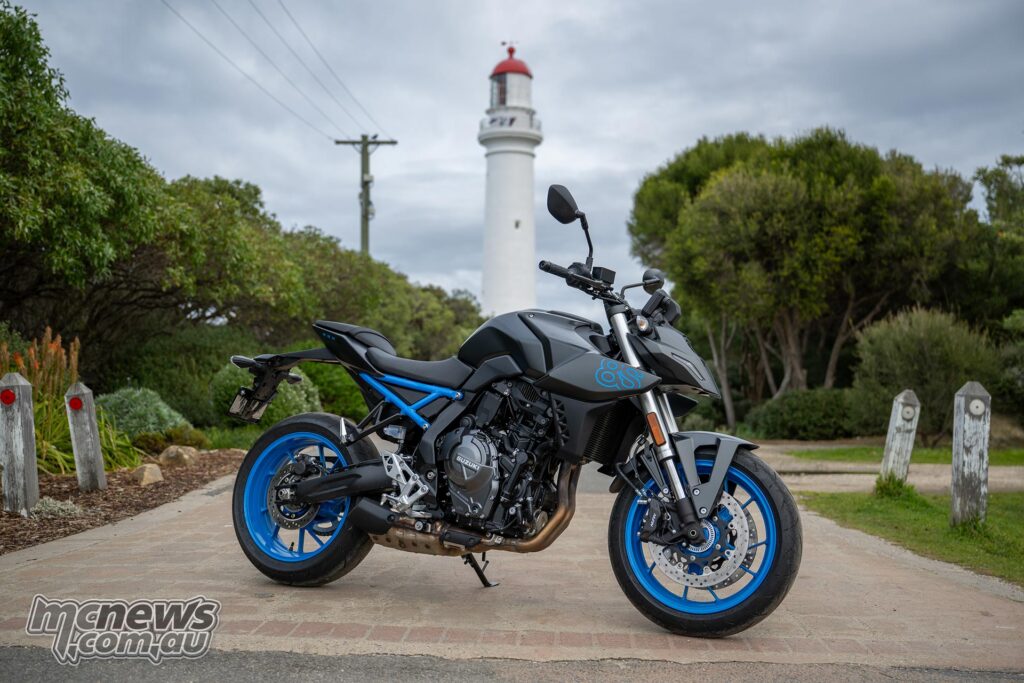
I first threw my leg over the 8S at the Aussie launch back in mid-’23 and came away impressed with the bike as a package. It’s one of those bikes where the spec sheet probably doesn’t tell the whole story. While in theory the bike is down on power to Honda’s CB750, that’s actually only at the very top of the rev range. In reality, I found the 8S to have the edge for everyday use and it was my preferred bike out of the two.
A significant part of that is the lovely 776 cc parallel-twin. It’s a properly good engine. Very Suzuki. Smooth, grunty, refined. Wonderfully fuelled and well behaved. It puts out its 83 hp and 78 Nm in such a usable, reassuring way that compared to the smaller SV650, it’s just… more.
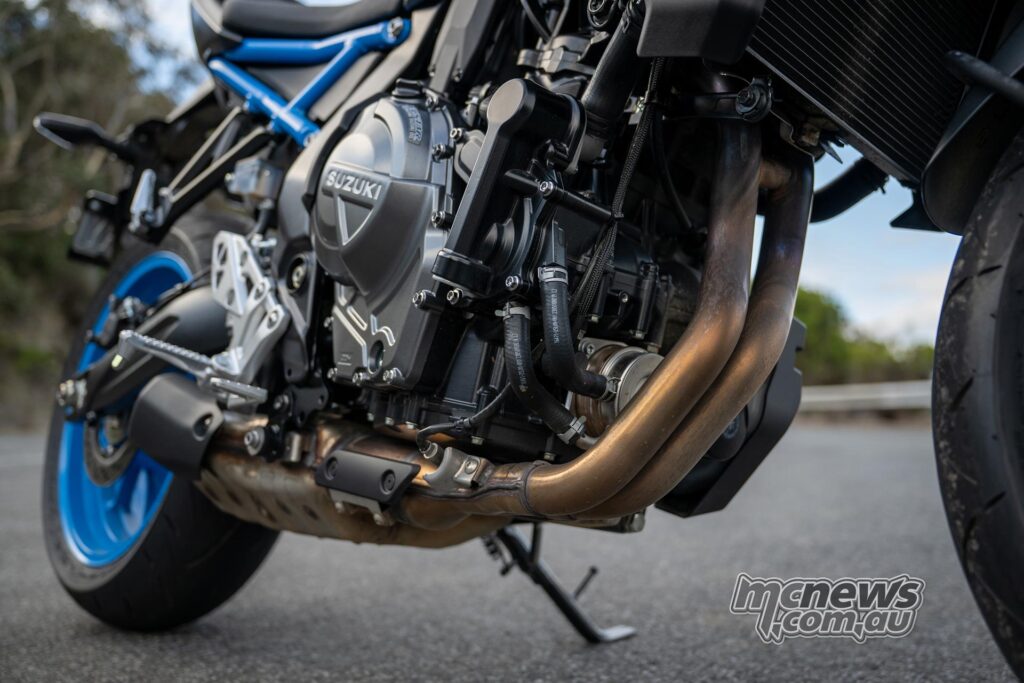
More possibilities. More performance. More fun. A 270-degree firing order also gives the bike that ‘proper’ twin sound. Although that sound is limited a little by the Euro5 fun police. The GSX-8S is simply begging for an aftermarket slip-on.
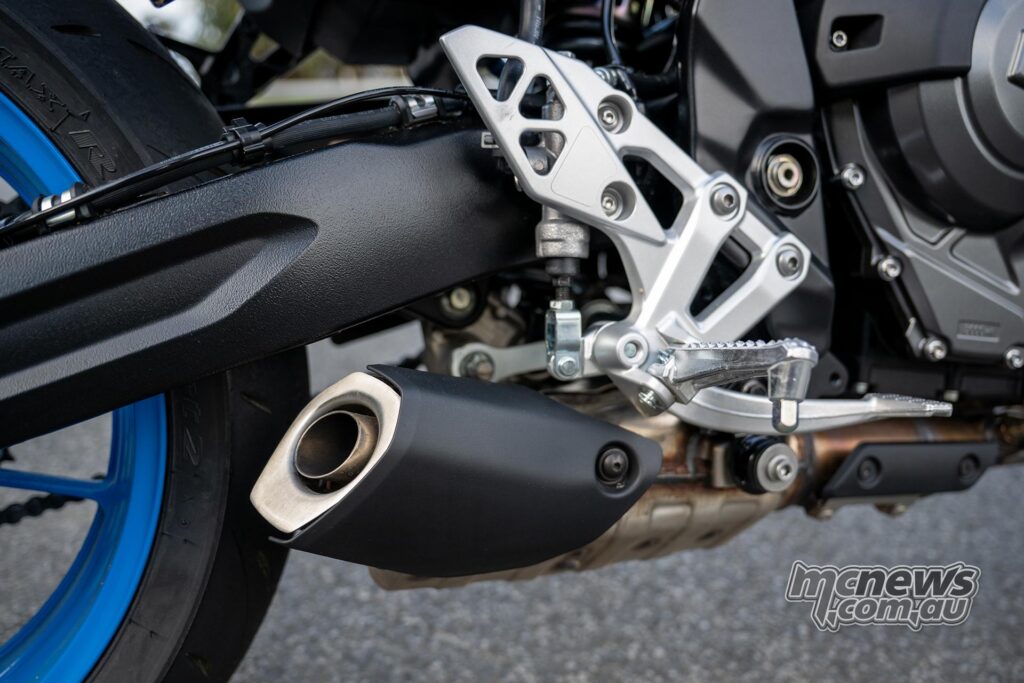
There’s a smooth driveline, terrific throttle feel, a brilliant quickshifter, and a slipper clutch, making for an absolutely fuss-free ride. Surf that meaty mid-range. There’s more than enough grunt to avoid using the gearbox, but it’s such a nice shift that I found myself shifting gears just for the fun of it.
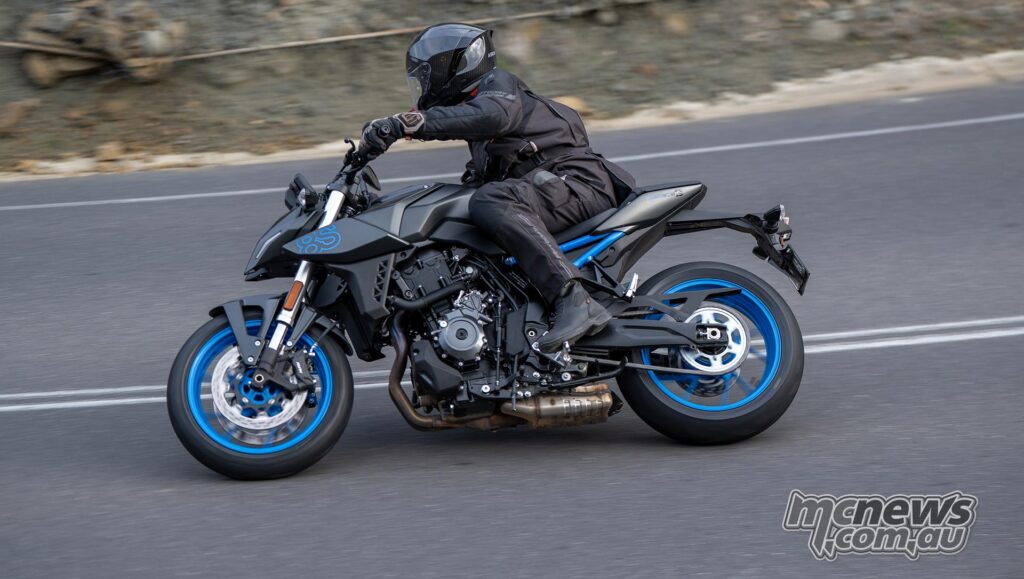
Electronics remain solid, with the standard A, B, and C modes from Suzuki, each featuring a progressively softer power delivery. It’s worth remembering that they all share the same peak output, but they achieve it in different ways.
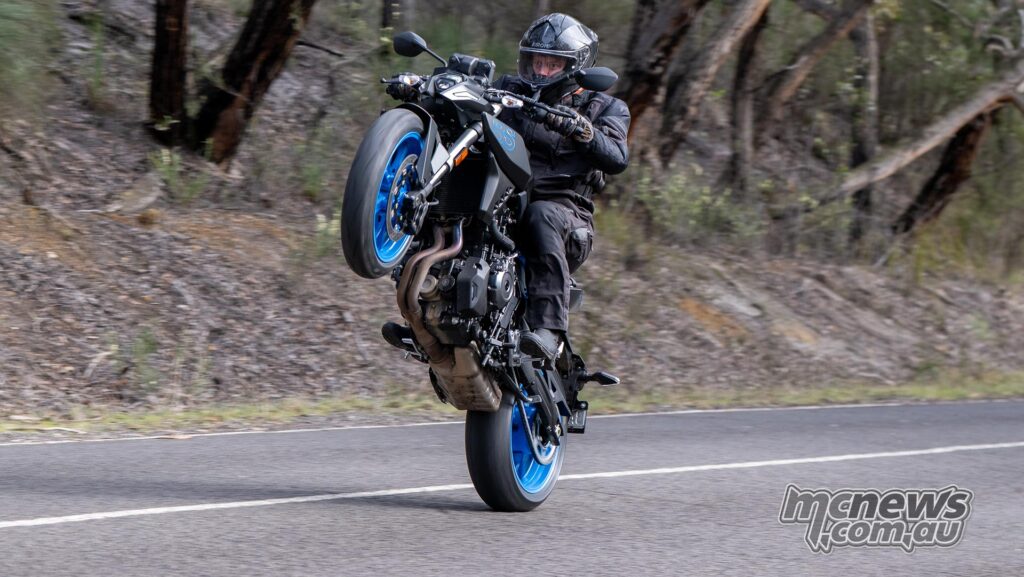
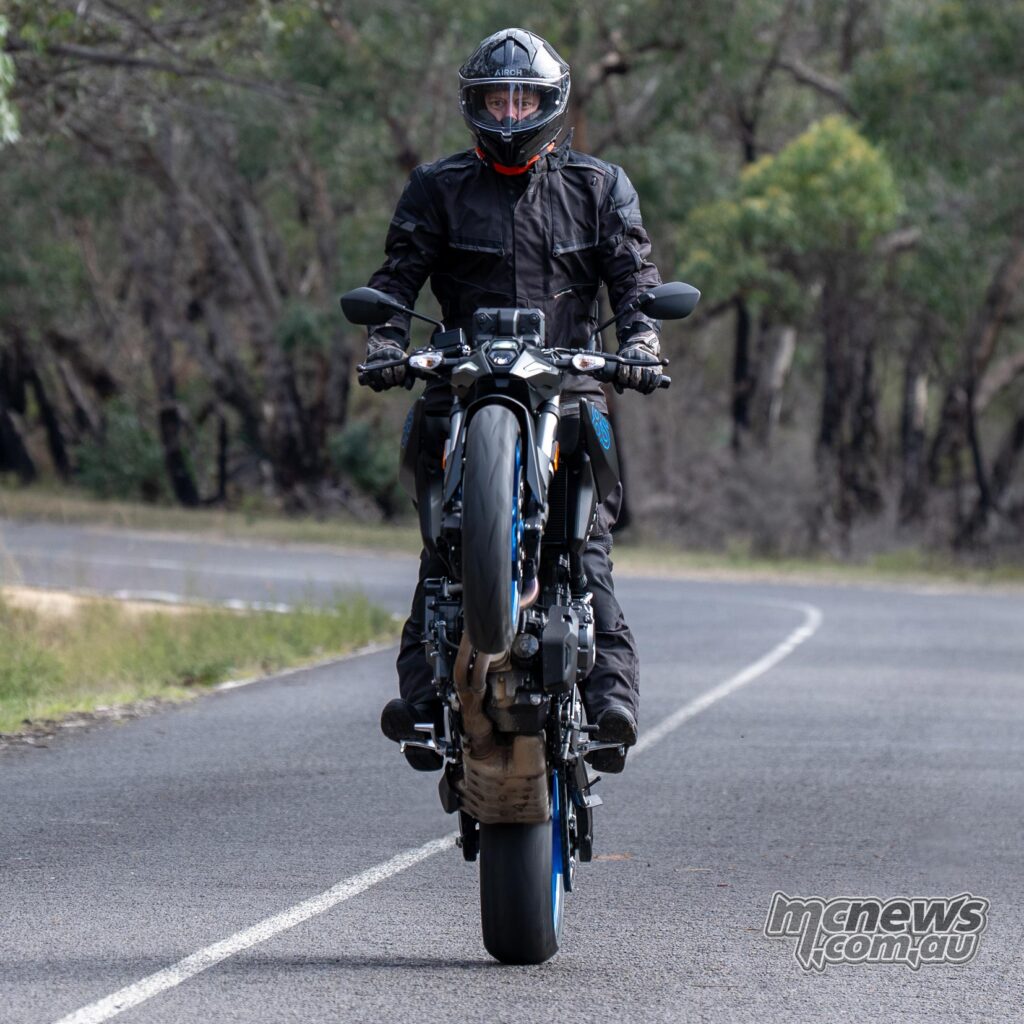
The power modes are all very nicely dialled in. I left mine in A mode almost everywhere, but I did find it easier to do stand-up wheelies in B mode, which builds power ever so slightly steadier.
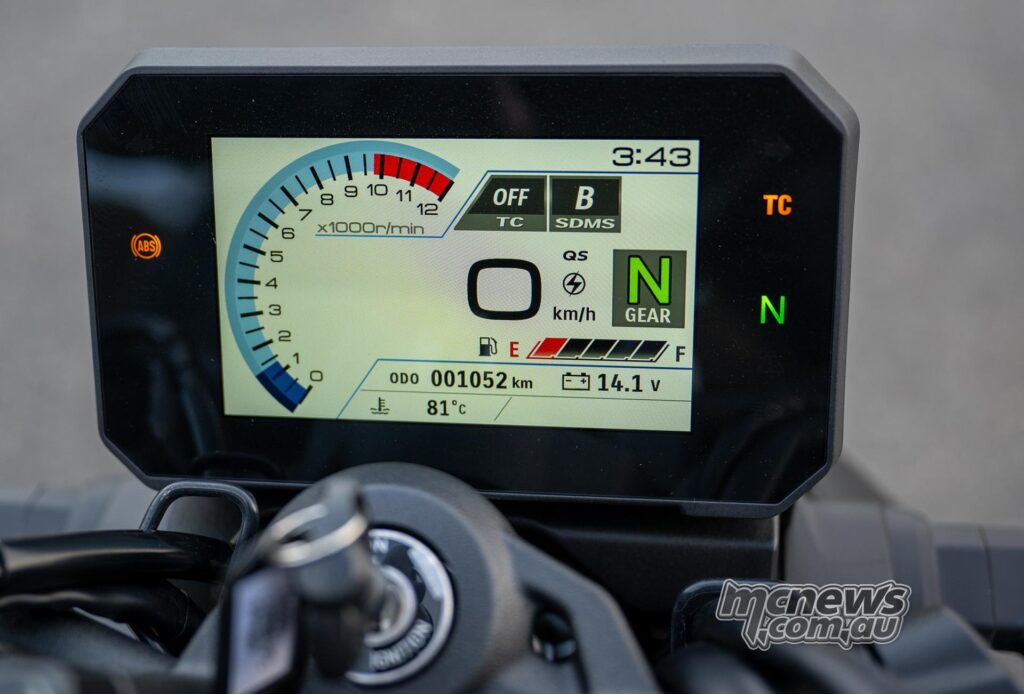
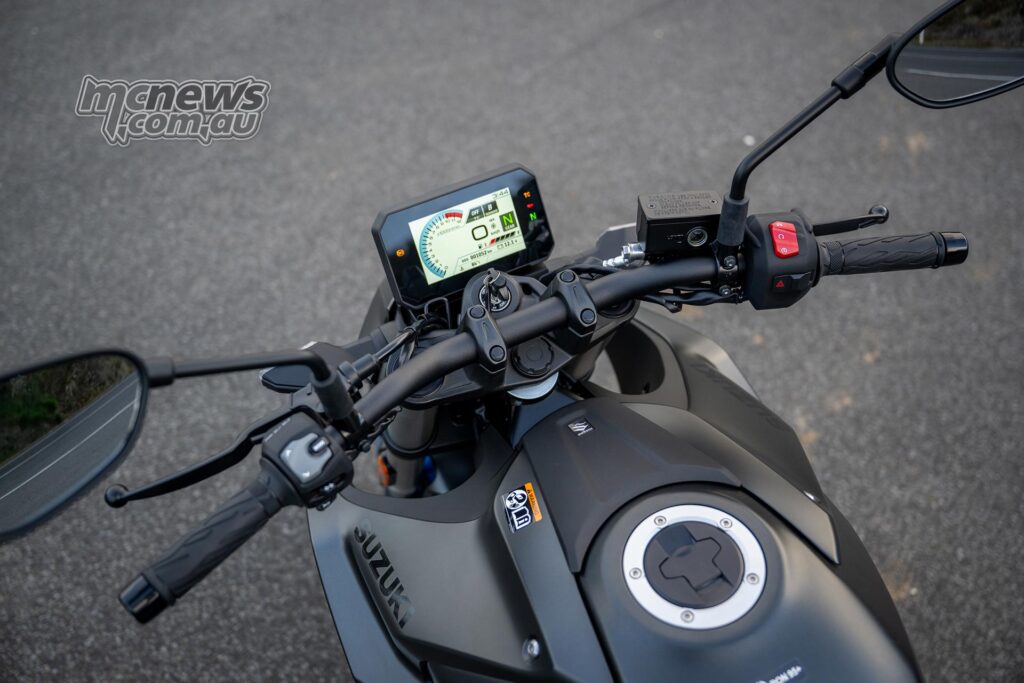
That dash has held up well and remains easy to use and easy to read. I’m still not entirely sold on having modes titled A, B, and C rather than Sport, Road, and Rain, but that’s how Suzuki does things. And realistically, it’s a case of finding your favourite setting and leaving it there. The TC does a good job and is reasonably easy to turn off if you feel like some shenanigans.
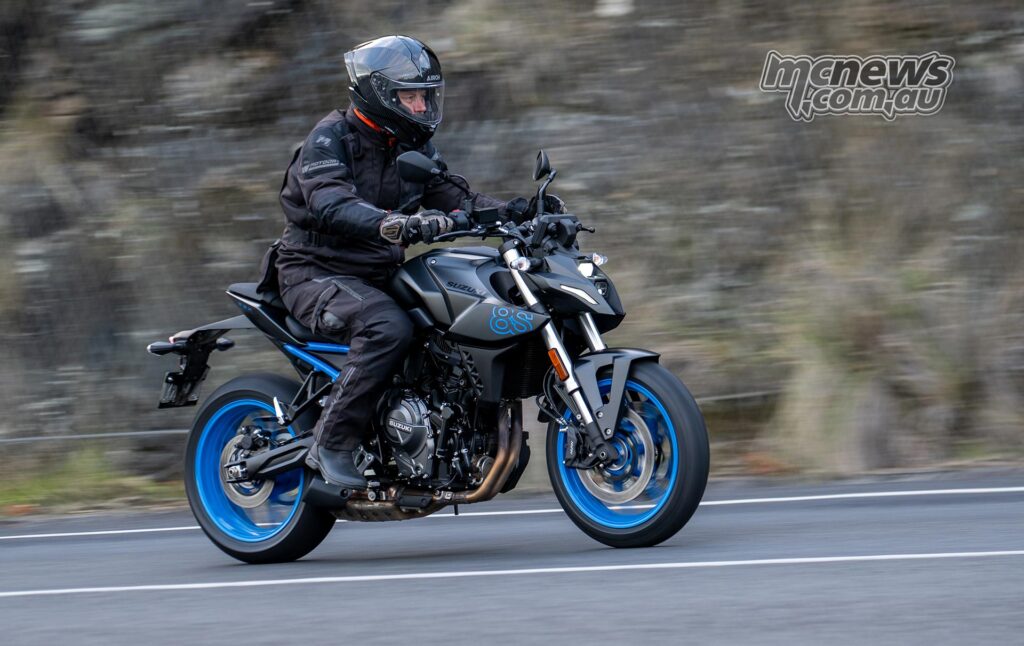
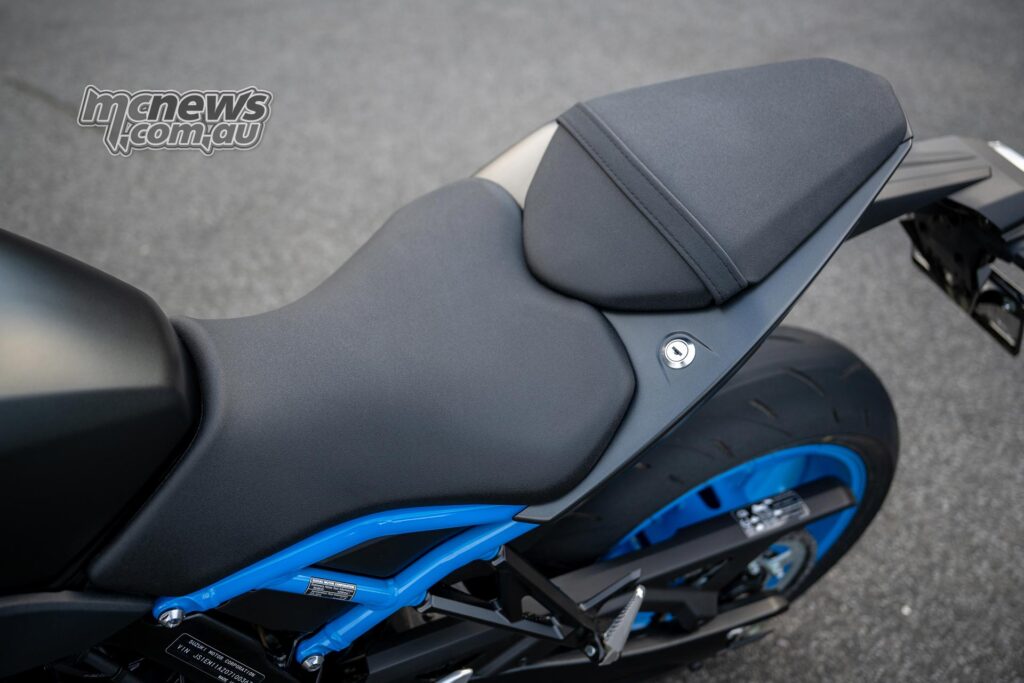
Comparing it to the SV again, I found the 8S to be pretty much bang-on ergonomically. No need to put wider bars on. They’re just right. The seat is extremely comfortable, and with a height of 810 mm, this bike is easy to get on and manoeuvre around. Getting my feet flat on the ground was no problem at all (I’m around 181 cm).
That said, I still found the front centre of the pillion seat distracting, as it presses against your tailbone when you sit back. It’s not uncomfortable – just… Noticeable. Not a deal breaker.
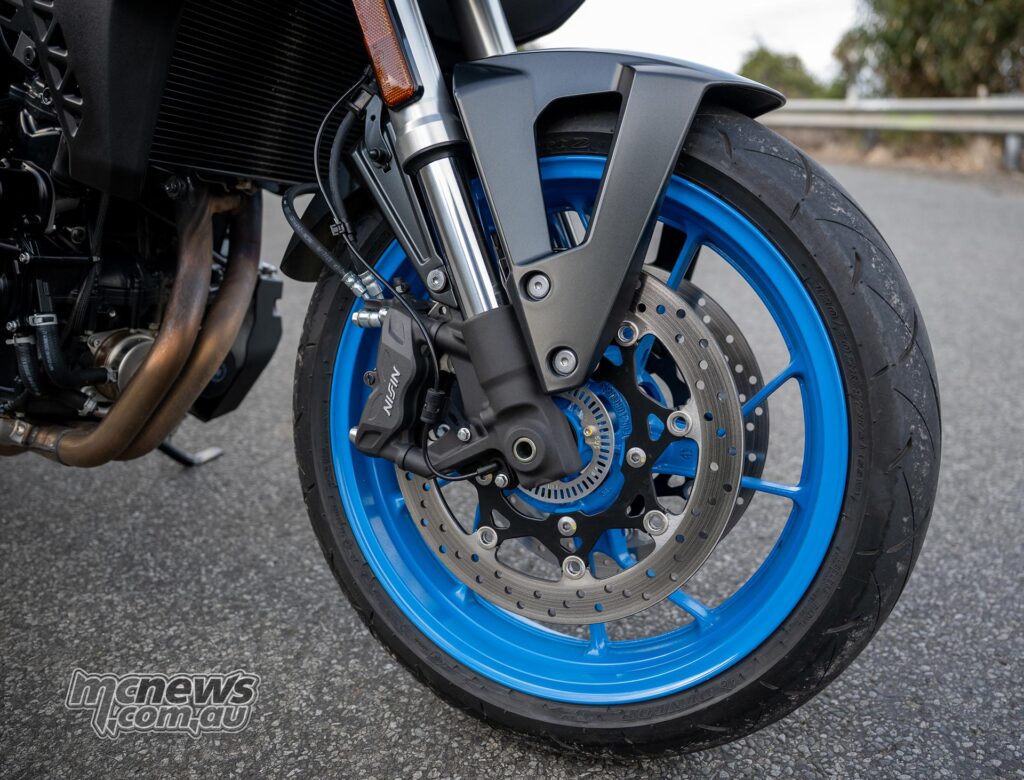
The brakes, too, are excellent. Twin 310 mm Nissins up front do a great job of pulling things up in a serious way, and the rear 240 mm is lovely and soft – especially good around town. Easy to modulate exactly how much brake you’re looking to dial up.
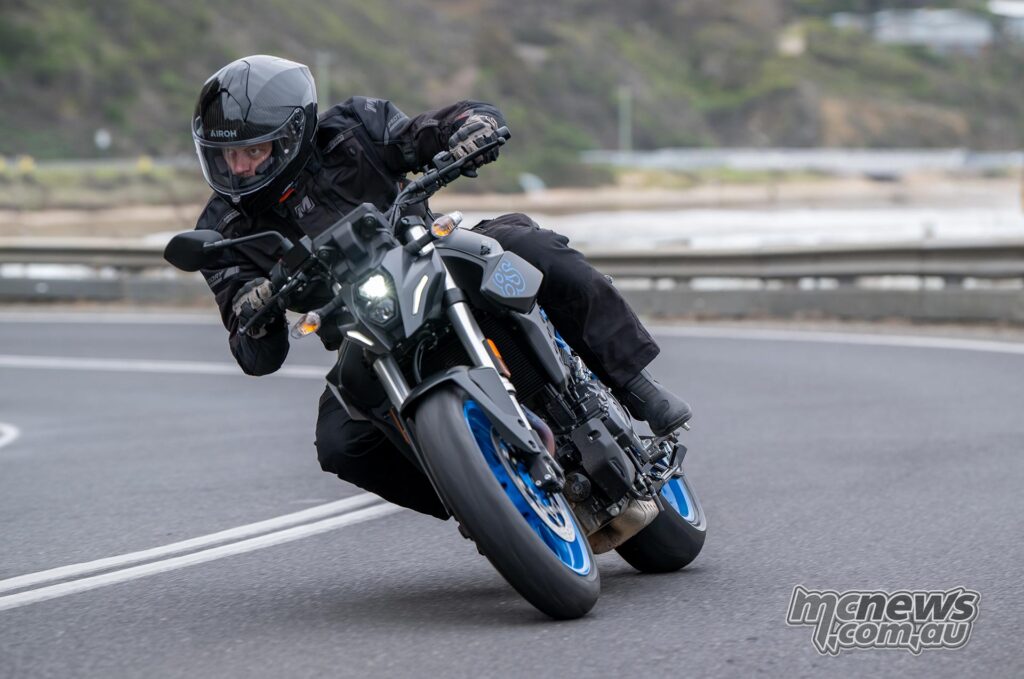
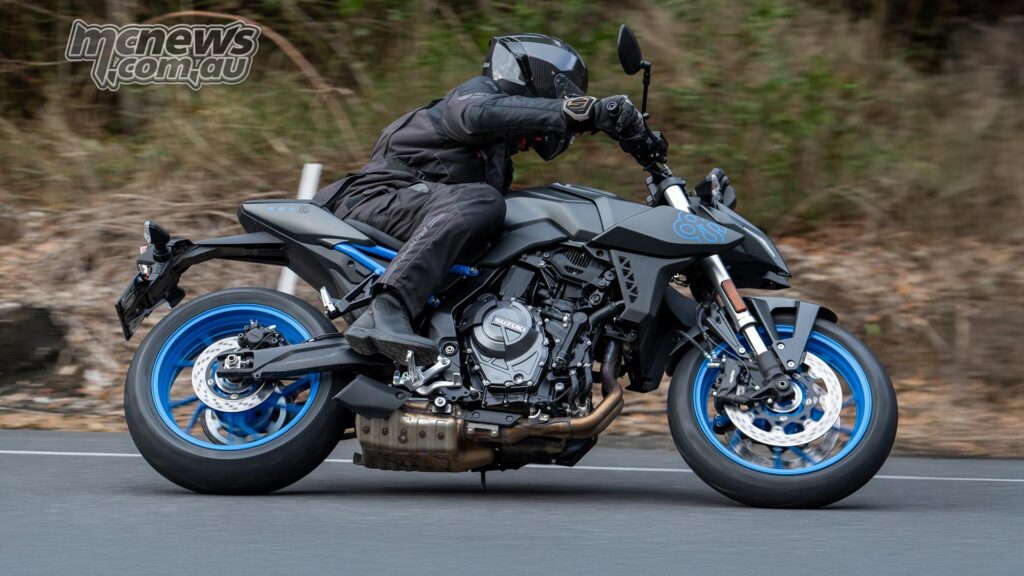
Riding the 8S again, I was reminded that the OEM suspension setting, while being great for cruisier riding, is tuned on the stable side. Particularly the front. I found it particularly evident when swapping back and forth with a KTM Duke 990 that I’m also reviewing.
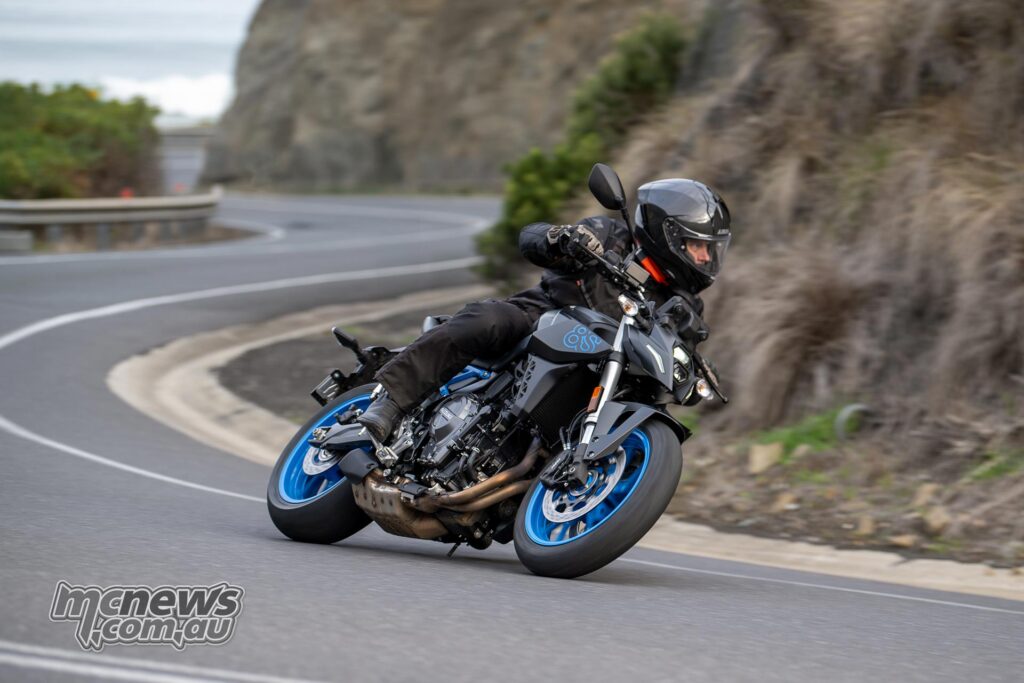
To be fair to the 8S, that Duke’s front end is one of the best I’ve ever ridden, so by comparison, it was probably always going to feel slower to turn.
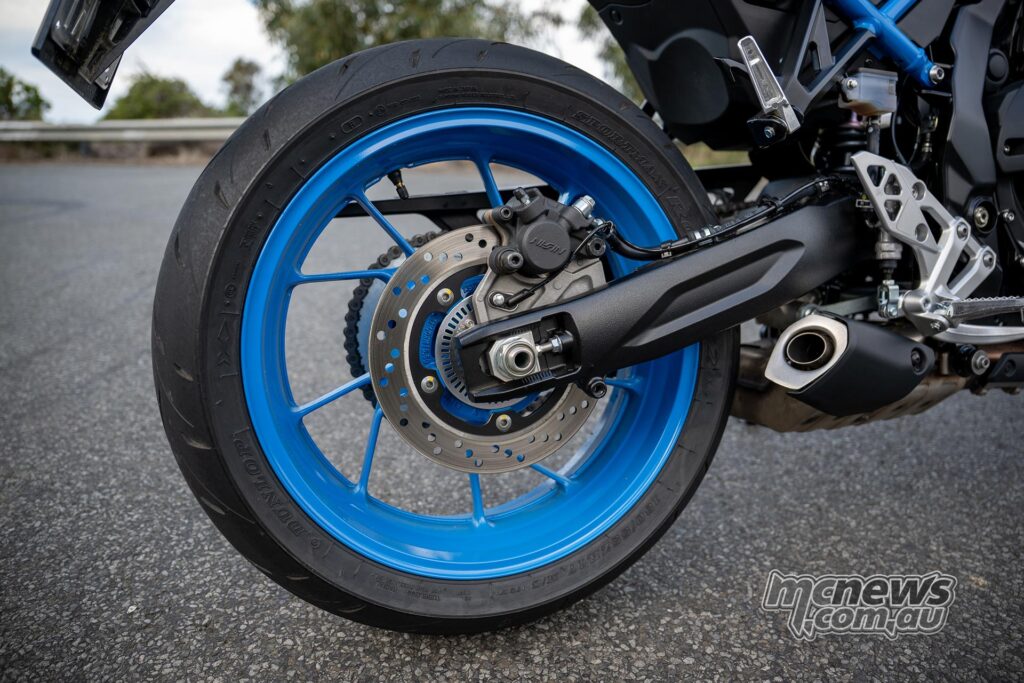
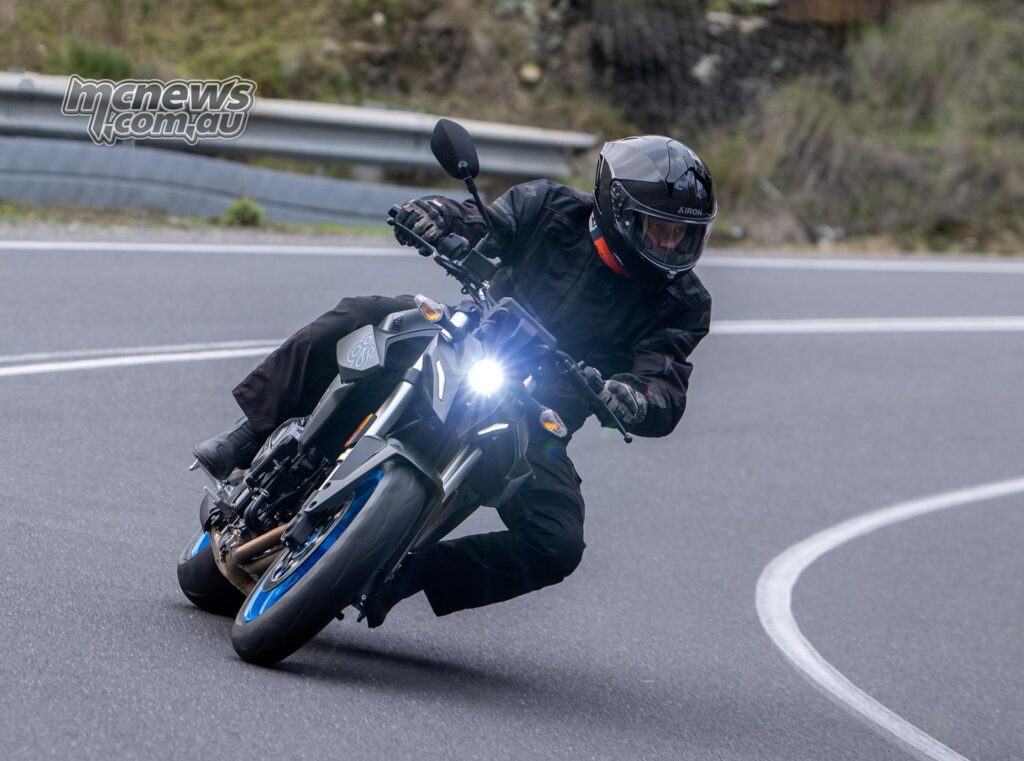
It just feels a little heavier and requires a bit more effort to get the 8S to turn, even in factory settings. Rest assured, though, that adding more preload to the rear makes a noticeable difference. I weigh around 87 kg and dialled up an extra two clicks on the rear for what felt like the sweet spot for me. Turns out I added exactly the same amount at the launch around Lakeside, so it’s good to know I’m consistent.
There’s no adjustment available up front on the KYB forks, but I don’t honestly think any is needed. You’d need to be a long way away from average rider weight to require a tweak.
If you’re still looking for a sharper-turning bike, you could consider dropping a 160 rear tyre on, just as Honda does on the CB750, but I don’t think that’s warranted. I think for the most part, for everyday riding, that little bit of extra stability is no bad thing.
Suzuki doesn’t claim this to be a super-sharp bike with sportsbike handling (like KTM does with the Duke), because it’s not. It’s a great road bike first. One that can happily do sporty rides, but just as happily do commuting duties. And for a lot of riders, that will be precisely what they’re after.
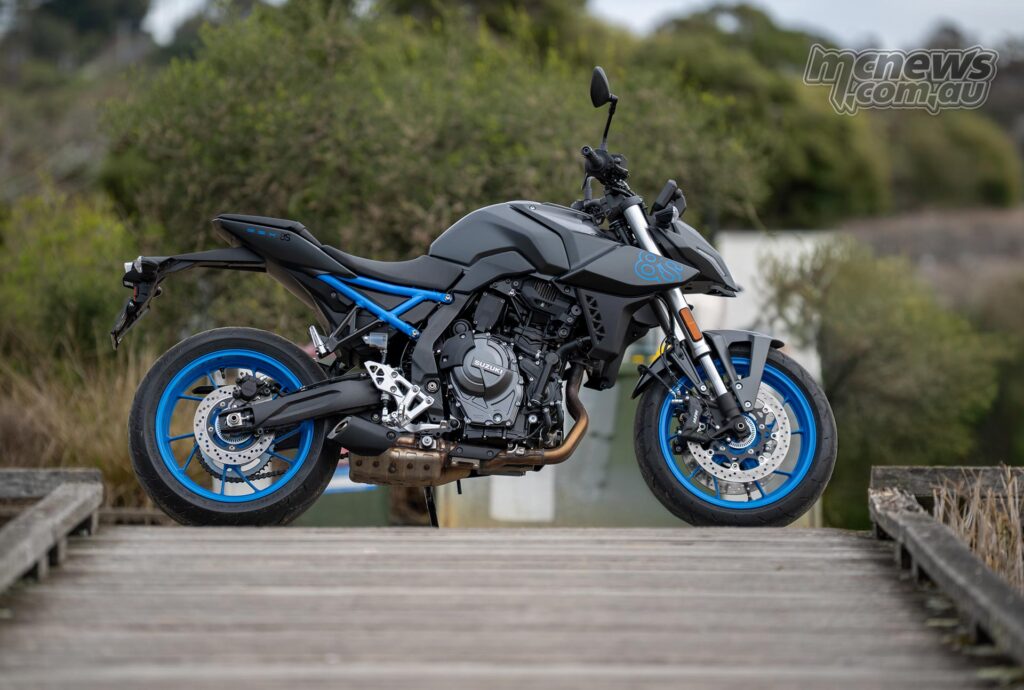
Re-reading my launch report, I compared it to my old CBR600 (which I have very fond memories of) in that it’s a real-world prospect that’s likely to be underestimated. And at just over 14 grand ride away, the GSX-8S represents damn good value.
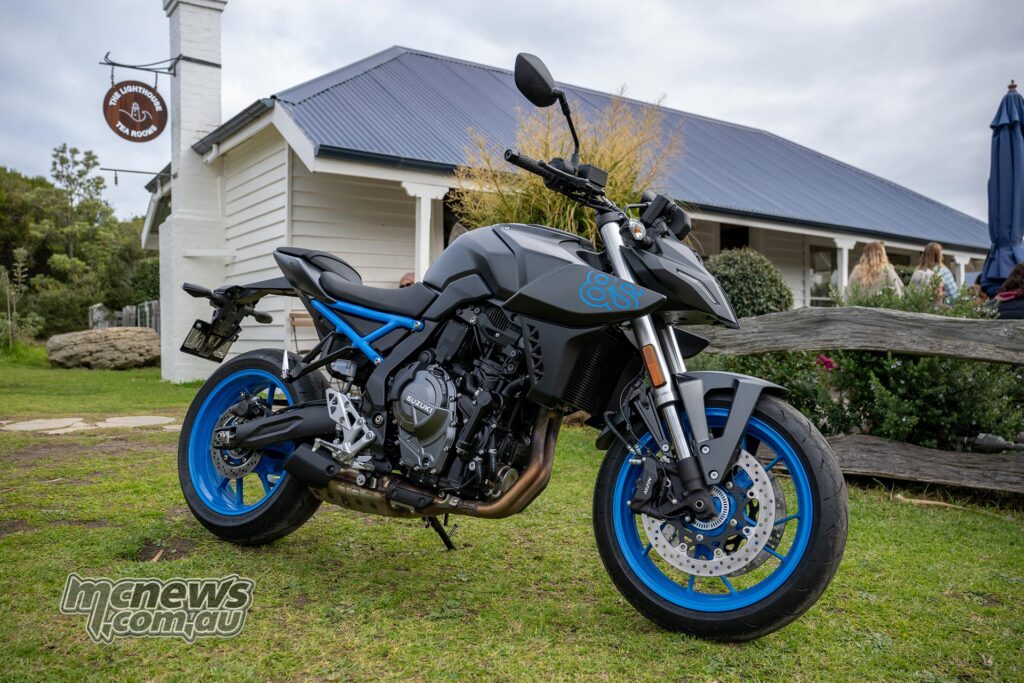
It’s still probably my favourite sub-800cc twin-cylinder naked bike. I can’t think of one that I’d put higher up that list for anything like that sort of money. Grab a test ride and I think you’ll agree. I’d budget 15 grand, though, which would allow me to grab a Yoshi!
GSX-8S Hits:
- Terrific driveline. Wonderful engine, beautifully fuelled and outstanding quickshifter.
- Comfortable ergos for anything you want to tackle.
- Great mix of stable handling with real-world performance.
GSX-8S Misses:
- Still begging for a slip-on.
- Frontal styling treatment might not be for everyone?
- I’m struggling for negatives here…
Suzuki GSX-8S Specifications
|
Suzuki GSX-8S Specifications
|
|
|
Engine
|
Four-stroke, parallel twin cylinder, liquid-cooled, DOHC
|
|
Displacement
|
776cc
|
|
Compression
|
12.8:1
|
|
Fuelling
|
Dual 42 mm throttle-bodies
|
|
Transmission
|
6-speed constant mesh, quickshifter
|
|
Max Power
|
61.9 kW (83.1 hp)@ 8500 rpm
|
|
Max Torque
|
78 Nm @ 6800 rpm
|
|
Chassis
|
Steel frame, trellis sub-frame, aluminium swingarm
|
|
Front Suspension
|
43 mm KYB USD fork, non-adjustable
|
|
Rear Suspension
|
Link type, coil spring KYB shock, preload adjustable
|
|
Front Brakes
|
Nissin four-piston calipers, 310 mm rotors, ABS
|
|
Rear Brakes
|
Single-piston Nissin caliper, 240 mm rotor
|
|
Front wheel/tyre
|
Cast aluminium, 120/70ZR17M/C (58W), tubeless
|
|
Rear wheel/tyre
|
Cast aluminium,180/55ZR17M/C (73W), tubeless
|
|
Length
|
2115 mm
|
|
Width
|
775 mm
|
|
Height
|
1105 mm
|
|
Wheelbase
|
1465 mm
|
|
Seat Height
|
810 mm
|
|
Fuel Capacity
|
14 L
|
|
Wet Weight
|
202kg
|
|
Warranty
|
3 Year Unlimited Kilometre (2 Year Std + 1 Year Bonus)
|
Suzuki GSX-8S Images