

World Superbike in Australia
From Oran Park to Phillip Island, and now The Bend
The Australian round of the FIM Superbike World Championship will move to South Australia’s The Bend Motorsport Park from 2028, ending one of the most enduring venue relationships in the history of production-based world championship motorcycle racing. This was officially announced today at The Bend.
The move follows the already confirmed loss of MotoGP from Phillip Island, with the Australian Motorcycle Grand Prix to shift to Adelaide from 2027. Together, the decisions mark a dramatic reshaping of Australia’s place on the international motorcycle racing calendar. In the space of barely a year, Victoria has lost both of the international motorcycle events that helped define Phillip Island’s modern identity.
For many in the racing world, that remains difficult to reconcile.
Phillip Island is not just another circuit that happened to host major events. To generations of riders, it has been the benchmark. Fast, flowing, exposed, beautiful, frightening and rewarding in equal measure, the 4.445-kilometre Victorian seaside layout has long been spoken of by riders as one of the top motorcycle circuits in the world. For many, it sits at the very top.
But in the modern major events business, the quality of the racetrack itself is only part of the equation.
Infrastructure, accommodation, corporate facilities, access, paddock requirements, transport, fan activation, government backing and broader event economics all now carry increasing weight. On those fronts, South Australia has mounted an aggressive and successful play. Adelaide has already taken MotoGP. The Bend has now secured WorldSBK from 2028.

Dr Sam Shahin – Managing Director of Shell V-Power Motorsport Park
“Securing WorldSBK is a significant achievement for The Bend, and today’s announcement marks a historic day for motorsport and for South Australia. From the outset, our vision has been to create a proud facility capable of attracting the world’s leading motorsport categories and hosting the highest levels of international competition. A decade on, we celebrate a major milestone; WorldSBK is coming. This championship is set to bring the top motorcycle manufacturers, teams and riders to South Australia, creating a powerful platform that will showcase our venue, our passionate motorsport community and our state to a global audience.”
For Phillip Island, the result is brutal. One of the world’s great motorcycle circuits has lost both of its signature global two-wheel events.
Australia was there from the beginning
WorldSBK’s Australian story did not start at Phillip Island, but it did start early.

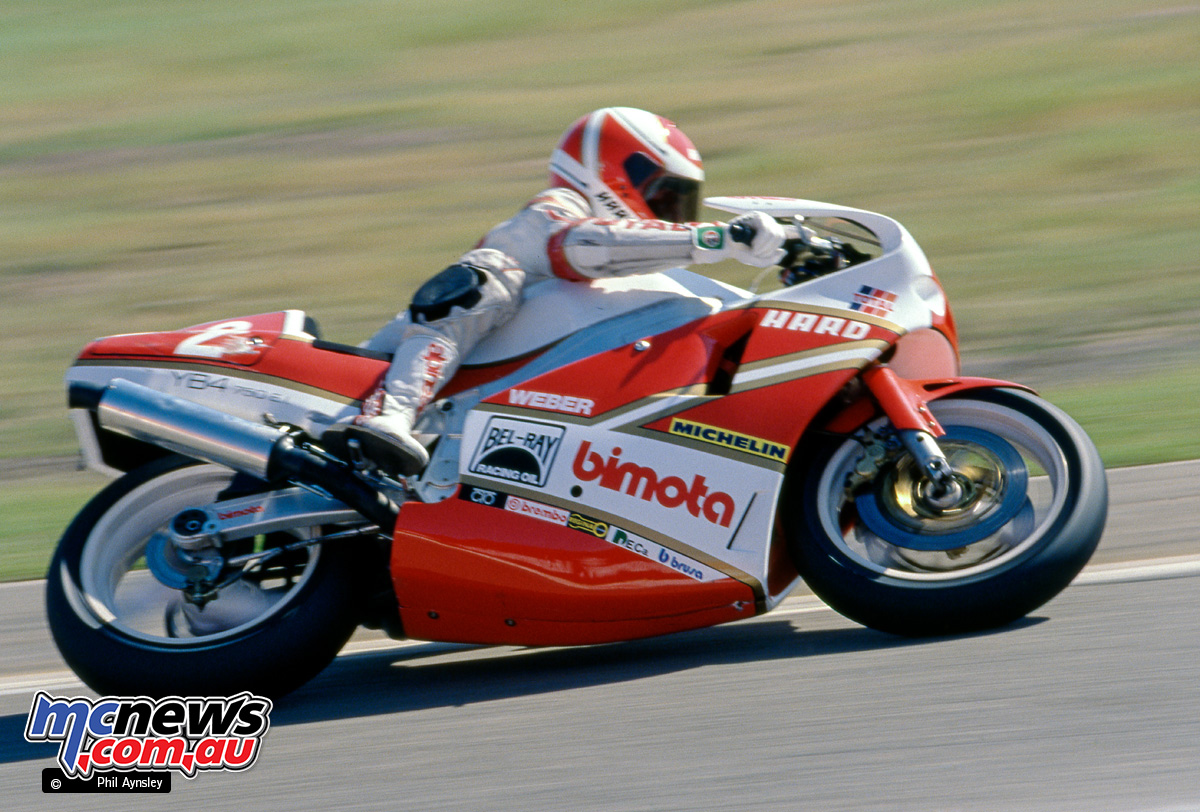
The championship was still in its infancy when Australia first appeared on the calendar at Oran Park in 1988. That meeting, held at the tight and characterful Sydney venue, immediately gave the local crowd something to cheer about. Mick Doohan, years before he would become a five-time 500 cc Grand Prix World Champion, took pole position and won both WorldSBK races.

A year later, Oran Park again delivered Australian success. Peter Goddard and Michael Dowson shared the race wins in 1989, underlining the strength of Australia’s production racing scene at the time.
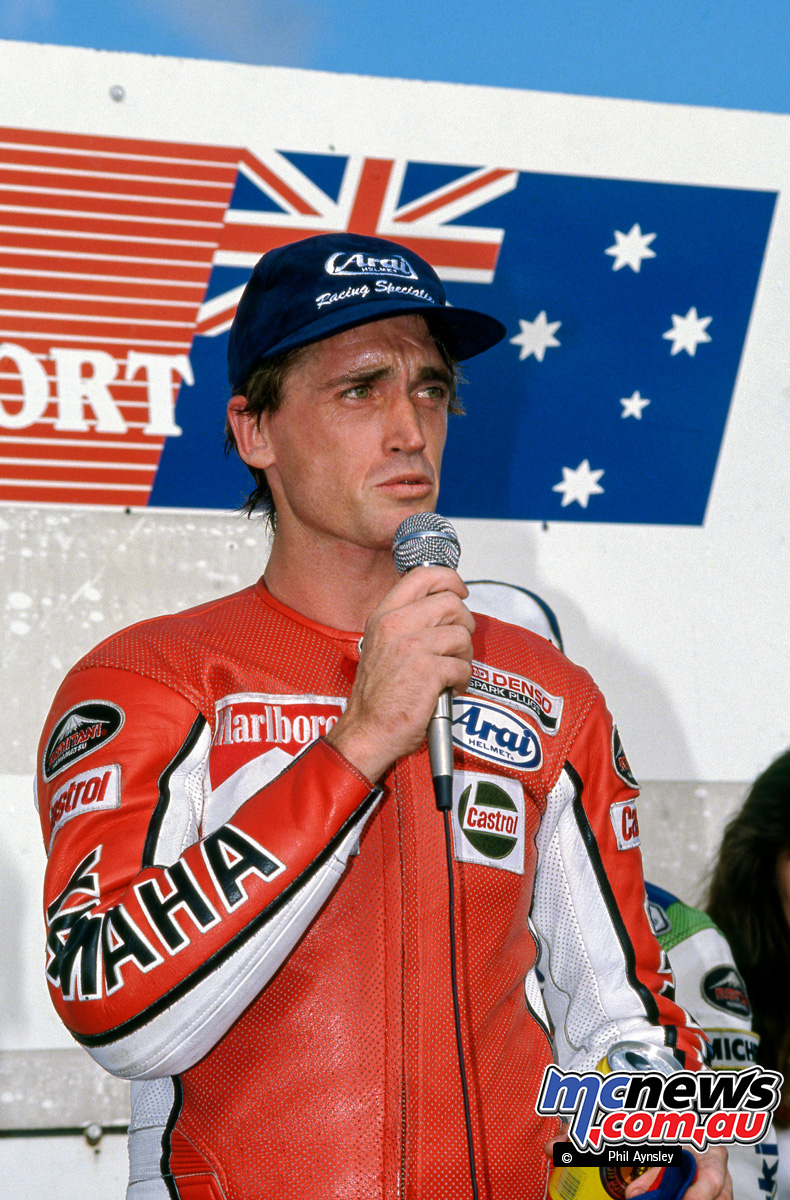
Those first two Australian WorldSBK visits now sit as a reminder of a very different era. Oran Park itself is long gone, swallowed by Sydney’s suburban spread. The championship, meanwhile, was about to find what would become one of its defining homes.
Phillip Island takes over
Phillip Island first hosted WorldSBK in 1990, and the timing could hardly have been better.
The circuit had already made a major impression when the Australian Motorcycle Grand Prix joined the world championship calendar there in 1989. Wayne Gardner’s victory in the 500 cc race helped etch Phillip Island into Australian motorcycling folklore, and WorldSBK’s arrival the following year further cemented the venue’s place on the international stage.

The first WorldSBK round at Phillip Island also delivered another Australian fairytale. Peter Goddard won the opening race, while Rob Phillis won the second. The local riders did not merely make up the numbers; they owned the place.
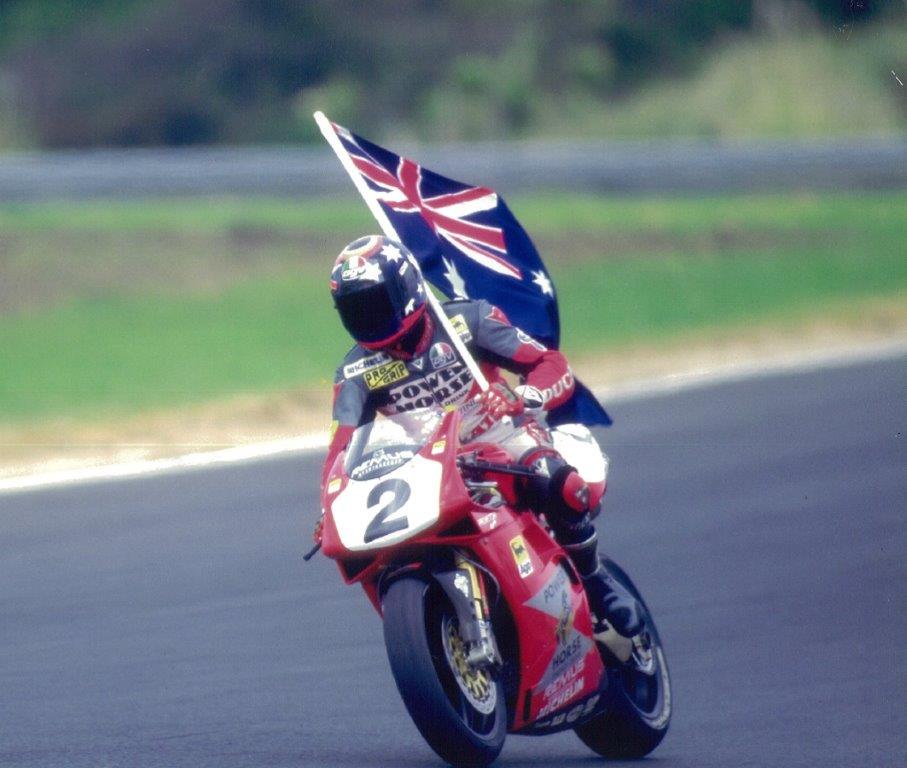
In the early Phillip Island years, Australians were a serious force. Goddard, Phillis, Kevin Magee, Anthony Gobert, Troy Corser, Troy Bayliss and Garry McCoy all became part of the circuit’s WorldSBK story. The Island was not just a host venue; it was a battleground on which Australian riders regularly humbled the world.
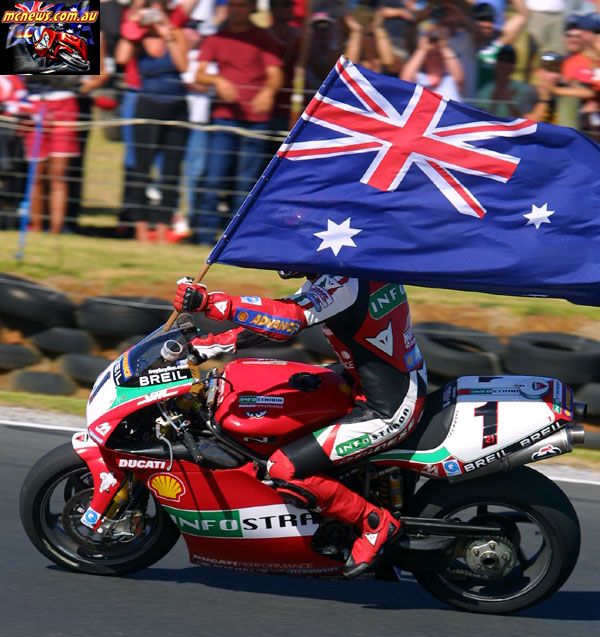
That home-ground advantage did not last forever, but the circuit’s stature only grew.
The Island became WorldSBK’s southern home
Across more than three decades, Phillip Island became a fixture of the WorldSBK calendar. The event was often positioned as the season-opener, giving teams and riders their first real competitive reading after winter testing.
It was an ideal stage for production-based racing. Phillip Island’s long, loaded corners rewarded rider commitment and chassis balance. Gardner Straight gave superbikes room to breathe. Doohan Corner demanded nerve. Southern Loop, Stoner Corner, Siberia, Lukey Heights and the downhill run through MG all asked different questions of rider and machine.
Then came the final sector.
For motorcycle racing, few sequences in the world have produced the theatre of Phillip Island’s fast final corners. The drive onto the straight has decided countless races, while the slipstream to the line has made Phillip Island a natural home for last-lap WorldSBK drama.
The circuit also suited the championship’s identity. WorldSBK is built around recognisable production-based machinery, and Phillip Island has always been a place where engine character, tyre behaviour and rider bravery are laid bare. A Ducati V-twin, a screaming four-cylinder Kawasaki, a Yamaha, Honda, Suzuki, Aprilia, BMW or Bimota — the Island has had a way of making each bike’s strengths and weaknesses visible.
That is part of why the place has been loved so deeply by riders.
A rider’s circuit, but no longer enough
Phillip Island’s reputation among riders has never been the problem.
If anything, the circuit layout remains the strongest argument for why the loss of MotoGP and WorldSBK feels so significant. There are newer venues. There are larger venues. There are venues with better corporate facilities, more convenient access, more nearby hotels, better paddock infrastructure, and stronger government-backed event precincts.
But there are very few motorcycle circuits that stir riders quite like Phillip Island.
It is a track that flows with the natural topography rather than fighting it. It rewards rhythm rather than stop-start aggression. It keeps bikes leaned over, loaded and moving. It punishes hesitation. It flatters the brave but exposes the careless. It also gives fans something modern circuit design does not always provide: a sense that the racetrack itself is part of the contest.
Yet the broader business of world championship racing has changed.
The needs of MotoGP and WorldSBK are not the same as they were in 1990, or even 2010. The paddocks are larger and more commercially demanding. Hospitality has become a core revenue pillar. Promoters want destination events, major-city visibility, high-end corporate inventory and large government-backed activations.
Phillip Island has the circuit. It has the history. It has the view across Bass Strait and the mystique that comes with decades of great racing.
What it has not had, at least at the level now demanded by international rights holders, is the infrastructure momentum to keep pace with rival bidders.
South Australia saw the opportunity
South Australia has moved decisively.
The MotoGP deal for Adelaide from 2027 was the first major blow to Phillip Island’s future as Australia’s global motorcycle racing capital. That event will move to a city-based Adelaide circuit under a six-year agreement, giving South Australia a world championship motorcycle event in the heart of its broader major events strategy.
Now, The Bend Motorsport Park has secured WorldSBK from 2028.
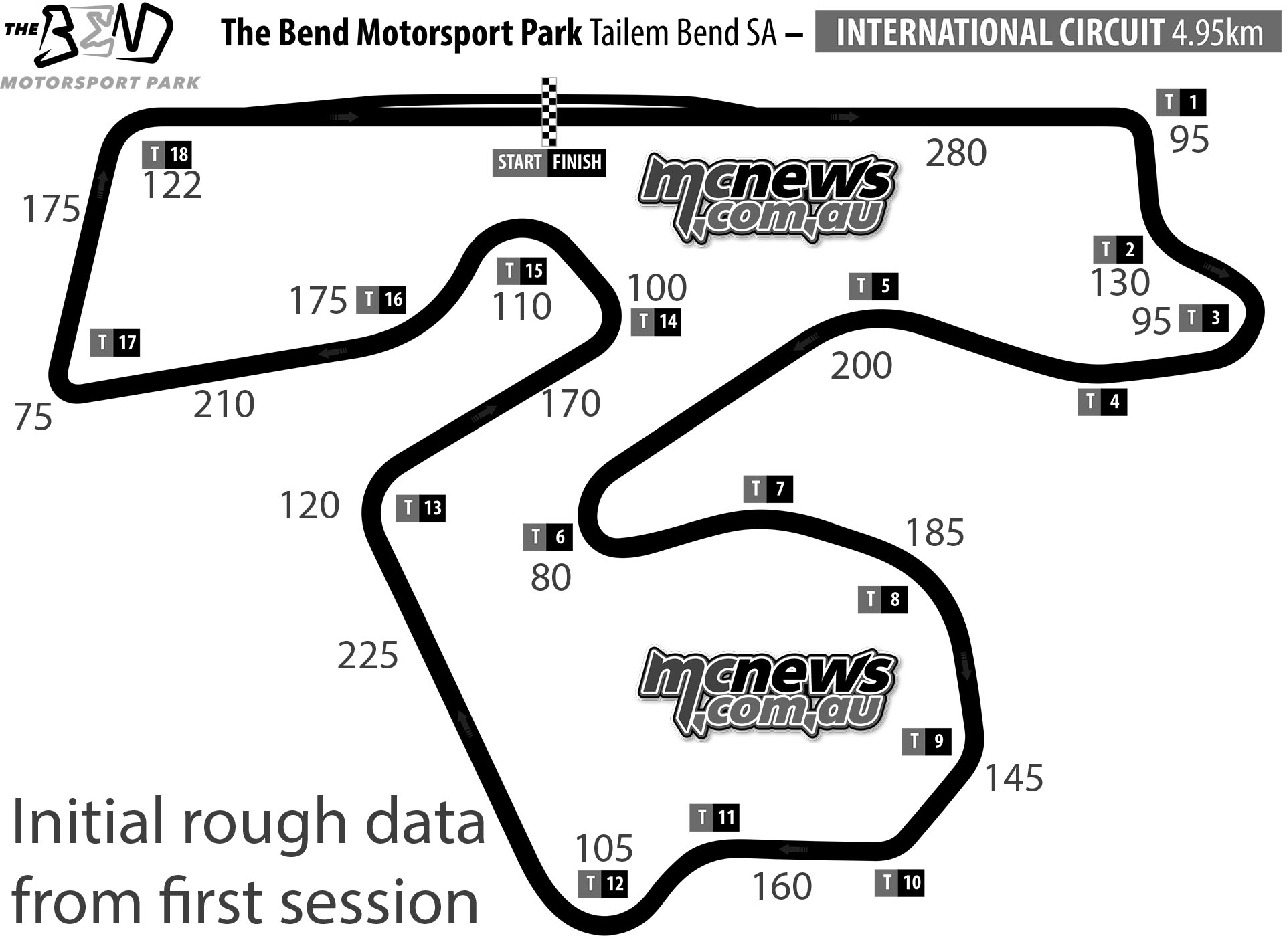
The Bend is a very different proposition to Phillip Island. It does not have the same motorcycle racing romance. It does not have decades of WorldSBK history. It does not have Bass Strait as a backdrop, nor corners that carry names already embedded in the sport’s language.
What it does have is a modern motorsport complex with significant infrastructure. Multiple circuit configurations, substantial pit and paddock facilities, a limited amount of on-site accommodation, room for expansion and a state government clearly willing to pursue major motorsport properties have all helped South Australia make its case.
Opened in the modern era and designed as a multi-purpose motorsport destination, the Tailem Bend venue offers something Phillip Island has struggled to match: a broader precinct model and an owner willing to invest what it takes to secure world class events.
For rights holders and promoters, that matters.
Gregorio Lavilla – WorldSBK Sporting Director
“We are delighted to announce The Bend as the future home of the Australian Round of the FIM Superbike World Championship. Australia has always held a special place within WorldSBK, and it remains an important market for our championship, manufacturers, teams and fans. The Bend is an impressive venue with exceptional facilities and a strong commitment to motorsport. We believe it provides an outstanding platform for WorldSBK and we are excited to begin this journey together from 2028.”
The production-based championship moves on
WorldSBK’s move to The Bend from 2028 will mark the end of a remarkable Phillip Island chapter.
The production-based world championship has been part of the Island’s fabric for more than three decades. It has seen local heroes win, legends emerge, champions tested, rookies blooded, and countless early-season form guides written and rewritten before the paddock even left Australia.
For Australian fans, WorldSBK at Phillip Island has also been one of the most accessible world championship experiences in motorcycle sport. It has carried a different feel to MotoGP. Less crowded, more relaxed, closer to the paddock and often more intimate, the event built its own loyal following.
In many ways, it was the purist’s weekend.
Superbikes howling across the top of the Island in February sun. World Supersport slipstreamers fighting to the line. Australian Superbike support categories adding local relevance. Campgrounds full of bikes. Fans watching from Siberia, Lukey Heights, MG, the outfield and Gardner Straight.
That atmosphere will not be easy to transplant.
The Bend will bring its own strengths, and South Australian race fans are likely to embrace a world championship motorcycle event with enthusiasm. It is also possible that, over time, the venue develops its own WorldSBK character.
But it will not be Phillip Island. Nor should anyone pretend otherwise.
A warning written in plain sight
The larger question now is what this says about Phillip Island’s future.
A circuit can be world-class in layout and still be left behind as a major event venue. That is the uncomfortable lesson in all of this.
Phillip Island remains one of the great motorcycle tracks. It will still be cherished by riders, track day regulars, national competitors and fans who understand the difference between a great facility and a great racetrack. Those two things are not always the same.
But international events now demand both.
The loss of MotoGP was already a seismic moment. The loss of WorldSBK makes the pattern impossible to ignore. This is no longer a one-off commercial disappointment. It points to a broader failure to protect and develop one of Victoria’s most valuable motorsport assets in line with the demands of modern international events.
For years, Phillip Island’s layout did much of the heavy lifting. The racing was so good, the view so spectacular, and the history so deep that the shortcomings elsewhere could be endured. But modern world championship sport has become less forgiving.
The rights holders have options. Other states have ambitions. Newer venues have more room, more flexibility and, in South Australia’s case, a clear political appetite.
The end of an era, but not the end of the Island
Phillip Island is not finished as a racetrack. Far from it.
Its place in motorcycle racing history is secure. The circuit will continue to matter. It will remain a jewel for national racing, testing, club competition, ride days and any international opportunities that may yet be found. It is still the kind of track riders travel across the world to experience.

But losing MotoGP to Adelaide and WorldSBK to The Bend changes its standing. The Bend has won the business. Adelaide has won MotoGP. South Australia has positioned itself as Australia’s new international motorcycle racing destination.
Peter Malinauskas – South Australian Premier
“Securing WorldSBK further strengthens South Australia’s position as Australia’s motorsport capital and will deliver significant economic, tourism and profile benefits across the state, and in particular our regions. South Australia has built one of the strongest motorsport portfolios in the country. From the world-class facilities at The Bend to the Adelaide street circuit, we are attracting premier events, passionate fans and global attention. With WorldSBK joining MotoGP, the Adelaide 500 and the AirTouch 500 Enduro, this announcement reinforces our commitment to motorsport and reflects our determination to ensure South Australia remains the home of motorsport in this country. It also provides a pathway for the next generation of riders, engineers, officials, volunteers and motorsport enthusiasts to engage with world-class competition right here at home.”
Phillip Island, meanwhile, is left with the one thing nobody can take away from it: the racetrack itself.
For riders, that may still be enough to make it one of the best in the world.
For the modern major events game, it no longer was.