

Harley shifts focus to World Baggers as Indian stays the KOTB course
Harley-Davidson will withdraw its factory team and official team support from the MotoAmerica King of the Baggers Championship for 2027, a move significant enough for MotoAmerica to publicly acknowledge that the late decision presents challenges for the future of one of its most distinctive categories.
At almost exactly the same time, Indian Motorcycle has gone the other way, recommitting to King of the Baggers with reigning champion Hayden Gillim and Australian former champion Troy Herfoss confirmed to spearhead its Vance & Hines-run factory effort in 2027.
The divergence leaves bagger racing heading down two quite different paths.
Indian remains committed to the expensive development war that has defined MotoAmerica’s King of the Baggers, while Harley-Davidson will concentrate its premier factory racing resources on expanding the FIM Harley-Davidson Bagger World Cup alongside MotoGP.
There is some irony in the timing. Just days before Harley’s announcement, Indian CEO Mike Kennedy spoke of expecting the Milwaukee marque to be fighting for the number-one plate again at Daytona in 2027.
Two days later, Harley-Davidson announced that no factory Road Glide team would return to do so.
MotoAmerica admits Harley decision presents challenges
Harley-Davidson announced on October 1 that its Factory Racing participation and official team support in MotoAmerica King of the Baggers would conclude with the 2026 season.
MotoAmerica responded the next day, and its statement went far beyond thanking Harley for its involvement.
MotoAmerica
“Receiving this news at such a late stage presents challenges.”
MotoAmerica added that it was actively exploring the available options to continue supporting the category and would provide further information when available.
King of the Baggers has effectively been built around the rivalry between Harley-Davidson and Indian Motorcycle. There have certainly been independent teams, but it is the technical and corporate battle between America’s two major motorcycle manufacturers that has supplied much of the category’s identity.
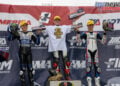
The factory Harley team departed on a high. Kyle Wyman won the final 2026 race in difficult wet conditions at New Jersey Motorsports Park, while team-mate Bradley Smith completed the season second in the championship behind Indian’s Hayden Gillim.

Harley leaves the factory battle having claimed three of the six multi-round King of the Baggers championships contested between 2021 and 2026, with Wyman the most successful rider in the category’s history with 27 victories.
That does not necessarily mean Road Glides will disappear from the grid.
Harley machinery has become deeply embedded in the category, with established independent teams, specialist suppliers and a considerable body of technical knowledge now surrounding the platform.
Harley also supported privateer competition in 2026 through contingency payments and the availability of racing parts. However, the company’s new announcement states that its “official team support” will end, so what assistance independent Harley teams might receive in 2027 is still to be established.
There is every reason to expect well-equipped Road Glides to remain on the grid. Whether those teams can operate at the level required to take on a fully funded Indian/Vance & Hines factory programme is a different question.
Indian commits to Gillim and Herfoss for 2027
There is considerably less uncertainty on the Indian side of the paddock.
Indian’s first season with Vance & Hines Motorsports produced an extraordinary return in 2026. The factory team won 10 of the 14 races, scored 24 podium finishes and took six of the seven pole positions.
Gillim was responsible for eight of those victories, setting a new single-season King of the Baggers win record and clinching the championship before the final round.
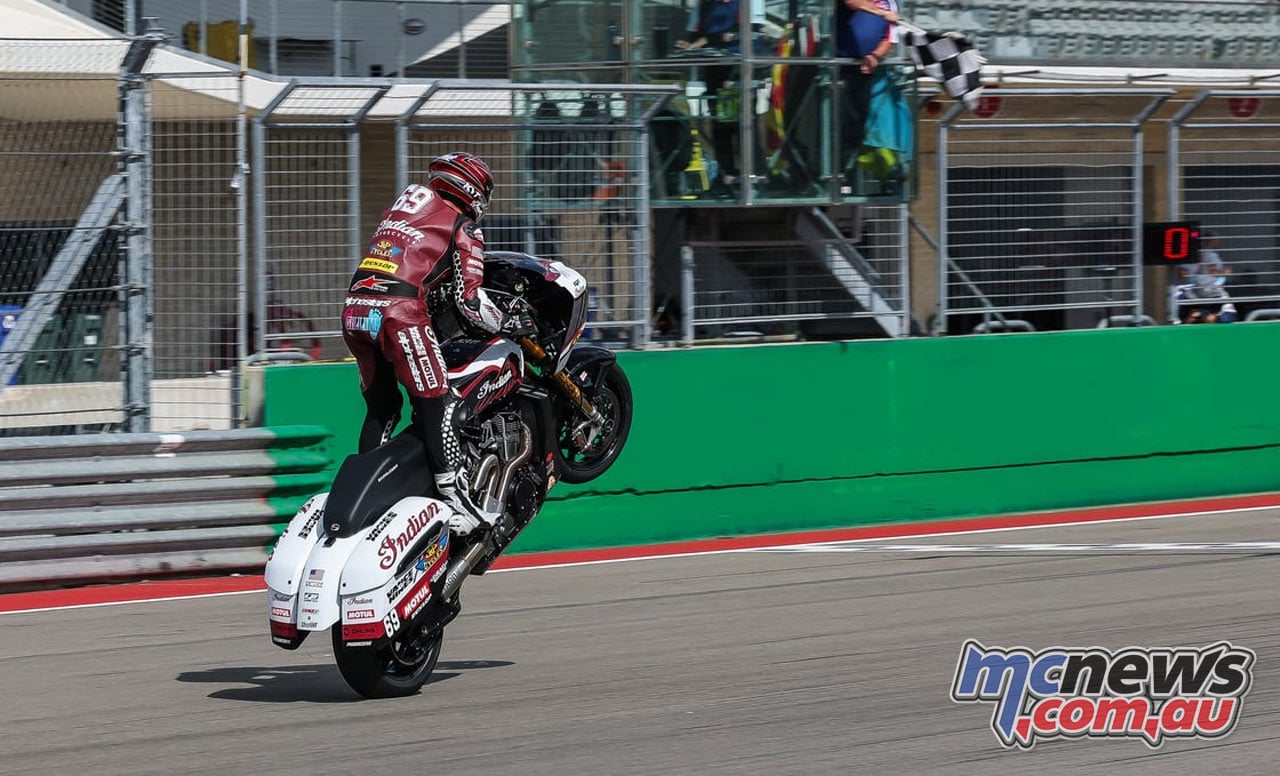
His success also made him the first rider to win the King of the Baggers title for both American manufacturers. Gillim won his first championship aboard a Vance & Hines Harley-Davidson in 2023 before moving onto the Indian Challenger and claiming the 2026 crown.
Herfoss won the championship for Indian during his remarkable rookie campaign in 2024 and remained a front-runner throughout 2026, winning the opening race at the New Jersey finale and eventually finishing third in the championship, only two points behind Smith.

Both Gillim and Herfoss have already been confirmed for 2027 as Indian and Vance & Hines target something no manufacturer has yet achieved in the championship era – consecutive King of the Baggers titles.
Indian’s commitment is also part of a multi-year agreement with Vance & Hines, so this is not a programme showing any signs of being wound back.
A rivalry that created King of the Baggers
The original King of the Baggers was run as a single invitational event at Laguna Seca in 2020.
Tyler O’Hara won that first race aboard an S&S Indian Challenger, with the spectacle generating sufficient interest for the concept to become a championship in 2021.
What followed has been remarkably symmetrical.
| Year | Champion | Manufacturer |
|---|---|---|
| 2020* | Tyler O’Hara | Indian |
| 2021 | Kyle Wyman | Harley-Davidson |
| 2022 | Tyler O’Hara | Indian |
| 2023 | Hayden Gillim | Harley-Davidson |
| 2024 | Troy Herfoss | Indian |
| 2025 | Kyle Wyman | Harley-Davidson |
| 2026 | Hayden Gillim | Indian |
*2020 was the original one-off King of the Baggers event rather than a multi-round championship.
Since the championship proper began in 2021, the manufacturers have alternated the crown every single season.
Harley-Davidson won in 2021, 2023 and 2025. Indian answered in 2022, 2024 and 2026.
On the surface, that looks like almost perfect parity. The reality underneath it has been considerably more complicated.

The parity problem was baked into KOTB from the beginning
One of the attractions of King of the Baggers has always been that the Indian and Harley-Davidson are not simply differently branded versions of the same engineering solution.
They are fundamentally different motorcycles, and nowhere is that difference more significant than in their engines.
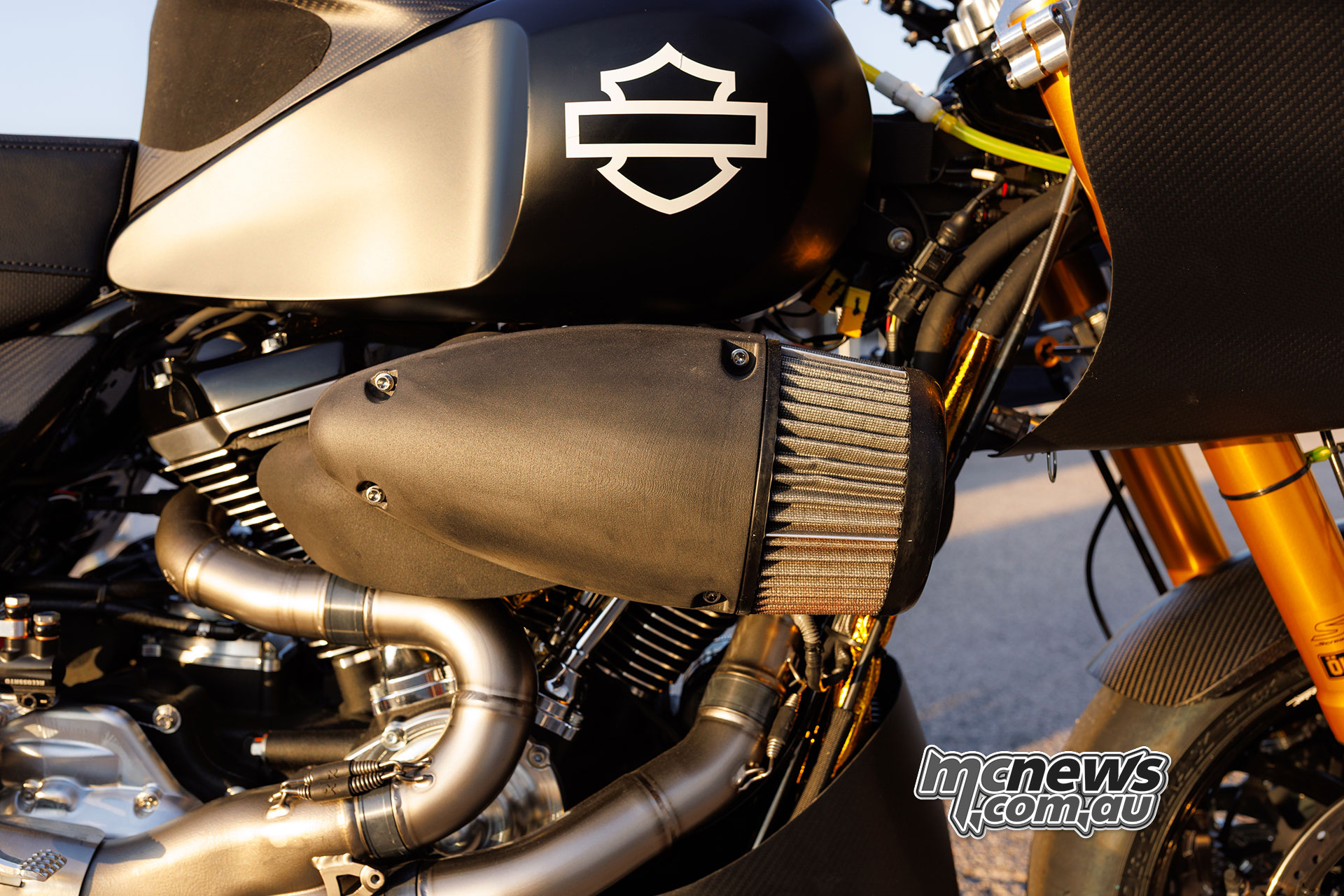
The Indian Challenger’s PowerPlus is a modern liquid-cooled 60-degree V-twin using overhead camshafts and four valves per cylinder. Indian itself describes the architecture as being designed to combine high horsepower with the ability to operate at higher engine speeds.

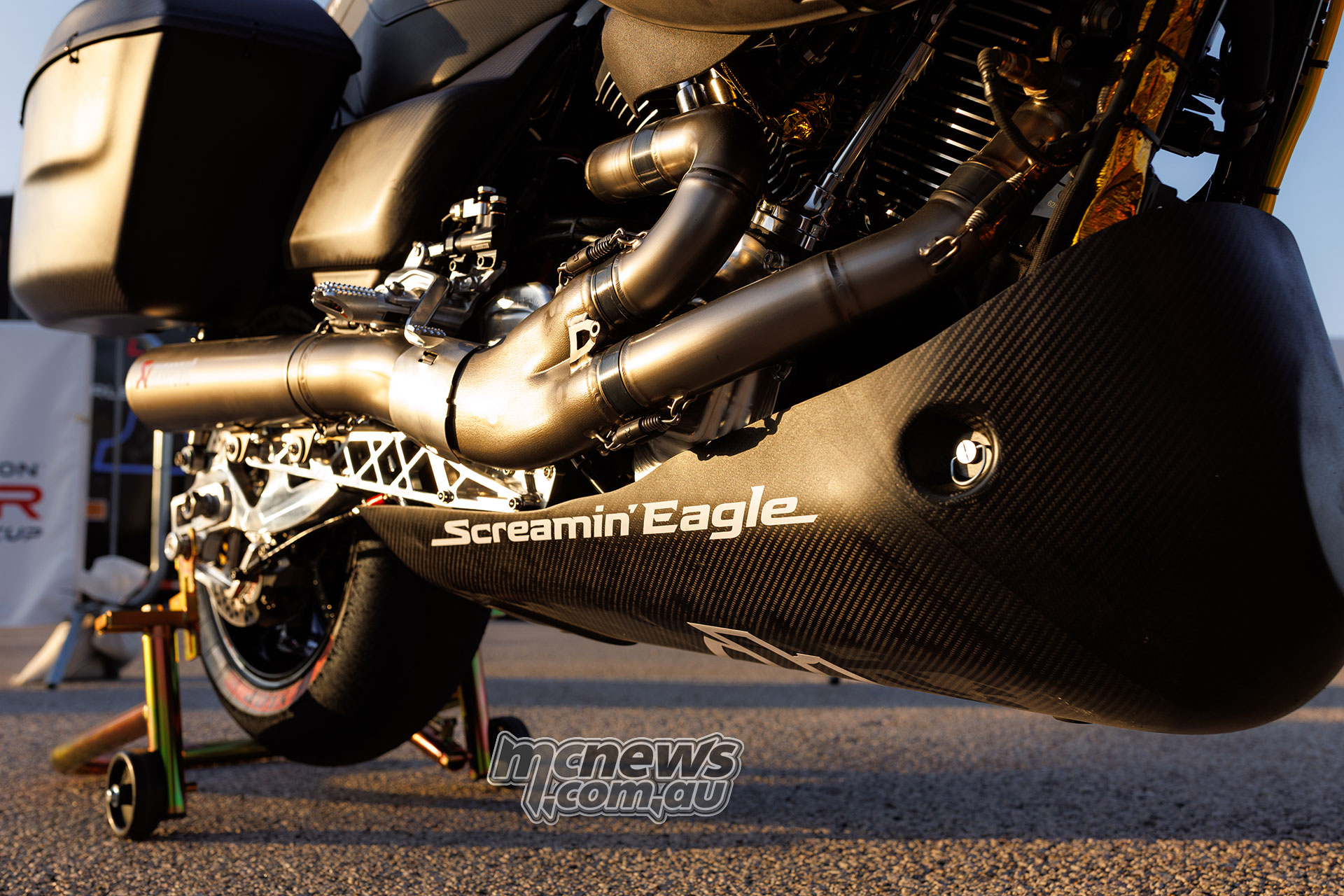
The Harley-Davidson Milwaukee-Eight takes a very different approach. The King of the Baggers Road Glides have raced with heavily developed 131 cubic-inch versions of Harley’s pushrod-operated V-twin.
The Harley has considerably more capacity – around 2150 cc compared with the Indian’s roughly 1835 cc – but the Indian architecture is inherently better suited to making horsepower through sustained higher engine speeds.
That leaves MotoAmerica with a problem for which there has never really been a perfect answer.
Applying precisely the same technical freedoms to both motorcycles does not necessarily create a level playing field, because their basic designs respond very differently to those freedoms.
Allow the Indian to fully exploit the advantages inherent in its liquid-cooled overhead-cam architecture and the Harley faces an enormous challenge trying to match it at the top end.
Give the Harley enough additional freedom to compensate for those architectural disadvantages, and Indian can quite reasonably ask why it should be penalised for starting with an engine better suited to road racing.
Thus KOTB parity has always required some combination of restricting one package while allowing more performance potential from the other.
Rev limits provide one of the clearest examples.
For 2025, the Harley was restricted to 7000 rpm while the Indian was permitted 7700 rpm, the higher ceiling helping compensate for the Indian’s substantially smaller engine capacity.
Early in 2026, however, MotoAmerica identified a clear top-speed disparity favouring the Indian Challenger. The regulations were subsequently adjusted to give the Harley another 200 rpm, increasing its limit from 7000 to 7200 rpm while the Indian remained at 7700.
MotoAmerica was unusually open about why the two limits differed, pointing directly to the PowerPlus architecture and acknowledging that the two engines deliver performance in fundamentally different ways.
Race results, lap times and top speeds are continually studied, while approved components, engine specifications, minimum weights and technical developments all have the potential to alter the competitive picture.
It is an unenviable task for the rule makers.
When millions are being spent, every rule matters
That difficulty becomes considerably more acute when manufacturers are pouring serious money into extracting the last fractions of performance from these motorcycles.
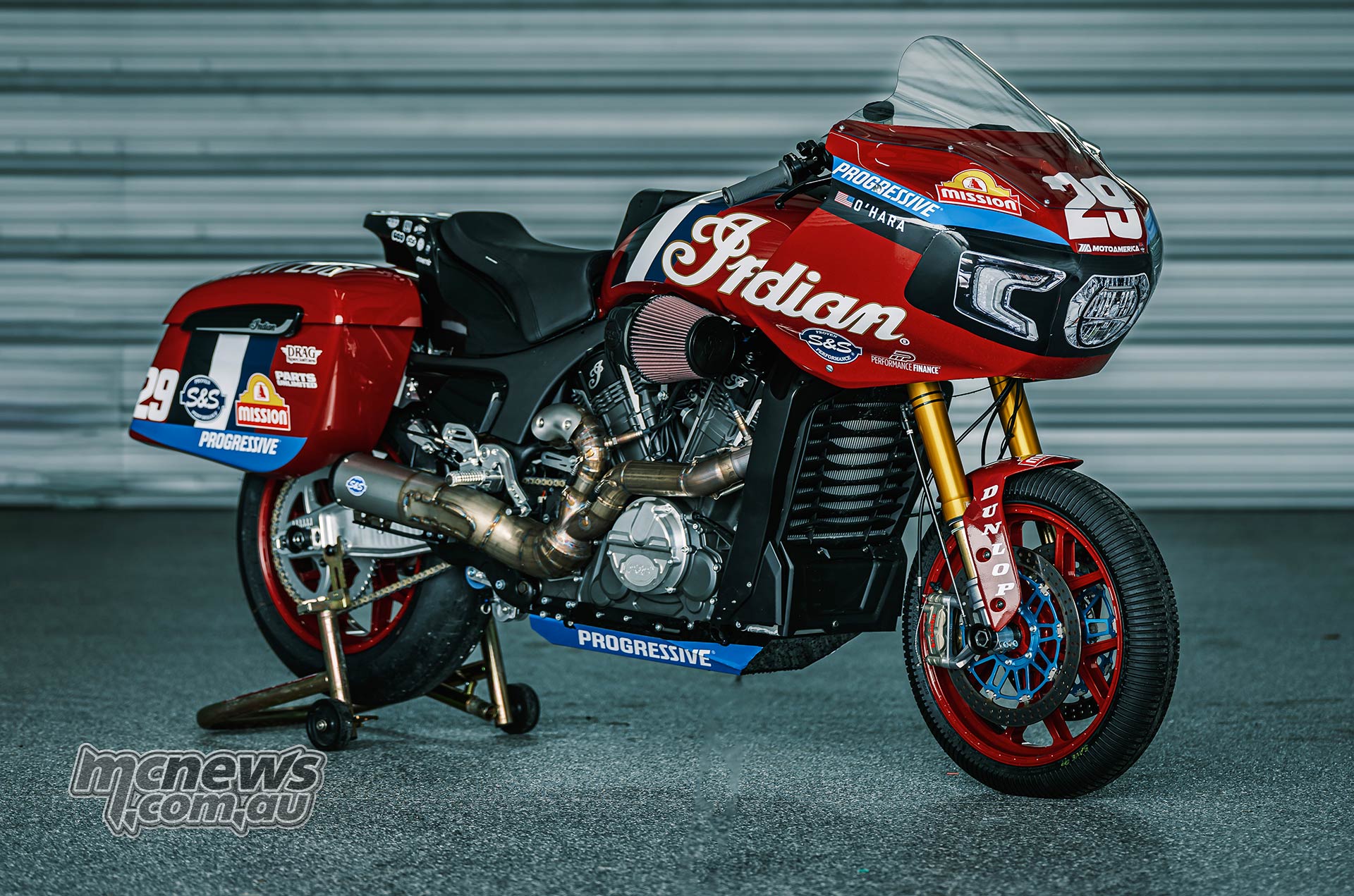
The physical machine sitting in the pit garage does not contain a million dollars’ worth of parts in the conventional sense, but once engineering time, prototype components, machining, dyno development, electronics, testing and the countless discarded development paths are allocated to a factory race bike, the investment represented by that motorcycle can quickly reach seven figures.
The wider factory racing programme costs multiples of that.
At that level, a seemingly modest rules adjustment can potentially increase or diminish the value of months of engineering work.
An extra 200 rpm might not sound particularly dramatic, but when engines, gearing, induction, exhaust systems and electronics have all been optimised around an existing performance envelope, changing that envelope matters.
Likewise, preventing one manufacturer from exploiting a technical avenue it has developed can understandably produce frustration, while allowing additional freedoms to its rival can look like rewarding the rival for beginning with a less suitable design.
There is no way of completely removing that tension.
And when millions of dollars, championship bonuses, corporate pride and engineering reputations are involved, whichever camp believes the pendulum has swung away from it is almost inevitably going to feel hard done by.
Over the years, those complaints have come from different sides at different times.
That does not necessarily mean MotoAmerica has got the equation wrong. The alternating championship record suggests officials have done a remarkably effective job of keeping two fundamentally incompatible engineering concepts competitive with each other.
Rather, it illustrates how inherently difficult the job has always been.
Harley has not blamed the rules
Harley has not attributed its withdrawal from factory King of the Baggers competition to MotoAmerica’s parity regulations.
The company has framed the decision as part of a broader change in racing strategy, with its resources divided between what it calls “Premier Racing” and a new push toward more accessible grassroots competition.
King of the Baggers simply no longer sits at the top of that strategy. The FIM Harley-Davidson Bagger World Cup does. There is nevertheless an obvious structural difference between the two championships.
MotoAmerica requires Harley-Davidson and Indian to spend enormous sums developing two fundamentally different motorcycles while MotoAmerica attempts to prevent either concept from gaining an overwhelming advantage.
The World Cup is a one-make competition built around Harley-Davidson Road Glides. Every team begins from the same fundamental motorcycle platform, so the central battle is between riders, teams, setup and execution rather than between rival engine architectures.
Harley also gains the international exposure of racing at MotoGP weekends rather than limiting its premier programme to North America.
Harley to expand Bagger World Cup in 2027
The inaugural FIM Harley-Davidson Bagger World Cup comprised 12 races over six MotoGP weekends in 2026 and produced five different race winners.
Harley has confirmed that the championship will expand in 2027 with additional teams, riders and races, although the full calendar and rider line-up are yet to be announced.
That first World Cup also delivered a major Australian success story.
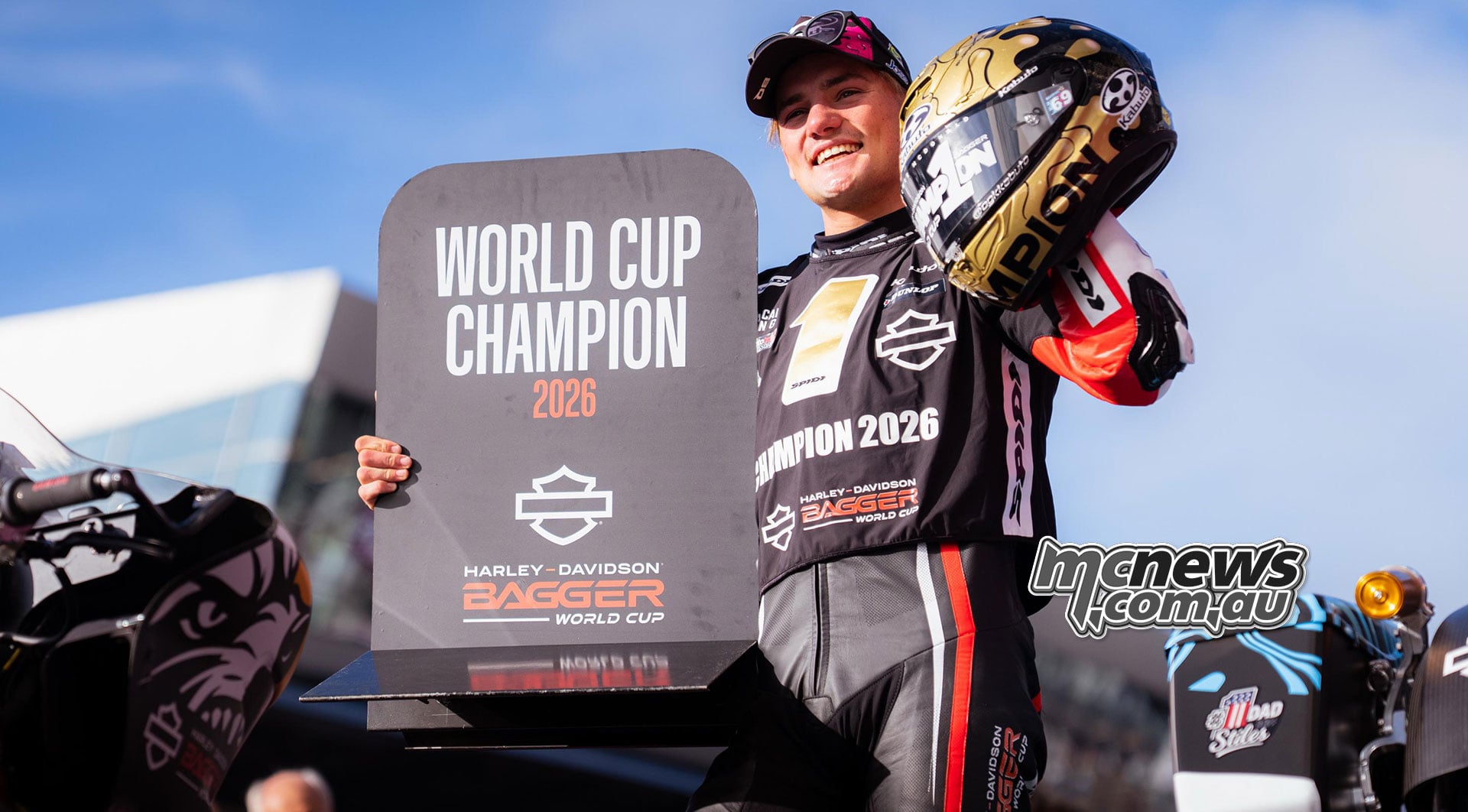
Twenty-year-old Archie McDonald won the inaugural title for Melbourne-based Joe Rascal Racing, finishing the season on 202 points after two victories, one pole position and nine podium finishes.
McDonald defeated Spaniard Oscar Gutiérrez by nine points, with Brazilian Eric Granado another point behind in third.
It was a significant international breakthrough for the young Australian, who had never raced the huge Harley-Davidson before signing with Joe Rascal for the new championship.
Whether McDonald will actually defend the title in 2027, however, remains unclear.
Harley-Davidson’s latest announcement confirms expansion of the championship but does not identify any 2027 riders, while Joe Rascal Racing has not yet announced its line-up for next season.
Thus Australia currently has one bagger programme locked in for 2027, with Herfoss confirmed alongside Gillim at Indian in MotoAmerica, while the future plans of Australia’s newly crowned World Cup Champion remain to be revealed.

Two very different futures for bagger racing
Harley-Davidson’s decision does not necessarily mark the end of King of the Baggers, nor does it mean Harley-Davidson motorcycles will disappear from MotoAmerica grids.
But it does remove one half of the factory rivalry the championship has been built around.
MotoAmerica clearly recognises that problem. Its acknowledgement that the decision arrived late and presents challenges is about as direct as championship organisers generally get in circumstances such as these.
Indian, meanwhile, is already preparing to defend its title with Gillim and Herfoss and a Vance & Hines programme that dominated much of 2026.
The question is what sort of opposition will be waiting for them.
Independent Harley teams should ensure Road Glides are on track, but replacing the engineering resources, budget, and competitive intensity of a full Harley-Davidson factory effort is another matter entirely.
At the same time, Harley is taking the knowledge accumulated through six seasons of factory KOTB competition and transferring more of that technical effort into a World Cup it controls, on motorcycles it developed, racing before an international MotoGP audience.
King of the Baggers began as a slightly outrageous experiment involving huge touring motorcycles at Laguna Seca. It became something much more serious because Indian and Harley-Davidson decided beating each other was all that mattered.
The resulting arms race created some extraordinary motorcycles and increasingly fierce racing, but it also forced MotoAmerica into the almost impossible job of maintaining parity between two machines that were never designed to be technically equal in the first place.
For 2027, one manufacturer remains committed to that fight.
The other has decided its future lies somewhere else.