

Lambretta Monotubo
Ferdinando Innocenti commissioned aeronautical engineer Corradino D’Ascanio to design a cheap and clean two-wheeled vehicle to provide post-war transport for the domestic Italian market.

Carradino devised a stamped steel spar-framed machine that possibly took inspiration from the Cushman scooters used by American troops during the war.
Integrated leg shields, an open centre section and an enclosed gear final drive from the motor located under the seat (soon to be enclosed by panels in the second model) all worked to meet the brief for a clean machine that women could easily ride in skirts.
However, Innocenti wasn’t happy with the spar frame design, as he preferred it to be constructed from tubular steel, which he could source from his own steel-tubing factory established in Milan in 1931.

It had been mostly destroyed during the war, and he wanted to revive it through the manufacture of the new scooter design.

Carradino left (and took his design to Enrico Piaggio – who produced it as the Vespa from 1946), so it was fellow aeronautical engineers Cesare Pallavicino and Piero Luigi Torre (who was responsible for the engine and setting up the factory for mass production) who completed a revised design.
The first Lambretta scooter, the A model (also known as the 125M), went on sale in 1947.
Being Italian companies, it wasn’t long before Piaggio and Innocenti were involved in both racing and speed record attempts to promote their brands.

Scooter racing had become a big deal in Italy by 1950, and Lambretta’s mainstay was their 125 cc Bitubos (a reference to the two megaphone exhausts exiting the rear of the single cylinder 2-stroke) introduced in 1951. Two streamliners were also built and set a World Speed Record of 201 km/h the same year.

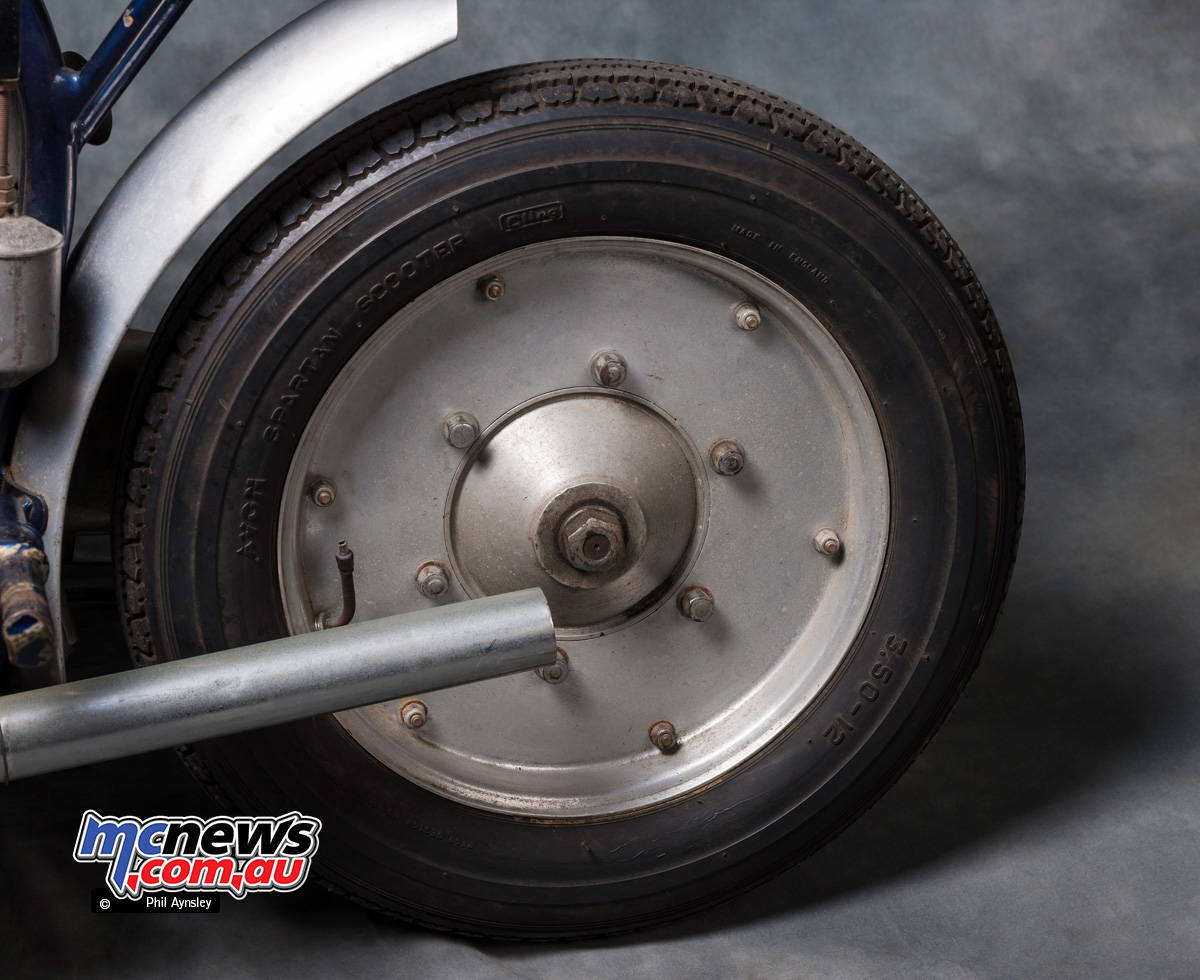
The racing Bitubos featured the carburettor facing the front and taking advantage of ram-forced induction at speeds above 100kph. Four-speed gearboxes were used, as was the newly developed torsion bar rear suspension. 12 or 14-inch solid alloy wheels were fitted, depending on the circuit.
Four Bitubos were sent to Germany to be raced under the NSU banner (as they were licensed to build and market Lambrettas) in February 1951. These had slightly different frames and bodywork to the Italian Bitubos.

Both the Italian and German machines were raced extensively and were quite successful. The fate of the “NSUs” is not known, but they were possibly sent to South America.

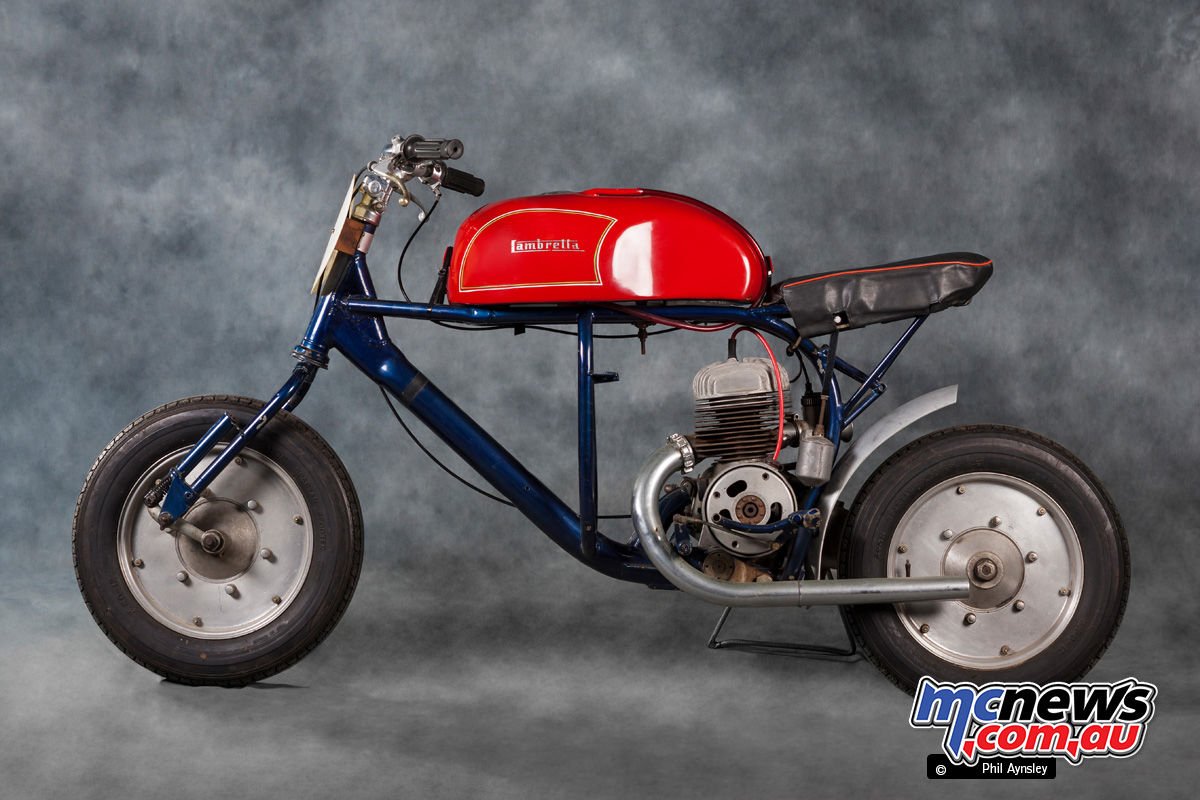
The Italian Bitubos were converted to a more conventional engine configuration with a single forward-exiting exhaust and rear-facing carburettor – thereafter being called Monotubos.

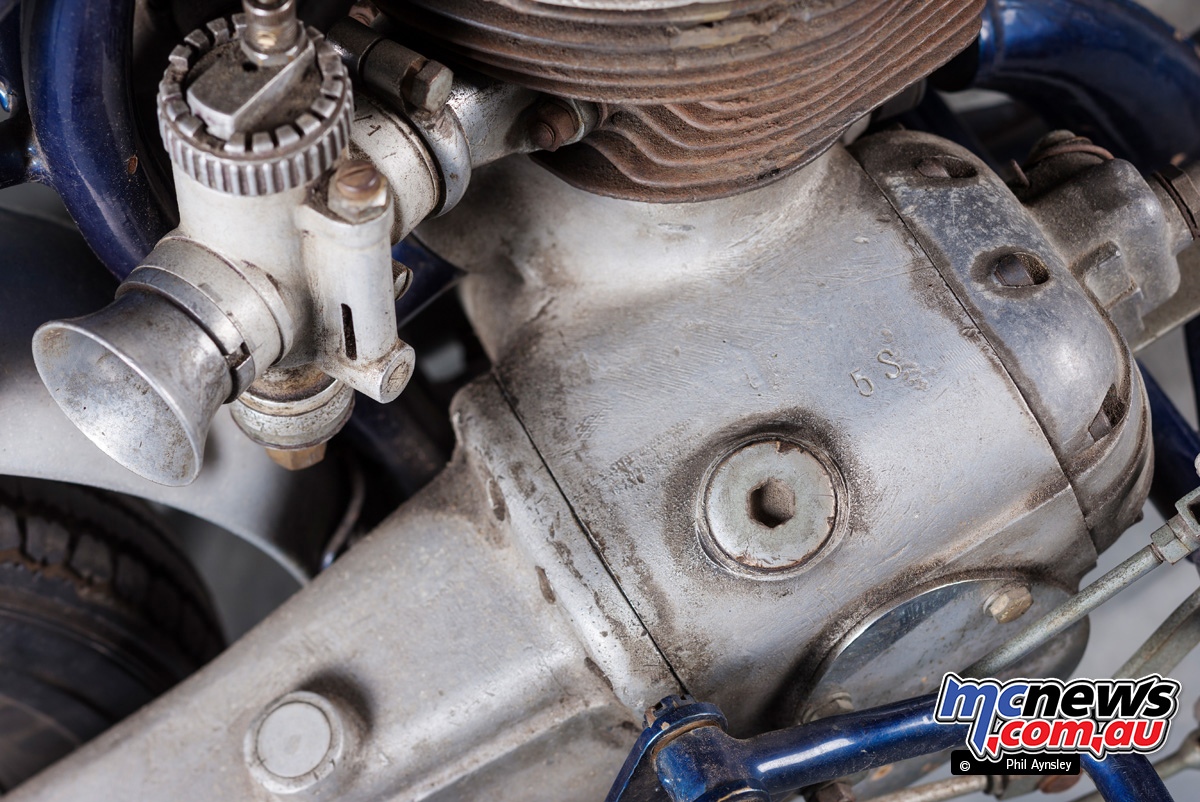
These were sold to private individuals, one being the Australian Innocenti SG representative, Sam Jamieson. Two bikes with engine numbers 4S and 5S arrived in Sydney in November 1951 and are believed to be the first two Bitubos built and raced in Italy by Ferri, Copeta and Poggi in the first half of that year.
Jamieson had arranged for 39-year-old Innocenti factory mechanic Renato Bini to work on the bikes, and he duly arrived in January 1952 (and stayed in Australia until he died in 1975).
The Monotubos’ first race in Australia was the Mount Druitt TT in March 1952, where Jamieson and John Seary rode them to 1st and 2nd places in the 125cc class! At Bathurst, however, Jamieson could only finish 2nd to Maurice Quincey. Bert Flood on a Model B racing Lambretta was 3rd.
Of the ten races the bikes contested during 1952, they scored nine firsts and a second. Many more victories were obtained during the following two years until the bikes were sold to Eric and Harry (Jnr) Hinton at the end of 1954.
Bini ceased to fettle the machines at this time. The Hintons steadily raised the compression ratio from the standard 7:1 (9:1 for alcohol), which gave a top speed of just under 150 km/h, to 14:1 on a 15% nitro-methanol mixture.
This resulted in an increase in top speed to almost 185 km/h! Reliability suffered, however, with the bikes being hard to start and having holing pistons. Eric did finish 2nd in the 1955 Mount Druitt GP, ahead of Kel Carruthers.
The Hintons sold the bikes back to Jamieson after 12 months, who sold them to Kevin Roydon. At about this time the original bodywork on the bikes were replaced by dustbin fairings (and for the 4S machine a lower fitting tank), different handlebars etc, all made by Lindsay Smith.
The bikes continued to place well, ridden by a number of riders, including Kel Carruthers, who finished second on the 5S motorcycle at the 1957 Australian TT at Phillip Island.
The bikes were then on-sold numerous times, with the last record of the 5S being raced at Calder Park in March 1962 and 4S in 1964. The 4S bike is being restored in NSW.
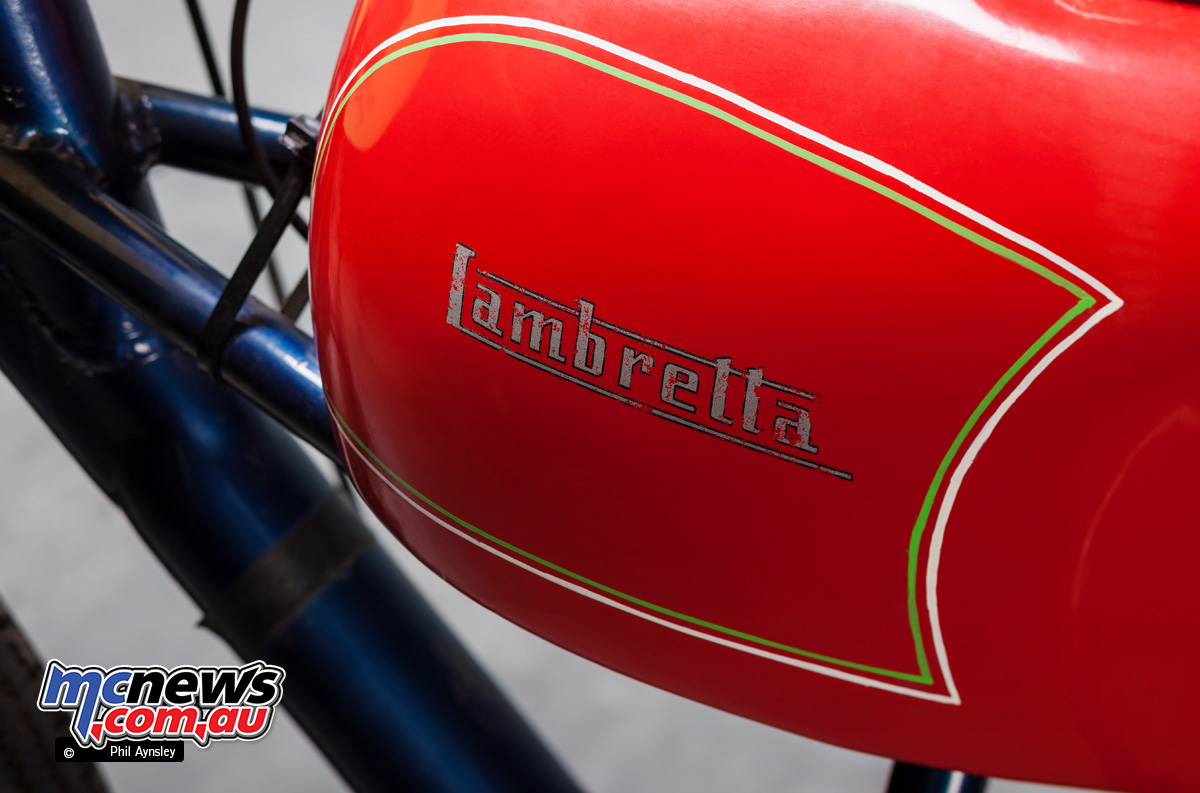
I photographed 5S in 2013, and it still has all the modifications done to it over its racing life, notably the extra frame tubes added between the steering head and tank support to “close” the open scooter frame. The original tank mounting lugs on the frame have been cut off, and the tank now sits lower. Also, the bars, exhaust, carburettor, and a few other items are not original.
The original bodywork has long since been lost. A couple of period B&W photos show one of the NSU Bitubos and Bob Jamieson at Bathurst (probably) in 1952 to give an idea of how the machines initially looked.

One of the Australian riders of the Monotubos described the experience as “like racing a demented ball bearing”!
I am incredibly grateful to Peter Shannon for letting me condense his extremely detailed history of the bikes.