

From paradise to hell
Piero Taramasso on Michelin’s MotoGP years
Jorge Lorenzo had won the 2016 season-opener in Qatar and celebrated by kissing a Michelin tyre. For Piero Taramasso, Michelin’s return to MotoGP as the championship’s sole tyre supplier felt like paradise.

At the next round in Argentina, part of the tread came away from Scott Redding’s rear tyre during Saturday’s final practice session. One round after that triumphant return, Michelin was facing a safety crisis.
When I asked Taramasso at Phillip Island which problem from those 11 seasons had come closest to beating Michelin, he immediately returned to that second round.
Piero Taramasso
“From paradise to hell.”

Argentina 2016: the failure and the response
As we reported at the time, Redding’s damaged tyre retained air and he managed to run off the circuit without falling.
His relief was plain in his account of the incident.
Scott Redding – Argentina 2016
“I feel lucky to be standing here to tell it.”
Michelin initially withdrew both rear options because they shared the same construction, and proposed using its more robust back-up tyre. Overnight rain then prevented the extra running needed to assess it on Sunday morning.
The revised race plan allowed riders to use the specification they already knew, with the distance reduced to 20 laps and a compulsory bike change after nine, ten or eleven laps. Marc Márquez eventually won ahead of Valentino Rossi and Dani Pedrosa.
Taramasso was already talking about the learning process in our coverage that weekend.
Piero Taramasso – Argentina 2016
“This has been a very difficult weekend for us, but it is all part of the learning process.”
That report also quoted Márquez saying “I believe in Michelin”, pointing to the work the company was putting into its tyres.
The next race was Austin, just a week later. Recalling that period at Phillip Island, Taramasso described Michelin redesigning the rear tyre, manufacturing it and getting the revised tyres to Texas by air.
That urgent response remains one of his strongest memories of the programme’s early days. Design, production, freight and the people at the circuit all had to come together before the next Grand Prix.
The achievement he mentions first
Asked what he was most proud of as Michelin’s 2016–2026 MotoGP programme approached its conclusion, Taramasso began with the relationships.
He called it the “human experience”: working with riders, teams and the people running the championship, and being able to respond when they needed something.
His working life involves compounds, constructions and lap times, but the rider has to trust what is beneath him at speed.

He places the relationships built with riders and teams among his proudest achievements.
Argentina put those relationships under immediate strain. Michelin needed to work with the championship and teams on a way to continue the weekend, then deliver a technical response before Austin.
Those are the relationships Taramasso hopes will remain part of how people remember Michelin’s time in the paddock.
Making tyres for different motorcycles and riders
Technically, he regards serving a diverse grid as one of the programme’s greatest challenges.
A control tyre has to suit different motorcycles and the ways different riders use them. A solution that works well for one combination needs to remain useful to others with different characteristics.
Taramasso points to riders winning championships on Honda, Yamaha, Suzuki and Ducati machinery during Michelin’s tenure as evidence of the breadth of that work. He also values seeing riders with different styles succeed.
What makes a useful development rider?
The rider’s contribution goes well beyond producing a quick lap.
When I asked what distinguishes a useful development rider from somebody who is simply very fast, Taramasso identified two qualities: sensitivity to what the tyre is doing, and the ability to explain it.
Piero Taramasso
“Another important thing is the way they explain to you, the vocabulary they use.”
Valentino Rossi, Marc Márquez, Álex Márquez and Luca Marini were among the examples he gave. He particularly praised the precision of Álex Márquez’s descriptions.
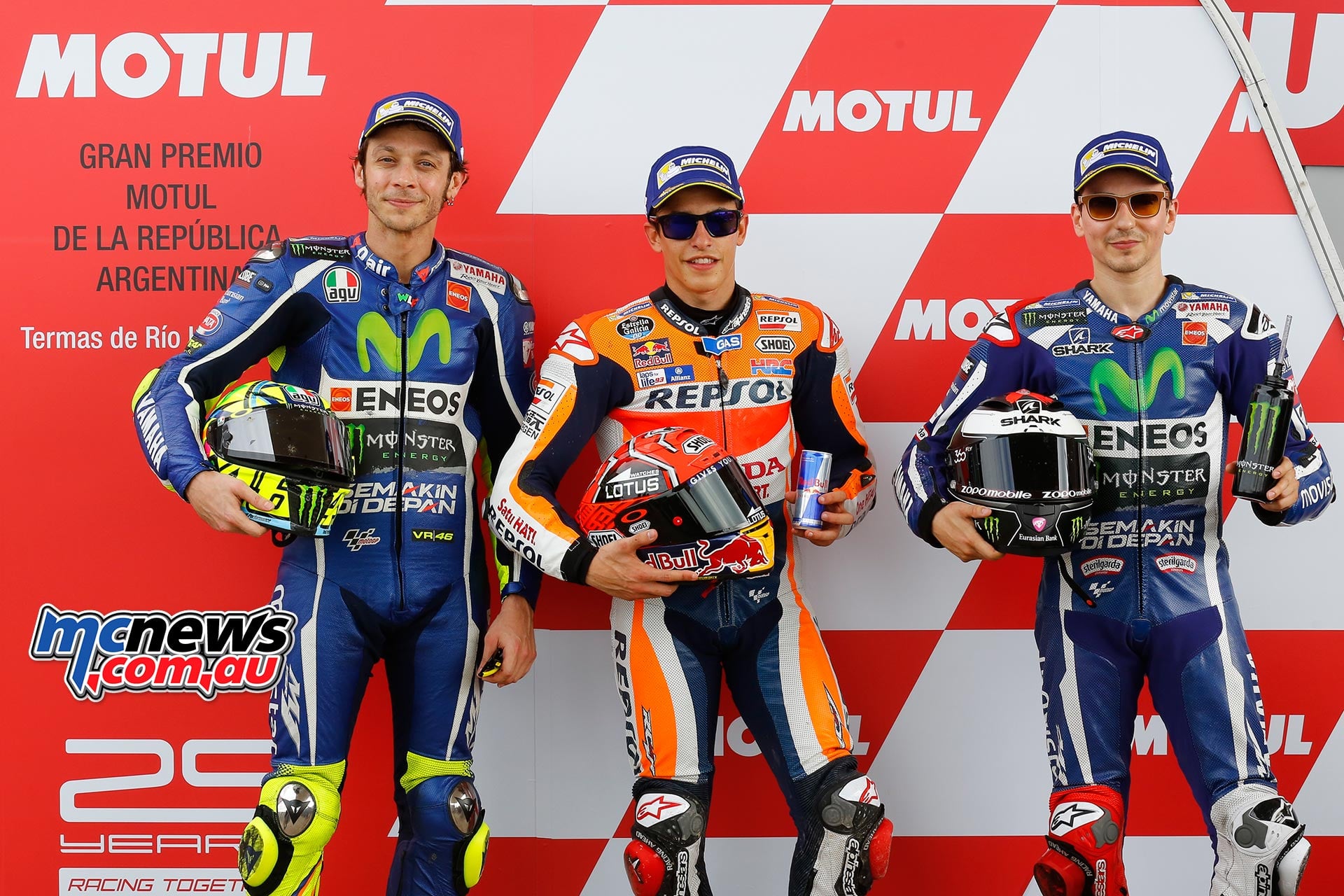
Taramasso singles out Rossi and Márquez among the riders whose technical feedback he most values.
Some riders, he said, are “more like engineers” in the way they communicate their sensations. Others rely more heavily on instinct to extract their speed.
For the tyre engineers, a precise description gives them something to investigate alongside the measurements. Taramasso said riders’ feedback frequently correlates with what Michelin subsequently finds in its testing data.
Detecting a difference is valuable; explaining it clearly helps the people developing the tyre decide what to do with it.
The scale of the job has changed
I also asked whether the rapid, sometimes rider-specific tyre supply associated with the old tyre-war era could be repeated today, even if the regulations allowed it.
Taramasso’s answer was no. He recalled Michelin looking after around nine or ten motorcycles in that earlier environment. Supplying 22 regular entries, with so many overseas events, changes the economics and logistics of making and flying tyres around the world overnight.
The emergency response he remembers from Argentina and Austin illustrates how quickly a manufacturer can be forced to act. Providing that kind of response routinely across an entire grid would be a different proposition.

The reputation he wants Michelin to leave
Taramasso said he sometimes asks riders what comes to mind when they think of Michelin. The answers he mentioned were performance, responsiveness and safety.
He adds service to that list: listening to riders, teams and the organisation, then finding solutions to their requests.
The move to WorldSBK in 2027 will continue to involve him. Taramasso said he would supervise that programme alongside his responsibilities for Michelin’s off-road competition activities.
Asked what he hopes people will remember of the MotoGP years, he returned to the priority that underpins the work.
Piero Taramasso
“For us, safety is the most important thing. Then all the rest is in the second level.”