

Honda CB1000GT Review
The reminiscing started earlier than expected.
We had barely reached the Mount Lindesay Highway when driving the CB1000GT hard over the first crest sent the front light and a little wiggle through the wide handlebar.
It was brief, harmless and also quite familiar. The Honda was already beginning to transport me back 20 years to days spent fanging roads like these on sportsbikes with like-minded nutters, and we had not even reached the Oxley Highway or Gingers Creek Café yet.
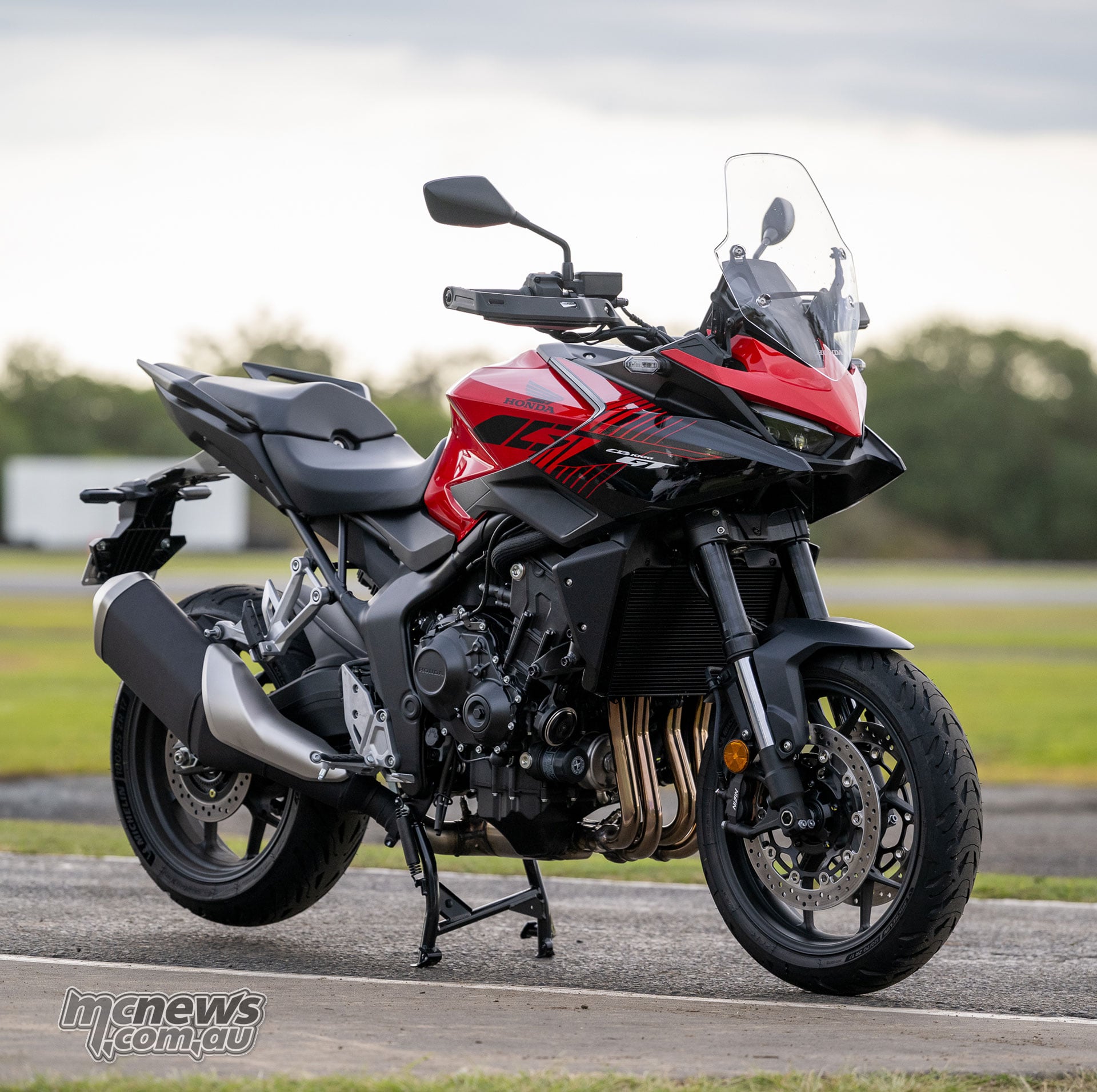
The difference was that this time I had integrated panniers behind me, heated grips beneath my hands and Showa semi-active suspension making continual adjustments underneath it all. Yet none of that technology had diluted the sensation.
If anything, it was helping an older and allegedly wiser version of me enjoy more of it, for longer.
That contrast became the story of the next three days and 2500 kilometres.
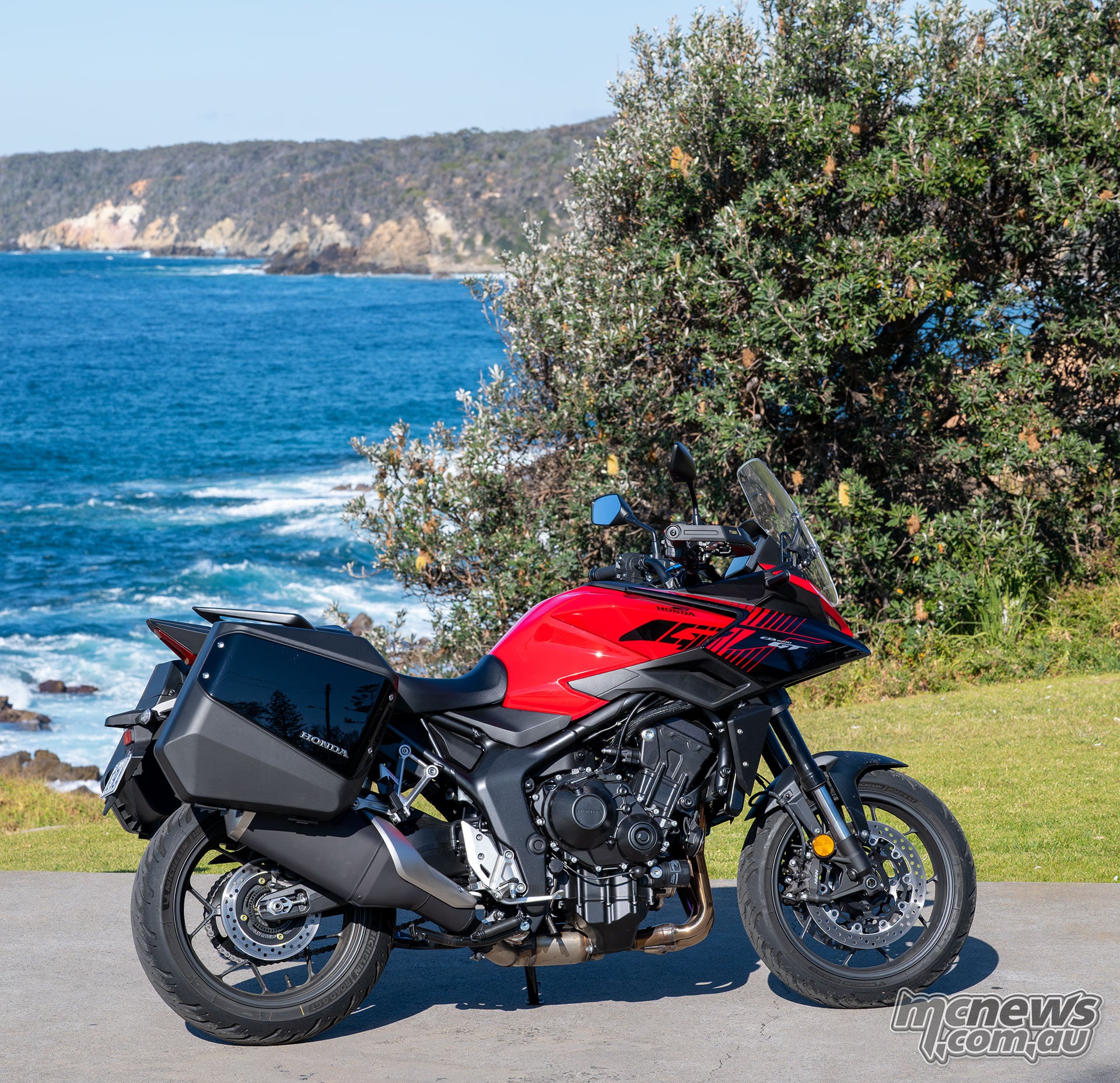
Barely run-in and pointed south
The CB1000GT did not even have three digits showing on its odometer when I first slung a leg over it on the Gold Coast. By the time I returned it to Honda’s workshop in Somerton three days, three states and a territory later, the display had ticked just beyond 2500 kilometres.
Between those two readings was effectively a greatest-hits run across almost all of eastern Australia’s most celebrated motorcycle roads.
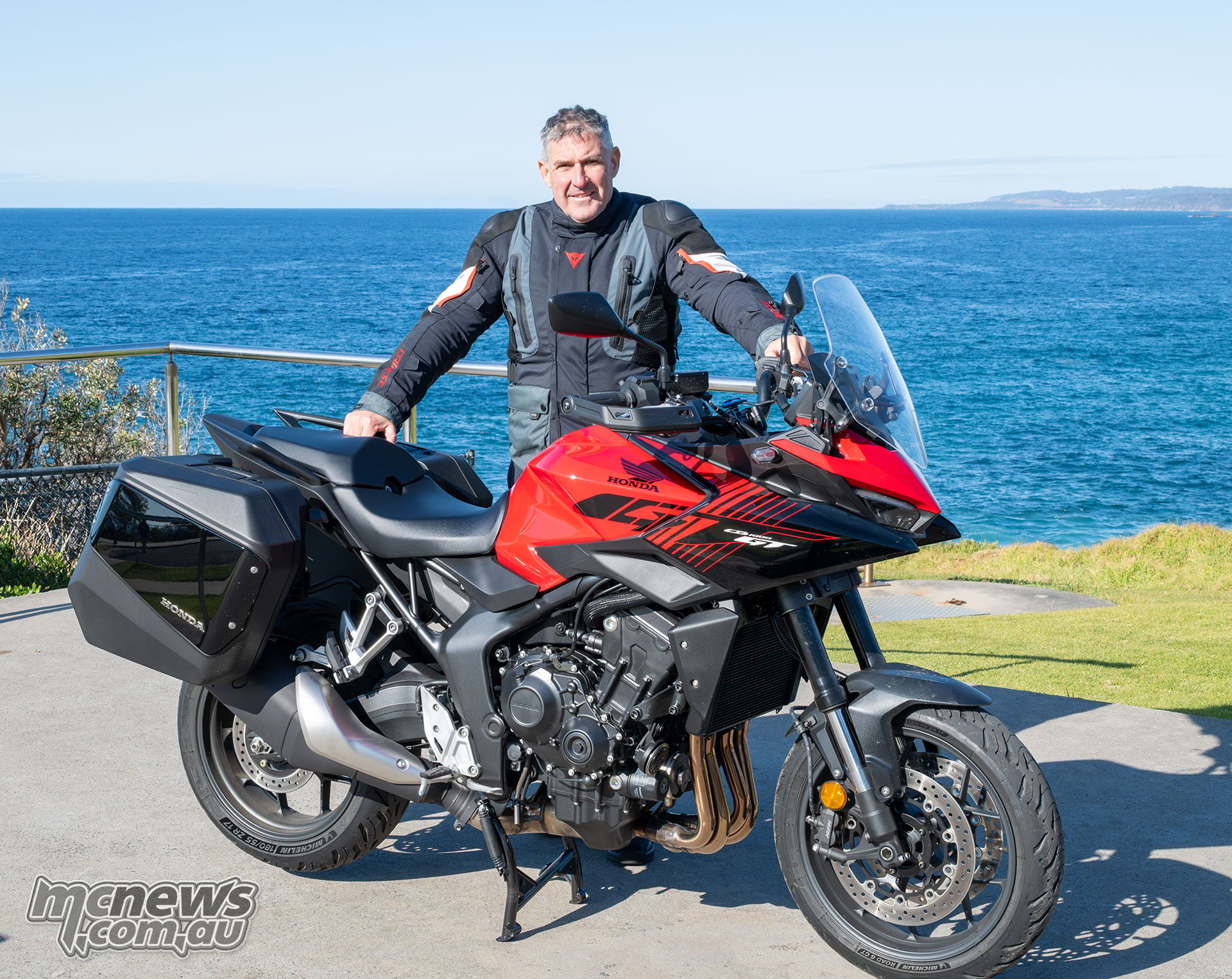
The opening day covered around 1000 kilometres. Mount Lindesay Highway provided the first taste before the CB1000GT was pointed towards the Oxley Highway, including a few runs back and forth past Gingers Creek simply because roads that good should never be ridden only once. Thunderbolts Way and Bucketts Way followed as the kilometres kept coming.
That first day ended at the home of an old Navy mate, where the reminiscing continued well into another chapter of life. He had endured only a couple of years at sea before swapping his Navy uniform for an Air Force one around 30 years ago, and somehow he was still there.
Those Air Force boys always did have it good…
The Honda had already spent the day winding my clock backwards on some of our favourite roads, and that evening kept the theme going nicely.
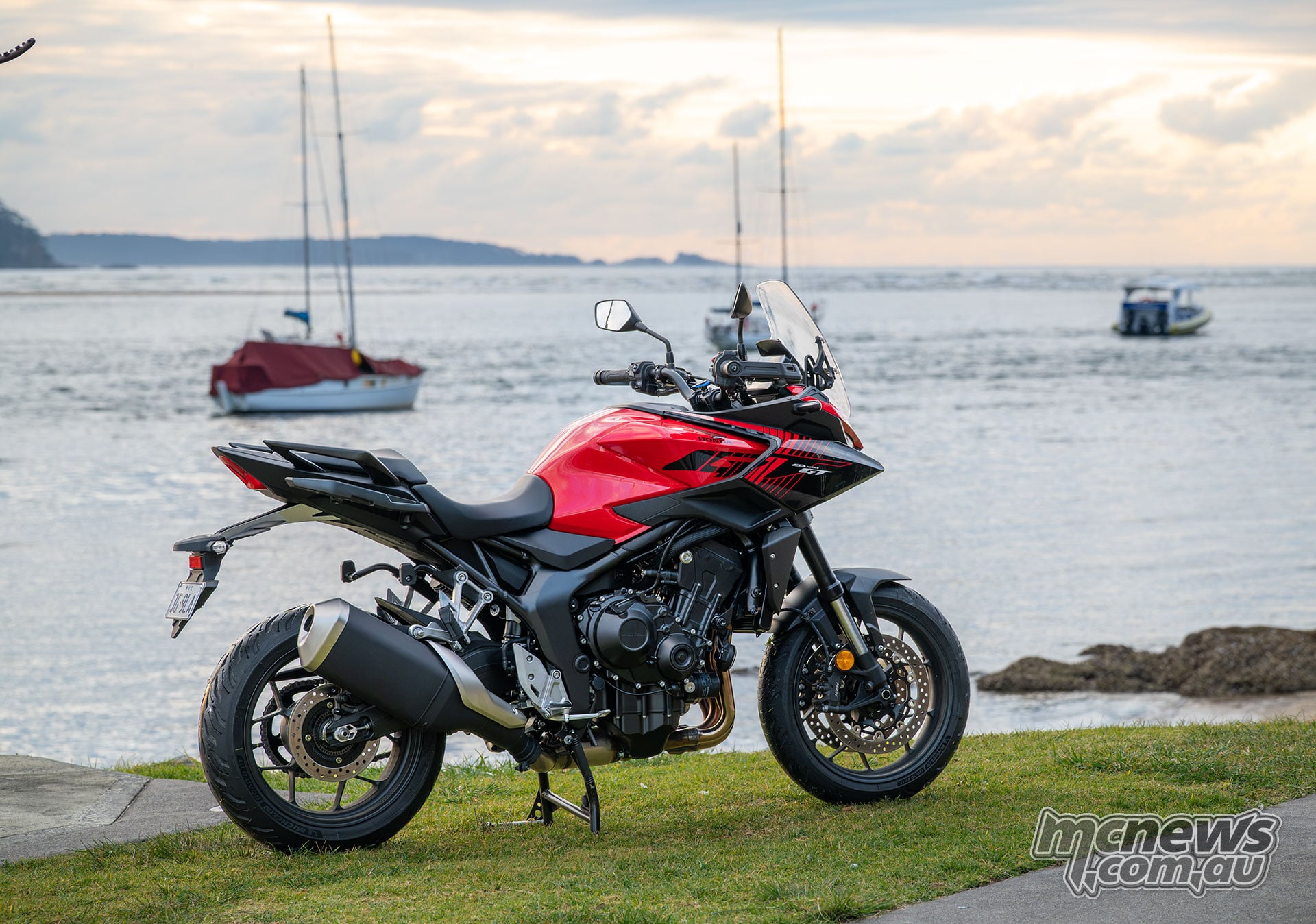
A late start on day two after a morning spent exploring Tanilba Bay saw me give Sydney the widest possible berth and get beyond the big smoke as soon as I could manage. From there, the route cut down the delightful Clyde Mountain and into Batemans Bay for the second overnight stop.
The final day continued down the coast before turning inland through Candelo, Cathcart, Bombala and Delegate. That set up the final dynamic flourish: the now fully sealed Bonang Road through to Orbost, followed by the more pedestrian run west towards Melbourne.
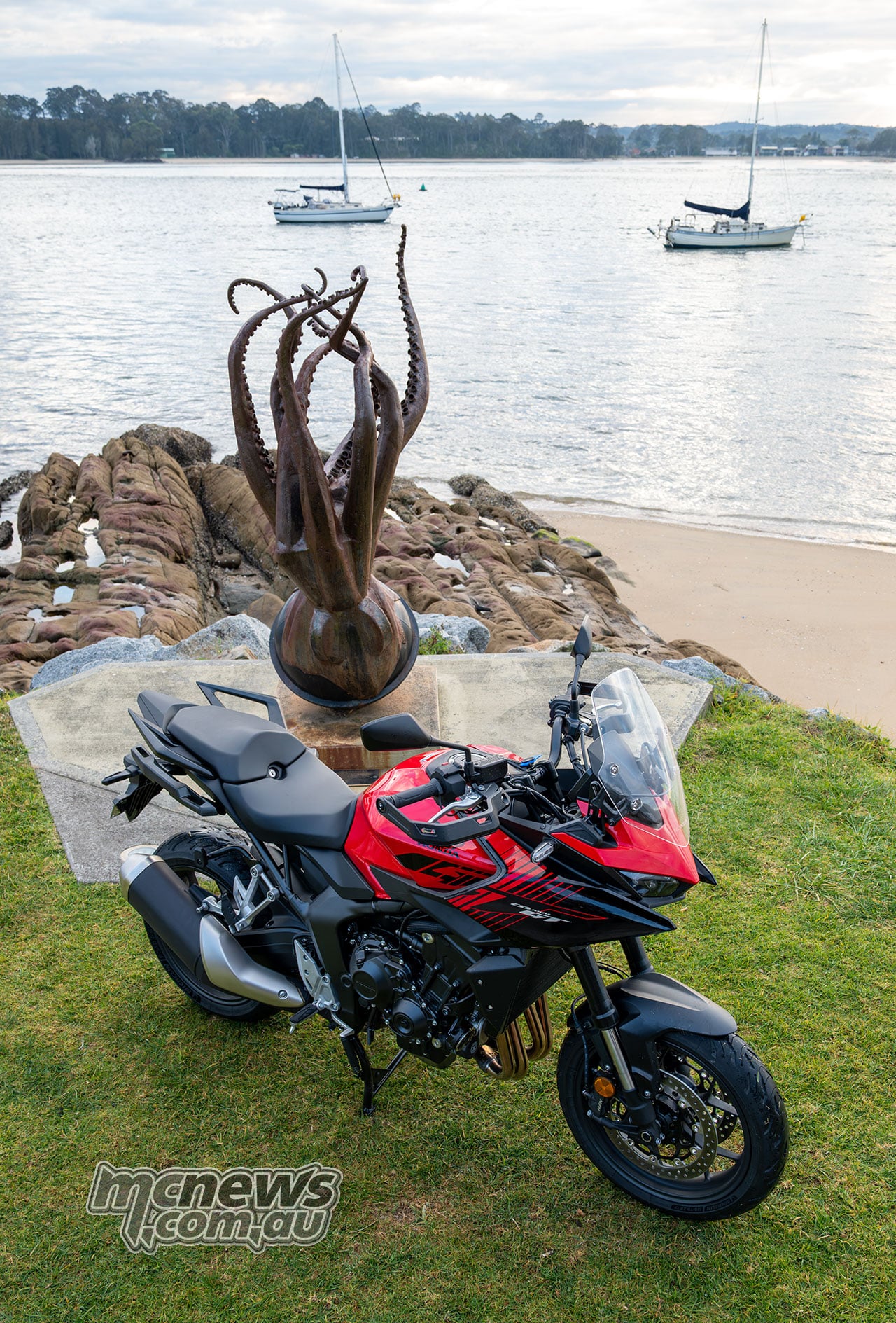
This was no gentle highway cruise designed merely to test the seat and fuel range. The route combined tight corners, fast sweepers, badly broken surfaces, urban congestion and extended transport sections. If the CB1000GT had a weakness in its ergonomics, suspension, aerodynamics, luggage or fuel range, three days like these were going to expose it.
Low where it matters
At a somewhat short-legged 178 cm, seat height is never merely a number for me. A fused right ankle leaves that leg almost an inch shorter than the left, making the real-world relationship between seat height, seat width and balance particularly important.

The CB1000GT’s quoted 825 mm seat height caused no difficulty once aboard. Flat-footing the bike was easy, and the whole seating position felt reassuringly low.
The only complication came when first getting on. The pillion seat sits considerably higher than the rider’s perch, so the leg needs to be raised high enough to clear it. Once you clear that little hurdle, however, the Honda immediately feels manageable.
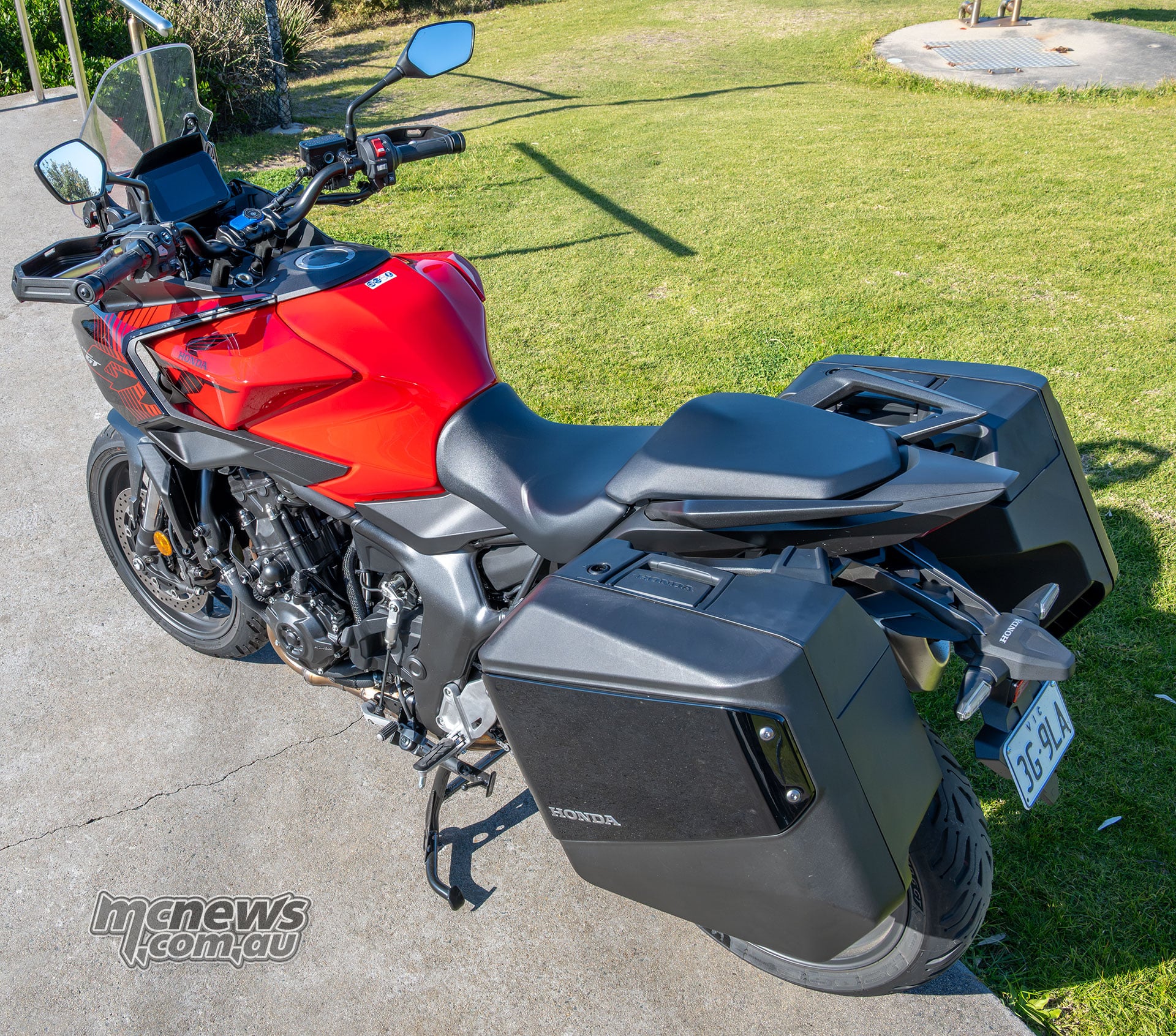
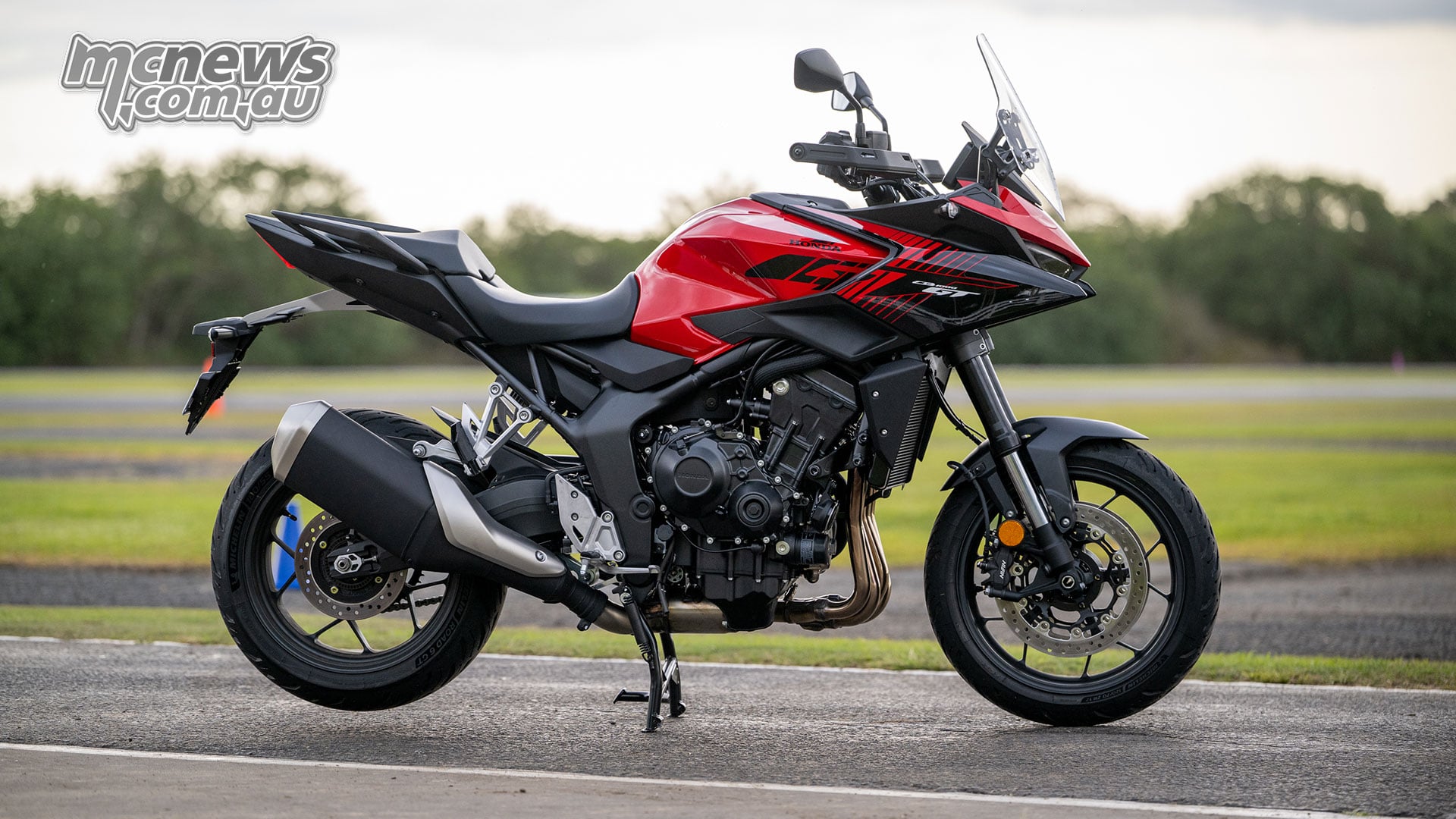
Honda quotes a 229 kg kerb weight before accounting for the panniers, but the CB1000GT rarely feels like a motorcycle carrying that much mass. Even with the 21-litre tank full and the panniers loaded, it feels light, agile and exceptionally well balanced.
The low-speed manners are particularly impressive. Car-park manoeuvring is simple, tight turns require little effort, and I could occasionally remain stationary at traffic lights for some time without even putting a foot down.
The wide handlebar is one of the first things that strikes you. Initially it seems unusually broad for a faired sports-tourer, but the width soon feels natural.
The leverage undoubtedly contributes to the easy steering. No doubt they are made that wide to serve as a useful guide to the width of the panniers when filtering through traffic.
A thousand-kilometre first day
A thousand kilometres exposes ergonomic shortcomings long before it exposes a lack of horsepower, and the CB1000GT proved exceptionally comfortable.

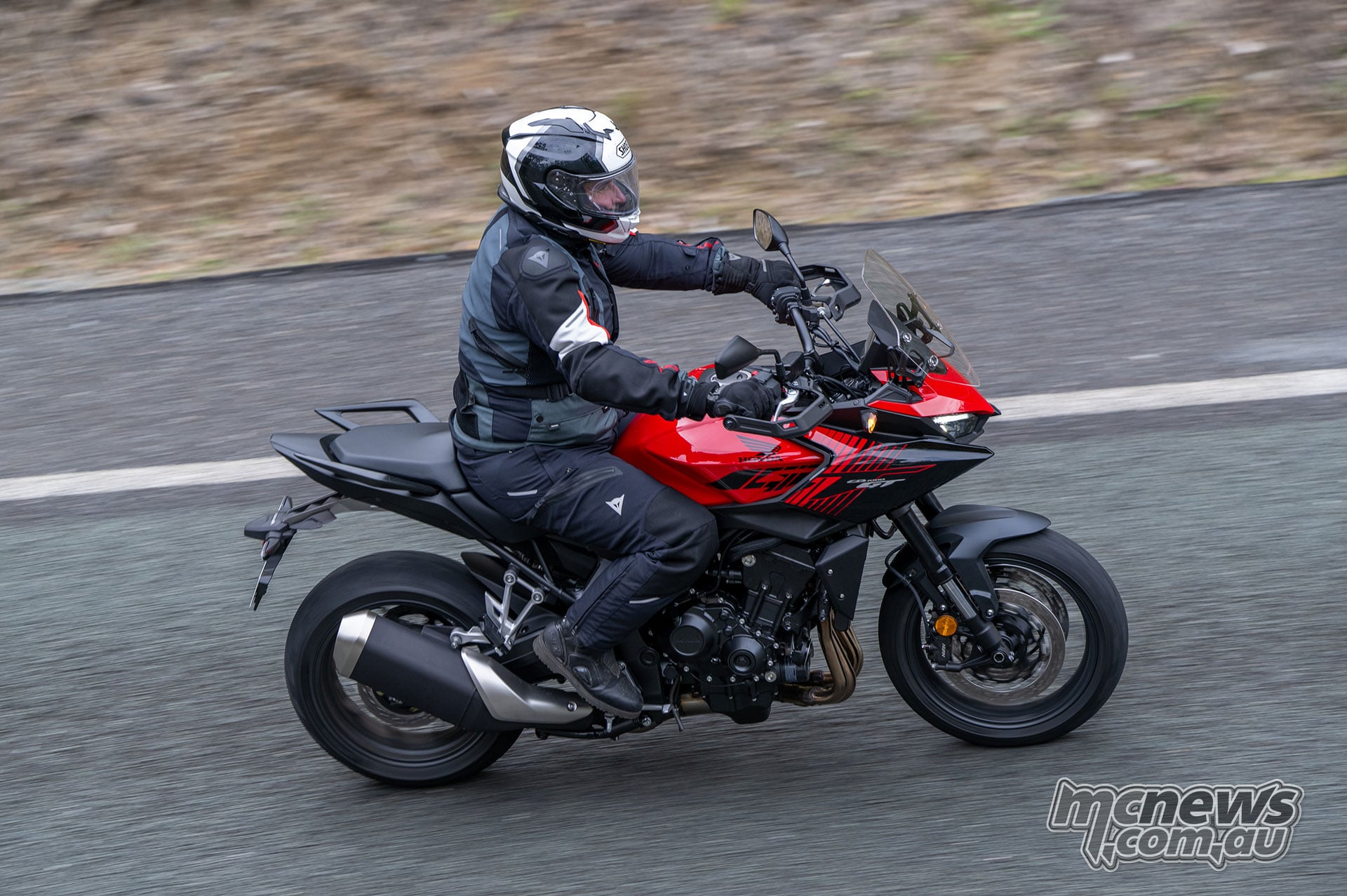
The riding position is fairly upright, but not completely bolt-upright. There is still enough forward lean to make you feel engaged with the front of the motorcycle when the road turns twisty and you decide to wick it up.
Across the three days, I reckon I stood on the pegs to stretch my legs only a couple of times each day. Other than those brief stretches, I cannot really say I felt remotely uncomfortable at any time.
A couple of days after returning home, the outer glute muscles were feeling the effects. I put that down less to the seat and more to spending thousands of corners supporting my weight through the pegs and moving around on the motorcycle.
Those of us who have always been of a somewhat fuller figure learn to ride lightly on the bike. You cannot simply dump all that mass into the seat and expect the suspension to do everything. Holding your weight through the legs keeps the motorcycle happier, but after three days of almost endless corners, the glutes and upper legs eventually send an invoice.
Importantly, the seat itself never became an instrument of torture. Nor did the wrists, knees, shoulders or lower back begin demanding an early finish. After the 1000-kilometre opening day, I was absolutely ready for more.
That puts the CB1000GT among the most comfortable motorcycles I have used for this sort of fast, busy long-distance road work. And not many bikes with touring credentials as good as these feel this light on their feet while doing it.
No big touring screen, but clean air
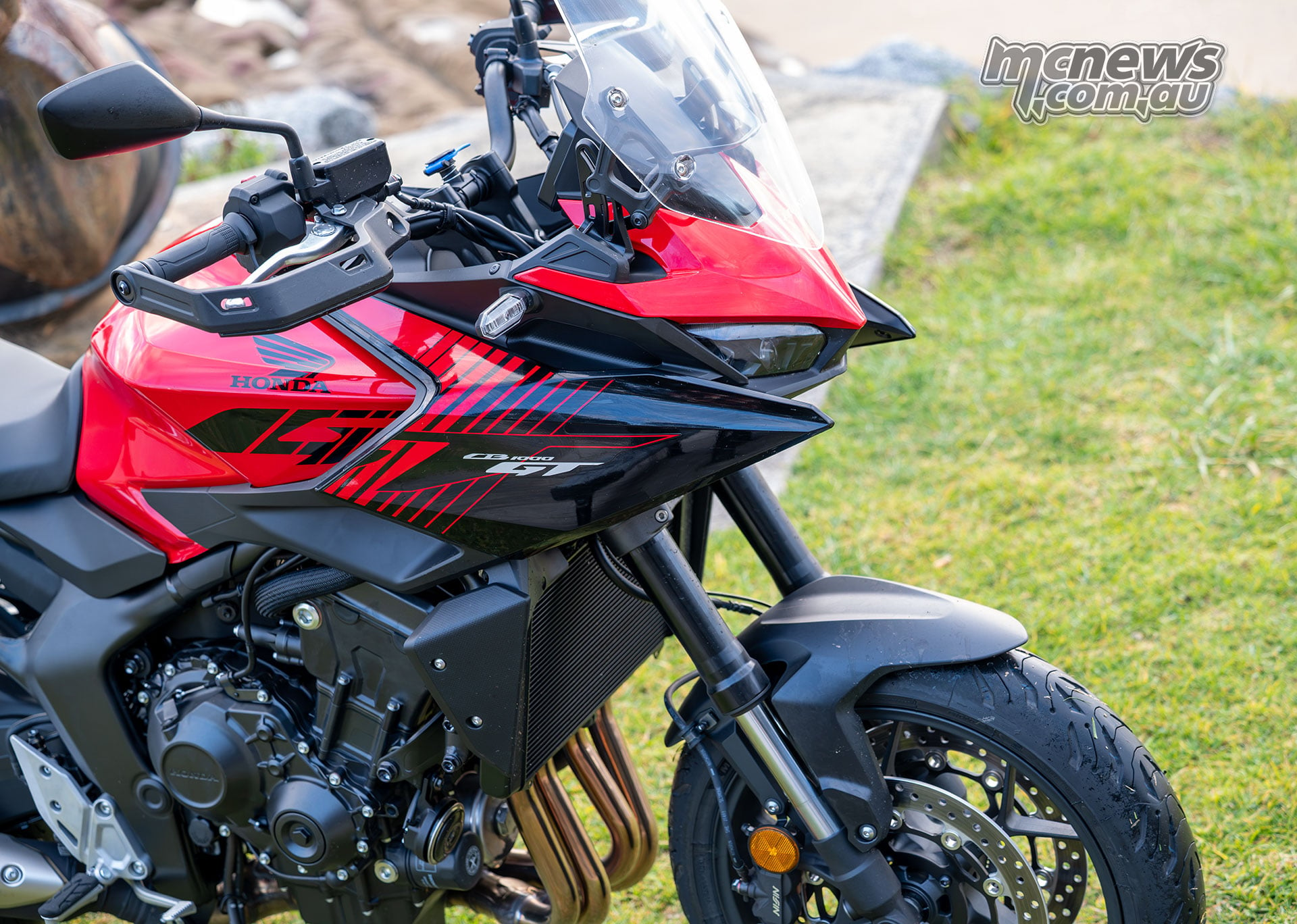
The manually adjustable screen offers five positions and is straightforward to move. I tried the different heights during the trip and experienced no troublesome buffeting in any of them.
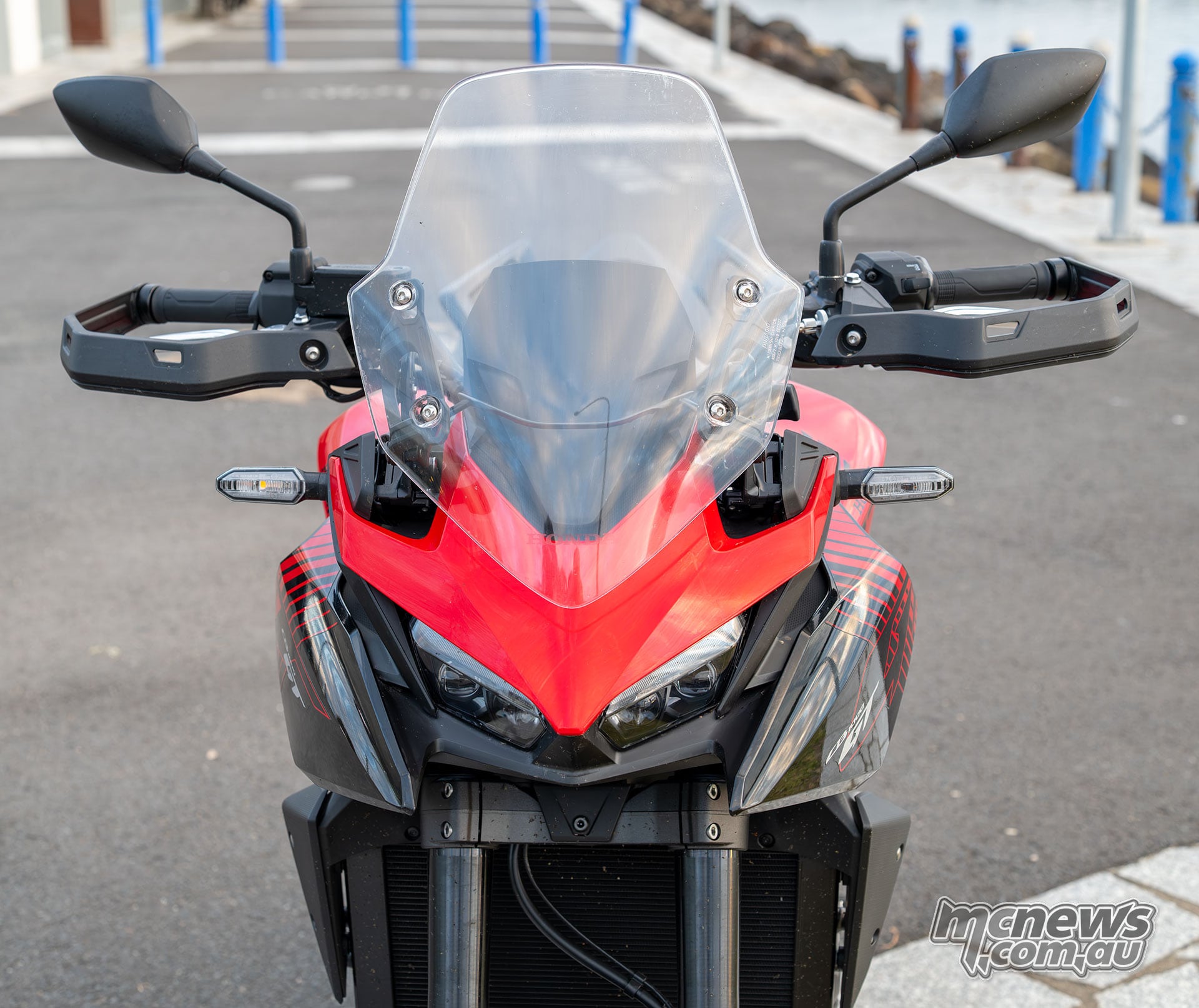
Curiously, changing its height did not seem to make an enormous difference to the overall level of wind protection either. The airflow remained clean, but the screen was never going to be big enough to put me in a pocket of completely still air.
That is hardly surprising. This is still a sporting motorcycle rather than a Gold Wing, and the screen is not large enough to isolate the rider completely.
The angular front bodywork and aerodynamic package appear to channel the air neatly around the rider. The lack of buffeting mattered far more over three long days than simply blocking the greatest possible quantity of wind.
The leccy suspension difference
Mount Lindesay Highway was very rough in places, which gave the semi-active suspension an opportunity to justify itself almost immediately. It did.
The Showa EERA system continually adjusts damping at both ends, using information from the six-axis IMU, ECU and wheel-speed sensors. Honda quotes a response time of 15 thousandths of a second.
I cannot claim my own reactions happen quite that quickly. What I can say is that the suspension works seamlessly, fluidly and almost imperceptibly.
Put simply, it means the motorcycle rarely dives, wallows, or feels anything other than composed. It maintains a remarkably neutral, balanced poise between the front and rear, even when the road surface is doing its best to disrupt proceedings.
Sharp mid-corner bumps are ironed out as you hit them. The bike continues tracking rather than being knocked off line, yet the suspension retains enough support to prevent the GT from floating around when the pace increases.
Riders unfamiliar with leccy suspenders may initially miss some of the more obvious fork dip and weight transfer they are used to feeling when pushing hard into a turn. The front does not always dive into its stroke in quite the same way, so some familiar corner-entry cues are reduced. You simply adapt and get on with it.
The trade-off in comfort and composure is immense, particularly across roads as rough as sections of Mount Lindesay. The suspension was undoubtedly one of the major reasons I remained so fresh after three long days.
I spent almost the entire trip in Sport mode because… Sport. Even in that setting, the ride remained comfortable, while the chassis response suited the pace and roads. Rear preload was set for rider and luggage with the panniers fully loaded.
The cleverness of the system mostly disappears beneath you. What remains is the impression that the bike simply stays balanced, front to rear, almost all the time. The suspension is a definite highlight of the bike that can be appreciated in every scenario and defintely adds to its flexibility.
Light steering without nervousness
The wide-bar leverage, low-feeling mass and well-controlled suspension combine to make the CB1000GT extraordinarily easy to steer.
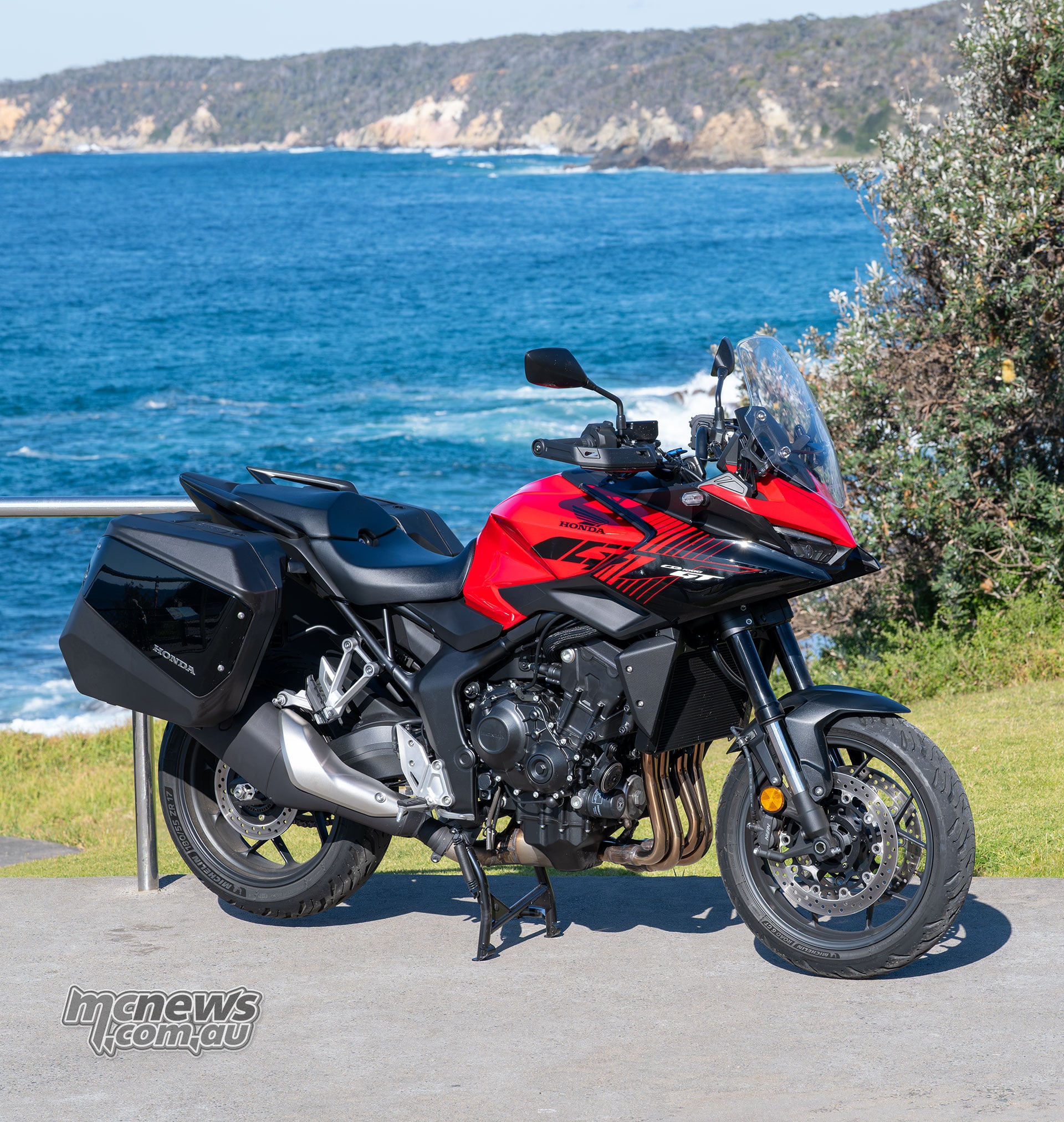
Tip-in is light, and changes of direction require little effort. The GT never feels like a touring bike, even with a full tank and both panniers packed.
Only particularly aggressive changes of direction saw the footpegs brush the tarmac. I heard it more than felt it and used that as a guide, saying, yep, that’s about as hard as you need to go today…
The brief handlebar wiggles over crests remained just that: little headshakes to let you know the front had gone light under power. Nothing developed into a sustained oscillation and nothing felt particularly untoward.
At the extreme end of the velocity envelope, the GT could begin to wander ever so slightly with the panniers fully loaded at speeds that I could only have seen on a closed course away from public roads…
The suspension preload was correctly set for rider and luggage, and the movement never threatened to become unruly or demanded an urgent correction. The bike just became a little less stable as the speed climbed towards the very top of the motorcycle’s performance envelope with loaded panniers. This is pretty common.
For virtually every realistic road-riding situation, the CB1000GT remained neutral, accurate and confidence-inspiring.
Braking without the drama
The brakes complement the chassis beautifully. Initial response is progressive; there is plenty of feel at the lever and more than enough outright power when called upon.
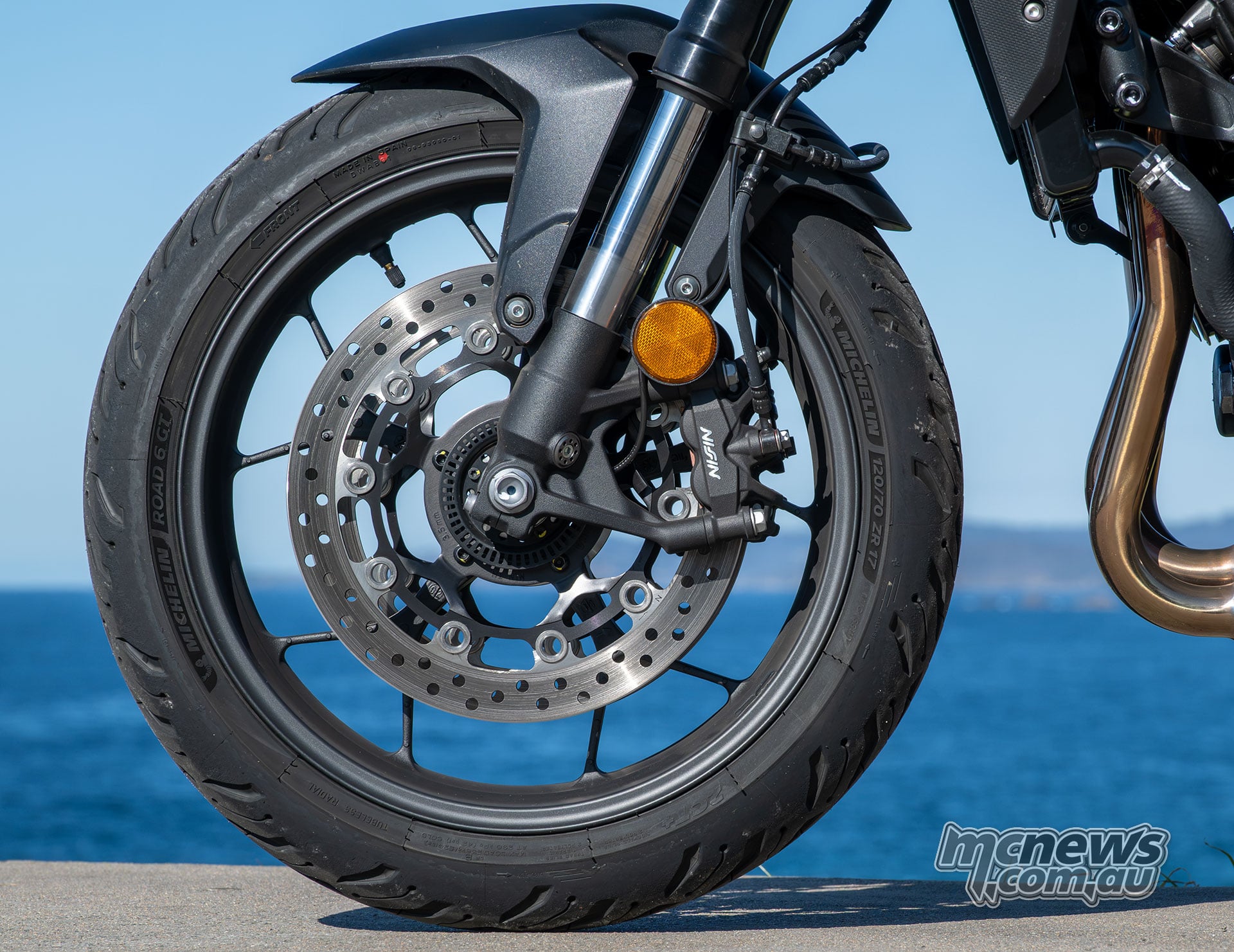
One particularly ripped-up braking area provided a meaningful demonstration of the ABS. I arrived at a corner with enough speed for the broken surface to trigger the system, but it cycled quickly enough that the intervention never meaningfully detracted from the braking performance.
The GT remained composed and continued shedding speed, and the lever response raised no concern that I would fail to slow sufficiently for the turn.
That experience stood in stark contrast to riding the same section on a Transalp the previous day. On the adventure bike, the ABS cycled slowly enough that I briefly wondered whether the available road would run out before the speed did.
No such concern existed on the GT. Horses for courses. On this particular horse and this particular course, the CB1000GT’s braking package was much better suited to the task.
An engine that feels alive
For all the digital sophistication beneath the surface, the engine supplies a wonderfully analogue-feeling central to the CB1000GT experience that spoke to my soul.
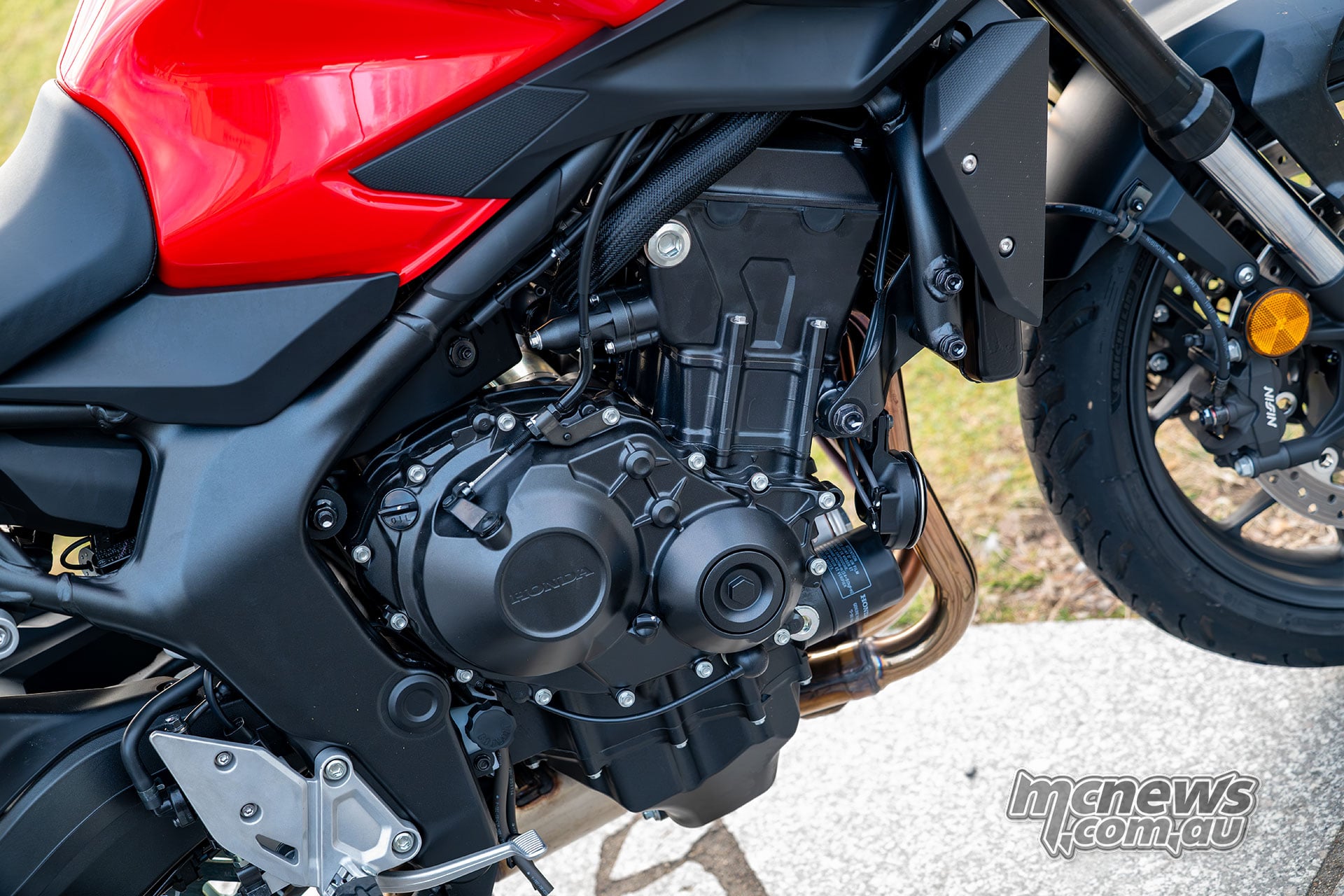
The in-line four will pull top gear cleanly from around 60 km/h. At 100 km/h it is turning an easy 4000 rpm. Open the throttle, and it accelerates with proper urgency without demanding a downshift for every overtake.
Its character comes from a combination of intake roar, exhaust note and vibration. None of those sensations concentrates in a particular area strongly enough to become annoying. No troublesome buzz comes through one footpeg, grip, or section of the seat. Instead, the sensations seem to exude from the motorcycle as a whole.
They give the Honda an animated, living quality that made me like it more as the kilometres accumulated. It feels alive. It has a gravelly, old-school cool and can seem almost analogue, despite being very much a fully digital motorcycle underneath.
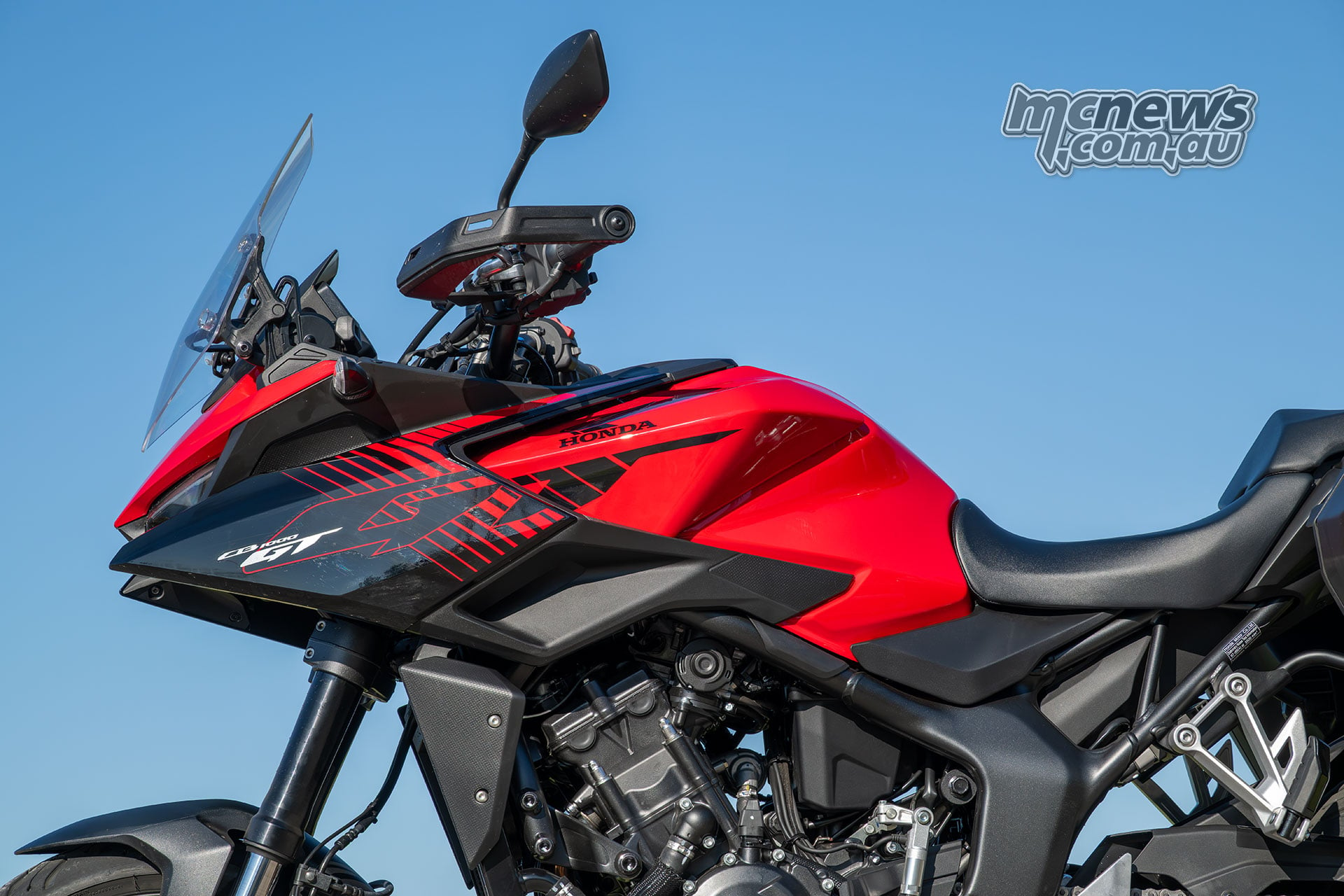
The urgency builds progressively rather than arriving as one abrupt step. Once the tacho swings beyond 8000 rpm, however, the rate of acceleration quickly reminds you that creature comforts or not, this remains a very fast motorcycle when the mood takes you.
Between 8000 and 10,000 rpm, shit starts to get real.
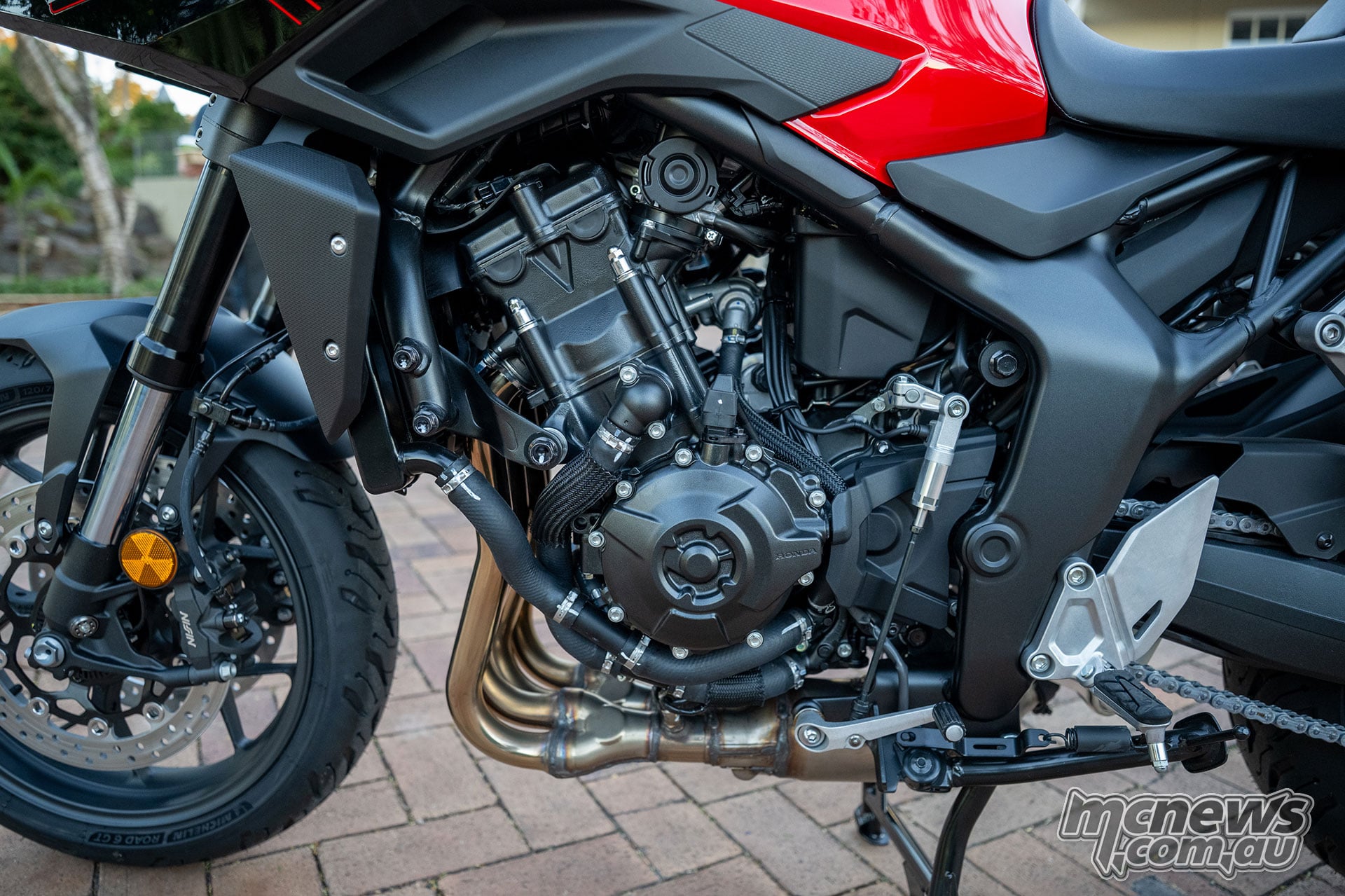
The Fireblade-derived engine smooths further as it gathers revs with increasing enthusiasm, and begins delivering the sensations that made those old sportsbike days so addictive.
With almost 150 horsepower, it doesn’t have the endless upper reaches of the latest 200-horsepower missiles. On public roads, however, I never found myself wanting for more. It is properly fast, usable and plenty exciting enough to light my fire.
Quickshifter qualifications
The quickshifter generally worked well, although it is not the best system I have used. I missed more first-to-second shifts than I would have liked, while changes through the remaining ratios caused little complaint.
A couple of qualifications before laying the blame entirely at Honda’s feet. The motorcycle had not even covered 100 kilometres when I collected it, so the gearbox was still fresh. My left ankle is not exactly in factory condition either.
My right ankle is fused, while my left is also buggered and ultimately needs replacing. Fusing that one as well would probably have me falling over regularly even while sober, so reduced mobility on the left remains part of the deal.
Consequently, the occasional missed shift may have been caused by the fresh gearbox, quickshifter setup, my ankle or some combination of all three. It warrants another try on a fully run-in motorcycle before it can be declared a definite fault.
From second up, the clutchless upshifts and downshifts were pretty seamless.
Range and real luggage
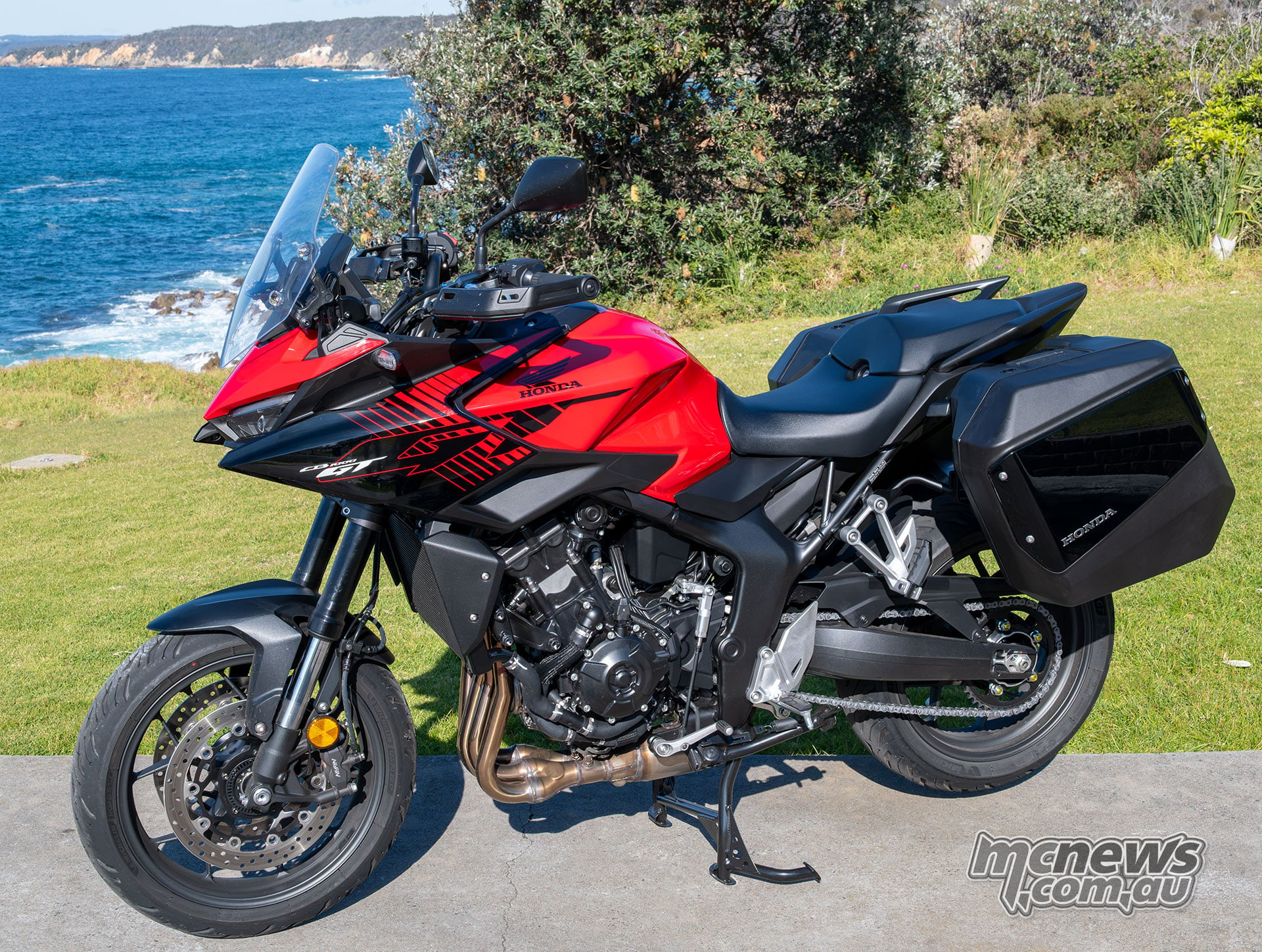
The 21-litre tank gives the CB1000GT the range expected of a genuine sports-tourer.
The highest distance-to-empty figure I saw immediately after filling was 376 kilometres. Actual range naturally varied with the enthusiasm applied to the throttle, but you could bank on 300 kilometres in almost any situation.
The distance-to-empty display initially proved less cooperative than the tank itself. By default, the figure appeared only once the remaining range had dropped to around 75 kilometres. It took a Google search to discover how to configure the dashboard so that distance to empty remained visible all the time.
That is one example of the CB1000GT’s extensive menu system offering almost everything you could want, but not always making it immediately obvious where to find it.
The integrated panniers swallowed luggage for two people. That included two pairs of shoes, a wash bag, a couple of pairs of jeans and the requisite allocation of jocks and socks for several days on the road.
That is more useful than quoting a capacity in litres. The cases carried what was required for the trip without forcing everything into a backpack or requiring extra luggage strapped across the pillion seat.
The panniers slot easily in and out of the lugs integrated into the sub-frame. It is a three-second process. Easy. Convenient. If only all bikes made it that simple.
No pillion testing was conducted, so the comfort promised by that high and well-padded rear perch remains untested.
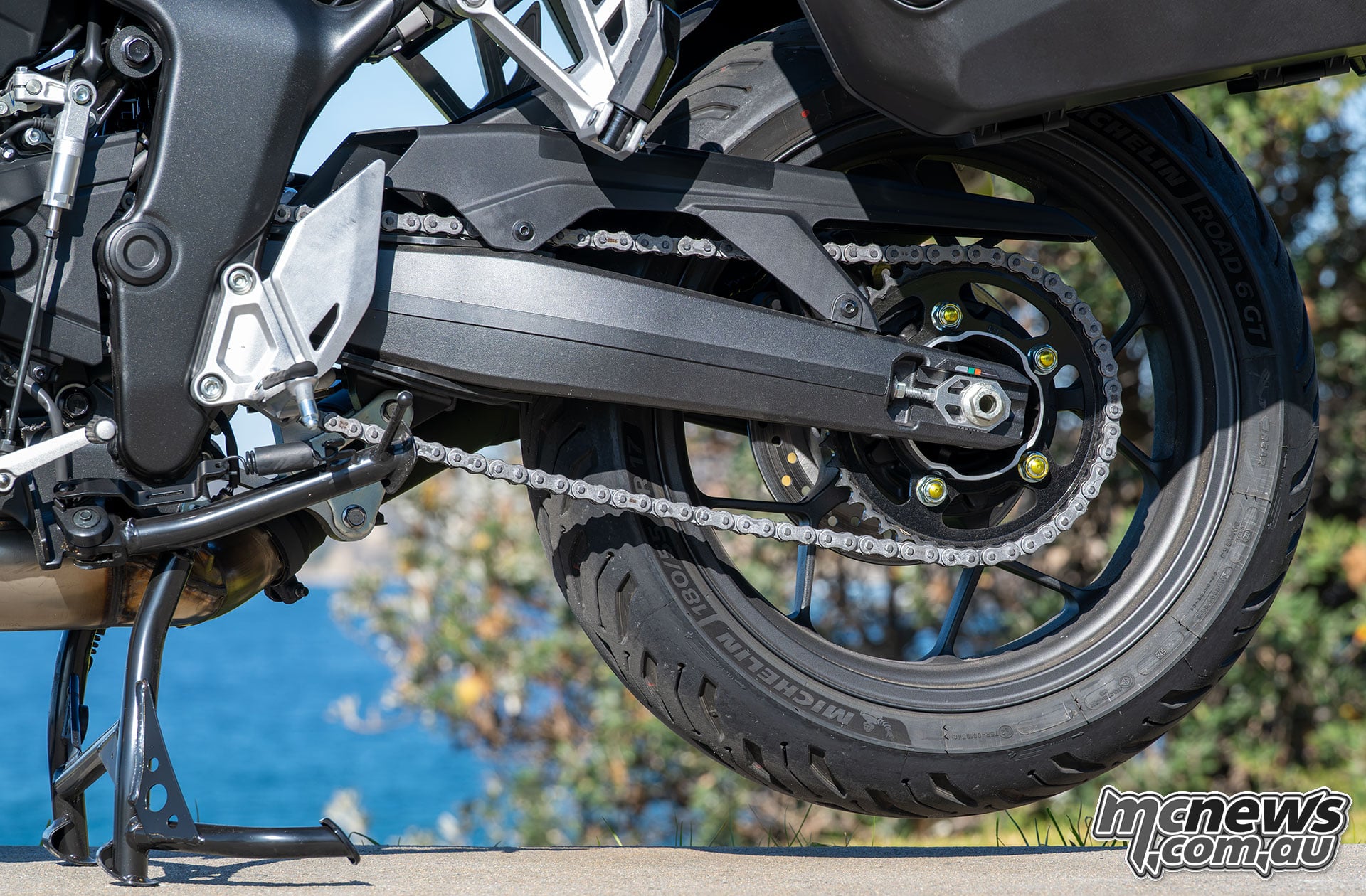
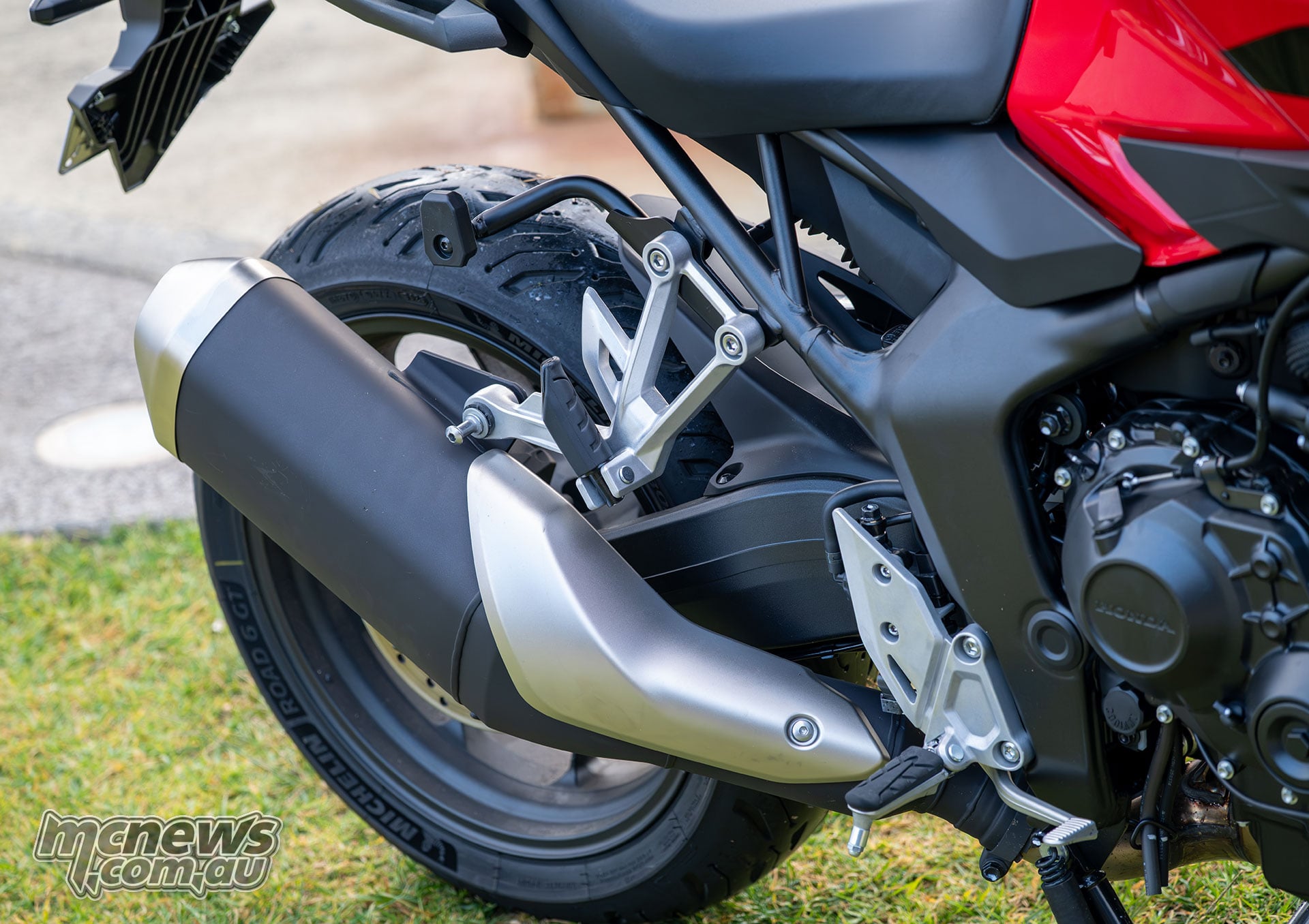
The centre-stand is another welcome inclusion. Like most centre-stands, lifting the bike initially requires the correct knack rather than brute force. Once you’ve mastered the technique, it is easy enough to use and makes chain maintenance during a long trip far more convenient. Normally I wouldn’t imagine the bike would ever need a chain adjustment any more often than rear tyre replacements. However, in this case I was blown away at how fresh the Michelin Road 6 GT tyres stayed.
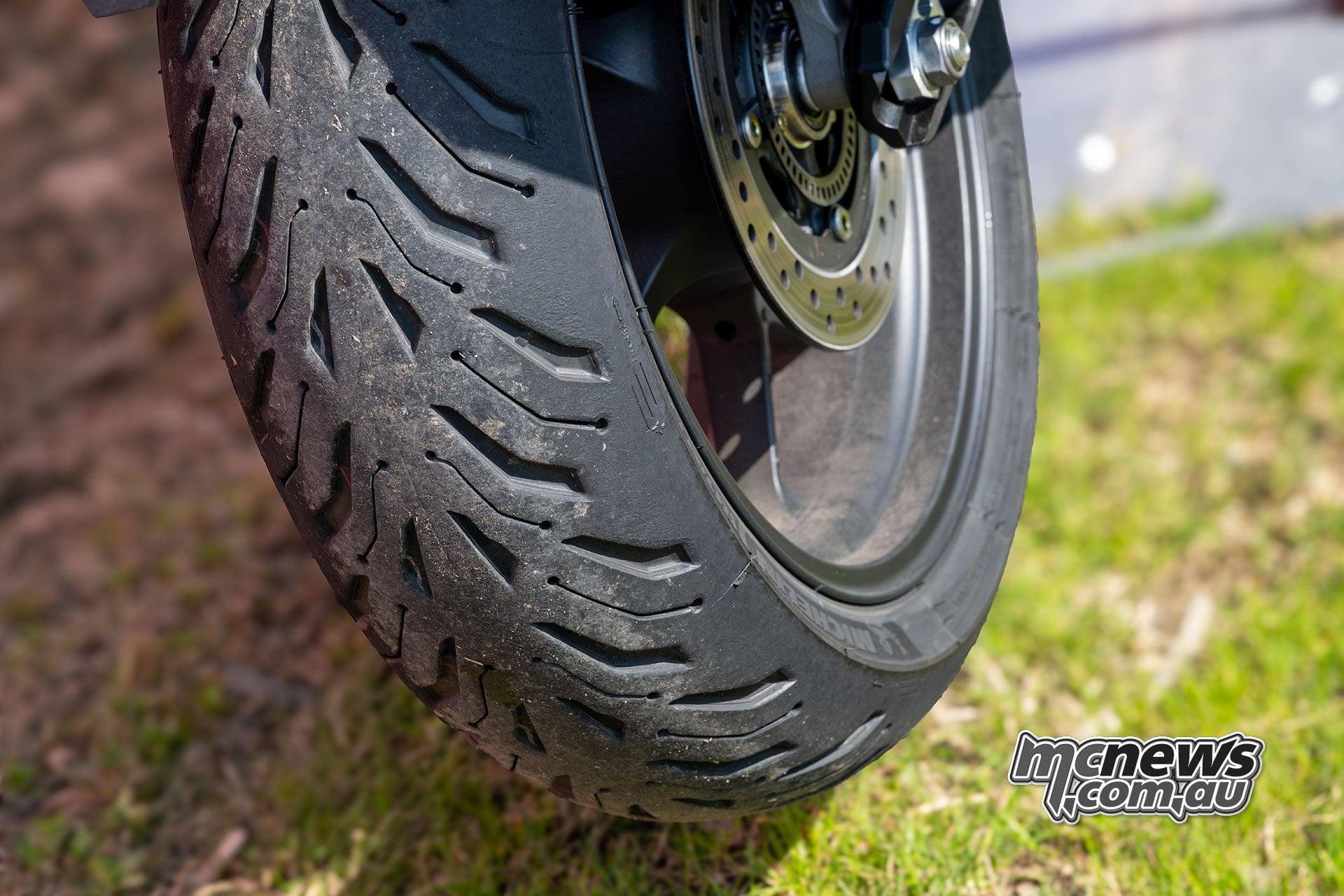
I wasn’t exactly hanging about for the most part, and I expected the endless changes of direction along the Bonang to tear it up, but as you can see below, they looked like I had been commuting. The tarmac was pretty cool throughout the trip, so it would be interesting to see how they hold up in hotter temperatures. During my ride, I couldn’t fault the grip they provided, and whilst it remained dry, I have no doubt they would be pretty epic in the wet by the look of that tread pattern. 20 years ago, running the likes of the Oxley and Bonang at the pace I did would have trashed a set of tyres; this is how far tyre technology has come.
Warm hands and small buttons
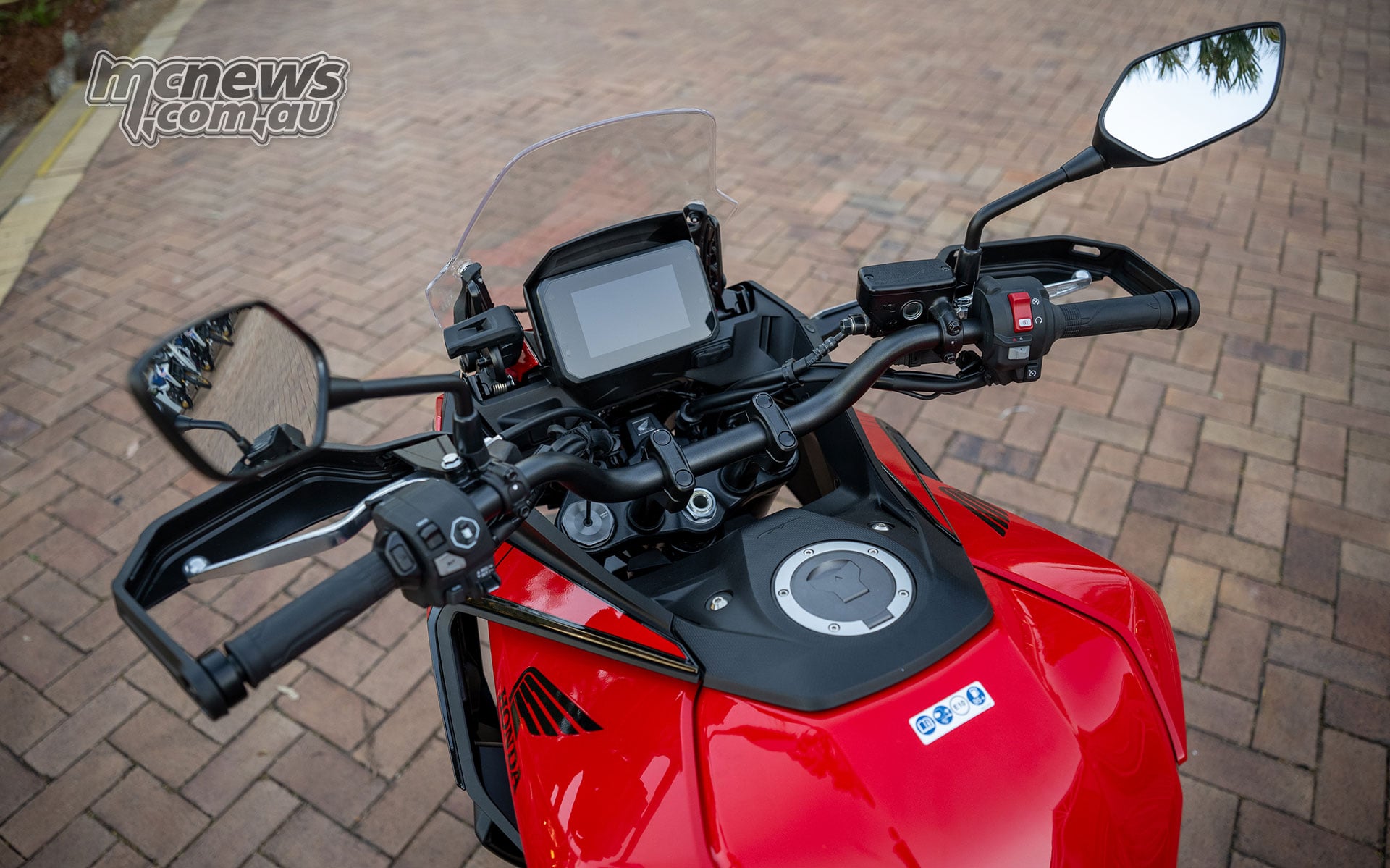
The standard heated grips were welcome during the colder sections, although I generally ran them at maximum when needed. They are not particularly strong at the lower settings.
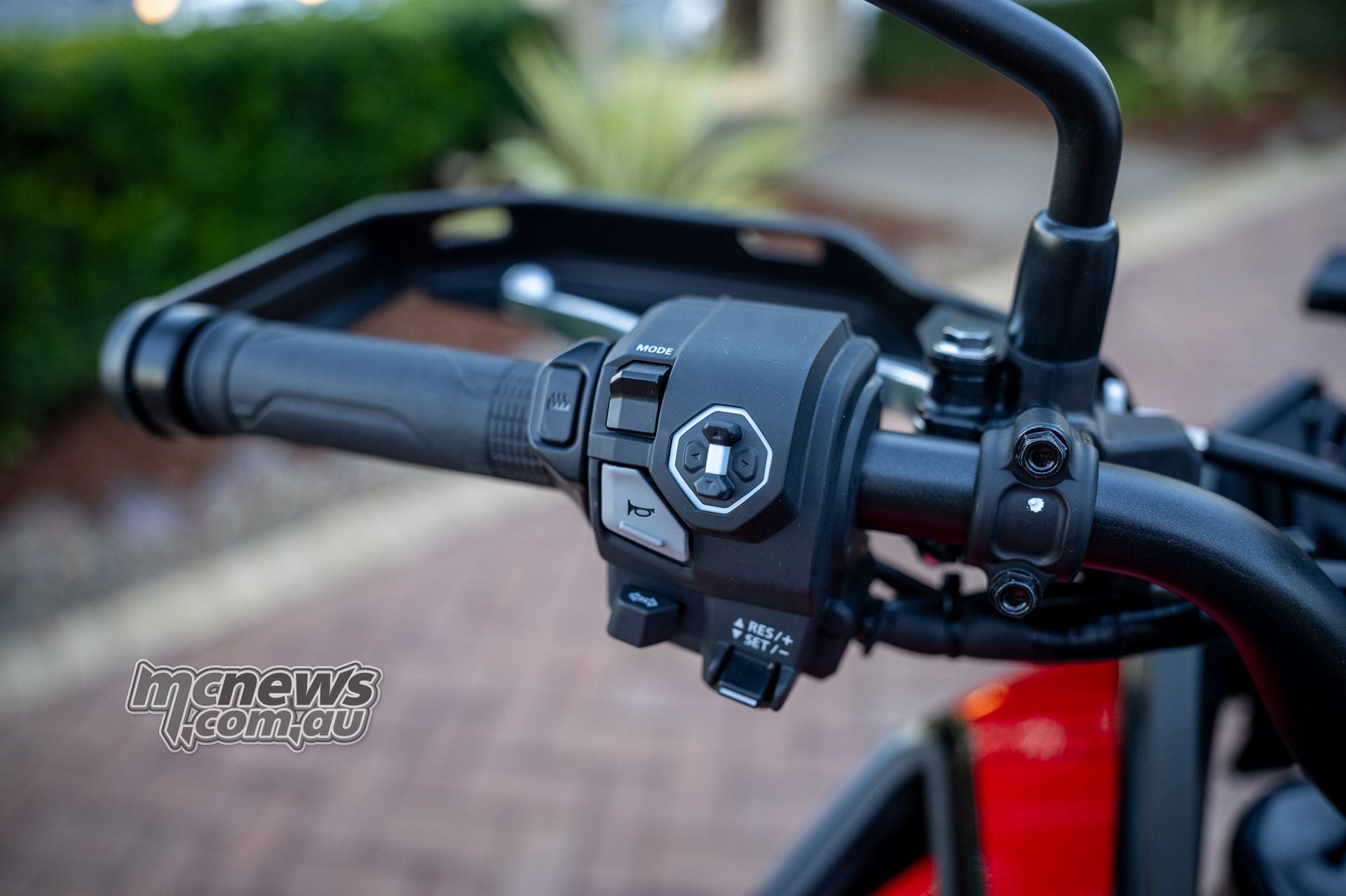
The left switchblock exposed a minor shortcoming when winter gloves were involved. The directional arrow buttons and centre toggle are quite small for gloved mitts, and I occasionally selected the wrong function. On the upside, the switchgear is backlit, which is an excellent touch and particularly useful when riding after dark.
The breadth of electronic adjustment is extensive. Power delivery, engine braking, traction control and quickshifter response can all be tailored, but learning how the different menus and buttons interact takes some time.
The suspension largely does its clever work without demanding any attention. The dashboard and controls occasionally make you work harder to access that cleverness.
Cruise control with a little surge
Cruise control was invaluable during the transport sections, helping preserve your licence, particularly across three such long days.
Once engaged, the system generally worked well. Rolling on the throttle to overtake temporarily overrides the cruise speed, after which the motorcycle settles back to its previous setting without requiring the system to be resumed.
The one peculiar behaviour occurred when initially setting a speed. On several occasions, the CB1000GT delivered a short, momentary surge of throttle immediately after the cruise was activated. It was over almost as soon as it began, but it was noticeable.
That could have resulted from something in my technique, perhaps a slight throttle movement as I pressed the button. It could equally be an early software quirk on an almost brand-new motorcycle that Honda may address through an update. Or maybe it was just me…
Anyone looking to indulge in old wheelie antics must first disable the traction-control system. That is straightforward enough. The irritation is that traction control automatically returns every time you cycle the ignition.
Beneath you is a sophisticated collection of digital safeguards and semi-active suspension calculations, but the sensations arriving through the bar, seat and footpegs can still feel pleasingly raw and analogue.
The ownership equation
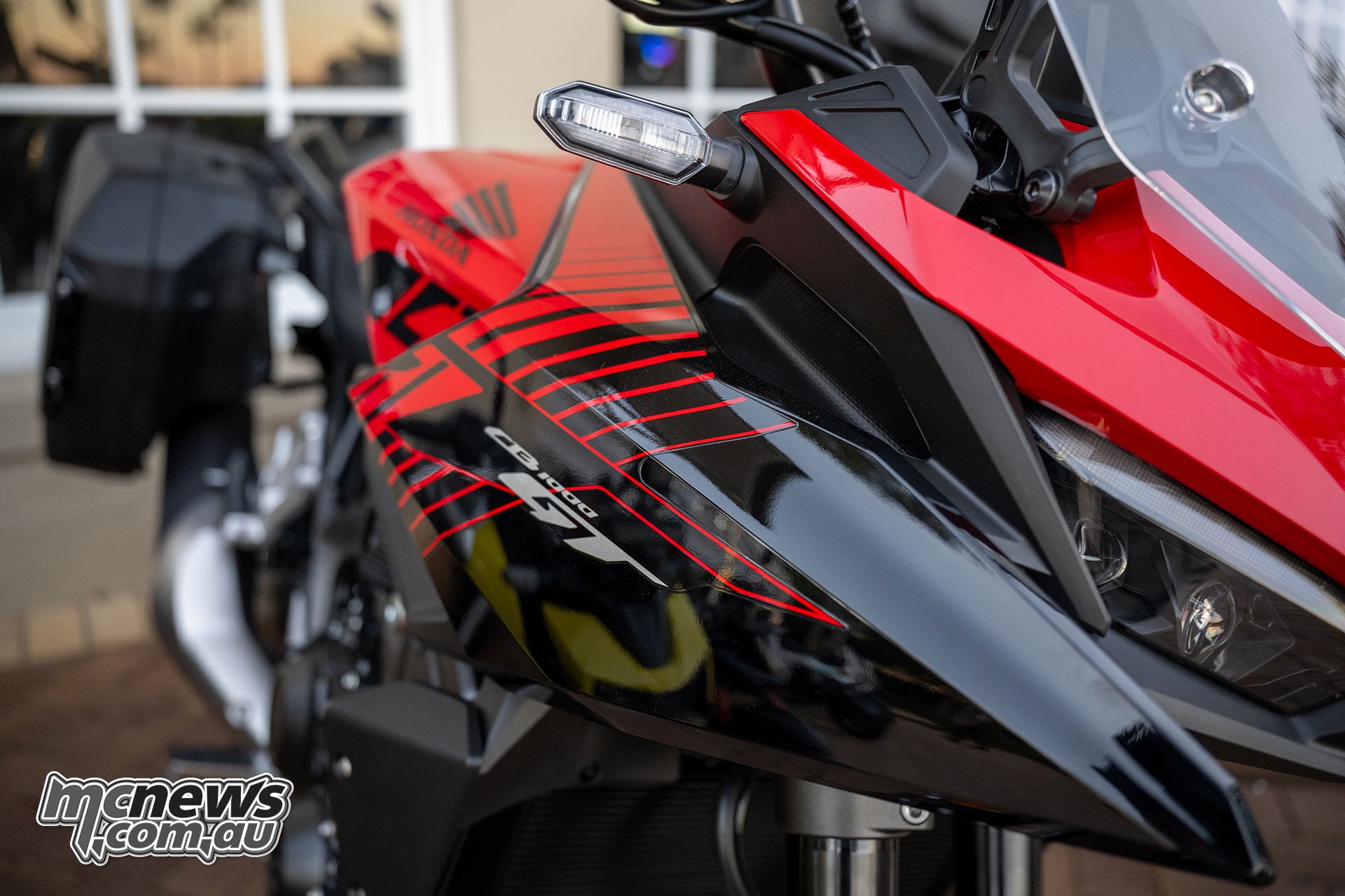
The CB1000GT brings together a 21-litre tank, integrated panniers, heated grips, cruise control, centre-stand, USB-C outlet, semi-active suspension, quickshifter and a comprehensive electronics package.
Honda has confirmed that the CB1000GT, as you see here, complete with the convenient panniers, will go on sale for $23,999 Ride Away. That is an enormous amount of motorcycle for the money and Honda’s industry-leading six-year warranty coverage adds further weight to the value equation.
The long road back
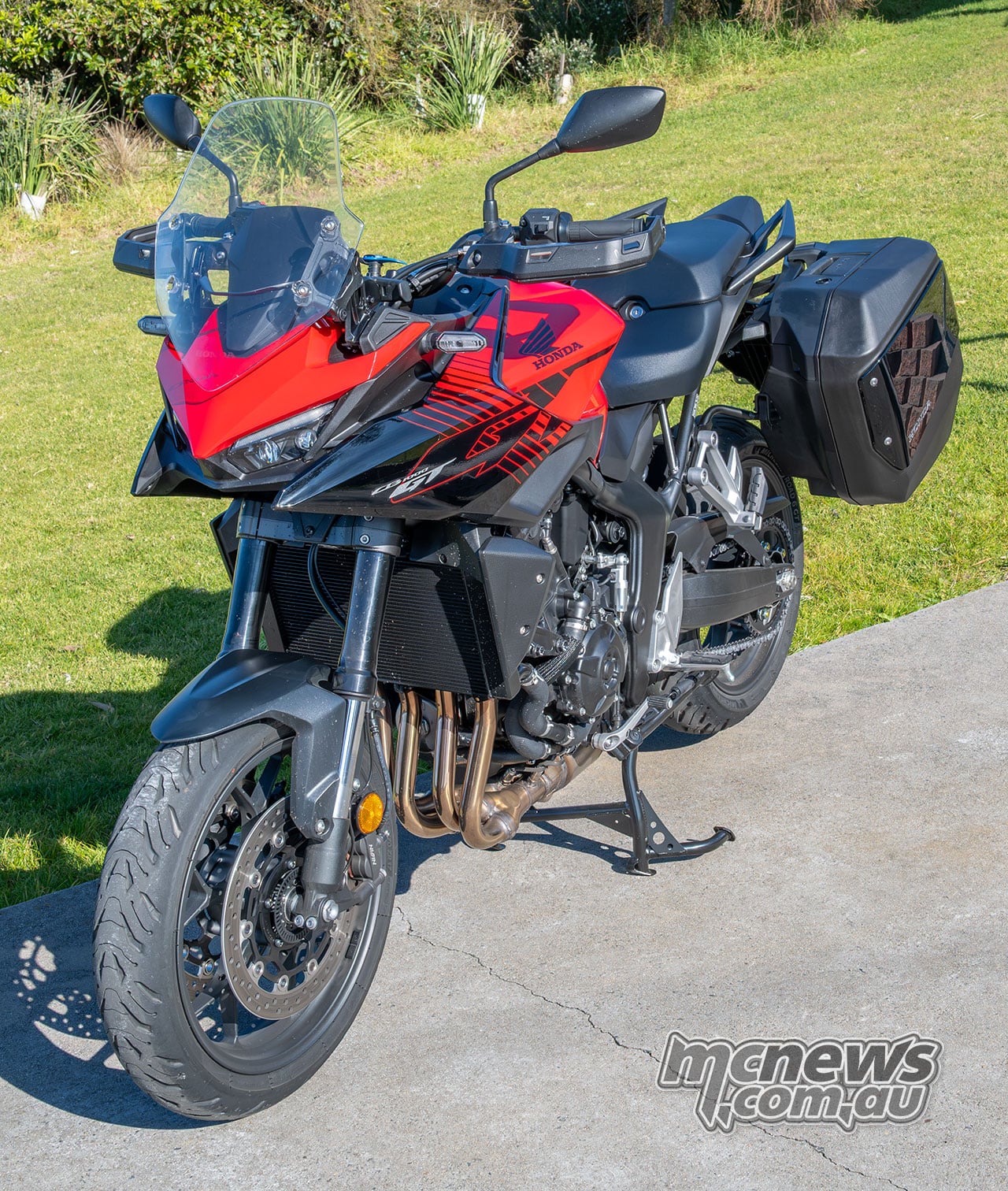
Many of us riders around the half-century mark have migrated from sportsbikes to adventure bikes. We no longer need clip-ons and cramped knees to get serious power, quality suspension and mint brakes. Modern adventure motorcycles provide performance and comfort in quantities we could only dream about when we were younger.
What often disappears in that transition is the distinctive sound, texture and top-end rush of a sporting inline-four, along with the lower, more accurate road manners of a motorcycle designed specifically for bitumen.
The CB1000GT brings those sensations back without demanding the old physical sacrifice.
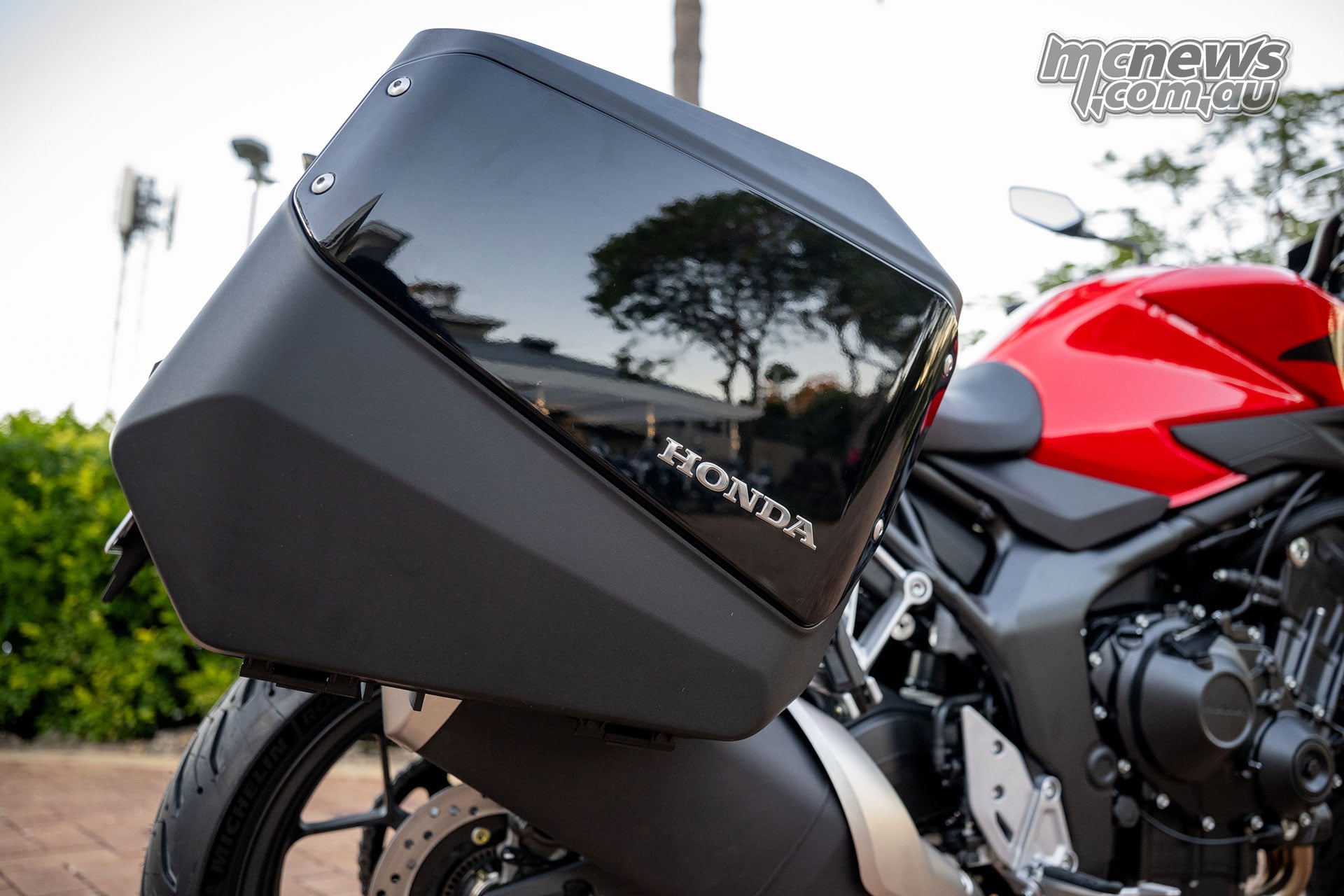
It is comfortable enough to cover a 1000-kilometre opening day without leaving wrists, knees, shoulders or backside pleading for mercy. Its electronic suspension takes the sting out of broken roads while remaining controlled when the pace increases. The panniers, range, heated grips and cruise control make the practical side of the journey easy.
Then the tacho passes 8000 rpm, the intake hardens, the bars begin talking through your hands, and familiar roads become playgrounds again.
The first day had started with the bars wiggling over a Mount Lindesay crest and ended 1000 kilometres later with an old Navy mate and me reminiscing about another time in our lives.
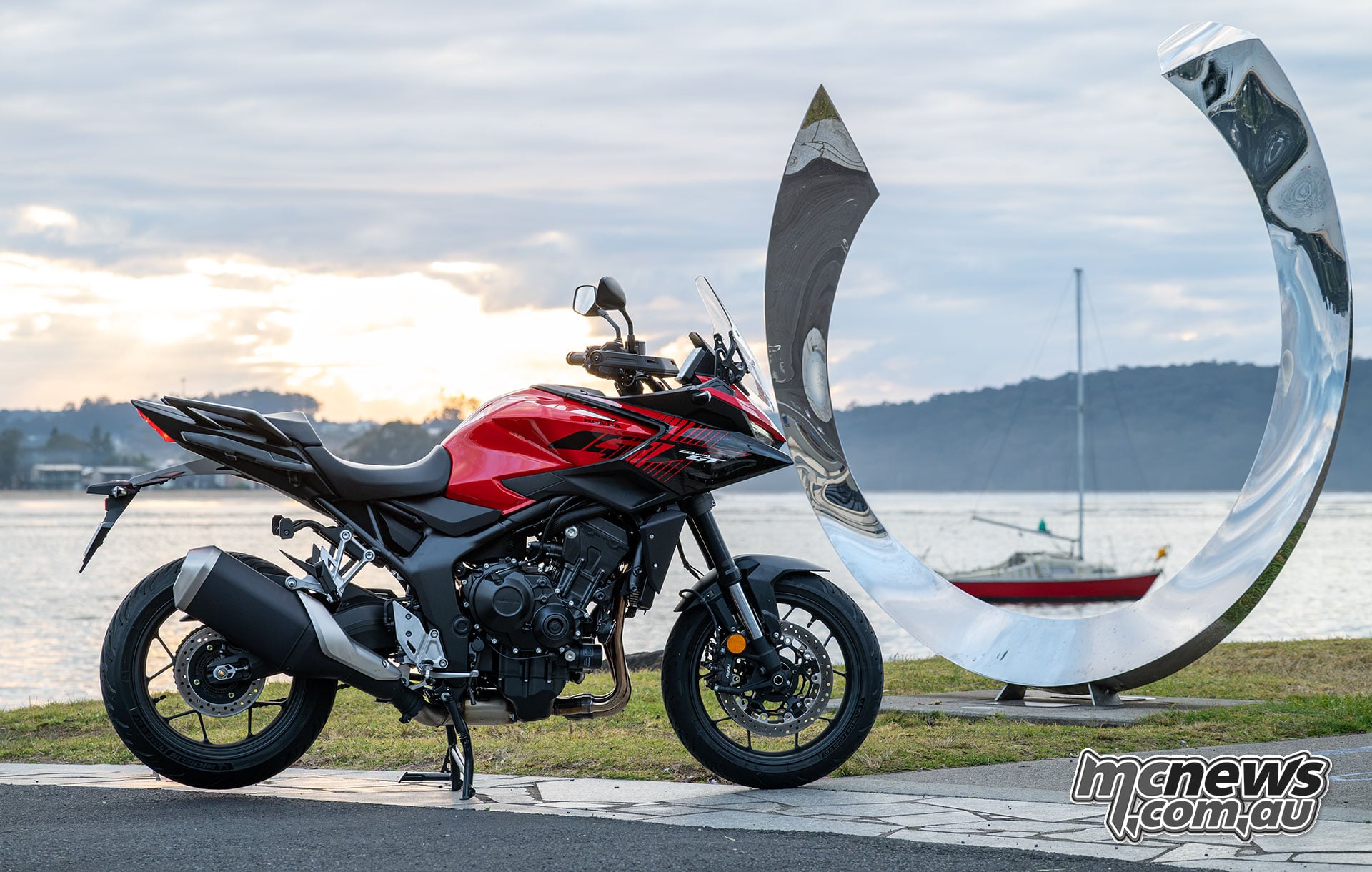
Many of us swapped sportsbikes for adventure machines as our bodies and priorities changed. The CB1000GT suggests we may not need to leave all of those earlier sensations behind after all.
By the time I turned west from Orbost towards Melbourne, with three days and 2500 kilometres behind me, the achievement was not merely that the Honda had made the distance easy.
It was that the CB1000GT had made those kilometres take me back to the old days without making me feel every one of my years.
At 4000 rpm, it is a calm, comfortable, practical GT with more than 300 kilometres of dependable range. Beyond 8000 rpm, the Fireblade lineage rises to the surface, and there is pace to spare.
The electronics have not sanitised that experience. They have simply made it possible to enjoy more of it, for longer.
The CB1000GT is a thoroughly modern way back to why many of us started riding roads such as The Oxley in the first place. I have got a four-wheeled GT in the shed, and a two-wheeled one like this would look mighty nice parked beside it… I can’t imagine anyone taking one home would be disappointed. I loved it not only for its pace and practicality, but also for the way it took me back in time and spoke to my soul. Good job Honda.
Honda CB1000GT Specifications
|
Specifications
|
|
|---|---|
|
Engine Type
|
Liquid-cooled, DOHC inline 4-cylinder
|
|
Displacement
|
1000cc
|
|
Bore × Stroke
|
76mm × 55.1mm
|
|
Compression Ratio
|
11.7:1
|
|
Max Power
|
110.1kW @ 11,000rpm (approx. 148 hp)
|
|
Max Torque
|
102Nm @ 8,750rpm
|
|
Transmission
|
6-speed with standard quick-shifter
|
|
Clutch
|
Wet multiplate, assisted slipper
|
|
Frame Type
|
Steel diamond frame
|
|
Wheelbase
|
1,465mm
|
|
Seat Height
|
825mm
|
|
Ground Clearance
|
135mm
|
|
Kerb Weight
|
229kg (excluding standard panniers)
|
|
Fuel Capacity
|
21 litres
|
|
Front Suspension
|
Showa EERA electronically controlled 41mm inverted forks, manual preload adjuster
|
|
Rear Suspension
|
Showa EERA electronically controlled shock, electronic preload adjuster
|
|
Front Brakes
|
Nissin 4-piston radial calipers, twin 310mm discs with 6-axis IMU Cornering ABS
|
|
Rear Brake
|
Nissin single caliper, single 240mm disc
|
|
Riding Modes
|
Standard, Rain, Sport, Tour, User
|
|
Dash
|
5-inch TFT display with Honda RoadSync connectivity
|
|
Standard Inclusions
|
Detachable hard panniers, cruise control, heated grips, handguards, centre stand, 5-position adjustable windscreen
|
|
Colour
|
Grand Prix Red
|
|
RRP
|
$23,999 Ride Away including panniers
|
Honda CB1000GT Images




Images by RbMotoLens and TH