

Honda NX500 E-Clutch Review
I recently reacquainted myself with Honda’s learner-legal soft-roader during a sojourn to Queensland where I sampled some of the company’s latest E-Clutch models.
A couple of hours in the saddle is not enough for a full road test, so this should be regarded as a brief reacquaintance rather than a comprehensive review. It was still enough to remind me why I have always had a soft spot for Honda’s 500 twin, and to discover that the new E-Clutch variant is the one I would buy.
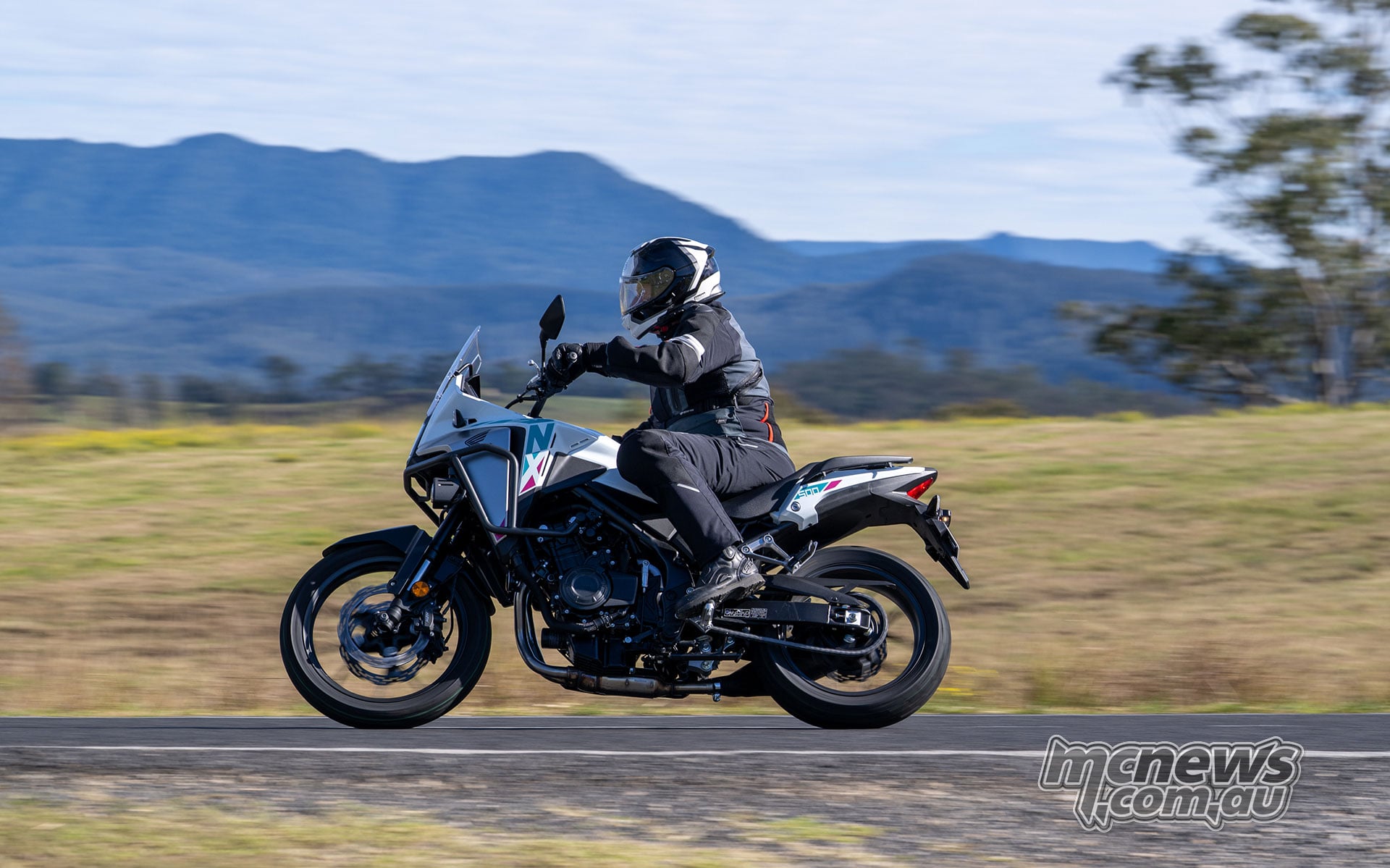
From CB500X to NX500
I was a fan of the CB500X when it first arrived in 2013, liked it even more after the substantial 2019 update, and then wondered why Honda renamed it the NX500 for 2024.
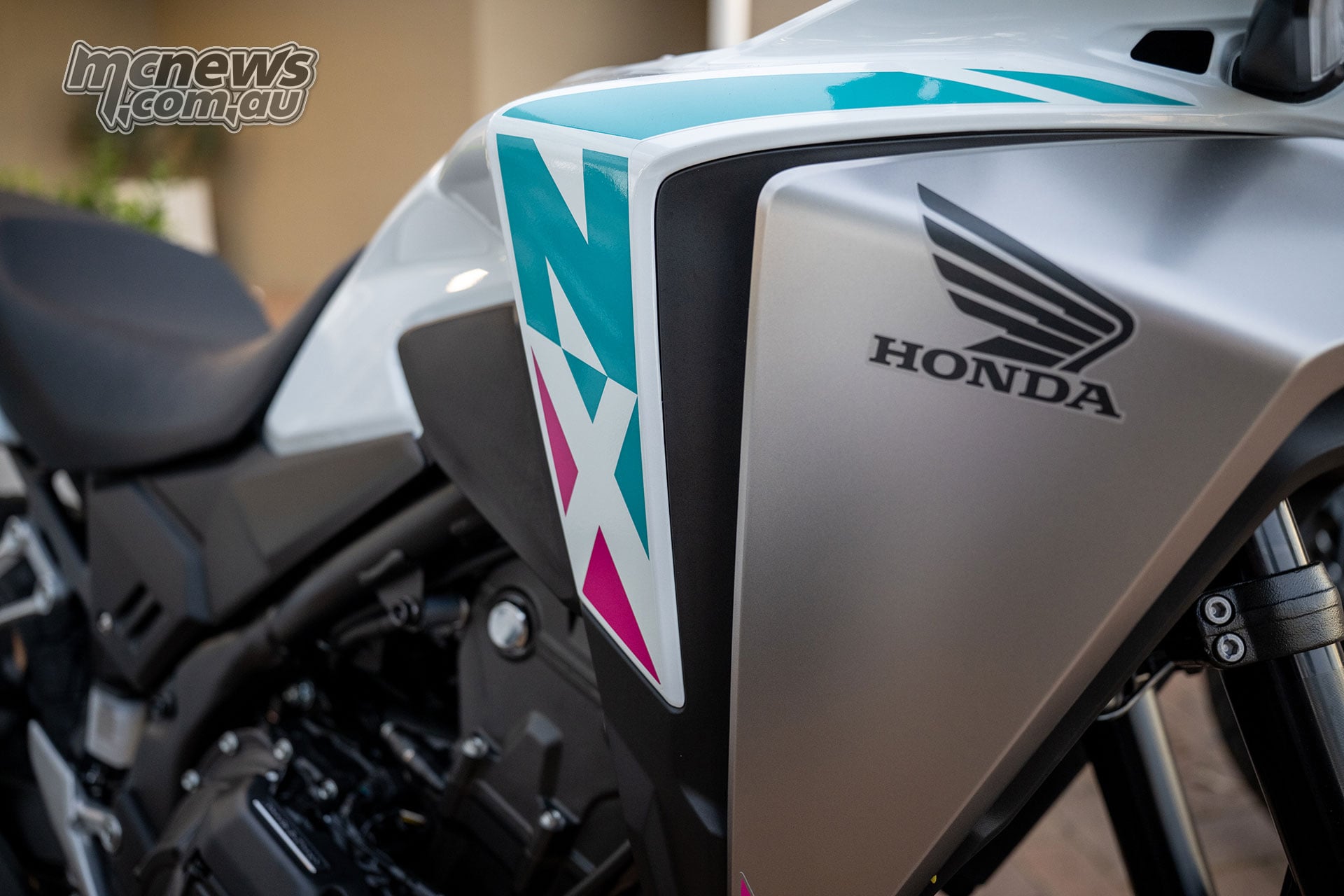
Honda says NX stands for “New X-over”, while also reviving a badge with some history in the Honda catalogue, the NX650 Dominator. Fair enough, although I still reckon CB500X told you what it was…
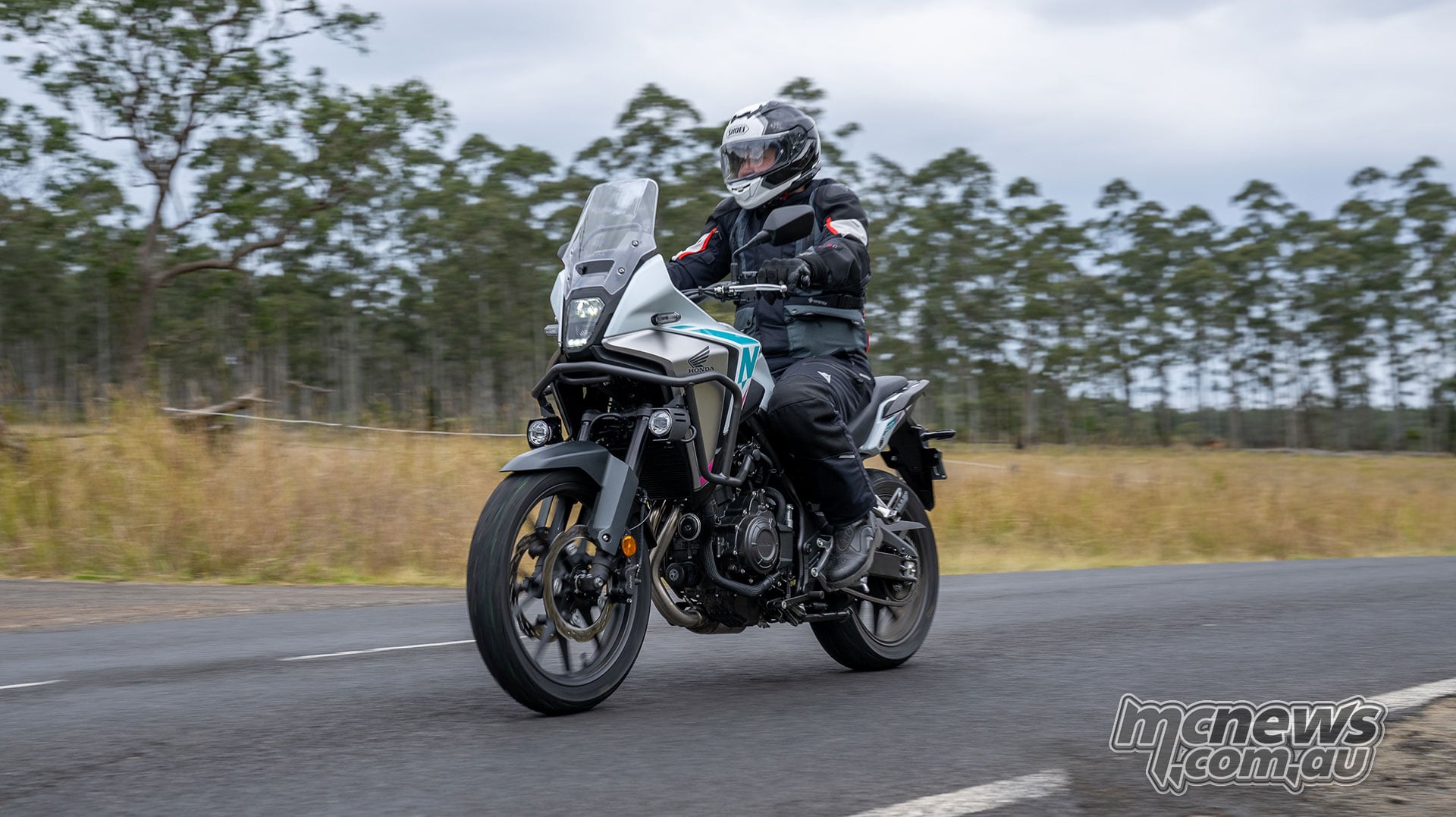
Back in 2013, Honda’s then-new 471 cc parallel-twin was really quite impressive. So was the CB500X package as a whole, and I regarded it as one of the most underrated models on the market.
The 2019 update improved the willing little mill further, with Honda claiming around four per cent more power and torque between 3,000 and 7,000 rpm. It also gained a 19-inch front wheel and became a more convincing all-roads proposition.
Euro5 compliance followed for the 2021 model year, before more substantial chassis changes arrived for 2022. Those included a 41 mm Showa SFF-BP inverted fork and twin 296 mm front discs with two-piston Nissin calipers, along with lighter wheels and a revised swingarm. Updated fuel-injection settings also brought a little more grunt down low and through the mid-range, along with a little more urgency under throttle, although the peak headline outputs remained 47 horsepower at 8,600 rpm and 43 Nm at 6,500 rpm.
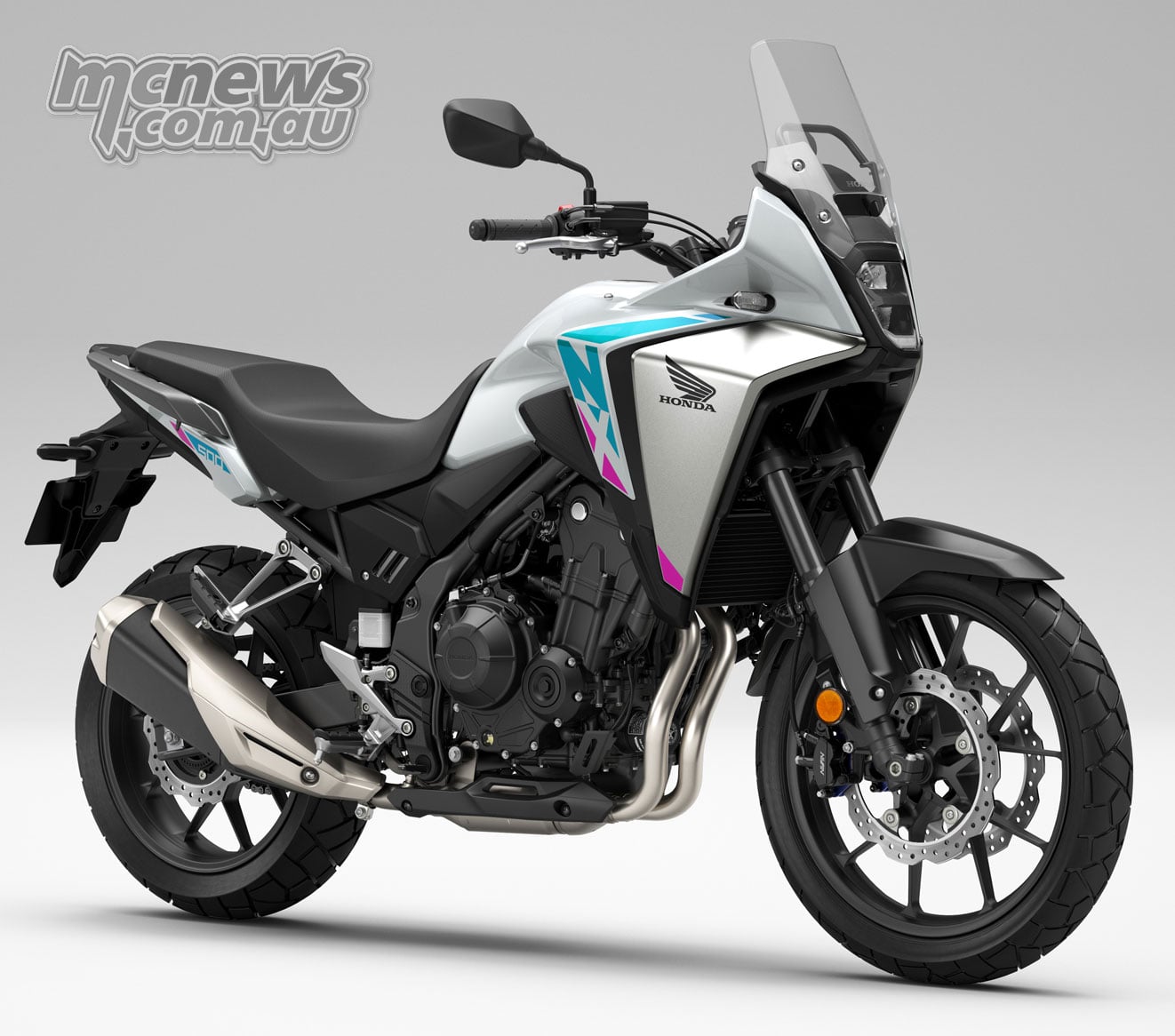
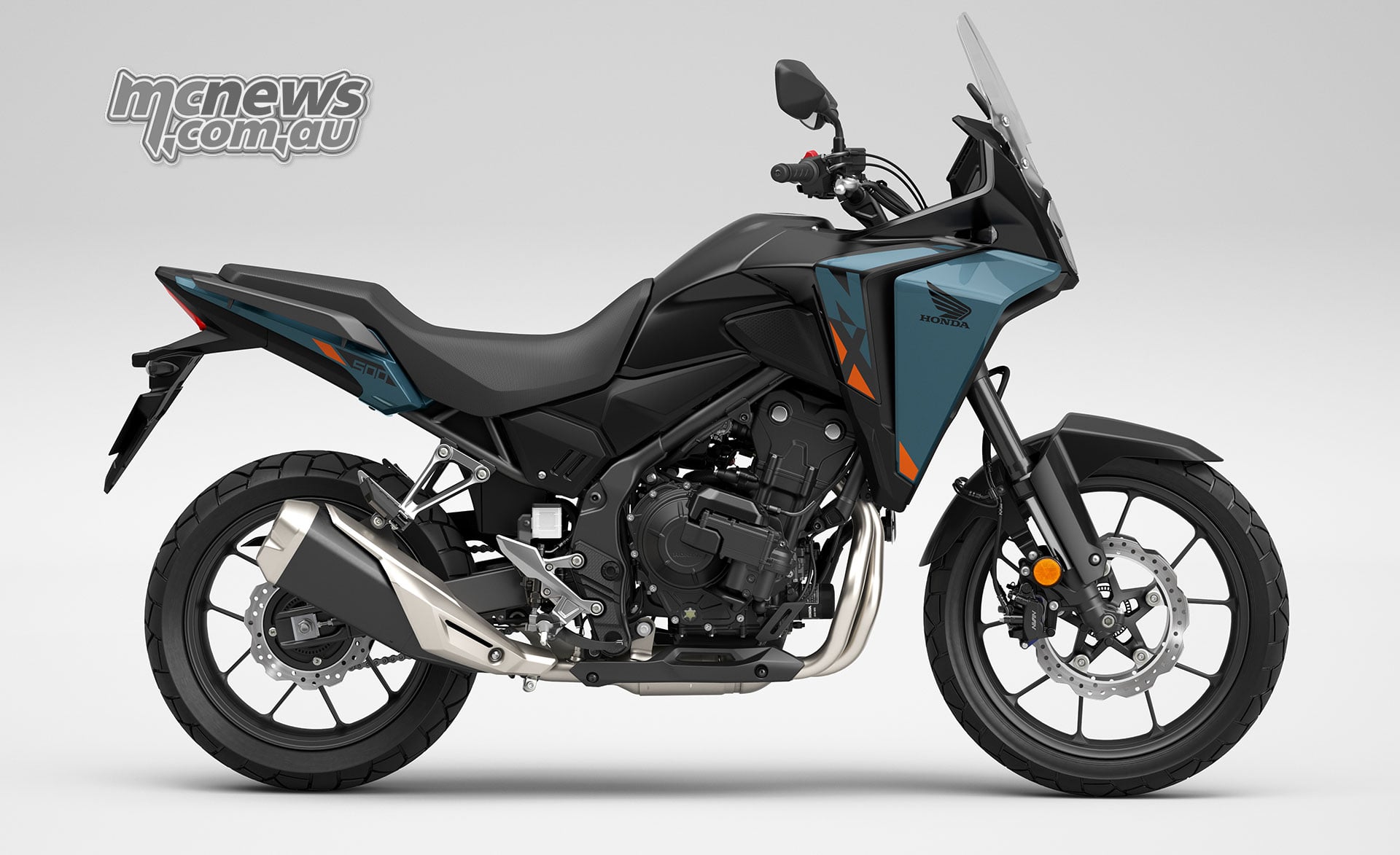
The change from CB500X to NX500 in 2024 brought fresh styling, a new five-inch TFT display with Honda RoadSync smartphone connectivity, Honda Selectable Torque Control and improved backlit switchgear.
Wayne covered that update in considerably more depth after spending a few weeks with the bike. He found it learner-friendly, forgiving and highly adaptable on the road, while making it clear that the standard machine is a soft-roader rather than a hard-core adventure bike.
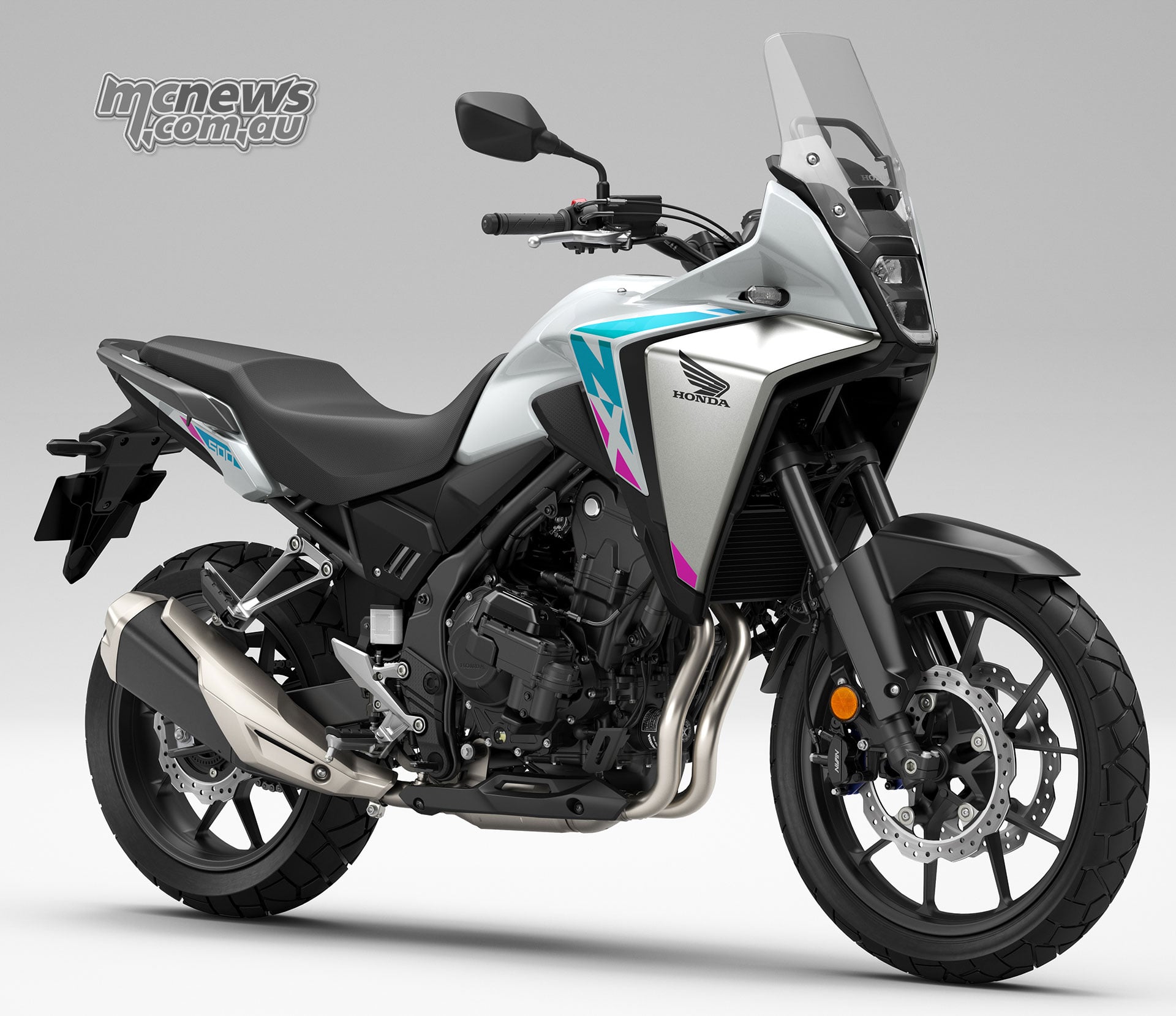
Still willing, but no longer a standout engine
It feels as though dozens of new mid-capacity parallel-twins have hit the market since Honda launched its 500 range. In 2013, that engine was a brilliant little mill shared across three very capable models.
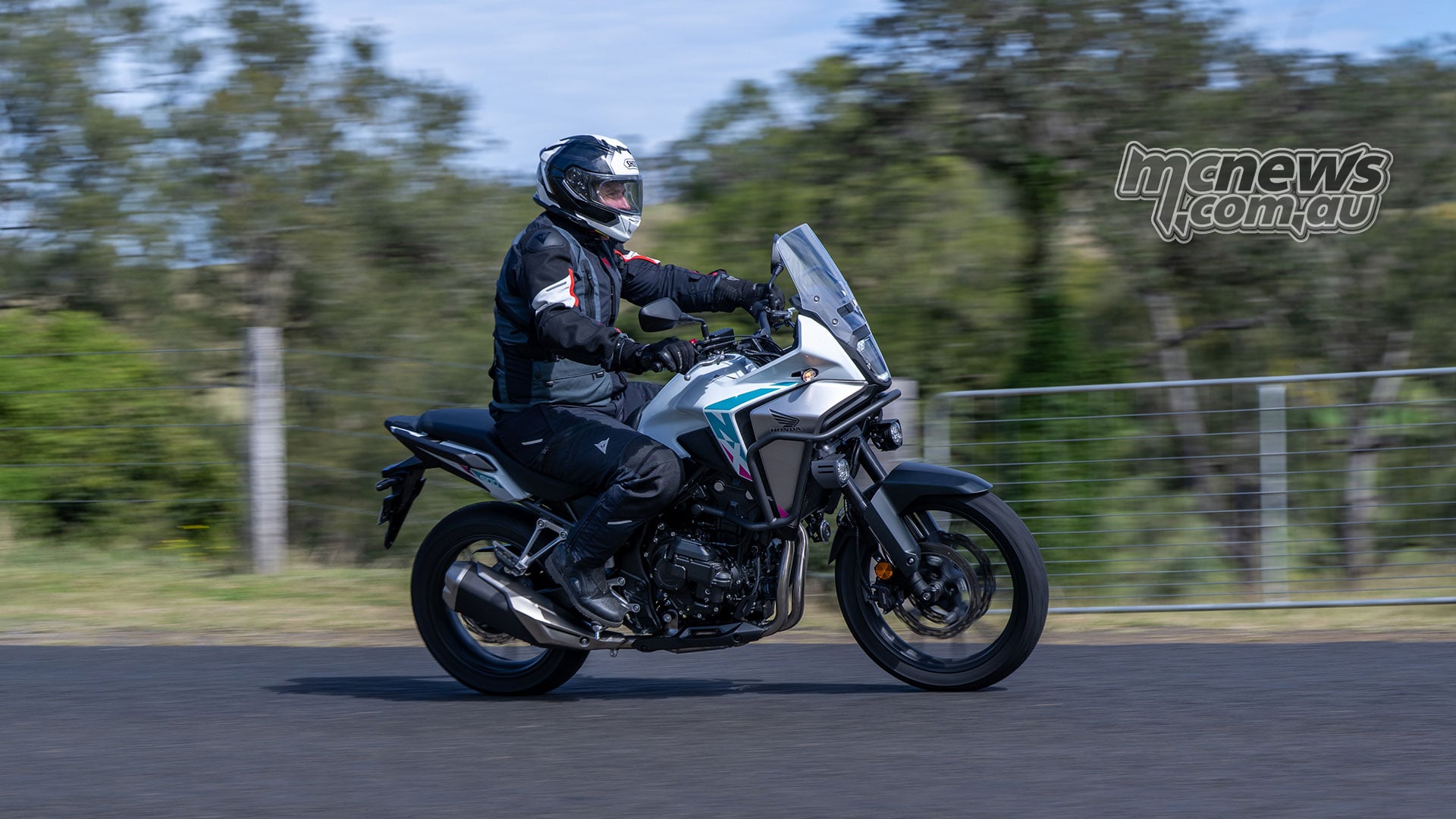
Held against the latest and greatest opposition in 2026, however, it is starting to feel its age. It remains willing, friendly, and more than capable of getting the job done, but it is no longer the smoothest or torquiest option around this capacity, and it no longer gives Honda the clear advantage it once did at the half-litre metric.
E-Clutch is the 2026 headline
The big news for the new model year is the arrival of an E-Clutch-equipped NX500 for only a $400 premium. The conventional NX500 is priced from $10,999 ride-away, while the NX500 E-Clutch starts at $11,399 ride-away. Both are backed by Honda’s industry-leading six-year warranty.
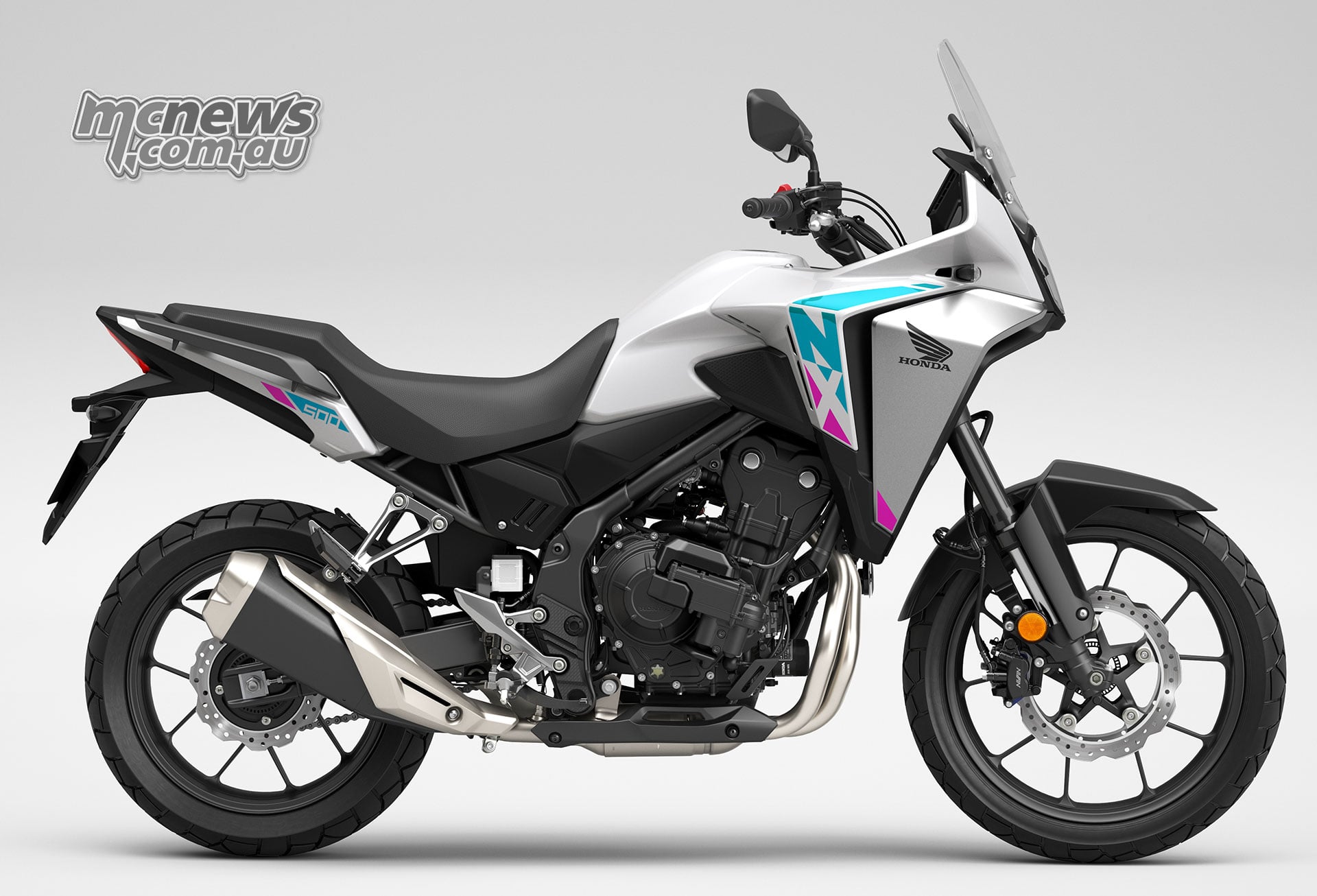
For the Australian market, the NX500 is the only member of Honda’s 500 twin family offered with E-Clutch this model year. The system is also available overseas on the related CB500 Hornet, previously known here as the CB500F, and CBR500R, so it may appear on Australian-delivered versions of those models later, but E-Clutch variations of those models are not on Honda Australia’s immediate radar.
So, what is E-Clutch?
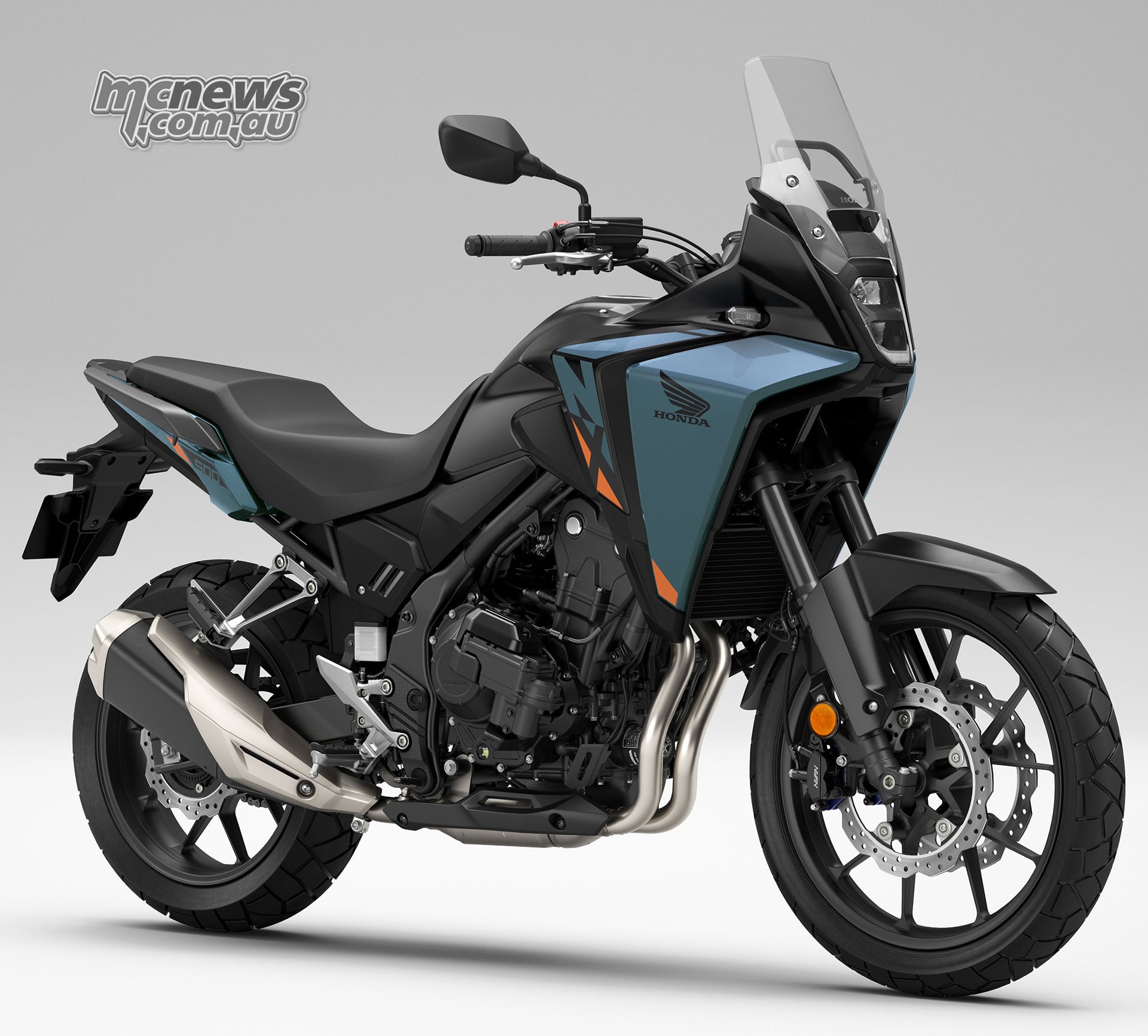
It is not as big a departure from a conventional manual motorcycle as you might think. The gearbox remains a normal six-speed manual, and you still select every ratio with your left foot. What changes is that, with E-Clutch active, you do not need to touch the clutch lever when selecting first gear, pulling away, shifting up or down, or coming to a stop.
The clutch lever remains in place and can be used whenever you want to take manual control. Pull it, and the system temporarily steps aside; once the conditions are right, electronic control resumes. You can also switch E-Clutch off altogether and use the bike as a conventional manual.
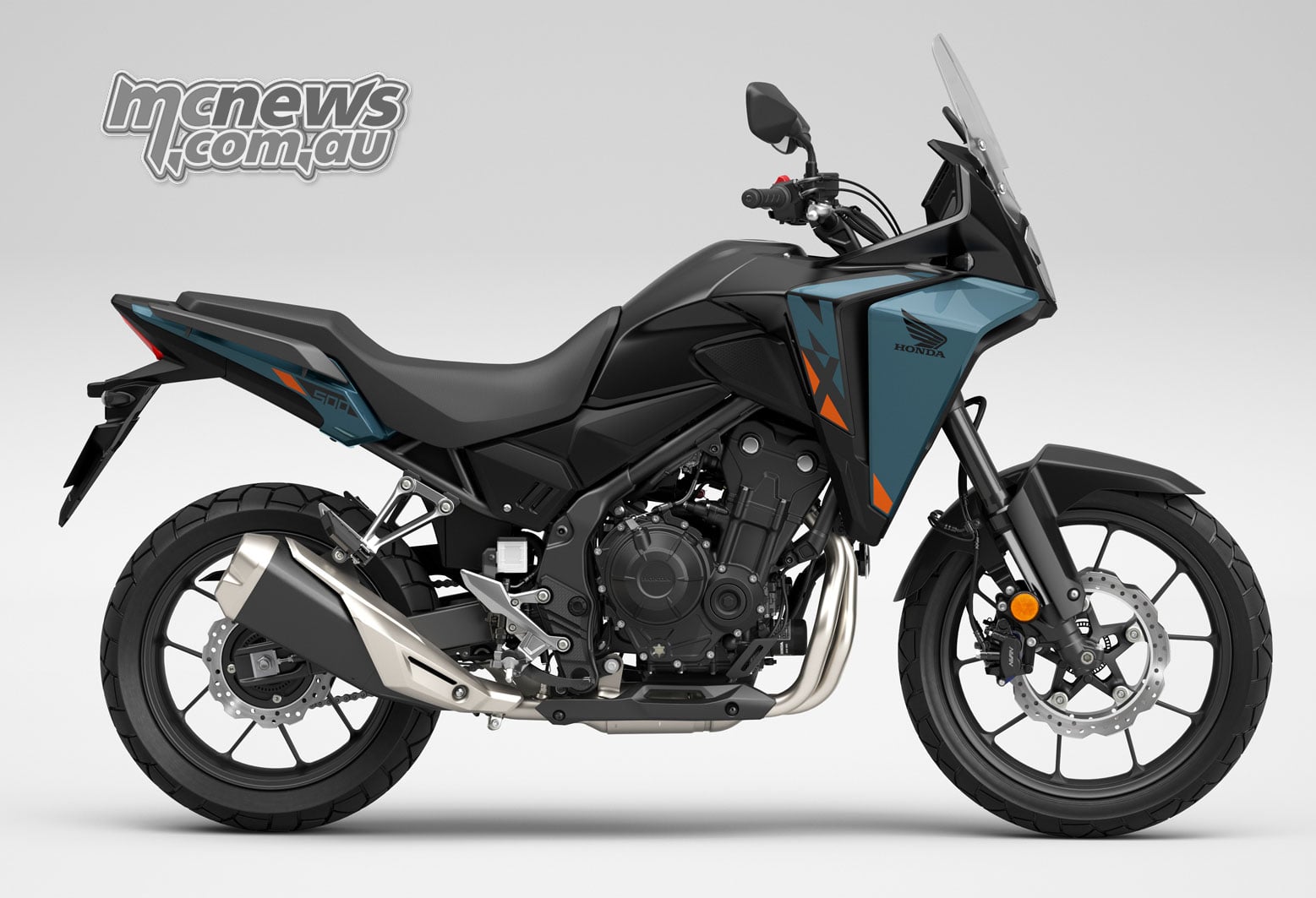
Unlike Honda’s far more technically sophisticated Dual Clutch Transmission, which automates clutch operation and gear selection and commonly adds around ten kg, the E-Clutch carries only a modest weight penalty.
The standard NX500 weighs 196 kg ready to ride, while E-Clutch adds only 2 kg to its waistline. That puts the E-Clutch model at 198 kg with its 17.5-litre tank full, keeping it on the right side of the psychologically significant 200 kg mark.
In almost every normal scenario, the electronics and their two small actuator motors manage clutch engagement and disengagement better than you can. Starts are exceptionally smooth, gear changes are clean, and stopping requires no thought beyond using the brakes and tapping down through the gearbox.
In fact, the system is so competent that it can encourage a moment of brain fade. If you forget to shift all the way down while coming to a stop and leave the bike in, say, fourth gear, it will still pull away so smoothly that you might not immediately realise what you have done until the dash starts flashing a message urging you to downshift.
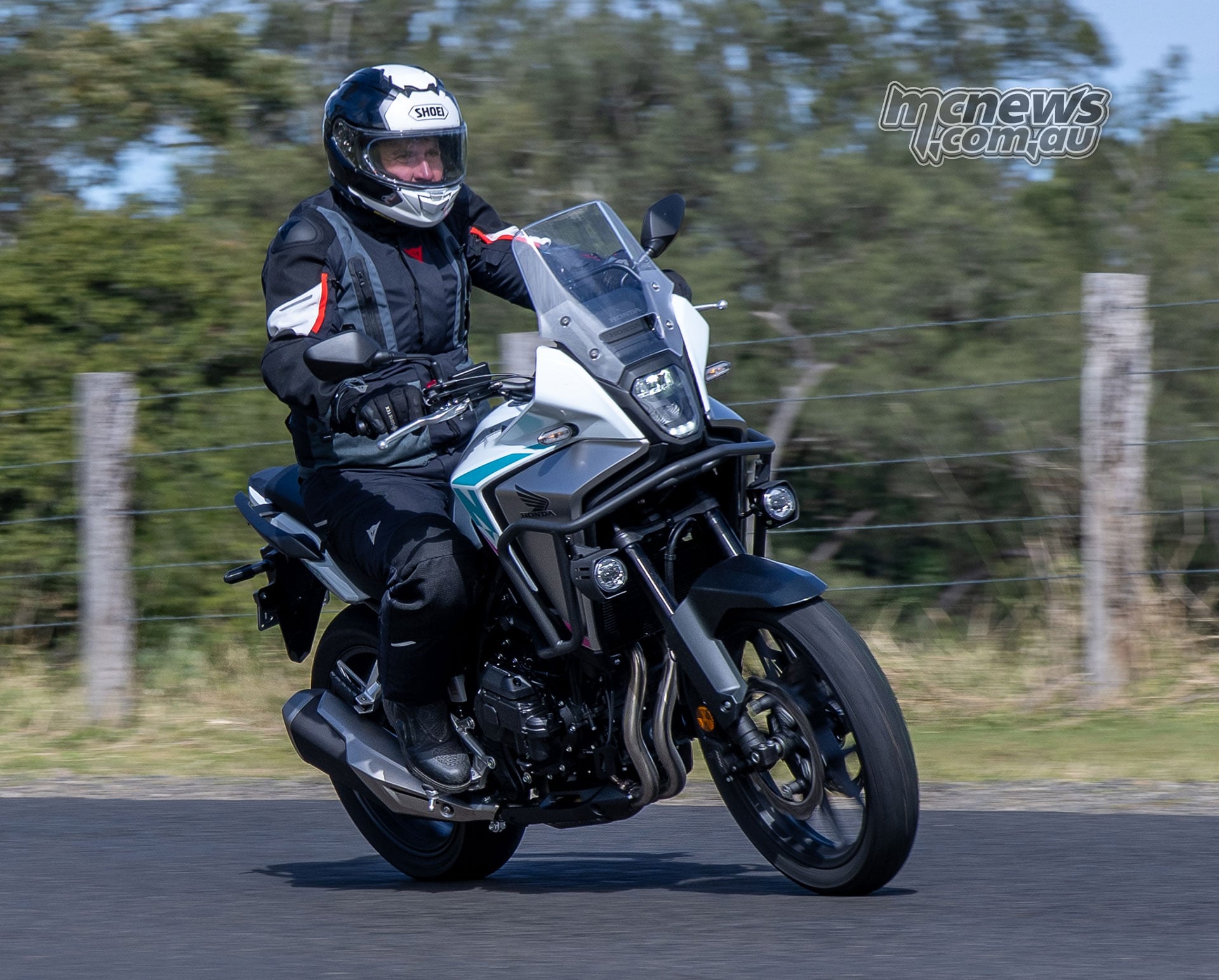
That is not something to make a habit of. Starting in too high a gear accelerates clutch wear. In normal use, that was the only potential drawback I found: E-Clutch works so unobtrusively that it is easy to forget you still need to choose the correct gear. And the NX500 will really pull away from a standstill in fourth without you hardly noticing your error, as it still manages to pull away that smoothly. Unbelievable really.
Another habit is worth unlearning when waiting at the lights. Once a gear is selected, do not absent-mindedly blip the throttle. With E-Clutch active, opening the throttle effectively commands the clutch to engage and the bike to move away. If you feel the need to give it a gratuitous rev, select neutral first.
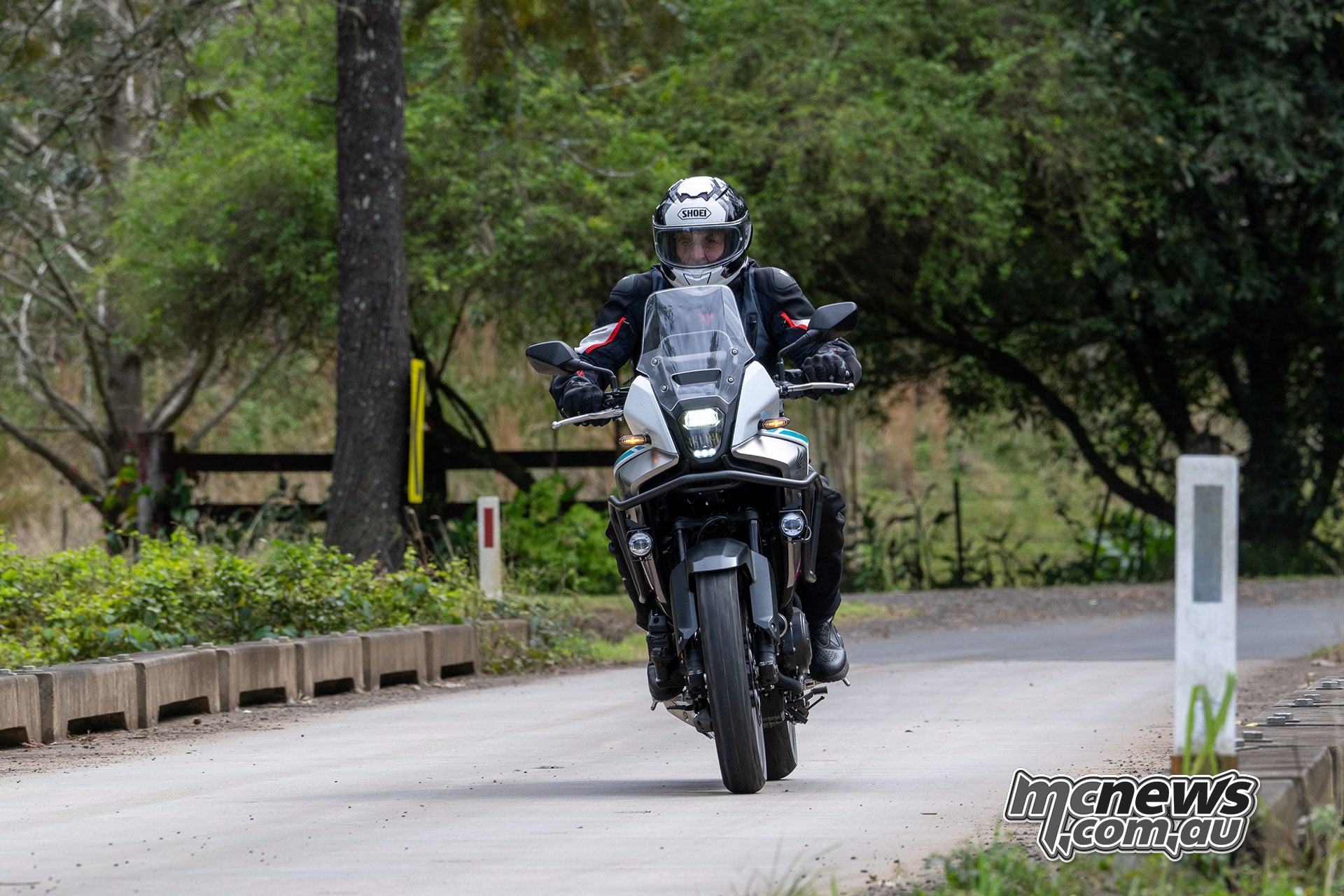
The other thing worth noting is the amount of free play at the clutch lever when E-Clutch is active. That is a characteristic of the system, so do not immediately try to adjust it.
In the upper gears, it doesn’t just work like a quick-shifter to cut the ignition; it mechanically operates the clutch, and does it impossibly well.
The NX500 was only ever designed to tackle modest off-road challenges, so the change in clutch-lever feel is not a major issue. More importantly, the E-Clutch system’s ability to pull away so smoothly makes hill starts easier than most riders will manage when left to do the clutch work themselves.
Seriously, it is ridiculously good, to the point that it makes the clutch control you were once rather proud of feel a bit shit by comparison in most everyday usage scenarios.
Balanced, accessible and easy to live with
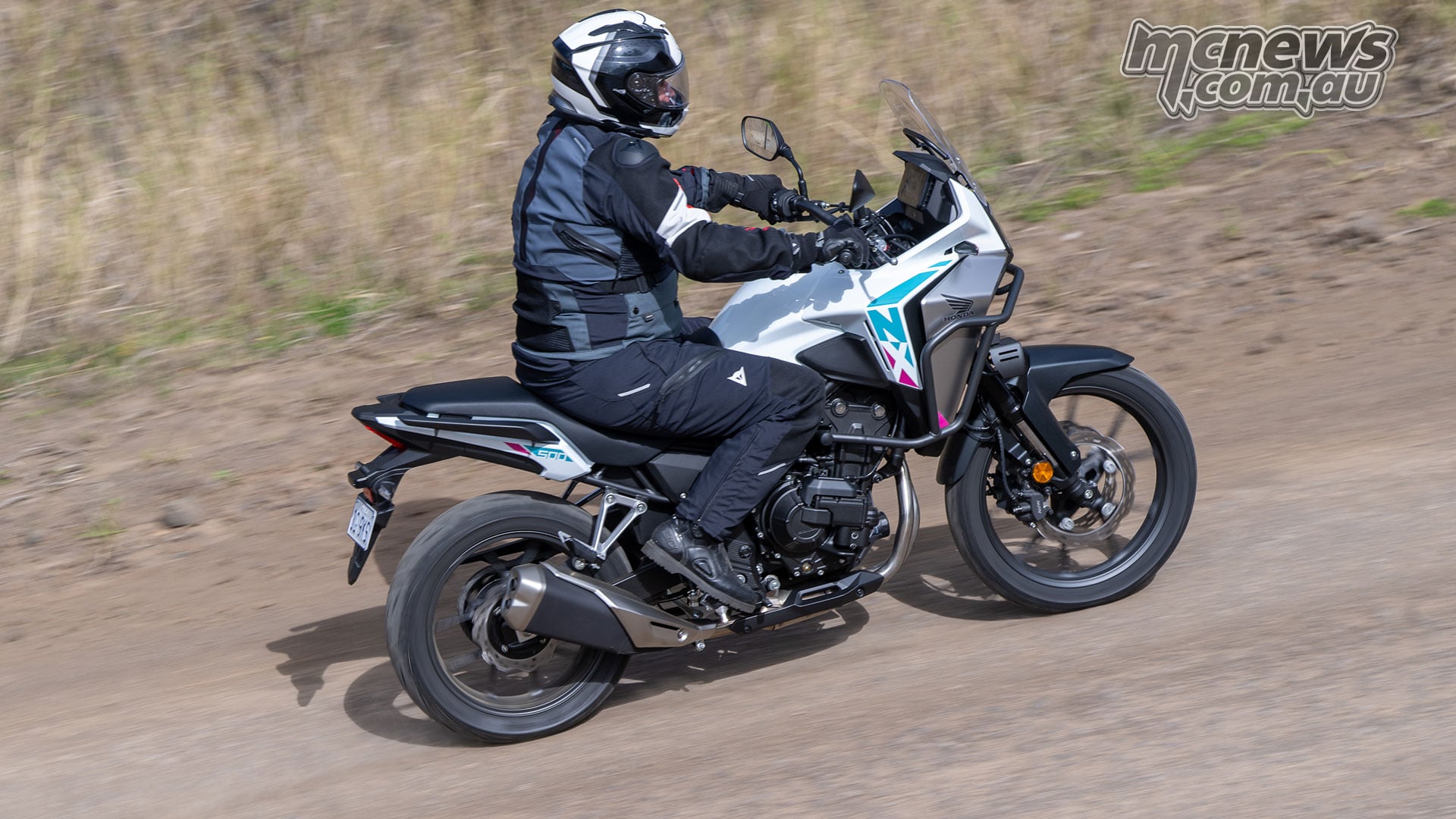
The 830 mm seat is not especially low on paper, but the NX500 carries its weight low and is extremely well balanced. Combined with a relatively narrow waist, that makes low-speed work a doddle and the bike much easier to manage than the raw numbers might suggest.
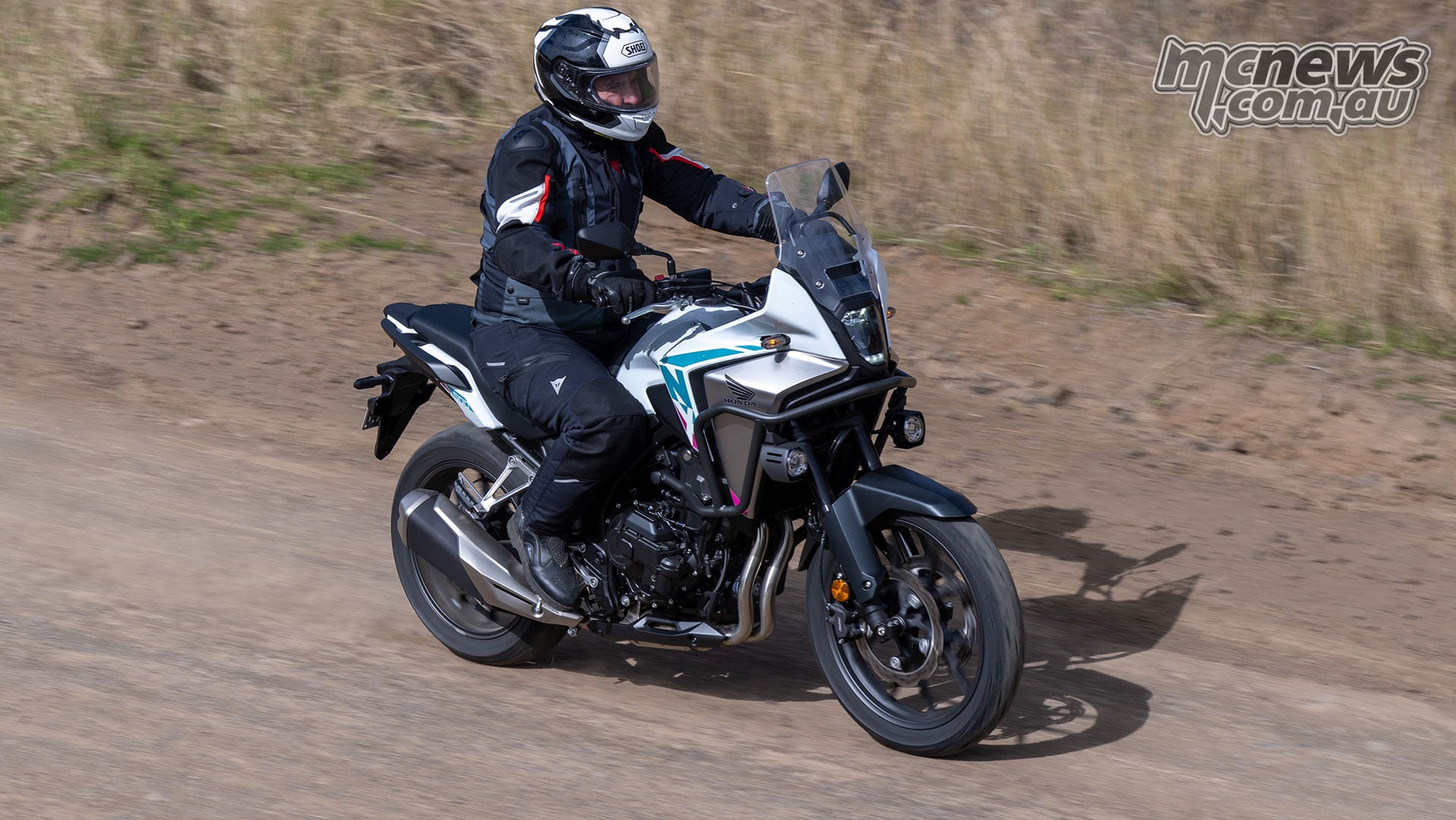
Whether paddling around a car park, threading through traffic or pulling a tight U-turn, it feels reassuring rather than top-heavy. That friendly balance should make it an easy machine to live with for riders across a broad spectrum of heights and experience levels.
The upright riding position is natural and comfortable, while the 19-inch front wheel, longer-travel suspension and 180 mm of ground clearance are as handy when jumping speed humps as they are when crossing erosion mounds in the bush.
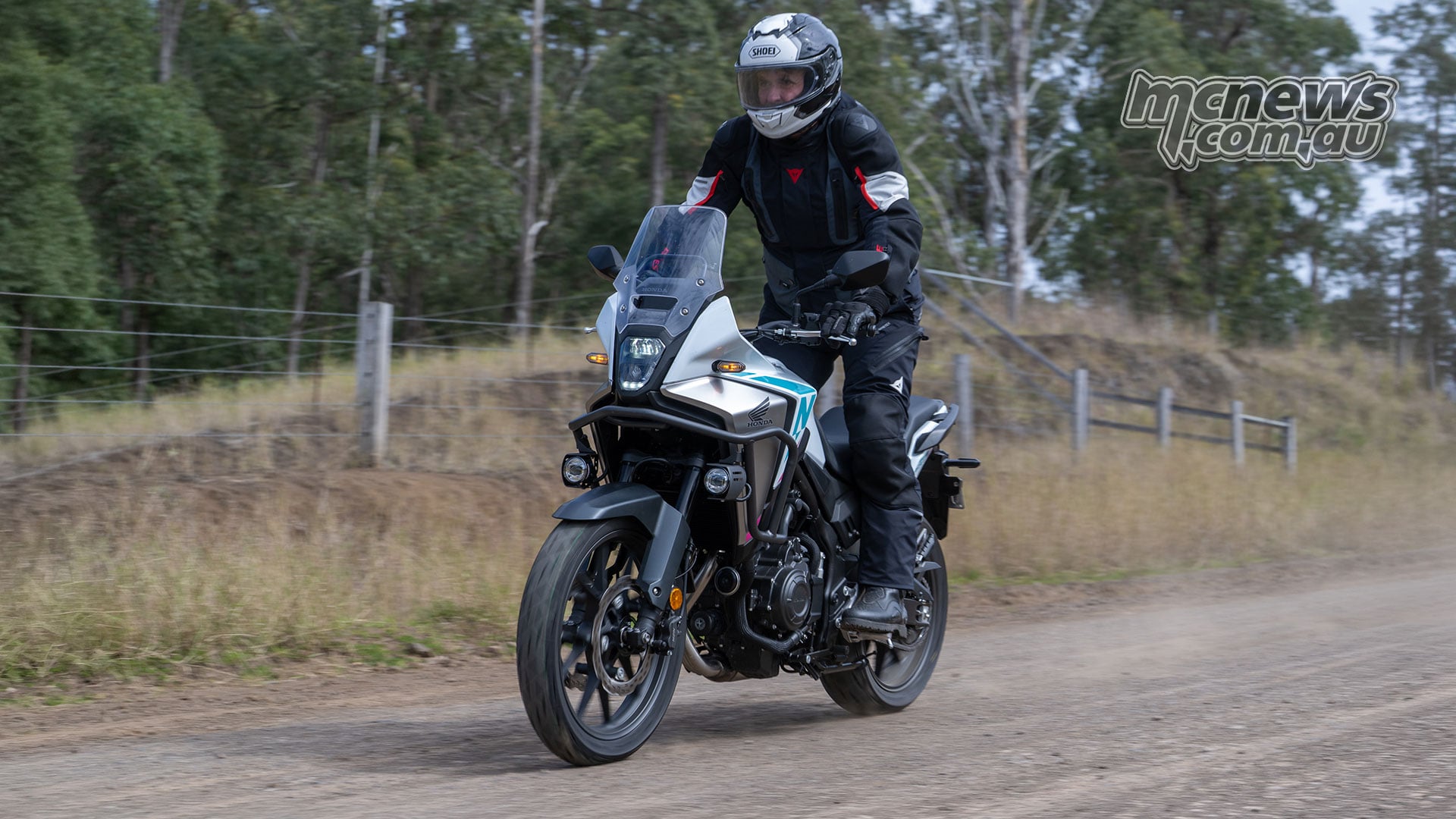
The standard screen offers useful protection and takes a reasonable amount of pressure off the rider’s torso. Anyone much over 175 cm tall, however, will probably wish it extended a little higher.
A little rear preload would help
The Showa fork does a respectable job at the front, while the Pro-Link rear shock offers five stages of spring-preload adjustment.
With more time on the bike, I would have added some rear preload to get the sag back where it belongs under my bulk. That would also raise the rear slightly and shift a little more weight bias toward the front of the bike, which should help it feel a touch more positive on corner entry.
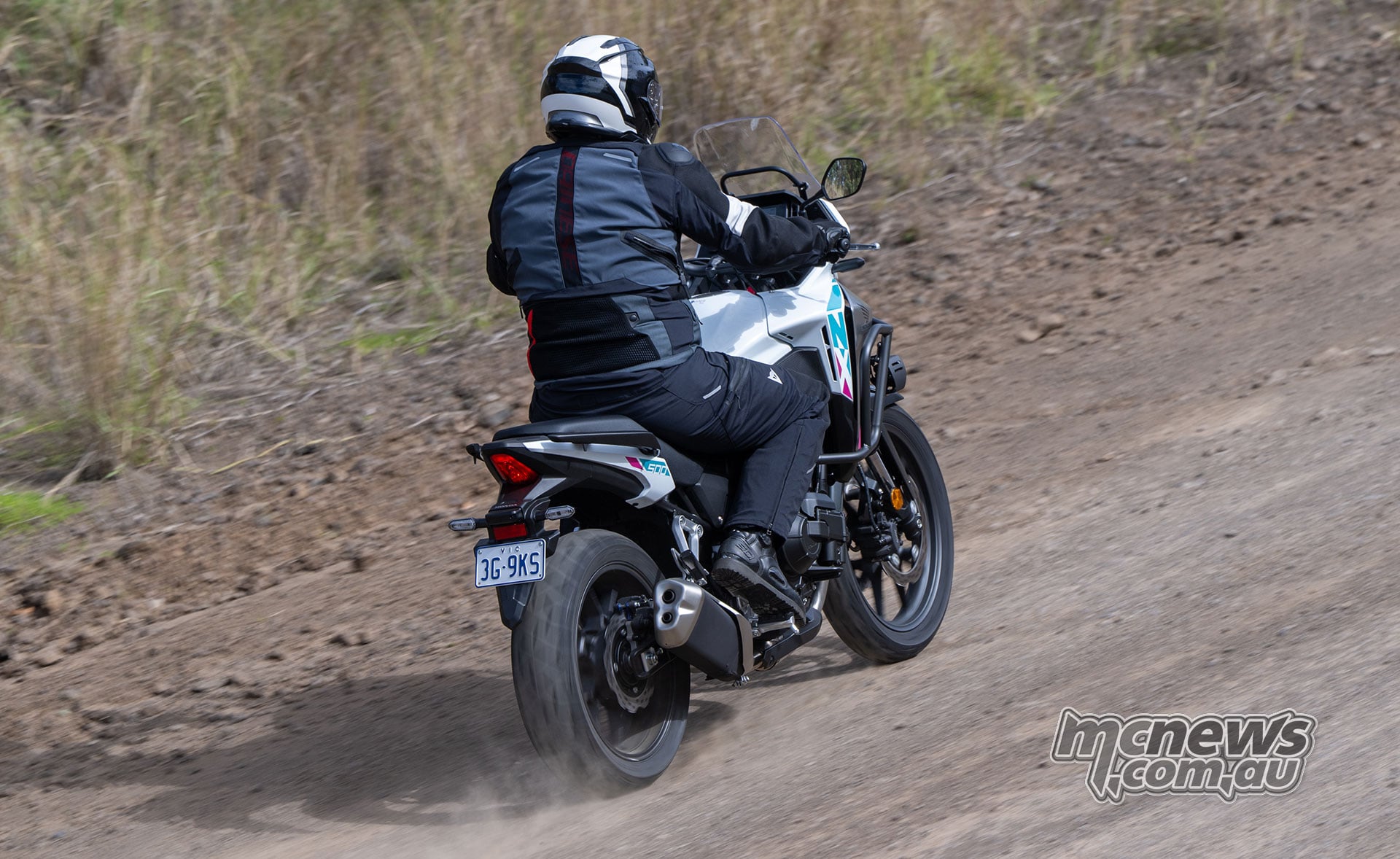
For regular two-up work, I would go a step further and plan on fitting a stiffer rear spring. Preload can correct ride height and sag, but it cannot change the spring rate. A more suitable spring for two-up or to cope with a lot of luggage mass isn’t an expensive modification and should cost only a few hundred dollars, even if a specialist suspension workshop supplies and fits it. For solo work, the stock set-up does the job.
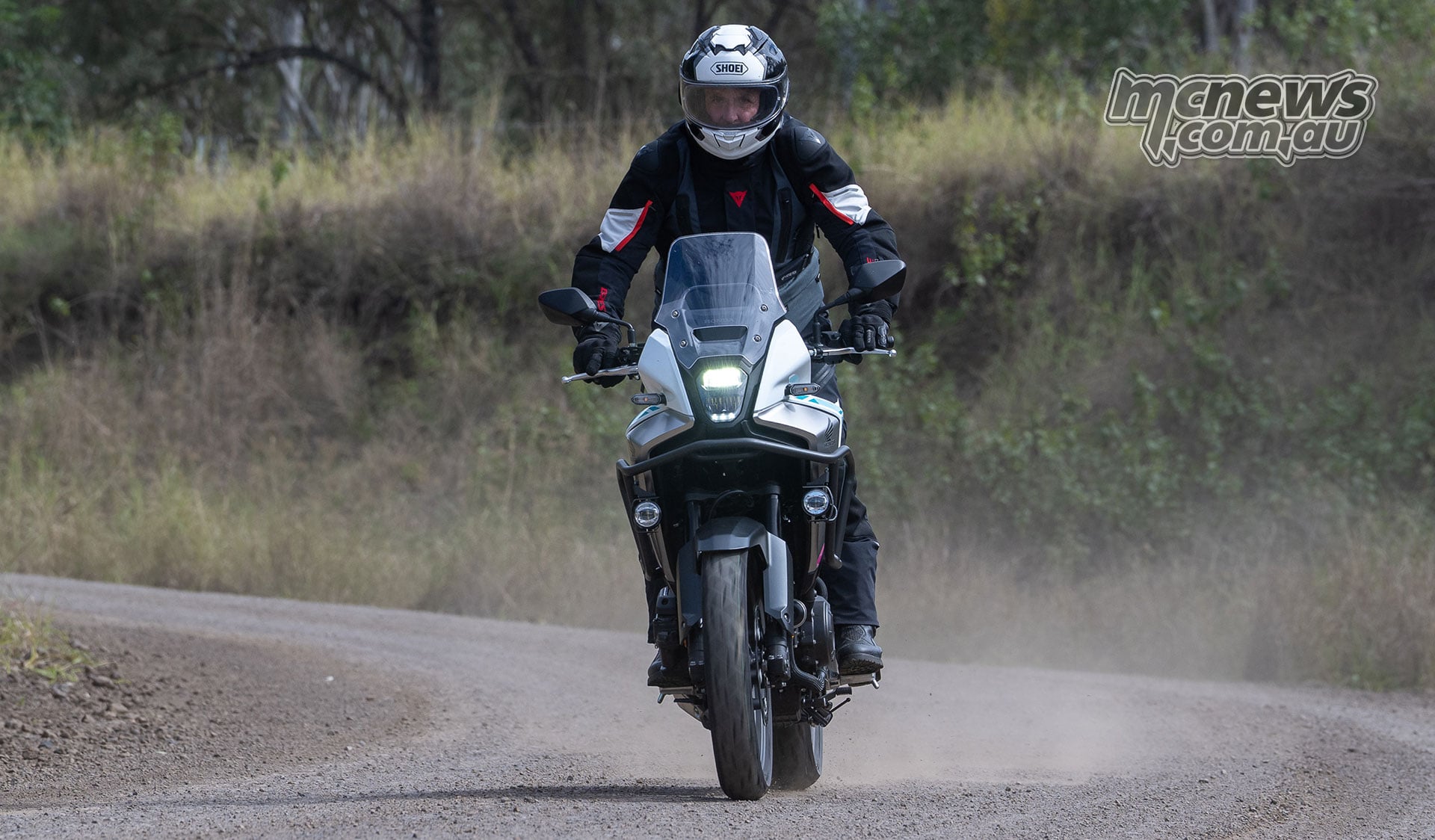
Traction Control comes standard and provides a useful safety net in slippery conditions. Deactivating it is also simple if popping wheelies or ripping skids is on your dance card.
Practical luggage without excessive scaffolding
The NX500 doesn’t have luggage mounts integrated as neatly as those on its Africa Twin big brother, but the extra hardware required for Honda’s optional luggage isn’t too ungainly.
Honda offers a pair of easily detachable 16.5-litre semi-rigid side bags, along with a 38-litre top box large enough to swallow a full-face helmet. A compact tank-bag set-up is also available. Together, they add useful day-to-day versatility without turning the back of the bike into an industrial construction project whenever the bags are removed.
That carrying capacity makes the NX500 a no-fuss prospect for commuting during the week or heading away on tour at the weekend. The fairing and screen give it more weather protection than its naked 500 sibling, while its comfortable riding position and generous fuel range further strengthen the everyday case.
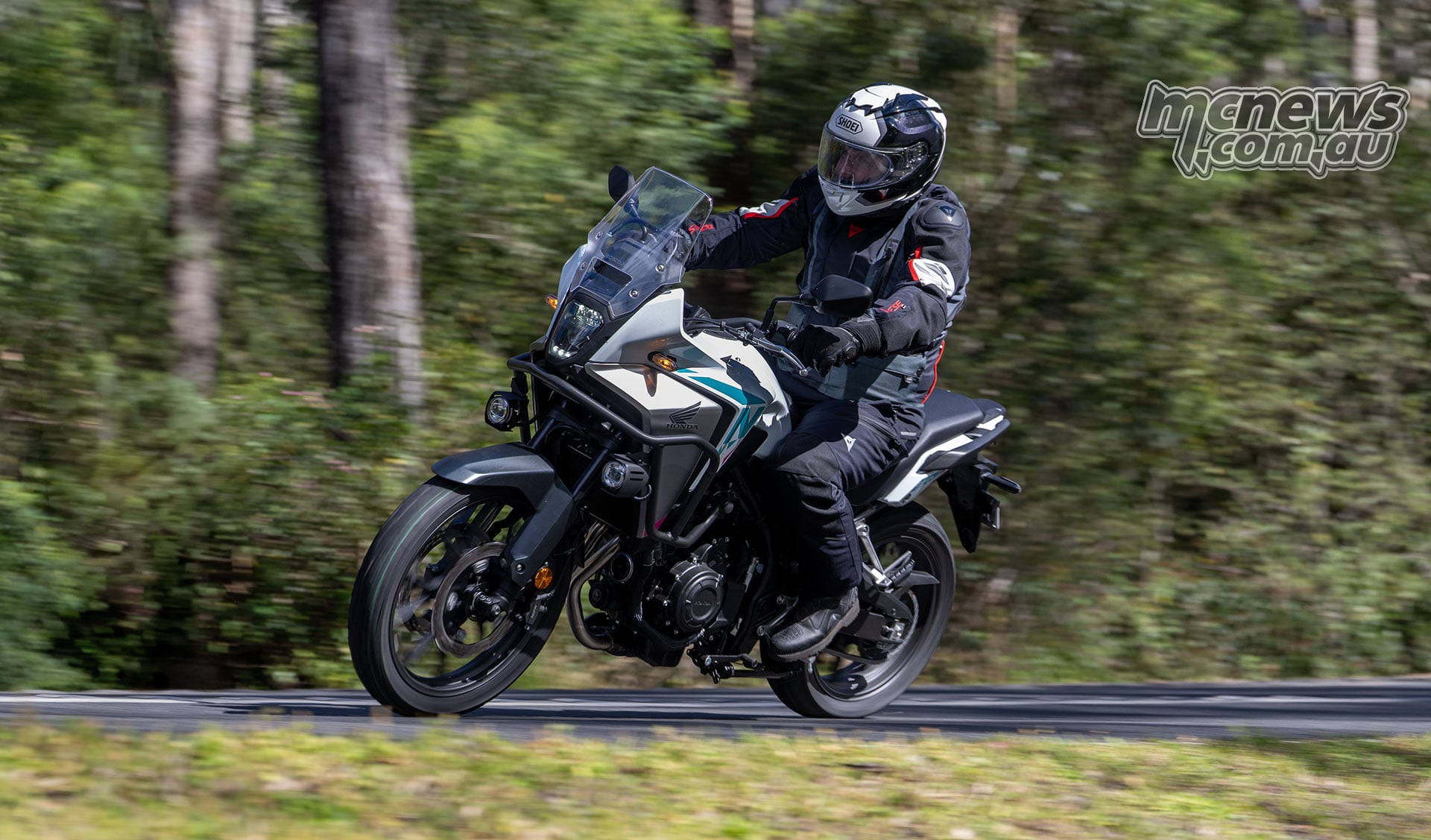
Heated grips can be added from Honda’s accessory catalogue, but cruise control remains conspicuous by its absence. That omission is no doubt a side effect of the NX500 retaining a conventional cable-operated throttle rather than ride-by-wire, but it would still be a welcome addition for riders covering longer highway distances.
The verdict after a brief reacquaintance
The NX500 does not stand out in 2026 quite as dramatically as the original CB500X a dozen years ago. That is less an indictment of the Honda than a reflection of an Australian learner market now bursting at the seams with choice.
It remains a high-quality, practical and comfortable option, backed by a broad dealer network and Honda’s six-year warranty. There is still plenty to like, from the friendly low-speed manners and useful luggage options to the predictable engine and everyday comfort.
The optional E-Clutch gives the NX500 a genuine and genuinely useful point of difference. Many new riders will deem it invaluable, particularly in traffic and on hill starts, but its appeal is certainly not limited to learners.
For another $400 and only 2 kg of extra weight, choosing the E-Clutch variant seems a no-brainer.
As for this somewhat decrepit old bugger, I would tick the E-Clutch box every day of the week.
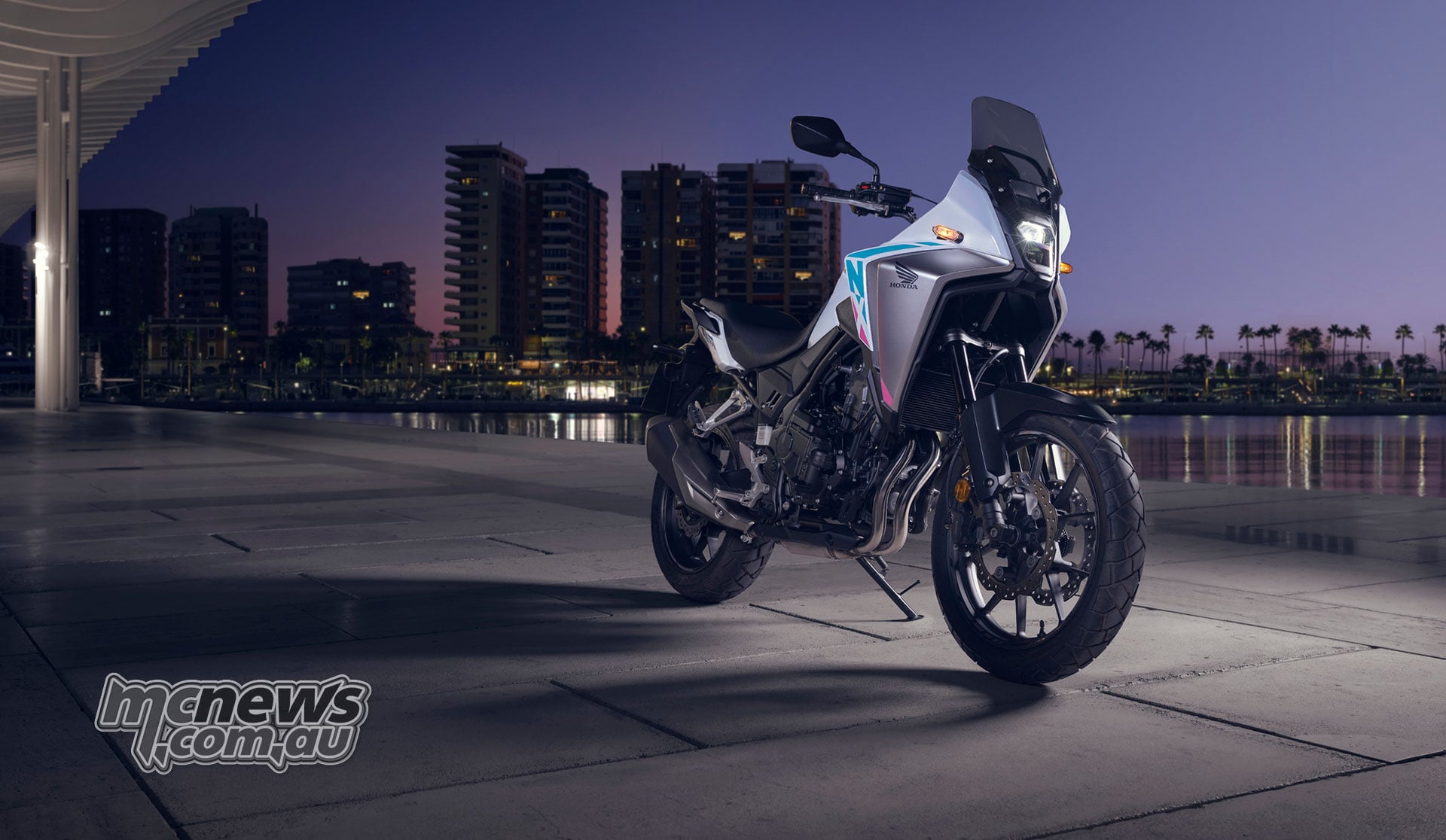
2026 Honda NX500 Specifications
(E-Clutch differences shown in brackets)
$10,999 ride-away ($11,399 ride-away with E-Clutch)
| Specifications | |
| Engine | Liquid-cooled, four-stroke, DOHC, eight-valve parallel-twin |
| Displacement | 471 cc |
| Bore x stroke | 67 x 66.8 mm |
| Compression ratio | 10.7:1 |
| Maximum power | 35 kW / 47 hp at 8,600 rpm |
| Maximum torque | 43 Nm at 6,500 rpm |
| Fuel system | PGM-FI electronic fuel injection |
| Starter | Electric |
| Fuel consumption | 3.6 litres per 100 km WMTC |
| Claimed maximum speed | 165 km/h |
| Clutch | Wet multi-plate assist/slipper clutch (Honda E-Clutch with manual clutch override) |
| Transmission | Six-speed |
| Final drive | Chain |
| Frame | Steel diamond |
| Dimensions | 2,165 mm long x 830 mm wide x 1,415 mm high |
| Wheelbase | 1,445 mm |
| Rake | 27.5 degrees |
| Trail | 108 mm |
| Seat height | 830 mm |
| Ground clearance | 180 mm |
| Kerb weight | 196 kg (198 kg with E-Clutch) |
| Fuel capacity | 17.5 litres |
| Turning radius | 2.4 metres |
| Front suspension | 41 mm Showa Separate Function Fork Big Piston inverted fork, 135 mm axle travel |
| Rear suspension | Pro-Link monoshock, five-stage spring-preload adjustment, 135 mm axle travel |
| Front wheel | 19-inch, five Y-spoke cast aluminium |
| Rear wheel | 17-inch, five Y-spoke cast aluminium |
| Front tyre | 110/80 R19 M/C 59H |
| Rear tyre | 160/60 R17 M/C 69H |
| Front brake | Twin 296 mm discs with axial-mount two-piston Nissin calipers |
| Rear brake | 240 mm disc with single-piston caliper |
| ABS | Two-channel |
| Instrumentation | Five-inch colour TFT display with customisable layouts |
| Connectivity | Honda RoadSync smartphone connectivity |
| Traction control | Honda Selectable Torque Control, switchable |
| Lighting | LED headlight, taillight and indicators |
| Additional features | Emergency Stop Signal and self-cancelling indicators |
| Cruise control | Not available |
| Heated grips | Optional |
| Learner approval | LAMS approved |
| Warranty | Six years, unlimited kilometres, subject to Honda’s bonus-warranty conditions |