

2026 Kawasaki KLE500 SE Review
Part One – The stock bike
We’ve had the KLE500 as a long-termer, and it struck me as one of those bikes that needed a few tweaks before we could really explore its potential. I wanted to see how much difference those changes would make before firming up my thoughts.
So we’re splitting this review into two parts. This first instalment covers the bike in stock trim, so punters can compare apples with apples. Part two will cover the changes we’ve made, what they’ve achieved and a video taking you through the modified bike.
Our test bike is the SE variant, but everything discussed here relates to how it comes from the factory.
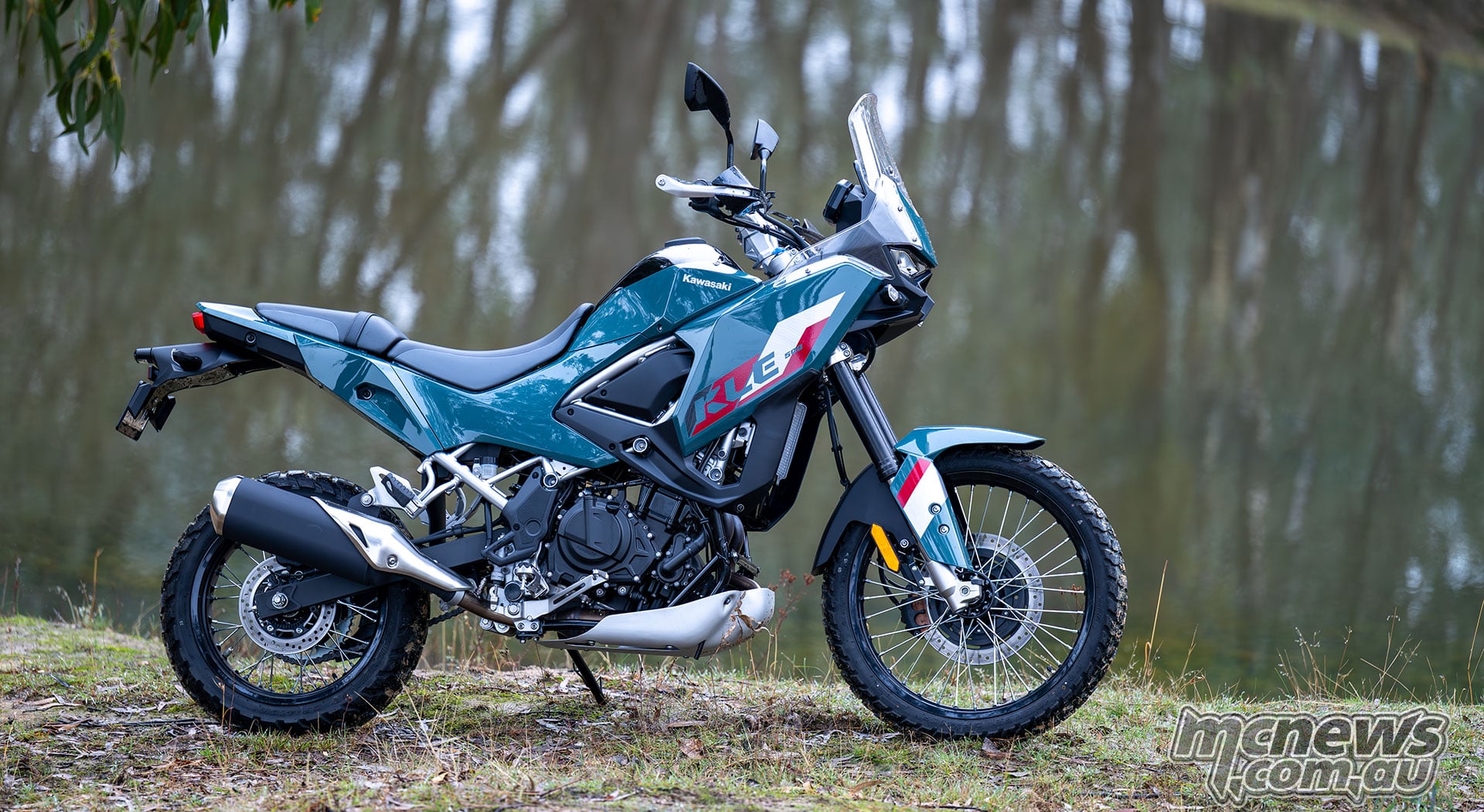
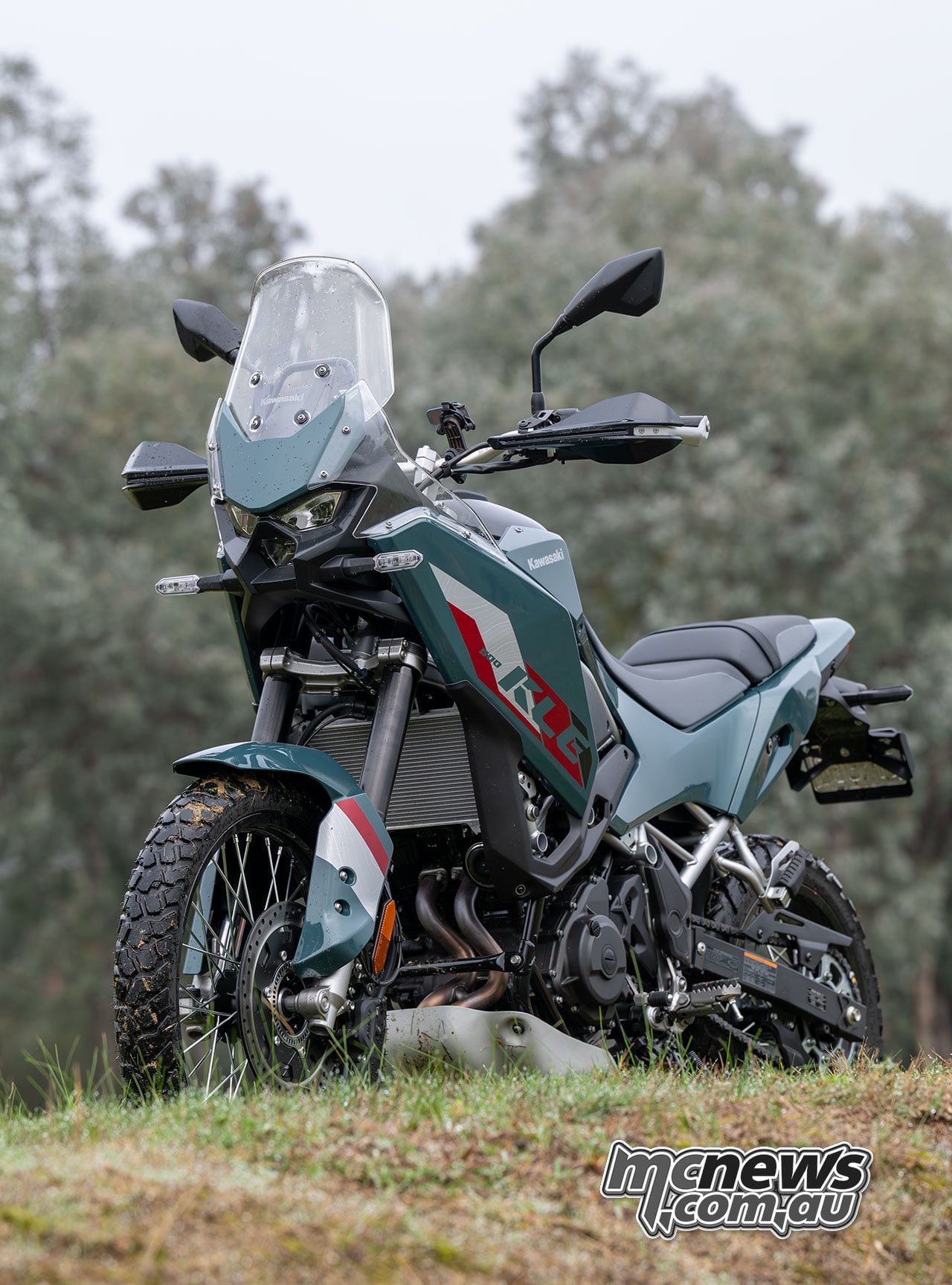
The KLE has joined a small-capacity adventure segment that has really been heating up, with bikes such as CFMOTO’s 450MT putting plenty of pressure on the established brands. Kawasaki’s response is a straightforward package built around a familiar engine, with a choice of two equipment levels.
A lovely little twin
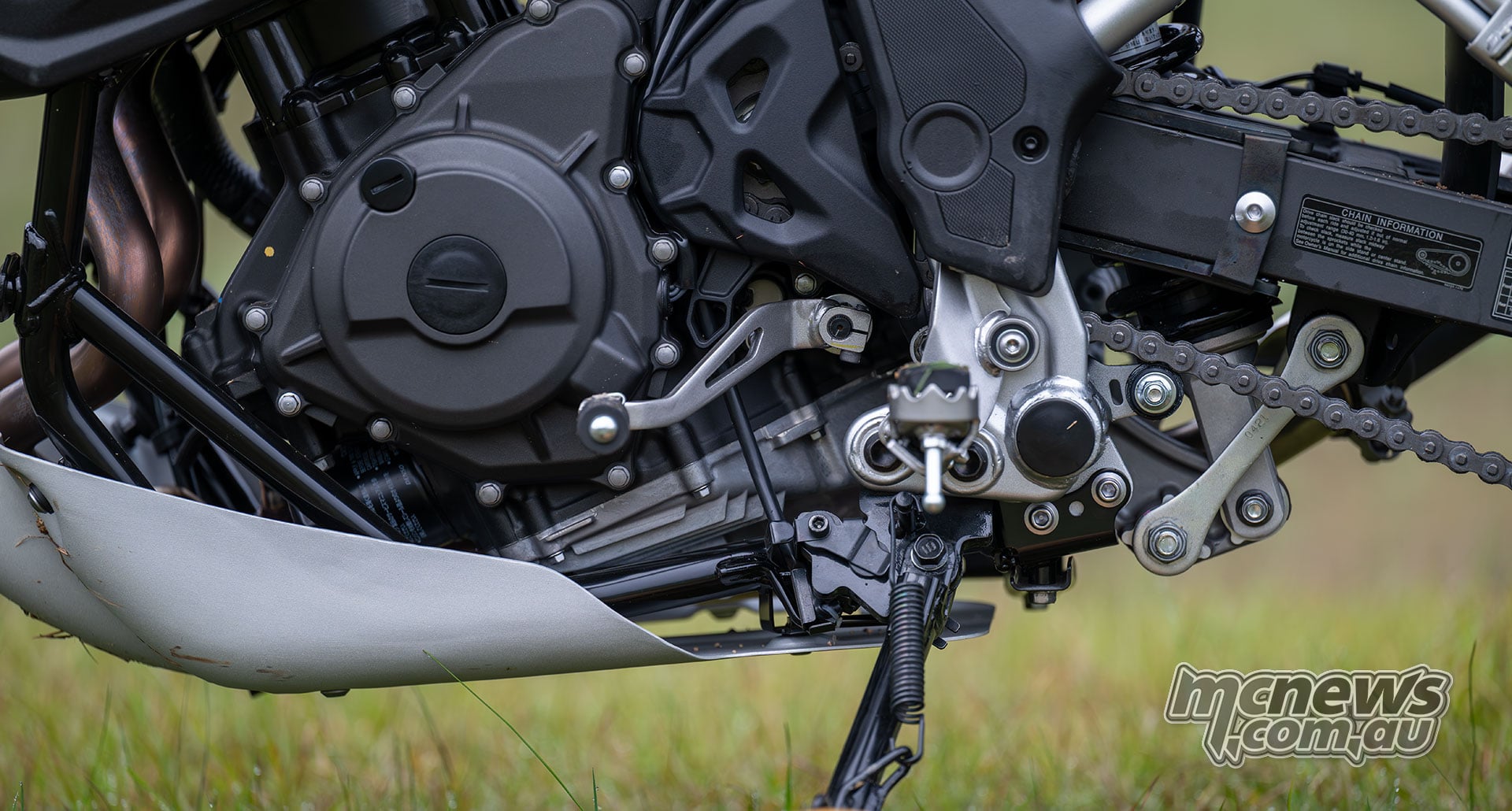
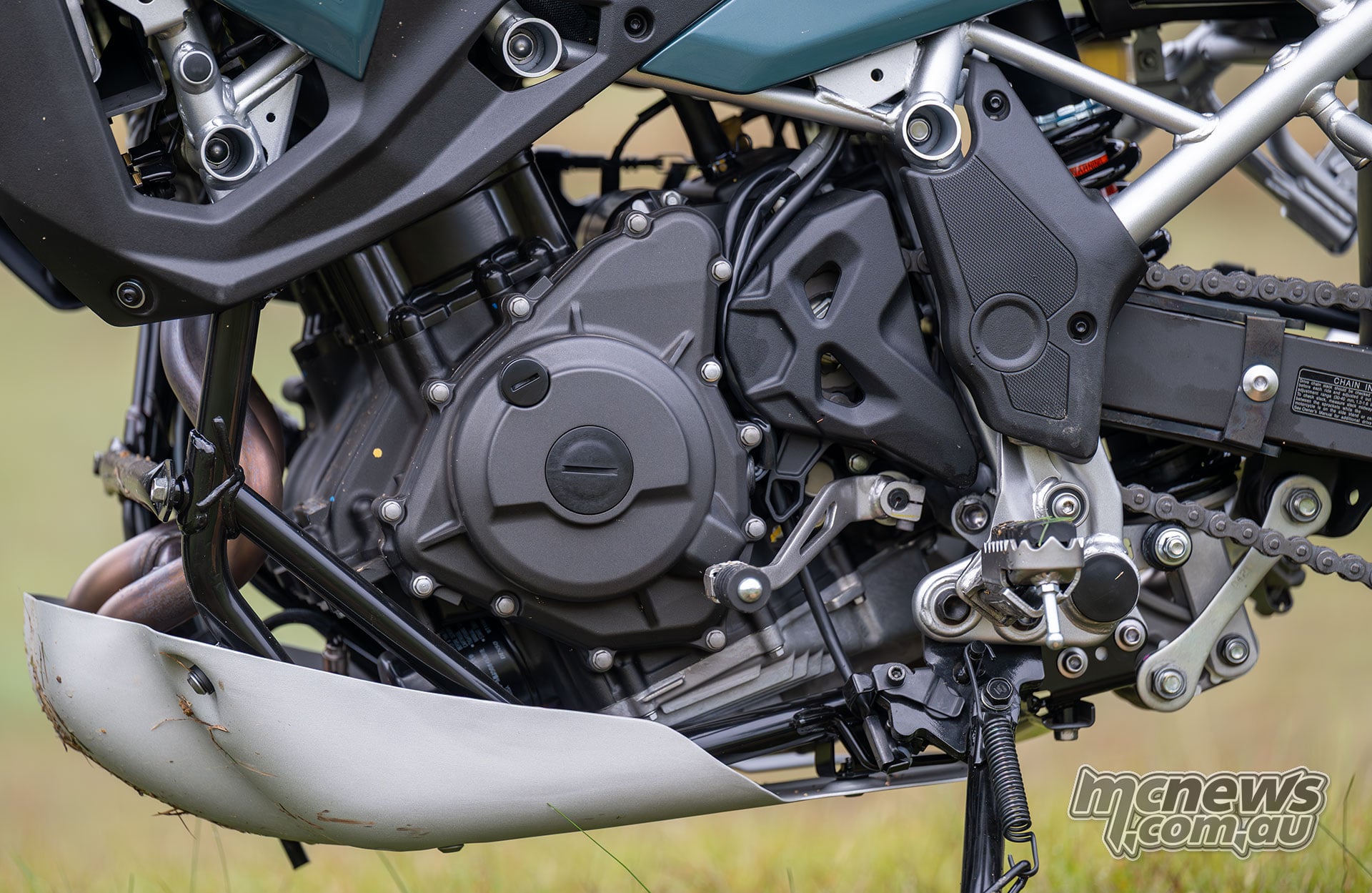
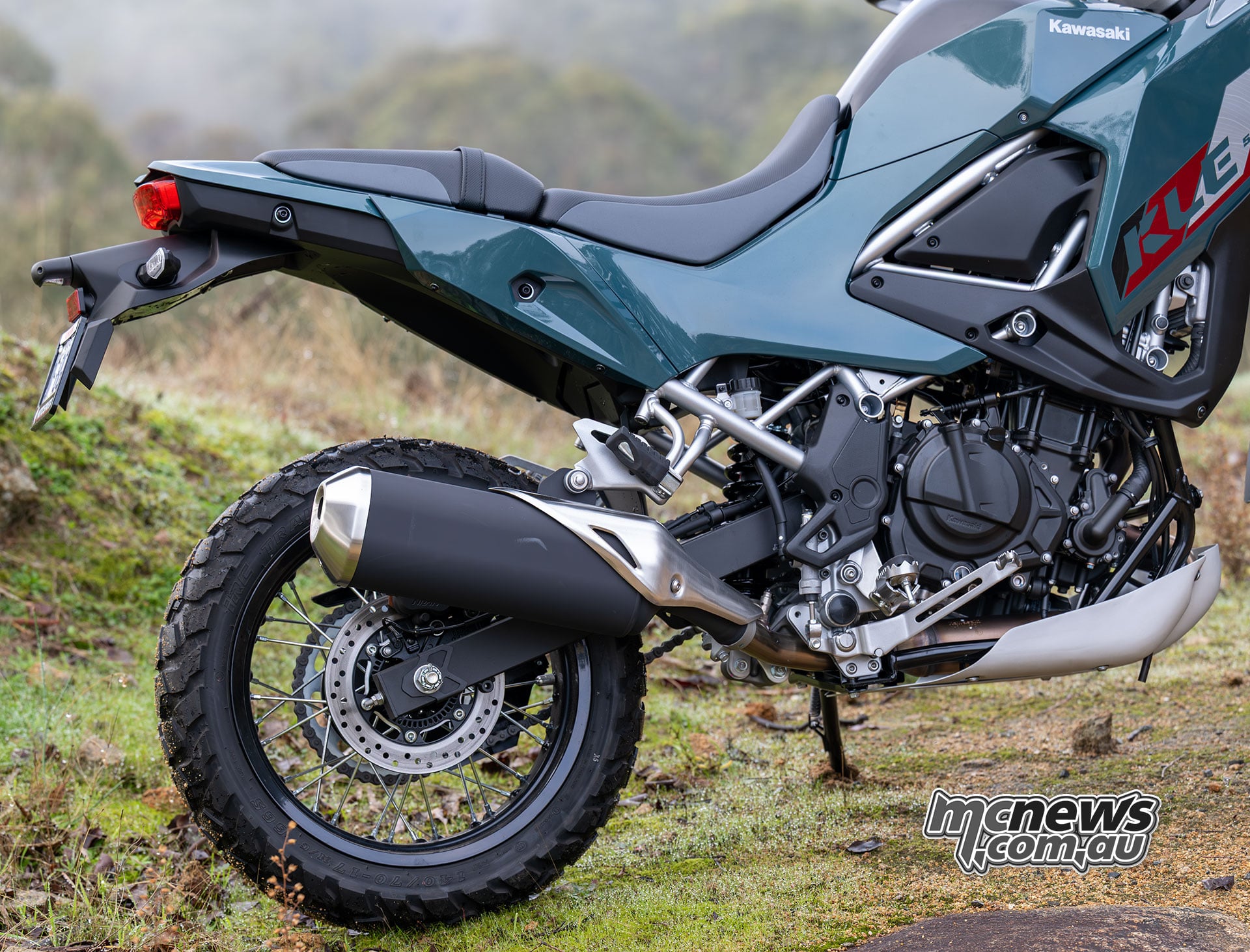
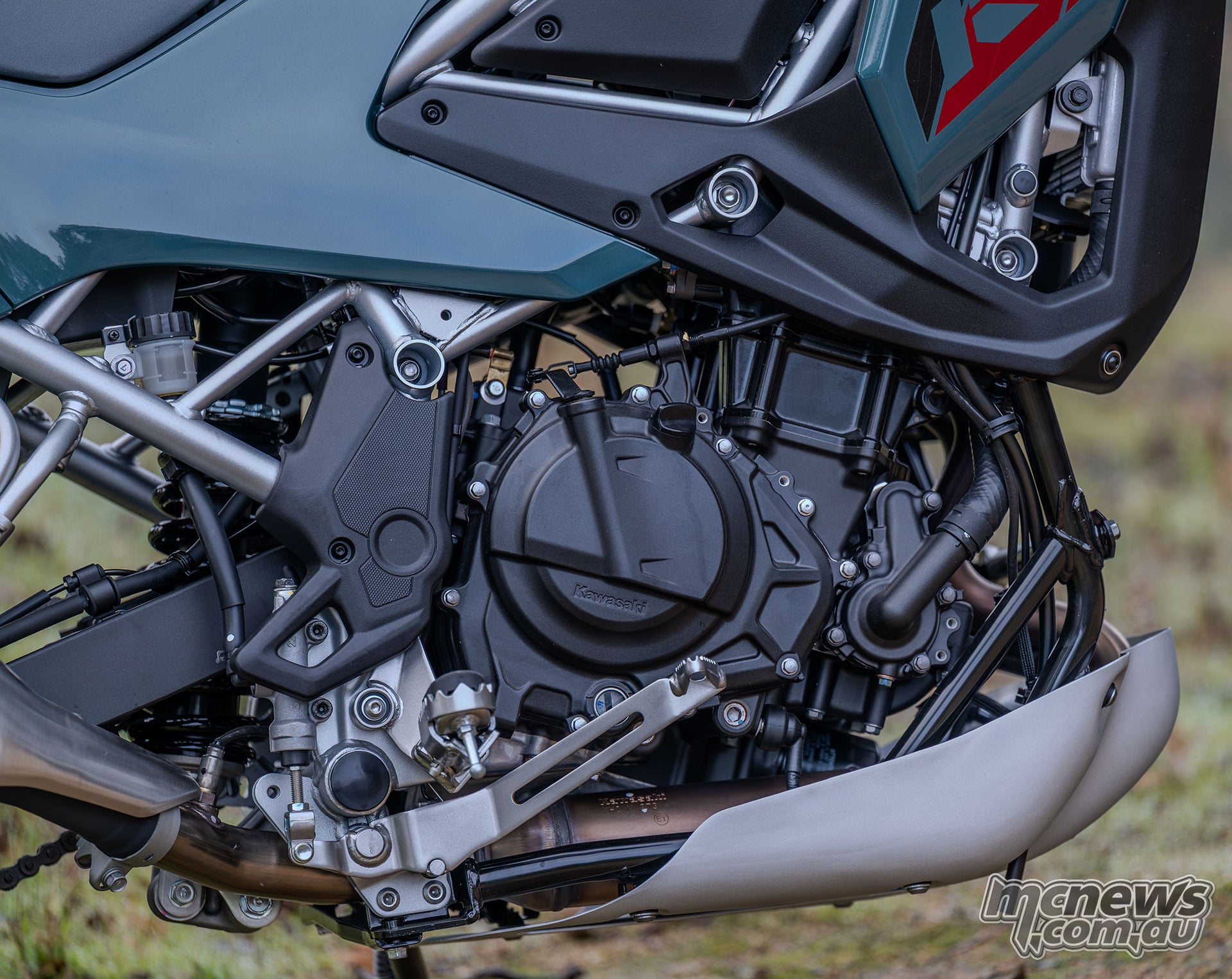
The KLE uses Kawasaki’s 451 cc parallel-twin engine from the same family as the Ninja 500, Z500 and Eliminator 500. In Australian specification, the LAMS-approved KLE produces 45 horsepower at 9000 rpm and 42.6 Nm at 7500 rpm.
As a roughly 450 cc engine, it’s never going to be a torque monster compared with bigger twins, but it lugs surprisingly well down low. It’s well fuelled, has good throttle feel and delivers its power in a nice, linear fashion.
It’s also surprisingly happy to rev out on the trail. In fact, I was taken by how eager it is when you lay the ears back a little. No complaints from me on the engine front.
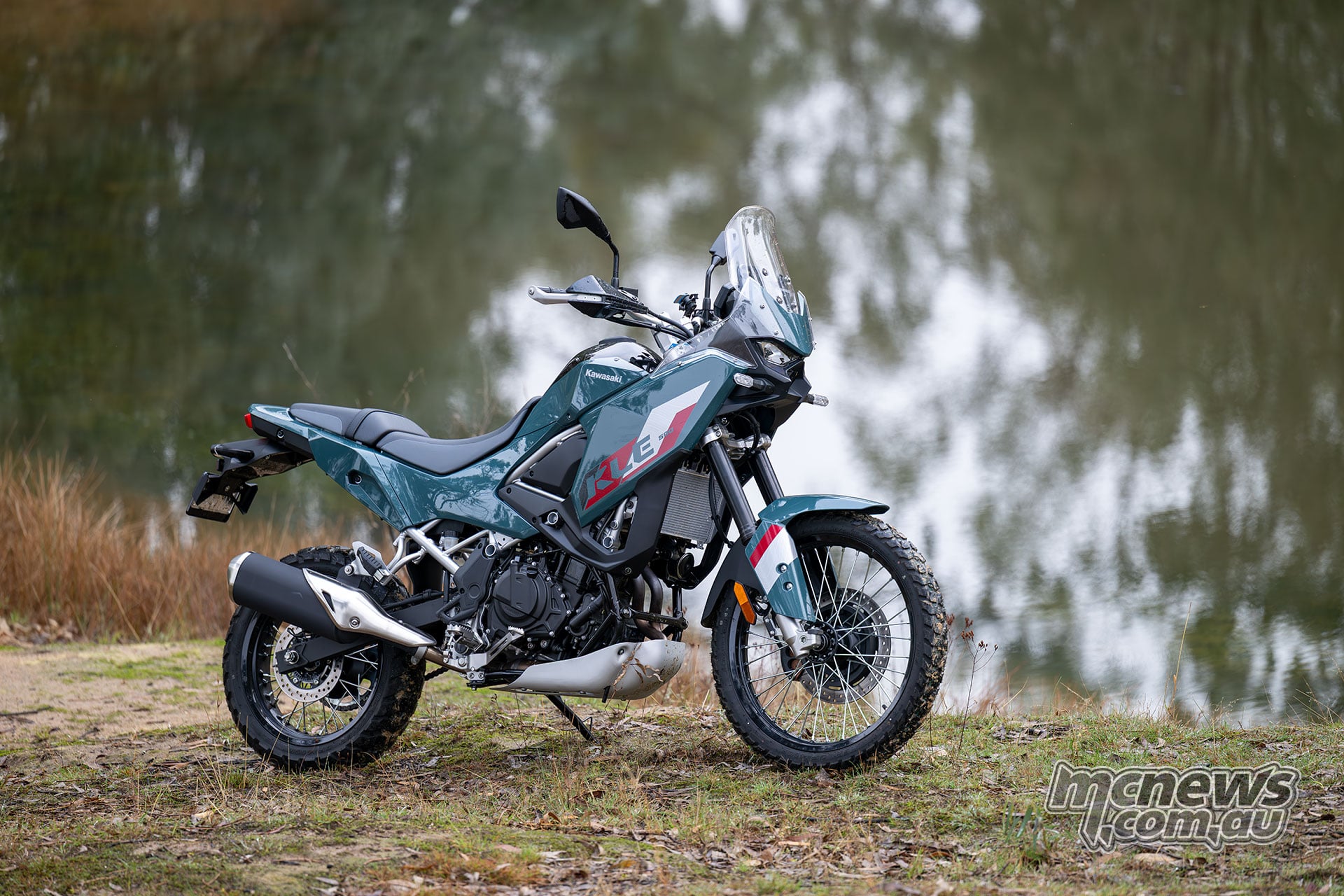
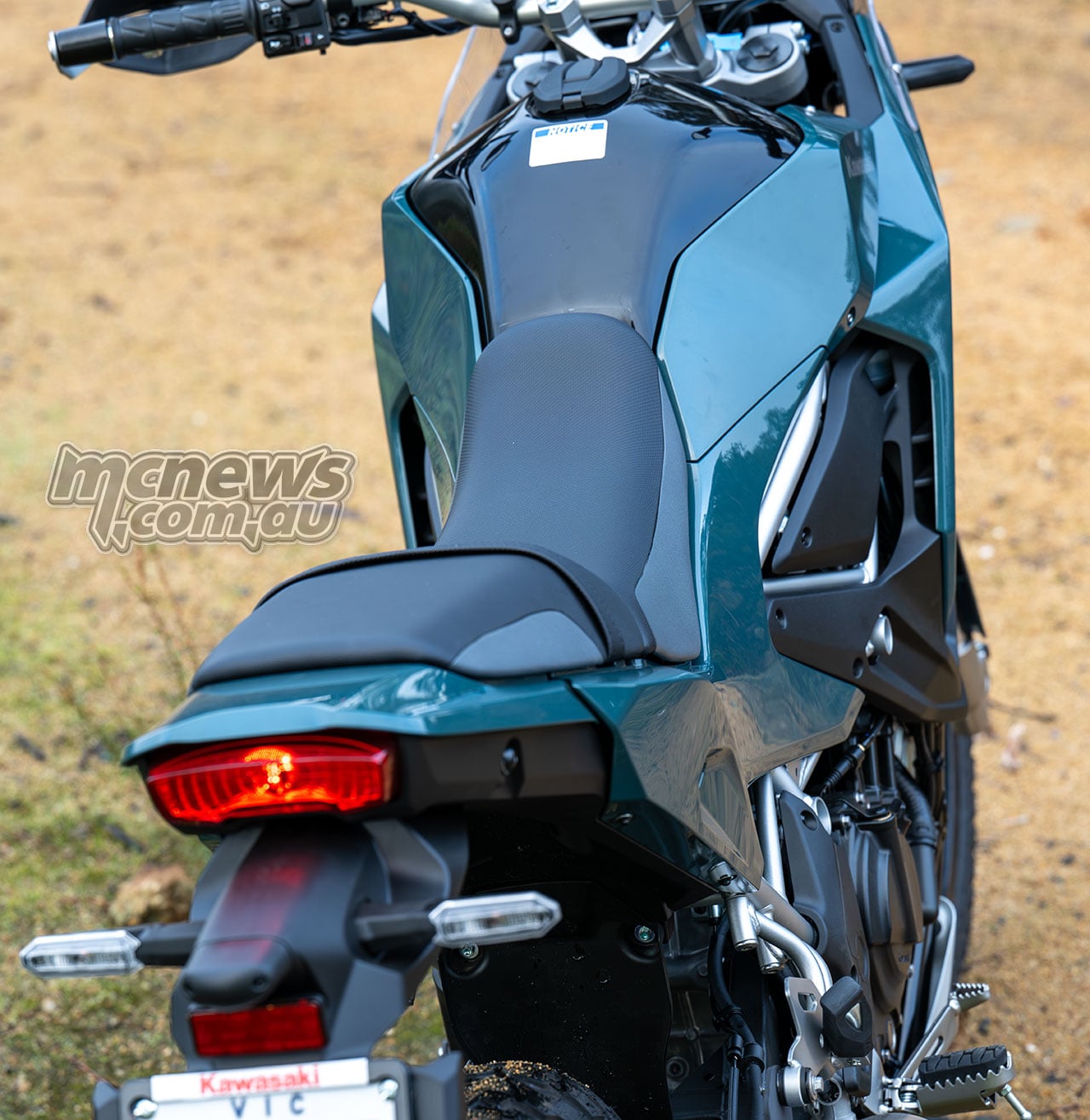
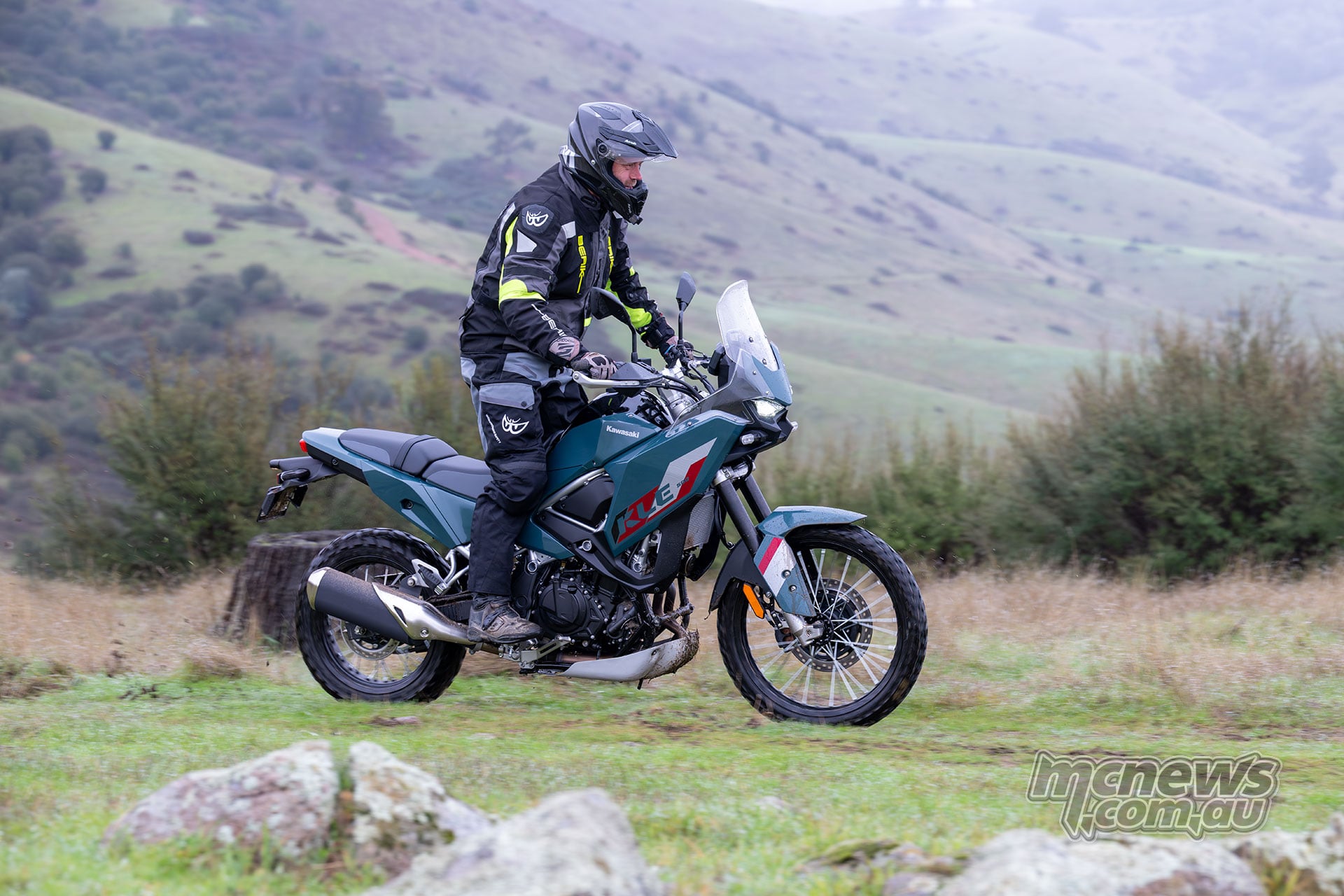
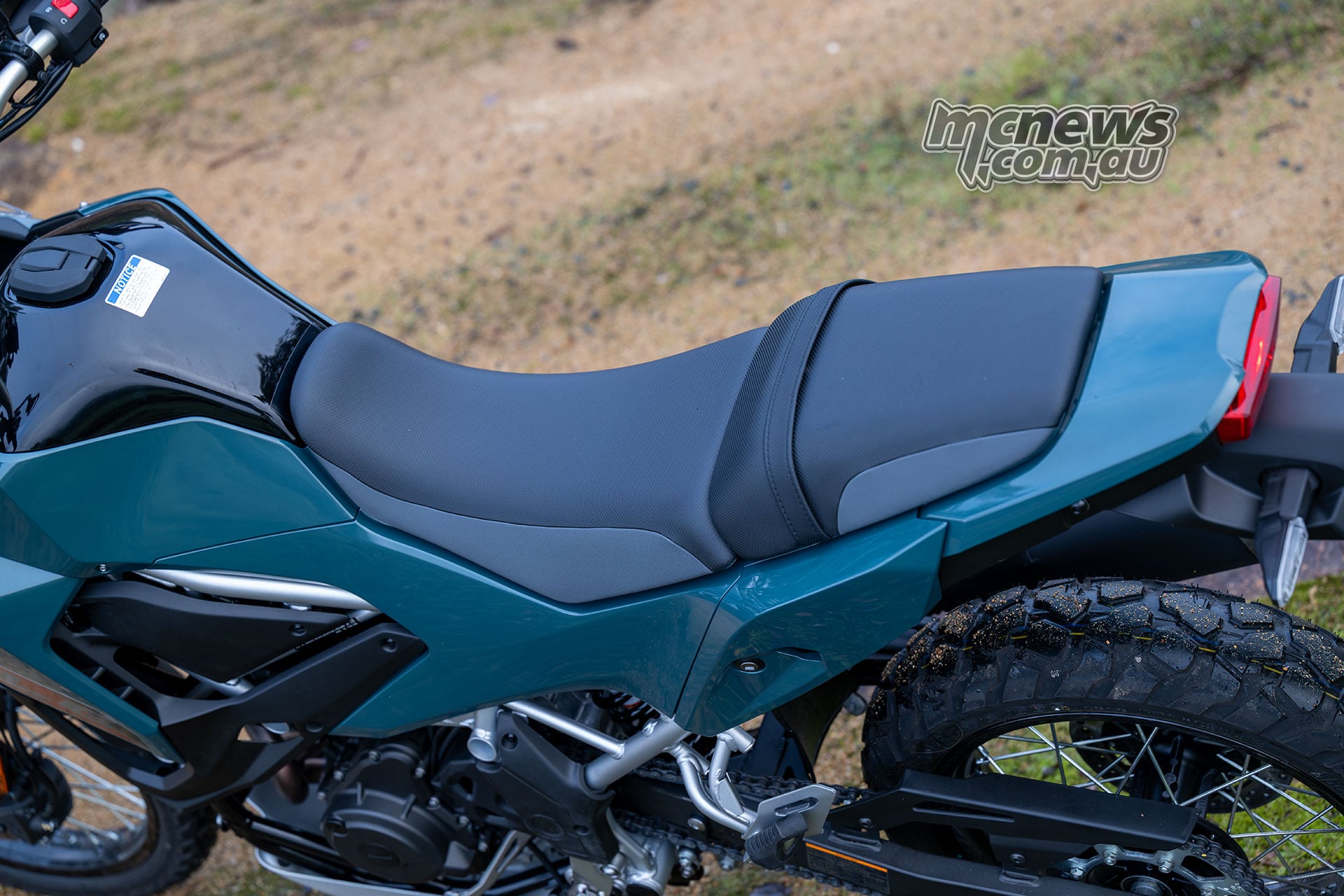
The SE carries a claimed kerb weight of 195 kg, while the seat sits 870 mm off the ground. A lower seat is available as an accessory.
Fuel capacity is 16 litres. A theoretical range approaching 400 km would require consumption around 4 L/100 km and using most of that capacity, so treat that as an indication of what might be possible in favourable conditions, not a measured trail range.
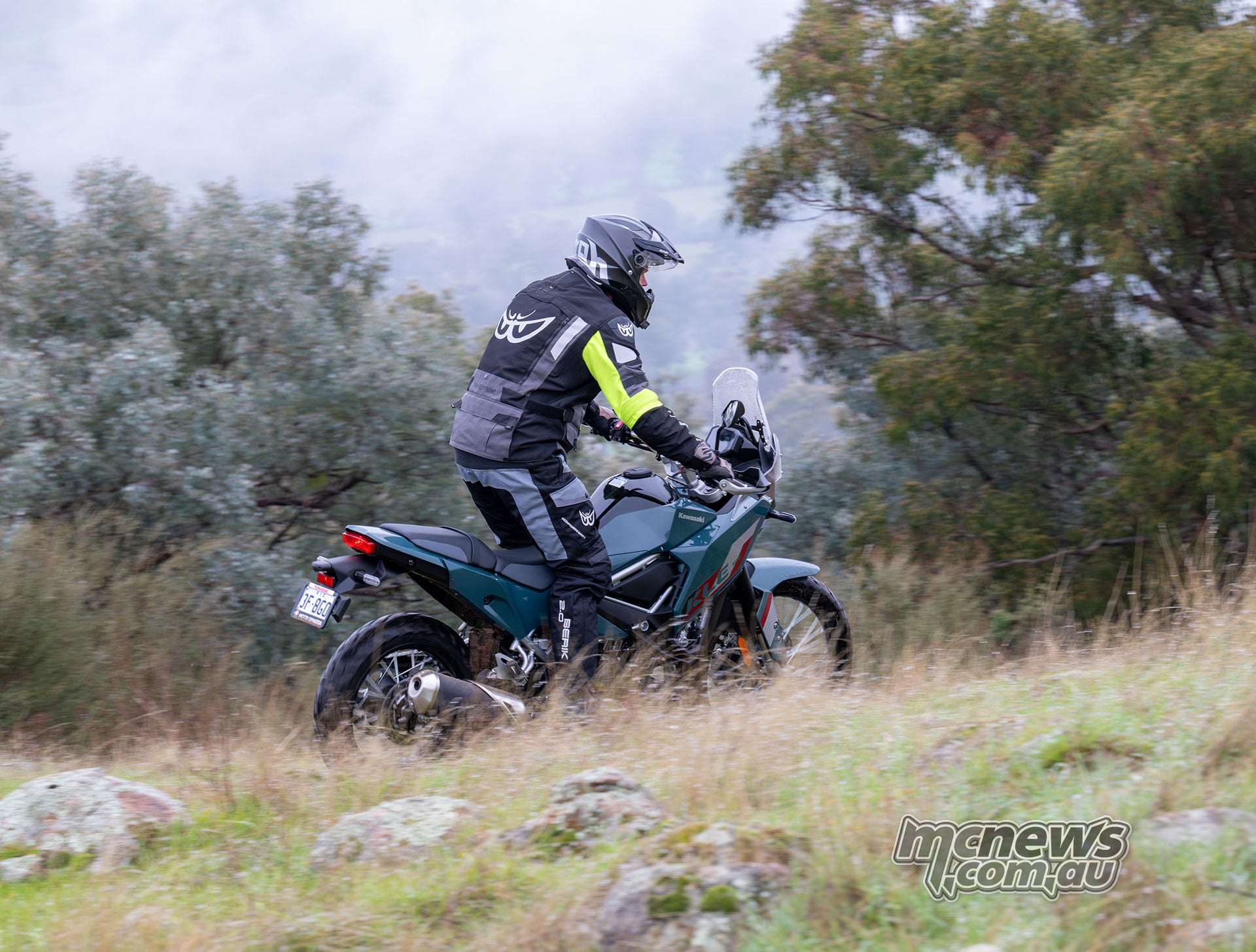
This isn’t a lightweight enduro bike. In standard trim, I see it being more at home adventure touring, exploring gravel roads and tackling lighter trail duties.
KLE500 SE versus the base model
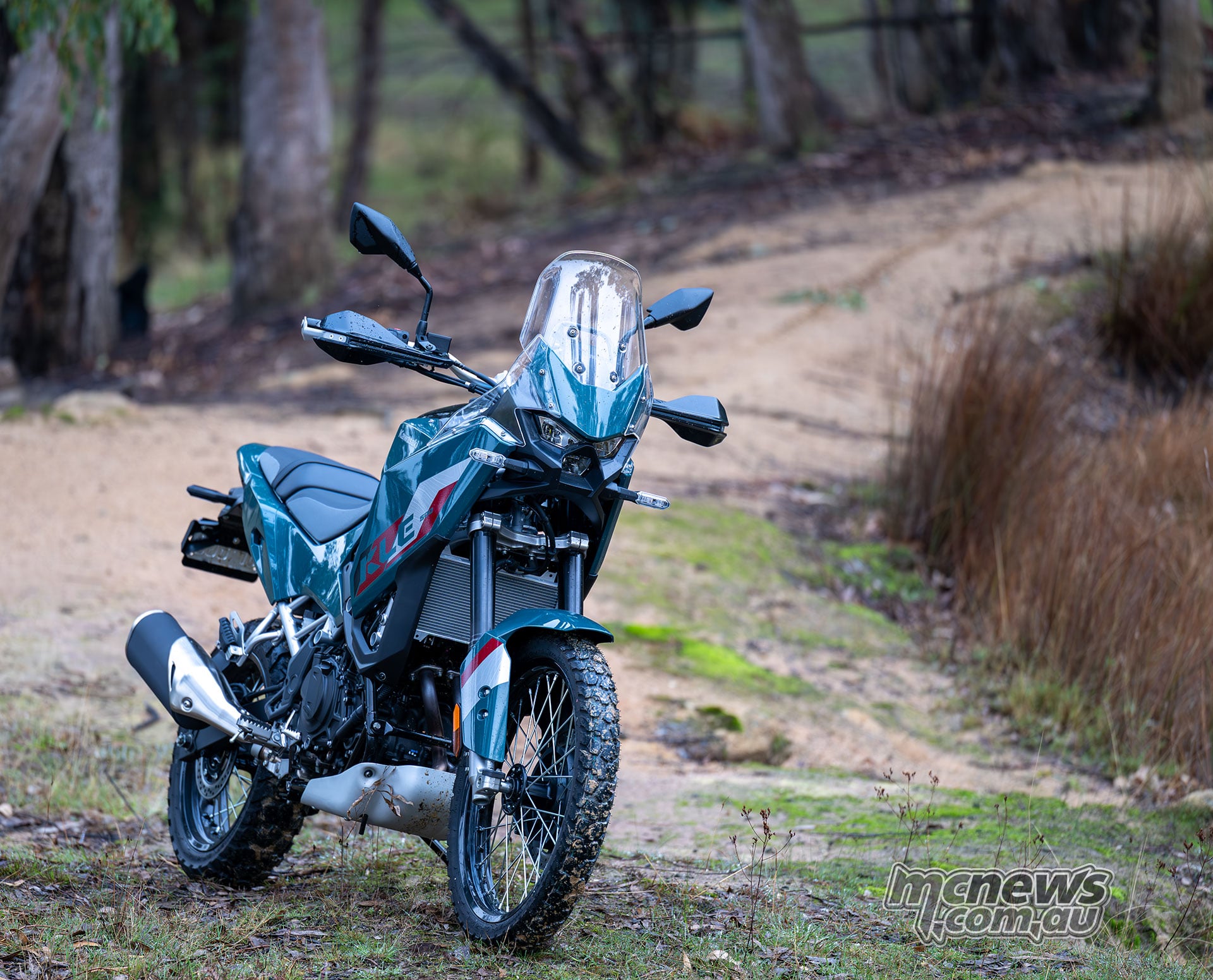
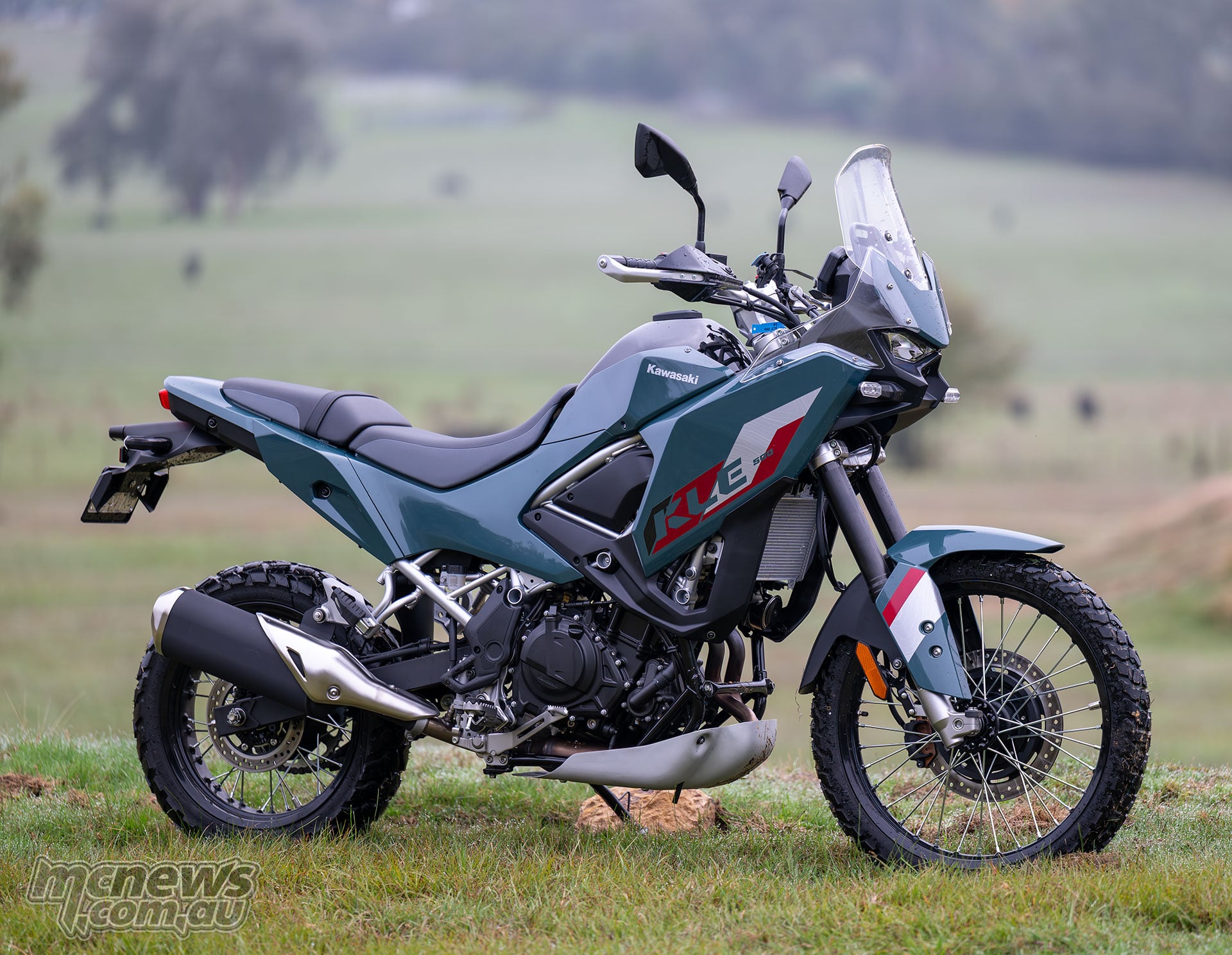
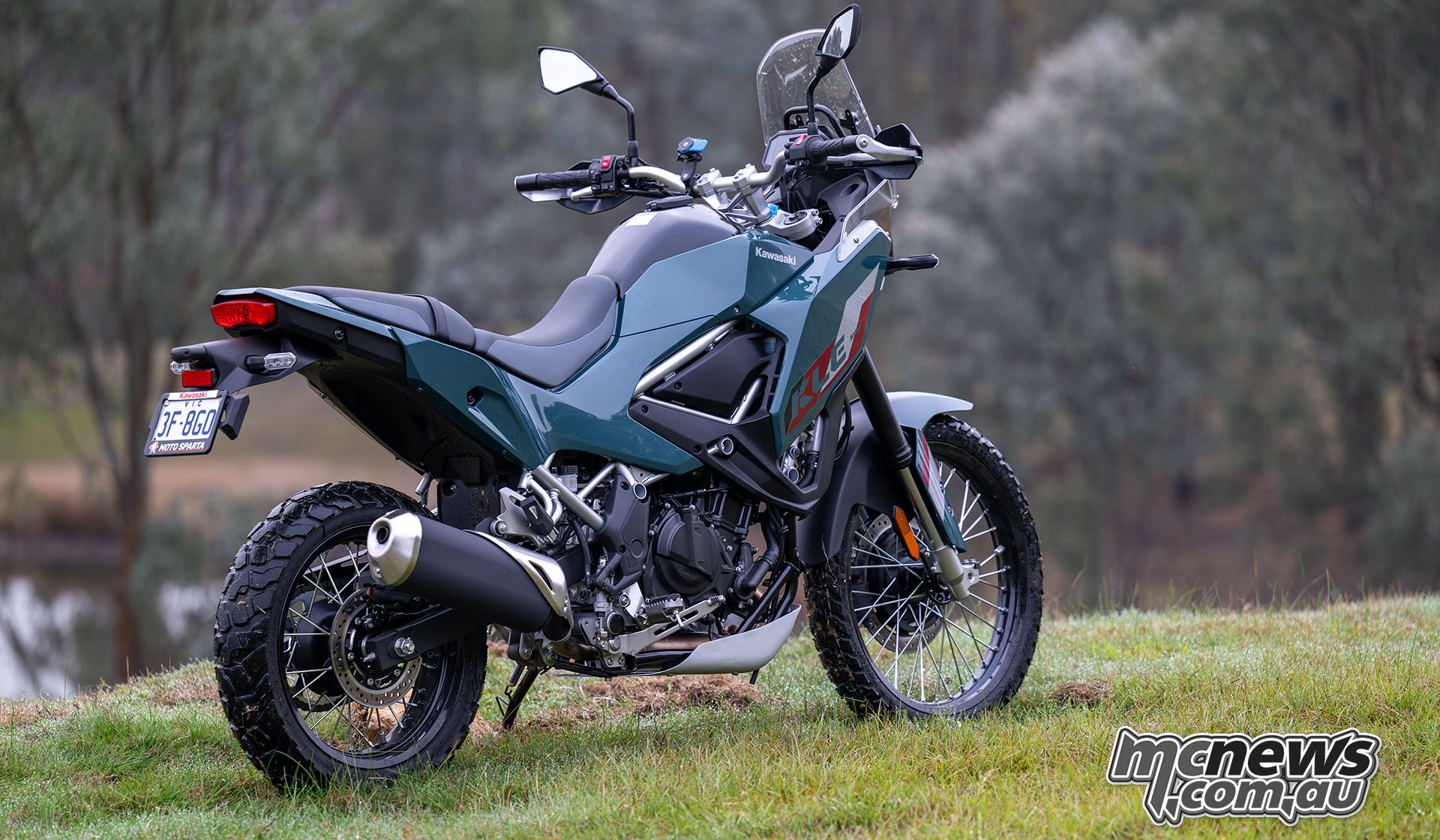
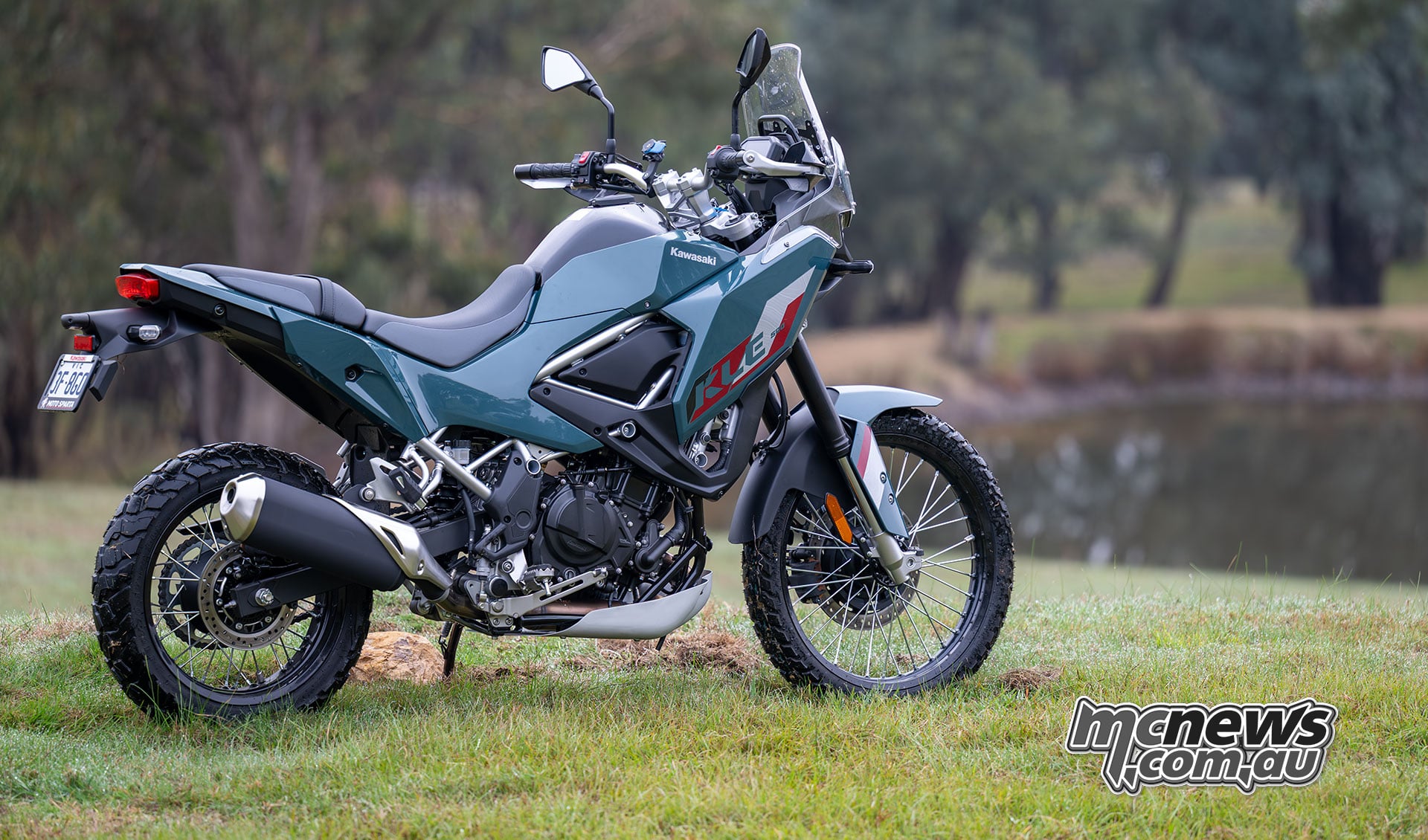
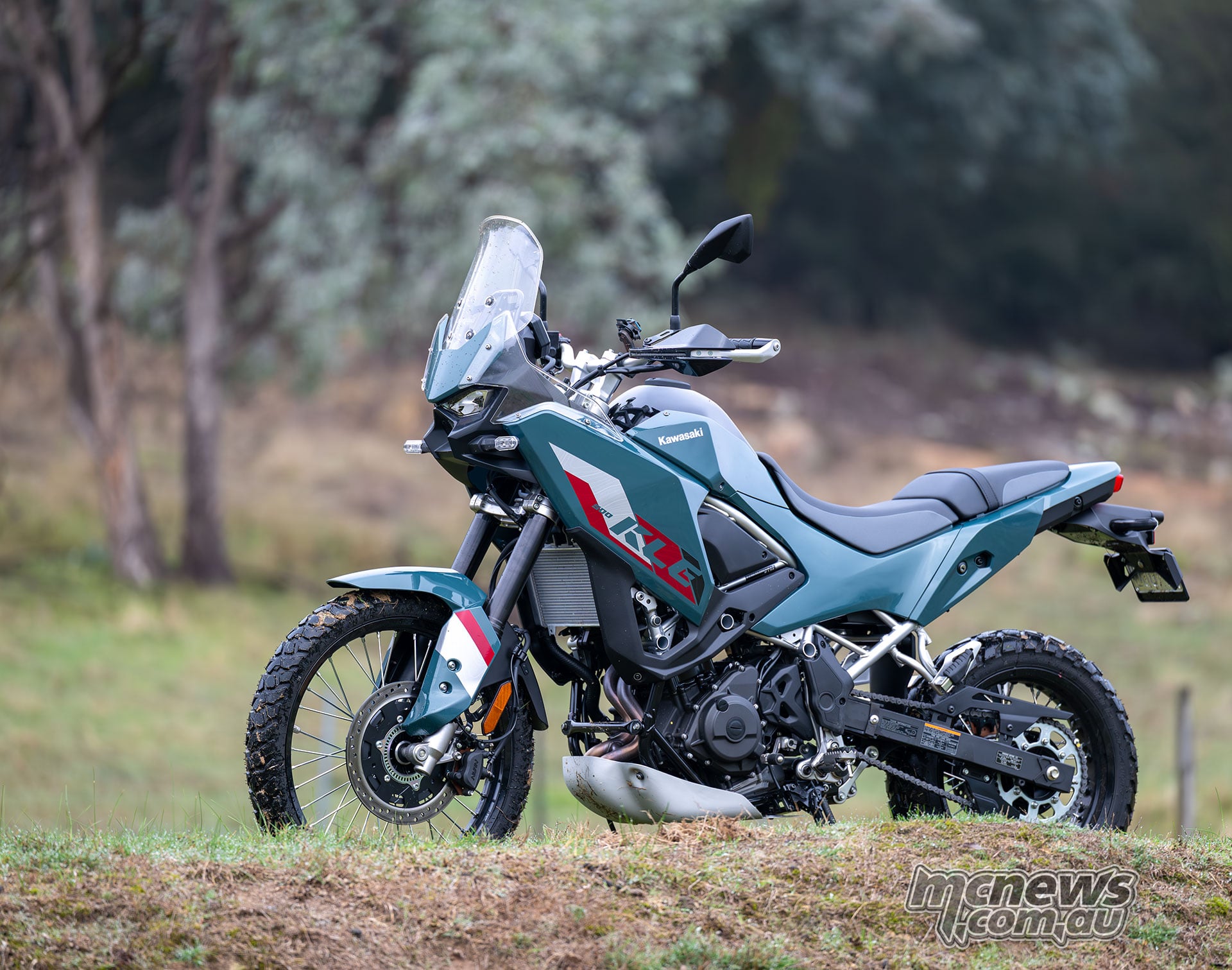
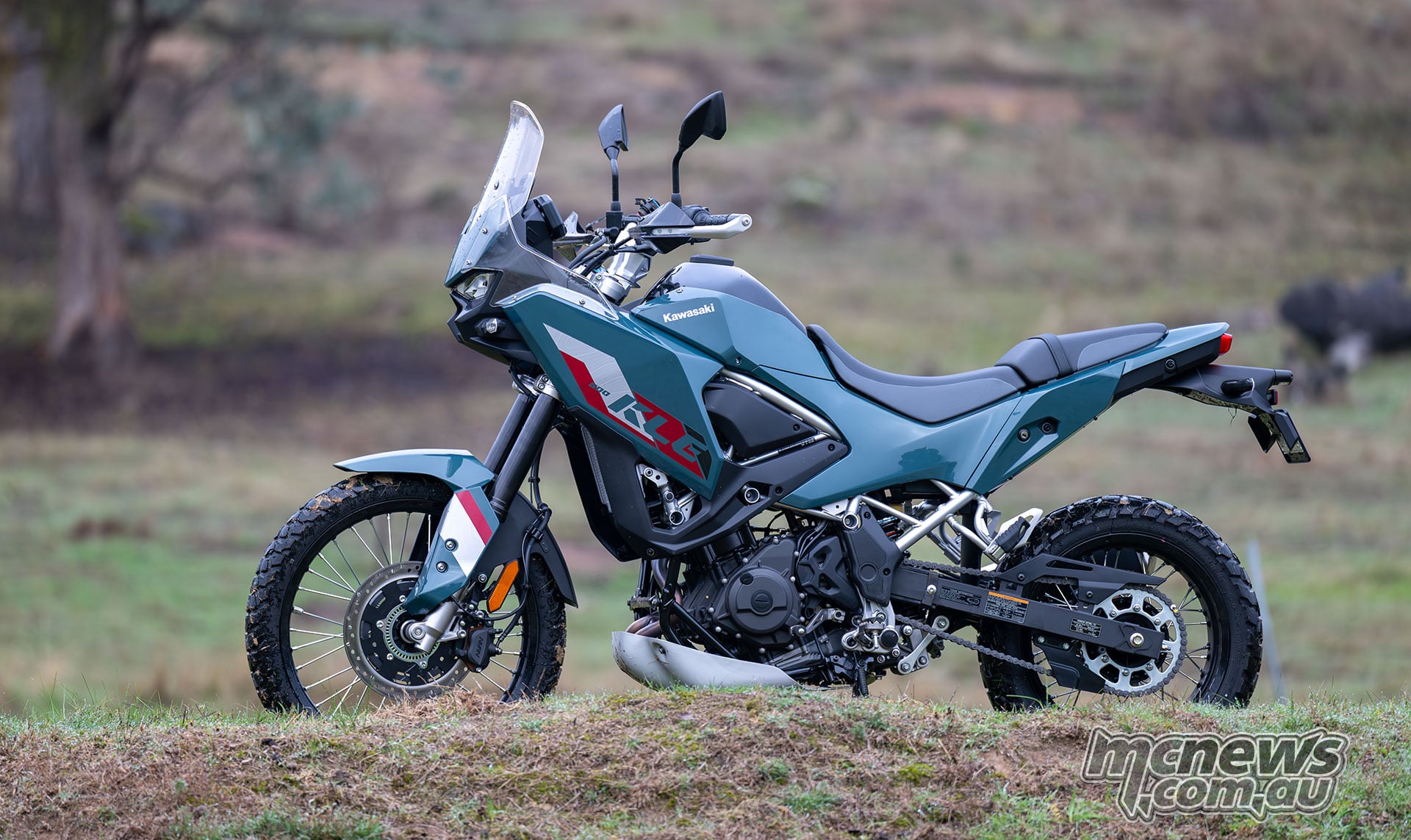
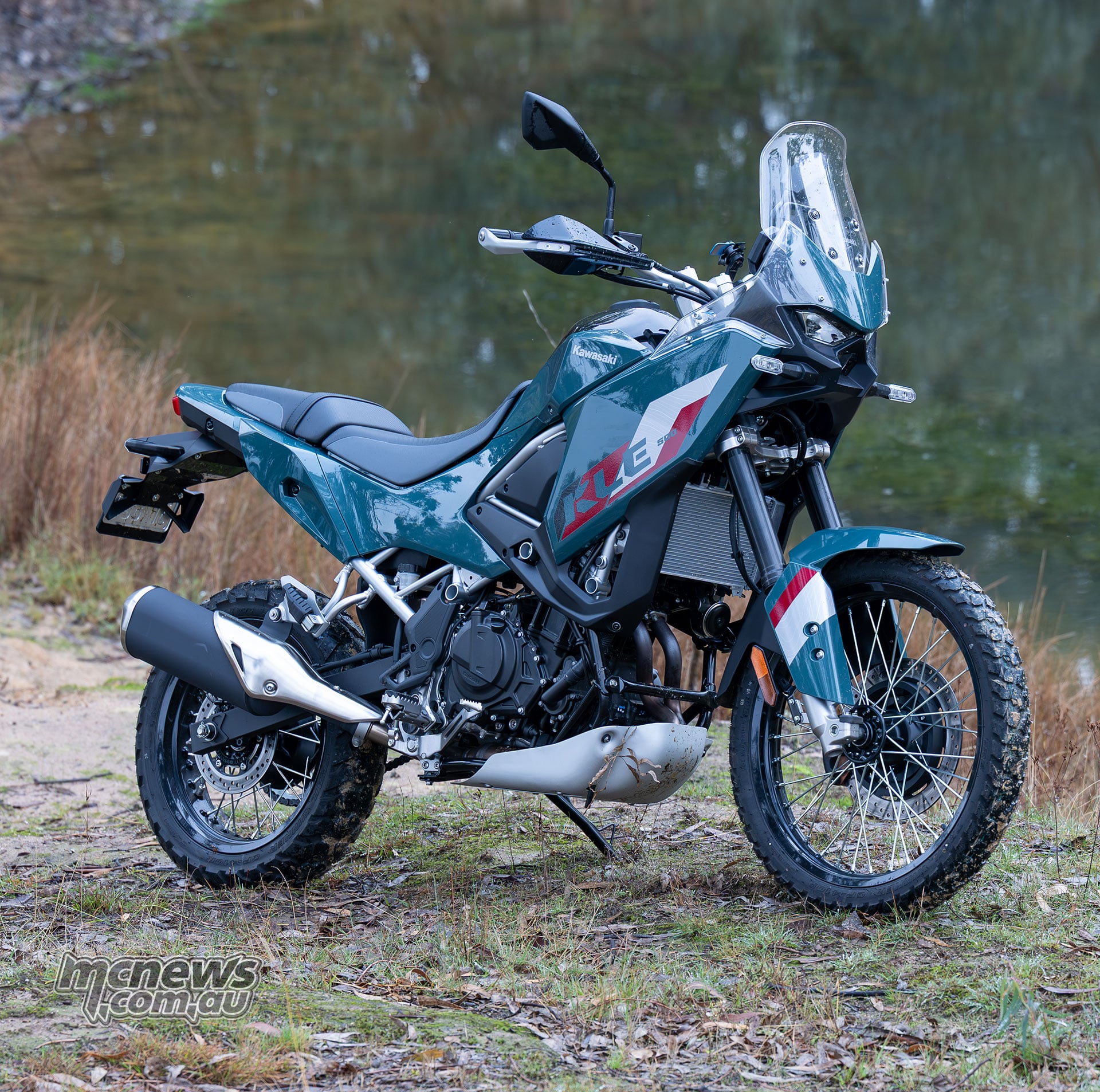
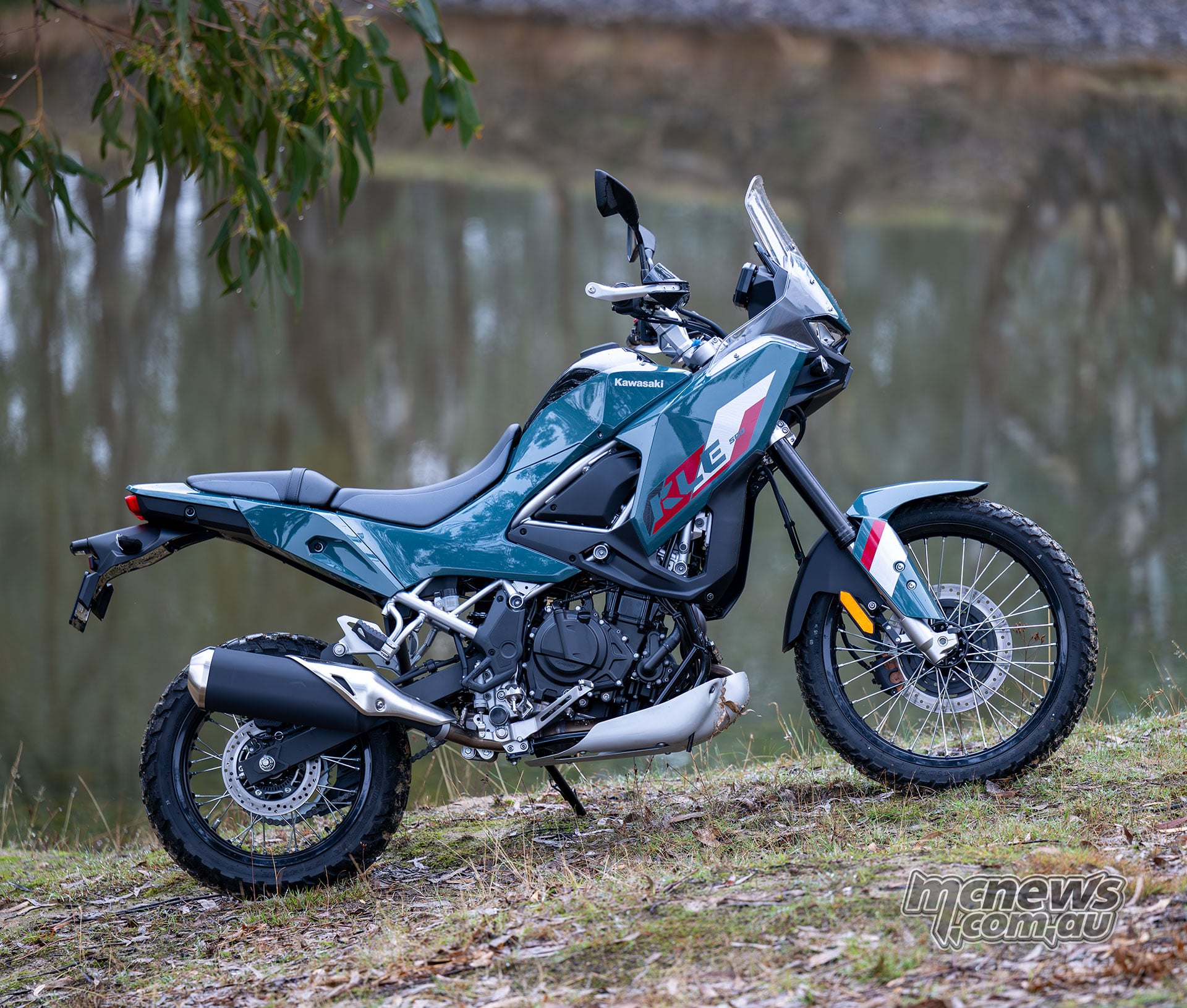
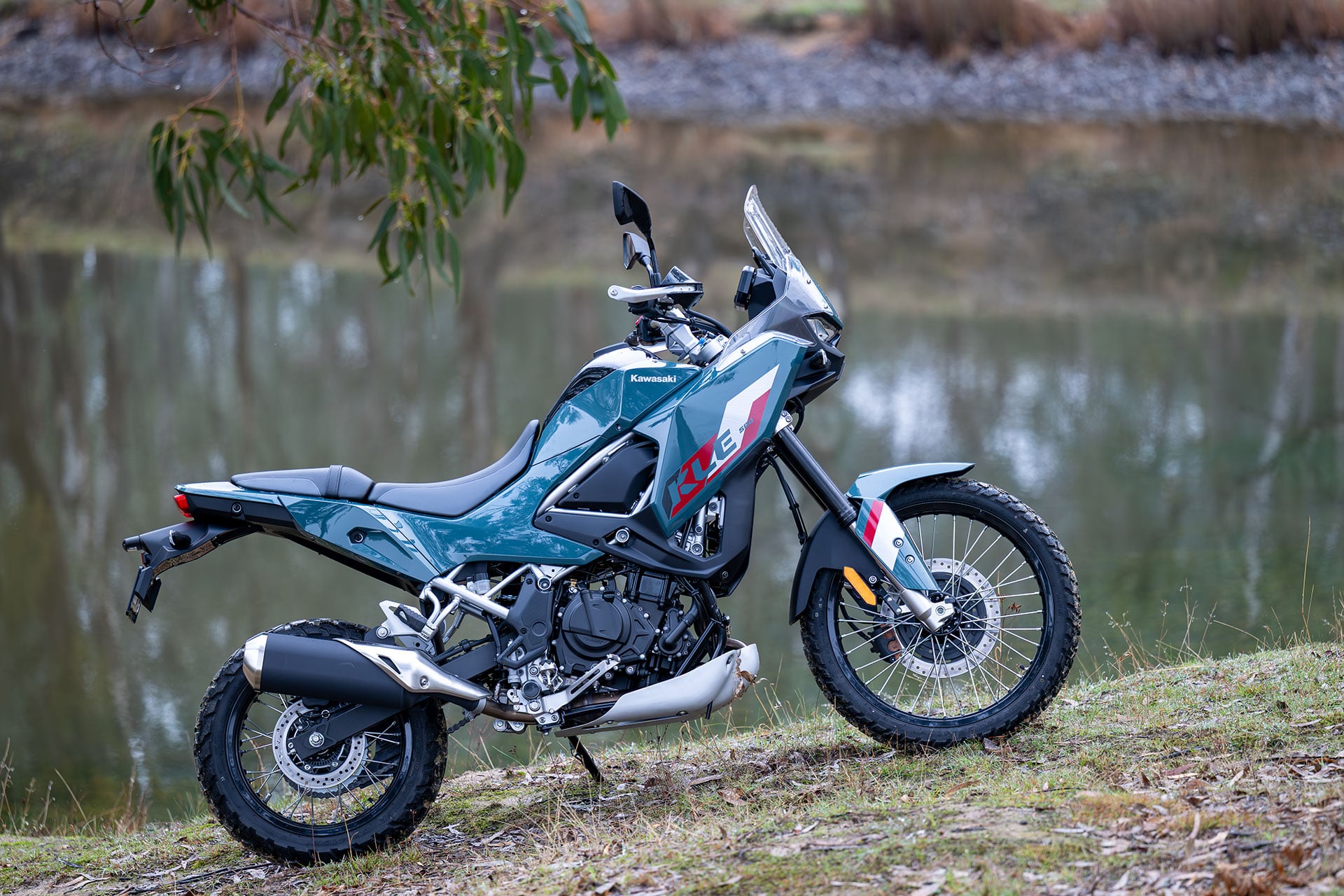
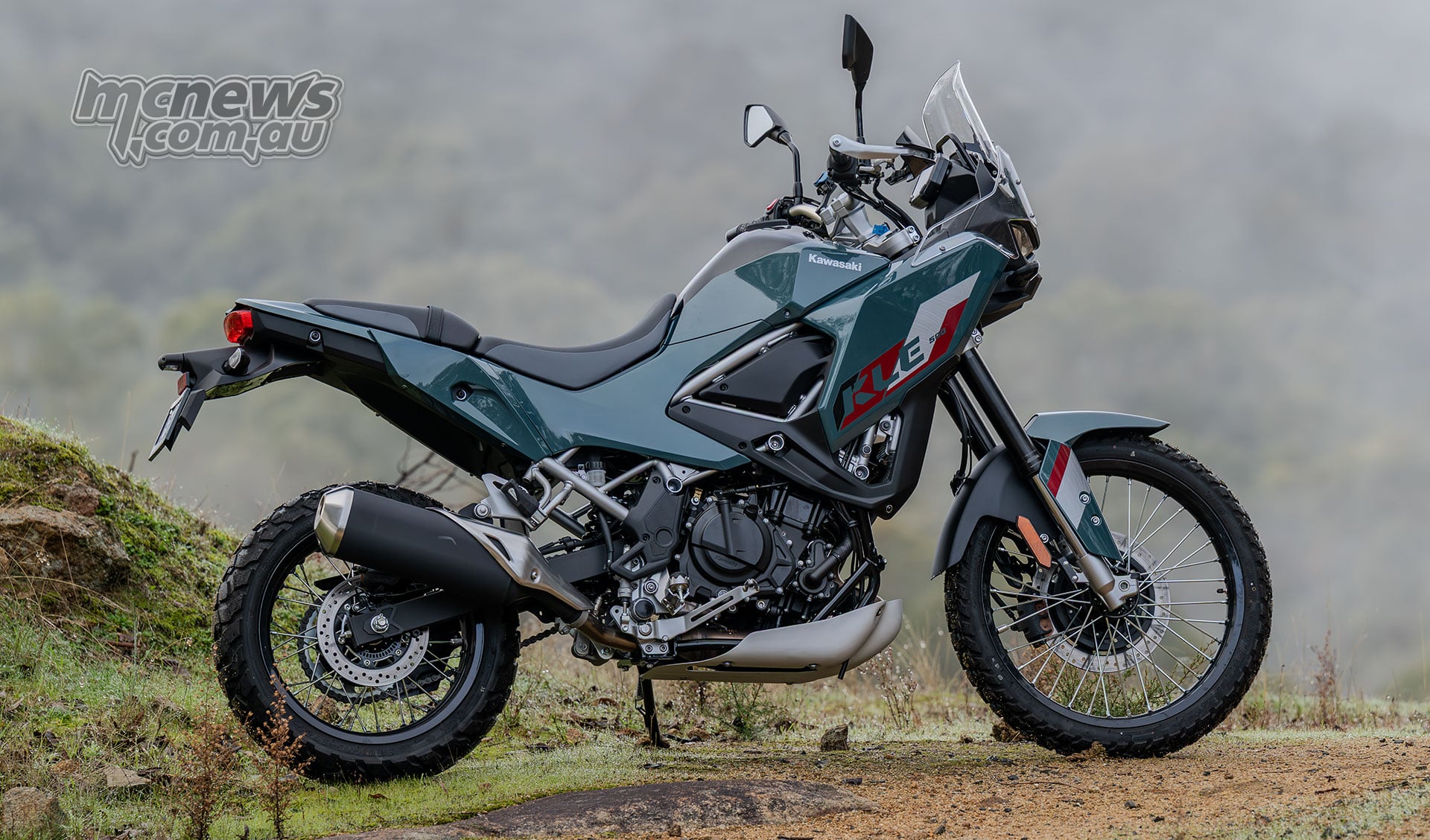
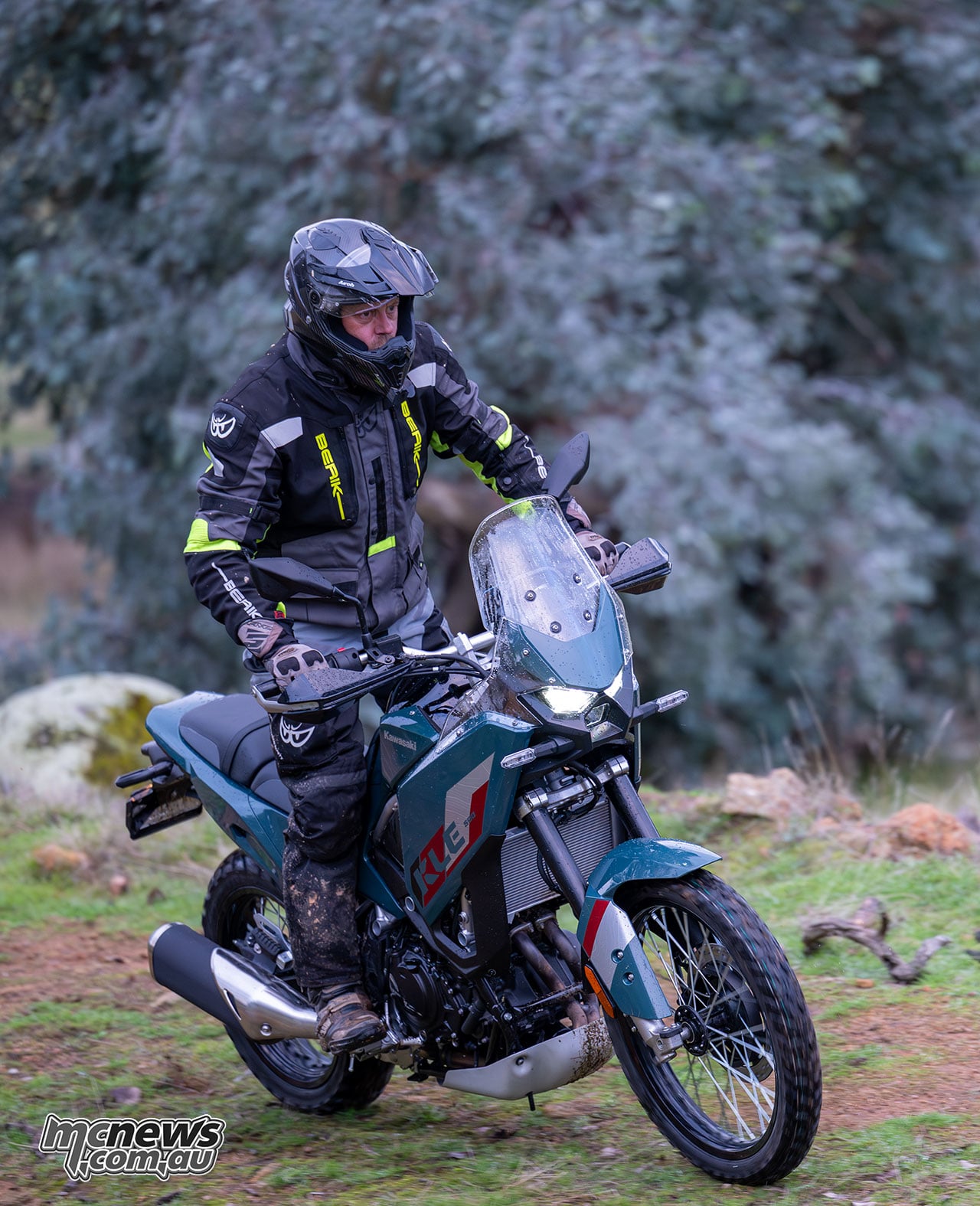
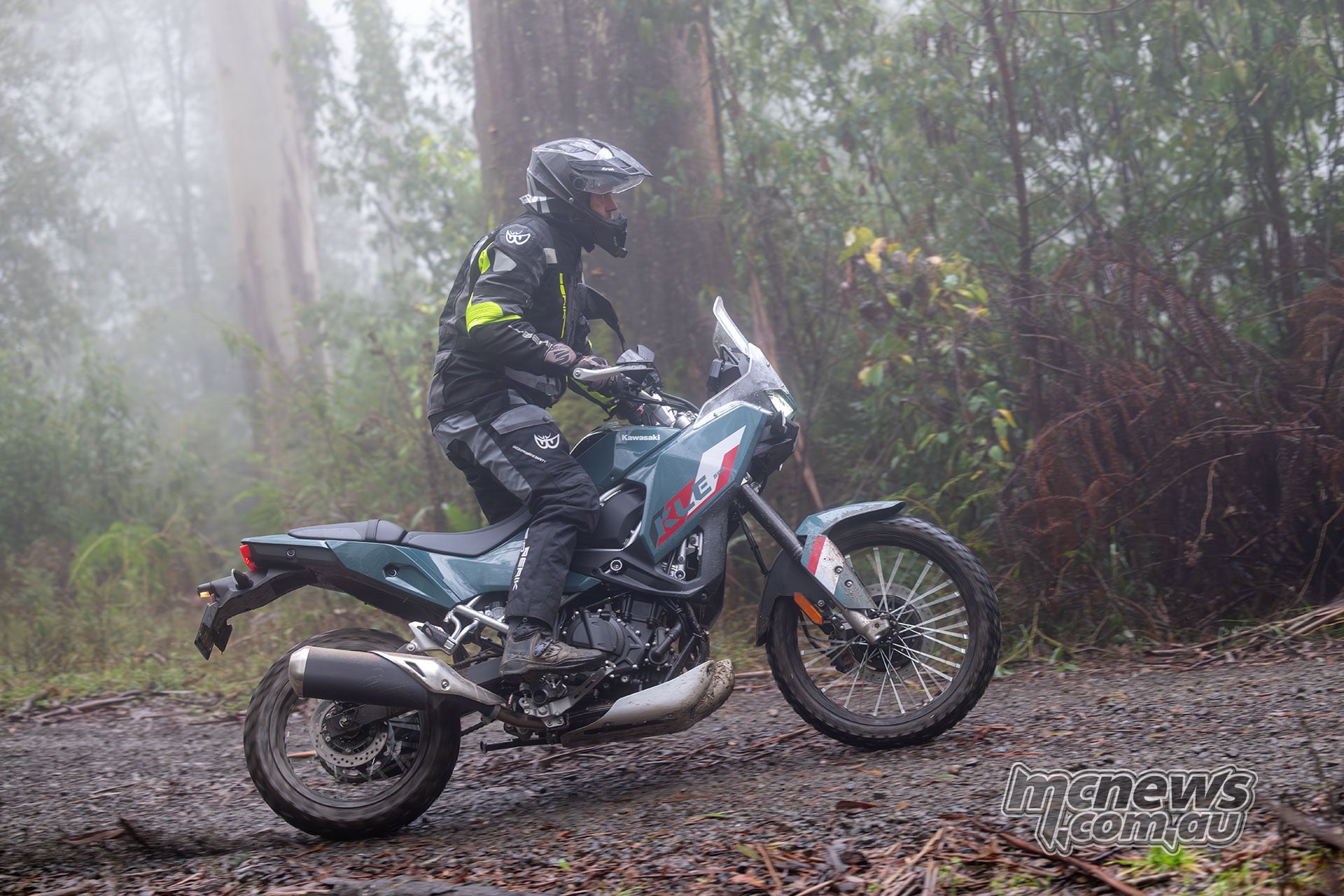
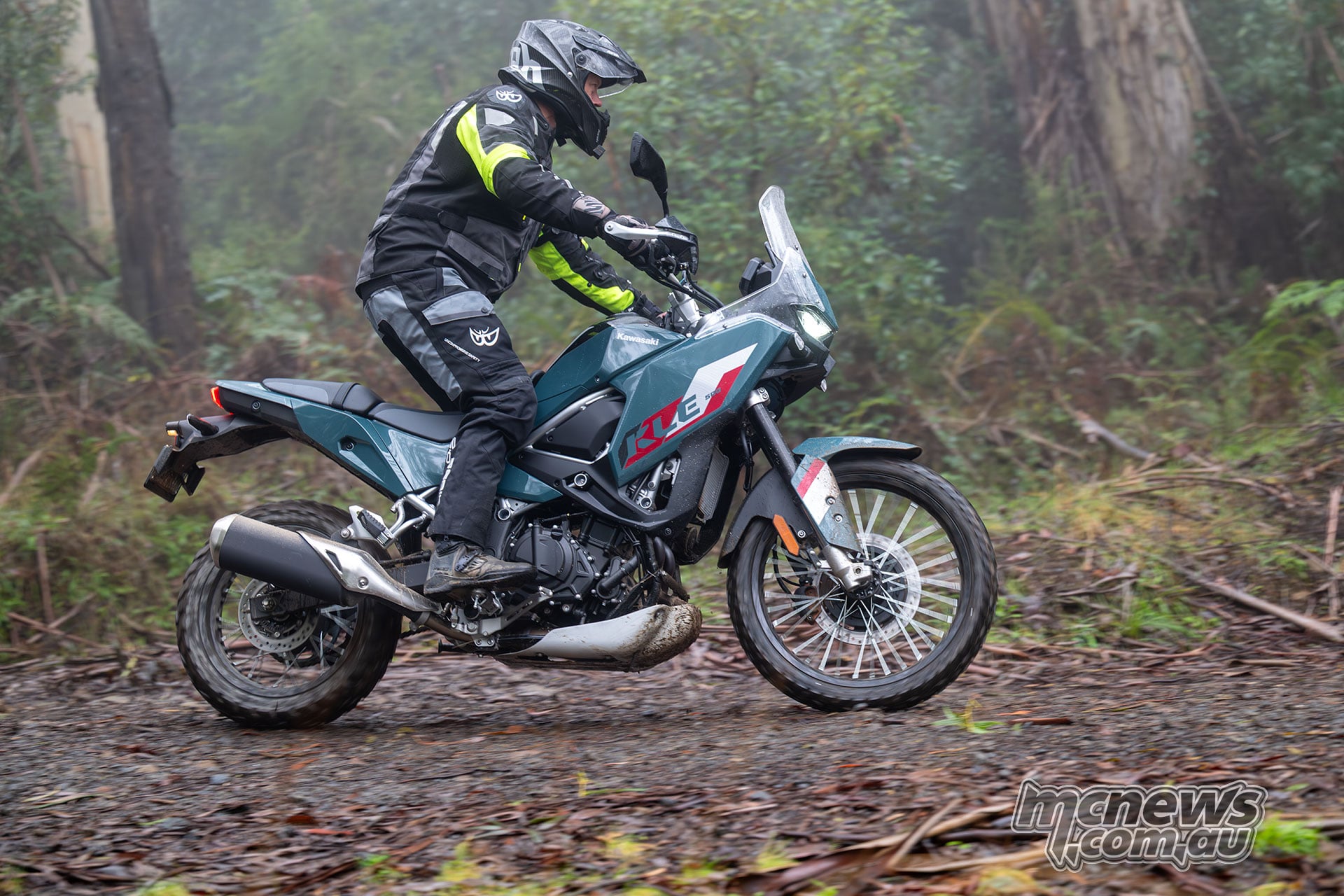
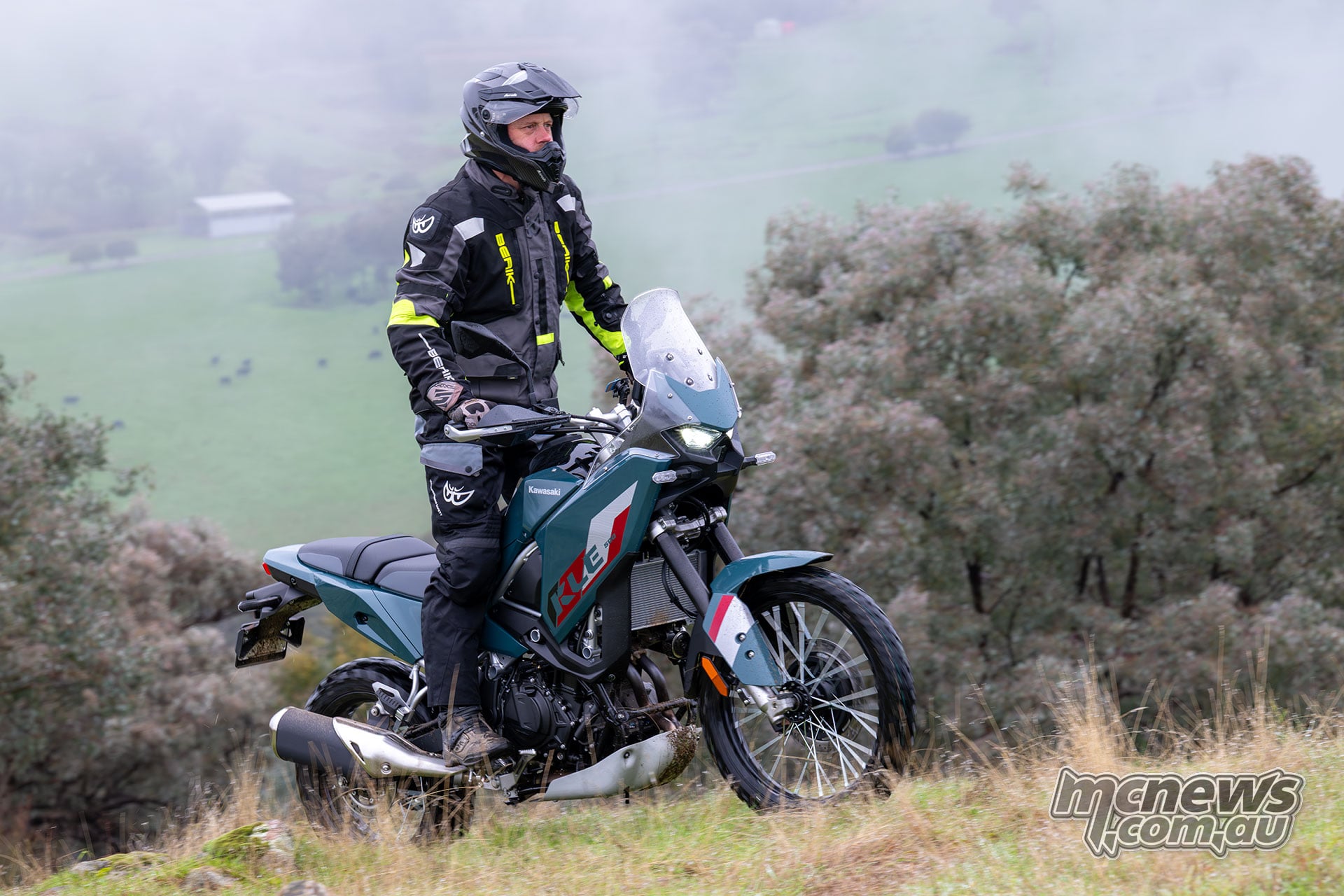
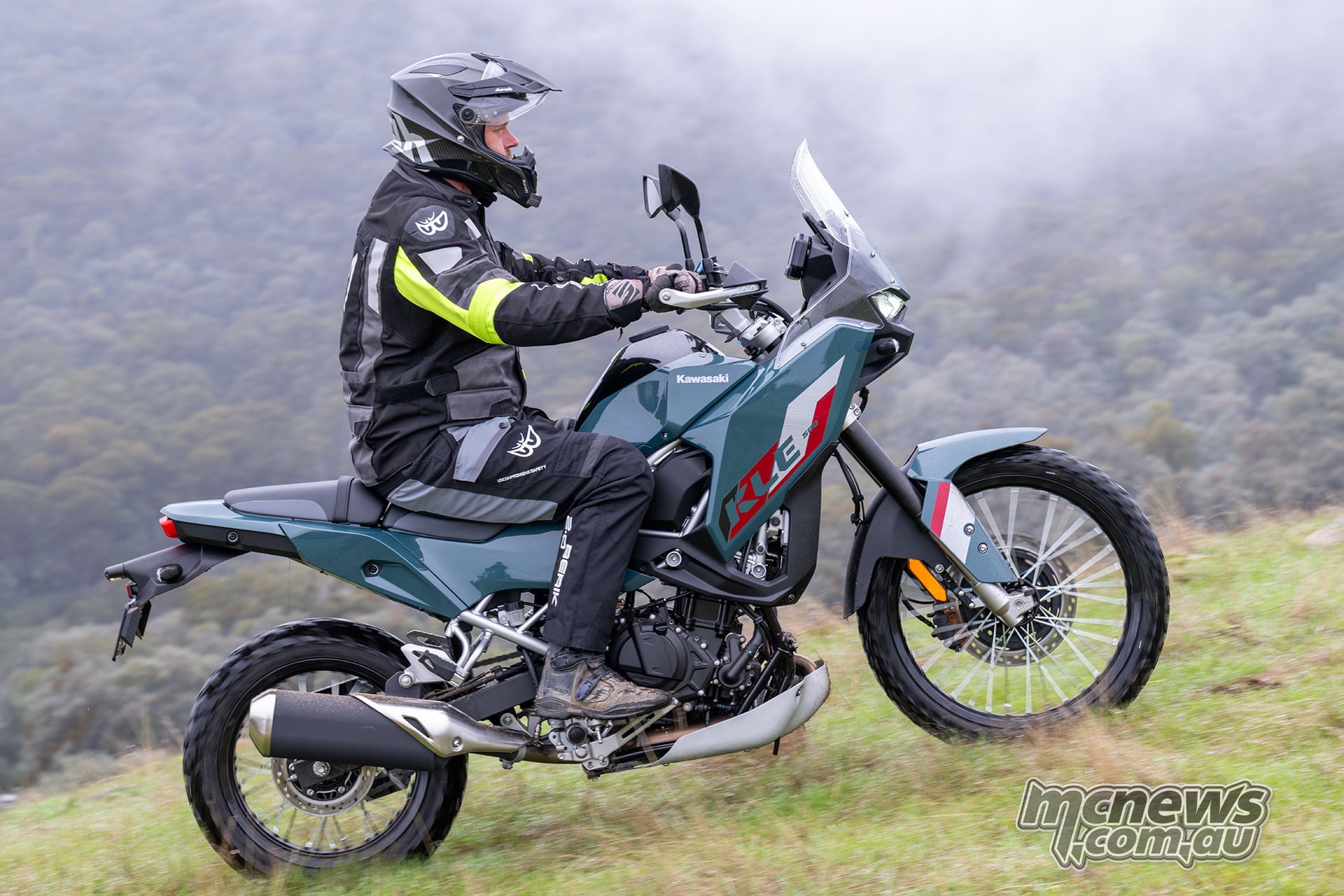
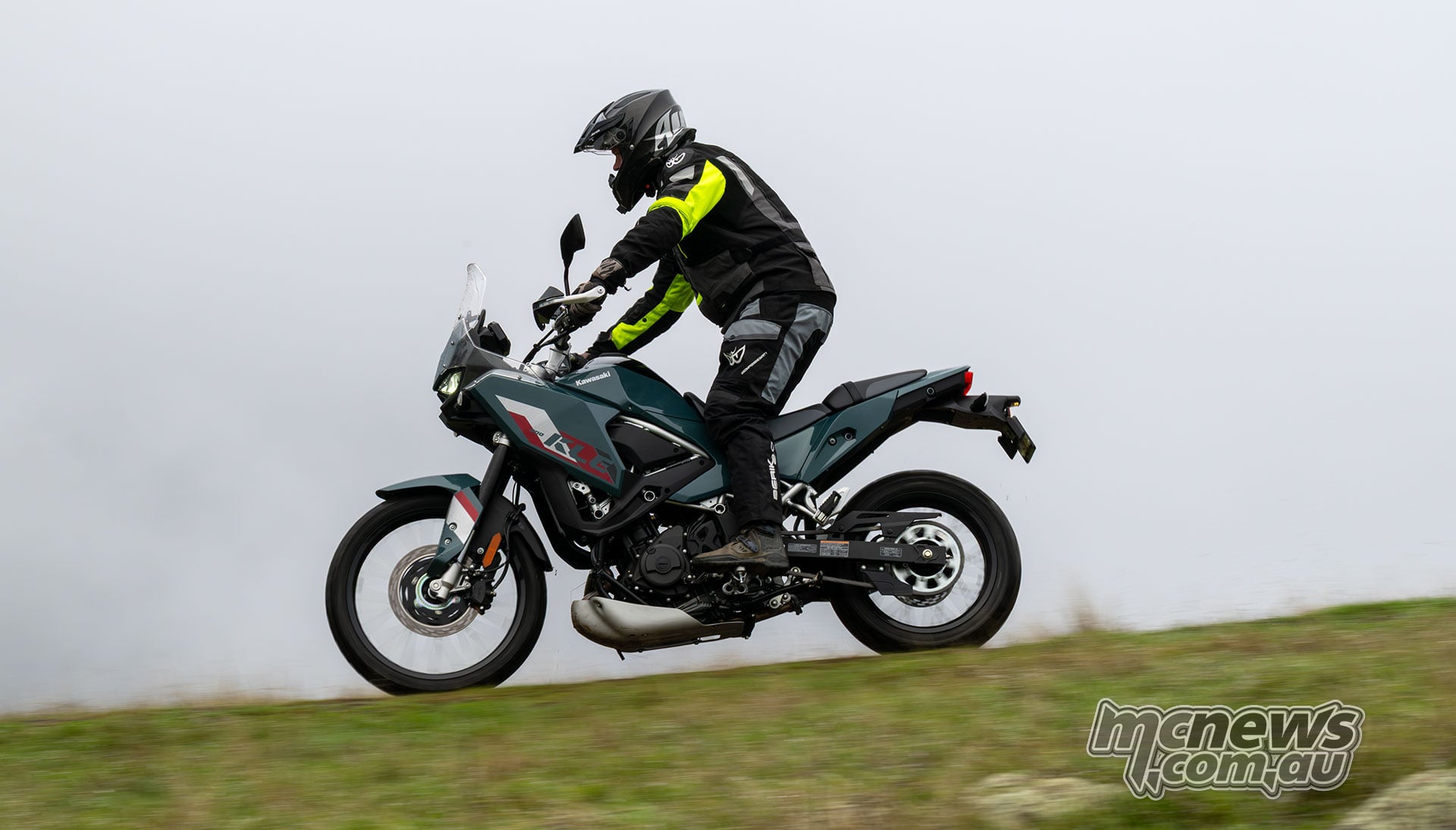
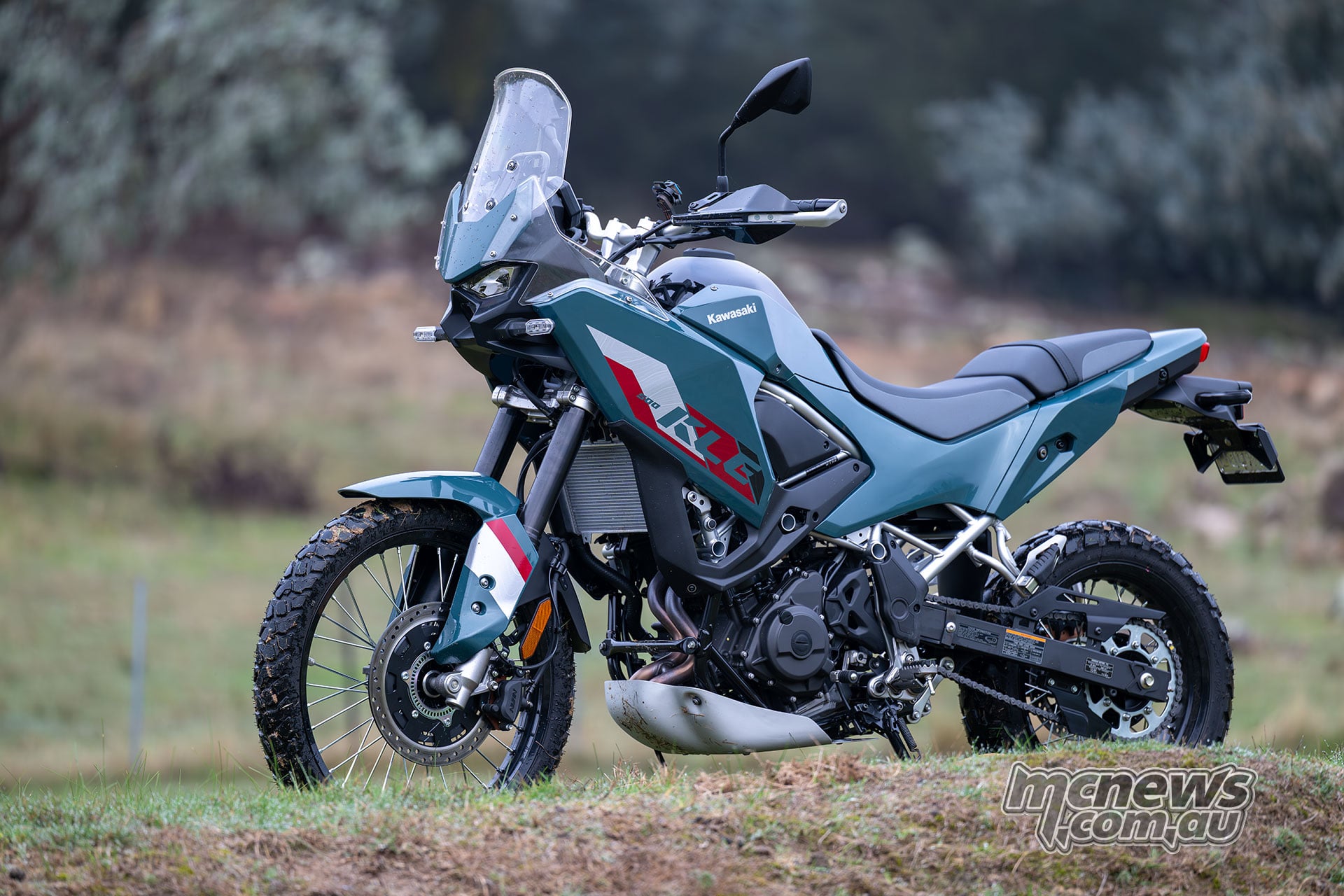
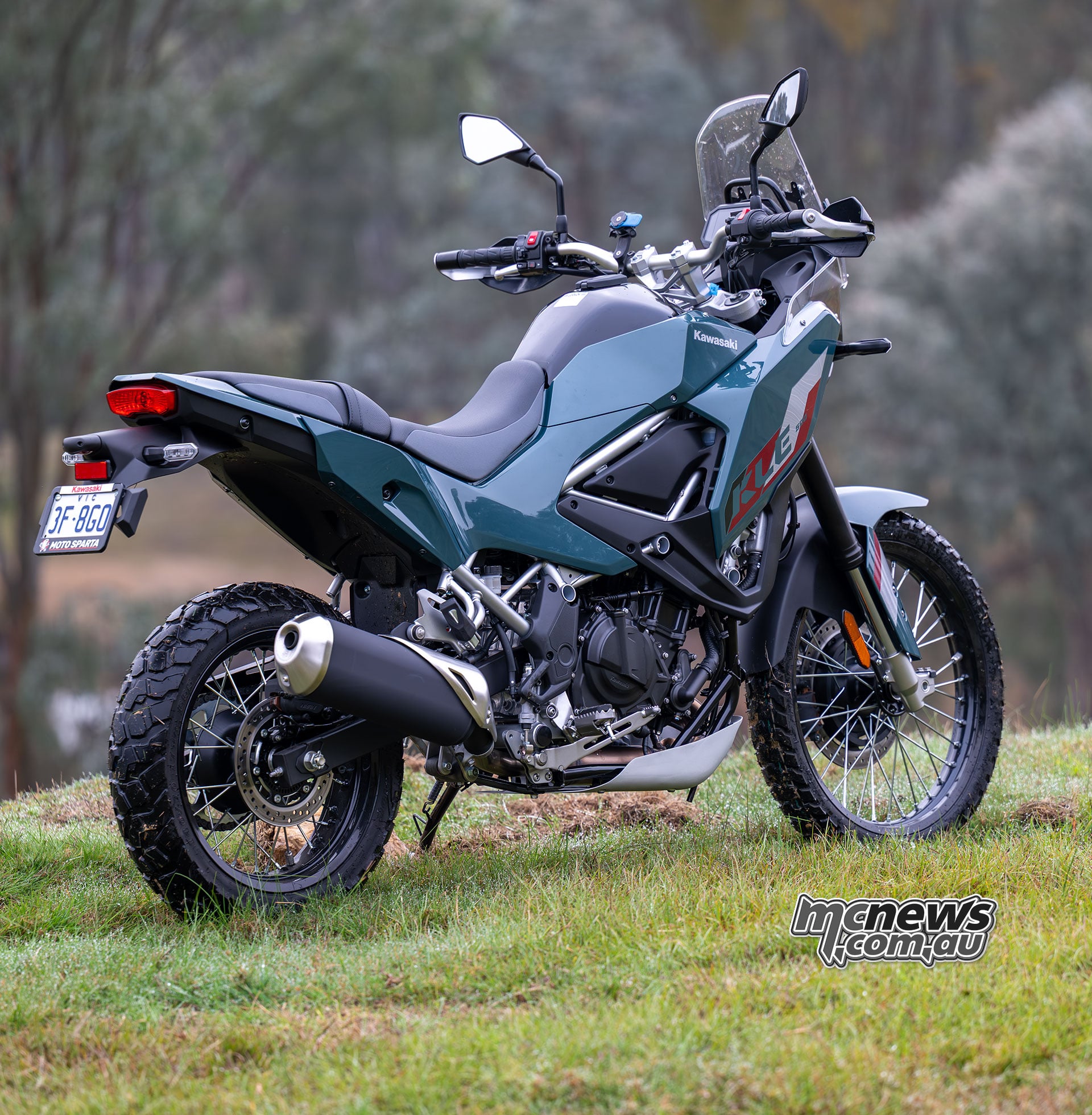
There are two variants, with the SE tested here adding the following equipment over the base KLE500:
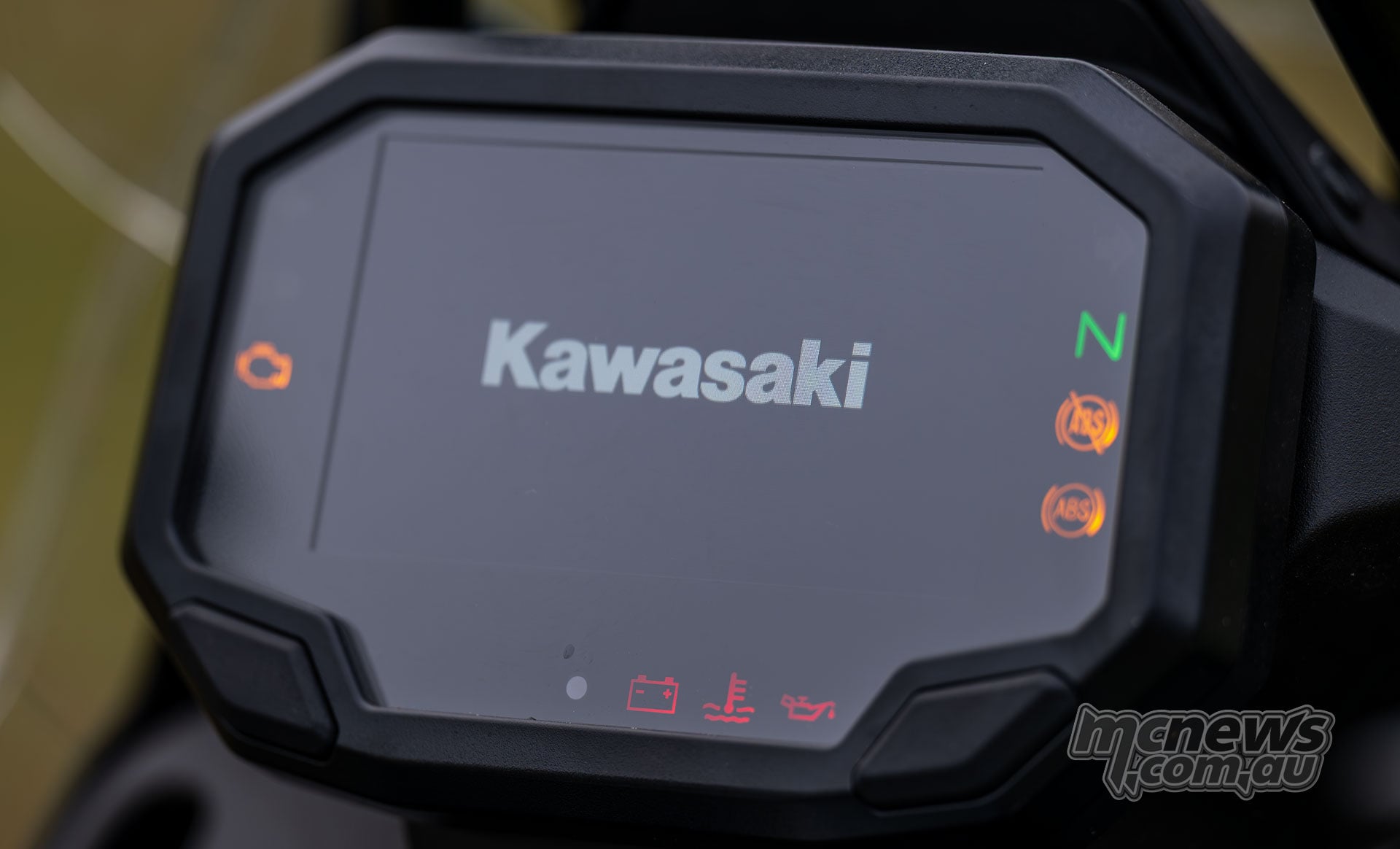
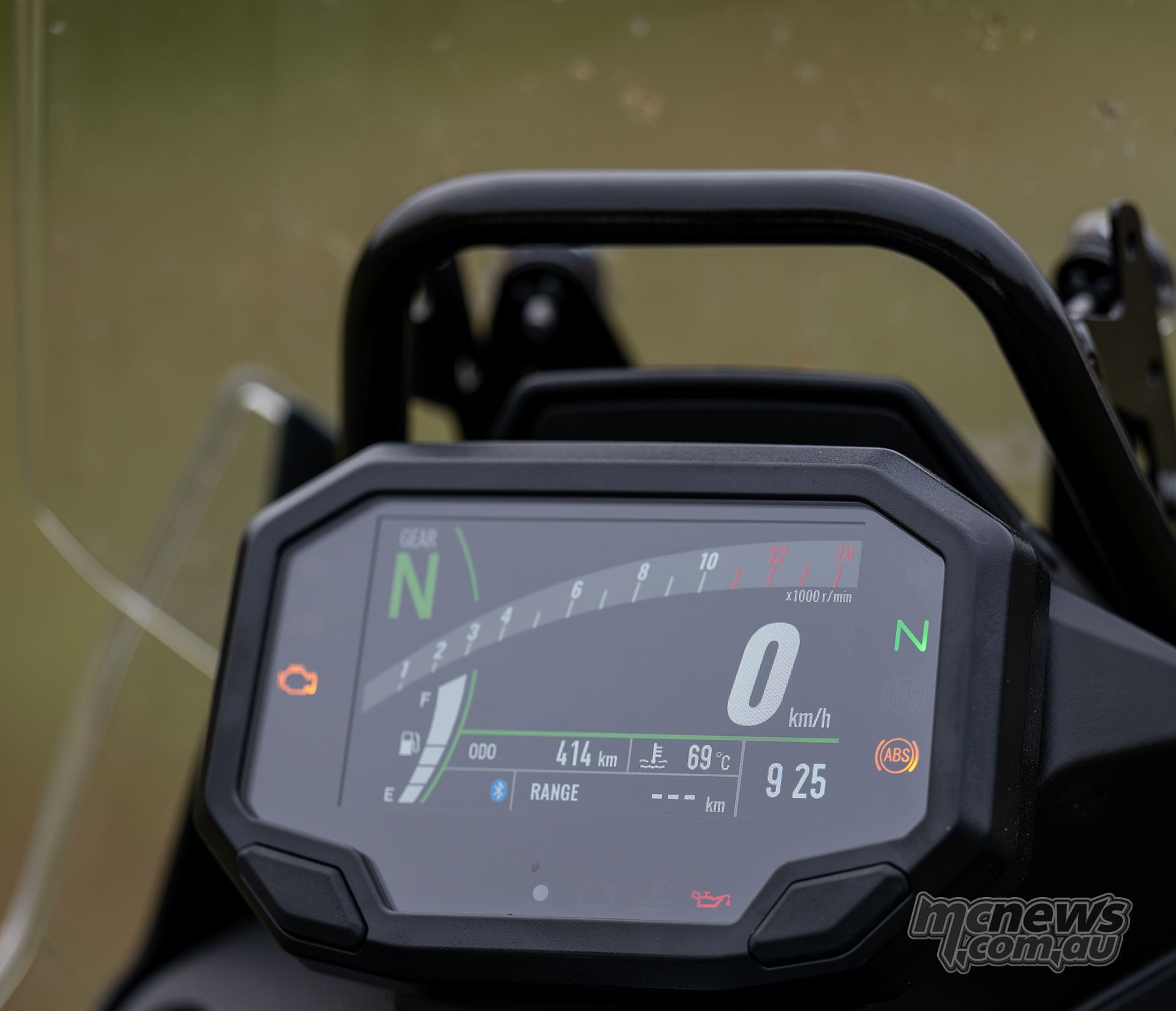
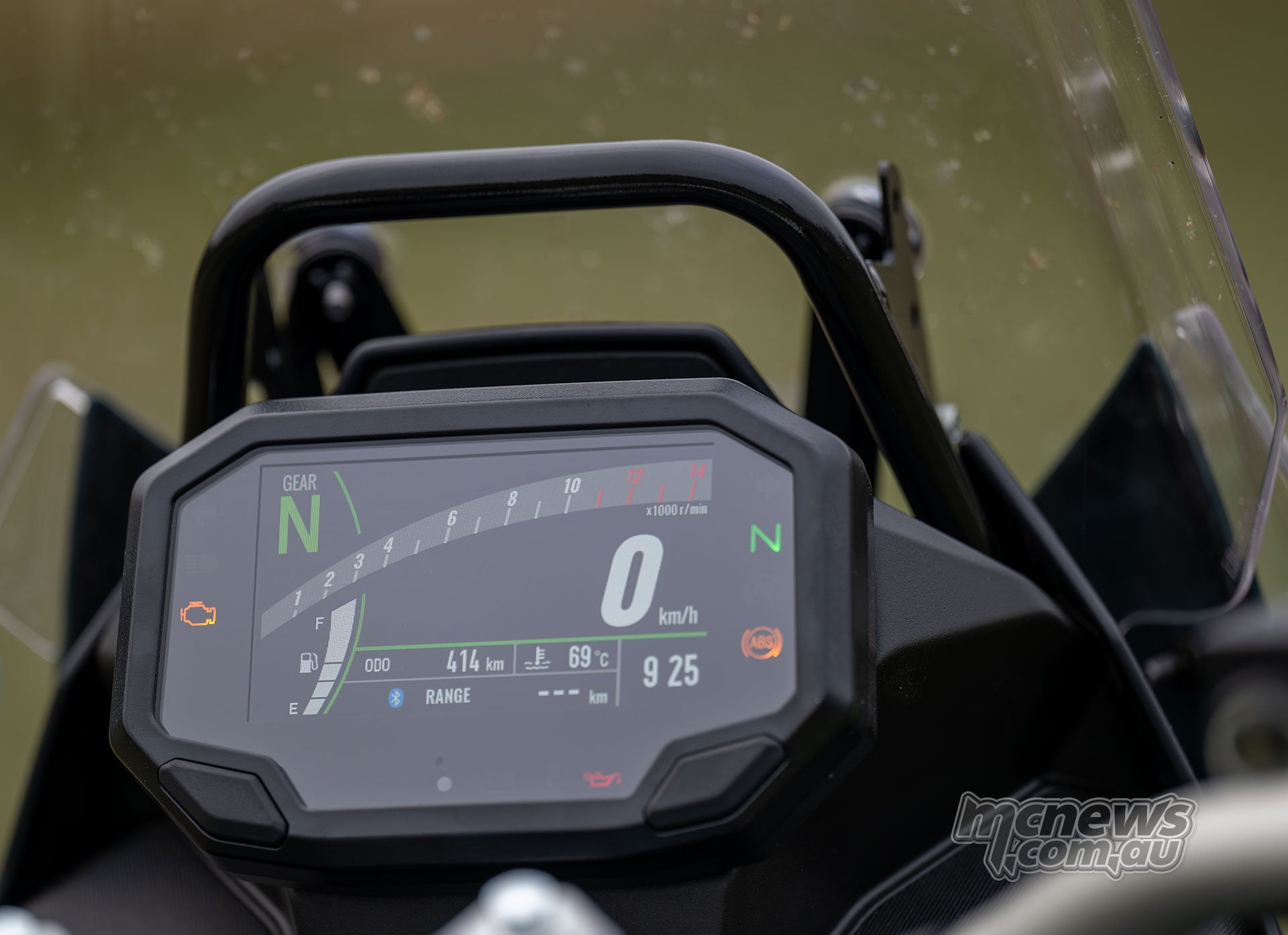
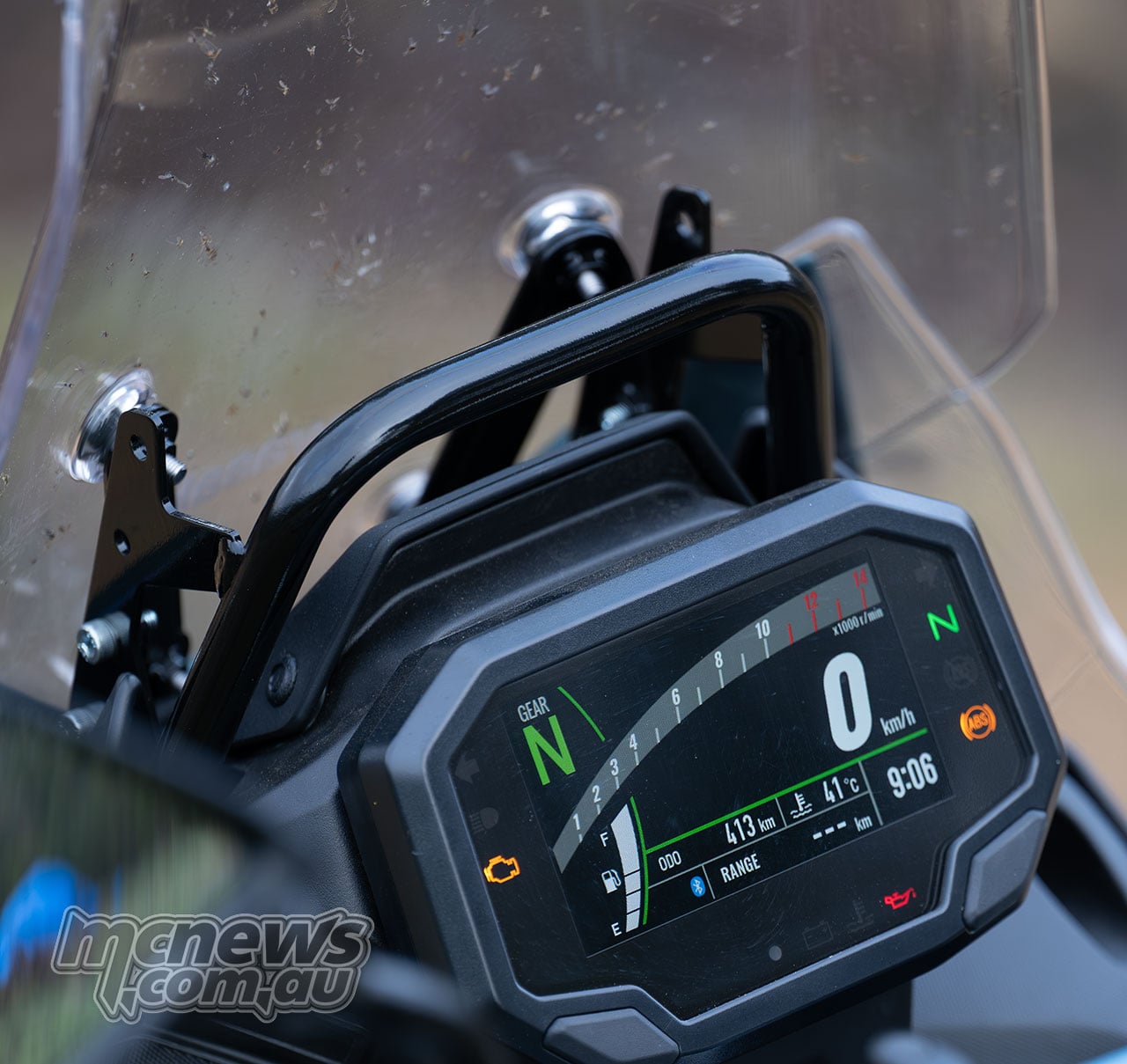
- A 4.3-inch colour TFT display in place of the LCD dash.
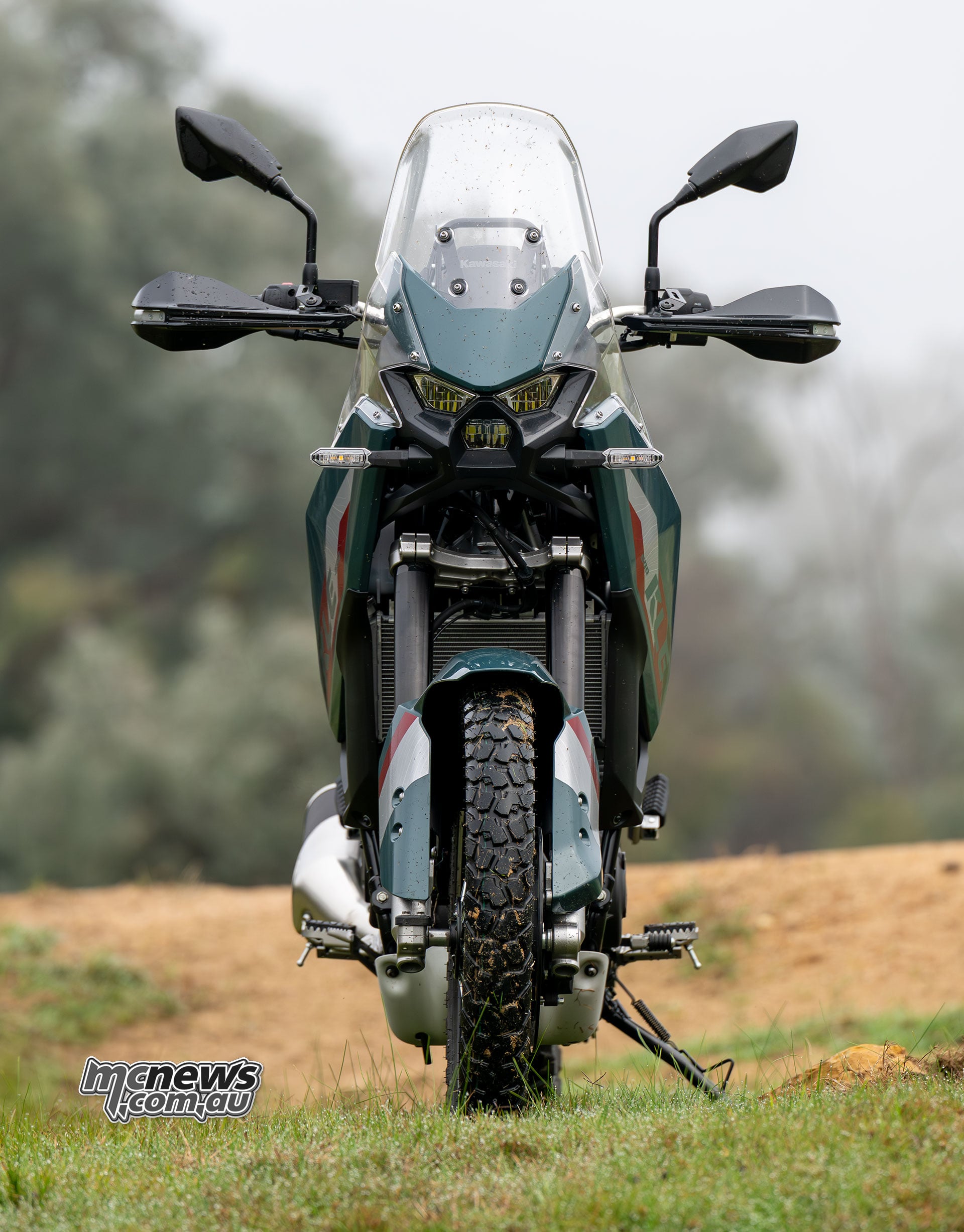
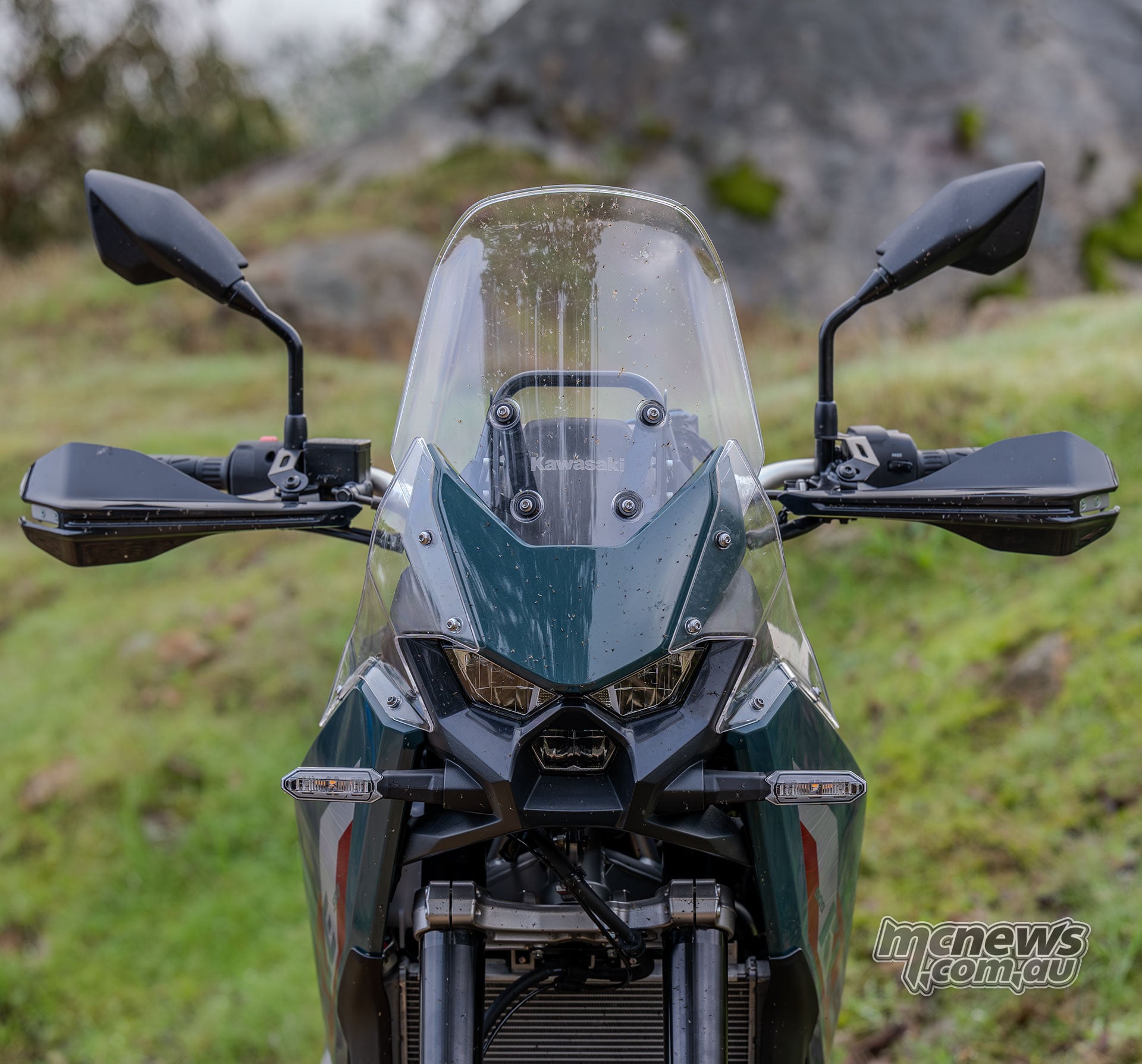
- A taller adjustable windscreen.
- Metal-reinforced handguards.
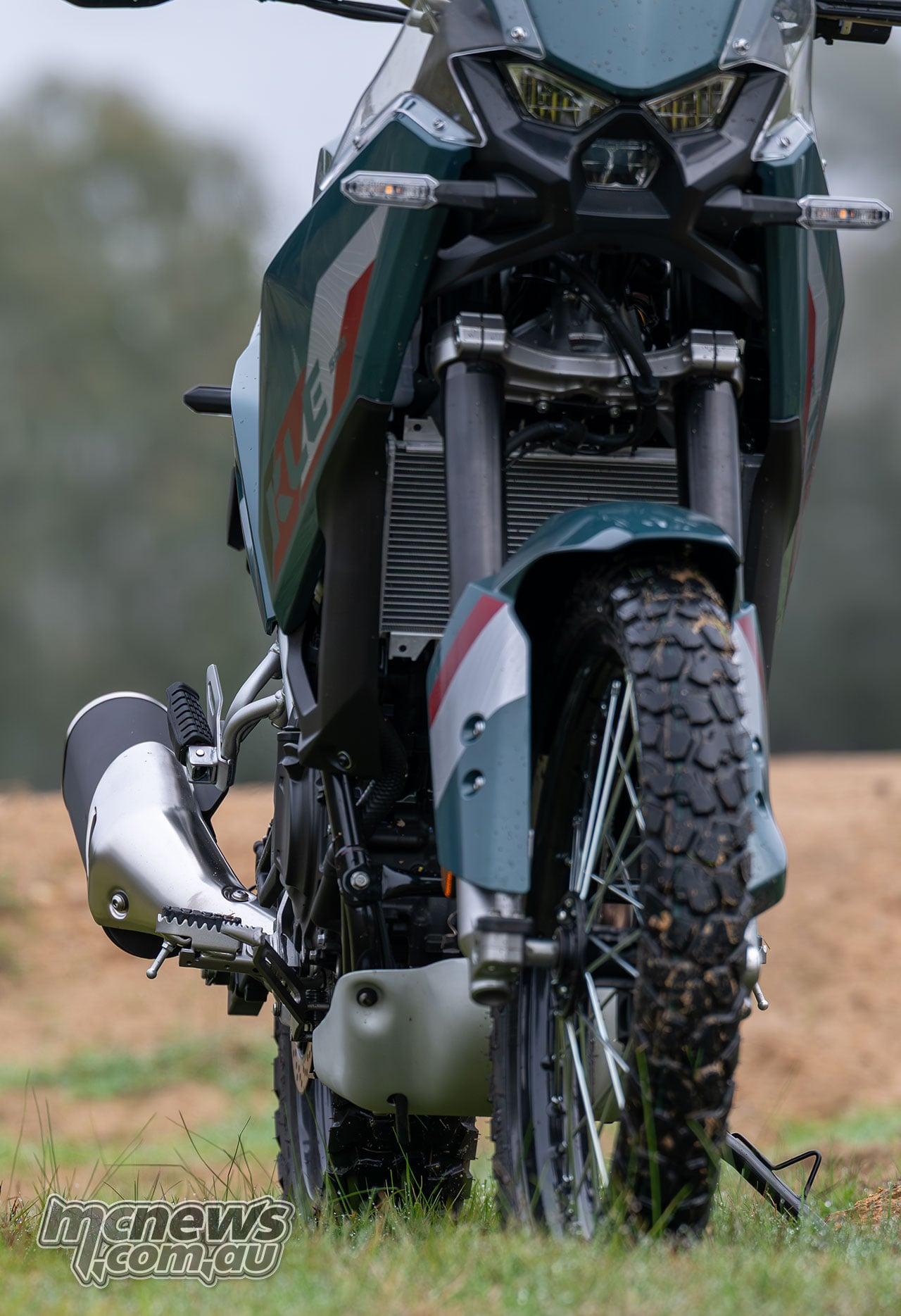
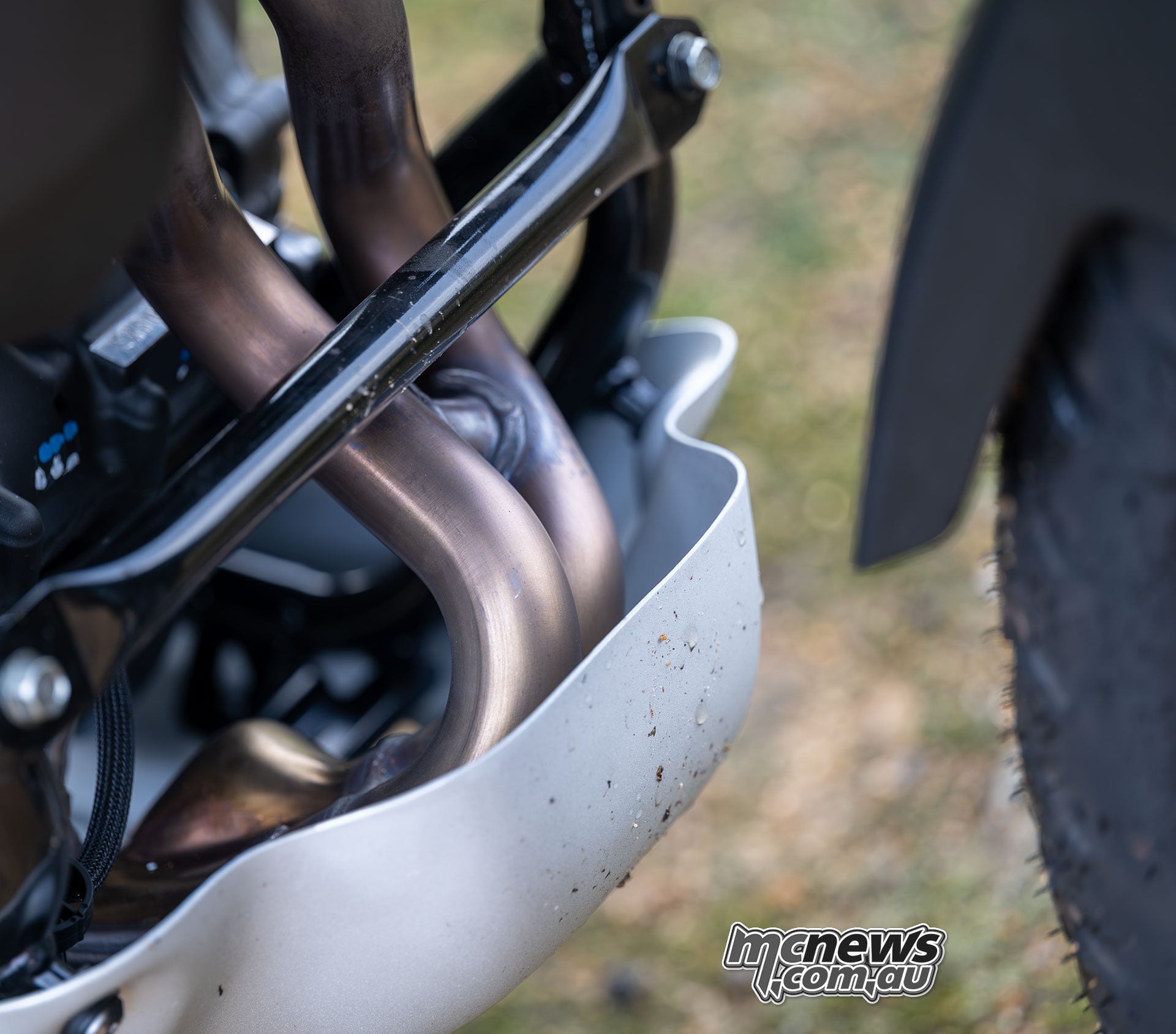
- A larger aluminium skid plate.
- LED indicators.
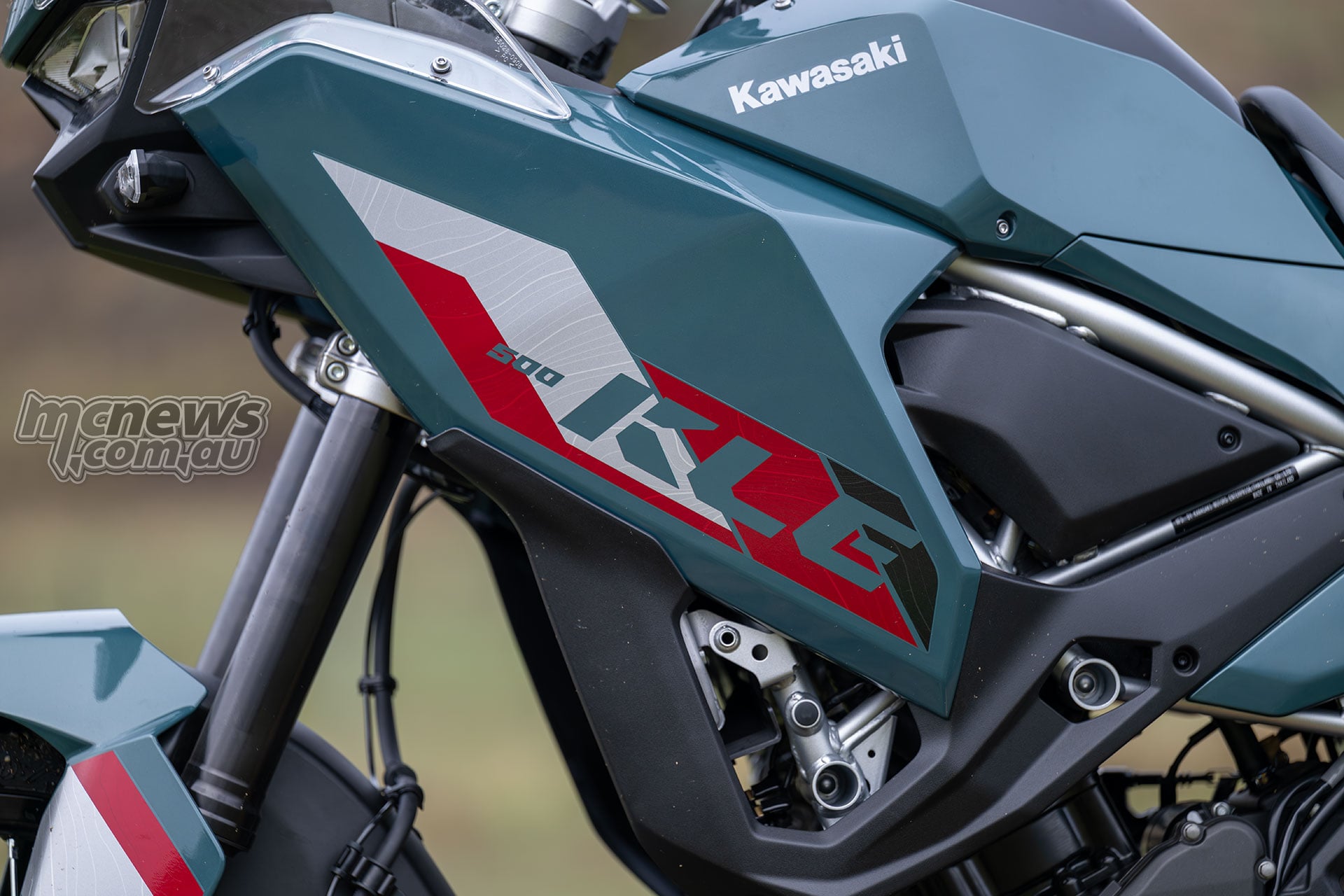
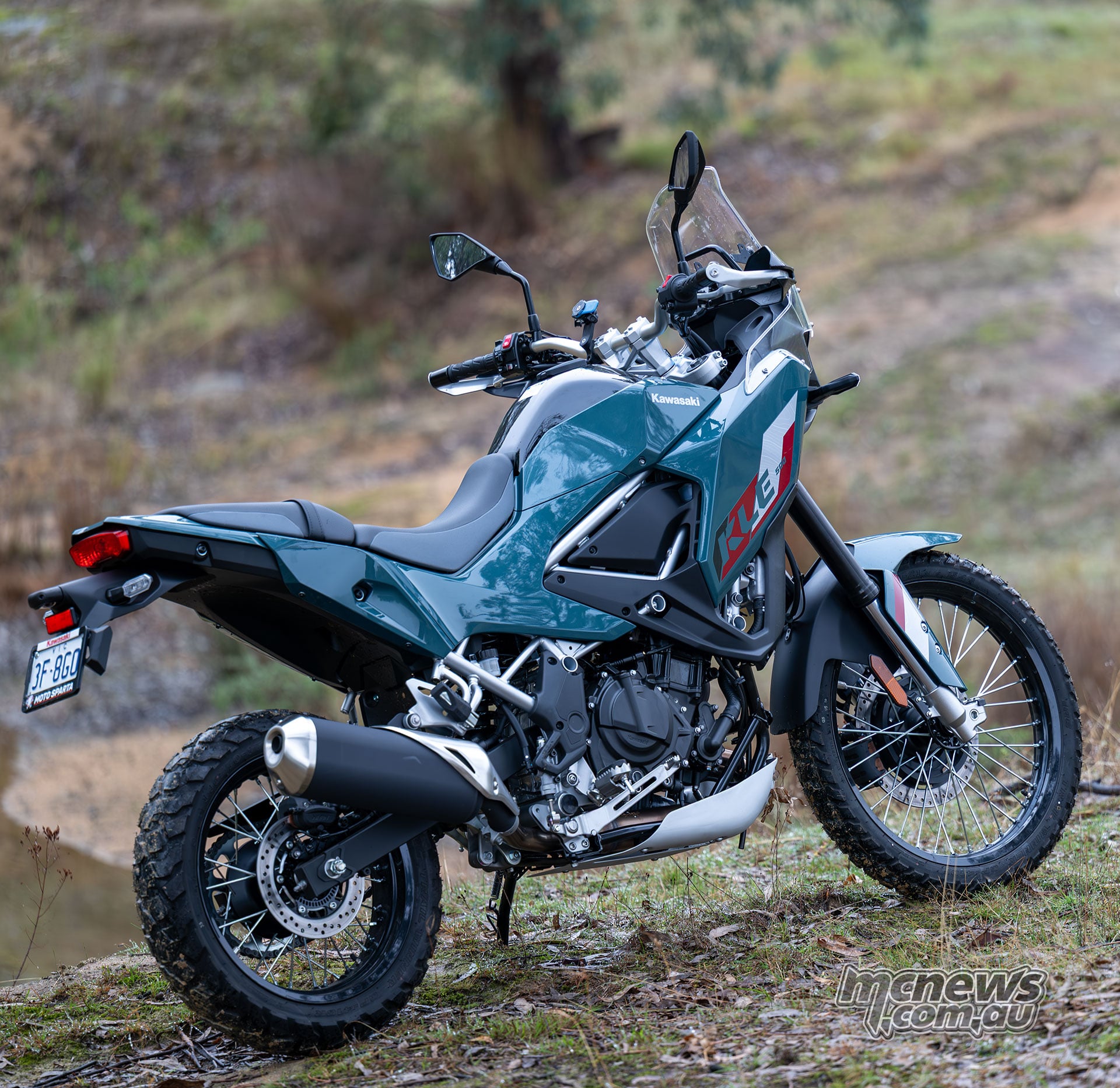
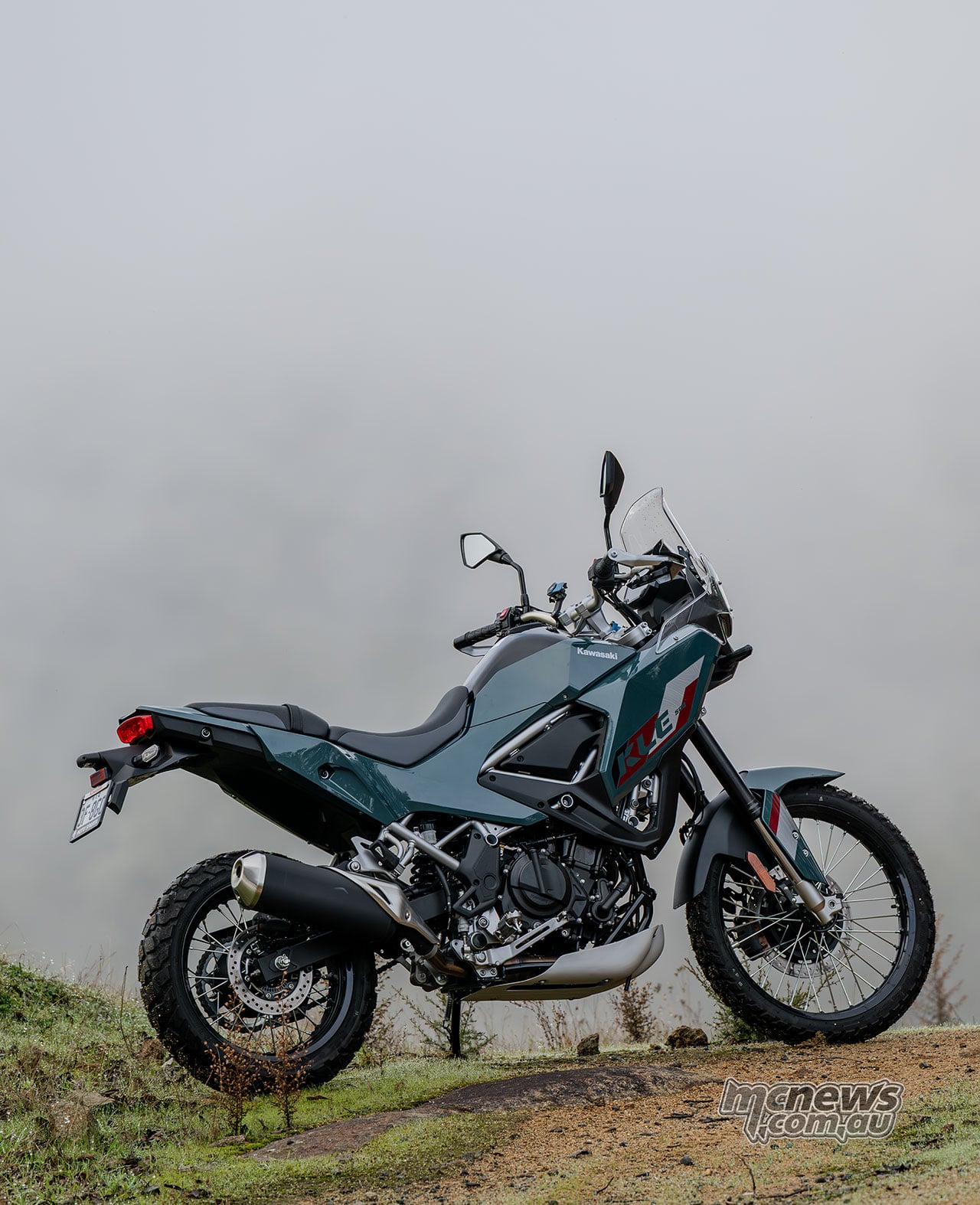
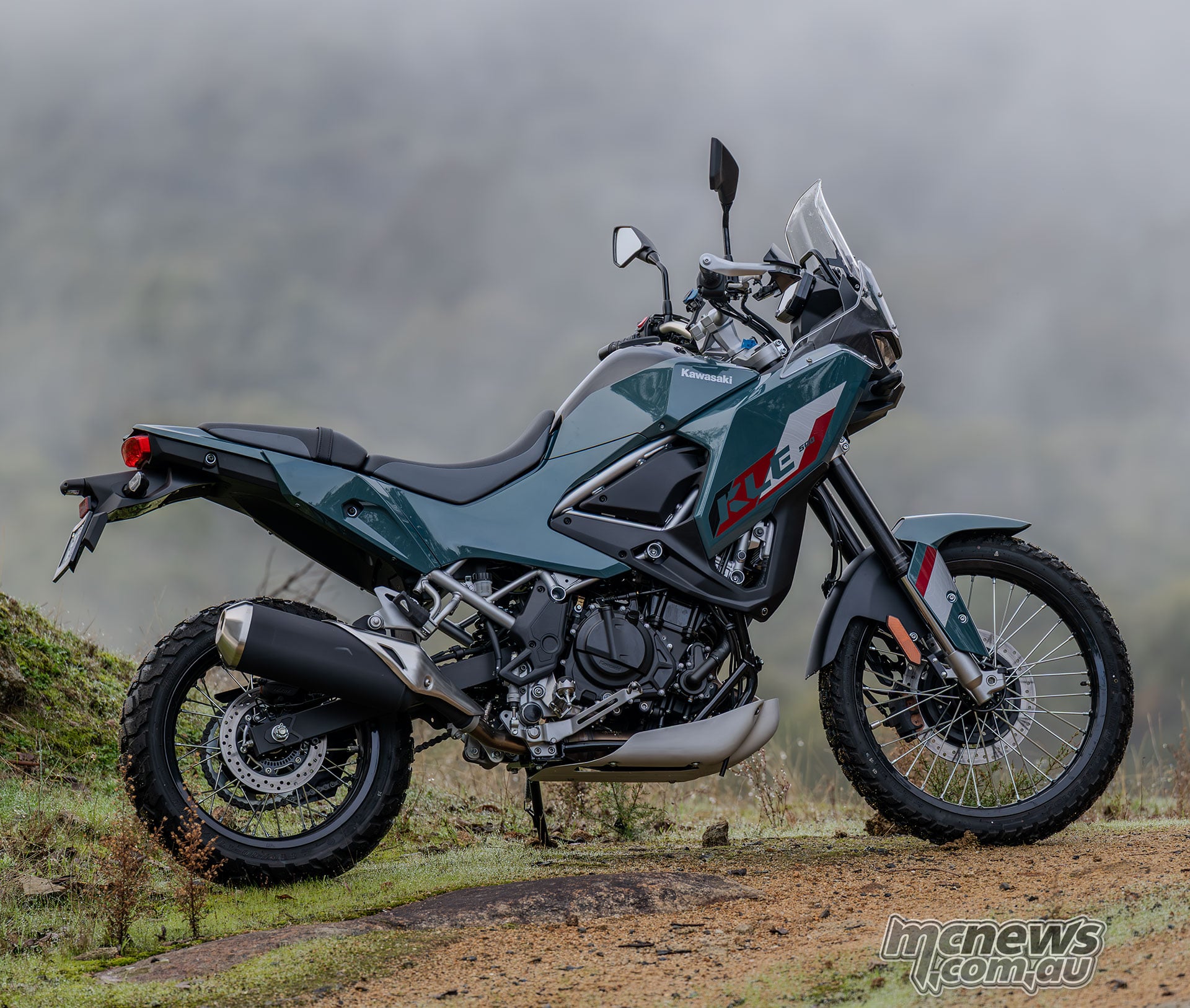
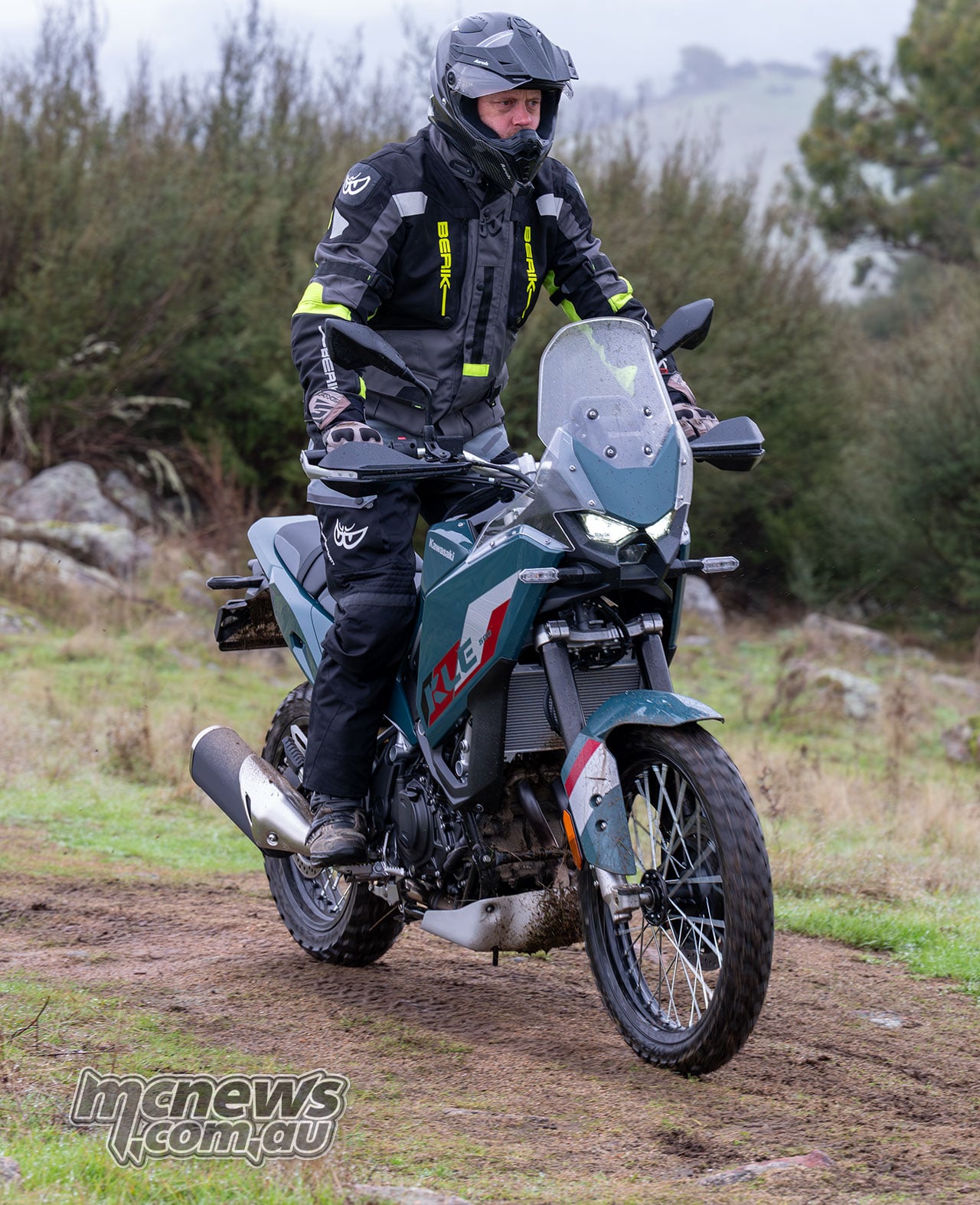
- Metallic Bluish Green paint, rather than the base model’s Metallic Carbon Gray/Ebony.
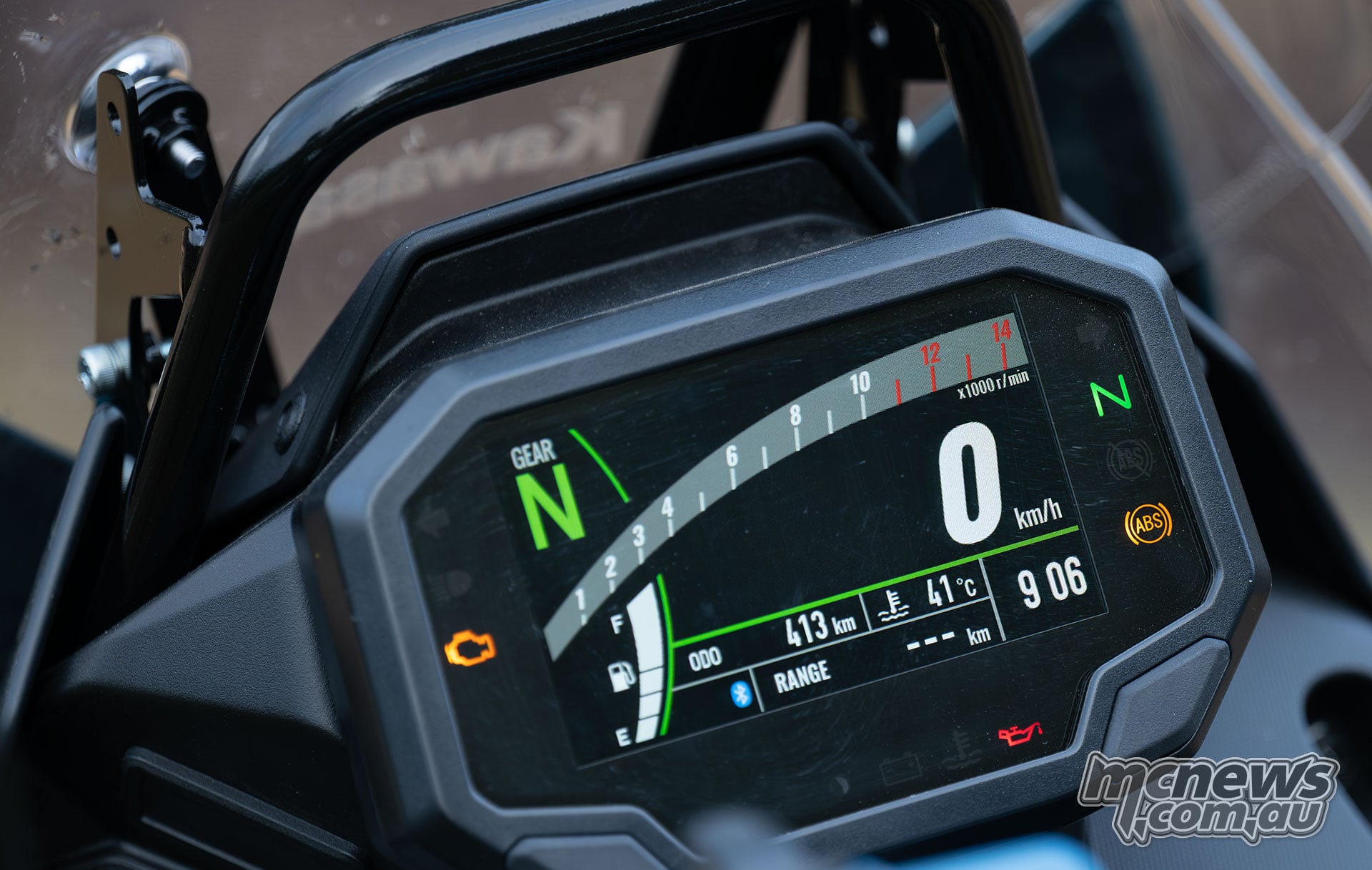
For reference, current advertised ride-away pricing puts the SE around the mid-$12,000 mark, roughly $ 1,200 above the base model. Exact figures vary by location and dealer.
If you’re planning to replace the bashplate and handguards with more substantial aftermarket gear anyway, I’d give the base model serious consideration. That’s particularly true if you’re happy with the LCD dash and don’t need the taller screen. That leaves more budget for the changes that matter to your riding.
Where the stock suspension reaches its limits
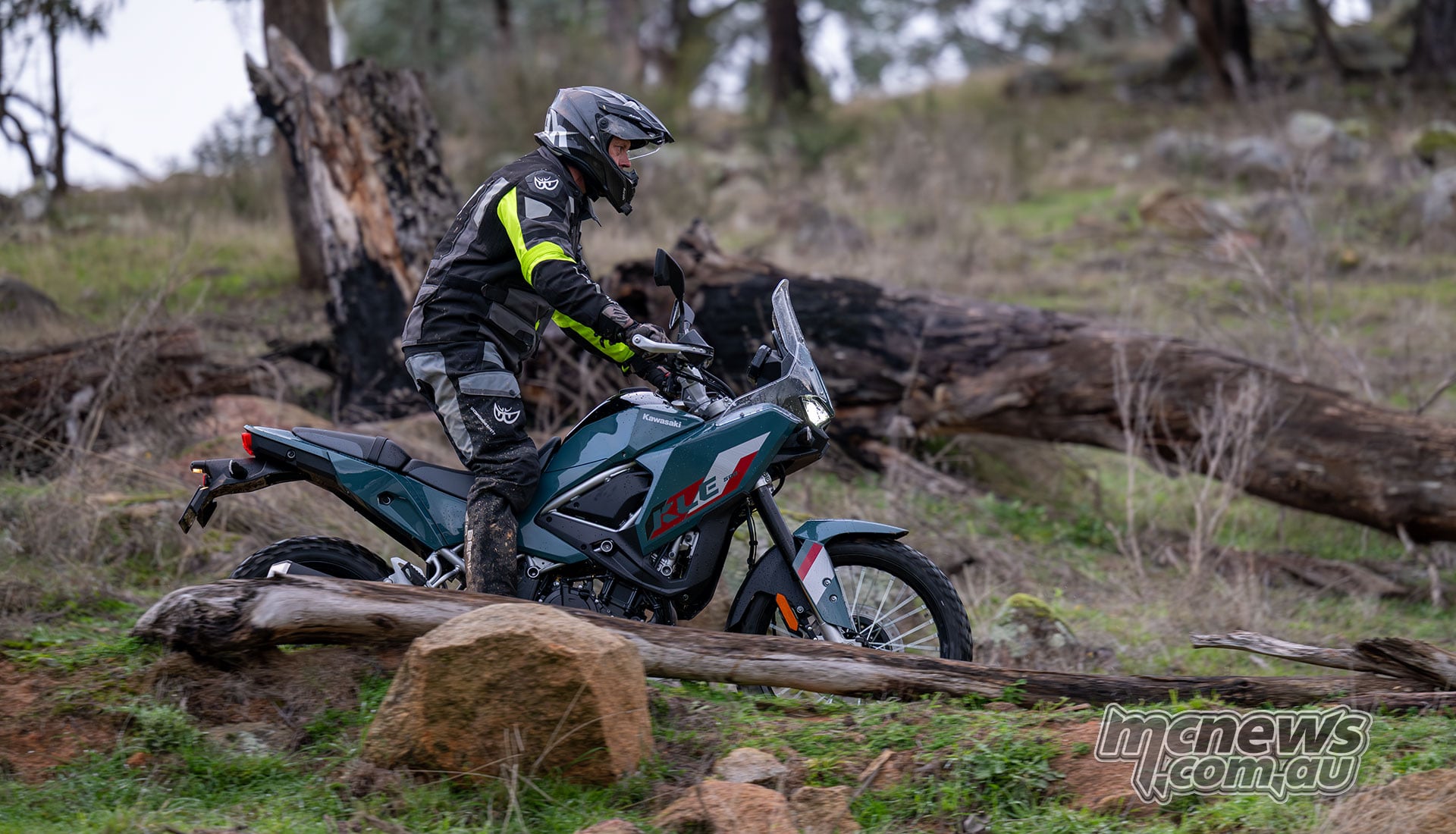
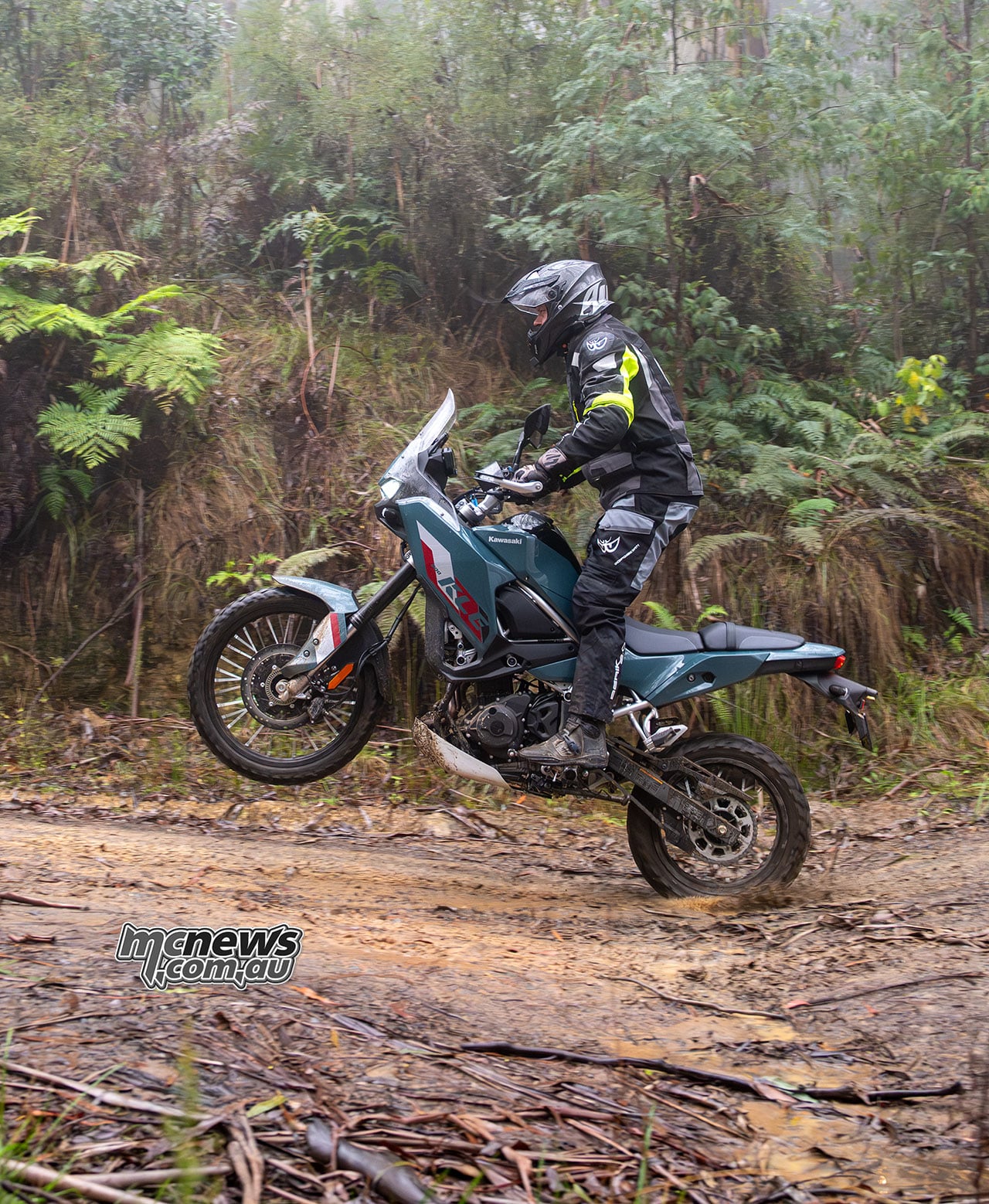
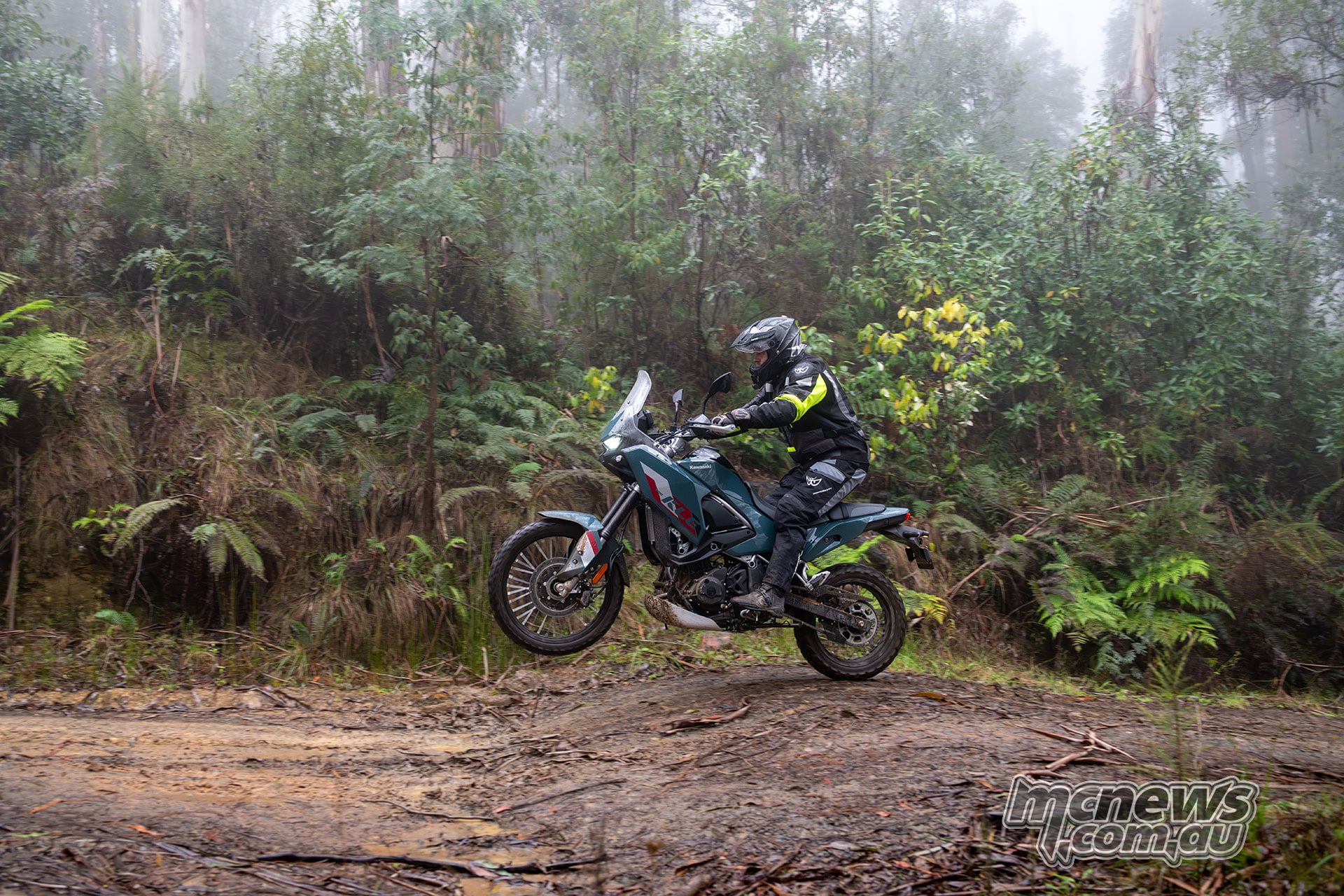
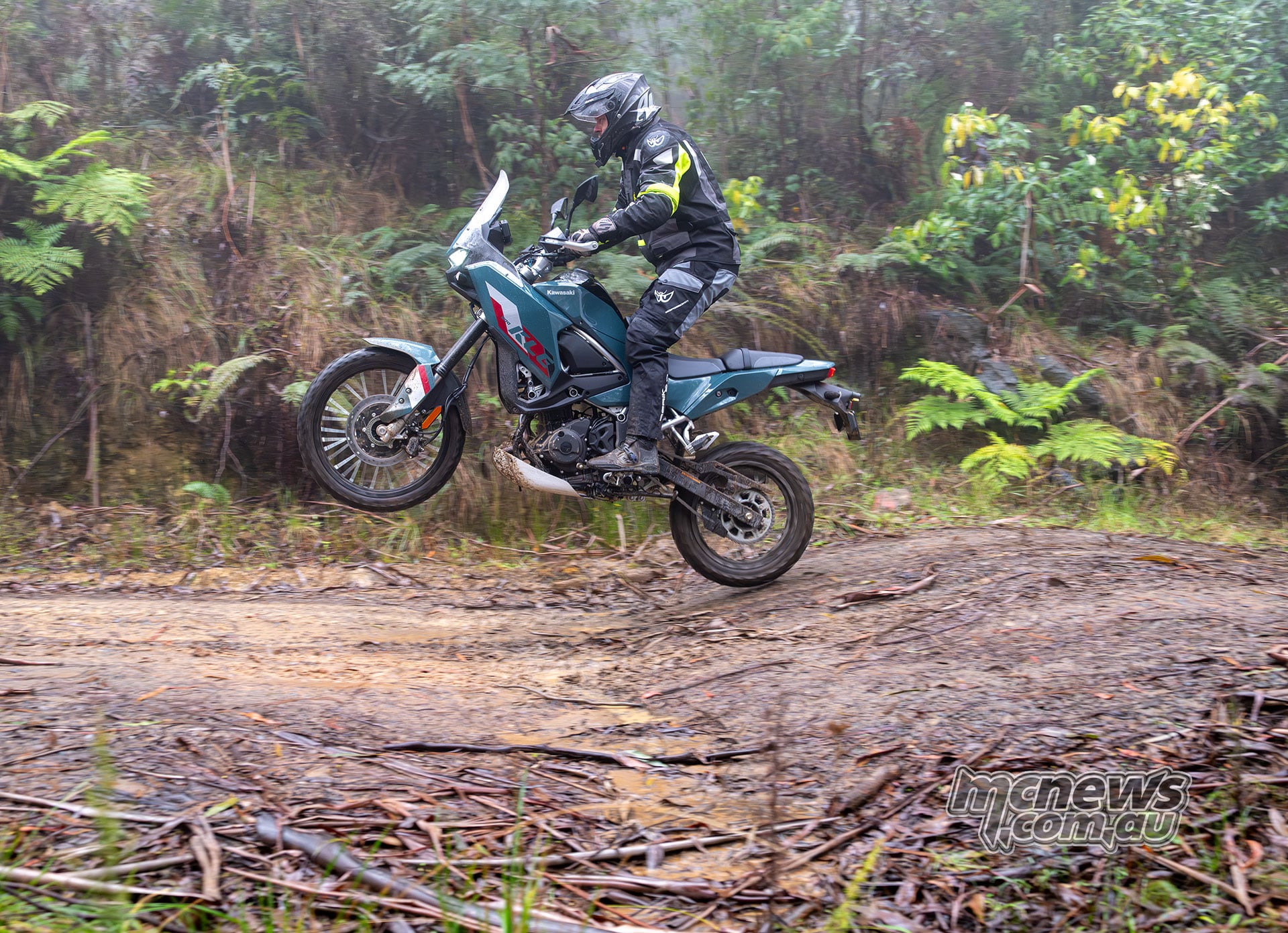
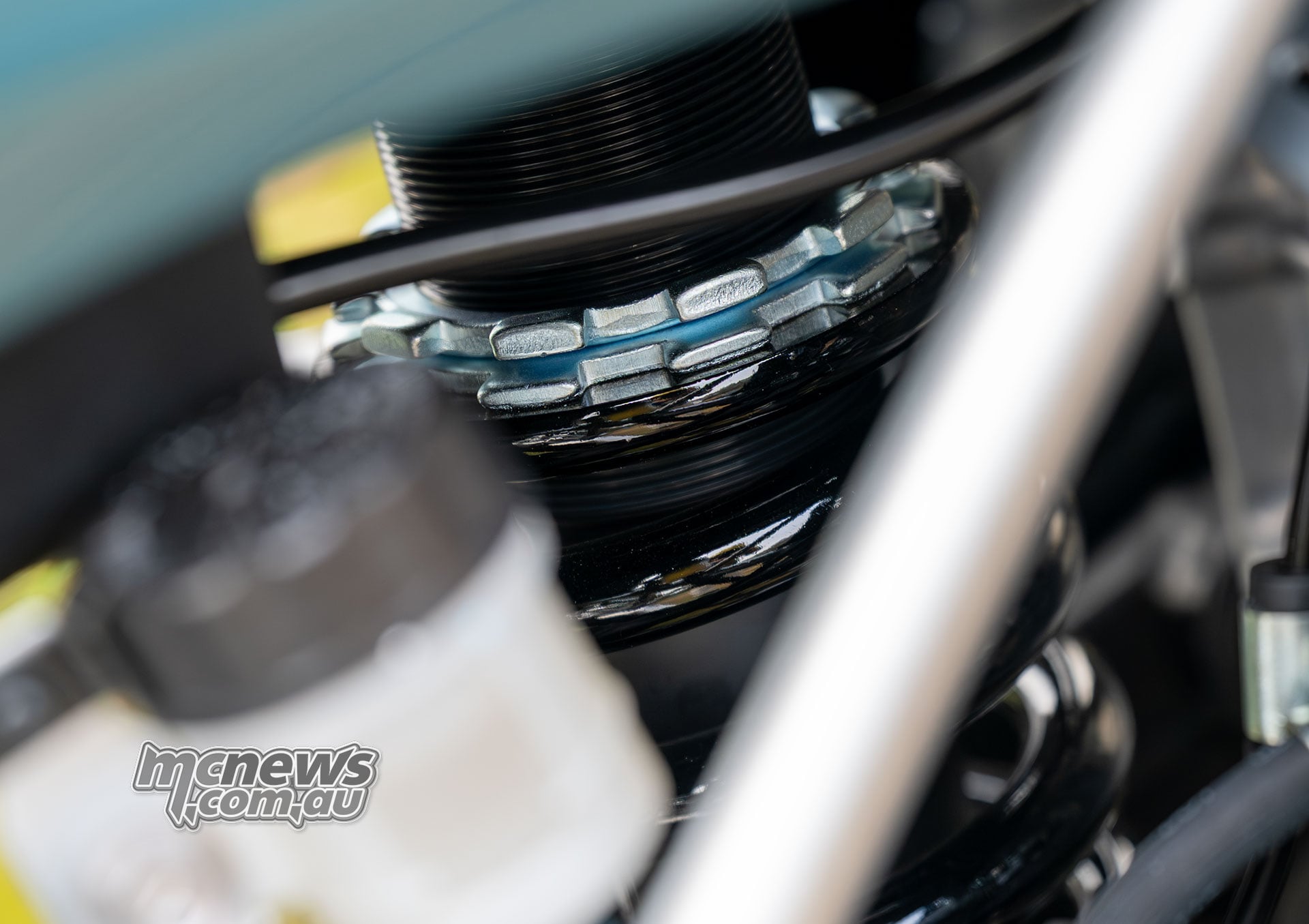
On the trail, the biggest limitation quickly becomes the relatively soft factory suspension, compounded by just 185 mm of ground clearance.
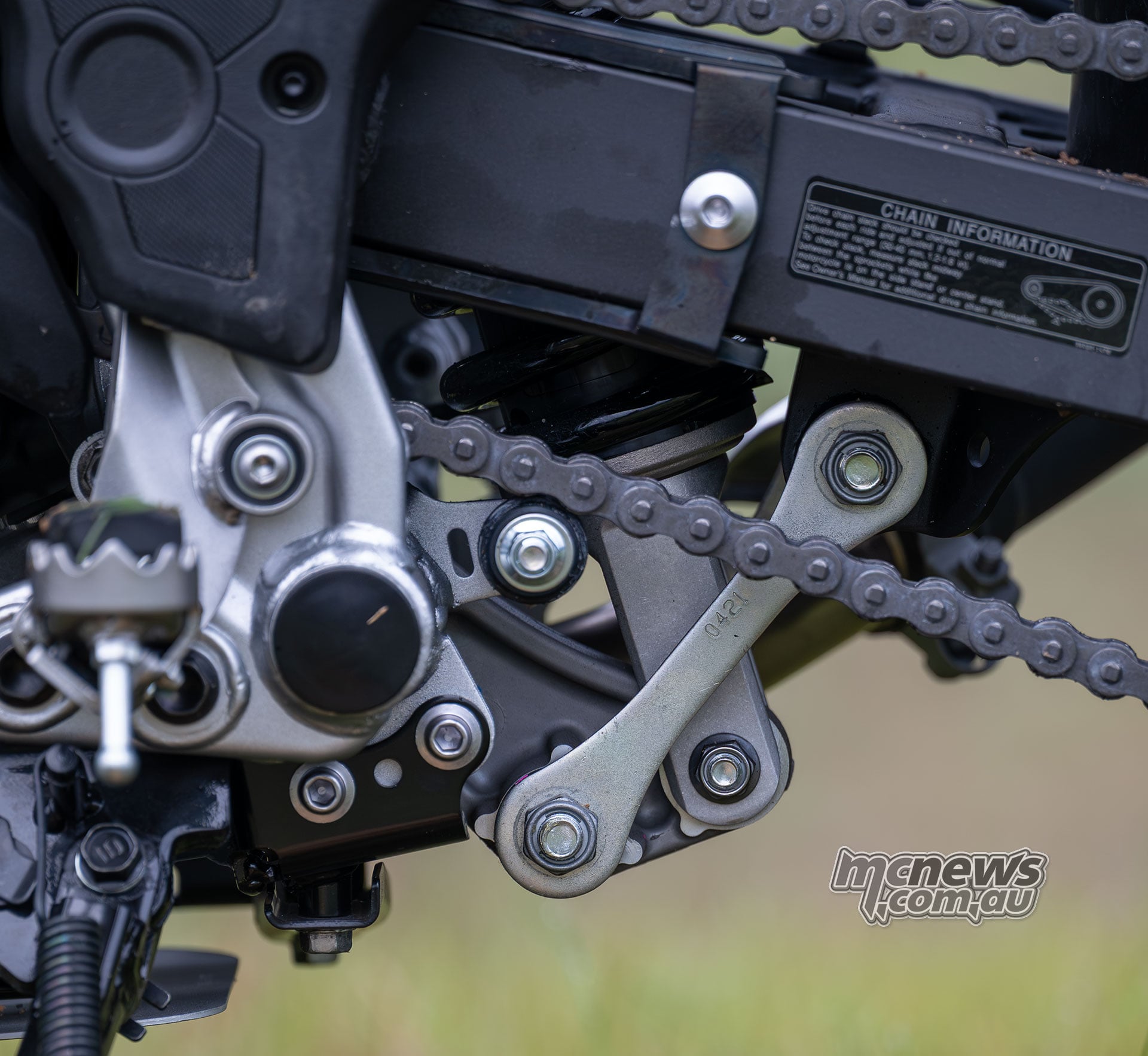
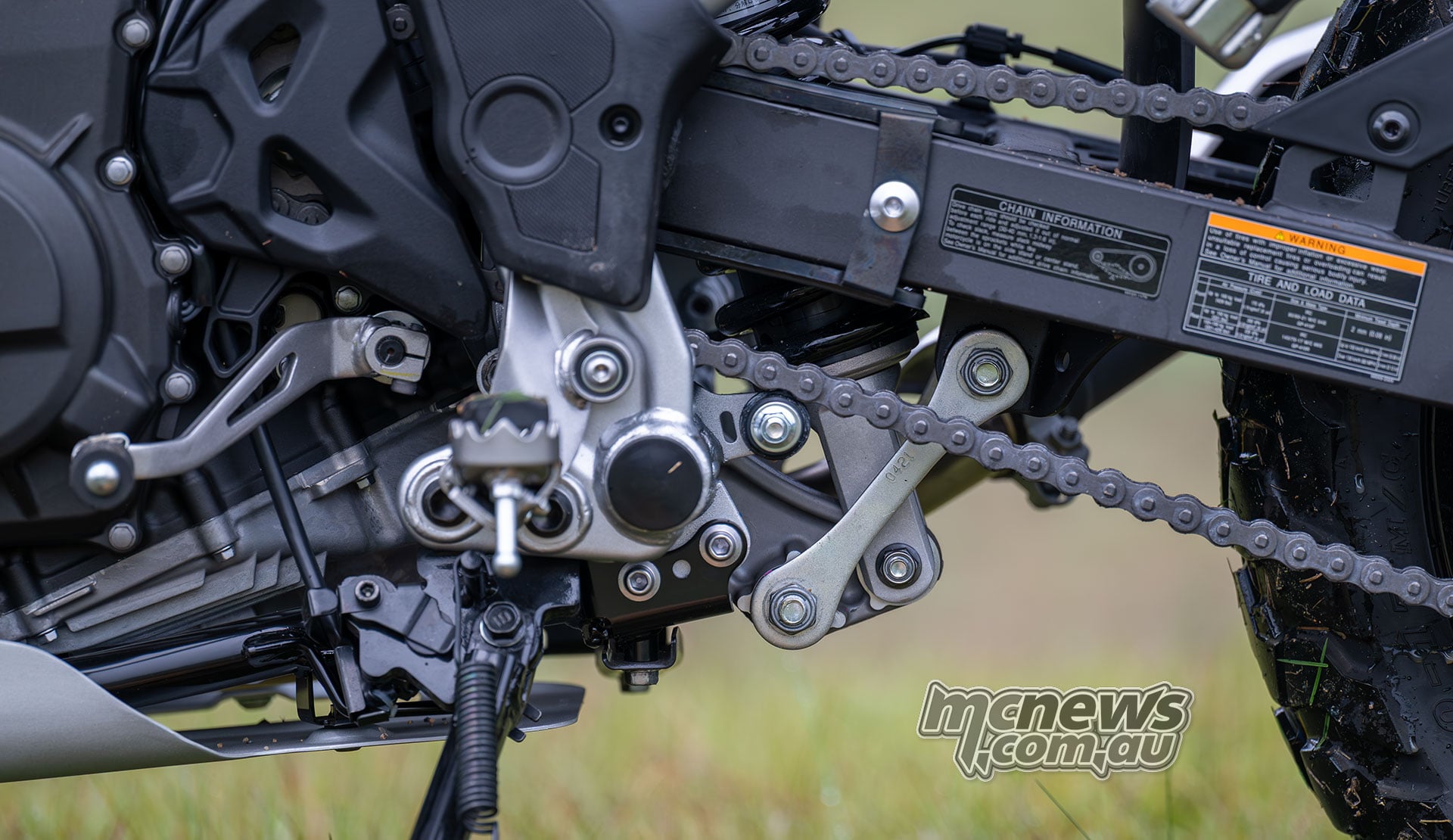
The 43 mm KYB inverted fork offers 210 mm of travel, with 196 mm at the rear. Those are reasonable numbers on paper, but in the standard setup, we found it would bottom out with little provocation. Approach water bars and other small lips or sharp hits with the appropriate care.
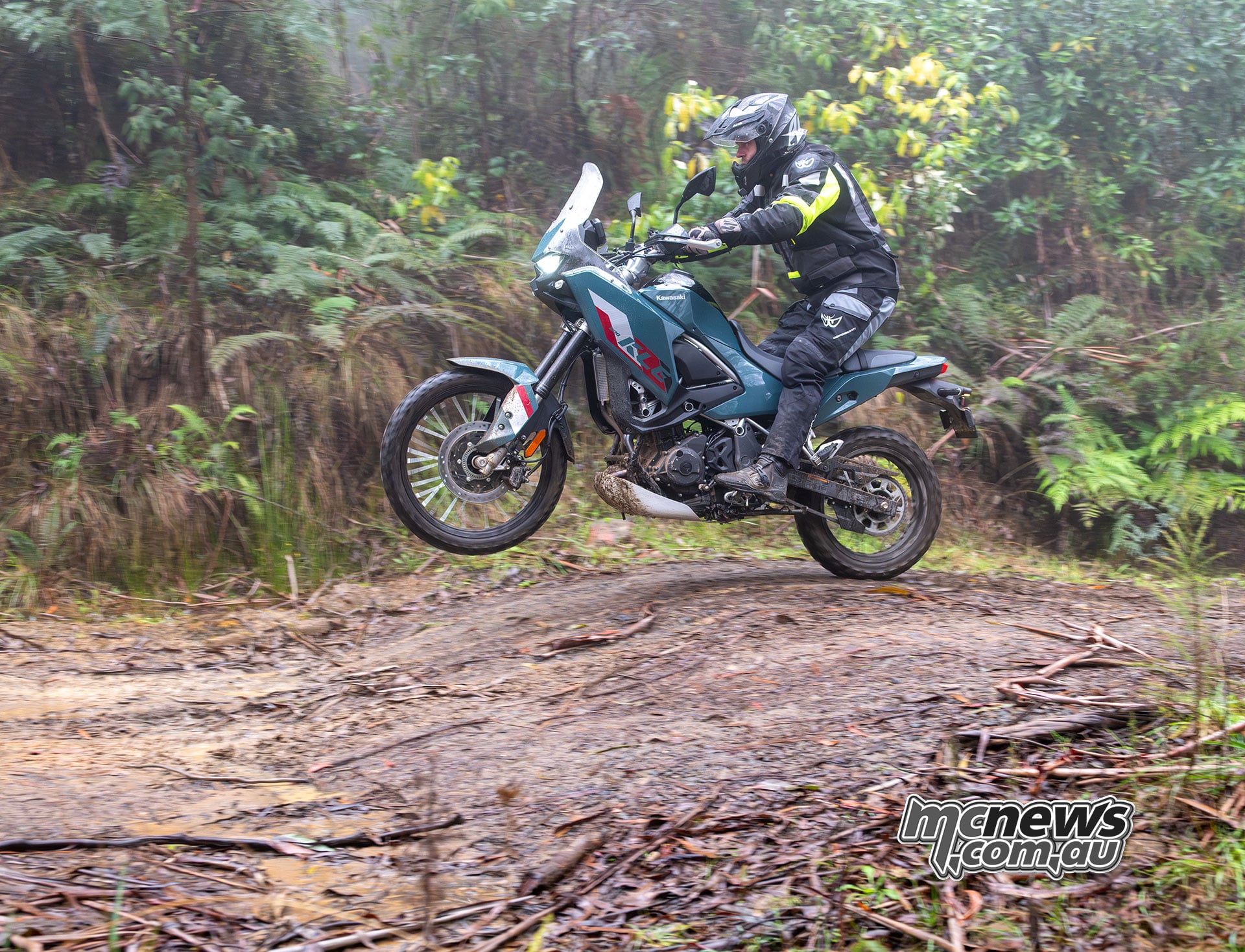
Only the rear spring preload is adjustable, which limits what you can do with the factory hardware. There are no external damping adjusters to help tailor the response.
For a learner rider, this is a capable and forgiving machine. However, for the sort of trail riding I want to do, this bike needs suspension work to get the best out of it. If you’re interested in adventure touring on well-made roads, the standard setup is much better suited to the job. Push harder through rougher terrain, and its limitations become obvious.
It’s certainly not the first adventure bike to fall into that category. Yamaha’s first-generation Ténéré 700 and Honda’s CRF300 Rally are two well-loved examples where suspension upgrades have been a familiar part of the conversation for riders wanting to get rowdy.
That’s not me making excuses for the KLE. It’s recognising that there’s a promising trail bike here, but the standard suspension sets a fairly clear limit on how hard I’d want to ride it. That was one of the things we went chasing for part two.
Stock tyres meet slippery trails
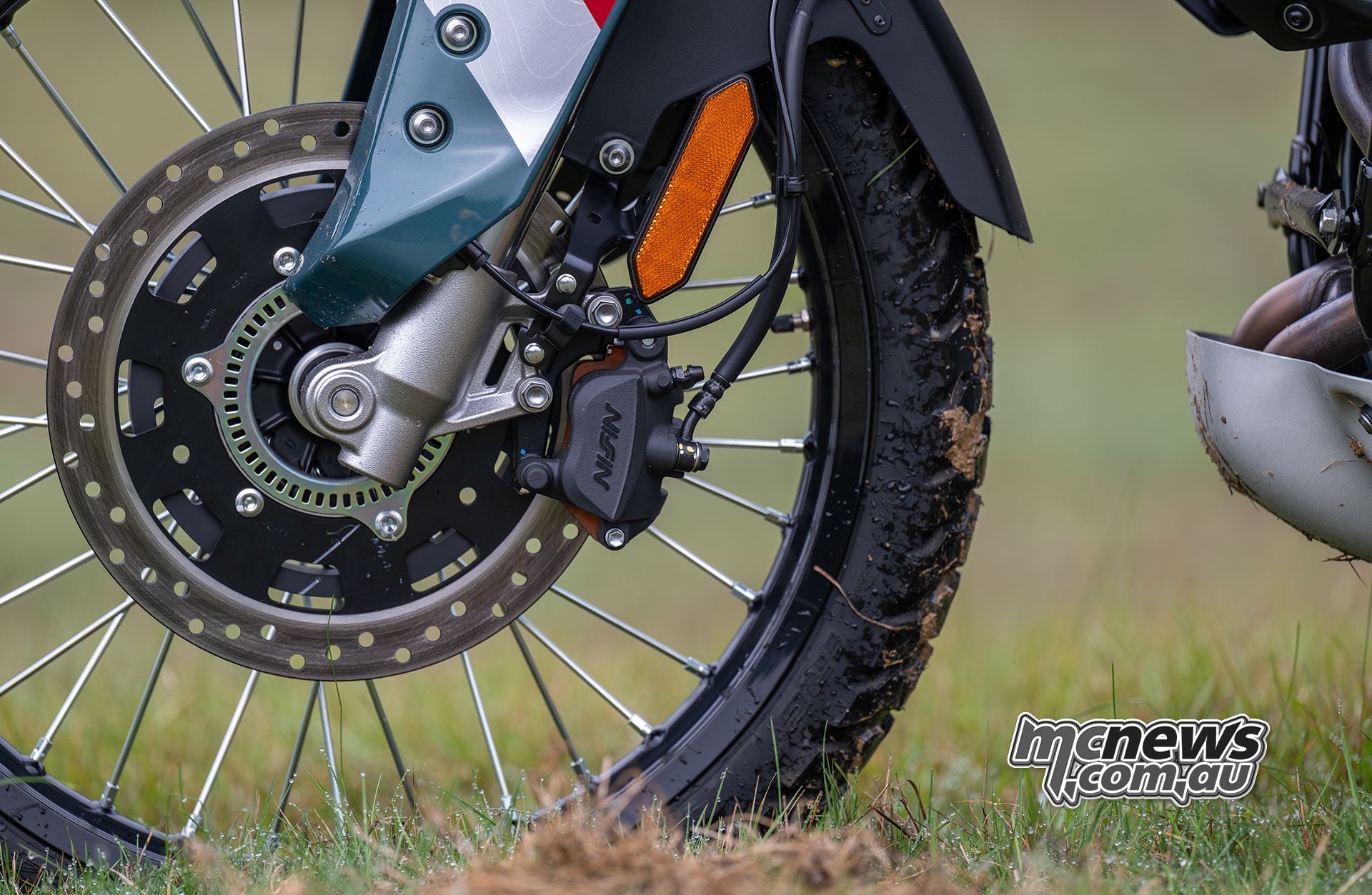
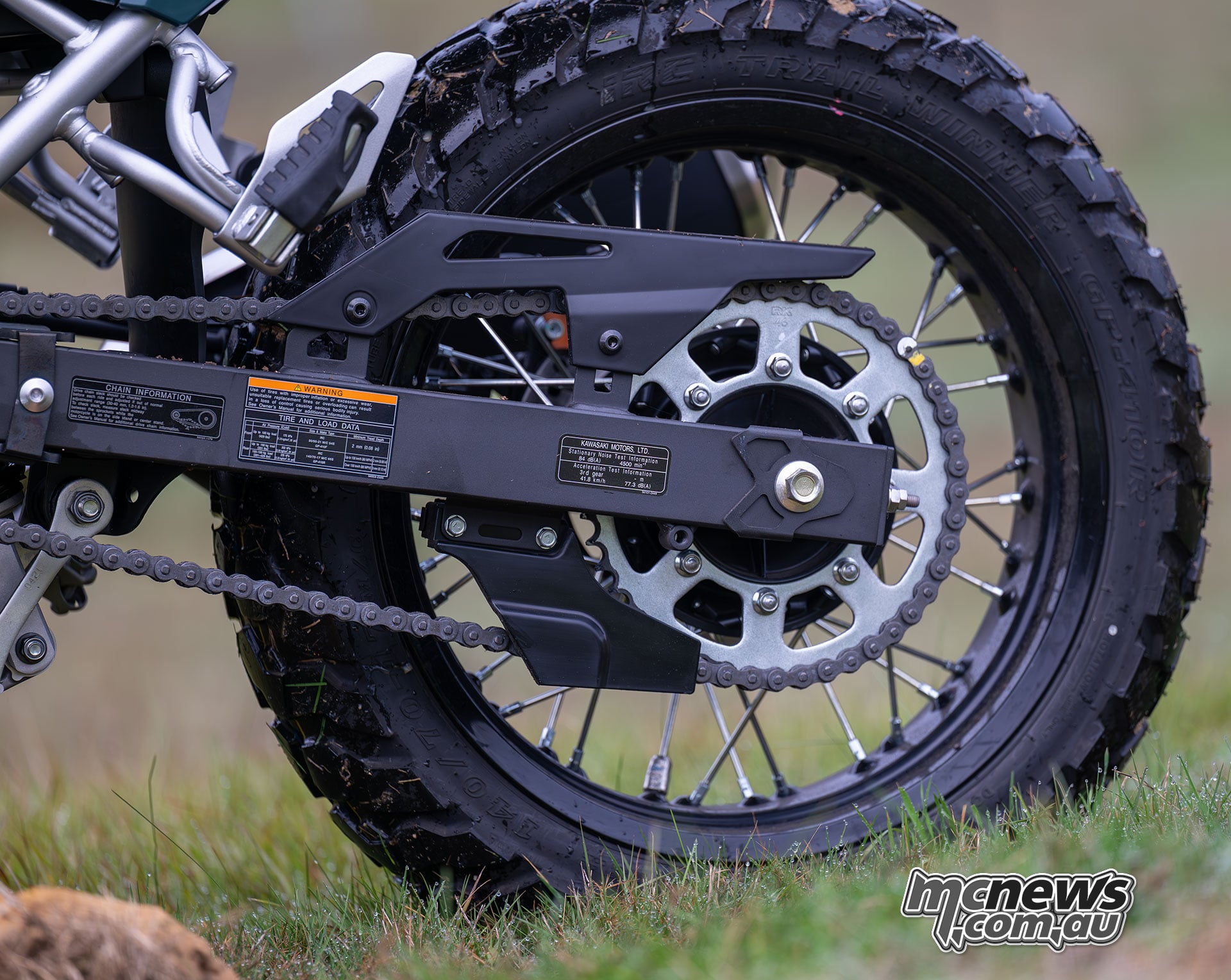
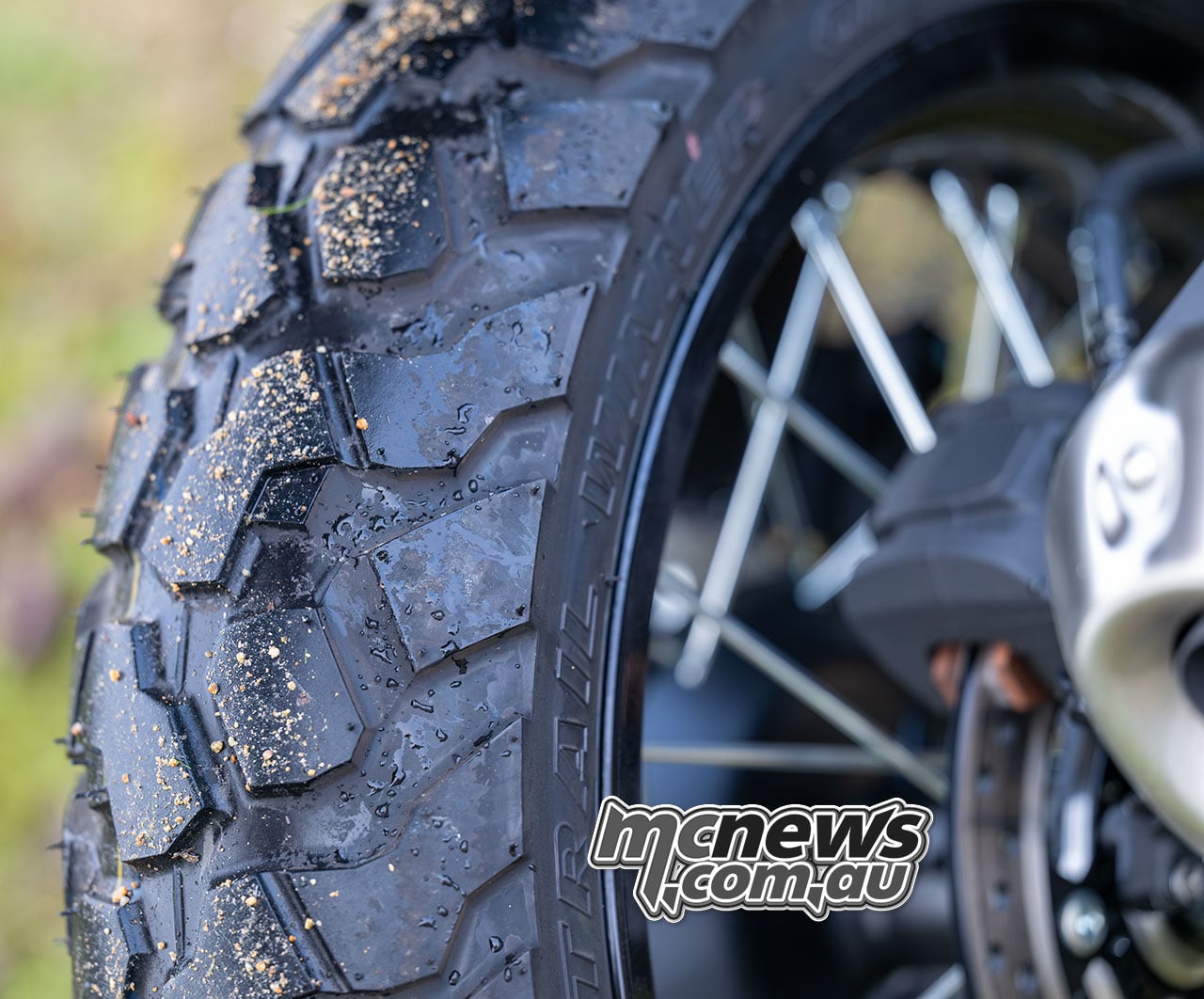
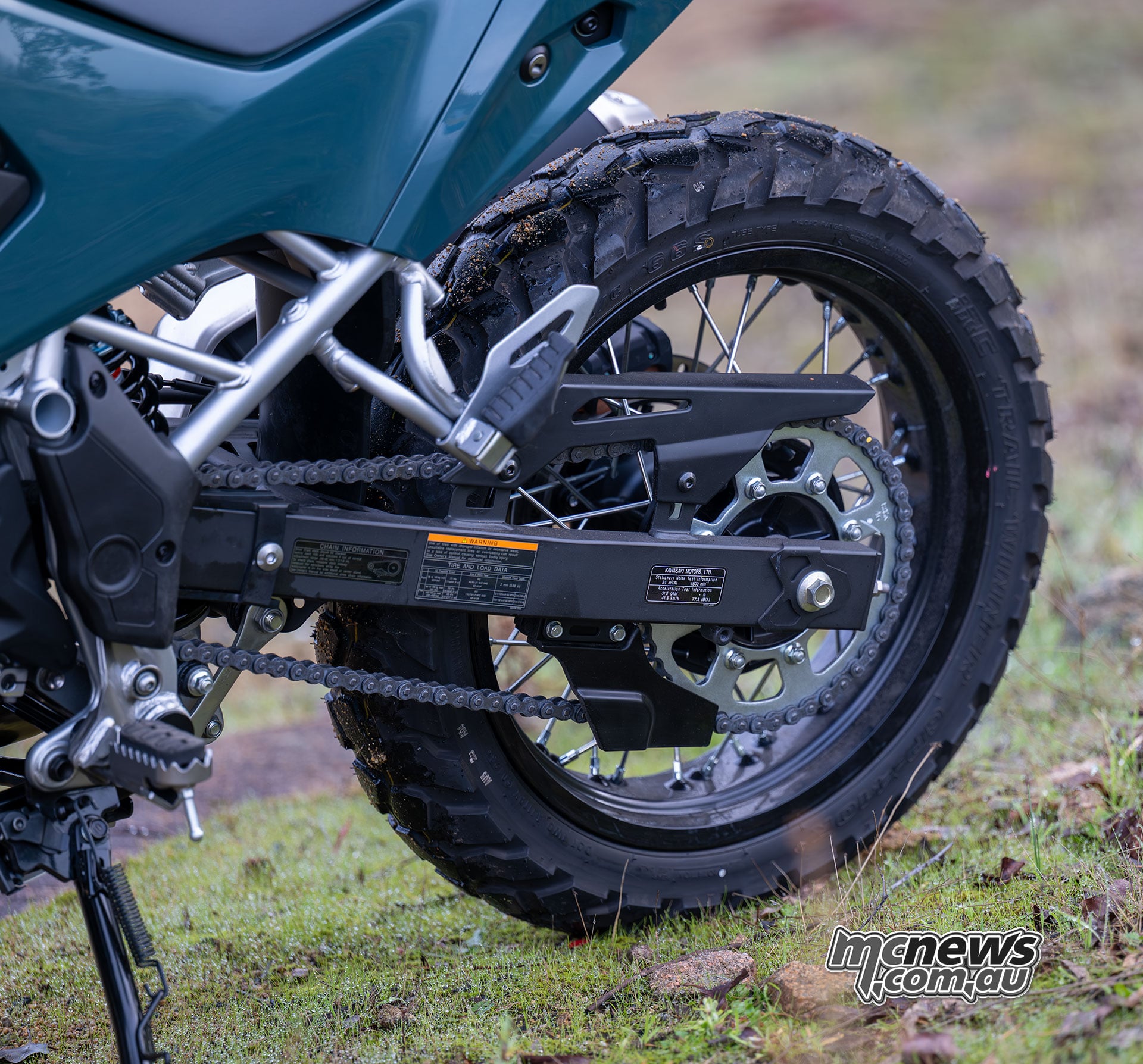
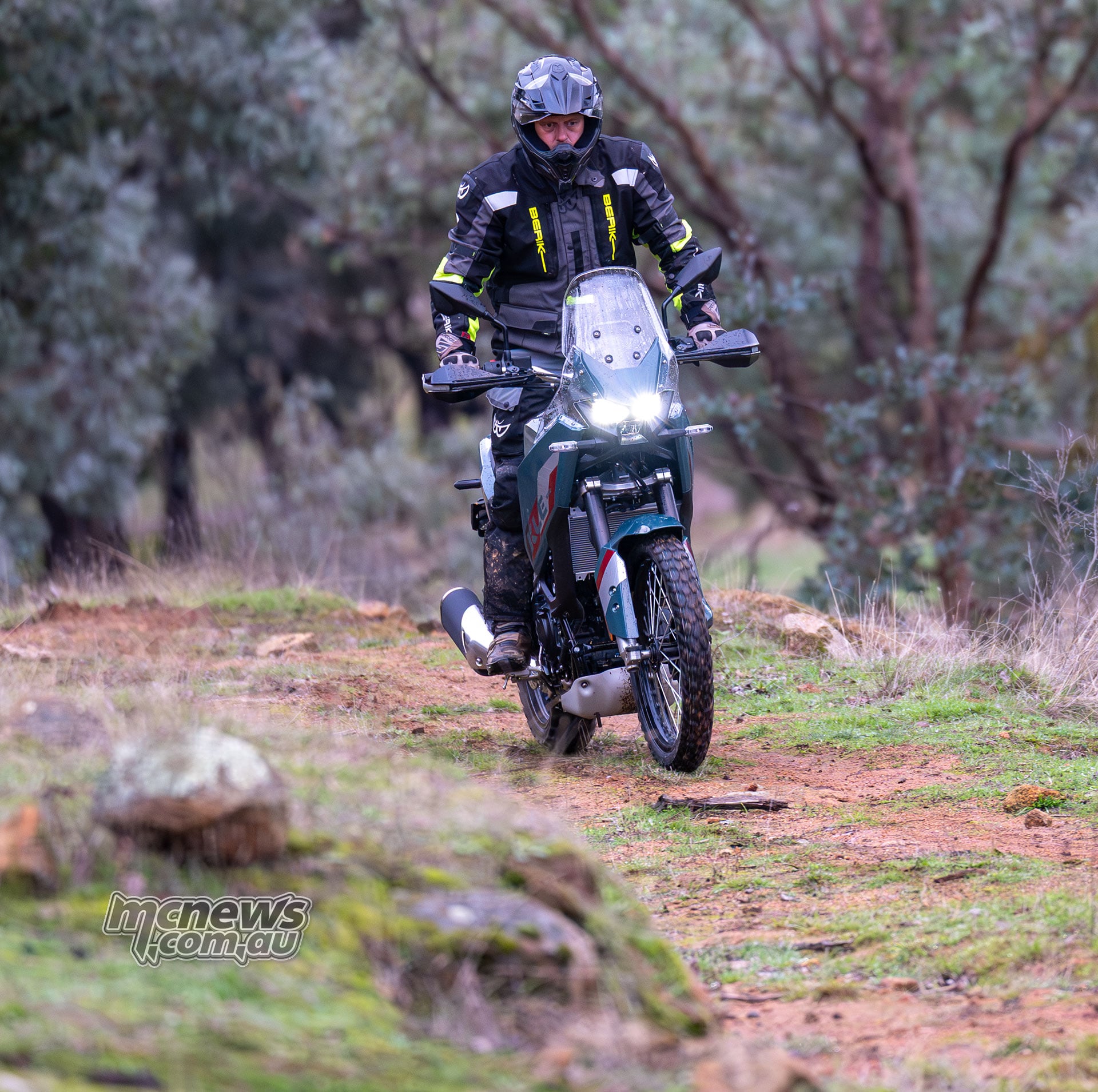
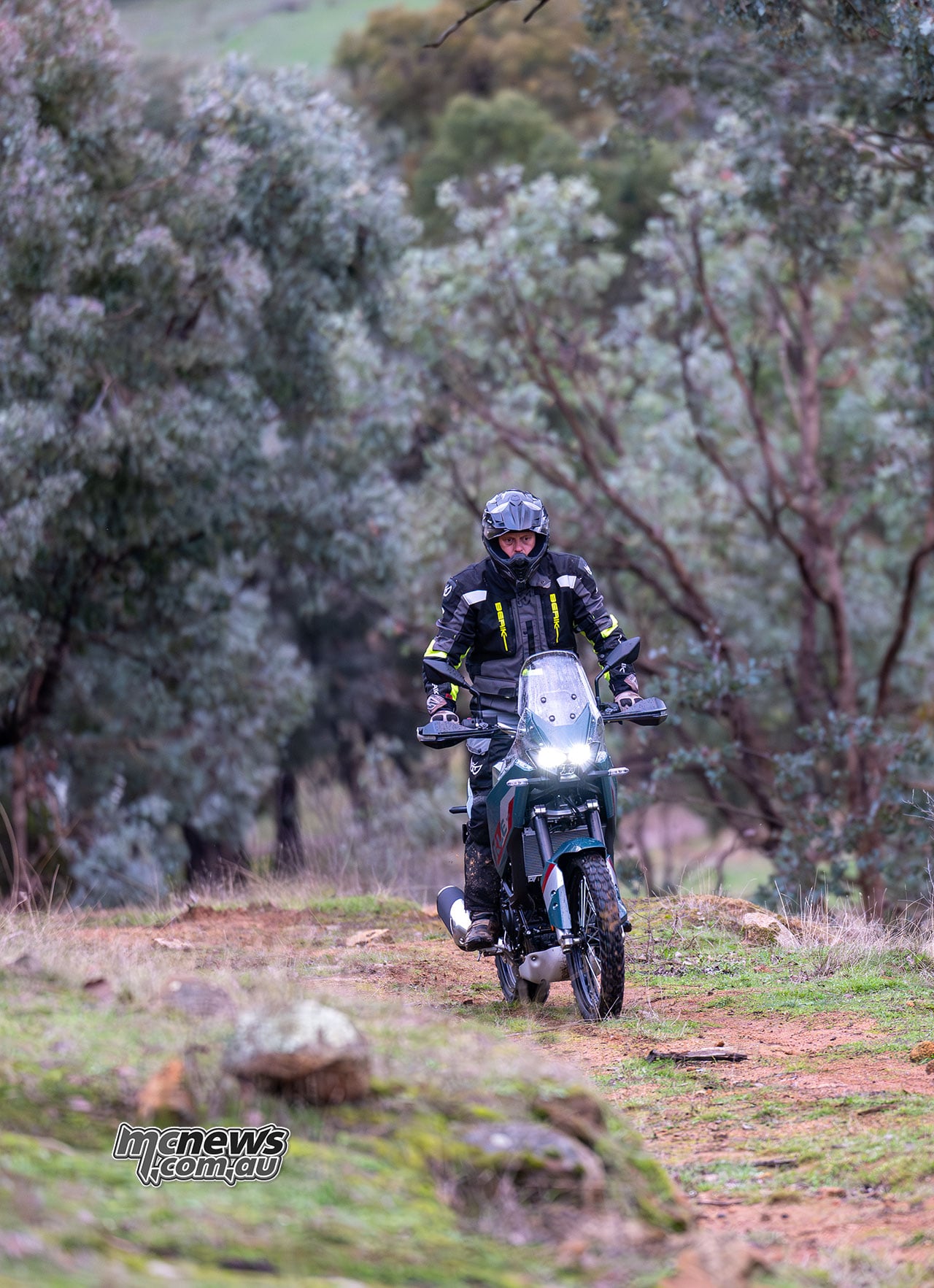
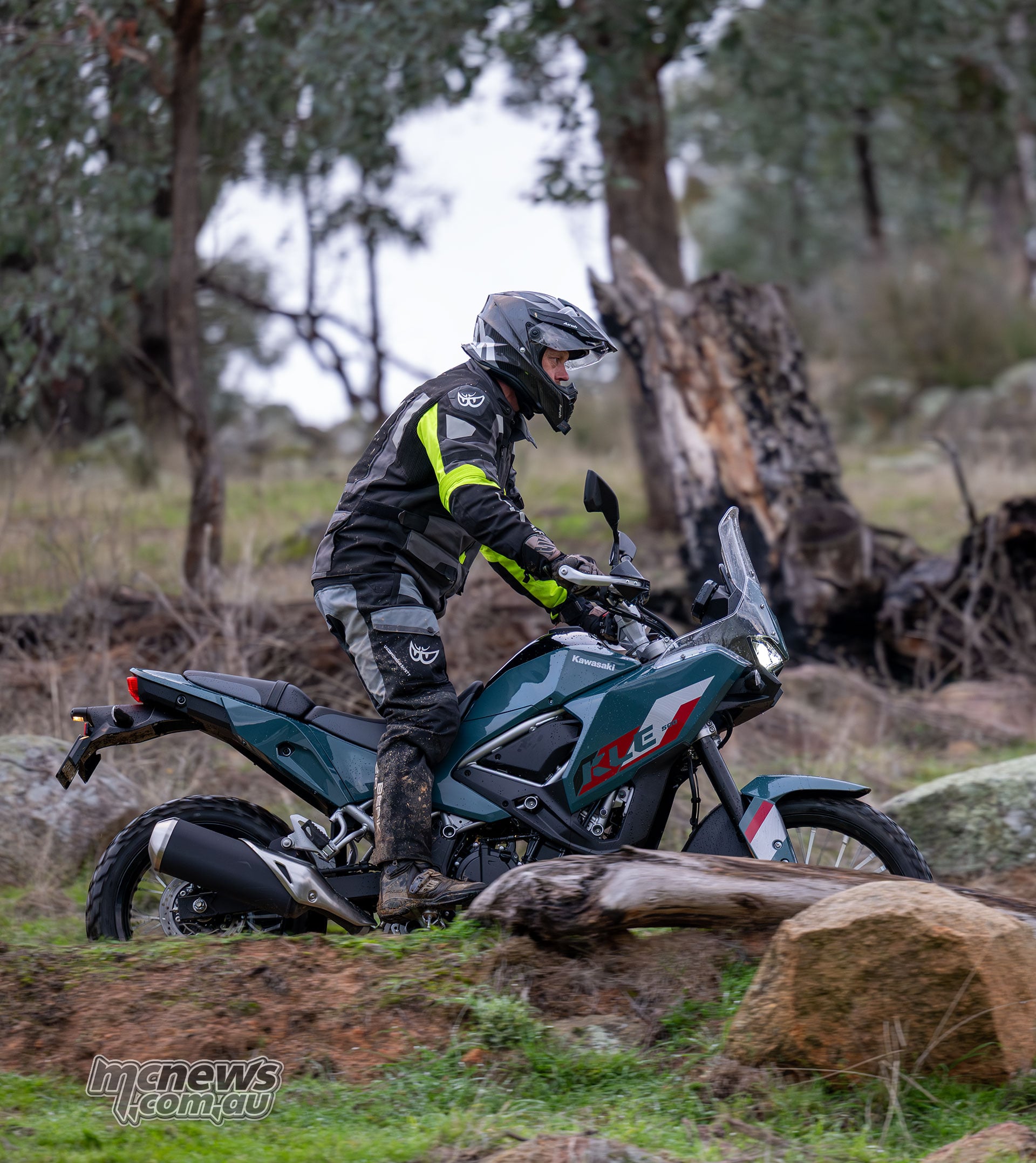
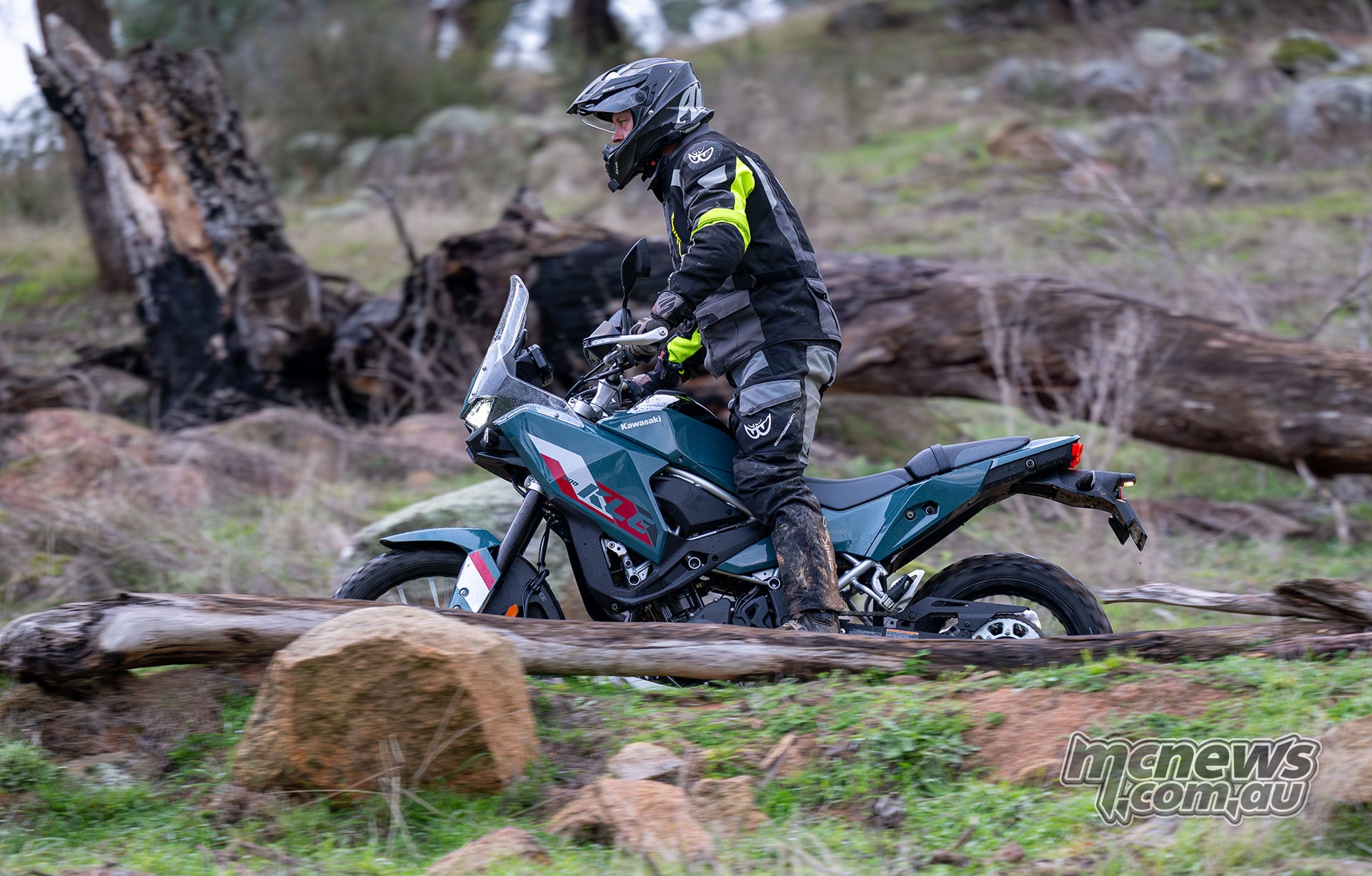
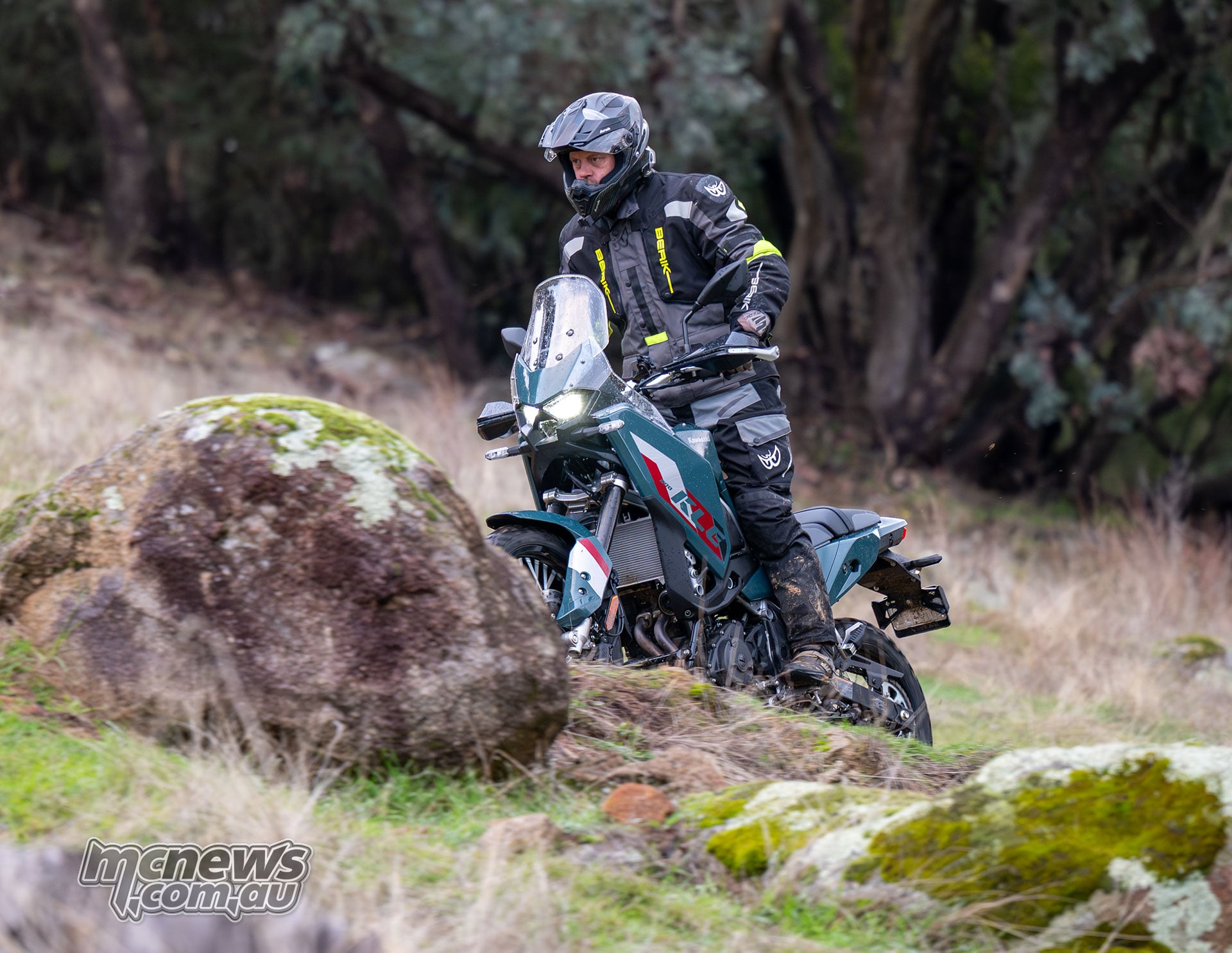
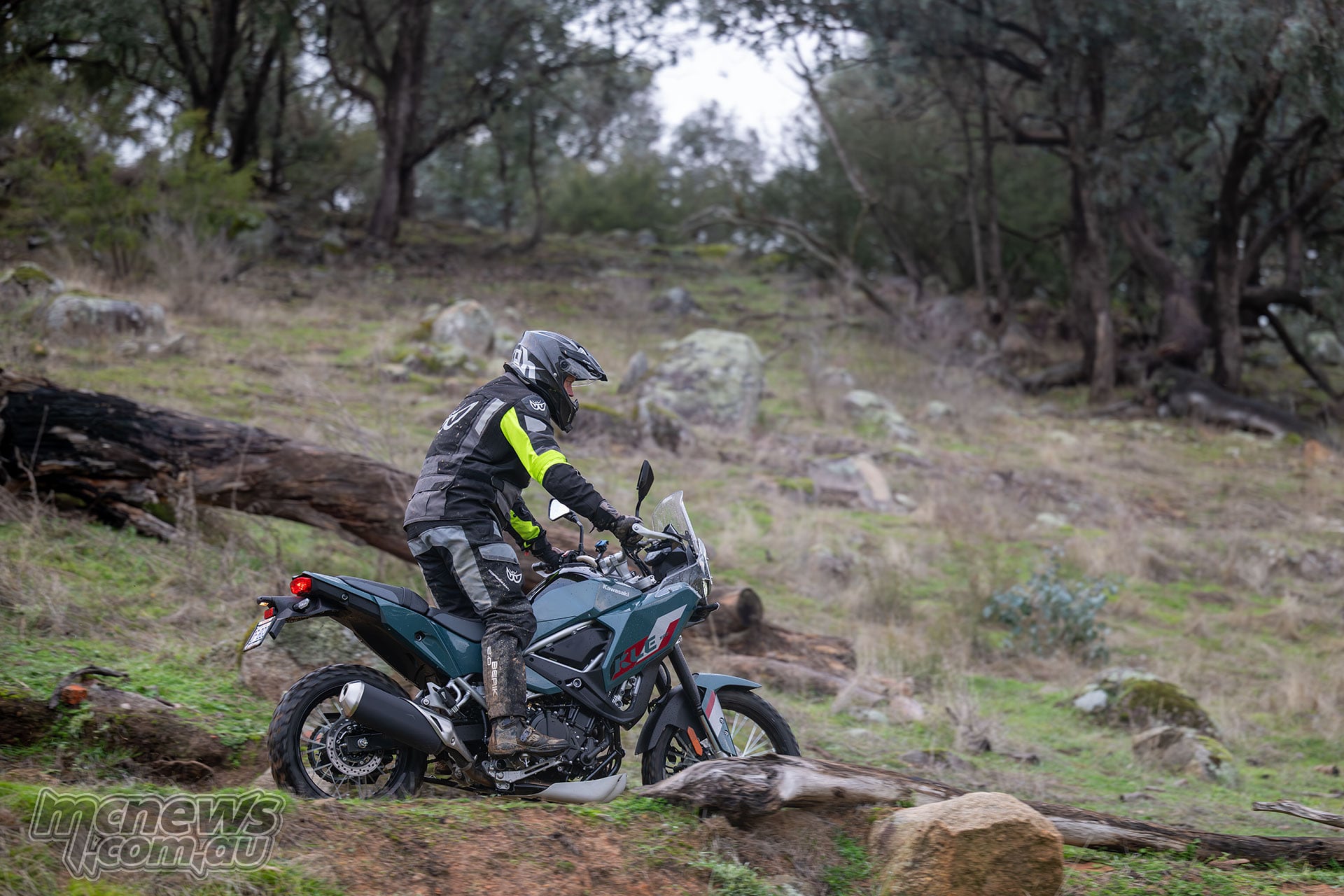
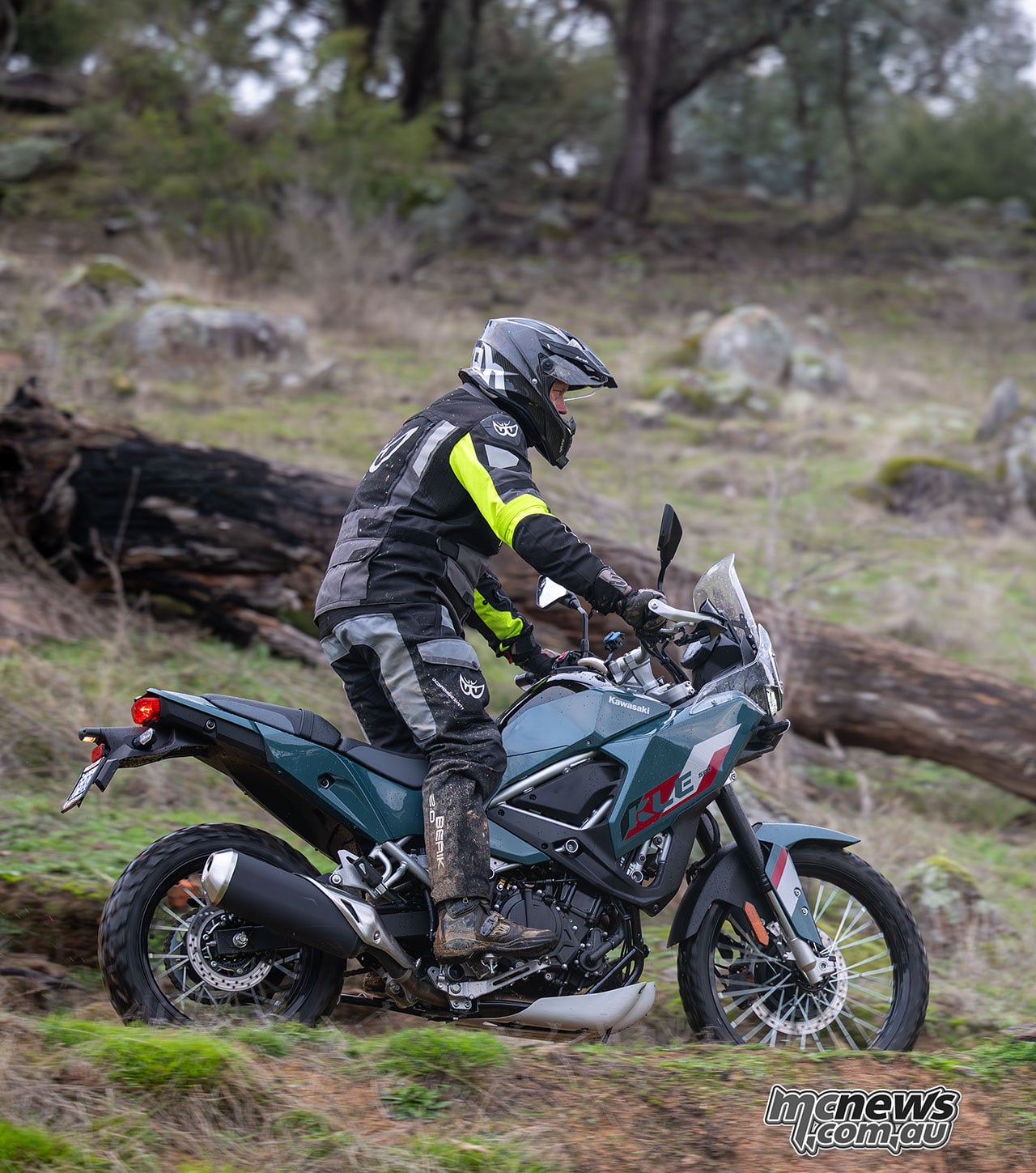
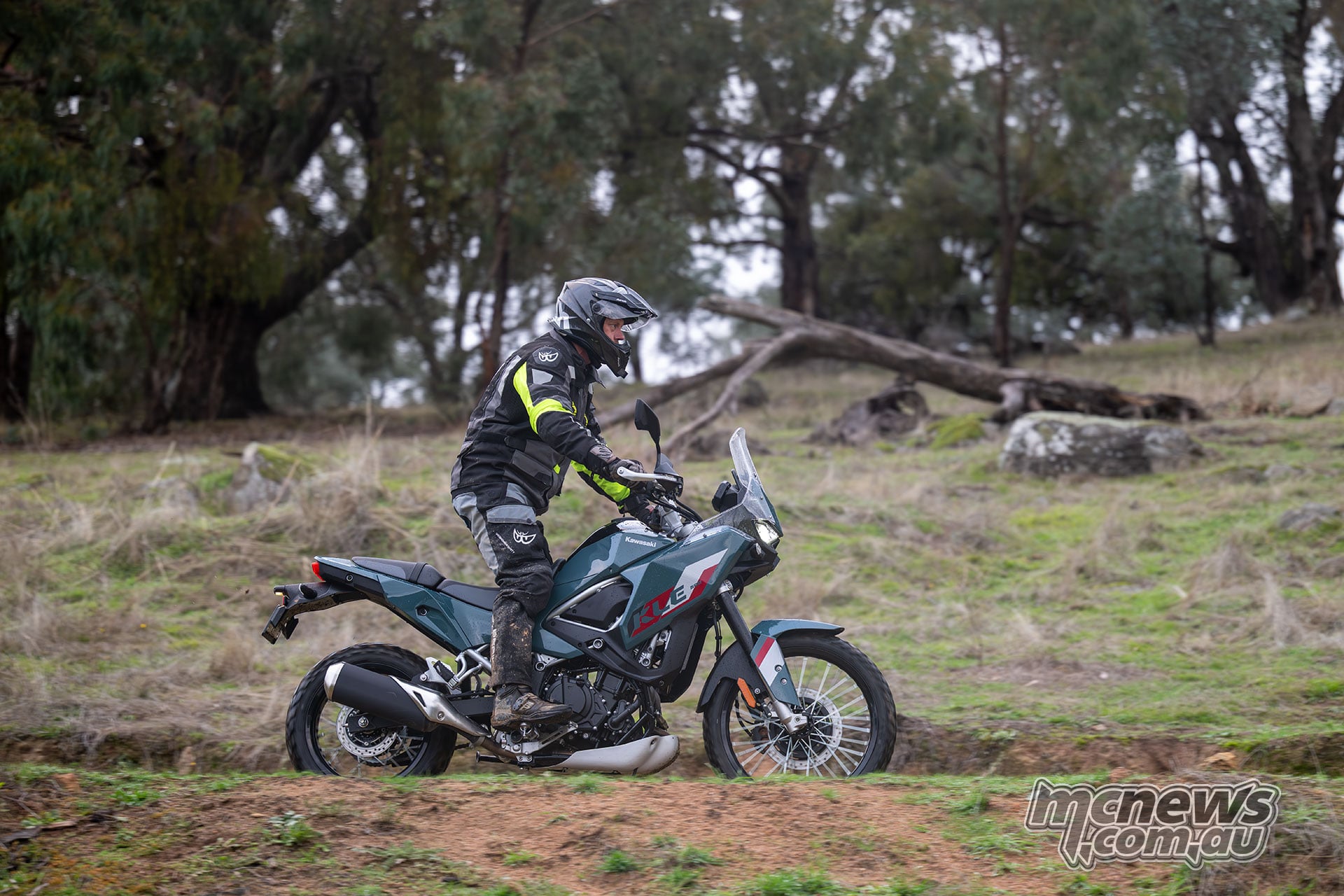
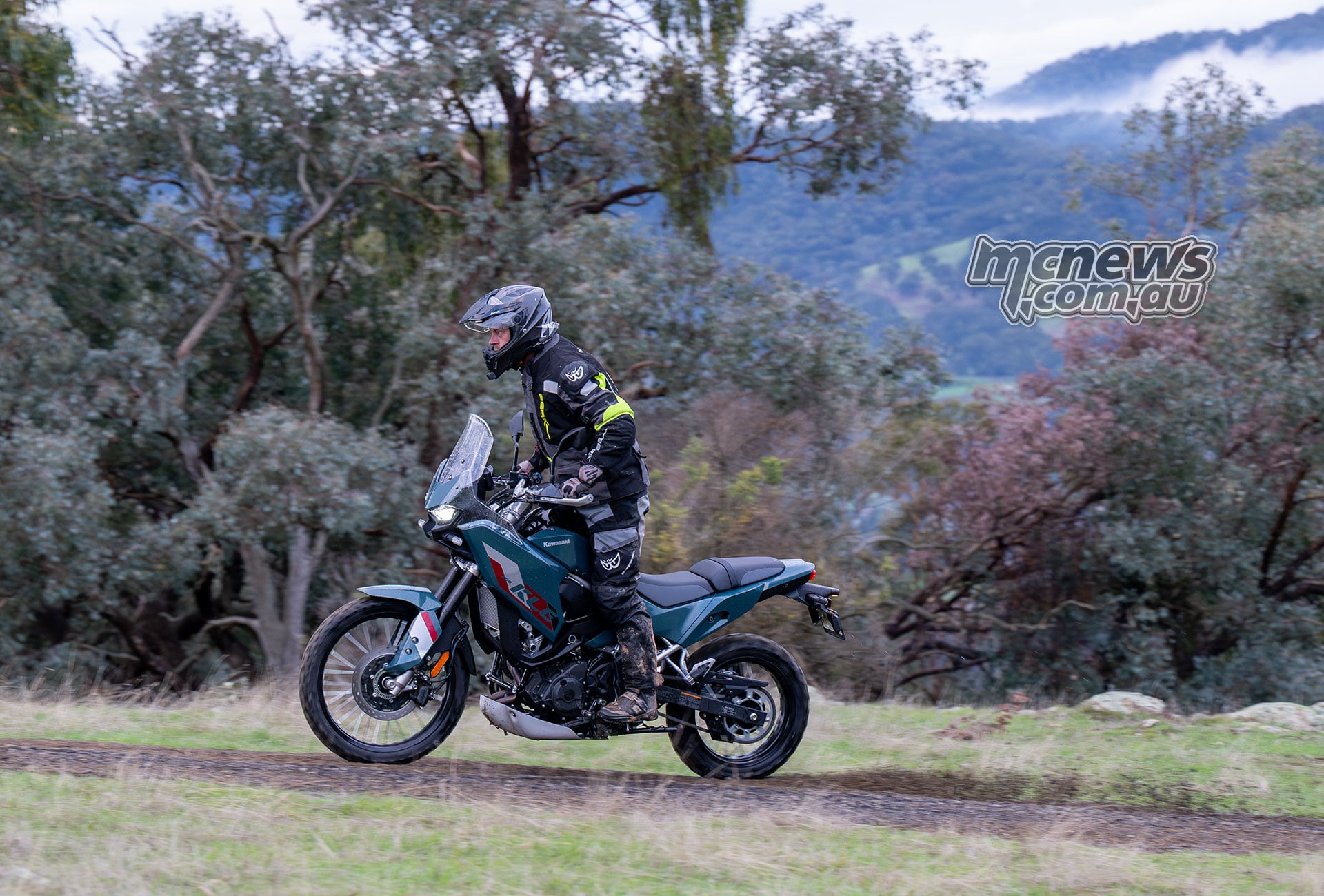
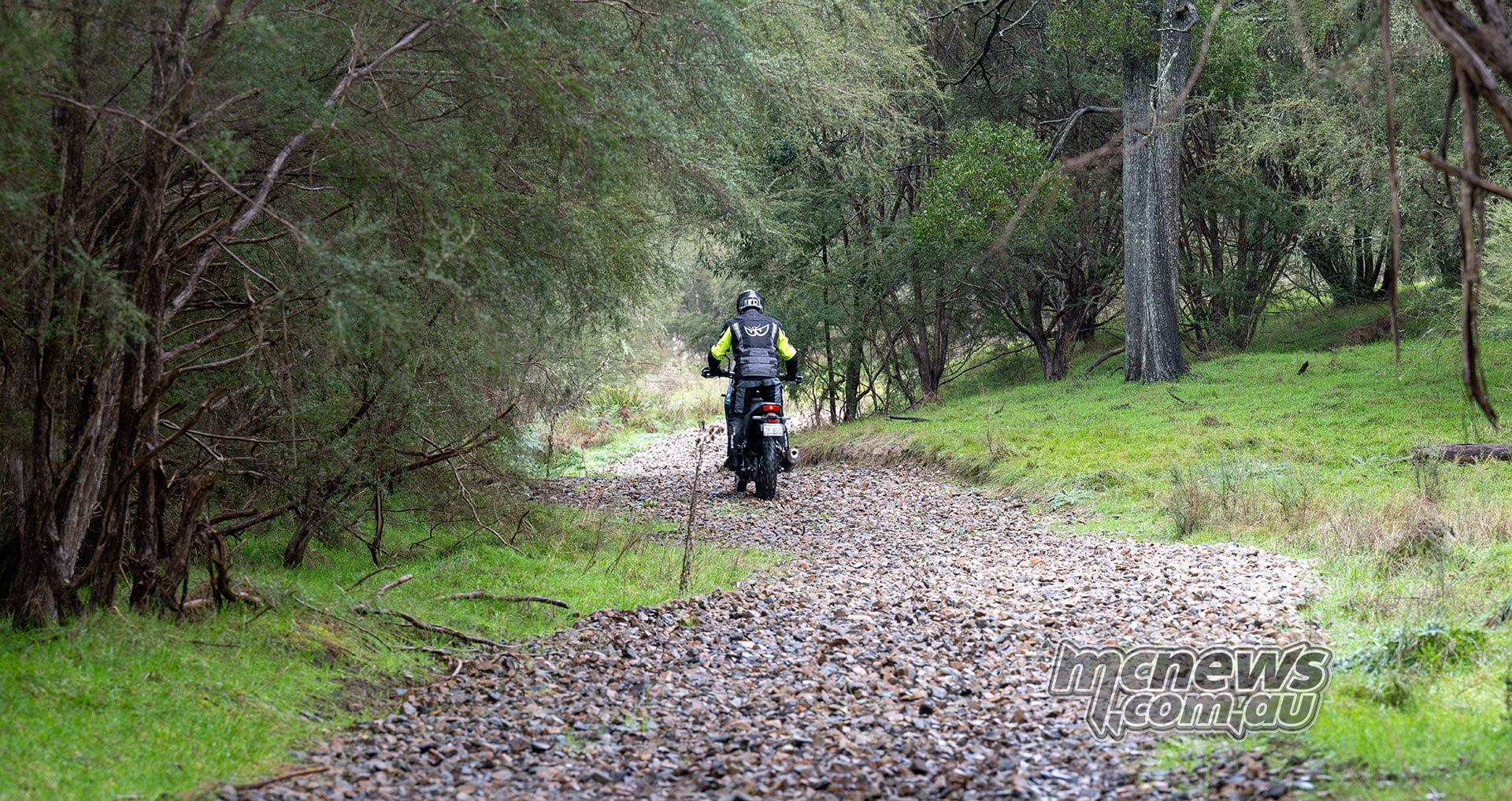
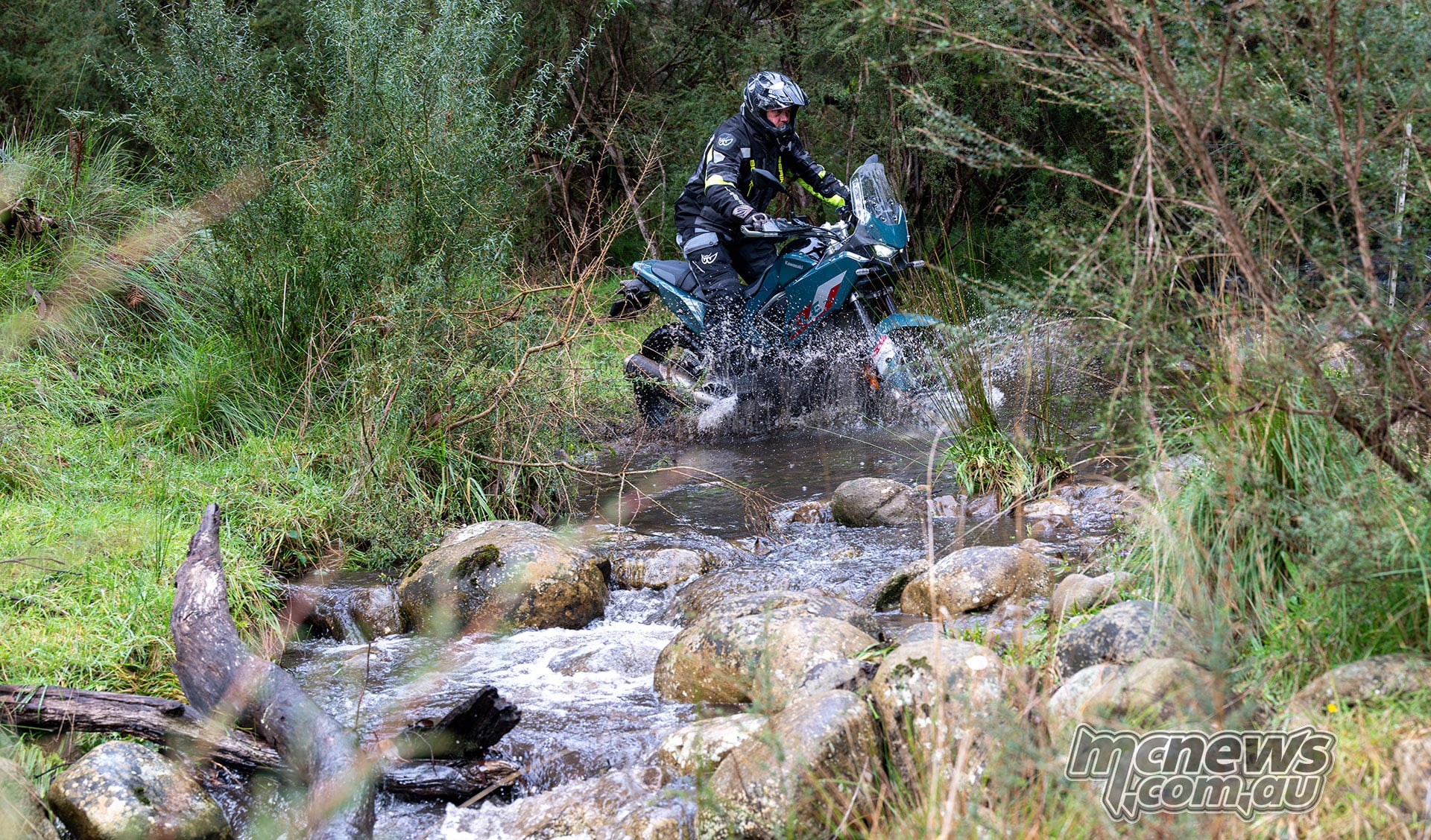
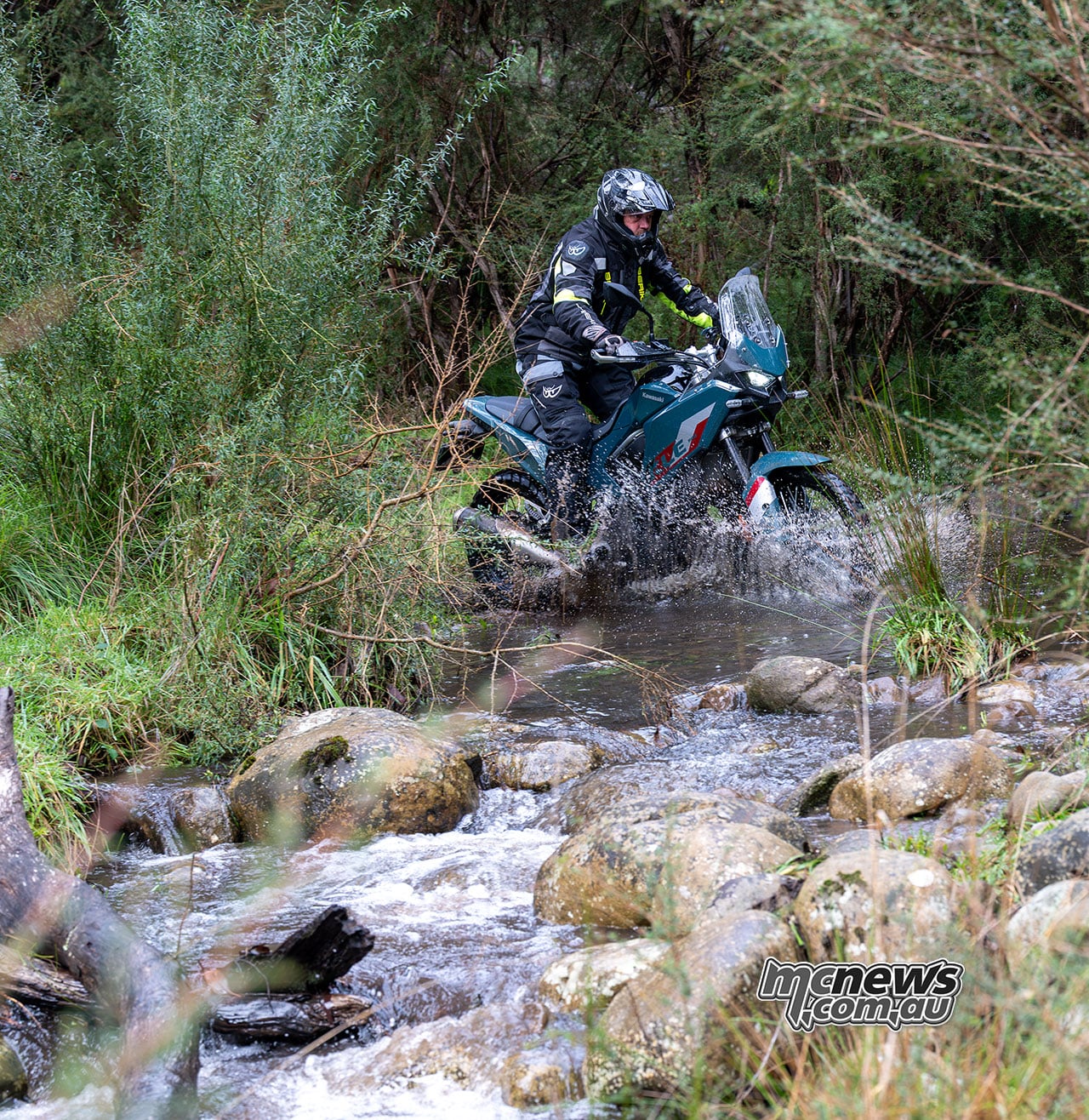
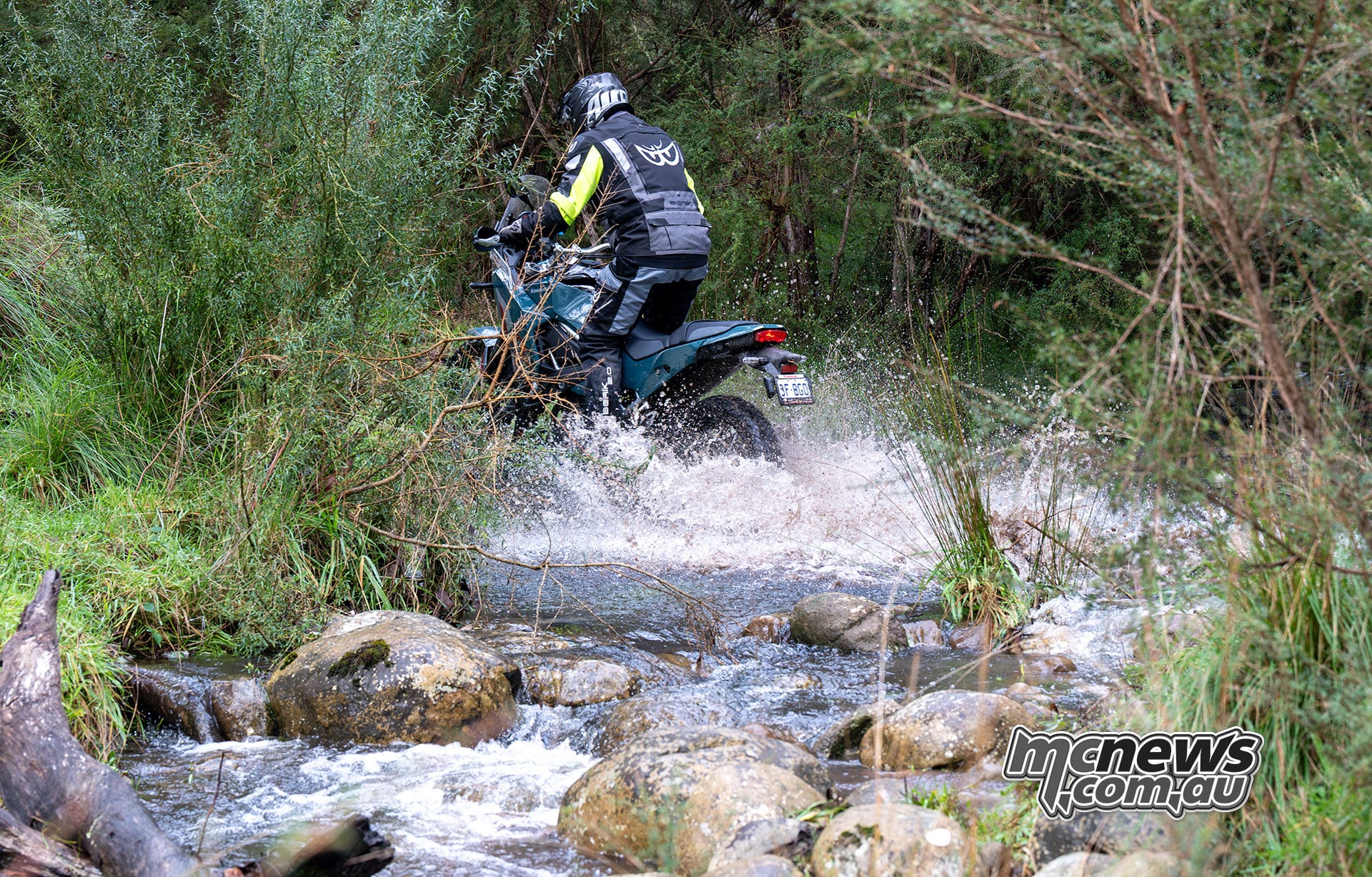
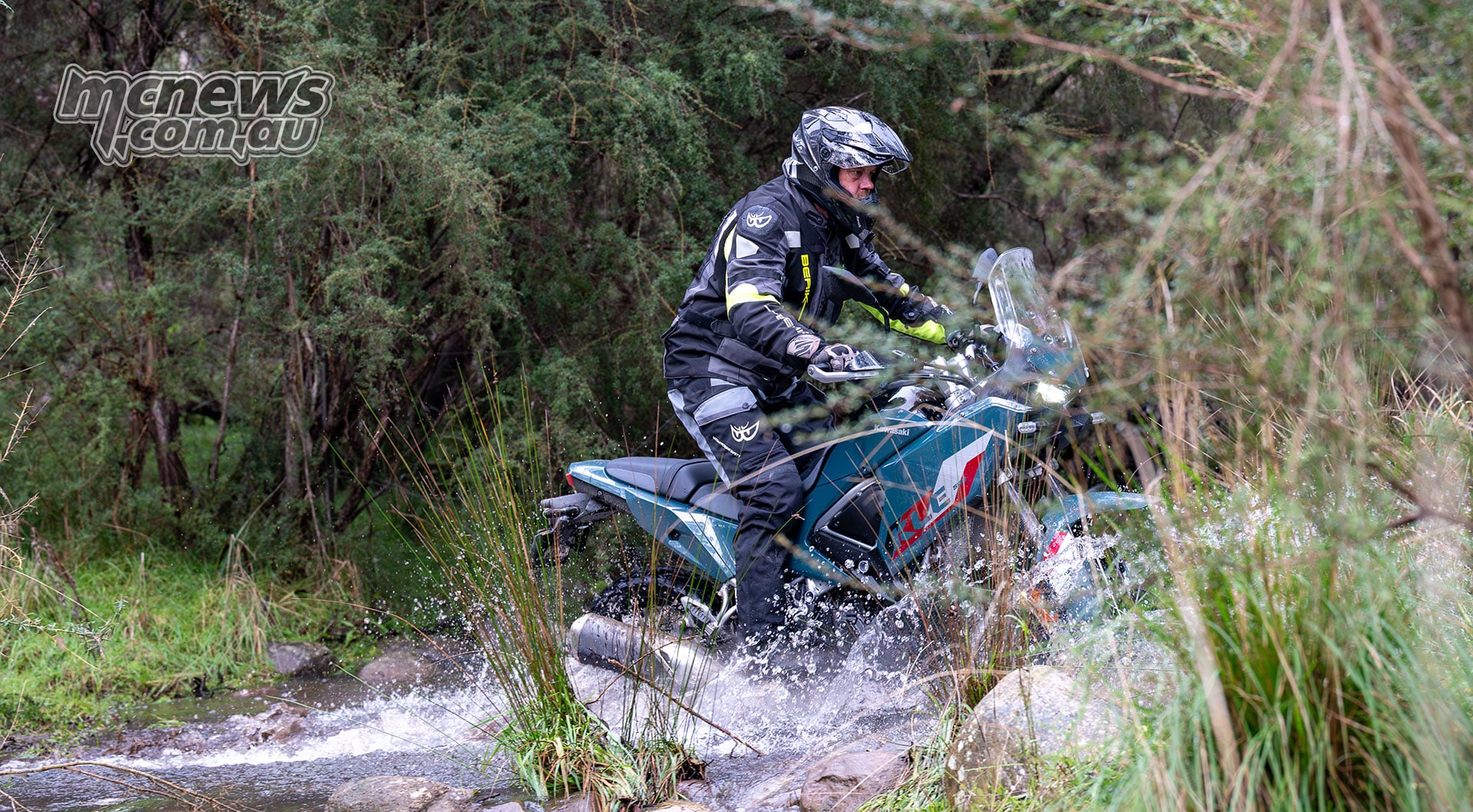
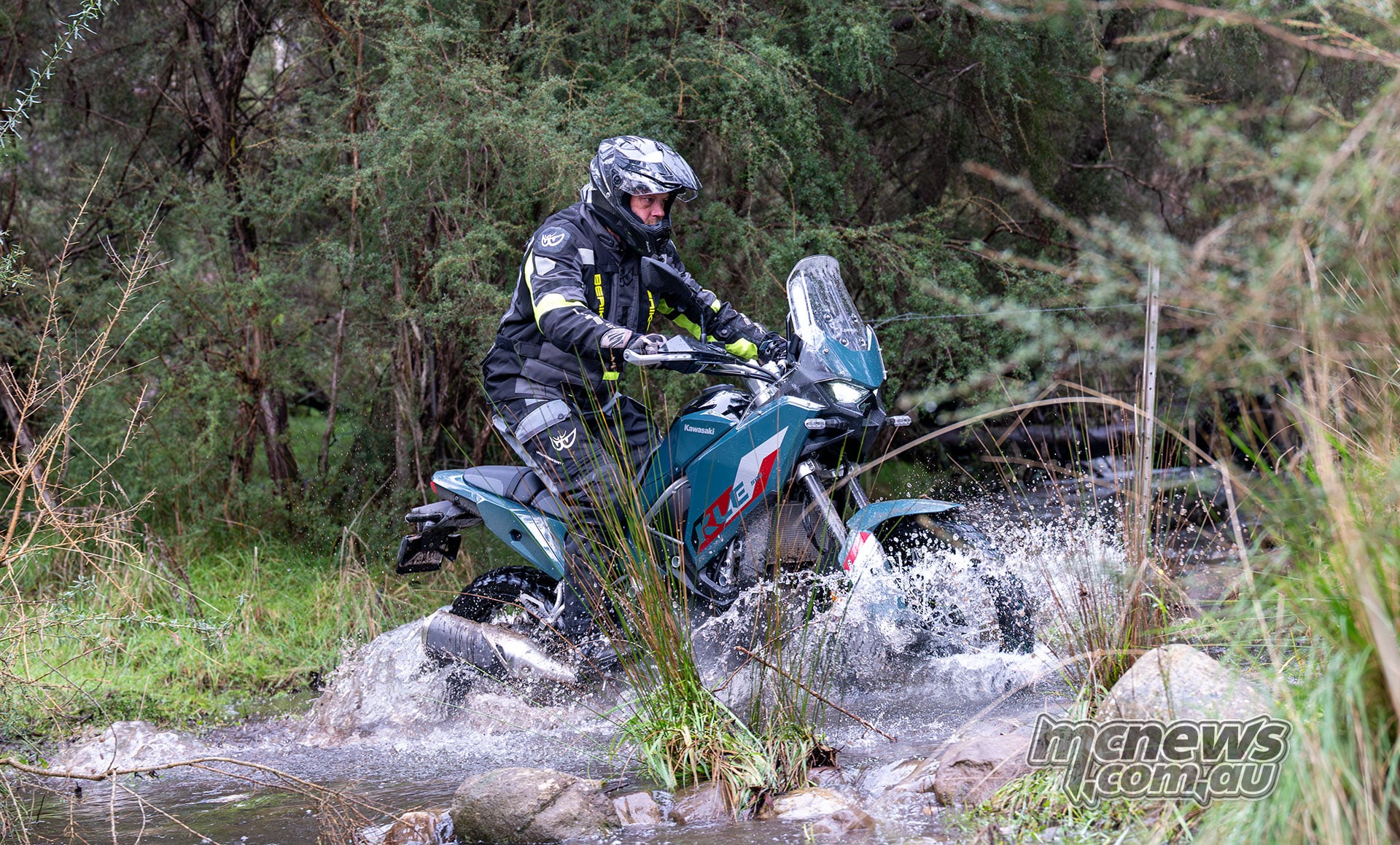
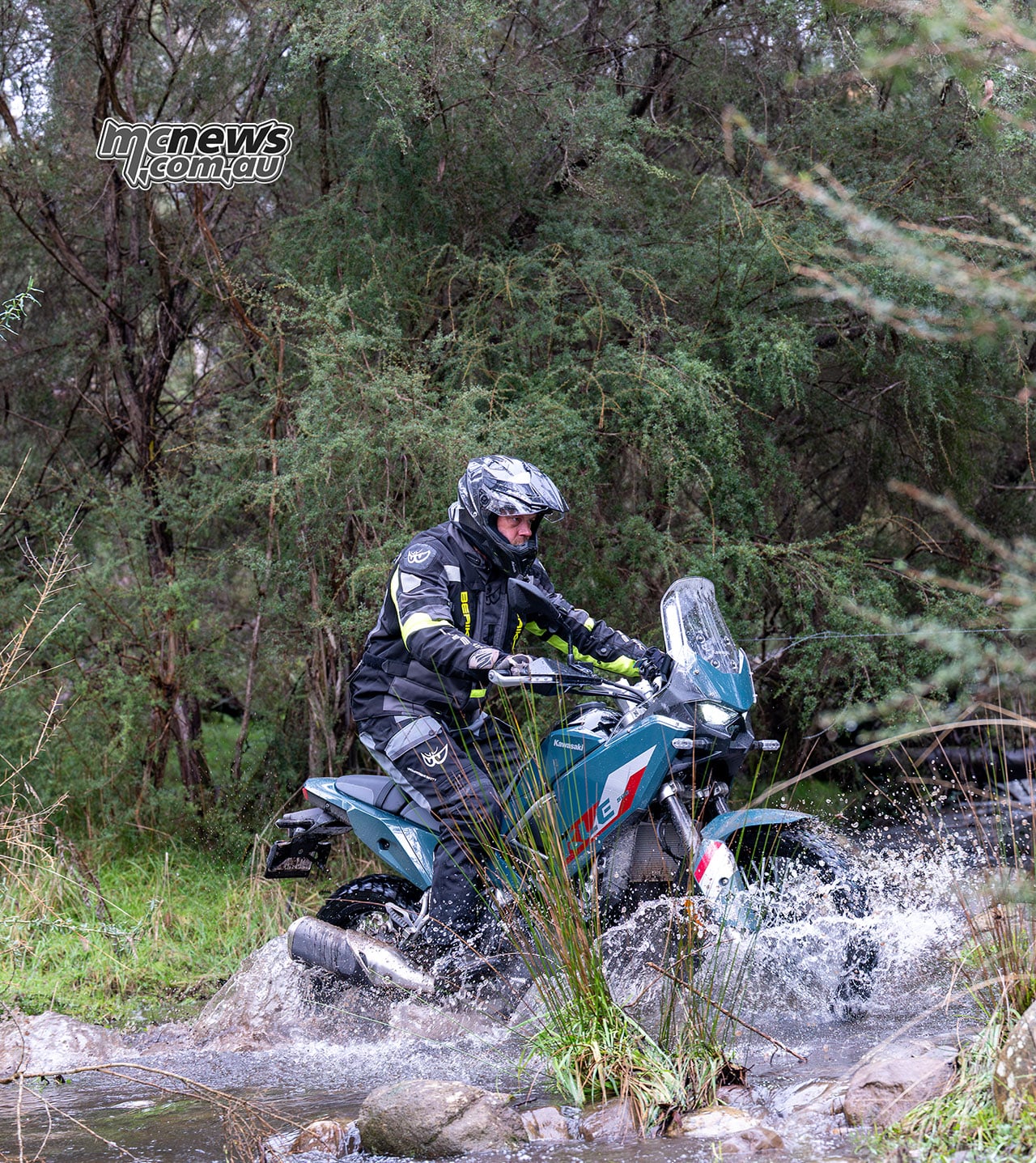
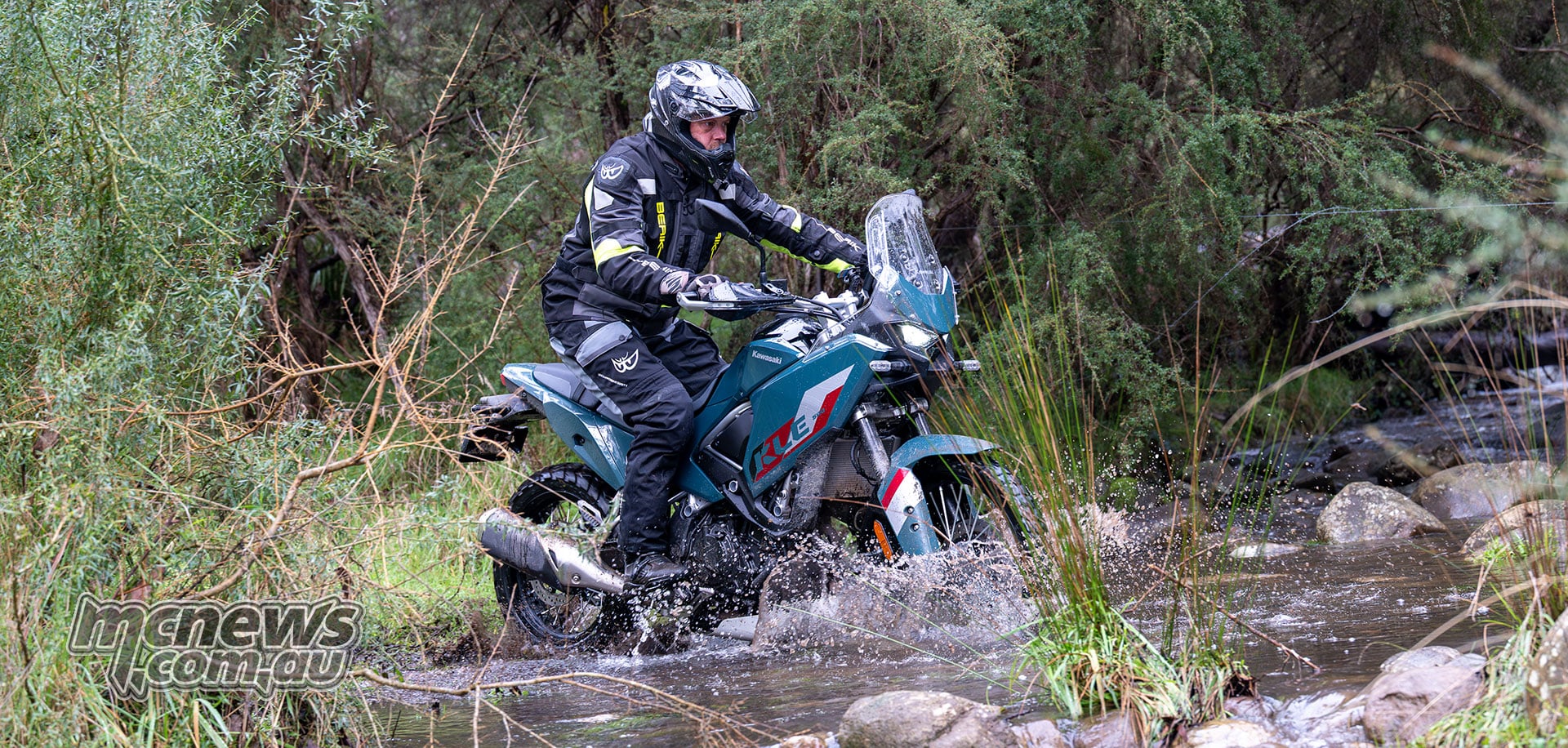
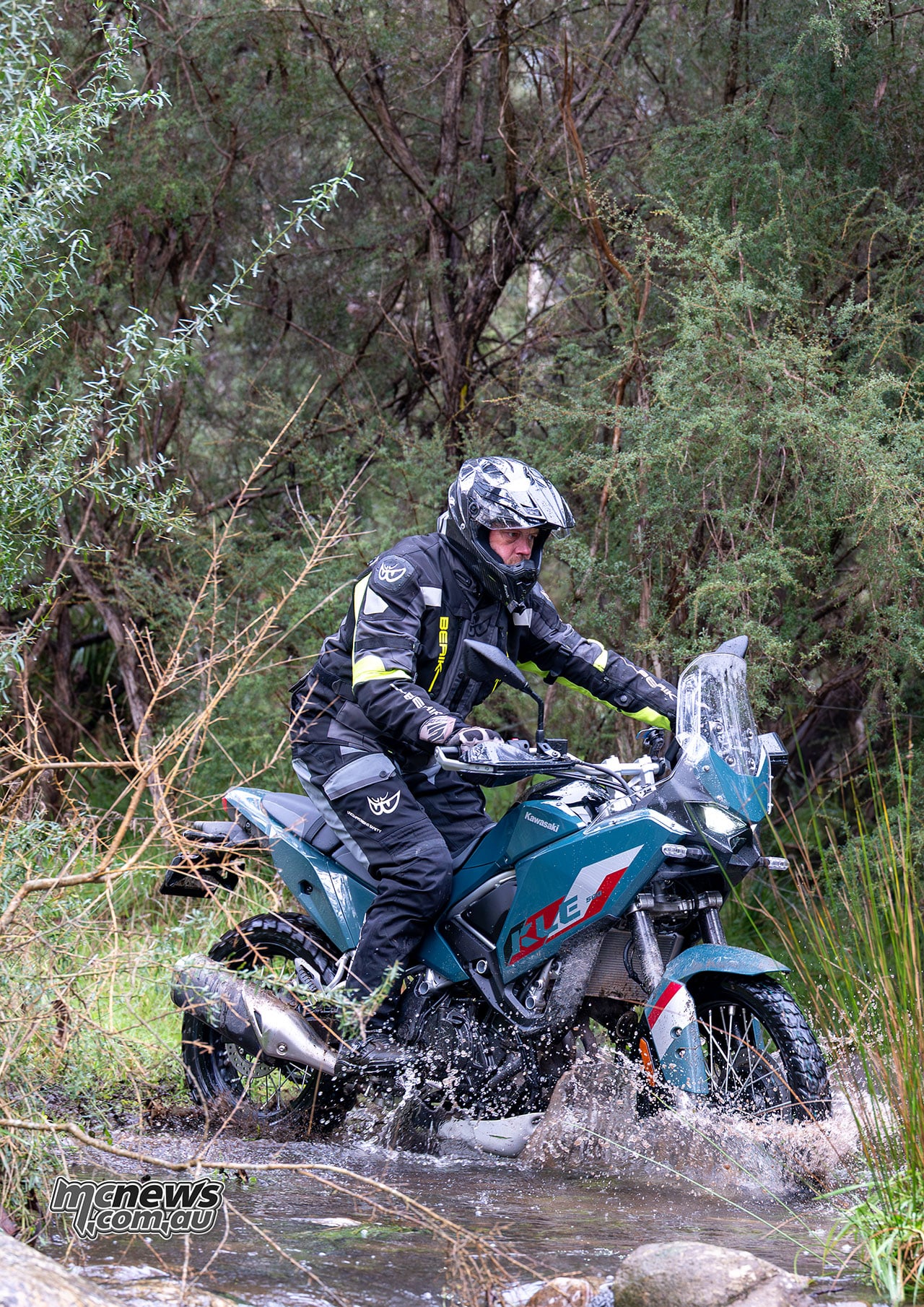
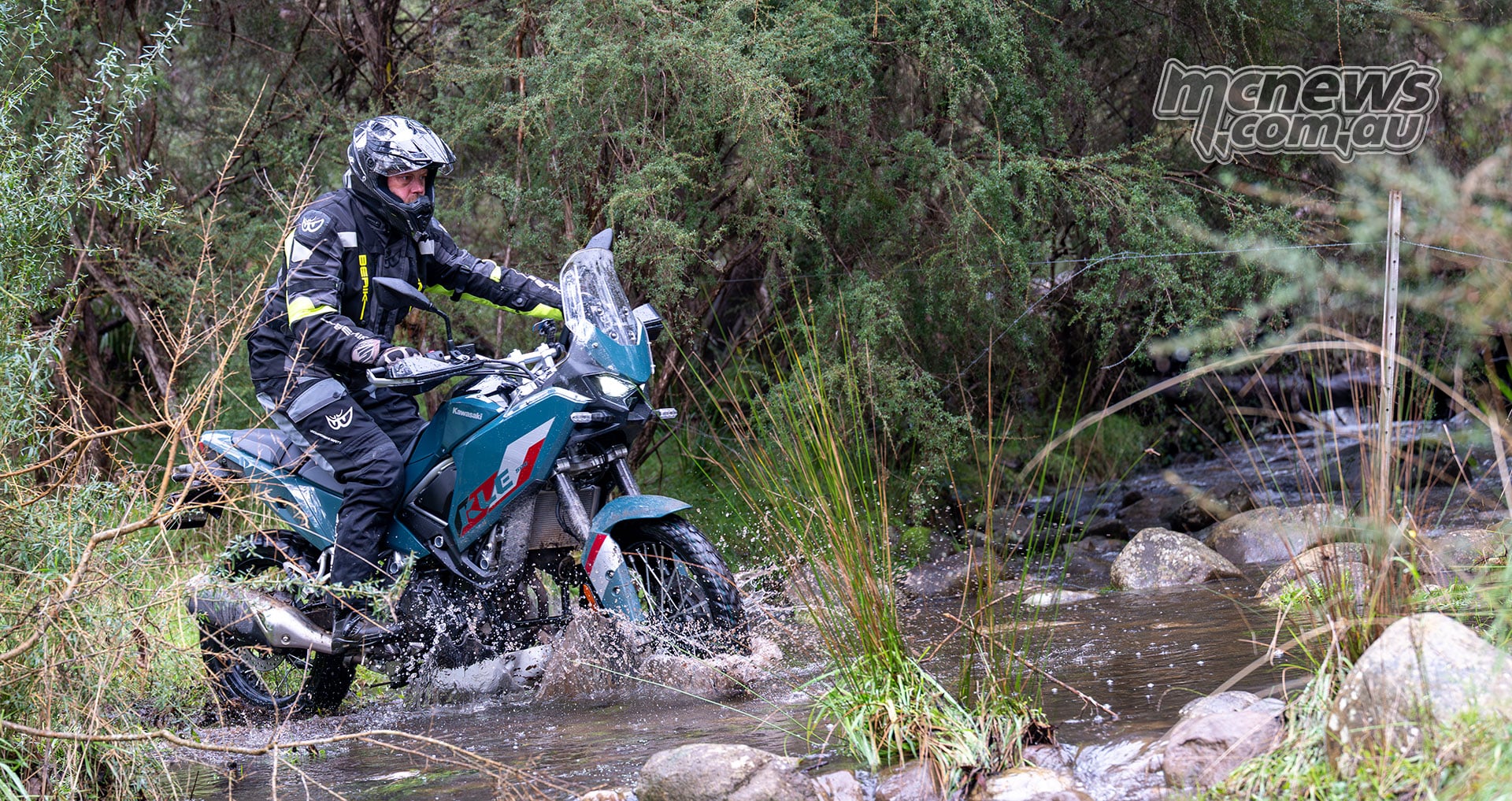
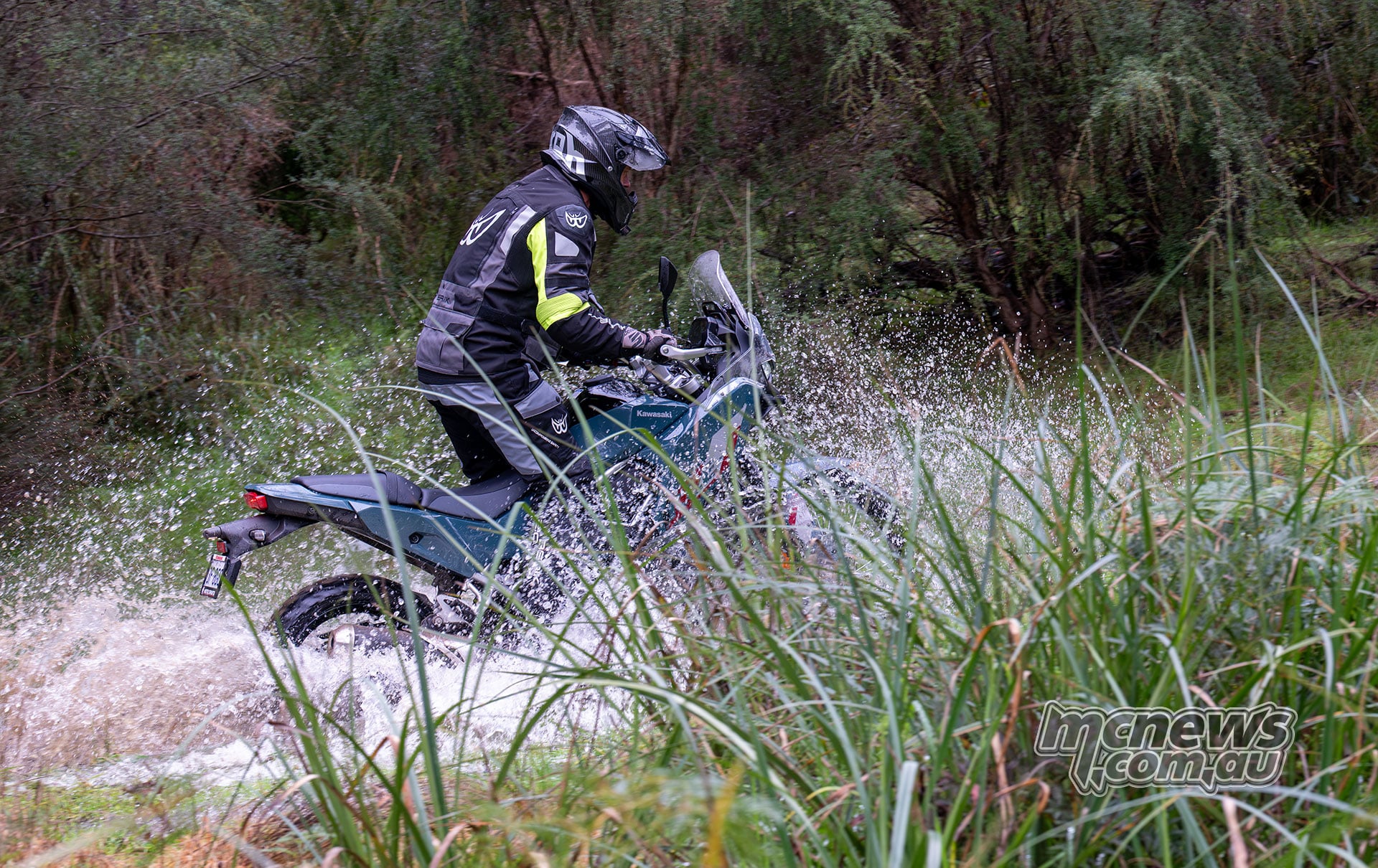
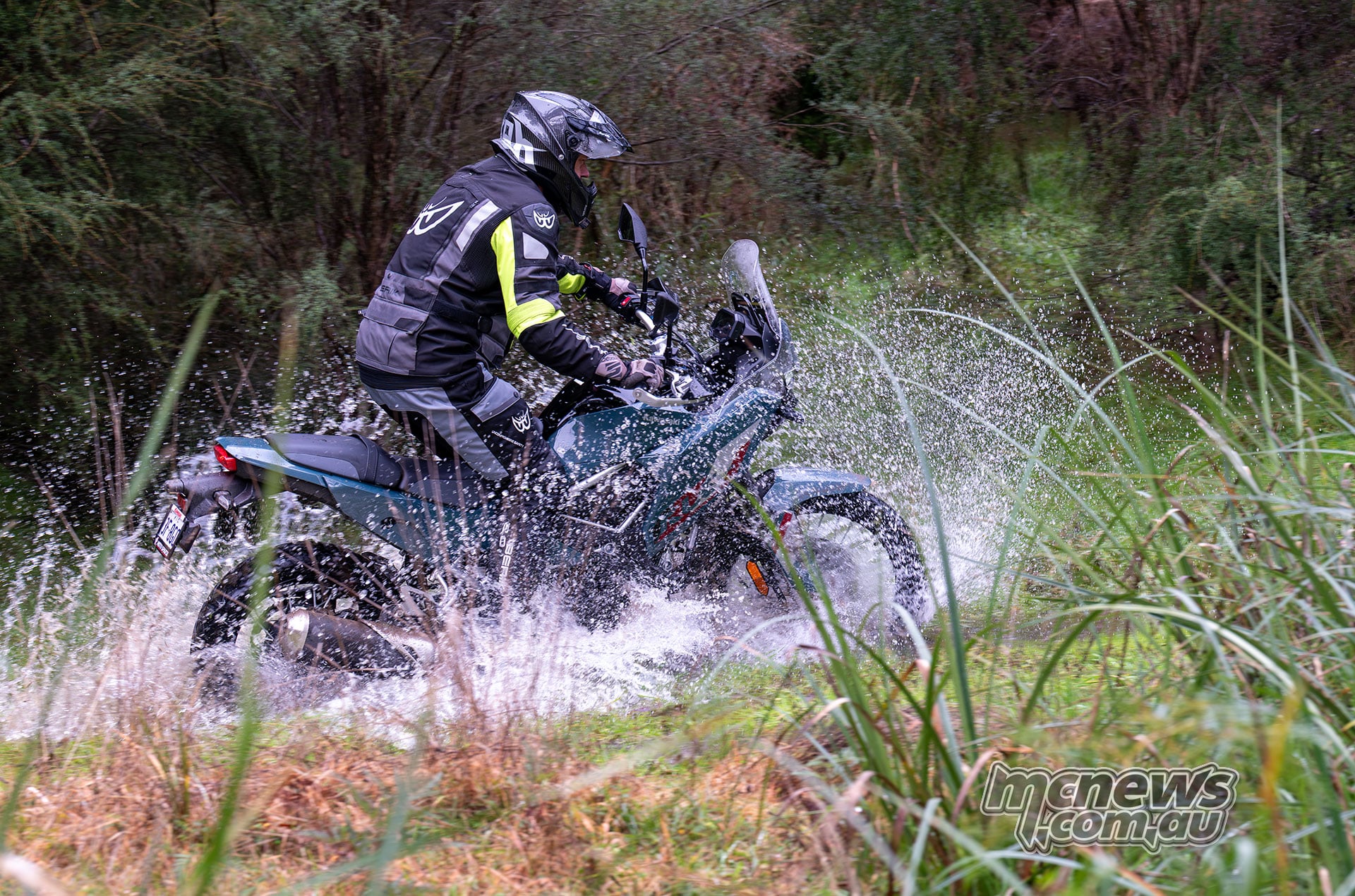
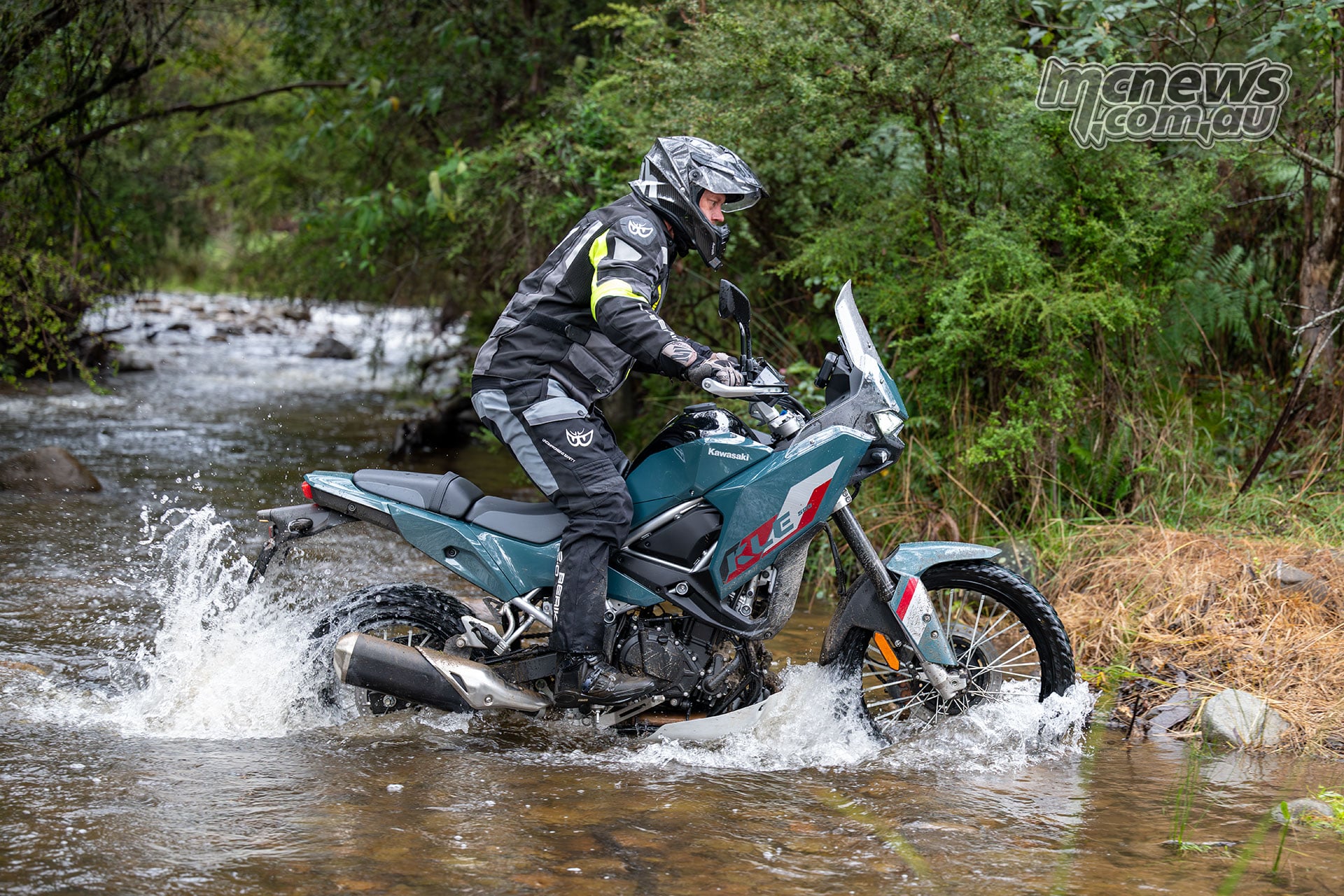
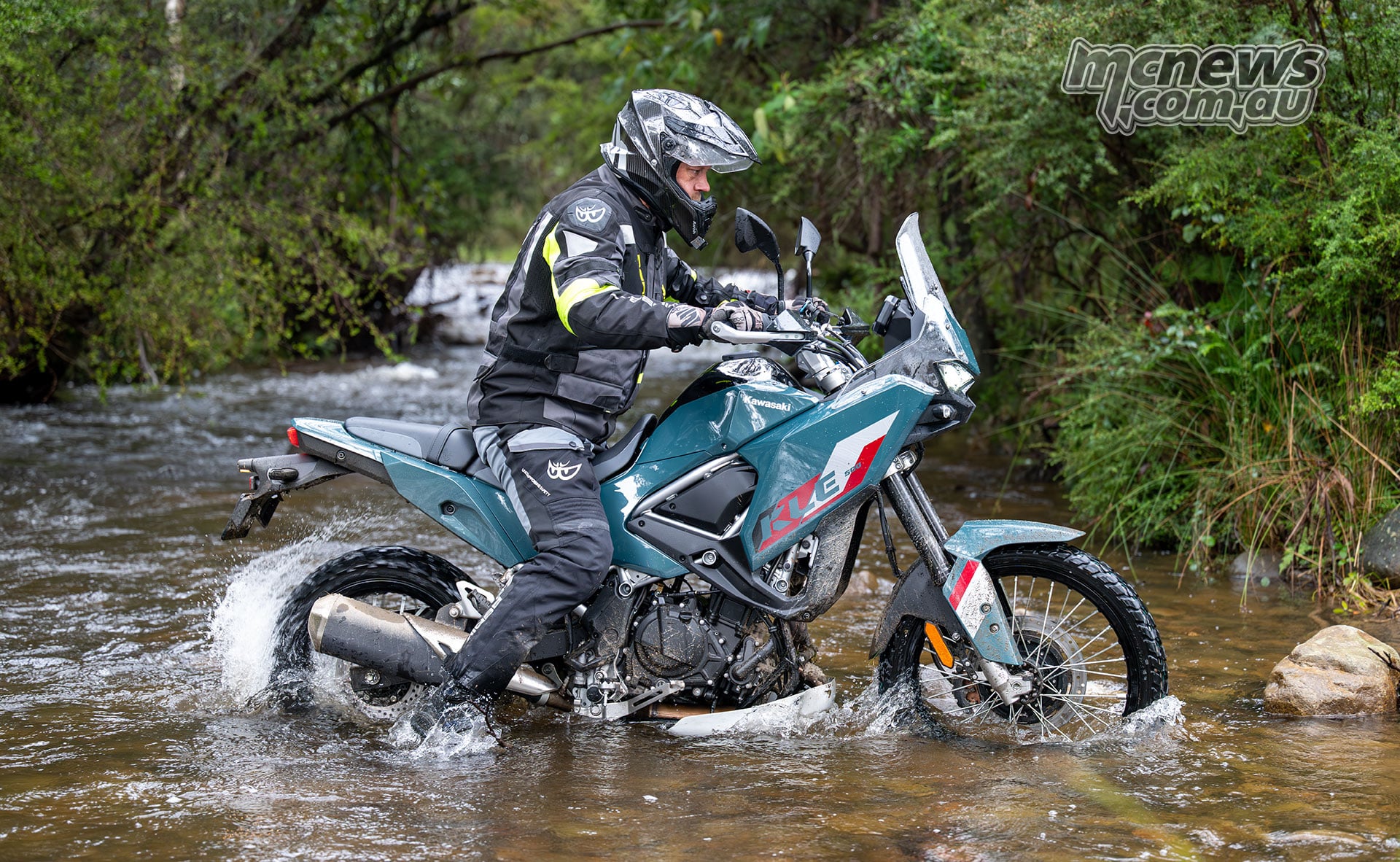
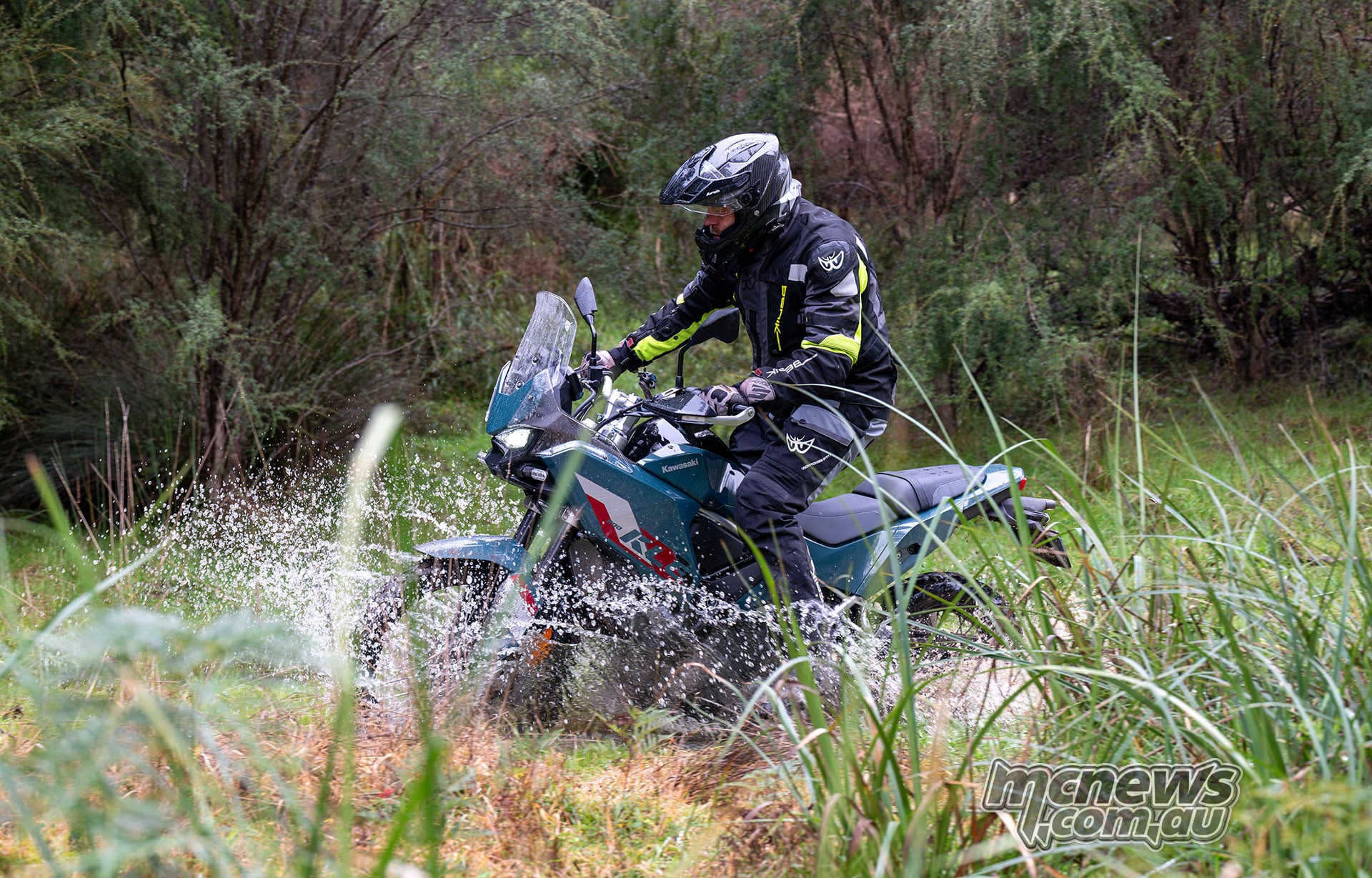
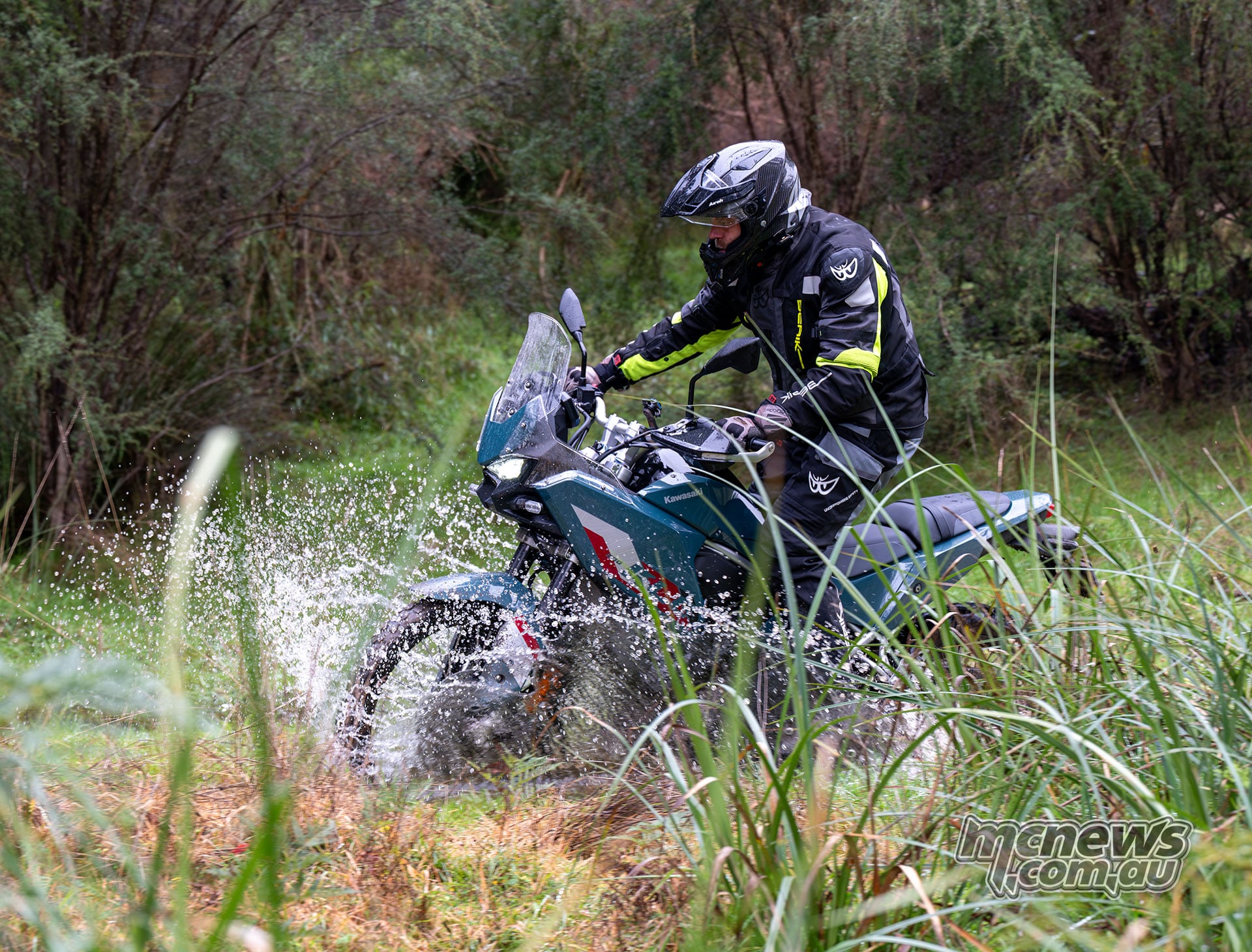
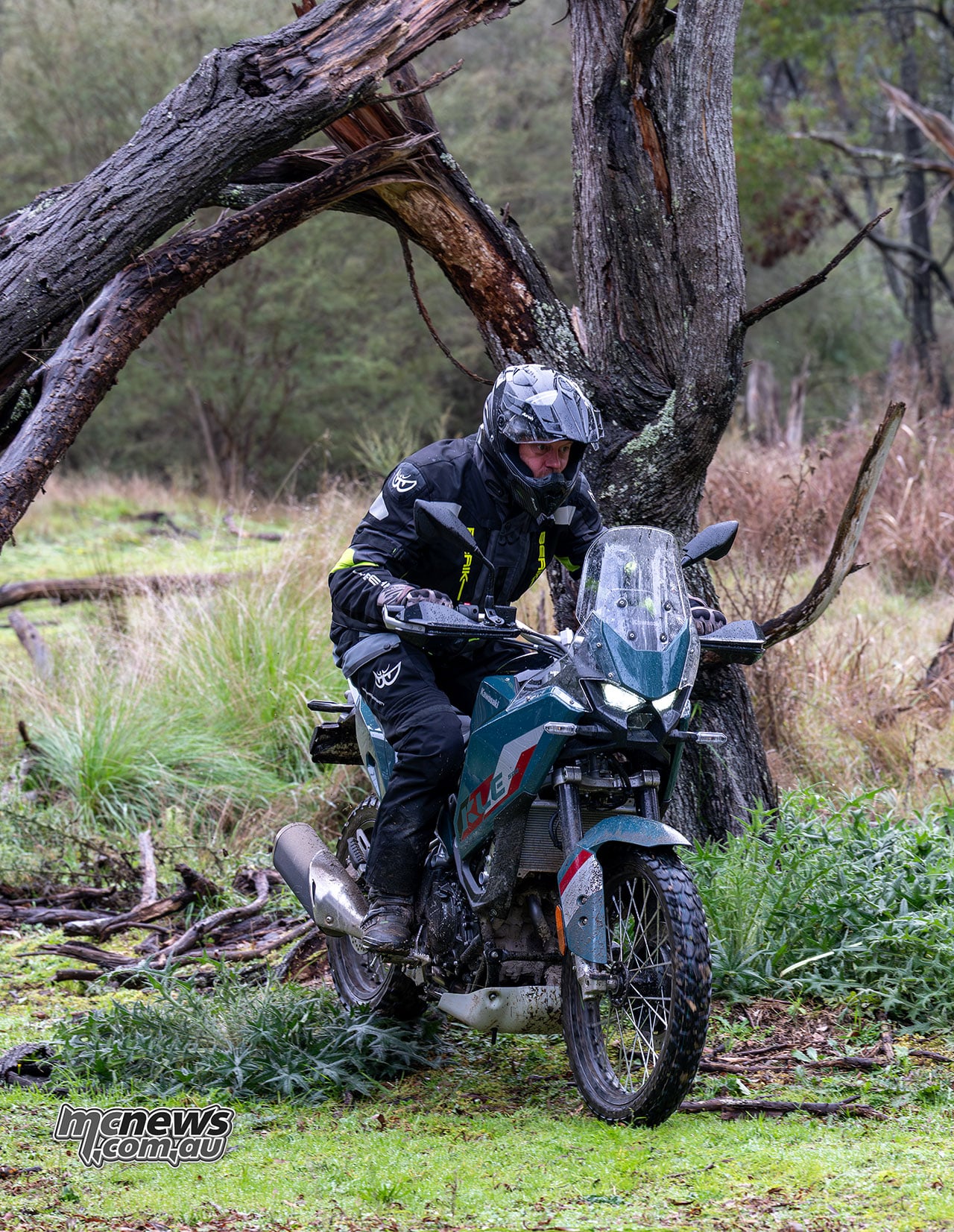
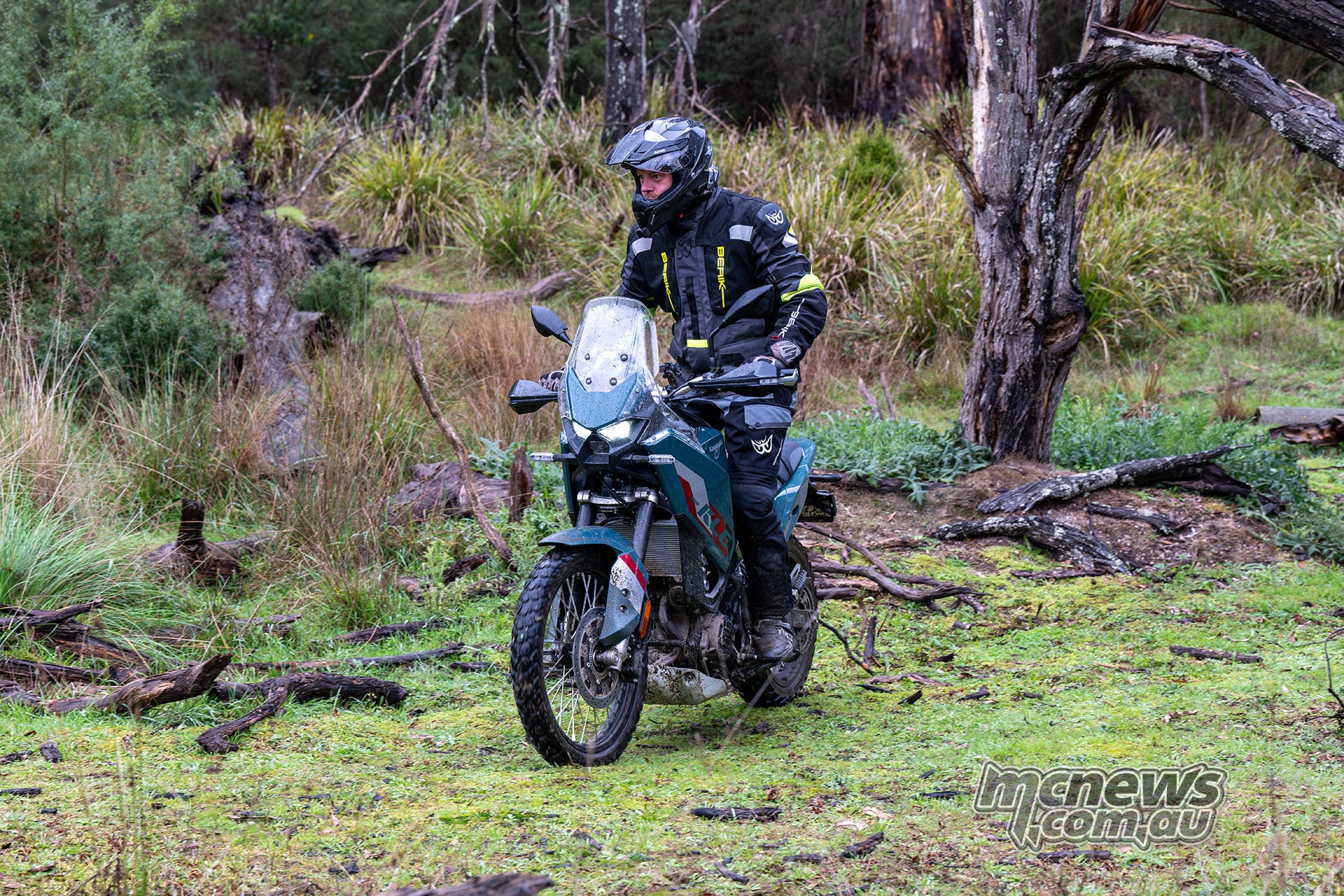
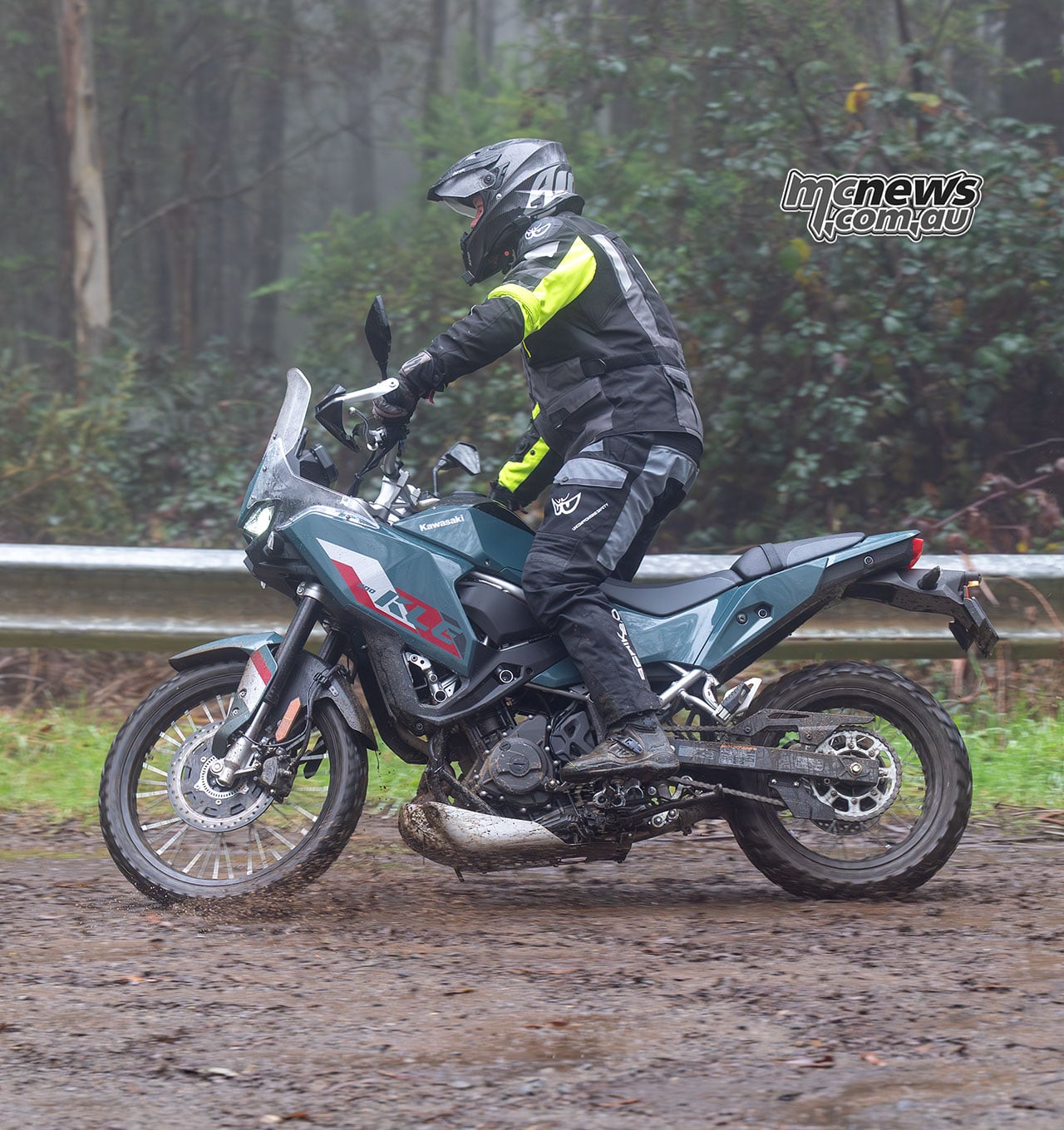
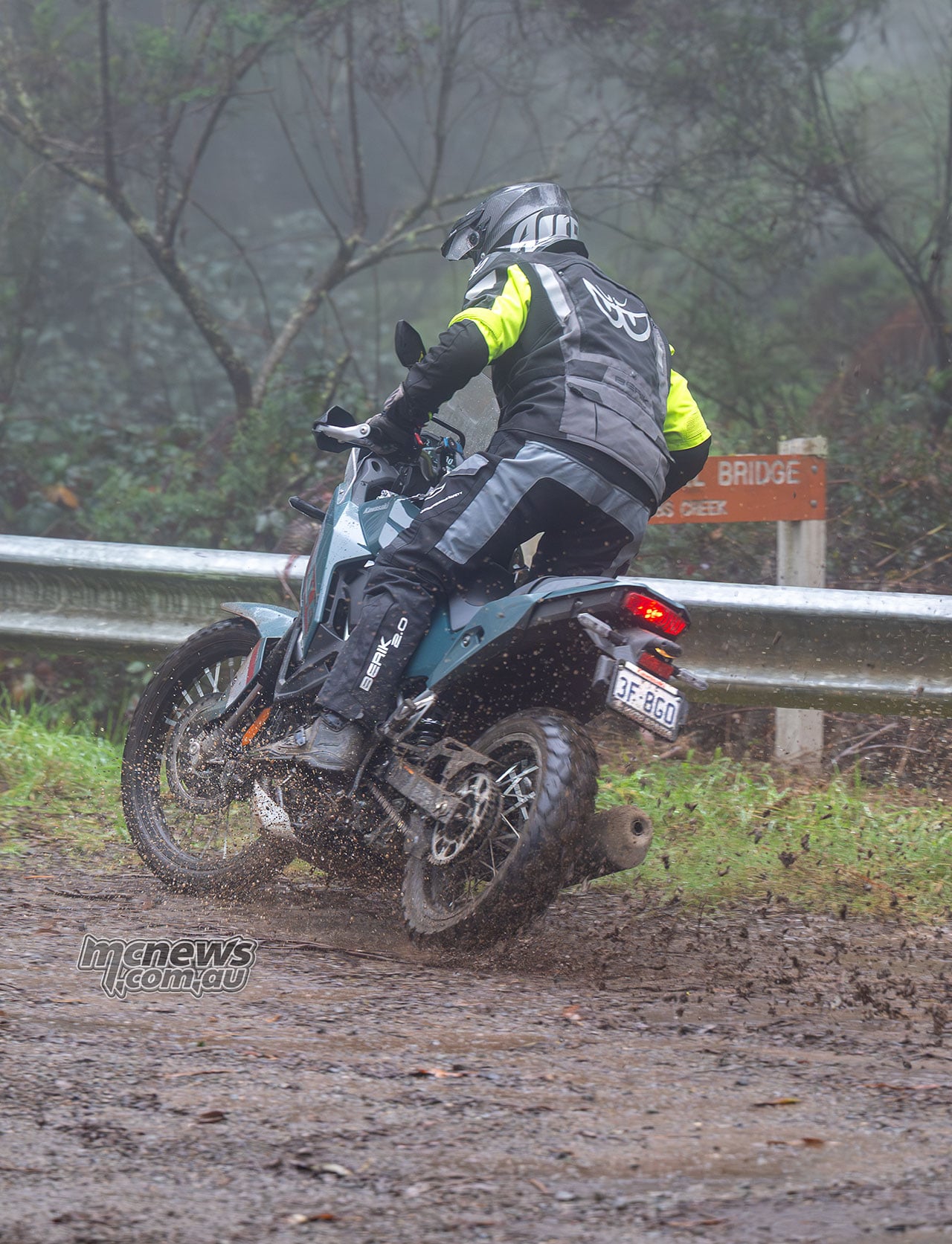
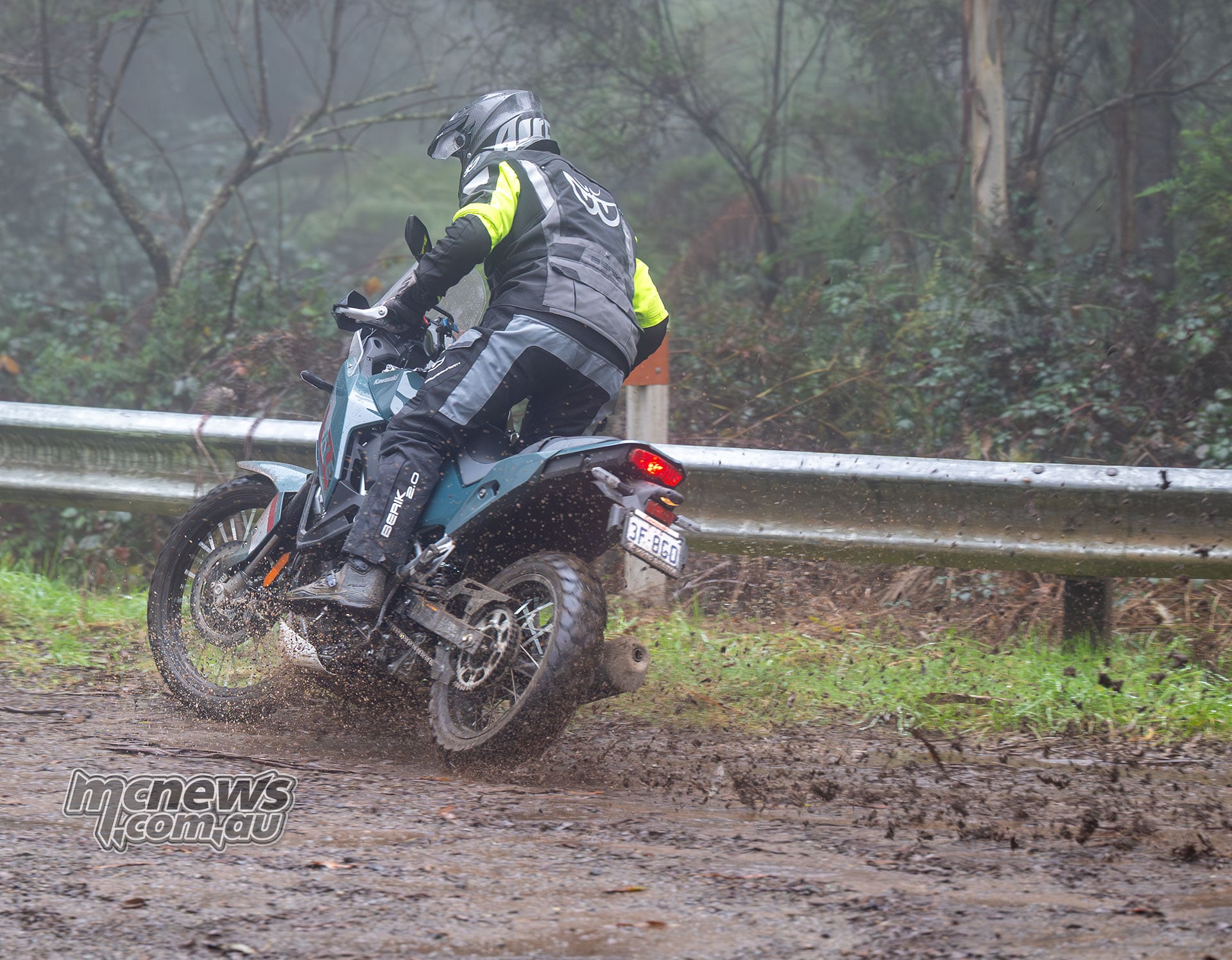
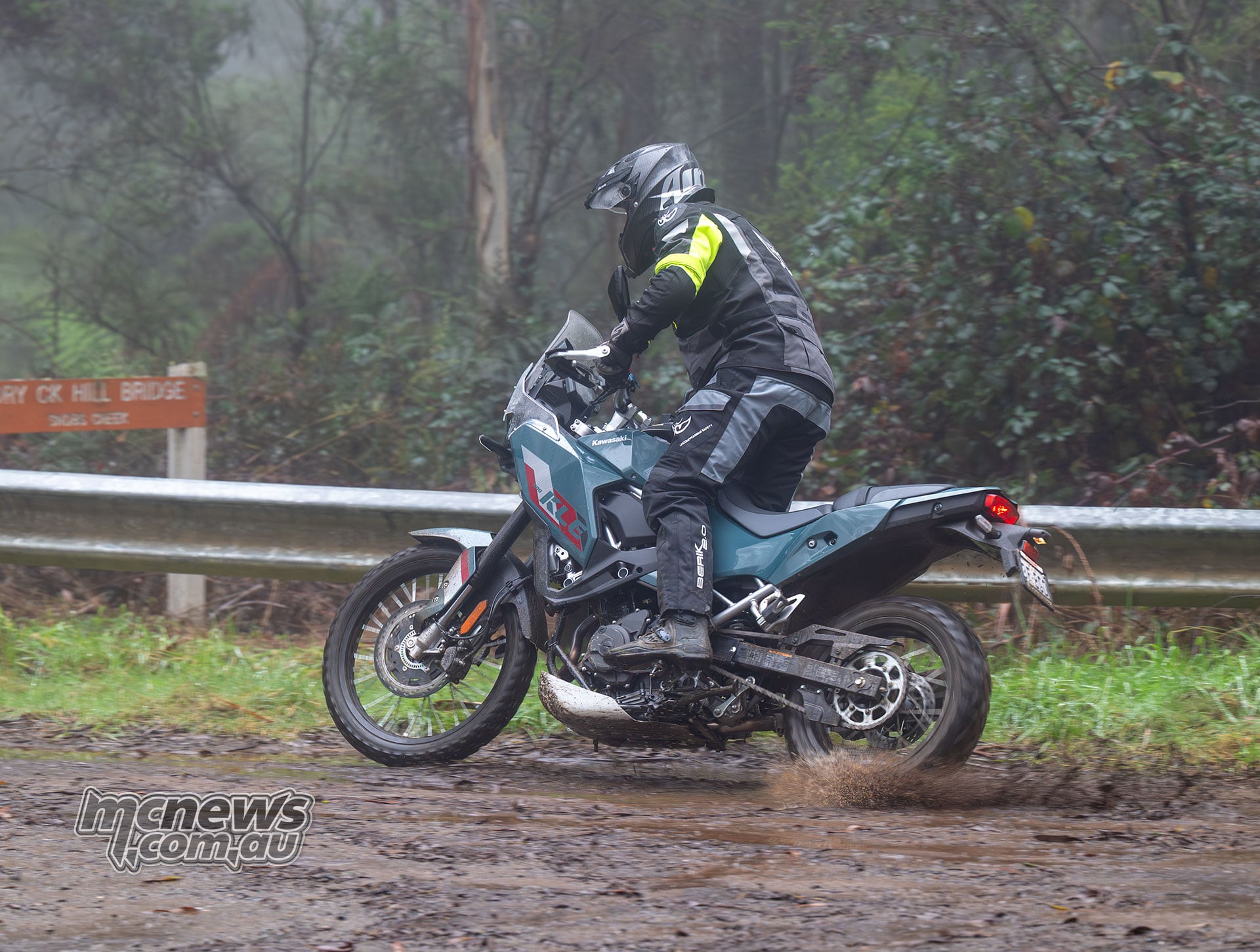
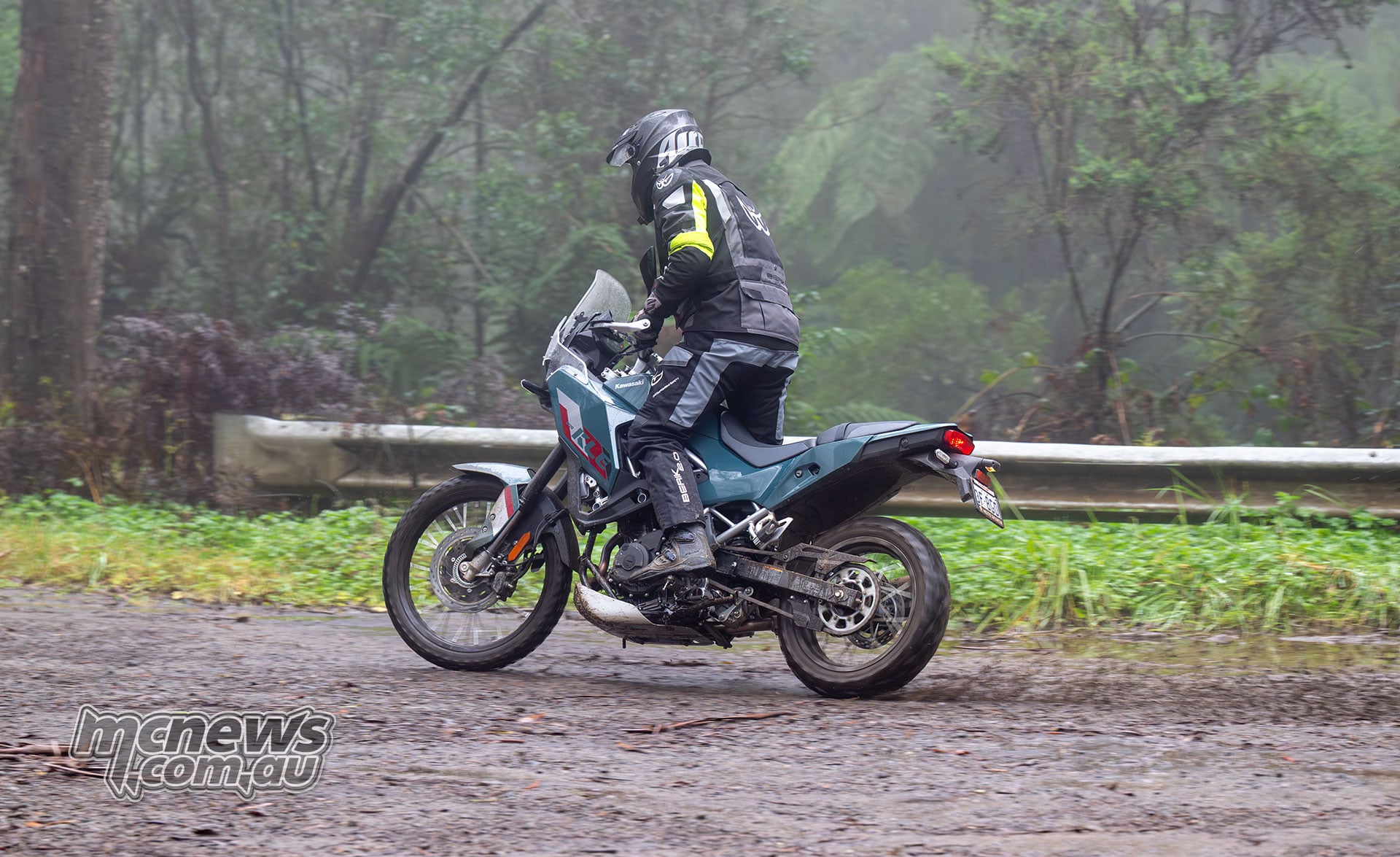
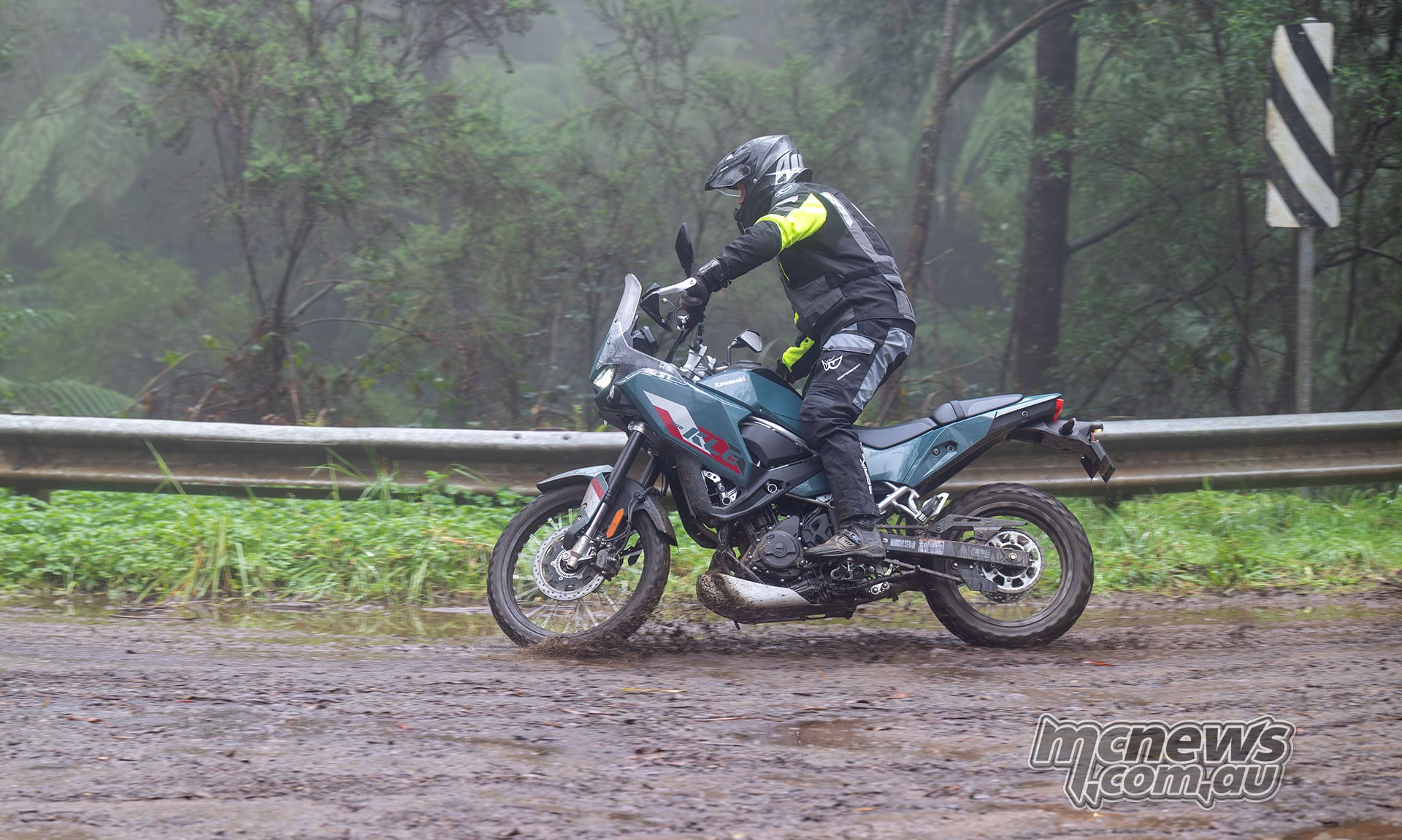
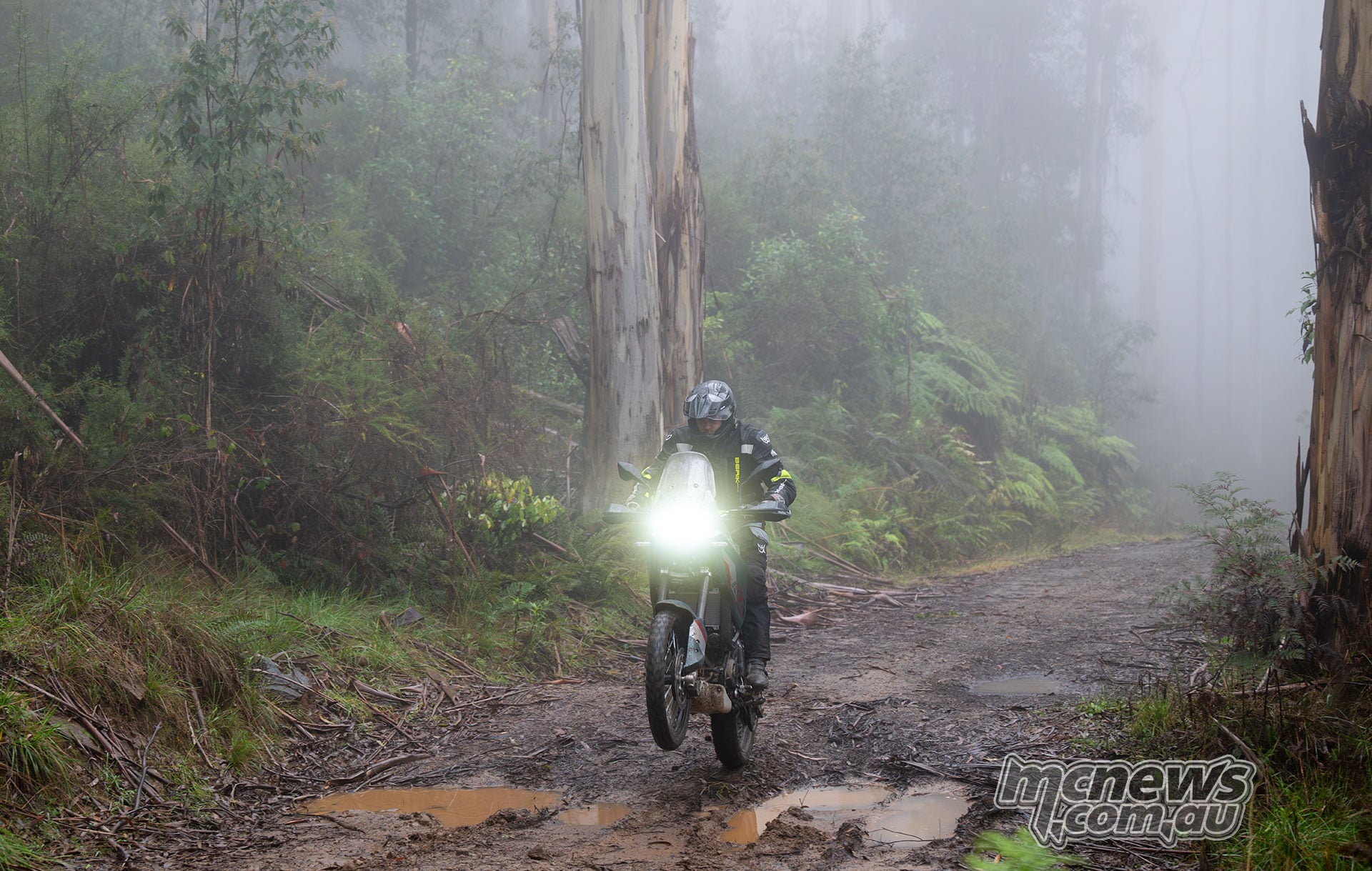
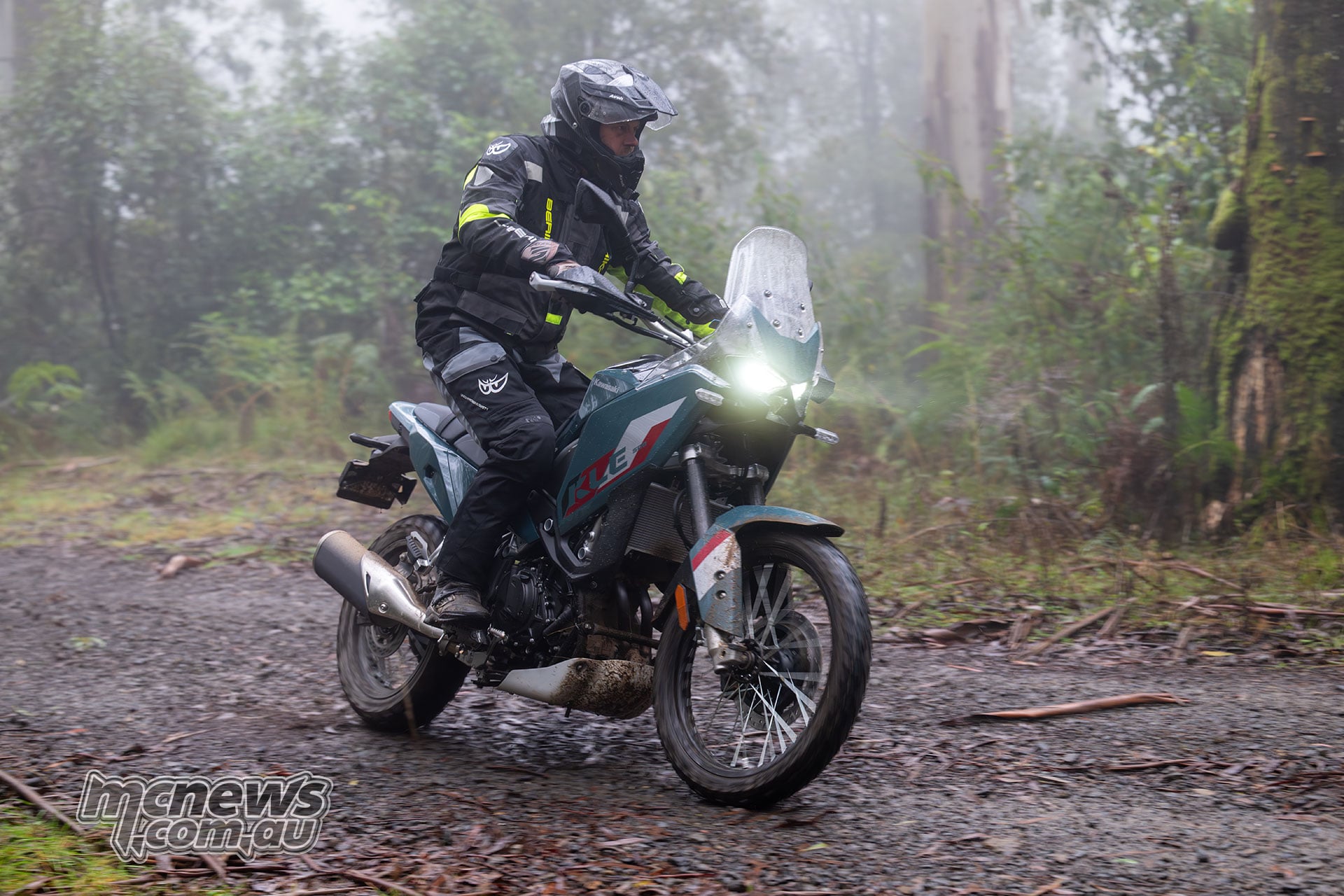
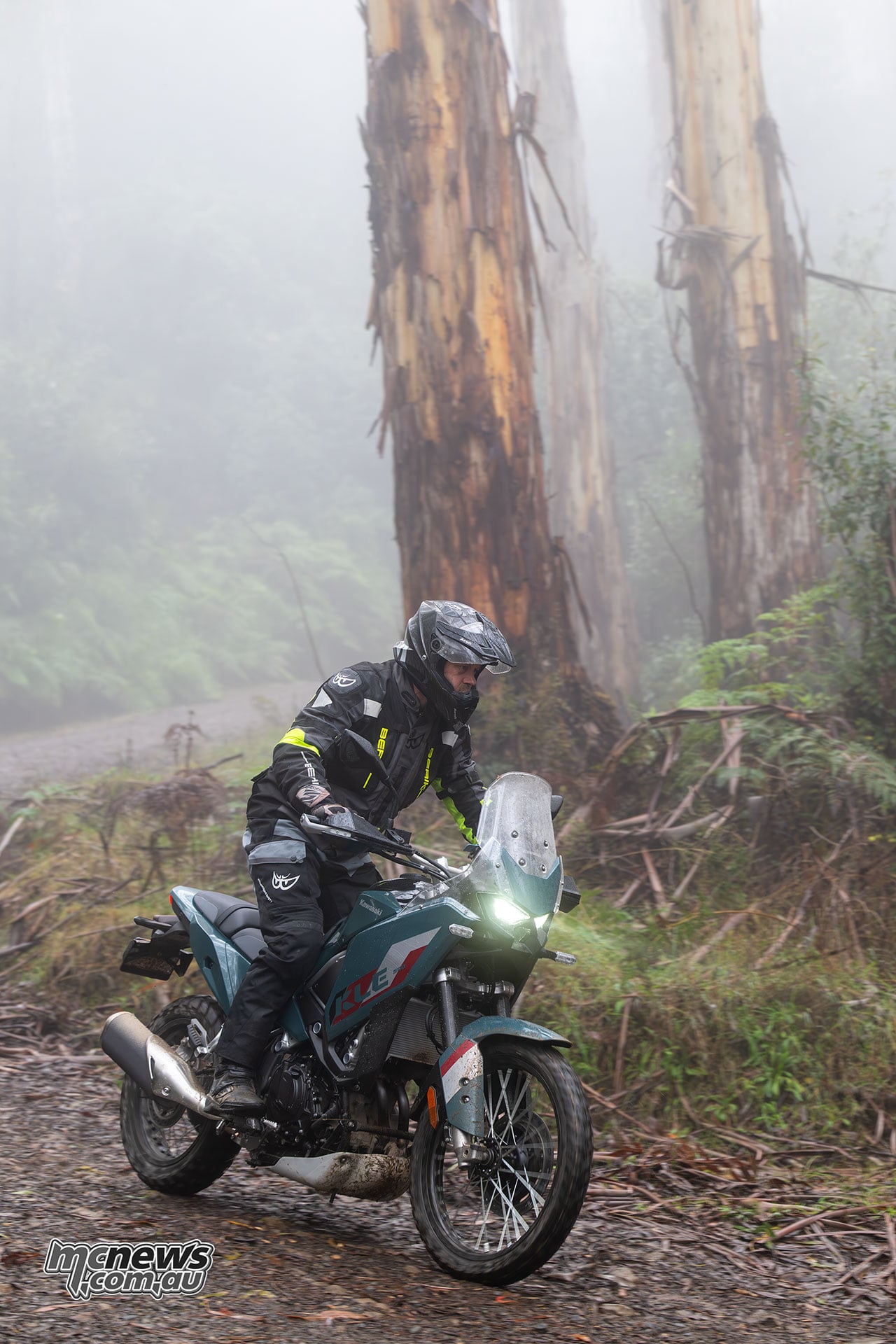
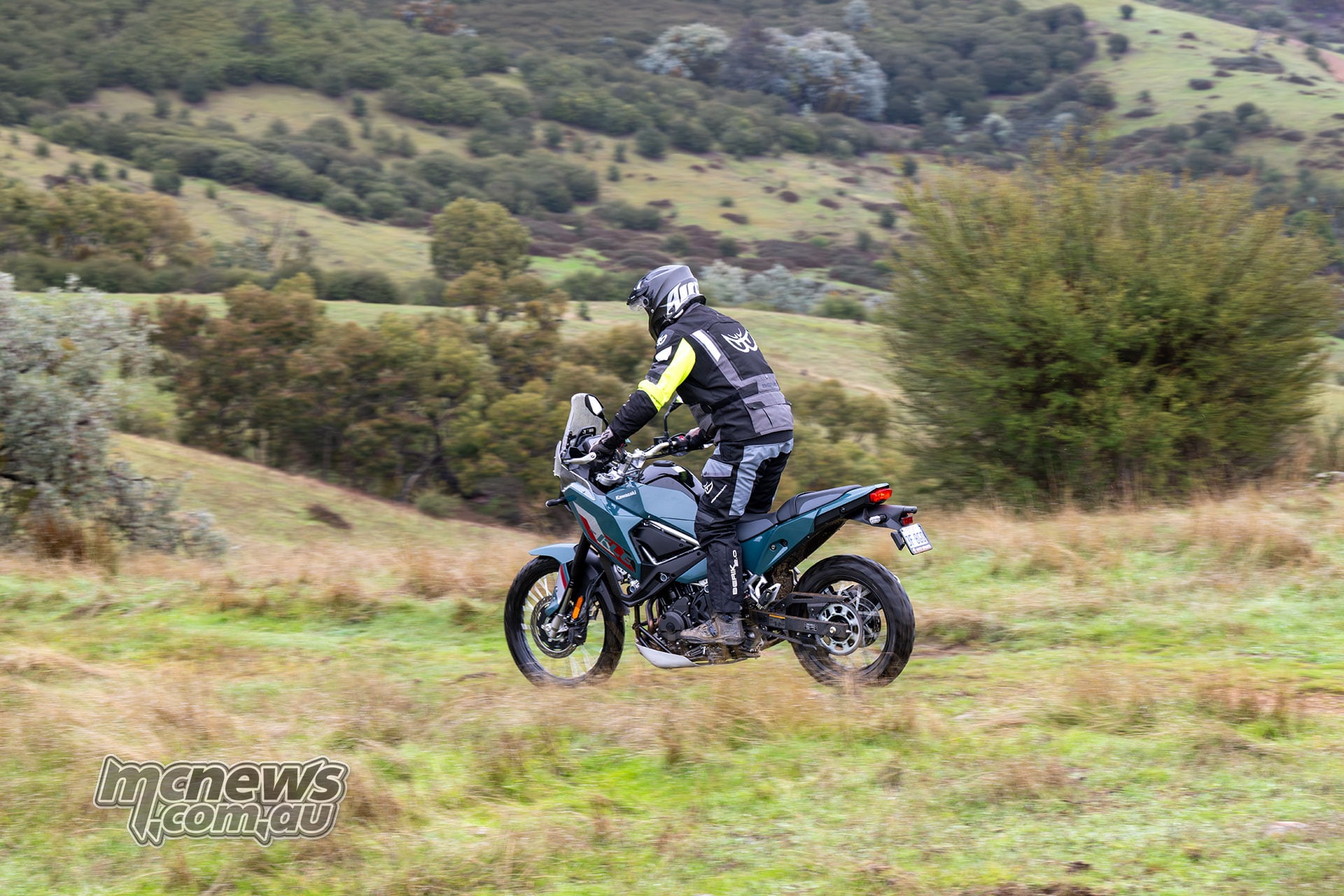
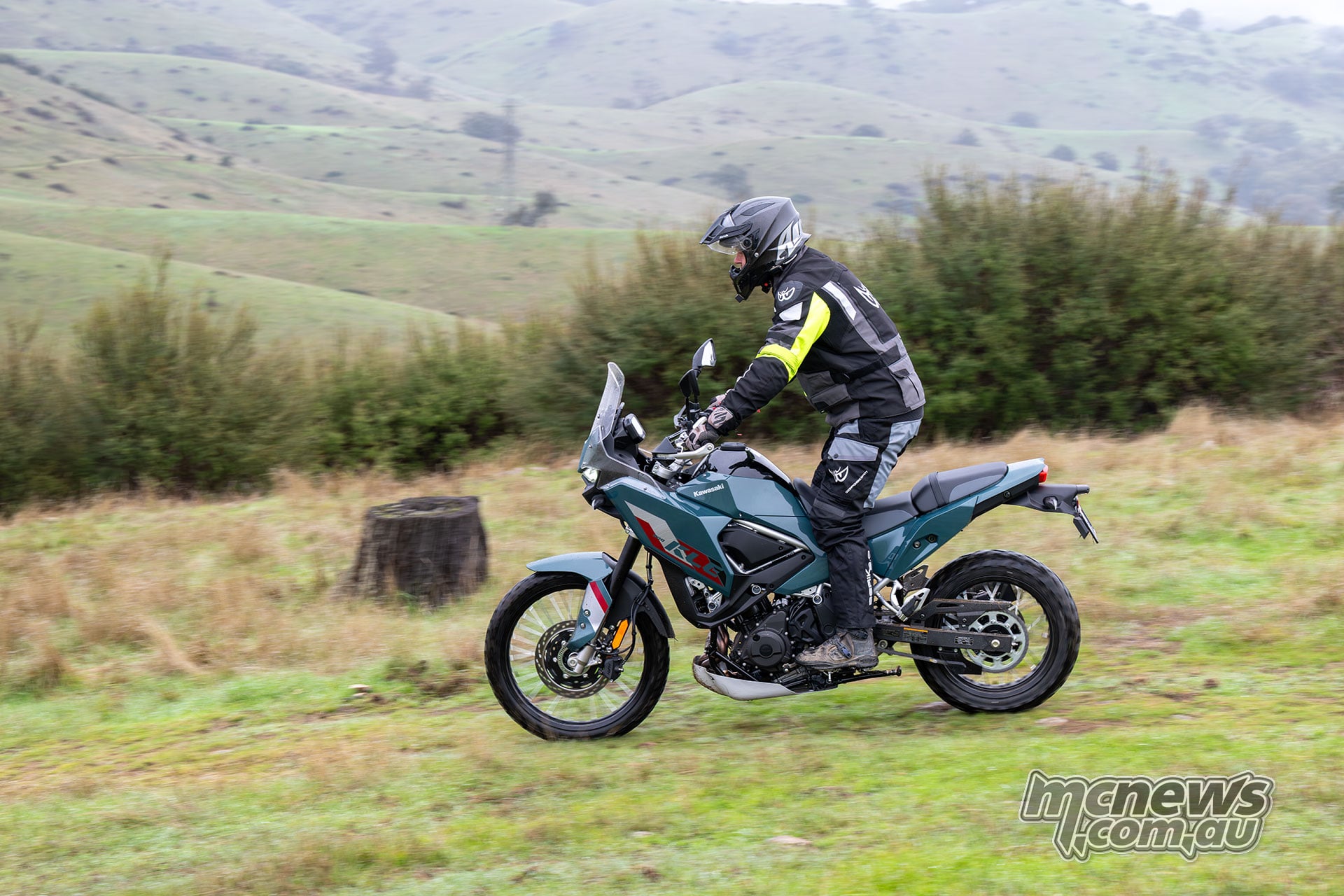
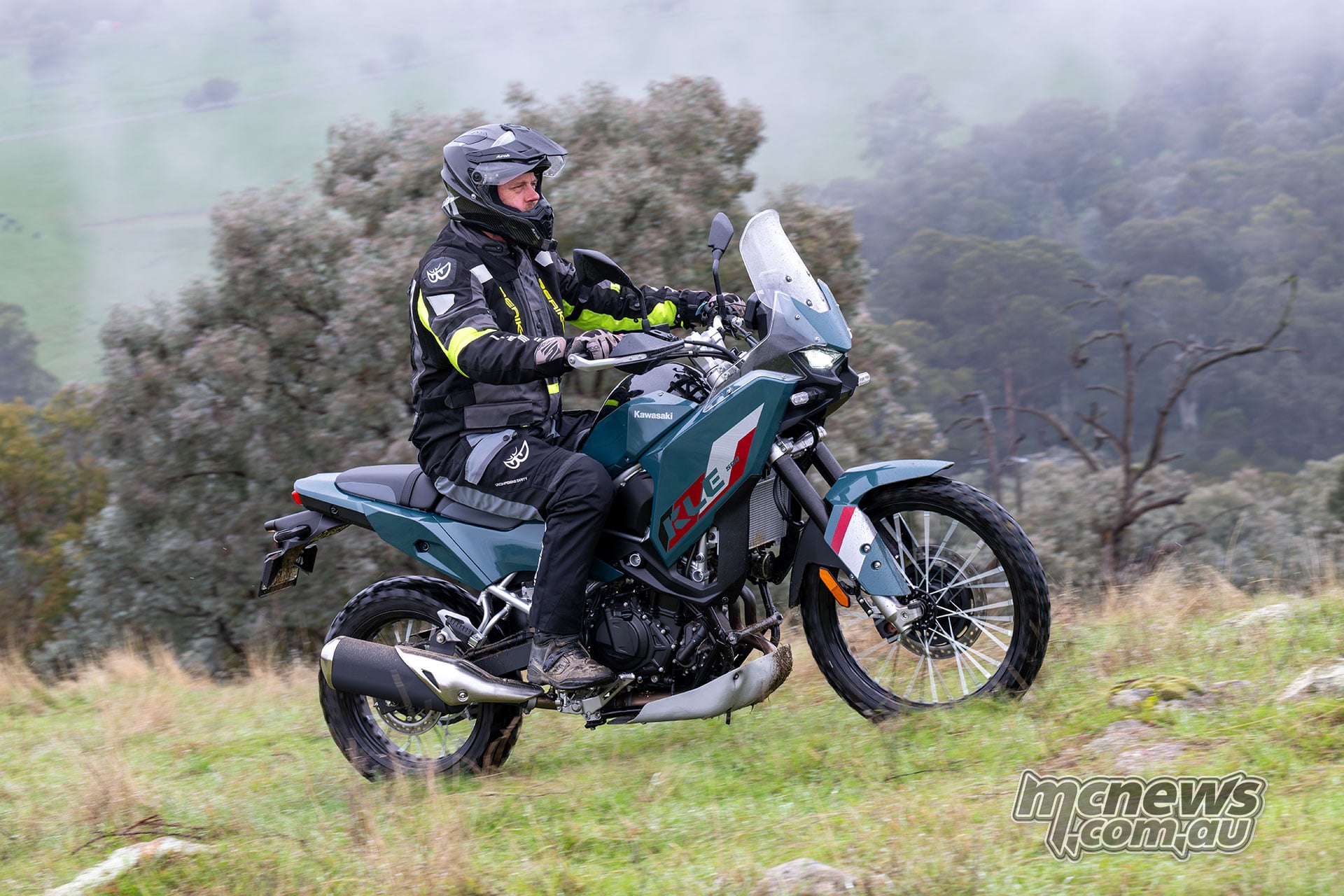
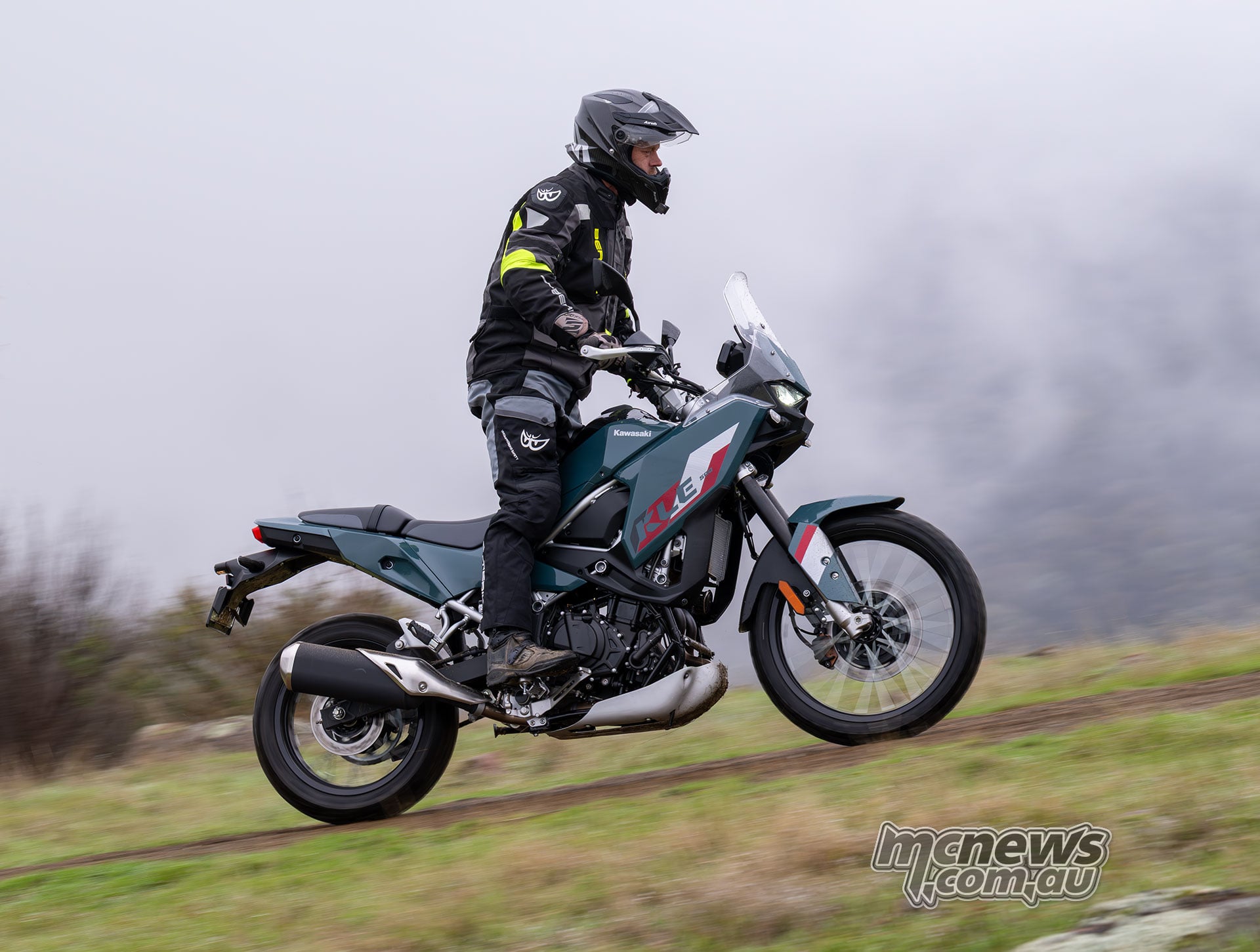
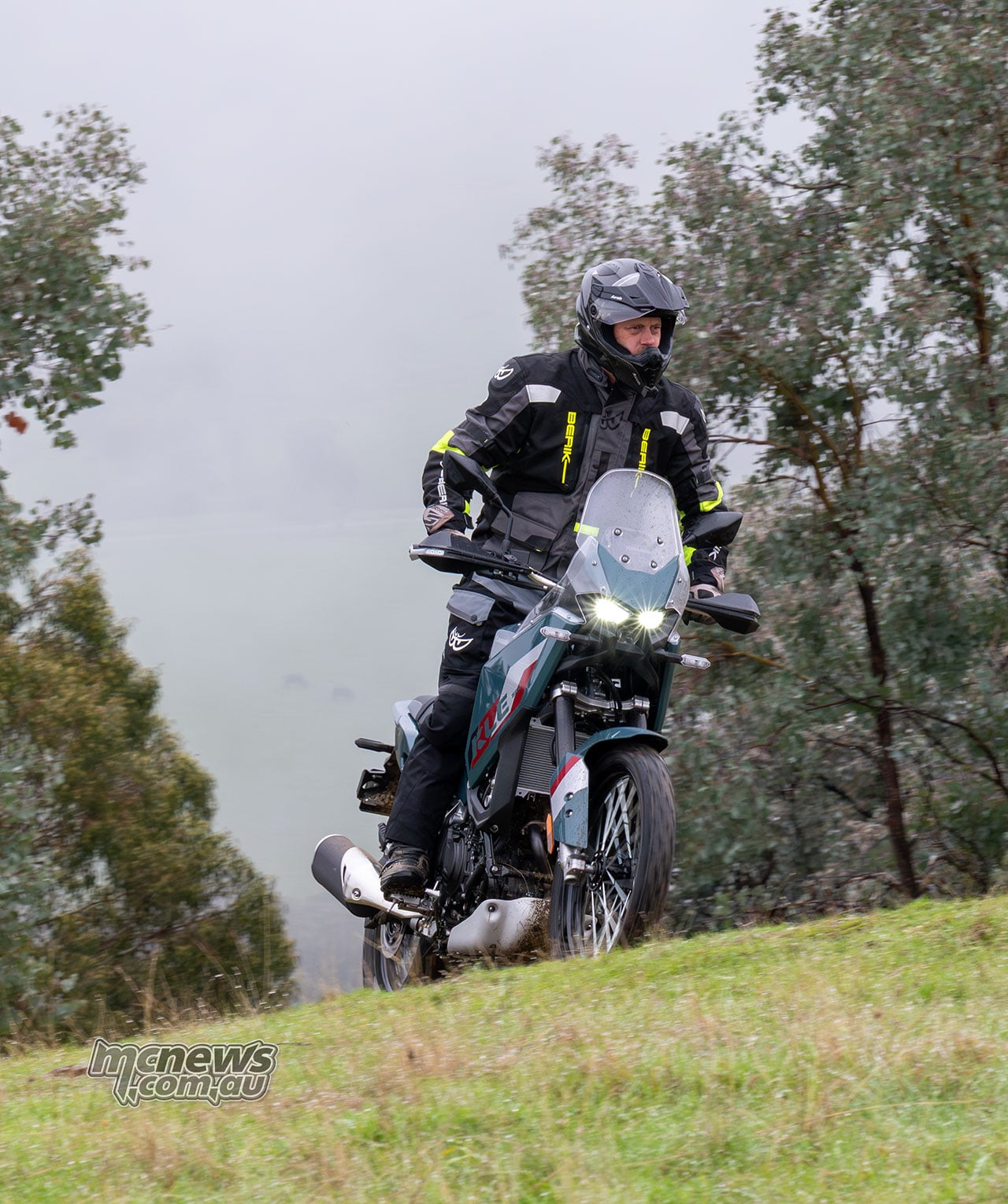
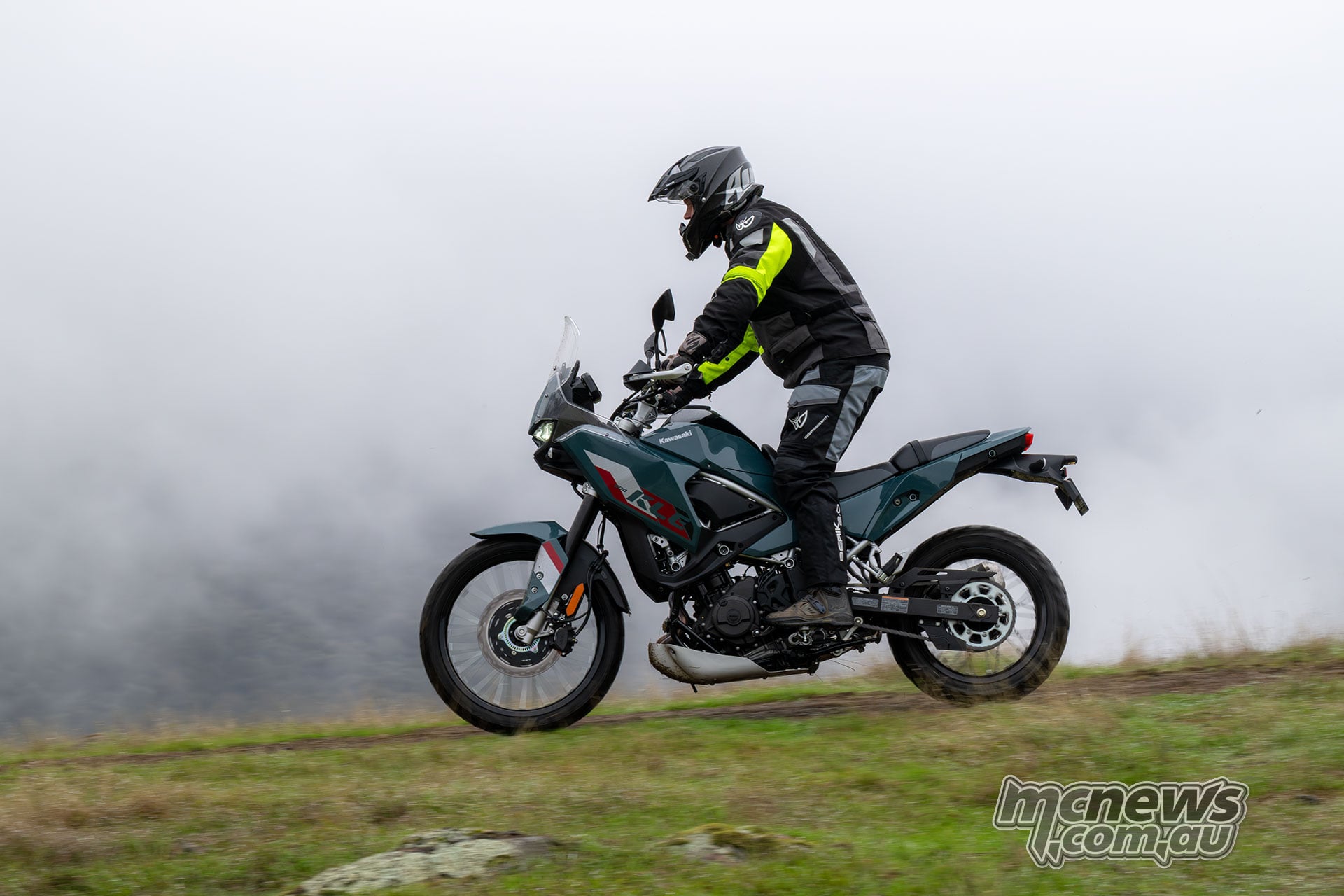
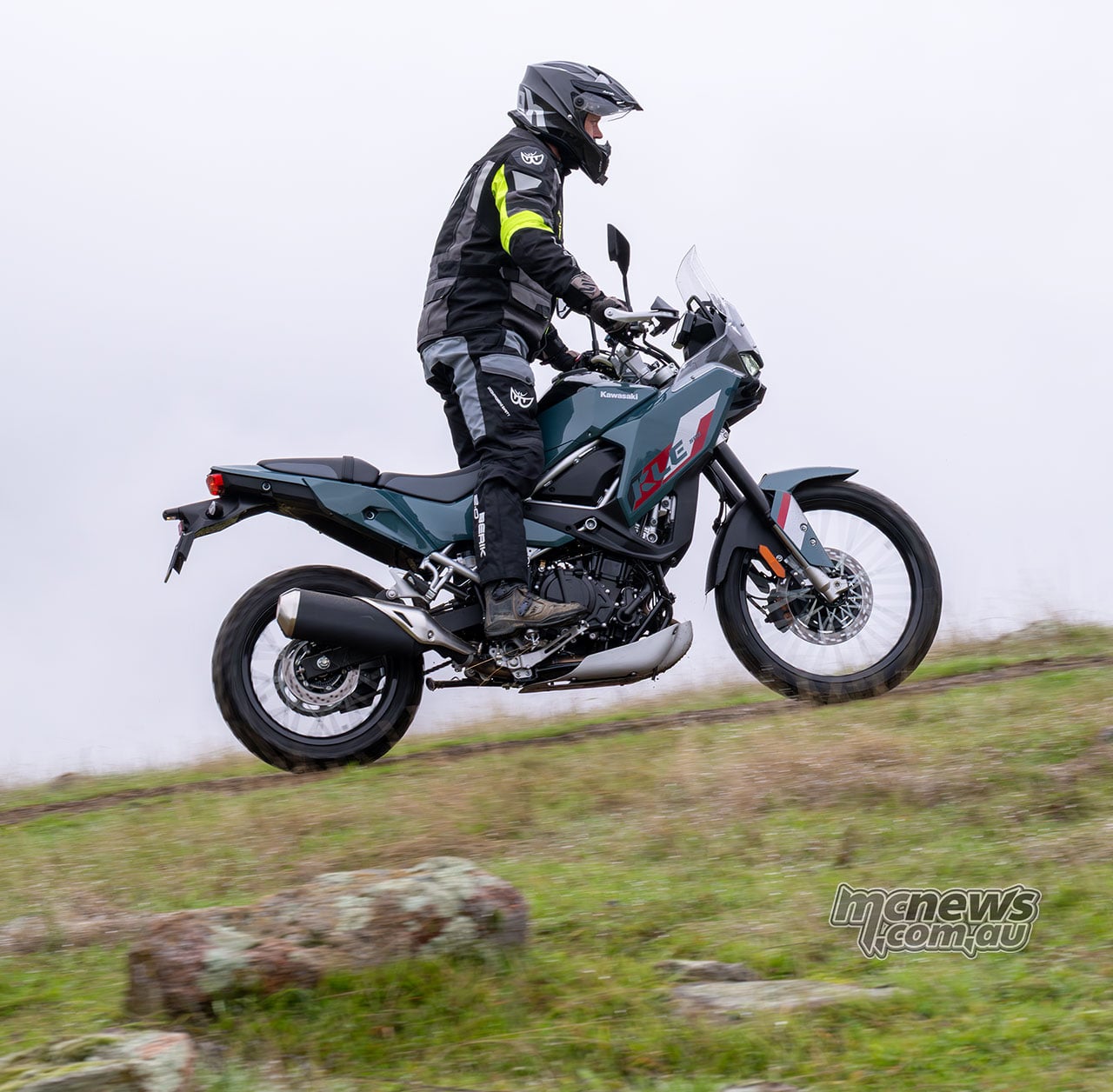
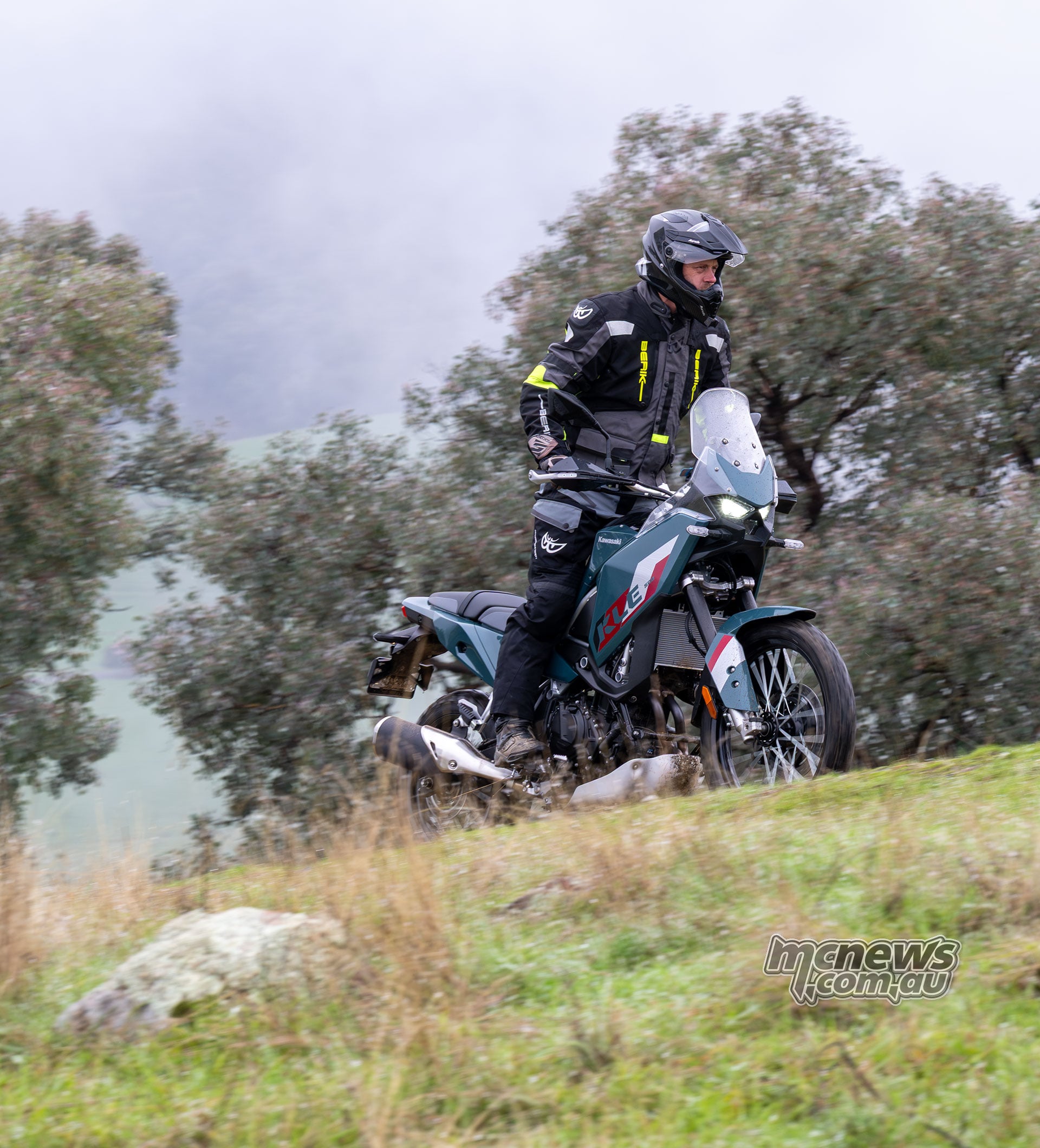
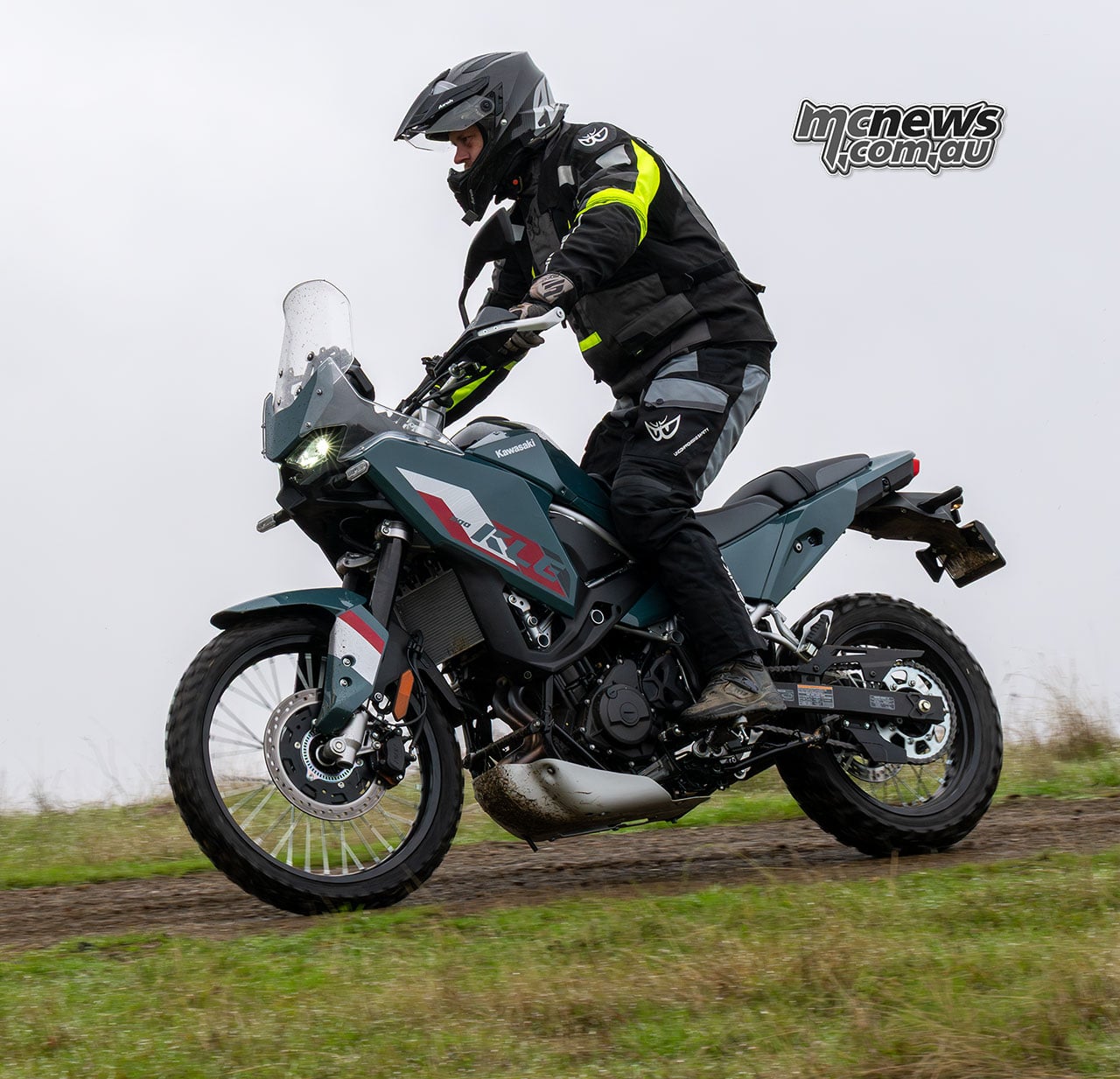
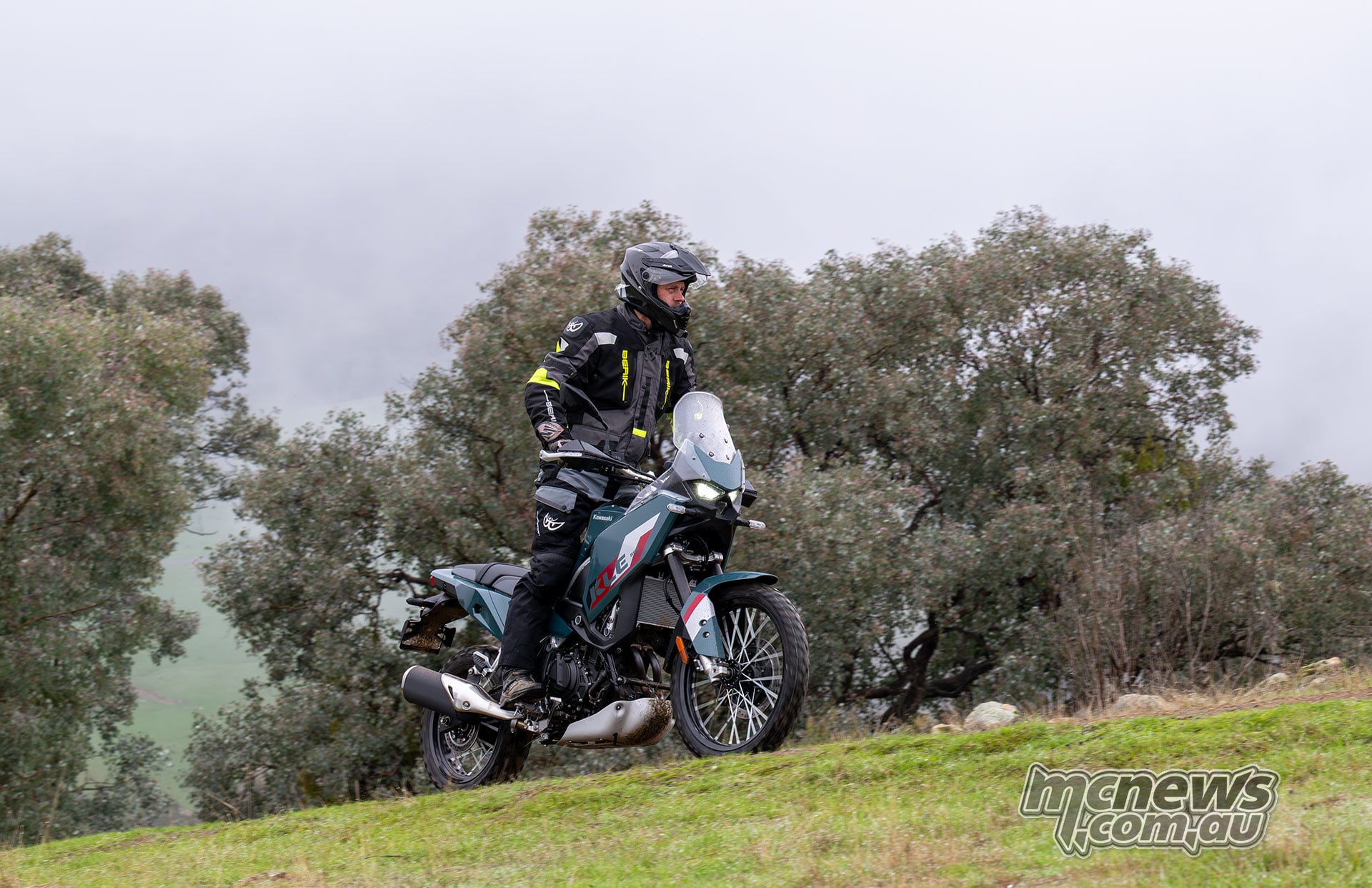
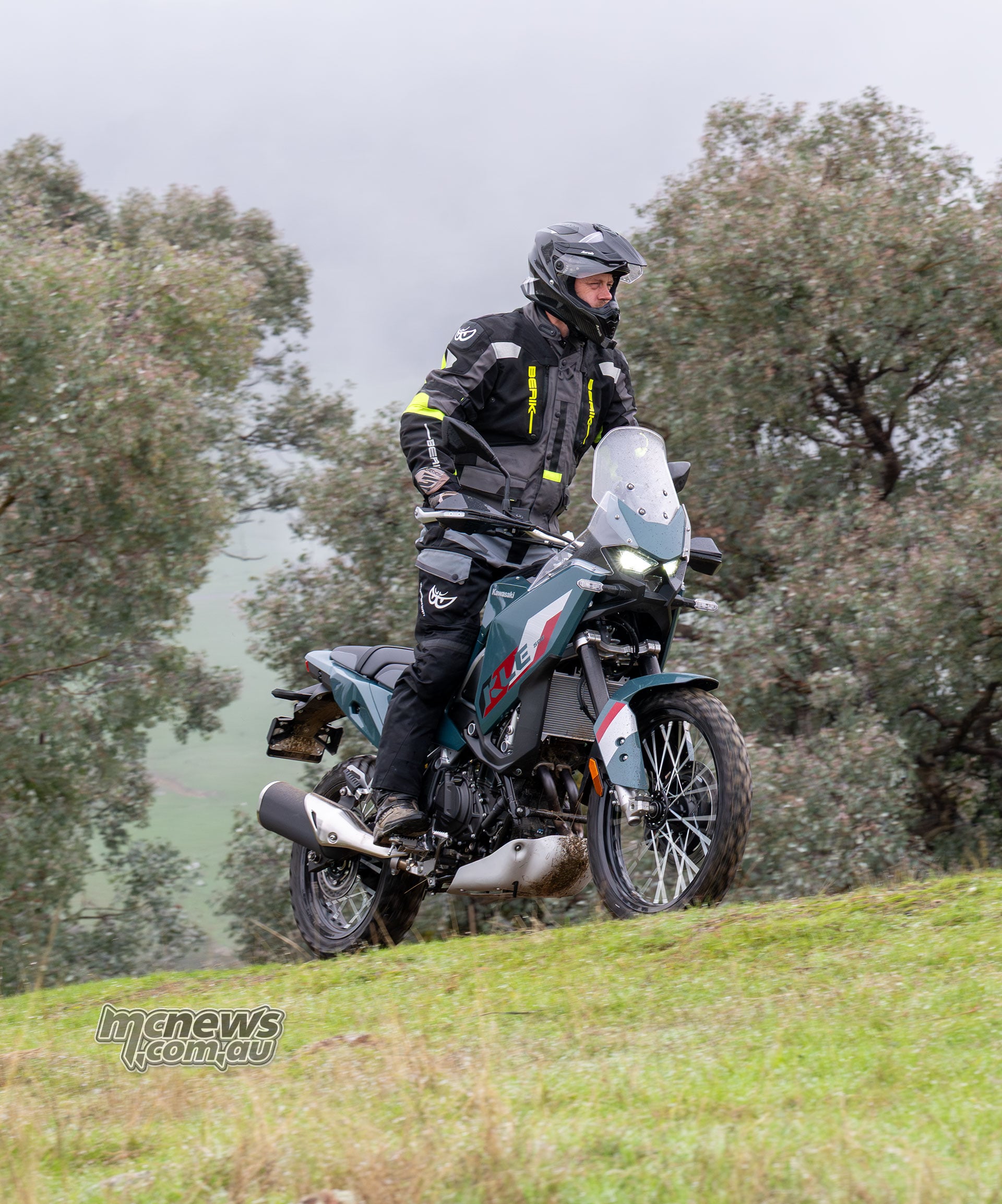
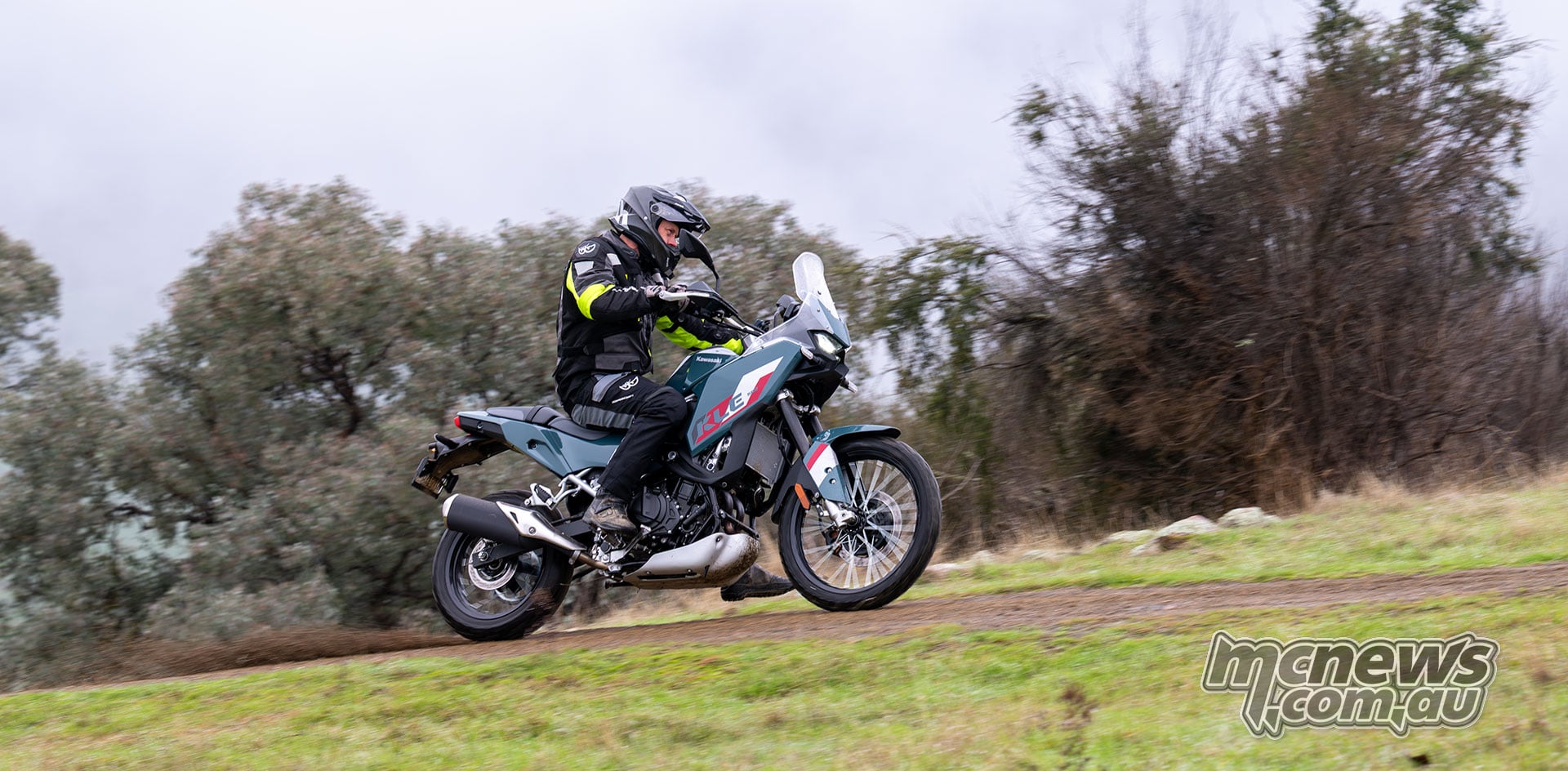
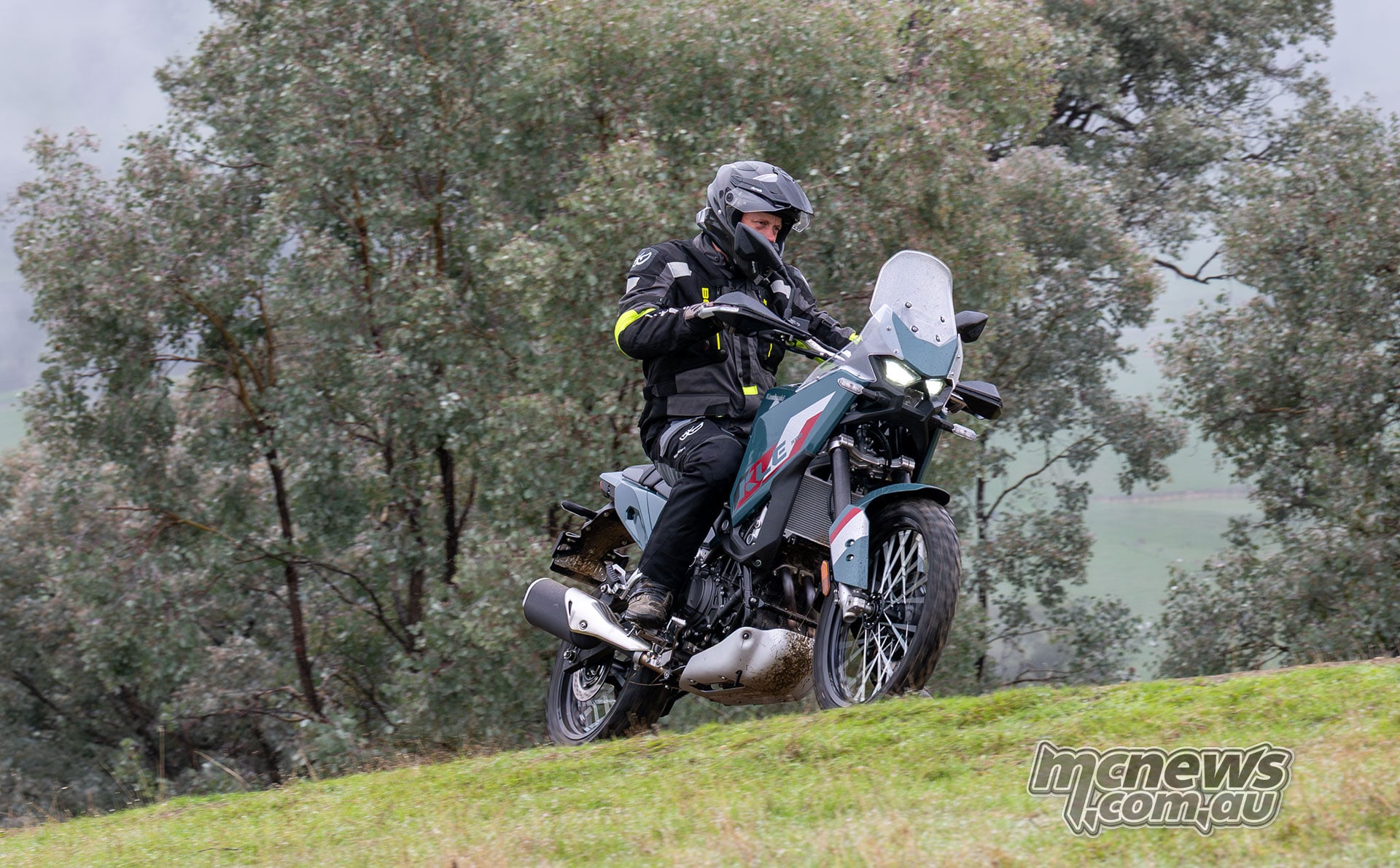
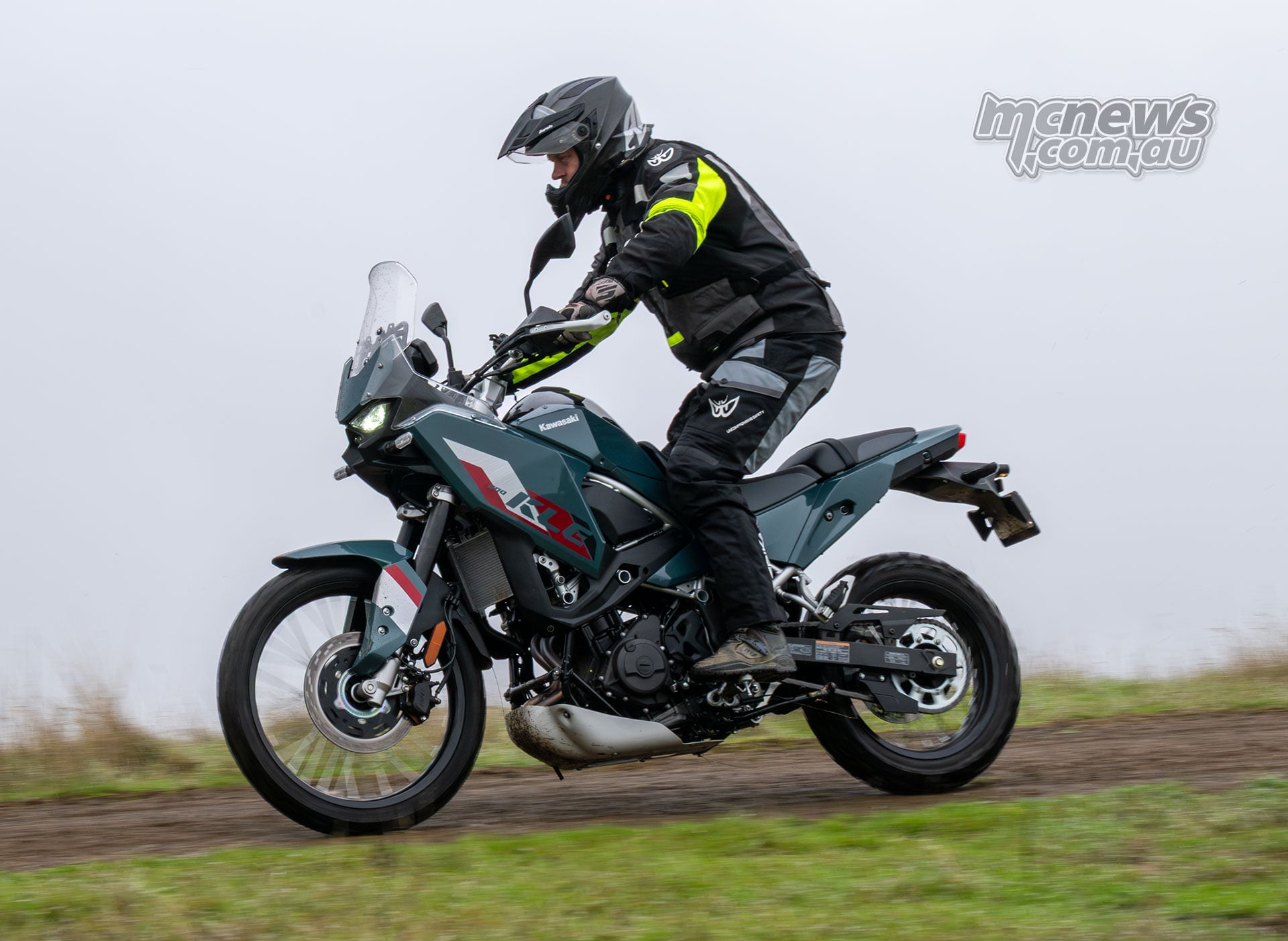
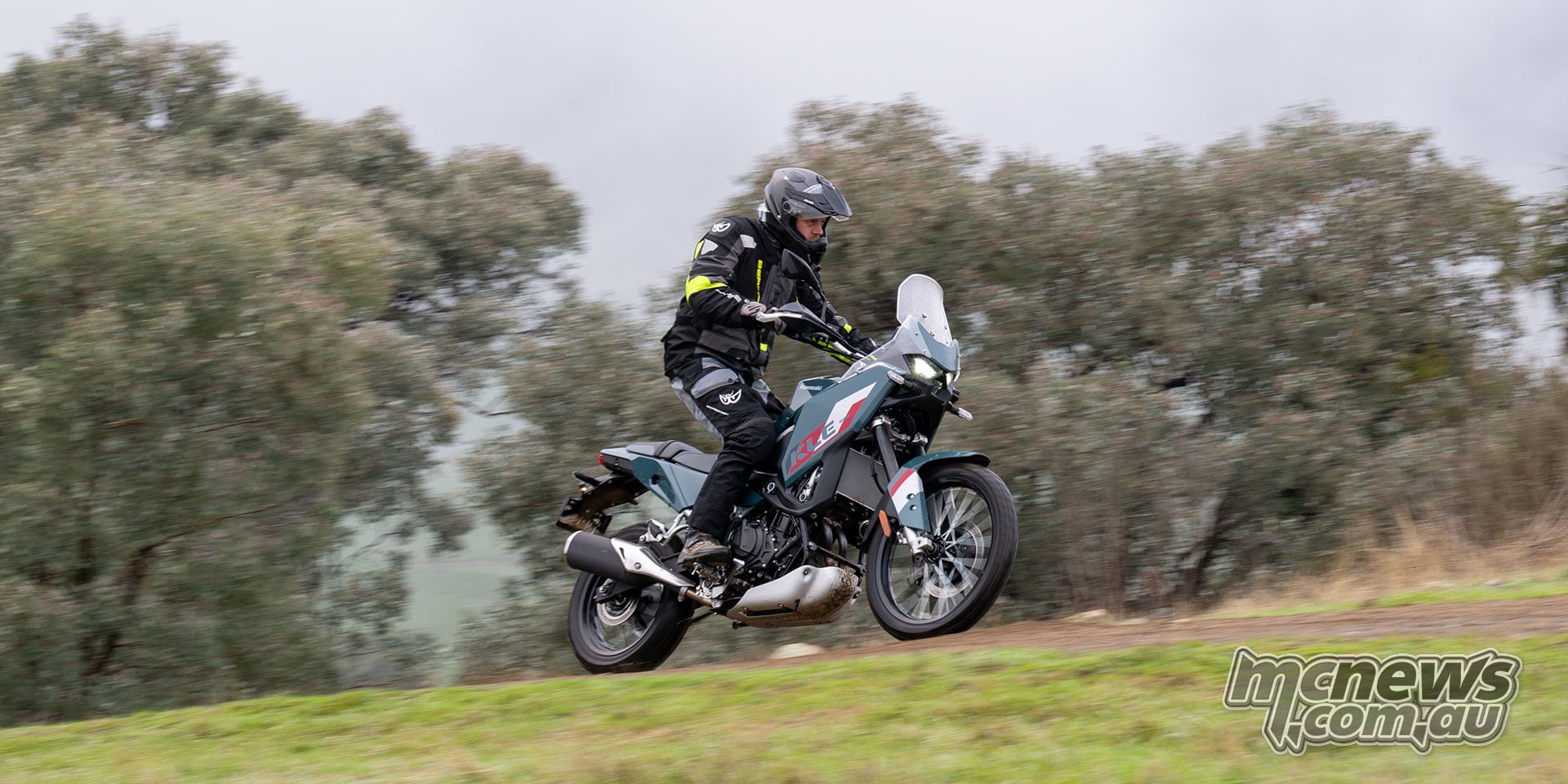
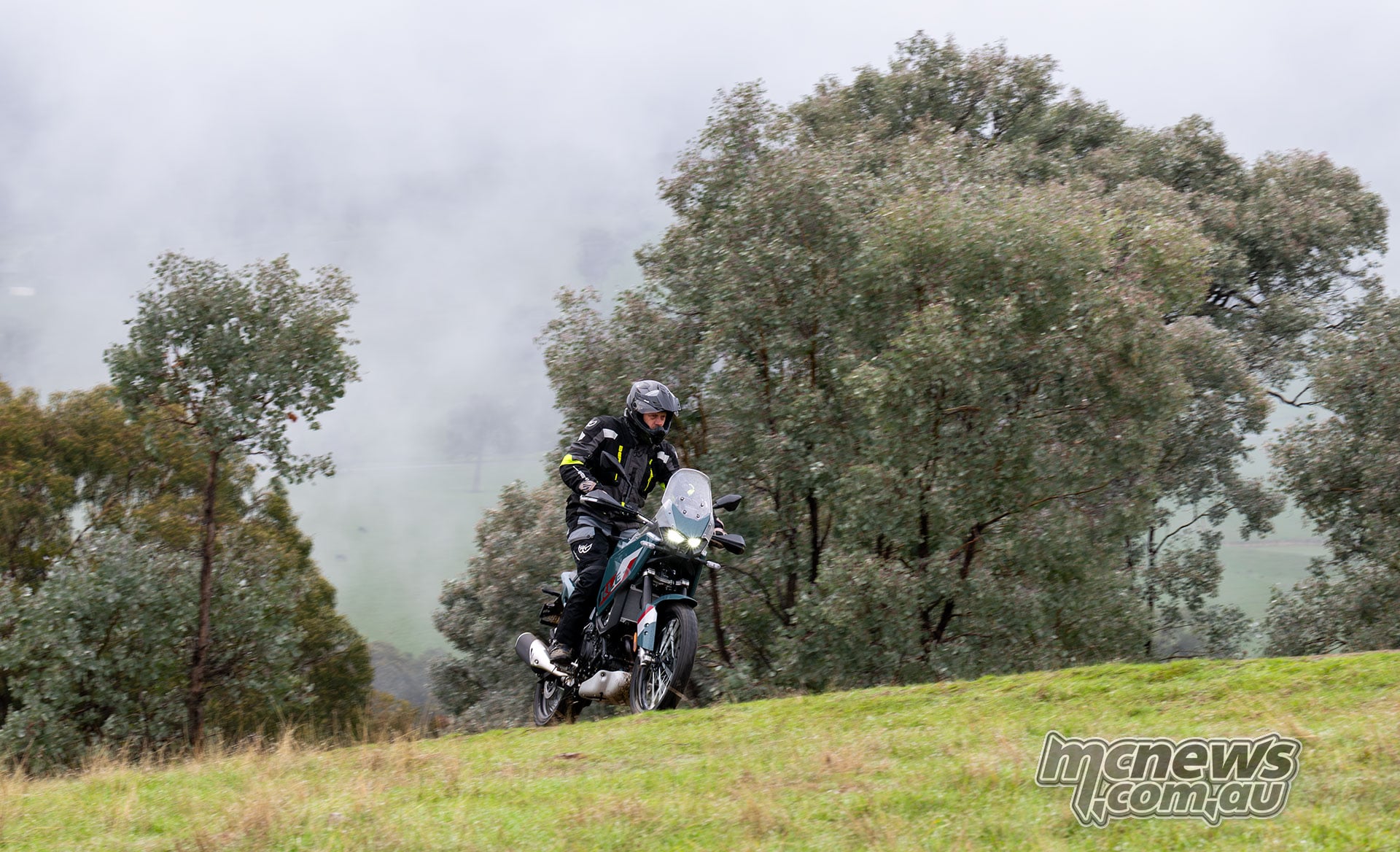
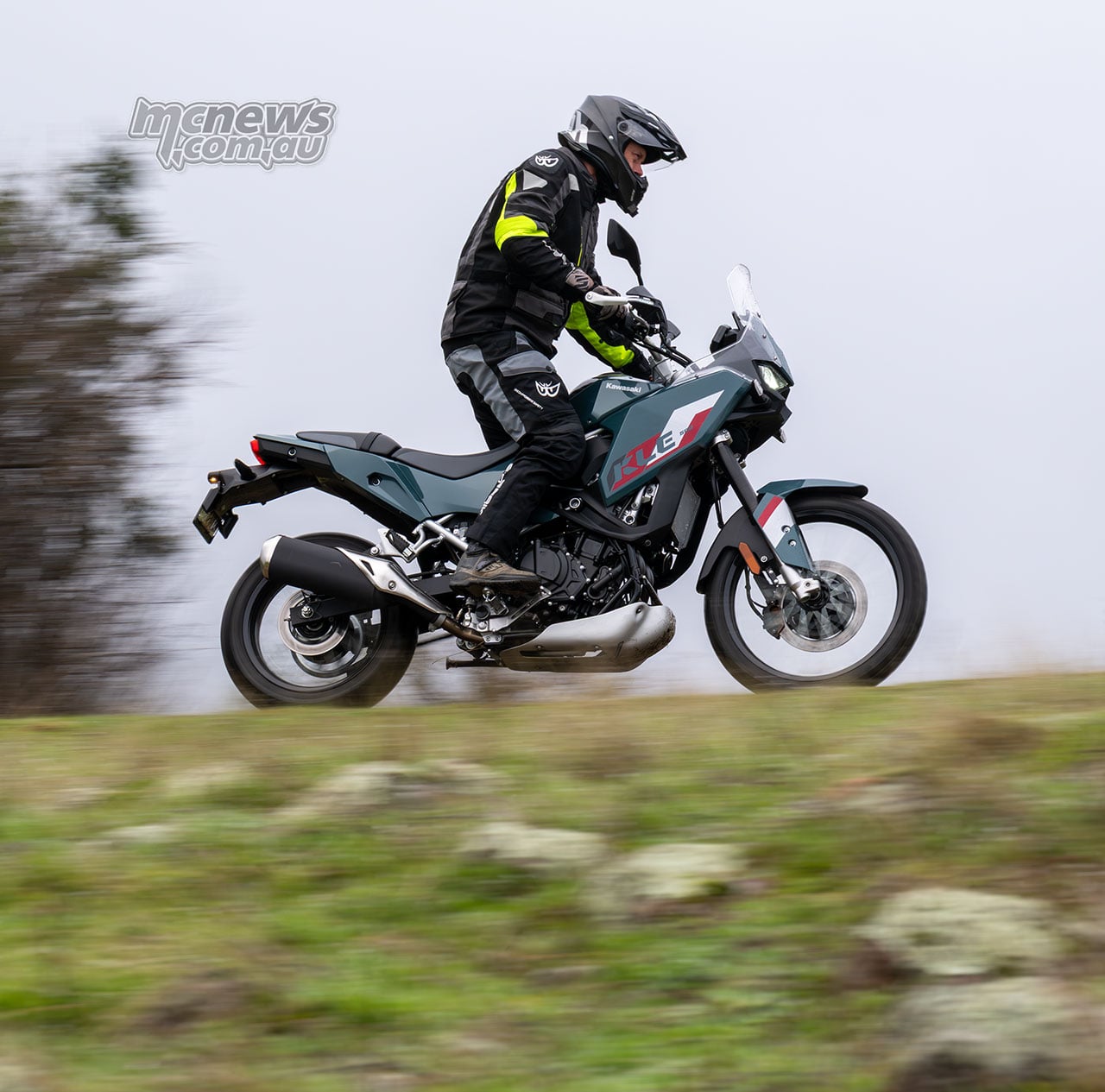
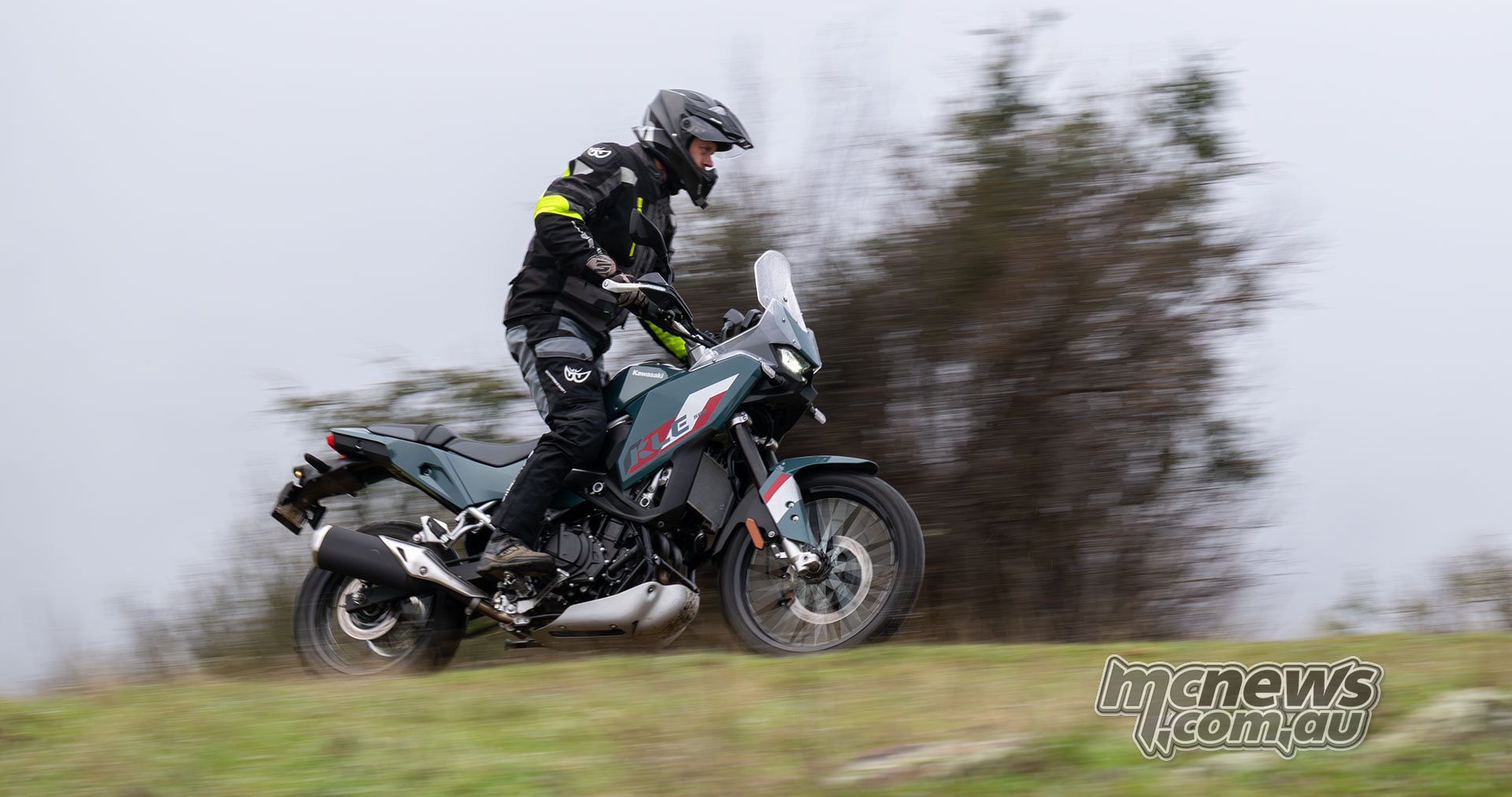
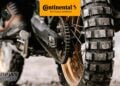
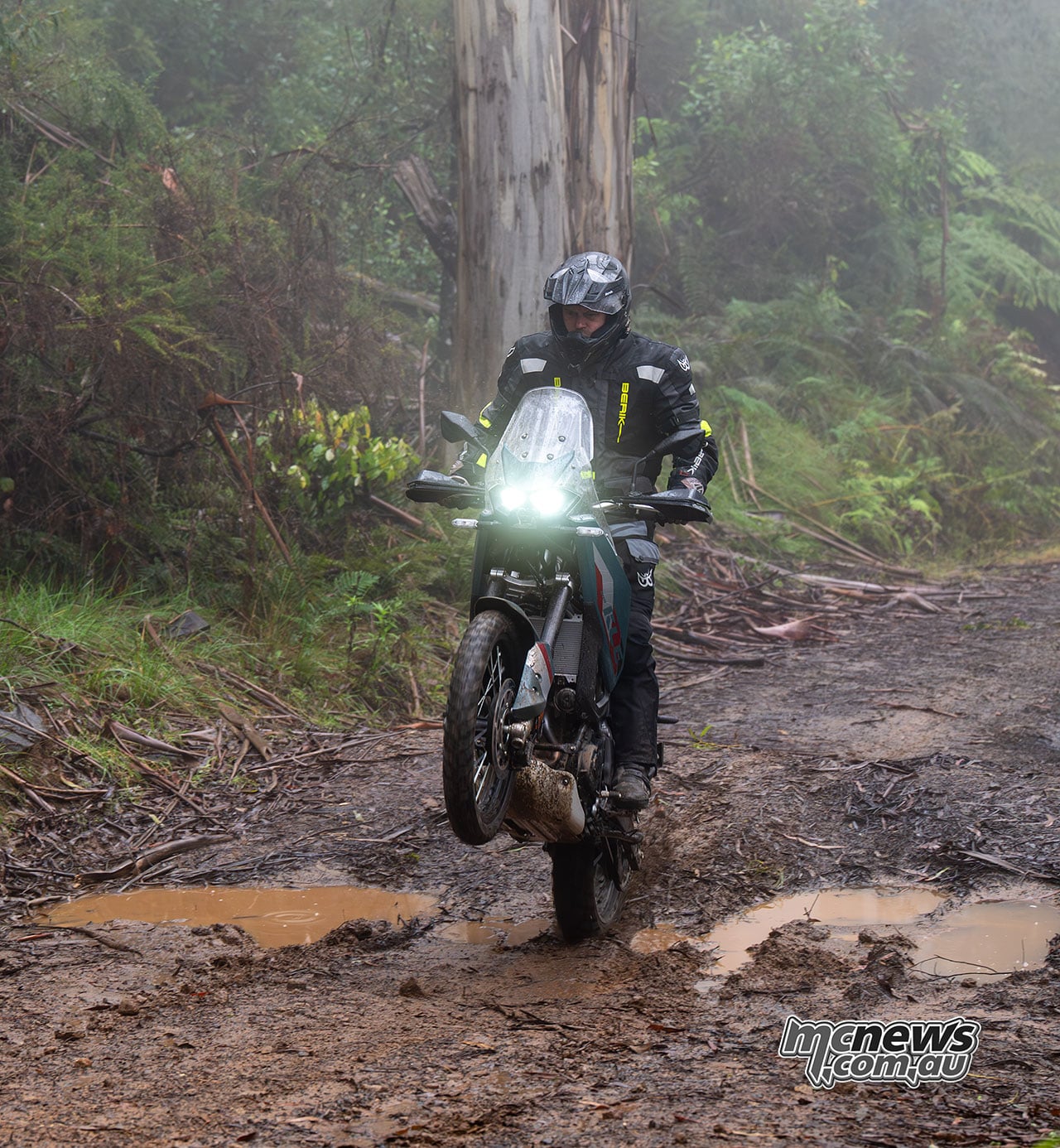
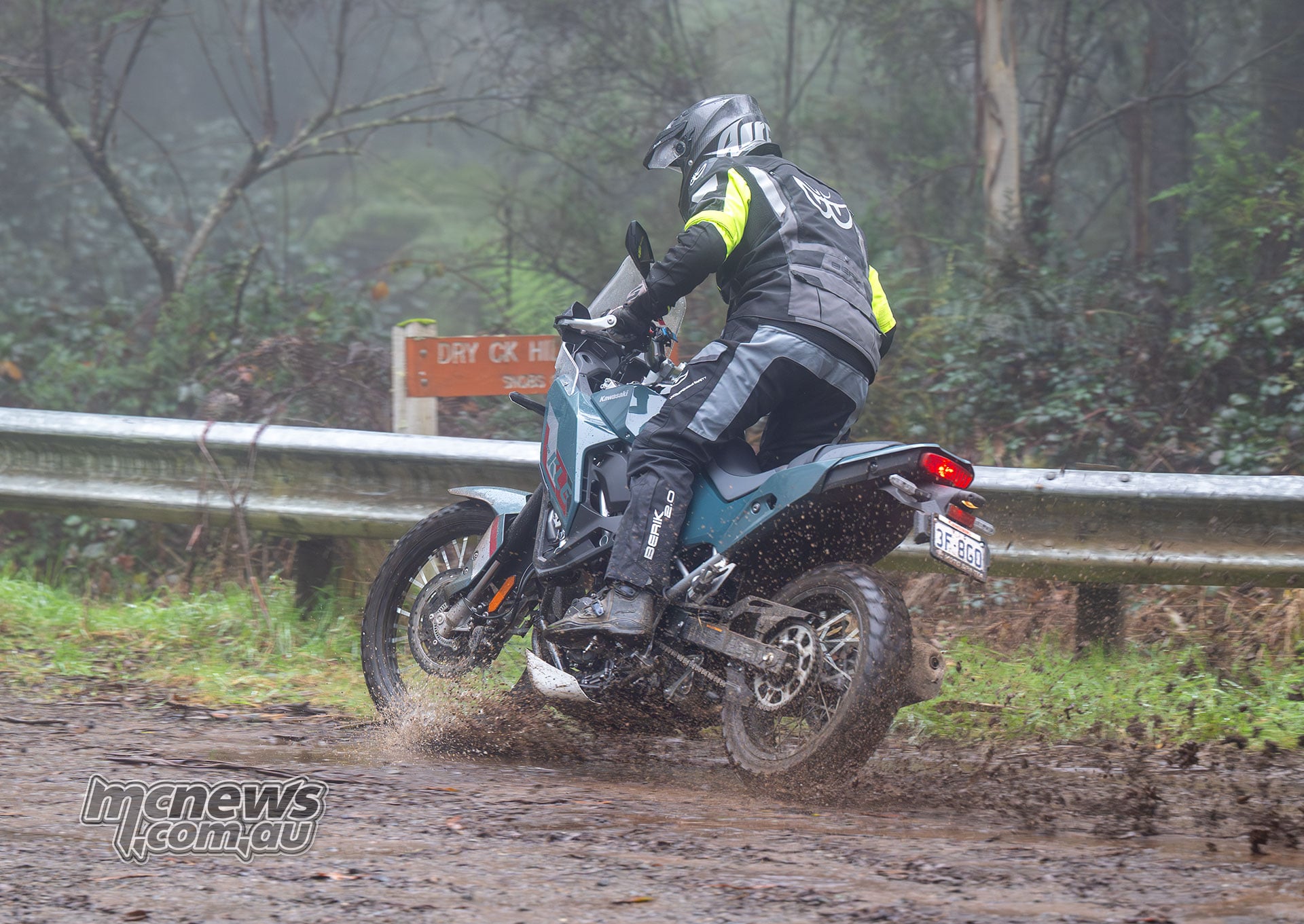
The other obvious limitation was the original rubber. It’s fine for tarmac and most dry gravel duties, but it was well out of its depth on the day of our photo shoot.
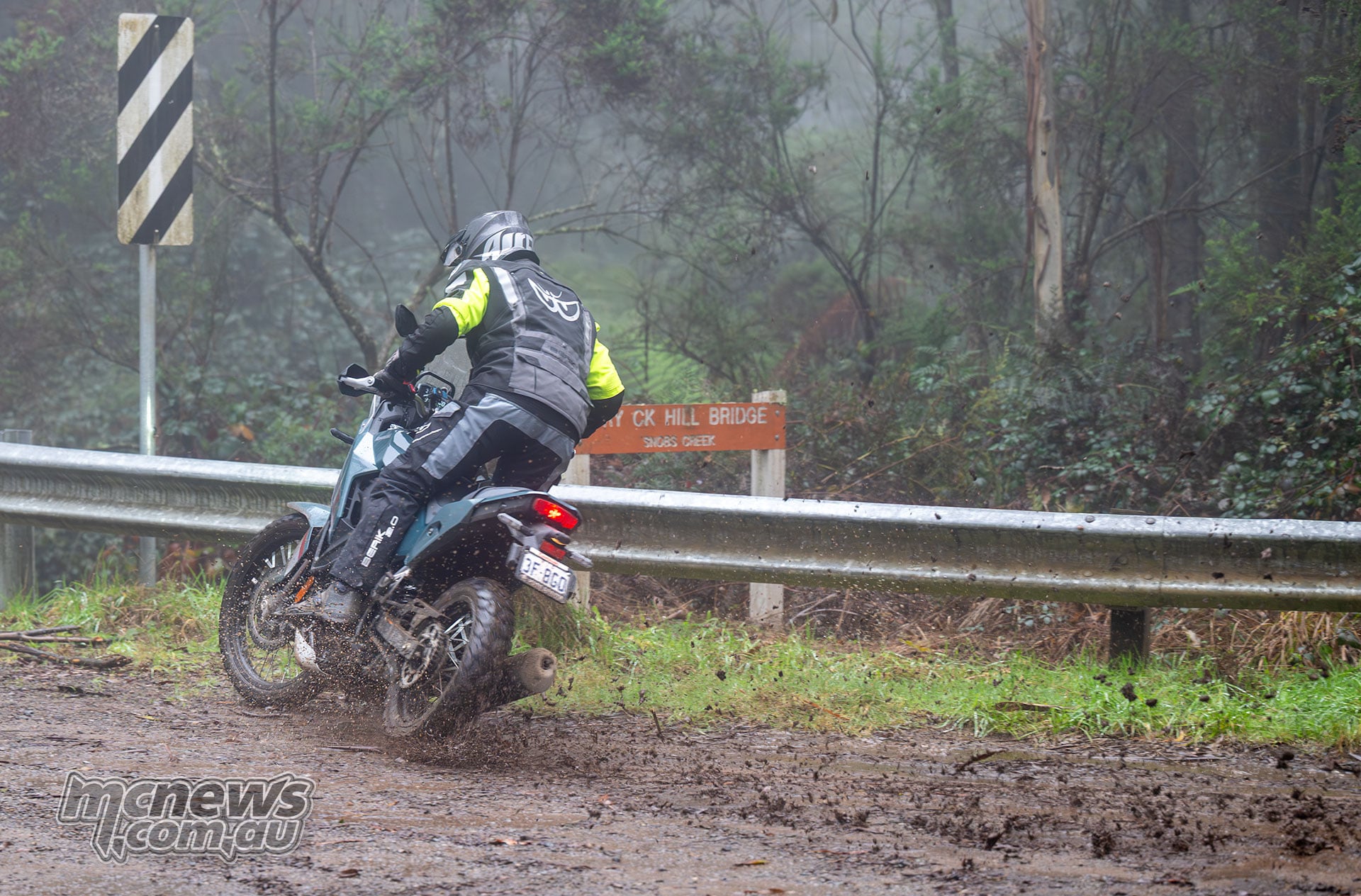
To be fair, conditions were fairly snotty. We had multiple front-end slides while trying to get decent dynamic shots, and I’m surprised I managed to keep it upright. It was very, very slick in places.
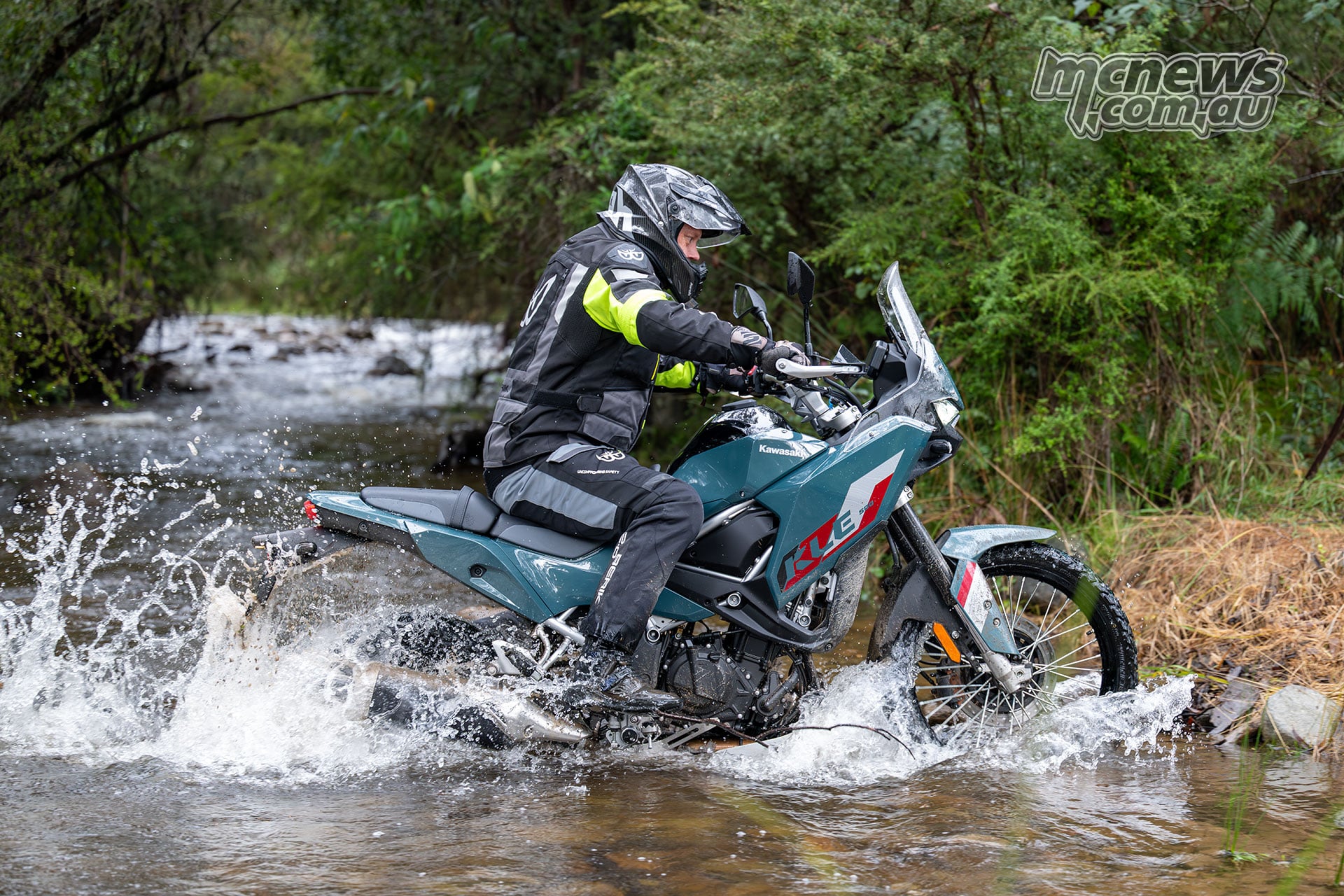
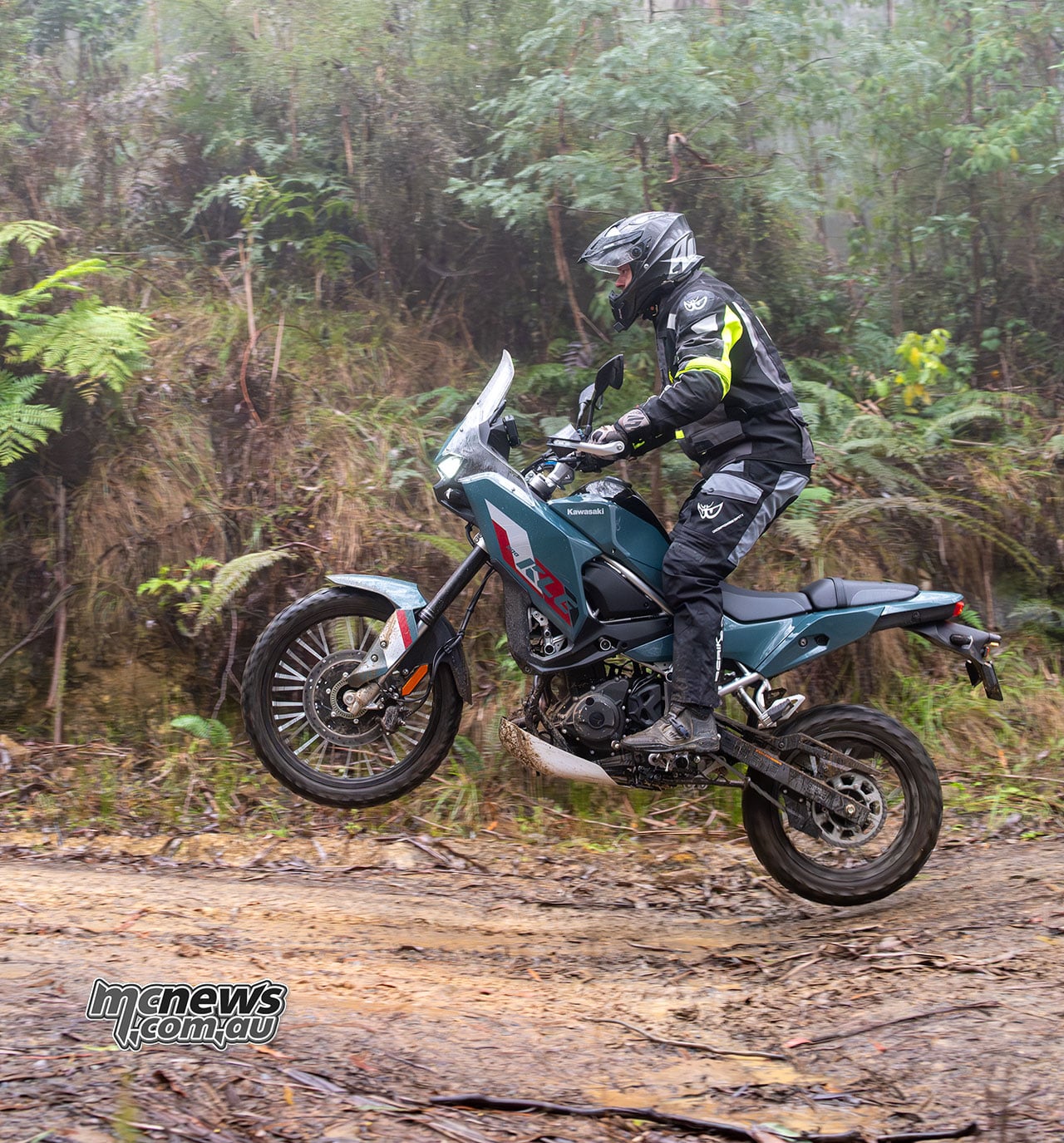
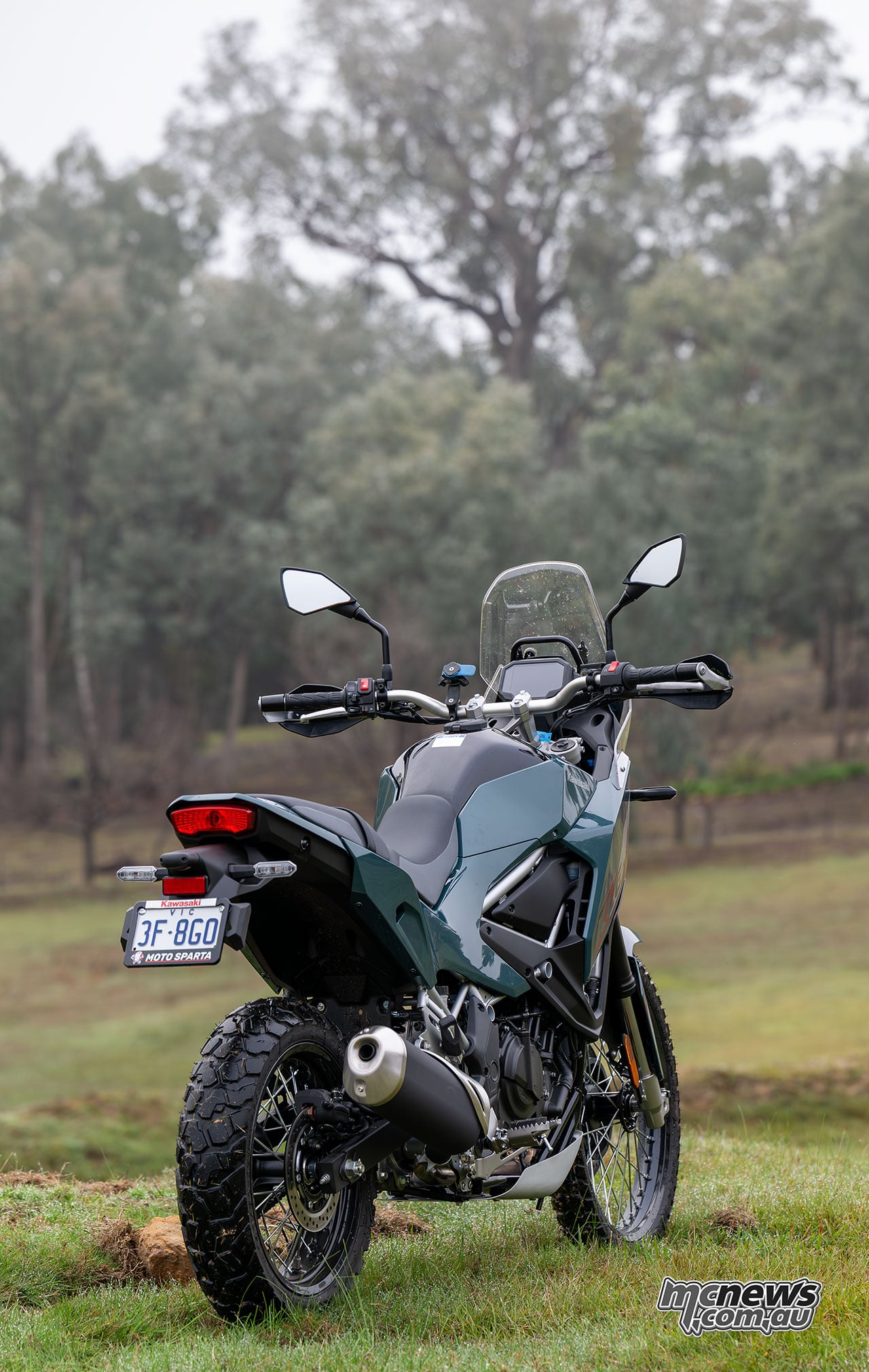
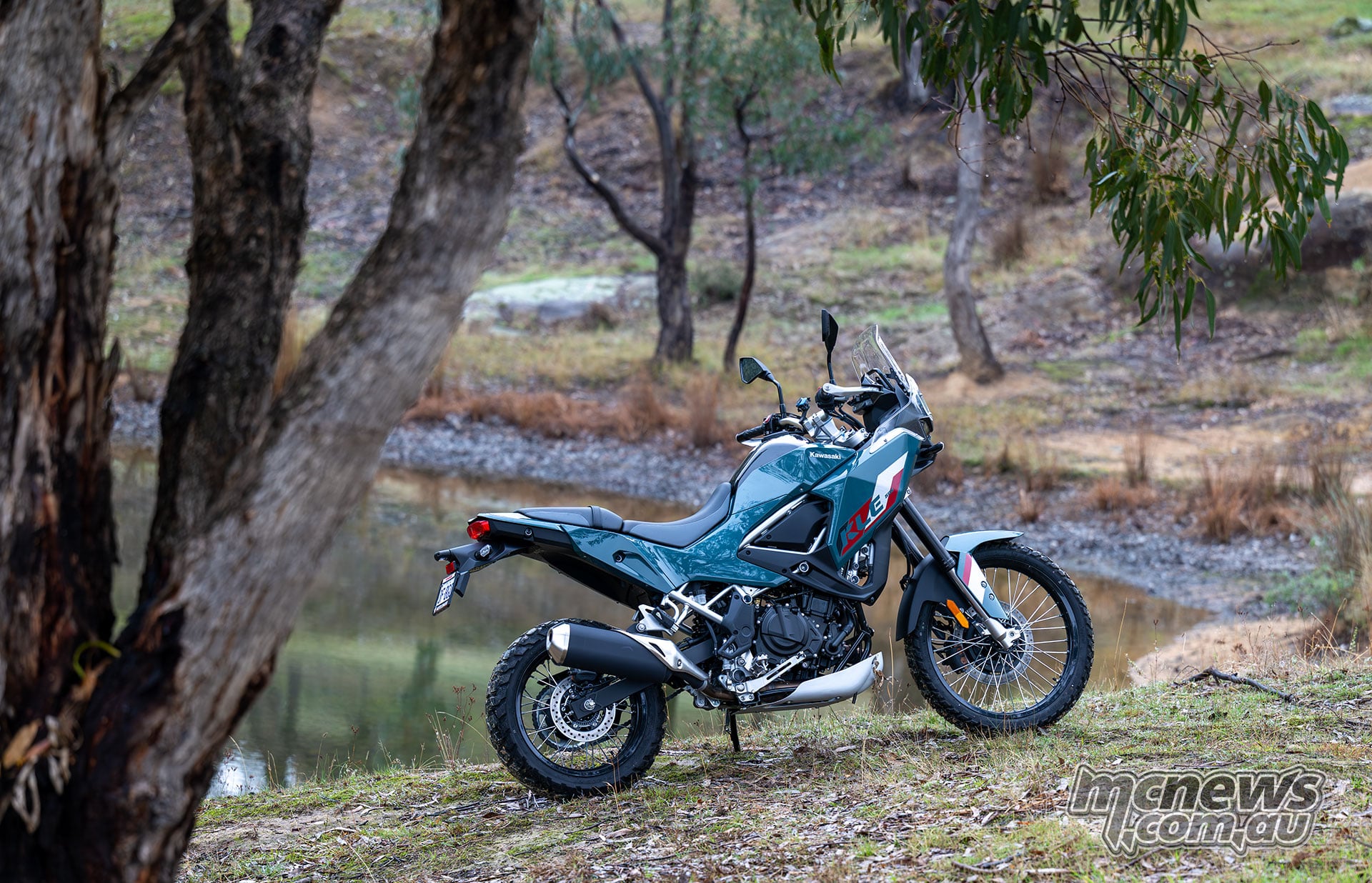
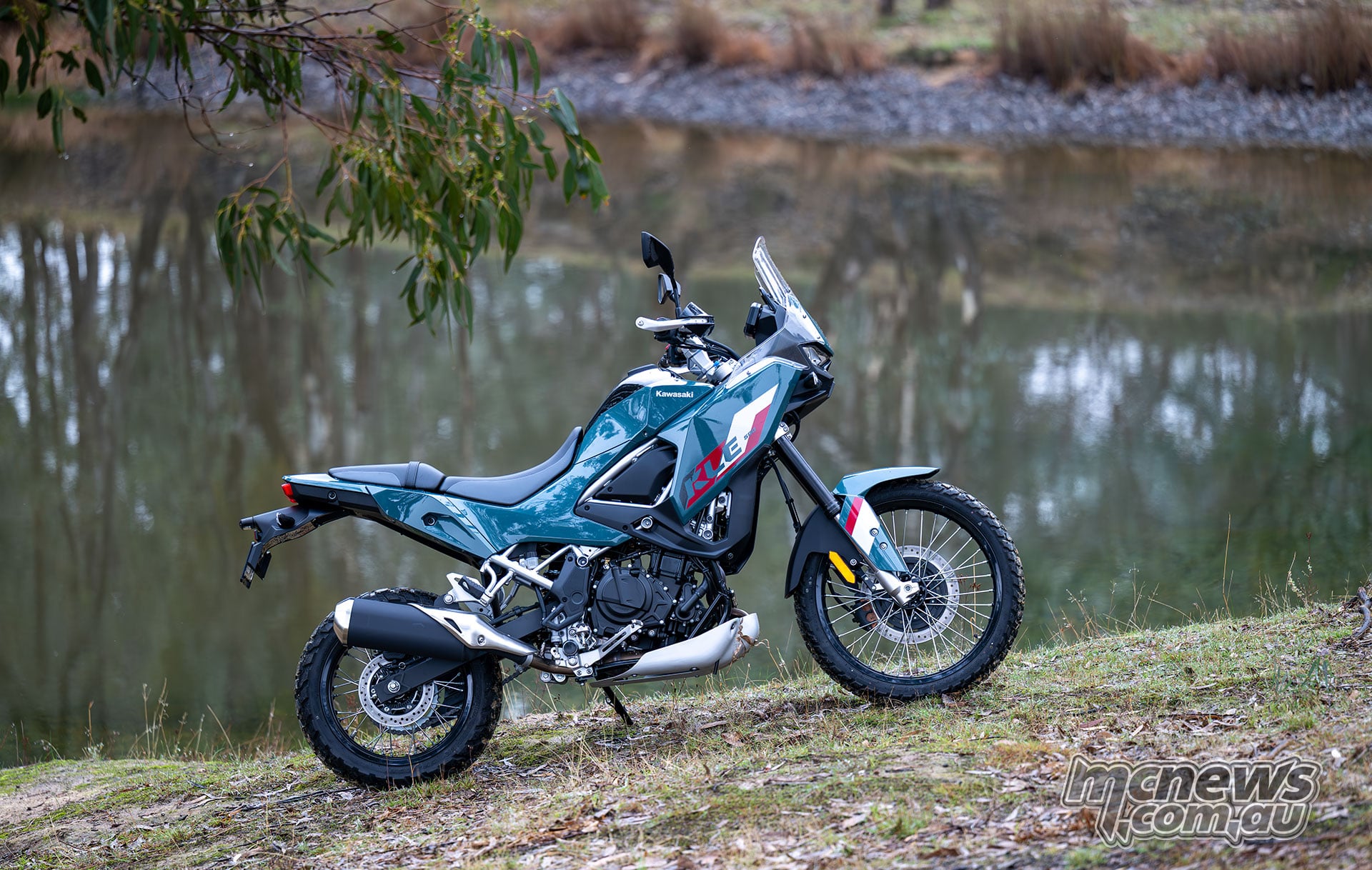
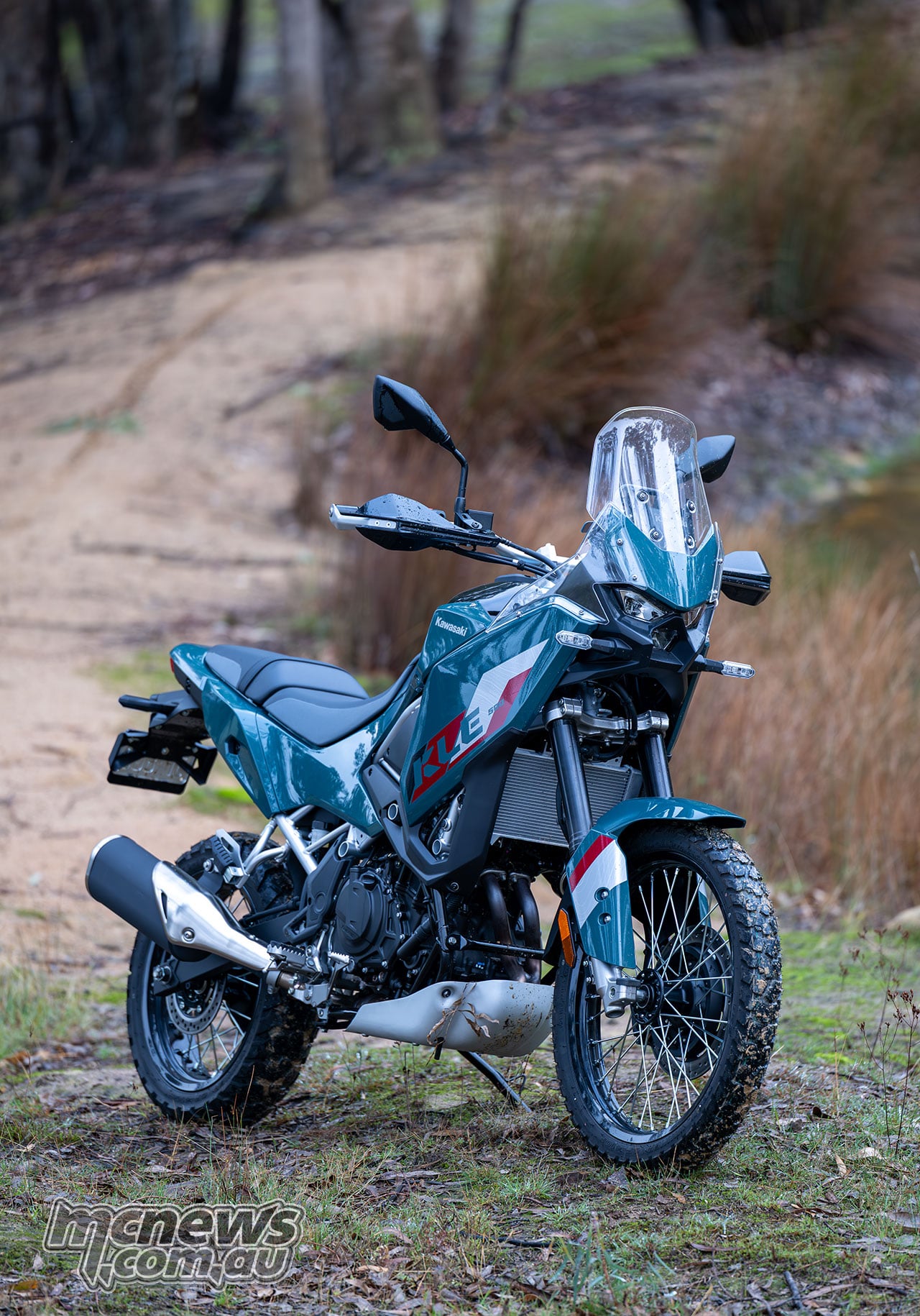
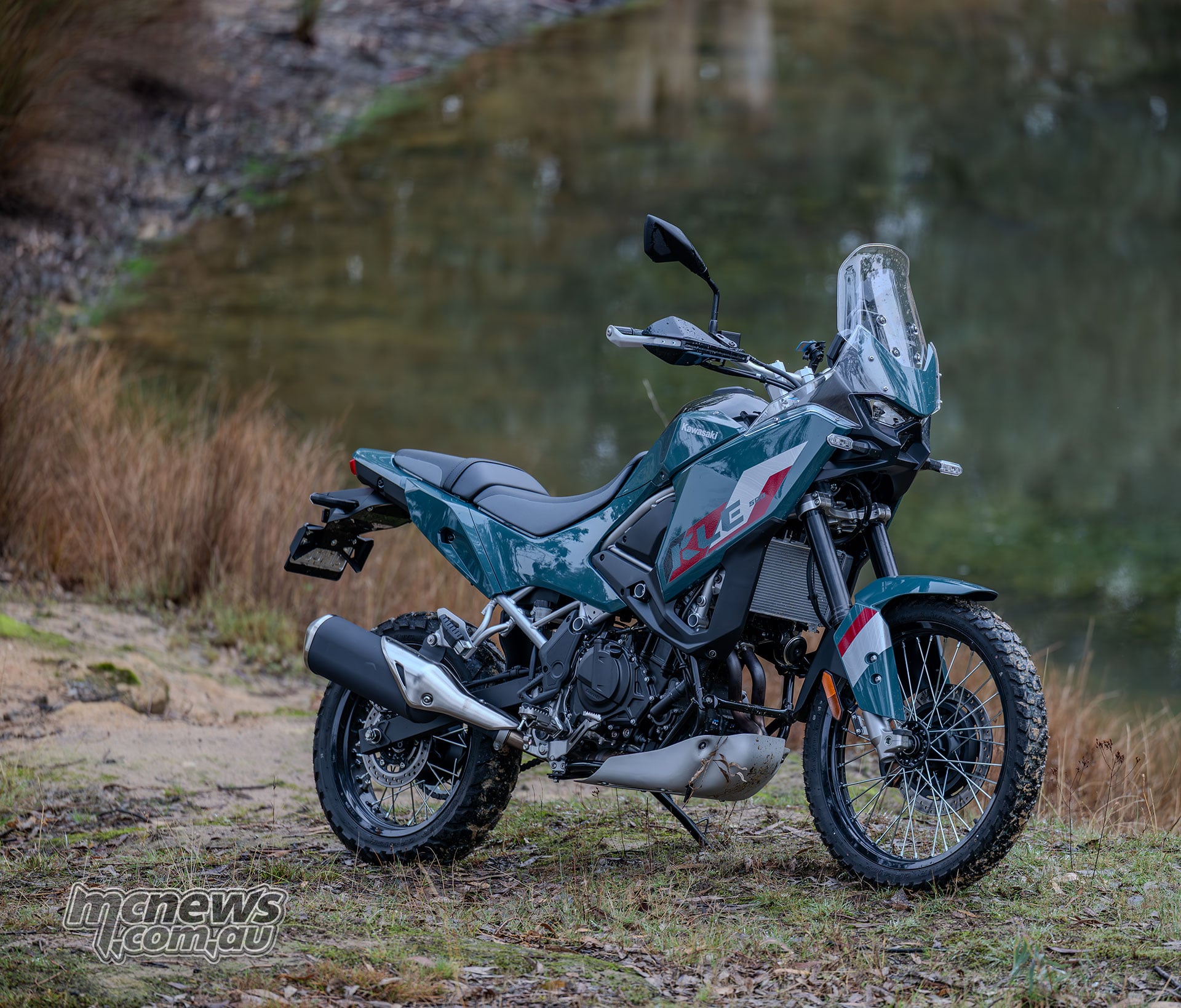
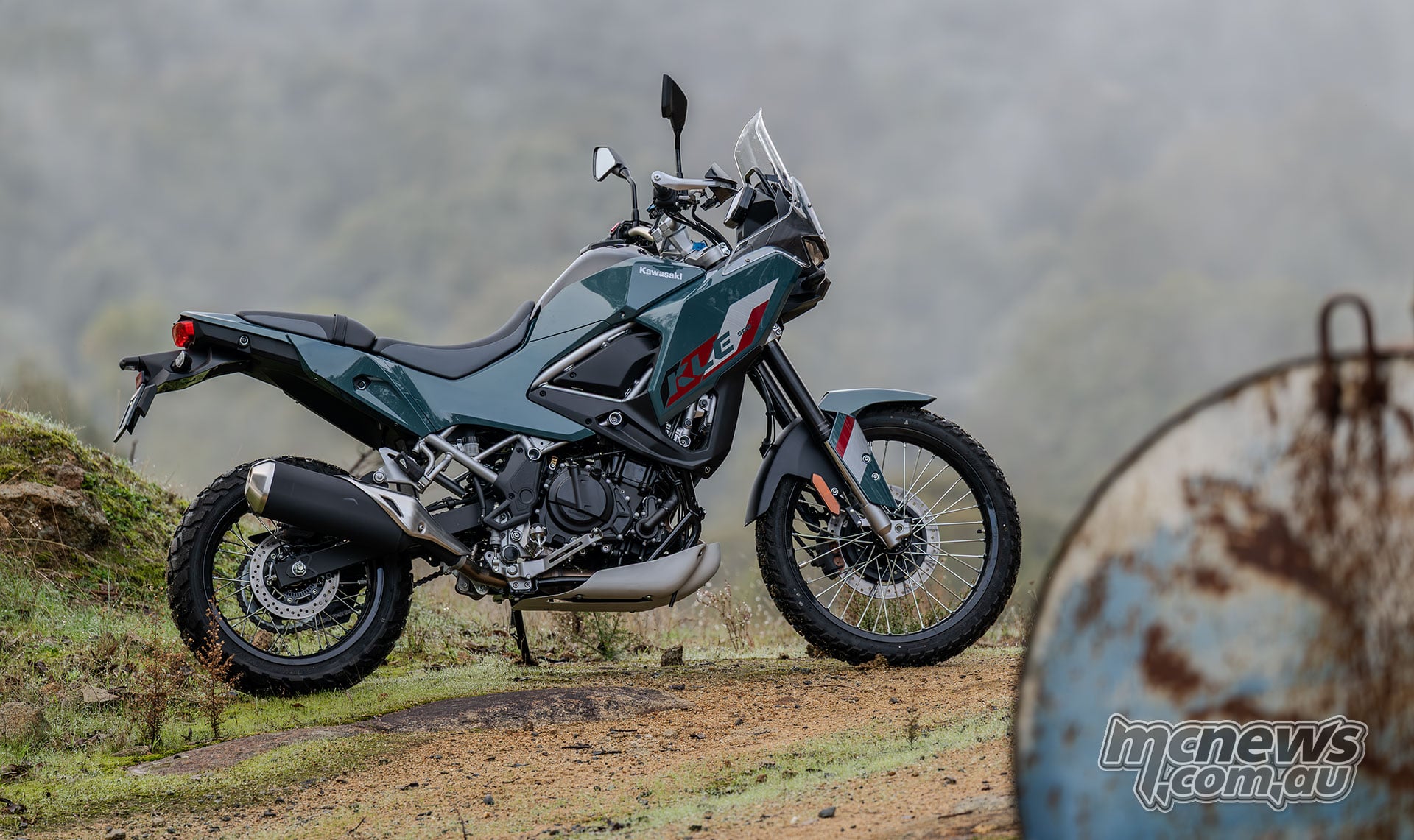
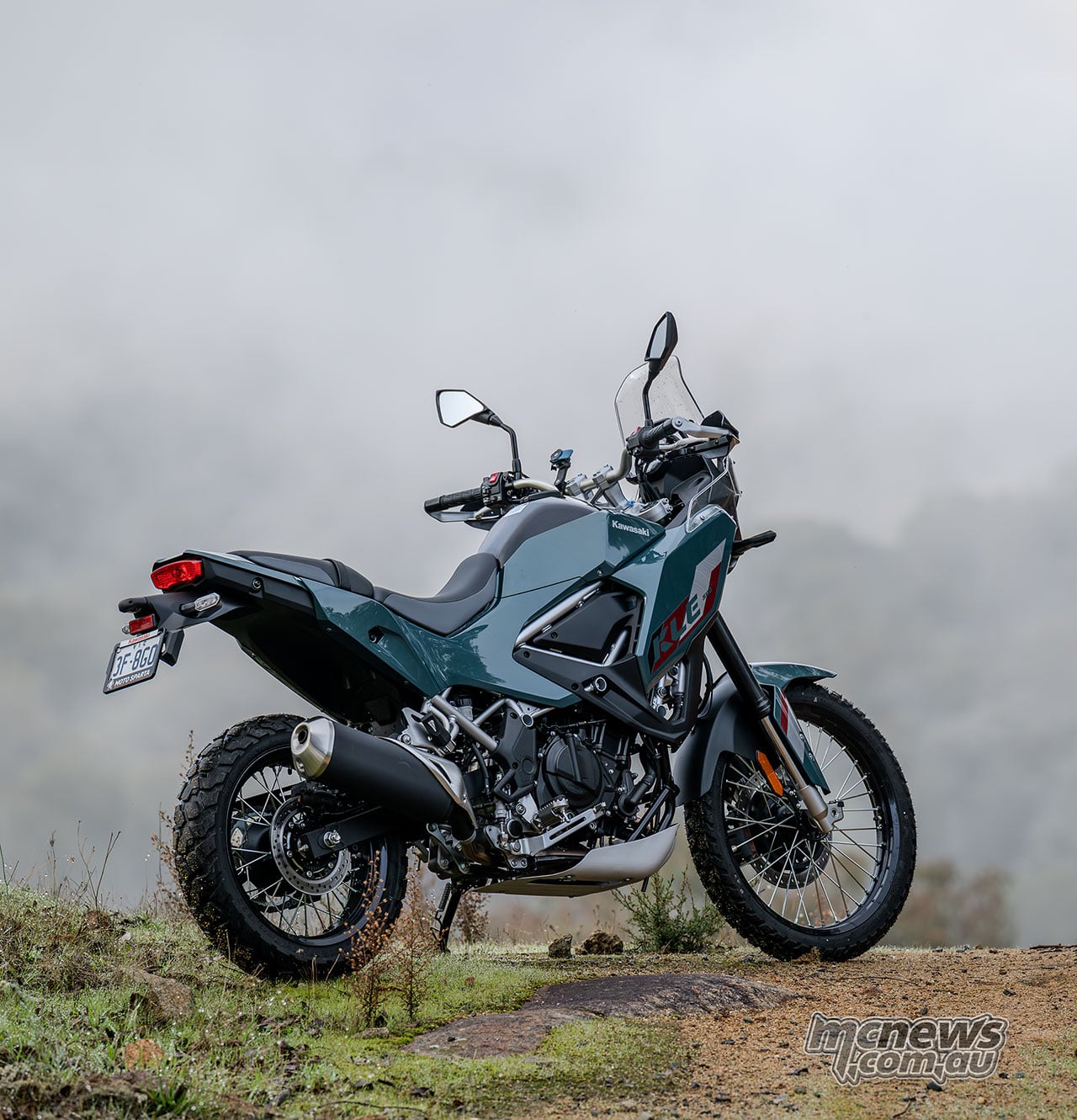
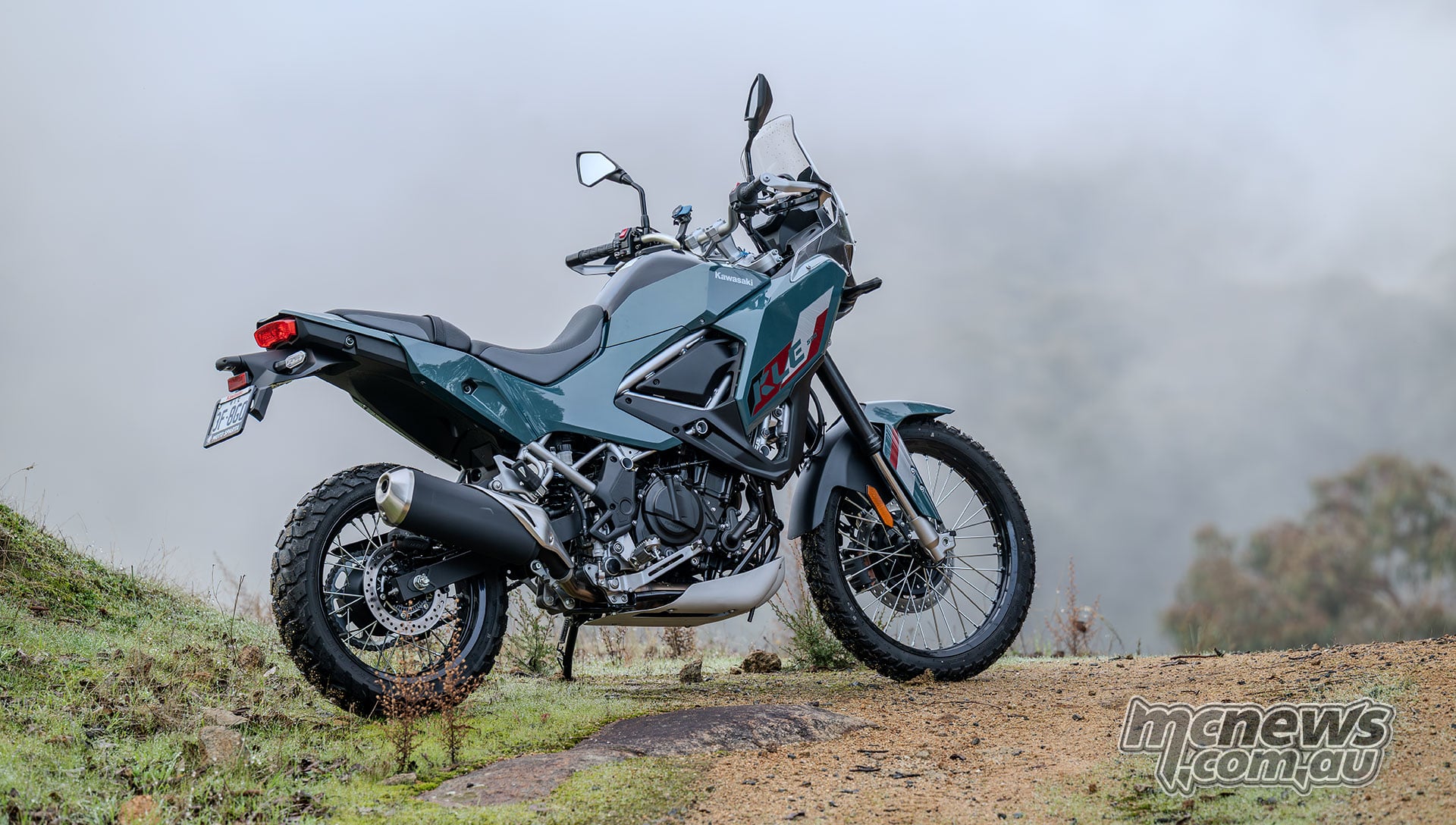
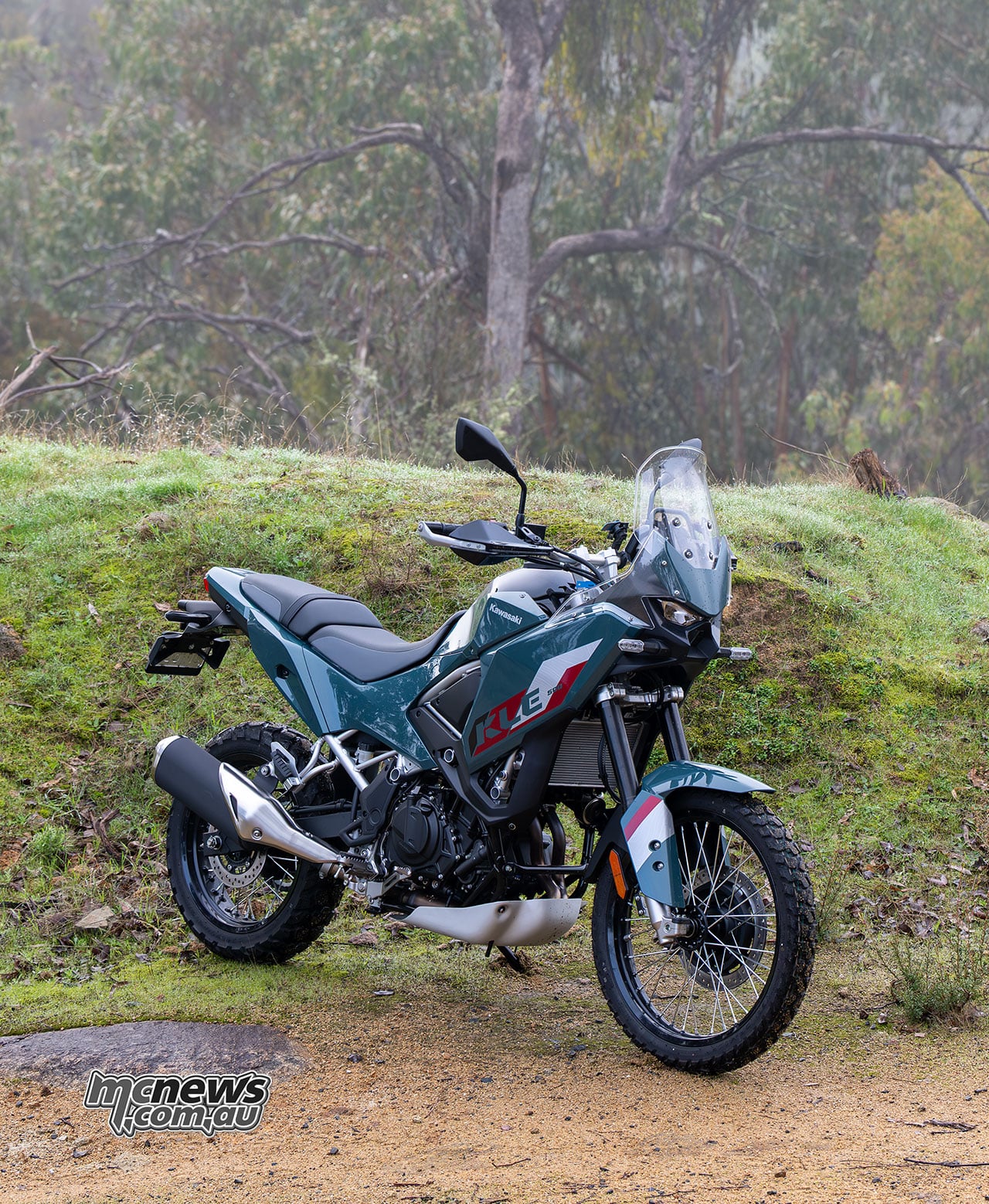
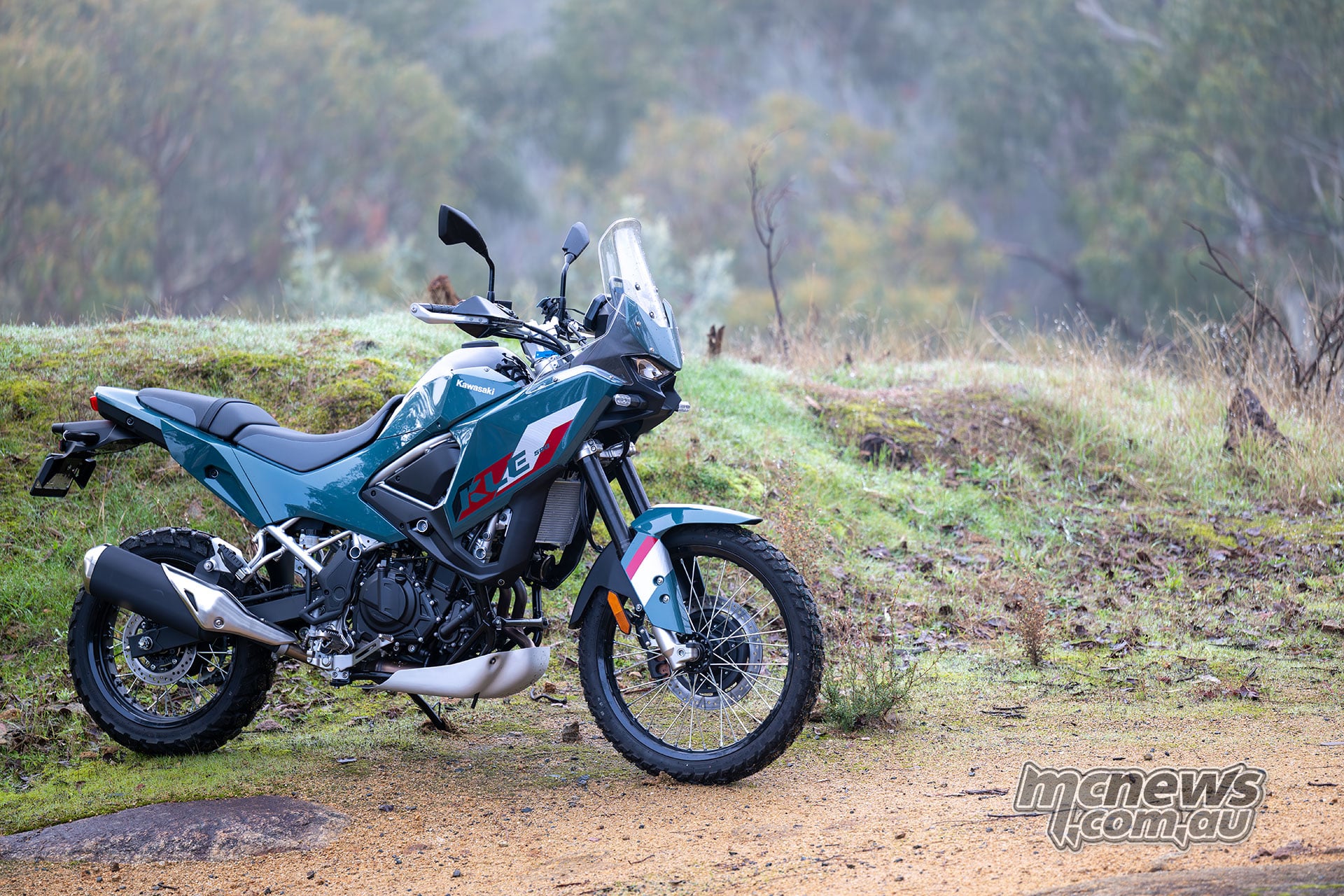
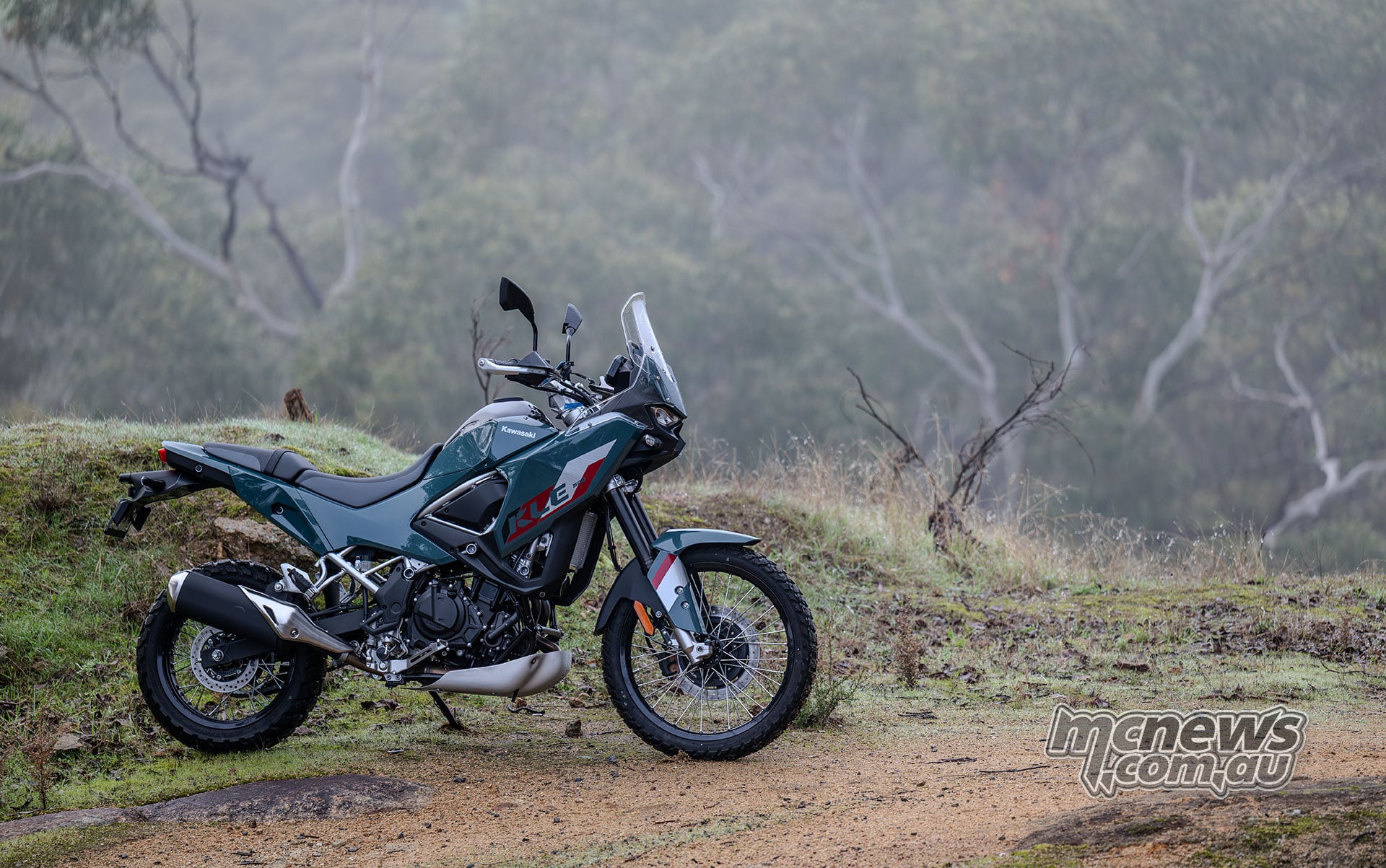
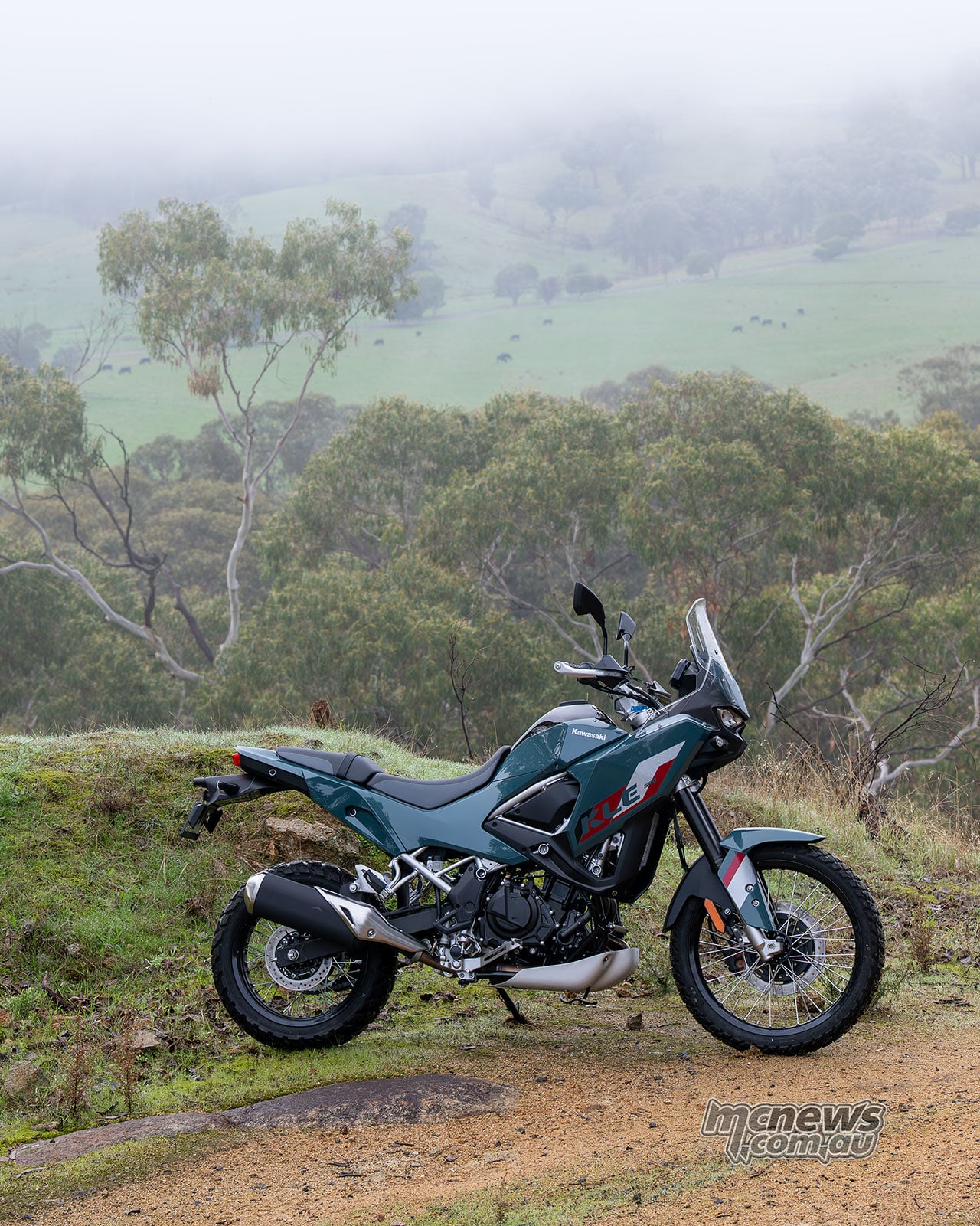
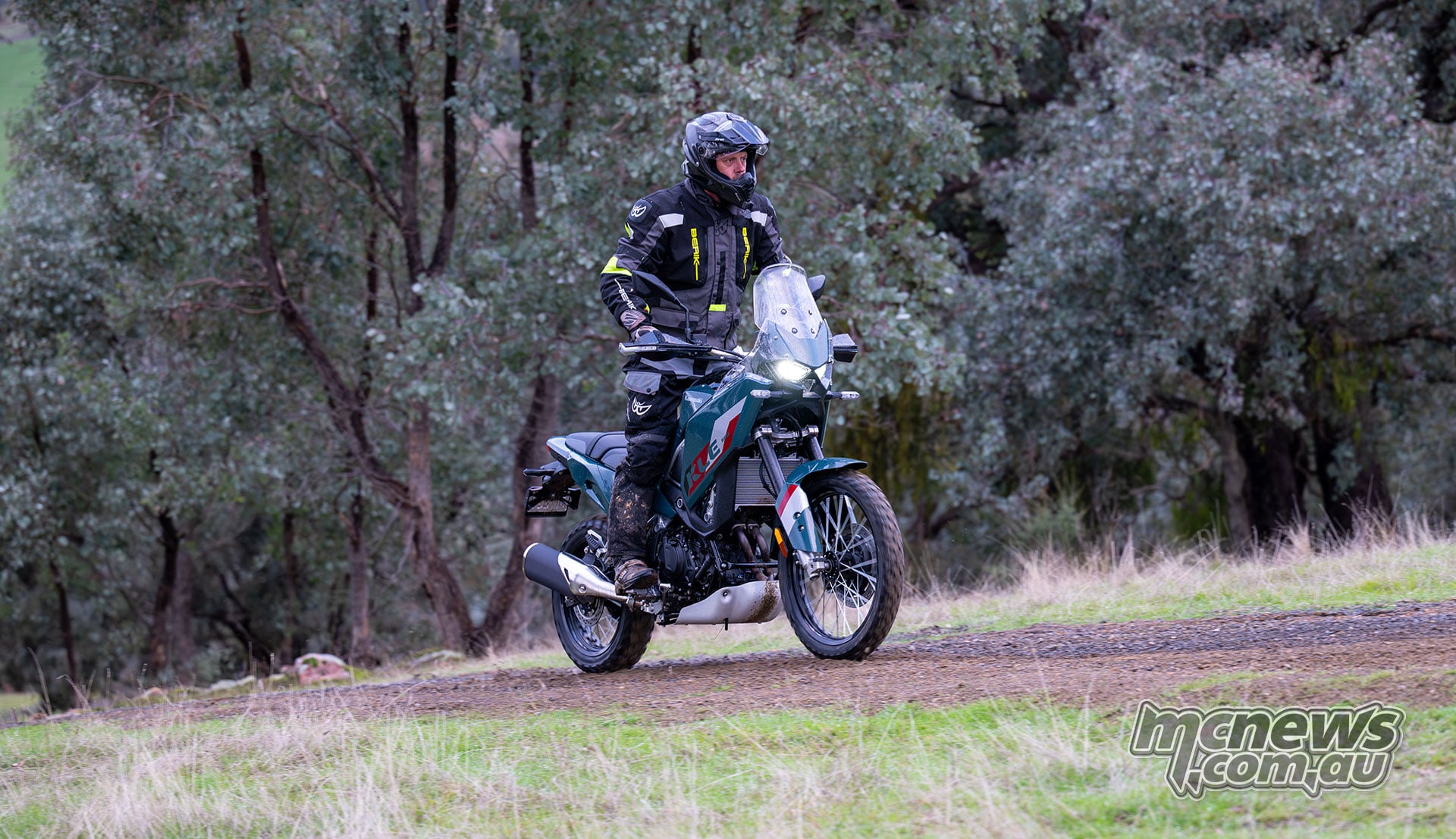
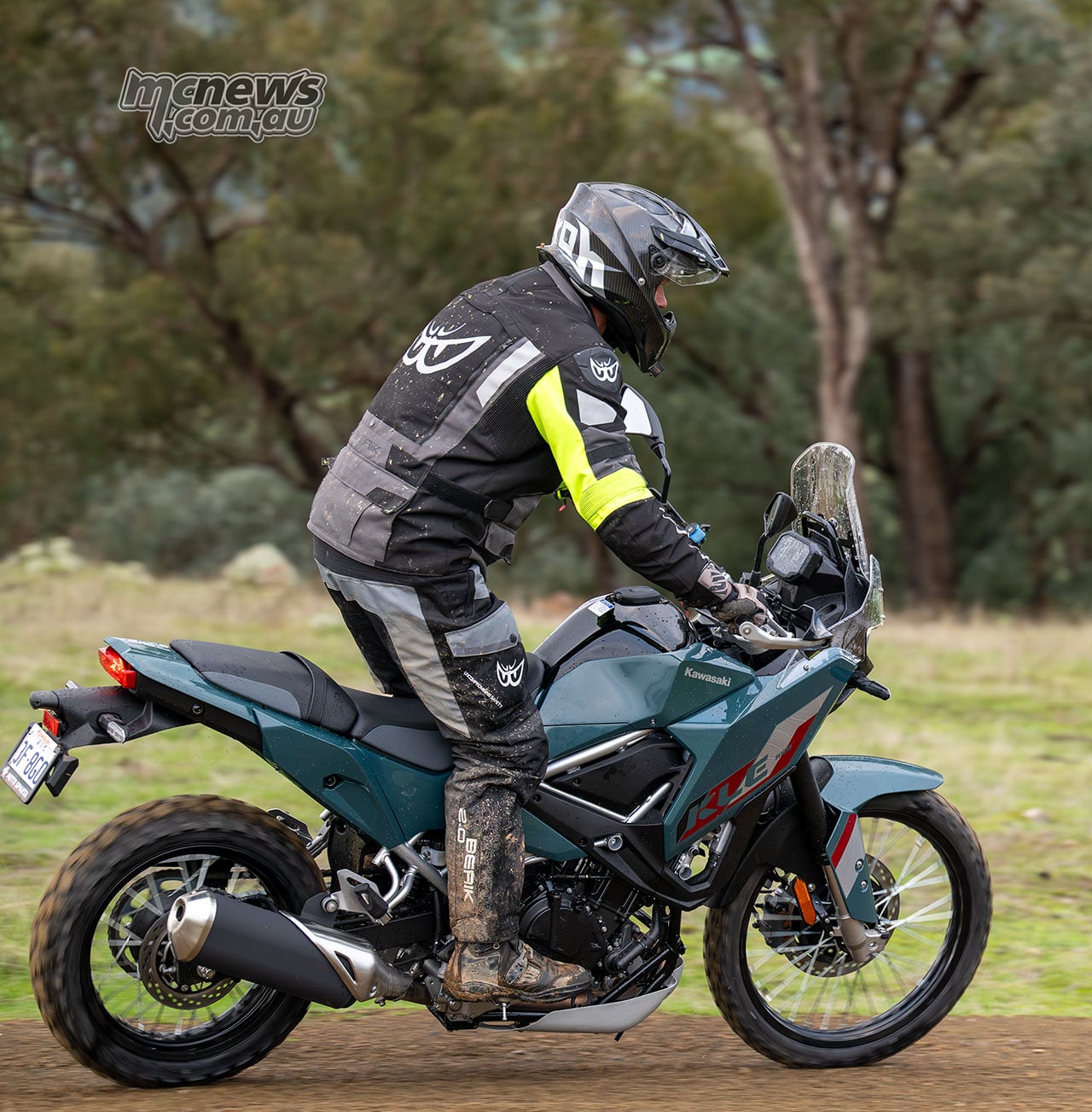
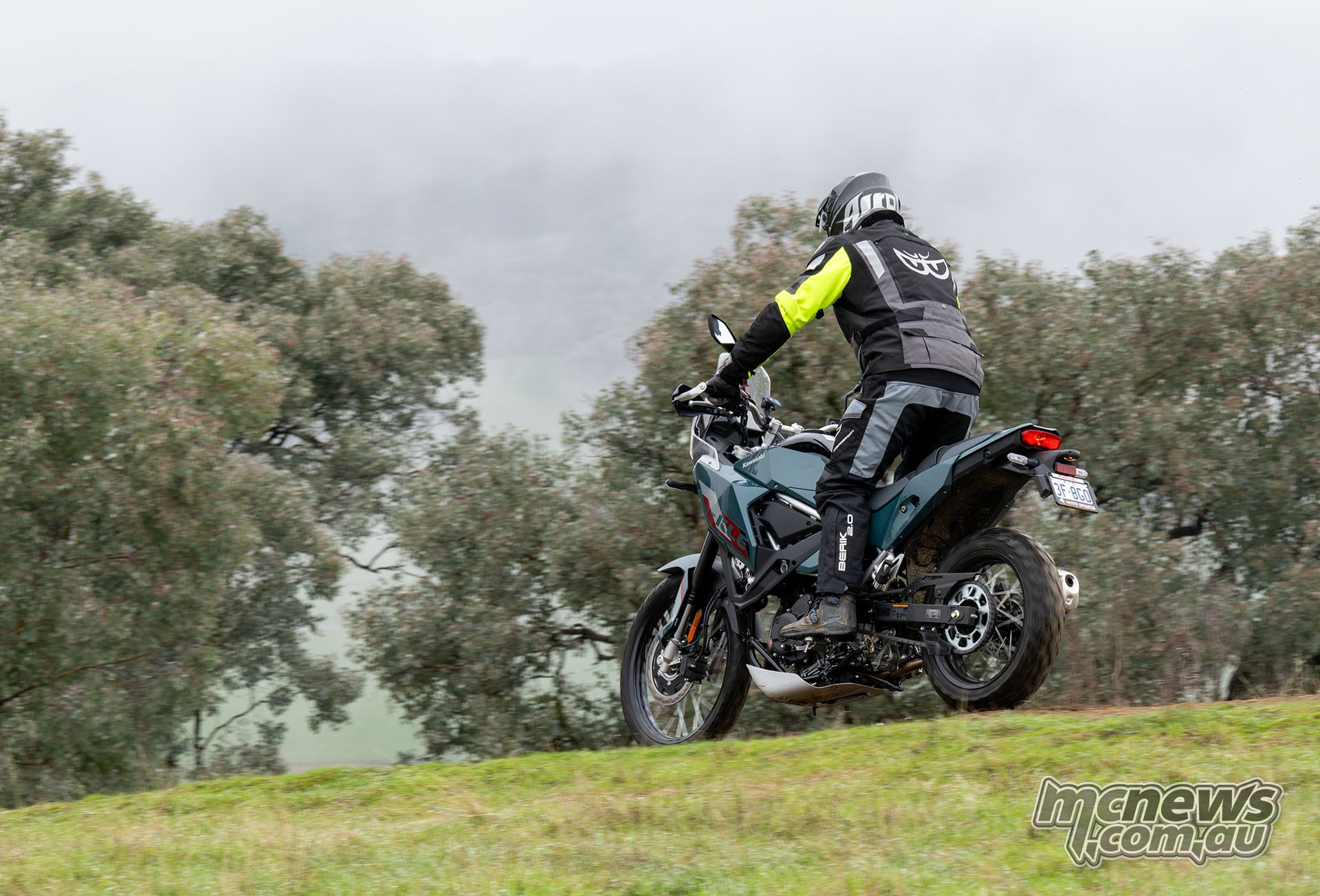
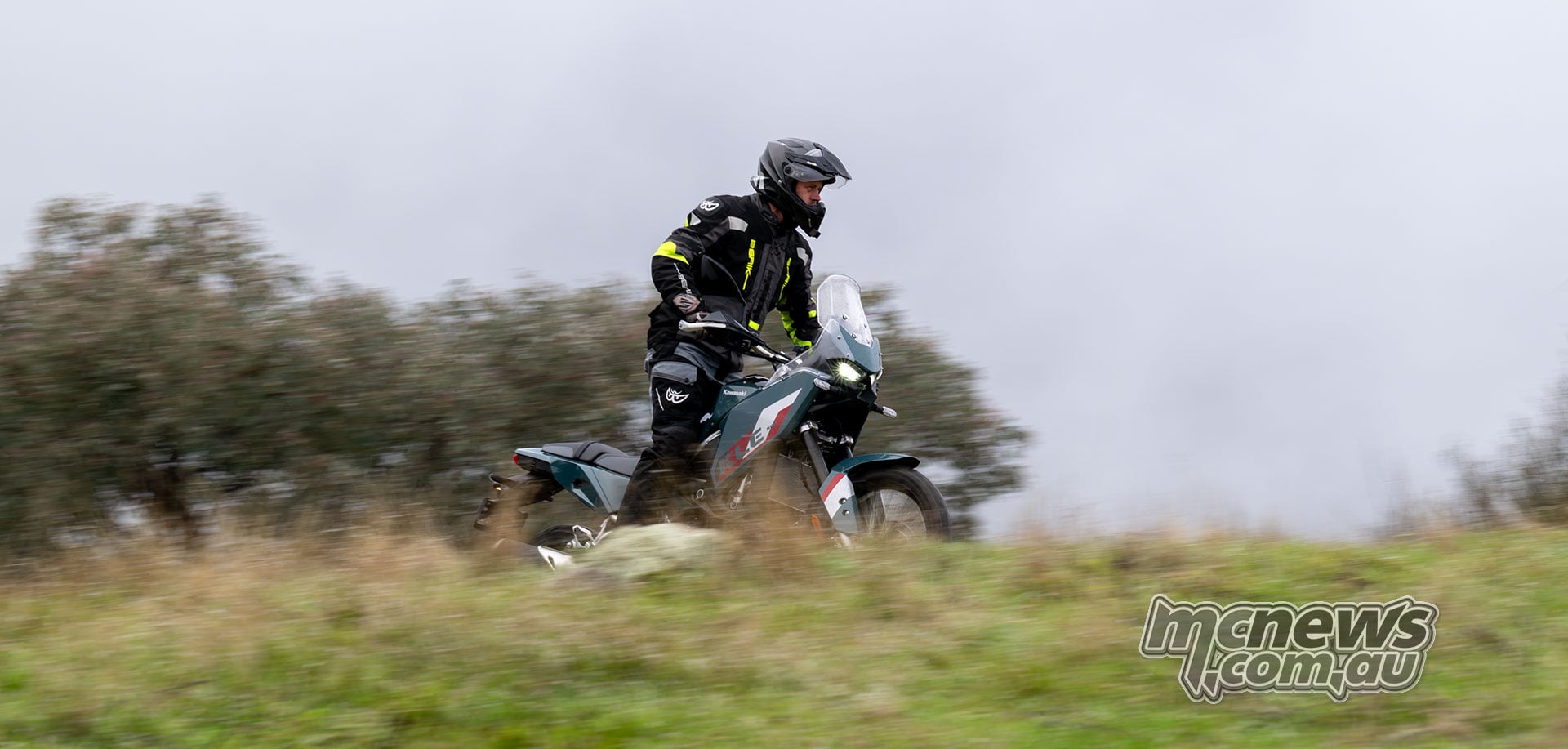
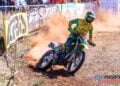
The photos make it clear we weren’t simply pottering along a dry gravel road. The wet surfaces exposed the limits of the standard tyres, and they would be high on my list to address for this sort of riding.
Brakes and ABS
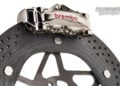
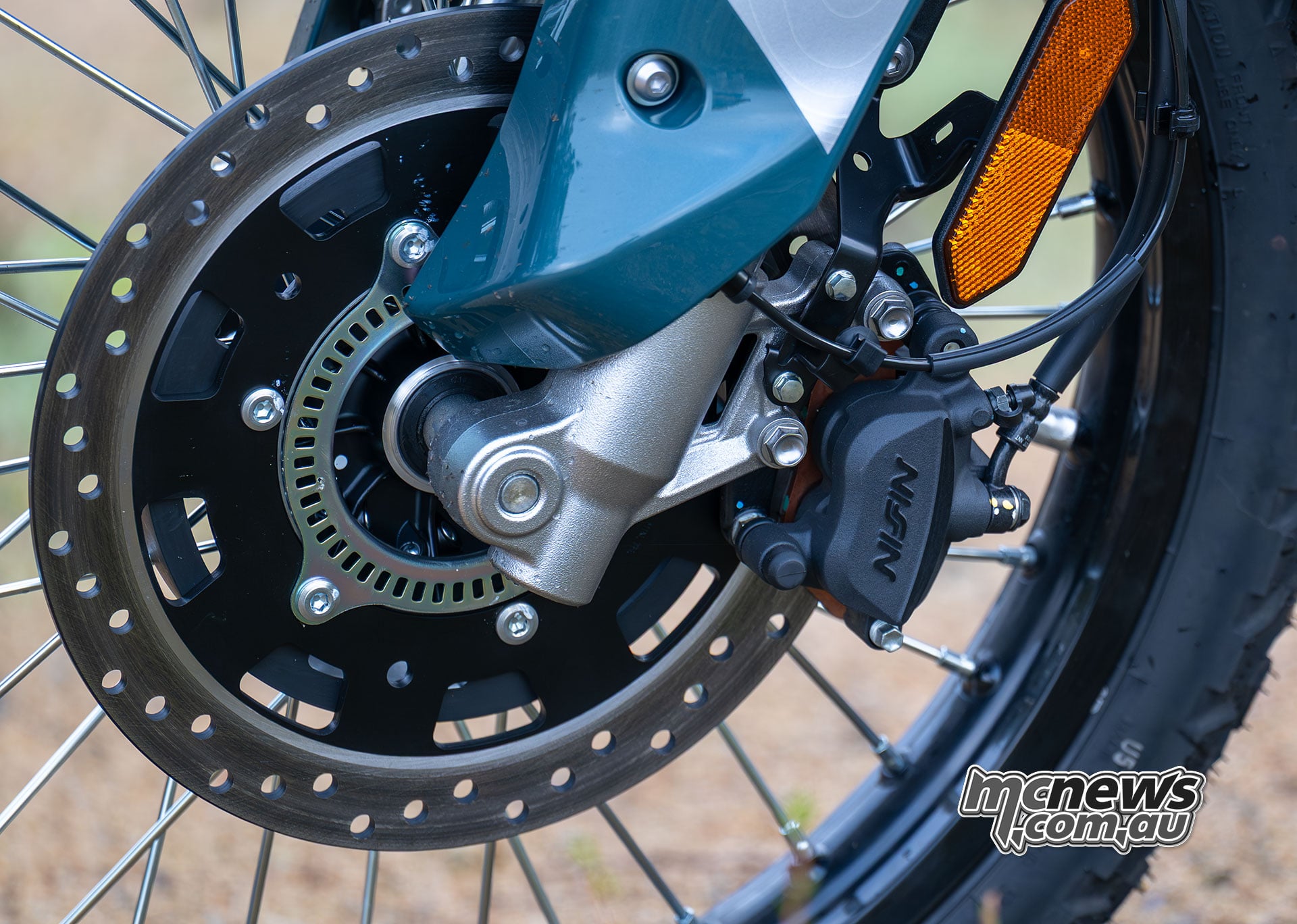
The brakes are adequate for normal road use, although I’d like more bite. I suspect the standard pad compound may be part of that, but that’s a suspicion rather than a confirmed diagnosis.
The ABS also feels very much tuned towards road riding. On loose, soft or slippery off-road surfaces, I didn’t find its intervention particularly helpful.
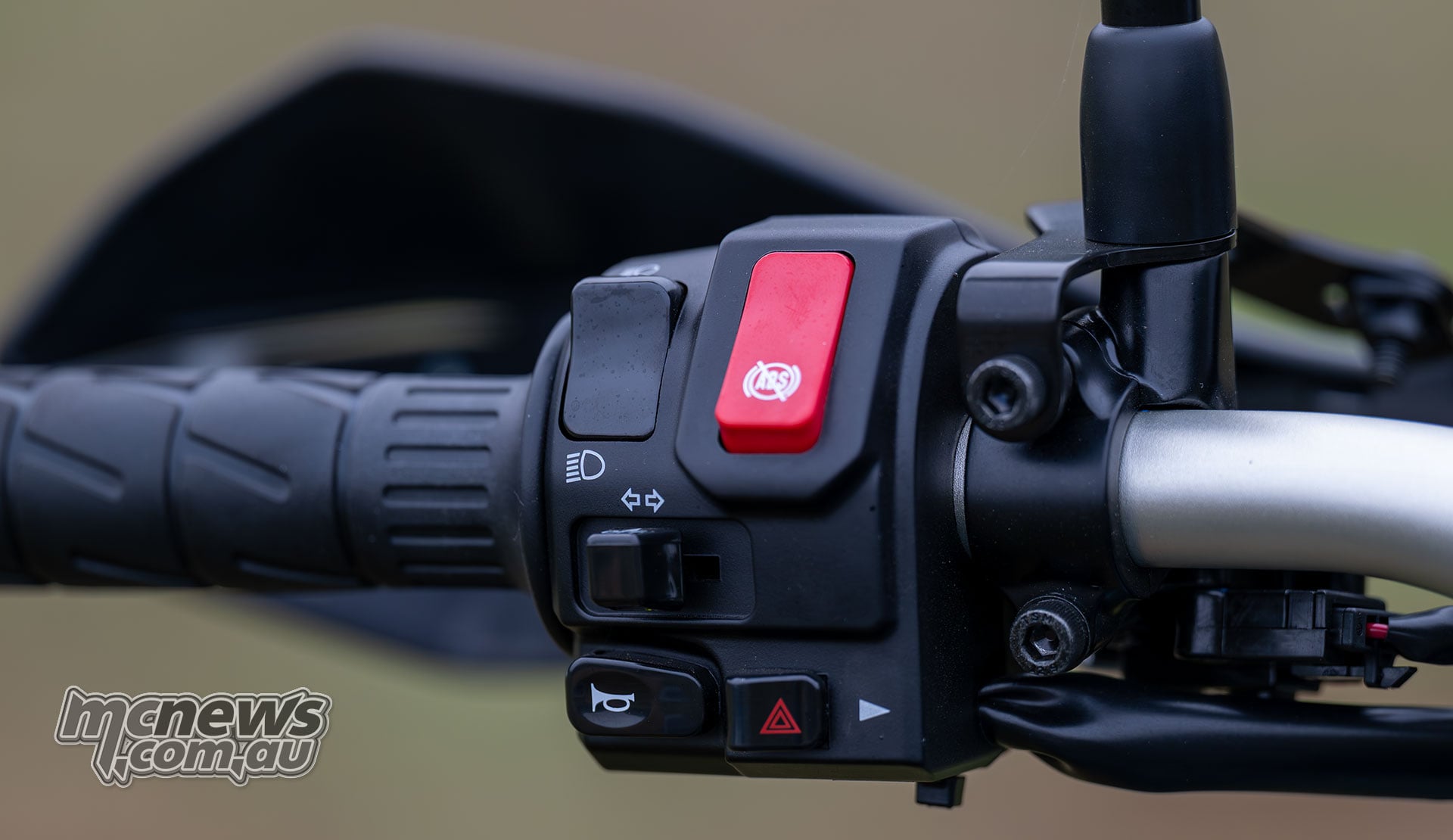
You can switch the ABS off, but it’s an all-or-nothing arrangement: both ends are disabled together. There’s no setting that lets you turn off rear ABS while retaining it at the front, nor a dedicated off-road ABS mode.
I’d prefer a well-calibrated off-road ABS setup that retains support at the front. Switching everything off isn’t my preferred solution for most riders when a good off-road system could offer more confidence.
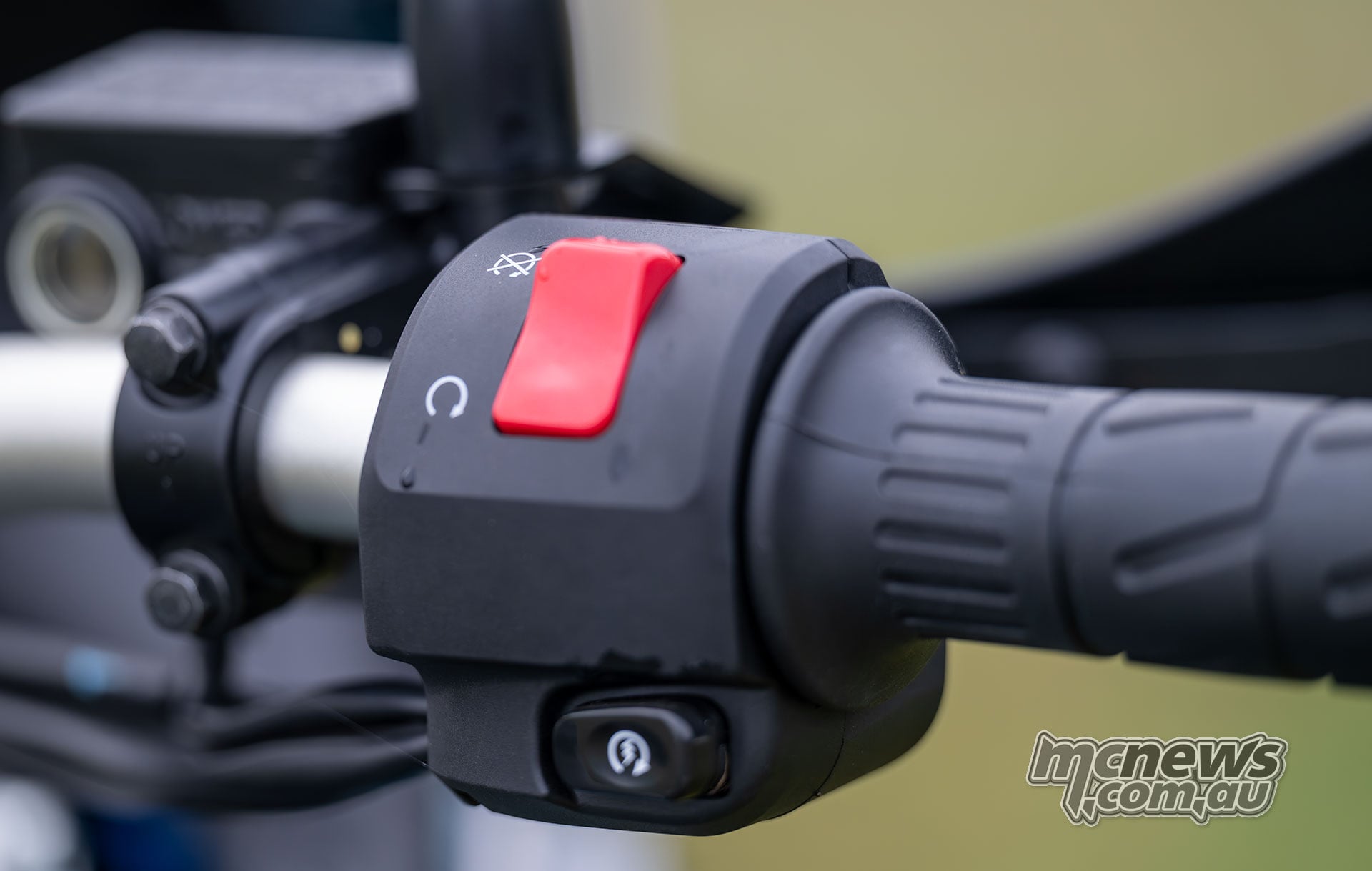
The process is also more fiddly than I’d like. You need to stop and work through the ABS button’s press-and-hold sequence, rather than simply changing the setting as the surface changes. Not ideal when you’re moving between sealed roads and dirt.
Keeping the electronics simple
There are no riding modes, no traction control and no quickshifter. Plenty of punters will see that simplicity as a positive.
Others, particularly riders new to the segment, may see things differently. Traction control and selectable modes have become part of the equipment conversation, even at this end of the market.
There’s certainly an argument that traction control isn’t essential on a bike with this level of power, and I’m probably in that camp if I’m honest. But I also know how much confidence a well-calibrated system can provide in slick conditions, regardless of outright power.
The verdict on the stock bike
That’s really it from a negativity point of view. The engine is lovely, the bike is comfortable and the overall build quality is pretty damn good for the price point.
The appeal remains clear: a relatively affordable adventure bike from a Japanese brand, built around a familiar engine platform and a straightforward package. There’s a lot to like here.
For riders sticking mainly to sealed roads, maintained gravel and gentler trails, the stock bike makes more sense. If your idea of adventure involves rougher tracks, slippery conditions and a bit more pace, I’d be budgeting for suspension and tyres, and taking the braking package’s limitations into account.
That brings us to the question we wanted to answer with our long-termer: how much better does the KLE become with a few considered changes?
I can confirm they make a big difference. In part two, we’ll cover exactly what we changed and how the bike responded, along with the video.
Keep an eye on our MCNews YouTube channel, and subscribe with notifications enabled so you don’t miss it when it goes live.
Kawasaki KLE500 SE – Hits
- Lovely engine: well fuelled, good throttle feel, happy to lug and willing to rev.
- Comfortable, straightforward adventure package.
- Overall build quality is pretty damn good for the price.
Kawasaki KLE500 SE – Misses
- Soft suspension with limited adjustment restricts its potential on rougher trails.
- Modest ground clearance calls for care over water bars and sharper obstacles.
- Standard tyres struggle in the wet, slippery conditions encountered on this test.
- The brakes could use more bite, and the road-biased ABS offers neither an off-road mode nor rear-only deactivation.
2026 Kawasaki KLE500 Specifications
|
2026 Kawasaki KLE500 Specifications
|
|
|---|---|
|
Engine
|
451 cc 4-stroke Parallel Twin
|
|
Maximum Power
|
45 horsepower (33.4 kW) / 9,000 rpm
|
|
Maximum Torque
|
42.6 Nm {4.3 kgfm} / 7,500 rpm
|
|
Bore x Stroke
|
70.0 x 58.6 mm
|
|
Compression Ratio
|
11.3:1
|
|
Valve System
|
DOHC, 8-valves
|
|
Fuel System
|
Fuel injection: ø32 mm x 2
|
|
Ignition
|
Digital
|
|
Starting
|
Electric
|
|
Cooling
|
Liquid-cooled
|
|
Transmission
|
6-speed, return
|
|
Primary Reduction Ratio
|
2.029 (69/34)
|
|
Gear Ratio: 1st
|
2.929 (41/14)
|
|
Gear Ratio: 2nd
|
2.056 (37/18)
|
|
Gear Ratio: 3rd
|
1.619 (34/21)
|
|
Gear Ratio: 4th
|
1.333 (32/24)
|
|
Gear Ratio: 5th
|
1.154 (30/26)
|
|
Gear Ratio: 6th
|
1.037 (28/27)
|
|
Final Reduction Ratio
|
3.067 (46/15)
|
|
Clutch
|
Wet multi-disc, manual, slip-assist
|
|
Final Drive
|
Chain
|
|
Frame
|
Trellis, high-tensile steel
|
|
Front Suspension
|
ø43 mm inverted fork
|
|
Rear Suspension
|
New Uni Trak
|
|
Front Wheel Travel
|
210 mm
|
|
Rear Wheel Travel
|
196 mm
|
|
Rake
|
28.0°
|
|
Trail
|
104 mm
|
|
Steering Angle (L/R)
|
40° / 40°
|
|
Front Tyre
|
90/90-21M/C 54S
|
|
Rear Tyre
|
140/70-17M/C 66S
|
|
Front Brake/s
|
Single 300 mm disc with twin-piston caliper
|
|
Rear Brake
|
230 mm disc, twin-piston caliper
|
|
Dimensions (LxWxH)
|
2,300 x 980 x 1,510/1,460 mm (high/low screen)
|
|
Wheelbase
|
1,555 mm
|
|
Road Clearance
|
185 mm
|
|
Seat Height
|
870 mm
|
|
Curb Weight*
|
195 kg
|
|
Estimated Dry Weight**
|
176 kg
|
|
Fuel Capacity
|
16 litres
|
Kawasaki KLE500 Images