

Dainese Smart Air explained – road, off-road and EV modes
The most sophisticated motorcycle airbag in the world cannot protect a rider who has left it hanging in the garage.
That simple reality is central to Dainese Smart Air. The vest is the successor to the Smart Jacket, but the important change is not one headline-grabbing sensor or an entirely new approach to inflation. It is Dainese’s attempt to make electronic airbag protection lighter, easier to manage and convenient enough to wear on an ordinary ride to the shops as readily as a long tour.
After discussing D-air’s broader development with Dainese Head of Marketing Simone Nieddu in Italy, I spent time with Damien Irwin of McLeod Accessories, Dainese’s Australian distributor, to take a closer look at how Smart Air works in practice.
Damien Irwin – McLeod Accessories
“The whole intention of this one, Trevor, is that you can easily wear the Smart Air on all of your rides, whether you’re going to the shops or doing long-distance touring.”
Smaller and lighter than Smart Jacket
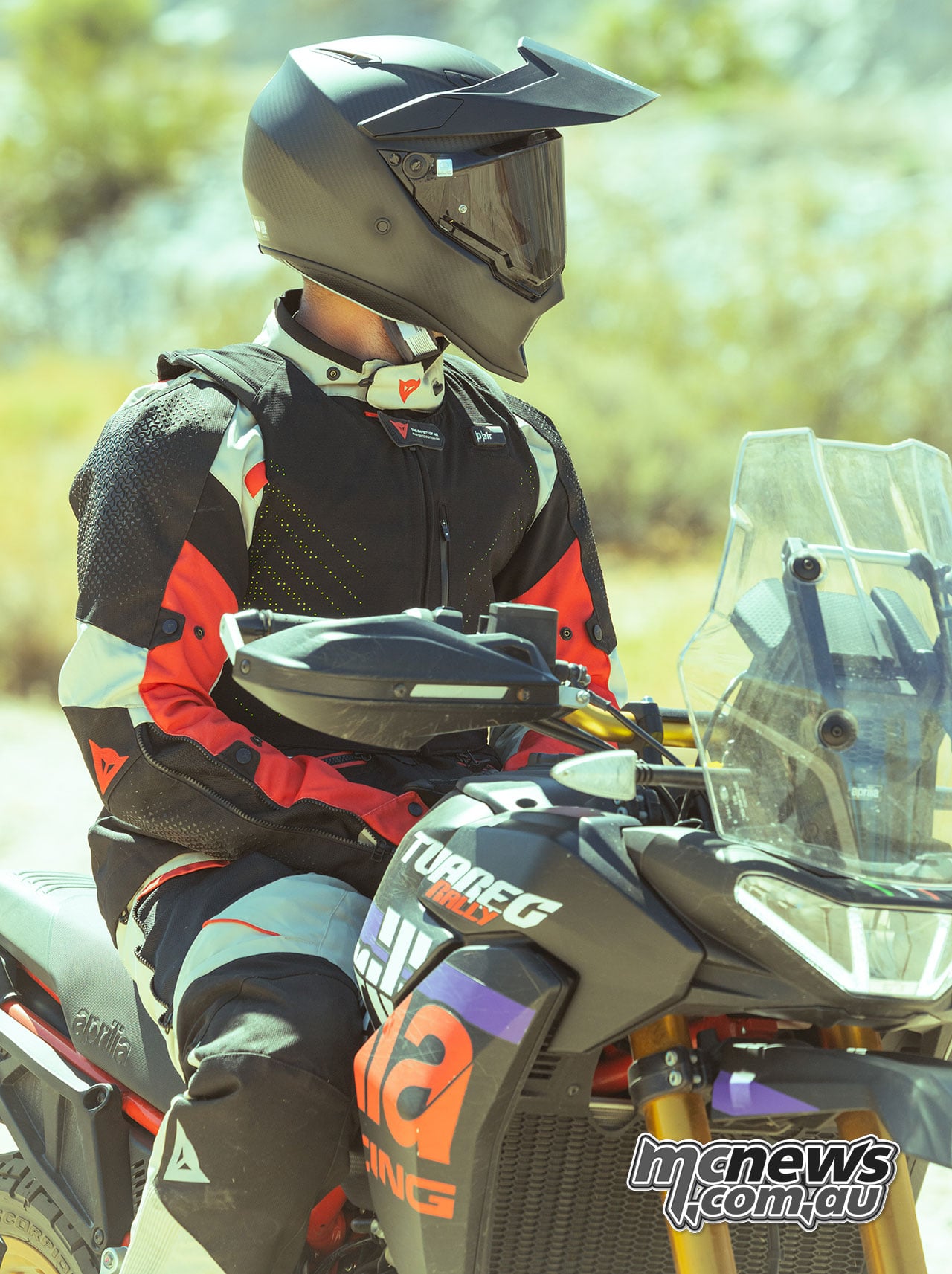
The previous Smart Jacket was a good system, but it was larger and bulkier. Smart Air reduces the size of the battery and the overall package, and Dainese lists its weight at approximately 1.48 kg.
That still makes it an additional garment, but the absence of a rigid back protector helps keep the profile slim. It is available in three adjustable size ranges and can be worn over or under compatible motorcycle clothing.
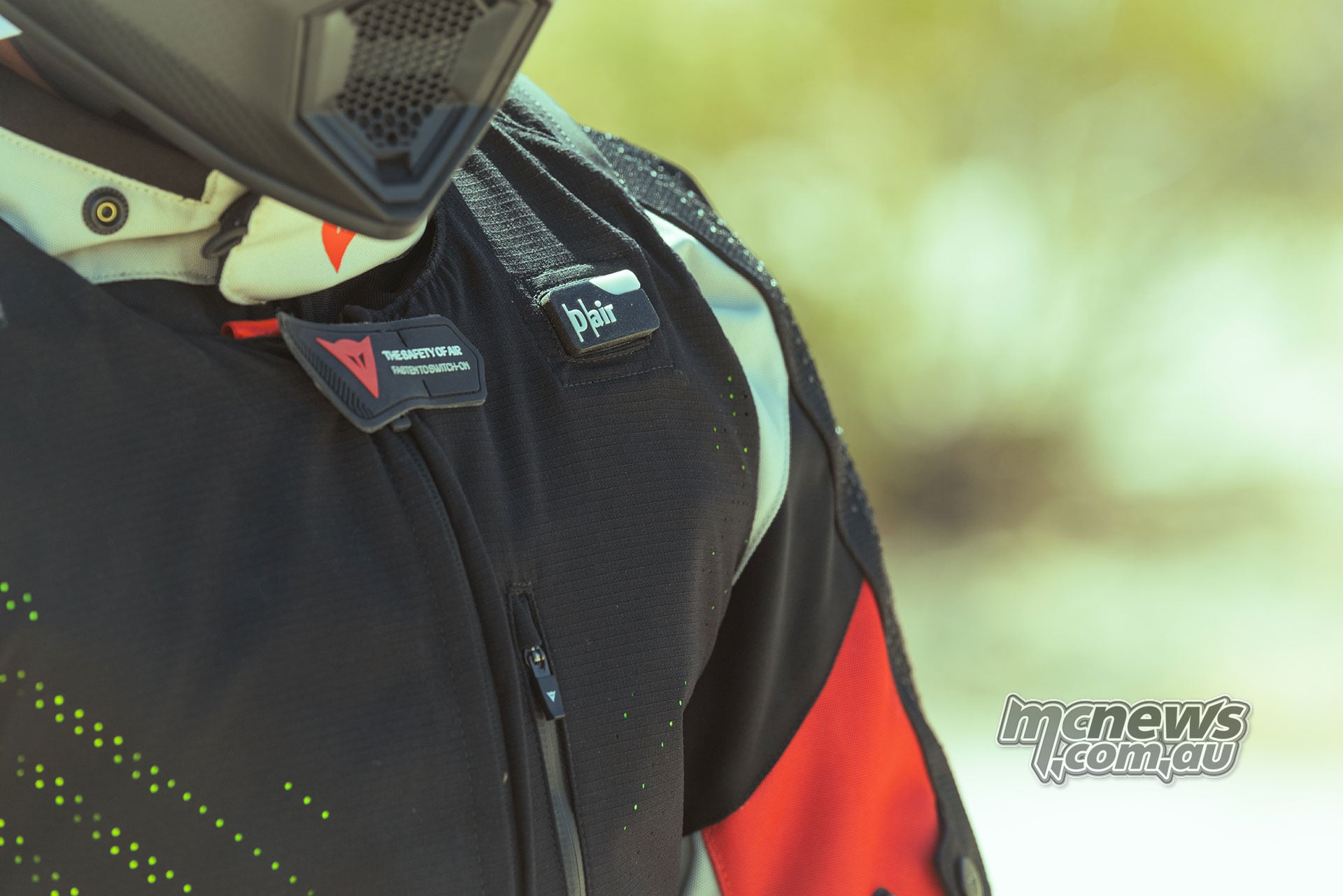
Smart Air is also managed through the D-air smartphone app. The app handles initial registration and configuration, shows battery status and remaining deployments, installs updates and allows the rider to select the appropriate riding mode without connecting the vest to a computer.
McLeod Accessories confirms Australian-market Smart Air units are rated for up to 12 hours while continuously armed and operating under normal riding conditions, with a full USB-C charge taking approximately four hours.
It does not need to talk to the motorcycle
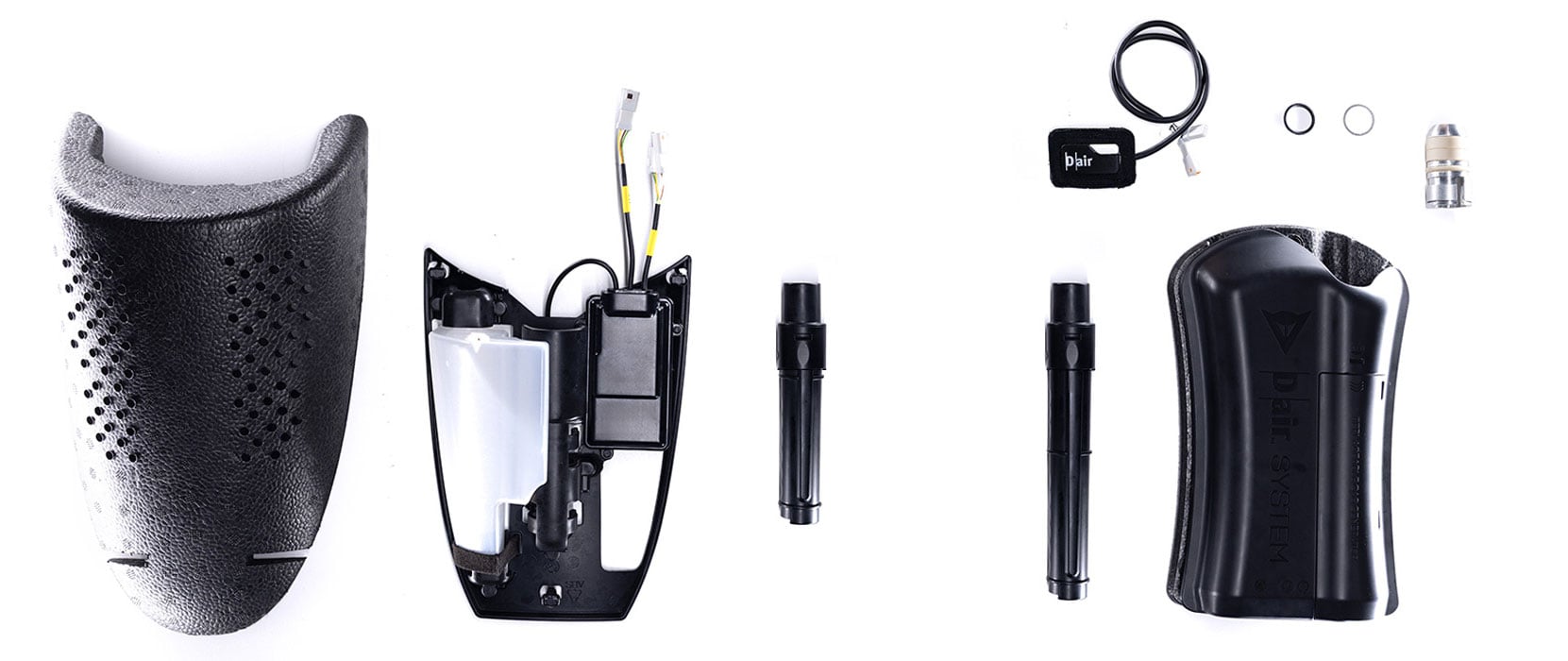
Smart Air has no tether and no electronic connection to the bike. Its control unit uses GPS, accelerometers and gyroscopes to monitor the rider’s movement, with the algorithm looking for the dynamics associated with a fall or collision.
That independence lets one vest move between different motorcycles without installing hardware on each bike. It also means the vest has to recognise both the riding environment and when it should be armed using its own sensors.
Road mode and protection at a standstill
In Road mode, Smart Air becomes operational when it detects motorcycle vibration or after the rider exceeds 10 km/h.
The vibration detection is particularly important in traffic. Once the system recognises a running motorcycle, it can remain armed when the bike is stationary and respond to the dynamics of a rear-end collision at a traffic light, stop sign or in a traffic jam.
Damien Irwin – McLeod Accessories
“You pull up at the set of lights and it stays active. It is feeling those vibrations, and that is for rear-end protection.”
For electric motorcycles, or internal-combustion bikes whose vibration is difficult to detect, the rider can activate EV mode through the app. EV mode works with Road mode and arms the system as soon as it is switched on, rather than waiting to detect vibration or road speed.
Offroad mode changes the logic
Adventure riding presents a different problem. Corrugations, rocks, potholes, erosion mounds, standing on the footpegs and getting one or both wheels off the ground can produce movements that would be abnormal on the road but entirely routine on a trail.
Smart Air therefore has a dedicated Offroad mode, selected through the app before riding. It changes the decision-making parameters to account for rough surfaces and technical terrain, and arms above 20 km/h. In this mode it is not designed to provide rear-impact protection while stationary.
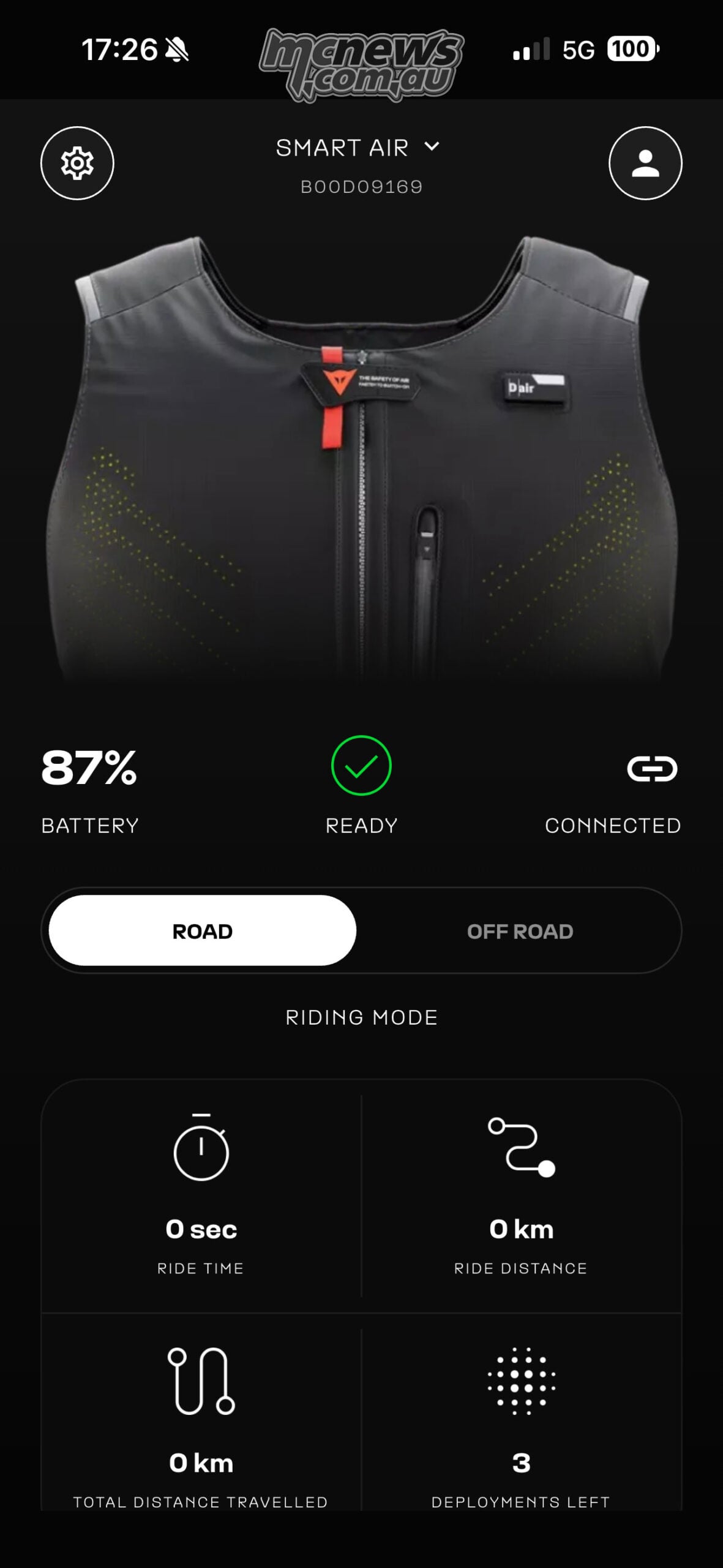
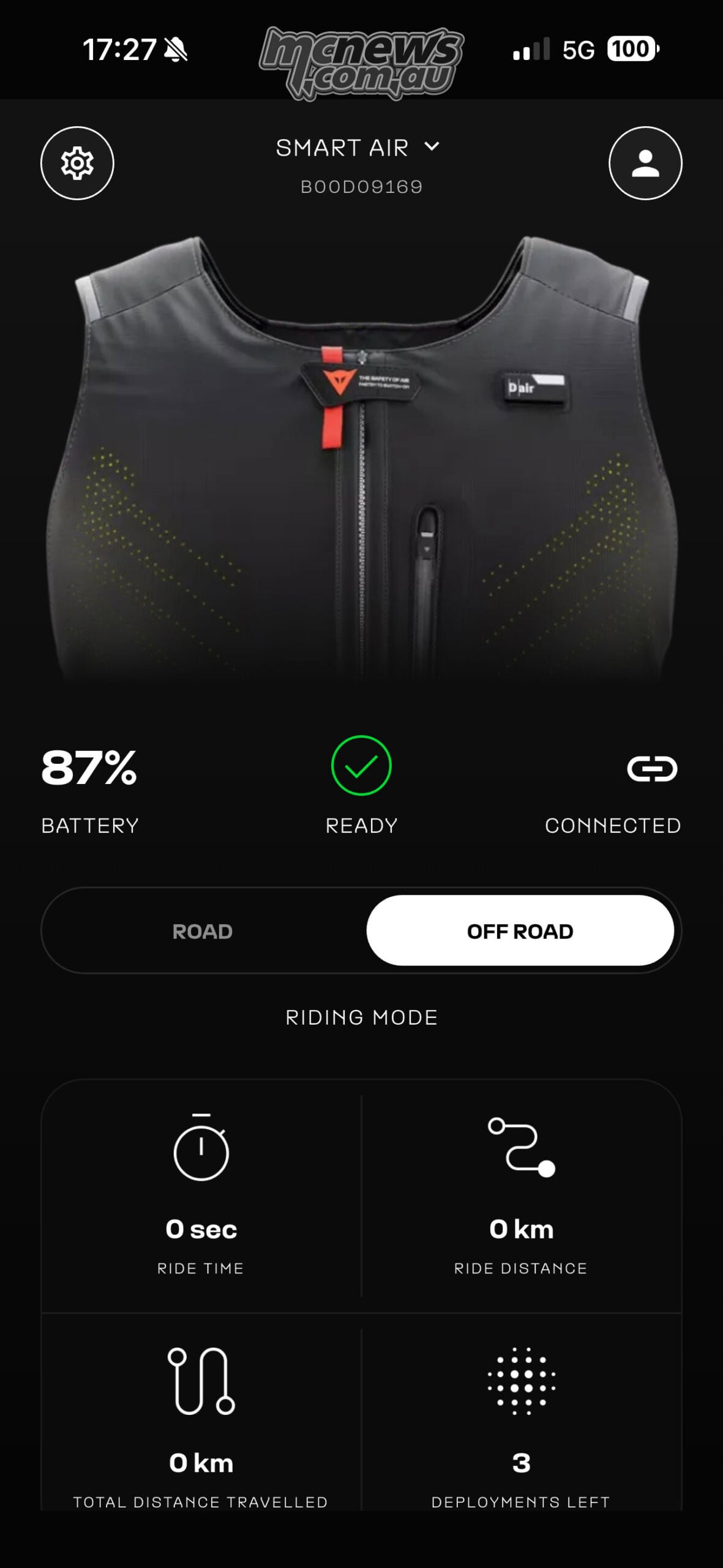
The rider must select the correct mode. Using Road mode for riding that includes jumps and hard landings could expose the algorithm to inputs it was not configured to treat as normal.
Smart Air is intended for normal road use, adventure riding and non-competitive enduro riding. Offroad mode does not make it an off-road competition product: Dainese specifically says it is not designed for motocross or other off-road racing, and the company currently has no MX airbag in its range.
It is not Dainese’s racetrack airbag either. For circuit use, Dainese offers dedicated D-air Racing models with protection and activation strategies developed for that environment.
Level 2 chest and back protection
When activated, Smart Air protects both the chest and back. It is certified as a Level 2 Central Back protector, covering the spine rather than the full shoulder-blade area, and a Level 2 Divided Chest protector, with the front airbag divided by the central zip. Dainese also says the shape extends some protection towards the abdomen.
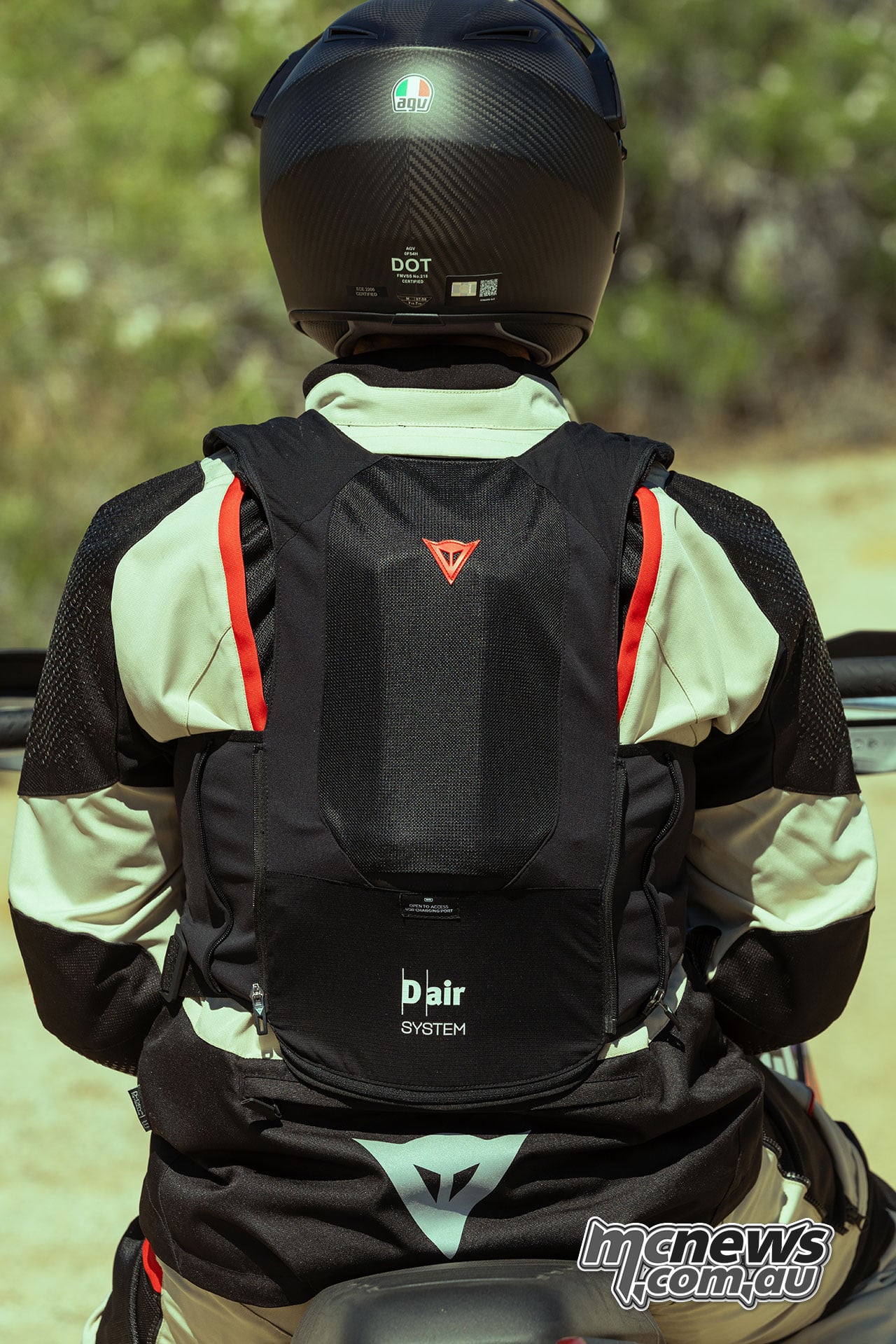
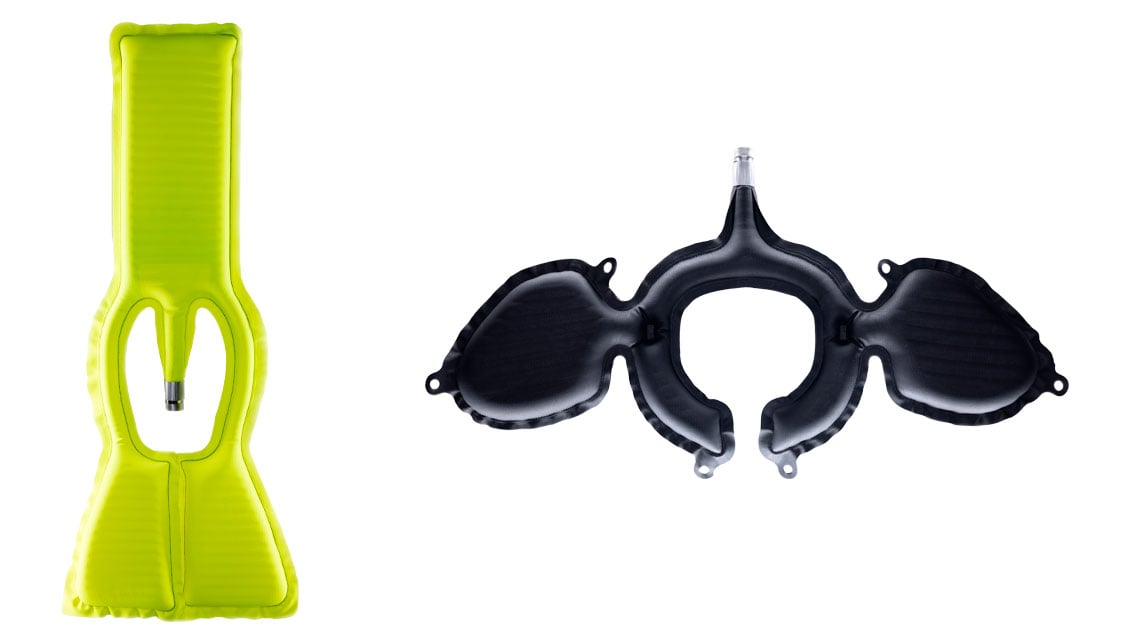
Dainese says the impact absorption offered by the airbag is comparable to that of seven conventional Level 1 rigid back protectors. That is an impact-attenuation comparison, not a claim that the vest covers seven different body areas.
The physical construction of the bag is central to that claim.
Why the microfilaments matter
Dainese’s patented system uses thousands of internal microfilaments to connect the two walls of the airbag. When the gas generator fires, the filaments maintain a controlled five-centimetre distance between those walls across the protected area.

The easiest way to understand the principle is to think of a party balloon. Press one part and the air moves somewhere else, distorting the balloon. The microfilaments are intended to prevent that behaviour so the deployed bag maintains its engineered three-dimensional shape and more consistent protection across its surface.
Simone Nieddu – Dainese Head of Marketing
“For us, the effectiveness is not based on the quantity of air inside the airbag, but on the homogeneous protection that is guaranteed on all parts of the airbag.”
Over or under a jacket?
Smart Air can be worn over or under a motorcycle jacket. When wearing it underneath, allow 50 mm of clearance for the airbag to inflate and do not squeeze it beneath a jacket that is already a tight fit. Dainese recommends purpose-designed Smart Air Compatible or Airbag Compatible garments for the cleanest integration.
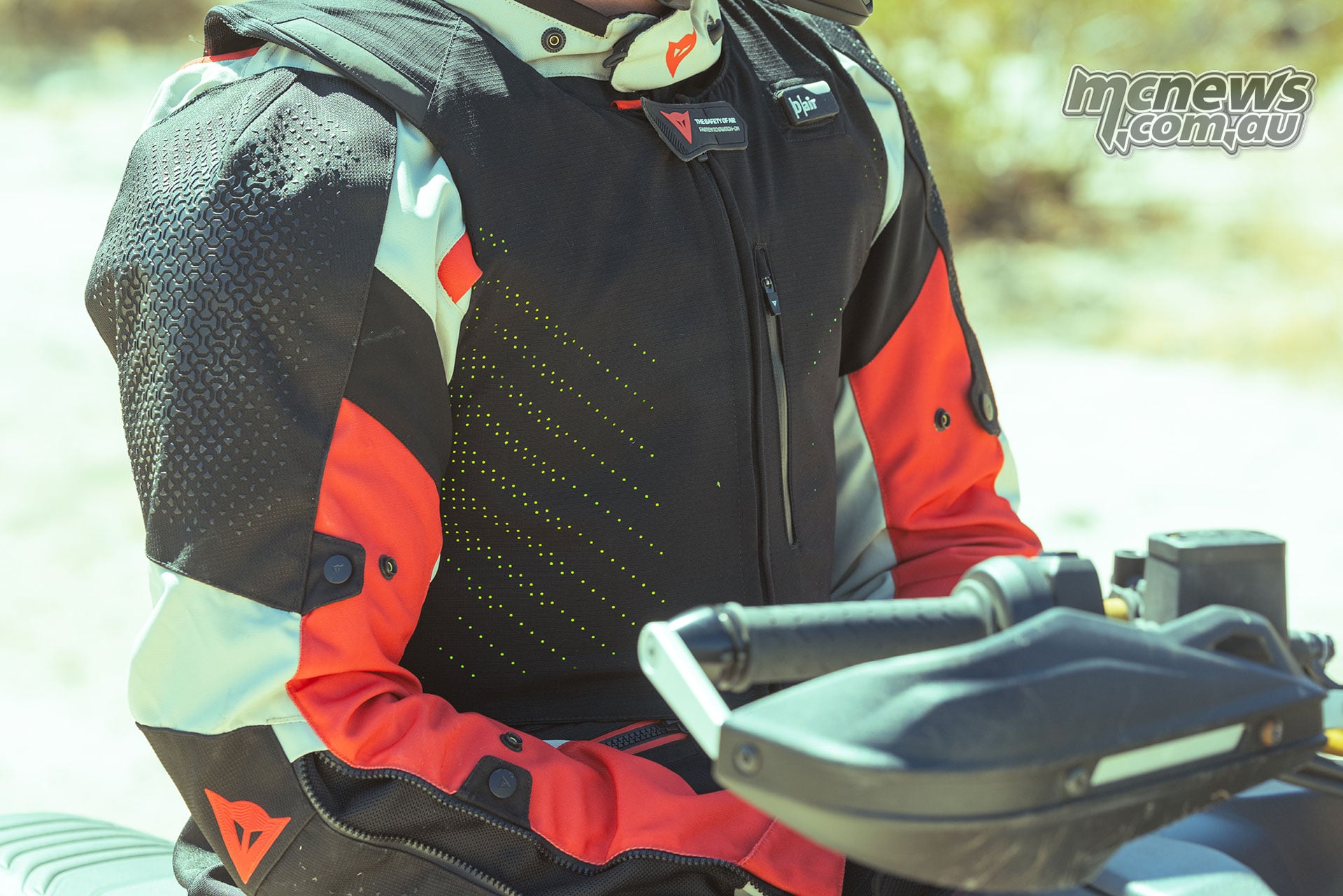
Simply buying an oversized conventional jacket is not necessarily the answer, because that can leave sleeves too long and move the shoulder and elbow armour away from where it should sit.
When worn over existing gear, the vest adds its own chest and back protection but does not replace the shoulder and elbow armour in a certified motorcycle jacket. It is also water-repellent rather than waterproof, so sustained wet-weather use requires a waterproof outer layer if Smart Air is not already protected beneath one.
That is relevant to adventure riders. I have used a Dainese Hekla suit through 1200-kilometre days of persistent rain, Italian heat approaching 40 degrees Celsius and then much colder conditions in Iceland. Adding an airbag to that kind of all-weather system only works if the extra layer remains tolerable and does not undermine the jacket’s ventilation, mobility or weather protection.
Those are matters I intend to assess over a longer period with Smart Air. I am not planning to test it by crashing, but there is plenty to learn about whether it is comfortable and convenient enough to fulfil Dainese’s “never ride without it” intention.
What happens after it deploys?
Smart Air’s Road Shield 3X bag is designed for a maximum of three deployments, provided it remains undamaged.
Australian pricing supplied by McLeod Accessories at the time of writing is:
- Smart Air – $1199 RRP
- Replacement gas generator – $199 RRP
- Replacement Smart Air bag – $449 RRP
After either of the first two activations, the owner can inspect the vest and replace the gas generator using Dainese’s Fast Replacement System. The app records how many deployments remain. If there is abrasion, an opened seam, a hole, a cut or any doubt about the bag’s condition, Dainese advises having it professionally inspected rather than simply installing another generator.
After the third deployment, the system locks and the airbag must be replaced. McLeod Accessories advises that any Dainese Smart Air store, or McLeod Accessories itself, can fit the new bag. The fitting takes around half an hour and the job can usually be turned around within 24 hours.
This is a substantial ownership improvement over a system that has to be sent away after every activation. It also means riders travelling in remote areas can carry a spare generator and restore the system without finding a D-air service point, assuming the vest itself has not been damaged.
McLeod Accessories advises that an unused gas generator has no shelf life, expiry date or mandatory replacement interval. Smart Air does not require a mandatory periodic inspection, although Dainese recommends regular physical and electronic status checks. When stored for an extended period, it should be fully charged at least once every two months.
Taking Smart Air on an aircraft
Travelling with Smart Air is less straightforward because policies for airbag systems, gas generators and their required documentation vary between airlines and countries. Dainese says carriers are also becoming more stringent, so there is no single approval that guarantees acceptance on every flight.
Dainese’s recommended starting procedure is to place Smart Air in Shipping mode through the app, send the airline the relevant IATA transport document and ask whether that carrier or destination requires anything further. Dainese Customer Care can provide the documentation and assist owners through the process.
That answer is unlikely to delight anyone who has tried to extract a clear dangerous-goods ruling from an airline, but the final approval remains carrier-specific. It is therefore worth starting the process well before arriving at the airport rather than hoping to resolve it at check-in.
The practical advance may matter most
The cleverest part of an electronic airbag will always be its ability to identify a crash in milliseconds. In everyday ownership, however, the less glamorous details may determine whether a rider is protected at all.
A slimmer vest, phone-based updates, road and off-road logic, a mode for electric and very smooth motorcycles, useful protection at a standstill and a user-replaceable gas generator all reduce the friction involved in wearing an airbag regularly.
Smart Air does not suit every motorcycle discipline, it still has to be charged, and wearing another layer will never be completely invisible. But it is a thoughtful attempt to address the biggest weakness of any optional item of safety equipment: persuading the rider to put it on every time.