

2026 Kawasaki KLE500 SE Review
Part Two – The farkled bike
In part one of our Kawasaki KLE500 SE review, we looked at the bike in stock trim. The engine impressed, but the soft suspension and road-oriented tyres put some clear limits on how hard I wanted to ride it on the trail.
I knew fairly early on that there was more to the KLE if we could address those limitations. That was why I held off firming up my thoughts until we had made a few changes.
I’m glad I did. After a cracker of a ride on the modified bike, I can confirm that it responds really well to relatively straightforward upgrades. What had initially left me a little underwhelmed is now a much, much better proposition.
Protection from B&B Off Road
First up, protection and luggage have been sorted by the team at B&B Off Road in Ballarat. I actually dropped this bike at their workshop so they could scan it and develop the parts you see here.
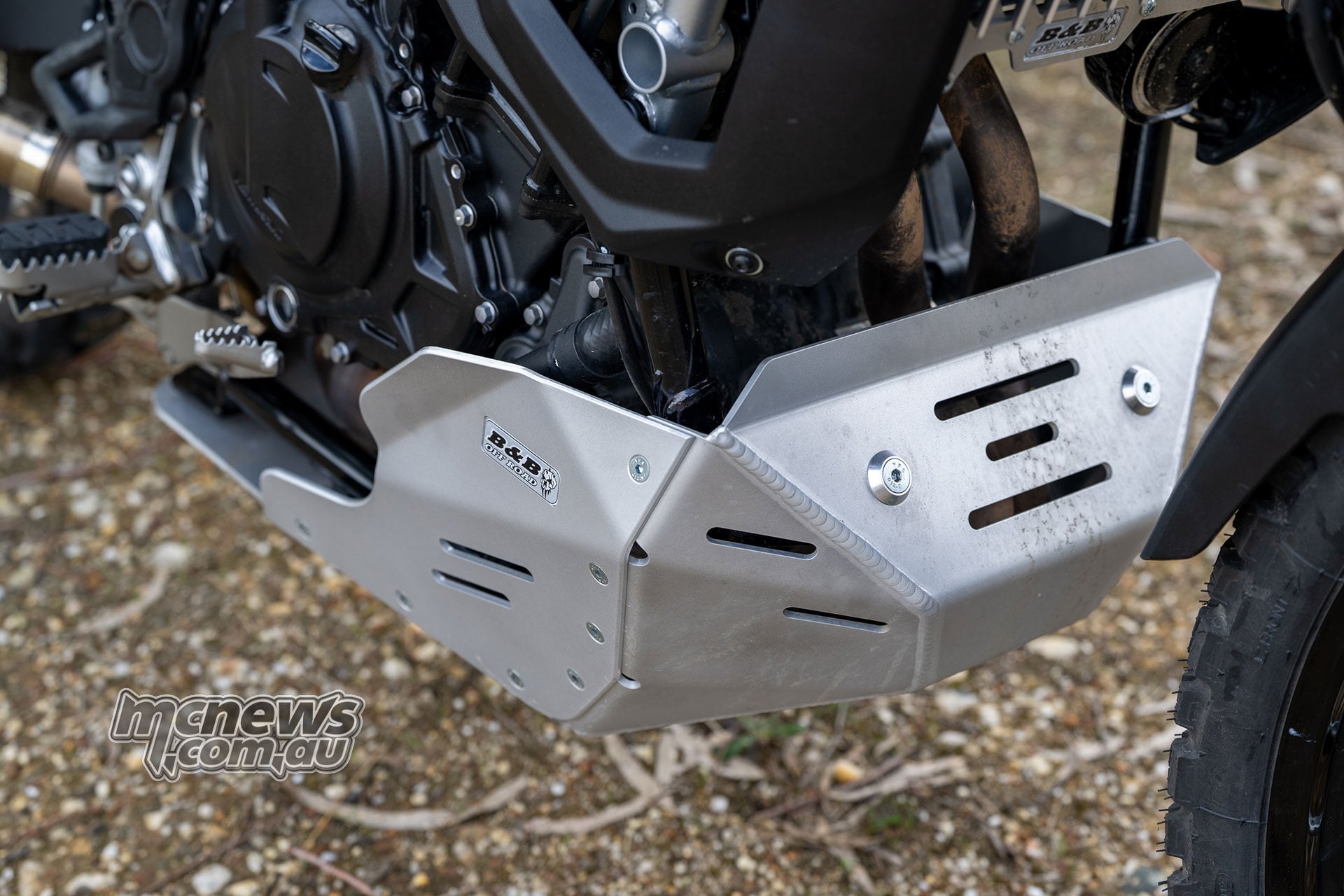
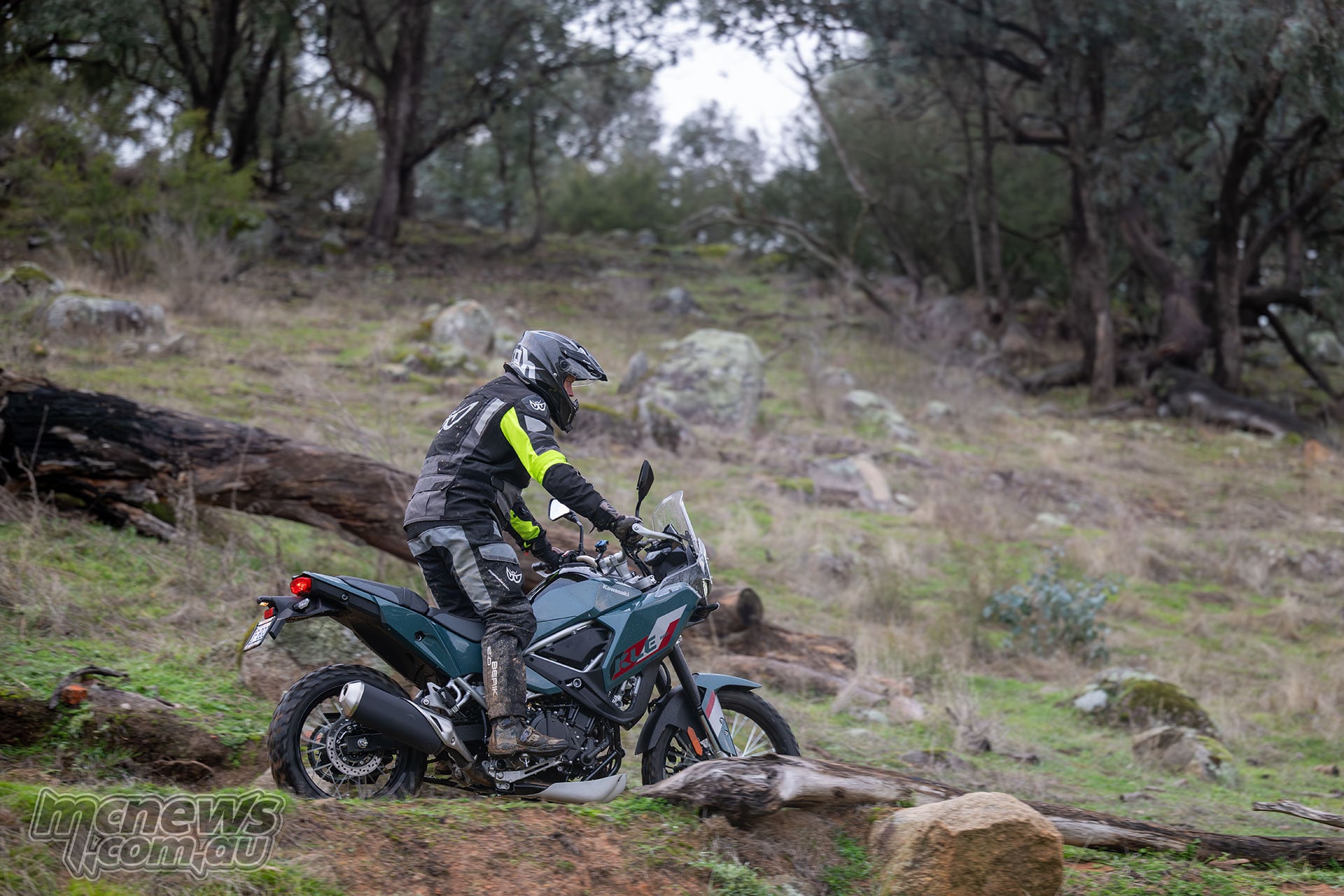
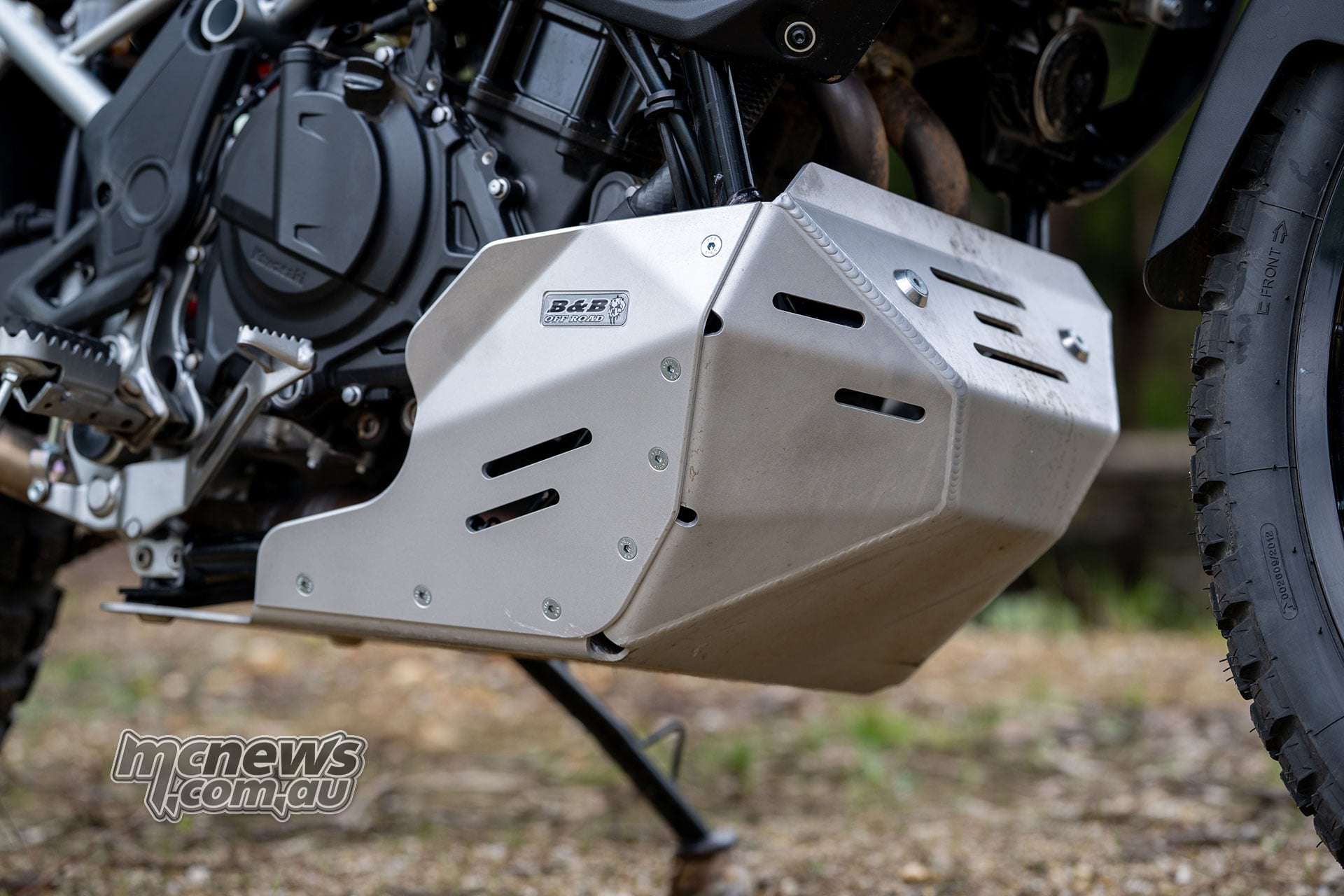
The bashplate is a substantial piece of kit, made from 4 mm 5083 aluminium and shaped to wrap around the lower engine. Its front and rear mounting brackets attach to the frame. Given how willingly the standard bike used up its ground clearance, more substantial protection was high on the list.
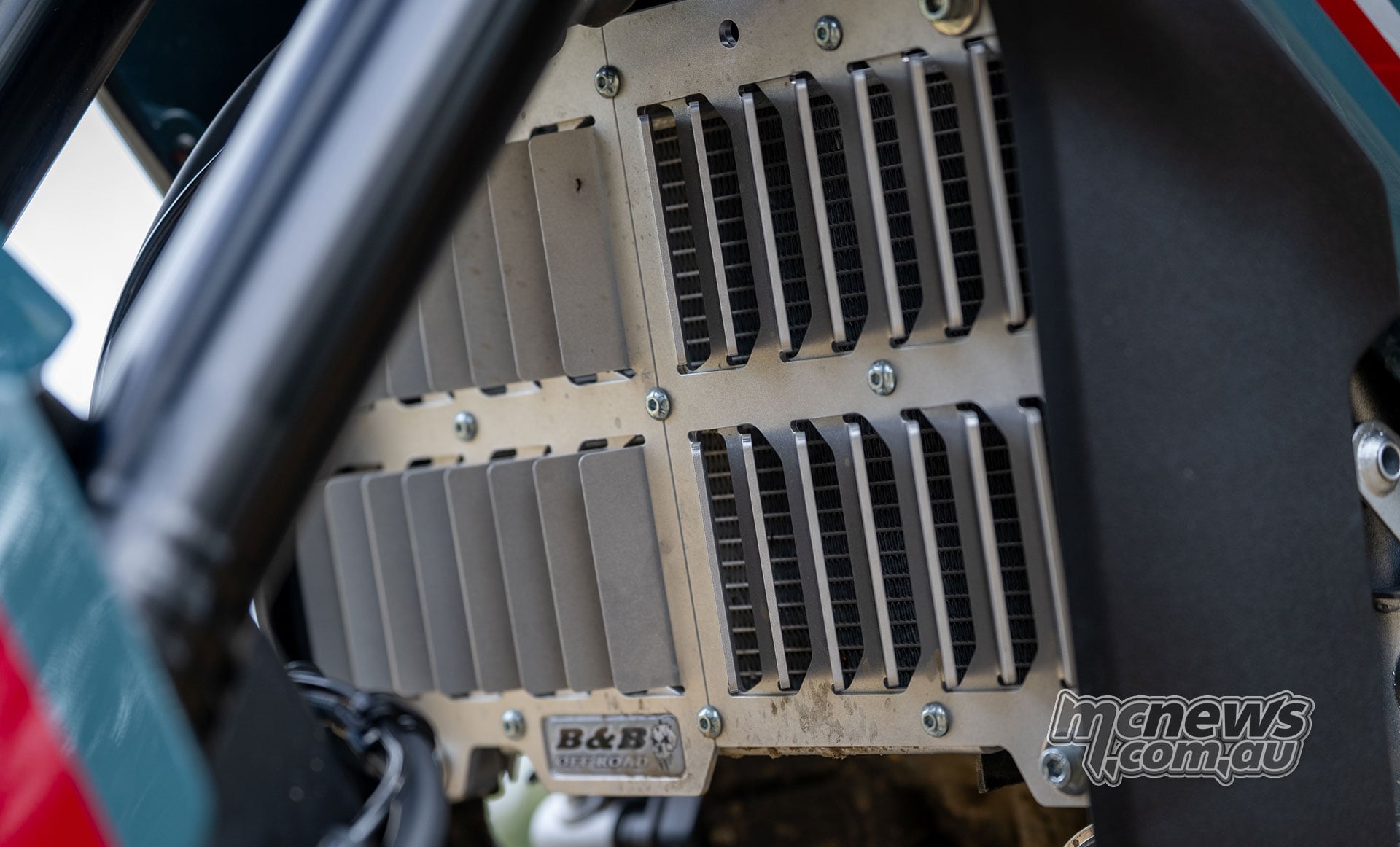
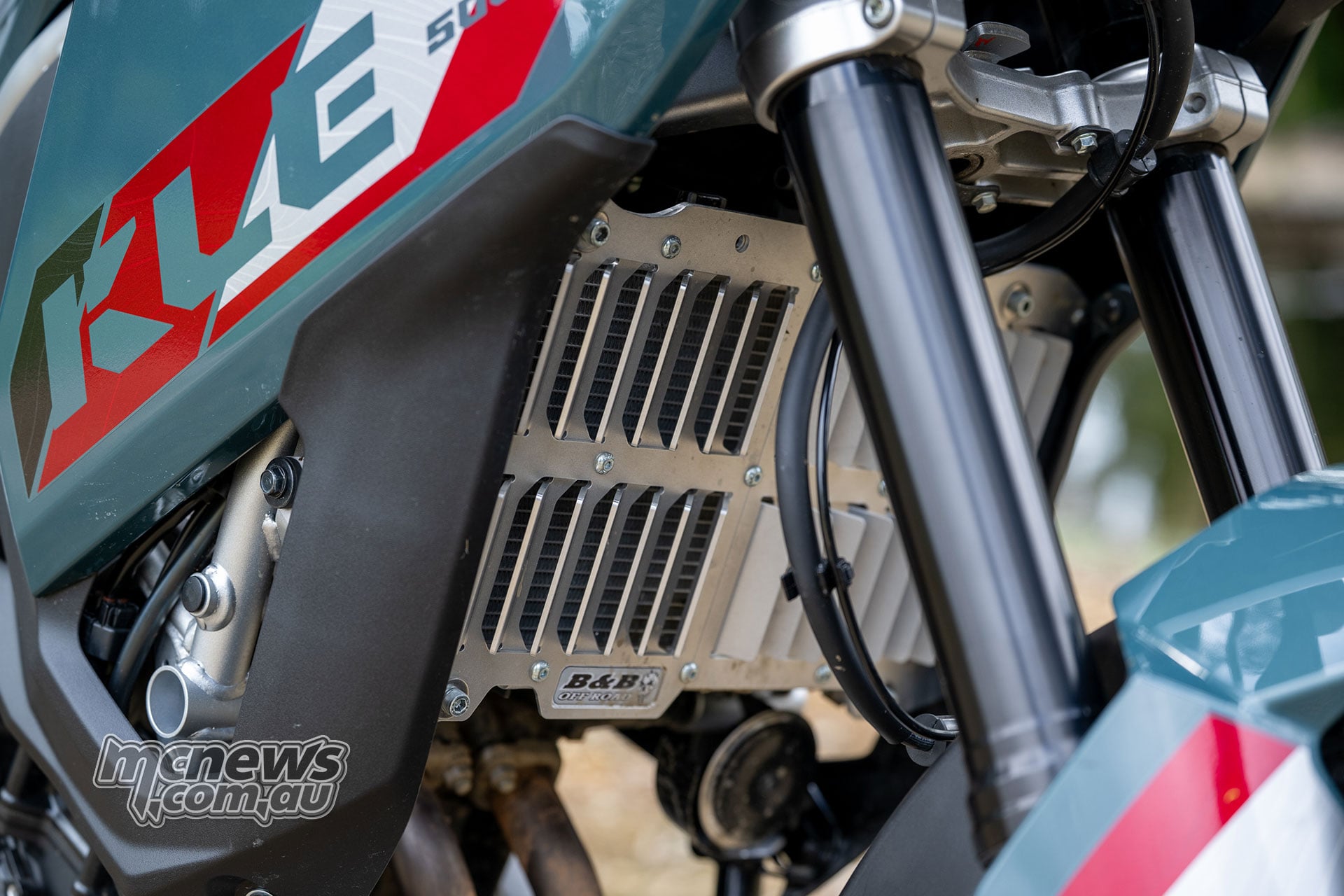
We also fitted B&B’s radiator guard. The louvred aluminium construction puts a protective barrier ahead of the radiator core while leaving a path for cooling air.
A slimline luggage setup
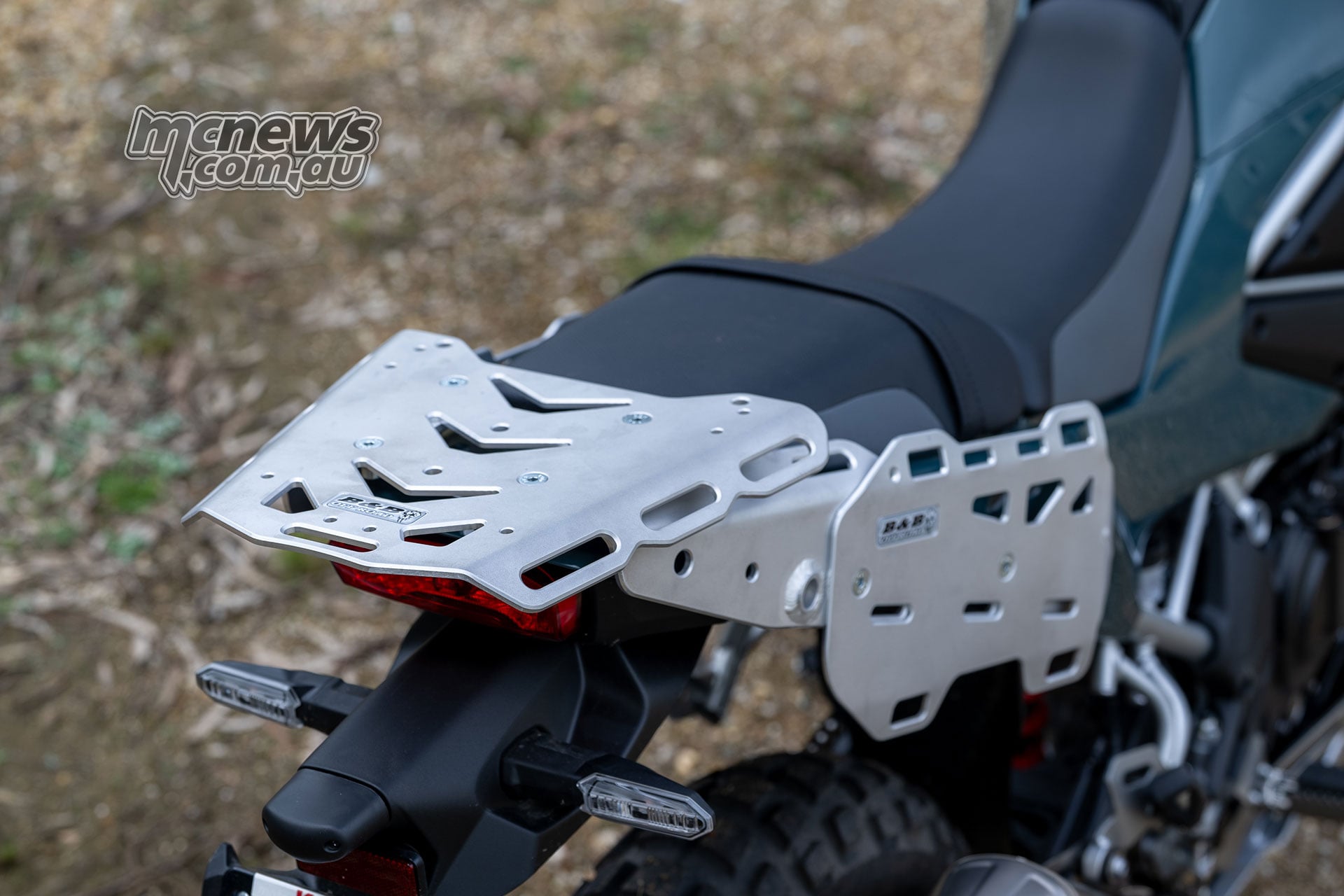
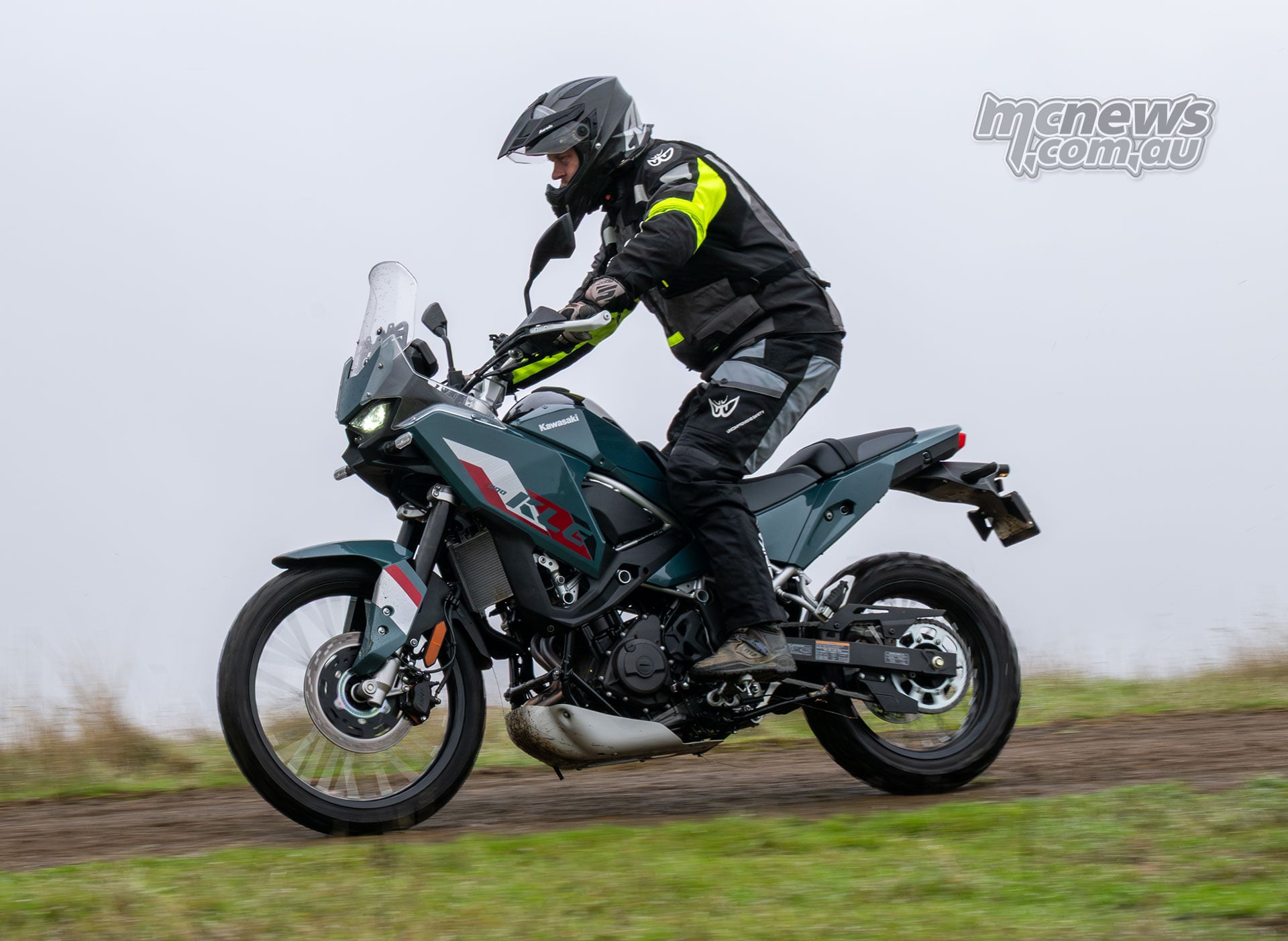
The rear rack is another B&B item, paired here with their optional side luggage panels. It’s a lovely slimline arrangement, with the panels sitting close to the bike rather than hanging a big framework off either side.
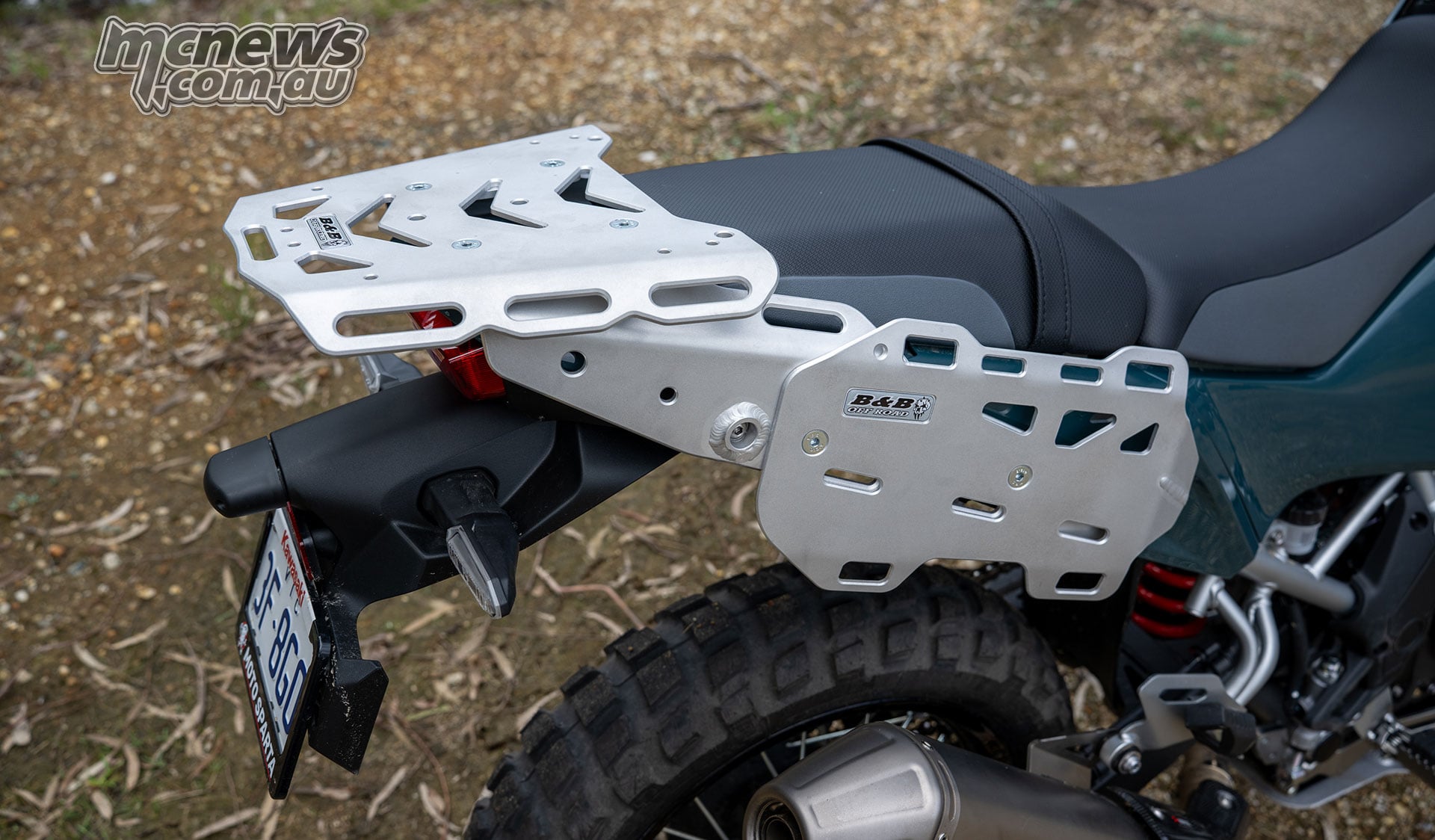
The top plate gives you plenty of slots for tying luggage down. Our setup is finished in satin silver, with black powder coat also available. The tail rack and side panels are separate items, so it is worth choosing the combination that suits the luggage you intend to carry.
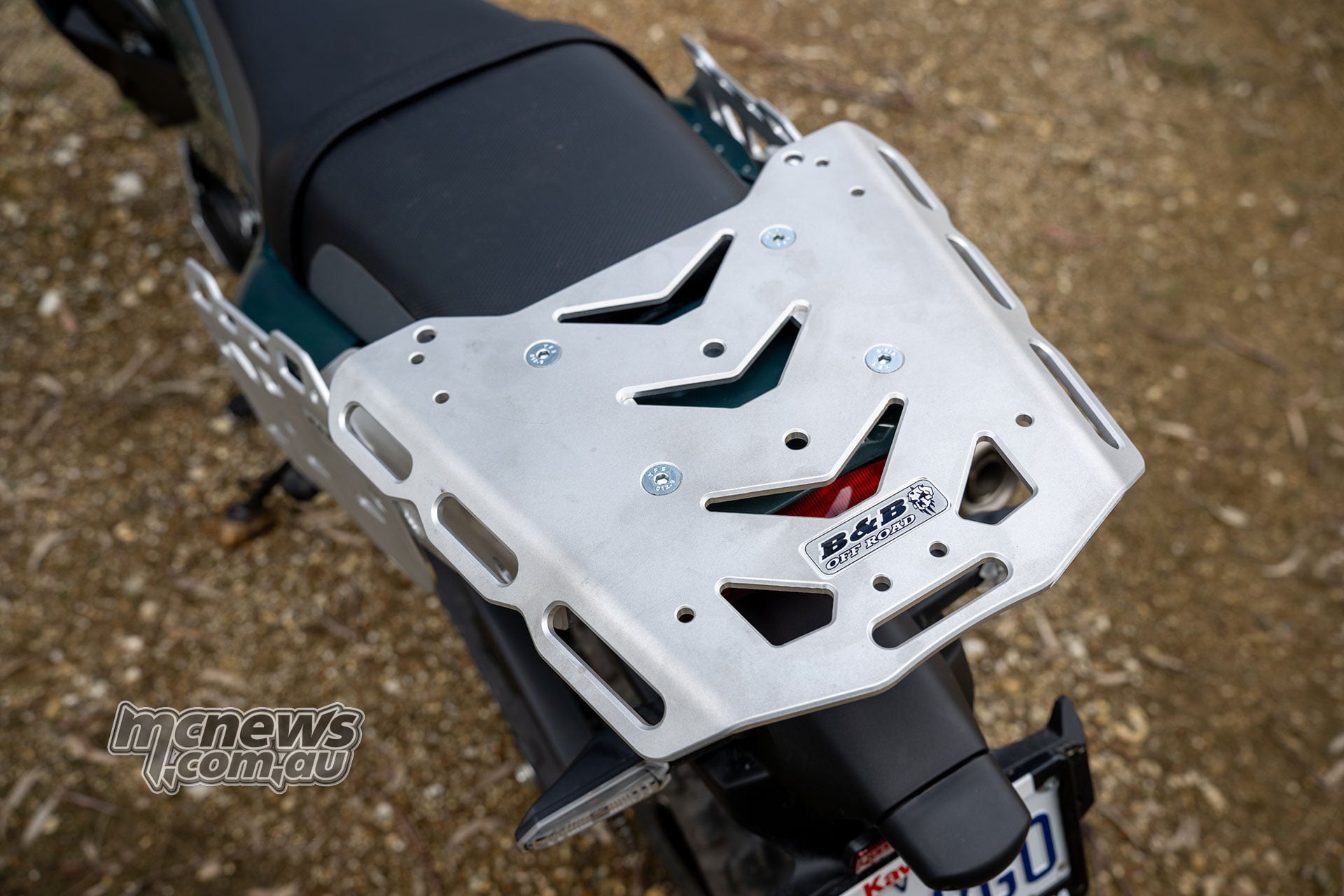
You can find the range on the B&B Off Road Kawasaki KLE500 page.
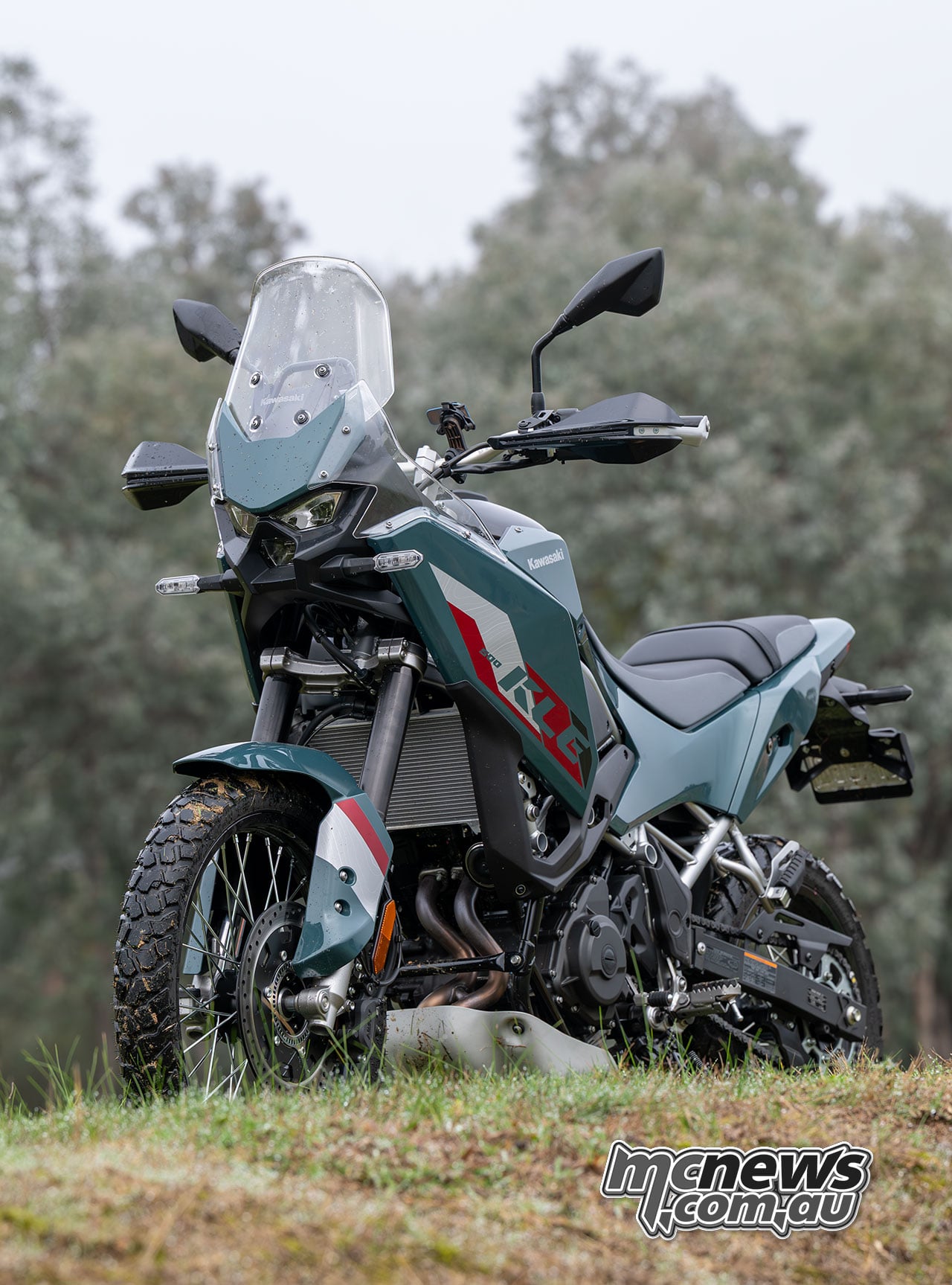
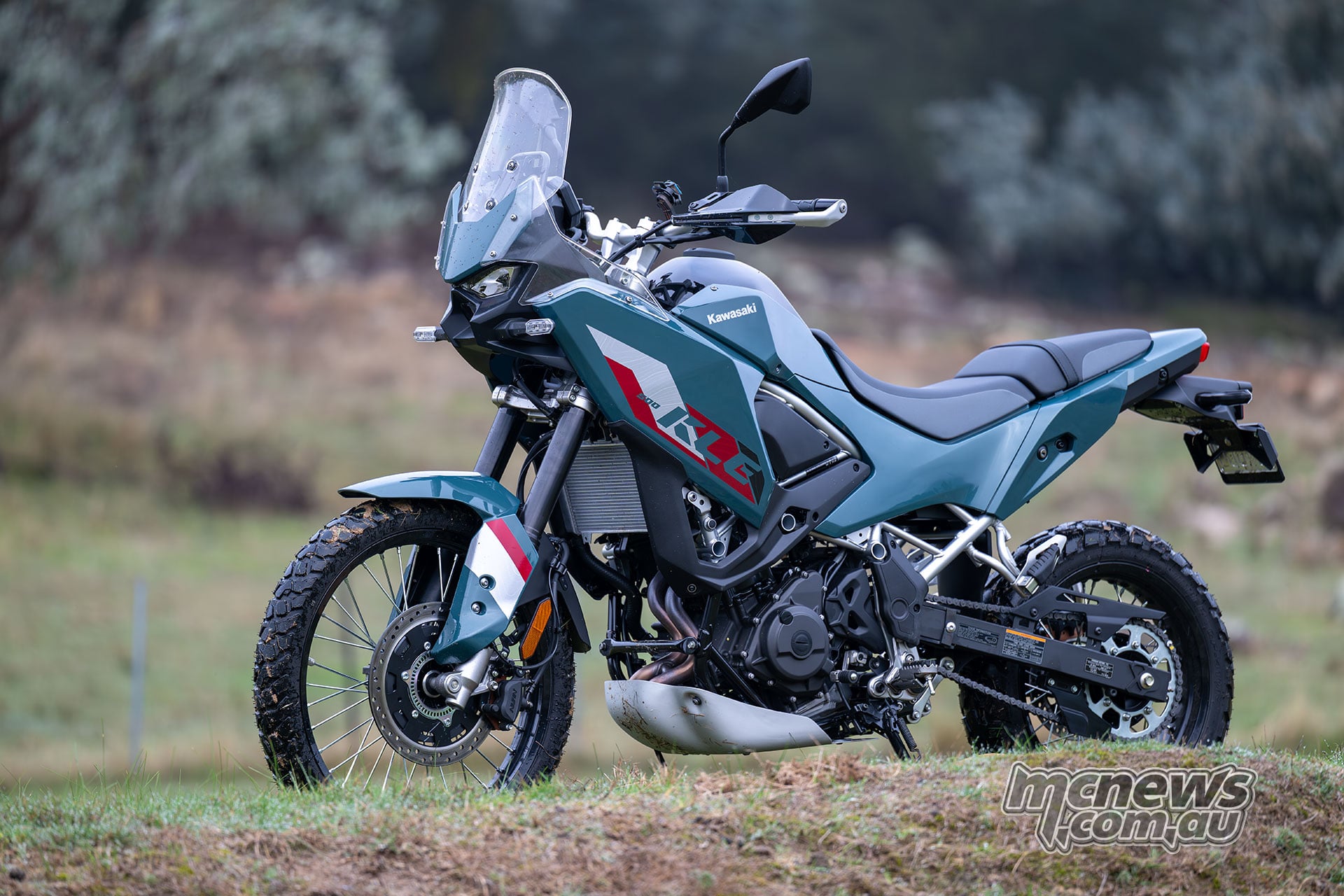
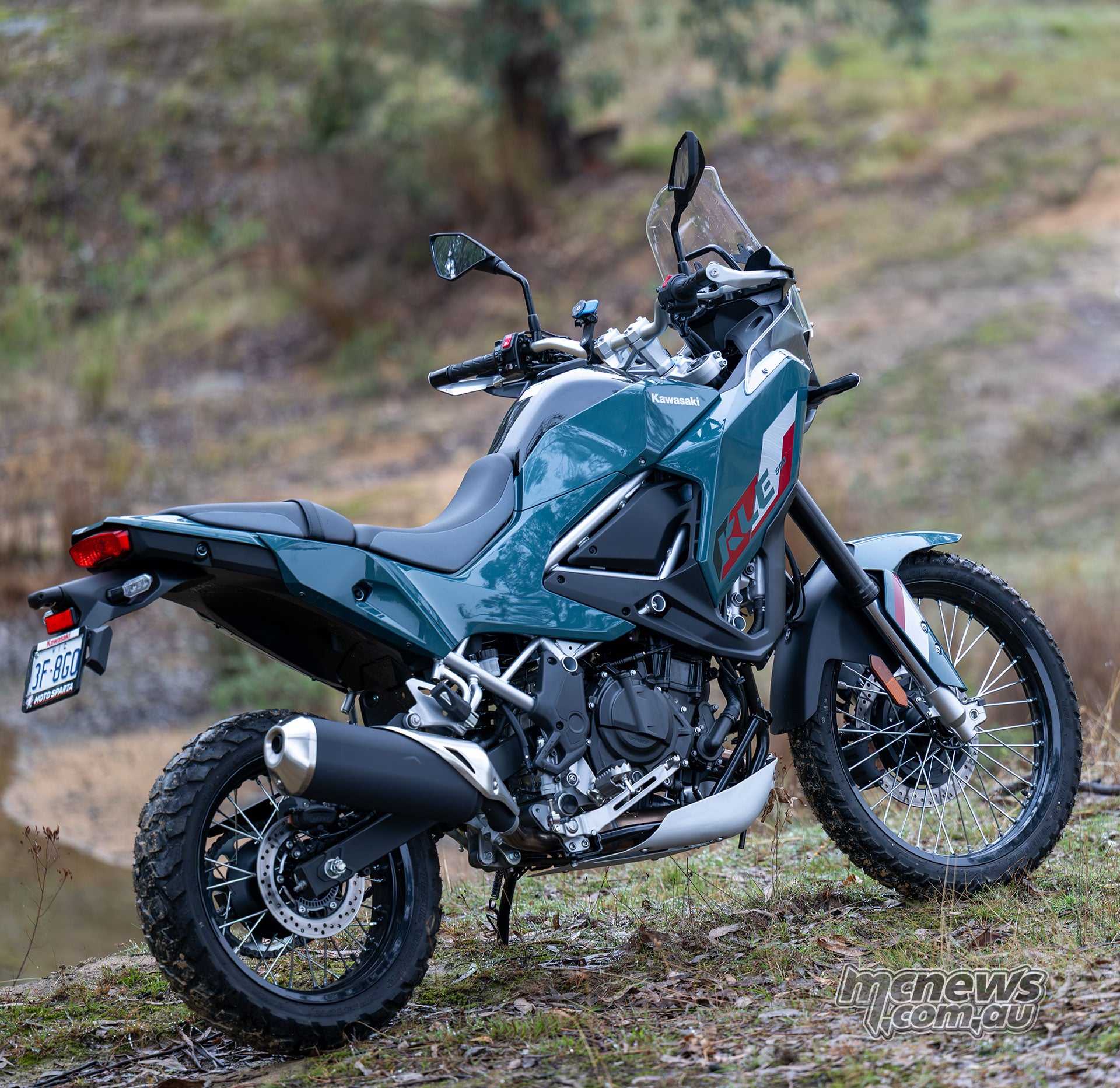
You’ll also notice the metal-reinforced handguards. Those are part of the SE’s standard equipment, along with the taller windscreen, 4.3-inch TFT display and LED indicators. The SE also comes with a larger bashplate than the base model, although we have upgraded that further for this build.
An Akrapovič slip-on
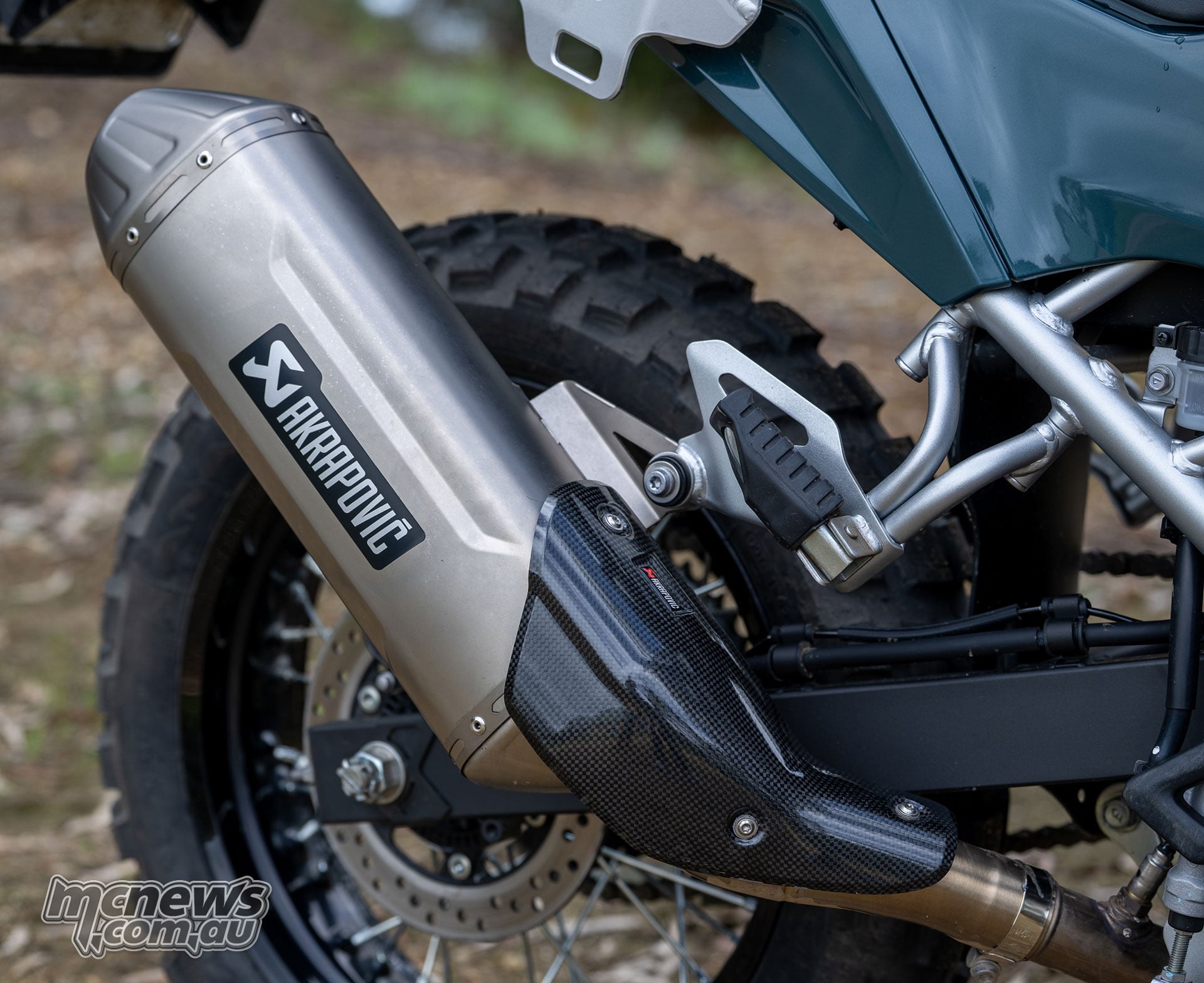
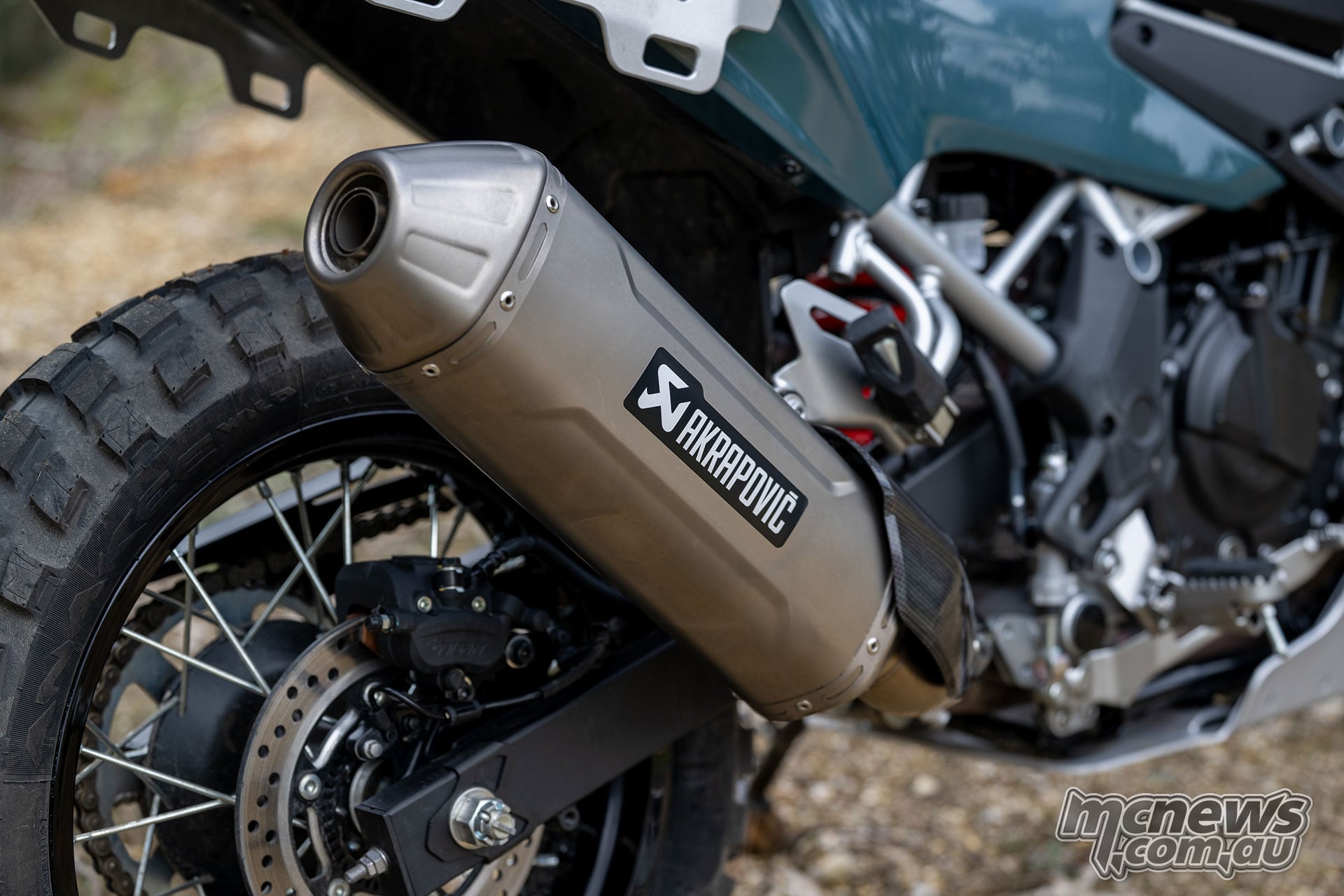
Then we fitted a tasty Akrapovič muffler. Plenty of owners will want to change the pipe, and I’ve yet to see an Akrapovič system that wasn’t beautifully finished.
There’s a little less weight, a beefier note and a modest performance gain. Akrapovič’s own figures quote a 1.5 kg weight saving and an increase of 0.6 kW, or 0.8 hp, at 9000 rpm compared with the standard exhaust. Those performance figures come from the manufacturer’s dyno testing.
Michelin Anakee Wild tyres
We also fitted more off-road-oriented rubber: Michelin’s Anakee Wild. They are one of our go-to options for this sort of bike, with enough tread for the gravel roads and four-wheel-drive tracks it is likely to tackle, while retaining useful on-road manners.
They made a welcome difference to confidence at both ends. The trails were in terrific condition for the video, and the Michelins gave me the grip to start exploring what the chassis could do once the suspension was working better.
The key change: suspension
The modification that really took the KLE to another level was the suspension work. As we covered in part one, the stock setup falls through its stroke far too easily once you start asking more of it off-road.
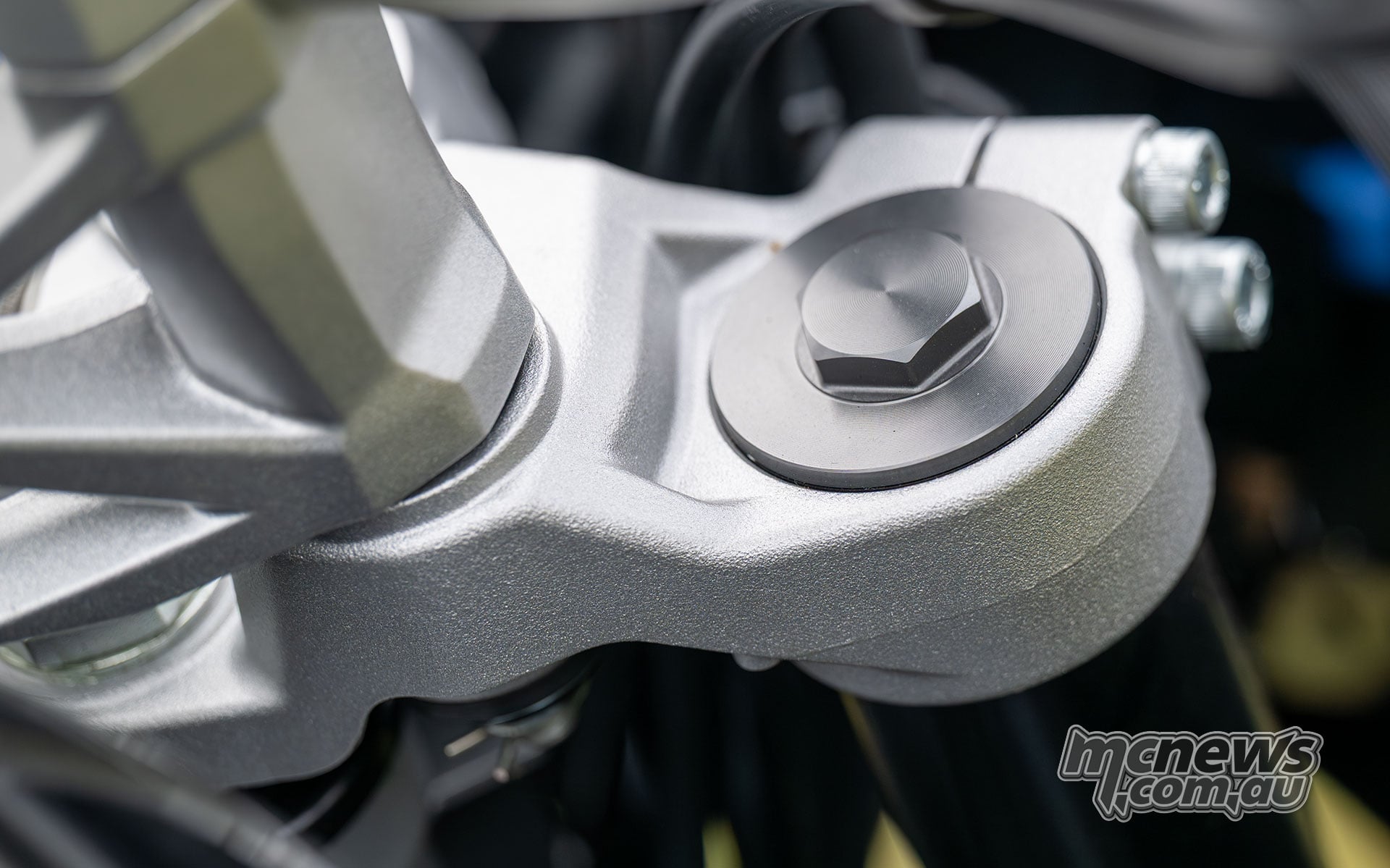
We turned to Krooztune, who reworked the fork valving and fitted firmer springs. The standard front spring rate is 0.45, and we went to 0.52. Those replacement springs were listed for the KLX300 and suited this application.
For the type of riding I do, we would ideally have gone to 0.55, but 0.52 was the firmest suitable option we could get at the time.
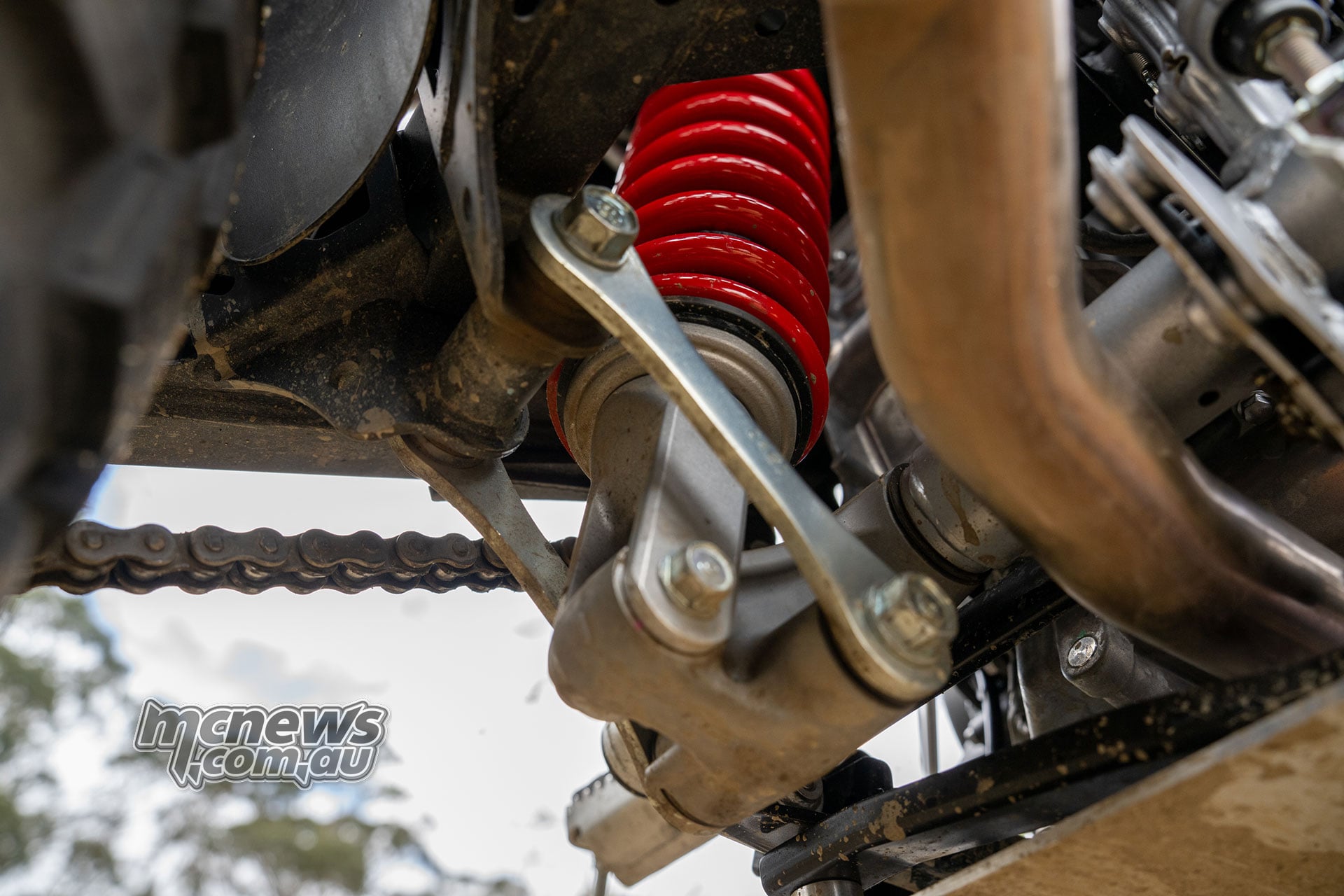
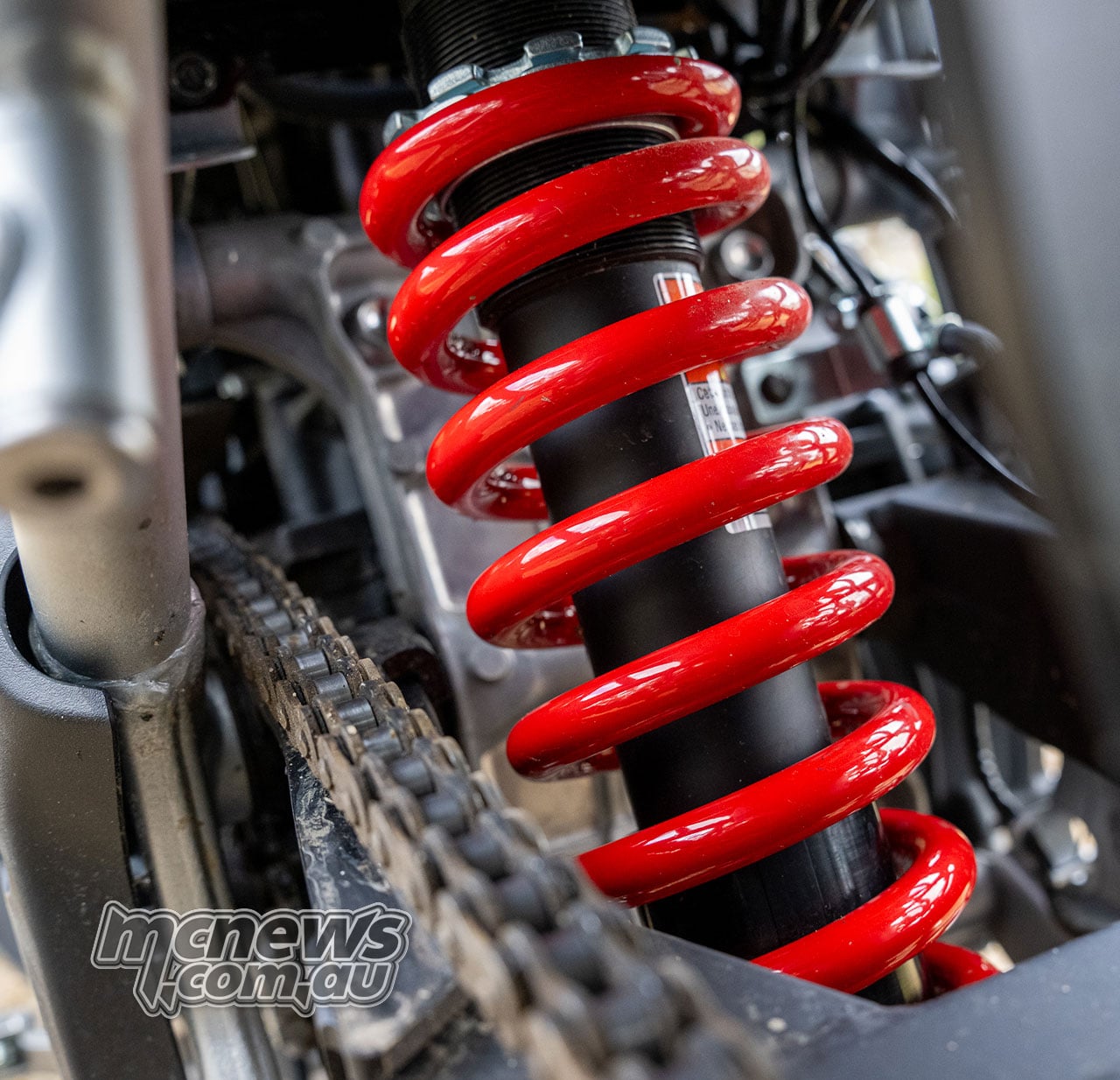
At the rear, the options for working with the standard shock’s valving were limited. The recommendation was to retain the shock and fit a firmer spring, going from 9.0 to 9.5.
What changed on the trail?
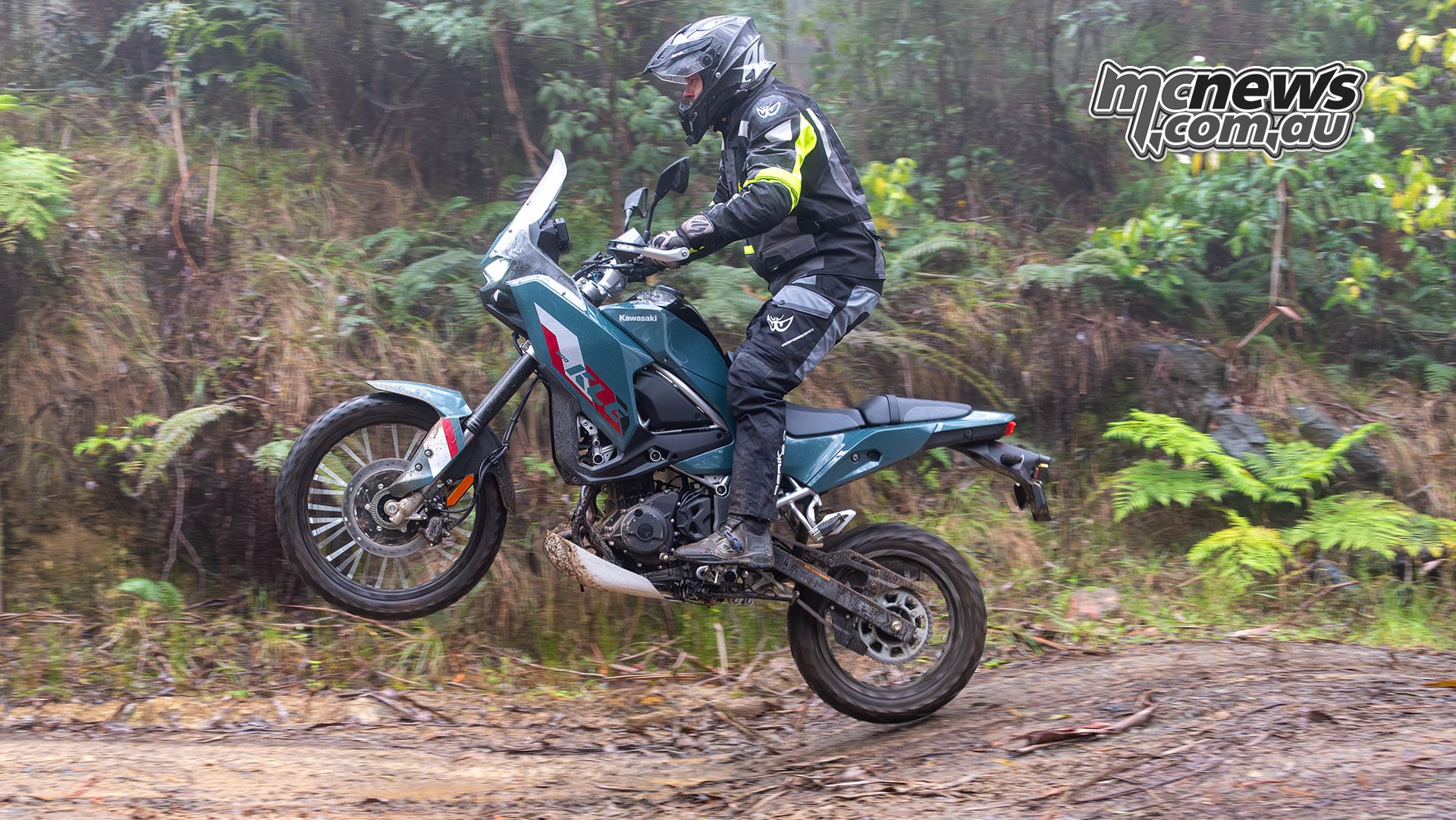
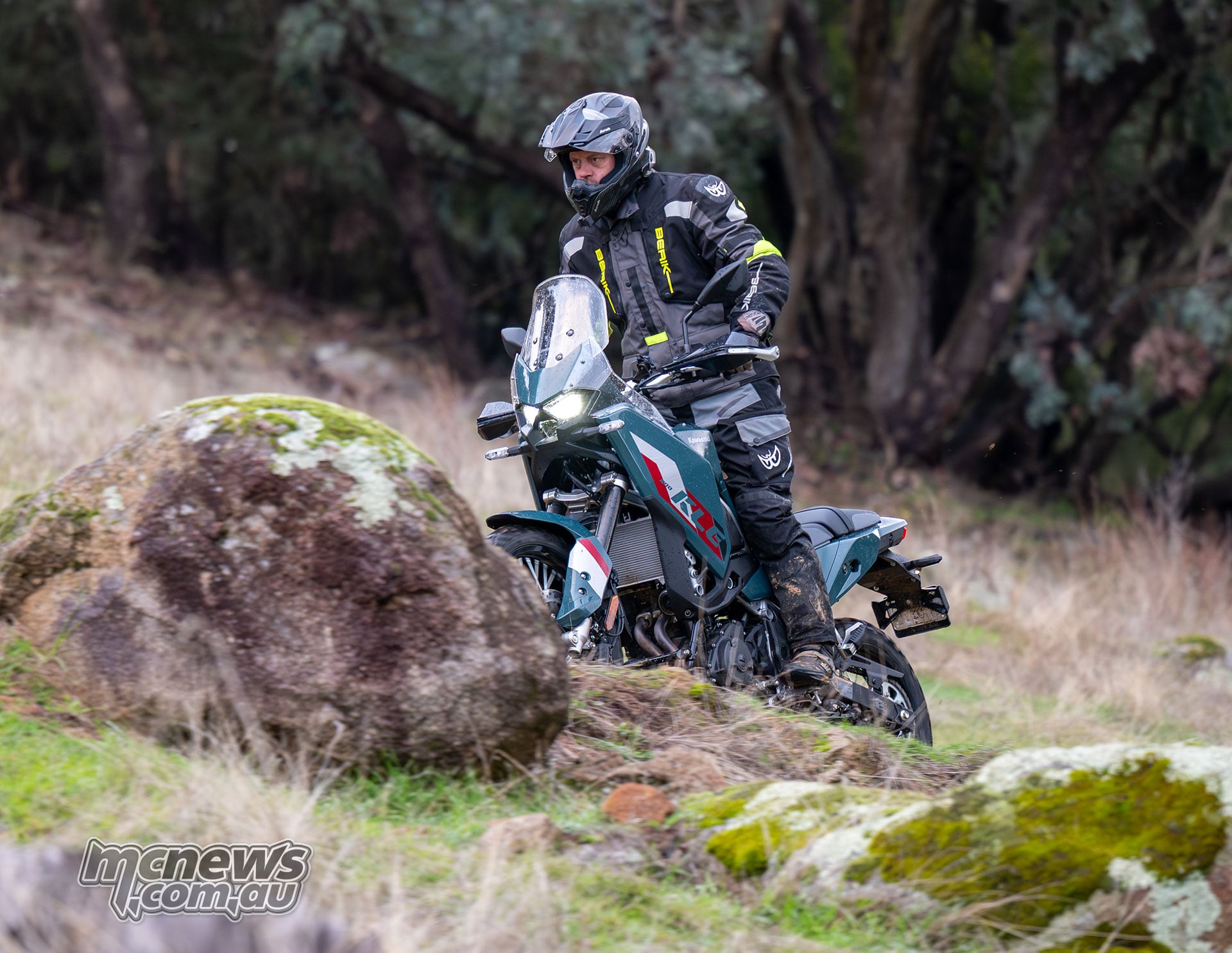
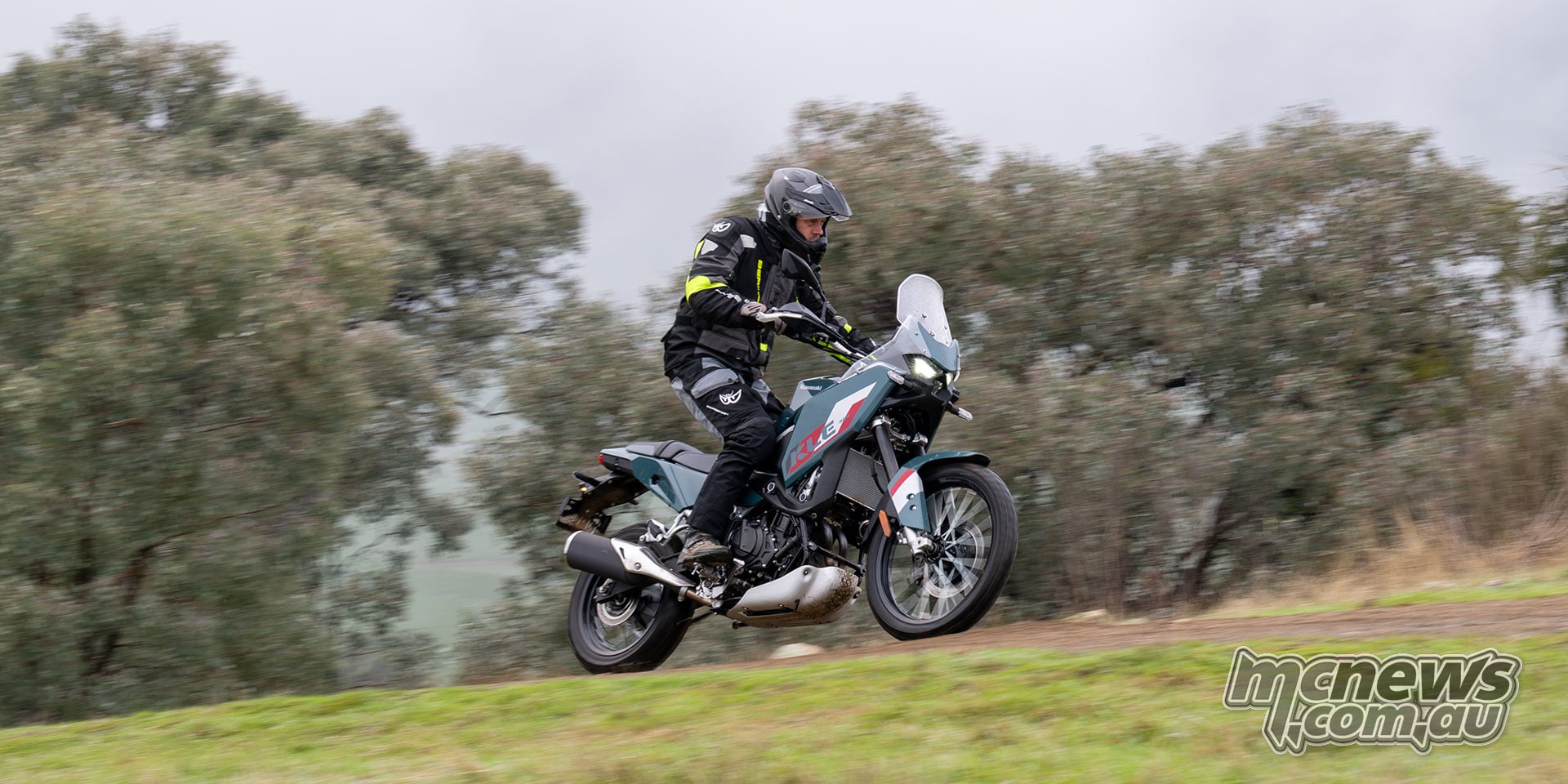
The difference is night and day. Previously, the bike would fall through the stroke, bottom out and bounce from one bump to the next. The revised setup has done a hell of a job of giving it some composure and allowing the chassis to show what it can do.
There is still room for improvement. It will bottom out over water bars and bigger hits, and I can see why a 0.55 front spring would suit my riding better. You still need to ride it with sensible expectations. But the changes have opened up a whole lot of riding that was much less appealing in stock trim.
The little KLE rocks now.
What surprised me most was the chassis balance. Two-wheel drifts are a relative doddle, and the bike is remarkably easy to ride, forgiving and accessible.
On the published stock kerb-weight figures, there is only around 25 kg between the KLE and the Ténéré World Raid I’m also testing. On the trail, the difference feels more like 40 or 50 kg. That’s a riding impression, rather than a measured weight for our accessorised bike.
Letting the little twin work
With the suspension now doing appropriate suspensiony things, the engine can be worked harder. That was the second surprise.
The little twin absolutely loves a rev. It is smoothly fuelled, has lovely throttle feel and makes it easy to modulate a slide. The engine was already a highlight in stock trim; now the rest of the bike lets me enjoy more of it.
I have read other riders’ comments about vibration at higher speeds, but I can’t say it stood out to me. If I were shopping specifically for a high-speed, long-distance tourer, a roughly 450 cc twin would not be the first place I’d look anyway.
The brakes are next
The next thing we need to look at is the braking performance. I’d like more bite at both ends, and the rear in particular feels weak. I suspect the pad compound is part of it, but we haven’t tested a replacement yet.
A pad change also won’t alter the ABS options. It remains an all-on or all-off arrangement, with no dedicated off-road mode and no way to disable rear ABS while keeping it active at the front.
As discussed in part one, the ABS feels road-biased on loose surfaces, and you need to stop to switch it off. That remains one of the things I would most like Kawasaki to improve.
What do the upgrades cost?
We don’t normally base our bike reviews on modified machines, but a long-termer gives us the opportunity to explore what a few considered changes can achieve. That also makes it important to put the result in the context of the money involved.
These are the indicative costs for the bike and the listed upgrades:
| Item | Price (AUD) |
|---|---|
| Kawasaki KLE500 SE, approximate ride-away price | $12,500 |
| B&B bashplate | $570 |
| B&B radiator guard | $329 |
| B&B tail rack | $398 |
| B&B side luggage panels | $269 |
| Akrapovič slip-on, approximate price | $1,350 |
| Krooztune suspension work | $1,200 |
| Listed upgrades subtotal | $4,116 |
| Bike and listed upgrades, before tyres | Approximately $16,616 |
The listed upgrades total $4,116. Combined with an SE at around $12,500 ride-away, that puts the running tally at approximately $16,616. The Michelin tyres are not included in that figure.
For my riding, the suspension and tyres have made the biggest difference to how much I enjoy the bike. The protection and luggage equipment prepare it for the trips I want to do, while the exhaust adds its own little bit of appeal.
The result is a KLE500 that is now an enjoyable fire-trail and four-wheel-drive-track bike, ready to carry luggage and head off for a dirty weekend. It still has limits, but it is a much more engaging proposition than the bike we started with.
There is a lovely little Kawasaki twin and a surprisingly well-balanced chassis underneath it all. These changes have given both a better chance to shine.
The small-capacity adventure segment has never been hotter, and an auto-clutch version of the KLE500 is on the way in 2027, as is a new KLE650, underscoring how seriously Kawasaki is taking this market segment.
Read part one: our Kawasaki KLE500 SE review in standard trim.
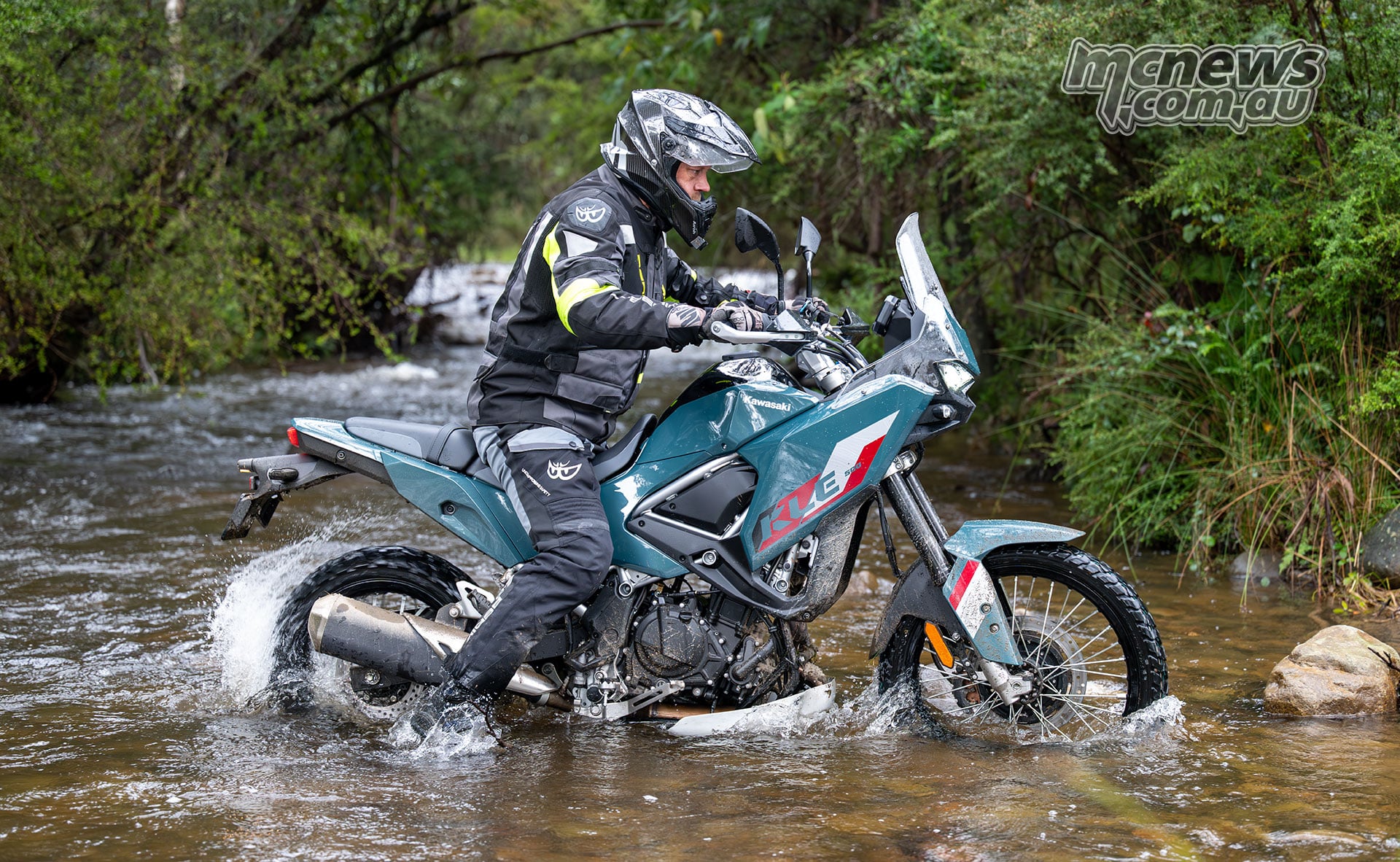
Check out some footage of the bike on the trails in both stock and modified trim; the wet and muddy sections were on the stock bike.
2026 Kawasaki KLE500 Specifications
|
2026 Kawasaki KLE500 Specifications
|
|
|---|---|
|
Engine
|
451 cc 4-stroke Parallel Twin
|
|
Maximum Power
|
45 horsepower (33.4 kW) / 9,000 rpm
|
|
Maximum Torque
|
42.6 Nm {4.3 kgfm} / 7,500 rpm
|
|
Bore x Stroke
|
70.0 x 58.6 mm
|
|
Compression Ratio
|
11.3:1
|
|
Valve System
|
DOHC, 8-valves
|
|
Fuel System
|
Fuel injection: ø32 mm x 2
|
|
Ignition
|
Digital
|
|
Starting
|
Electric
|
|
Cooling
|
Liquid-cooled
|
|
Transmission
|
6-speed, return
|
|
Primary Reduction Ratio
|
2.029 (69/34)
|
|
Gear Ratio: 1st
|
2.929 (41/14)
|
|
Gear Ratio: 2nd
|
2.056 (37/18)
|
|
Gear Ratio: 3rd
|
1.619 (34/21)
|
|
Gear Ratio: 4th
|
1.333 (32/24)
|
|
Gear Ratio: 5th
|
1.154 (30/26)
|
|
Gear Ratio: 6th
|
1.037 (28/27)
|
|
Final Reduction Ratio
|
3.067 (46/15)
|
|
Clutch
|
Wet multi-disc, manual, slip-assist
|
|
Final Drive
|
Chain
|
|
Frame
|
Trellis, high-tensile steel
|
|
Front Suspension
|
ø43 mm inverted fork
|
|
Rear Suspension
|
New Uni Trak
|
|
Front Wheel Travel
|
210 mm
|
|
Rear Wheel Travel
|
196 mm
|
|
Rake
|
28.0°
|
|
Trail
|
104 mm
|
|
Steering Angle (L/R)
|
40° / 40°
|
|
Front Tyre
|
90/90-21M/C 54S
|
|
Rear Tyre
|
140/70-17M/C 66S
|
|
Front Brake/s
|
Single 300 mm disc with twin-piston caliper
|
|
Rear Brake
|
230 mm disc, twin-piston caliper
|
|
Dimensions (LxWxH)
|
2,300 x 980 x 1,510/1,460 mm (high/low screen)
|
|
Wheelbase
|
1,555 mm
|
|
Road Clearance
|
185 mm
|
|
Seat Height
|
870 mm
|
|
Curb Weight*
|
195 kg
|
|
Estimated Dry Weight**
|
176 kg
|
|
Fuel Capacity
|
16 litres
|
Kawasaki KLE500 SE Images – Modded & Stock