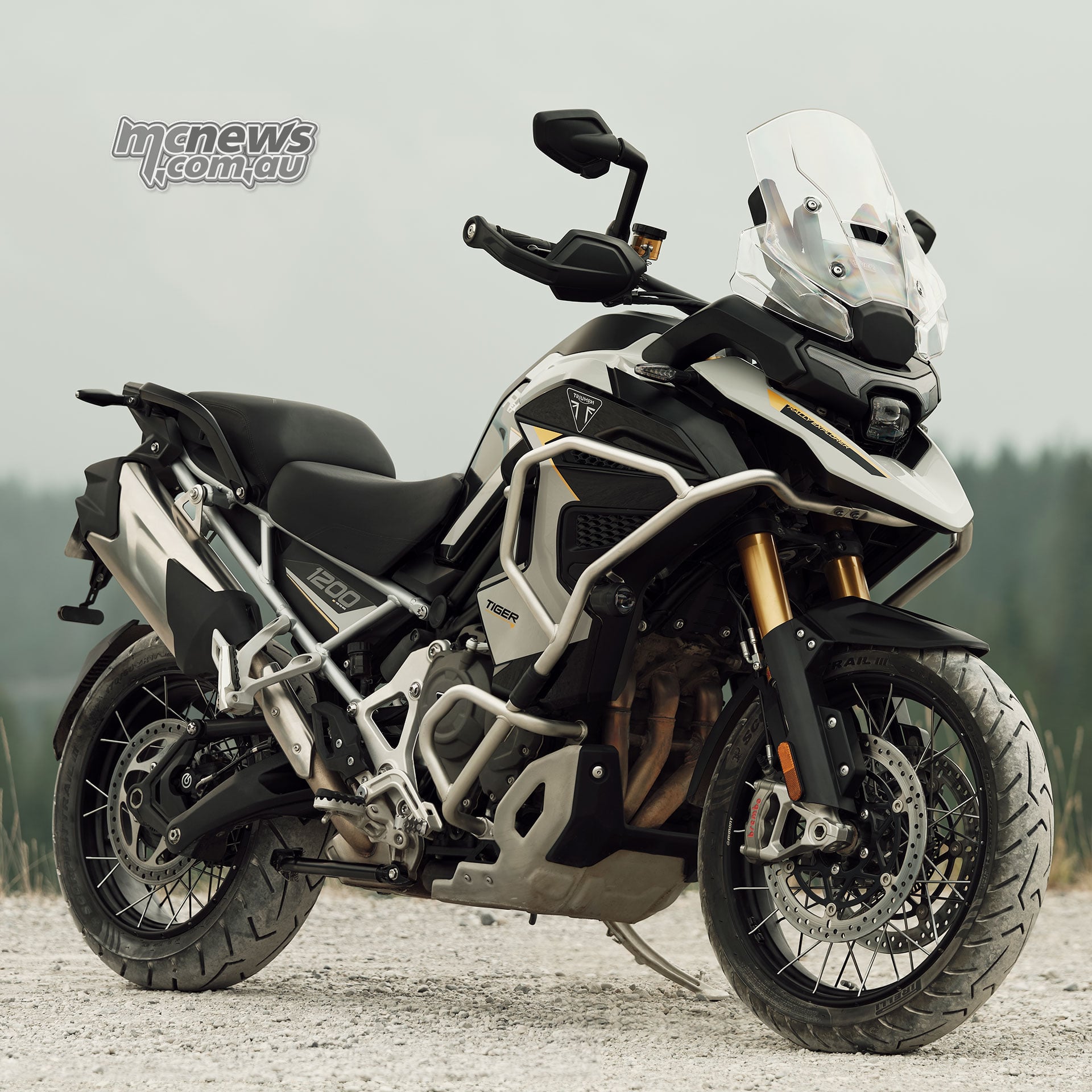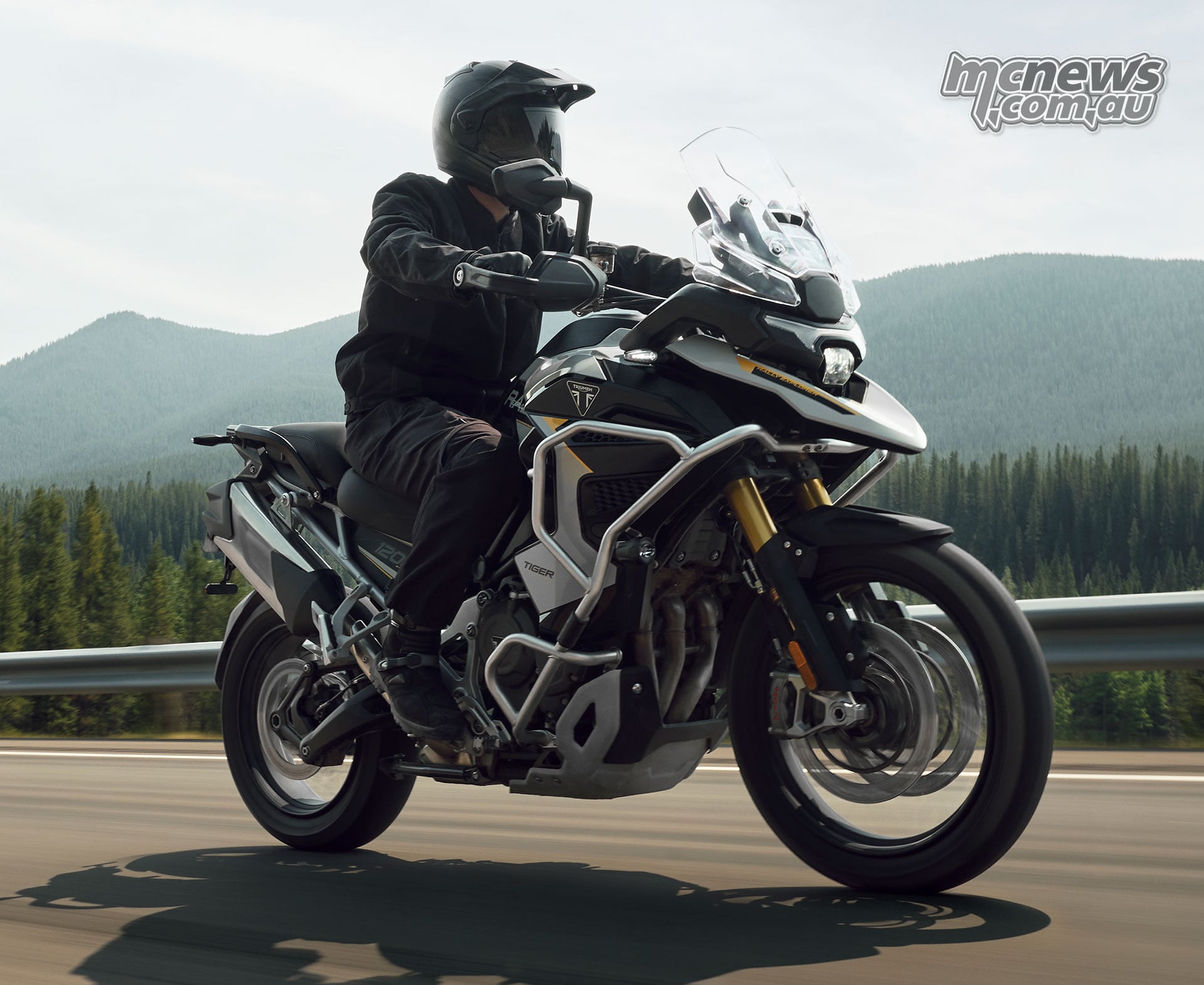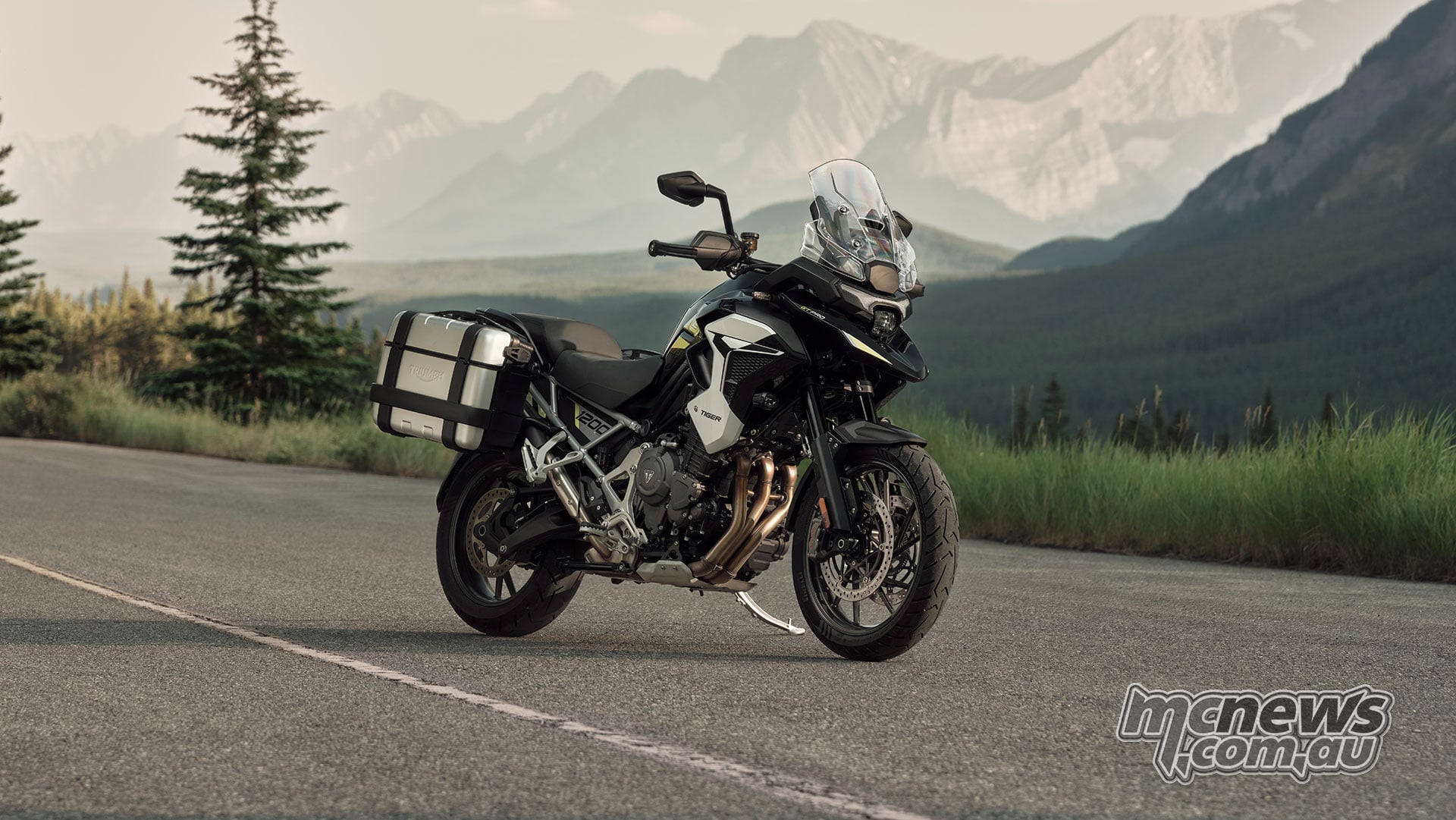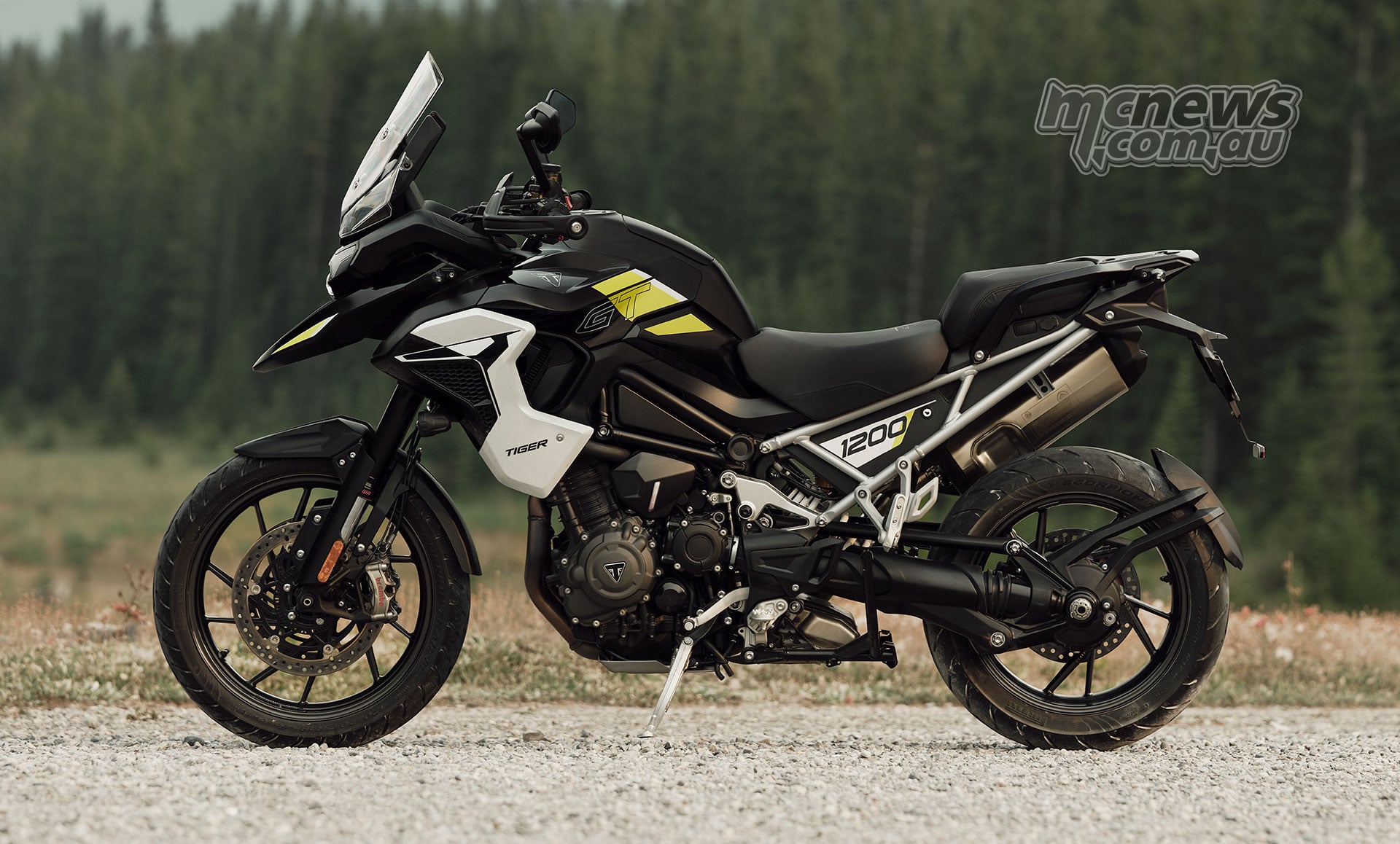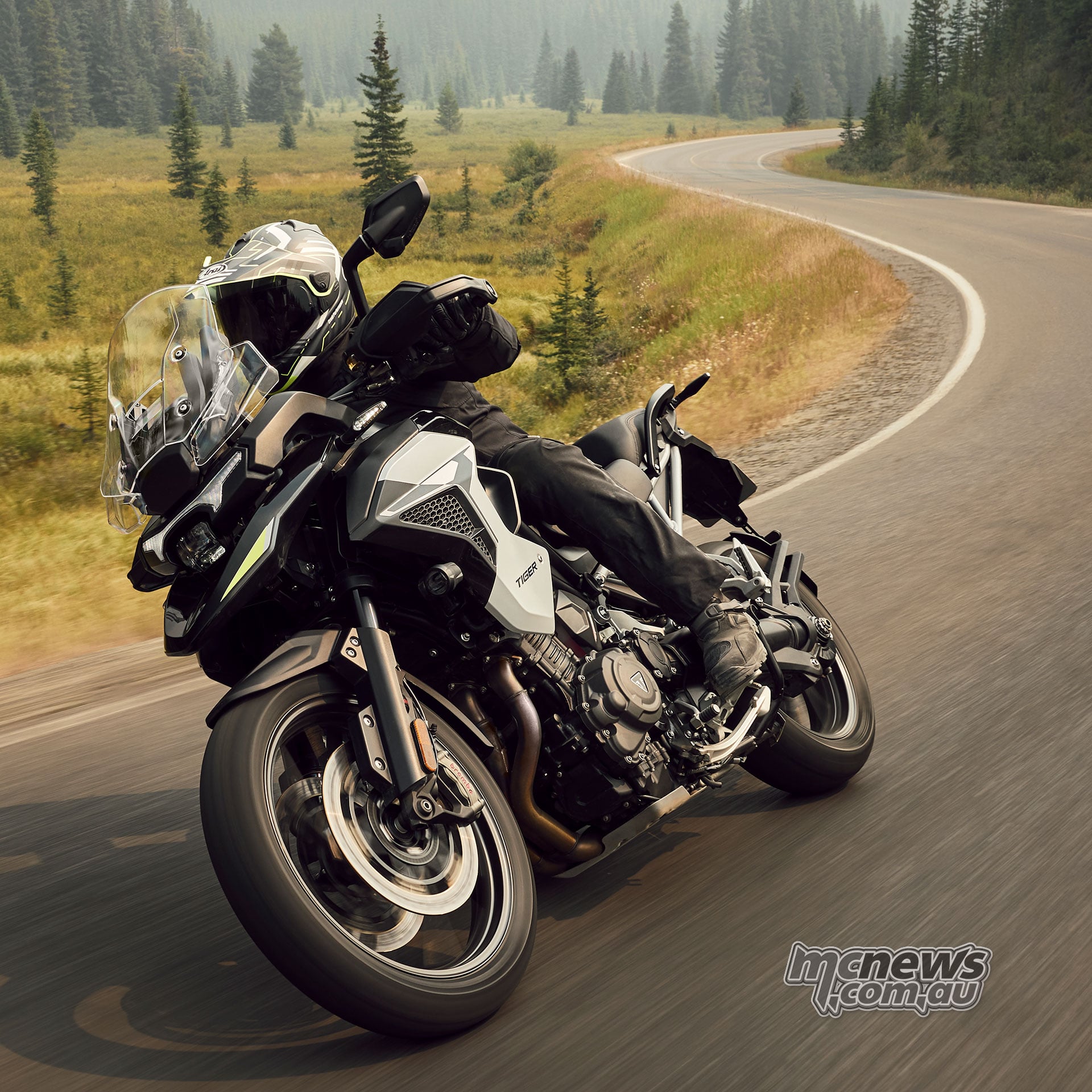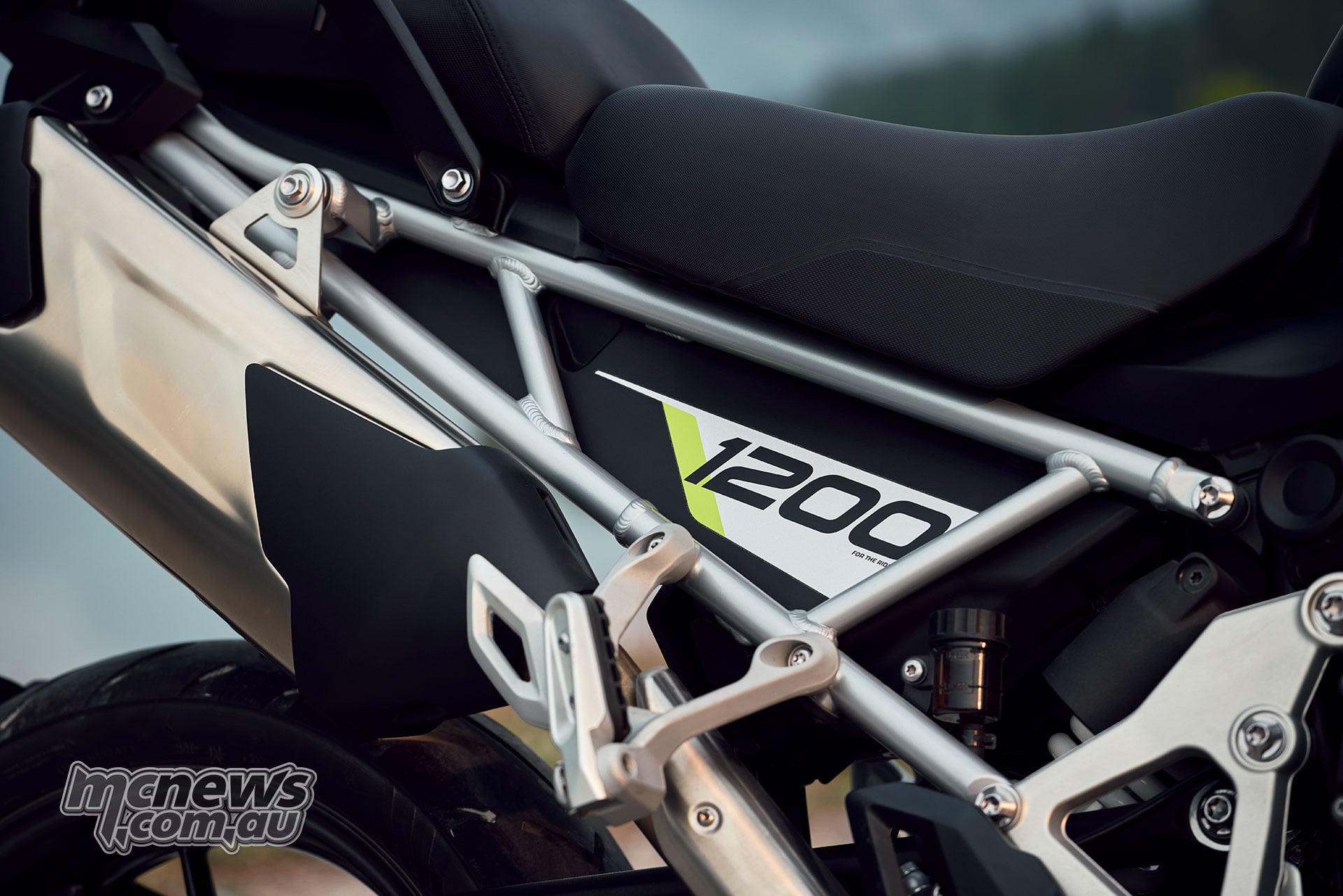


2027 Triumph Tiger 1200
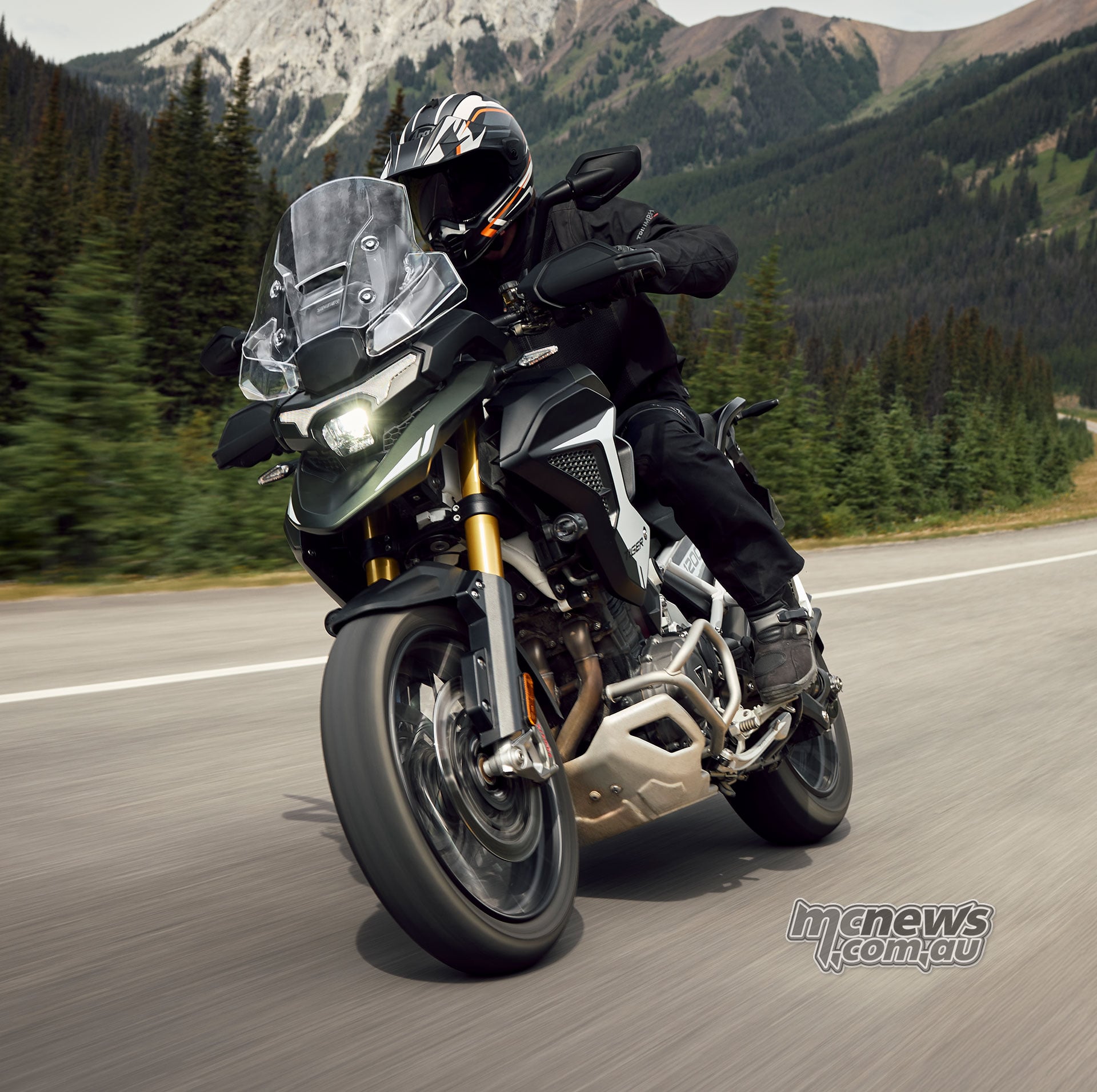
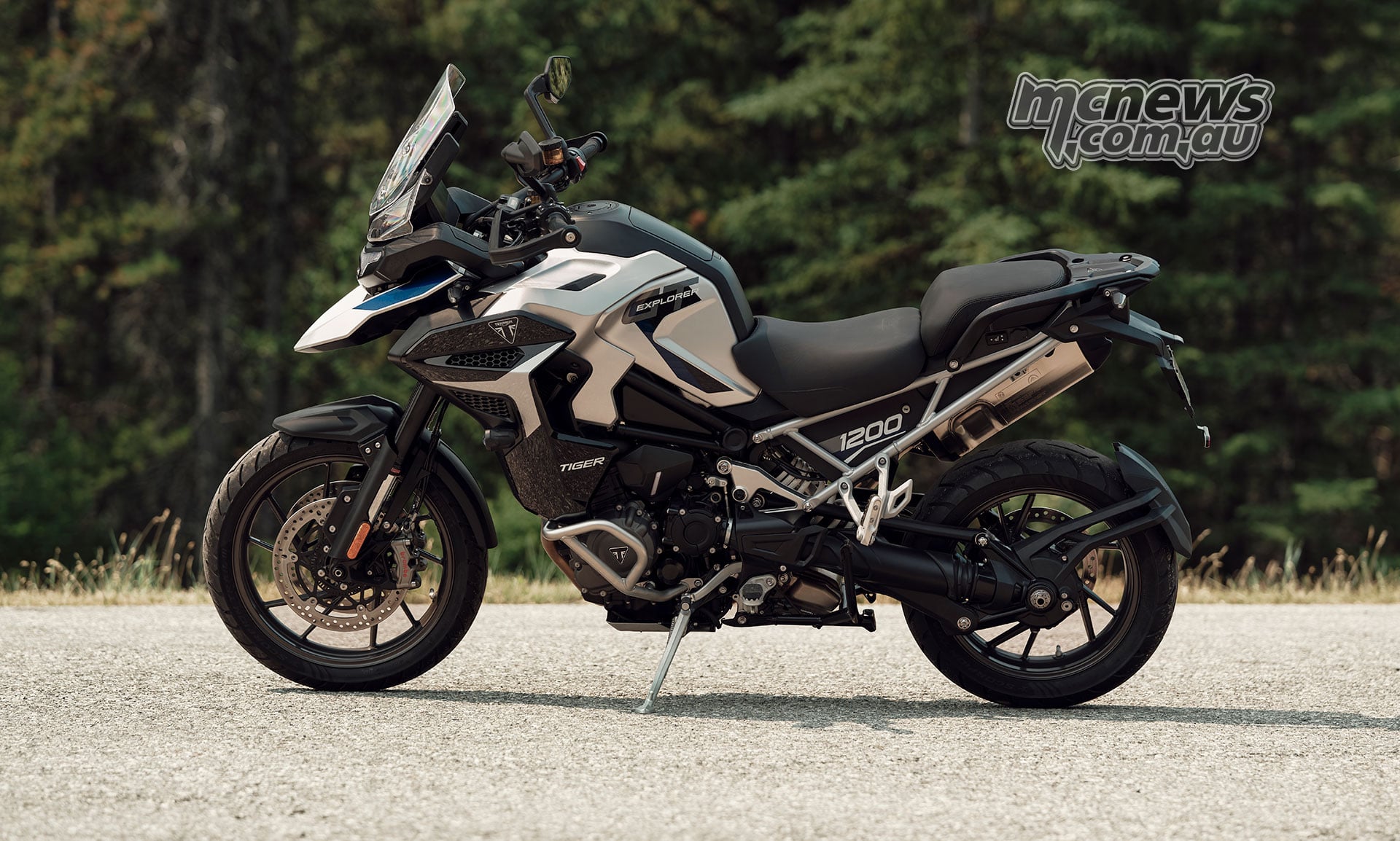
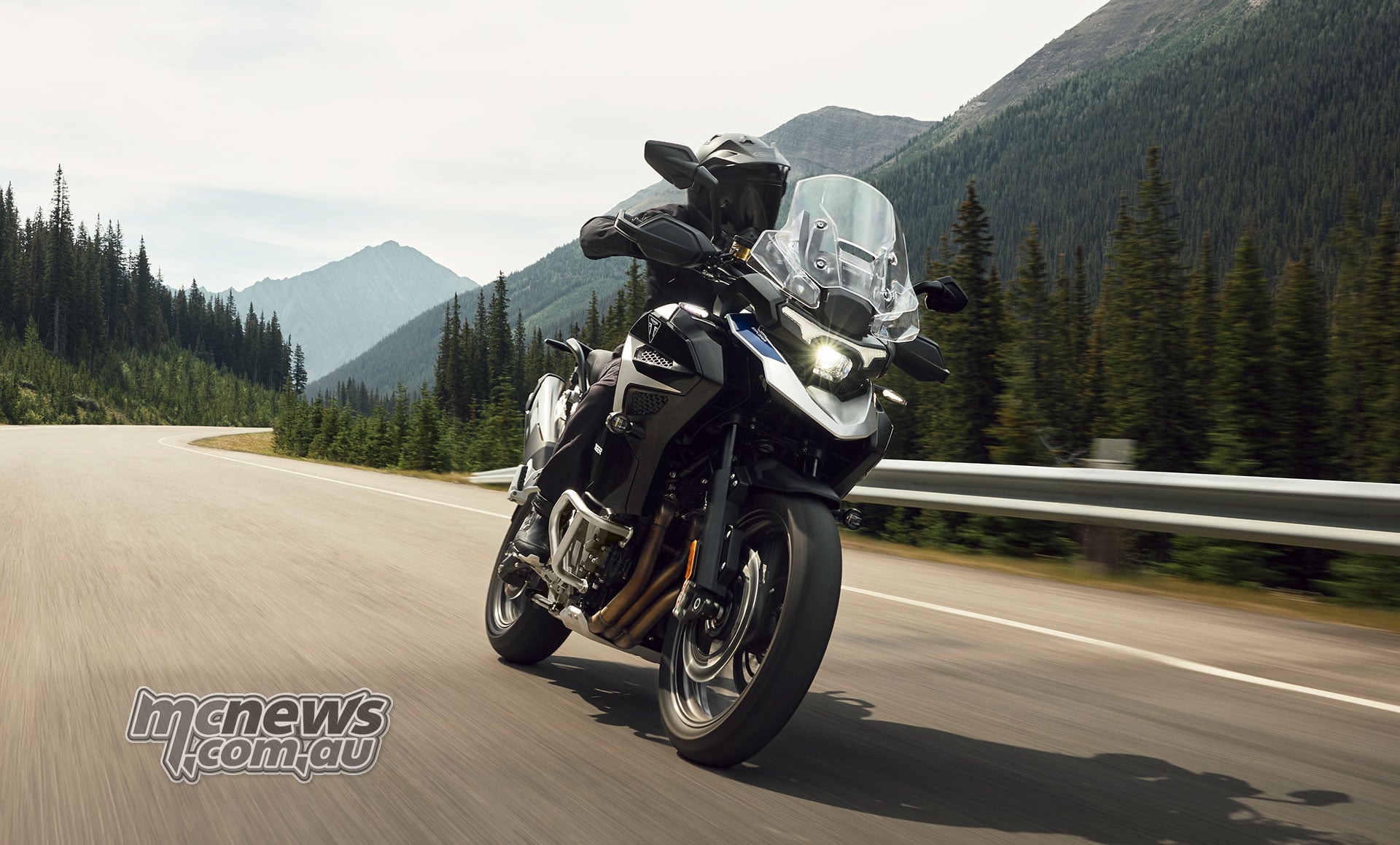
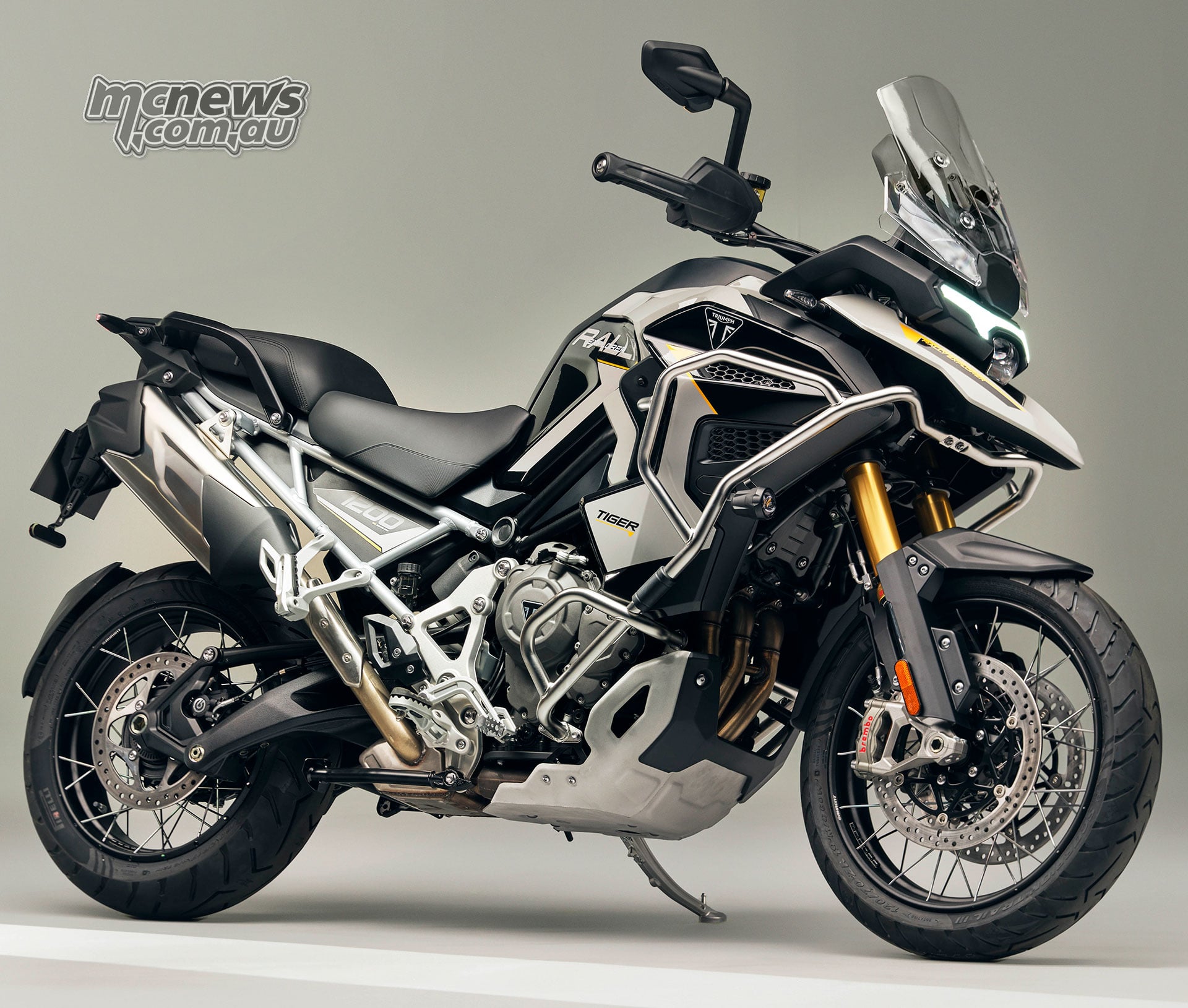
Triumph has substantially updated its Tiger 1200 range for 2027, bringing more power, automatic suspension lowering, smartphone integration and a much broader suite of radar-based rider aids. Australian arrivals are scheduled from December 2026, with local pricing still to be announced.
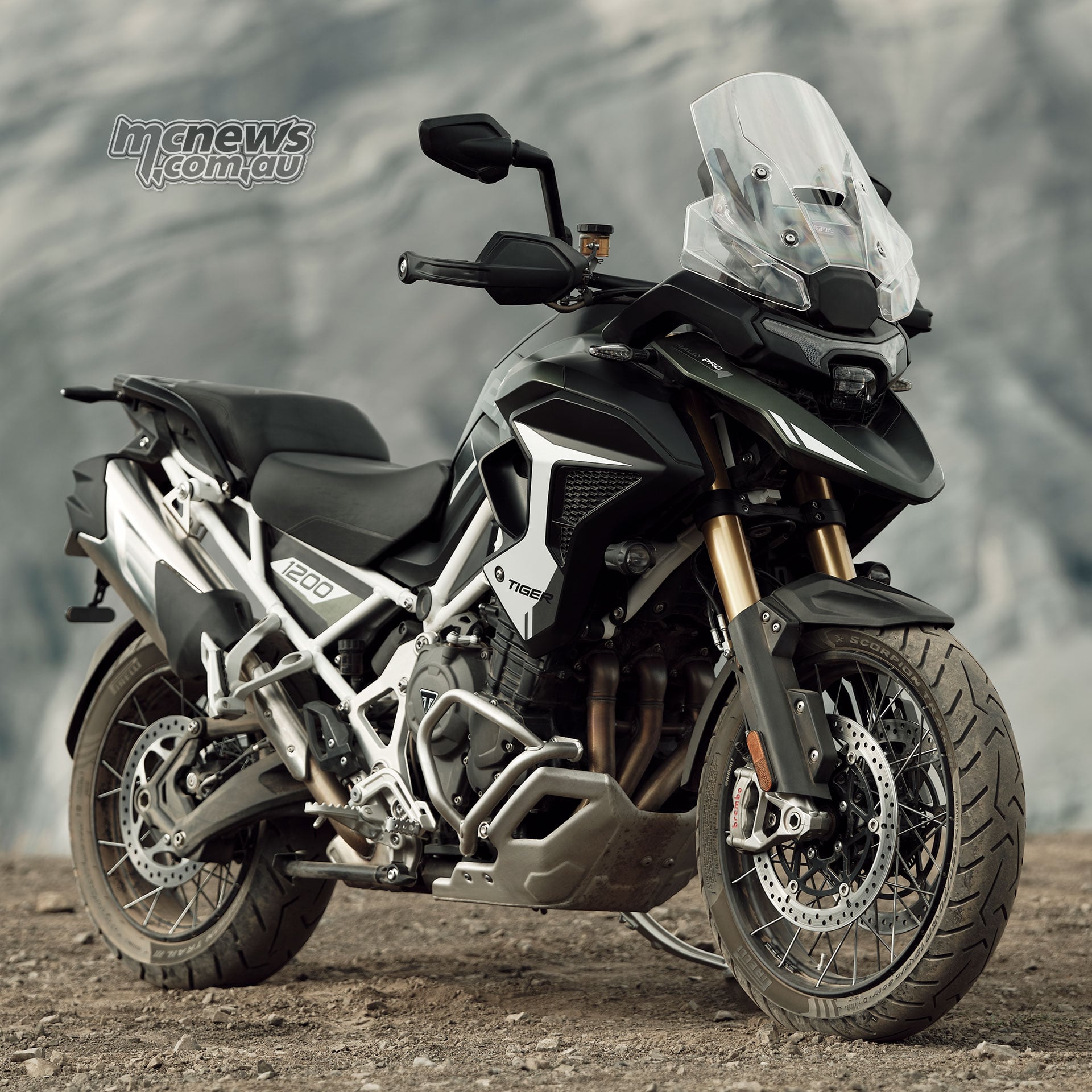
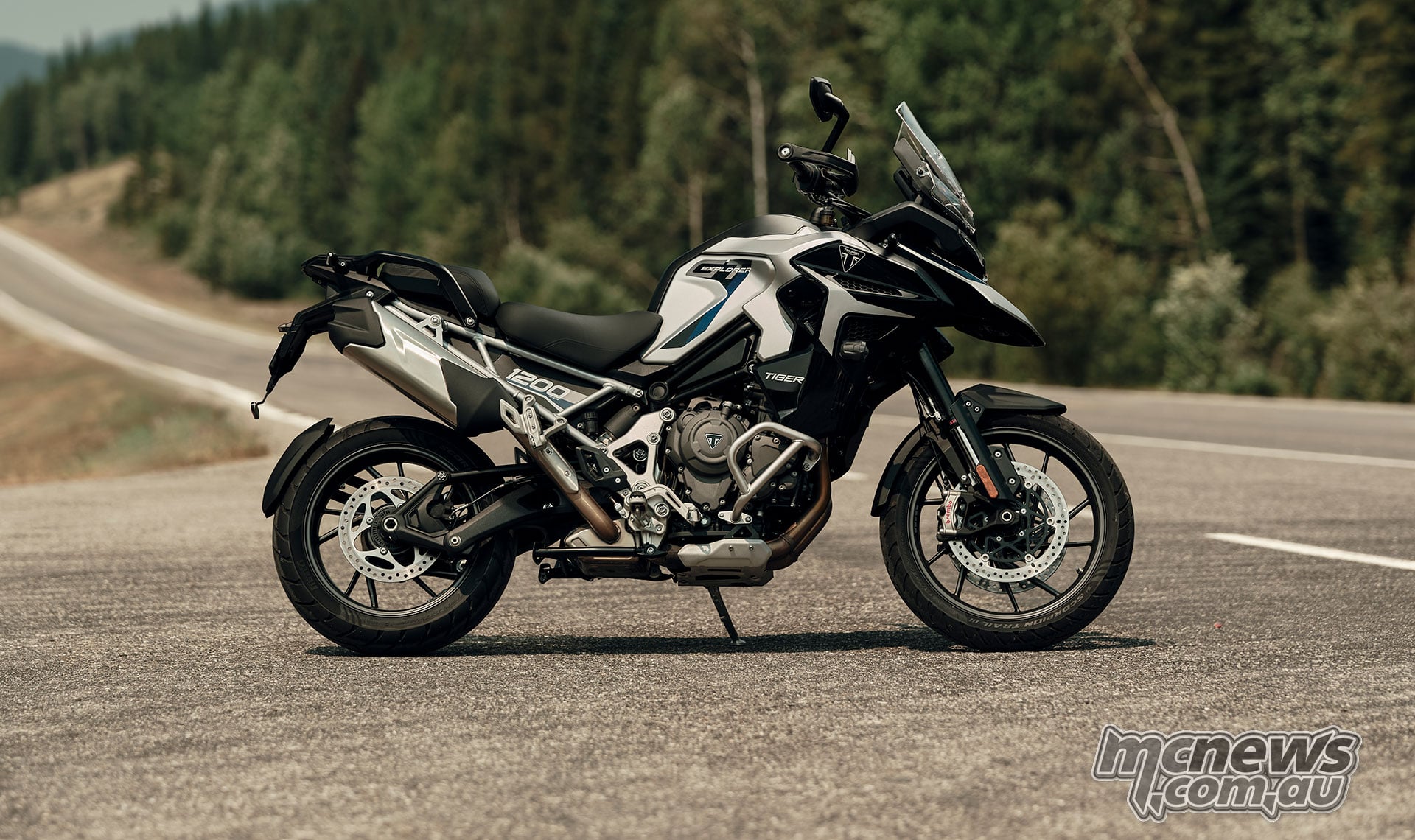
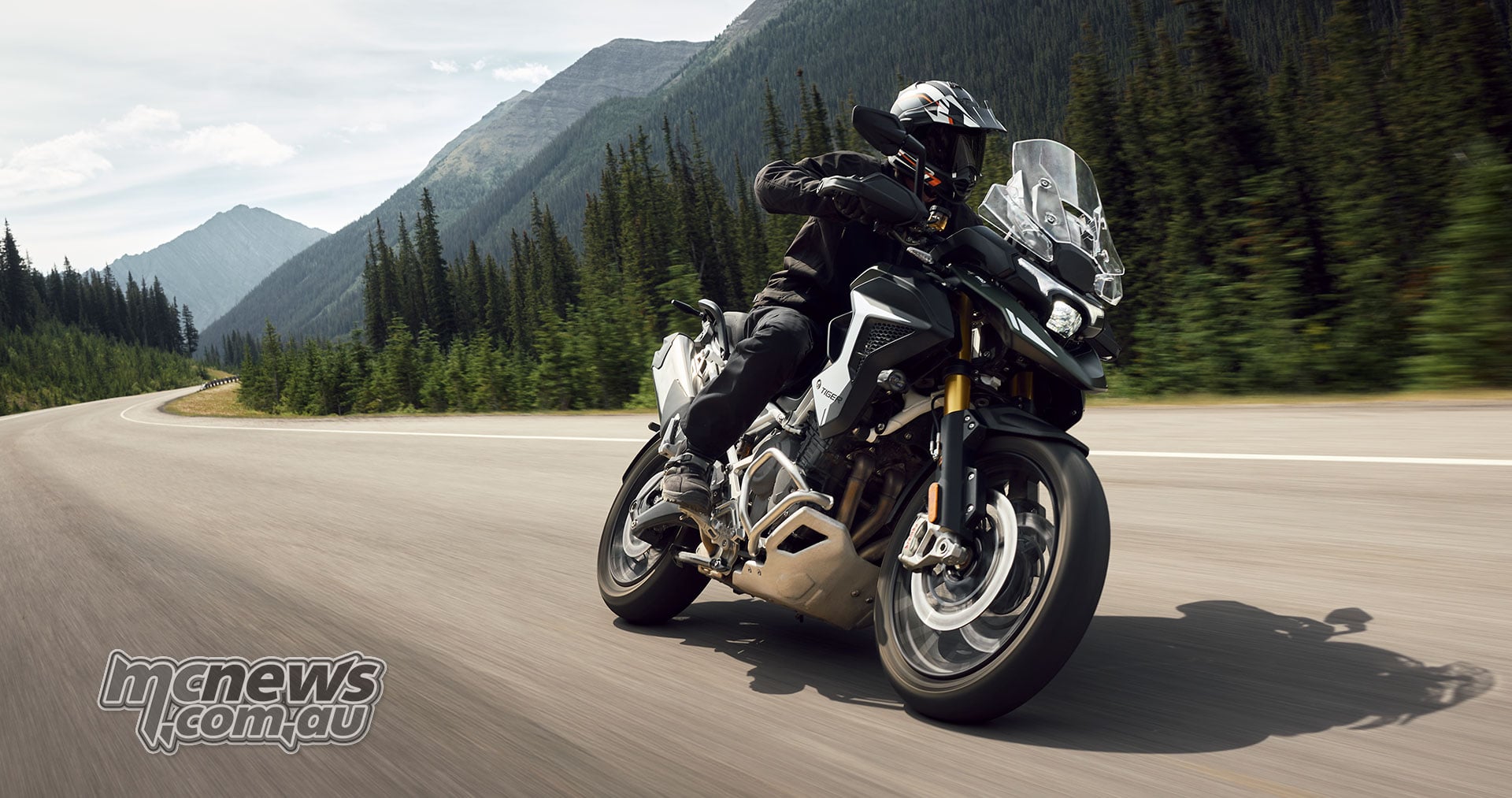
The GT Pro, Rally Pro, GT Explorer and Rally Explorer names continue, but the distinctions between them have changed. All four now share 19-inch front and 17-inch rear wheels, together with 200 mm of suspension travel at each end.
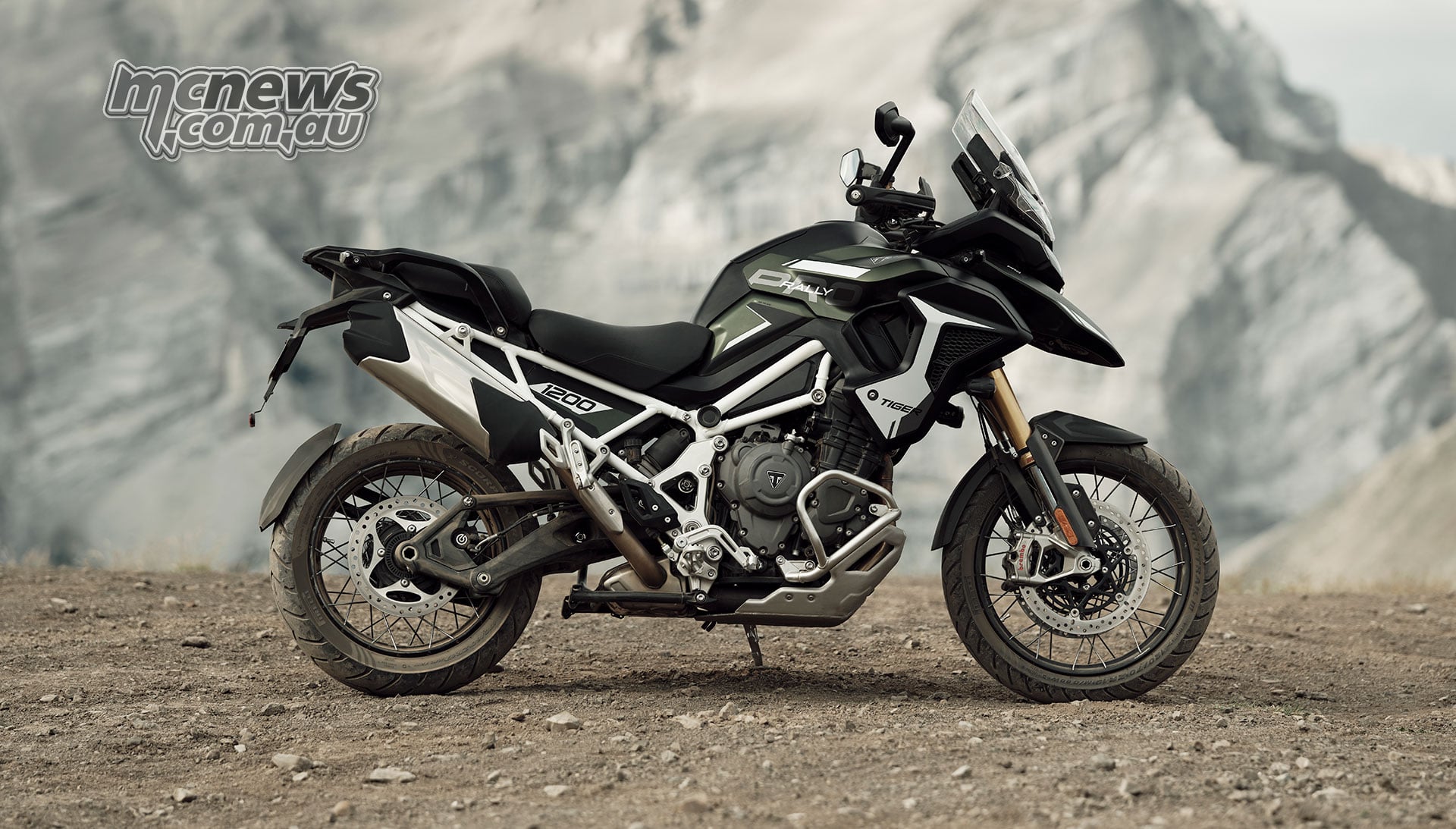
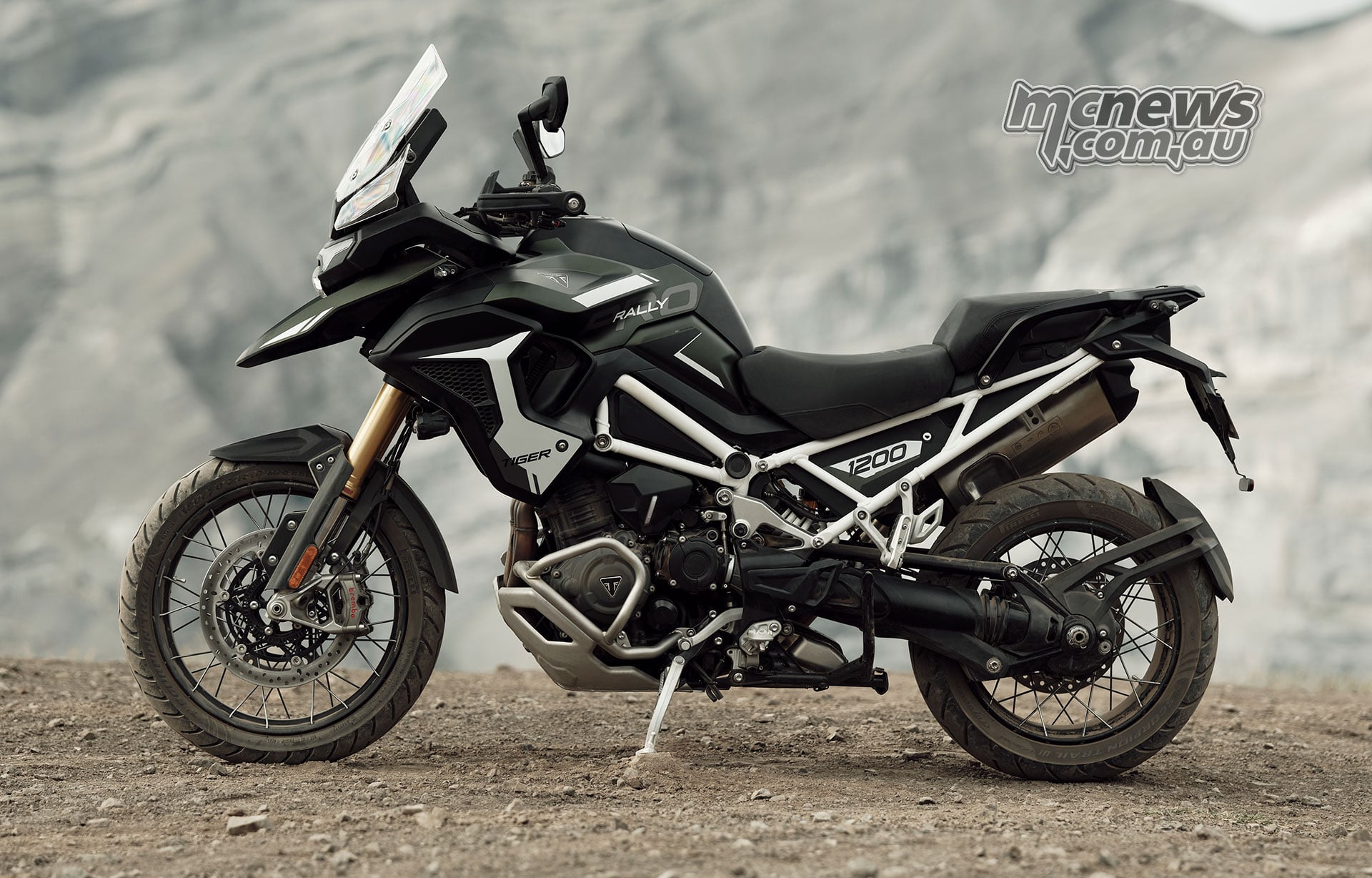
That represents a particularly significant change for the Rally models, which previously combined a 21-inch front and 18-inch rear with 220 mm of travel. Triumph is steering its biggest adventure platform towards sharper road handling and easier everyday use, while retaining spoked wheels and additional off-road equipment on the Rally versions.
A different direction for the Rally
The wheel change deserves attention because the previous Rally’s combination of road manners and off-road ability was central to its appeal.
In his 820 km Tiger 1200 Rally Pro video review, Wayne not only confirmed his belief that the big Tiger is one of the best all-rounders and big mile eaters available, but also that he preferred the Rally over the GT despite its slightly less immediate steering on tarmac. The larger front wheel’s advantages on muddy, sandy, or rough sections helped make that compromise worthwhile.
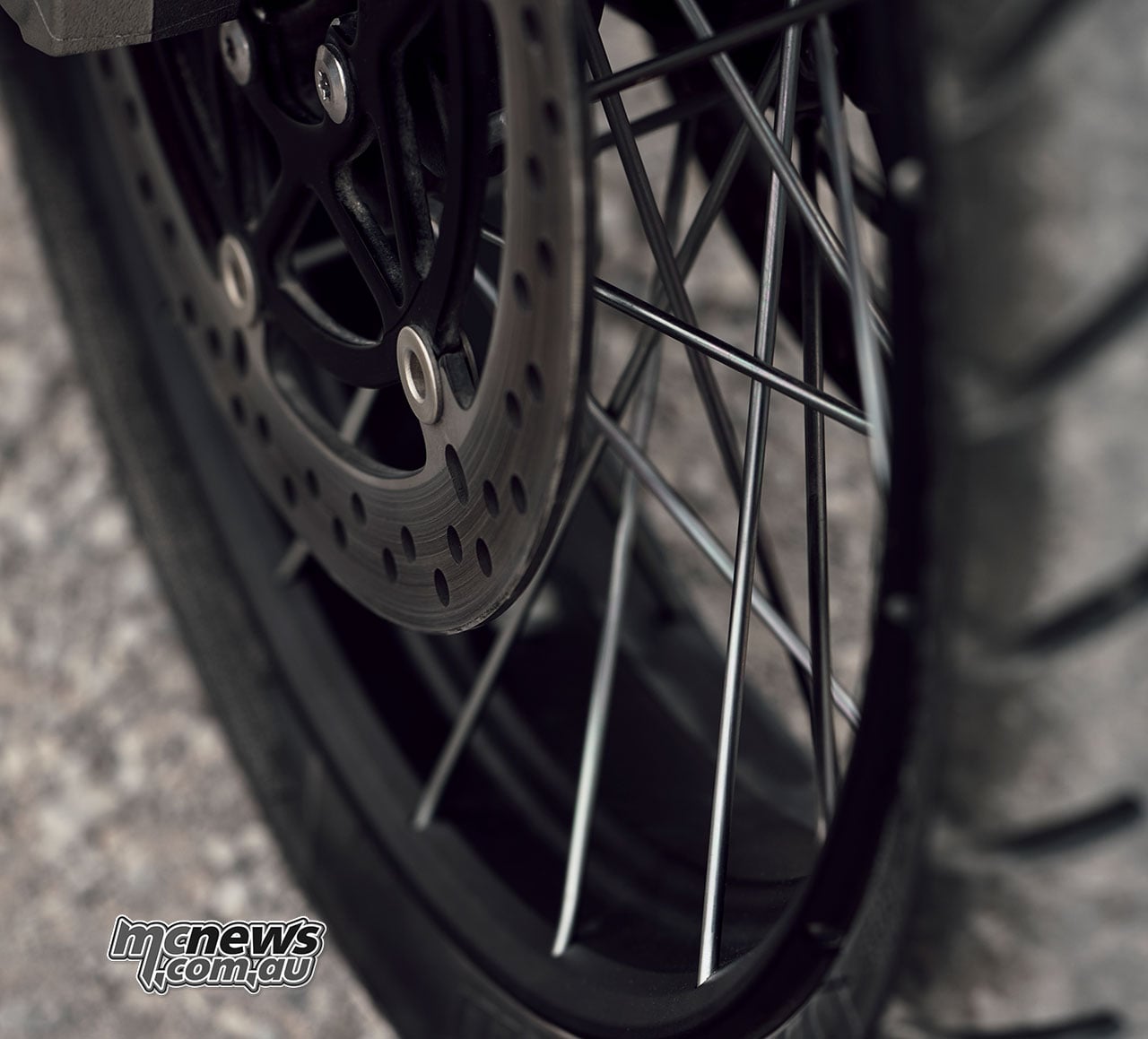
For 2027, the Rally’s front wheel drops two inches in diameter, its rear drops one inch, and suspension travel reduces by 20 mm at both ends. All four models use 120/70R19 front and 170/60R17 rear tyres, with the latter also wider than the previous generation’s 150-section rear.
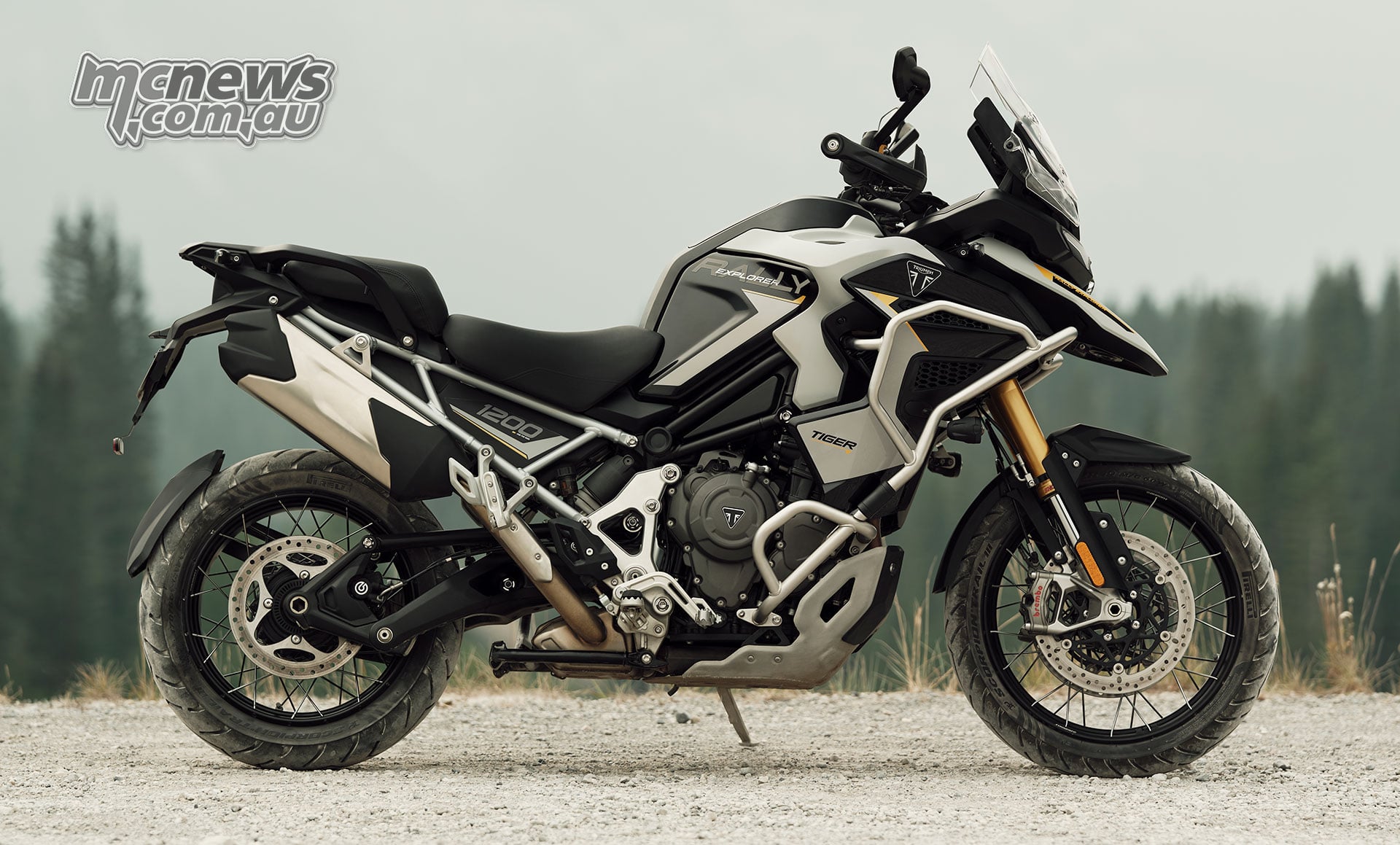
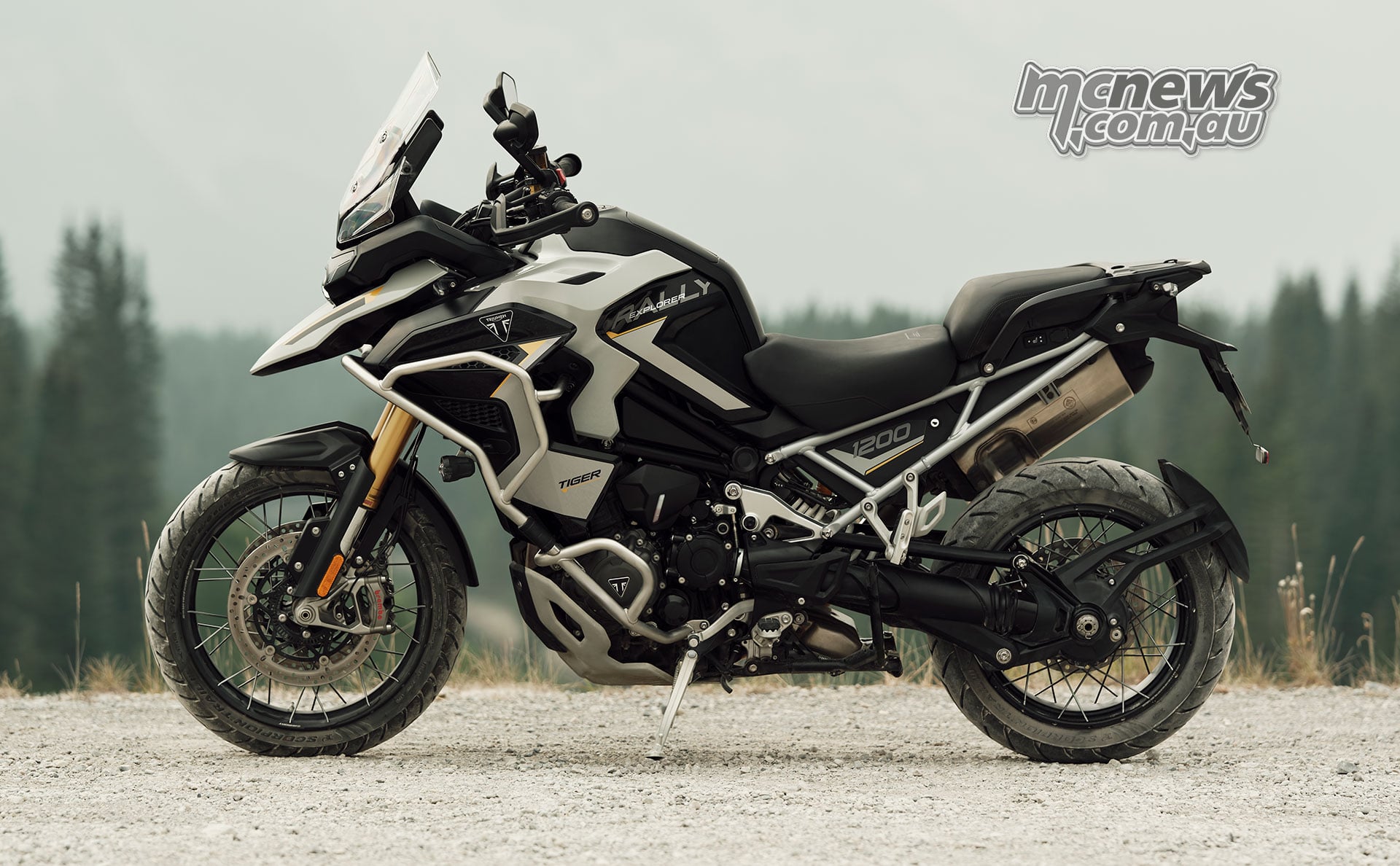
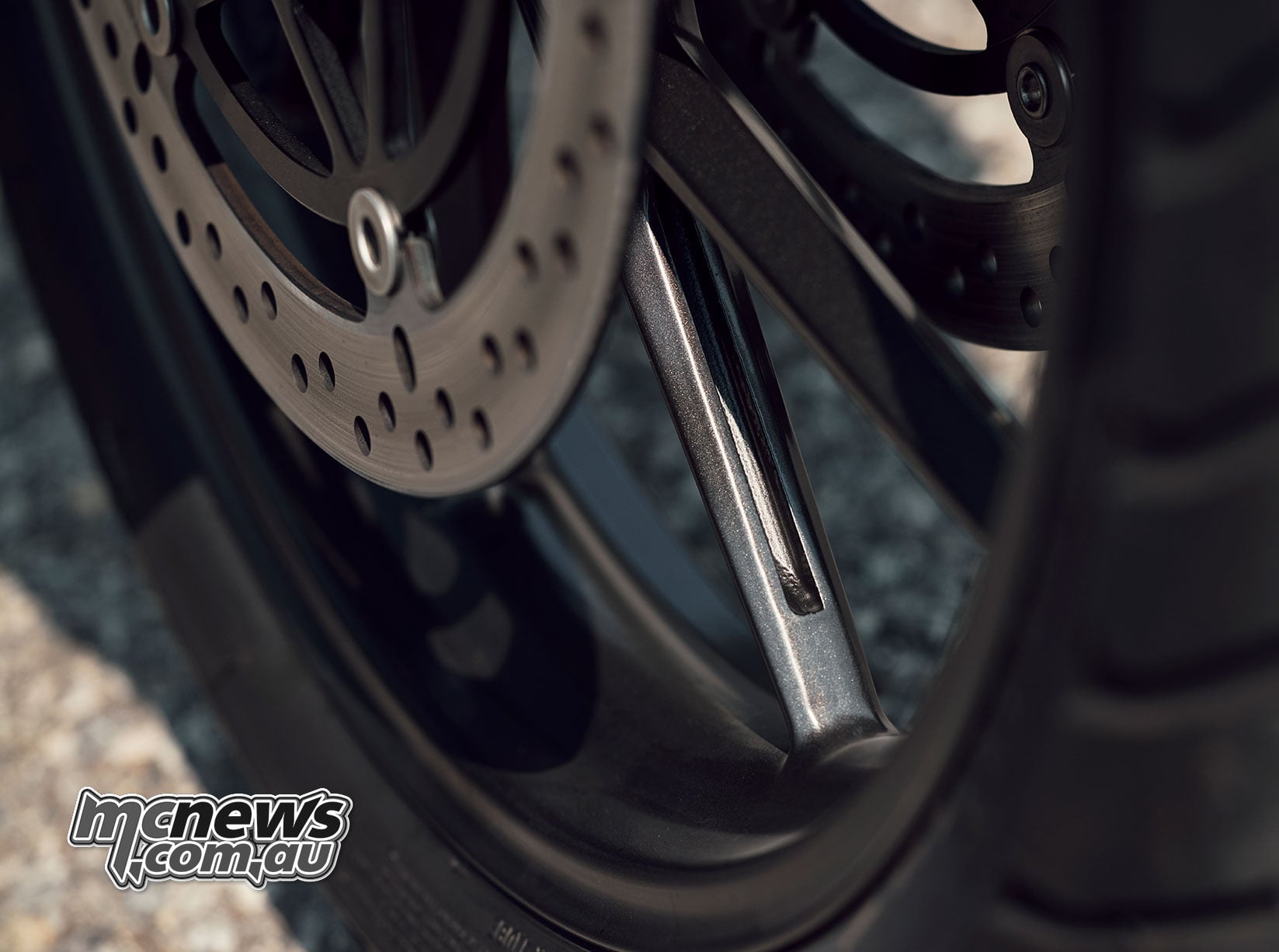
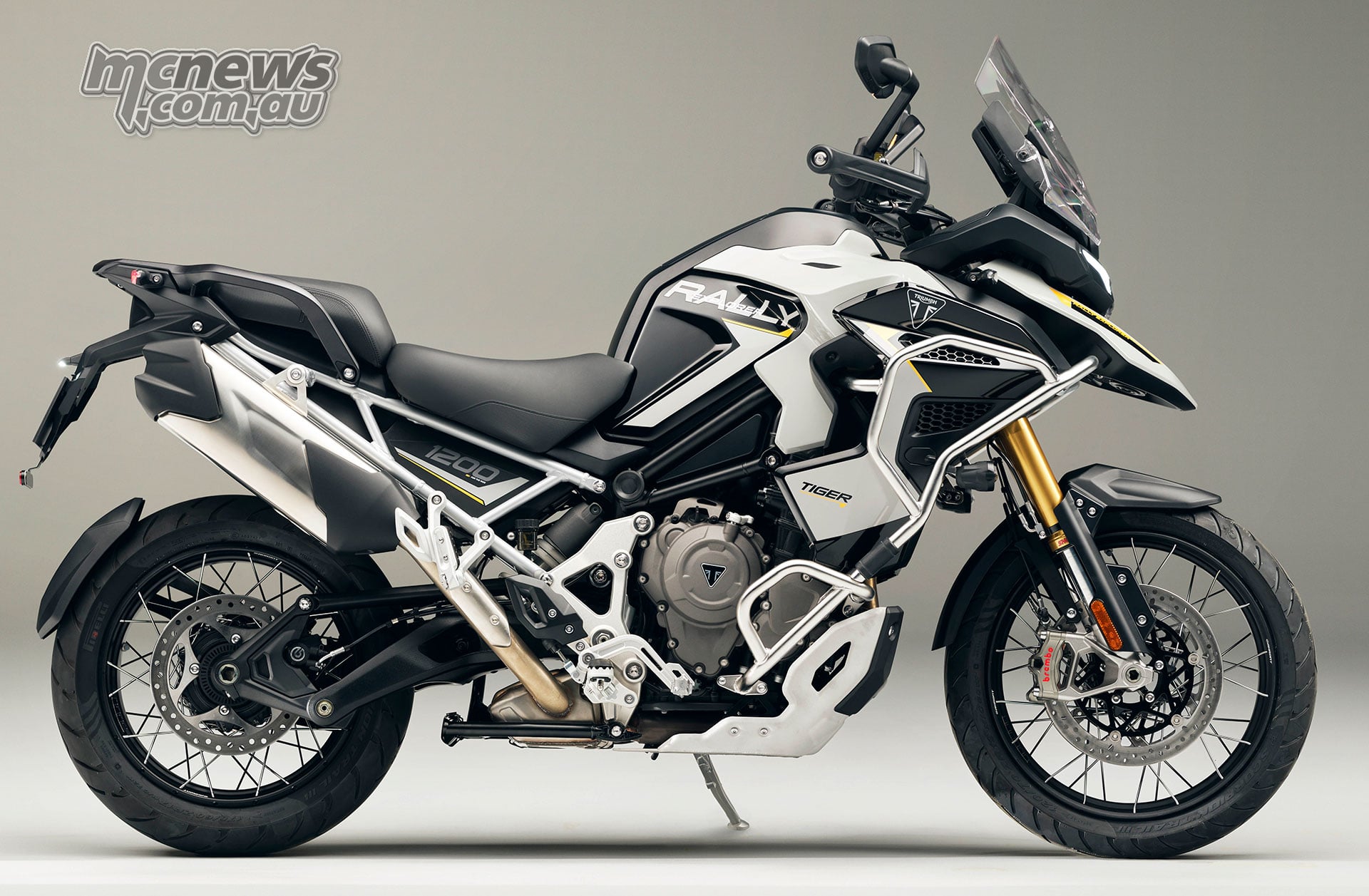
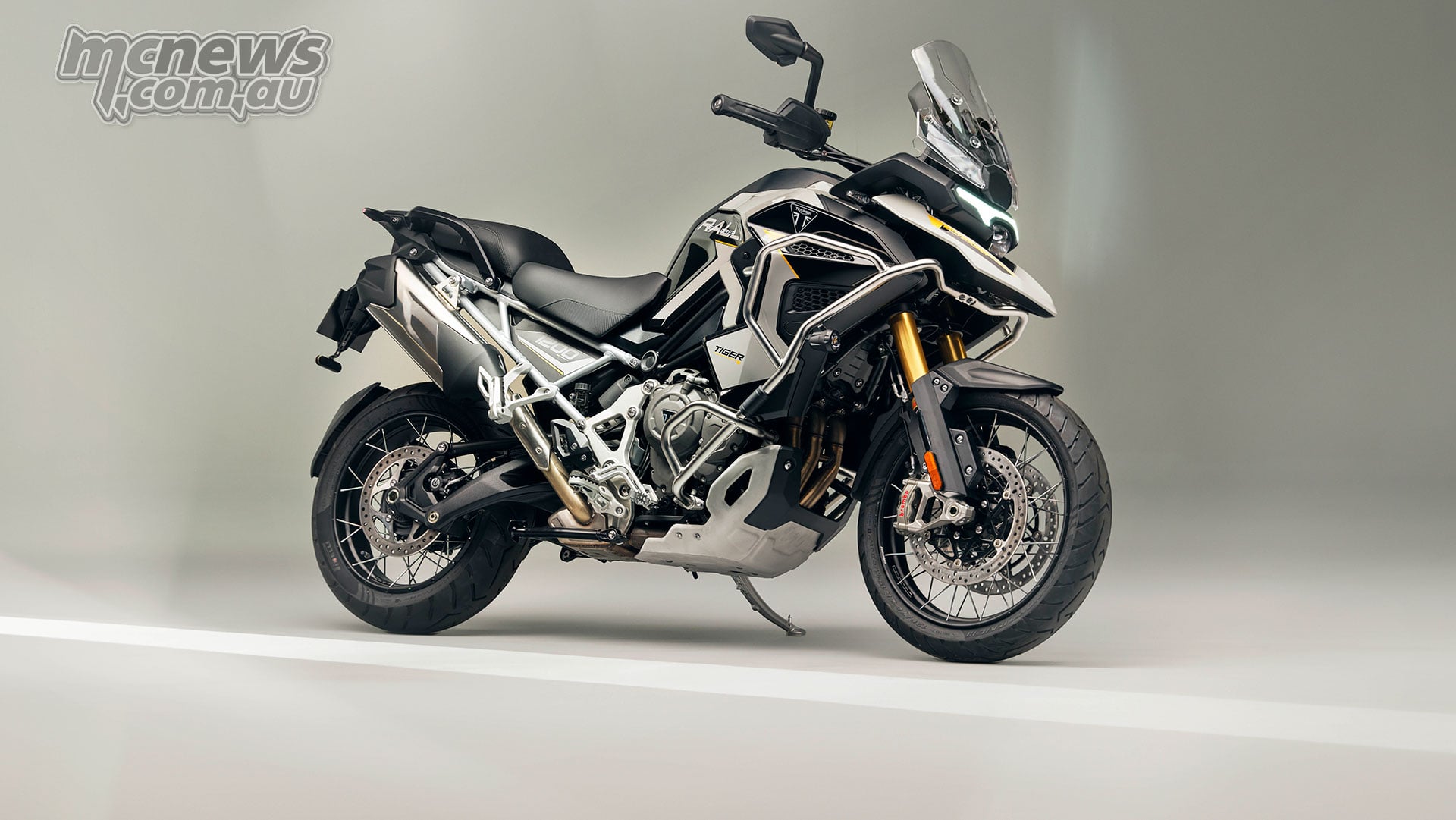
The GT models retain cast aluminium wheels, while the Rallys use side-laced spokes. Triumph says the common wheel and suspension package delivers more agile, engaging road handling. How much of the previous Rally’s composure in more demanding terrain carries across will be an important part of our next test.
More power, with the emphasis on usable delivery
The T-plane triple remains 1160 cc, with claimed peak power rising from 150 PS to 158 PS, or 116.2 kW, at 9250 rpm. Peak torque remains 130 Nm, arriving at 6750 rpm rather than the previous 7000 rpm.
A redesigned cylinder head, new pistons, lighter inlet and exhaust valves, revised injection and a freer-flowing exhaust contribute to the update. Crankshaft and balancer-shaft changes target refinement, while revised cam profiles introduce more progressive valve opening.
Triumph has also revised first, second and third gear ratios, together with the primary and final-drive ratios. The company claims stronger delivery at very low engine speeds and a 6 km/h reduction in crawl speed, aimed at improving control in traffic and tight manoeuvres.
The gearbox and shaft drive have been refined for quieter, smoother operation, cleaner transitions between acceleration and deceleration, and more precise gear selection. An updated Triumph Shift Assist provides clutchless changes in both directions.
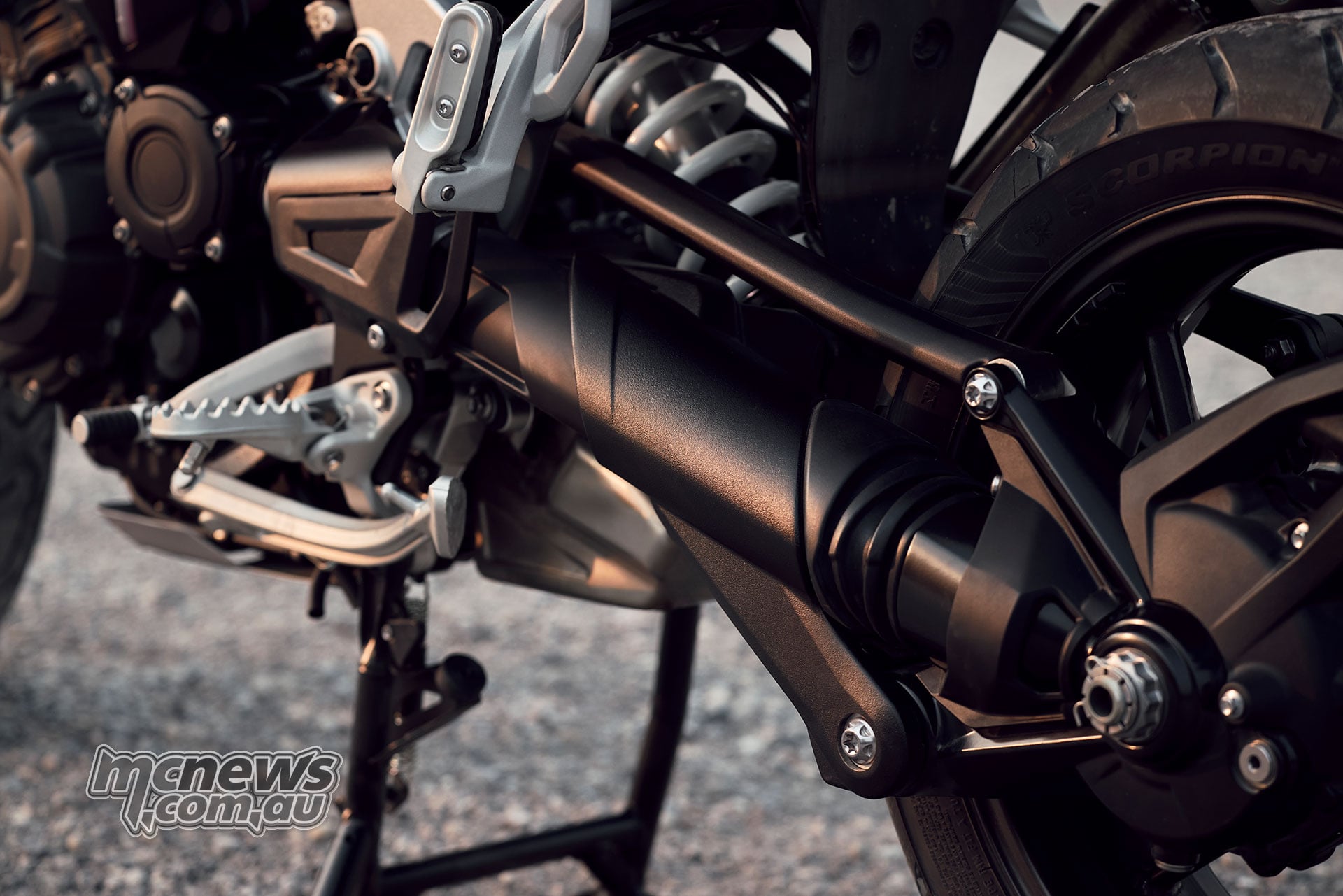
The Tri-Link swingarm remains. Wayne highlighted the additional knowledge and time needed for rear-wheel removal in his 2024 Tiger 1200 review; the announcement does not identify a change to that procedure.
Has Triumph addressed Wayne’s electronics requests?
Having to stop to change into Off-road Pro was a recurring frustration in Wayne’s tests. He also wanted several levels of traction-control intervention between the standard off-road setting and switching it off.
Triumph now states that off-road modes can be selected while the motorcycle is moving. That is encouraging, although the release groups those modes together without spelling out the precise switching conditions for Off-road Pro.
There are seven riding modes on the GT models: Road, Sport, Rain, Eco, Off-road, Rider A and Rider B. The Rally versions add Off-road Pro for a total of eight. These modes tailor throttle response, ABS, traction control and engine braking.
The two configurable Rider modes expand the scope for personal settings, but the information supplied does not establish whether Wayne’s requested graduated off-road traction control has been added.
New Showa suspension and automatic lowering
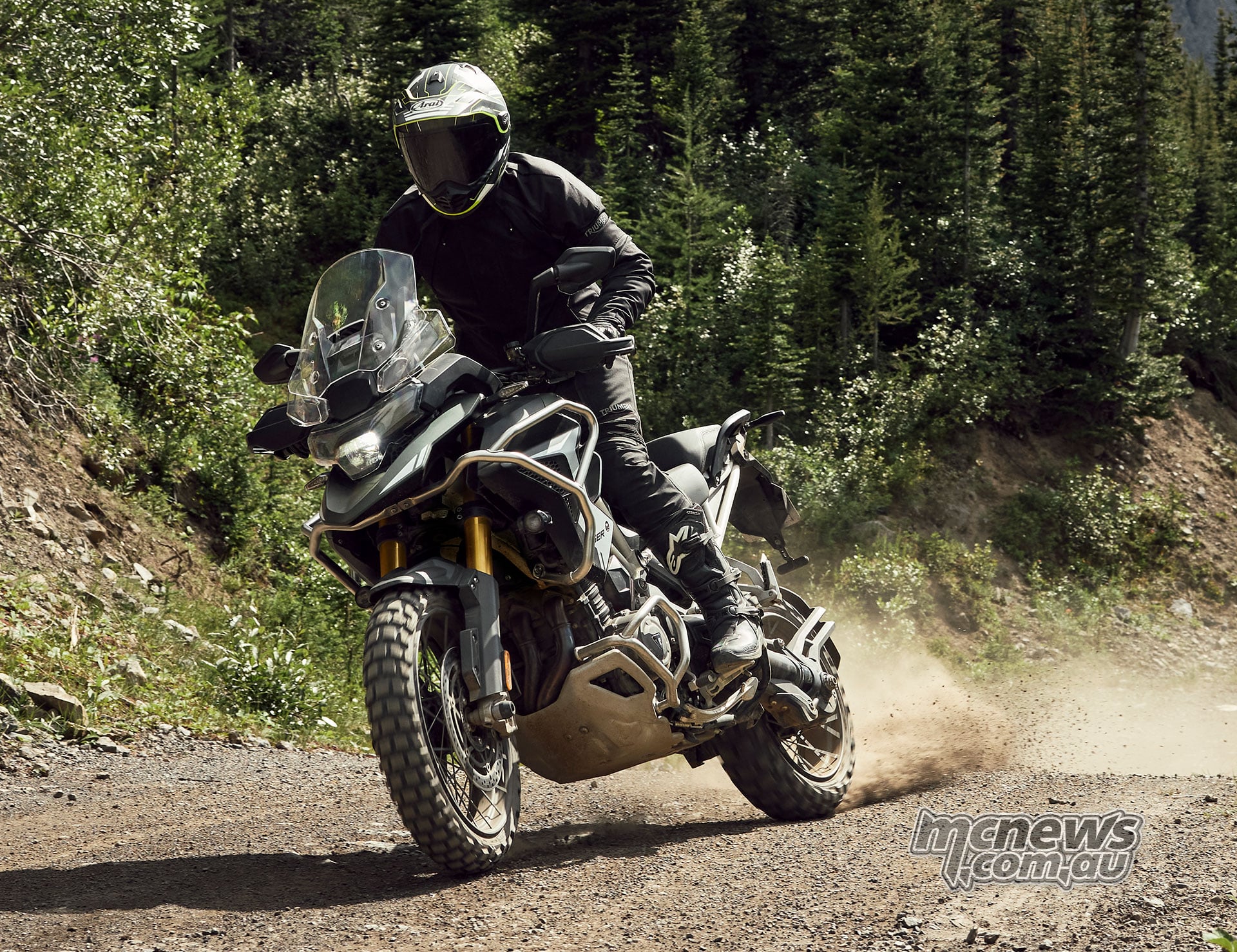
Showa EERA Heightflex semi-active suspension is fitted across the range, combining 49 mm upside-down forks with a rear monoshock and automatic preload adjustment. Damping is continuously adjusted using sensor inputs, including data from a six-axis IMU.
Soft, Medium and Firm damping settings can be selected through a dedicated suspension button without changing the other riding settings. Triumph has also added a hydraulic secondary bump stop to improve control on more demanding terrain.
Heightflex also automatically lowers the seat by 30 mm as the motorcycle comes to a stop, restoring riding height within seconds of pulling away. Triumph says the reduction remains the same whether riding solo, carrying a passenger or loaded with luggage.
The previous system offered a manually activated reduction of up to 20 mm, dependent on the existing preload setting. The new arrangement should make repeated stops less demanding, particularly for shorter riders.
A two-position seat provides 20 mm of adjustment, while a low seat removes another 20 mm. The advertised 790 mm minimum is achieved at a standstill with that low seat and automatic lowering active. Low-seat fitment varies between markets; the Australian release does not specify whether it will be standard locally.
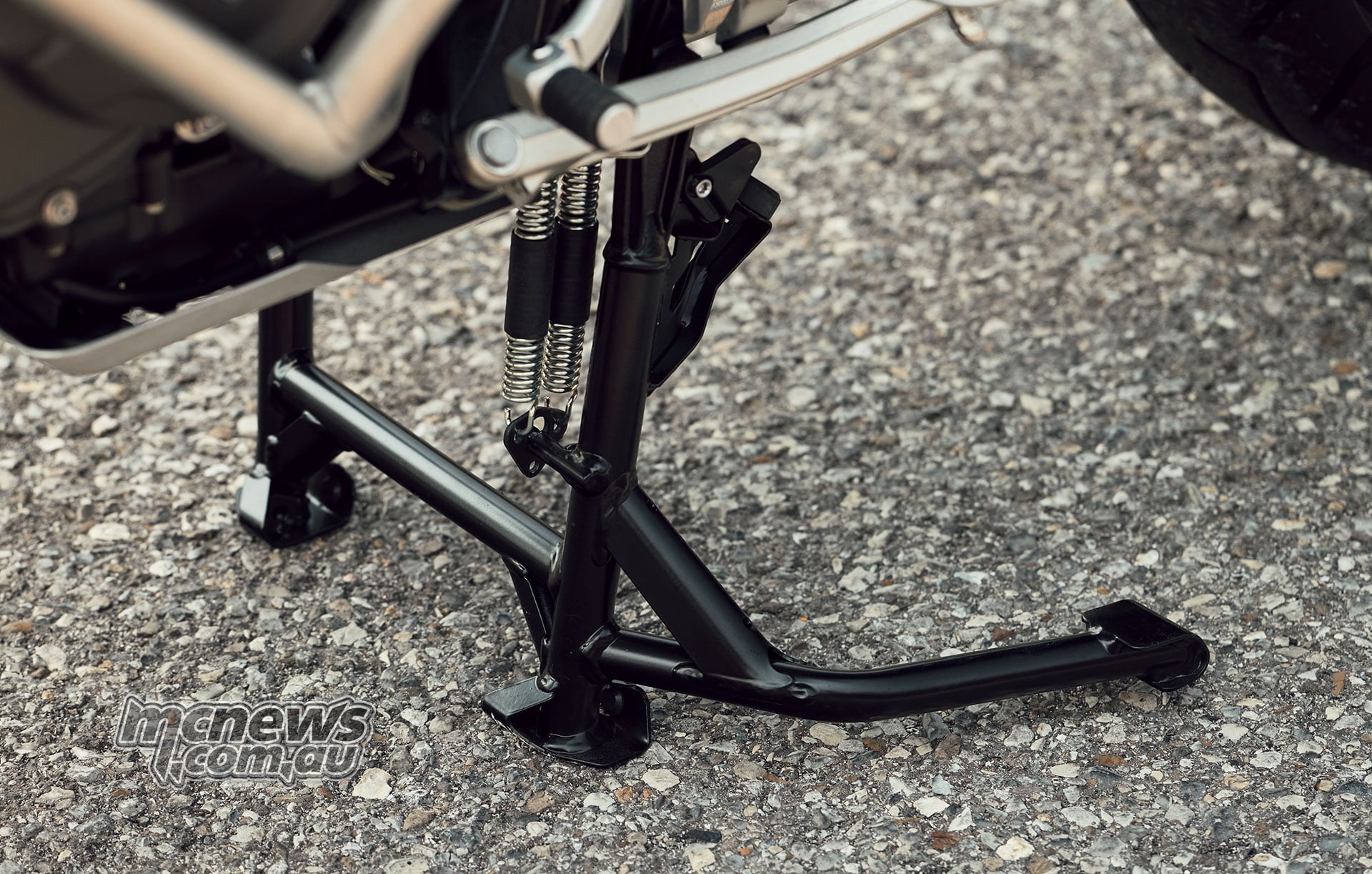
A new Centre Stand Assist function temporarily increases preload to raise the rear of the motorcycle as the stand is deployed, reducing the effort needed to lift the bike onto it. Nice touch.
More accessible, with higher claimed weights
Lowering the seat and reducing crawl speed should help riders manage the Tiger at low speed. The specification sheet also confirms that these remain substantial motorcycles.
Claimed wet weights are 250 kg for the GT Pro, 255 kg for the Rally Pro, 260 kg for the GT Explorer and 268 kg for the Rally Explorer. For context, the Rally figures listed in our 2022 test were 249 kg and 261 kg, respectively.
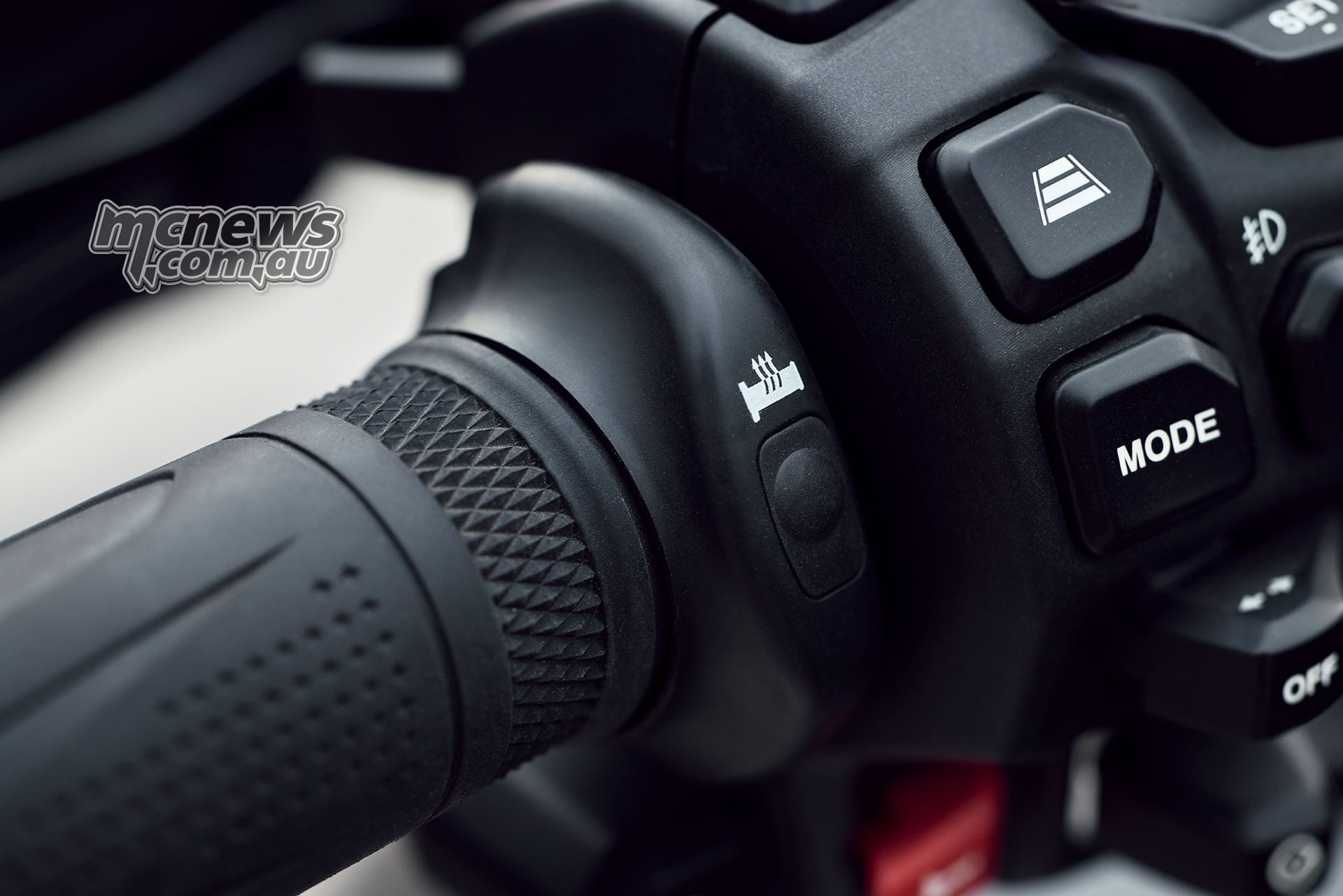
Comfort equipment increases, with redesigned rider and pillion seats gaining 10 mm thicker foam. Heated rider and pillion seats, together with three-stage heated grips, are now standard across the range.
Touchscreen, CarPlay and Android Auto
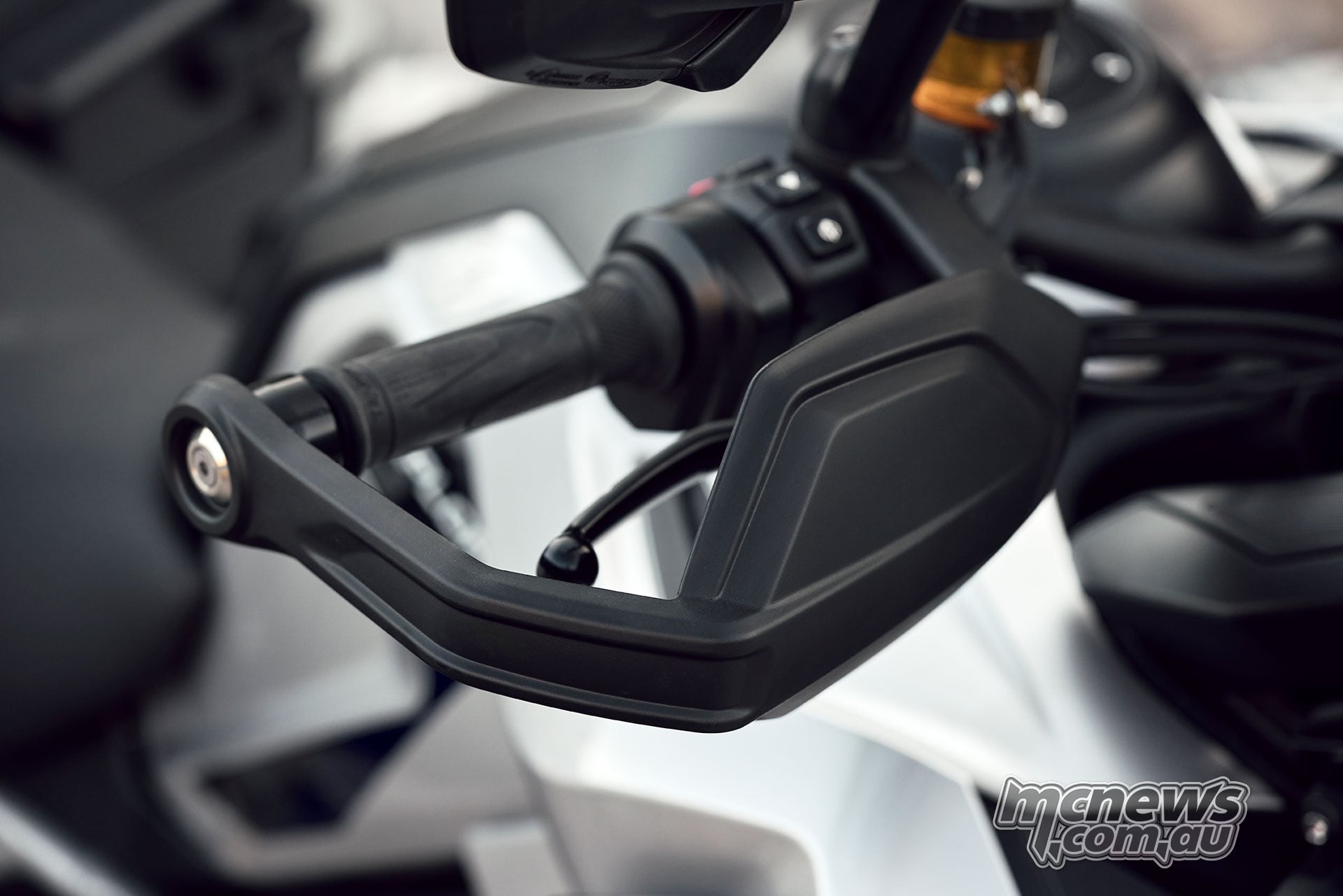
A new Bosch seven-inch HD TFT touchscreen brings wireless Apple CarPlay and Android Auto, supported by redesigned switchgear.
Touch operation is available below 2 km/h, with the handlebar controls used while riding. Voice operation is also supported through compatible phone and Bluetooth-headset arrangements. The display has anti-glare glass, automatic brightness adjustment and an IP6K9K dust and water-resistance rating.
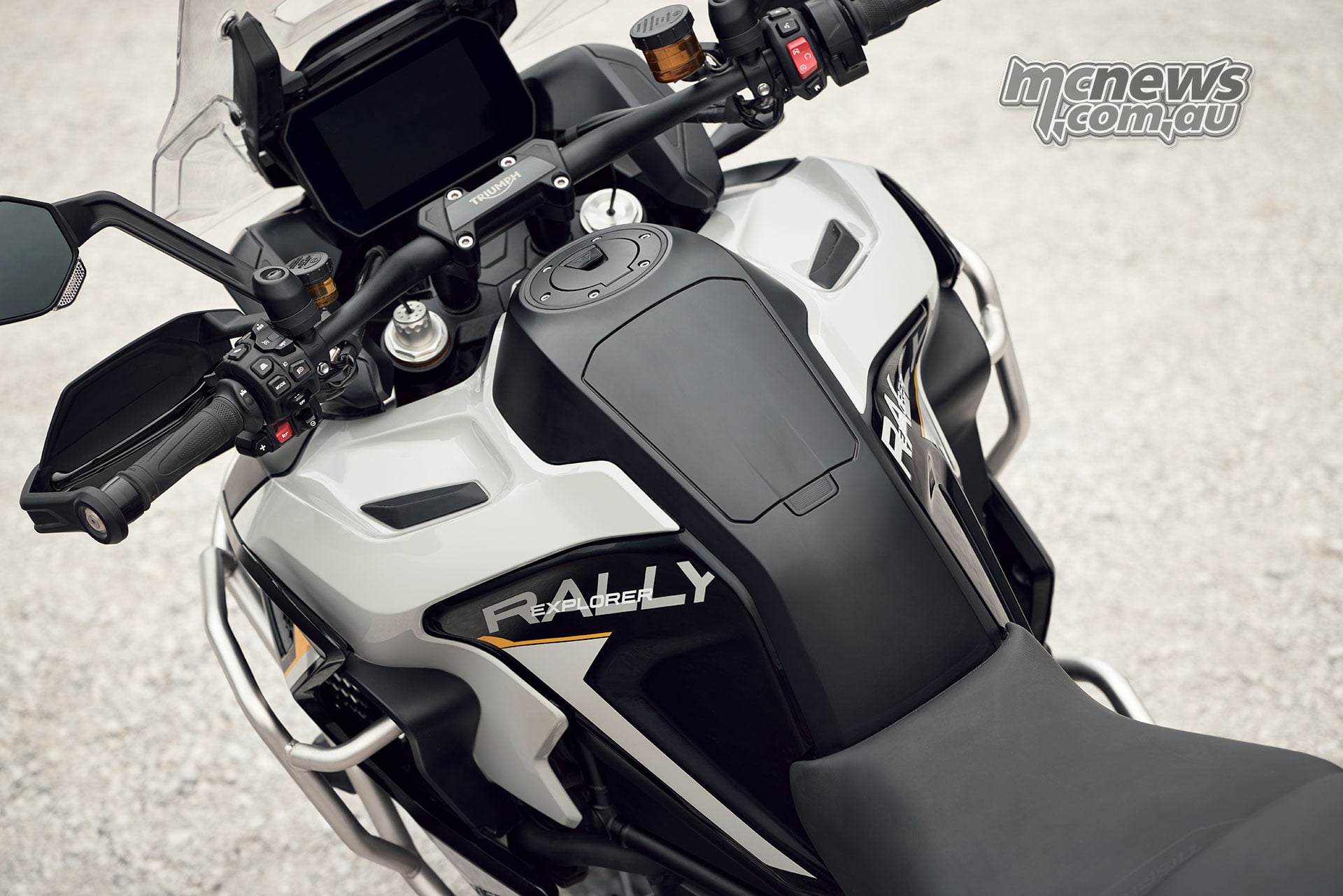
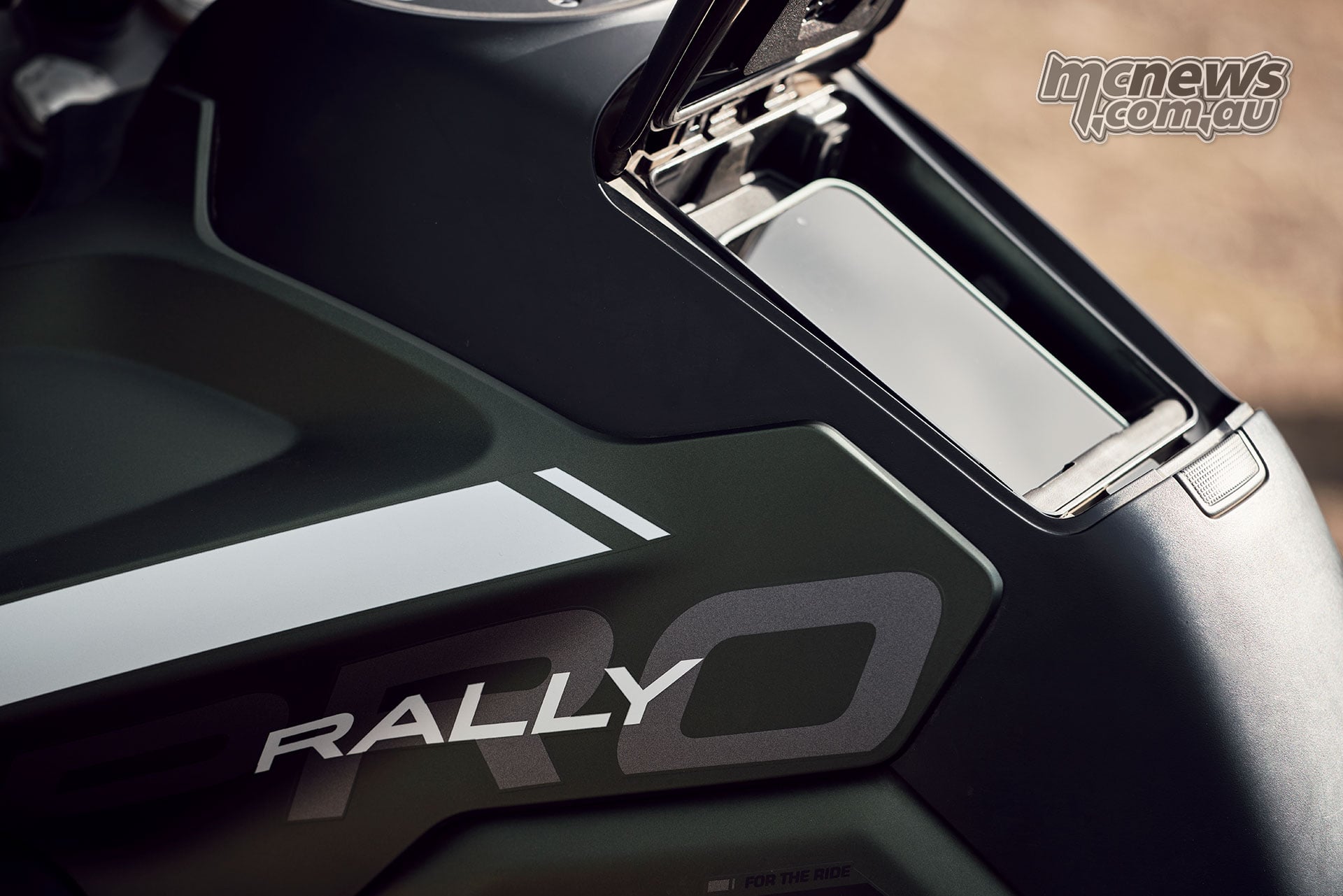
A waterproof phone compartment is integrated into the top of the tank. USB-C charging supplies up to 3A/15W, while airflow channels and an automatically controlled cooling fan help manage phone temperature.
Front and rear radar expand the rider aids
Bosch front and rear radar support a much broader range of assistance functions, extending well beyond the blind-spot warning fitted to earlier Explorer models.
Adaptive Cruise Control can manage speed and following distance through the throttle and brakes, with Comfort and Dynamic responses. Overtake Assist responds to the indicator when the blind spot is clear, while Curve Speed Control can reduce speed through longer bends in Comfort mode. Group Ride Assist accounts for the position of motorcycles ahead.
A separate Dynamic Cruise Control setting maintains the selected speed using throttle, engine braking and the brakes.
The additional radar functions include:
- Riding Distance Assist, which can limit acceleration and apply braking when the motorcycle gets too close to the vehicle ahead.
- Forward Collision Warning, initially through an on-screen alert, followed by a pulse through the rear brake pedal if the gap continues to close.
- Emergency Brake Assist, which can increase brake pressure when a potential collision is detected during heavy braking.
- Blind Spot Assist, using warning lights in the mirrors for vehicles in the blind zone or approaching quickly from behind.
- Rear Distance Warning, alerting the rider to a vehicle following too closely.
These operate alongside cornering-optimised ABS and traction control. Emergency Brake Assist’s role is to supplement the rider’s braking input under the stated conditions.
Revised lighting, bodywork and familiar brakes
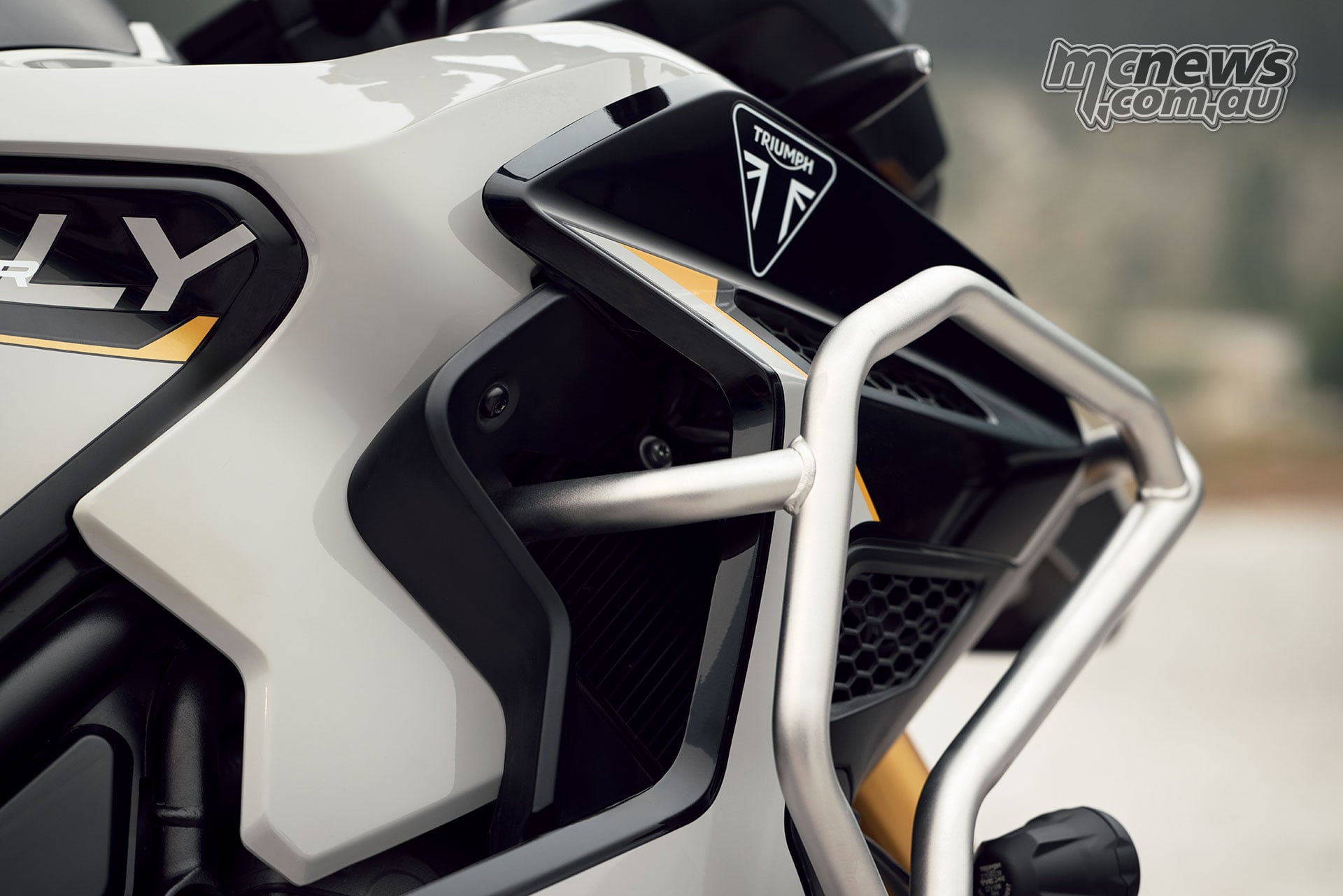
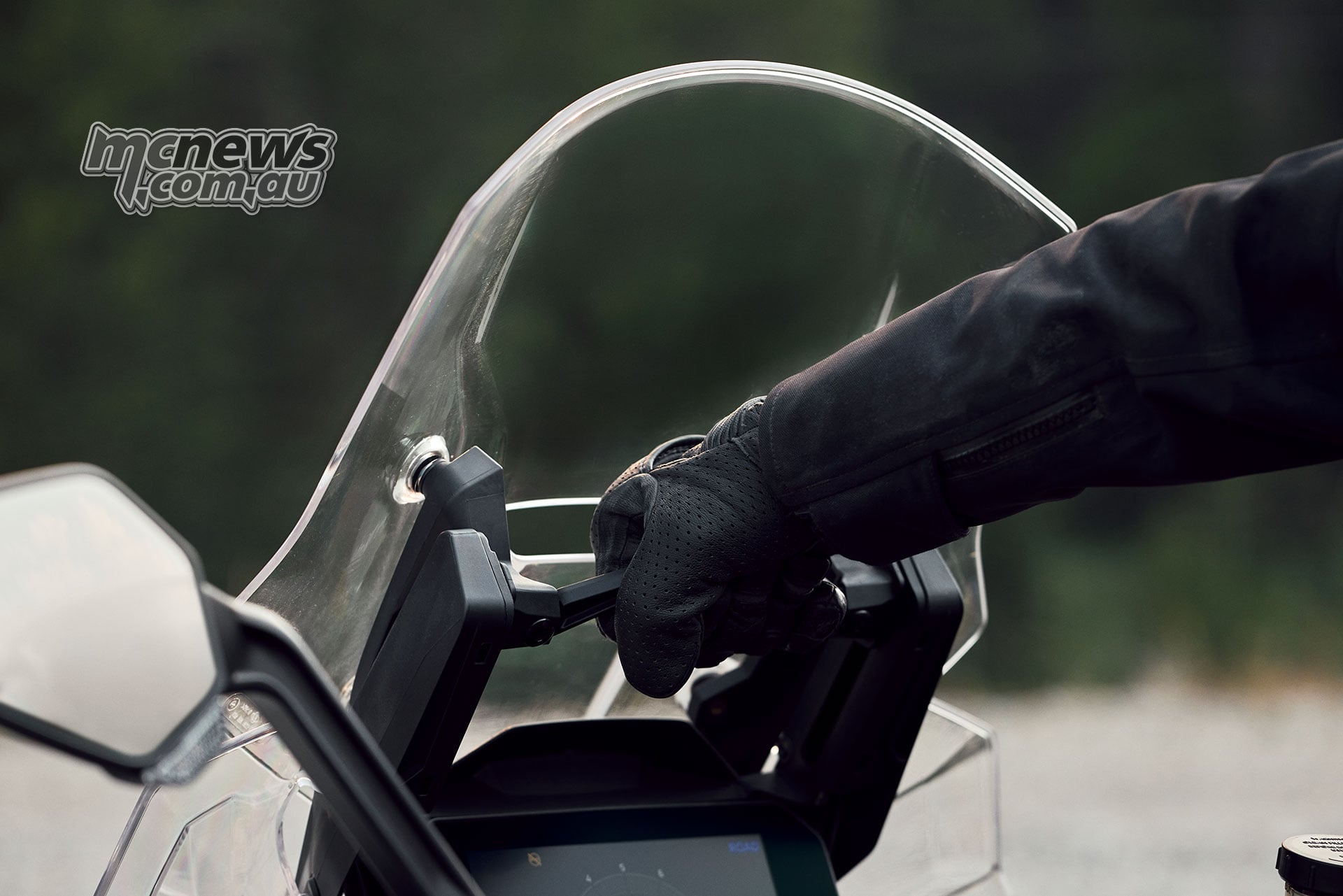
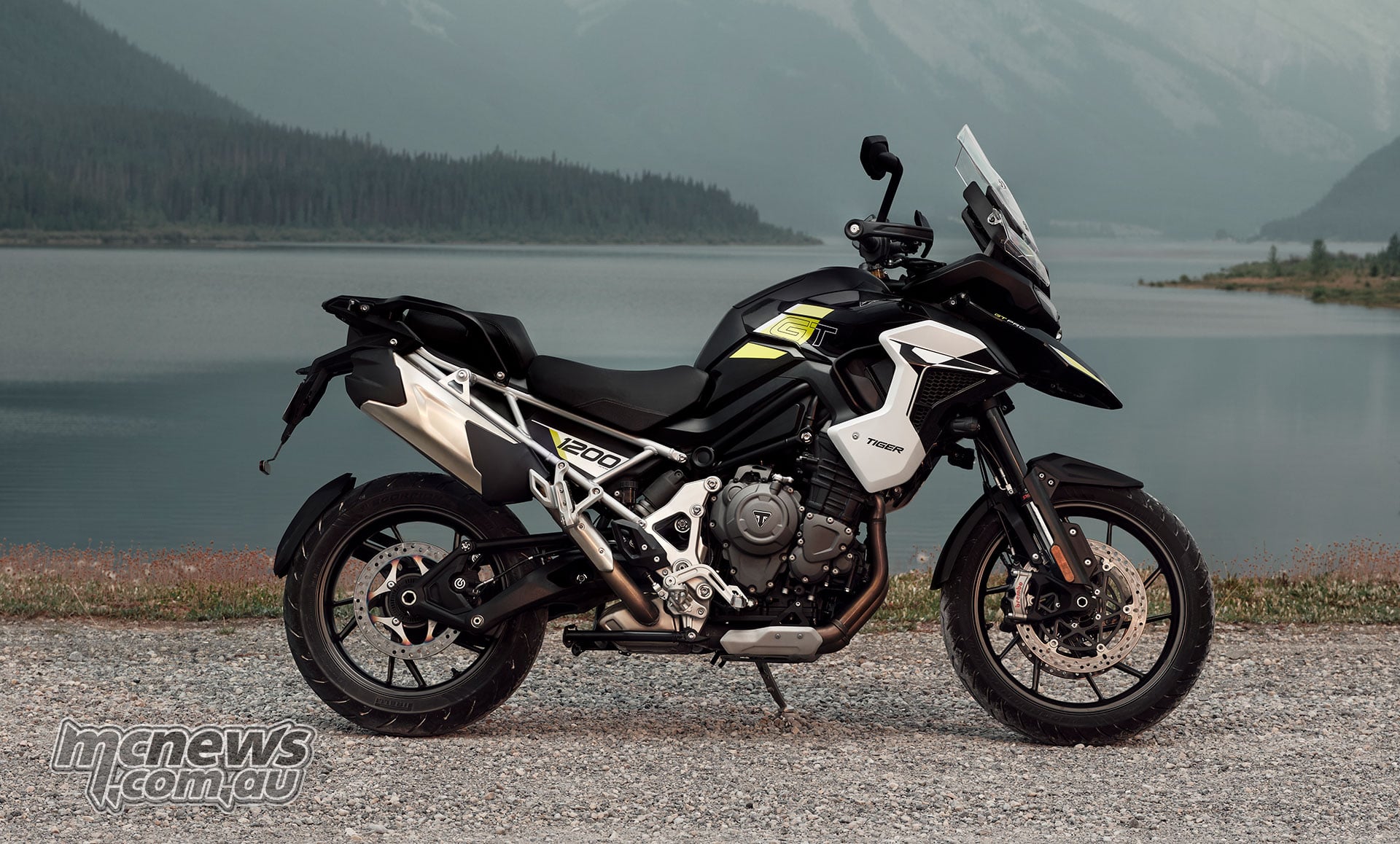
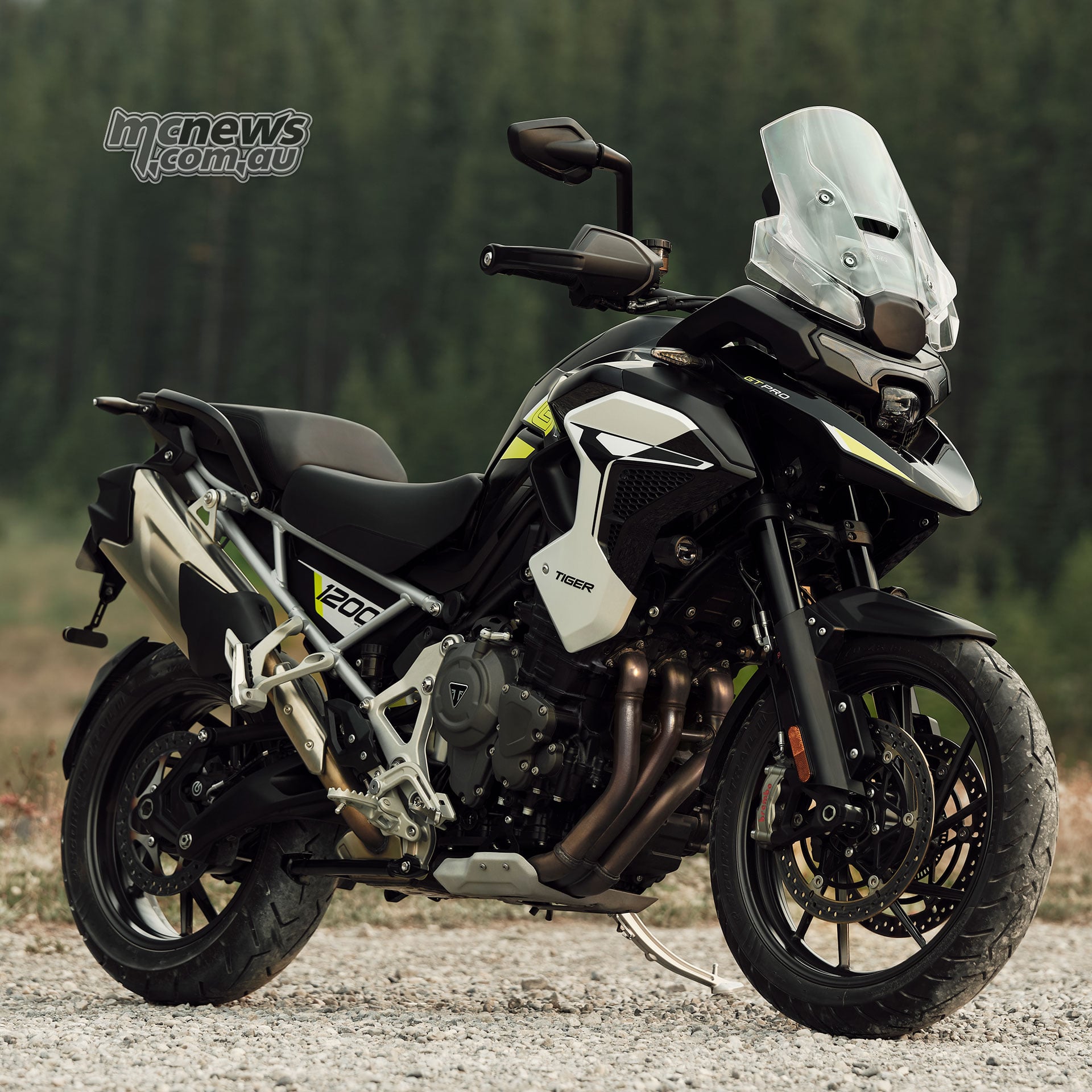
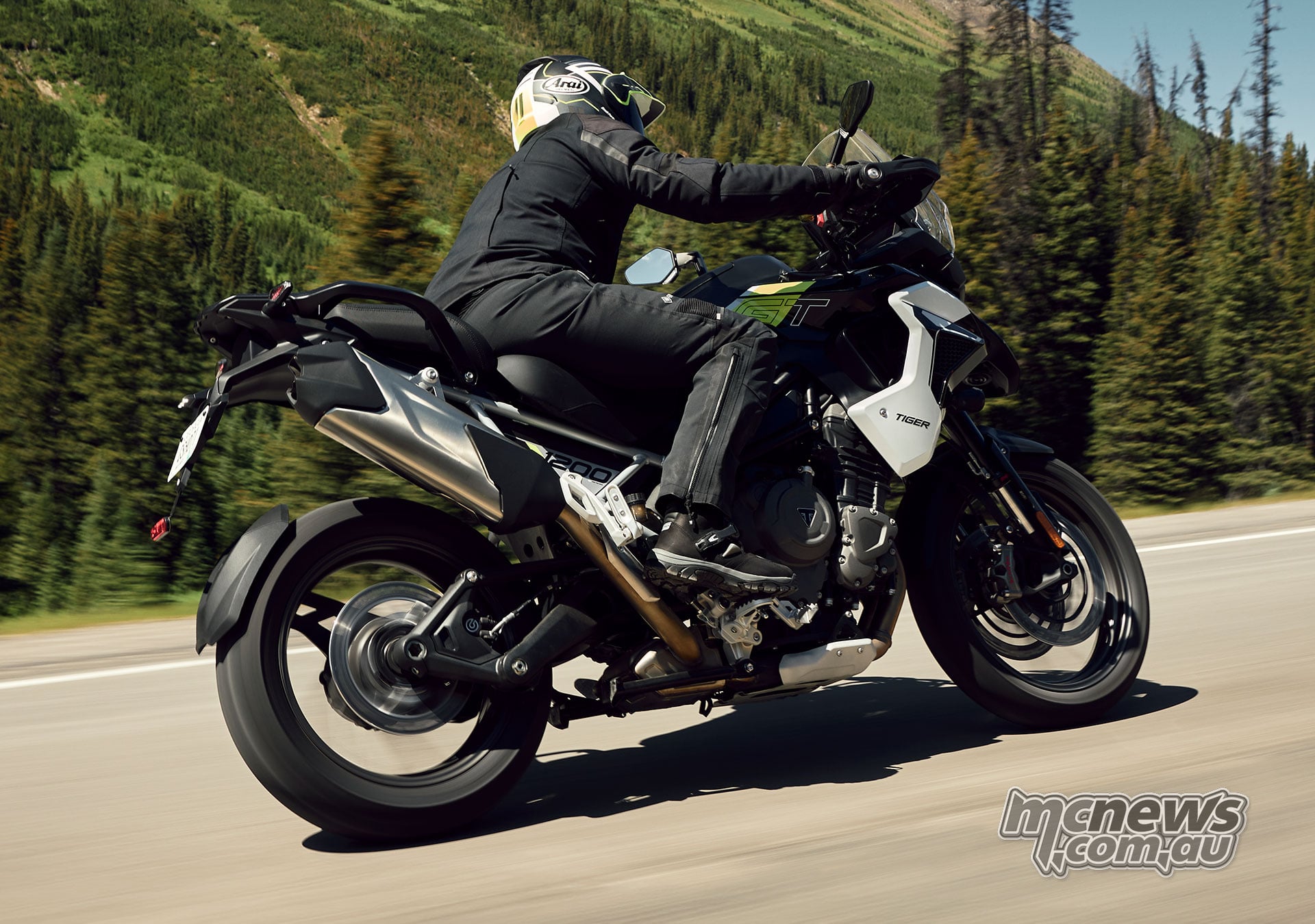
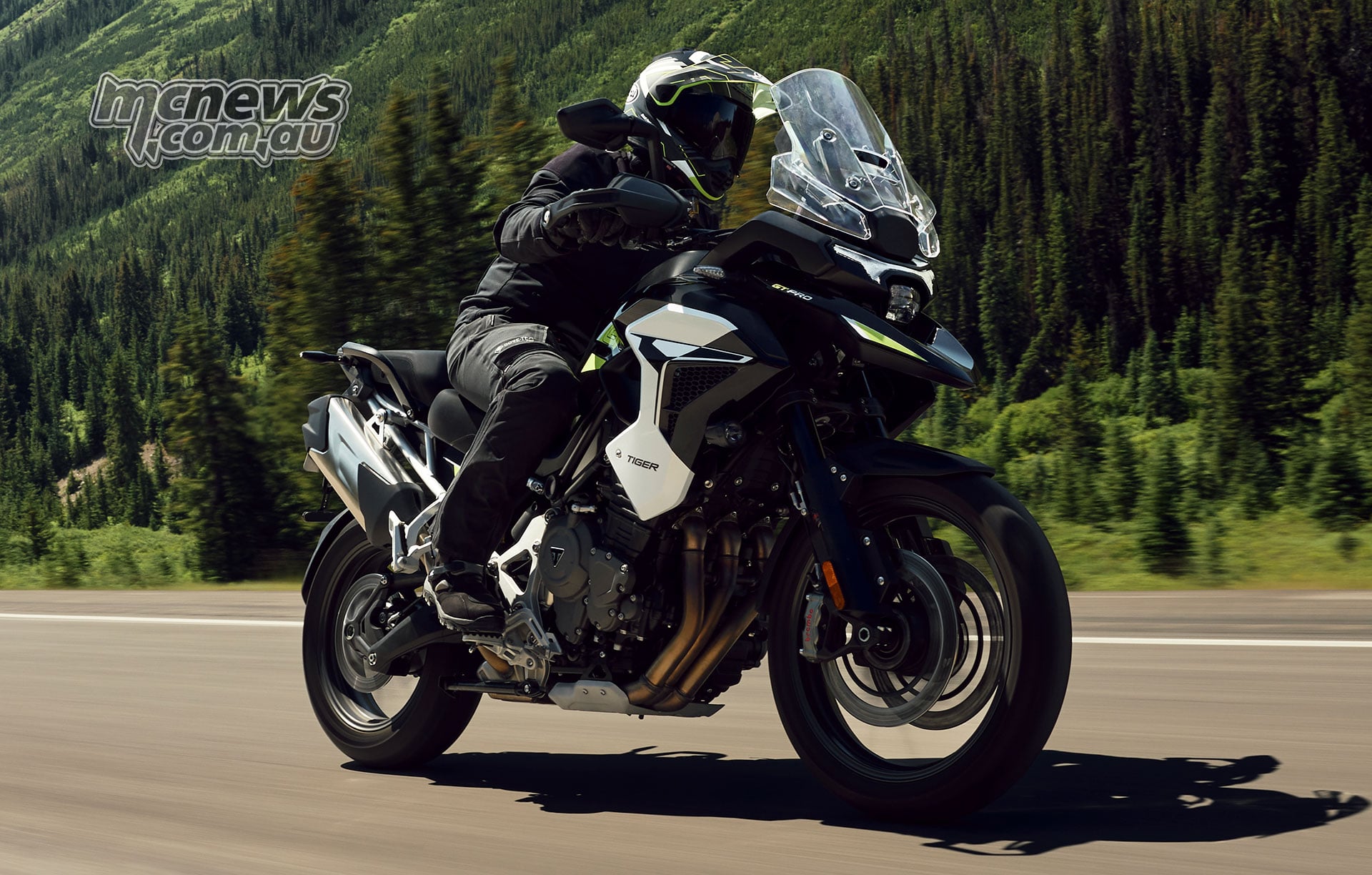
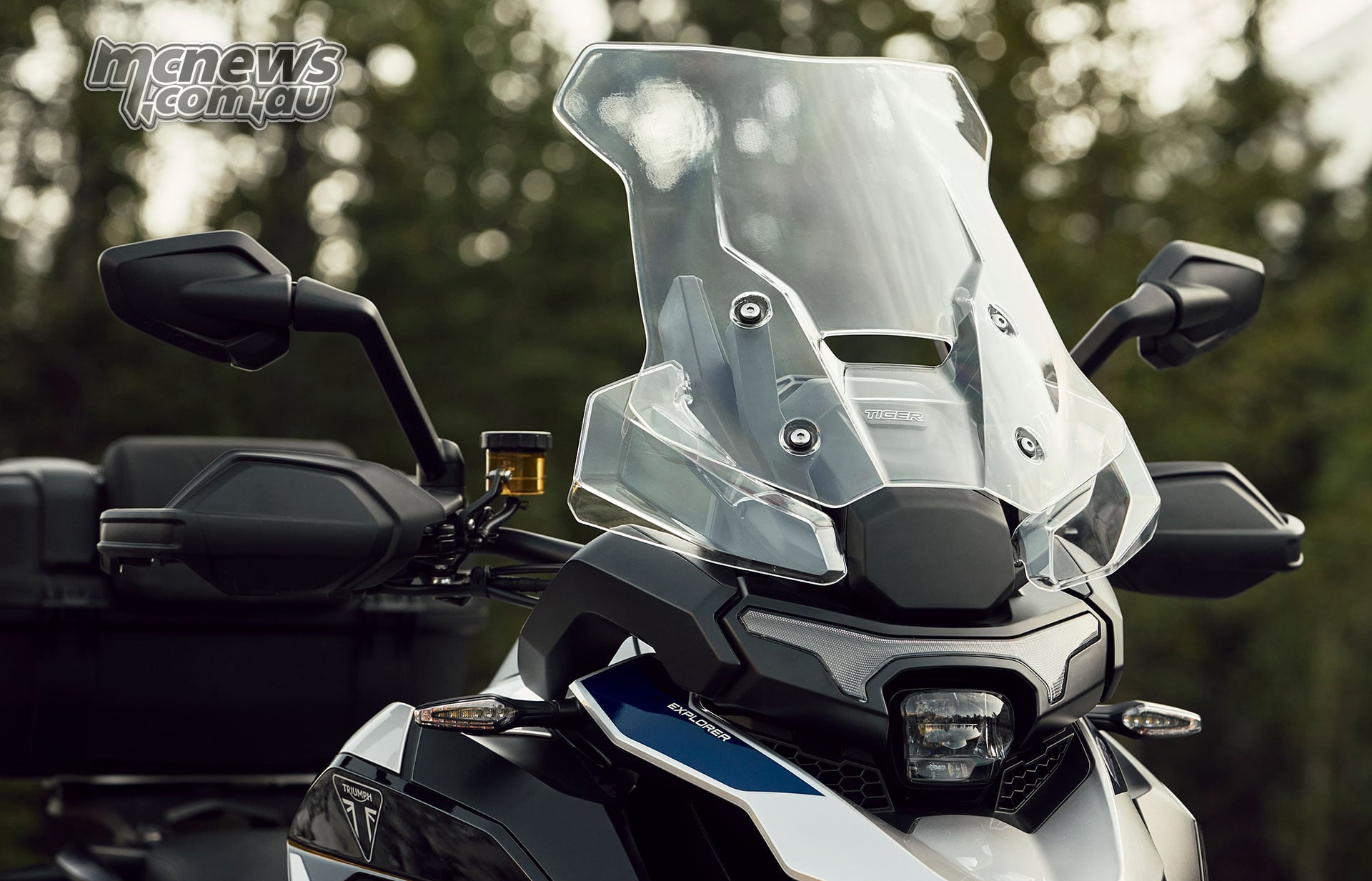
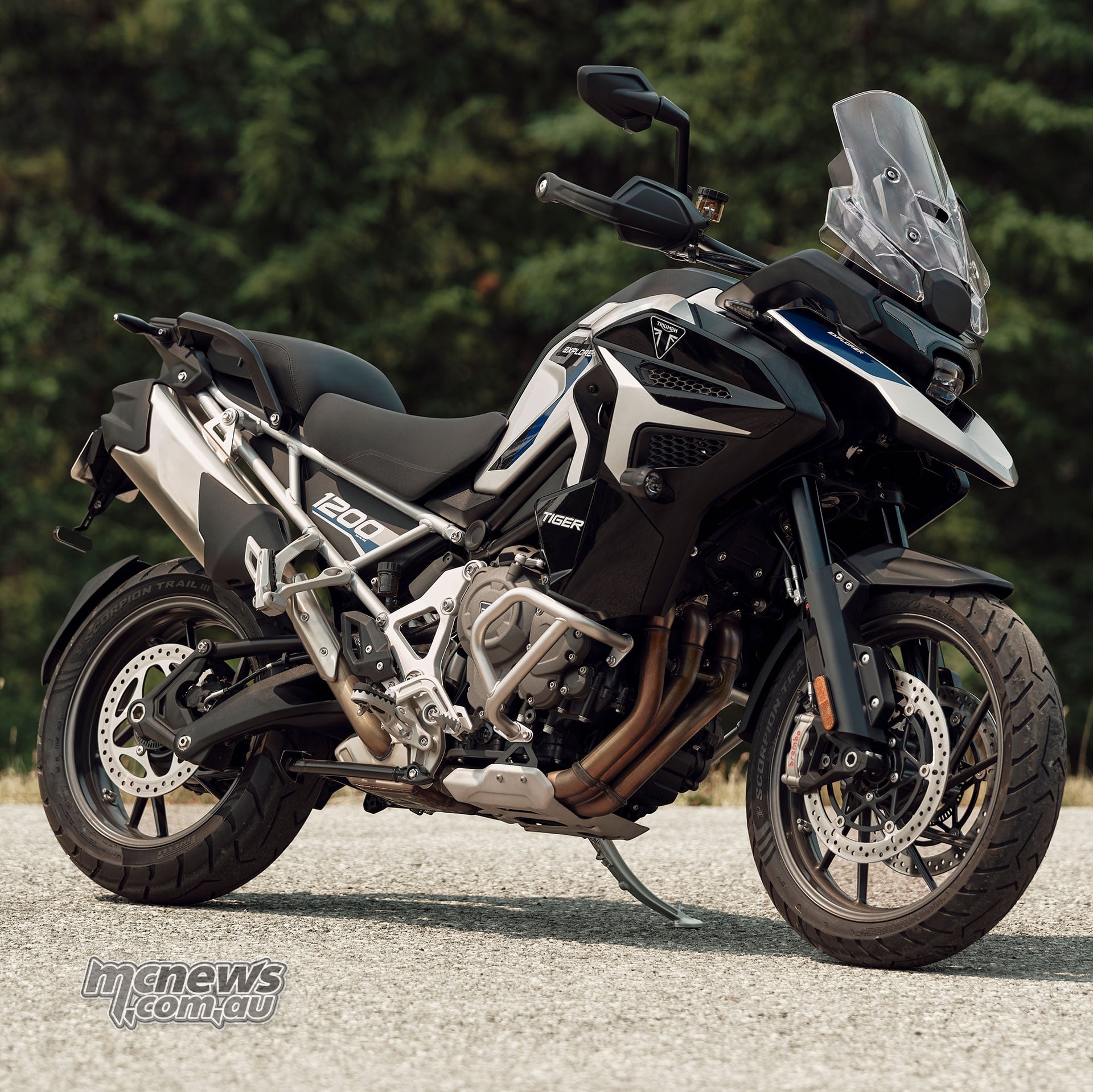
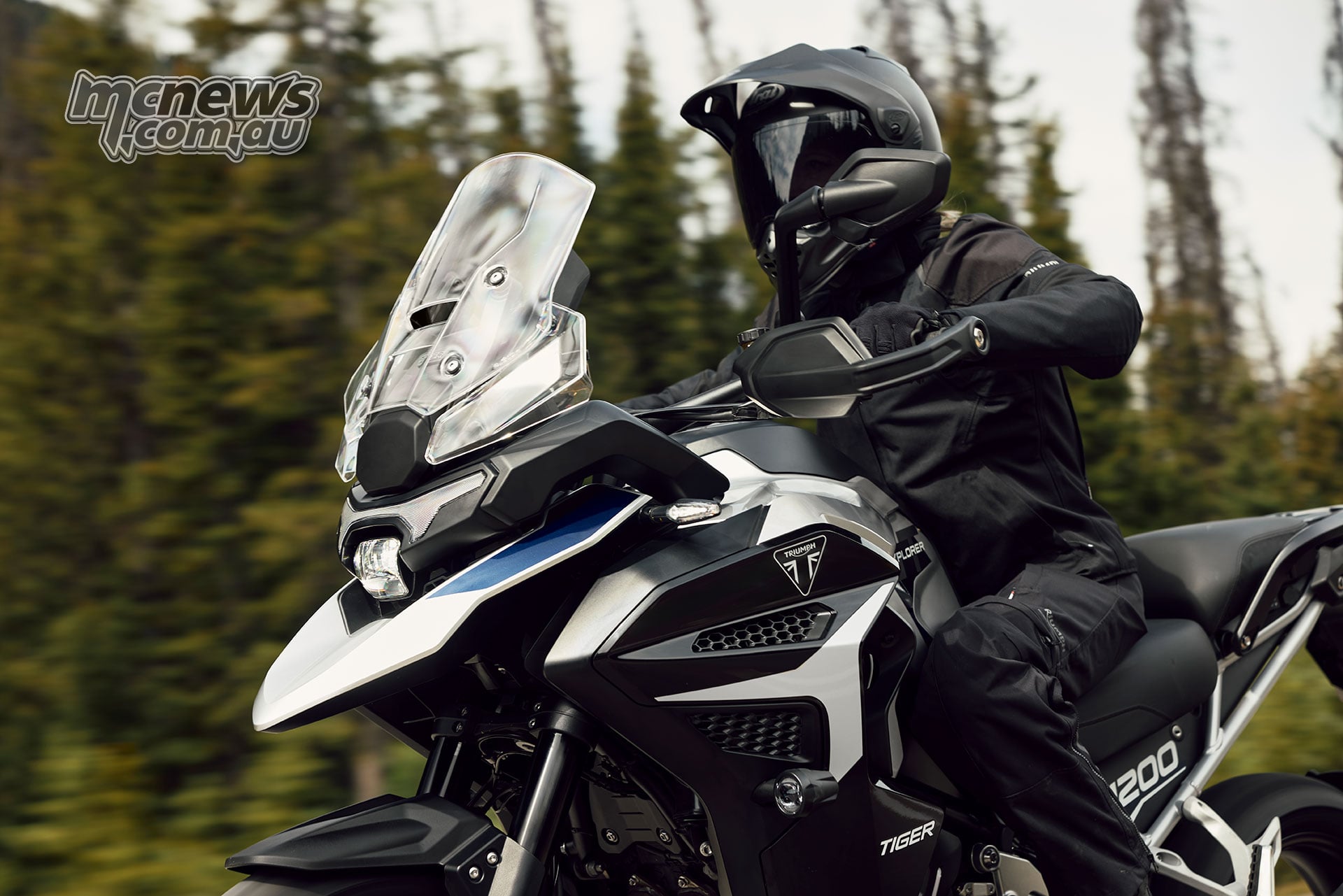
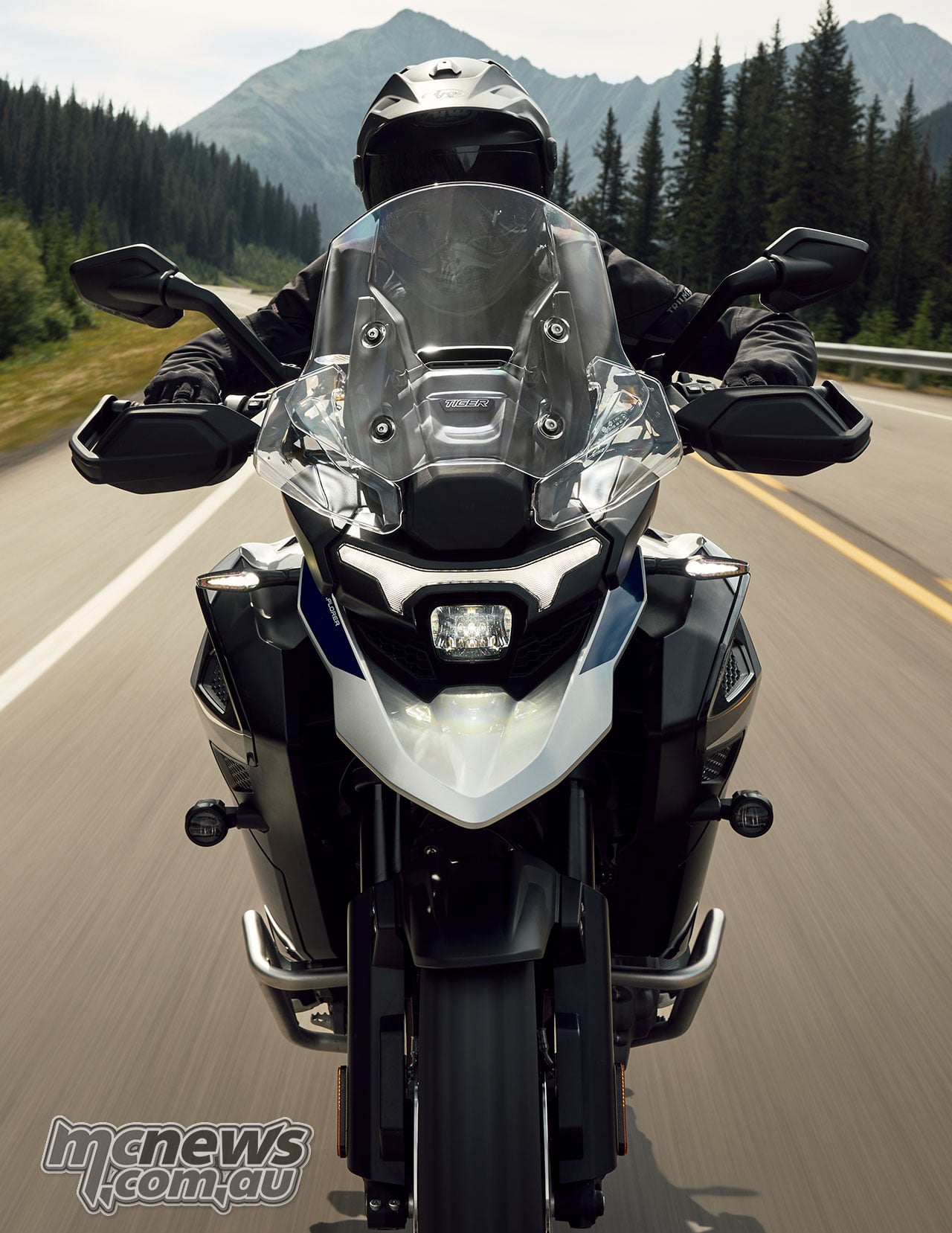
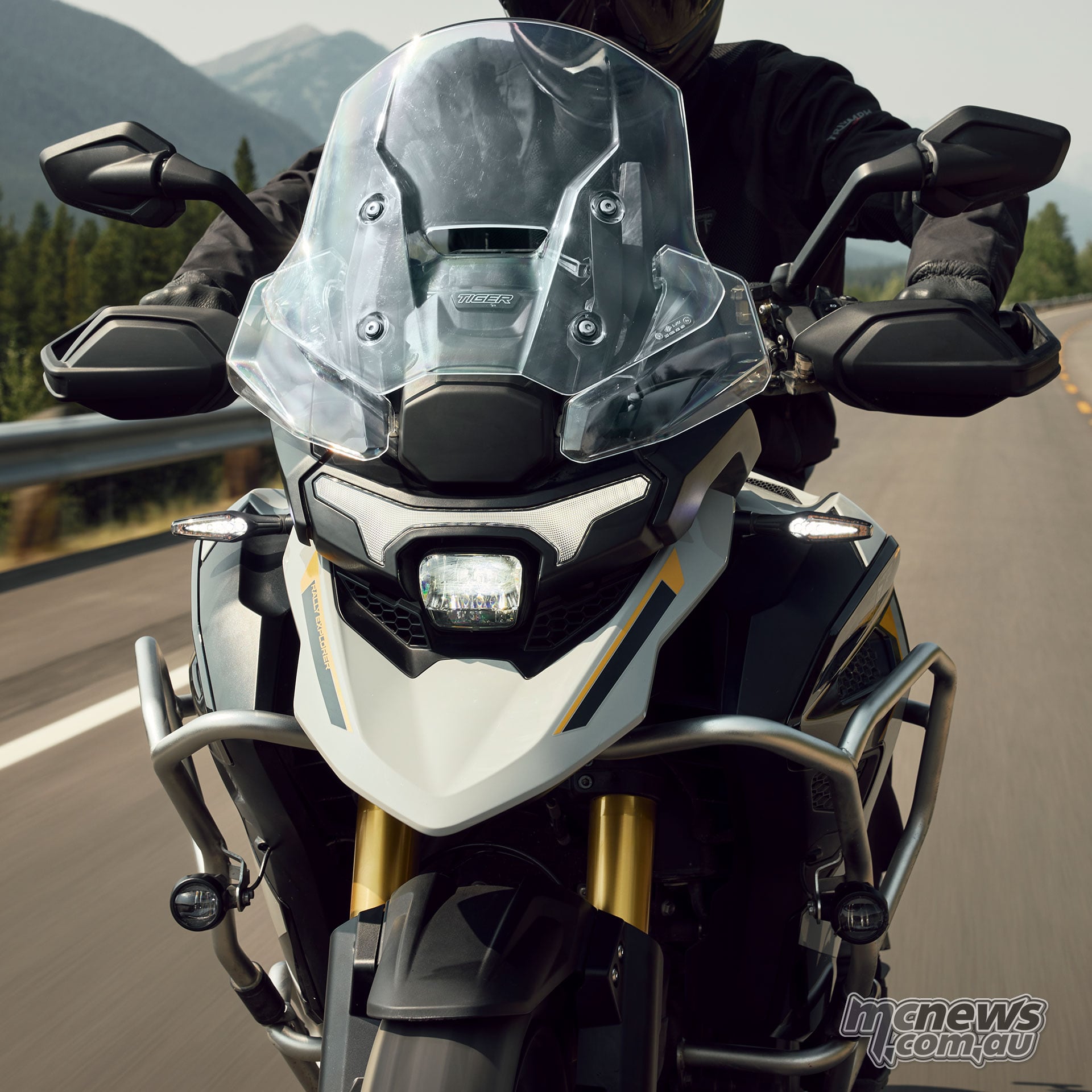
The tank, radiator cowls, beak and windscreen have been redesigned, with a compact adaptive LED projector headlight giving the front end a different appearance.
Additional LED elements illuminate the inside of bends at 15 and 30 degrees of lean, while motorised beam levelling compensates for changes in suspension height. The switchgear is backlit, and the rear indicators incorporate the tail-light functions.
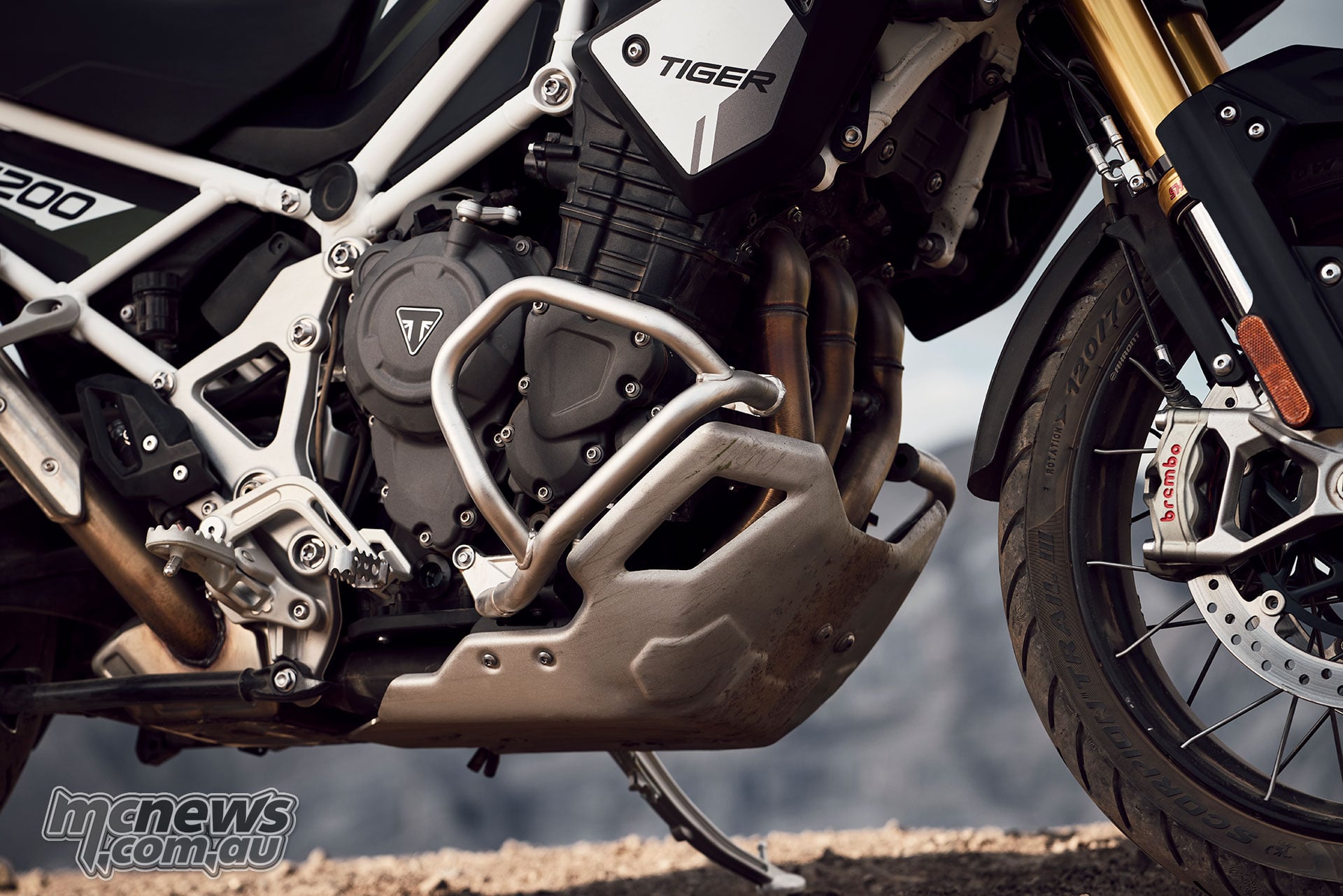
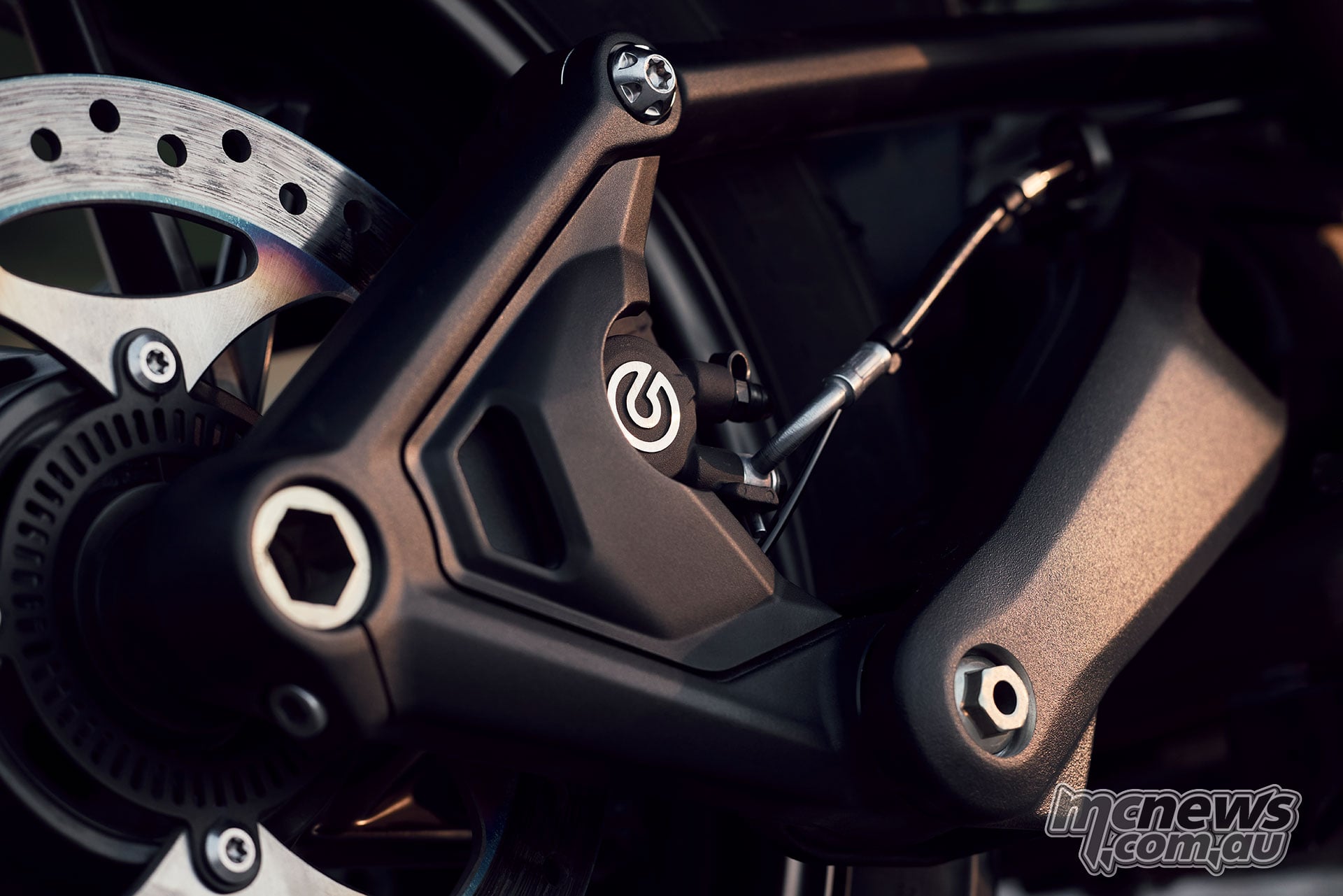
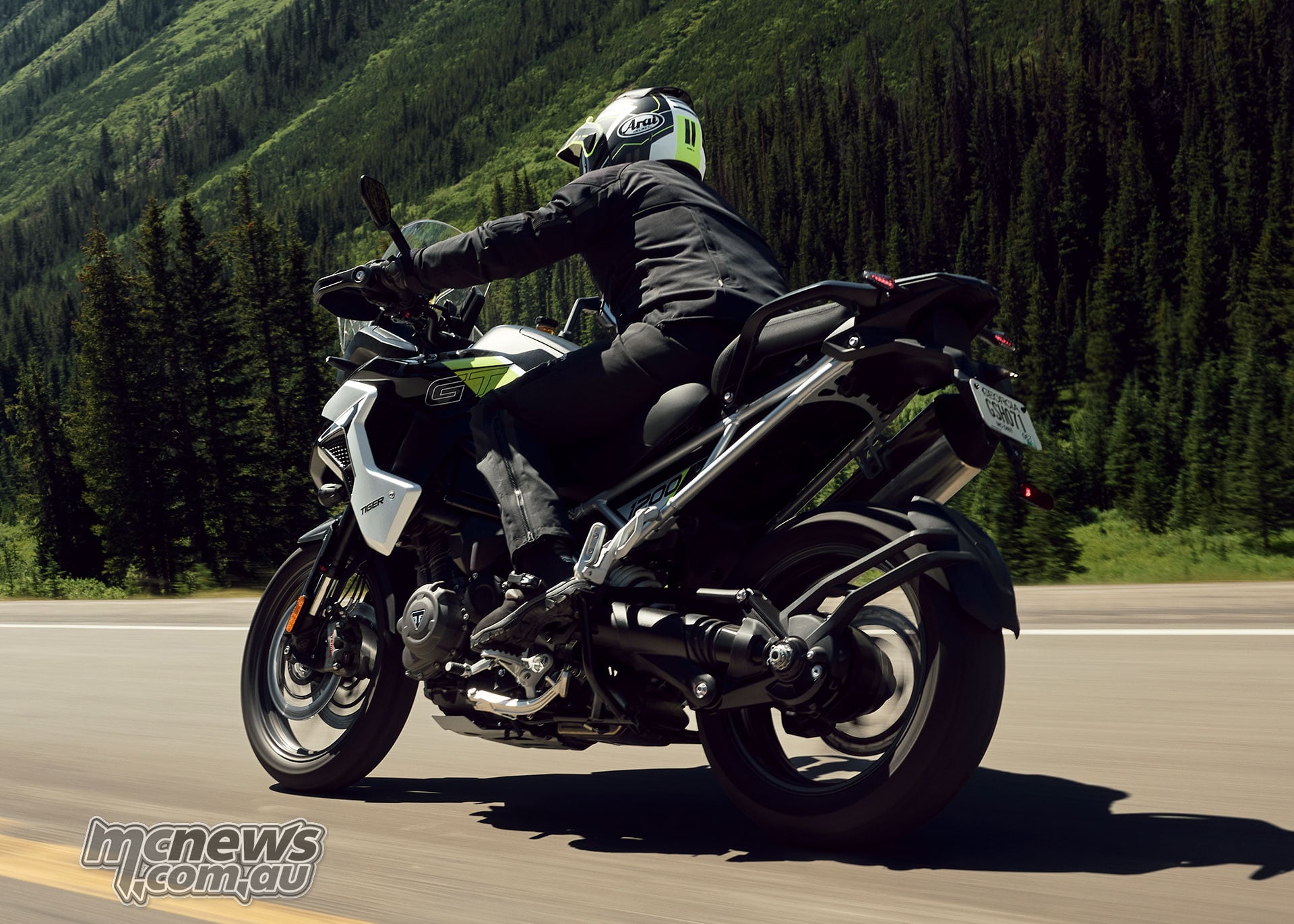
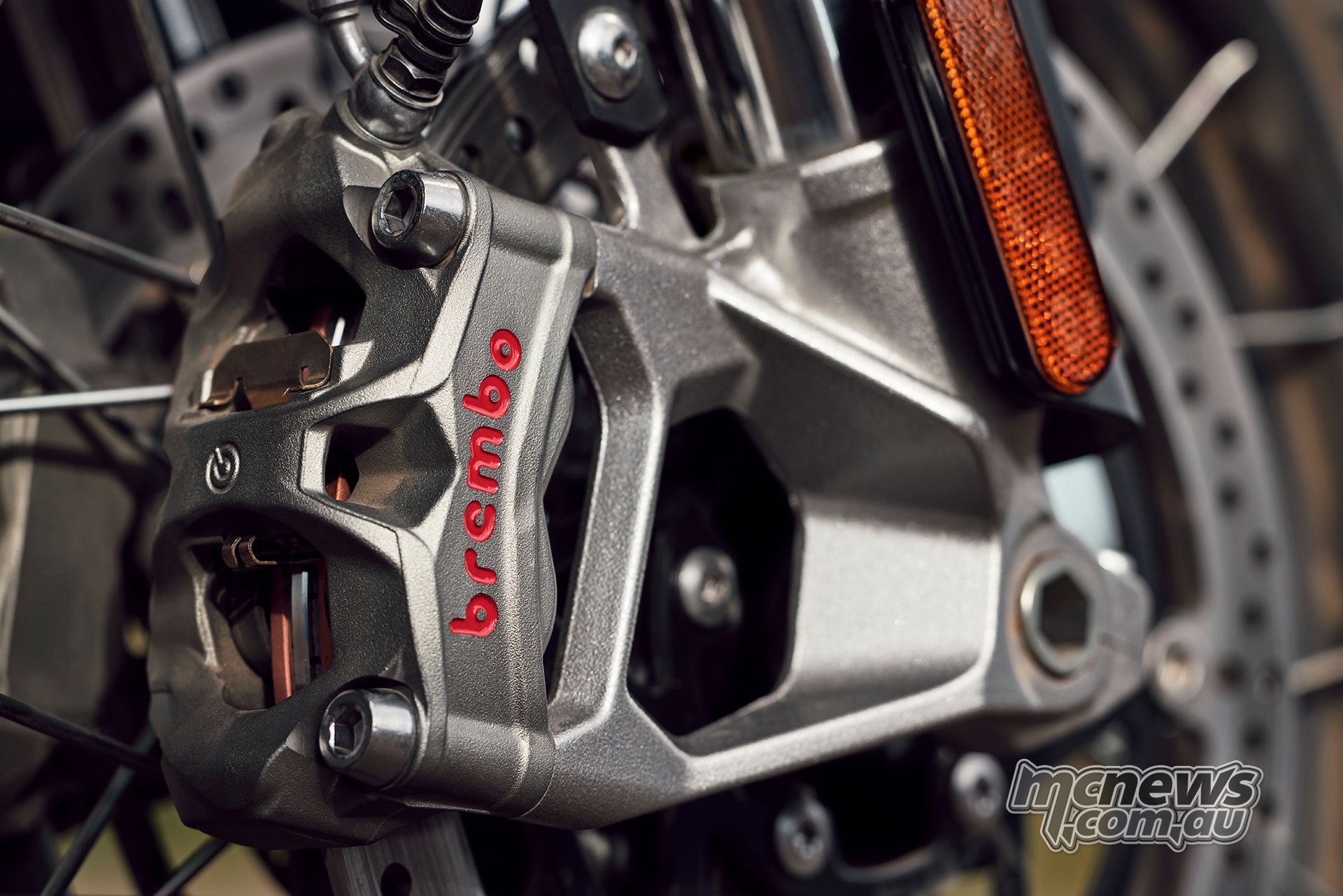
The tubular steel frame, bolt-on aluminium rear subframe and Tri-Link aluminium swingarm continue. Braking hardware includes twin 320 mm front discs with Brembo Stylema four-piston radial calipers and a Magura HC1 radial master cylinder. A 282 mm disc and single-piston Brembo caliper handle the rear.
Four models, two tank sizes
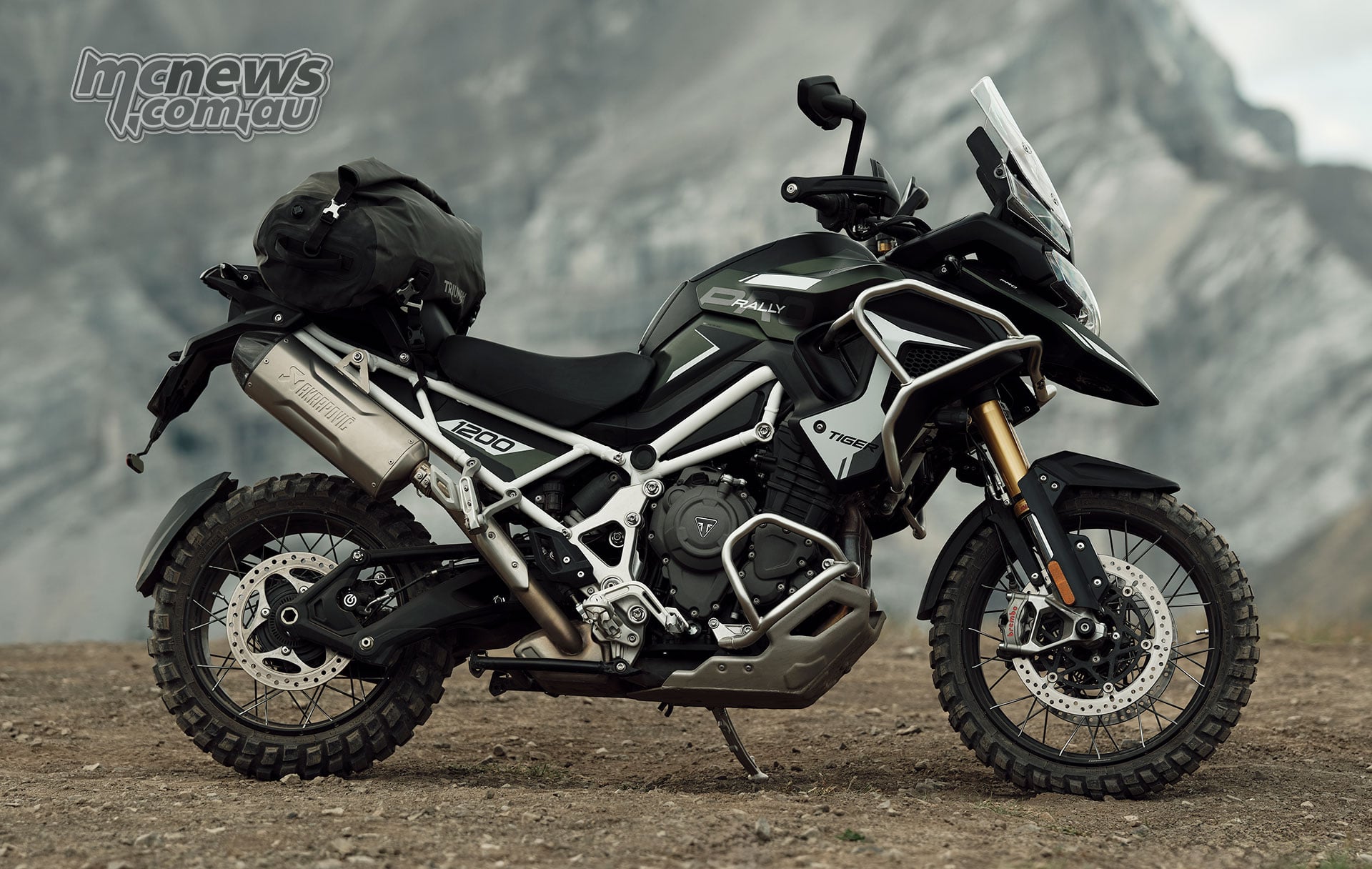
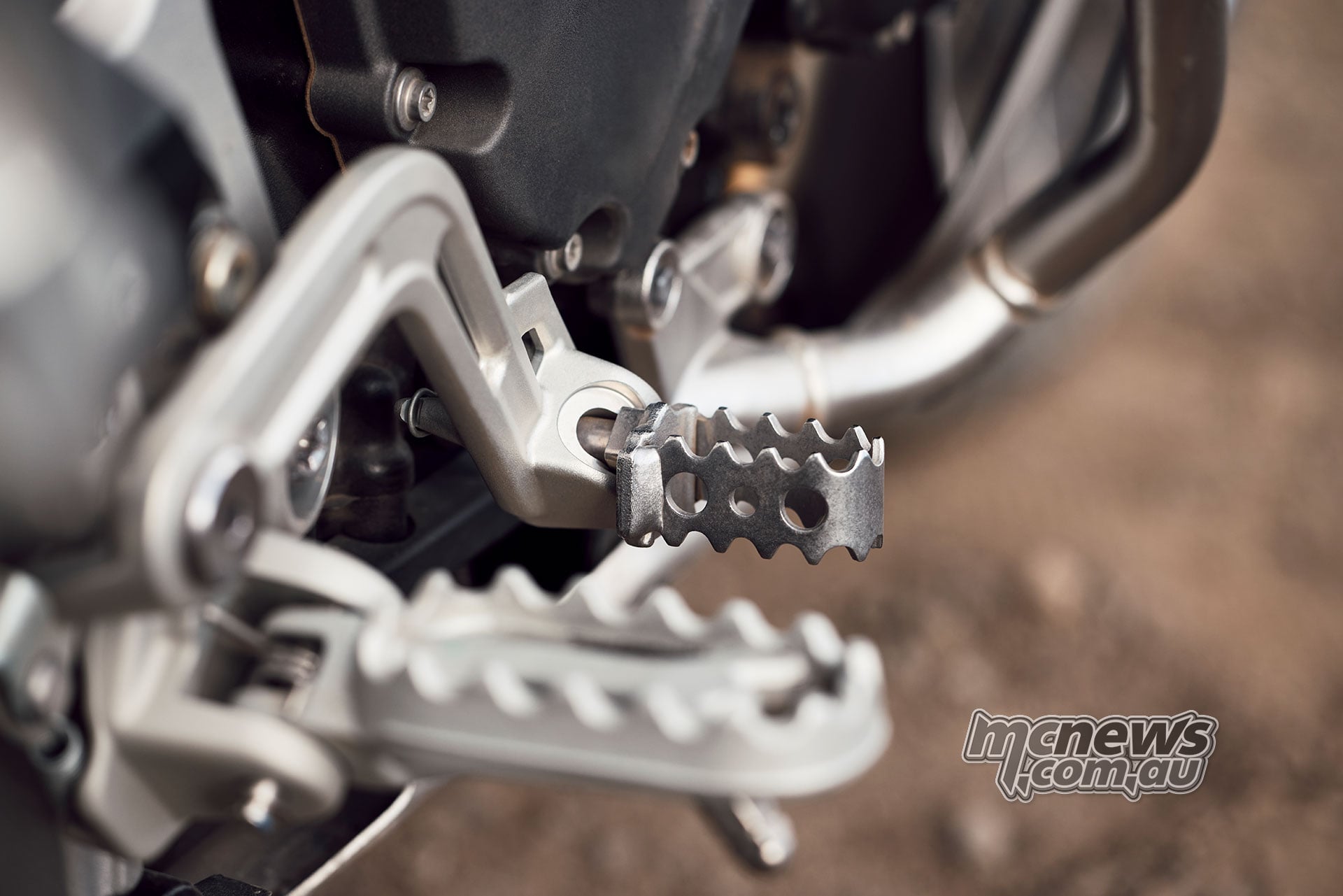
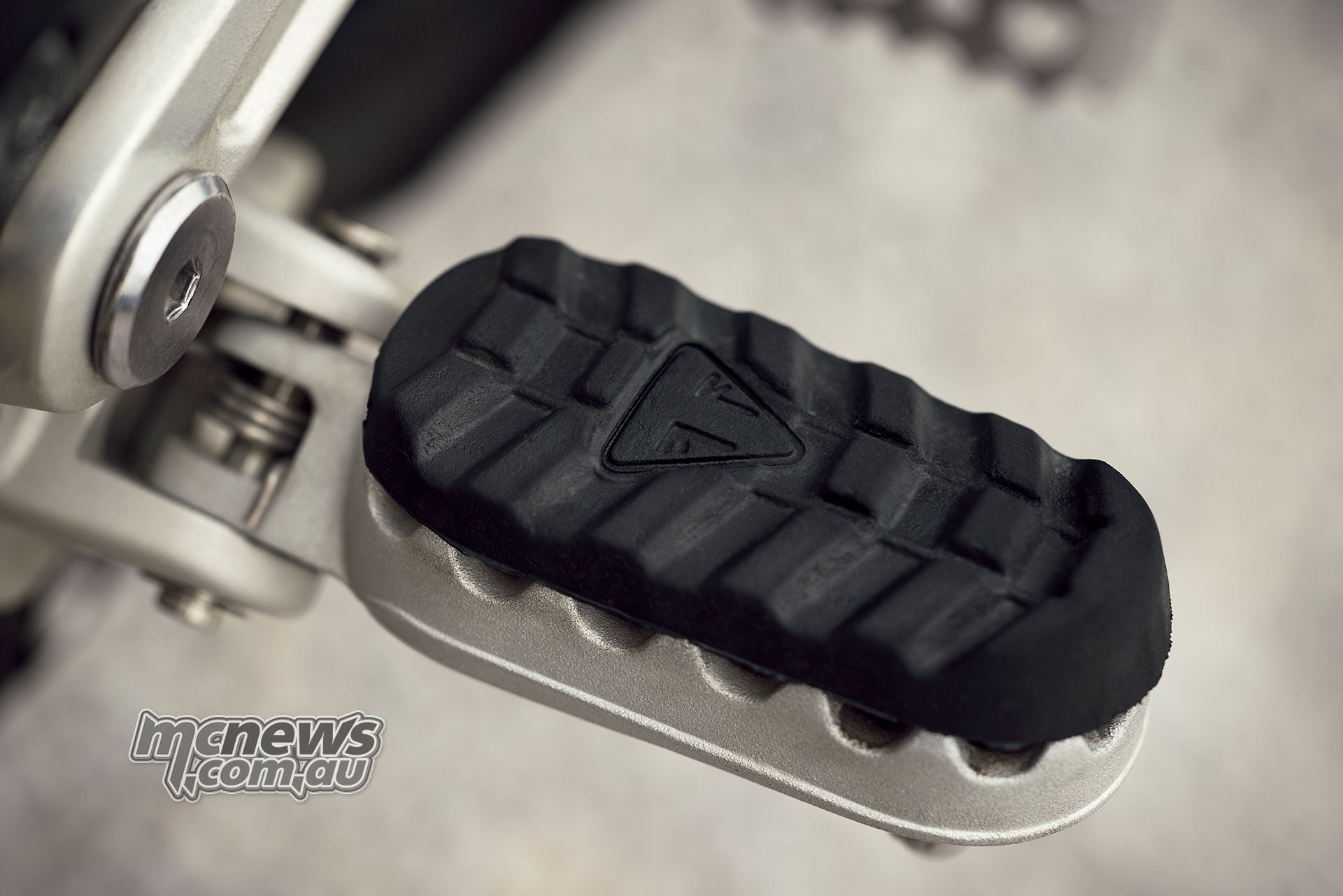
The Pro models retain 20-litre tanks, with the Explorers carrying 30 litres. GT versions use cast wheels; Rally versions add spoked wheels, Off-road Pro, engine protection and an adjustable folding rear brake pedal.
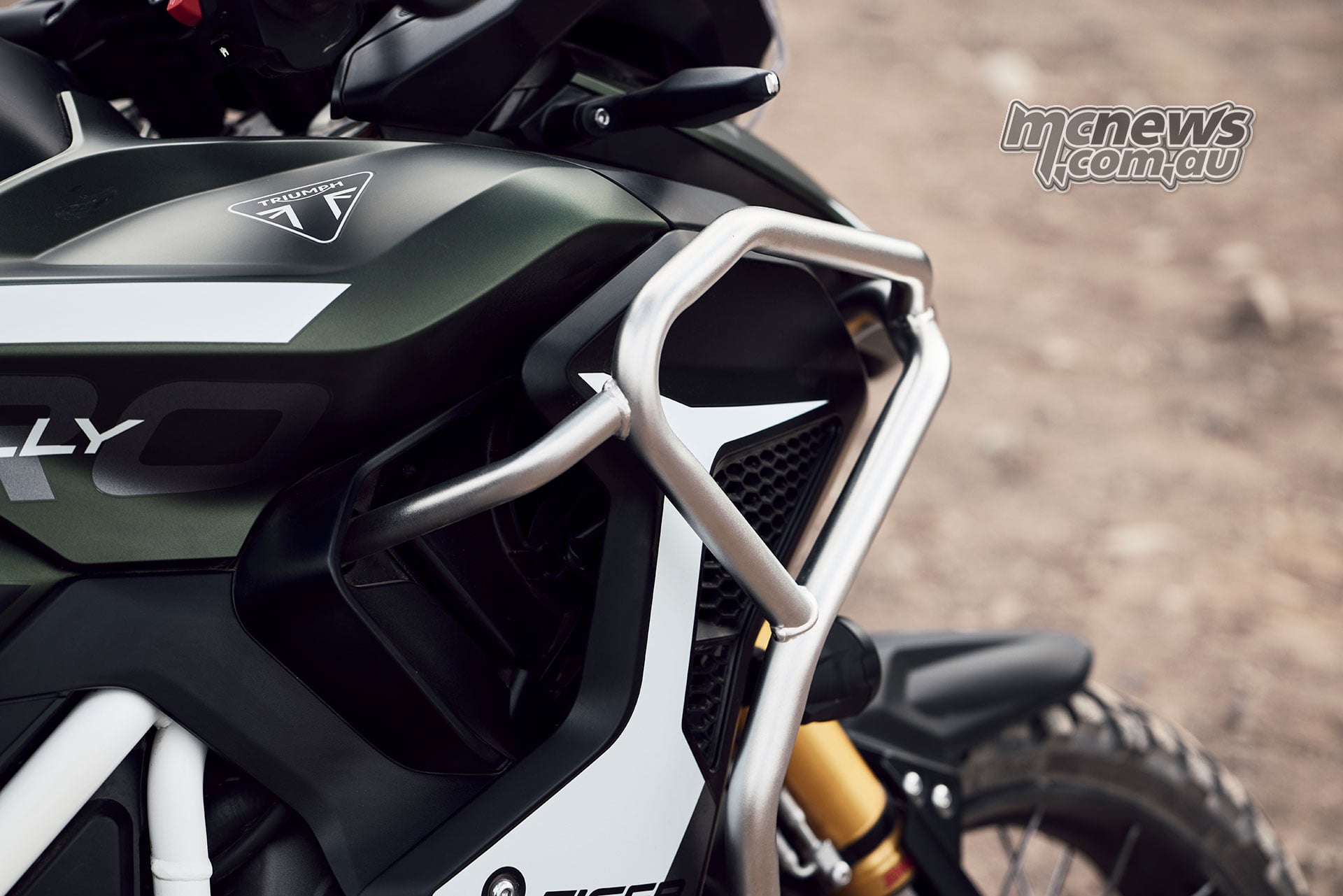
Explorer models add tyre-pressure monitoring, their own lower engine bars, and handlebars positioned 10 mm higher and 10 mm wider than those on the Pro models. The Rally Explorer also gains upper engine bars.
| Model | Wheels | Tank | Wet weight* | Riding modes |
|---|---|---|---|---|
| GT Pro | Cast | 20 litres | 250 kg | 7 |
| Rally Pro | Spoked | 20 litres | 255 kg | 8 |
| GT Explorer | Cast | 30 litres | 260 kg | 7 |
| Rally Explorer | Spoked | 30 litres | 268 kg | 8 |
All four models use 19-inch front and 17-inch rear wheels, with 200 mm suspension travel at both ends.
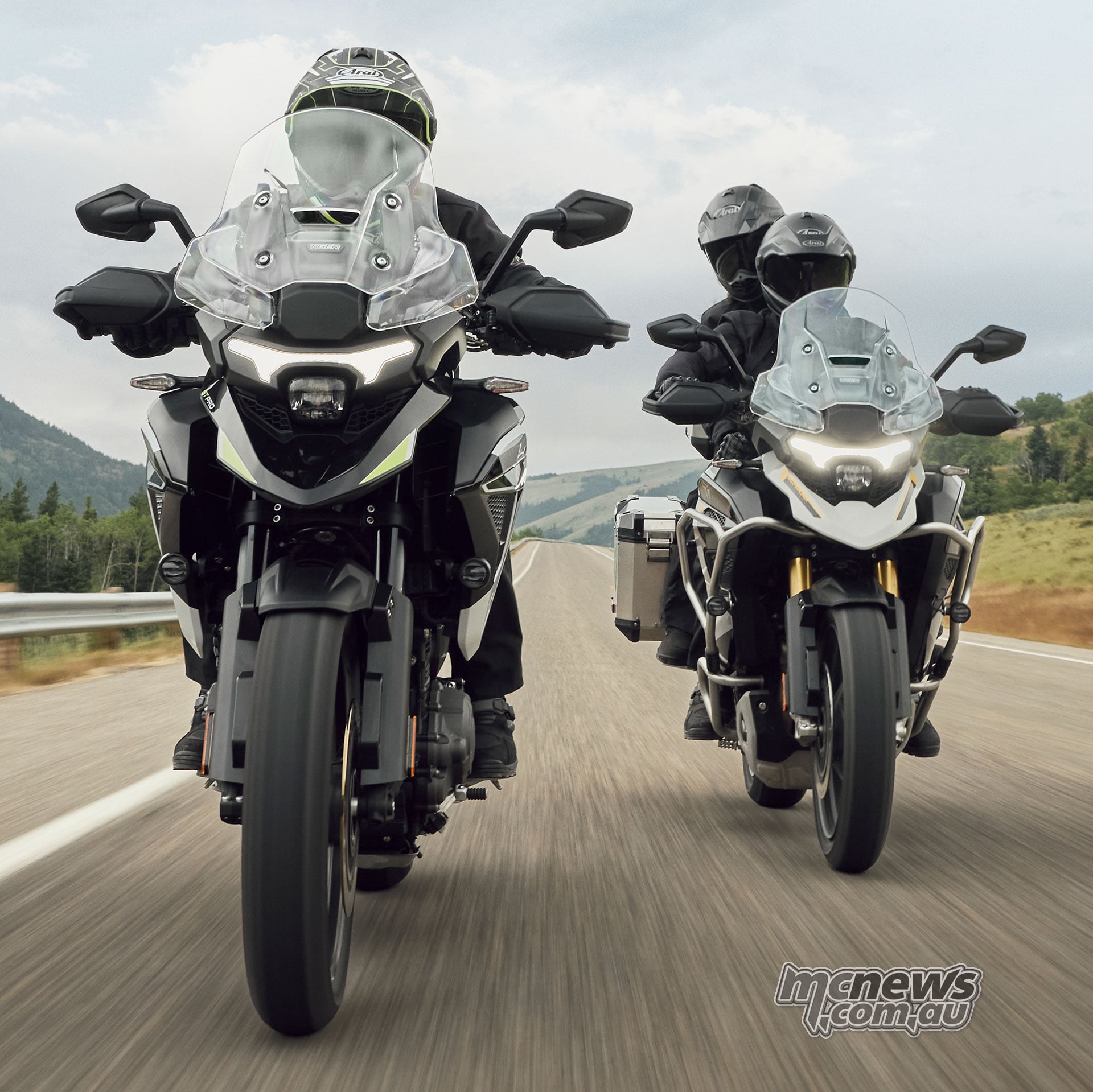
Colour choices are:
- GT Pro: Sapphire Black or Aluminium Silver/Pacific Blue.
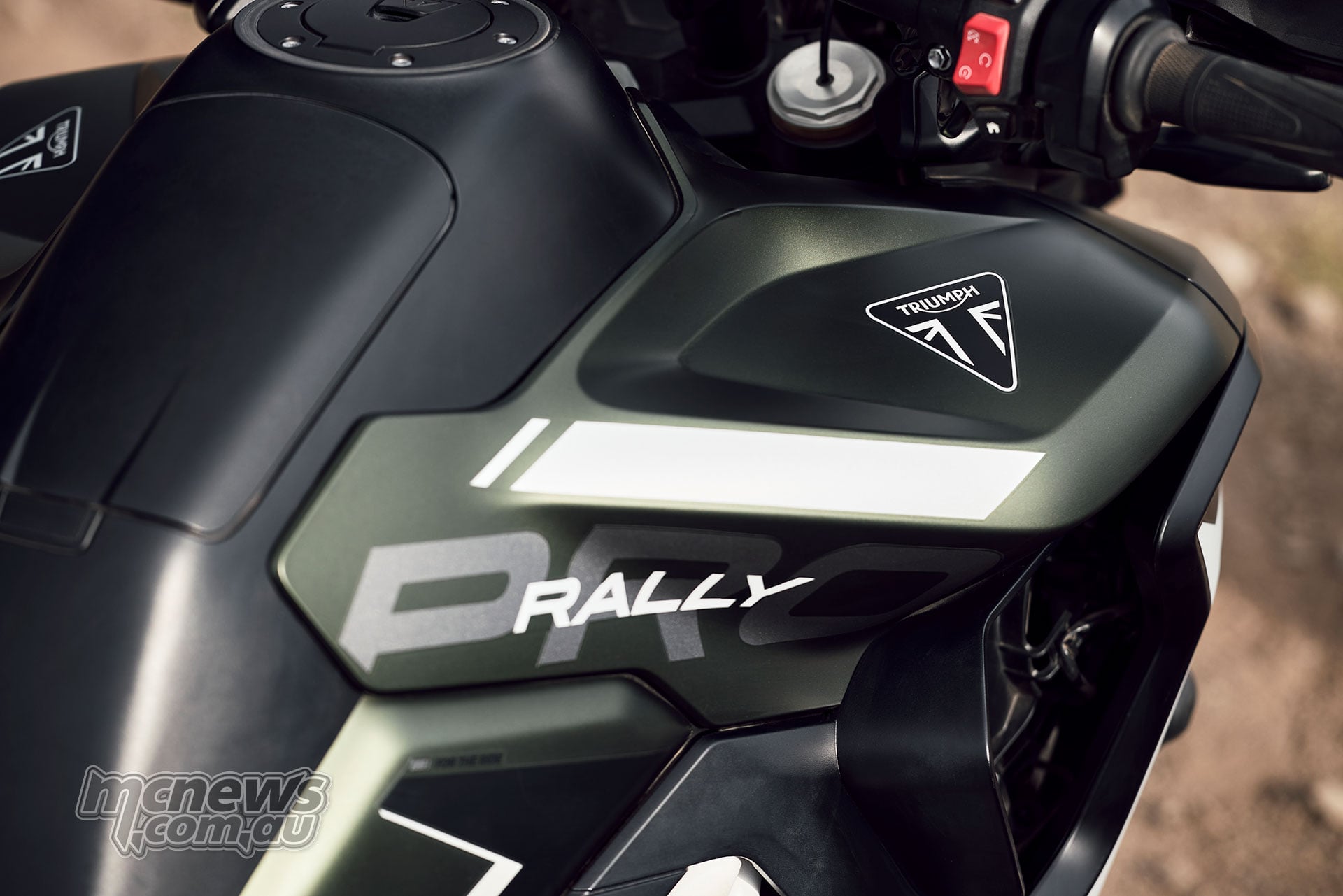
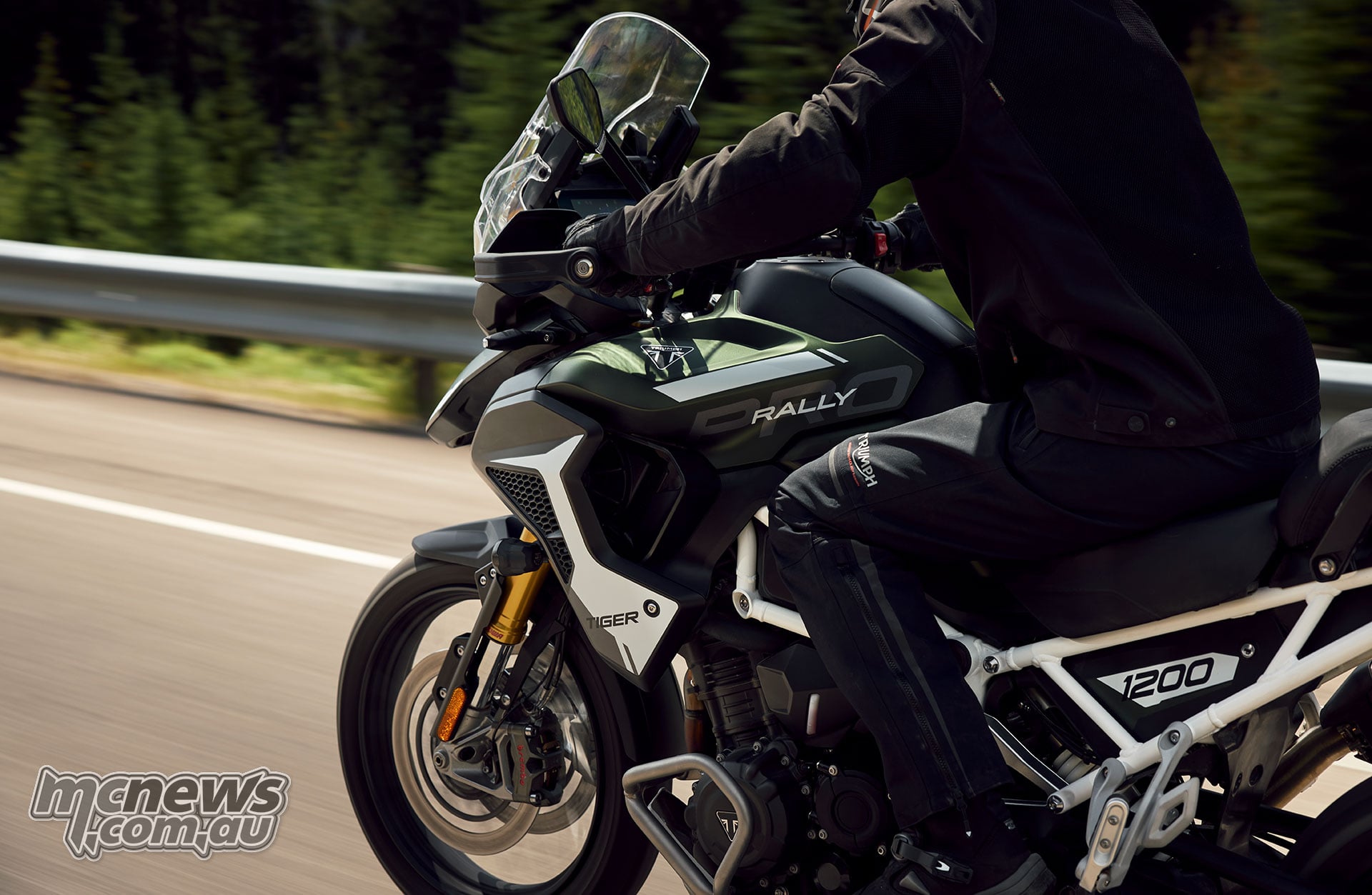
- Rally Pro: Matt Khaki Green or Ash Grey.
- GT Explorer: Aluminium Silver/Pacific Blue or Granite.
- Rally Explorer: Ash Grey/Sapphire Black or Matt Khaki Green.
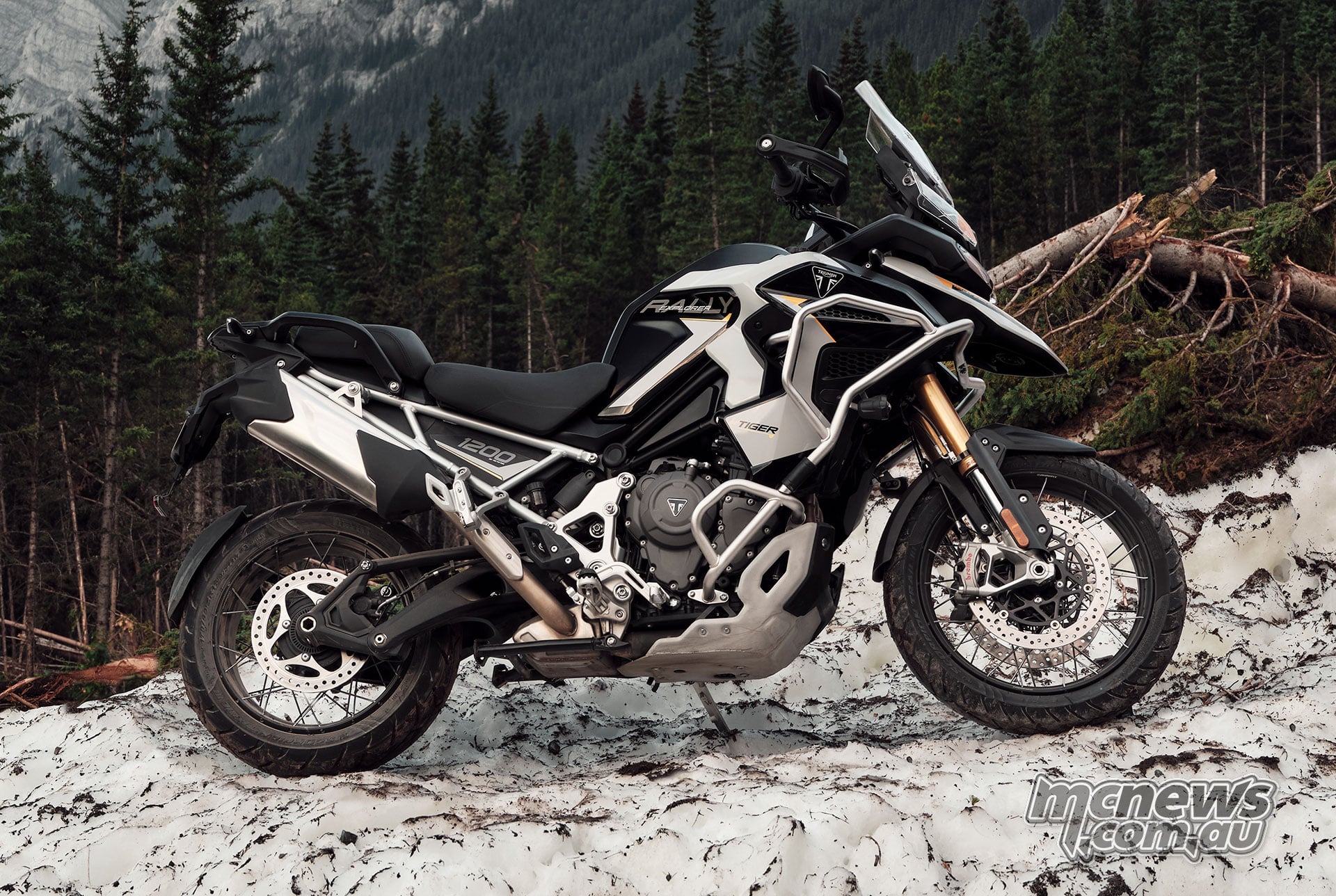
From the original Explorer to the latest Tiger
Our original Tiger Explorer 1200 test followed a 2000 km ride from Uluru to Adelaide. That first-generation machine used a 1215 cc triple, made a claimed 102 kW and 121 Nm, and weighed 259 kg wet.
Its smooth shaft drive impressed, but we wanted more engine character, better initial suspension compliance on Australian roads and the convenience of electronic suspension adjustment.
The major 2022 redesign introduced the 1160 cc T-plane engine, Tri-Link rear end and Showa semi-active suspension. Triumph claimed a 25 kg weight reduction over the outgoing generation, while the 21/18-inch Rally wheel combination established a clearer off-road identity.
The 2024 revisions then concentrated on low-speed engine behaviour, a flatter seat, manually activated preload reduction and improved GT cornering clearance.
The 2027 update advances the electronics and accessibility considerably, while taking the Rally chassis in a different direction. Wayne’s next ride will have some specific questions to answer about off-road control and suspension support.
Australian arrival, accessories and servicing
The 2027 Tiger 1200 range is scheduled to reach Australian Triumph dealerships from December 2026. Local pricing is yet to be confirmed.
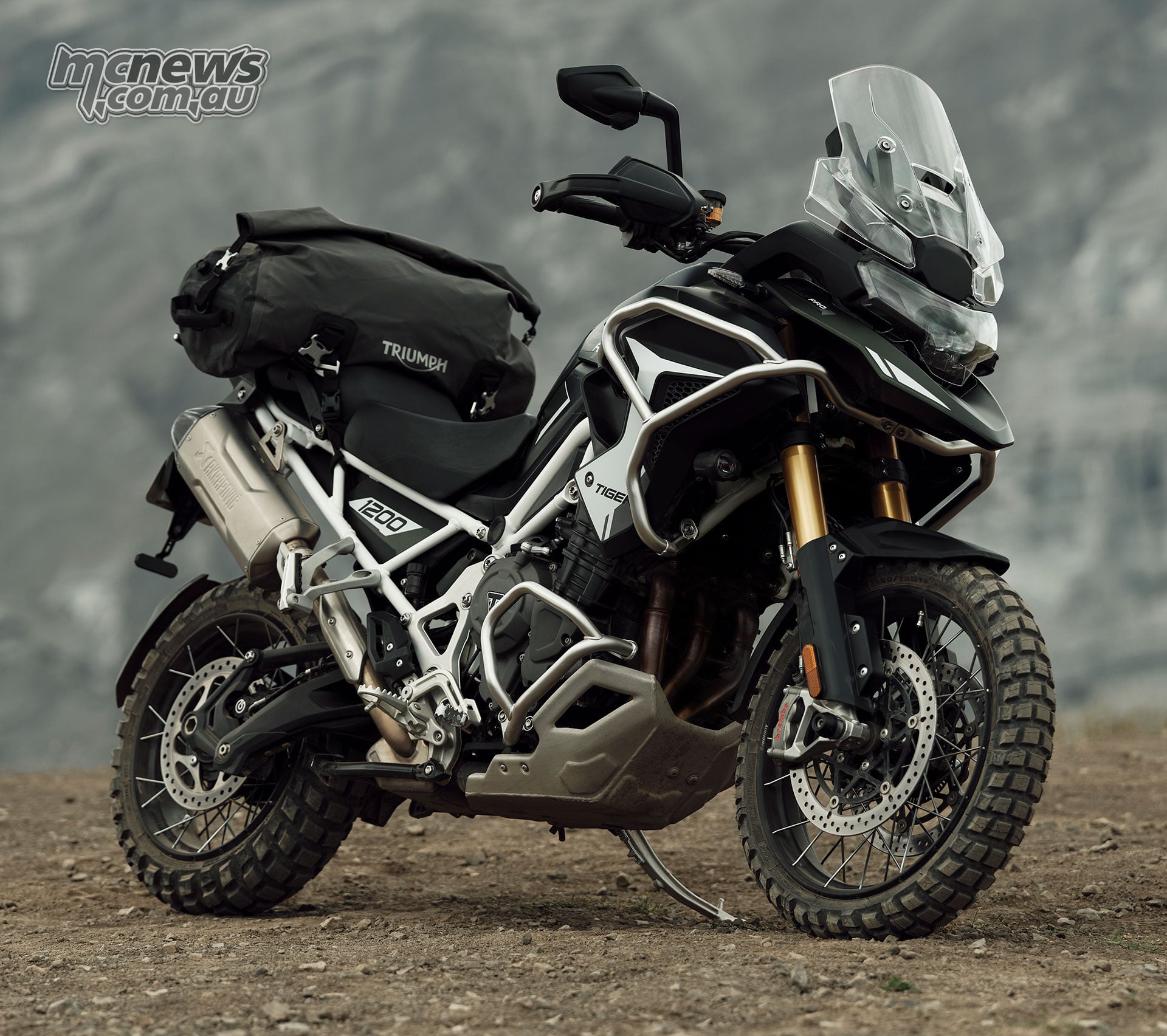
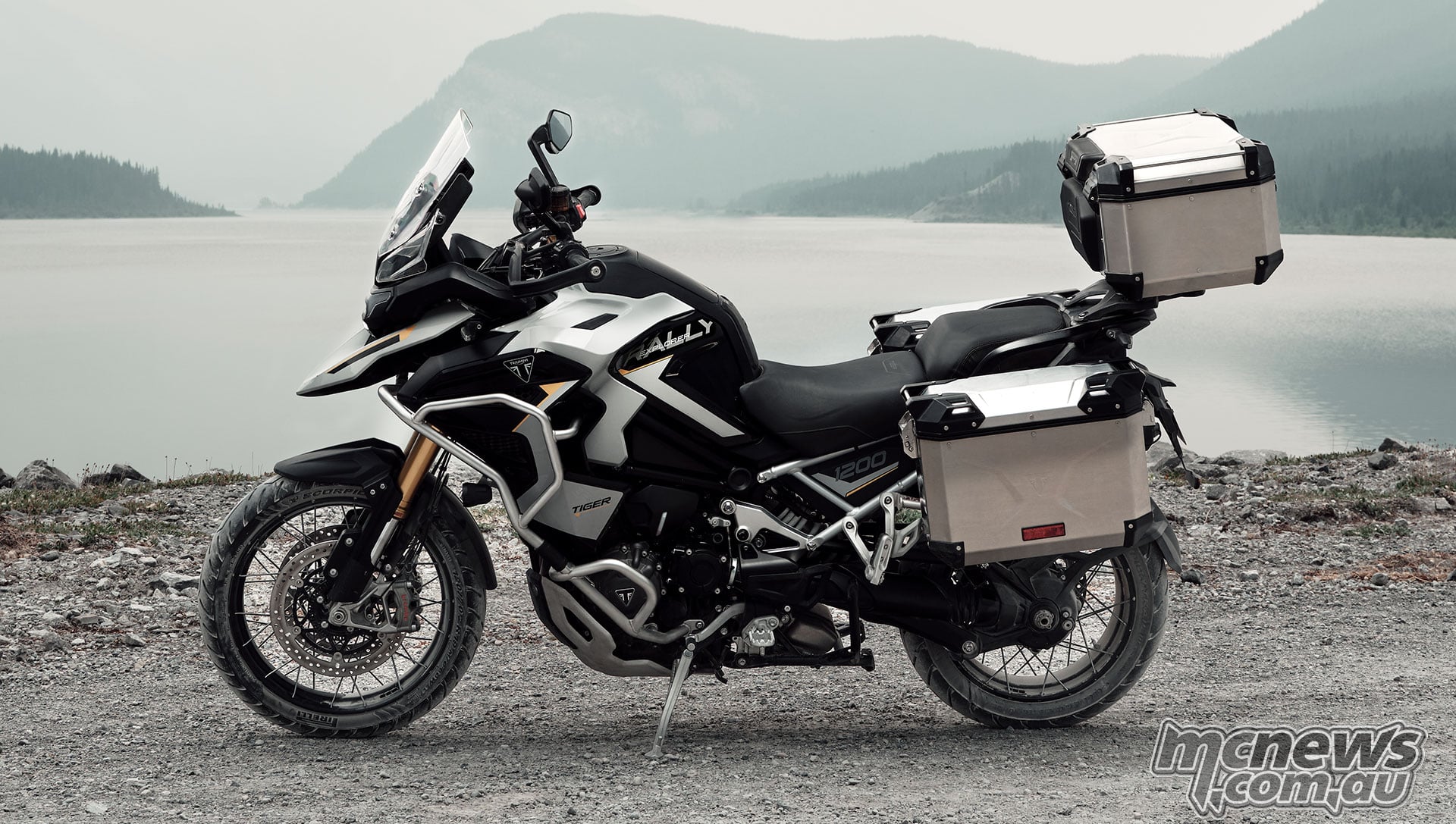
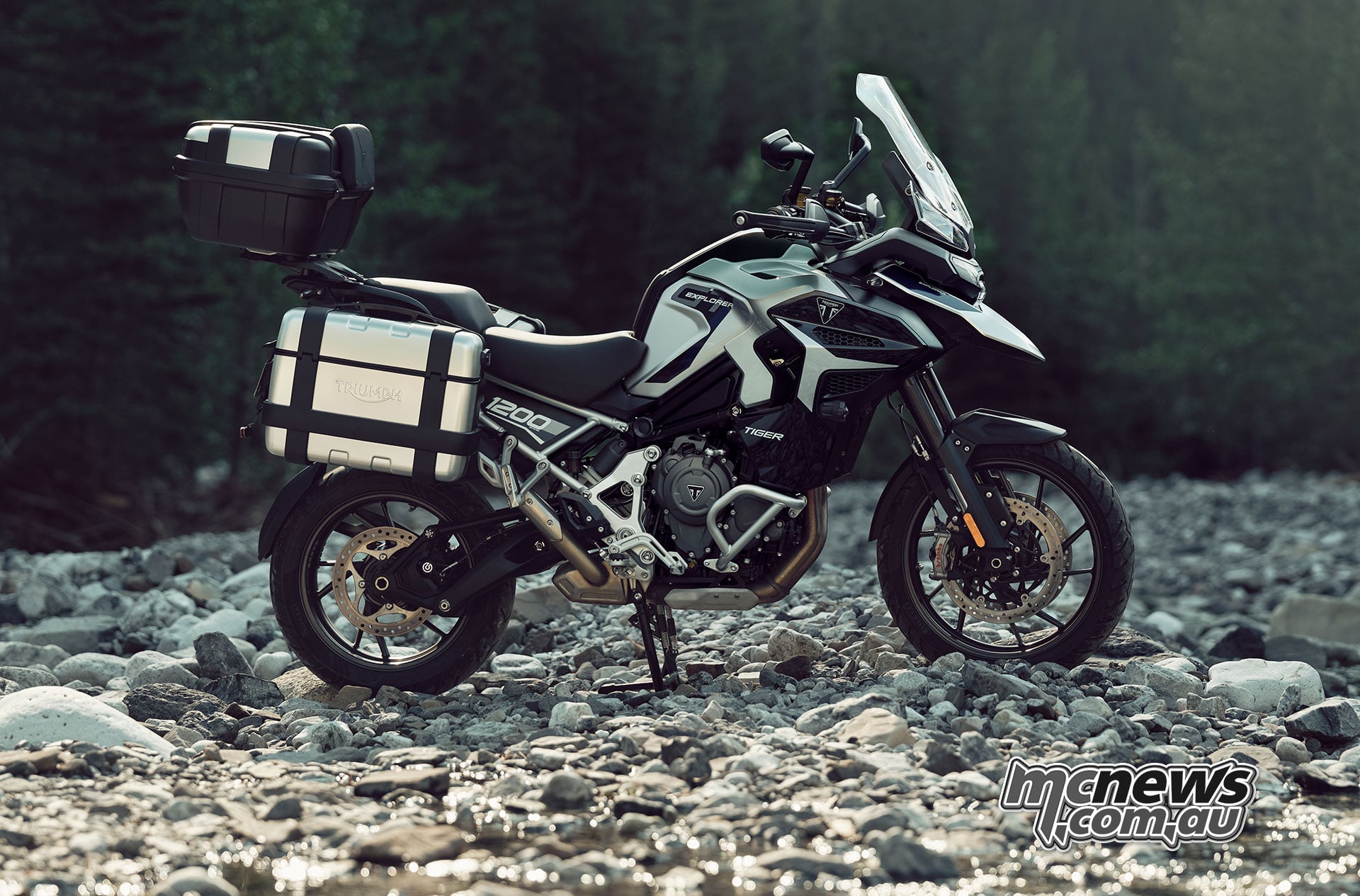
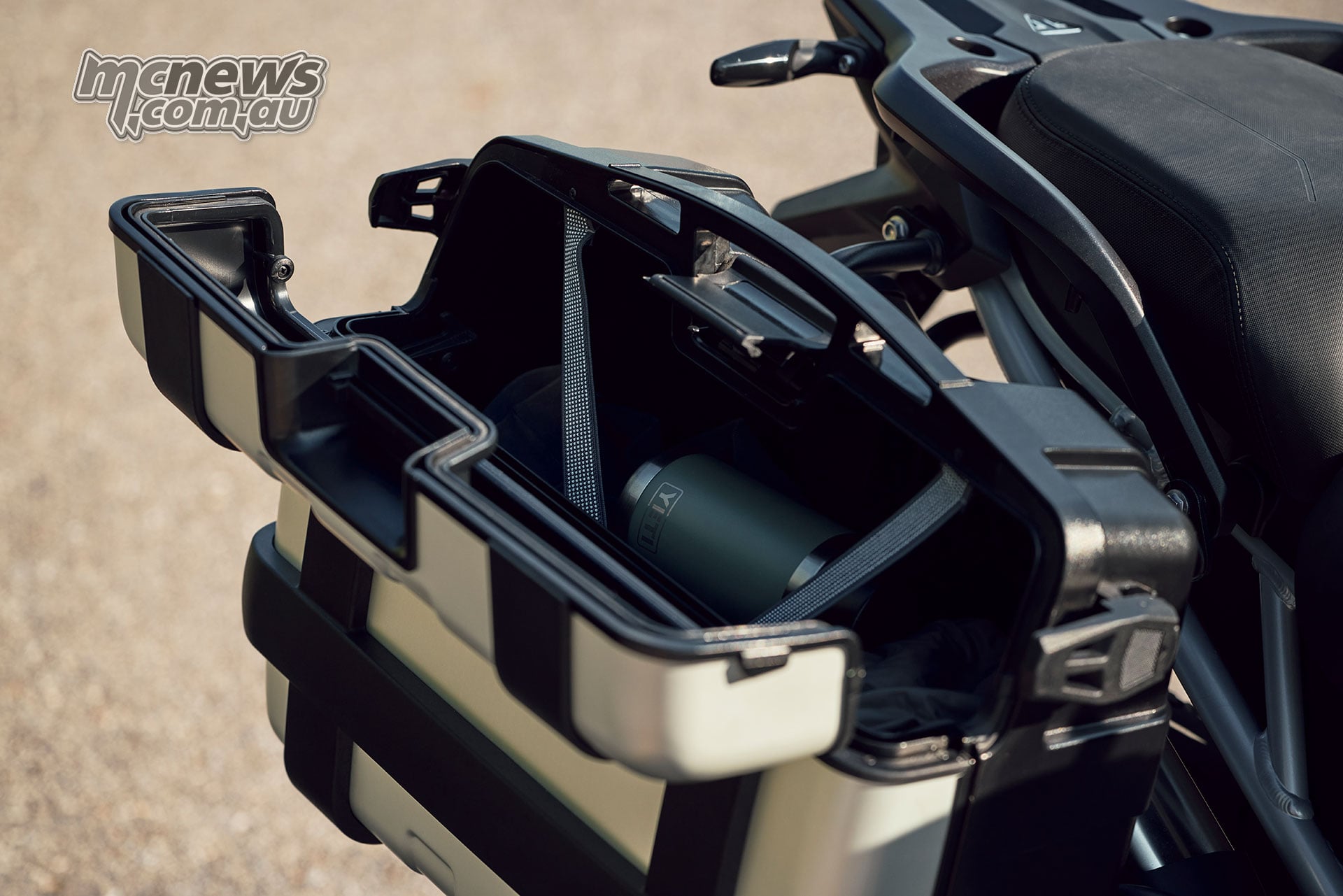
Accessory options include Evo luggage developed with GIVI, with a new 58-litre twin-helmet top box joining the existing 42-litre option. Aluminium luggage is offered in silver or anodised black, alongside panniers, optional backrest pads and waterproof inner bags. Trekker touring luggage is also available.
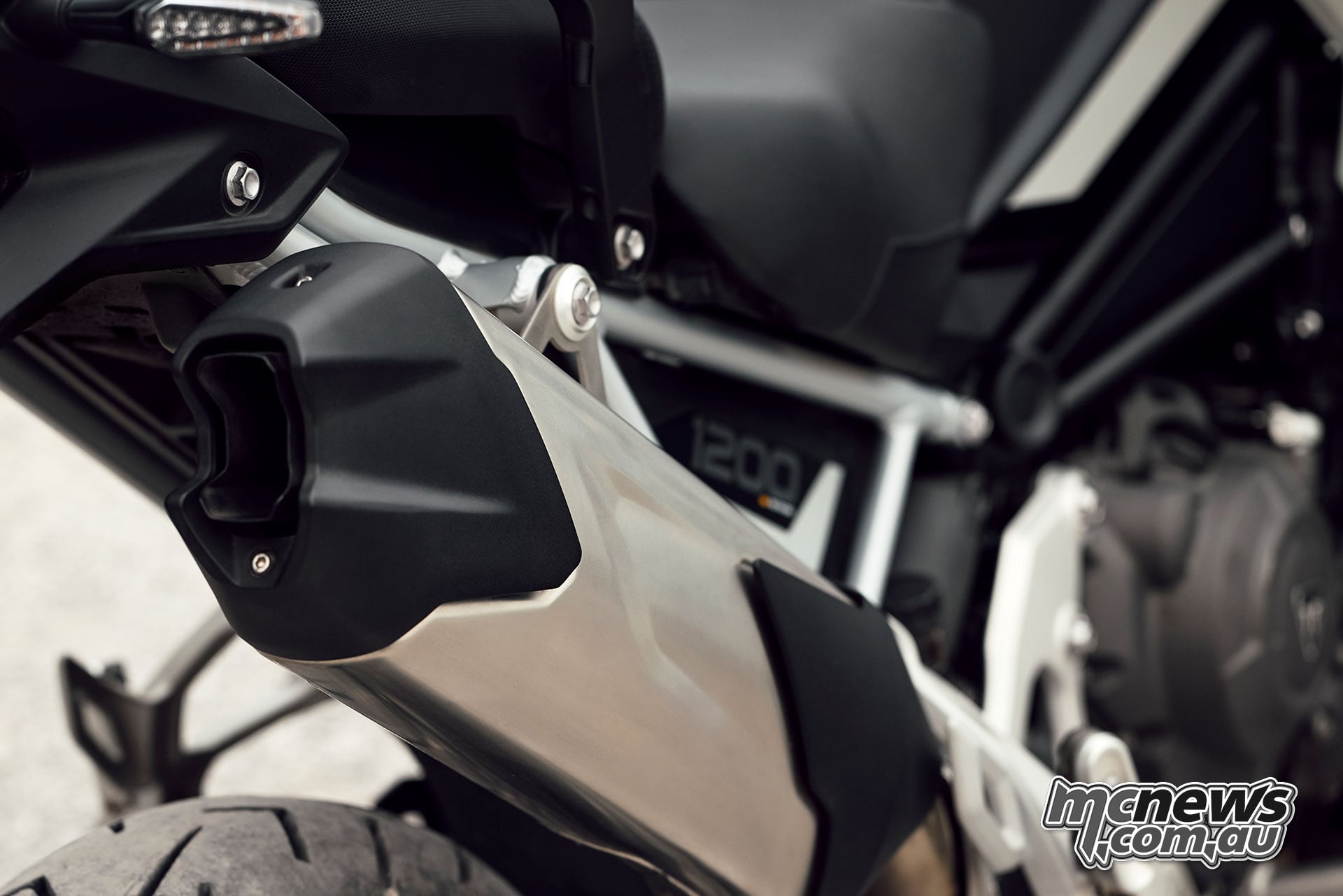
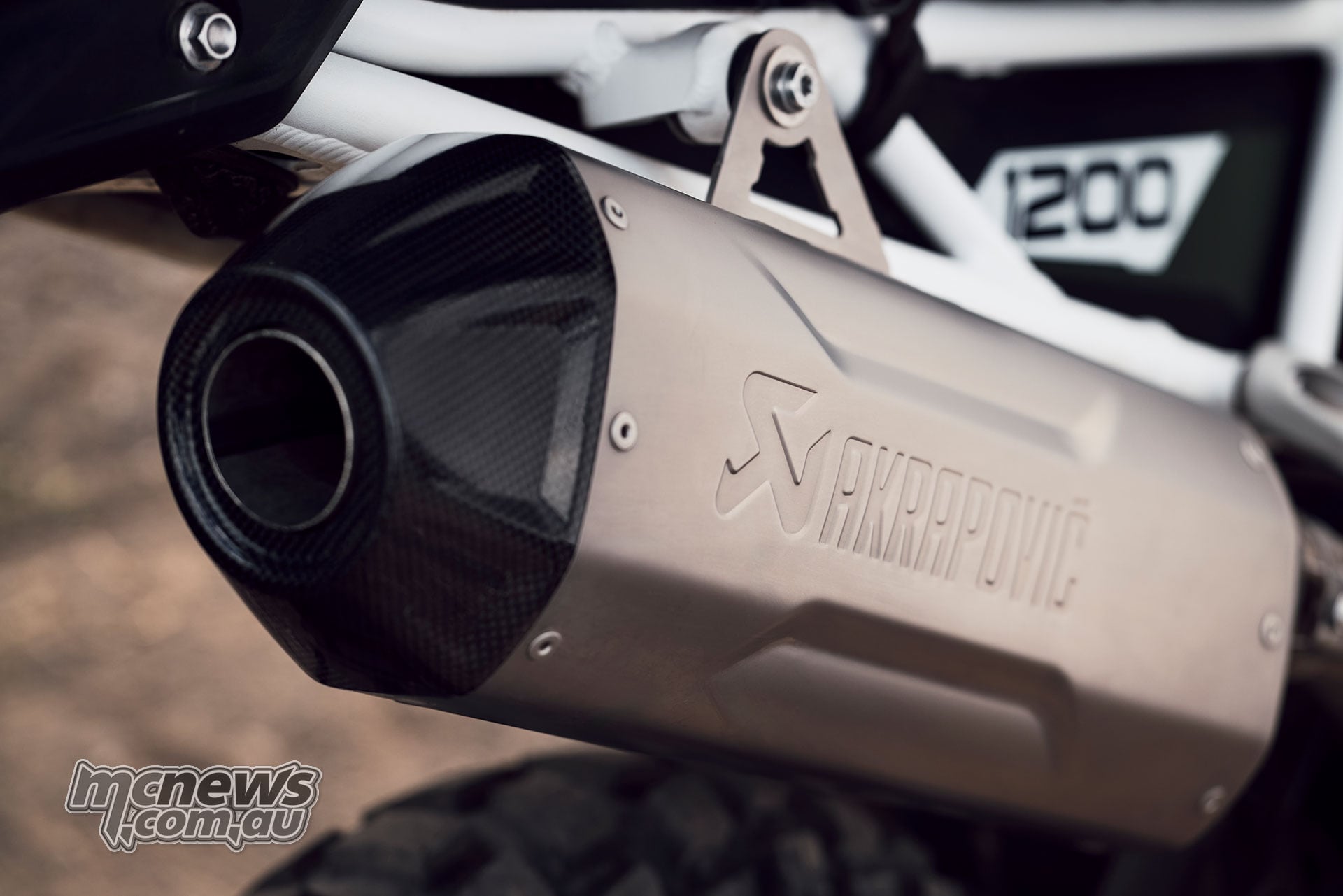
The supplied accessory images also show an Akrapovic silencer for the Rally Pro.
Service intervals are 16,000 km or 12 months, whichever comes first, with a three-year warranty. Claimed fuel consumption is 5.3 litres per 100 km.
2027 Triumph Tiger 1200 specifications
| Item | Specification |
|---|---|
| Engine | 1160 cc, liquid-cooled, DOHC, 12-valve inline triple, T-plane crank |
| Bore x stroke | 90.0 x 60.8 mm |
| Compression ratio | 13.2:1 |
| Claimed maximum power | 158 PS / 155.8 bhp / 116.2 kW at 9250 rpm |
| Claimed maximum torque | 130 Nm at 6750 rpm |
| Transmission | Six-speed, Triumph Shift Assist, slip-and-assist clutch, shaft final drive |
| Front suspension | Showa EERA Heightflex 49 mm USD forks, semi-active damping, 200 mm travel |
| Rear suspension | Showa EERA Heightflex monoshock, semi-active damping, automatic ride height, 200 mm travel |
| Front brakes | Twin 320 mm discs, Brembo Stylema radial four-piston calipers, cornering ABS |
| Rear brake | 282 mm disc, Brembo single-piston caliper, cornering ABS |
| Front tyre | 120/70R19 |
| Rear tyre | 170/60R17 |
| Wheelbase | 1567 mm |
| Rake / trail | 24.3 degrees / 115 mm |
| Seat-height reduction | 30 mm automatically at a stop; minimum 790 mm with low seat and lowering active |
| Instruments | Seven-inch HD TFT touchscreen, wireless Apple CarPlay and Android Auto |
| Fuel capacity | 20 litres, Pro models; 30 litres, Explorer models |
| Claimed fuel consumption | 5.3 litres/100 km |
| Service interval | 16,000 km or 12 months, whichever comes first |
| Warranty | Three years |
2027 Triumph Tiger 1200 Images