

2026 Yamaha Ténéré 700 World Raid Review
Yamaha’s Ténéré arguably needs no lengthy introduction. The nameplate dates back to the 1983 XT600Z, a big single with a 30-litre fuel tank and adventure in its bones. The XTZ750 Super Ténéré followed later that decade, while Yamaha’s subsequent twin-cylinder rally machines helped Stéphane Peterhansel to six Dakar victories between 1991 and 1998.
In modern times, the T7 made its production debut in 2019. Yes, it seems longer than that! It immediately found favour as a relatively affordable, deliberately simple middleweight adventure bike with a reputation for toughness, decent off-road performance and as little as possible in the way of electronics to worry about when well off the beaten track.
Add Yamaha’s extensive dealer network and parts support to that recipe, and it’s easy to understand why sales success followed. The bikes created their own cult following of Ténéré Tragics.
They weren’t perfect. Nothing ever is. I definitely put a few noses out of joint when I reviewed an early T7 and pointed out that the suspension wasn’t great, and that the handling wasn’t helped by carrying its fuel and weight quite high. Suspension upgrades soon became a familiar part of the ownership conversation.
Having no traction control, quickshifter or rider modes was a plus for some and a negative for others. Then there was the matter of having “only” around 72 horsepower, at a time when a certain slightly bigger orange bike offered more tech, better suspension and noticeably more grunt.
The orange bikes weren’t perfect either. I’m just revisiting history for context, and to remind you when things really started heating up in this segment.
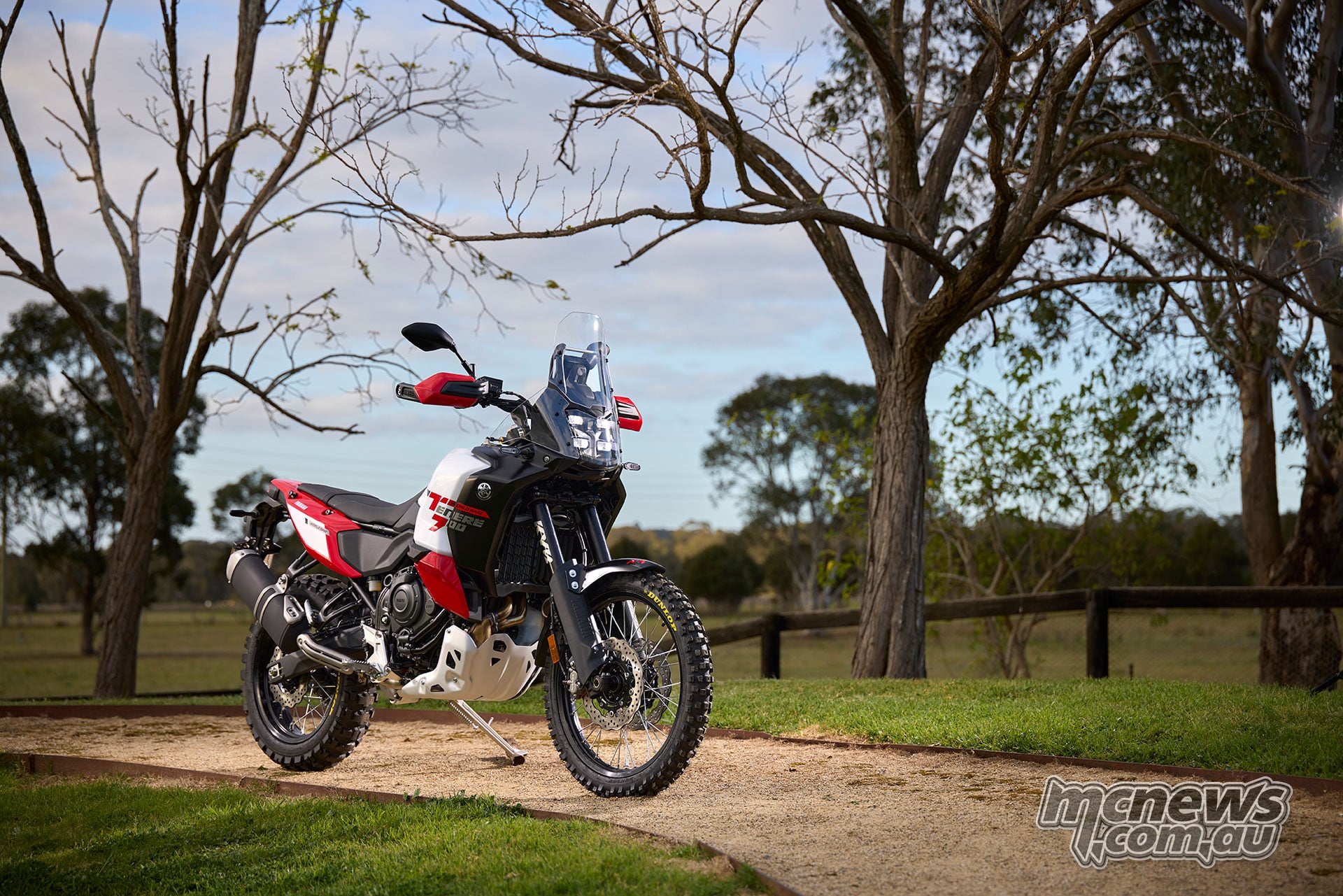
Yamaha unveiled the first World Raid in 2022, with Australian deliveries following in 2023. It addressed concerns about the standard bike’s 16-litre tank by increasing capacity to 23 litres, while adding upgraded suspension, a colour TFT with smartphone connectivity and three-mode ABS. I’m told somewhere between 10 and 15 per cent of T7s sold at the time were World Raid models, while stocks were available. So they certainly found customers.
Which brings us sharply into the present.
As we outlined in our 2026 Yamaha Ténéré 700 World Raid preview, this is far more than a “bold new graphics” update. The bulk of the changes can be broken down into three main areas.
A proper step forward in electronics
The standard T7 had already gained ride-by-wire, selectable throttle maps and traction control, but the World Raid now takes things further. It is the first Ténéré 700 with a six-axis IMU, bringing lean-sensitive traction control, slide control and cornering ABS through Yamaha’s Brake Control system.
Traction and slide control each offer Street, Off Road and Off settings. ABS can operate on both wheels, the front only, or neither, with Brake Control available when ABS is fully on.
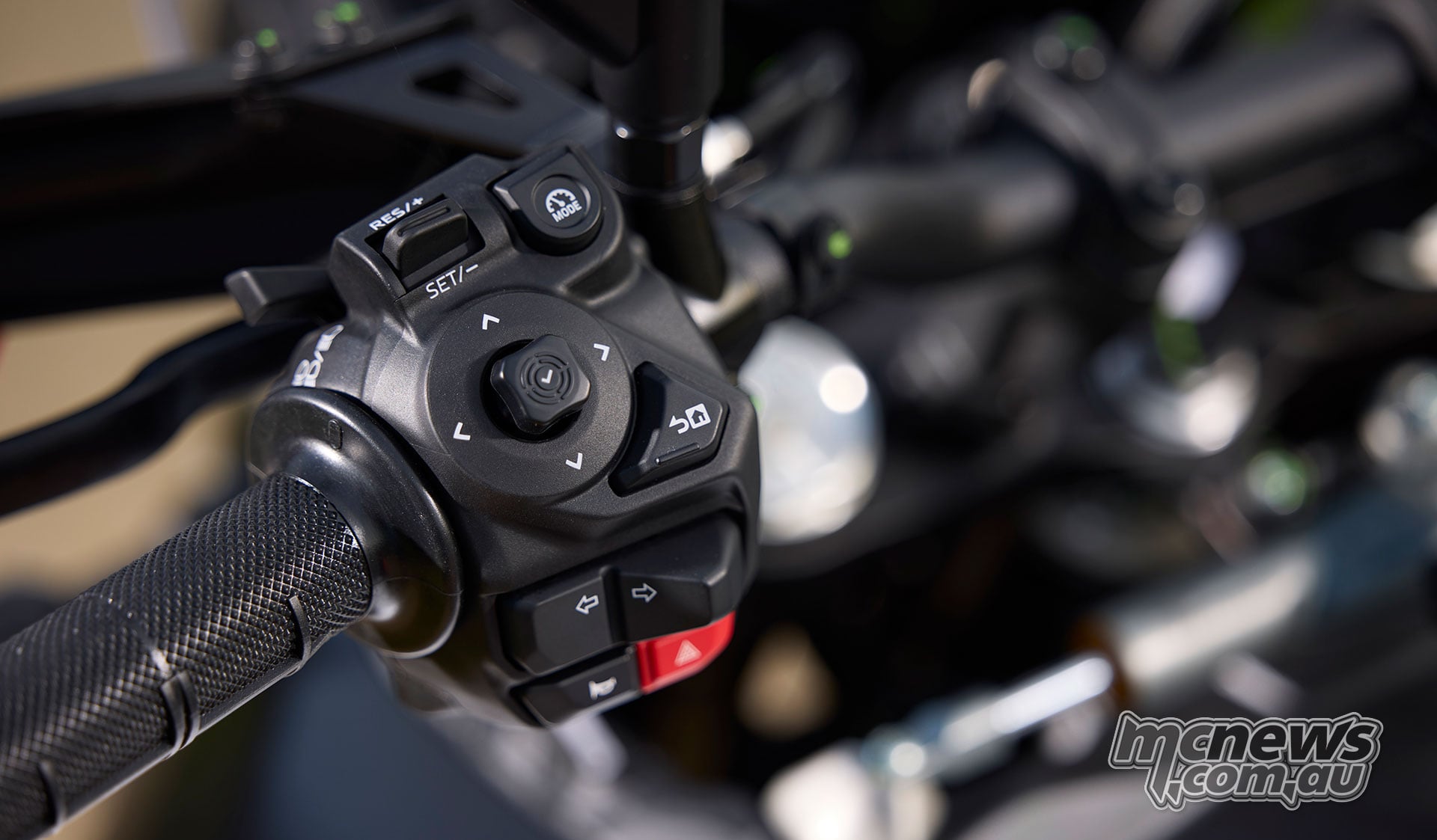
There are Sport and Explorer throttle maps and, importantly for a lot of folks, cruise control. Finally. A speed limiter also joins the package, along with a larger 6.3-inch TFT dash with an excellent layout.
Serious suspension straight out of the box
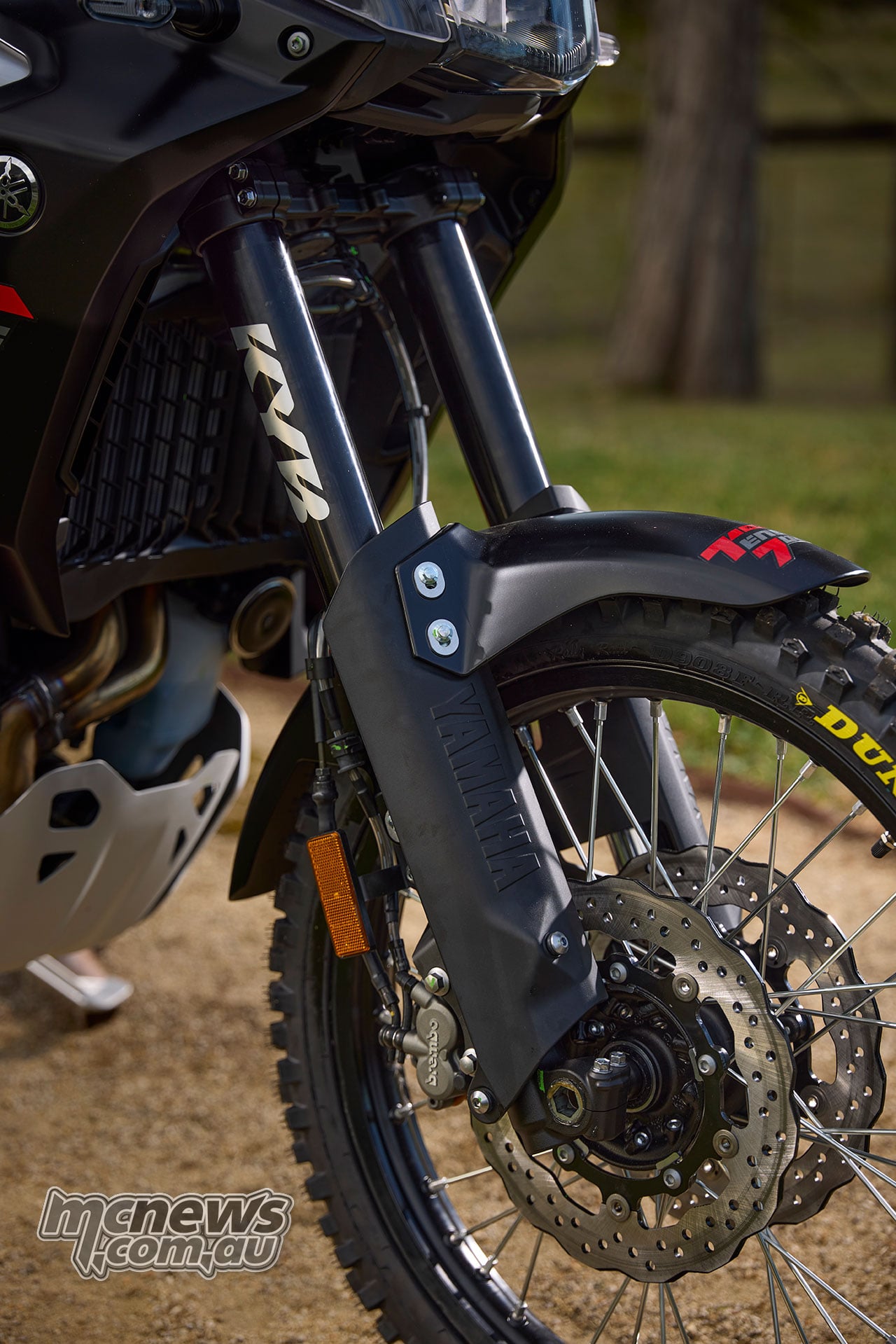
The fully adjustable KYB forks grow from 43 mm to 46 mm and retain a Kashima coating. Wheel travel remains 230 mm up front and 220 mm at the rear, as on the previous World Raid. That is 20 mm more at each end than the standard T7.
The rear shock gains 5 mm of stroke and revised linkage geometry, while a new steering damper offers 16 settings. The significant change is in the hardware and how it works, rather than the extra wheel travel over the old World Raid.
Lighter tanks and revised ergonomics
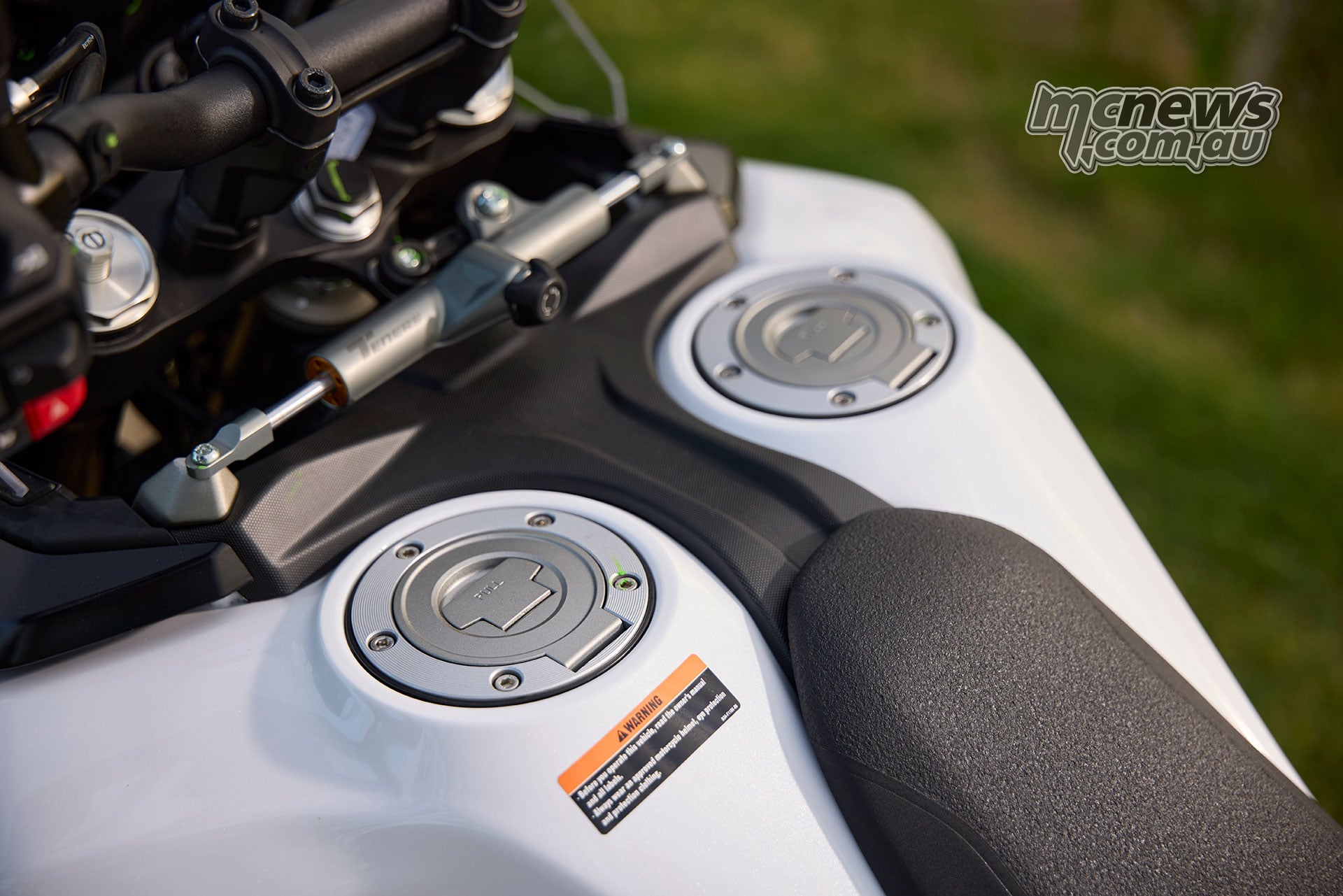
The wide-looking dual tanks still hold 23 litres, but the new aluminium assembly sheds 1.5 kg compared with the previous World Raid. Yamaha has revised the tank shapes and points to the low-mounted fuel pump in the left tank as part of its effort to centralise mass.
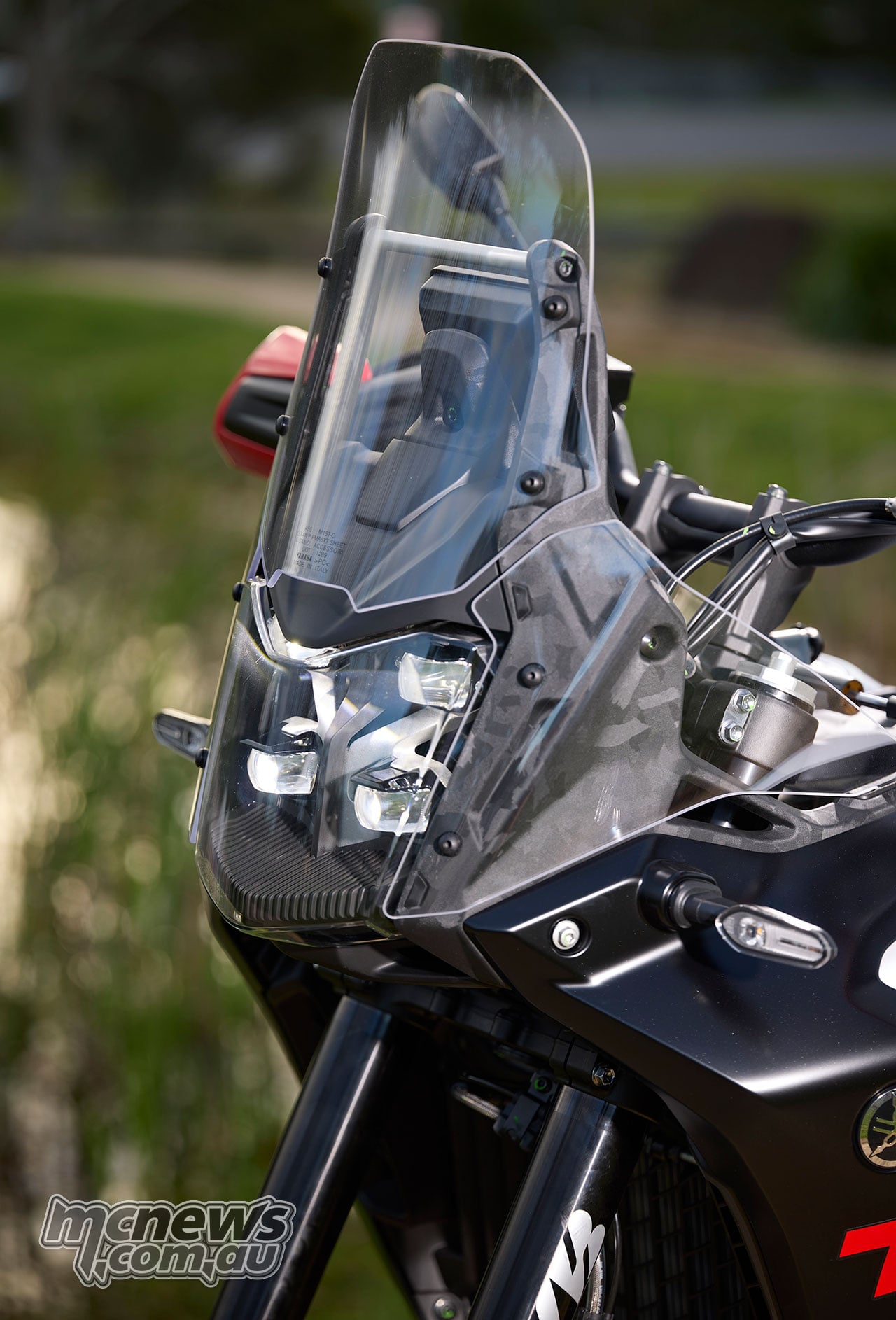
It also gets a reshaped, one-piece rally seat, plus a revised windscreen and side deflectors. The aim is easier movement on the bike and less fatigue over a long day. Whether the fuel feels as well contained as the sales pitch suggests is something we’ll get to.
First, a quick recap of the key numbers before we talk about the launch and the fairly mammoth three-day ride home that followed.
| 2026 models | Standard T7 | World Raid |
|---|---|---|
| Ride-away price | $21,799 | $27,349 |
| Wet weight | 208 kg | 220 kg |
| Fuel capacity | 16 litres | 23 litres |
| Power | 54 kW | 54 kW |
| Torque | 68 Nm | 68 Nm |
| Fork diameter | 43 mm | 46 mm |
| Front travel | 210 mm | 230 mm |
| Rear travel | 200 mm | 220 mm |
| Seat height | 875 mm | 890 mm |
Manufacturer figures for the standard-height models.
Wet weights include fuel; the World Raid carries an additional seven litres when full.
The launch route
The Australian launch started in Cessnock, NSW, and took us to Tamworth via Barrington Tops on day one, then back again the following day using a different route.
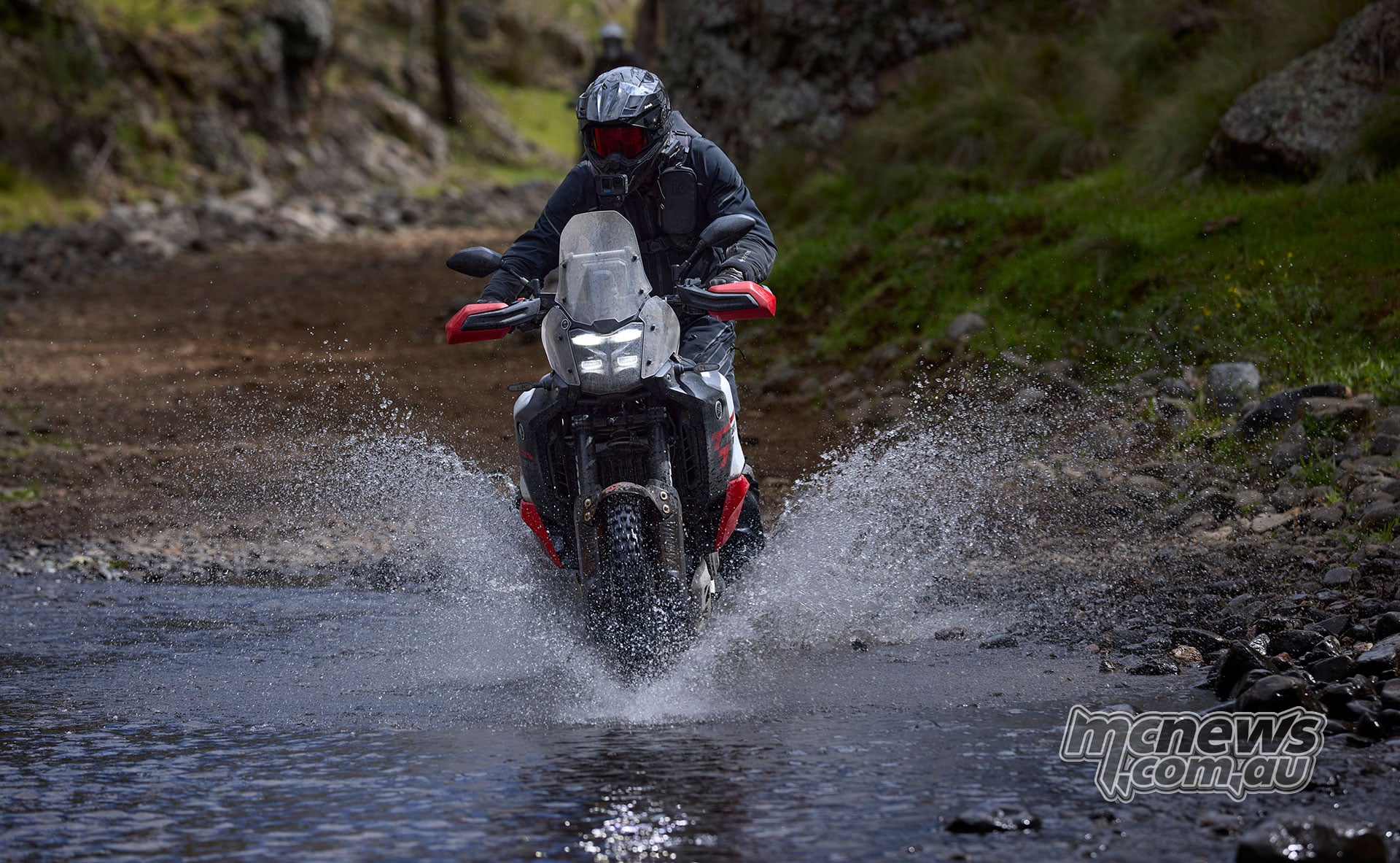
It was well chosen for the World Raid: plenty of gravel roads and great views, an interesting climb over a mountain on 4WD tracks, a slew of creek crossings and floodways, and some twin-track connecting sections mixed in with twisty mountainside tarmac.
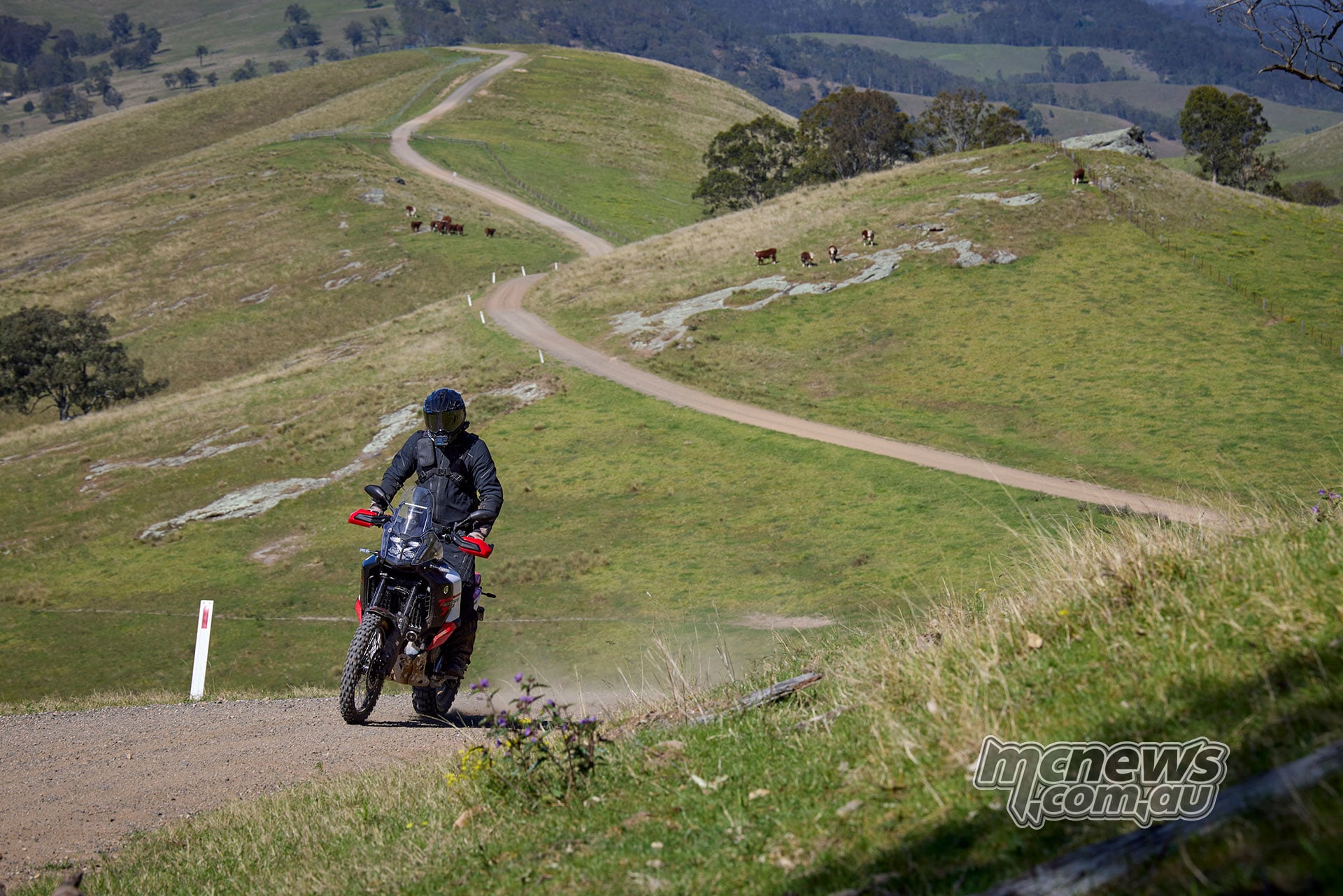
The surfaces ranged from hard-packed granite with loose material sprinkled on top to damp, slippery loam and wet clay. Proper hero dirt at one end of the spectrum, and sections that warranted a little caution at the other.
For the launch, Yamaha fitted Dunlop D908 Rally Raid knobbies. Keep that in mind when weighing up the off-road impressions that follow. The standard fitment is Pirelli Scorpion Rally STR rubber, a favourite of mine for gravel-road shenanigans that also offers excellent tarmac grip and handling, even if it lacks quite the same bite in the soft stuff.
First impressions
Throw a leg over and you’re immediately confronted by that twin-tank setup. It utterly dominates the view and isn’t exactly what you’d call slim between the knees. This is no enduro bike, but it isn’t uncomfortably wide either. The standing ergonomics are surprisingly good.
And while the tanks are connected, you still fill both sides separately at the bowser.
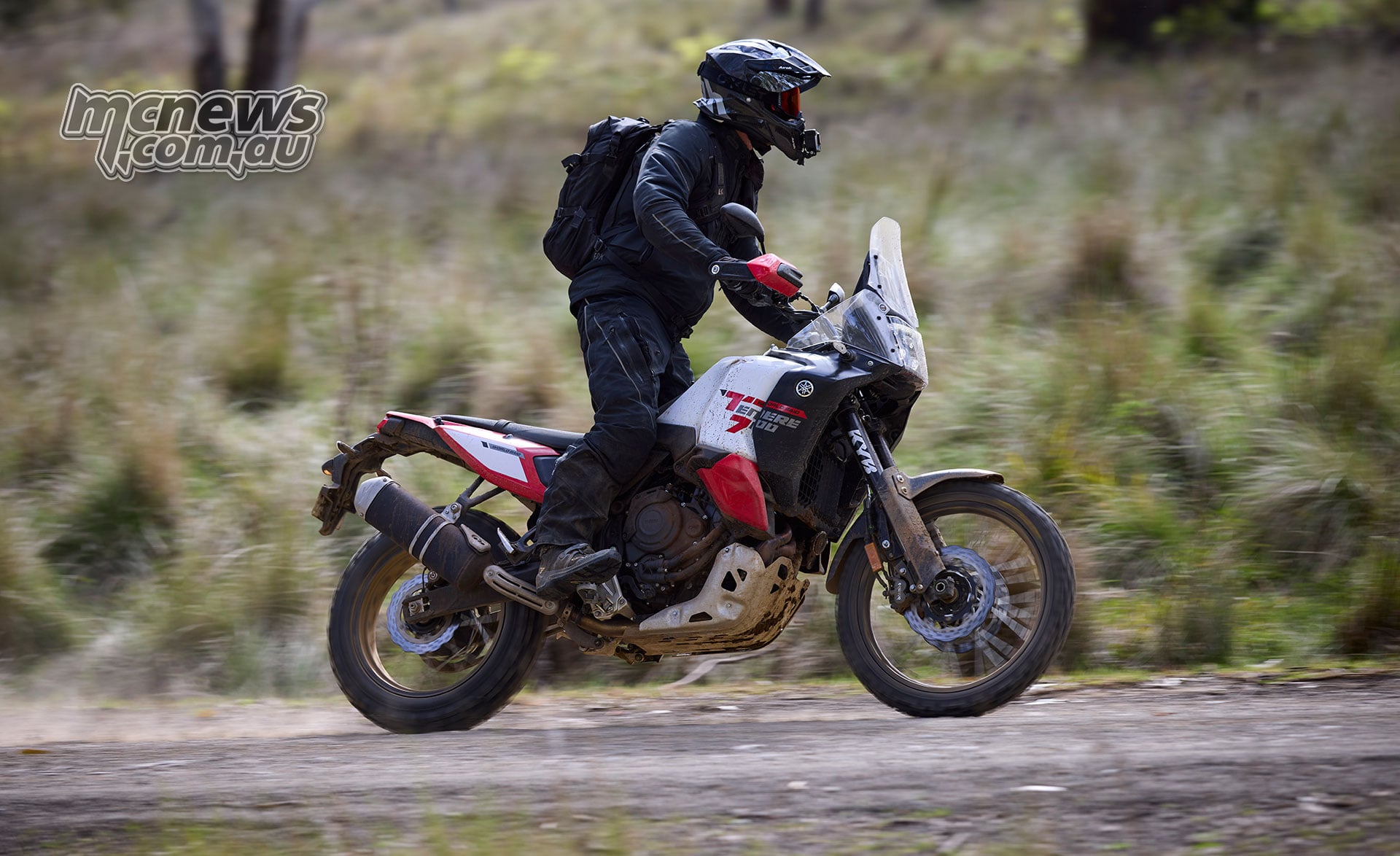
Rolling out of Cessnock, I wouldn’t say I was blown away by the dynamics. Everything worked as expected; nothing stood out as particularly good or bad. The ergonomics felt right, the seat was comfortable, and the riding controls were easy to use. The top-heavy sensation of the original T7 felt reduced, but don’t believe anyone who says it’s a thing of the past. A full 23 litres of fuel isn’t something you can magically make disappear.
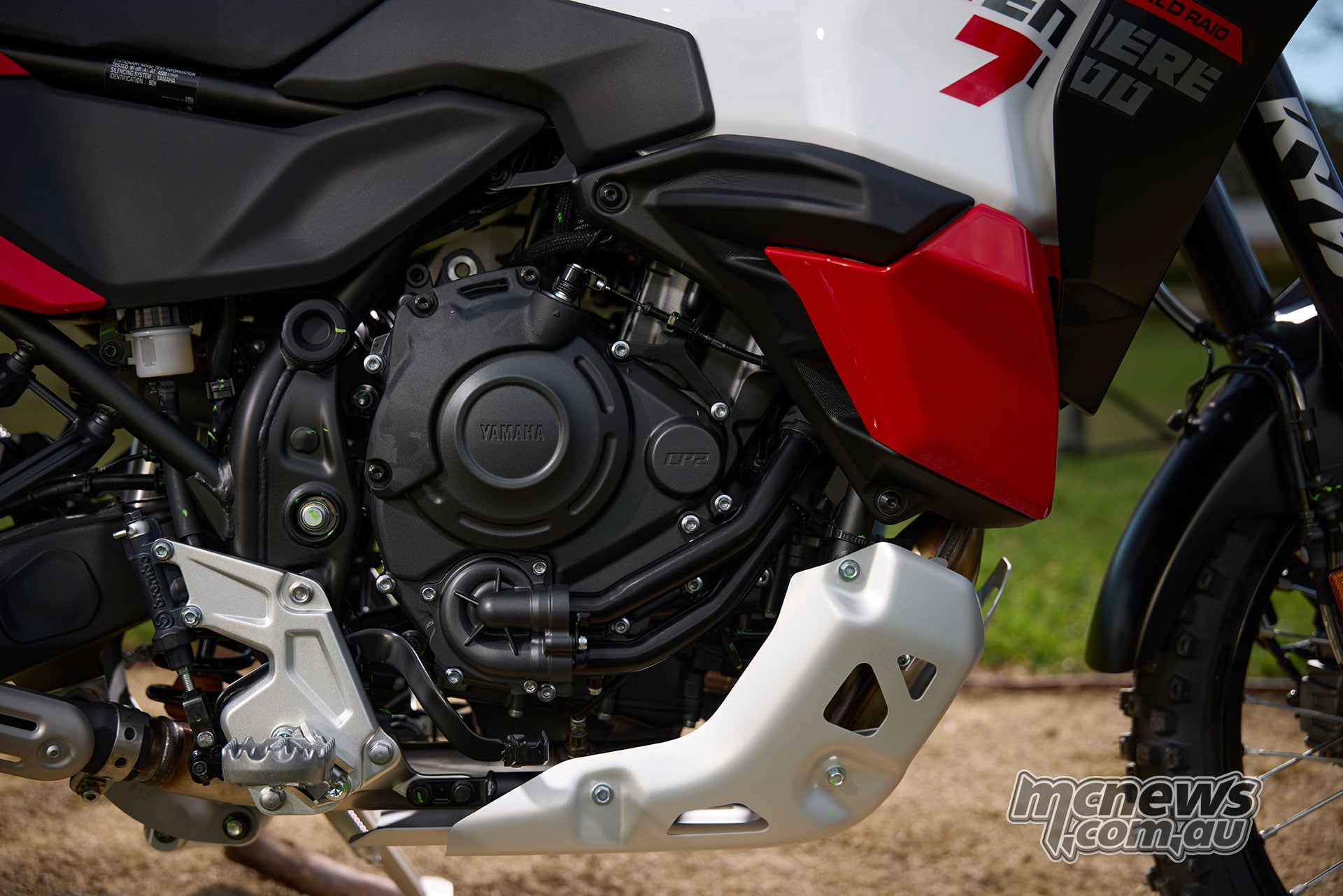
The overall weight also has an impact on performance over the standard T7. Don’t get me wrong: the little CP2 parallel twin is one of my favourites. A gem of a motor. Outrageously smooth and usable, and full of confidence-inspiring manners. But pushing 220 kilos along the road didn’t feel like its strongest suit. The World Raid is 12 kg heavier than the current standard T7 on Yamaha’s wet-weight figures, albeit with a fair chunk of that difference accounted for by the extra fuel.
And then we hit the first 4WD track.
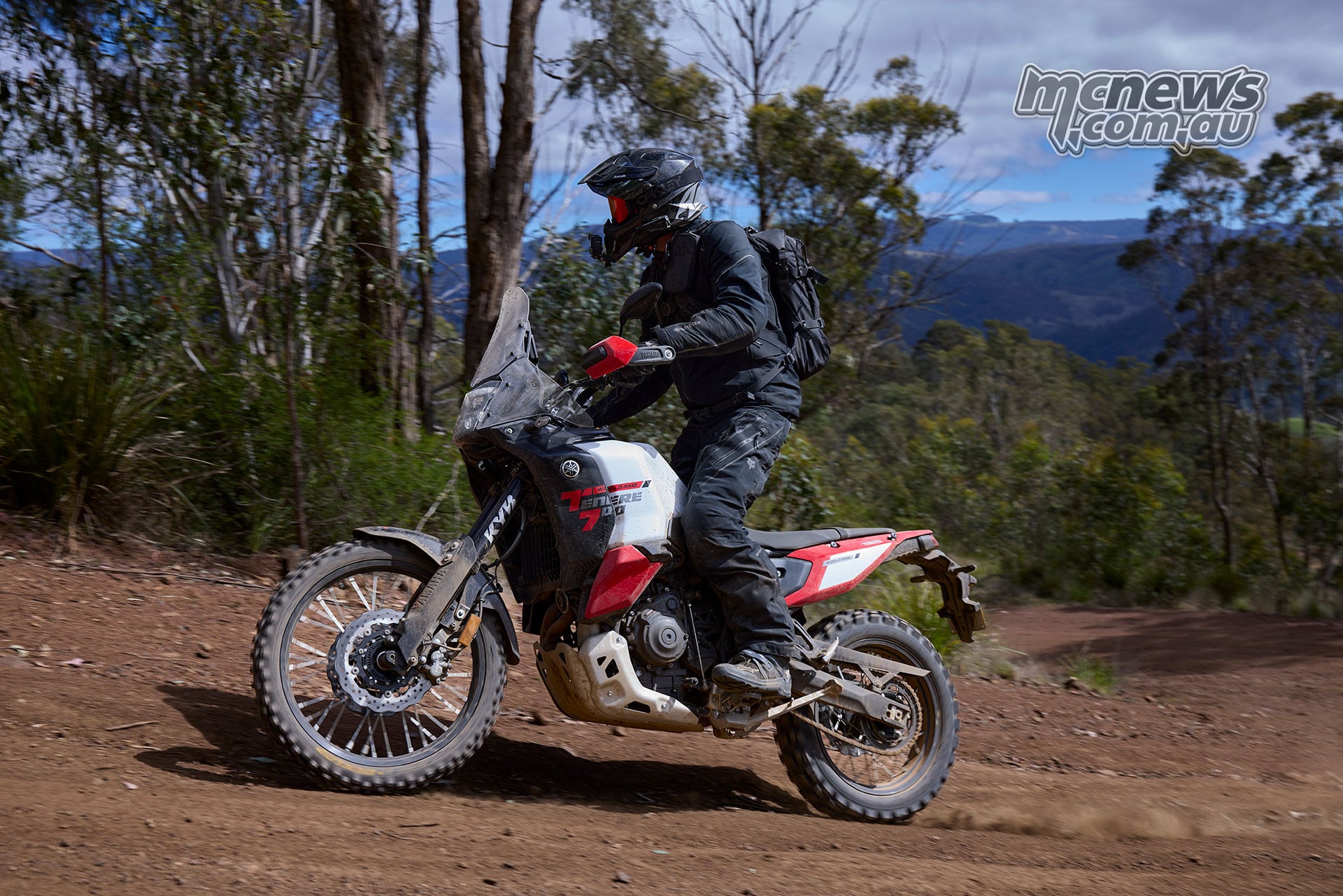
It was only a connecting trail, perhaps a kilometre or two long, but it was an eye-opener. Where the bike had felt a little heavy and lazy at highway speeds, it made sense on the trail. Second and third gear, picking lines, popping over tree roots and little whoops. It was immediately clear that this was the brief.
That new KYB suspension is exceptional.
It wasn’t a difficult trail. Nothing you wouldn’t take a road-tyred Prado over. Yet by the end of it, I had a completely different opinion of the bike. At those speeds, without cutting loose, it felt like a big trail bike.
“Holy shit, how good was it in that stuff?” may have come out of my mouth.
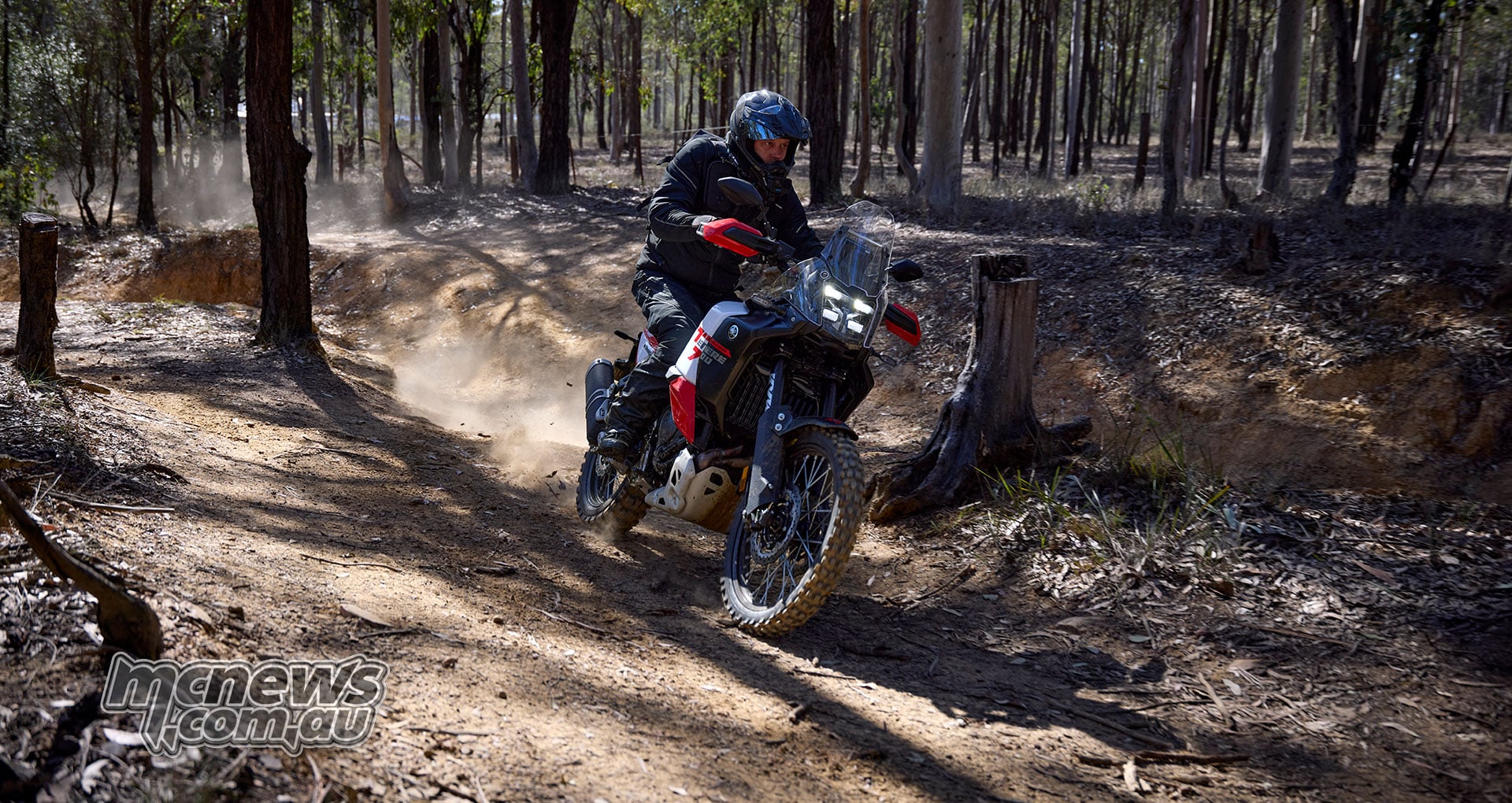
The best standard Ténéré suspension I’ve ridden
The new KYB setup is a substantial step forward. I didn’t touch the clickers because I didn’t feel the need. Small-bump response was excellent, with proper support through the middle of the stroke.
The front end impressed me immediately, but by the end of the launch I realised the rear shock deserved just as much praise in both the remarkable way it finds traction as well as the way it keeps everything composed.
On the supplied settings, I could still bottom it out if I got a little enthusiastic over water bars, but the base setup was very good. Plenty of adjustment lets you tailor it to rider weight and use. Even with another 20 kilos or so of luggage for the journey home, I didn’t feel compelled to change the rear preload.
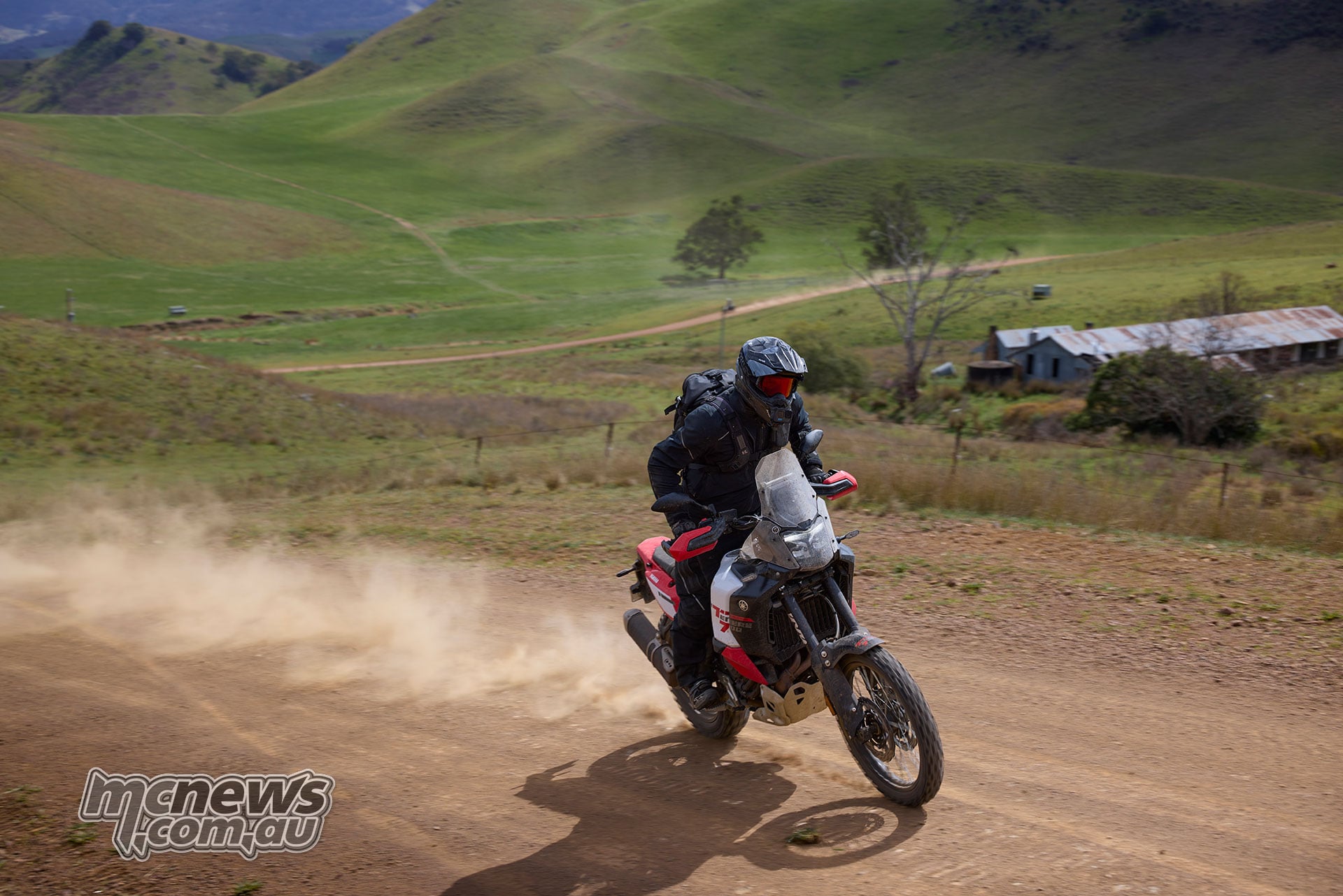
I did wonder aloud whether Yamaha might offer the World Raid suspension as an upgrade for standard T7 owners. Whether that would make financial sense is another question, especially once you consider the other equipment bundled into the World Raid’s $5,550 premium.
The slightly mischievous thought was to buy a World Raid and fit a smaller tank if you didn’t need all that range. Then you’d keep the suspension and electronics. Whether anyone will make that a practical proposition remains to be seen.
The electronics hit the mark too
Throttle maps, adjustable traction and slide control, and selectable ABS settings? Yes please.
Two days gave me ample opportunity to try different combinations, and the changes were noticeable. Two setups stood out for me.
On faster, flowing gravel where I wanted to get a little frisky and steer with the rear, I preferred Sport mode with traction and slide control switched off. Sport sharpens the throttle response without making it overly aggressive, and the bike responds better to enthusiastic riding.
You still have to mean it to get the rear stepping sideways, because that shock finds so much grip, but it will happily drift if you do your part and get your weight over the front.
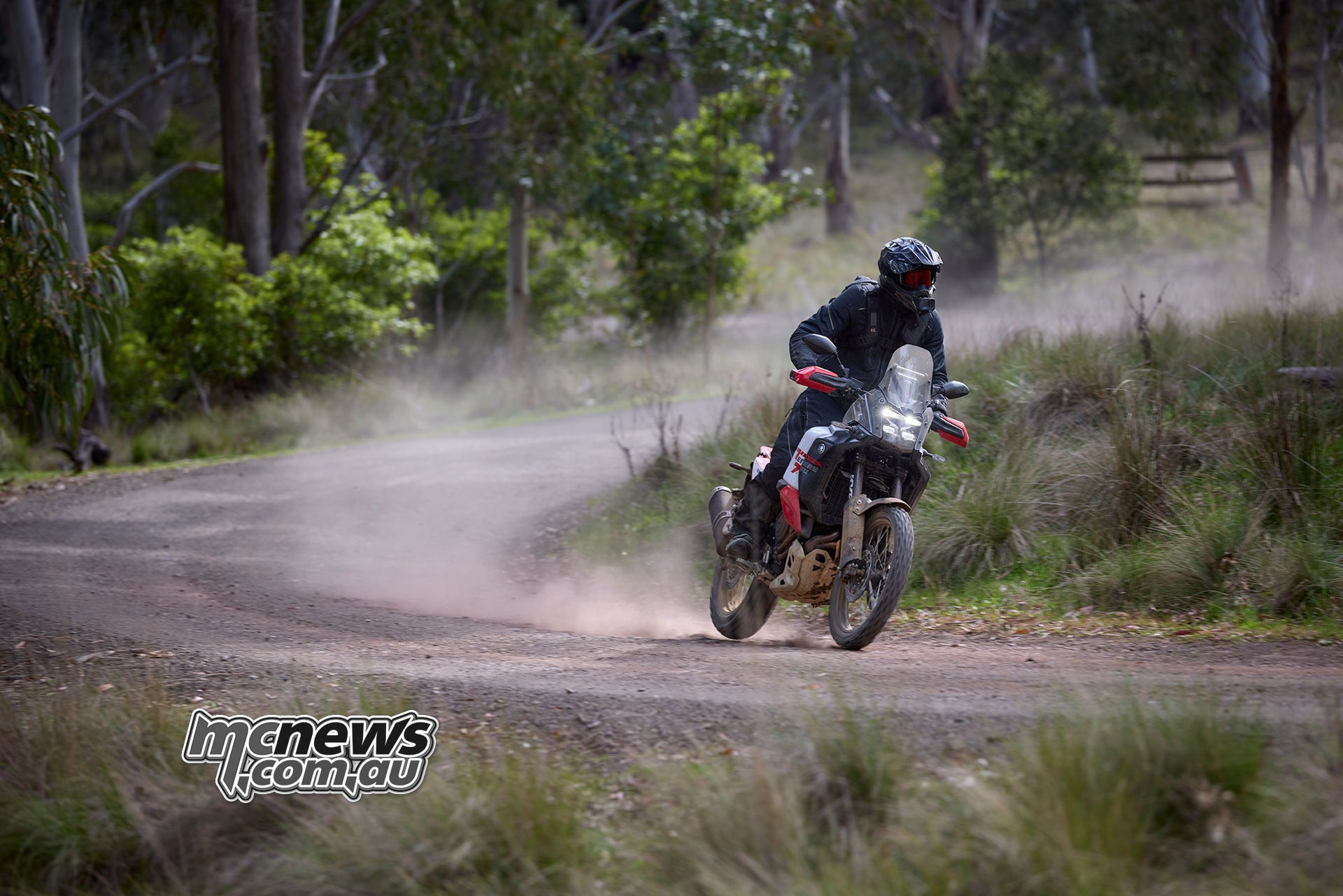
For pretty much everything else, I preferred Explorer mode with traction and slide control in their Off Road settings. The gentler throttle response works well for everyday tarmac cruising, as well as slippery or tricky terrain. I found it easy to manage the rear tyre without unexpected spin.
The Street settings were too restrictive for my tastes off-road. In truth, I’d have liked another step between the Off Road slide-control setting and switching it off altogether.
Negatives? You need to stop to switch the relevant systems off, and the ABS reverting to an active setting after cycling the ignition remains an annoyance.
I also found changing the assistance settings more fiddly and time-consuming than I’d like. Yamaha provides a Mode button and joystick, but I still wanted fewer menu steps and quicker access to the combinations I actually used. In the end, I left the bike in that Explorer/Off Road setup for the entire return journey.
The dash itself deserves particular praise. It is extremely easy to read, with clear layouts and pretty much everything I wanted to see.
I do find the portrait orientation interesting, though, because it crowds the space for a separate GPS on the mounting rail above. I’d like the ability to slide the dash slightly to one side and mount a phone vertically beside it. That seems an obvious option to me.
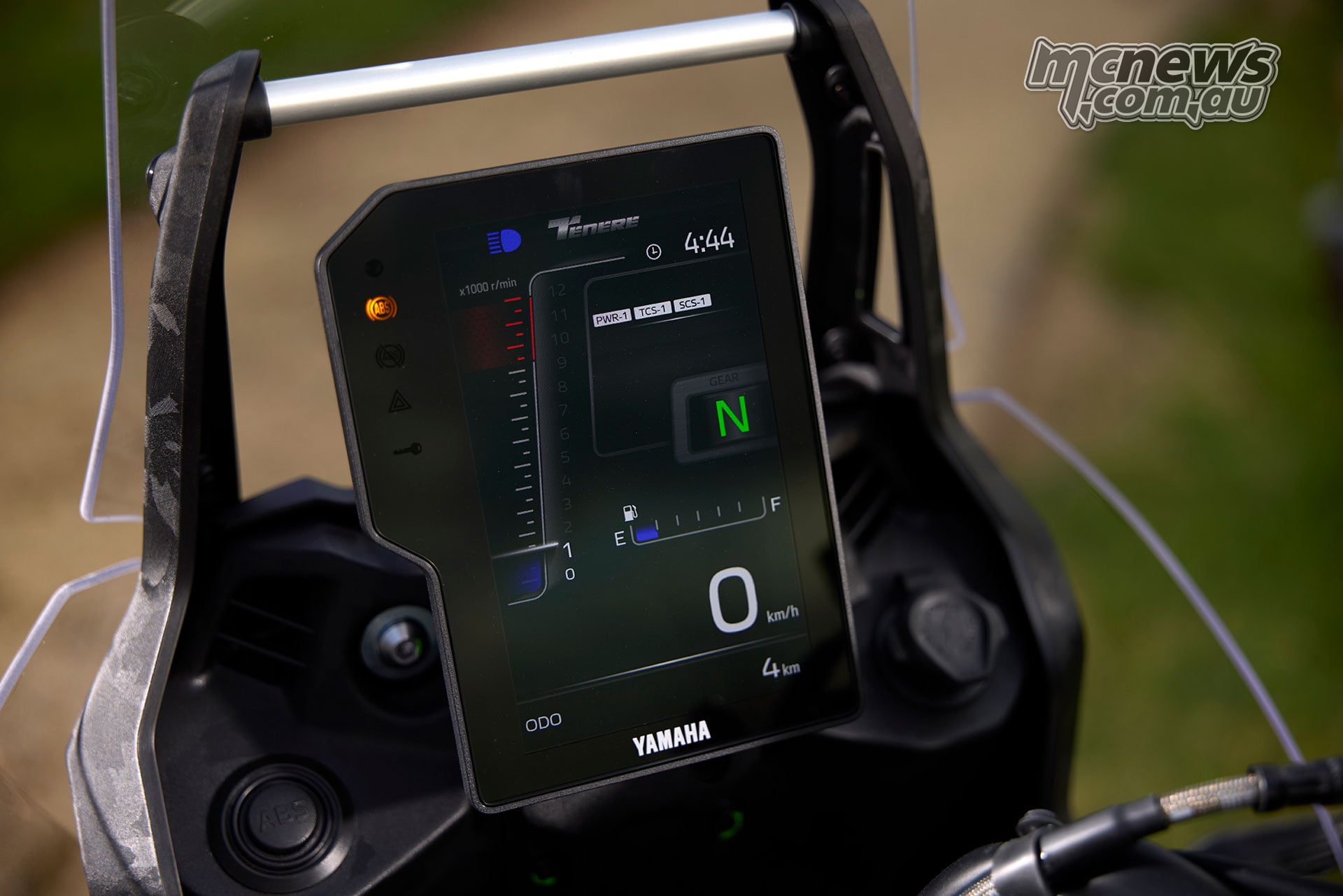
One more callout goes to the Brembo front brakes, now supplied through braided lines. Excellent feel, great power and well matched to the job.
The launch wasn’t enough, so I rode it home. The long way.
Getting a feel for a bike on a launch is one thing. I maintain that nothing compares with living with it in the real world for at least a few days. So we managed to keep hold of my bike, and I set off home the following morning.
From Cessnock, I took in gravel tracks including Broken Back and Sawmill, working my way through Wollombi and eventually to Wisemans Ferry. Then I legged it south around Sydney to Nowra, on towards Batemans Bay and down the coast through Narooma, before turning into the first motel I found at Bermagui. A little over 10 hours in the saddle.
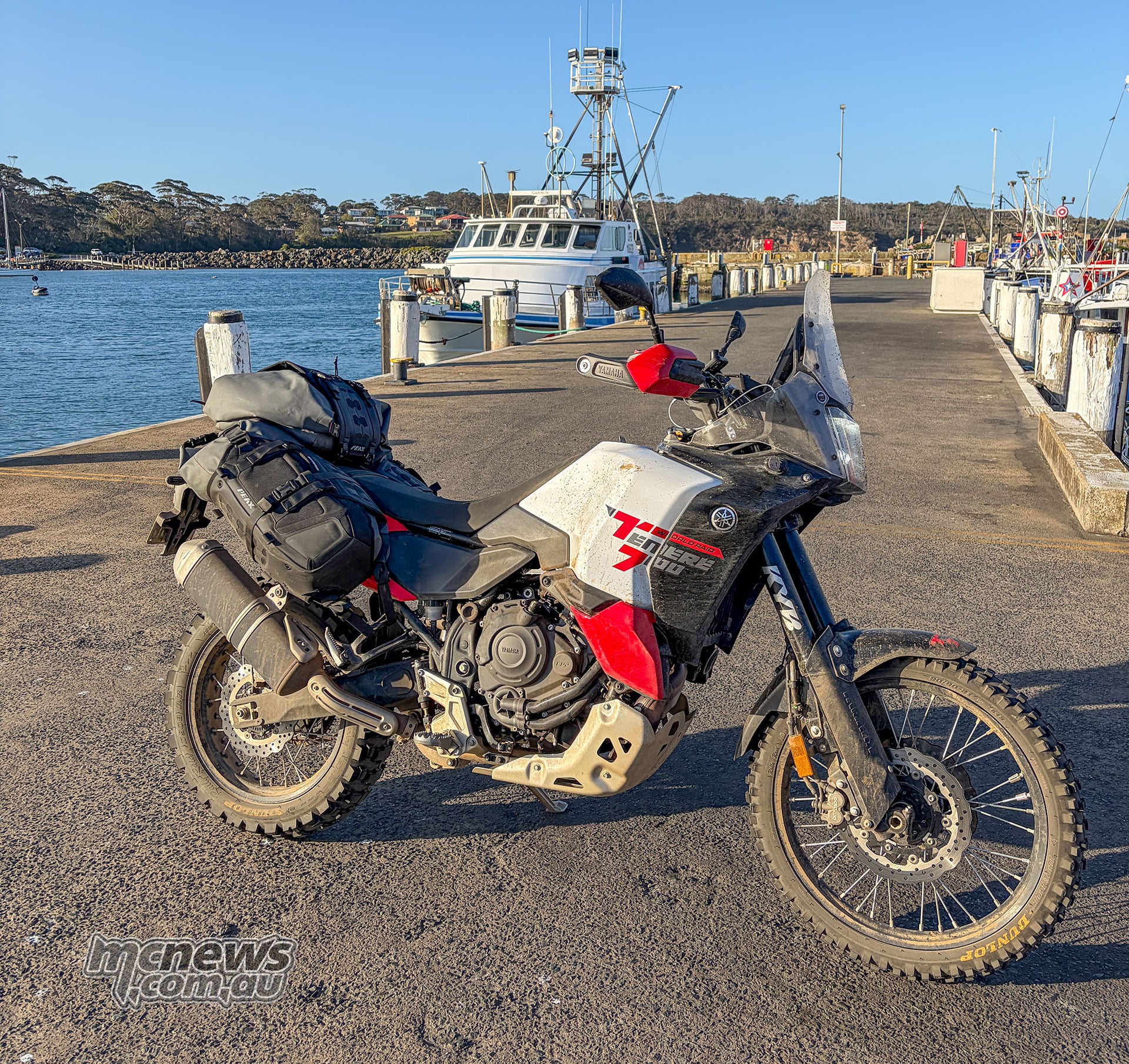
Day two was a big one. From Bermagui I headed inland to Bombala, down to Bonang and out to the iconic McKillops Bridge. Then came Suggan Buggan, a run north to Jindabyne for coffee, and another change of direction towards Khancoban before a last-light dash into Albury.
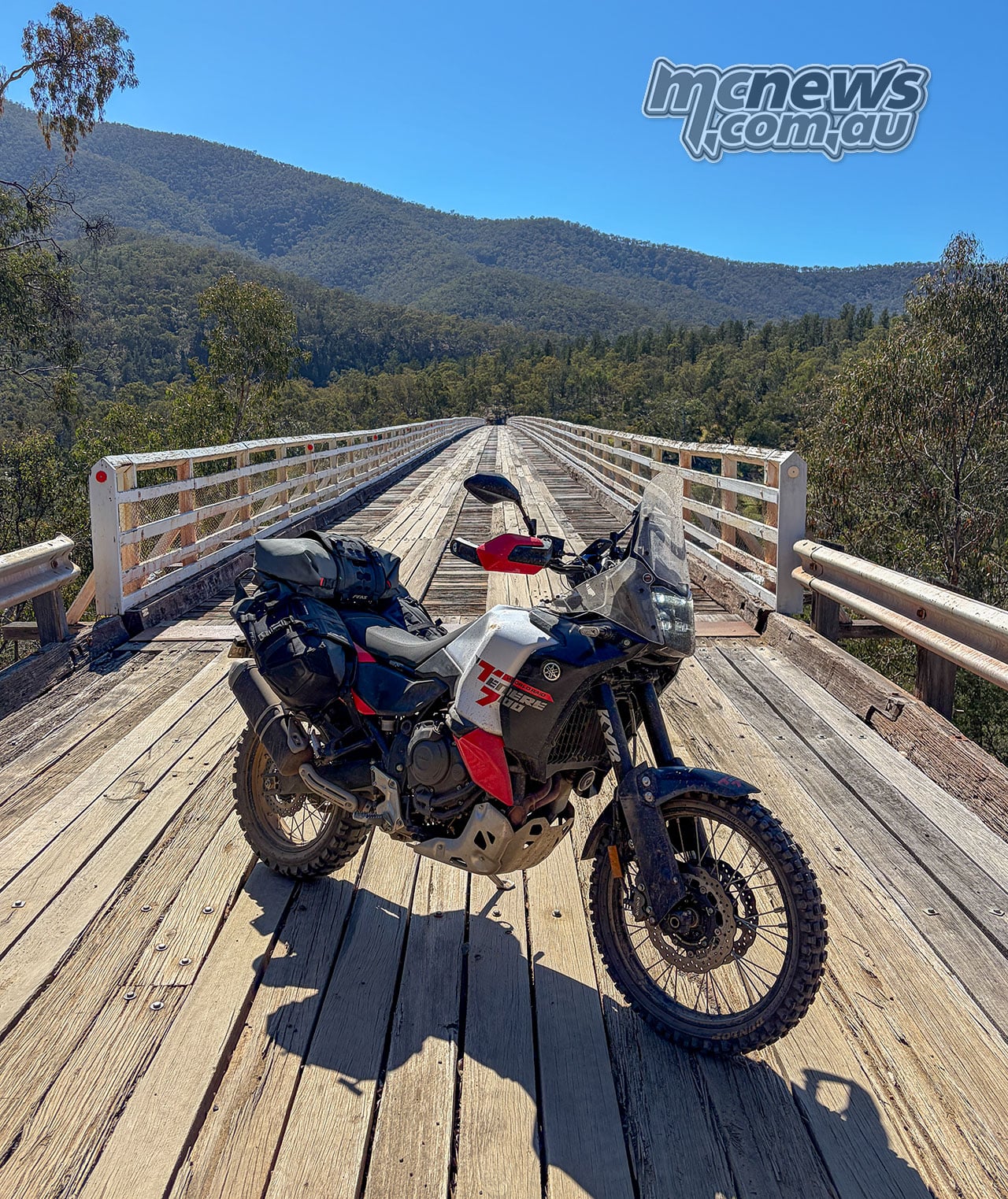
The gravel stretches around McKillops Bridge seemed to go on forever. Practically deserted, too. I think I saw three cars in about three hours.
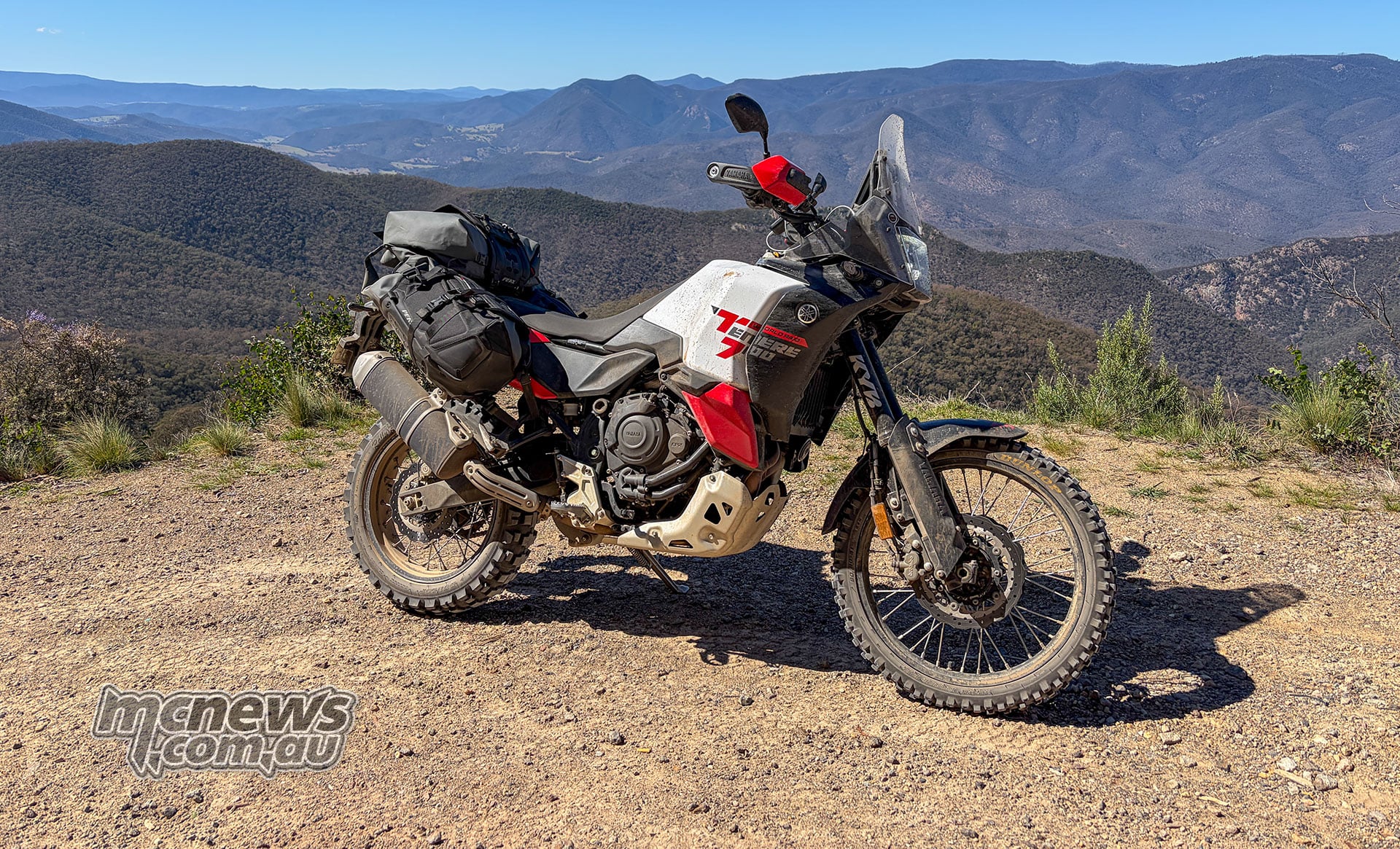
The final stretch took me down the Hume from Albury, through Melbourne and home to Anglesea. Including the launch, I’d racked up close to 3000 km in four and a half days.
Some incredible roads, with too many highlights to mention. I must get back to Narooma. That looked stunning. And I’ve got a hankering to do the Khancoban-to-Jindabyne run again on something a little more road-focused.
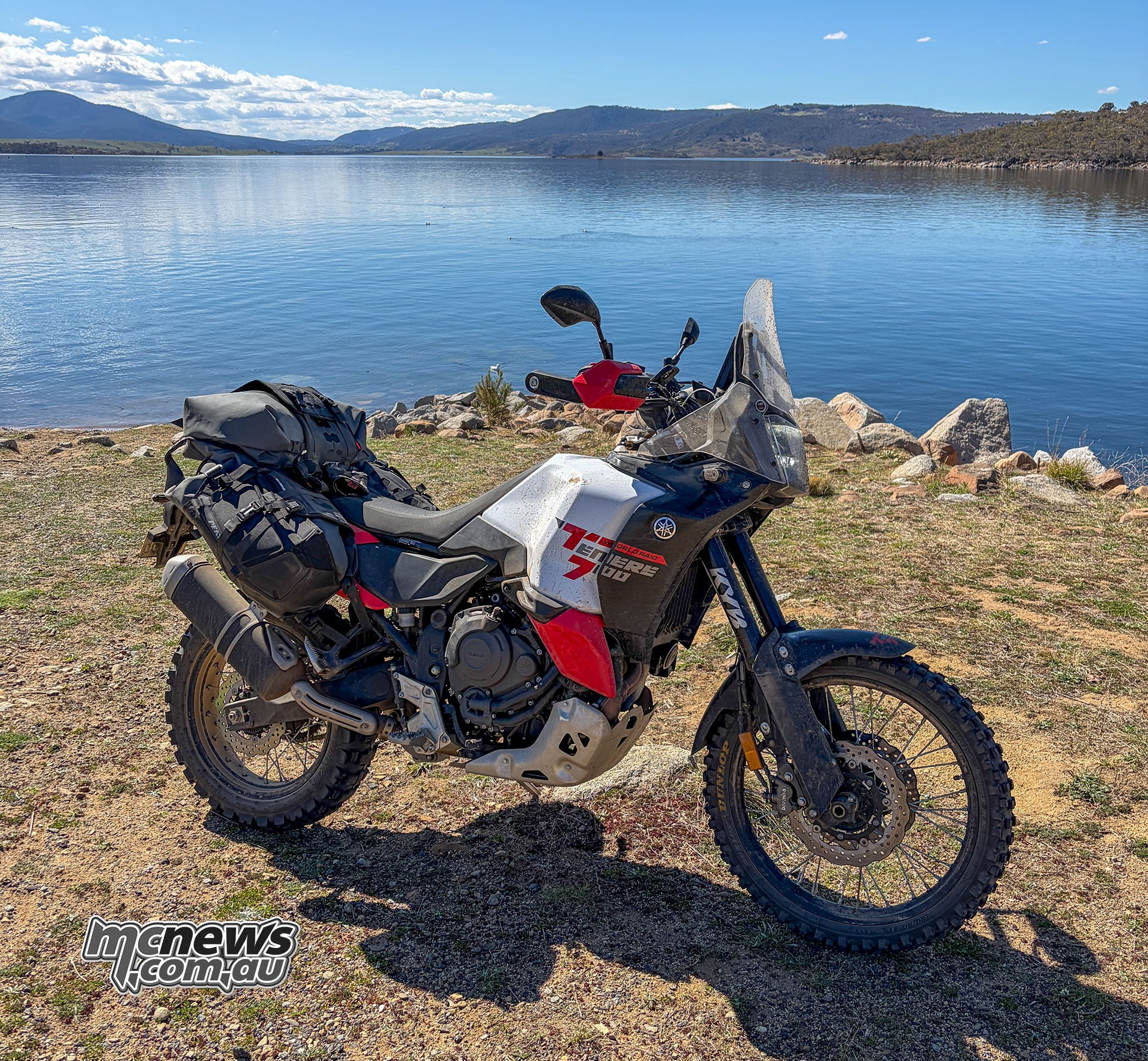
So what did I learn?
Clearly, you can clock up big miles on the World Raid. The ergonomics work, and it’s an easy place to sit and watch the world go by for hours on end. It is also surprisingly happy picking along a trail in second through fourth gear. The KYB suspension is terrific, and the electronics are worthwhile.
But I kept coming back to three numbers: $27,349, 220 kg and around 72 hp.
At $27,349 ride-away, this is a long way from the relatively affordable, simple T7 that arrived in 2019. Start ticking boxes for an optional quickshifter, heated grips and upgraded protection, and a $30,000 spend is easy to imagine. There is a lot of competition at that price point. A lot.
Then there’s the weight. 220 hp is not light. Even more so for something in this capacity. Although the balance feels better than the early T7’s, the World Raid still feels a little top-heavy to me. Some will feel this more than others, depending on what ‘other’ bikes they have been on recently. In isolation, it’s ok. But stepping from this onto one of the handling benchmarks in the category will highlight the difference fairly quickly.
And the World Raid still has “only” around 72 hp. Yamaha’s figure is 54 kW, or approximately 72.4 hp, with 68 Nm of torque.
After sitting down to dinner with Yamaha’s Sean Goldhawk and Australian motocross royalty Stephen Gall, both firmly convinced that it didn’t need more power, I spent a lot of time thinking about that. When a multiple Mr Motocross and Finke winner shares an opinion, you listen.
Admittedly, both Sean and Stephen have blood that runs blue. But somewhere between Bombala and Bonang, I had an epiphany.
And that is: It depends.
If you’re coming from motocross, enduro or trail bikes and sizing up, the World Raid’s accessible power and easy manners may be exactly what you’re after. If you’re stepping down from a more powerful road bike or full-sized adventure machine, you might miss the extra urge, especially on the highway. Your reference point shapes your opinion of the power output you want.
It also depends on how highly you value Yamaha’s dealer network and parts support. For plenty of people, that plays a huge part in the purchasing consideration. And is arguably one of the T7’s strengths.
Personally, I think a flagship Ténéré carrying a $5,550 premium and another 12 kg on the wet-weight figures could do with a bump in power. The chassis and electronics have moved forward substantially. I’d like the engine’s outright performance to take a step as well.
That’s my take. On a trail, the new World Raid makes a very convincing case for itself. After nearly 3000 km, I still wanted a little more punch for the money.
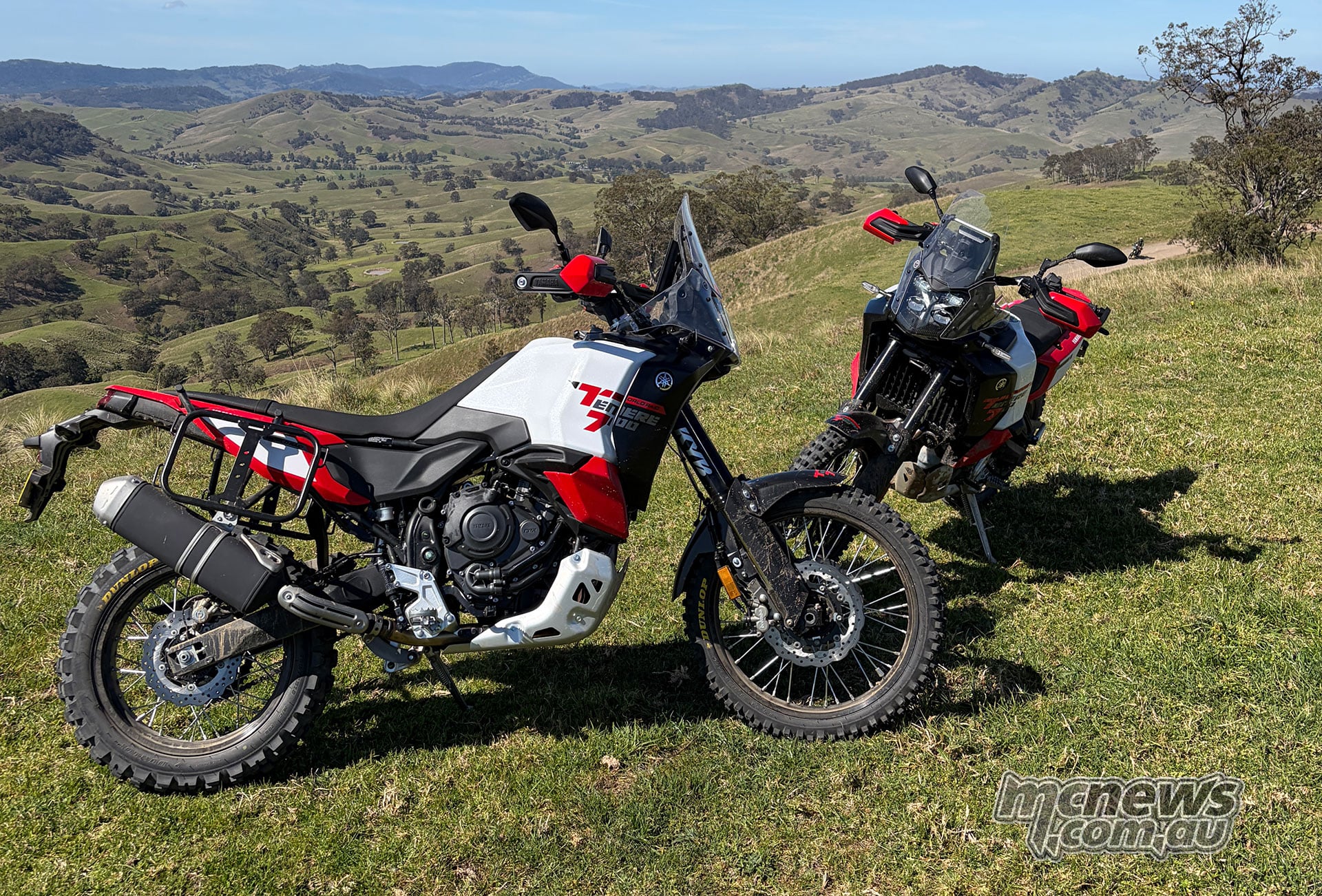
World Raid hits
- The best standard Ténéré suspension I’ve ridden. The new 46 mm KYB setup is excellent.
- Useful traction and slide control, plus cruise control. Finally.
- Long-distance comfort backed up by proper days in the saddle, with 23 litres of fuel capacity.
- The CP2 engine remains smooth, friendly and confidence-inspiring.
World Raid misses
- Another 12 kg on the wet-weight figures, with the same peak power as the standard T7.
- At this price point, it has plenty of well-credentialed competition
- It still feels a little top-heavy to me, particularly with plenty of fuel aboard.
- Changing the rider-aid settings could be more straightforward.
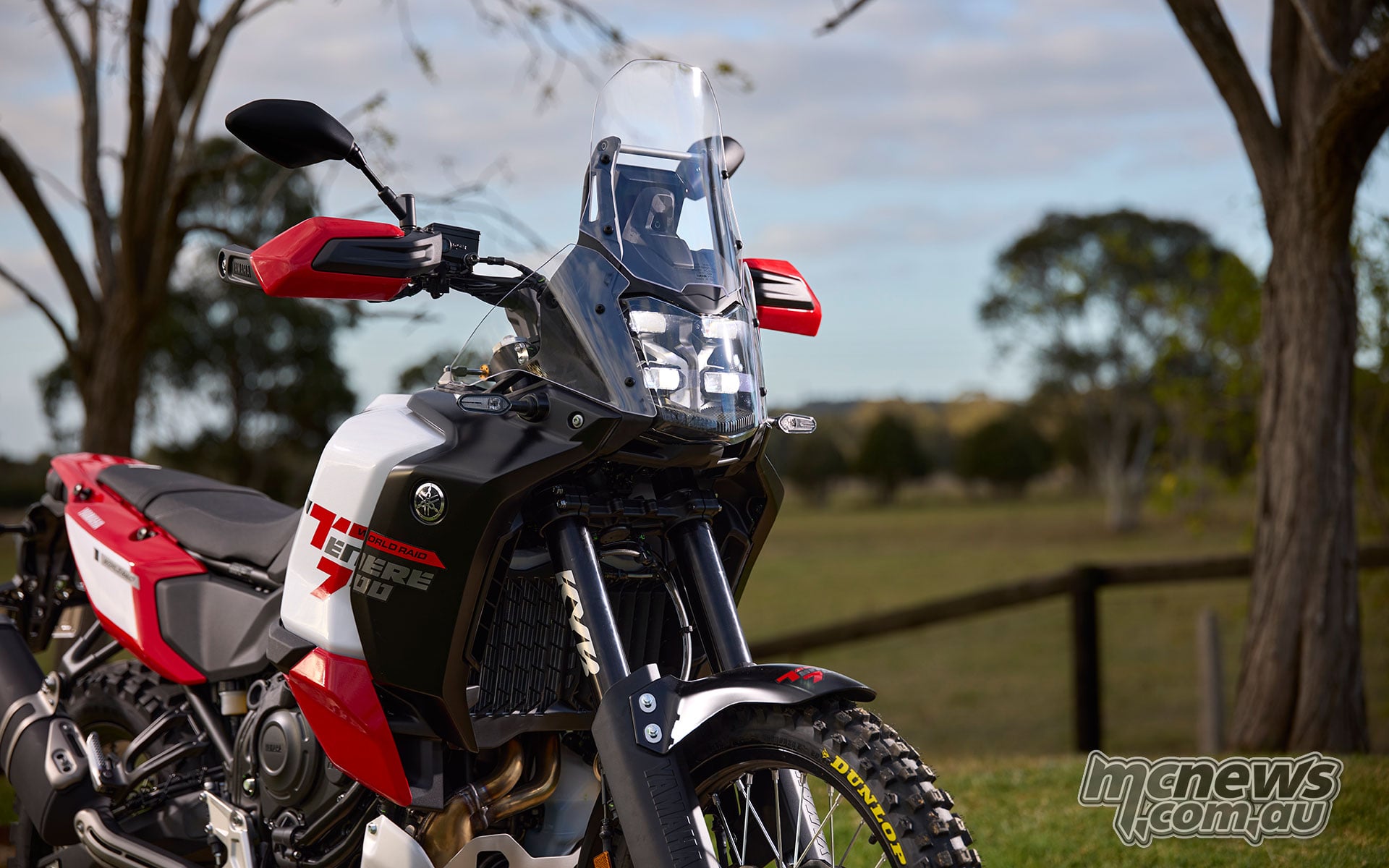
One more thing. I’m reliably told a full exhaust system, airbox changes and a remap can liberate around 20 per cent more power. Apply that claimed gain to the standard output, and you’re talking roughly 87 hp. That certainly gets my attention, but at around $4000 for the exercise, plus the other accessories you might want, that’s getting up there on the money front. But it is only money, right…
| 2026 Yamaha Ténéré 700 World Raid Specifications | |
|---|---|
| Engine type | Liquid-cooled, four-stroke, DOHC parallel twin; four valves per cylinder |
| Displacement | 689 cc |
| Maximum power | 54 kW (73.4 PS / approx. 72.4 hp) at 9000 rpm |
| Maximum torque | 68 Nm at 6500 rpm |
| Bore × stroke | 80.0 × 68.6 mm |
| Compression ratio | 11.5:1 |
| Lubrication system | Wet sump |
| Fuel management | Fuel injection, YCC-T ride-by-wire |
| Ignition | TCI |
| Starter system | Electric |
| Fuel tank capacity | 23 litres, twin aluminium tanks |
| Transmission | Constant-mesh six-speed |
| Final drive | Chain |
| Frame type | Double cradle steel tube |
| Front suspension | Fully adjustable 46 mm KYB USD fork, Kashima coated; 230 mm travel |
| Rear suspension | Fully adjustable KYB Monocross shock with linkage; 220 mm wheel travel |
| Front brakes | Twin 282 mm discs, Brembo calipers, braided lines, switchable ABS |
| Rear brakes | Single 245 mm disc, switchable ABS |
| Front tyre | Pirelli Scorpion Rally STR, 90/90-21 M/C 54V; tube fitted |
| Rear tyre | Pirelli Scorpion Rally STR, 150/70 R18 M/C 70V; tube fitted |
| Length | 2370 mm |
| Width | 935 mm |
| Height | 1495 mm |
| Seat height | 890 mm |
| Wheelbase | 1595 mm |
| Ground clearance | 240 mm |
| Wet weight | 220 kg, including oil and a full fuel load |
| Steering damper | 16-step adjustable |
| Display | 6.3-inch colour TFT |
| Rider aids | Six-axis IMU, traction control, slide control, ABS/Brake Control, Sport and Explorer maps |
| Cruise control | Standard, with speed limiter |
| Quickshifter | Optional, up/down |
| Colours | Redline White, Midnight Black |
| Australian price | $27,349 ride-away |