

2026 BMW Motorrad International GS Trophy Romania
From the wide-open spaces of Mongolia in 2018 to the New Zealand adventure of 2020, MCNews has followed the BMW Motorrad International GS Trophy through some spectacular country. Subsequent editions took the event to Albania in 2022 and Namibia in 2024, before Romania’s Carpathian Mountains supplied the setting for the tenth edition in 2026.
And Romania made them work for it. Six days, approximately 1500 kilometres, cold mornings, wet camps and a succession of steep climbs and awkward descents culminated in a rain-affected finale, with Australia’s women claiming third overall and the men finishing just outside the podium in fourth.
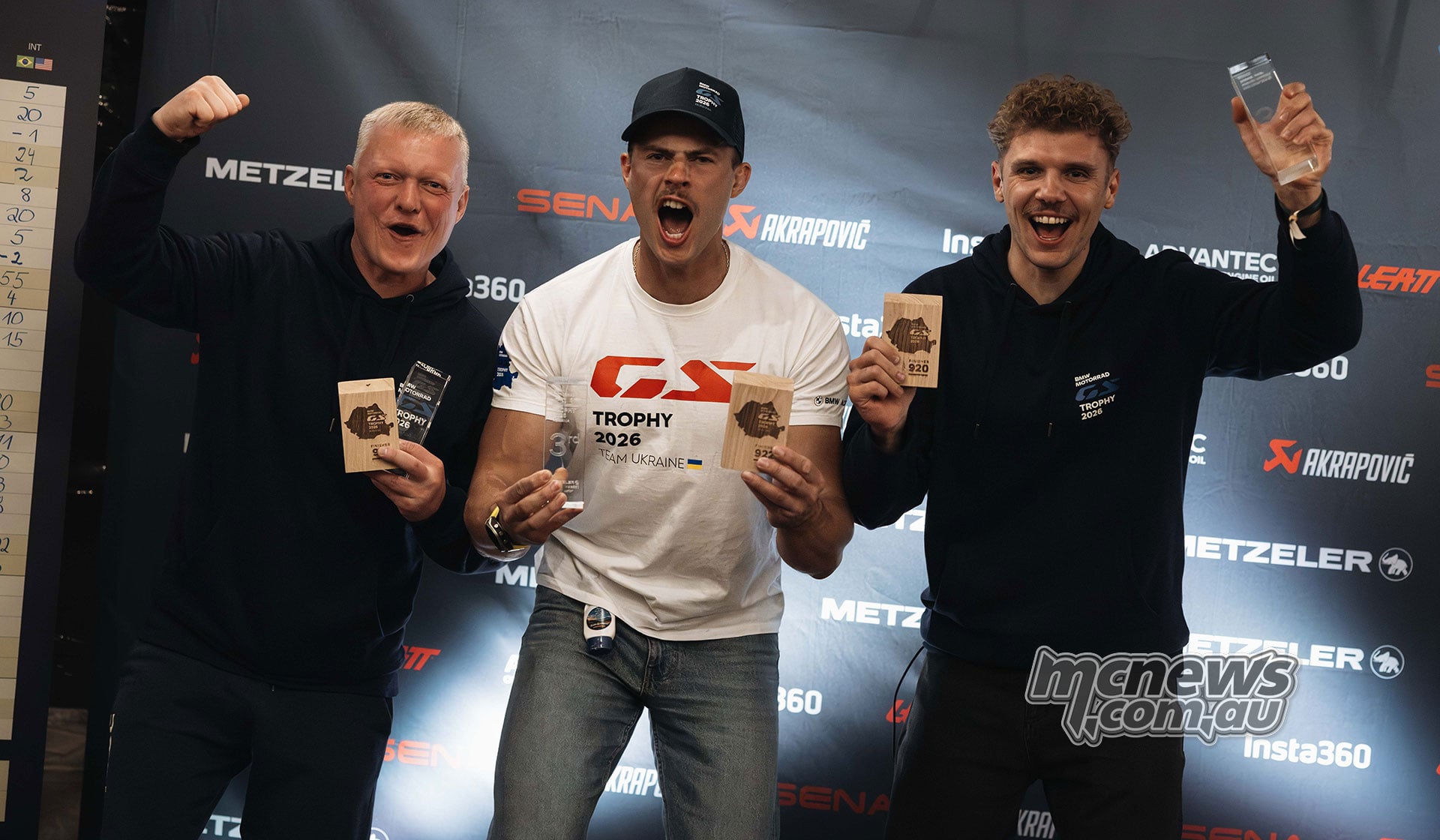
Germany won the men’s competition, while the European pairing of Chrissie Harcourt and Anja Filak took the women’s honours. Both titles remained in play heading into the final day, despite the much larger margins in the completed standings.
The terrain gave the event a very different character from its previous outing in Namibia. Narrow forest trails, washed-out tracks, slippery grass and exposed mountain paths tested the competitors aboard BMW’s R 12 G/S, with roughly half the distance covered off-road.
Australian women third, men six points from the podium
Australia finished the women’s competition on 164 points, five clear of China and 18 ahead of Germany. Team Europe topped the standings with 200, followed by Team International on 184.
In the men’s competition, Australia’s 138 points left the team six behind third-placed Ukraine and nine behind runner-up Europe. Japan was only three points further back, underlining how closely the positions behind the winning Germans were contested.
Germany’s Fabian Fenner, Norman Pleissner and Florian Thomann finished on 203 points, eventually stretching their advantage over Europe to 56. That final margin disguises a much tighter contest during the week: Germany had entered the last day with an 11-point lead.
Back to Basics, with plenty of work to do
The 2026 theme was “Back to Basics”, reflected in the choice of the R 12 G/S and an event that placed a premium on bike control, navigation and cooperation. Time mattered in the special tests, but so did accuracy, keeping feet on the pegs and working effectively with team-mates.
As detailed in our look at the GS Trophy Competition Bike, the R 12 G/S followed the R 1300 GS used in Namibia and the R 1250 GS ridden in Albania. The air/oil-cooled 1170 cc boxer was equipped with 21-inch front and 18-inch rear wheels, off-road protection and the Enduro Package Pro.
Romania put that equipment to use. For the first three days, each rider kept the teams moving for 11 to 12 hours, making fatigue, drying gear, and finding time to recover part of the challenge.
Day One – Straight into a 12-hour test
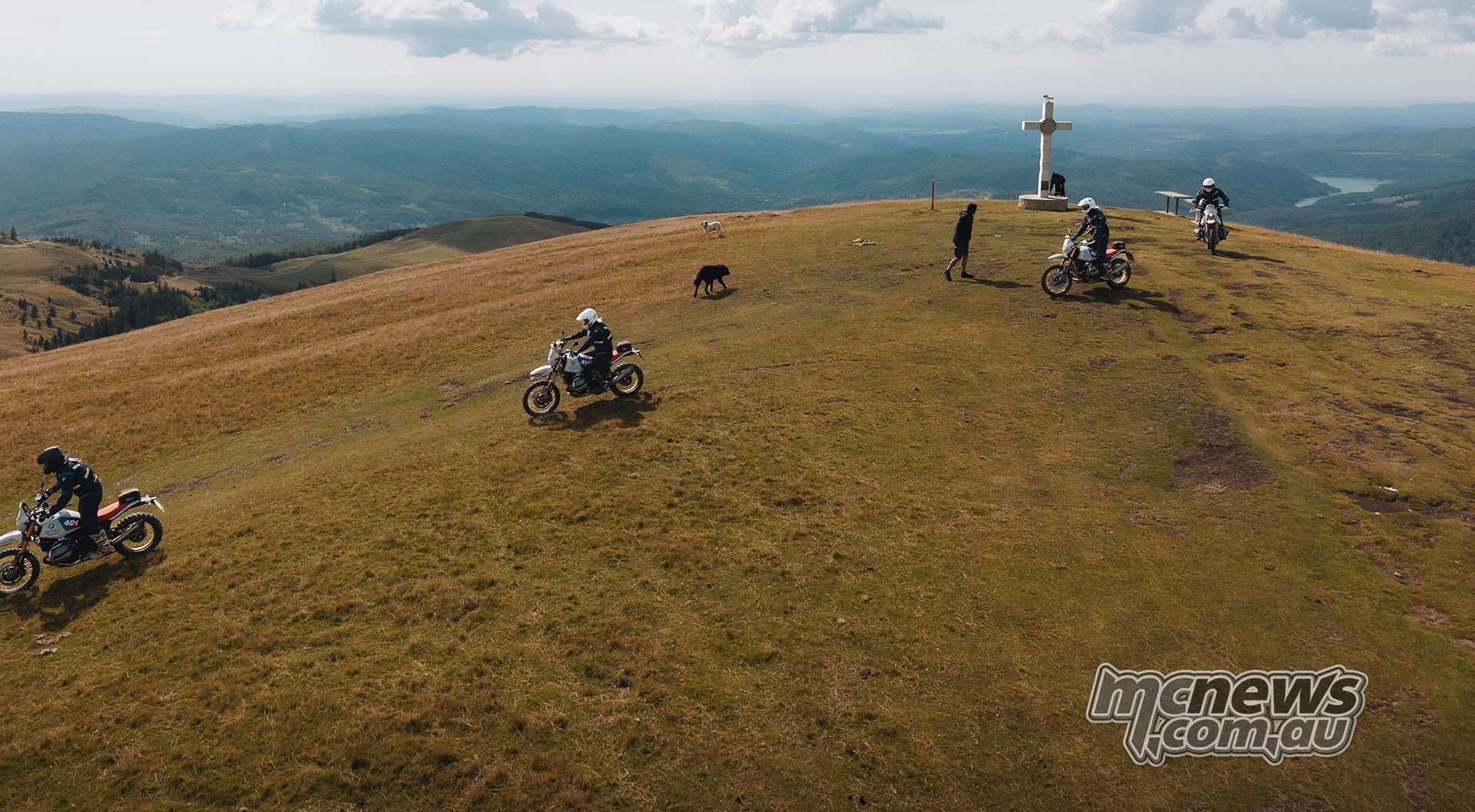
Any notion of a gentle introduction disappeared on day one. The Welcome Trial took place on an exposed mountain plateau, where wet grass, off-camber slopes and a steep ascent and descent immediately tested balance and line choice.
Putting a foot down, stopping or straying outside the marked course attracted penalties, while the clock added another consideration. The challenge was carrying enough momentum without losing control.
The route covered 310 kilometres, including around 150 kilometres of unsealed mountain and forest tracks. The Akrapovič Riverbed Challenge added embankments, soft river deposits and fine gravel to the mix.
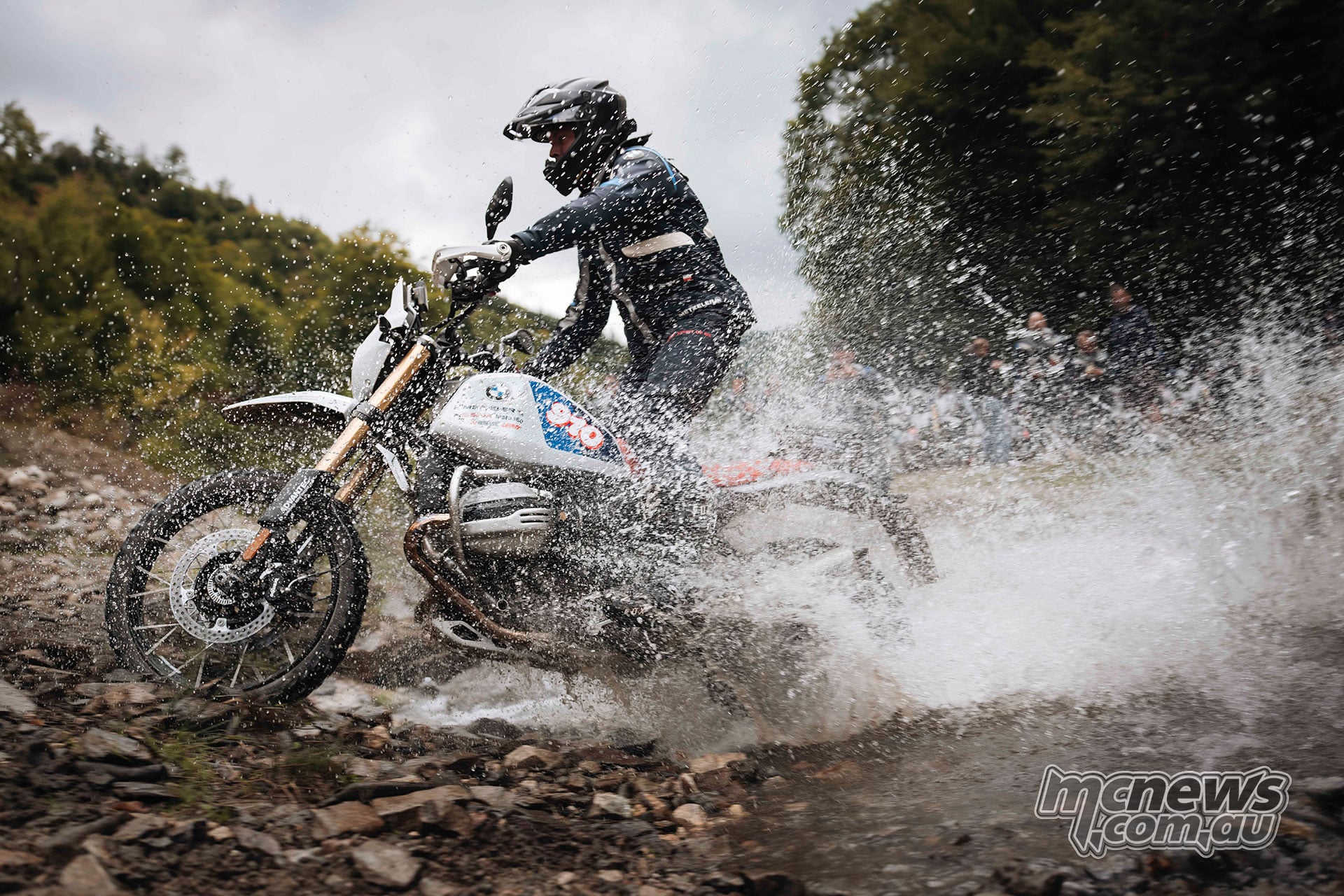
By late afternoon, there were still 120 kilometres to go, around half of them on technical tracks. The teams finally reached Sighișoara shortly after 6.30 pm, almost 12 hours after setting out.
Day Two – Six degrees and thick fog
The next morning began at 6°C in dense fog, followed by more than 11 hours of riding through forest sections littered with sand, mud, tight hairpins and deep ruts.
Three consecutive climbs provided one of the day’s sternest examinations. The reward at the top was a view across the Carpathians towards the 22.5-metre Sacred Heart of Jesus statue.
Near Valea Zălanului, the route mixed flowing forest tracks with river crossings and alternating stretches of gravel and grass across the floodplain. Riders repeatedly had to adjust to different surfaces and grip levels.
Day Three – Eight kilometres that demanded full attention
Day three delivered another cold, foggy start and another itinerary exceeding 300 kilometres, around 170 of them off-road. Damp kit and limited recovery time were becoming familiar companions.
The route climbed into the Tătaru Mountains and onto the high pastures of Tabla Buții, a historic ridge route that once marked a national border and later saw fighting during the First World War.
The key riding test was the eight-kilometre Metzeler Enduro Navigation Challenge near Zărnești. Following a GPS track through the forest sounds straightforward enough, until narrow single trails, easily missed junctions and steep embankments are added to the equation.
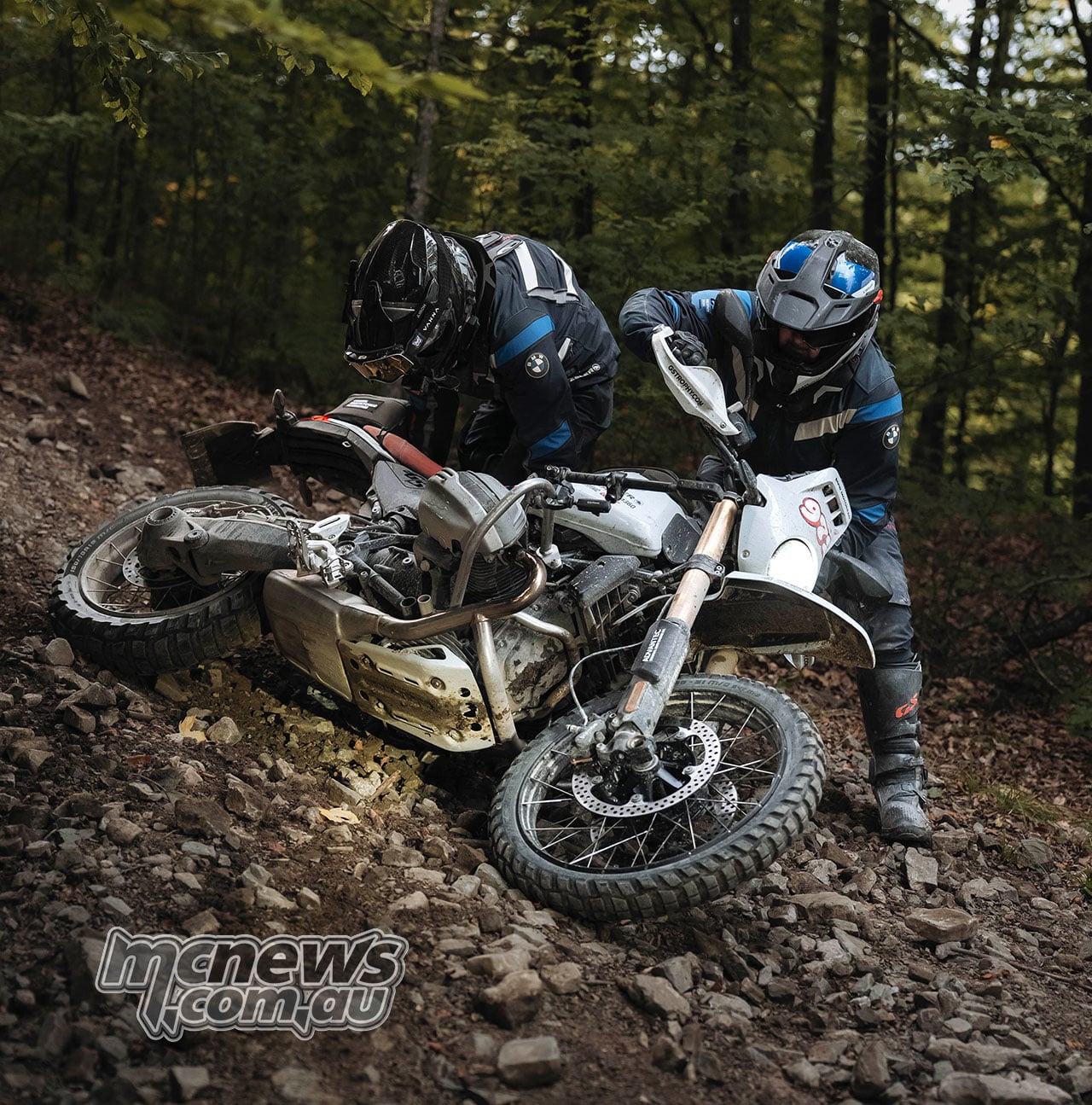
With fatigue accumulating, this ranked among the most technical sections of the entire event. Bran Castle, associated with the Dracula legend, provided a memorable landmark towards the end of the day.
Day Four – Shorter did not mean easier
After three very long days, a 180-kilometre itinerary offered some relief on paper. The riding still demanded plenty.
Sleep had already been interrupted by the guard dogs of nearby shepherds, which kept potential wildlife away from the campsite. A trial on a wet, steeply sloping grass field then ensured everyone was properly awake.
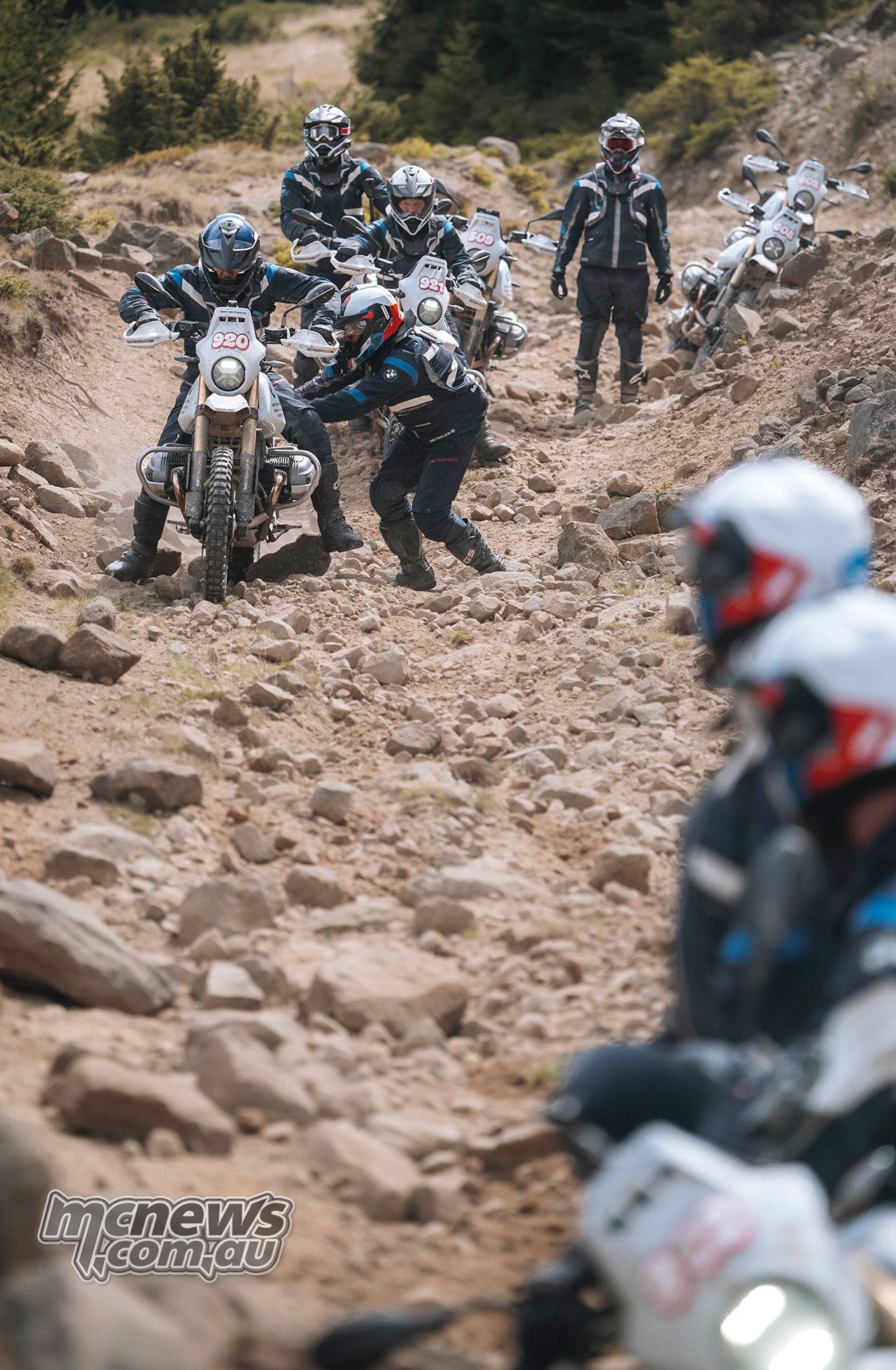
The route initially flowed towards the Transfăgărășan before two difficult off-road climbs raised the workload again. One demanded precise positioning within a confined space; the other followed a deeply rutted double track along the mountainside, where maintaining traction was critical.
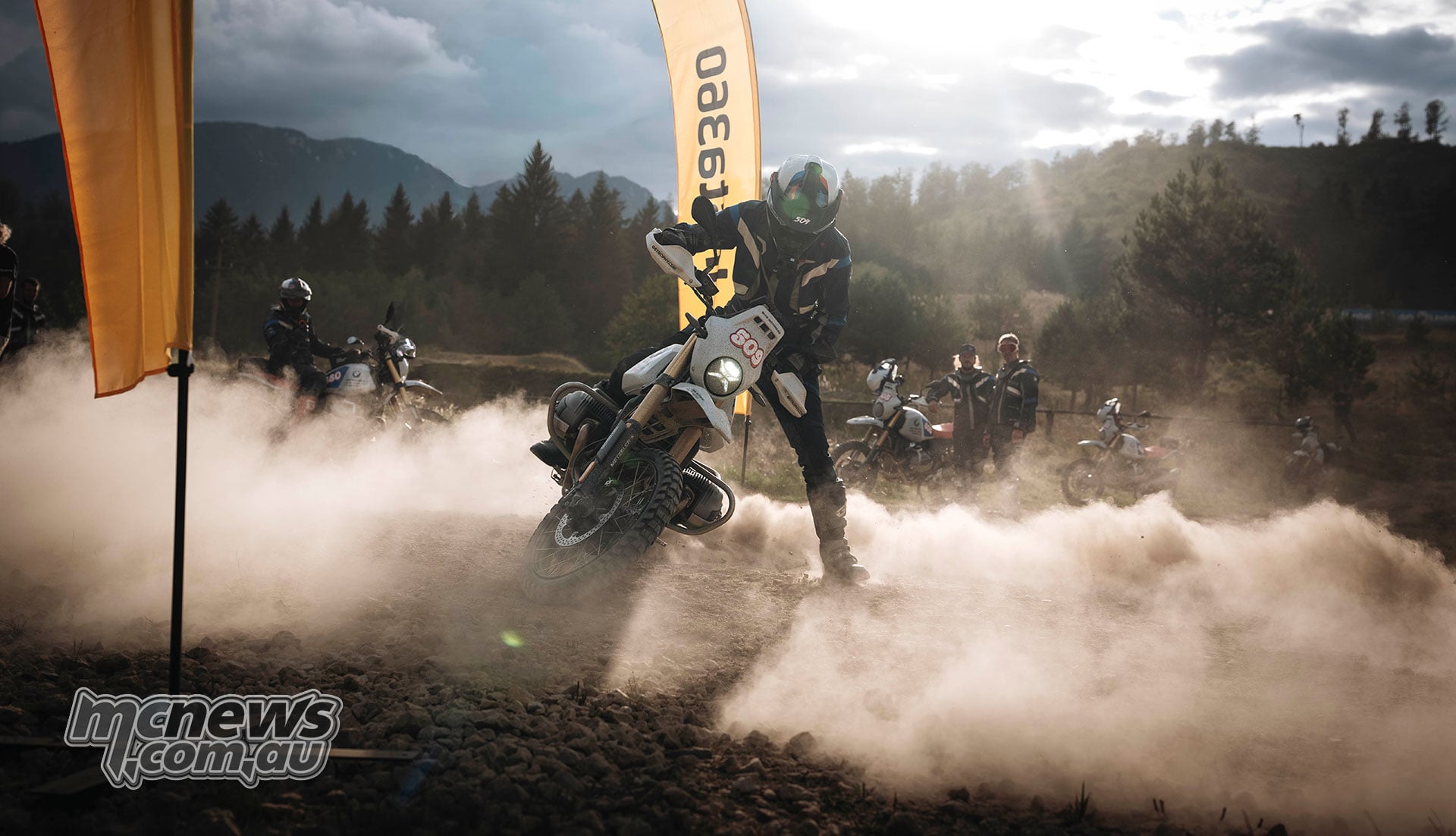
The Lotru Riding Challenge finished the competitive programme with a comparatively fast run through rock fields and deep fine gravel in the riverbed. By 4.30 pm the test was complete, finally leaving a little more time for recovery and catching up with the other teams.
Day Five – Strategica delivers the toughest mountain stage
The fifth day covered more than 300 kilometres back to base camp in Colțești, with the Strategica Mountain Road at its centre.
Built as a military road during the First World War, the high-altitude route combined spectacular scenery with steep, technical climbs. Failed attempts could require difficult recoveries, and reaching the top did not signal the end of the hard work.
The descent followed a narrow, exposed mountain trail that demanded absolute concentration. Further climbs and steep descents eventually brought the riders to the winding Transalpina, providing a spell on asphalt before more tracks led back towards camp.
Day Six – Rain raises the stakes for the finale
The final morning began with a 120-kilometre loop, evenly divided between sealed roads and unpaved tracks along mountain ridges.
Heavier rain then interrupted proceedings, leaving increasingly wet ground for the climbs leading to the last special test. Its two-part layout began with a faster passage across off-camber grass before tightening into a technical section of steep embankments and rock steps.
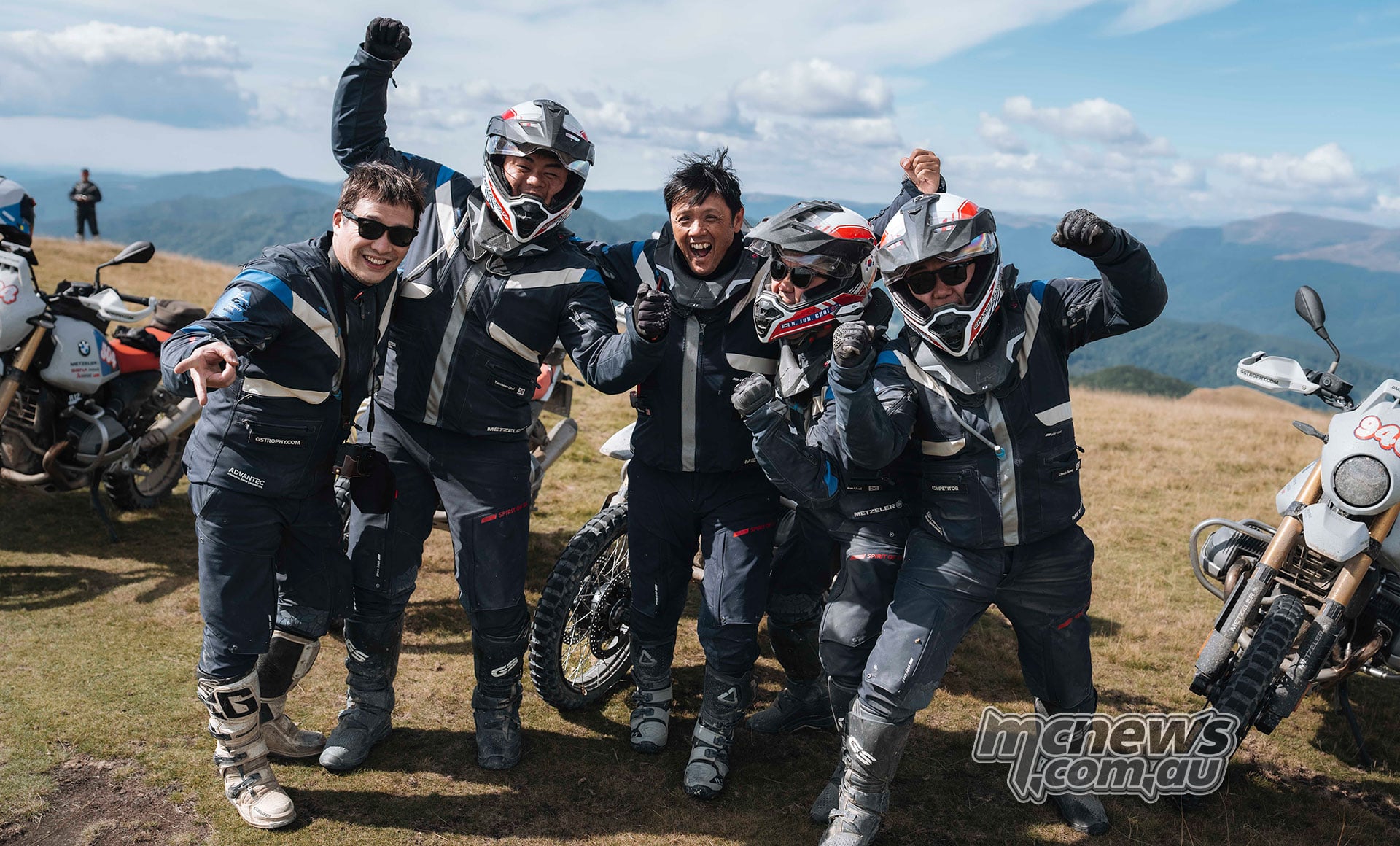
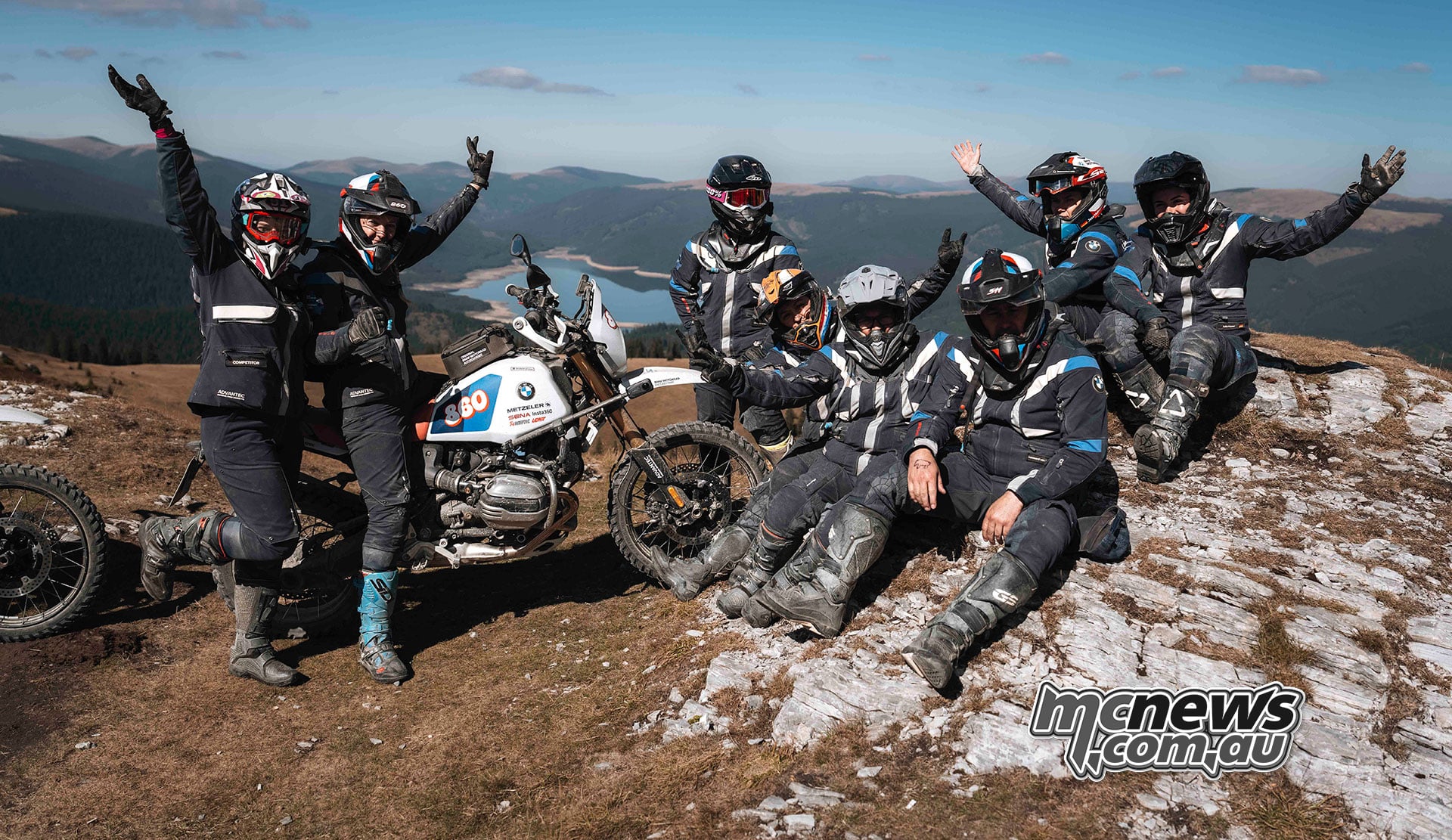
Only two points had separated Team International and Team Europe in the women’s standings before the final day. Harcourt, from Great Britain, and Filak, from the Netherlands, delivered under pressure to secure the title for Europe.
The pair had not known each other before the event, making their ability to develop an effective partnership over the six days a particularly fitting GS Trophy success story.
Chrissie Harcourt – Team Europe
“I can hardly describe this feeling. My head is a little all over the place; everything feels a bit shaky. It will take a while for it to truly sink in. I am incredibly proud of both of us.”
Anja Filak – Team Europe
“We were certainly the smallest team in the competition. But we rode like one body, as one unit. Chrissie is amazing. She gave me a lot of advice, and I was able to follow her and make it through. I gained more confidence because I knew I could follow her and stay focused. I took everything she told me over these days very much to heart and tried to put every piece of advice into practice – and it worked!”
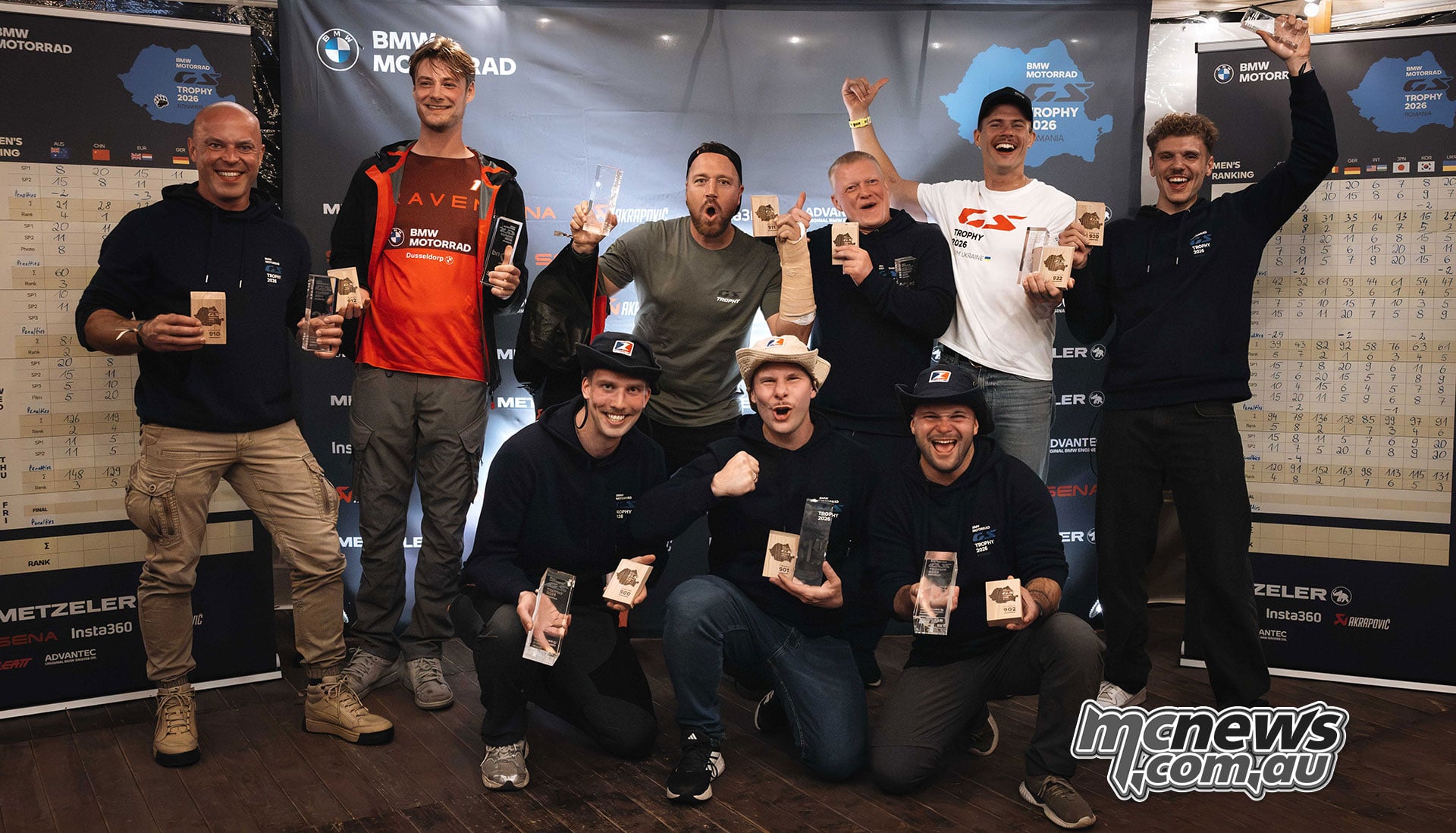
Germany also completed the job in the men’s competition, with Fenner, Pleissner and Thomann converting their overnight advantage into the overall win.
2026 GS Trophy – Women’s Final Standings
| Pos | Team | Points |
|---|---|---|
| 1 | Europe | 200 |
| 2 | International | 184 |
| 3 | Australia | 164 |
| 4 | China | 159 |
| 5 | Germany | 146 |
2026 GS Trophy – Men’s Final Standings
| Pos | Team | Points |
|---|---|---|
| 1 | Germany | 203 |
| 2 | Europe | 147 |
| 3 | Ukraine | 144 |
| 4 | Australia | 138 |
| 5 | Japan | 135 |
| 6 | Korea | 131 |
| 7 | International | 128 |
| 8 | China | 102 |
A Romanian adventure built on local knowledge
GS Trophy marshal Matei Albulescu played a central role in bringing the event to his home country, helping scout the route and working with landowners and authorities to secure access.
Tabla Buții and Strategica were among his personal favourites, and they helped give the anniversary edition its distinctive mix of history, remote terrain and demanding riding.
Even the scoring stayed deliberately simple: marshals assessed the specials with pen and paper, calculated results by hand, and updated the leaderboard each evening.
Those numbers ultimately put Germany and Europe on top. For Australia, a women’s podium and fourth in the men’s standings capped six demanding days in a host country that gave the GS Trophy’s tenth edition plenty to remember.