

2027 Royal Enfield Continental GT 750
Royal Enfield is turning up the wick on its Continental GT, unveiling a new 743 cc twin-powered café racer in faired and unfaired forms at EICMA.
The company says the Continental GT 750 will be its highest-performance production motorcycle yet. A bigger engine, twin front brake discs and a more sporting riding position for the faired versions give it a stronger claim to the racer part of that café racer description.
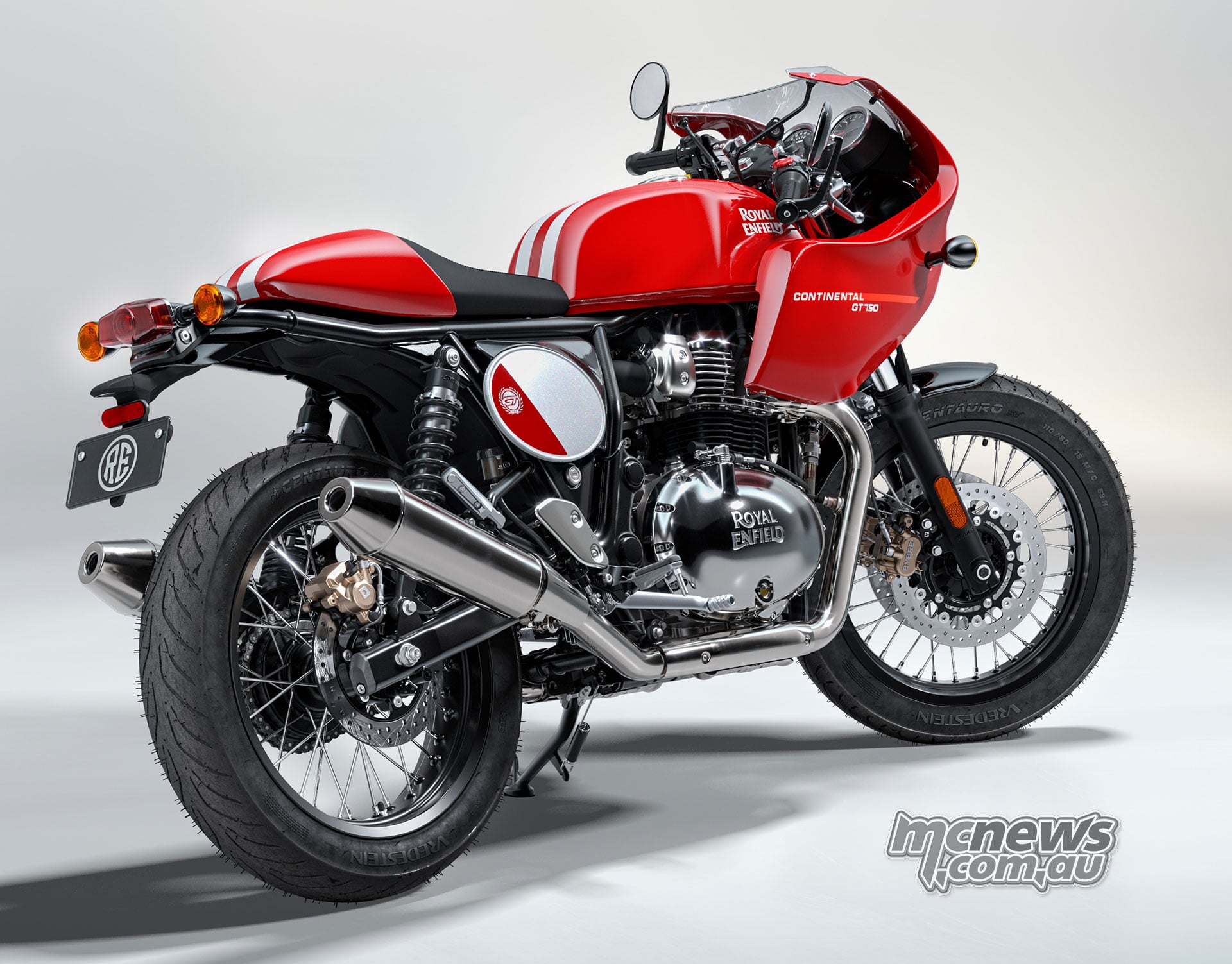
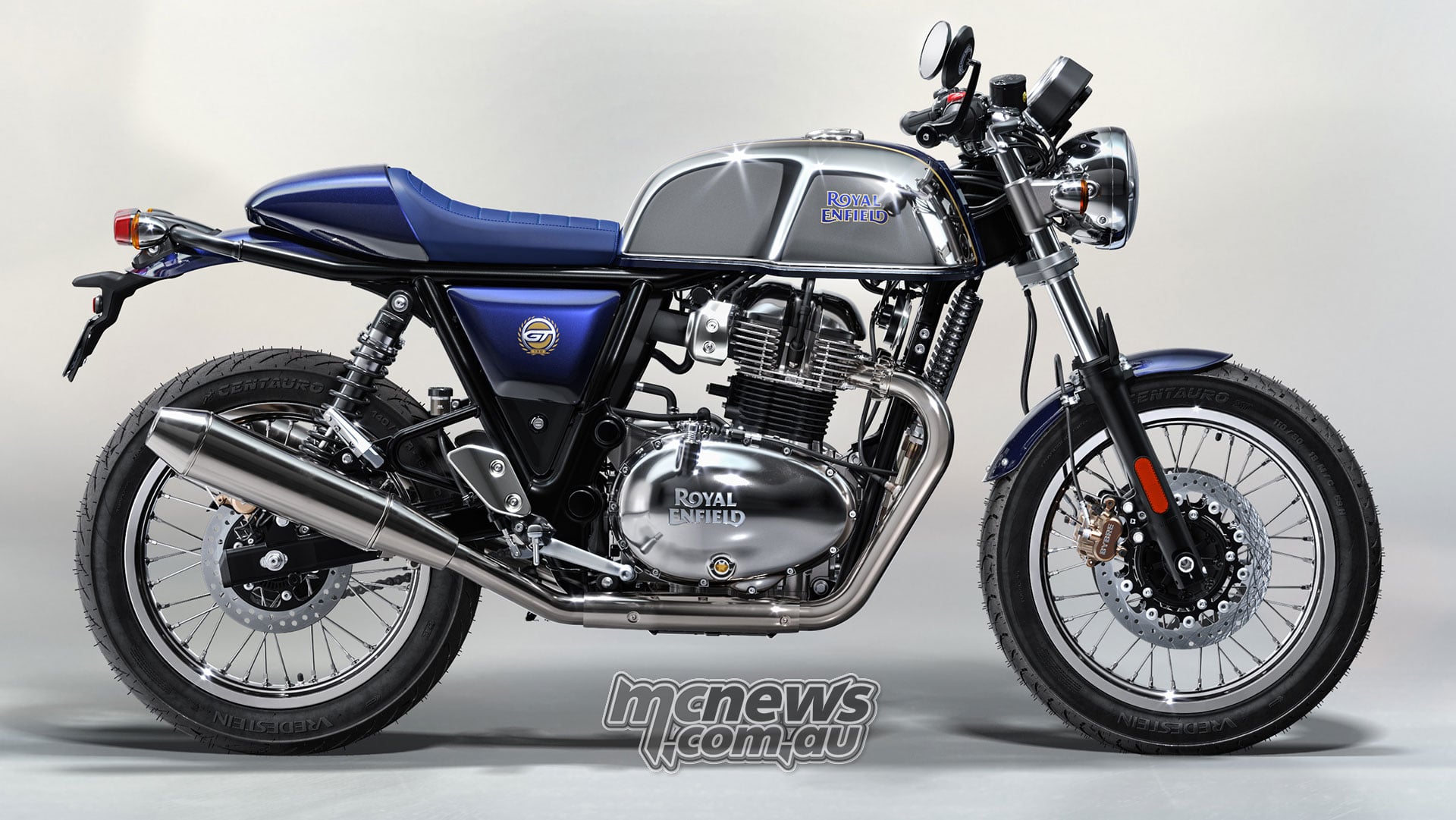
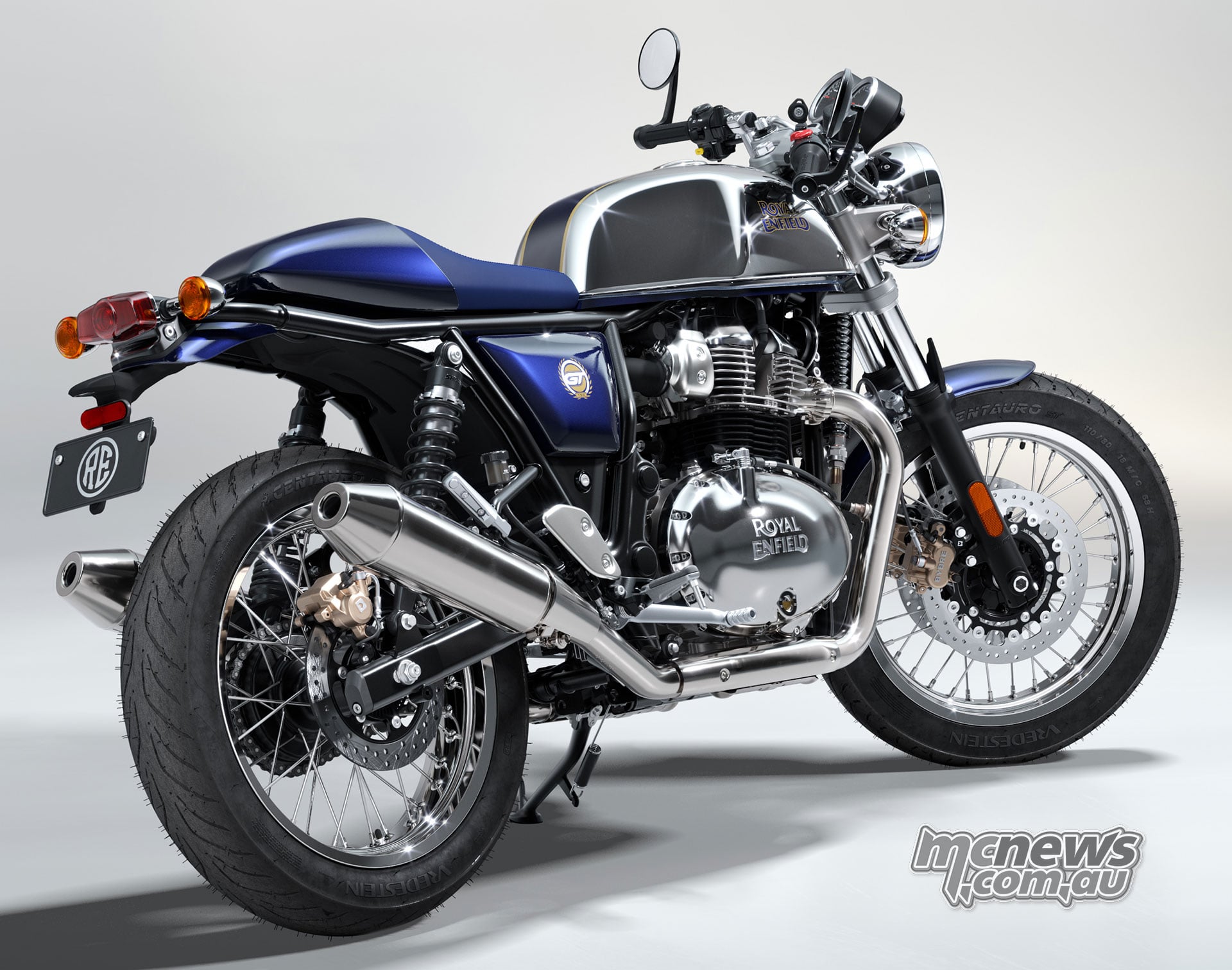
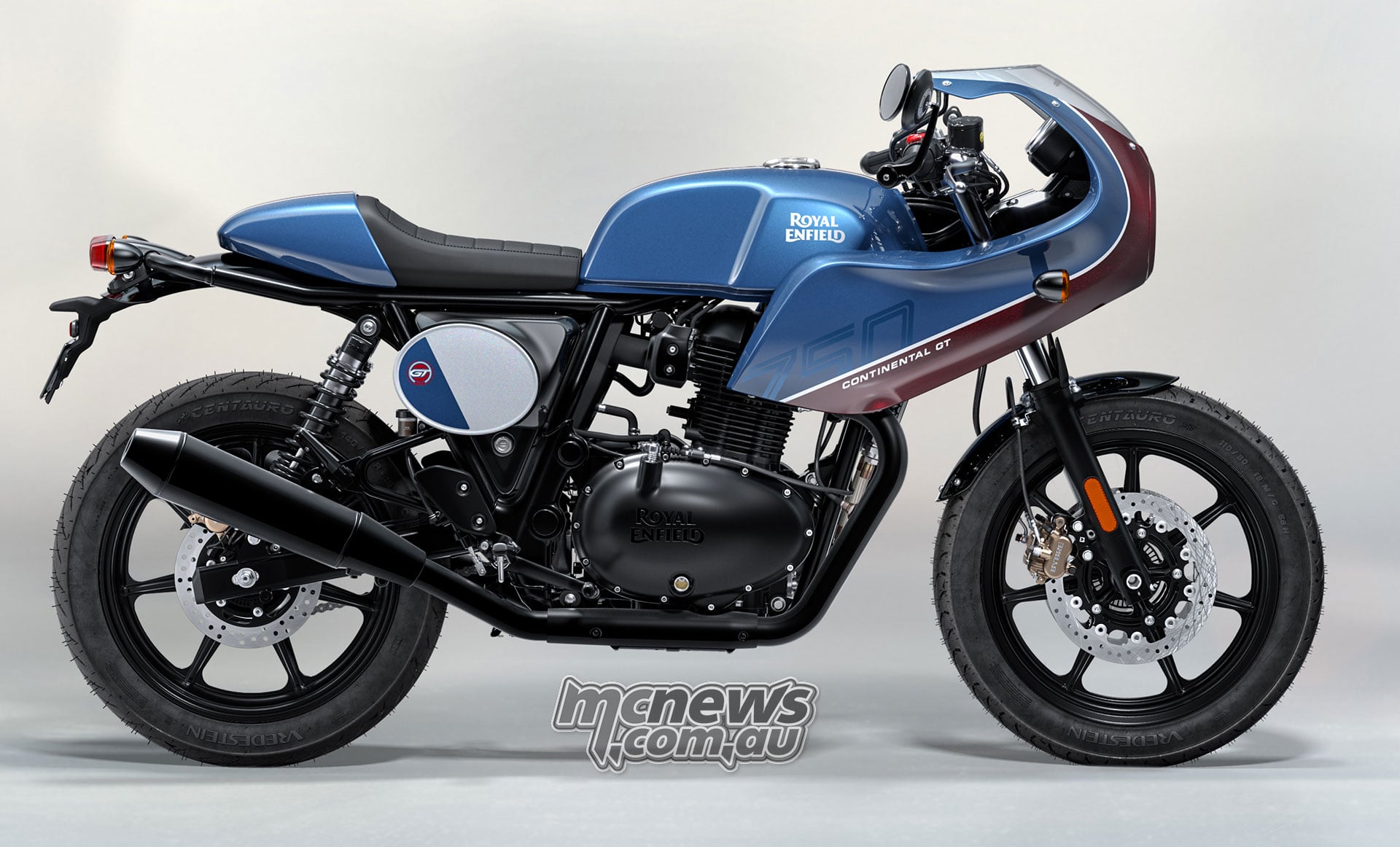
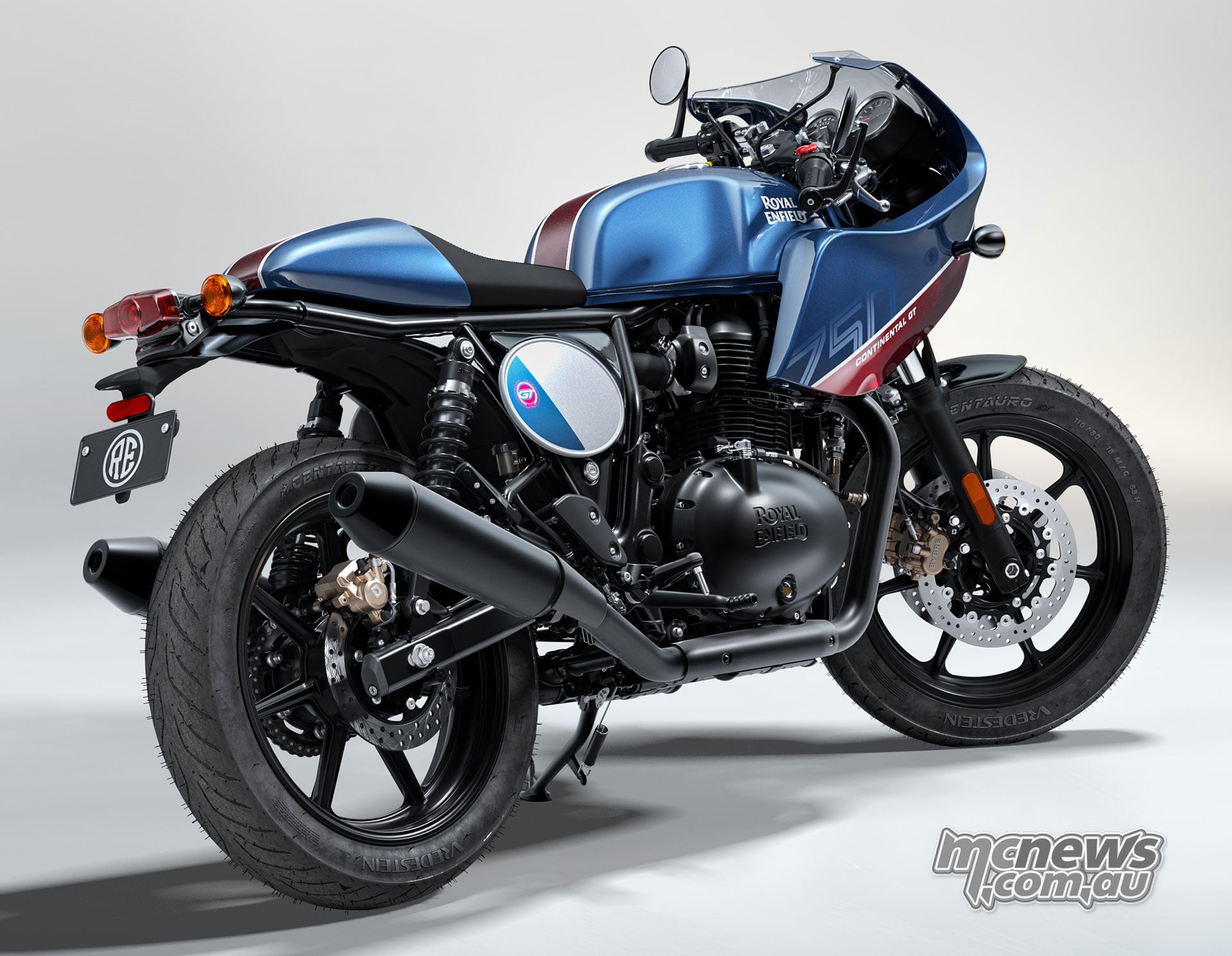
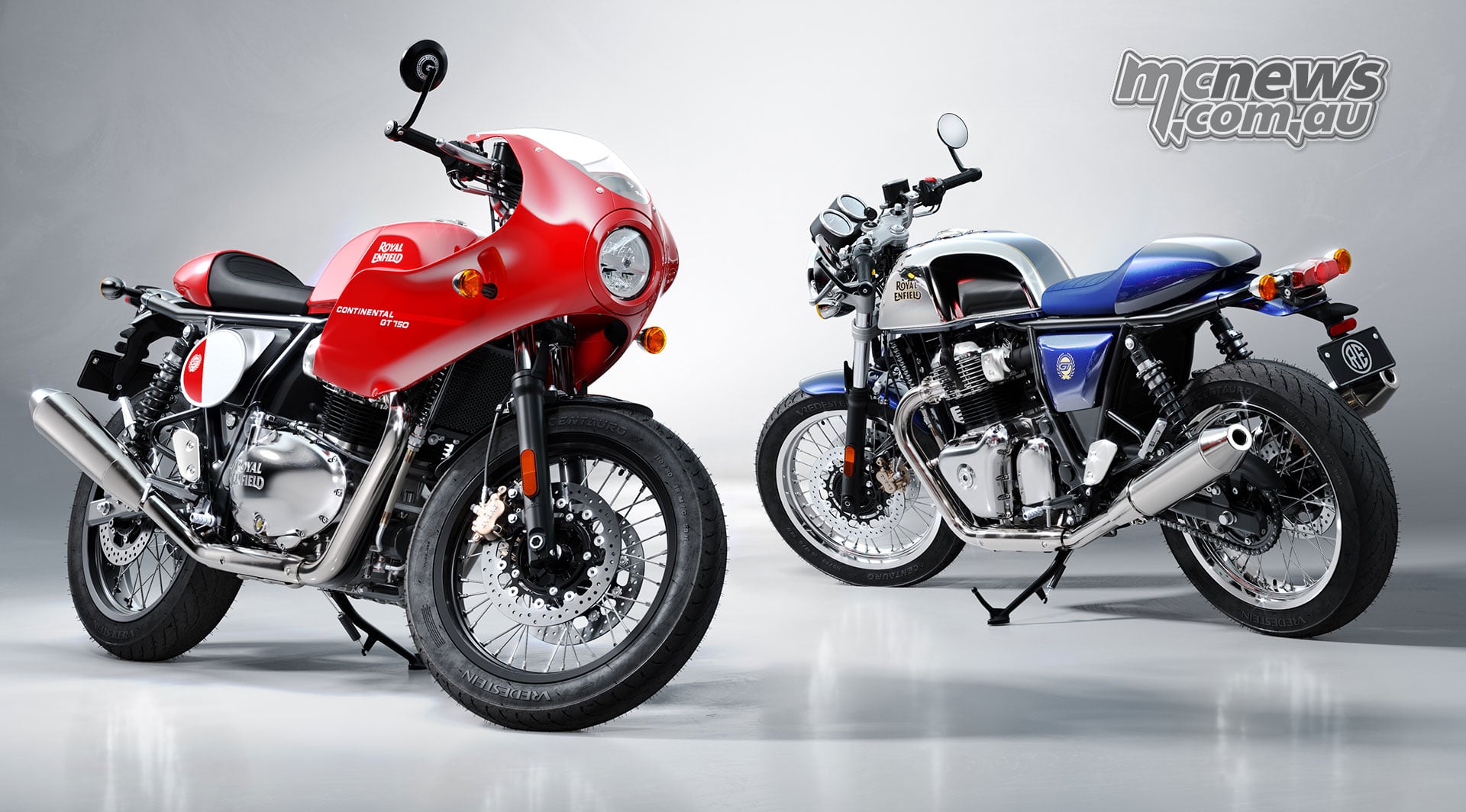
Three colour schemes were shown in Milan: Red Line, TT Blue and Master Clean. There are clear visual differences between them, extending to the wheels, engine finishes, and exhausts. The naked gets my vote.
Another 95 cc for the Continental GT
The GT uses an uprated version of the new 743 cc twin introduced in the Himalayan 750. That brings another 95 cc over the familiar 648 cc engine, an increase in displacement of almost 15 per cent.
Royal Enfield has yet to publish the GT’s final power and torque figures. For reference, the Australian GT 650 is listed at 47 hp and 52.3 Nm, so we await the numbers that will put the promised improvement in perspective. The capacity itself will push the new Continental GT 750 outside of the Australian learner-legal scheme.
The engine retains the finned appearance that suits the Continental’s retro styling, with an oil cooler visible ahead of the cylinders. Twin upswept silencers remain a defining feature of its classic cafe-racer side profile.
Three colours, two distinct styles
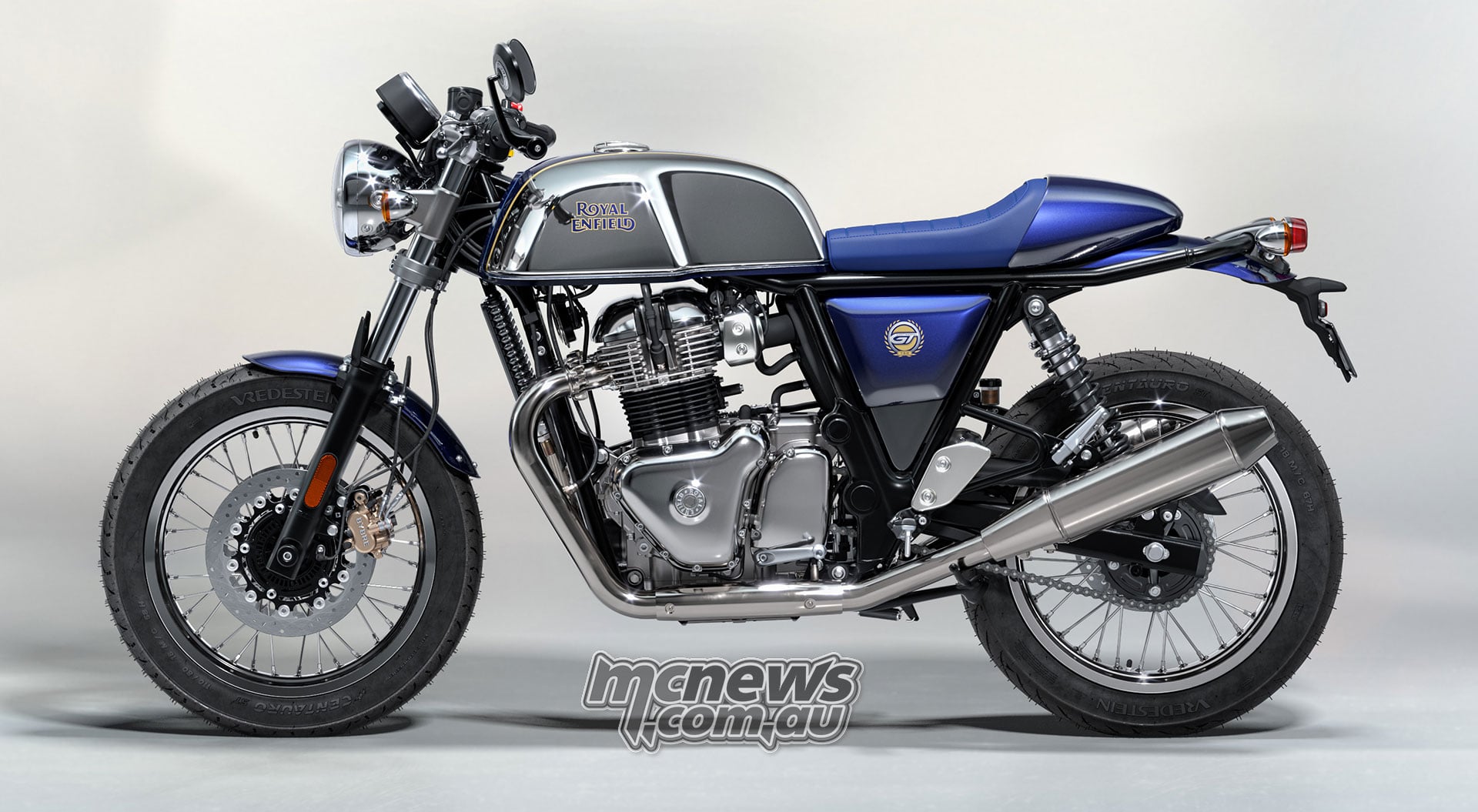
Master Clean takes the unfaired route, with a chrome tank, blue seat and tail cowl, polished engine covers and wire-spoked wheels. Its exposed round headlight and familiar tank-and-seat silhouette keep it closest to the existing Continental GT formula.
Royal Enfield confirms the faired version has lower handlebars for a more focused riding position. The unfaired bike’s higher bars should appeal to riders who want the GT shape with a little less weight on their wrists.
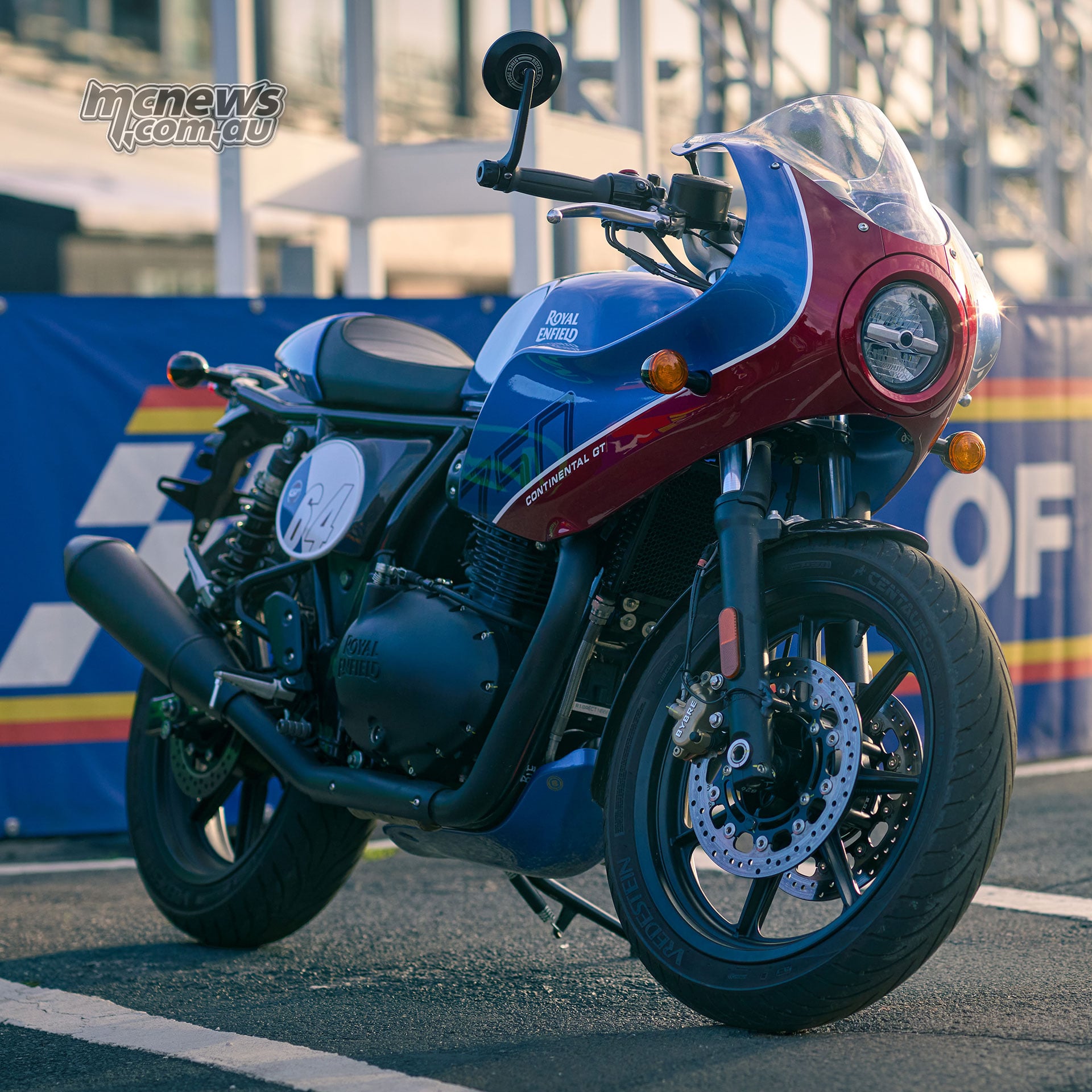
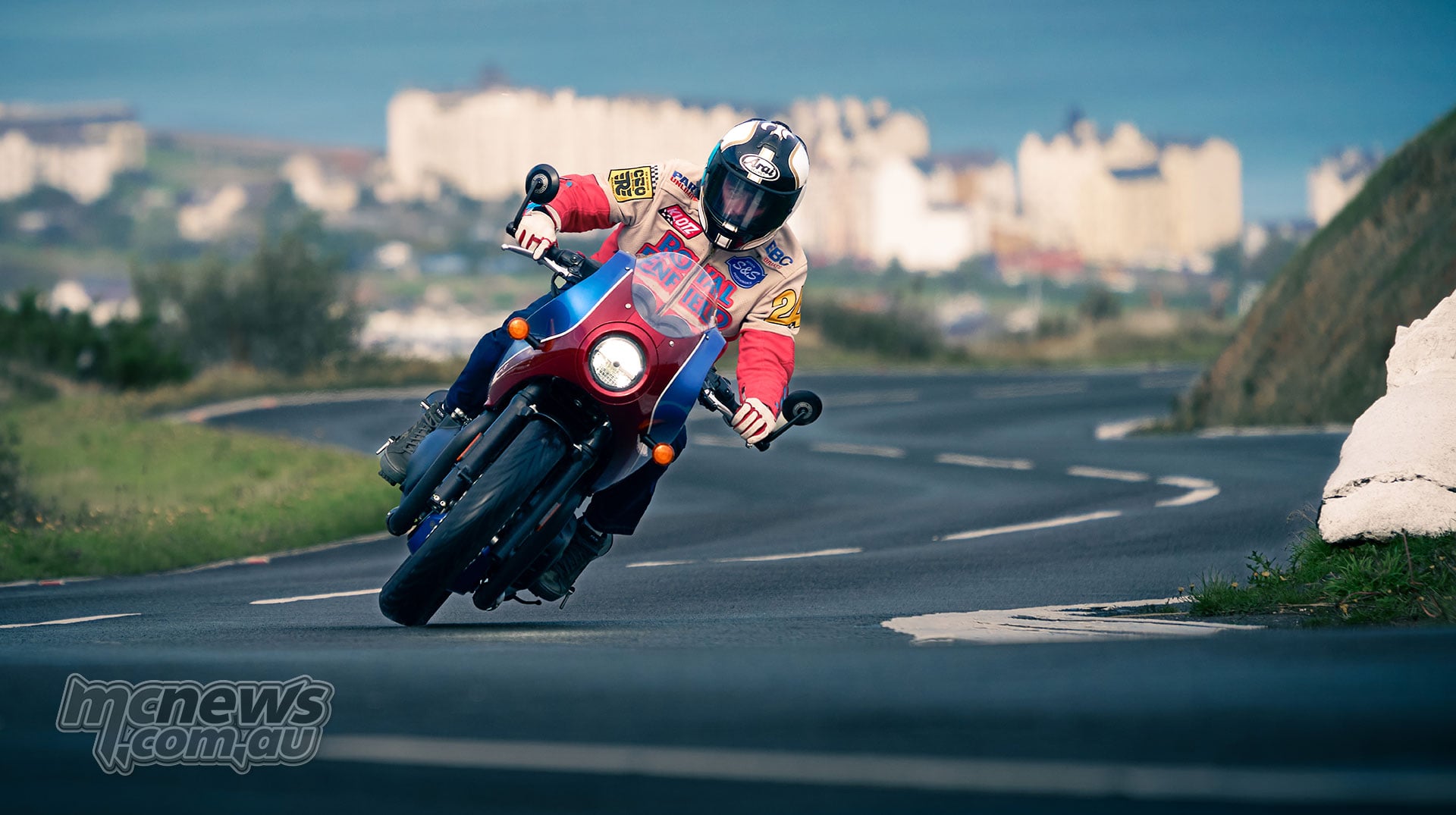
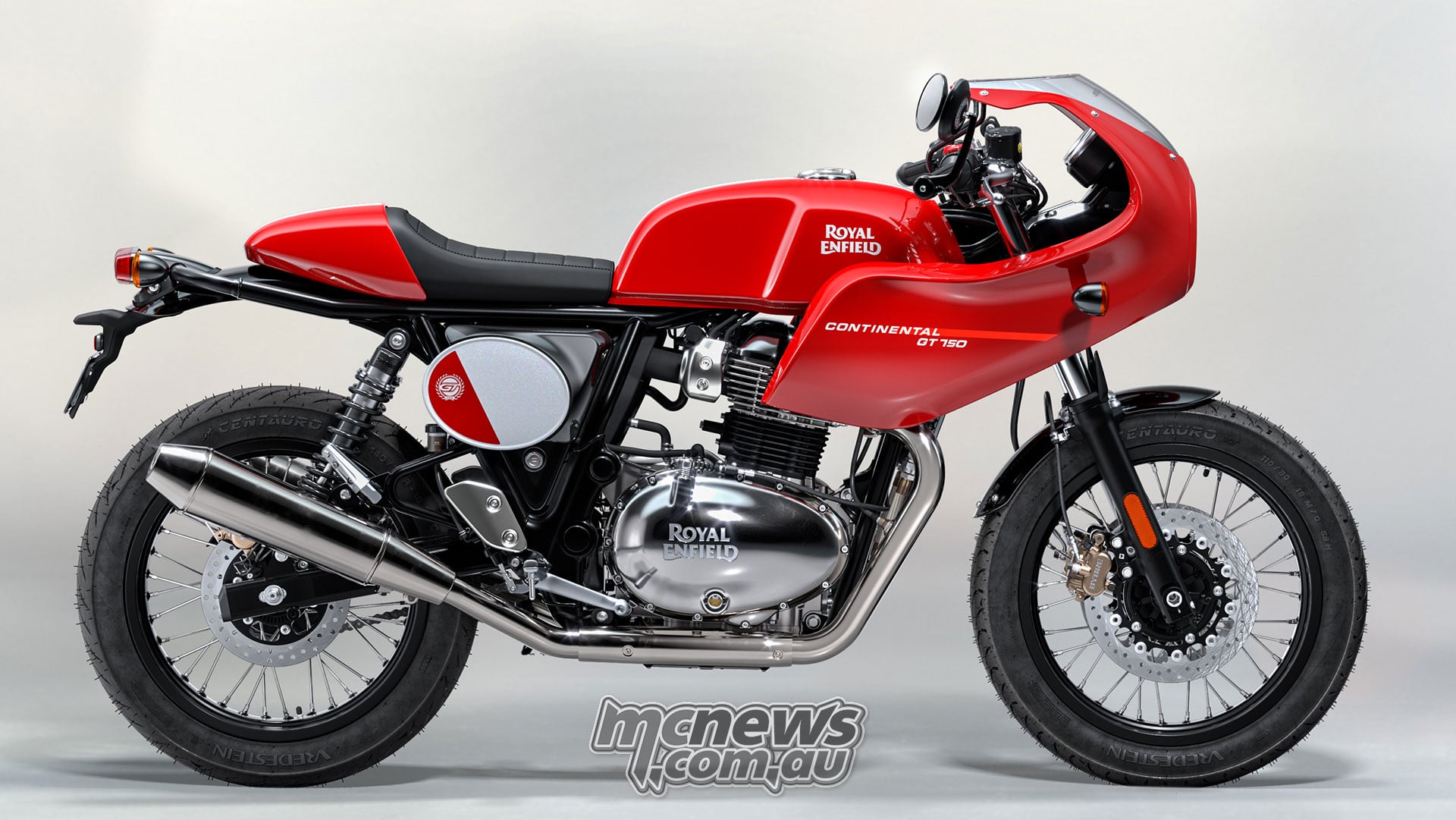
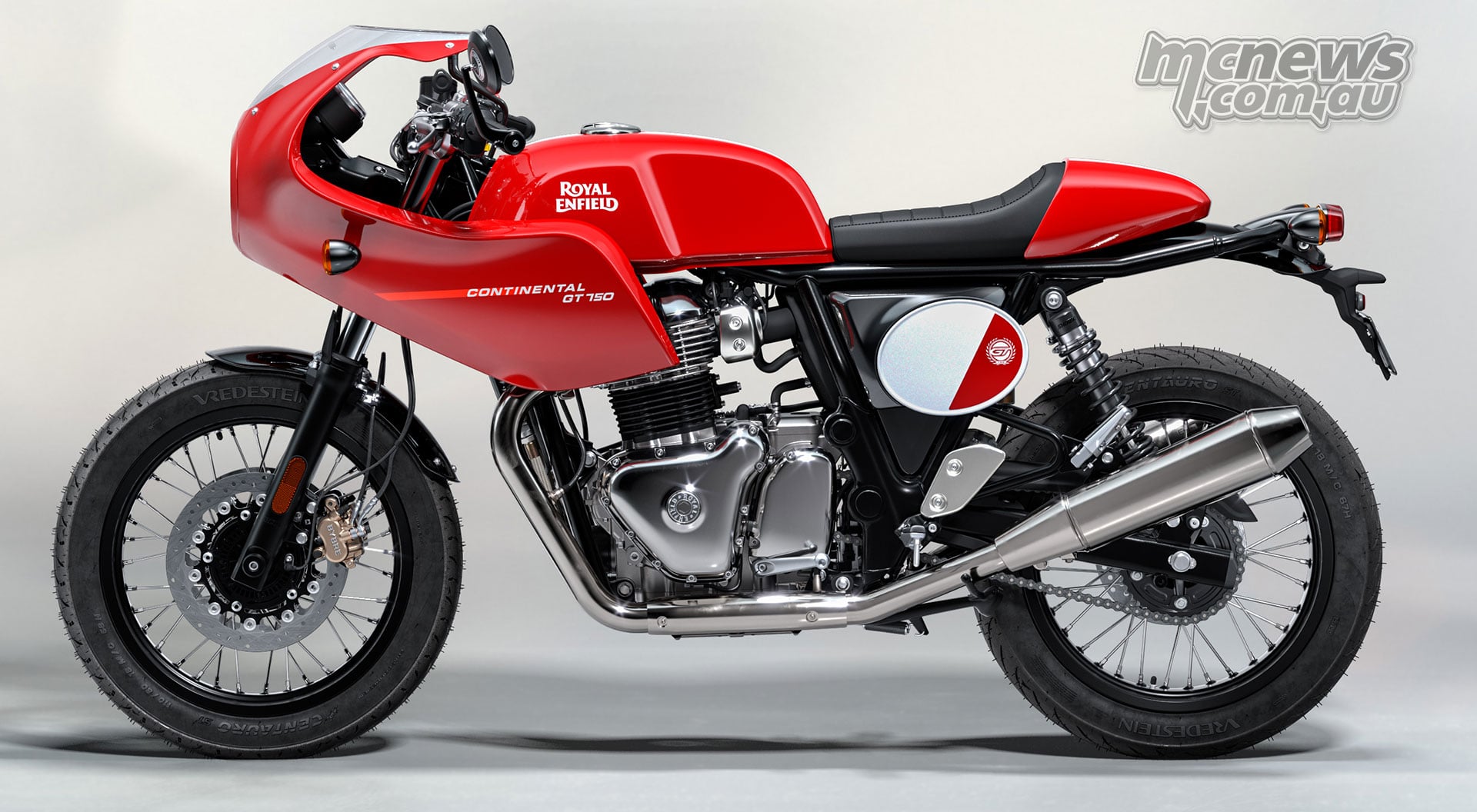
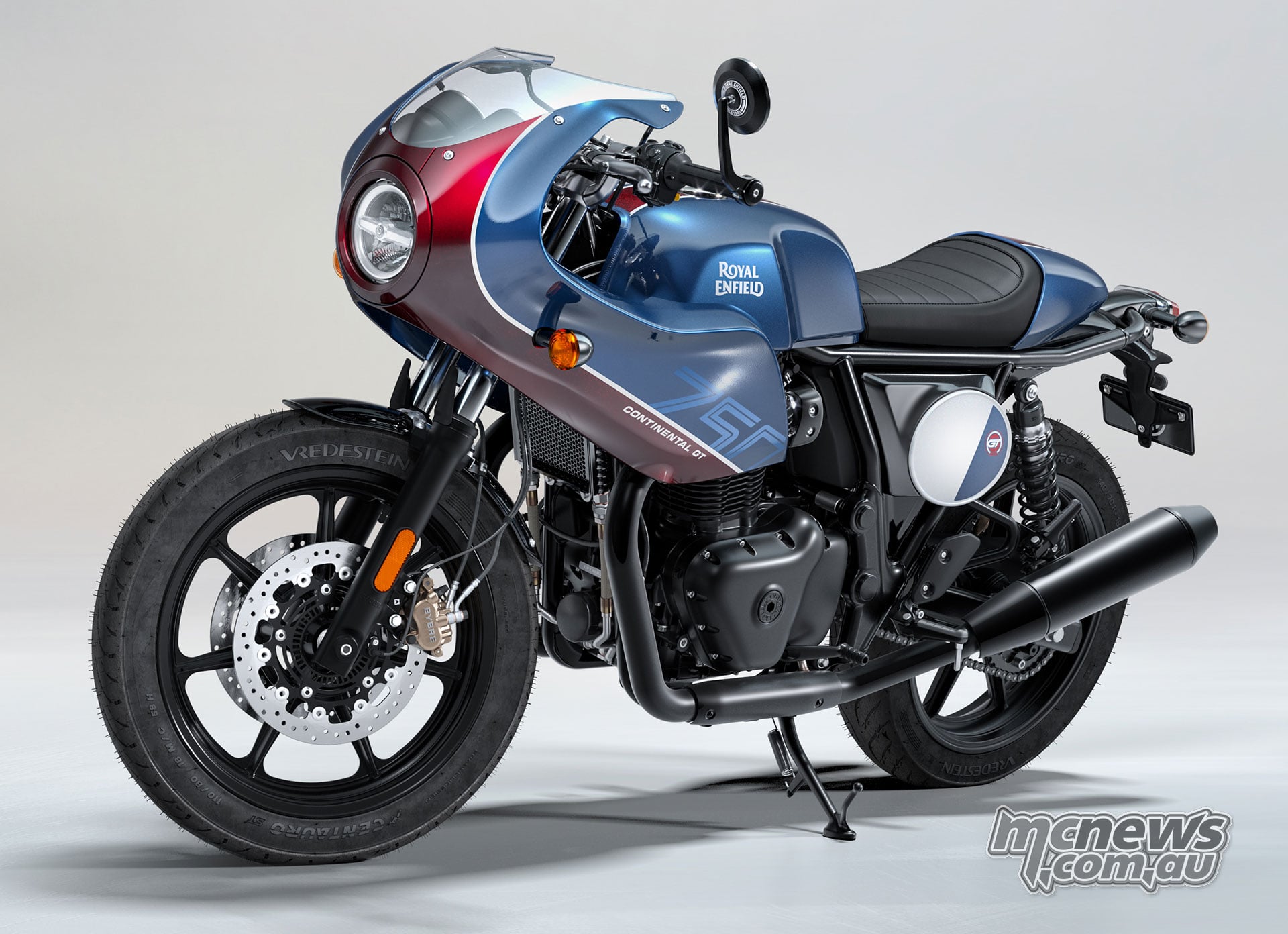
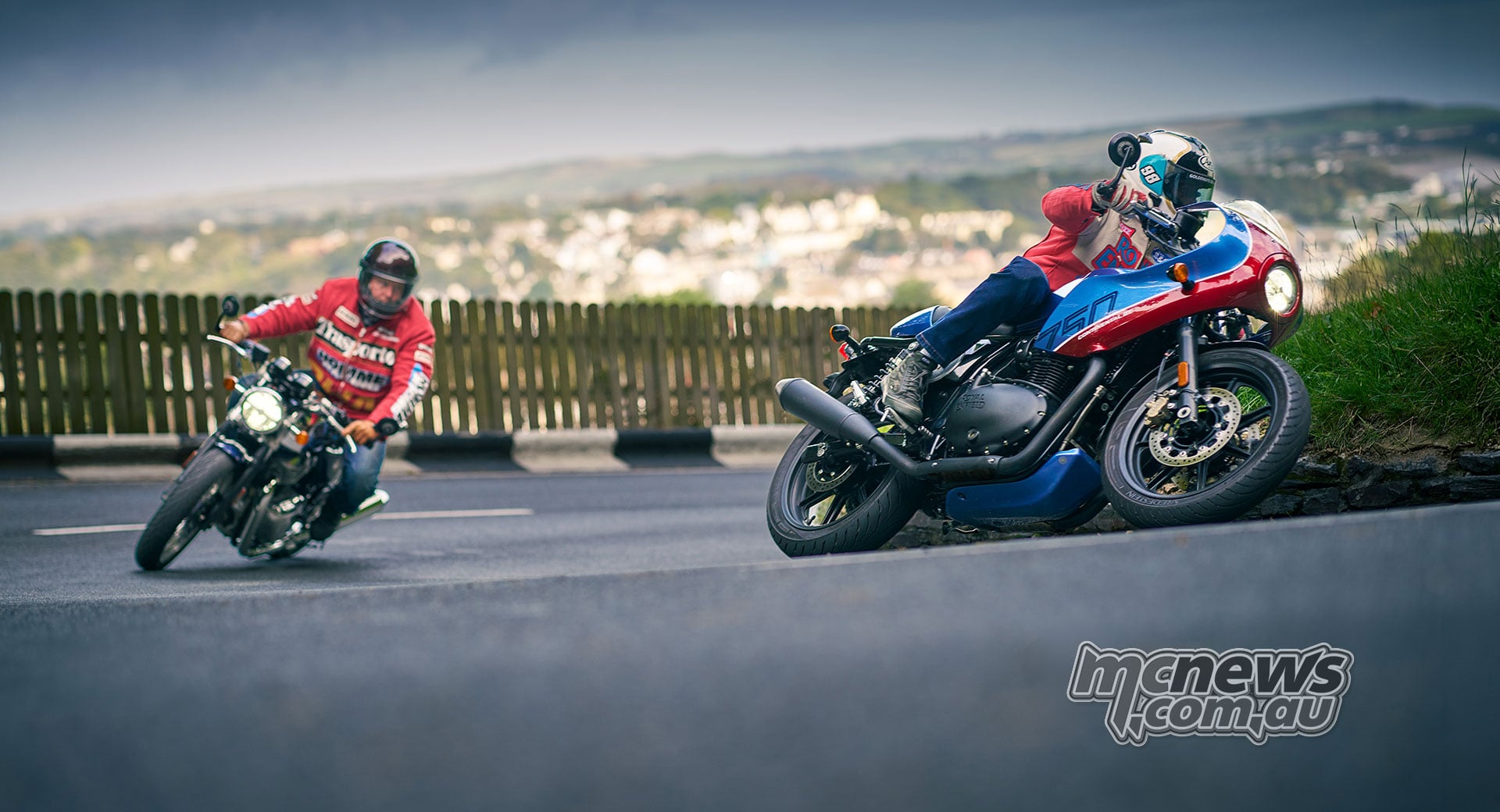
Red Line adds the sculpted front fairing, a matching red tail cowl and number-board-style side panels. It combines those more overtly sporting shapes with wire-spoked wheels and bright metal finishes on the engine and exhausts.
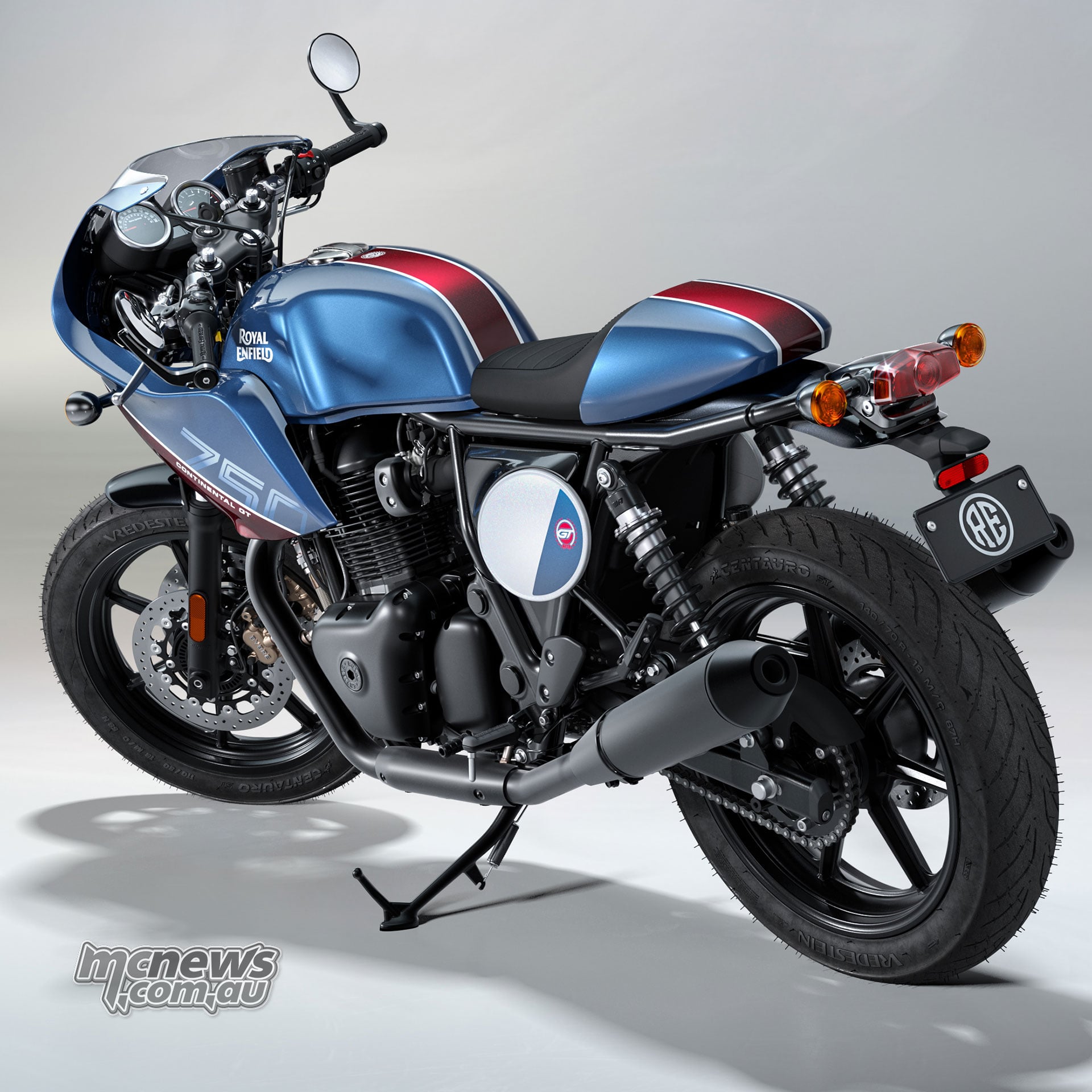
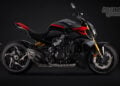
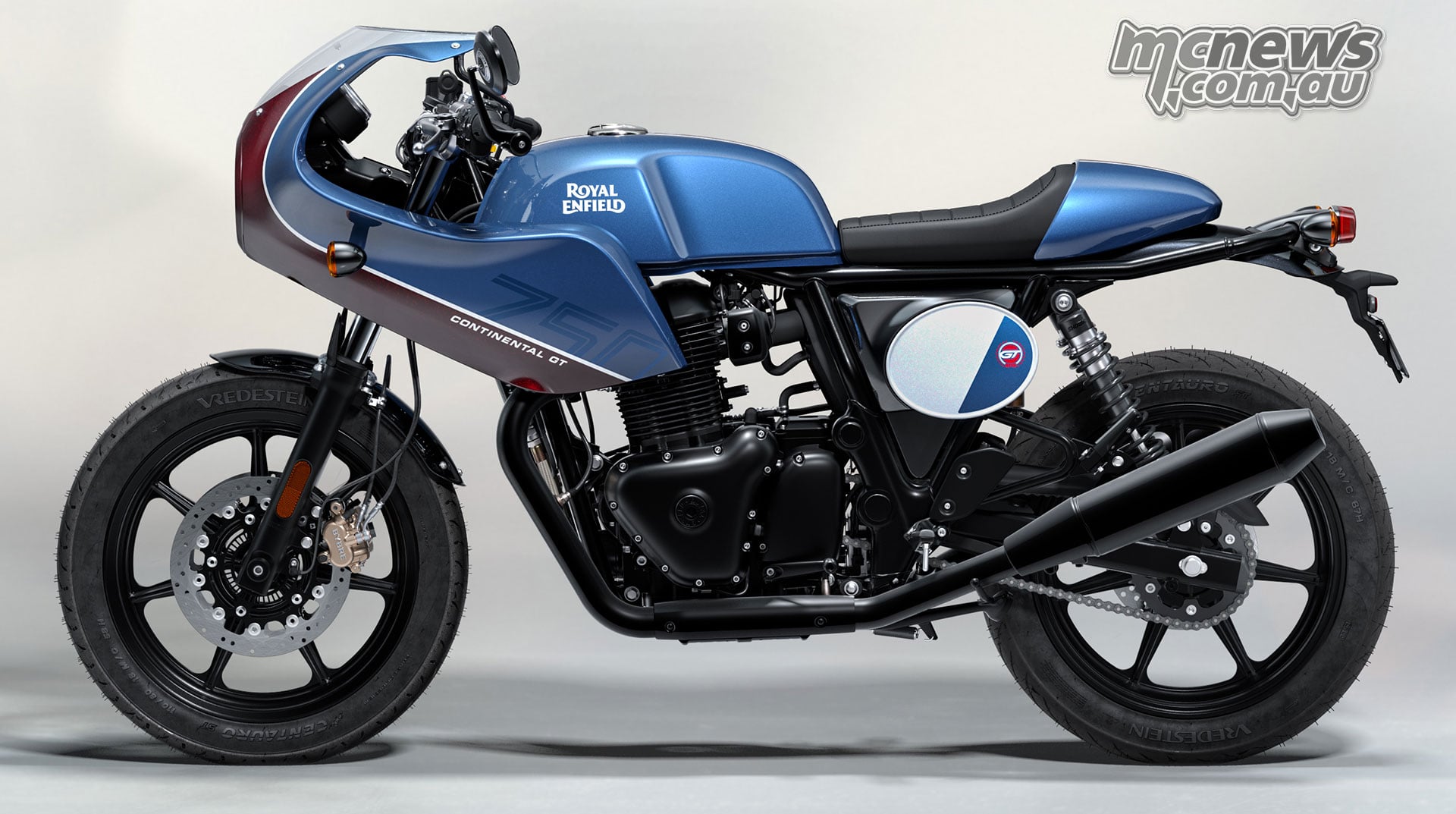
TT Blue gives the faired bike a darker mechanical finish, with black engine covers, black exhausts and cast alloy wheels. Red and white detailing breaks up the blue bodywork, while the round side panels reinforce the racing theme.
These are the combinations shown in Royal Enfield’s launch images; Australian colour availability and pricing have yet to be announced.
Twin front discs join the package
One of the clearest hardware changes is at the front wheel. The GT 750 gains twin brake discs, with ByBre callipers visible in the supplied images, replacing the single front disc arrangement of the 650.
Conventional telescopic forks and twin rear shock absorbers preserve the traditional layout. The display bikes wear Vredestein Centauro ST tyres, with the different wheel styles helping distinguish the three colour schemes.
Royal Enfield promises a step forward in component specification and material quality. Full suspension specifications, brake dimensions and the bike’s running-order weight remain to be detailed.
Twin clocks with a digital twist
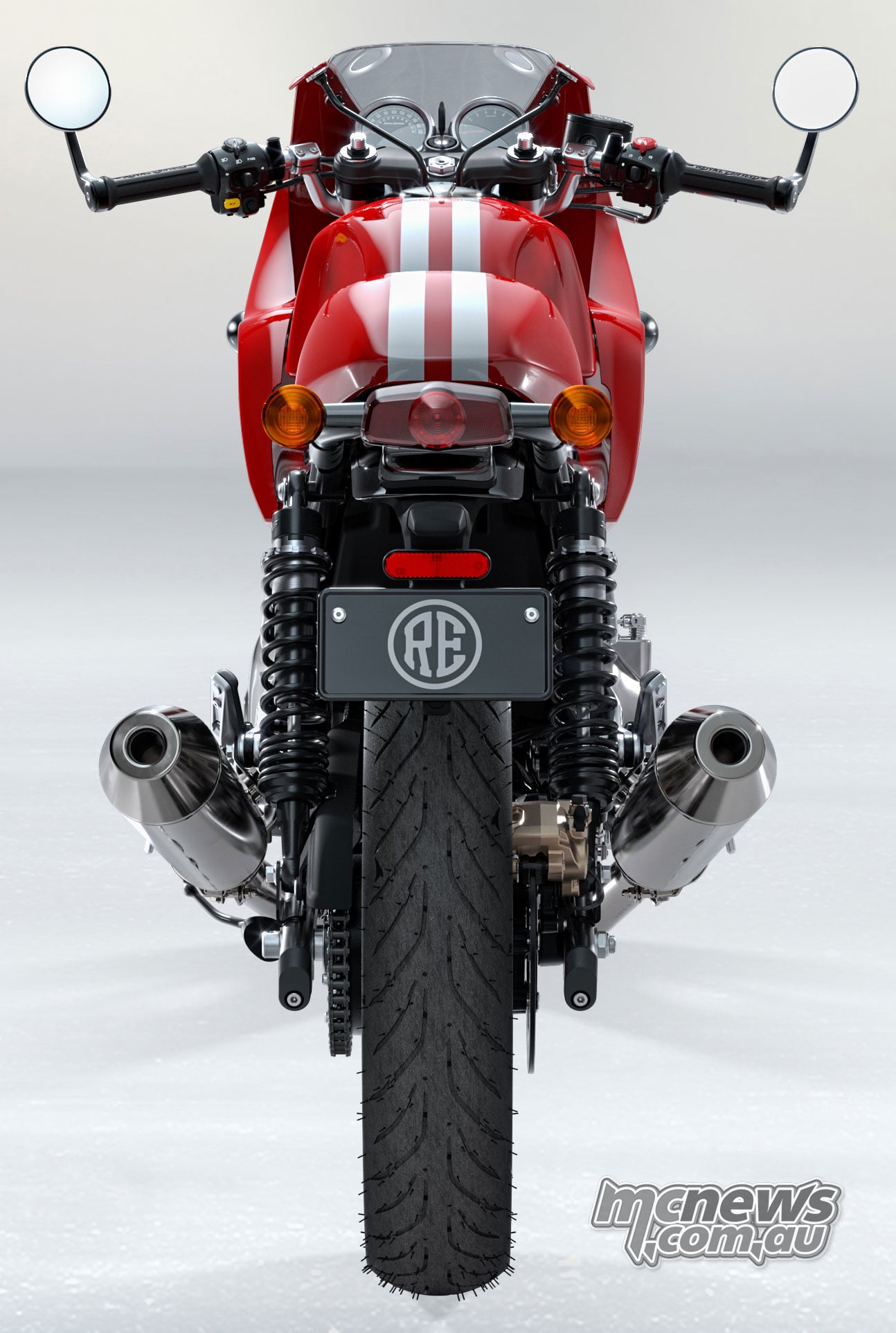
The instruments retain the Continental’s twin-pod presentation, with Royal Enfield describing the new arrangement as a hybrid twin-pod TFT display. The intention is to preserve an analogue character while integrating modern display technology.
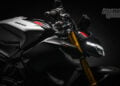
The view over the faired bike’s tank brings together the low handlebars, bar-end mirrors, twin clocks and small windscreen. It is a cockpit that commits fully to the café racer theme.
A sporting thread beyond the styling
Royal Enfield already races a 750 in its 2026 Continental GT Cup programme, which puts professional riders on GT-R750 race machines and amateurs on GT-R650s.
The GT-R750 race prototype features race-tuned suspension and brakes, Harris Performance rearsets and clip-ons, lightweight twin exhausts and an aerodynamic fairing.
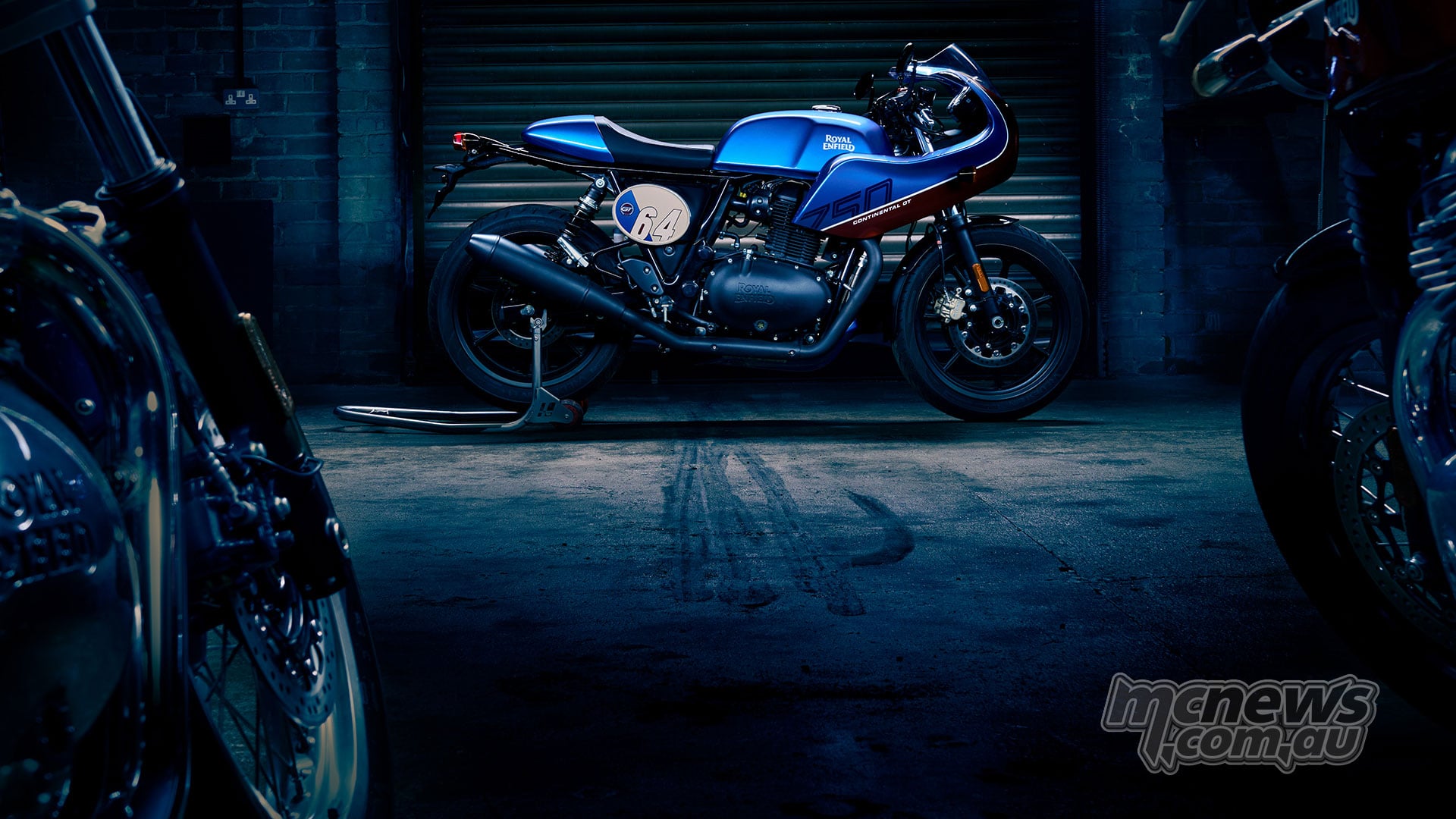
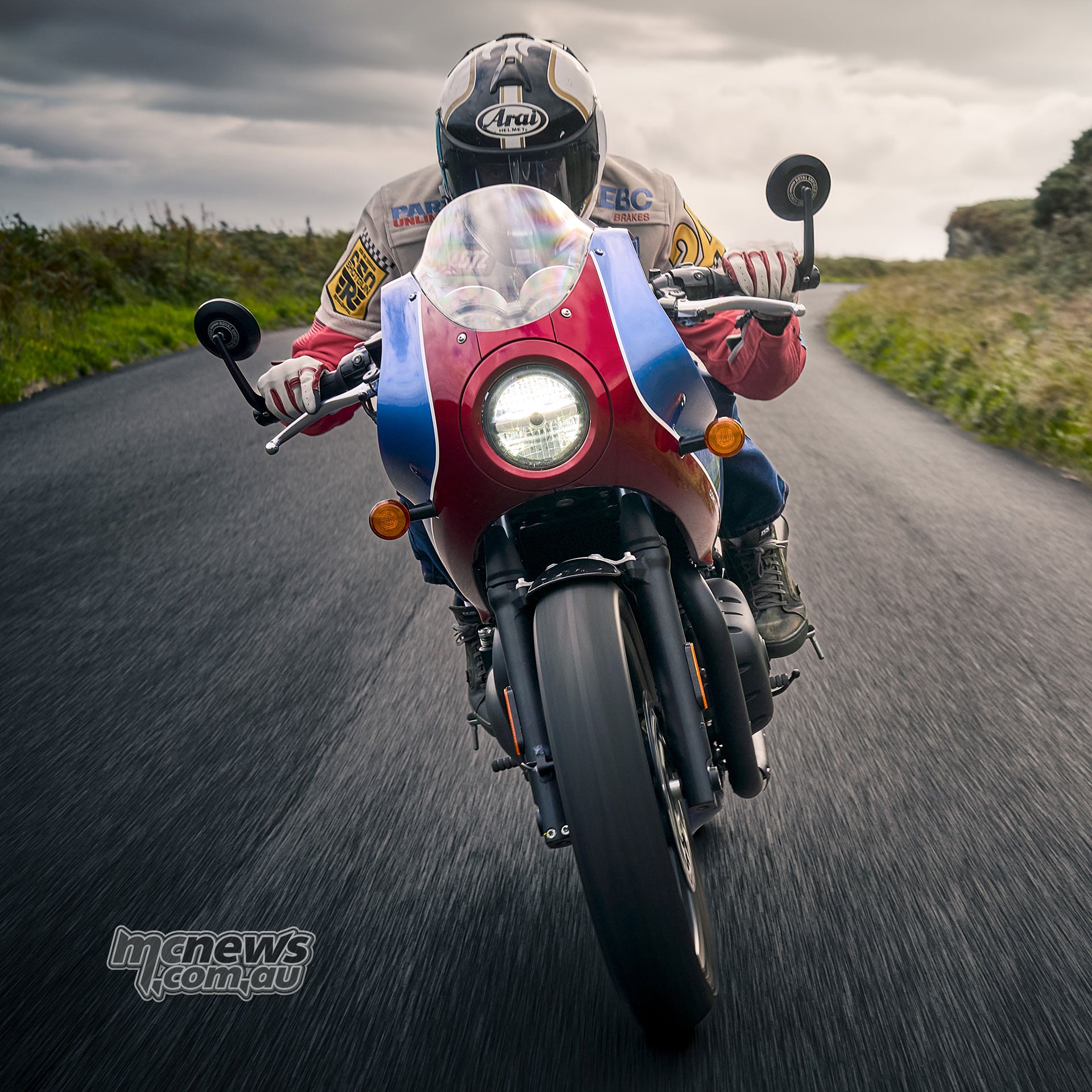
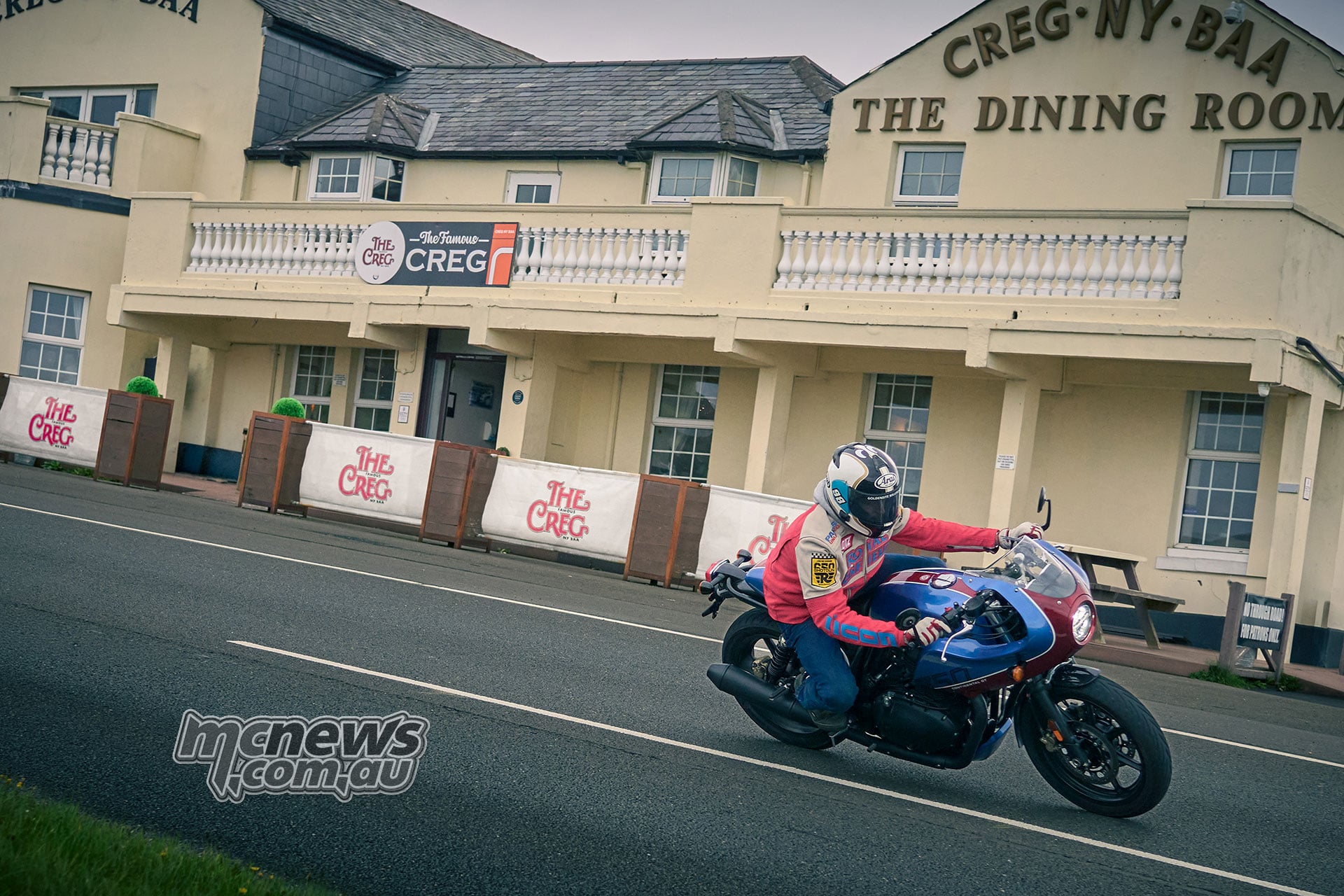
The Continental GT name itself dates back to 1964. Royal Enfield has leaned into that British café racer heritage with its latest photography, taking the new bike to the Isle of Man and past landmarks such as Creg-ny-Baa.
The extra thrust we wanted?
When I rode the original twins at their 2018 launch, the GT’s looks and chassis won me over. In our Continental GT 650 and Interceptor review, I also found myself wishing for a little more urgency when opening the throttle out of a bend.
I was already contemplating hotter cams, higher-compression pistons and the suspension changes that might follow. Eight years later, Royal Enfield is offering a bigger engine and a more ambitious sporting brief straight from the factory. That certainly has my attention.
The Australian ownership proposition also changes with the capacity increase. At 743 cc, the new GT sits above the 660 cc LAMS ceiling, giving fully licensed GT 650 owners a potential next step within the family.
Australian pricing, arrival timing and the local model line-up are still to come. The key question for the first ride will be how much extra punch Royal Enfield has found, and how well the rest of the package puts it to work.