

2027 Ducati Diavel V4 and V4 S
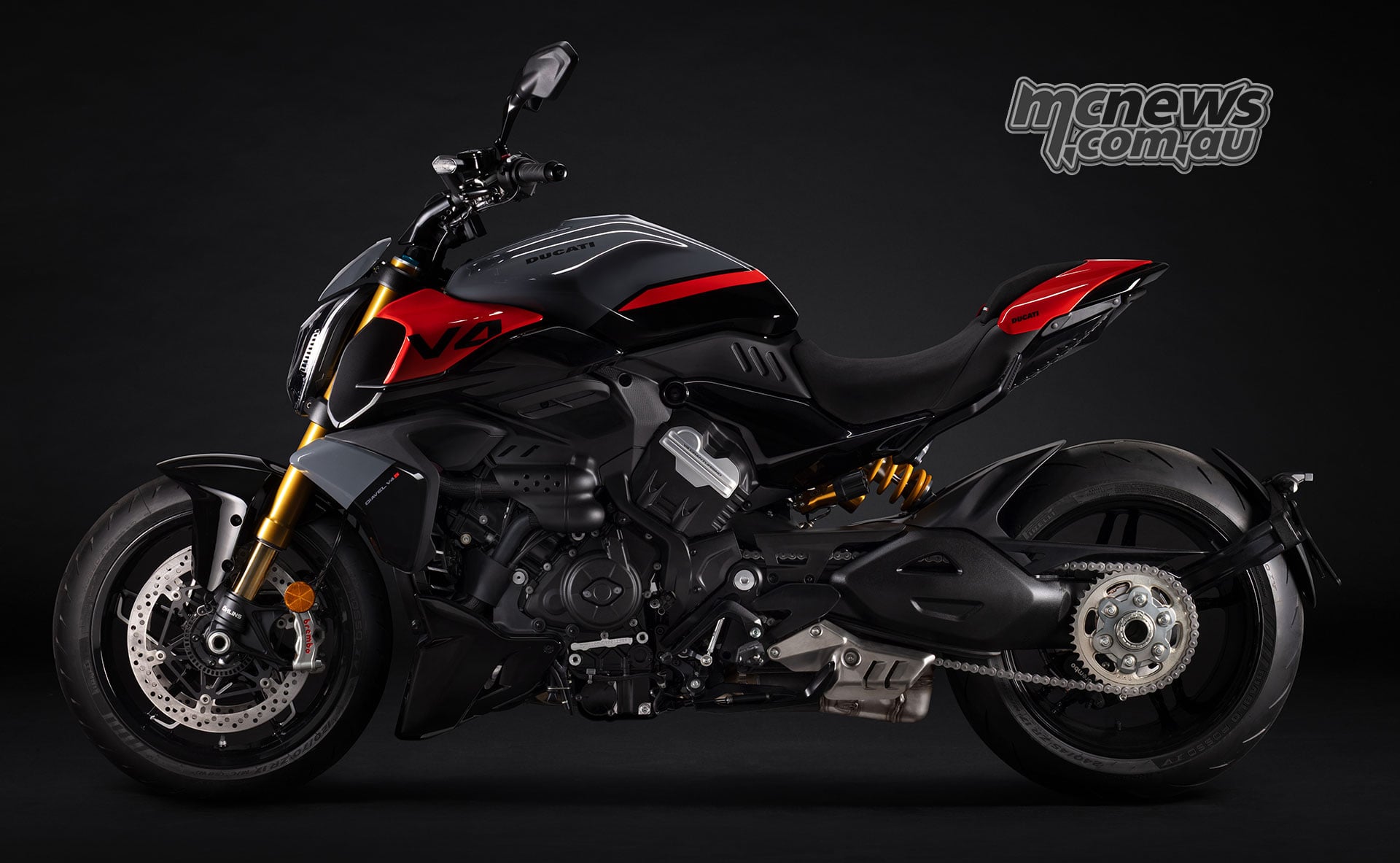
Ducati is bringing the S badge to the Diavel V4 for 2027, adding Öhlins Smart EC 3.0 semi-active suspension to its 168 hp muscle bike. Priced at just over $50,000 ride-away in Australia, the new Diavel V4 S also gains a lithium battery, heated grips and machined wheel detailing.
Both the S and standard Diavel V4 receive updates, including smoother engine response, Ducati Quick Shift 2.0, a larger dashboard with standard navigation, revised styling and new wheels wearing Pirelli Diablo Rosso IV rubber.
Two ingredients here already have me interested. The V4 Granturismo made a huge impression when I first sampled it in the Multistrada V4, while the latest generation of Öhlins electronic suspension had me gushing when I rode Triumph’s Speed Triple 1200 RS. Bringing them together in a Diavel sounds like a very appealing proposition.
From V-twin muscle to V4 sophistication
The Diavel has always traded on the unlikely combination of cruiser presence and Ducati performance. A huge rear tyre, low seat and substantial engine dominate the view, but the appeal extends well beyond looking imposing outside a café.
I certainly enjoyed the V-twin side of that family, as readers of my earlier XDiavel S review might remember. The tan jacket and elevated front wheel probably give the game away. That more cruiser-focused, belt-driven XDiavel was a different take on Ducati’s muscle-bike theme, but it captured the entertainment value rather well.

The current Diavel V4 continues that theme with a different engine architecture and a more upright riding position. For MY27, the new S puts the biggest emphasis on how that performance is controlled and how comfortably it can be enjoyed.
Öhlins EC 3.0 is the big drawcard
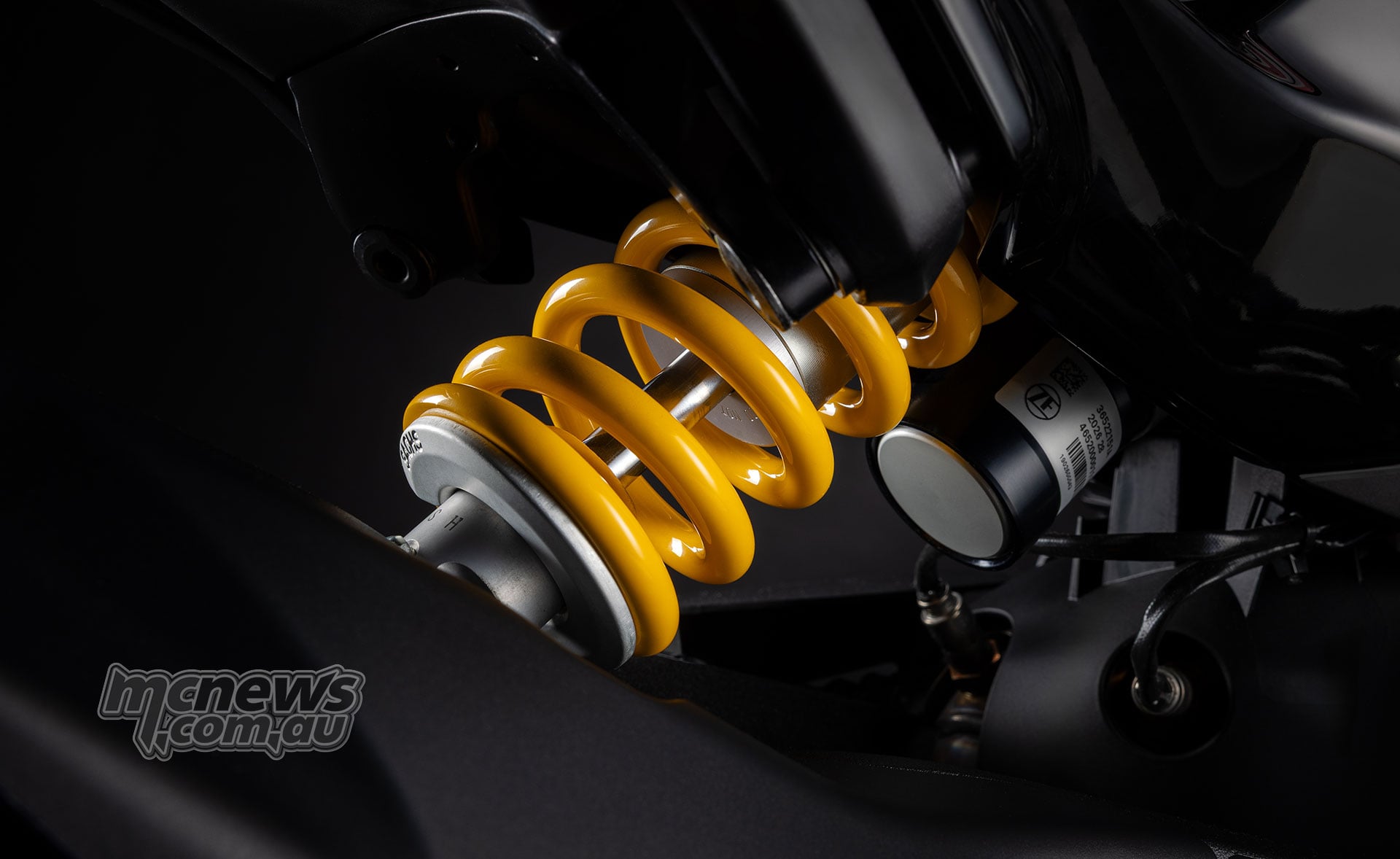
The S pairs a 48 mm Öhlins NIX30 fork with an ARX40 rear shock. Both use spool-valve damping technology, with electronic control of compression and rebound through the Smart EC 3.0 system.
This is the generation of Öhlins suspension I raved about in my 2025 Triumph Speed Triple 1200 RS review. Its ability to soak up road imperfections while keeping the bike composed under braking and acceleration was phenomenal. It delivered comfort, control and feel together, to the point that I regarded it as a watershed moment for electronic suspension. That experience gives me plenty of reason to be enthusiastic about its arrival on the Diavel, with Ducati’s own calibration still to be sampled.
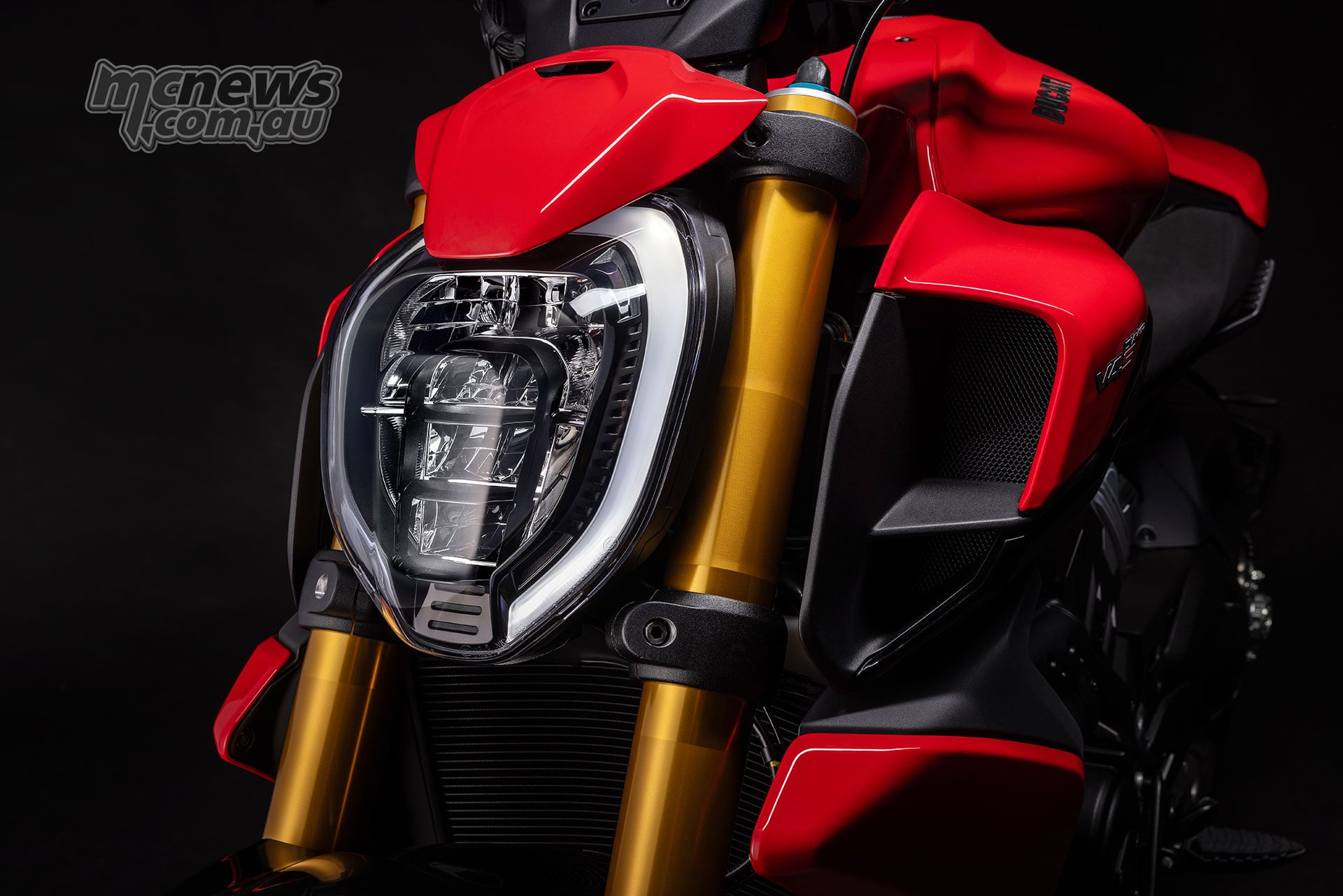
The event-based system responds to braking, acceleration and cornering, with Dynamic, Comfort and Low Grip suspension modes. Ducati says the spool valves improve response to damping changes and provide a wider adjustment range.
A corner-entry strategy increases fork rebound damping after the rider releases the brake, slowing the fork’s extension as the bike tips in. Cruise Detection works in the other direction, softening the suspension when the system recognises a steady cruising pace.
Spring preload remains manually adjustable, including a remote hydraulic rear adjuster. The standard V4 retains a fully adjustable 50 mm fork and conventional, manually adjustable rear shock. Wheel travel is the same on both models, at 120 mm front and 145 mm rear.
A Granturismo engine I already rate highly
Both models use the 1158 cc, 90-degree V4 Granturismo, claiming 168 hp at 10,750 rpm and 126 Nm at 7500 rpm.
When this engine first appeared in the Multistrada V4, I came away hugely impressed. As I explained in my original Multistrada V4 S review, it combined serious shove with a level of smoothness that was exceptional for a Ducati. The way it delivered its performance, rather than simply the amount available, made it such a standout. An engine that feels that effortless and rewarding is a very good starting point for a muscle bike.
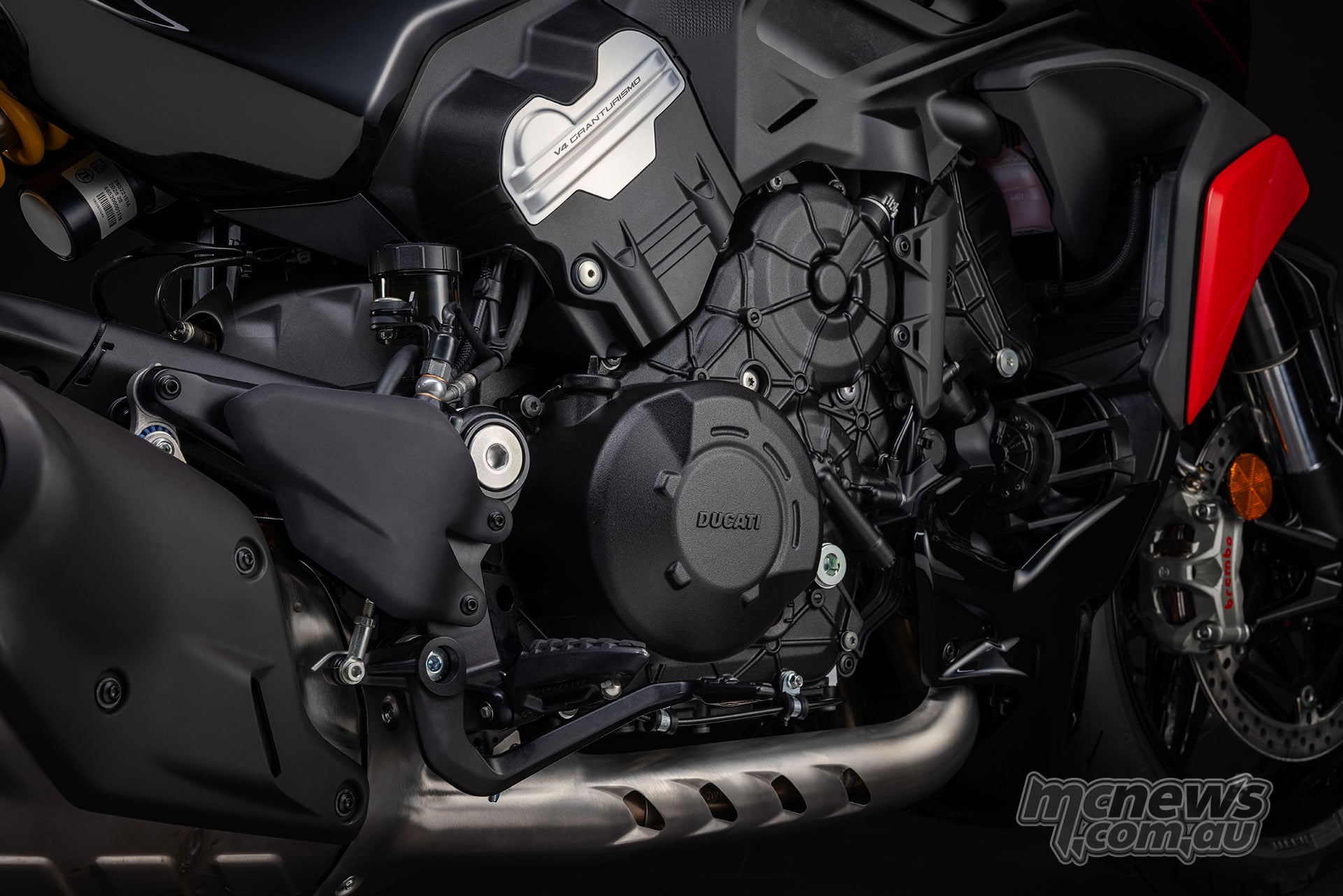
Our original V4 Granturismo technical brief explains the thinking behind its conventional valve springs, counter-rotating crankshaft and Twin Pulse firing order. Valve-clearance checks remain spaced at 60,000 km, with oil changes every 15,000 km or two years and an annual service requirement.
For 2027, Ducati has refined the engine management to improve low- and mid-range response. A predictive control strategy also manages drive-chain slack to reduce the abruptness that can accompany small throttle openings.
Ducati Quick Shift 2.0 brings a revised shift mechanism and control strategy. A sensor monitors the selected gear and shift-drum position, replacing the previous lever-mounted sensing arrangement, while bearings in the lever improve its movement.
Big brakes, a fat rear hoop and a low seat
An aluminium monocoque frame uses the engine as a stressed member, with an aluminium single-sided swingarm at the rear. Ducati quotes wet weights without fuel of 225 kg for the standard V4 and 222 kg for the S.
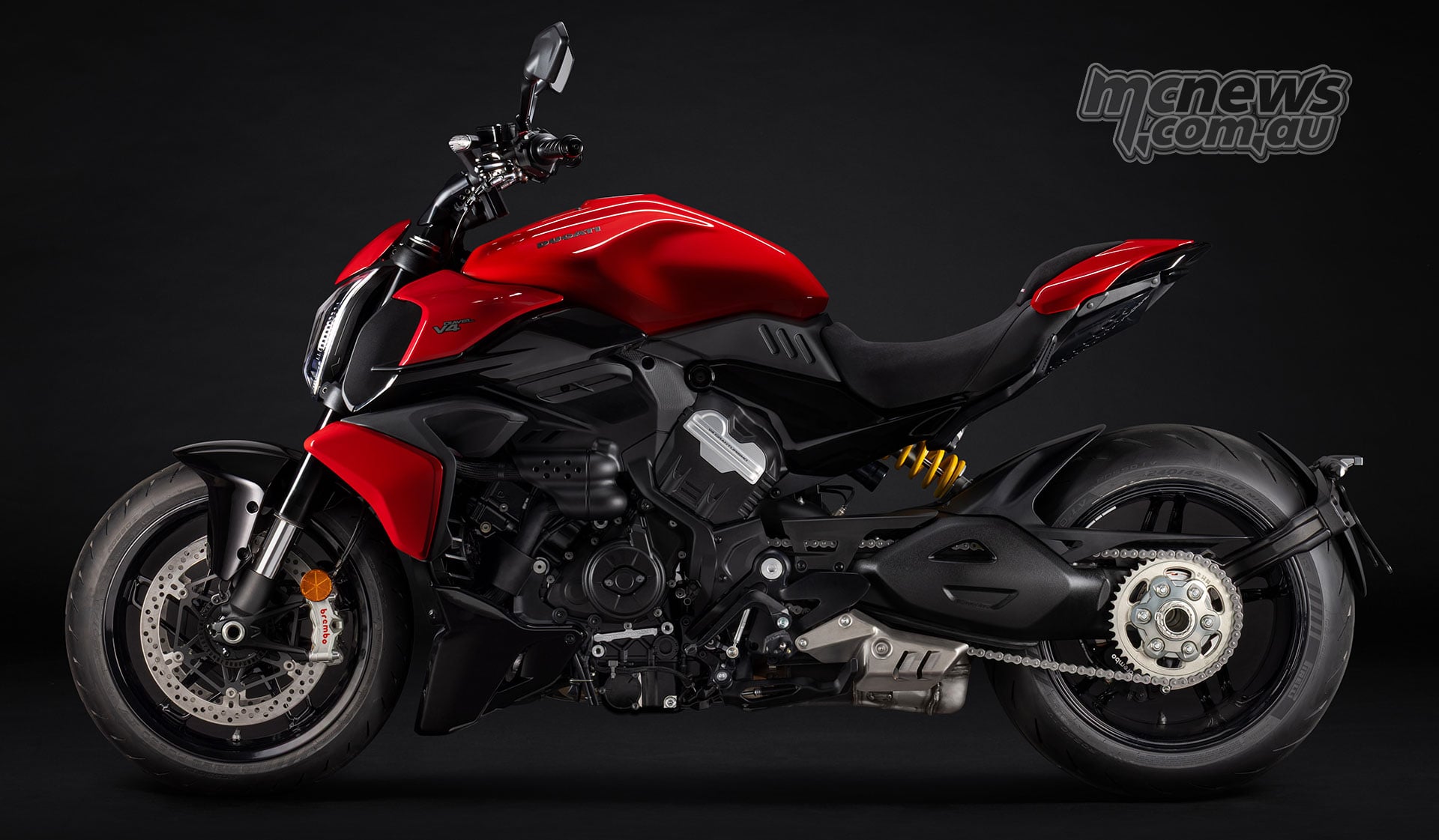
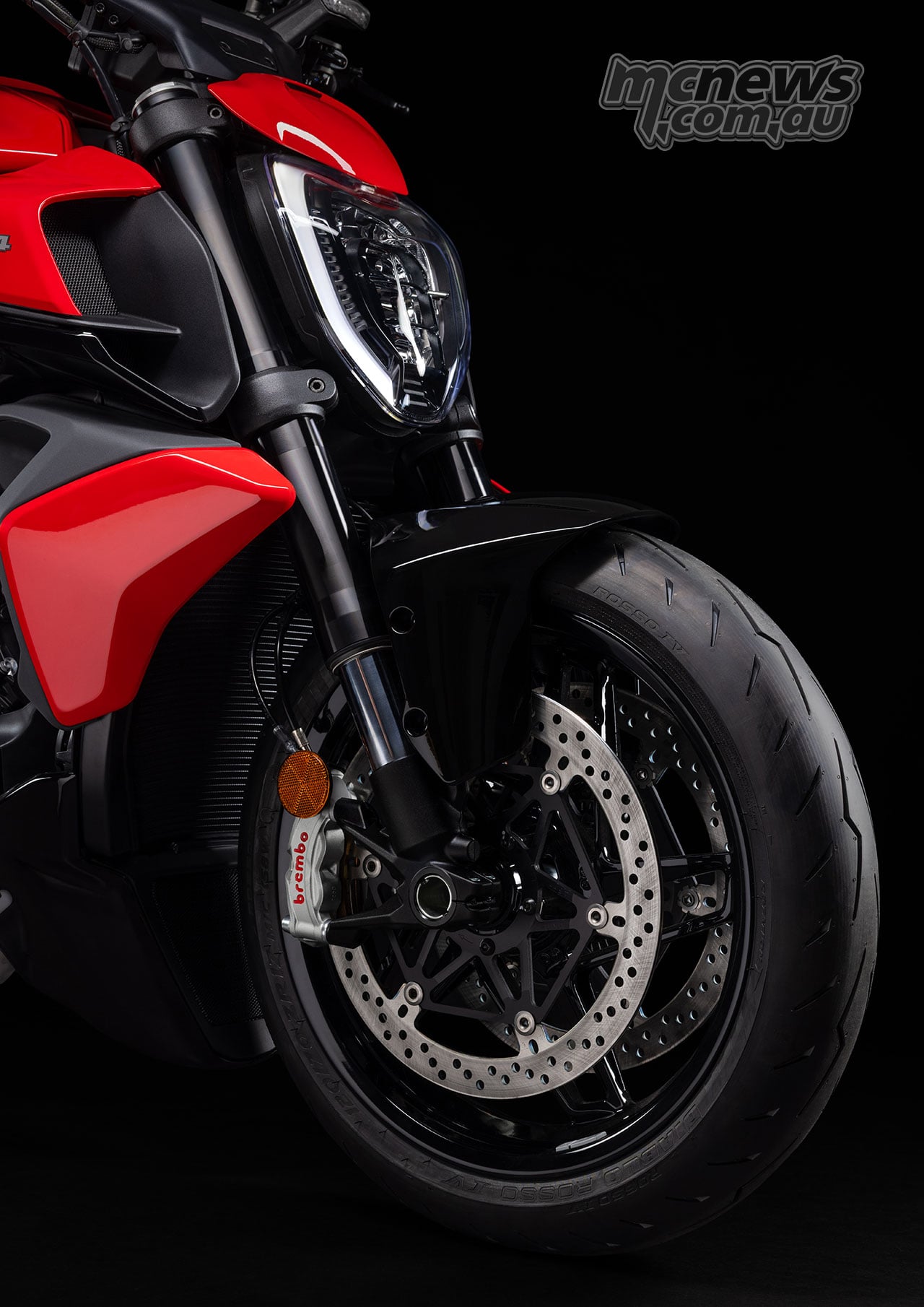
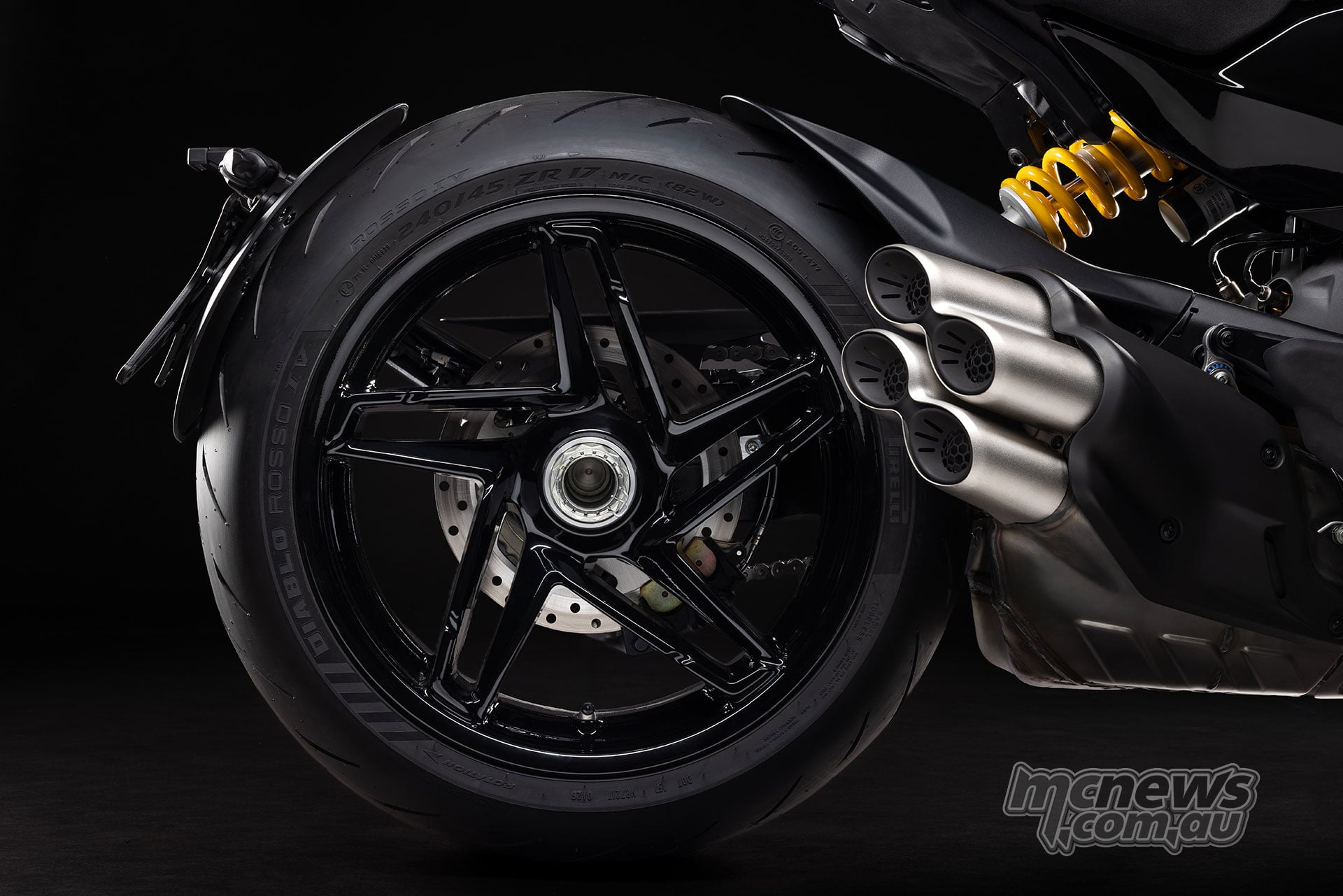
Both run 17-inch wheels, with Pirelli Diablo Rosso IV tyres in 120/70 front and a substantial 240/45 rear. The S wheels are cast aluminium with additional machining to the spokes.
Braking hardware comprises twin 330 mm front discs and Brembo Stylema monoblock calipers, backed by cornering ABS. A 265 mm disc and two-piston Brembo caliper handle rear braking duties.
The fat rear tyre remains central to the Diavel’s appearance, although Ducati says the new tyre and wheel combination also makes the MY27 bike more neutral through corners.
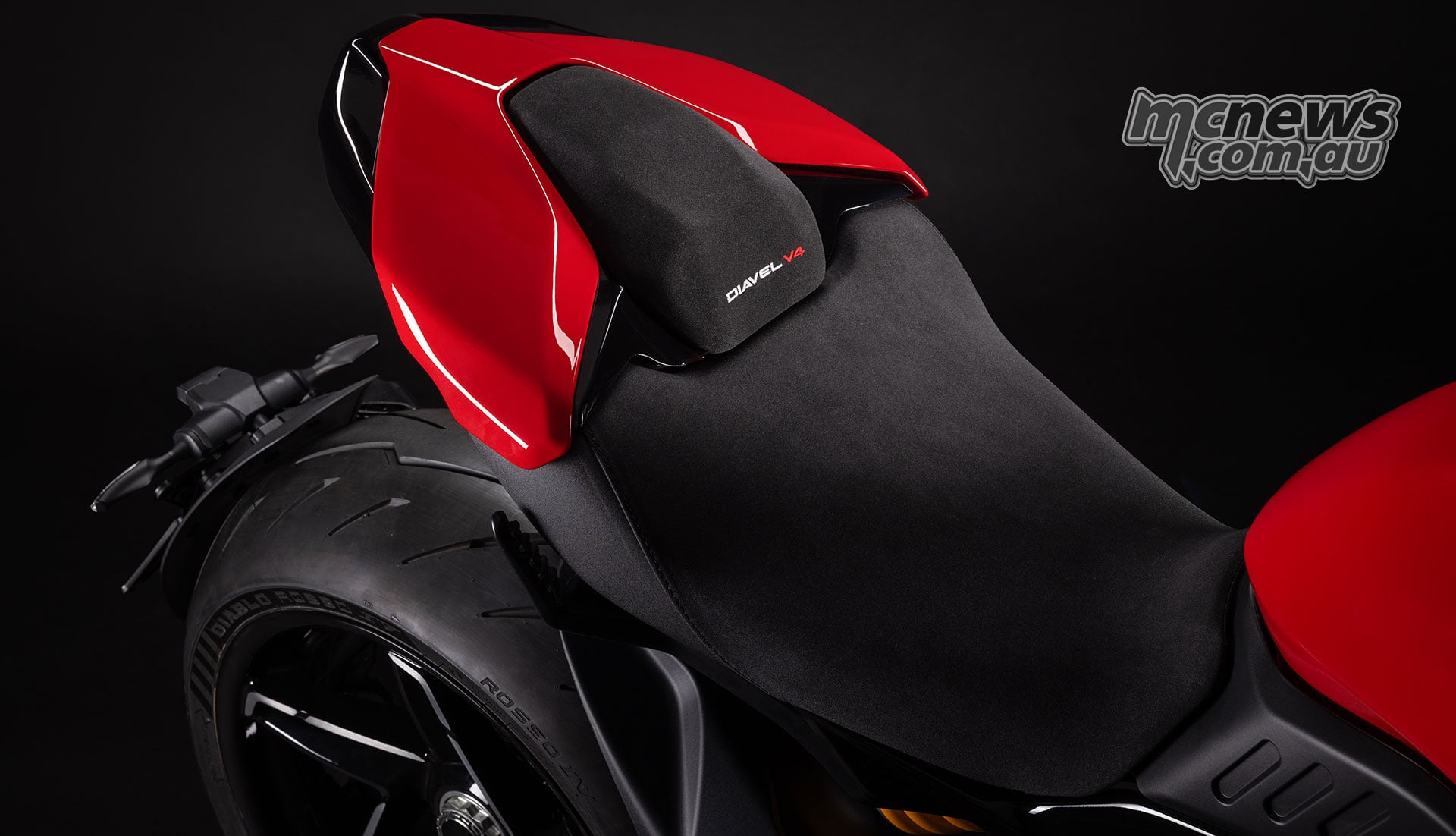
Seat height is 790 mm, while the tank holds 20 litres. A passenger seat is supplied, with retractable passenger footpegs and a retractable grab handle allowing the bike to retain a clean look when ridden solo.
A larger dash and more useful electronics
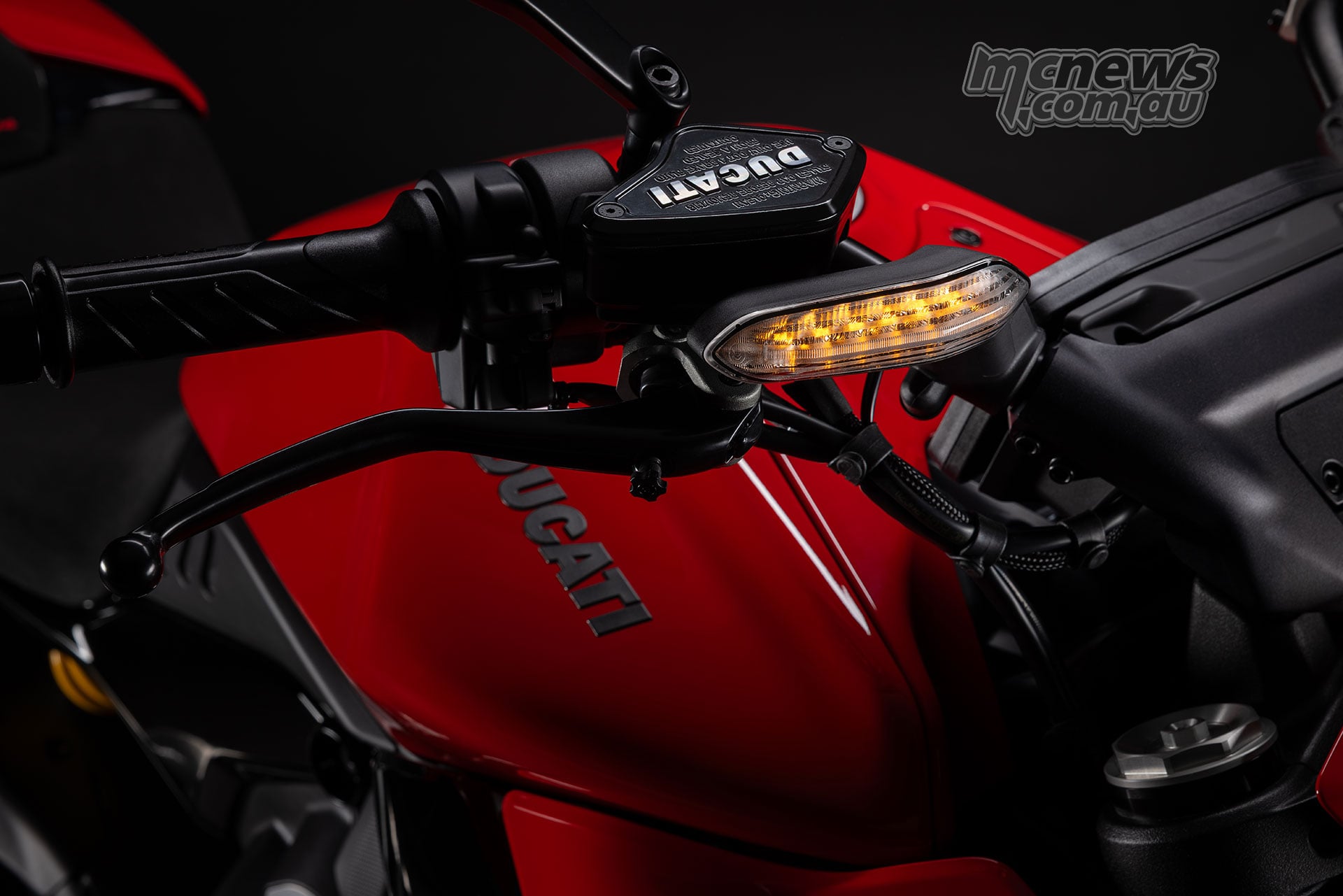
A new 6.9-inch, optically bonded TFT replaces the previous display. Its wide 8:3 layout works with revised switchgear, and both models include the Ducati Multimedia System, turn-by-turn navigation and a 20 W USB-C outlet.
The display can show traction- and wheelie-control intervention, while the Power Launch screen records 0–100 km/h and 0–200 km/h times. A reserve fuel bar supplements the remaining-range readout.
Sport, Touring, Urban and Wet riding modes work with three power modes. High and Medium retain the full 168 hp with different throttle responses, while Low limits output to 115 hp. Cruise control and hands-free ignition are also included. The S adds heated grips as standard.
Revised styling and Australian pricing
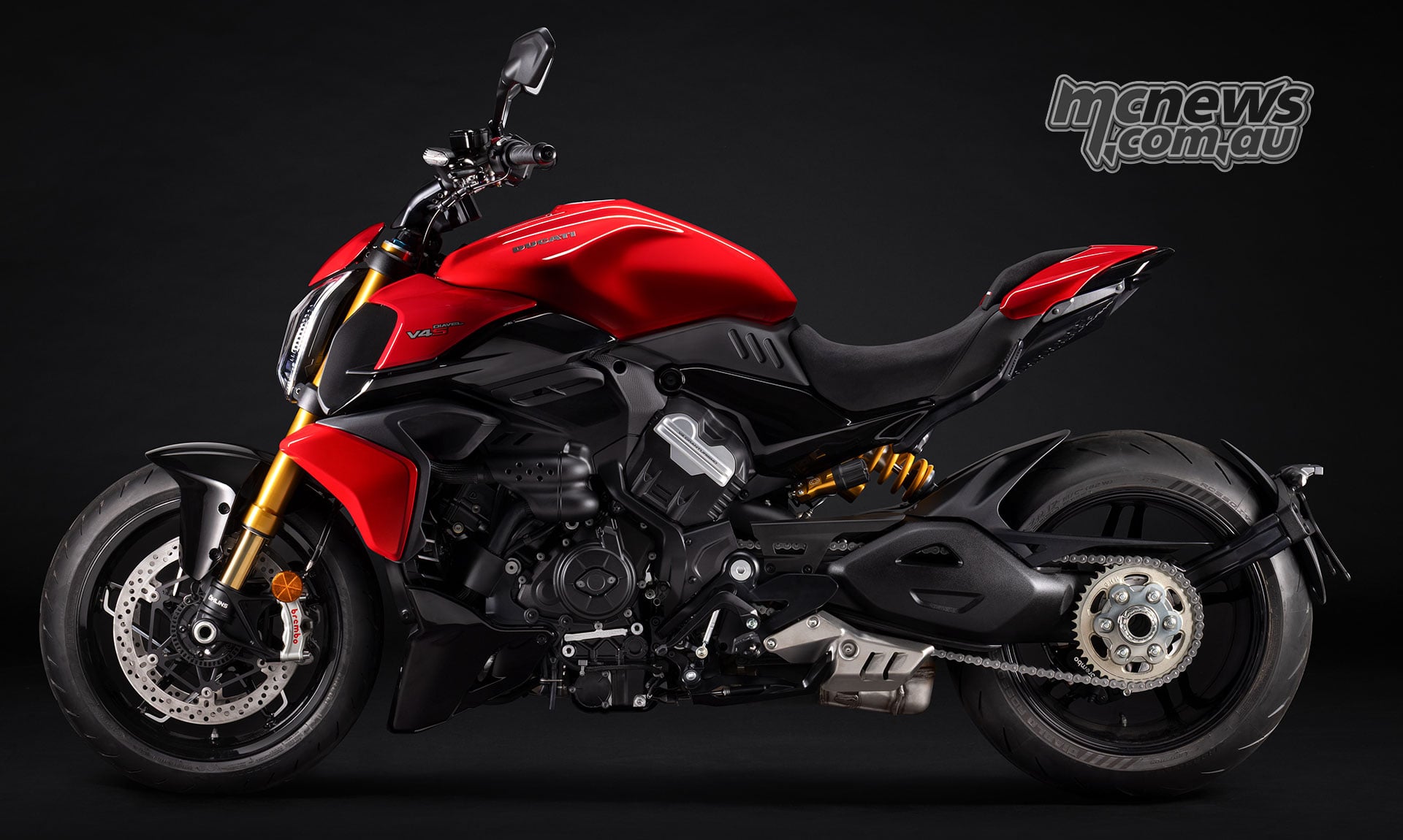
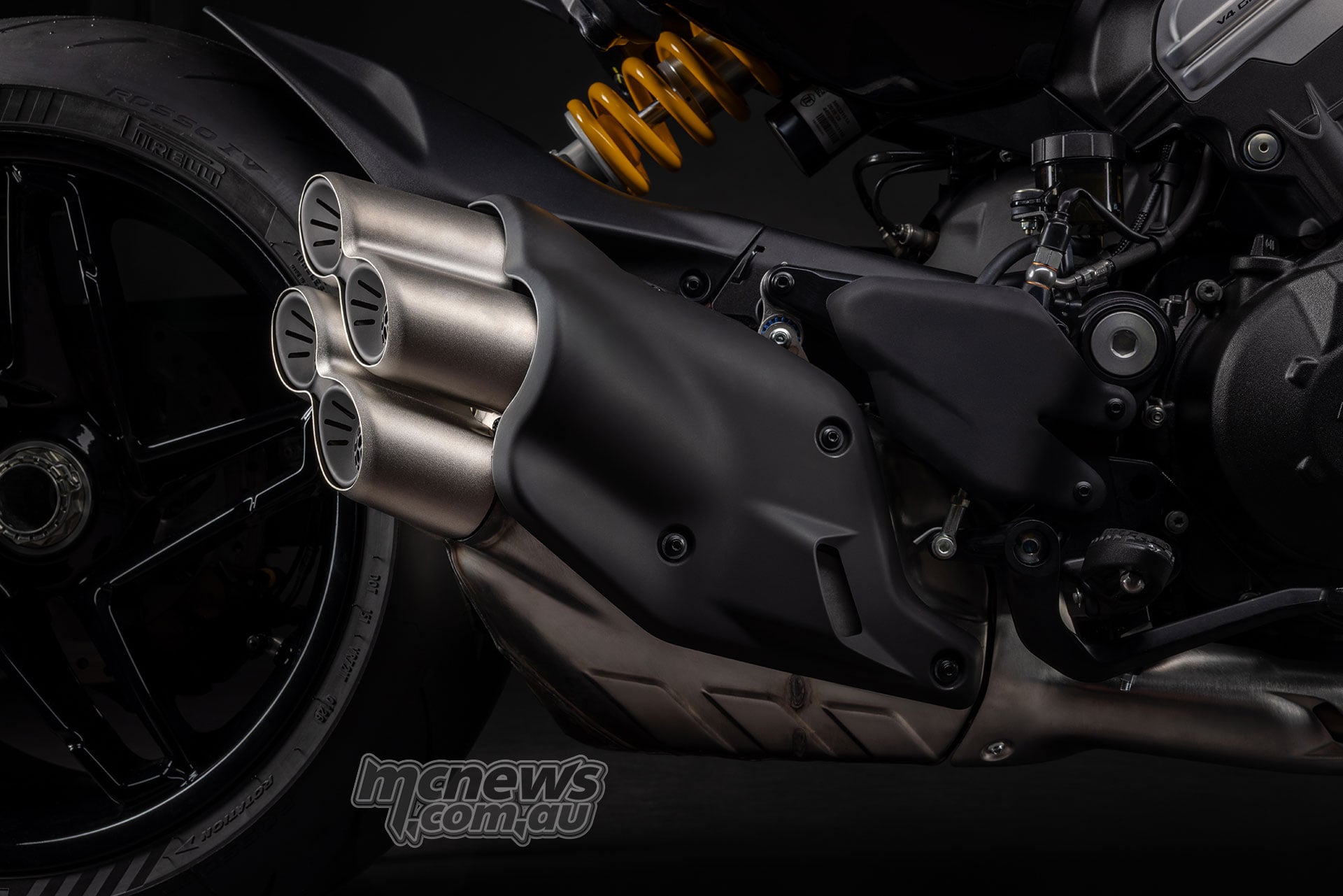
The new air intakes take their cue from the Diavel V4 RS, accompanied by changes to the tail cover, seat, exhaust cover and other trim. The double-C front lighting and LED matrix beneath the tail remain distinctive signatures.
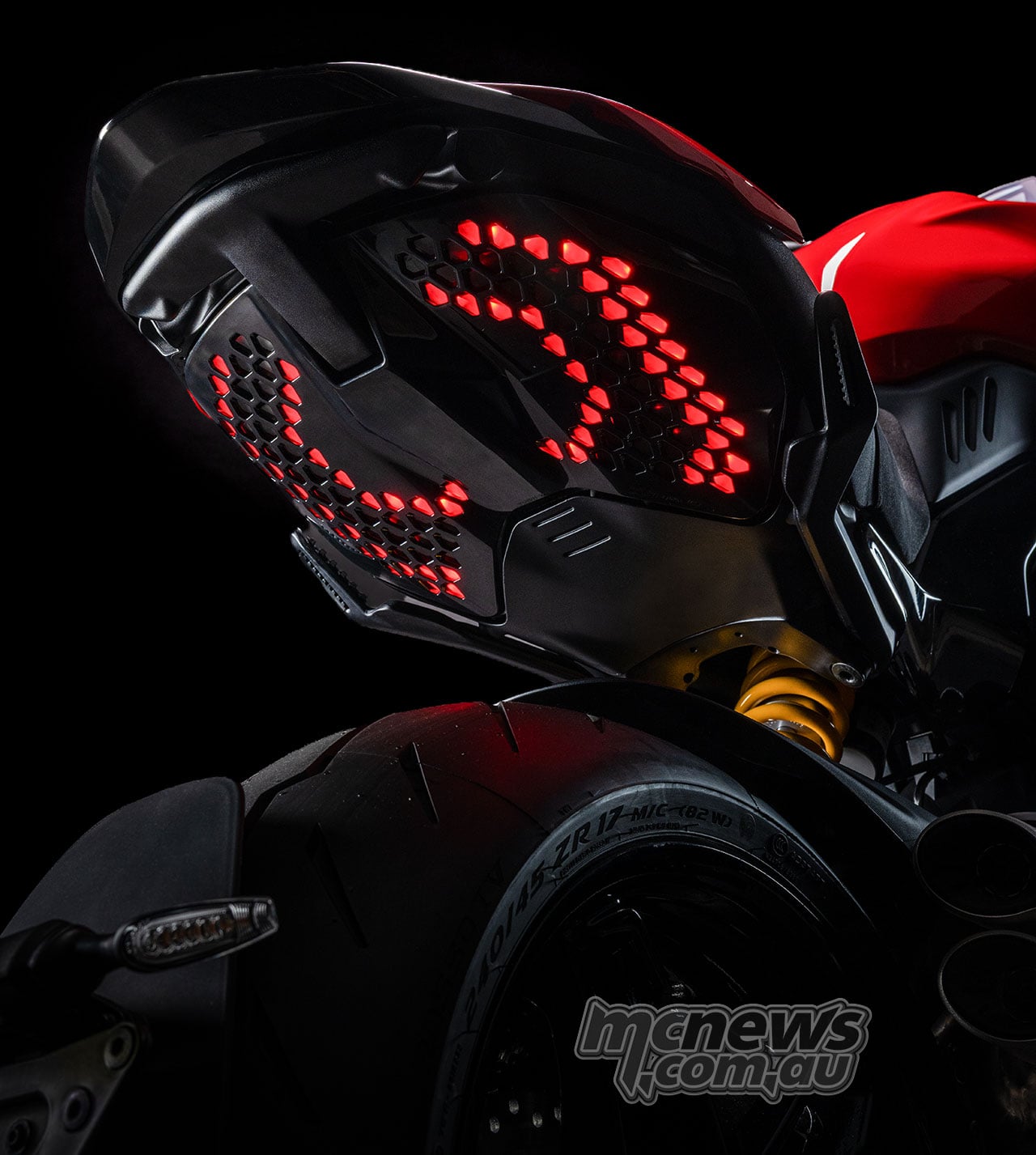
Ducati’s global Factory Made programme expands the colour and equipment choices, including Ducati Corse and Performance liveries for the S. The grey, black and red bike pictured here wears the Performance livery. Unfortunately, Ducati Factory Made is currently unavailable in Australia and New Zealand.
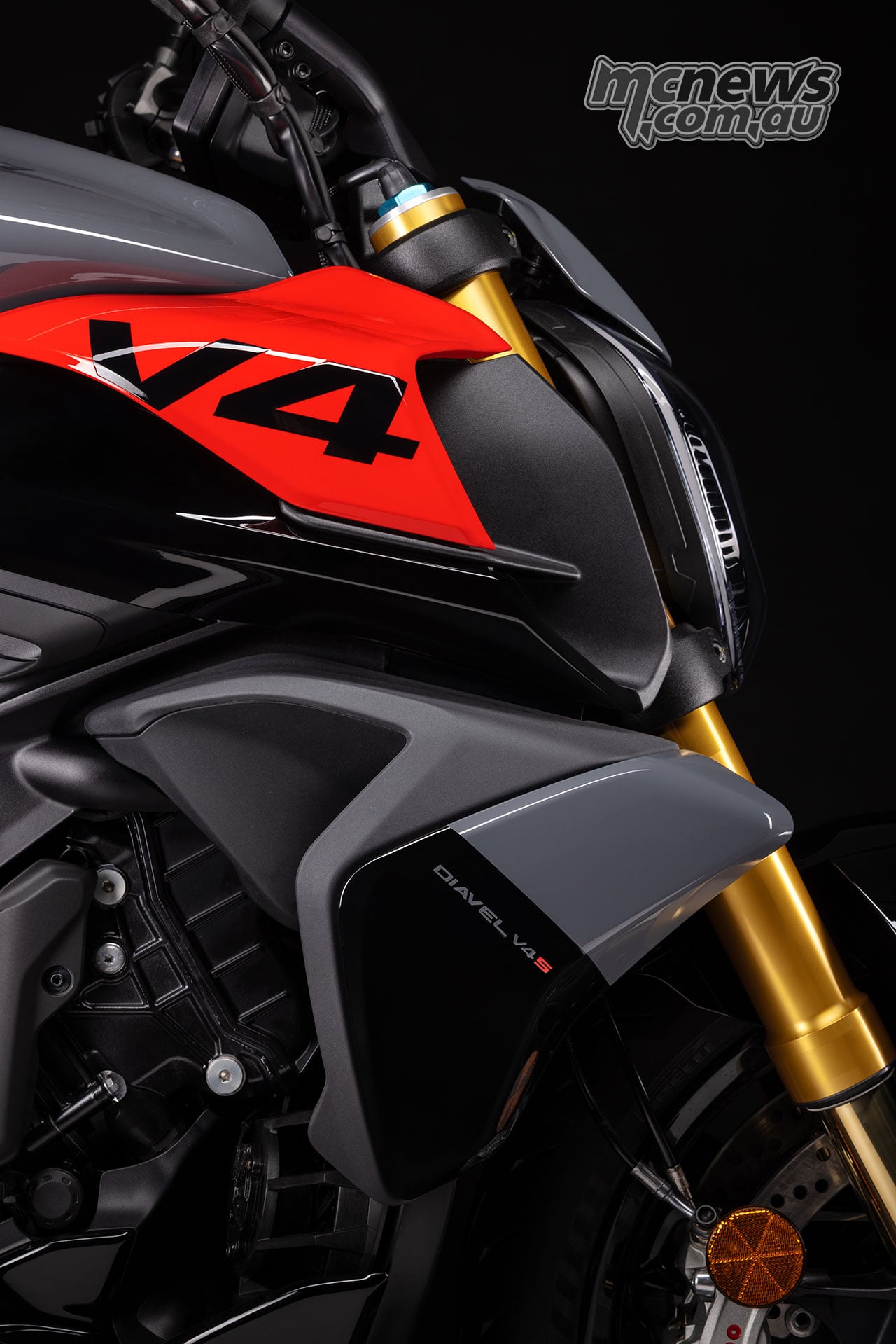
Australian ride-away pricing starts at $45,925 for the Diavel V4, with the new Diavel V4 S coming in at just over $50,000.
| Specification | Diavel V4 | Diavel V4 S |
|---|---|---|
| Engine | 1158 cc V4 Granturismo | 1158 cc V4 Granturismo |
| Claimed output | 168 hp / 126 Nm | 168 hp / 126 Nm |
| Front suspension | 50 mm, fully adjustable | 48 mm Öhlins NIX30, Smart EC 3.0 |
| Rear suspension | Manually adjustable shock | Öhlins ARX40, Smart EC 3.0 |
| Wheels | Cast aluminium, five-spoke | Cast aluminium, machined spokes |
| Battery | Lead-acid | Lithium |
| Heated grips | Optional | Standard |
| Wet weight without fuel | 225 kg | 222 kg |
| Australian ride-away price | From $45,925 | Just over $50,000 |