

Ohvale goes bigger with new GP-5 250
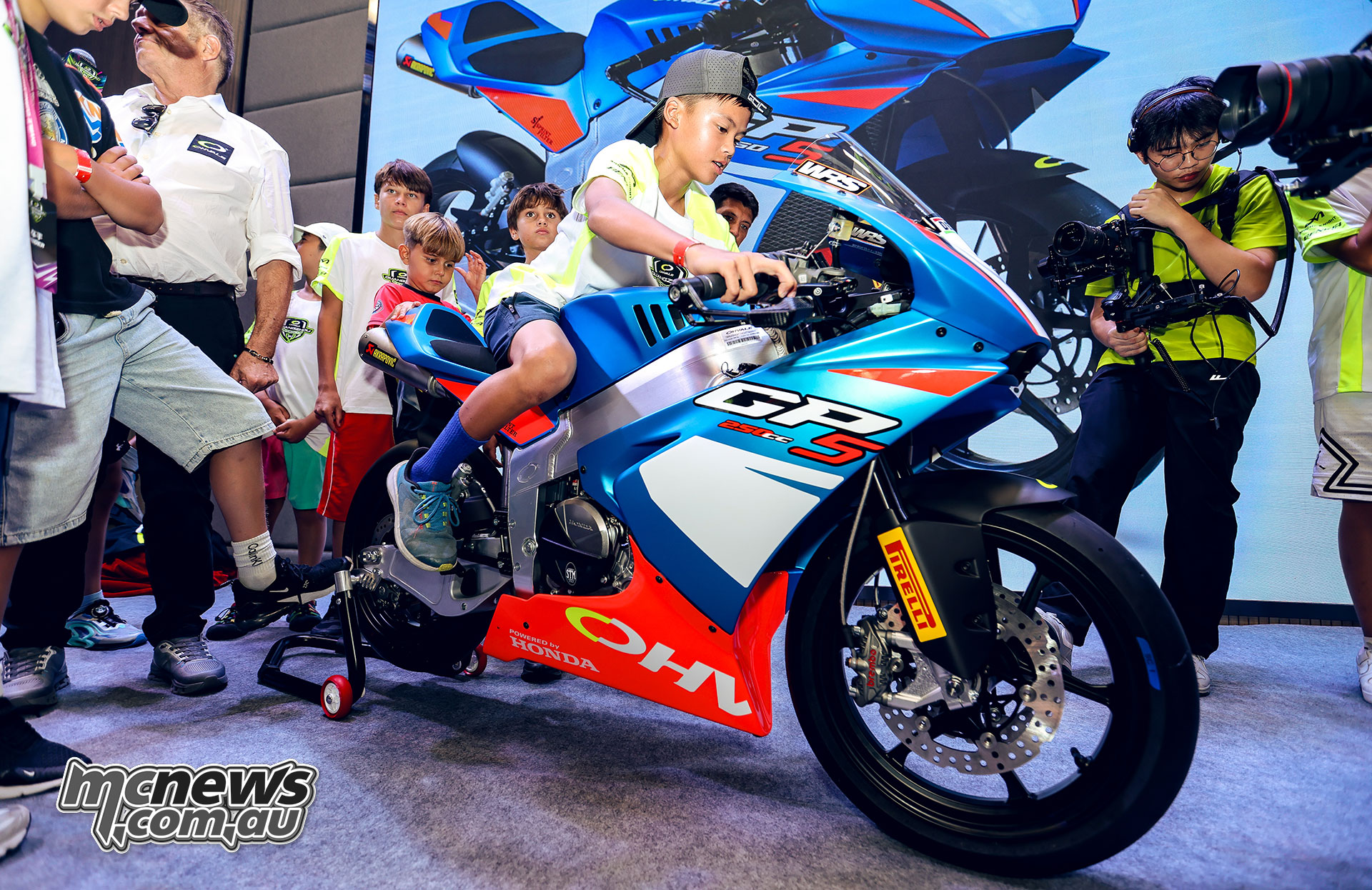
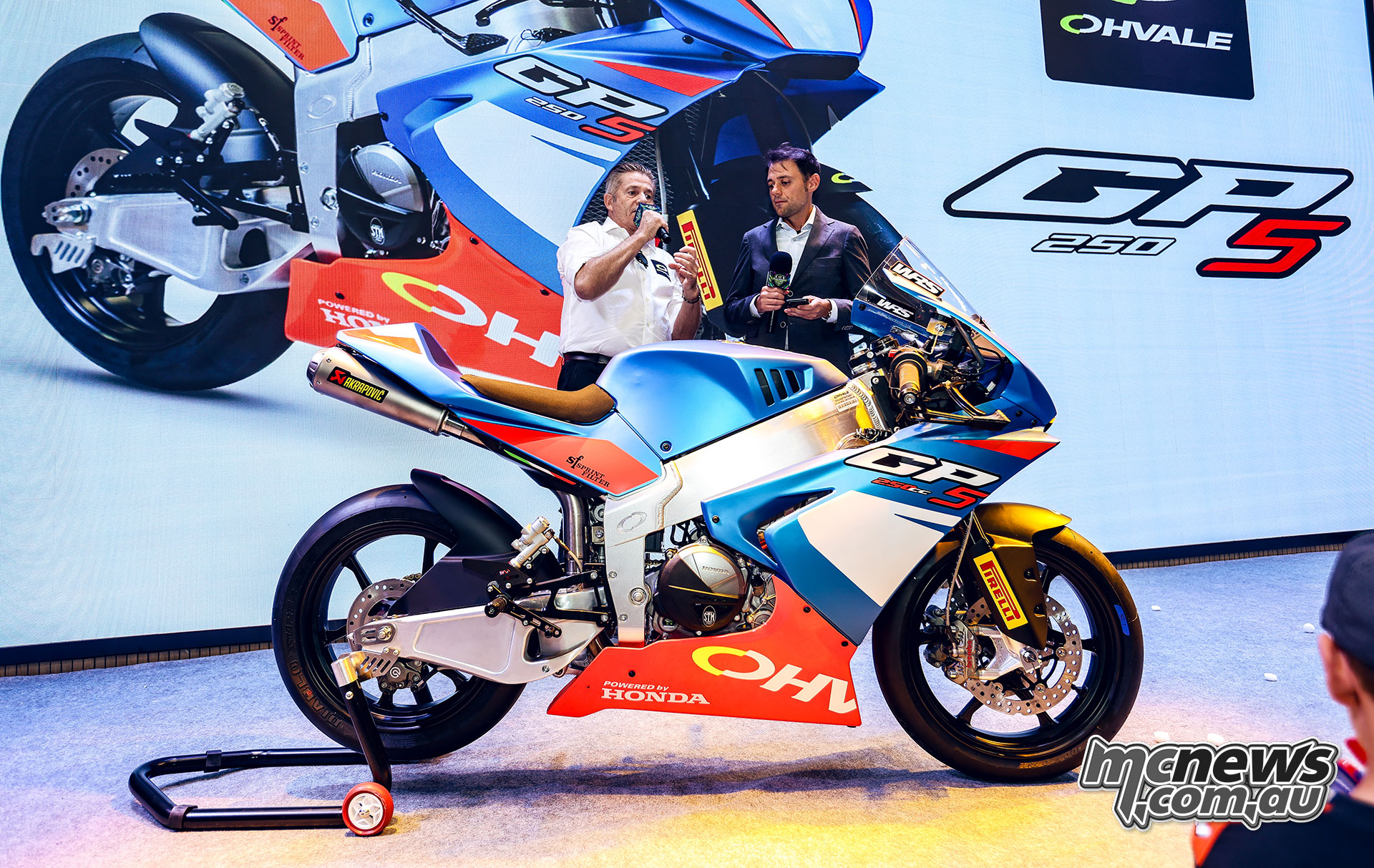
Ohvale has added an important new middle rung to its racing motorcycle ladder, unveiling the GP-5 250 at the Ohvale Guangzhou Supercup in China.
Built around 15-inch wheels and a 250 cc four-stroke single-cylinder engine, the GP-5 has been deliberately positioned between the compact 12-inch GP-2 and the 17-inch GP-7.
It is intended to provide a more progressive step towards full-size race machinery while retaining the compact dimensions, accessibility and intense repetition that make smaller motorcycles such effective training tools.

A new middle rung in the Ohvale ladder
Until now, Ohvale’s range comprised the GP-0, GP-2 and GP-7. The company describes the new GP-5 as being as intuitive as the GP-2 and as high-performing as the GP-7.
Where the 12-inch GP-0 and GP-2 models are primarily at home on kart circuits, Ohvale says the GP-5 has been developed for use across a wider variety of venues, ranging from kart tracks through to larger full-size circuits.
Its ergonomics are also intended to accommodate both developing junior riders and adults looking for a compact but serious track or training motorcycle.
Honda and ZS 250 engine options
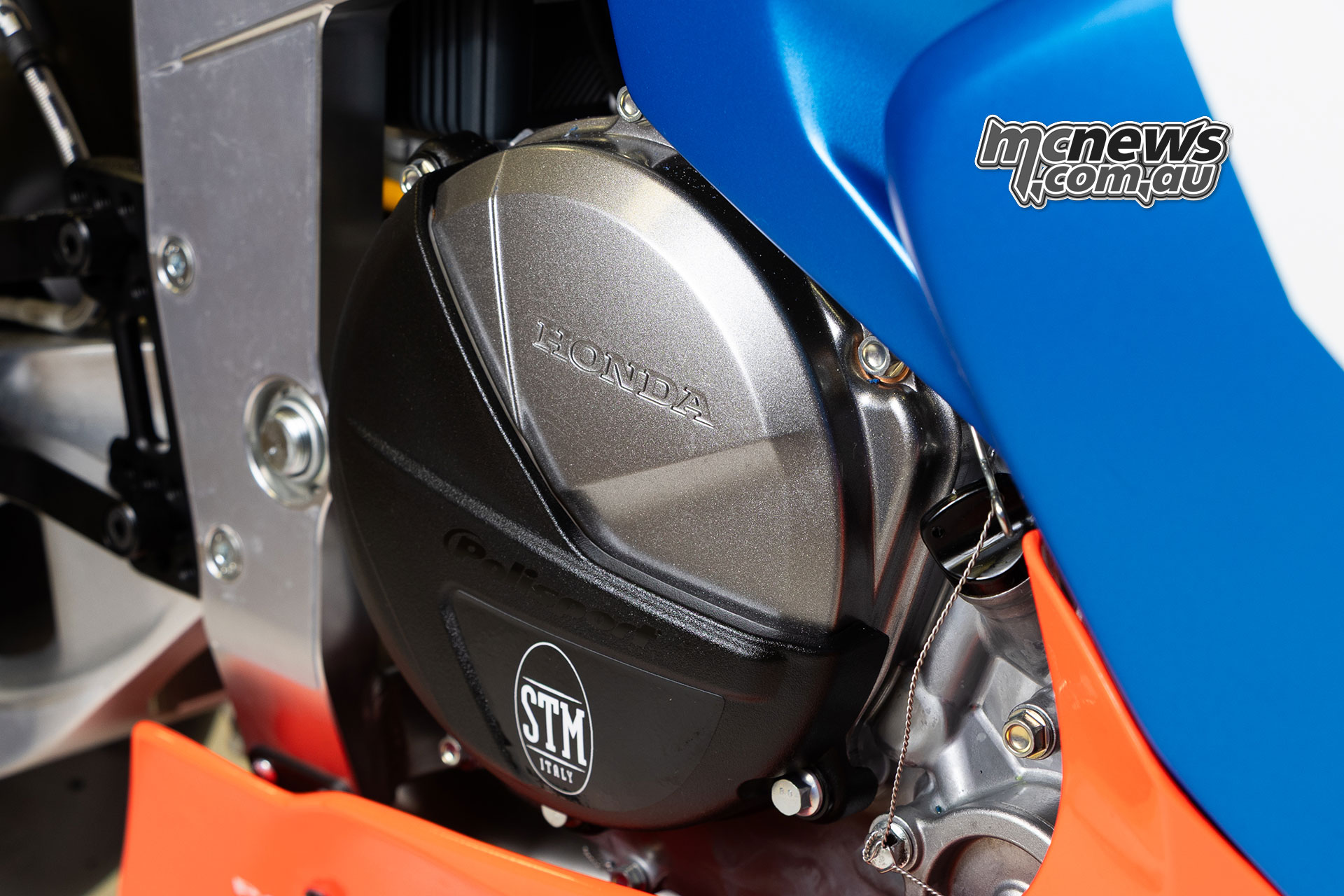
Two engine variants have been announced. The headline version is powered by the 249.4 cc Honda CRF250R engine already employed in the Honda-powered GP-7. It is a liquid-cooled DOHC four-valve single with a 44 mm Honda throttle body, five-speed gearbox and electric start.
The Honda version comes standard with an upshift quickshifter and uses a cable-operated multi-plate wet clutch. An STM slipper clutch will be available as an option.
The alternative ZS RR250 version uses a 249.8 cc liquid-cooled DOHC four-valve single, paired with a 46 mm Dell’Orto throttle body, five-speed transmission and hydraulically operated clutch. An upshift quickshifter will be optional on the ZS-powered model.
Both engine packages will be available with a choice of Racing or Restricted Dell’Orto ECU. Ohvale has not yet published claimed power or torque figures for either configuration.
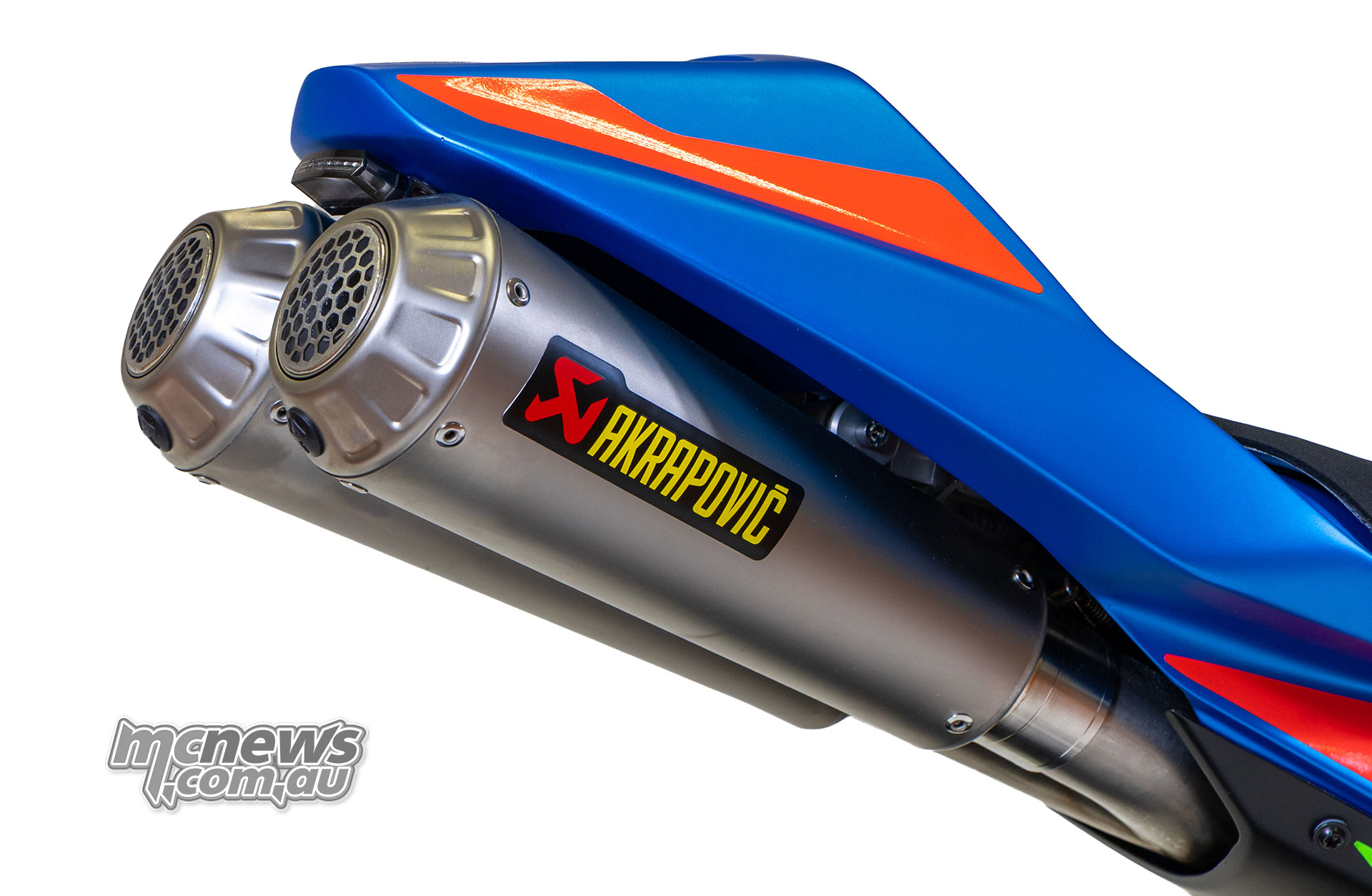
A twin-silencer Arrow exhaust will be fitted as standard, with two different dB killers available to help meet varying circuit noise restrictions. A dedicated twin-silencer Akrapovič system will be offered as an option.
Aluminium chassis and 15-inch Pirelli tyres
The GP-5 is constructed around an aluminium perimeter frame, complemented by an aluminium swingarm designed and developed by Ohvale. Ohvale also designed the lightweight aluminium wheels specifically for the new platform.
Those wheels measure 15 x 2.75 inches at the front and 15 x 3.50 inches at the rear. Pirelli has developed dedicated 100/70 R15 front and 120/70 R15 rear tyres for the GP-5, with both slick and wet-weather versions to be available.
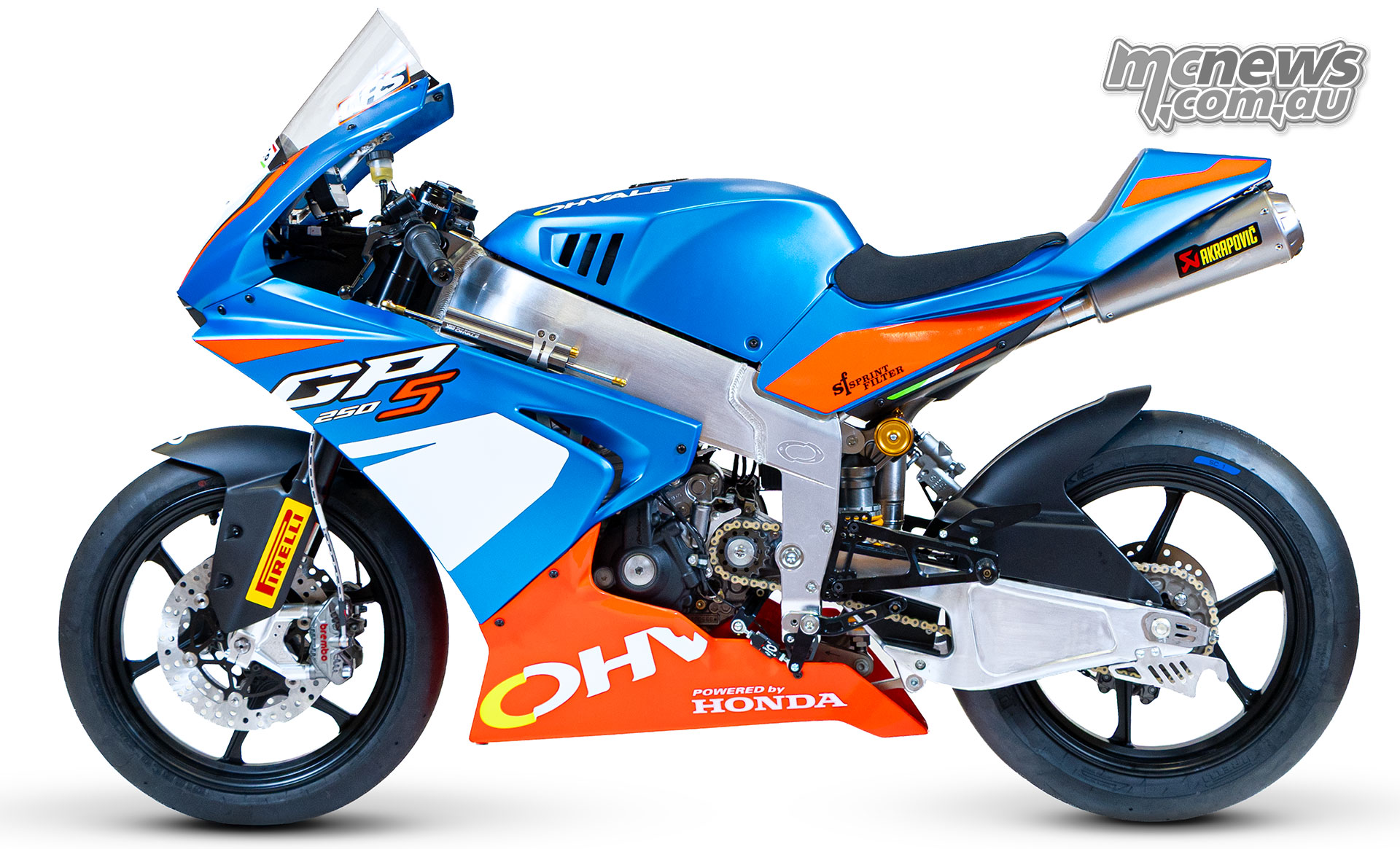
Fully adjustable 35 mm OHRACING upside-down forks provide adjustment for spring preload, compression and rebound damping. The linkage-equipped rear end uses an OHRACING monoshock adjustable for length, spring preload, compression and rebound.
An Öhlins TTX rear shock with a dedicated GP-5 setting will be optional, along with an adjustable OHRACING steering damper.
Twin-disc Brembo front brakes
Braking hardware is unusually serious for a motorcycle of this size. The GP-5 carries twin 240 mm front discs, Brembo GP4-Mini radial four-piston calipers and a Brembo 15 RCS radial master cylinder.
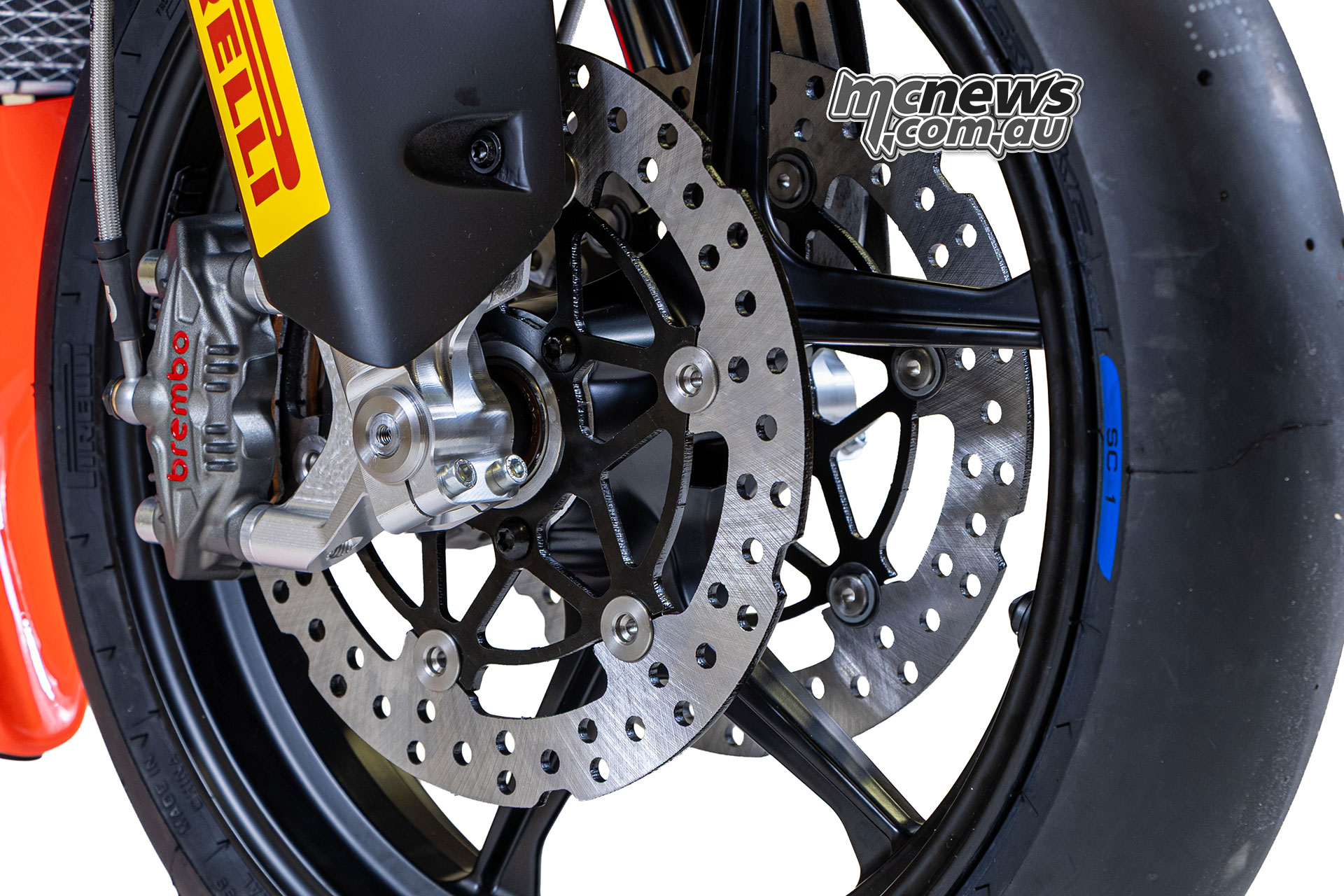
Ohvale says the twin-disc layout was selected to improve modulation, reduce operating temperatures and provide greater resistance to fade during repeated heavy braking.
A 190 mm rear disc is paired with a two-piston Brembo caliper and a Brembo master cylinder with an integrated reservoir.
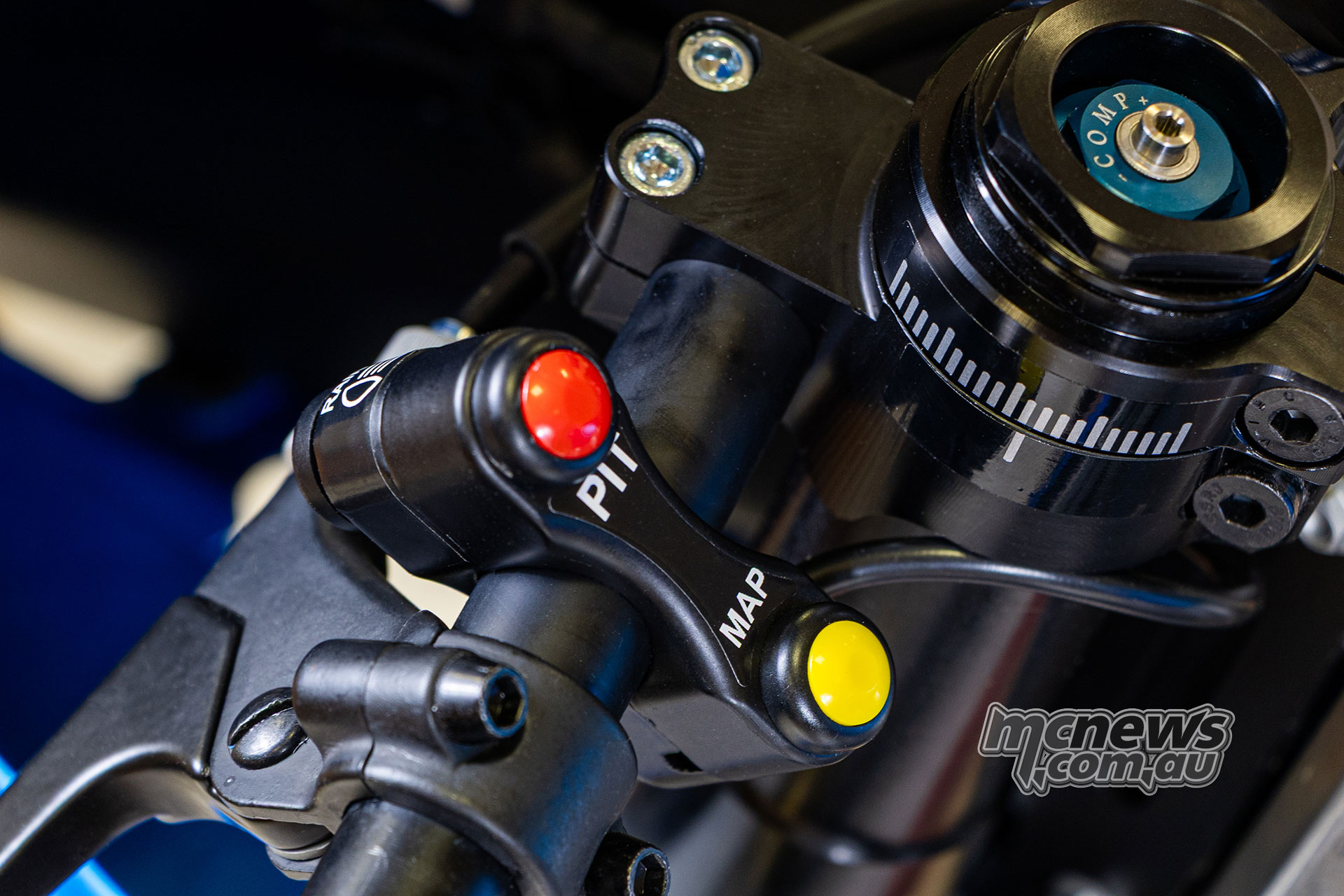
Standard instrumentation includes a manual lap timer, tachometer, hour meter, and water-temperature display, along with dual-map, pit-limiter, and neutral indicators.
An optional AiM MXq dashboard adds GPS lap timing, CAN-based engine data, an inertial measurement unit, wireless data downloading and broader data-acquisition capability.
Where could the GP-5 fit in Australia?
The GP-5 raises an immediate question for the Australian market because it does not neatly fit within any of the current MotoMini Australia classes.
As previously detailed on MCNews.com.au, Australia’s present junior ladder begins with the Ohvale GP-0 110 for riders aged six to ten. It then progresses through the FIM MotoMini Australia 160 category for riders aged 10 to 14 and the GP-2 190-based category for riders aged 12 to 16.
The 160 and 190 categories are Australia’s two current international pathway classes, feeding selected riders into the FIM MotoMini World Final.
The domestic Australian MotoMini Cup for riders aged 16 and over, along with the Masters Cup for those aged 35 and over, currently permits MiniGP-style motorcycles of up to 212 cc with wheels no larger than 12 inches.
Consequently, the GP-5’s 250 cc engine and 15-inch wheels place it outside those presently published limits. To race within the existing Australian program, it would require a new category, revised eligibility rules, or a separate competition structure.
The combination of 15-inch wheels, 250 cc power and compact dimensions could provide Australian juniors with an intermediate step between the GP-2 190 and larger 17-inch race bikes. It could also appeal to experienced adult riders seeking a high-spec training motorcycle that can be used on both kart circuits and larger venues.

Australian plans yet to be confirmed
Ohvale has not yet announced Australian availability, local pricing, production timing or any corresponding Australian race category for the GP-5.
OHVALE GP-5 will be available for delivery from October 2026 in Europe, with a starting price of €8,500 plus tax, which would translate to around $15,000 AUD in base specification. For comparison, the current GP-0 160 retails for under $11,000, while the 190 cc GP-2 sells for $13,490.
The initial technical information does not include claimed power, weight, wheelbase or seat height, all of which will help indicate precisely how substantial the step from the GP-2 will be.
For Australia, the GP-5’s ultimate significance will therefore depend less on its impressive component list than on whether it is given a viable place within the local racing and rider-development structure. As of now, that is unclear.