

Have sportsbikes become too fat?
WMC’s Mono RR takes another approach
Fast motorcycles have never needed to be big motorcycles. Think back to 125 cc Grand Prix two-strokes weighing around 70 kg and pulling more than 240 km/h at Phillip Island. Or the 250 cc machines, around the 100 kg mark, nudging 300 km/h. Tiny engines, tiny motorcycles, enormous performance.
Light was right. Every kilogram mattered, and making a motorcycle go faster involved paying very close attention to how much motorcycle you actually needed.
Since then, motorcycles, like many of us, seem to have spent the past 25 years getting fatter and fatter.
Modern road bikes must meet demands for durability, comfort, equipment, and emissions that those dedicated GP racers never faced. But the appeal of a compact, light motorcycle with enough performance to make every ride an event has hardly diminished.
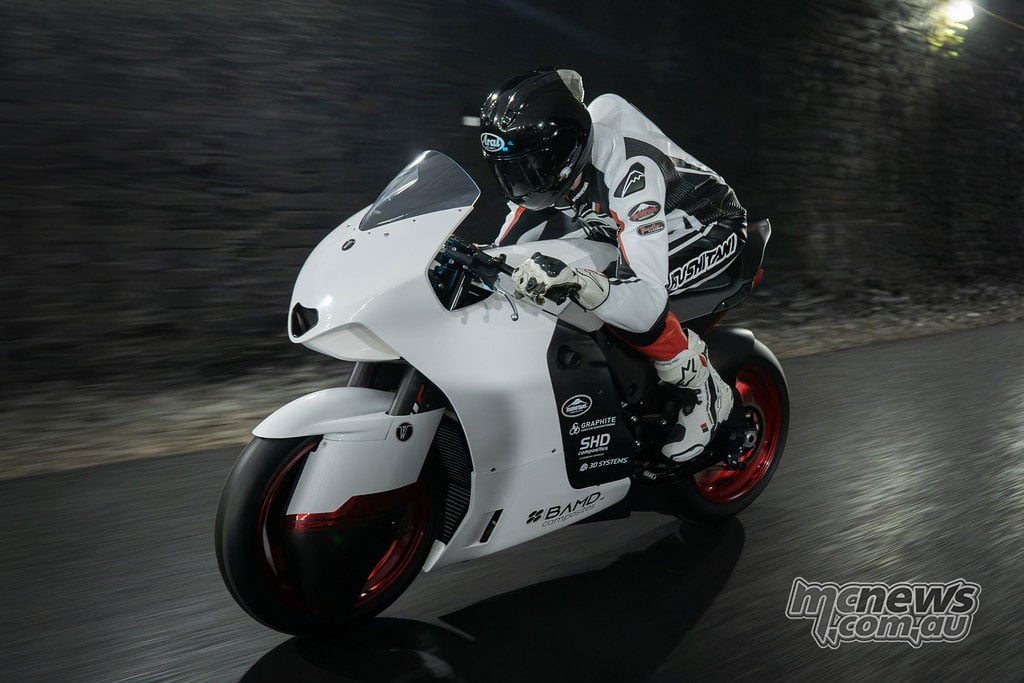
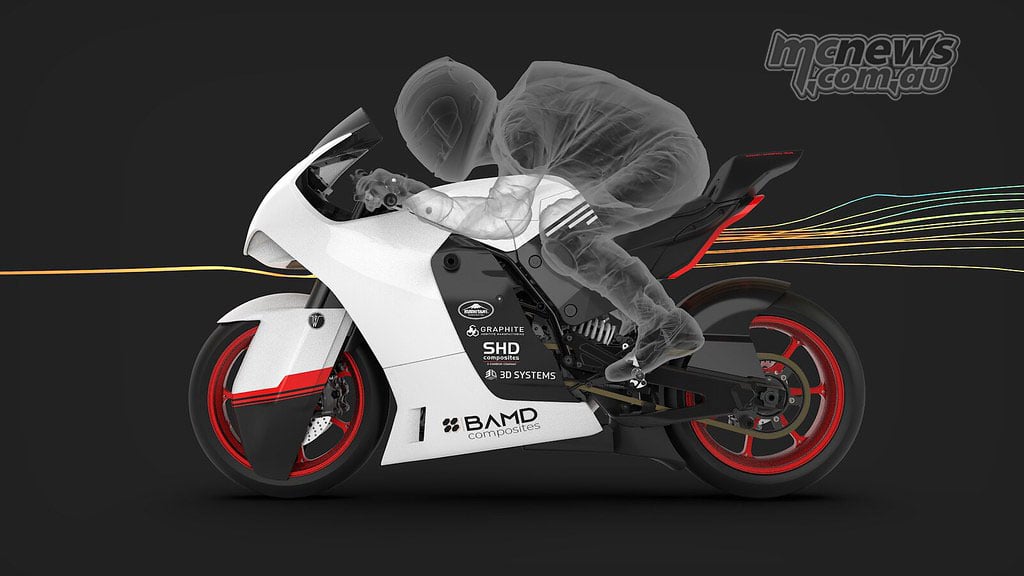
British engineering company White Motorcycle Concepts is exploring how to apply that thinking to its Mono RR. The longer-term ambition is a supercharged 450 cc single producing 100 horsepower in a motorcycle weighing 100 kg, with an aerodynamic layout designed to make more effective use of that power.
We like the way they are thinking.
Chasing 100 horsepower and 100 kilograms
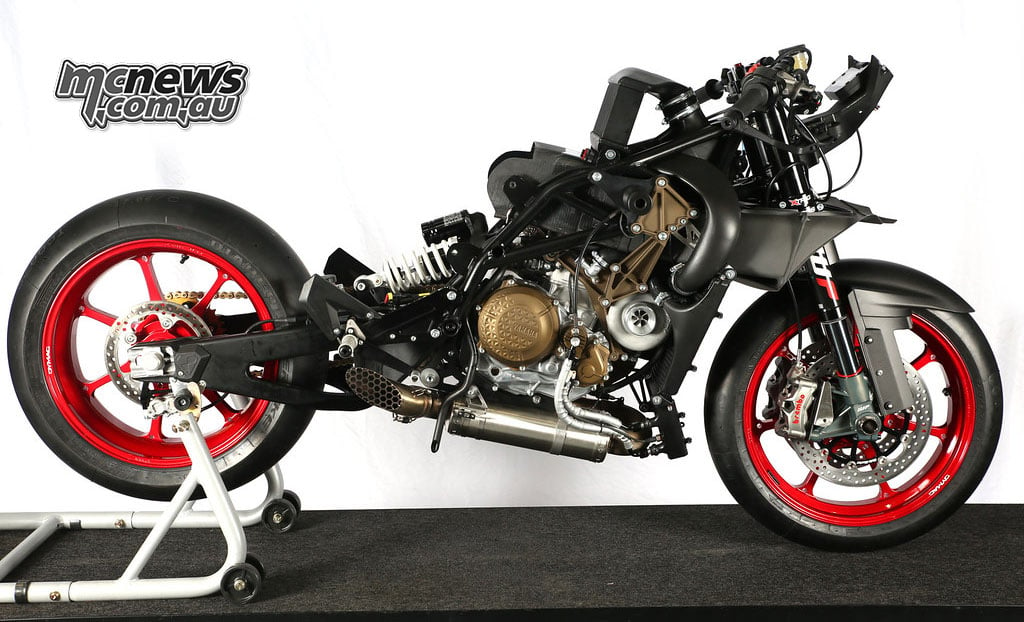
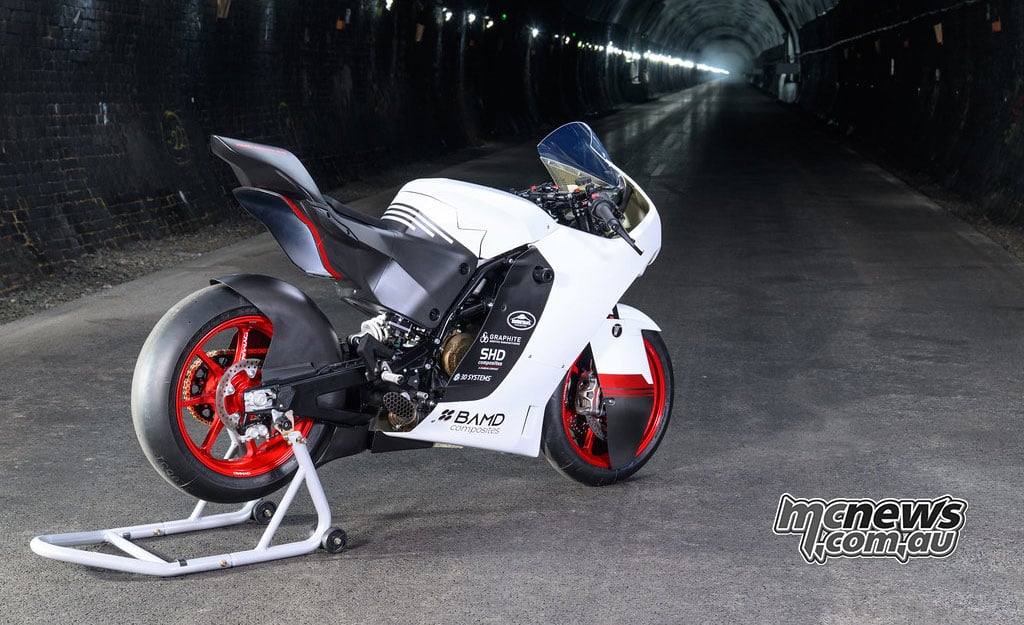
The Mono RR begins with a rather good motorcycle: the Krämer EVO2 690R. WMC has replaced its KTM-derived 693 cc single with a Yamaha YZ450F engine, added a supercharger and rearranged much of the motorcycle around a duct that carries air through its centre.
The 100 hp and 100 kg figures are Phase 2 targets. WMC’s published Phase 1 specification lists 75 hp and 125 kg, with the latter described as a wet weight. The fuel condition for the eventual 100 kg target is not specified.
Even allowing for that qualification, the ambition is an appealing one. A motorcycle delivering one horsepower for every kilogram of its own mass would have little difficulty attracting our attention. Achieving it with a compact single would make the prospect more interesting again.
The old GP bikes provide some useful perspective here. Weight matters when accelerating, braking and changing direction, while their remarkable terminal speeds also depended on power, gearing and how efficiently bike and rider passed through the air. Losing kilograms alone does not remove aerodynamic drag.
WMC is working on both sides of that equation. It wants less motorcycle to move around, and less resistance to pushing it through the air.
Why take out the bigger engine?
Replacing a 693 cc engine with a 449 cc unit might seem an odd starting point for a performance project. It makes more sense once you understand what WMC wanted to do with the space.
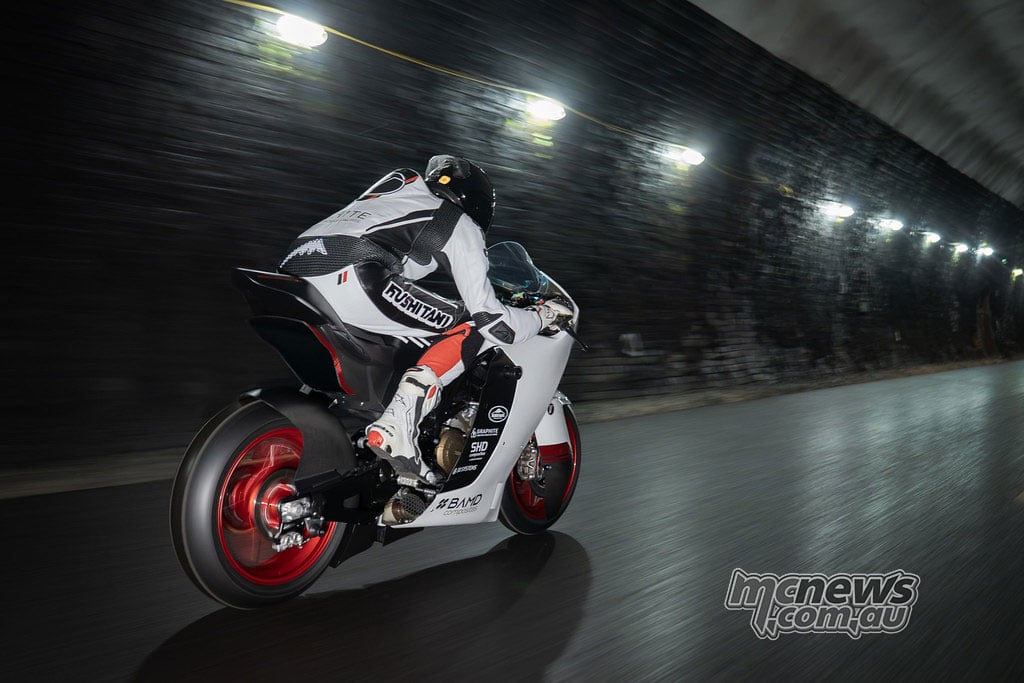
The Yamaha engine is physically shorter, opening up room above it for the company’s patented aerodynamic duct. Air entering above the front wheel can travel through the motorcycle and emerge at the rear, reducing the amount that has to be displaced around the outside.
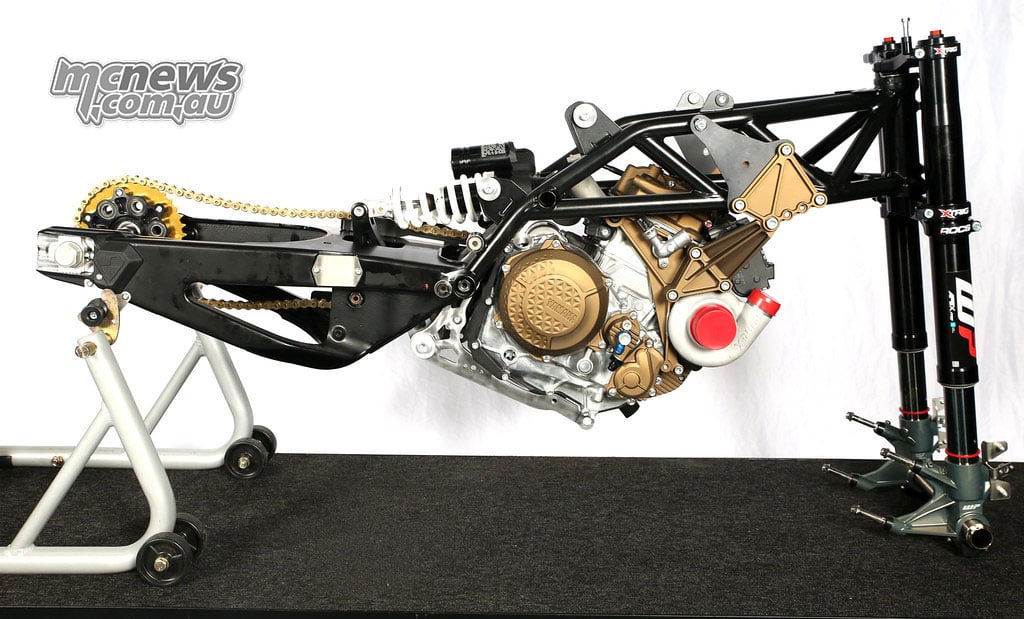
The supercharger then helps the smaller engine recover the performance lost through reduced capacity. The initial objective is to operate in the same power bracket as the original Krämer, which WMC quotes at 76 hp, before pursuing the more ambitious 100 hp goal.
This is where the project becomes particularly interesting. Engine size dictates how much room is available for the duct. The duct influences the intake, cooling system and fuel tank. Those components, in turn, affect how the engine can be installed and supported.
Each decision has consequences elsewhere in the motorcycle.
WMC quotes a powertrain weight reduction of around 20 kg against the original installation.
A motocross engine with a different job
The YZ450F engine brings more to this project than compact dimensions. Its reversed cylinder-head layout places the intake at the front and the exhaust at the rear, which suits the arrangement WMC is trying to achieve.
That separates the incoming charge from the hot exhaust system and puts the inlet in the wider forward section of the aerodynamic duct. There is more room there to accommodate the intake hardware while preserving the passage available for airflow through the bike.
A Rotrex C15-20 supercharger sits ahead of the cylinder and is belt-driven from the crankshaft.
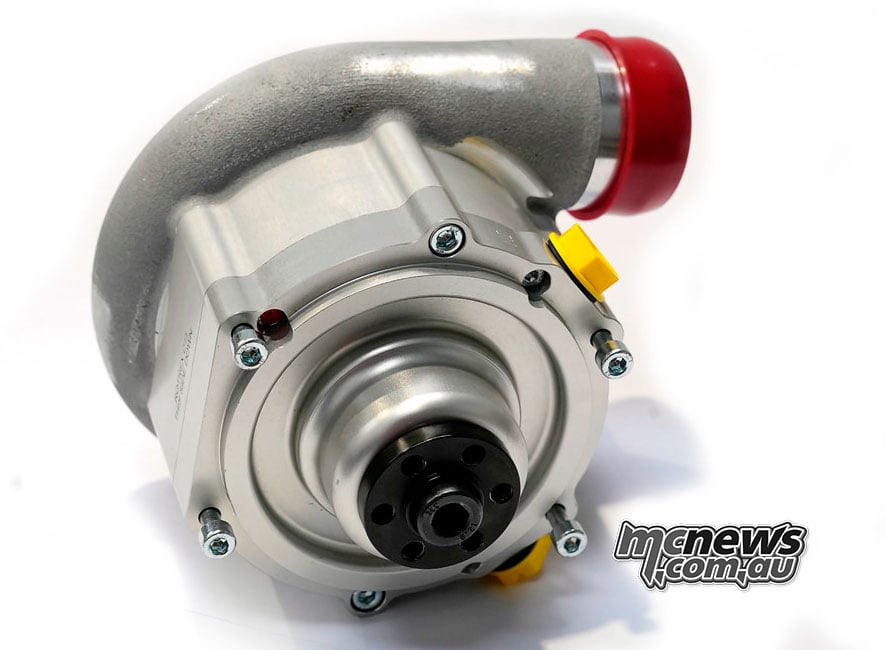
Its bespoke mounting assembly also supports the Yamaha engine in the Krämer chassis and incorporates a reservoir for the supercharger’s fluid. It is a neat example of making one assembly earn its keep in several ways.
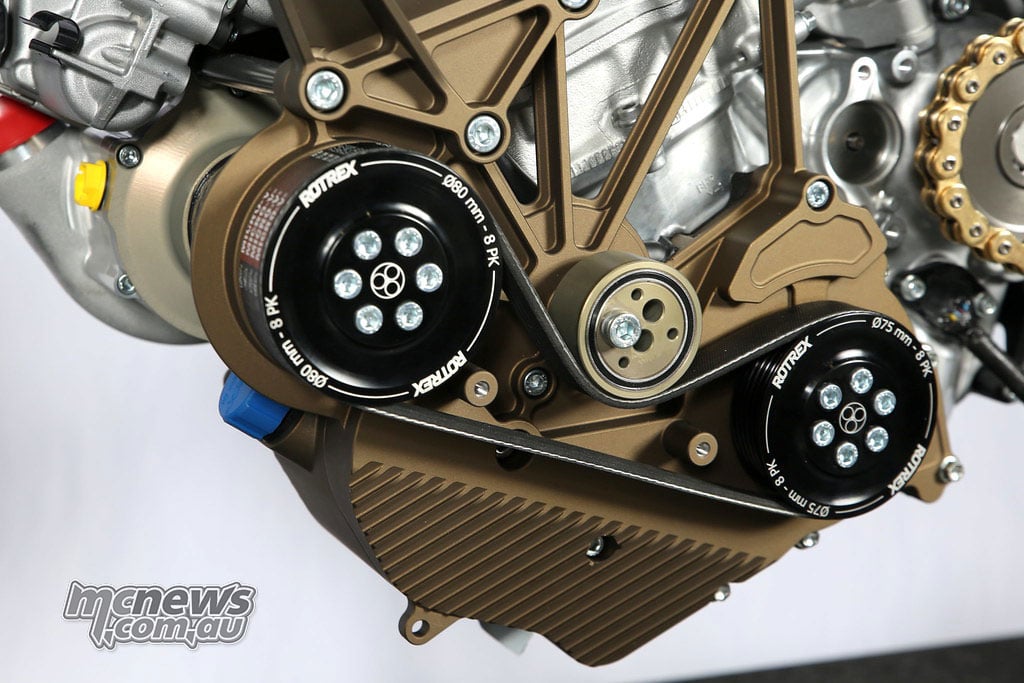
The engine’s air supply starts at a filter housing in the nose. From there, air passes through the supercharger, an intercooler above the main aerodynamic duct, and a plenum before reaching a modified 44 mm Bosch electronic throttle body.
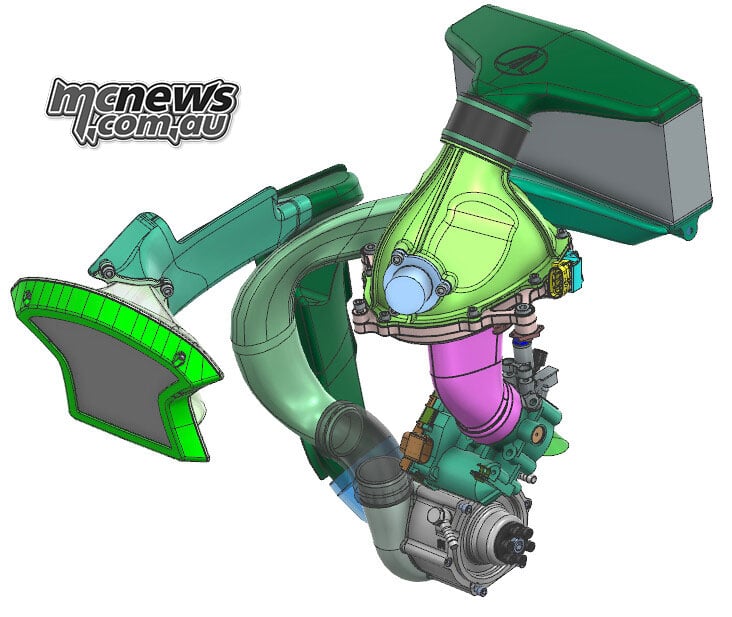
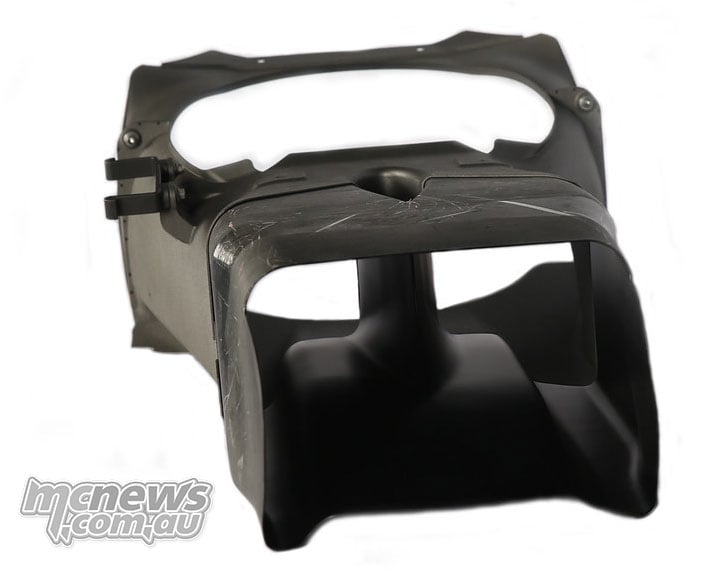
There are two separate air paths to accommodate. One supplies the engine with a compressed intake charge. The other passes through the motorcycle to improve its aerodynamics. Both need room inside an already compact machine.
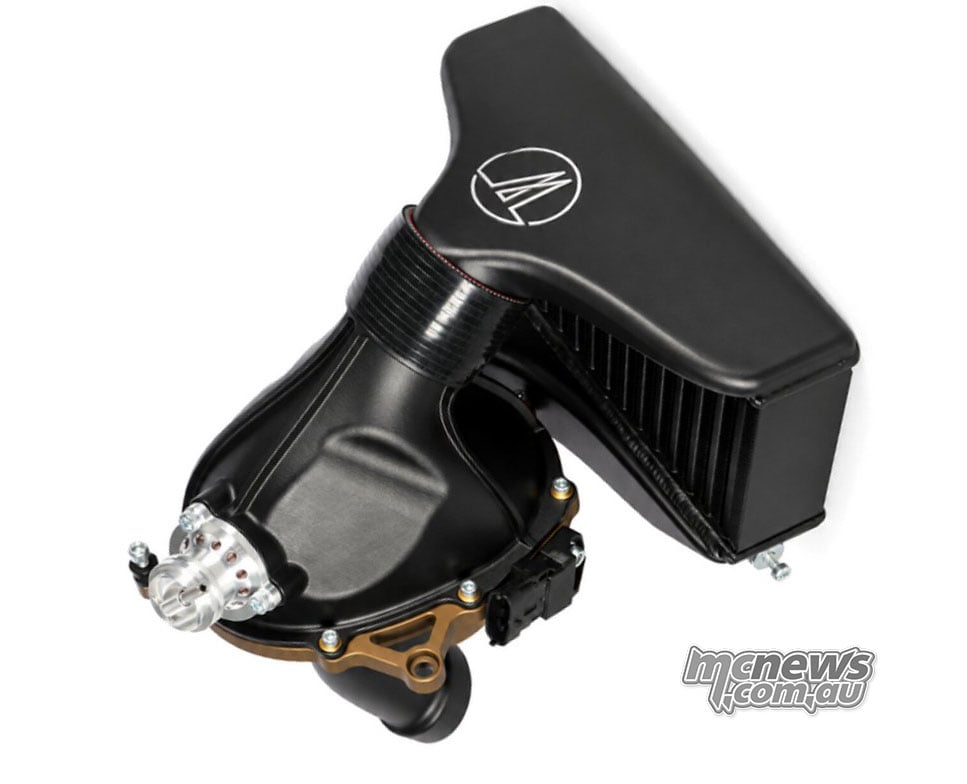
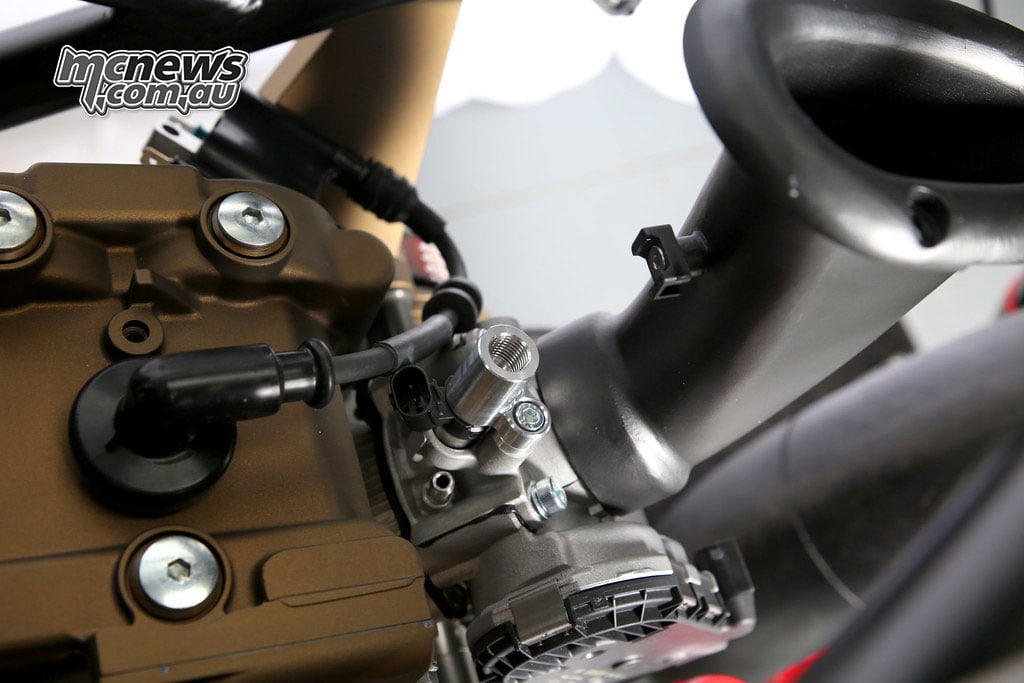
The intake trumpet crosses the aerodynamic duct inside a streamlined fairing. WMC has also modified the cylinder-head inlet to mount the throttle body lower, helping preserve room for the duct above the engine.
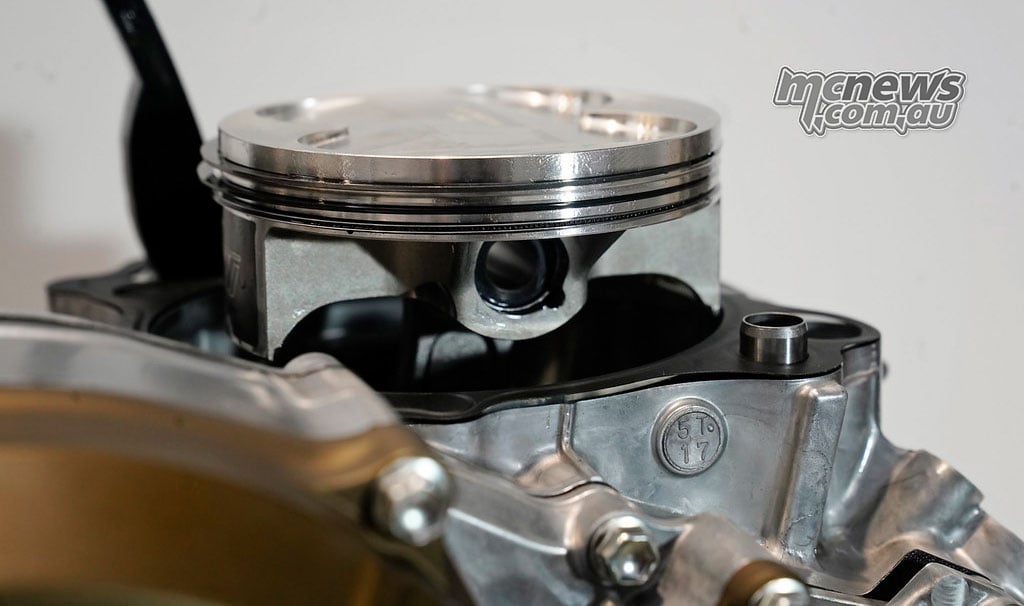
A new piston and connecting rod accommodate the increased demands of forced induction. Additional sensors and knock monitoring support the engine development work.
On the other side of the cylinder head, a modified exhaust port feeds a 3D-printed titanium header. Its route around the chassis and suspension is another reminder that fitting the engine is only part of the job.
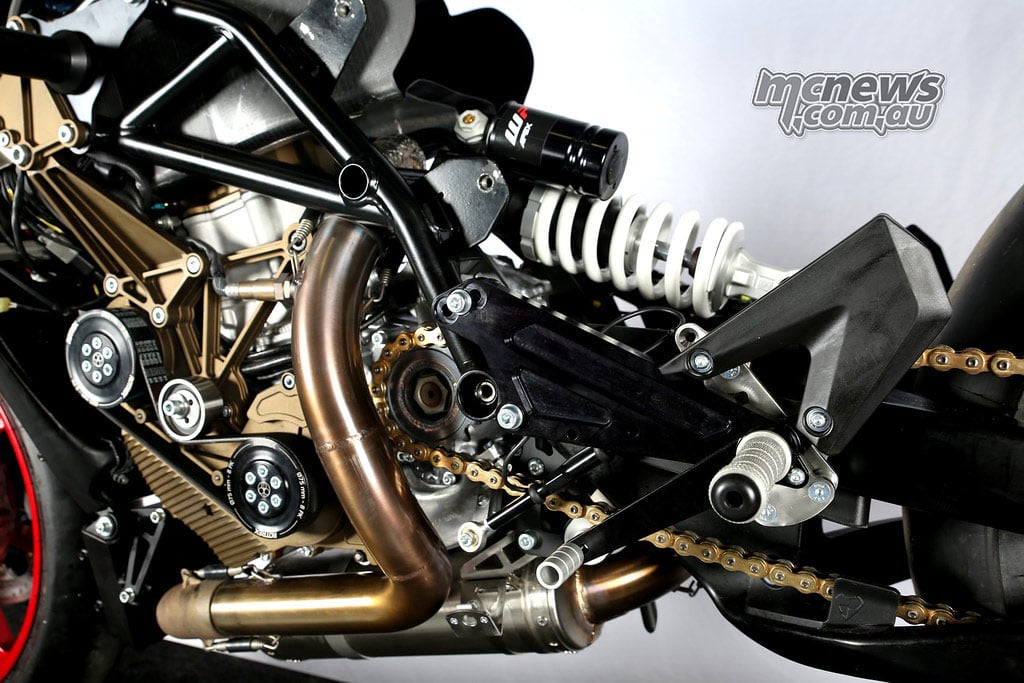
The benefit WMC is pursuing is greater output from a smaller physical package, with the space saved then put to work elsewhere.
Making room for the air
The duct starts influencing the design before the air even reaches it.
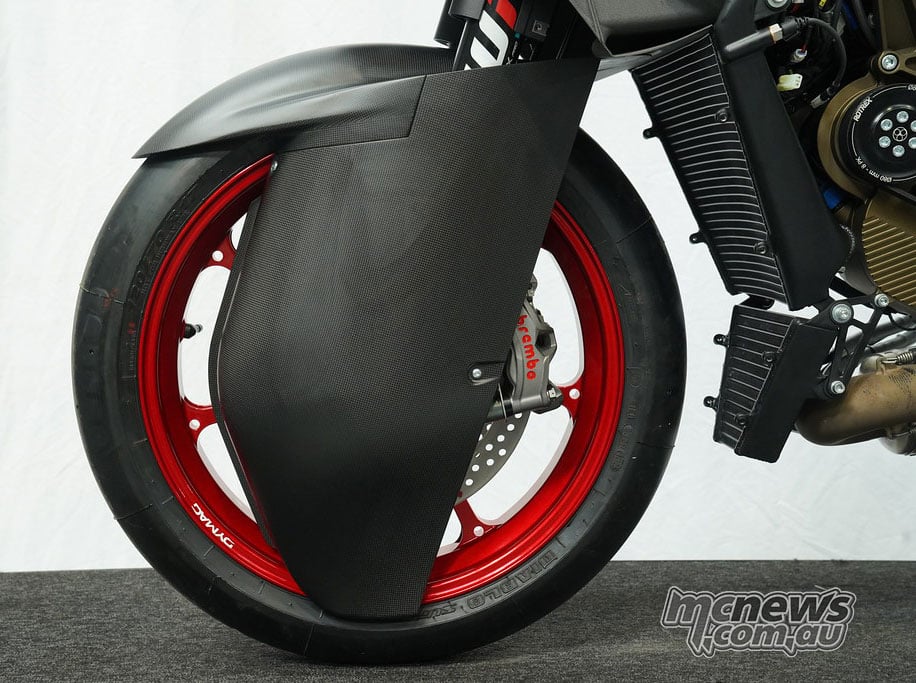
A reshaped front mudguard guides airflow towards the entrance, with teardrop-shaped fork shrouds helping it pass the front suspension. A moving filler panel beneath the nose maintains a smoother surface while accommodating steering movement.
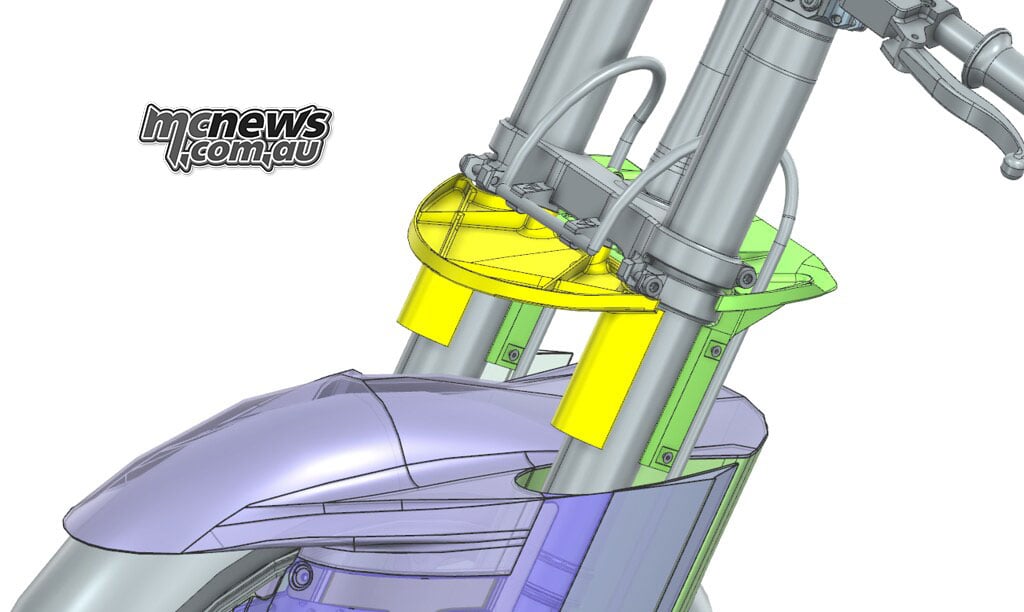
Further down, the front-end bodywork also has to direct cooling air towards the bespoke radiator and oil cooler. Feeding the duct and keeping a supercharged engine cool are requirements that have to be resolved together.
Inside the duct, the fairing around the intake trumpet allows the through-flow to pass either side of the engine’s air supply.
The fuel tank has been redesigned around the duct, intercooler and plenum while retaining a 12-litre capacity.
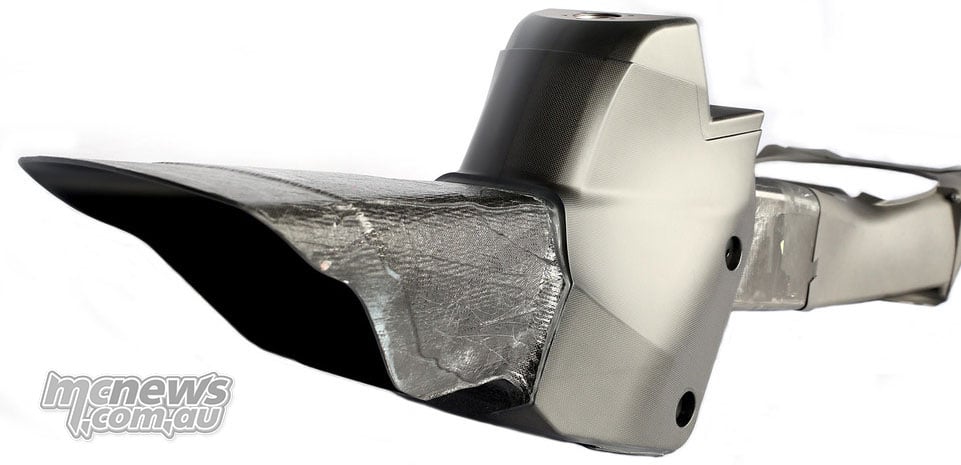
At the back, the carbon-fibre duct structure doubles as the seat support. Using one component to perform more than one job fits neatly with the lightweight theme.
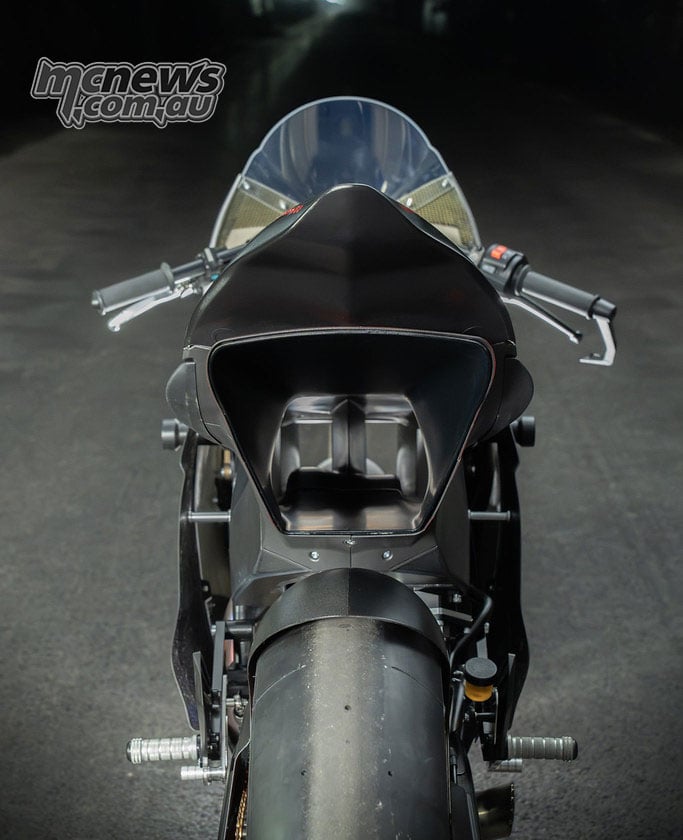
WMC has also retained the Krämer’s seat height and riding triangle, so the aerodynamic work does not depend on forcing the rider into a radically different position.
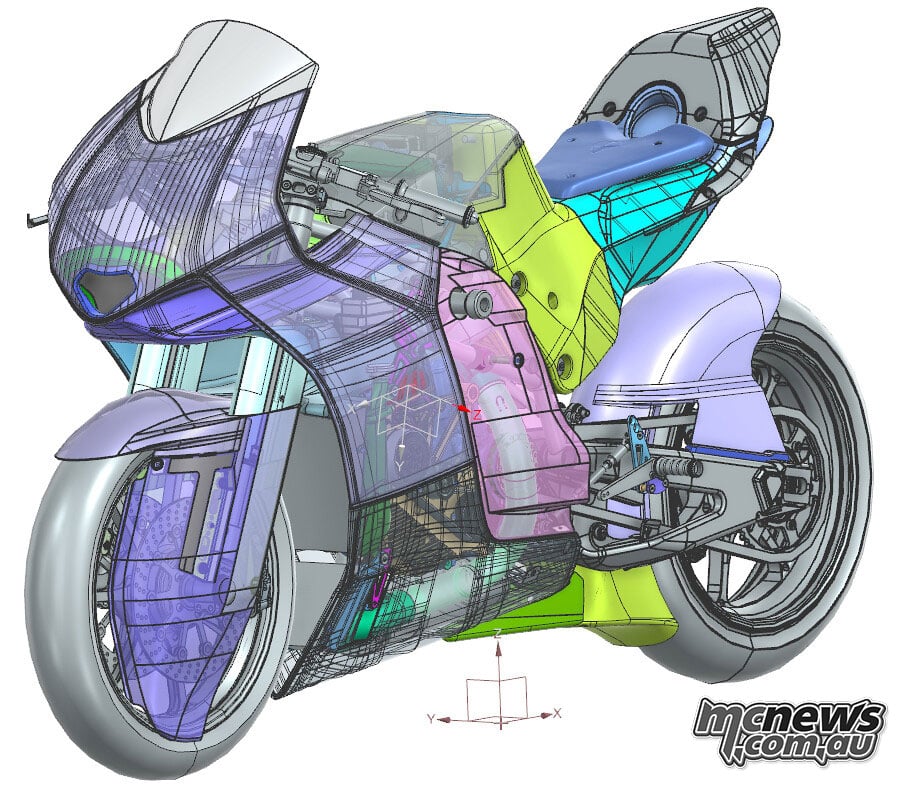
Development produced an interesting knock-on effect. WMC says the revised airflow stayed closer to the sides of the fairing, making the rider’s legs a more significant source of drag. Side extensions were then developed to guide the flow around them.
The company reports a 36 per cent reduction in the rider’s contribution to drag in its comparison with the standard bike. That figure concerns the rider contribution, rather than a 36 per cent reduction for the whole motorcycle.
What the simulations suggest
The main aerodynamic claim is a 16.4 per cent reduction in CdA compared with the baseline Krämer. CdA combines the drag coefficient and reference frontal area, providing a useful measure of how much aerodynamic resistance the bike presents under comparable conditions.
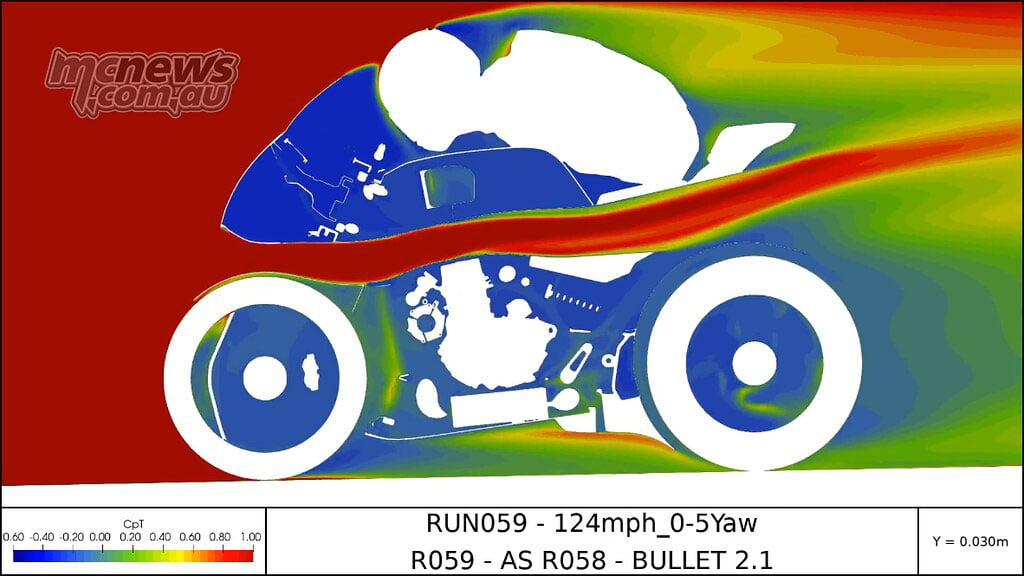
That is a substantial predicted improvement. At a given speed, reducing aerodynamic drag reduces the power needed to overcome it, potentially leaving more performance available for acceleration or allowing the same pace with less demand on the engine.
WMC’s detailed technical material also reports a 77 per cent reduction in aerodynamic lift. These are results from computational fluid dynamics, or CFD; physical testing is needed to establish how closely the completed motorcycle matches those predictions.
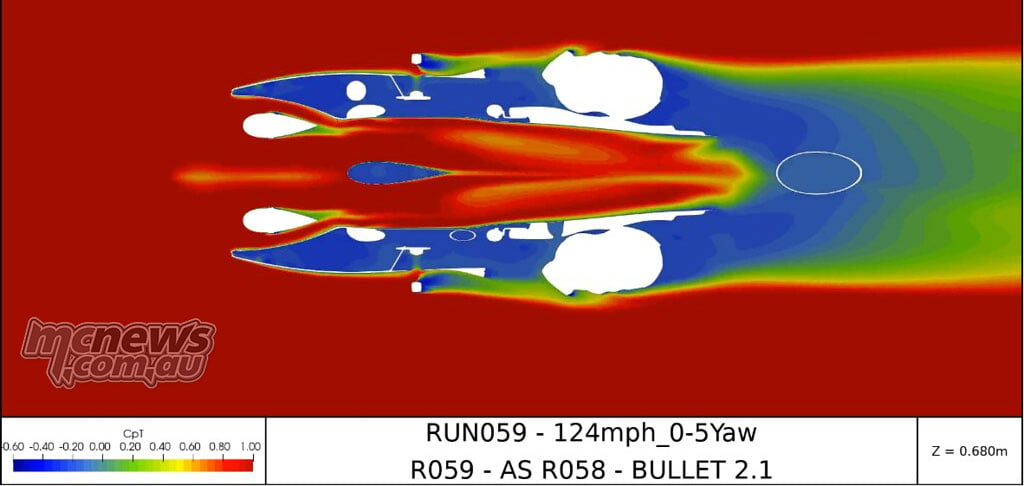
The work extends beyond a bike travelling upright in a straight line. WMC has examined braking and cornering conditions too. Under braking, fork compression reduces the available duct entrance area, changing the airflow and increasing drag in its modelling. The company also projects some aerodynamic benefit while cornering.
Its calculated fuel-efficiency improvement is seven per cent against the baseline Krämer. That is a separate prediction from the drag reduction, rather than another way of expressing the same result.
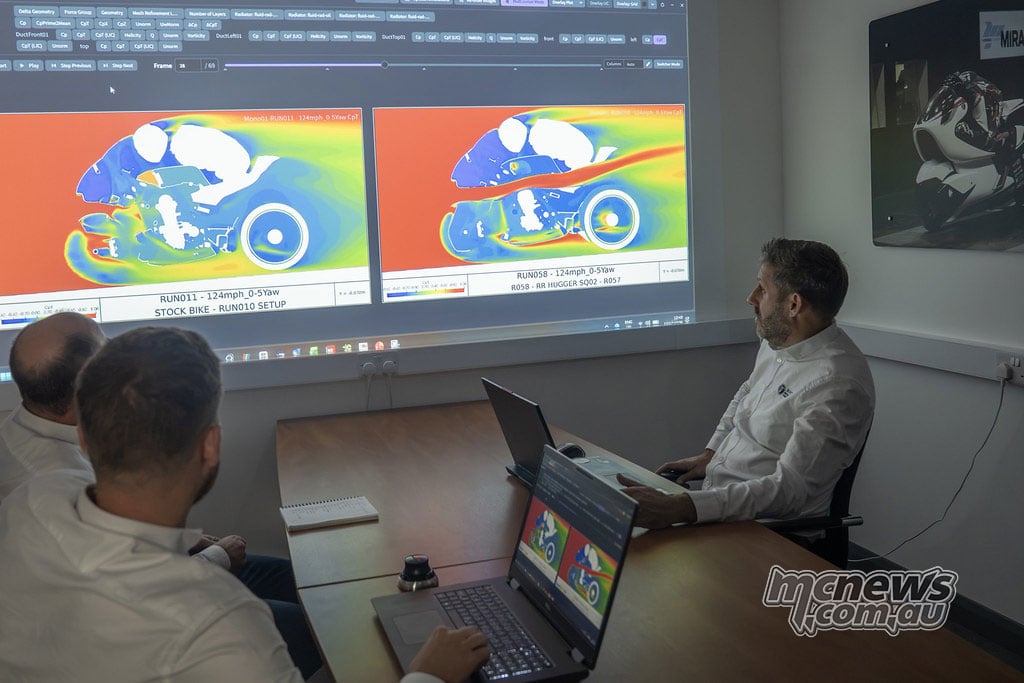
A familiar chassis gives the idea a proper test
Choosing the EVO2 690R gives WMC an established lightweight sportsbike against which to assess the changes.
The Krämer’s steel trellis frame requires relatively limited modification for the new engine installation, while its low-mounted rear shock leaves room for the duct. WMC retains the WP suspension and the baseline braking equipment, with Dymag wheels also forming part of the package.
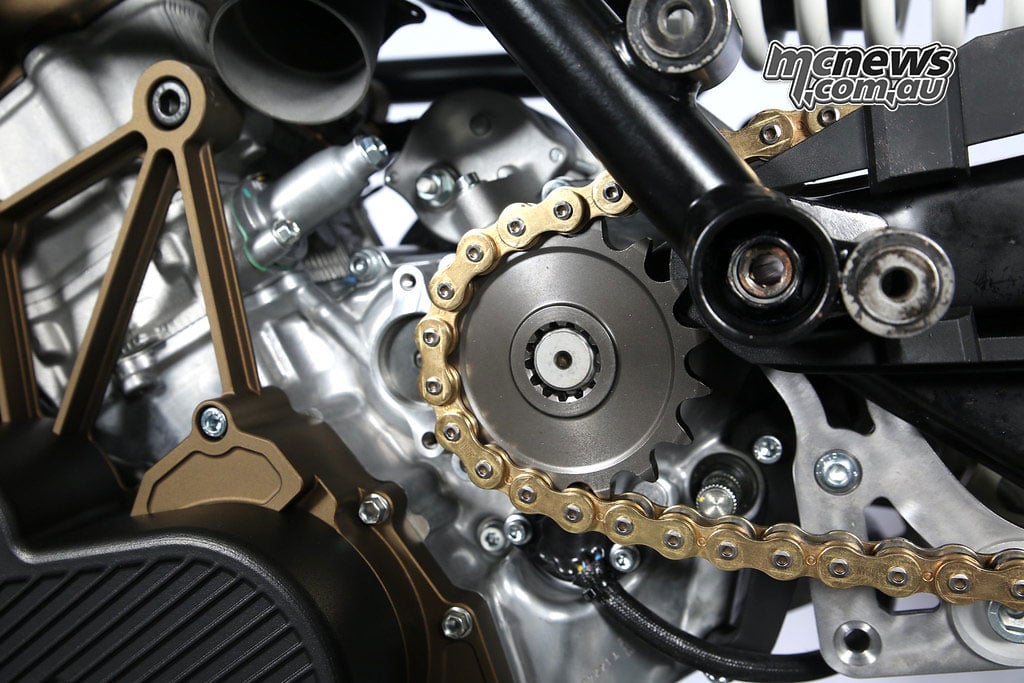
Keeping the riding position, wheelbase and basic chassis geometry comparable should make testing more informative. Even so, changing the engine, bodywork and internal layout creates a different motorcycle, and its behaviour needs to be measured as a complete package.
The development work also includes 3D scanning. Capturing the physical shape of a component such as the front mudguard gives the engineers a digital record of the part they have actually made.
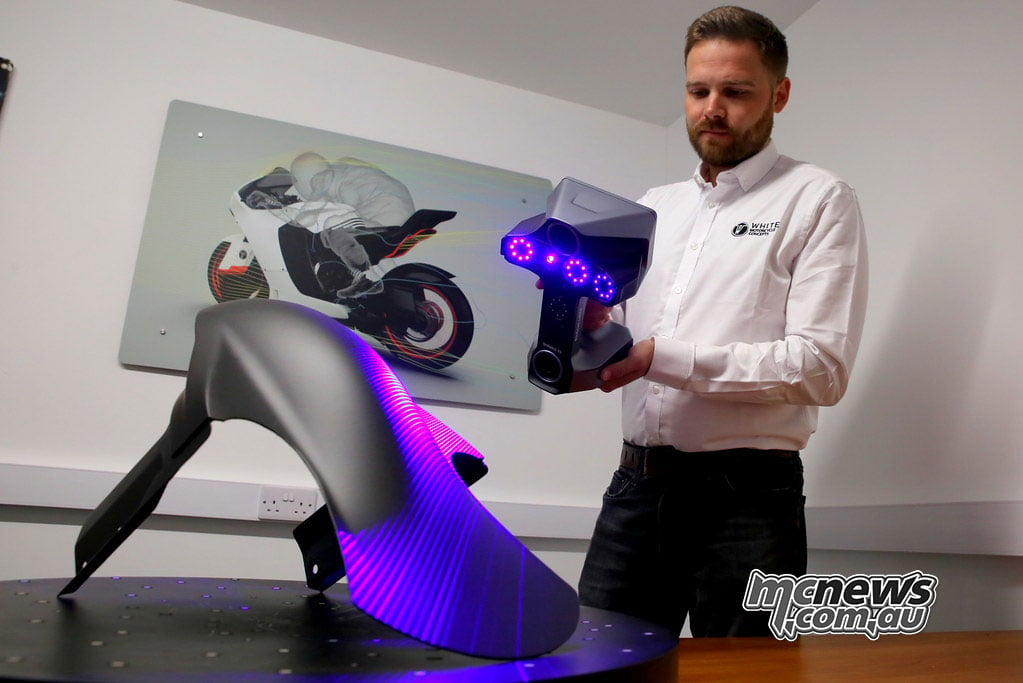
WMC reports that initial physical testing has taken place at Catesby Tunnel in Northamptonshire. The former railway tunnel provides a controlled environment for assessing aerodynamic drag through coast-down testing and investigating aerodynamic loading.
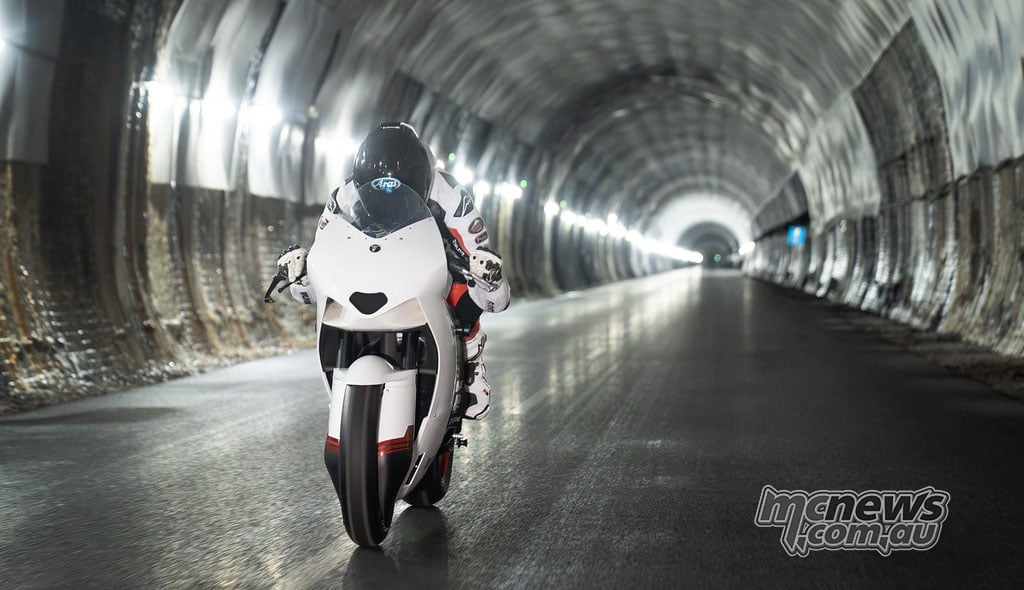
The company’s development programme also considers stability and vehicle dynamics. Published information does not yet include comparative lap times or detailed measured results establishing the full performance gain over the original Krämer.
For now, we have a functioning demonstrator, ambitious targets and promising simulation results. The testing will tell us how much of that promise reaches the rider.
An idea for other manufacturers to take further
White Motorcycle Concepts was founded by Robert White in 2018, following more than two decades working in high-level motorsport. The company has previously explored its duct concept through electric motorcycle projects, including the WMC250EV land-speed programme.
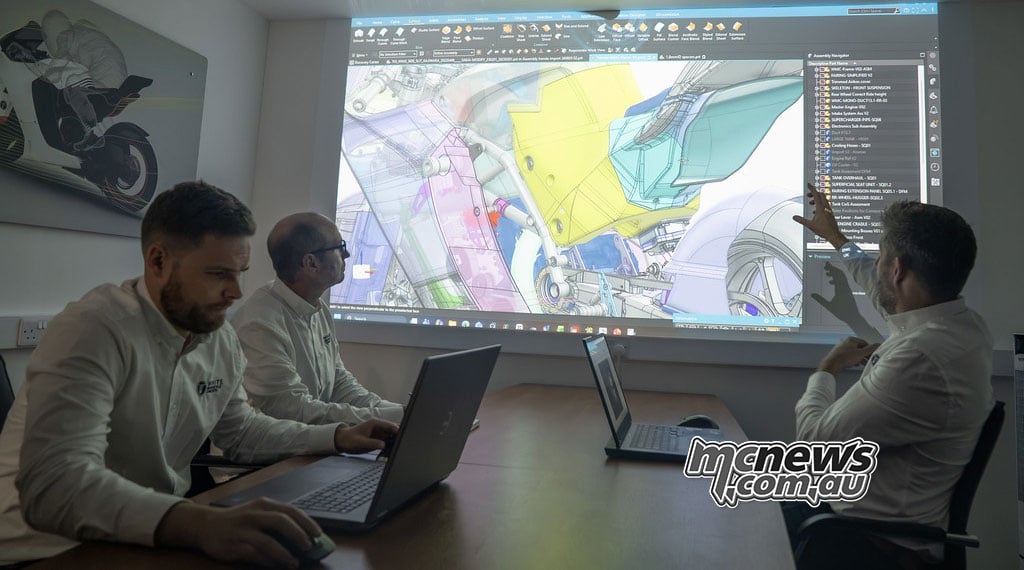
The Mono RR applies that thinking to a combustion-powered sportsbike. WMC’s intended business is supplying engineering expertise and intellectual property to manufacturers that could incorporate the technology into future motorcycles. There is no announced showroom production plan for the Mono RR itself.
A road-going application would bring further questions about durability, servicing, production cost, noise and emissions. Those will matter if this approach progresses into something riders can buy.
But the direction is appealing. A small, light sportsbike with serious performance, developed by treating the engine, chassis and aerodynamics as parts of the same problem, gives us plenty to be interested in.
Those little Grand Prix two-strokes demonstrated just how much performance could come from very little motorcycle. WMC is exploring a modern route towards some of that appeal.
Light is still right.