

2027 Harley-Davidson Sprint 440
Harley-Davidson is bringing another small-capacity contender to the Australian learner market with its new Sprint 440, combining a very low seat, a 440 cc single, and a starting price of $10,440.
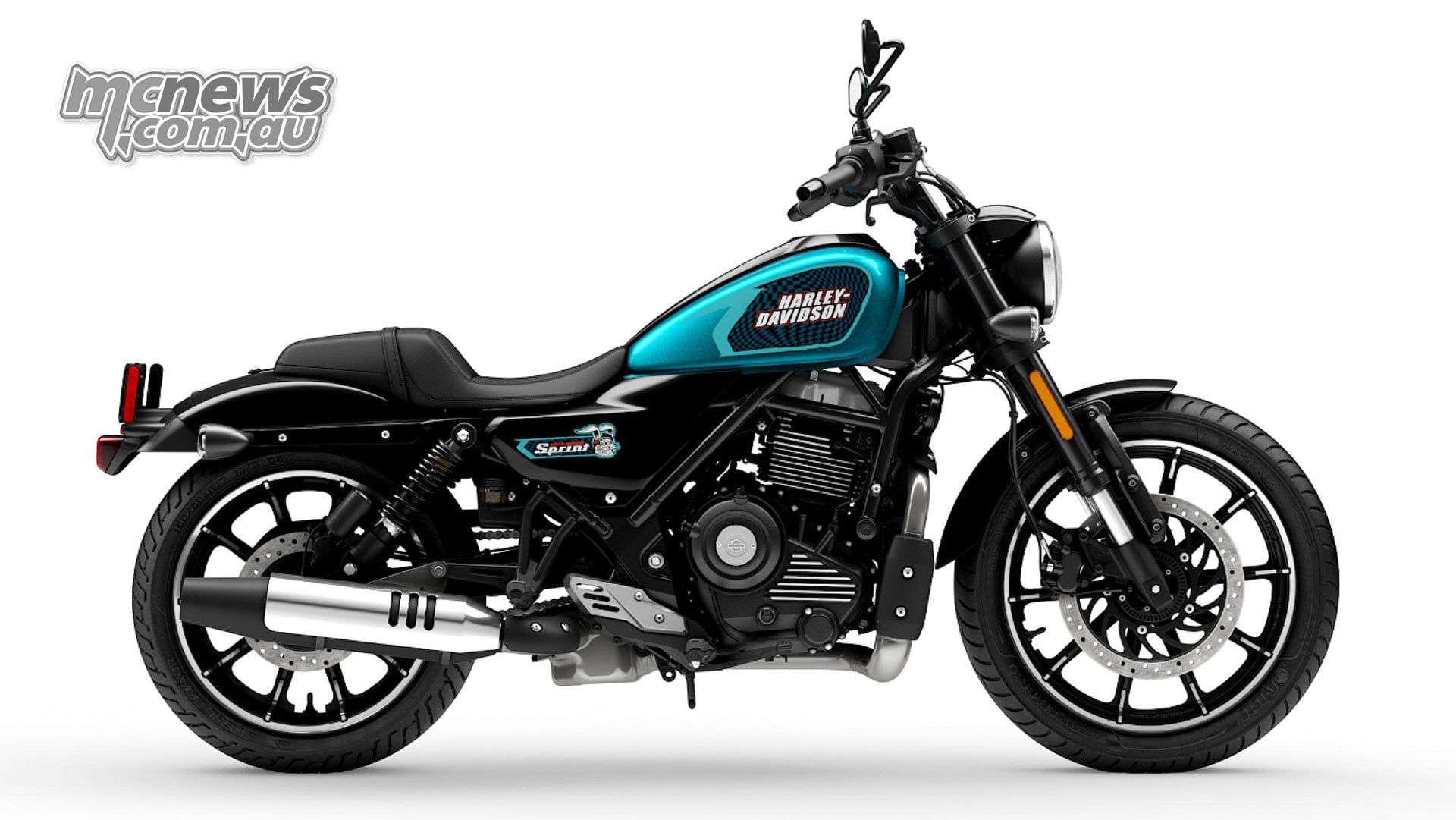
The company is calling it an invitation to “JOYRIDE”. With an Indian production partner called Hero and enough promised joy to fill a Bollywood finale, you half expect putting the sidestand down to trigger a dance number.
Behind the choreography is a fairly straightforward proposition: a small Harley with a recognisable cruiser silhouette, modest power and a riding position intended to make getting started less daunting.
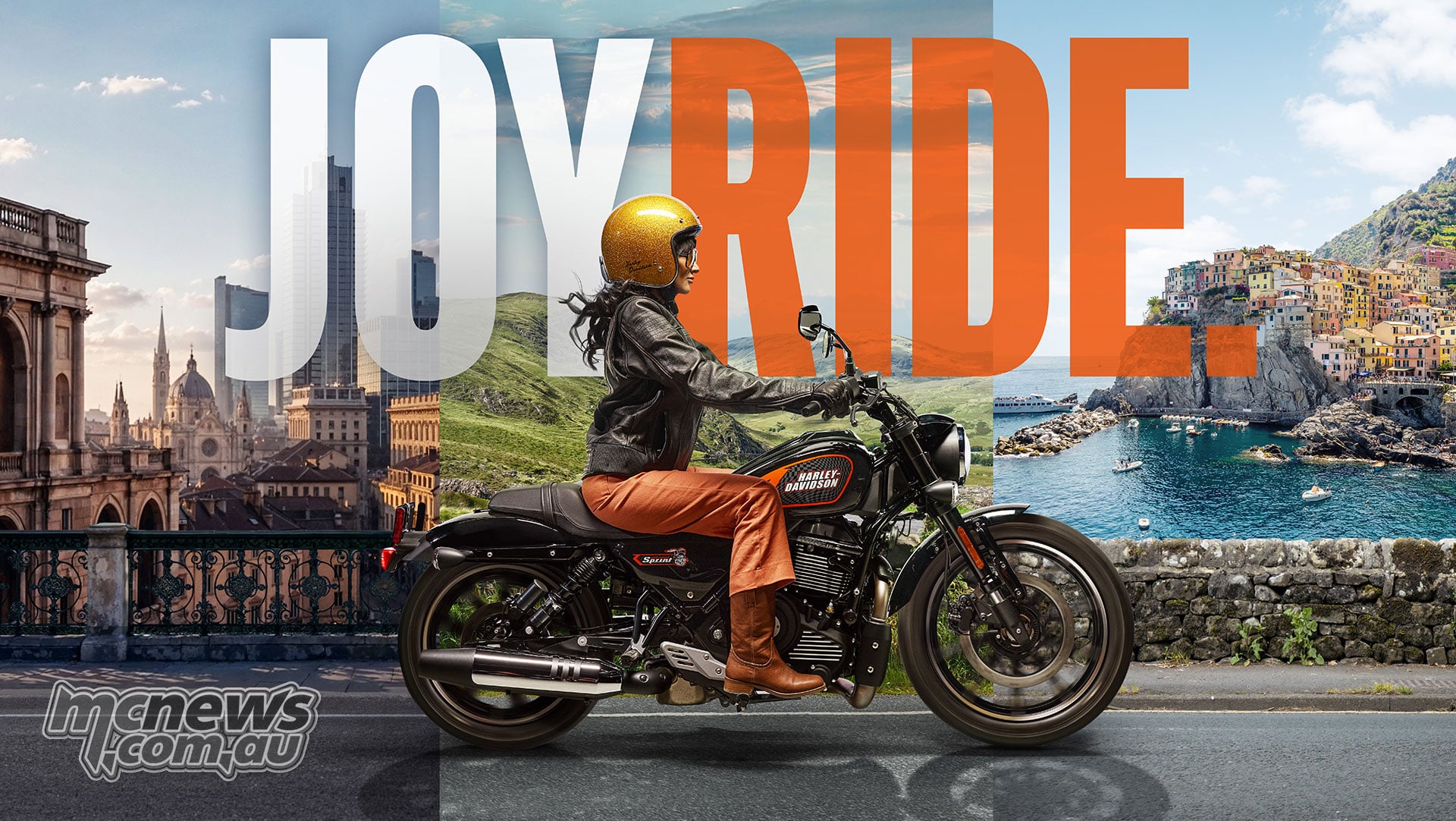
Local dealer Joe Rascal Harley-Davidson is already advertising Dark Billiard Grey and Vivid Black examples from $10,440 ride-away, with Teal Thunder adding $250.
That puts it among some capable small singles, including Triumph’s established 400 range and the forthcoming Norton 450 Urban we recently covered. The Sprint has a different approach to both.
A single with its torque down low
Developed by Harley-Davidson in partnership with massive Indian manufacturer Hero MotoCorp, the Sprint uses an air/oil-cooled 440 cc single-cylinder engine with a single overhead camshaft and two valves.
The 79.6 mm bore and 88.4 mm stroke underline its long-stroke layout. Claimed output is 27 hp (20 kW) at 6000 rpm, with peak torque of 38 Nm at 4000 rpm.
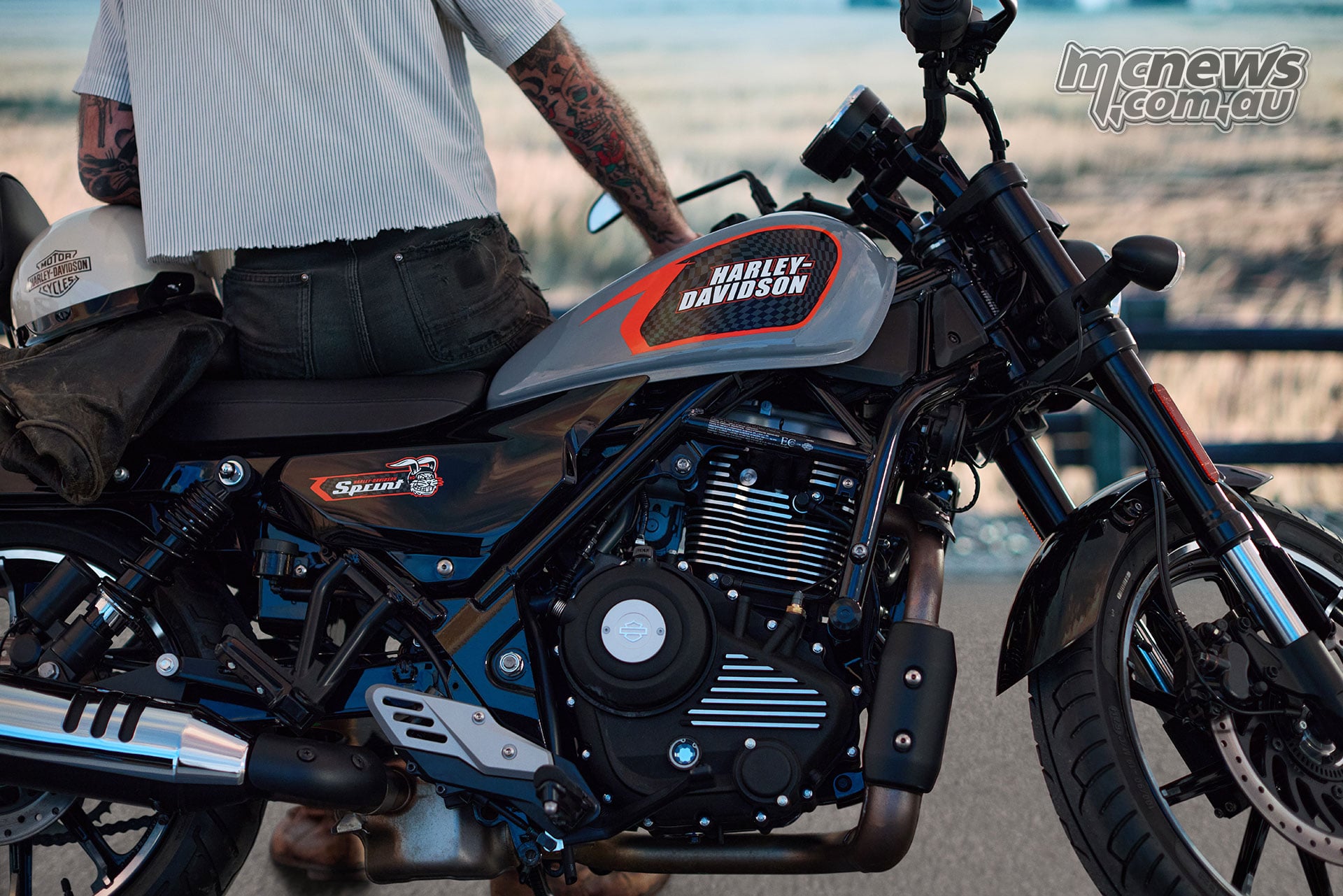
Those are modest horsepower numbers, but the emphasis is on getting useful drive without having to chase the upper reaches of the tachometer. It includes fuel injection and a gear-driven counterbalancer, with a pretty low 9.65:1 compression ratio, no doubt to suit low-grade fuels in the sub-continent.
A six-speed gearbox has overdrive fifth and sixth ratios. The clutch combines an assist function to lighten the lever with a slipper function to help manage back-torque during downshifts.
The seat is low. The weight needs context.
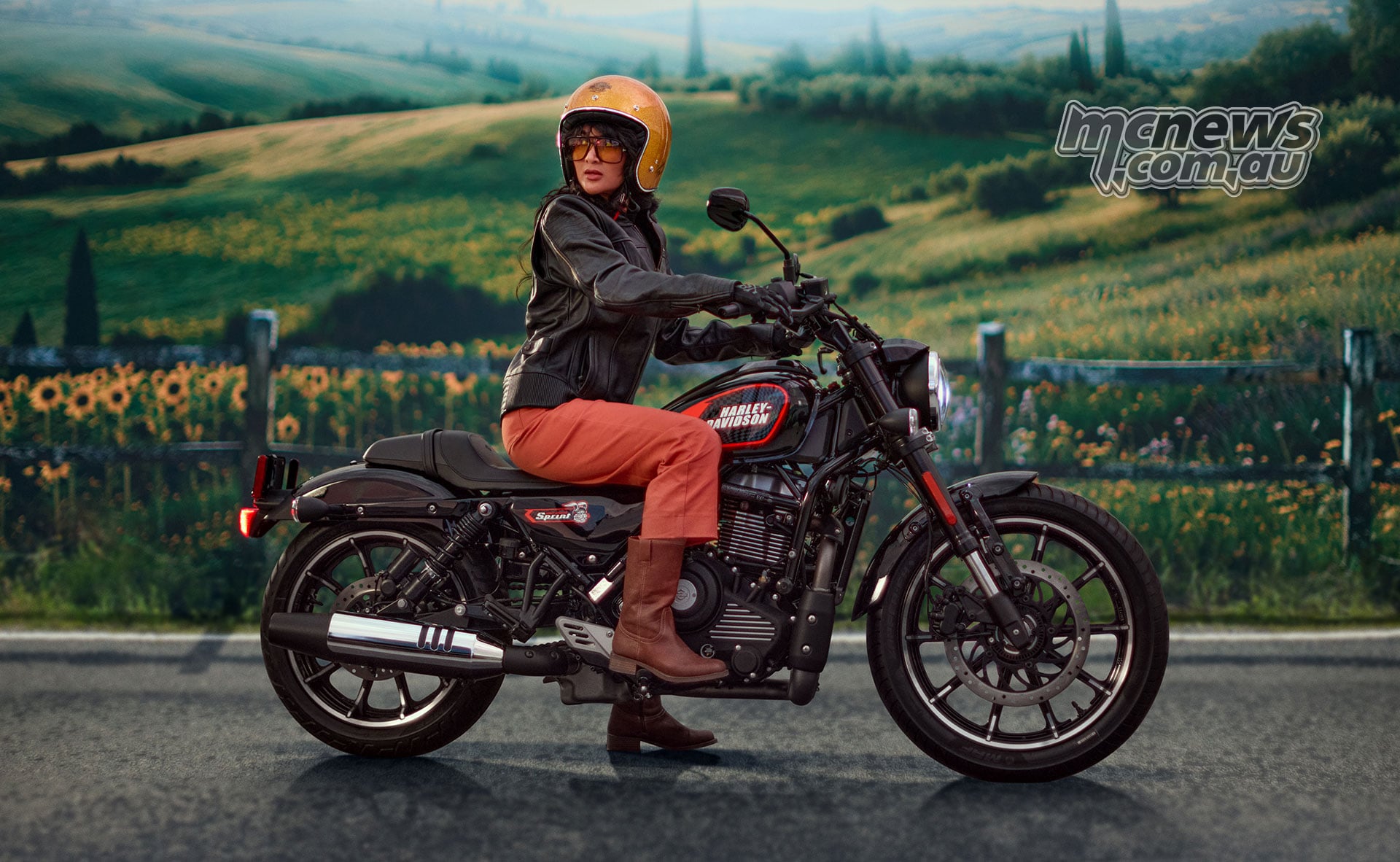
Harley’s Australian specifications give an unladen seat height of just 683 mm. The international release quotes 671 mm laden. Combined with a narrow seat profile, that should make reaching the ground one of the Sprint’s strongest selling points.
The claimed running-order weight is 187 kg. Manageable by Harley standards, certainly, although calling it lightweight needs some context when Triumph quotes 170 kg wet for the Speed 400.
A 19-inch front wheel and 17-inch rear help establish the cruiser stance, with 100/90-19 and 150/60ZR17 tyres respectively. Ten-spoke cast wheels, a teardrop tank, a bobbed rear guard, and a stepped two-person seat complete the look.
The 43 mm inverted forks offer 130 mm of travel. At the rear, twin piggyback shocks have seven-step preload adjustment and provide 76 mm of wheel travel. That is a fairly short allowance for Australian backroads, and something we will be interested to try when we get aboard.
Braking pairs a 320 mm front disc and two-piston caliper with a 240 mm rear disc and single-piston caliper. ABS is standard.
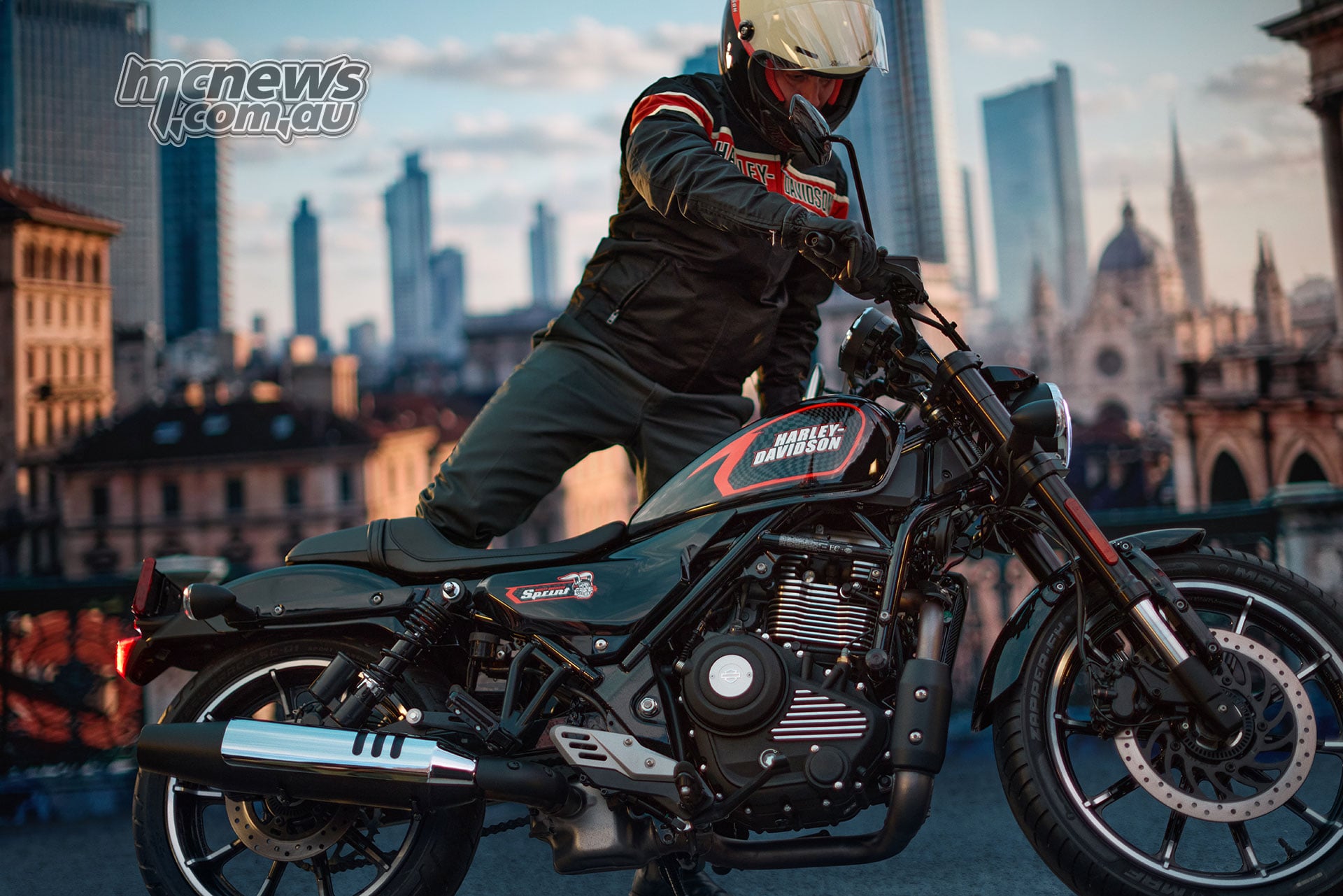
How does it stack up against Triumph’s Speed 400?
Triumph has already shown how entertaining an affordable single can be.
The figures suggest the Sprint is chasing a more relaxed brief. Triumph’s liquid-cooled, four-valve 398 cc single produces 29.4 kW at 8000 rpm and 37.5 Nm at 6500 rpm. The Harley makes almost identical peak torque, reaching it 2500 rpm earlier, while the Triumph has 47 per cent more peak power.
The Speed also carries 17 kg less claimed weight. The Sprint counters with a seat 107 mm lower than Triumph’s currently listed 790 mm, giving riders who prioritise an easy reach to the ground a substantial reason to consider the Harley.
Norton adds another dimension
The new Norton 450 Urban takes a more ambitious approach to the same broad market, with its 454 cc liquid-cooled single promising around 34.6 kW and 45 Nm, supported by an aluminium chassis and a lengthy equipment list.
Norton’s Australian price and formal LAMS approval remain unconfirmed, but its arrival underlines how much choice is developing around this capacity. Harley’s pitch puts more emphasis on low-speed accessibility and traditional cruiser proportions.
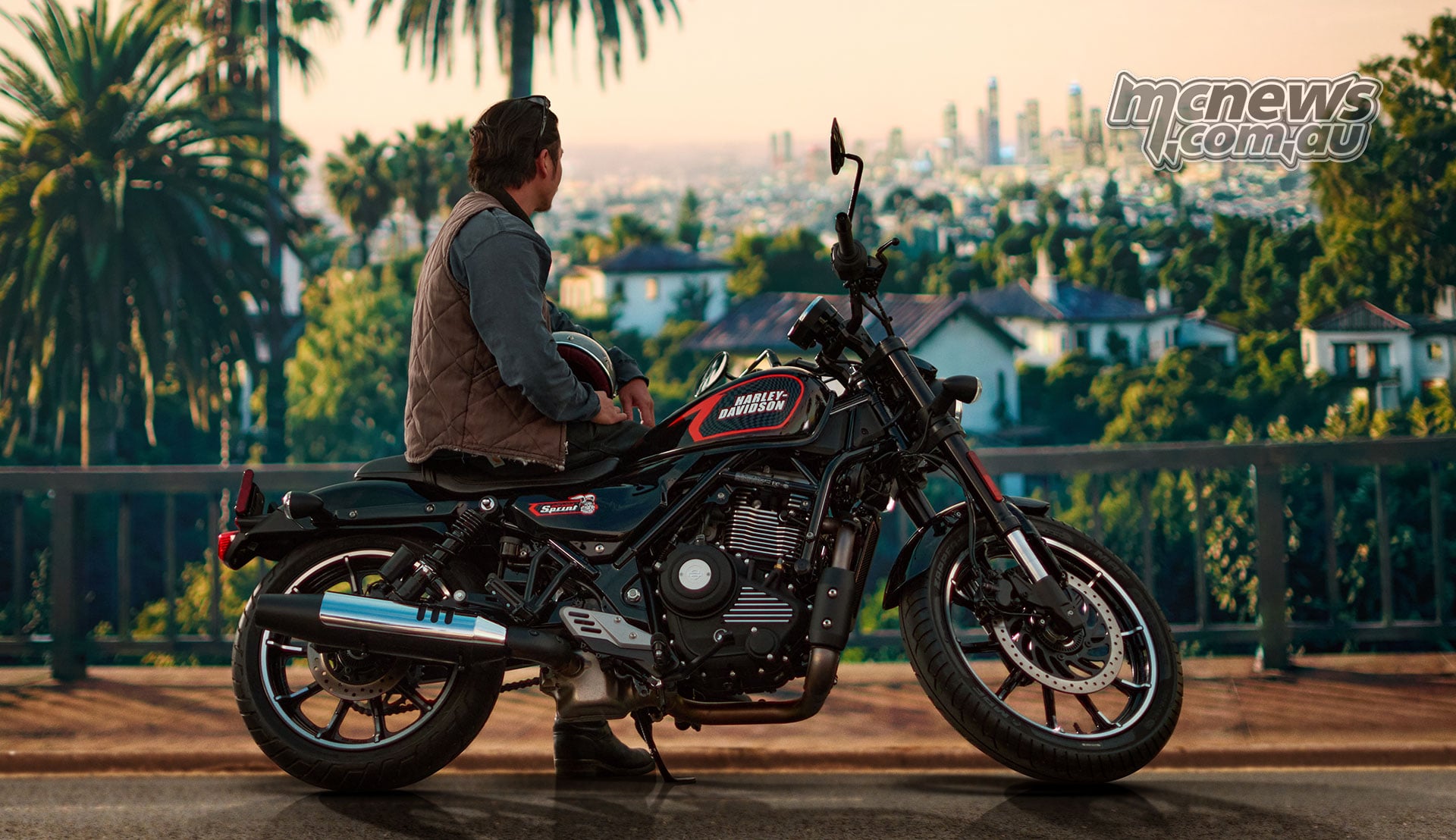
Useful equipment and a nine-litre tank
A round 3.5-inch colour TFT display, LED lighting and a USB-C charging socket cover the everyday essentials. Harley’s Australian specification also lists a fuel gauge, gear indicator and remaining-range display.
The tank holds nine litres, against the Speed 400’s 13 litres. Harley’s Australian page quotes estimated consumption of 3.1 L/100 km.
Accessories include throw-over saddlebags, a detachable windscreen, engine guard, passenger backrest and alternative handlebars. Reach and Tallboy seats offer different rider fits, while a Brawler solo seat caters for those happy to leave the pillion at home.
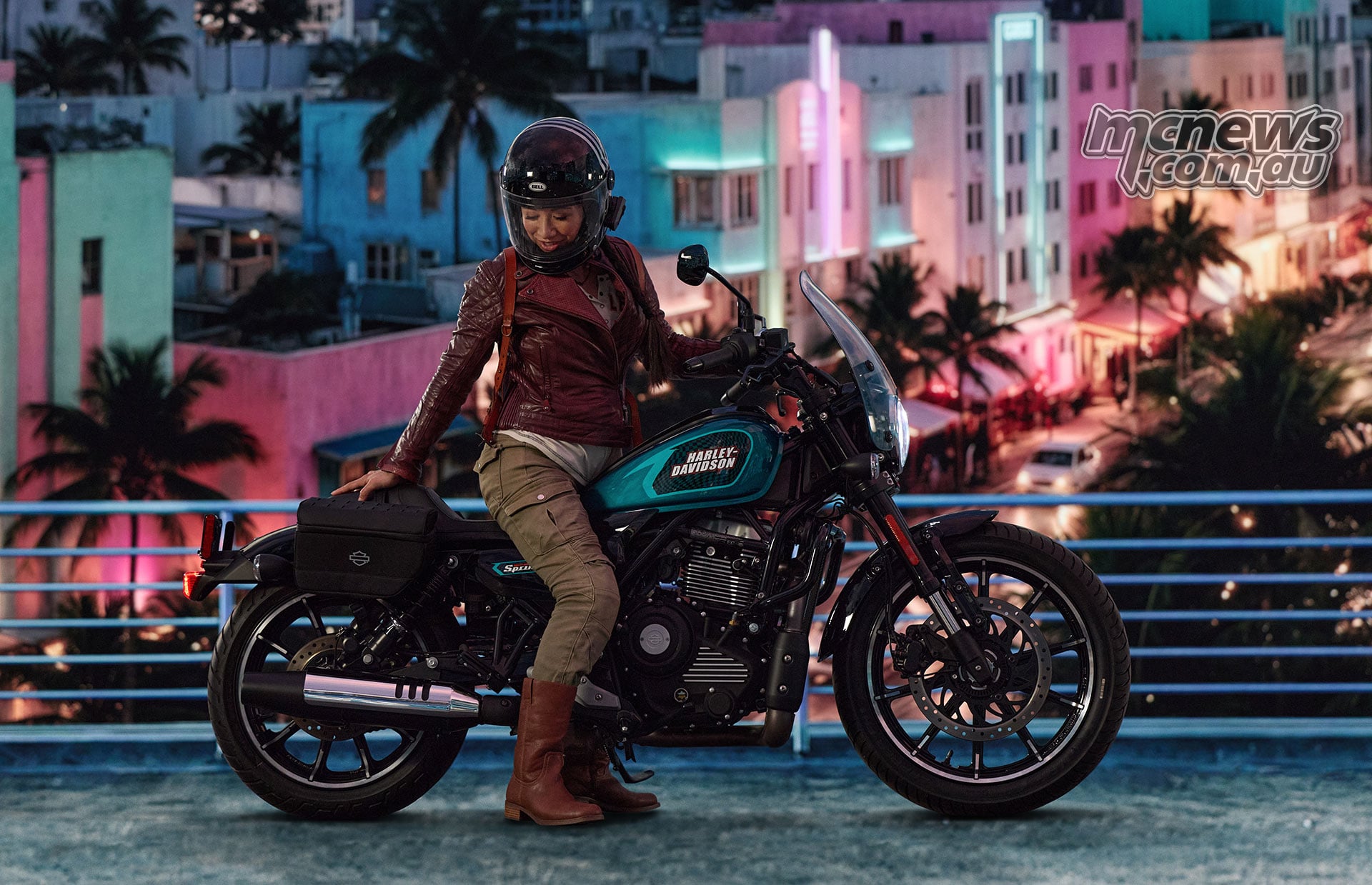
There is also a Willie G Skull collection of grips, mirrors and footpegs. A smaller Harley still leaves room for a visit to the accessories counter.
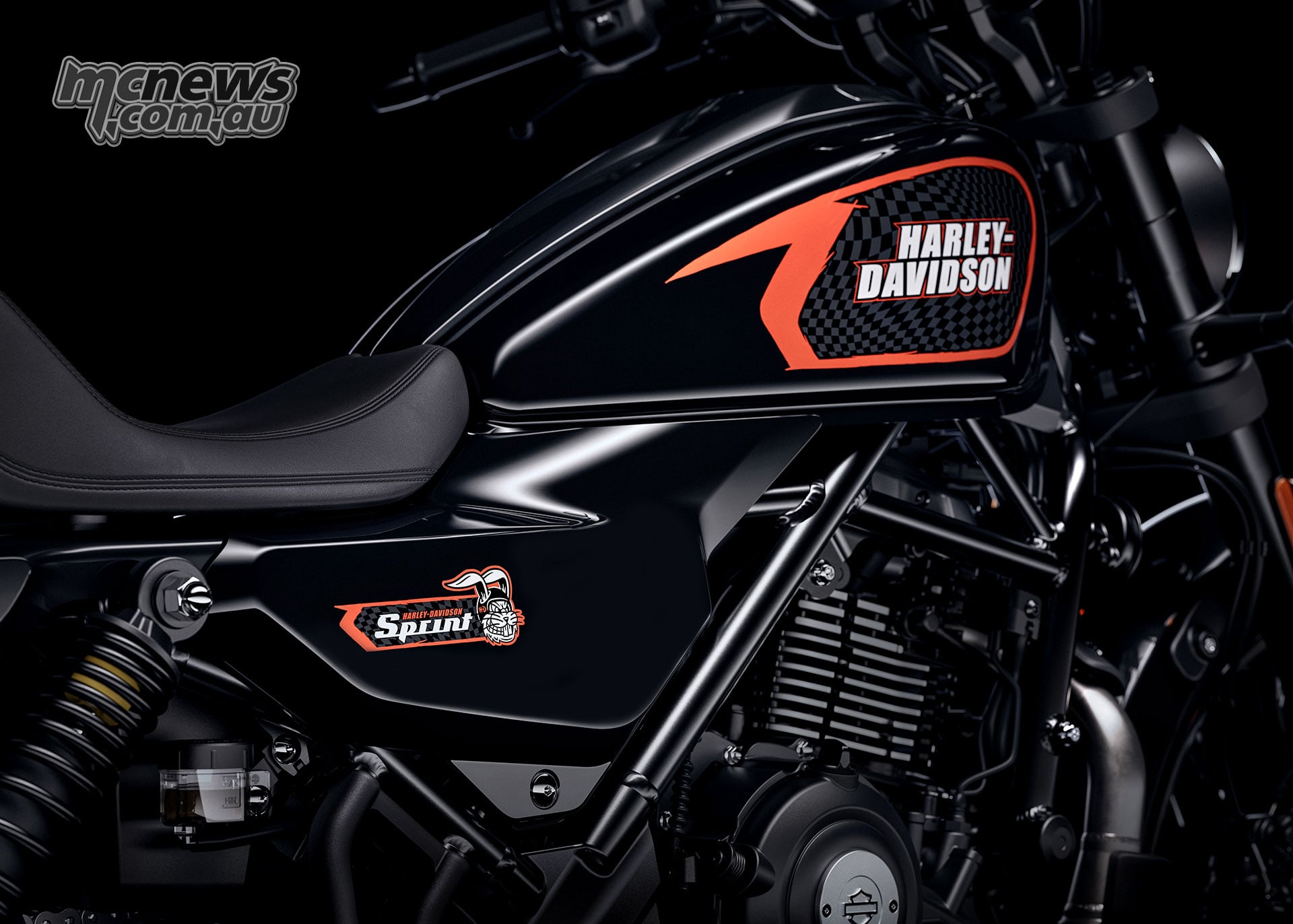
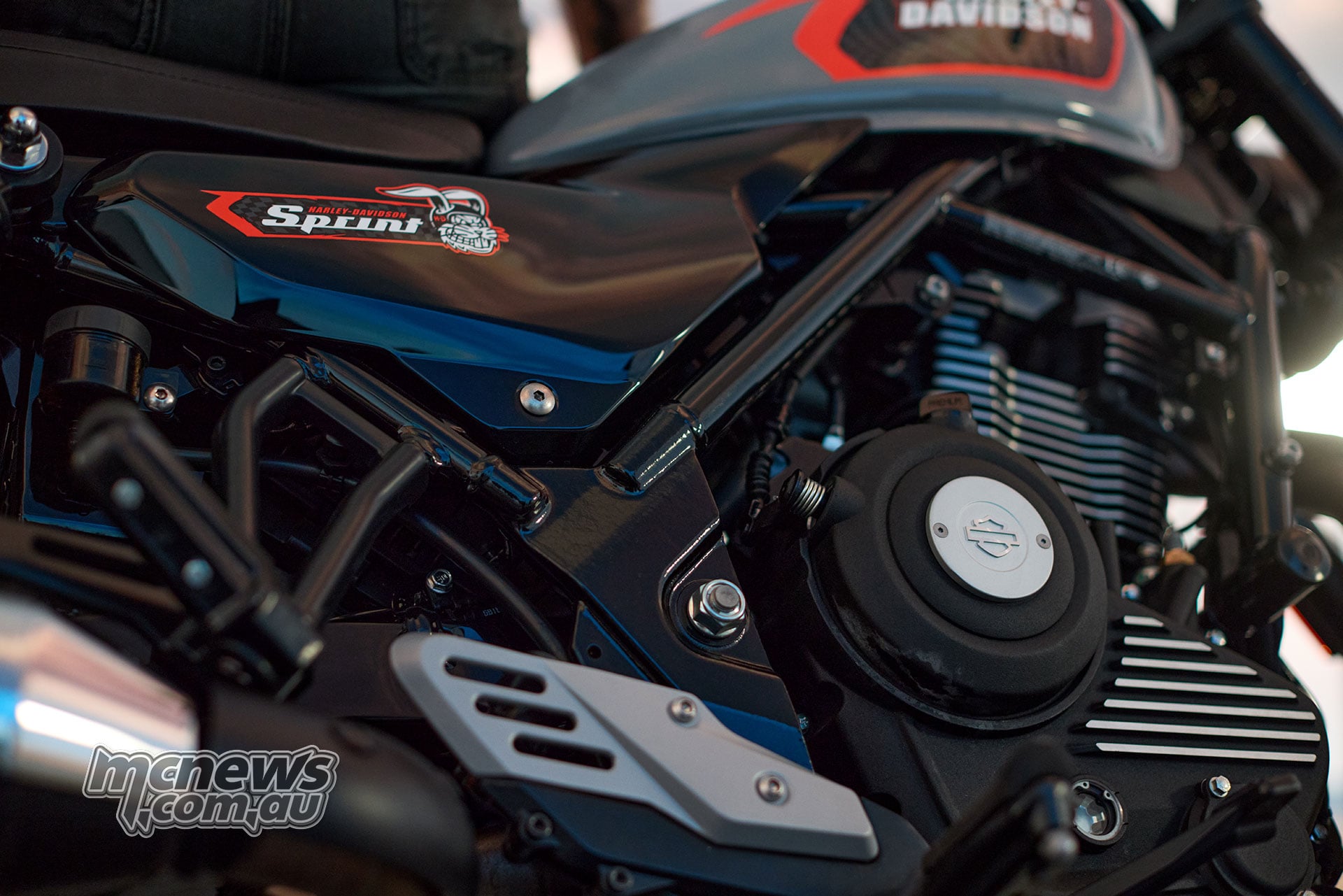
The sidecover graphic introduces the new “Harley Hare” character, and the logo is a ripper. No doubt it will help plenty of T-shirts walk out the door. The question for Harley is how many of those customers buy the bike as well.
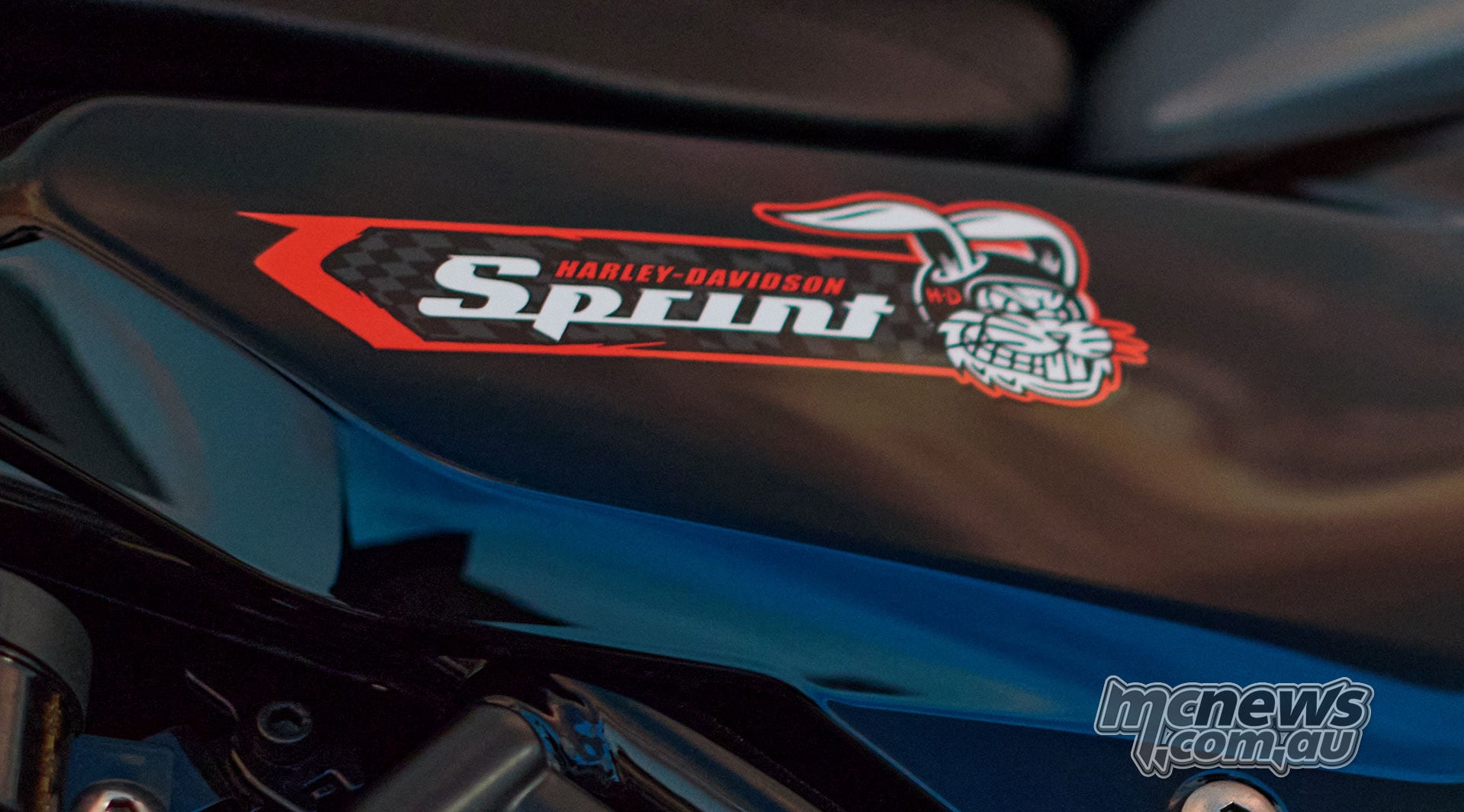
An old name and an international cast
The Sprint name has some appropriate history behind it. Harley’s own museum archive identifies the 1961 Sprint as its first motorcycle produced by Italy’s Aermacchi. An overseas partner helping bring smaller motorcycles into Harley showrooms has precedent.
This time Hero MotoCorp is manufacturing the Sprint in India, while Harley confirms that US-market motorcycles will undergo final assembly at York, Pennsylvania. American availability is scheduled for northern spring 2027. Australian delivery timing remains unconfirmed.
For riders attracted to the Harley look but put off by the size, seat height or price of the larger machines, the Sprint has an obvious appeal. The challenge will be delivering the finish, ride quality and everyday enjoyment to justify its place against some very good small singles.