

Norton 450
Norton 450 Urban takes aim at Triumph’s affordable singles
First came the sexy and exclusive Manx R, which we rode in Spain. Then Norton took us to Iceland to sample its new Atlas middleweight adventure machine. The next step in the reborn British marque’s rollout brings another change of direction.
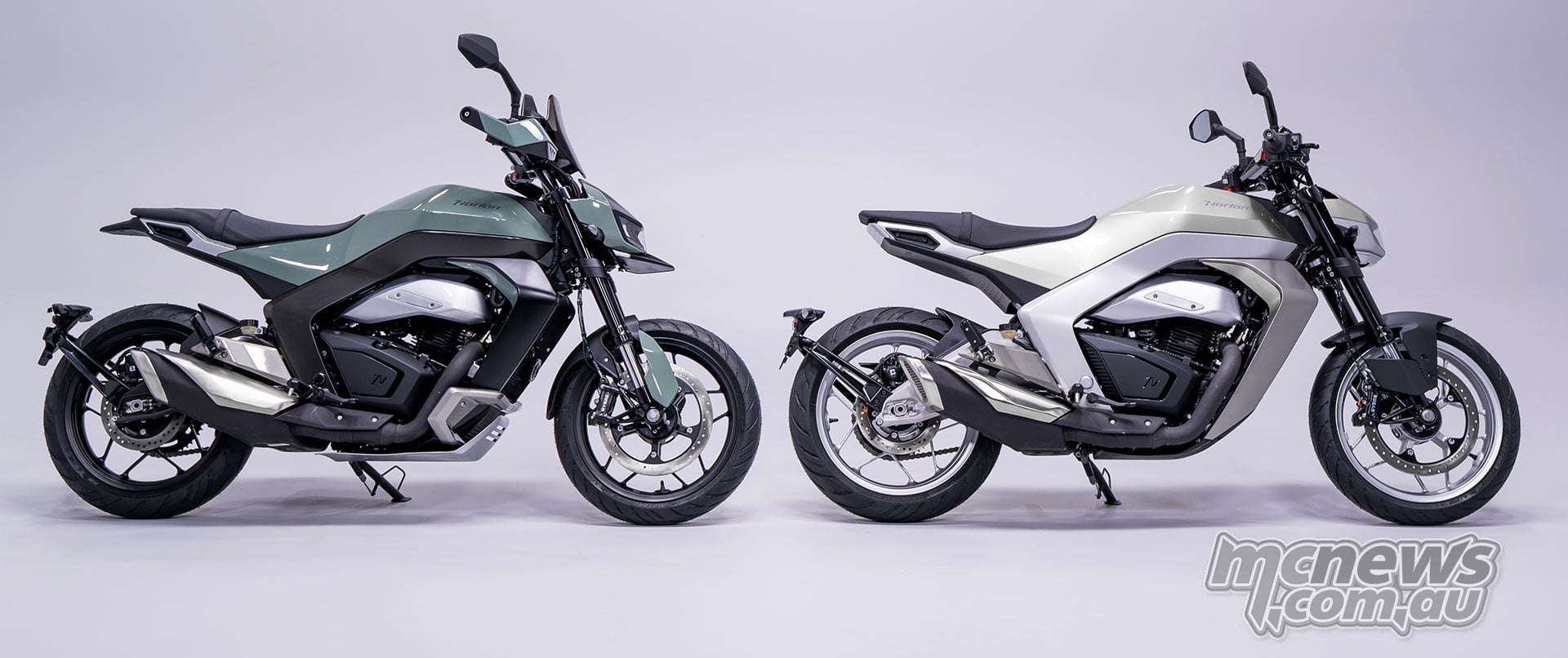
Its name is yet to be confirmed, but for now it is being referred to as the Norton 450 Urban, and it comes in two flavours: a clean road-focused version and a more ruggedly dressed alternative.
That takes Norton into a part of the market where Triumph’s TR-series 400 platform has become something of a benchmark for affordable new singles. The Speed 400 and Scrambler 400 models are obvious reference points, while the Tracker 400 and Thruxton 400 demonstrate how broadly Triumph is applying that engine platform.
Norton will need to make a convincing case against those machines. On the supplied specifications, it has some useful ammunition, although the Australian price will have a considerable say in how compelling the proposition becomes.
Two styles and two equipment levels
Norton Head of Design Simon Skinner refers to the two styles as H100 and H101 in his introductory presentation, with their final names to be revealed later.
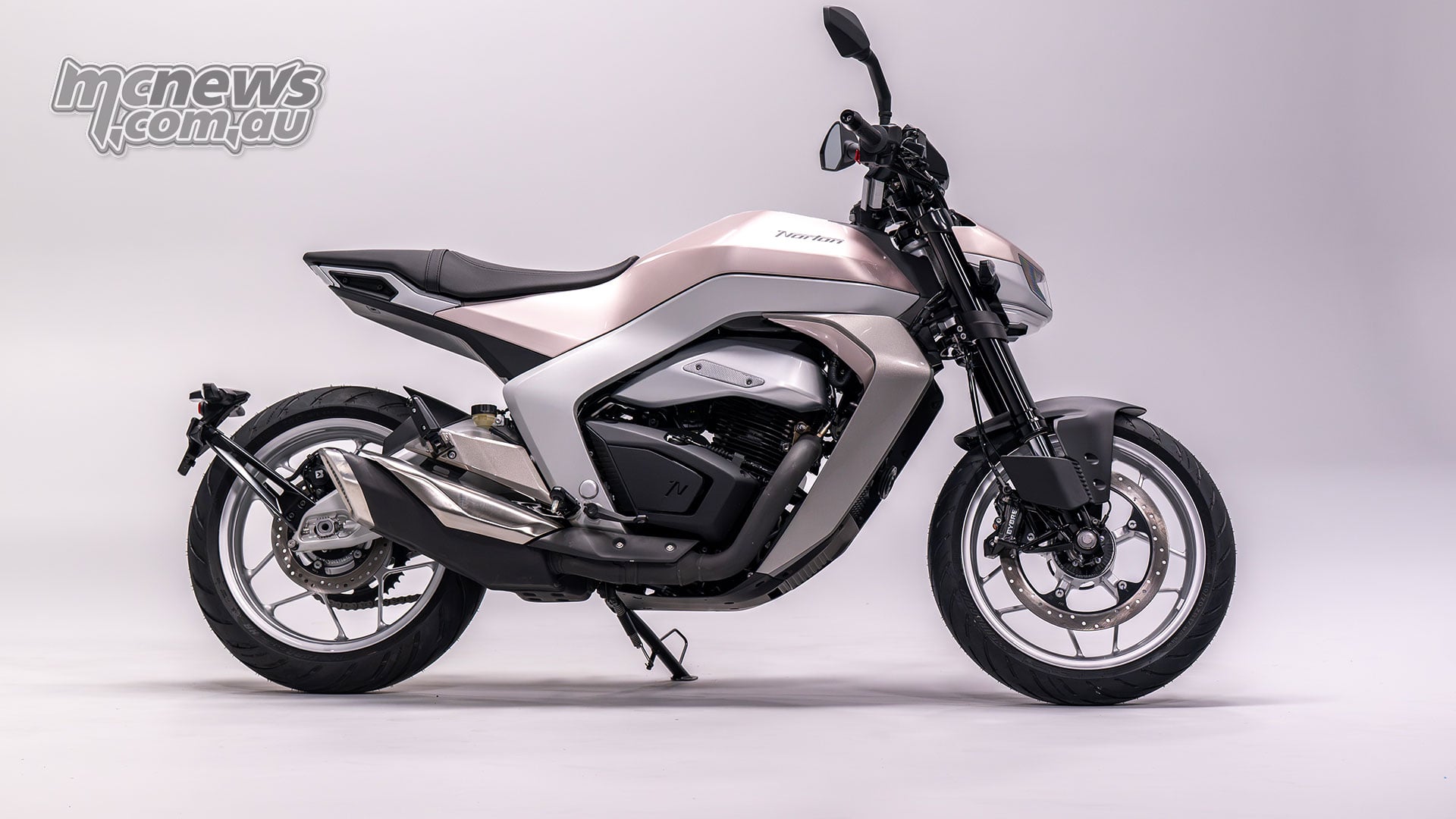
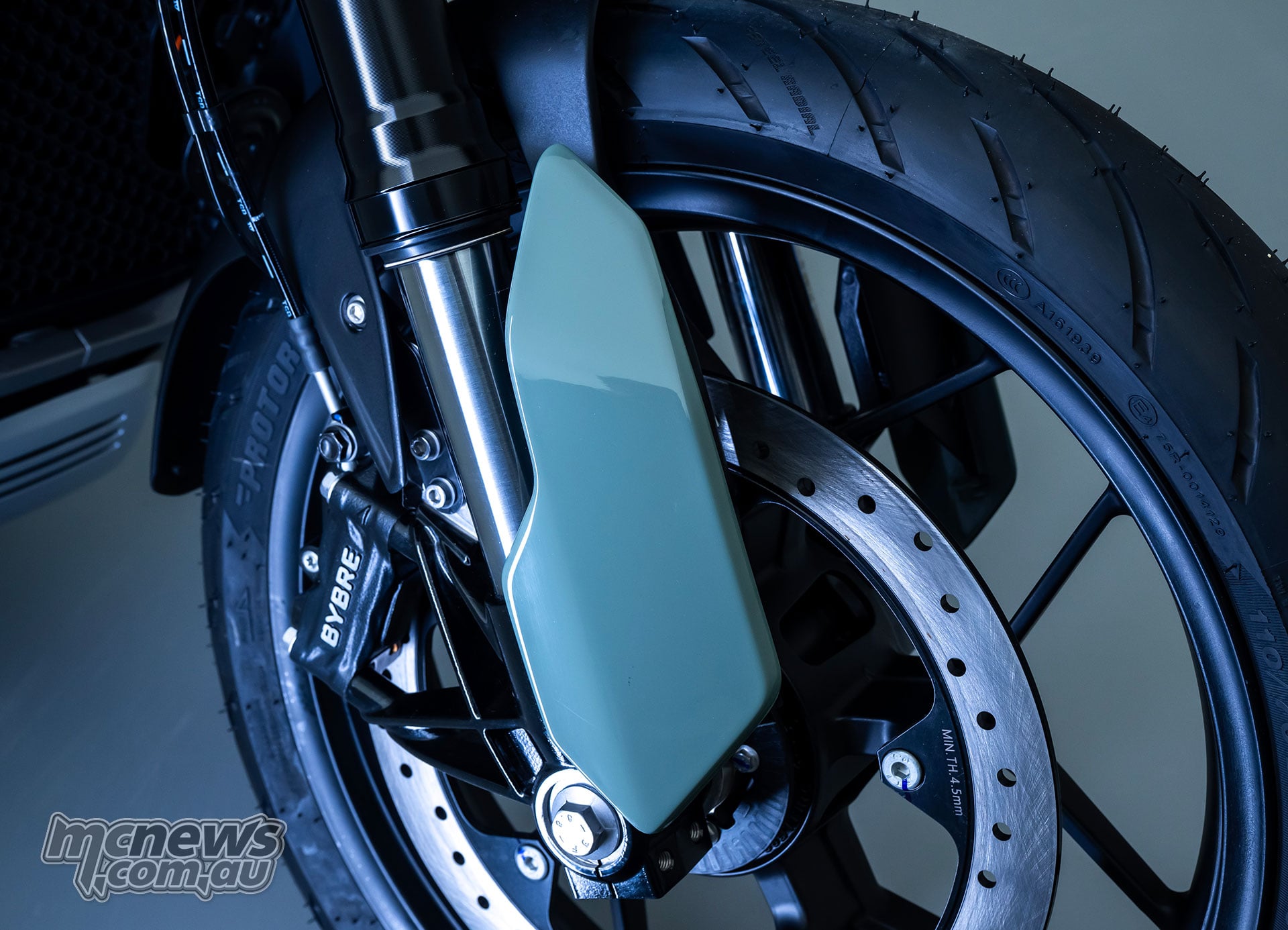
H100 is the cleaner roadster, wearing 17-inch silver cast wheels, a silver frame and road tyres. H101 gets black cast wheels, a grey frame and swingarm, extended mudguards, handguards, fork protectors, a flyscreen and different seat trim.
Skinner describes the second version primarily in terms of additional weather protection for longer rides. It shares the roadster’s engine, electronics and aluminium chassis, so we will need more detail before making claims about substantial differences in off-road capability.
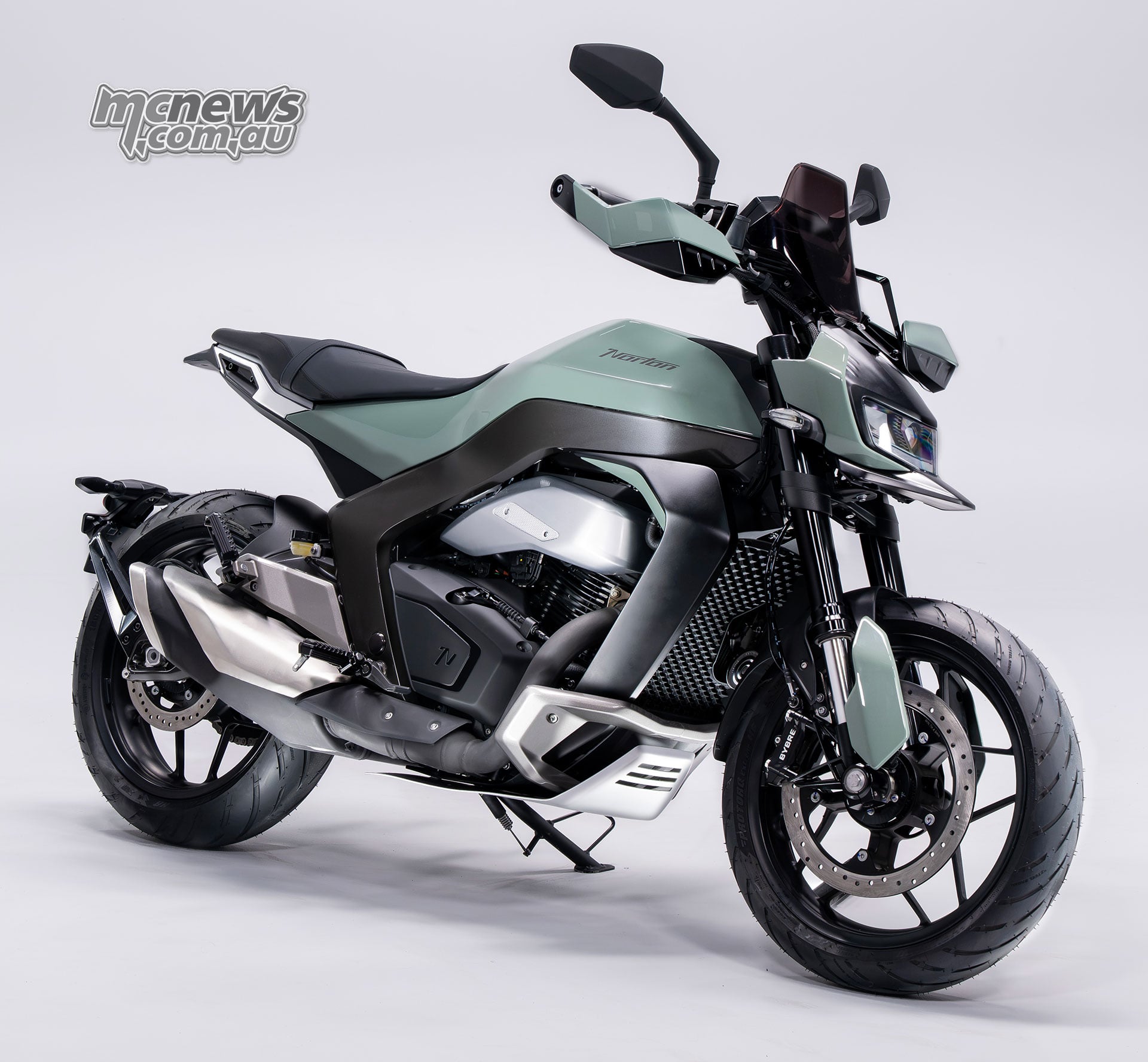
Each style will also come in base and higher specifications. Skinner says the higher specification brings greater suspension adjustability, additional electronics, more rider modes and cornering ABS. The full equipment breakdown between the two levels remains to be confirmed.
He also explicitly describes the smaller single as an entry-level Norton, with the ambition extending to attracting people who have yet to take up motorcycling. A low tank and slim proportions are intended to help make the machine feel spacious, friendly and approachable.
Simon Skinner – Norton Head of Design
“It needed a low barrier to entry. It needed to be unintimidating and friendly.”
More cubes and a few more ponies
Both Norton variants share a liquid-cooled 454 cc single-cylinder engine producing a claimed 47 PS, equivalent to around 46.4 hp or 34.6 kW, at 8000 rpm. Peak torque is 45 Nm at 6000 rpm, with drive through a six-speed gearbox.
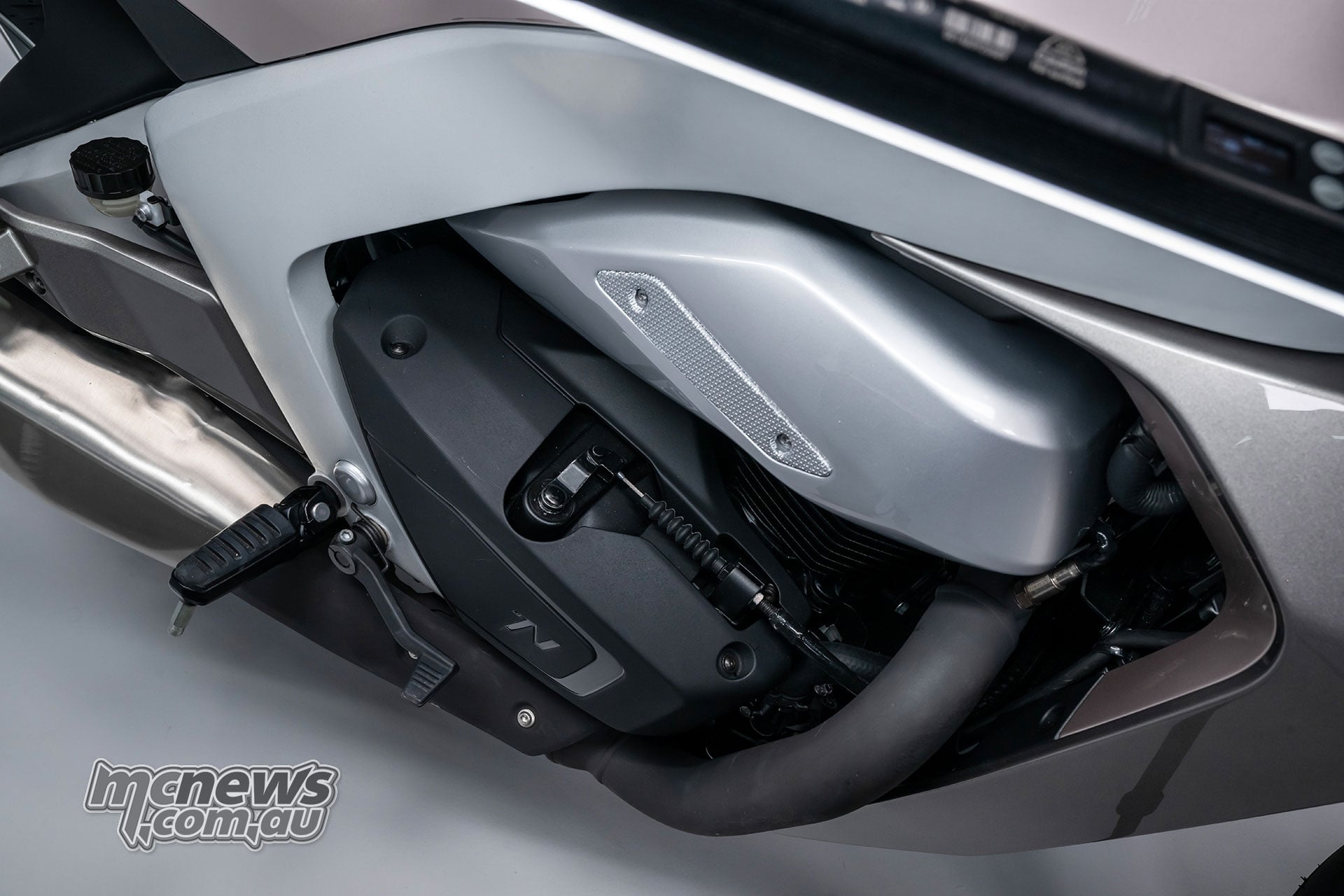
That gives Norton approximately 56 cc more capacity than Triumph’s 398 cc TR-series single. The Speed 400 and Scrambler versions produce 40 PS, while the more powerful Tracker and Thruxton variants make 42 PS. Norton therefore has a few extra ponies whichever version you compare it with.
The torque comparison is also encouraging. Triumph quotes 37.5 Nm across those models, giving Norton a claimed 20 per cent advantage. The Norton also reaches its torque peak earlier: 6000 rpm against 6500 rpm for the Speed and Scramblers, and 7500 rpm for the Tracker and Thruxton. The numbers give Norton a promising starting point.
A promising fit for Australian LAMS buyers
From those supplied figures, the 450 Norton looks almost tailor-made for Australia’s LAMS market right from the off, even though it is being developed for a much broader international audience.
Final Australian specifications and formal LAMS approval remain to be confirmed. The prospect is particularly appealing because this appears to be an engine whose normal output should suit the category without requiring a specific Australian detune.
Detuning a larger engine for LAMS can be done very well. For my money, though, these motorcycles are generally at their most enjoyable when the engine can give its all and feel natural throughout the rev range. Being able to work an engine and enjoy everything it has to offer is a large part of the attraction.
An aluminium chassis and an eight-inch screen
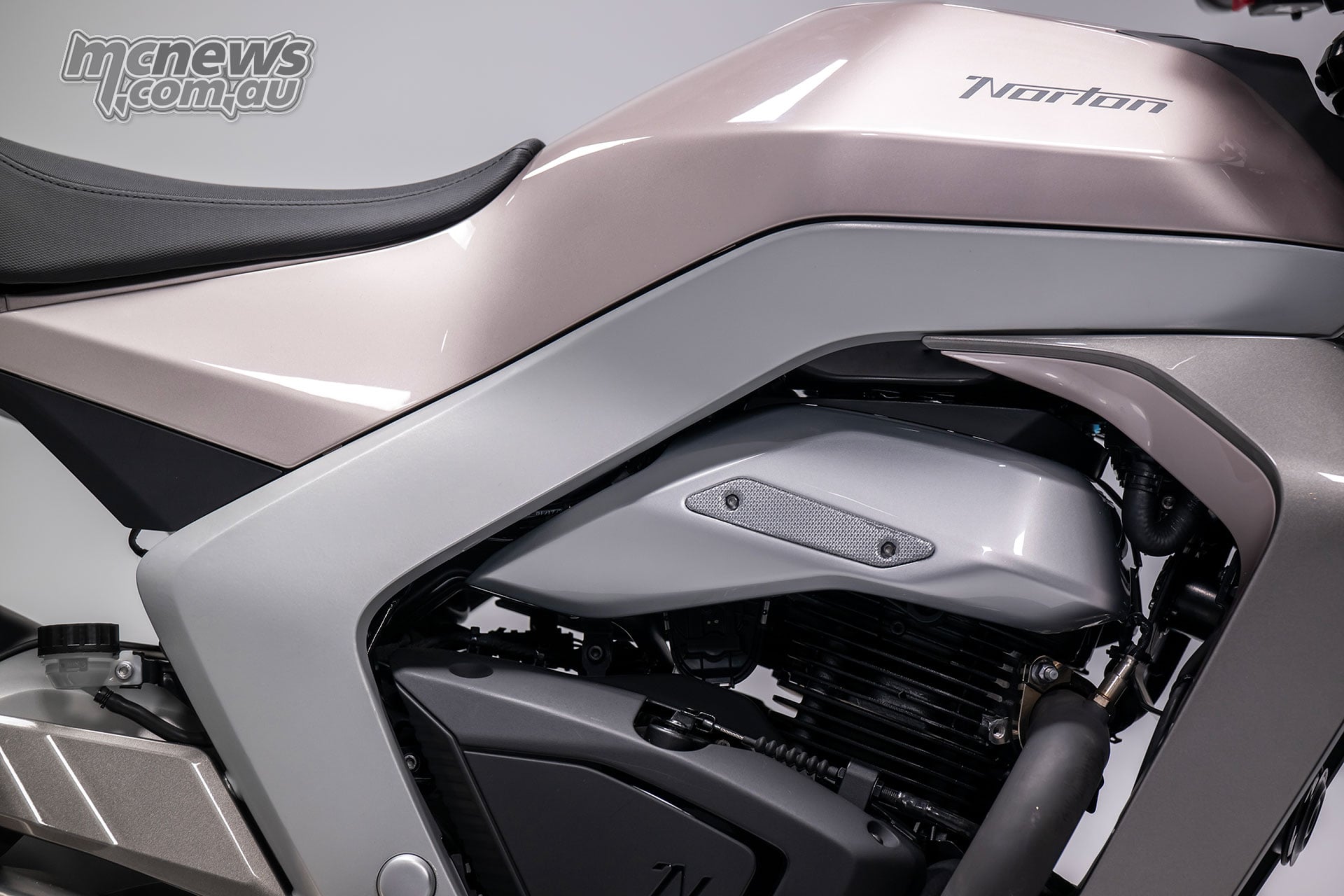
An aluminium frame and swingarm underpin the 450 platform, with Norton targeting a kerb weight below 180 kg. A 12-litre fuel tank forms part of the compact package, while adjustable brake and clutch levers provide some scope to tailor the controls to the rider.
The suspension specification outlined in Norton’s press material includes a fully adjustable 43 mm KYB upside-down fork and a KYB rear shock with rebound and preload adjustment. Skinner’s confirmation of two equipment levels means the final suspension specification for each still needs to be established.
ByBre braking hardware uses a 320 mm front disc and 240 mm rear disc, with cornering ABS among the features Skinner assigns to the higher specification.
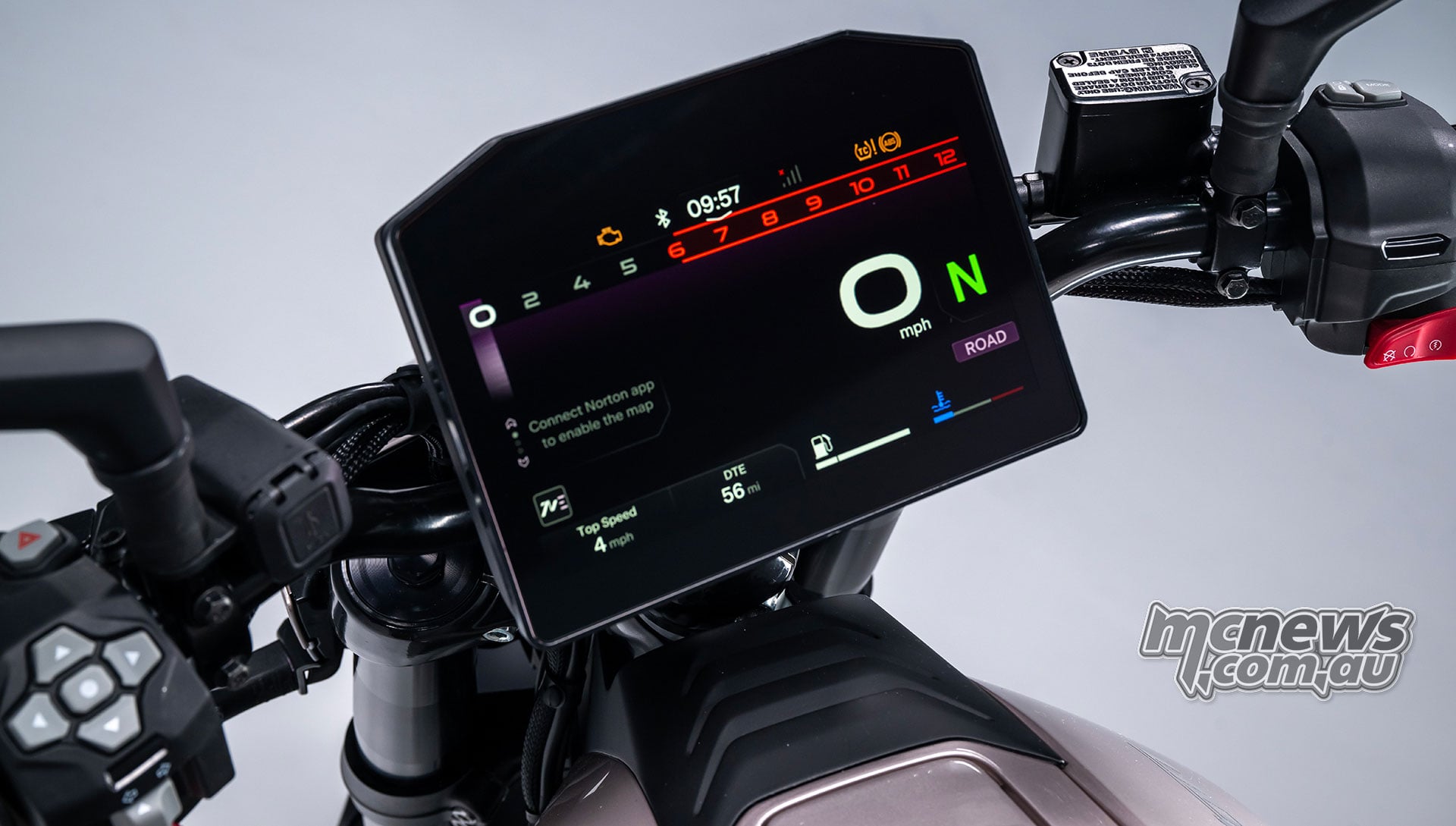
The electronics package is ambitious for this capacity class. The press material lists traction control, cruise control, three riding modes and dynamic LED headlights, along with an eight-inch TFT touchscreen.
Skinner also describes maps, an app, Wi-Fi and Bluetooth connectivity. The display shown in the studio shot specifically prompts the rider to connect the Norton app to enable the map function.
Keyless ignition, heated grips, USB-C charging, tyre-pressure monitoring and a quickshifter also feature in the press material. We await the complete standard and optional equipment lists for each specification.
A little creative licence with the CS1?
Norton also reaches back into its history for a design connection, citing the 1927 CS1 as inspiration for the line running from the rear wheel through the swingarm and main frame towards a shallow fuel tank.
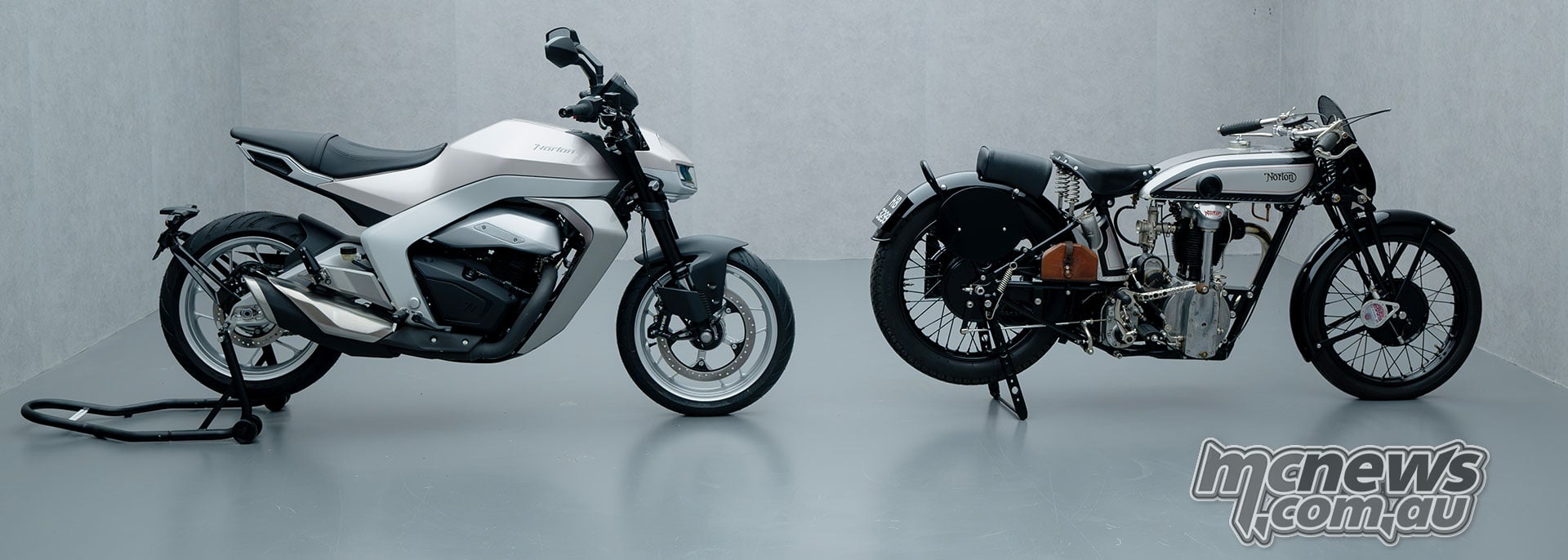
The side-by-side image lets you follow the designers’ argument, although for my money the family resemblance is fairly loose. The original CS1 had a rigid rear end, so any relationship involving the new bike’s swingarm is necessarily a modern interpretation.
As Rick McDowell detailed in our Norton CS1 feature, the model emerged from Norton’s pioneering overhead-cam racing programme. Its 490 cc, bevel-driven single powered Alec Bennett to victory in the 1927 Senior TT, with the production CS1 following for the 1928 model year.
The CS1 was also one of Norton’s flagship machines of its day. This new 454 cc single has a different commercial brief, bringing the badge within reach of a broader audience.
The price needs to be right
The real test for Australia will be the price.
Triumph has already established how much motorcycle buyers can expect for their money in this segment for under 10k ride away.
That is the competitive environment Norton needs to enter. Extra capacity and the promised chassis and electronics specification could justify a premium, but affordability has to remain central to the proposition.
For my money, the 450 Urban needs to land not much over $10,000 ride-away to have a genuine shot at meaningful sales success in Australia. Push too far beyond that, and the pool of potential buyers starts to shrink, no matter how desirable the badge and equipment might be.
Norton has yet to announce Australian pricing or arrival timing. Those details will tell us a great deal about whether this promising new platform can become a serious contender on our roads.