

BMW plugs into the dirt bike battle
Ducati and Triumph are throwing serious resources at motocross and enduro, taking on the Japanese and Austrian establishment with petrol-powered four-stroke singles. BMW Motorrad is exploring another route into the specialist dirt bike business: electric power.
The German manufacturer has announced an investment in Venna, an independent electric motorcycle developer that will gain access to BMW’s development and industrial expertise. The agreement, announced overnight, targets high-performance electric off-road motorcycles and the customers BMW believes they can attract.
Eighteen years after the G 450 X arrived in Australia, BMW is placing another off-road bet. The competitive landscape, and the choices of power source, have changed considerably.
BMW has been down the enduro trail before
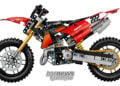
The G 450 X was a serious attempt to challenge the specialist enduro establishment. It reached Australian showrooms in September 2008 with a four-stroke single, proper competition intentions and some characteristically unconventional BMW engineering.
Its clutch sat directly on the crankshaft, while the swingarm pivot shared an axis with the gearbox output shaft, an arrangement designed to keep chain tension consistent through the suspension’s travel.
BMW’s specialist off-road interests also included Husqvarna. When it announced the sale of that business to Pierer Industrie AG in 2013, BMW identified urban mobility and electric mobility as priorities for its realignment. The Venna investment now brings electric development and specialist off-road ambition together.
Ducati and Triumph turn up the European pressure
Ducati and Triumph have meanwhile committed to challenging the established dirt bike brands with their own combustion-powered machinery, racing programmes and dealer support.
Ducati’s production Desmo450 MX was unveiled in 2025 after development in competition with Tony Cairoli and Alessandro Lupino. Its 449.6 cc four-stroke single brought Ducati’s desmodromic valve system to motocross, underlining that a familiar fuel source still leaves room for a distinctive technical approach.
The Desmo450 EDS followed in 2026, taking the platform into enduro with revised engine characteristics, greater crankshaft and flywheel inertia, a six-speed gearbox and suspension developed for the different demands of the discipline.
Triumph has pursued an equally purposeful expansion. Its TF 250-X and TF 450-X motocross machines are joined by the TF 250-E and TF 450-E enduro models, supported by factory racing and specialist dealers.
For Honda, Yamaha, Kawasaki and Suzuki, these programmes add fresh European competition to a field already contested by the KTM-led Austrian brands. Ducati and Triumph are chasing the same riders, results and showroom decisions with modern four-stroke machinery of their own.
Stark has already made electric its business
Stark Future has taken a different approach from the outset, building its identity around electric motorcycles. Its VARG range has expanded from motocross into enduro and supermoto, with the current VARG MX 1.2 advertised with up to 80 hp.
That gives Venna an established electric specialist to contend with. Stark is already selling production motorcycles across several riding categories, including the VARG MX and EX models.
KTM also has years of experience to draw on. Its electric Freeride E reached the market in 2014, and the platform continues through the latest 2027 Freeride E. The Austrian manufacturer has therefore been exploring battery-powered off-road riding alongside its combustion range for more than a decade.
Performance, reduced noise and the absence of exhaust emissions at the motorcycle give electric power an obvious attraction in off-road use.
Japan is developing electric options too
The Japanese manufacturers are also exploring how electric power might fit into their competition programmes.
Honda’s CR ELECTRIC PROTO has already been raced: Trey Canard competed aboard it in the All Japan Motocross Championship in 2023, and Team HRC entered the FIM E-Xplorer World Cup in 2024.
Yamaha’s YE-01 Racing Concept combines YZ450F-derived chassis expertise with electric technology developed alongside French specialist Electric Motion. Yamaha invested in Electric Motion in 2024, making its partnership approach an interesting parallel with BMW’s latest move.
The YE-01 is being developed with future MXEP electric motocross competition in mind. Honda and Yamaha’s projects were also named for joint demonstration runs at the 2026 Motocross of Nations in Ernée, giving electric development a prominent place on the sport’s biggest team-event programme.
BMW’s latest bet is on a partner
BMW’s announcement centres on investment, technology and industrial support. Venna will remain independent, and no BMW-branded competition motorcycle or factory racing programme has been announced as part of the agreement.
BMW says younger riders increasingly view motorcycling as a sporting leisure activity, and sees performance electric off-road motorcycles as a way to reach new customers.
BMW Motorrad CEO Markus Flasch
“This partnership opens opportunities for us in a new segment and helps us inspire new target groups with the fascination of motorcycling.”
There is also a backstory to Venna. The former Flux Motorcycles homepage now redirects to Venna, while a US trademark application for the Venna name lists Flux Performance Group Inc. as the applicant. Venna CEO Marko Ukota previously headed Flux.
In June 2025, Flux announced the appointment of former Stark Future chief vehicle engineer and interim CTO César Ferreira. It also identified Alta Motors founder Marc Fenigstein and CAKE co-founder Karl Ytterborn among earlier team additions.
That history gives BMW’s promised industrial expertise particular relevance: the challenge is turning development work into motorcycles that can be manufactured consistently, delivered and supported.
Ukota’s ambition extends beyond the initial off-road focus:
“At Venna, our ambition is to build high-performance electric motorcycles across all riding categories that will unlock new levels and possibilities to our riders.”
The next step needs a motorcycle
BMW has not disclosed the investment amount or its ownership percentage. Its announcement also provides no production specifications, pricing, firm delivery dates or Australian availability information.
Ducati and Triumph already have petrol-powered competition ranges to sell. Stark and KTM have electric production bikes, while Honda and Yamaha are developing electric racers. Venna’s next task is to show where its own motorcycles fit, and what BMW’s backing will help it deliver.
The G 450 X changed where BMW put the clutch. Venna changes where it is placing its bet.