

How Aprilia turns clever ideas into MotoGP speed
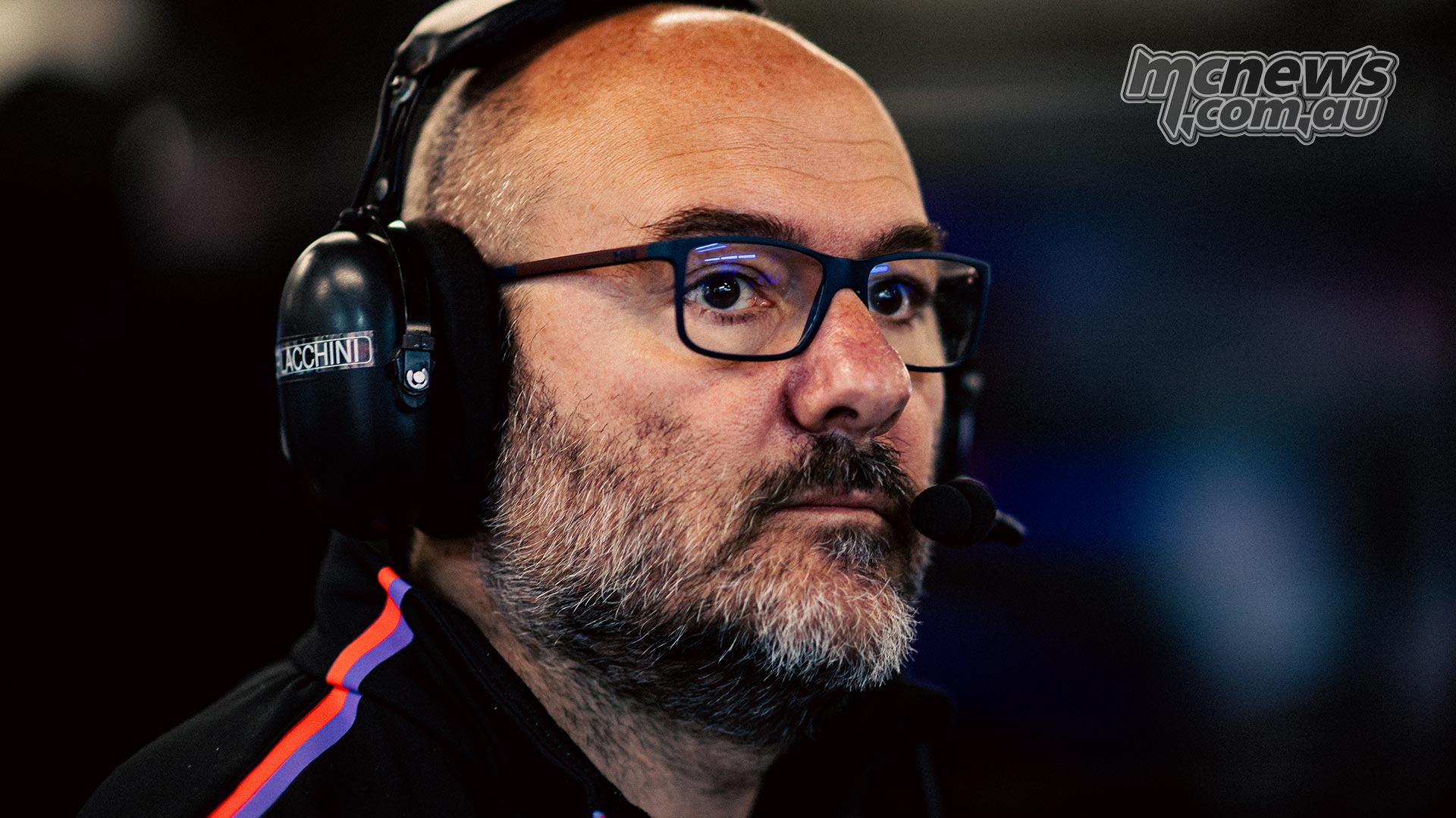
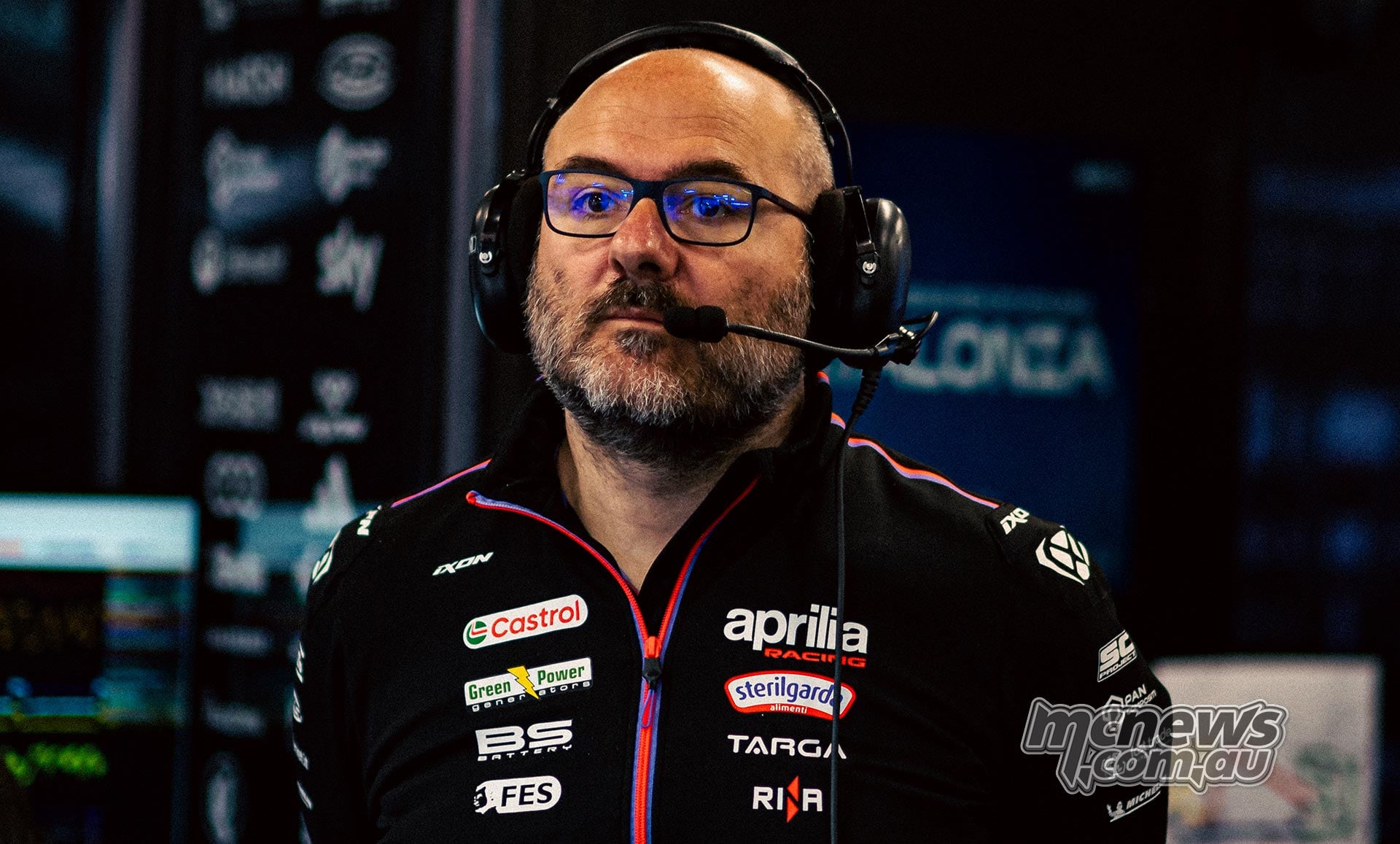
Who came up with Aprilia’s rider-operated aerodynamic duct? It seemed a reasonable question to put to Fabiano Sterlacchini, the technical director overseeing one of MotoGP’s most inventive motorcycles.
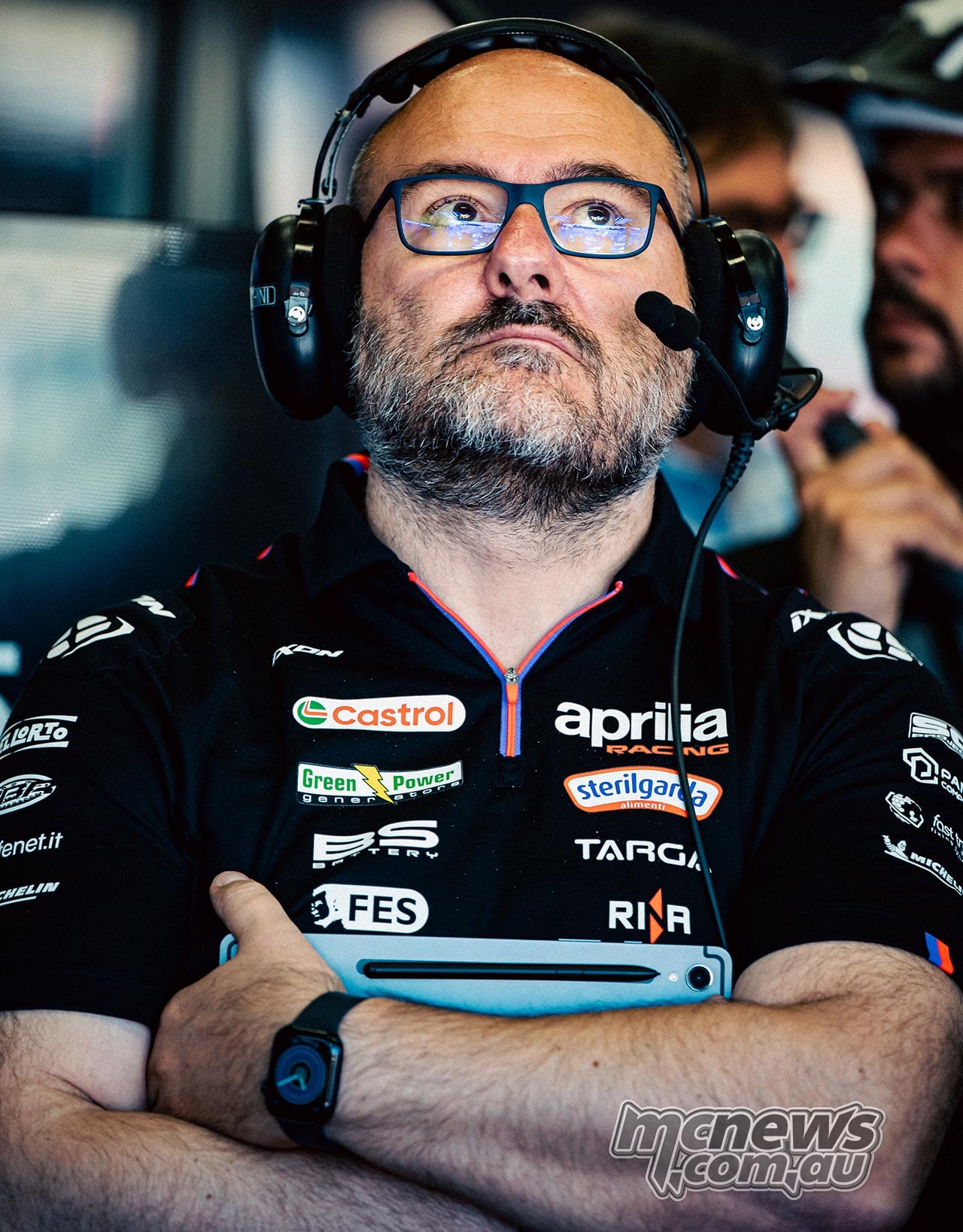
Fabiano Sterlacchini
“One guy inside the company.”
And his name?
“One guy inside the company.”
The inventor would remain anonymous. Sterlacchini was more forthcoming about how an idea becomes part of the RS-GP, and how one engineer’s work can spark a useful thought in another.
Speaking with MCNews.com.au at Phillip Island, he described an approach that brings creative discussion, simulation and rider feedback together. It also requires an understanding of how changing one part of the motorcycle can alter the demands on everything around it.
Different factories and familiar thinking
Sterlacchini has worked at Ducati, KTM and Aprilia, giving him experience of three manufacturers with different backgrounds. Asked what distinguishes Aprilia’s engineering culture, he began with the similarities between the two Italian factories.
The people have often come through the same education system, he explained, bringing a similar mindset and way of approaching a problem. He used the expression forma mentis to describe that shared way of thinking.
KTM, with its off-road heritage, had a more empirical approach in his experience, placing greater emphasis on testing. Sterlacchini sees value in combining scientific understanding with experiment and observation.
Fabiano Sterlacchini
“It’s not that one approach is the correct one. The mix of these three probably is the key point.”
At Aprilia, prediction plays a substantial role in deciding which ideas deserve further work.
Fabiano Sterlacchini
“We want to simulate and predict, rather than trial and error.”
Finding the right combination
When I asked which weakness Aprilia had most successfully engineered out of the motorcycle, Sterlacchini reached for a kitchen analogy. Making a good soup depends on the ingredients and how they are combined.
Push the aerodynamics in one direction and a side effect might need to be addressed through the electronics or the engine’s characteristics. The gain depends on how those changes work together.
He then described a surface in three-dimensional space, with different peaks representing different combinations of motorcycle performance. Once the engineers have reached one peak, small changes around that point can make the bike worse.
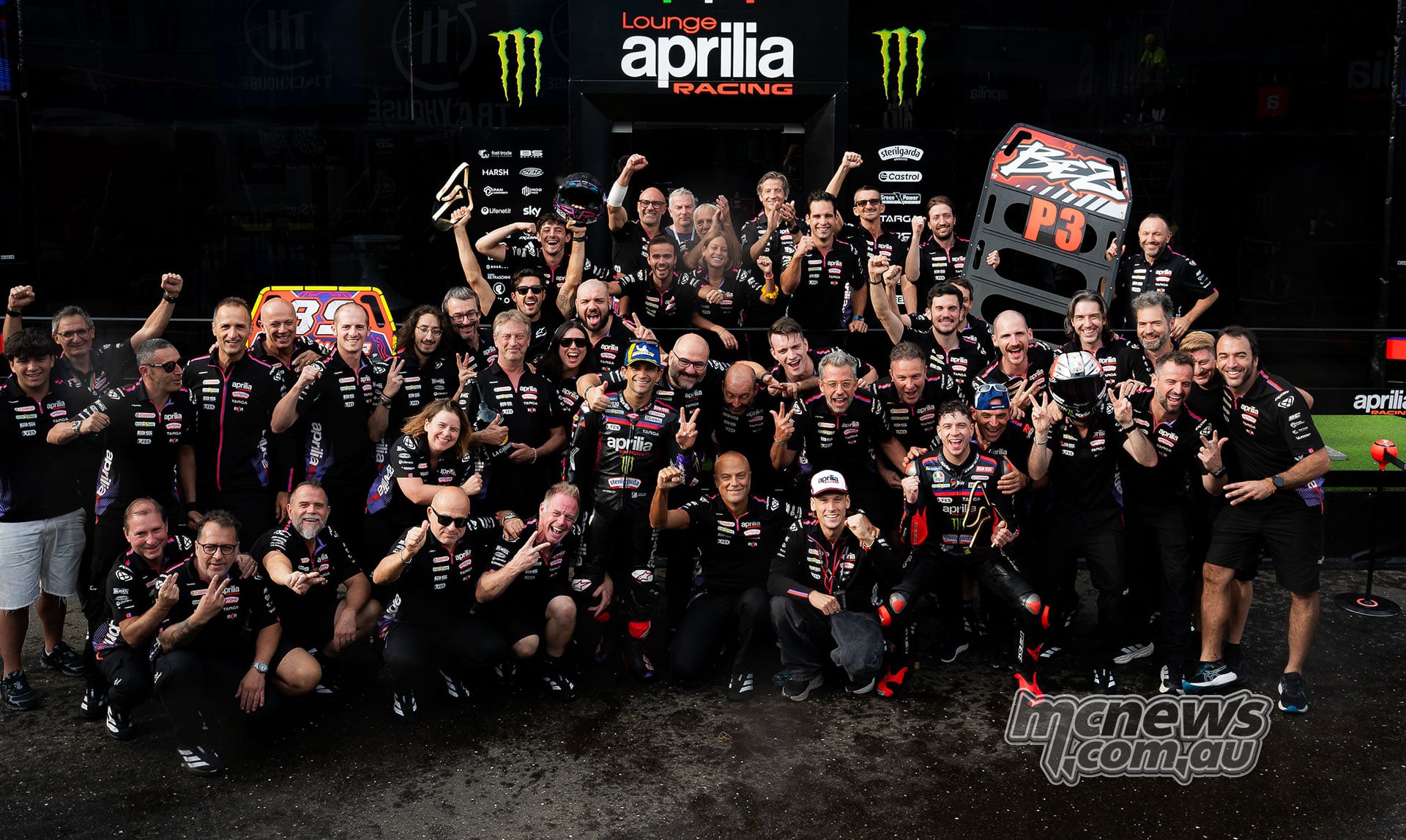
Further progress may require a substantially different combination of ingredients, taking the project towards another, higher peak. Looking at the success of his four charges this year, Fabiano makes a good soup…
Fabiano Sterlacchini
“You have to find a combination, a completely new combination of these ingredients, to find another peak that is higher than the previous one.”
Aprilia’s aerodynamic work is visible on the motorcycle. An equally important objective, he explained, has been making its performance easier for the rider to use.
It is a considerable challenge with the power and weight of a MotoGP machine, but one he believes the engineers can address.
As he put it, “You can try to make the beast less beast.”
How an idea earns its place
The rider-operated duct offered a useful example of the thinking within Aprilia. Sterlacchini confirmed that its aerodynamic work extends into generating forces that help the motorcycle through a corner, including the ground-effect work associated with the belly pan.
Ducts and small wings can contribute under different conditions. The rider’s body also becomes part of how the aerodynamic package functions.
He described the ambition as stretching the cover: finding ways to broaden what the motorcycle can do by making each device useful when it is needed.
That work begins with people putting ideas forward. Group leaders help select which concepts to pursue, and Sterlacchini takes part in those discussions himself.
Fabiano Sterlacchini
“I believe that I’m quite creative, so I’m putting ideas. But together we are deciding, because then you have to lay down the idea in the real world.”
The group decides which ideas to simulate and how to develop the concept. Along the way, one contribution can stimulate another, creating what he described as healthy competition between people trying to solve the same problem.
Some of those discussions are already feeding into the next motorcycle. Sterlacchini said the 2027 bike would contain new concepts originating in that process, although he offered no details of the hardware.
Computing power and the promise of AI
Turning ideas into useful predictions requires considerable computing power. Sterlacchini highlighted the demands of aerodynamic simulation and computational fluid dynamics, describing the large number of small elements representing the space to be analysed.
At the time of our conversation, Aprilia was using commercially available computing resources while discussing arrangements with potential partners.
His view of artificial intelligence was more qualified. He sees a gap between how much AI is discussed and how extensively it is being used to solve problems in the physical world.
The calculations still have to describe the behaviour of a real motorcycle. His emphasis was on the physics underlying the problem, even as new tools become available to tackle it.
He nevertheless expects AI to have a substantial effect on engineering work.
Fabiano Sterlacchini
“I believe in the next five years, probably, it will change our way to work.”
The rider is part of the engineering
The interaction between the motorcycle’s systems becomes particularly clear in Sterlacchini’s explanation of corner entry.
Aprilia has worked extensively on electronics and bike settings to make rear slides more controllable. Allowing the rear tyre to help slow the motorcycle can relieve some of the demands on the front, he explained.
Managing the transition out of that slide is crucial. If the rear comes back abruptly, it can upset the front just as the rider is trying to finish braking and turn towards the apex.
The engineers therefore have to create conditions in which the rider can generate the slide, control it and bring the motorcycle back into line smoothly.
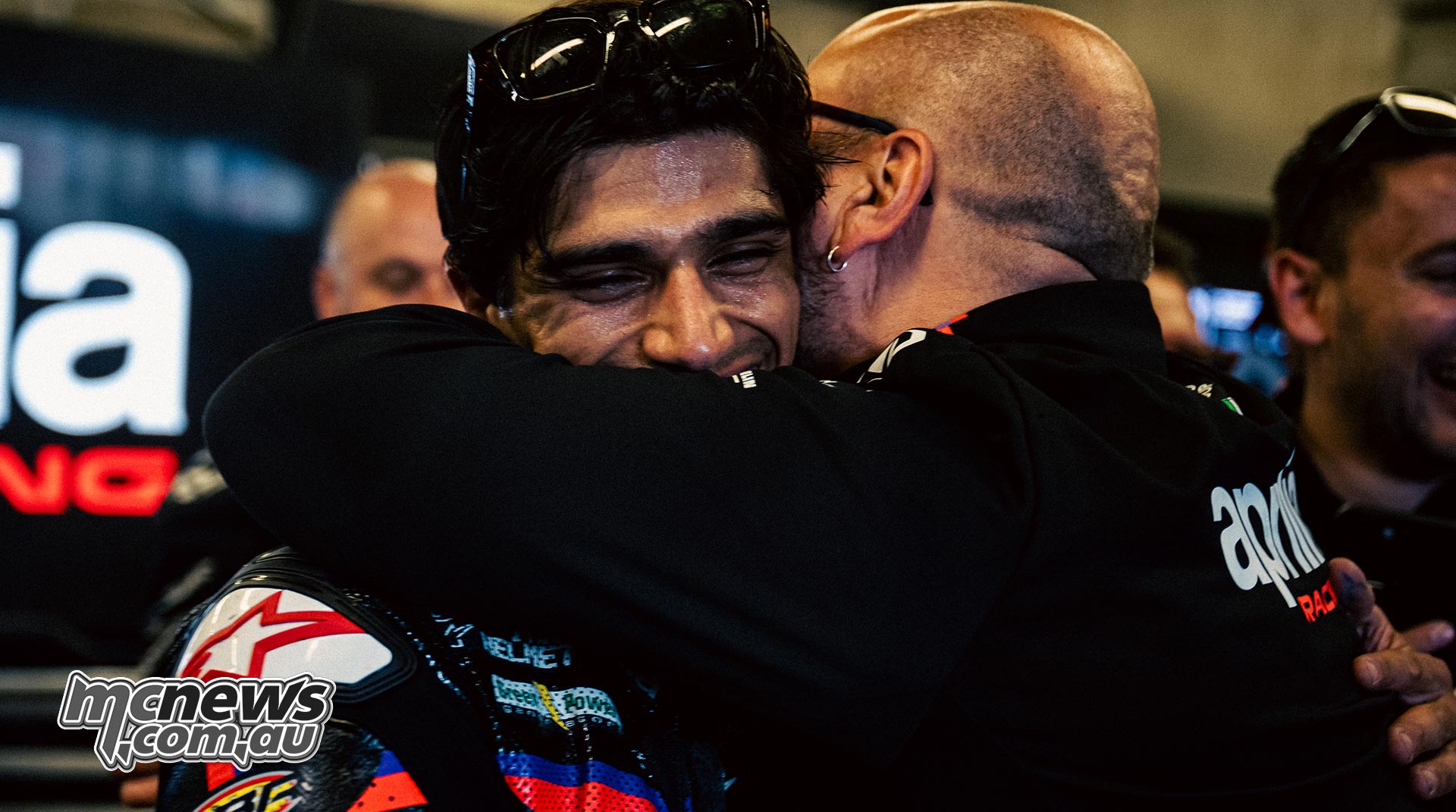
That requirement also varies between riders. Sterlacchini described Marco Bezzecchi and Jorge Martín as similar in the way they generate and manage a rear slide. Raúl Fernández prefers a precise, clean line, which he likened to riding a 250.
Aprilia adjusts its approach to suit those differences. The rider’s requests guide development, although there are also occasions when Sterlacchini believes the rider has to adapt.
Fabiano Sterlacchini
“Normally we are guided by the riders in terms of what they need to squeeze the performance of the bike, to exploit the performance.
“But in the meantime, sometimes when we are going against the physics, we are teaching the rider to ride the bike in a different way.”
He declined to go further into the detail of Aprilia’s working methods. That exchange, though, gives an indication of the negotiation taking place between a rider’s preferred technique and the way the motorcycle can deliver its best performance.
Changing the setup without losing the character
Phillip Island adds sustained high-speed corners and the possibility of strong winds to those calculations. For Aprilia, Sterlacchini said the circuit and Mandalika shared characteristics in its simulations, allowing the team to arrive with broadly the same concept.
The changes specific to Phillip Island were more concerned with settings than aerodynamics. The team could also assess permitted changes to address the wind, particularly through Turns One, Three and Eight.
Throughout that work, he wants to retain the reactions the riders have learned to expect.
Fabiano Sterlacchini
“What is important is always that you are changing parts of the bike without changing the DNA of the bike, because the riders are used to riding the bike with its reactions.”
When the 850 reached the track
The new 850 cc project provides a fresh test of Aprilia’s ability to predict motorcycle performance.
Sterlacchini explained that the early simulations had largely used information from the current tyre, with its characteristics adjusted to explore how a different tyre might affect the new machine. That required assumptions and simplifications.
When the new motorcycle ran with its new tyre, the lap-time performance surprised him.
Fabiano Sterlacchini
“To be honest, when we landed on the track with the project with the new tyre, we have been quite surprised in terms of the speed, in terms of chrono, because we are not so far away.
“Clearly the power and then the speed is much less, and that was the purpose of the 850 downsizing.”
He offered no specific lap-time comparison, but the distinction between reduced power and the pace over a complete lap was clear.
Aprilia is undertaking that work while still pursuing its ambitions with the current motorcycle. Sterlacchini acknowledged the pressure on the company, describing the management of both programmes as tight.
The consequences of neglecting the next project were also clear to him: what is now the future will soon be the motorcycle Aprilia has to race.
Somewhere in that development process are the next ideas from those group discussions. Sterlacchini has already promised new concepts on the 2027 bike. Whether he will be any more willing to name their inventors is another question.