

CFMOTO V4 SR-RR
Engine Secrets and WorldSBK Ambitions
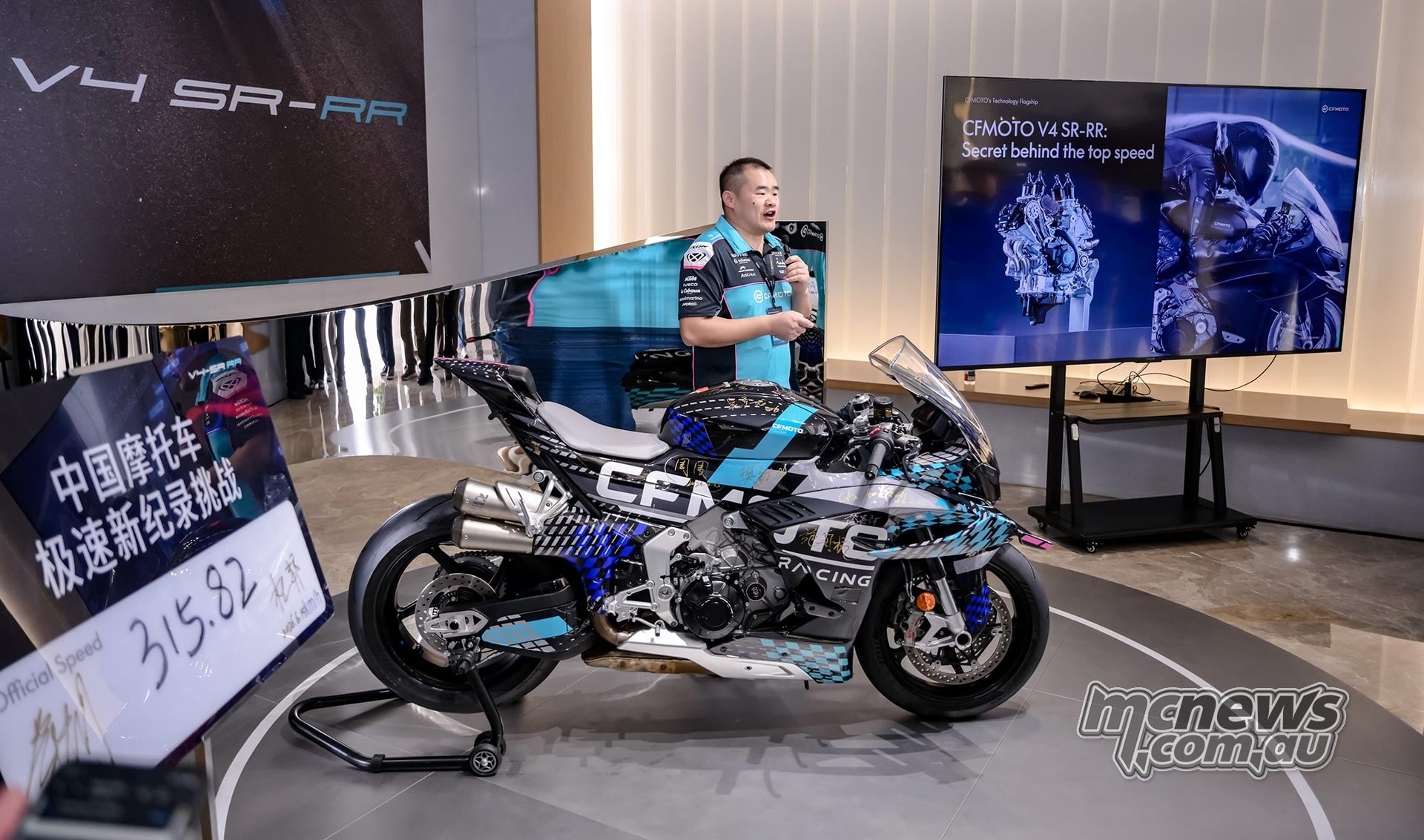
CFMOTO’s V4 SR-RR began life with a different engine from the one powering its 315.82 km/h prototype. During our visit to the company’s headquarters in Hangzhou, former engine chief engineer Joe Zhou revealed how a 70-degree V-Four with a 79 mm bore became a 90-degree engine with an 81 mm bore as the team reassessed what it would take to compete at superbike level, and that looks to be quite an important consideration as the talk of Albert Arenas and the Aspar Team being linked to a possible CFMOTO WorldSBK programme intensifies.
The figures remain substantial: 997 cc, a claimed 157 kW (more than 210 horsepower), and a maximum engine speed of 15,000 rpm. CFMOTO quotes approximately 180 kg dry for the prototype motorcycle and 62.2 kg dry for the engine.
But the competitive environment it might enter is changing. WorldSBK will adopt Brembo’s Hyction carbon-ceramic braking technology and Michelin tyres in 2027, while British Superbikes is introducing a torque-managed control-electronics formula that could later influence the World Championship. Building a competitive superbike increasingly depends on the complete package, not just extracting more power.
From 70 degrees to 90
Zhou explained that the original narrow-angle V-Four was reconsidered as the superbike market evolved and performance expectations increased. The team chose a wider cylinder-bank angle and larger bore to support its ambitions for high-rpm performance.
Joe Zhou
“So we decided to switch to a ninety degree V4 with a bore of eighty-one to be competitive enough, to reach such a high RPM.”
The 90-degree configuration itself is not a new announcement. CFMOTO publicly presented that layout at EICMA in 2024, with an 81 x 48.4 mm bore and stroke. What Zhou disclosed in Hangzhou was an earlier design that didn’t make it through development.
Changing the bank angle affects engine balance, packaging, induction, exhaust routing, and the surrounding chassis. Increasing the bore provides more room for valve area, while the short stroke suits an engine intended to operate at high rpm.
Titanium internals and carefully controlled airflow
Zhou described titanium connecting rods, forged pistons and DLC-coated finger followers, along with titanium inlet and exhaust valves. The exhaust valves are hollow and sodium-filled to assist heat transfer.
The objective is to manage the mechanical loads and temperatures over sustained periods of racing. Diamond-like carbon coatings help reduce friction and wear at heavily loaded contact surfaces.
The crankshaft rotates in the opposite direction to the wheels. This can offset part of the gyroscopic effect, helping direction changes, and Zhou also identified a benefit in limiting front-wheel lift under acceleration.
A scavenge pump forms part of the lubrication system. Zhou said CFMOTO CNC-machined the intake ports and combustion chambers in-house, and purchased a five-axis machine specifically for the project. CFMOTO co-developed the titanium exhaust with Akrapovič.
A chassis that is not stiff in every direction
Rather than a conventional aluminium twin-spar frame, Zhou described a minimal monocoque-type structure using the engine as a significant load-bearing component. The location of the engine mounts was a particularly deliberate decision.
The front mounts sit lower than usual, around the lower crankcase rather than higher on the engine. Zhou said this arrangement helps deliver strong longitudinal stiffness under braking while allowing lower lateral stiffness for cornering.
That is not the contradiction it might first appear. At large lean angles, bumps do not act neatly along the suspension’s direction of travel. Controlled chassis compliance can help the tyres follow the surface, while the motorcycle still needs support and precision under heavy braking.
Öhlins has been involved in suspension development, and the rear uses a progressive linkage. An aluminium fuel tank keeps fuel close to the motorcycle’s centre of gravity and carries more fuel further towards the back of the machine than we generally see, limiting balance changes as the tank empties during a session.
315.82 km/h was not the main objective
CFMOTO combined computational fluid dynamics with five rounds of wind-tunnel testing in China and Italy, plus dedicated circuit work. Its previously publicised active-aero concept further indicates the scope of development, although the eventual road and racing specifications need not be identical.
As we reported after the June speed run, the prototype reached a claimed GPS-verified 315.82 km/h at the Shangrao proving ground. Zhou said it retained its standard exhaust but ran without mirrors and the number-plate bracket.
Joe Zhou
“The top speed is actually not our primary development objective.”
The target was overall performance, especially on track. That requires the cooling and lubrication systems to sustain the engine’s output, the chassis to remain stable, and the rider to trust the motorcycle. Ride-by-wire and a six-axis IMU underpin its electronic assistance package.
Making the performance repeatable
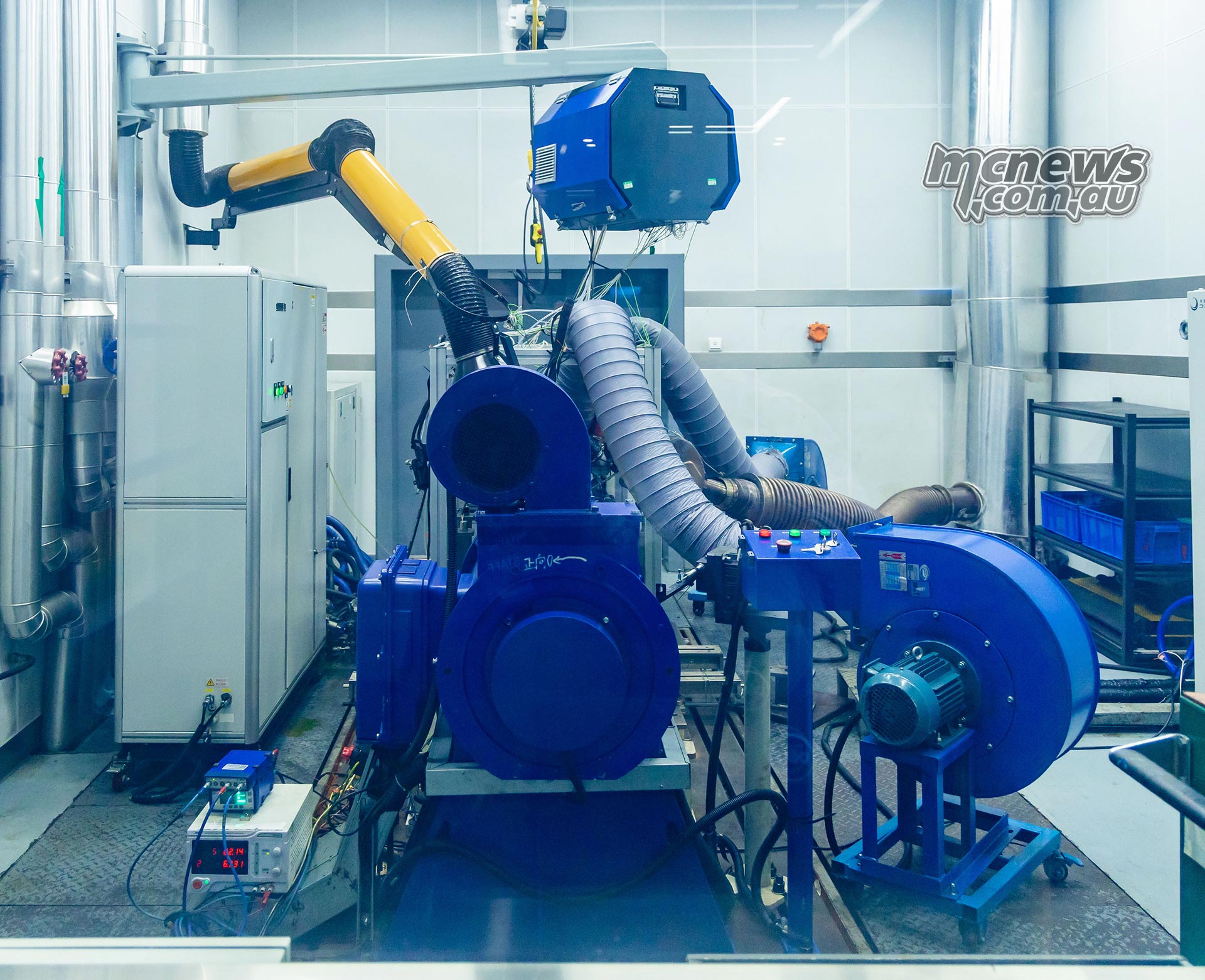
Zhou acknowledged that noise and vibration countermeasures had increased engine weight beyond an earlier published figure. The present 62.2 kg dry claim reflects those additional measures. It is a revealing compromise in a programme otherwise pursuing weight savings gram by gram. No doubt many of these changes were driven by ever tightening EU noise restrictions.
CFMOTO says development has included thousands of hours of bench testing, repeated circuit sessions and tens of thousands of kilometres on the road.
The 180 kg whole-bike dry figure remains a prototype claim. Production kerb weight, refinement and durability will ultimately tell buyers more than a development motorcycle’s power-to-weight ratio.
Arenas and Aspar linked to WorldSBK plans
European paddock reporting has linked Albert Arenas to the V4 project, with Aspar widely tipped to operate the CFMOTO Superbikes when they are ready.
Arenas secured the 2026 WorldSSP title at Estoril in his first season in the class. He also won the 2020 Moto3 World Championship with Aspar, giving the suggested pairing an established history alongside CFMOTO’s existing Moto3 and Moto2 relationship with the team.
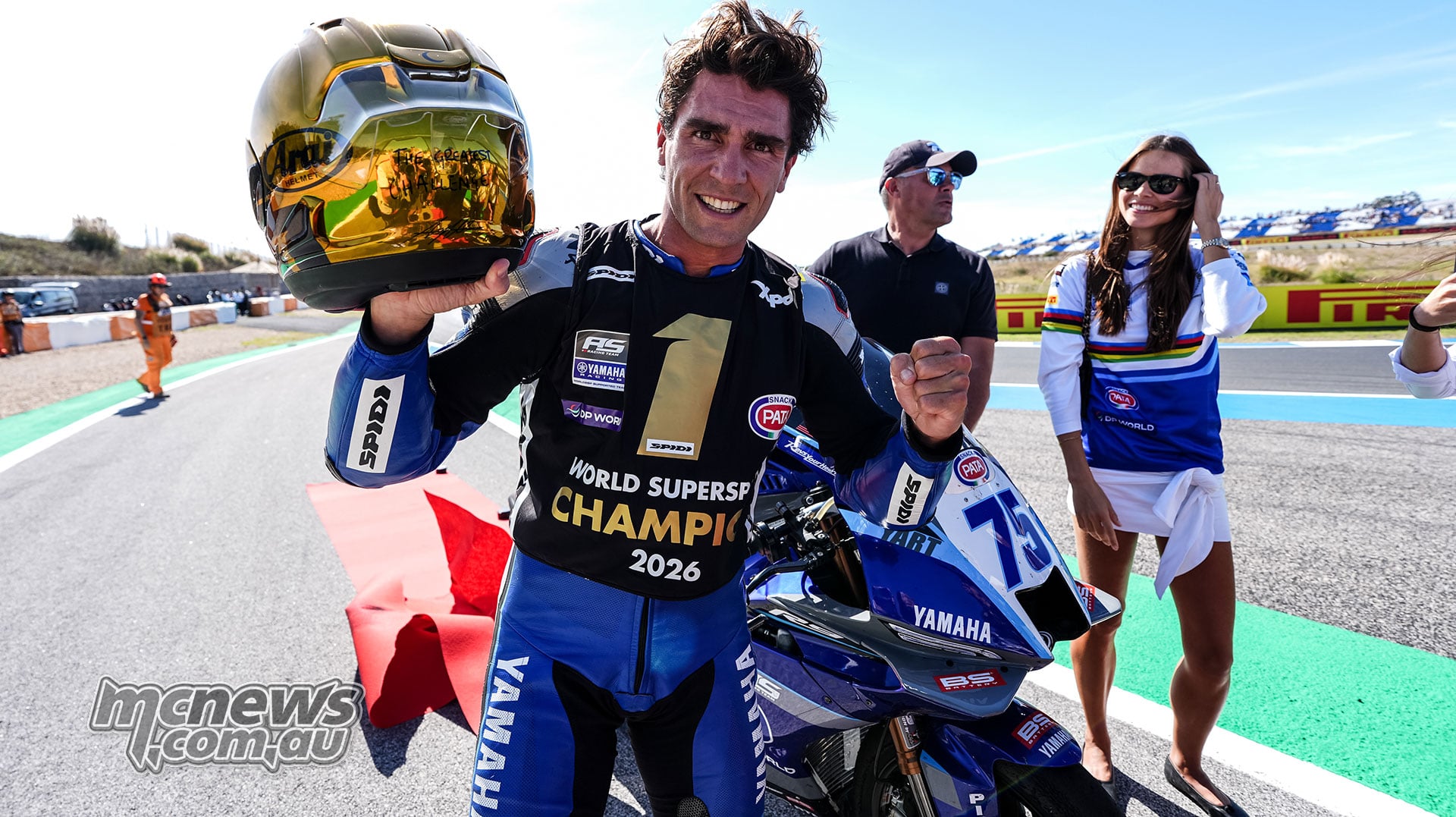
One suggested route would see CFMOTO support Arenas on another manufacturer’s Superbike at the start of 2027, keeping him racing while it develops its own machine. A switch later in the season, selected wildcard outings, or waiting until 2028 remain unconfirmed scenarios.
The proposed Chinese round at Shanghai, listed for 29–31 October on the provisional 2027 WorldSBK calendar, would be an obvious target for a home debut. That is an attractive possibility, not a confirmed CFMOTO entry. The motorcycle would still need to satisfy the applicable homologation and technical requirements.
Technical changes are afoot
Another development is worth considering alongside CFMOTO’s ambitions. As we detailed in our coverage of the 2027 BSB regulations, British Superbikes is moving to a Mectronik torque-based control-electronics platform with an initial performance target of around 200 bhp.
BSB already uses a control ECU. The change is its purpose and capability: the new system manages torque delivery across the rev range, rather than merely pegging one peak-power number. The new formula also includes controlled traction control, anti-wheelie, and launch control.
Newer BSB Superbikes will remain closer to standard specification, while older models can receive defined components to bring them into the required performance window. The intention is to broaden the machinery capable of competing and reduce engine-development and running costs.
If that approach succeeds, a similar philosophy is widely tipped as a possible future direction for WorldSBK. It is not an announced WorldSBK control-ECU rule. The confirmed 2027 world-championship approach instead combines manufacturer-specific rev limits with fuel-flow controls, with manufacturers managing those rev limits through their software.
For a prospective newcomer, the attraction is clear: less emphasis on an open-ended peak-power contest could make delivery, chassis behaviour, tyre use and reliability even more decisive. That wouldn’t make CFMOTO’s high-rpm engineering redundant, nor would it make a 210-horsepower road prototype automatically race-ready. It would change where the competitive advantage had to be found.
Control braking package coming to WorldSBK
Unlike the possibility of BSB-style electronics reaching WorldSBK, the championship has already confirmed its 2027 braking change. Brembo becomes the exclusive braking-system supplier to WorldSBK, introducing its Hyction carbon-ceramic disc technology.
Our in-depth Brembo Hyction feature explains the new brake package in detail. Hyction is carbon-ceramic, not the carbon-carbon material used in MotoGP. Brembo is targeting consistent behaviour across temperature and weather conditions, with one disc specification and one pad specification intended to cover the WorldSBK calendar.
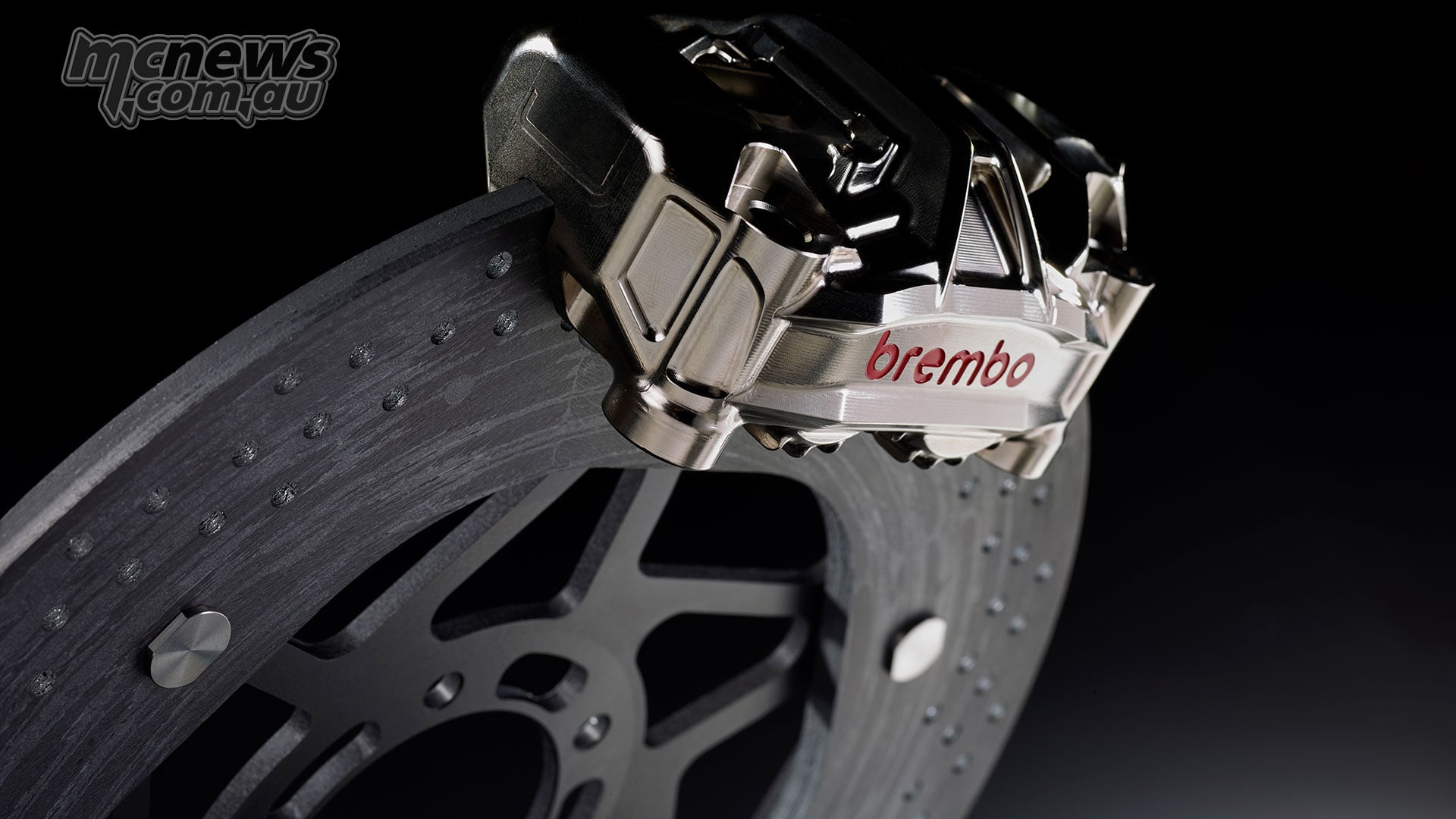
Add the switch to Michelin tyres from 2027, and CFMOTO could arrive during a substantial technical reset. Some established set-up knowledge will need revisiting, though that doesn’t erase its rivals’ experience or guarantee a newcomer an advantage.
More than a horsepower statement
During our management interview, Markus Ferch described the V4 as a technology flagship rather than a volume seller. Its job is to demonstrate what CFMOTO can engineer, and what customers can expect as the brand moves into more demanding territory.
The final production specification, Australian availability and pricing still need to be established, as do any rider contract, team arrangement and WorldSBK debut. But Zhou’s account already shows how seriously the company has approached the engine, chassis and validation work.
The challenge is whether CFMOTO can turn the V4 prototypes into a fast, predictable and durable superbike within the racing rules and technical constraints it will actually face. Commercial success presents another test, although sales volume alone will not define it. Our understanding is that CFMOTO intends the V4 to be a flagship rather than a volume seller, meaning its greatest contribution could lie less in how many leave the showroom and more in the credibility it earns for every motorcycle carrying the CFMOTO badge.