

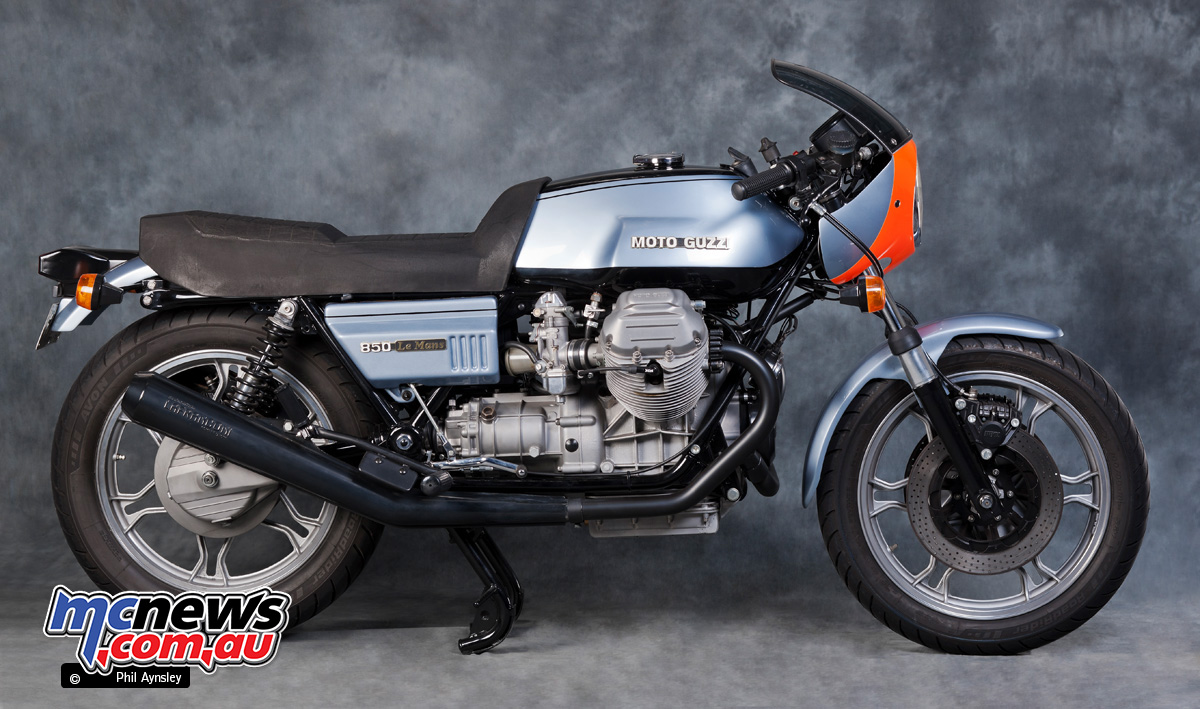
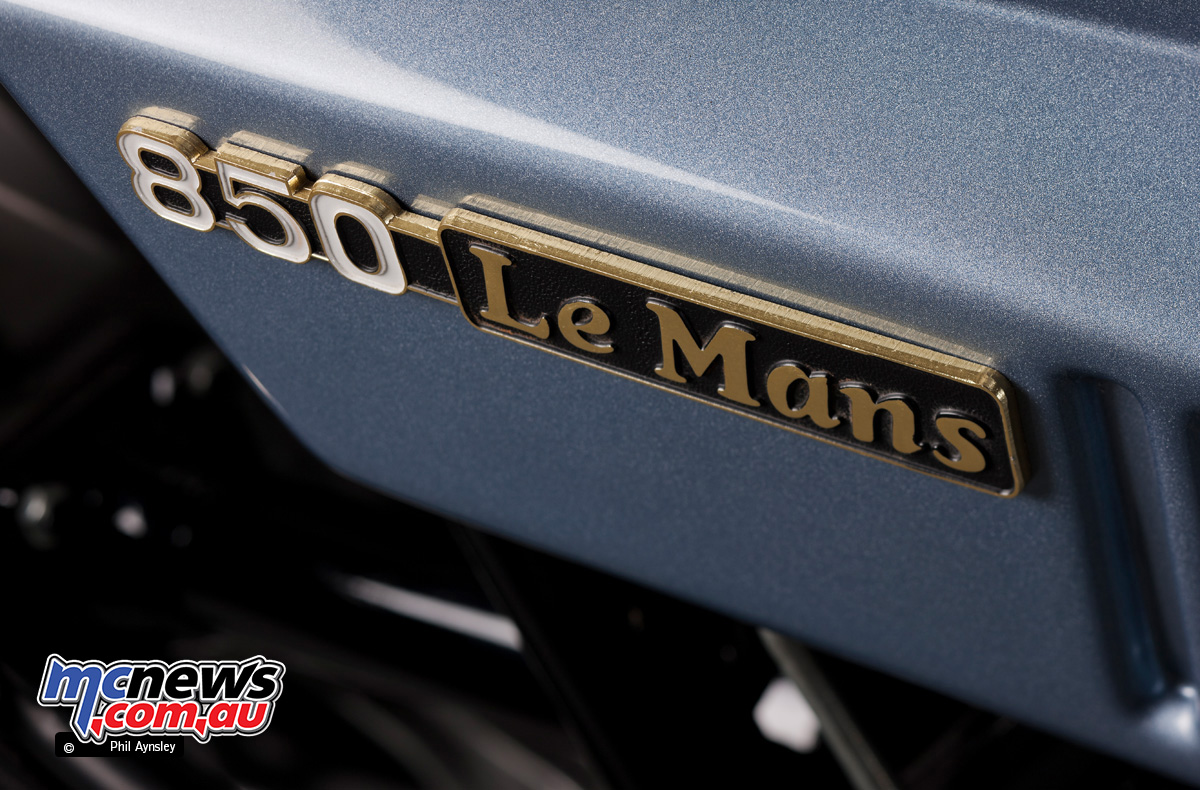
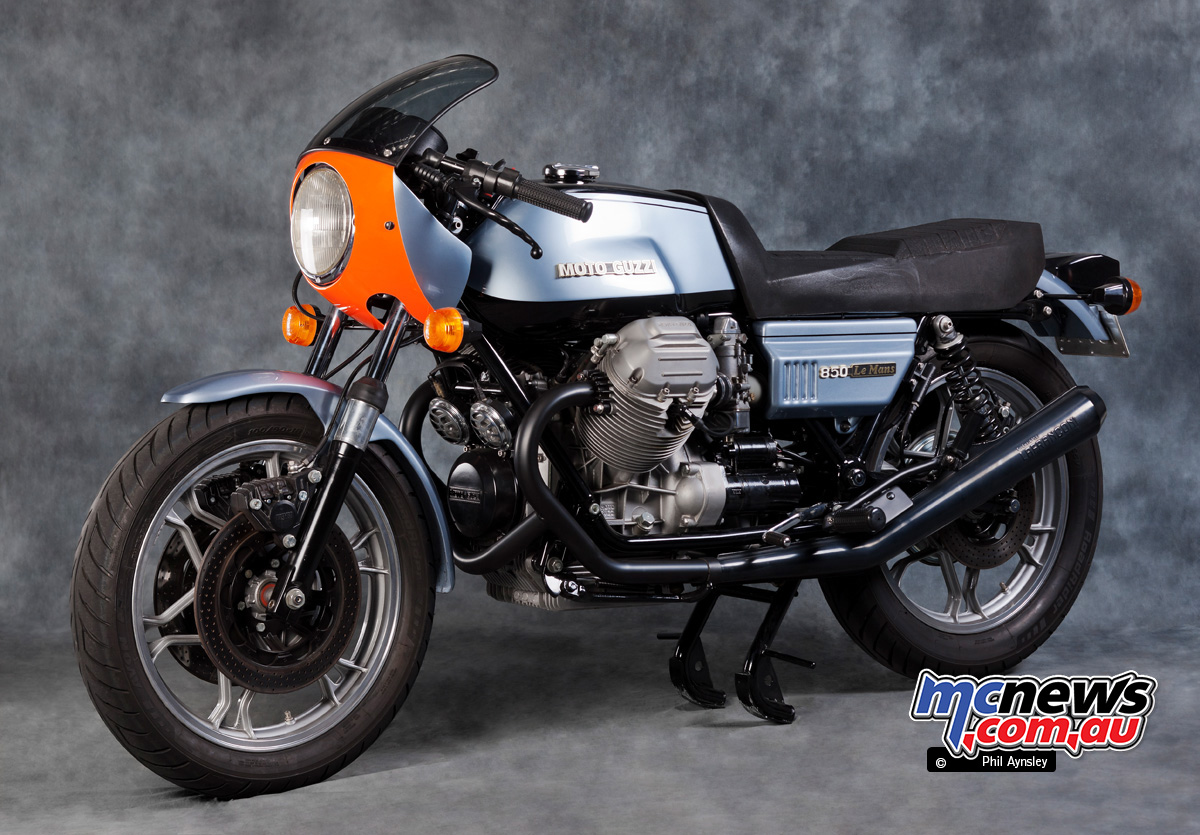
1977 Moto Guzzi 850 Le Mans Series II
Among Moto Guzzi’s road-going motorcycles, none is more closely associated with the marque’s sporting identity than the Le Mans. Produced in various forms from 1976 through to 1993, the original Le Mans models defined Moto Guzzi’s approach to high-performance road bikes during a period of profound change in the European motorcycle industry. The post-2000 machines that later adopted the Le Mans name were fundamentally different in concept and philosophy.
Although the first 850 Le Mans made its public debut at the Milan Show in late 1975, its origins can be traced back several years earlier. In 1971, Dutch racer Jan Kampen entered an overbored Moto Guzzi 750, enlarged to 810 cc, in the Zandvoort 6-Hour endurance race. Kampen had a close working relationship with Moto Guzzi’s legendary engineer Lino Tonti, and the success of that machine prompted Tonti to explore a larger-capacity, factory-developed endurance racer.
The result was an 844 cc prototype, which was entered in the 1971 Bol d’Or at Le Mans. The bike led the race for the first ten hours before engine problems dropped it to third place at the finish, a result that nonetheless demonstrated the potential of Tonti’s concept. Continued development followed, and by 1973, a refined prototype finished fifth at the Le Mans 24-Hour race. At this poin,t the design was effectively production-ready.
However, corporate priorities intervened. Following Alejandro de Tomaso’s acquisition of both Moto Guzzi and Benelli, the group placed strategic emphasis on promoting Benelli’s six-cylinder machines as the flagship sporting models of the combined group. As a result, the Guzzi project was shelved temporarily, and production of the Le Mans did not begin until 1976.
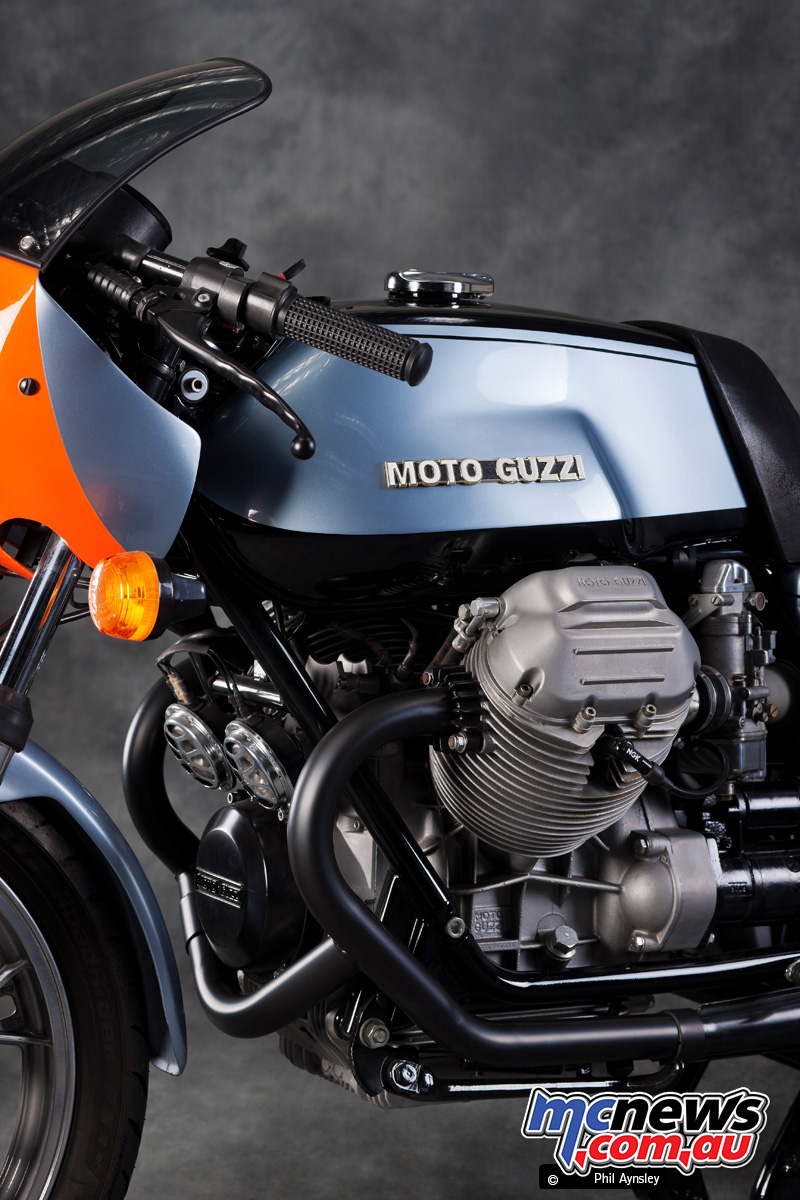
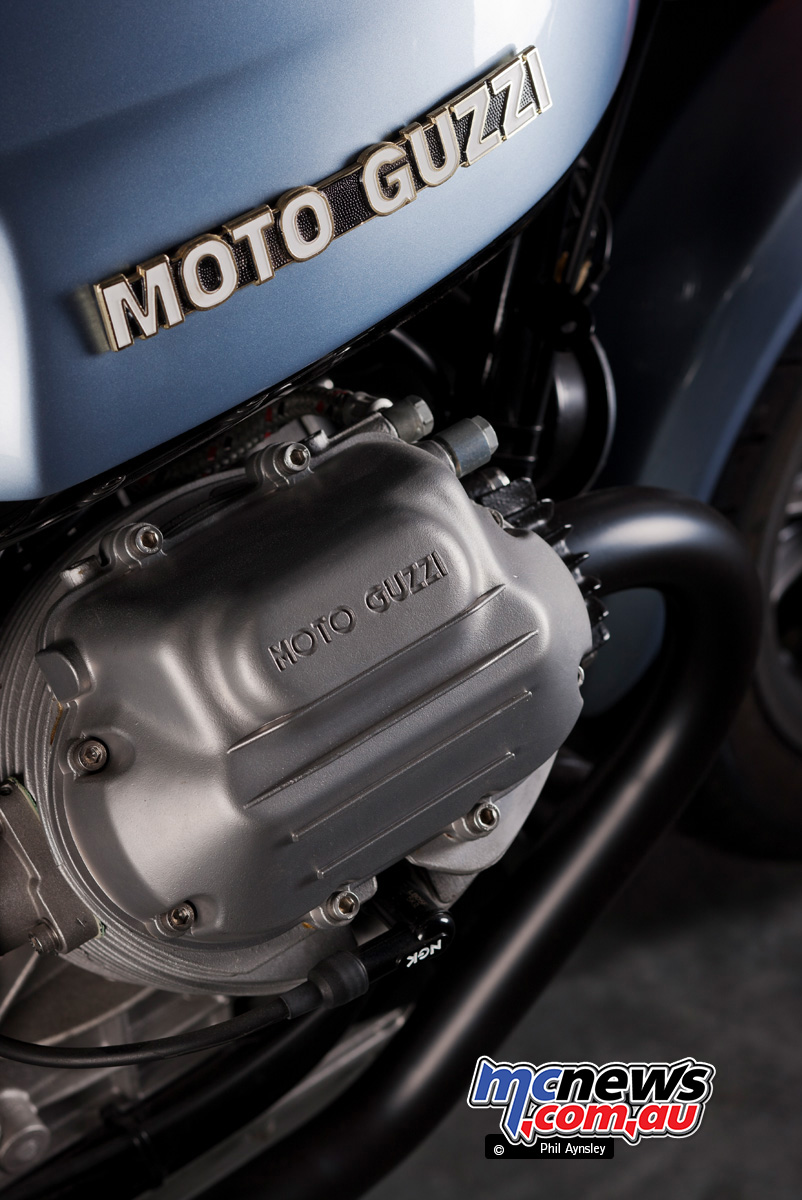
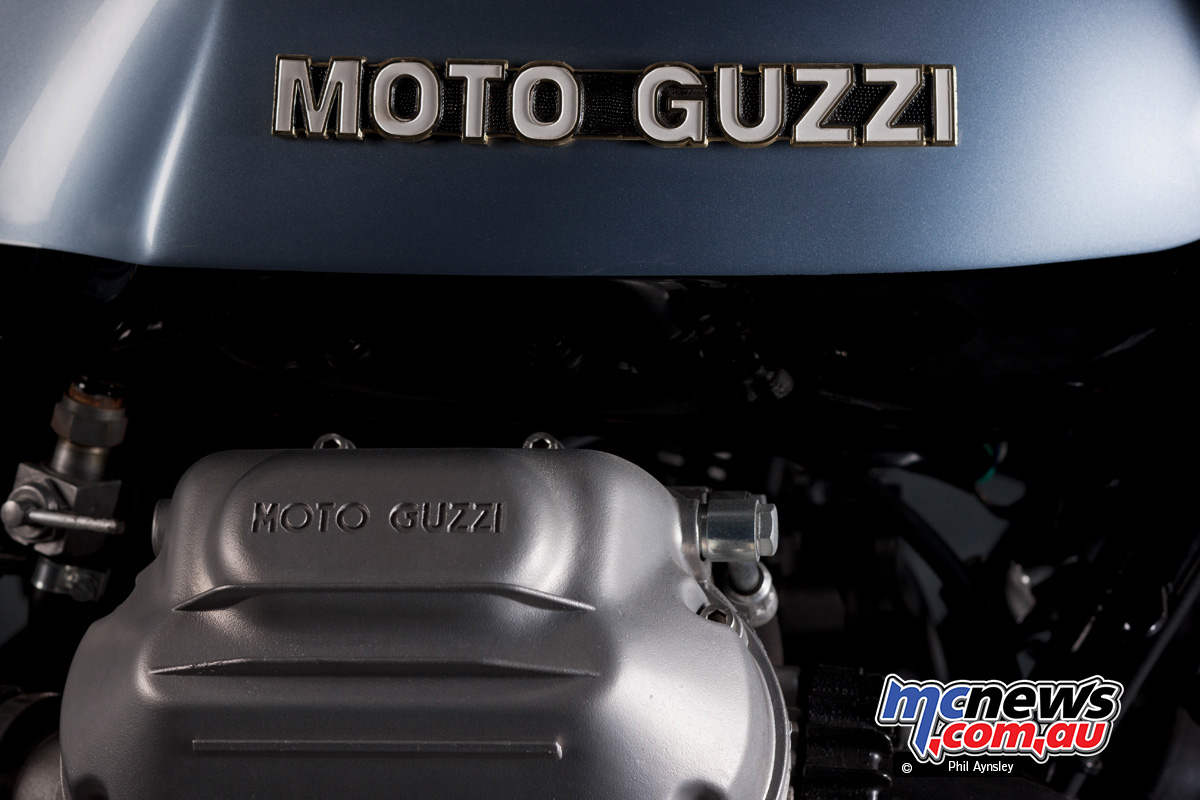
The original 850 Le Mans, now commonly referred to as the Series I, was powered by the 844 cc overhead-valve V-twin developed by Tonti. The engine produced a claimed 80 horsepower, with approximately 71 horsepower delivered at the rear wheel at 7,300 rpm. While the basic architecture was shared with the 850T touring model, the Le Mans engine featured higher compression pistons, larger valves, a more aggressive camshaft and 36 mm pumper Dell’Orto carburettors with velocity stacks. A lighter flywheel further sharpened throttle response.
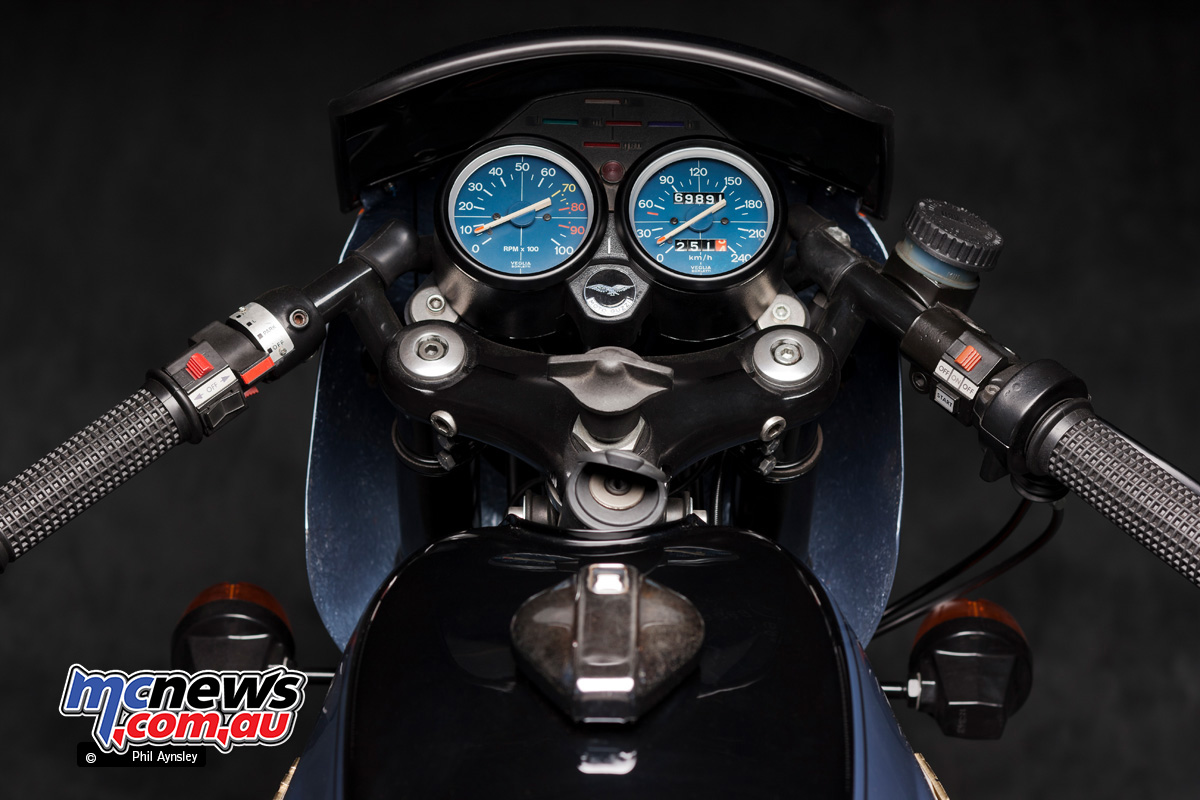
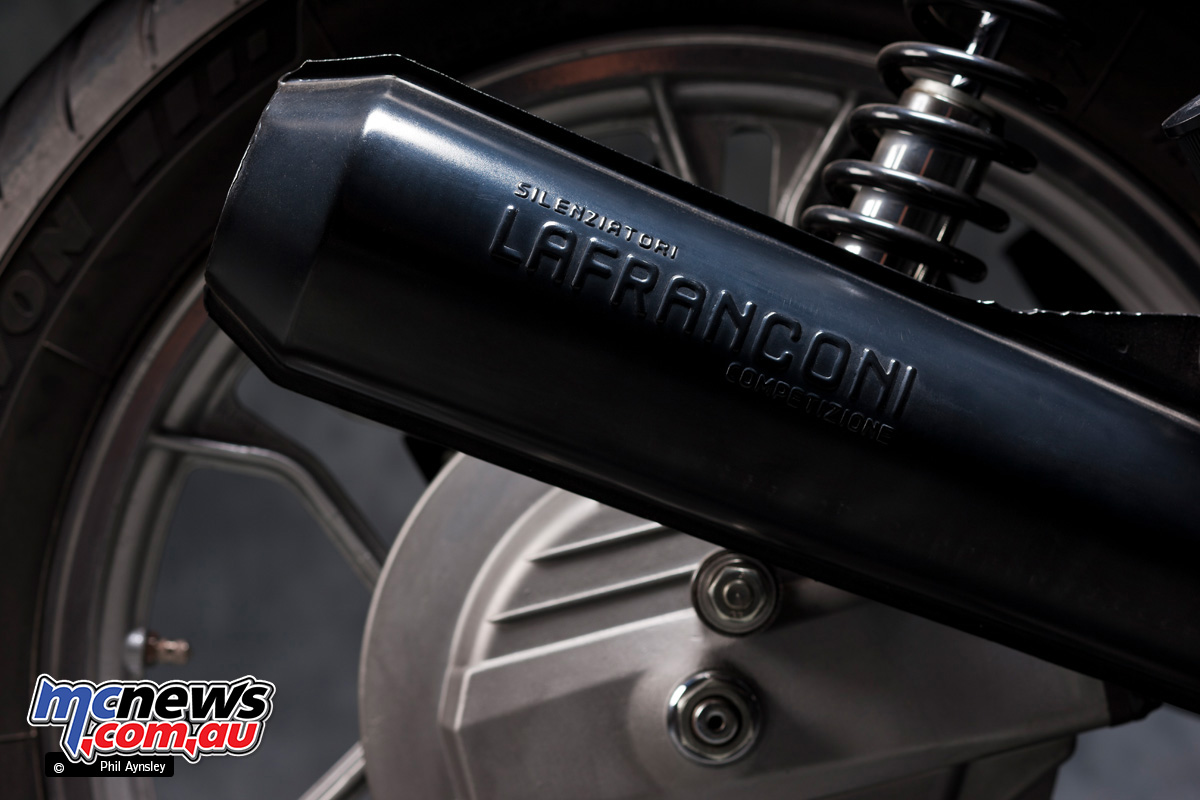
Chassis and braking reflected Moto Guzzi’s engineering priorities of the era. The bike used integrated Brembo braking, linking the front and rear discs, and rode on FPS alloy wheels. The exhaust system was finished in black to complement the distinctive red-and-black colour scheme. Clip-on handlebars, rear-set foot pegs, a humped seat and a compact bikini fairing established the Le Mans as a focused sports machine. One particularly distinctive feature was the day-glo painted front section of the fairing, intended to improve visibility.
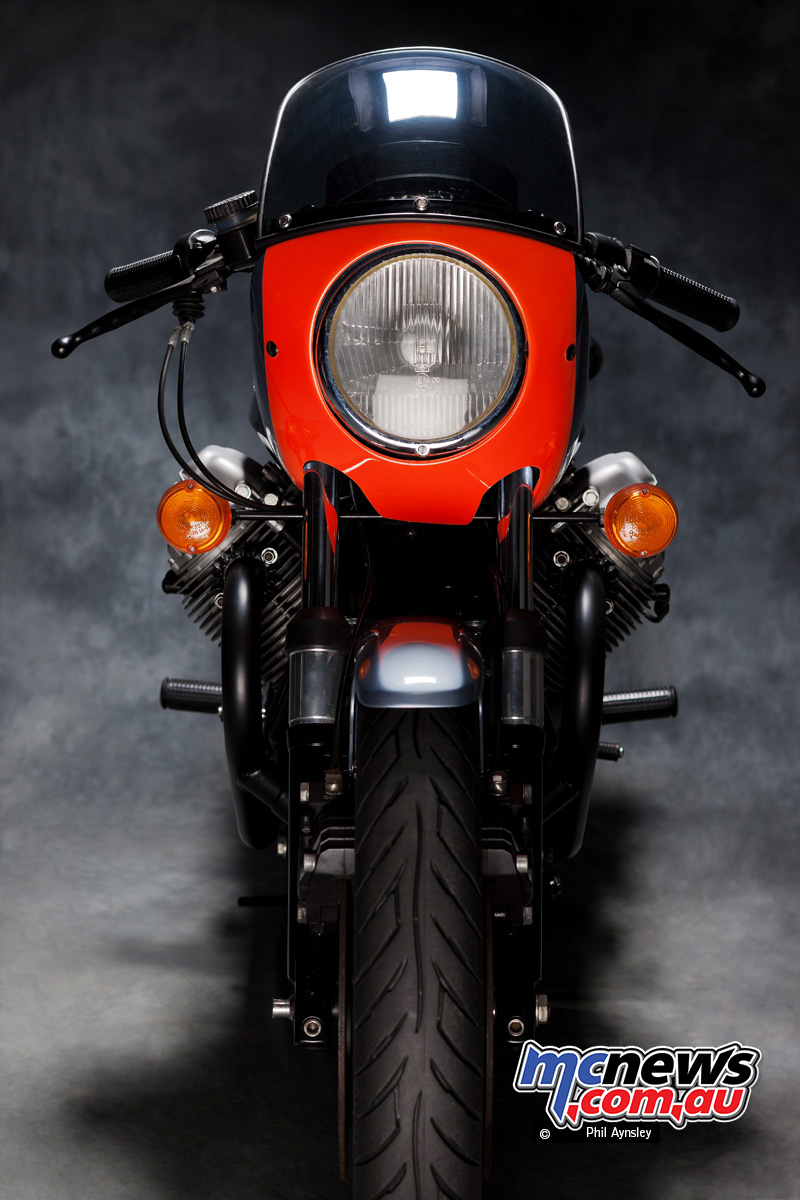
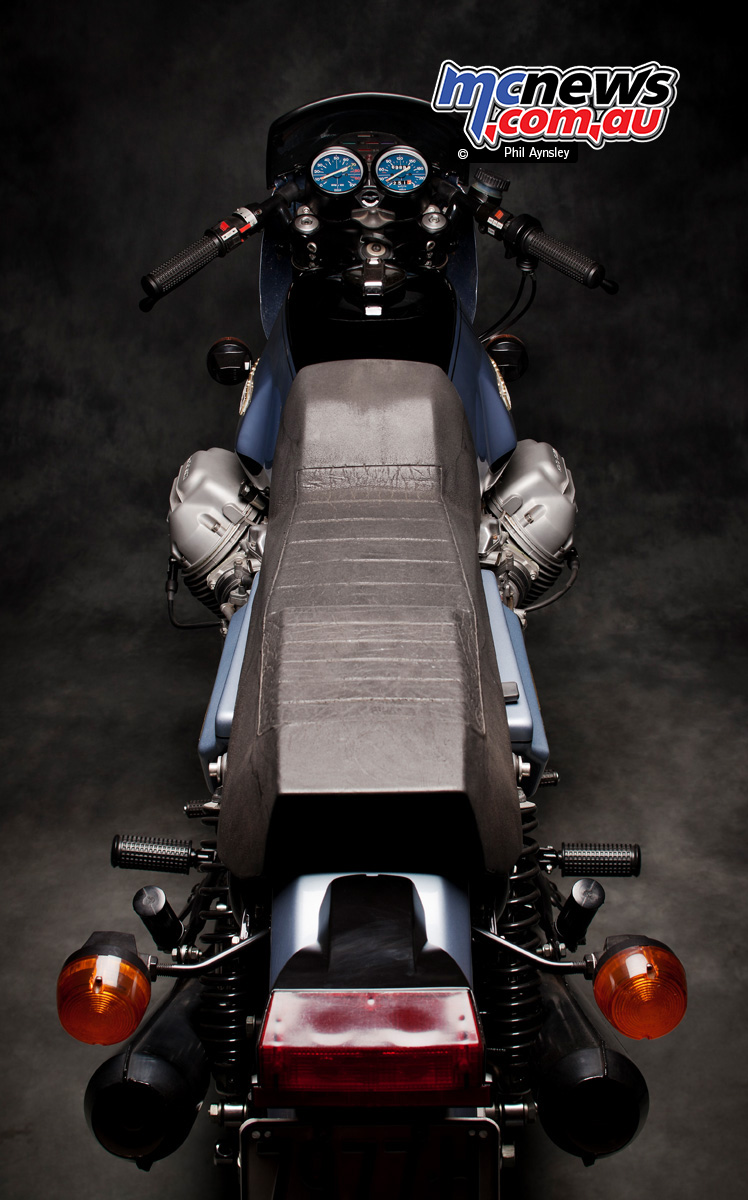
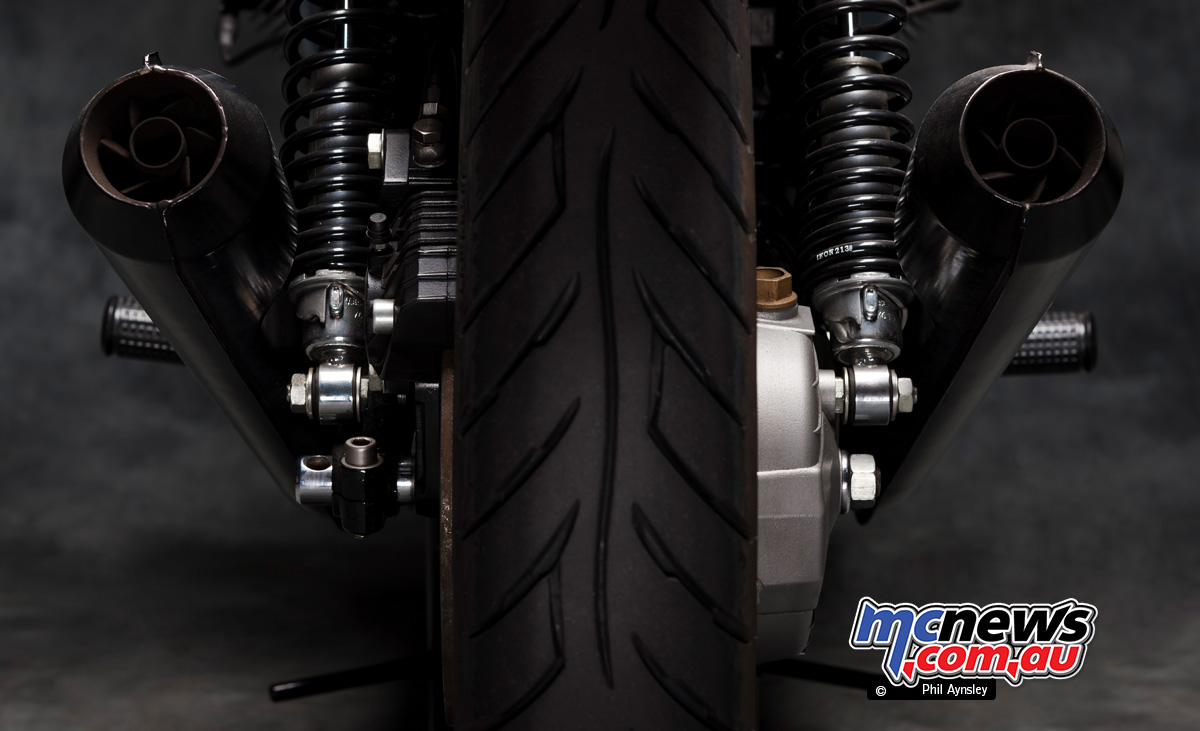
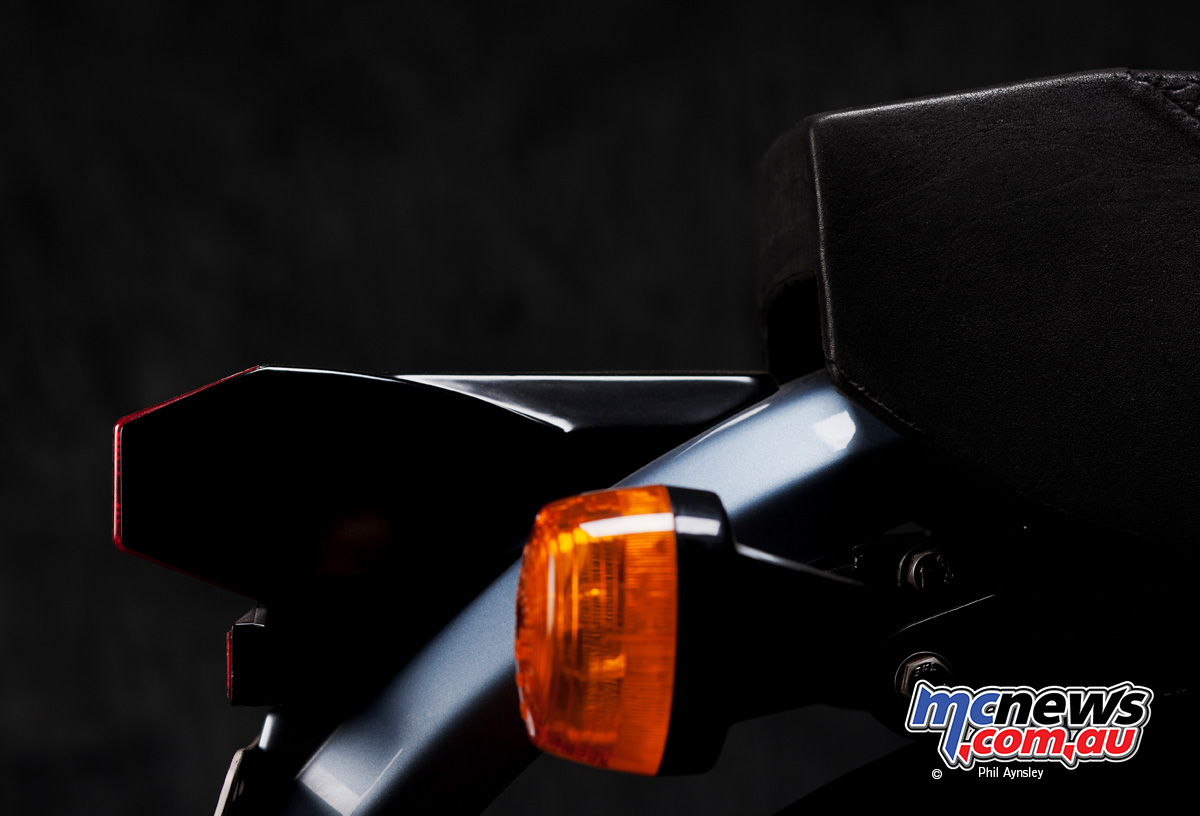
The 1977–78 Series II model, as photographed here, introduced a number of detail changes rather than a wholesale redesign. The round CEV tail light was replaced with a rectangular unit, the rear mudguard was revised, the lower fork legs were painted black, and a longer seat was fitted. While most bikes retained the red-and-black livery, a limited number were produced in Ice Blue, with an even smaller run finished in white.
In 1978, Moto Guzzi introduced the 850 Le Mans II, not to be confused with the earlier Series II designation. This version featured a larger, three-piece fairing developed in Moto Guzzi’s wind tunnel and incorporated a rectangular headlight. Technical updates included Nigusil (Nickel-Guzzi-Silicon)- plated cylinders in place of cast-iron liners, instruments borrowed from the 1000SP, and air-assisted front forks with the brake callipers relocated behind the fork legs.
The 1981 Le Mans III brought more substantial visual and mechanical changes. The fuel tank, seat and fairing were redesigned, while the cylinder heads adopted square rather than rounded finning. Pushrods were repositioned further from the bore centre, and revisions to carburation and the exhaust system were introduced to improve performance and durability.
From 1984, the Le Mans 1000 Mk IV marked a further evolution of the concept. Produced until 1993 in two main series, these models featured a 949 cc displacement and a 16-inch front wheel. This change was largely driven by de Tomaso-era marketing considerations, with most of the steering geometry left unchanged, aside from a slightly longer wheelbase. Engine updates included larger valves, 40 mm carburettors and a more aggressive camshaft, while 40 mm front forks were fitted
Feedback regarding the 16-inch front wheel led to revisions on bikes produced between 1985 and 1986, which used steel steering yokes to reduce trail and improve handling. From 1987, Series II machines offered an 18-inch front wheel option with revised chassis geometry, along with Marzocchi front forks and Bitubo rear shock absorbers. By 1988, the 18-inch wheel configuration had become standard across most models.
Produced between 1986 and 1988, the Le Mans 1000 SE (Special Edition) commemorated the twentieth anniversary of the original 750 V7. This model occupies a distinct place within the Le Mans lineage and warrants separate discussion.
The final evolution of the range was the Le Mans 1000 CI, sold from 1988 until 1993. It featured a frame-mounted half-fairing, a standard 18-inch front wheel, and entirely new switchgear, bringing the long-running Le Mans story to a close.
The motorcycle photographed by Phil Aynsley here is a 1977 Moto Guzzi 850 Le Mans Series II, a model that sits at the heart of the Le Mans legacy and reflects Moto Guzzi’s enduring commitment to distinctive engineering and sporting character.
Moto Guzzi 850 Le Mans Series II Specifications
| Moto Guzzi 850 LeMans Series II Specifications | |
| Engine | Air-cooled, 90-degree V-Twin, longitudinally mounted, OHV pushrod, two-valves per cylinder, four stroke |
| Capacity | 844 cc |
| Bore by stroke | 83 x 78 mm |
| Compression ratio | 10.2:1 |
| Induction | Dual 36 mm Dell’Orto carbs |
| Max Power | 53.7 kW @ 7700 rpm |
| Max Torque | 76.4 Nm @ 6600 rpm |
| Transmission | Five-speed |
| Final drive | Shaft |
| Frame | Duplex |
| Fork | Telescopic |
| Shock | Dual shocks with preload adjustment |
| Brakes | Dual 310 mm front disc brakes, 242 mm rear disc brake |
| Wheels | 3.50 x 18, 4.1 x 18 inch |
| Wheelbase | 1473 mm |
| Seat height | 762 mm |
| Weight | 196 kg (dry) |
| Fuel capacity | 22.5 L |