

BMW F 450 GS Review
The lightweight adventure bike market has been one of the hottest segments in recent years, for good reason. Compared to ‘full-size’ bikes, options around the 450 cc mark are lighter, easier to ride, more forgiving, more nimble and, crucially for many of us, cheaper to buy, run and repair.
Most of the recent noise has come from China (CFMOTO’s 450MT), India (Royal Enfield’s Himalayan 450), Austria/India (KTM’s 390 Adventure R) and, more recently, Japan/Thailand (Kawasaki’s KLE500). All are worthy prospects, each with their own strengths, and some will appeal more than others depending on riding and styling preferences. You could argue that a few other bikes are in the mix too, but these are the models selling in volume, and it is a sign of the times that none are made in Europe, even if they have European badges on the tanks.
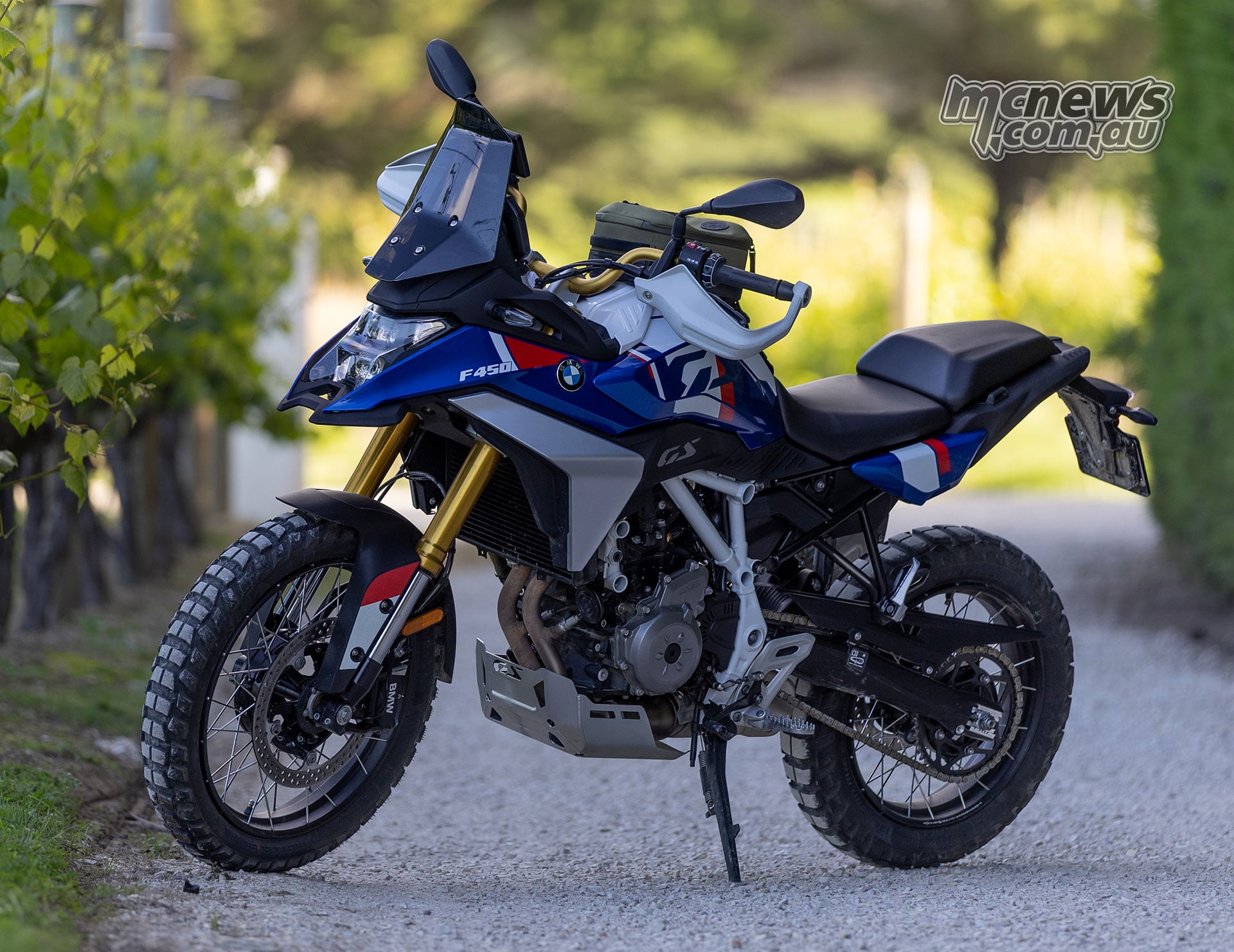
Things are only heating up further, because now Germany, via their tie-up with Indian manufacturer TVS, has stepped up to the plate and is ready to play ball with the new F 450 GS. I’m not sure why I went with the baseball analogy (do they even play baseball in Germany? India?), but what I can tell you straight up… they’ve smacked it out of the park. We believe the F 450 GS is built at the same TVS factory as the new Norton Atlas.
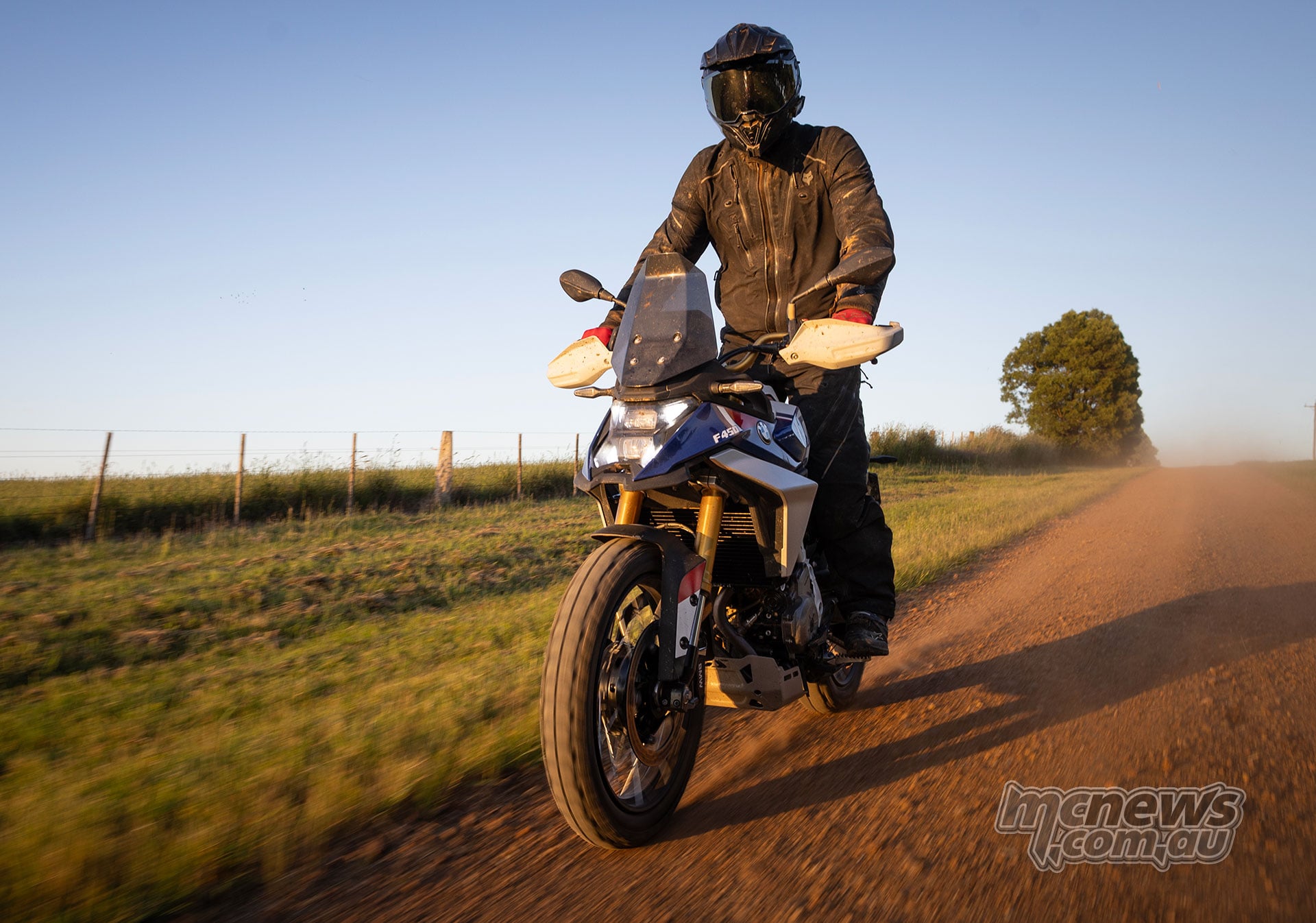
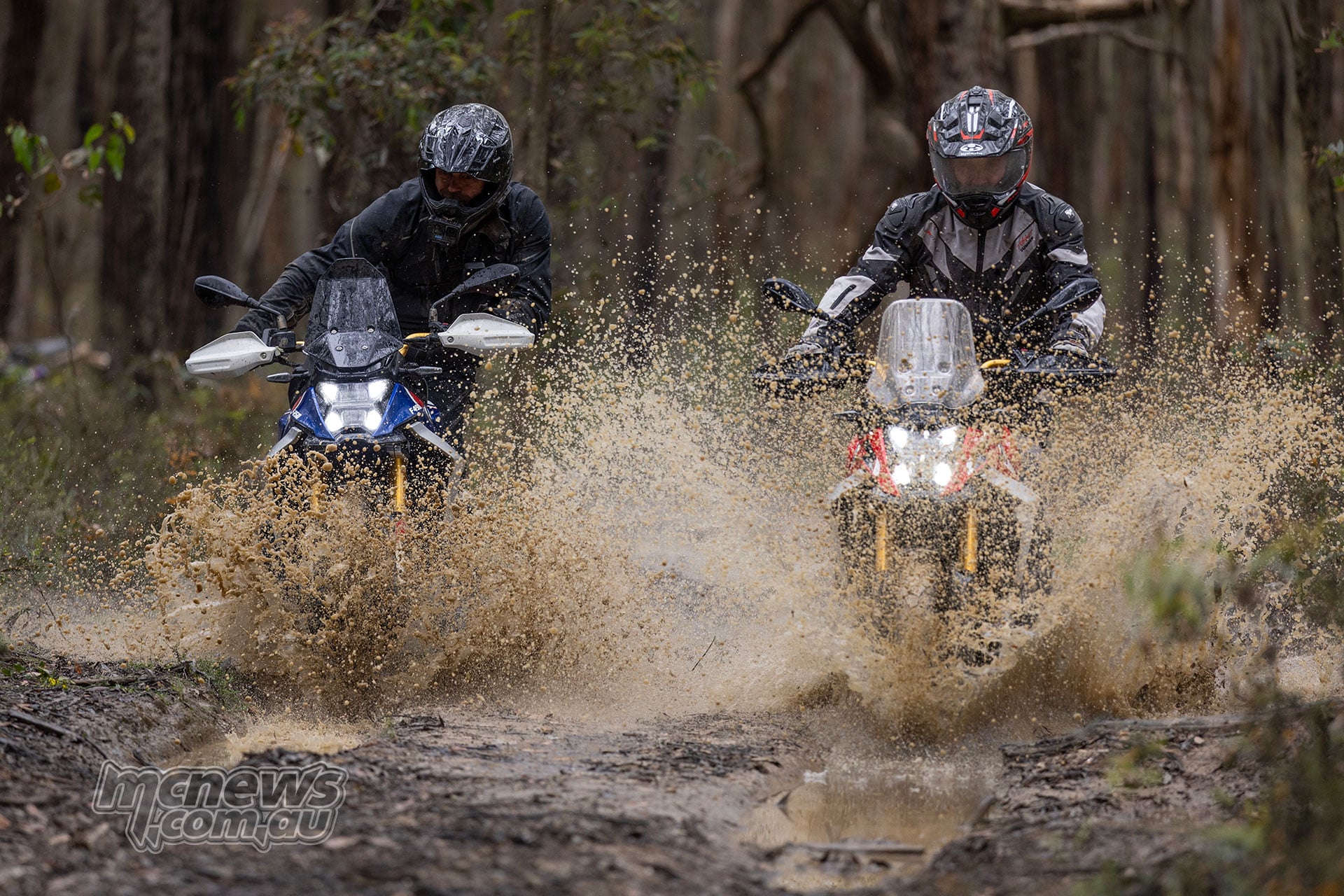
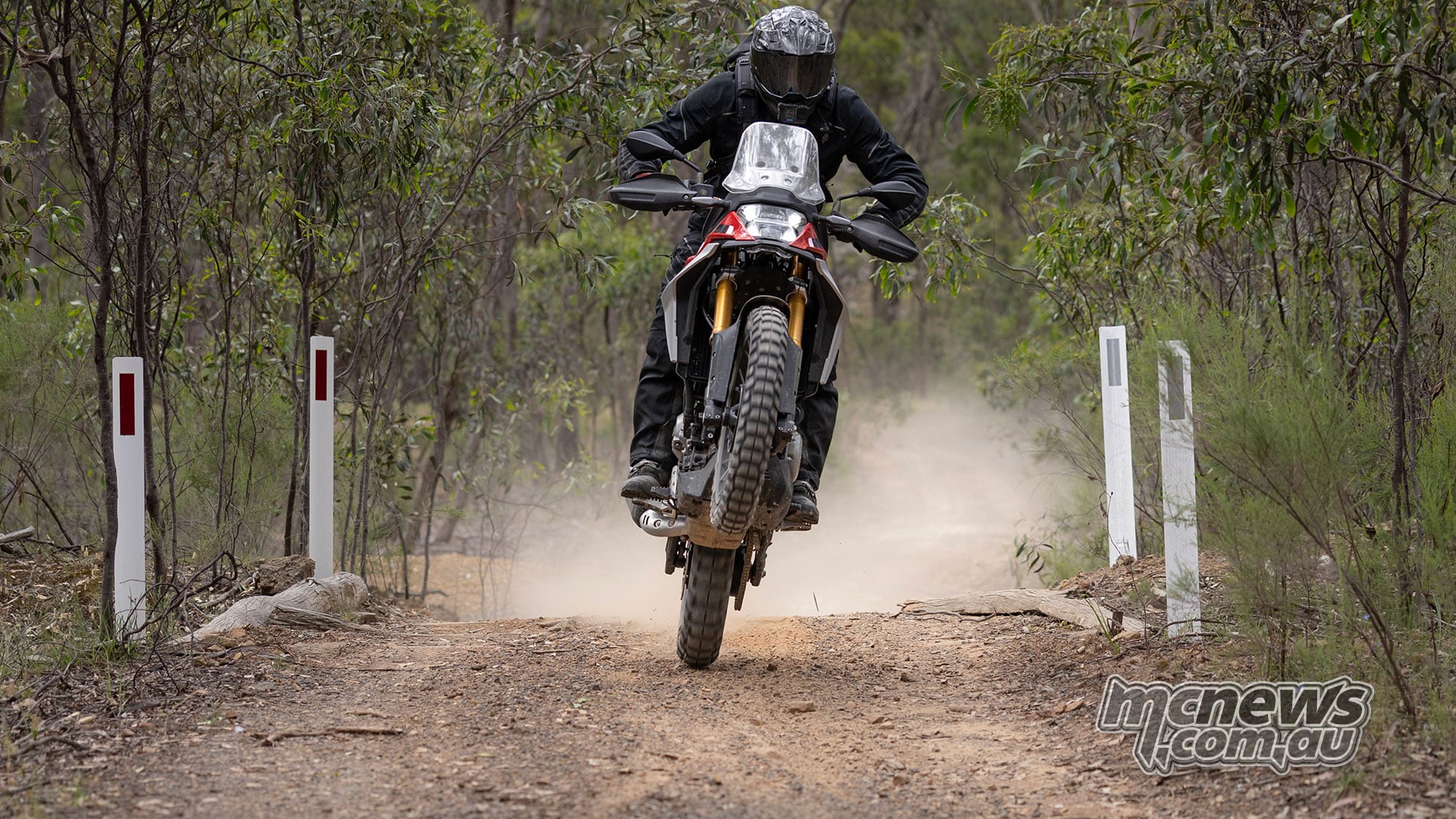
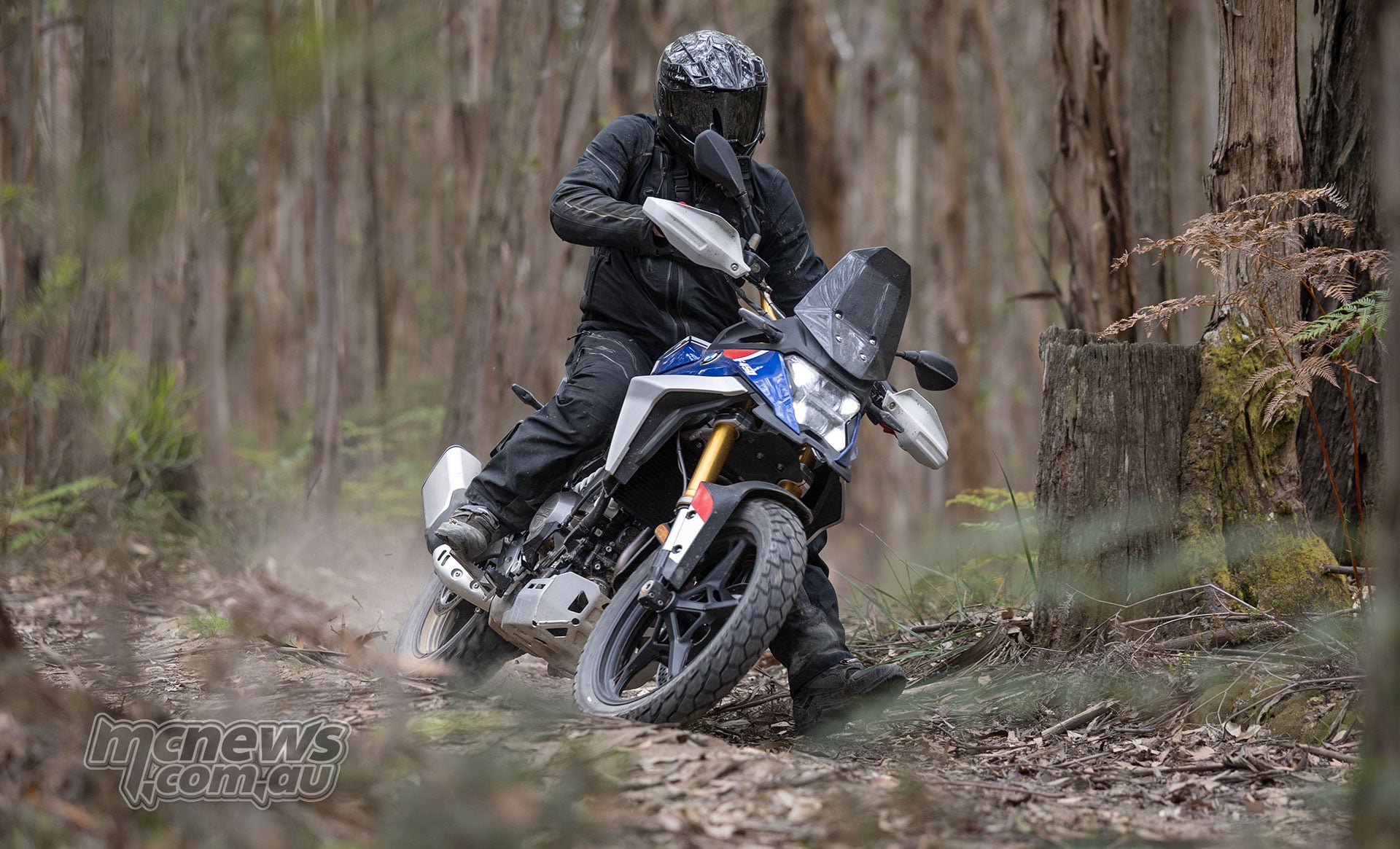
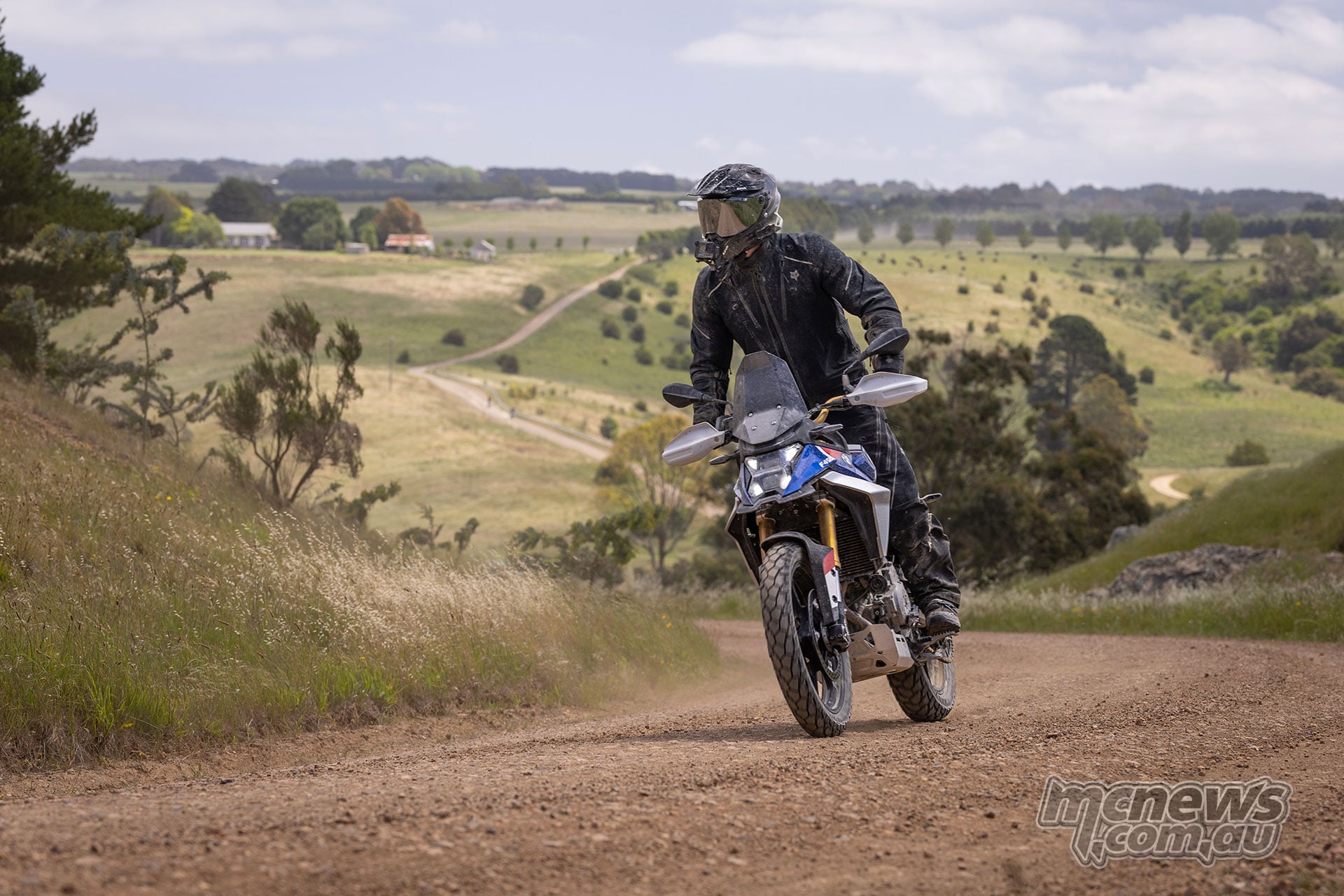
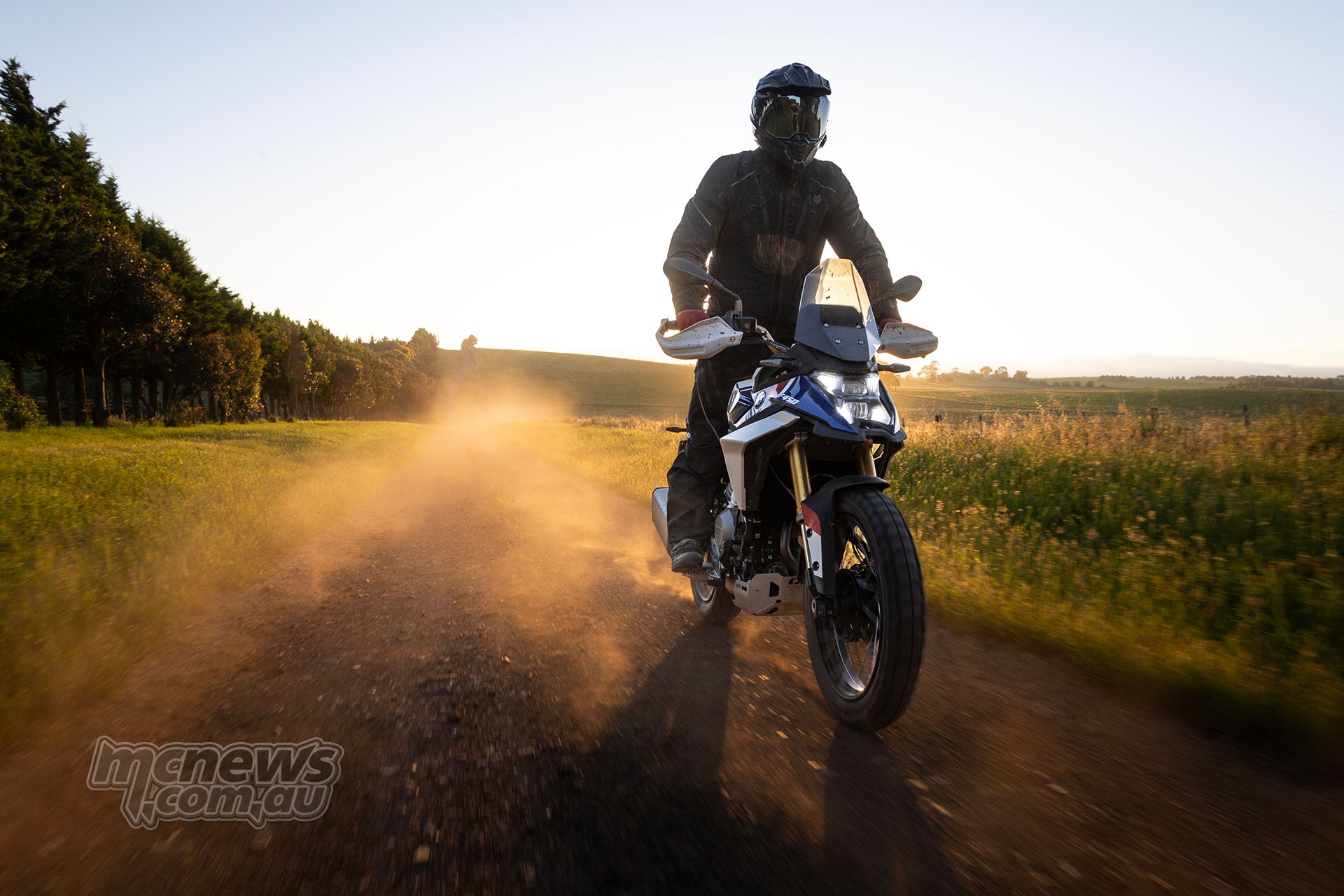
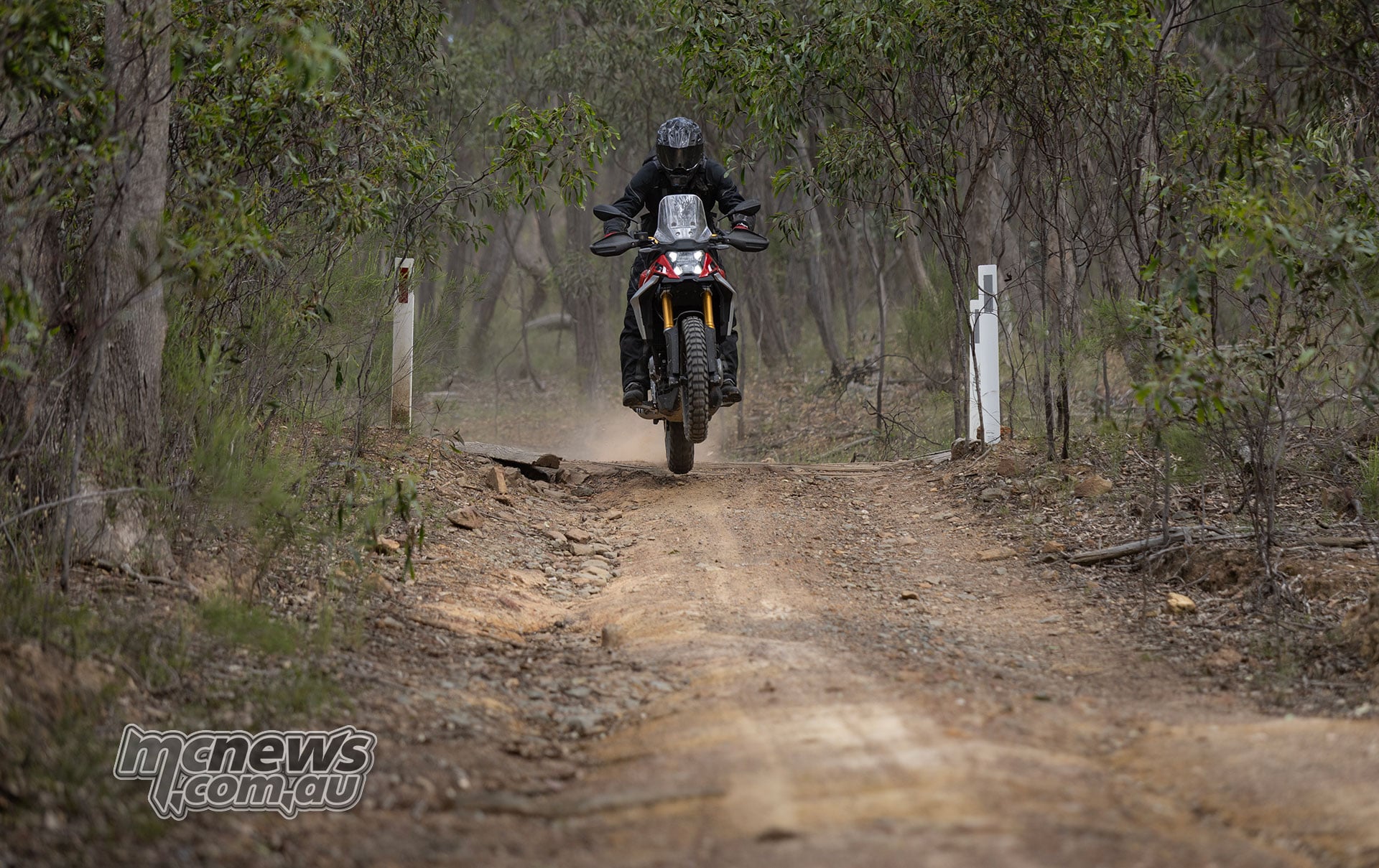
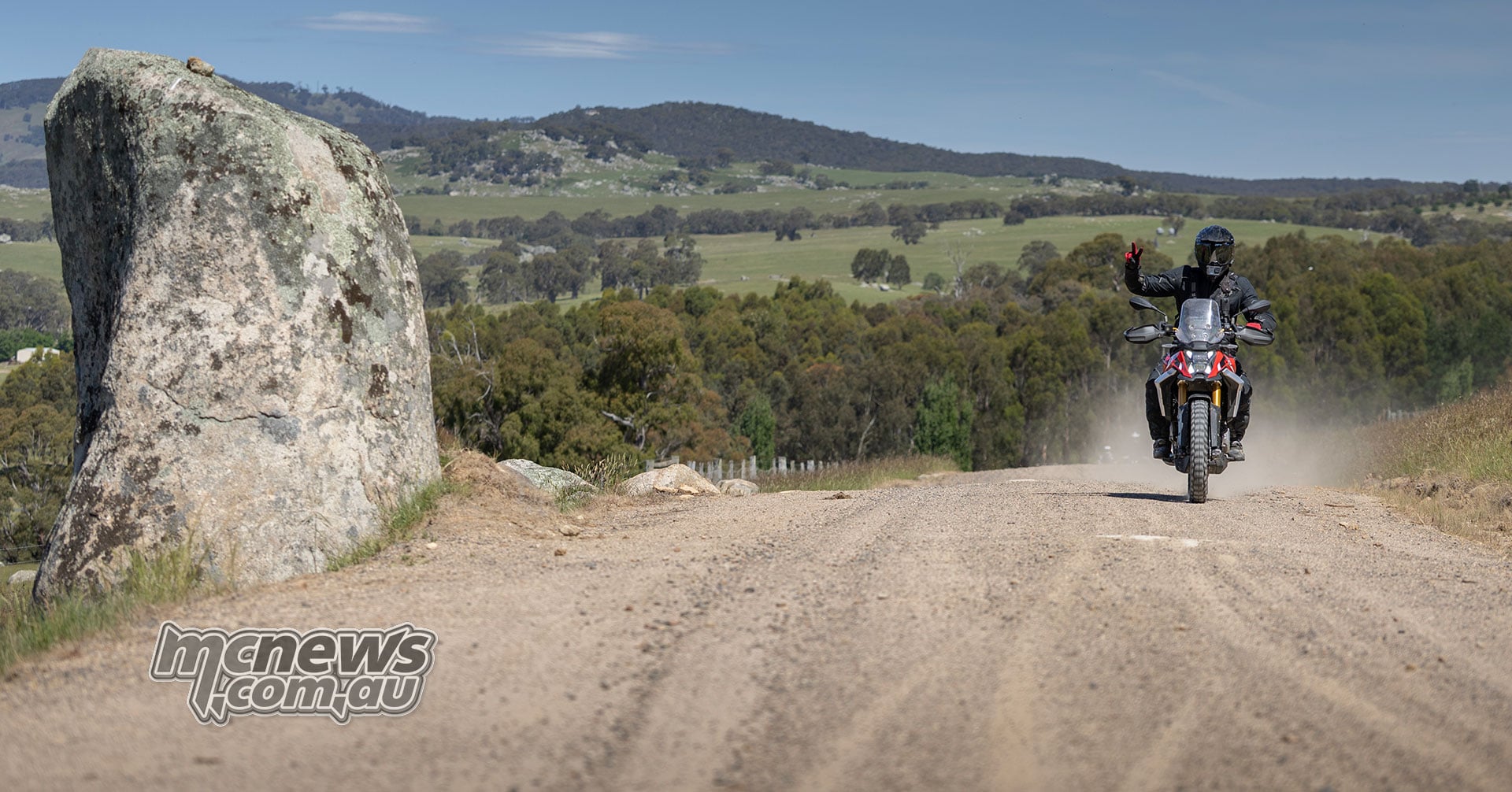
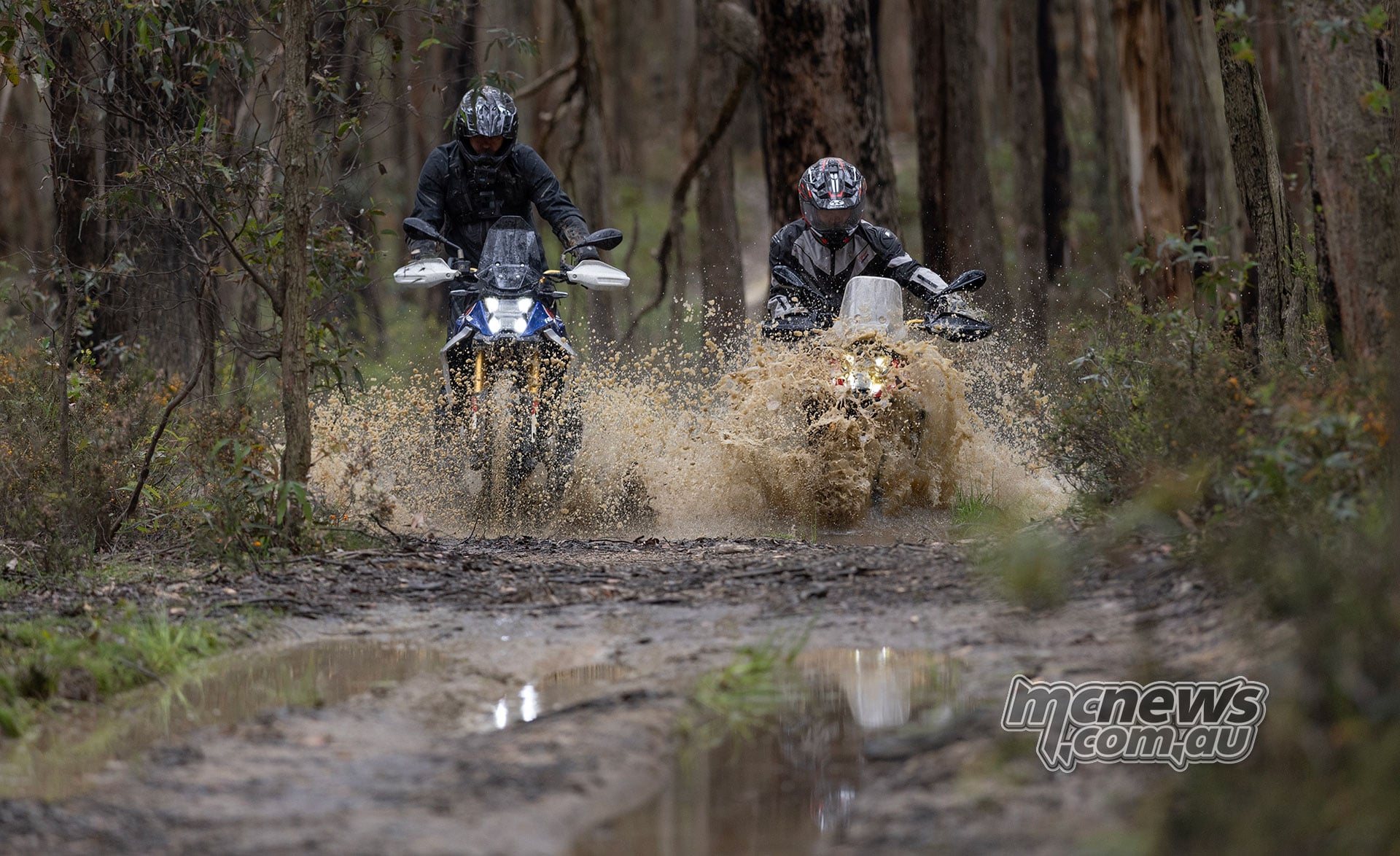
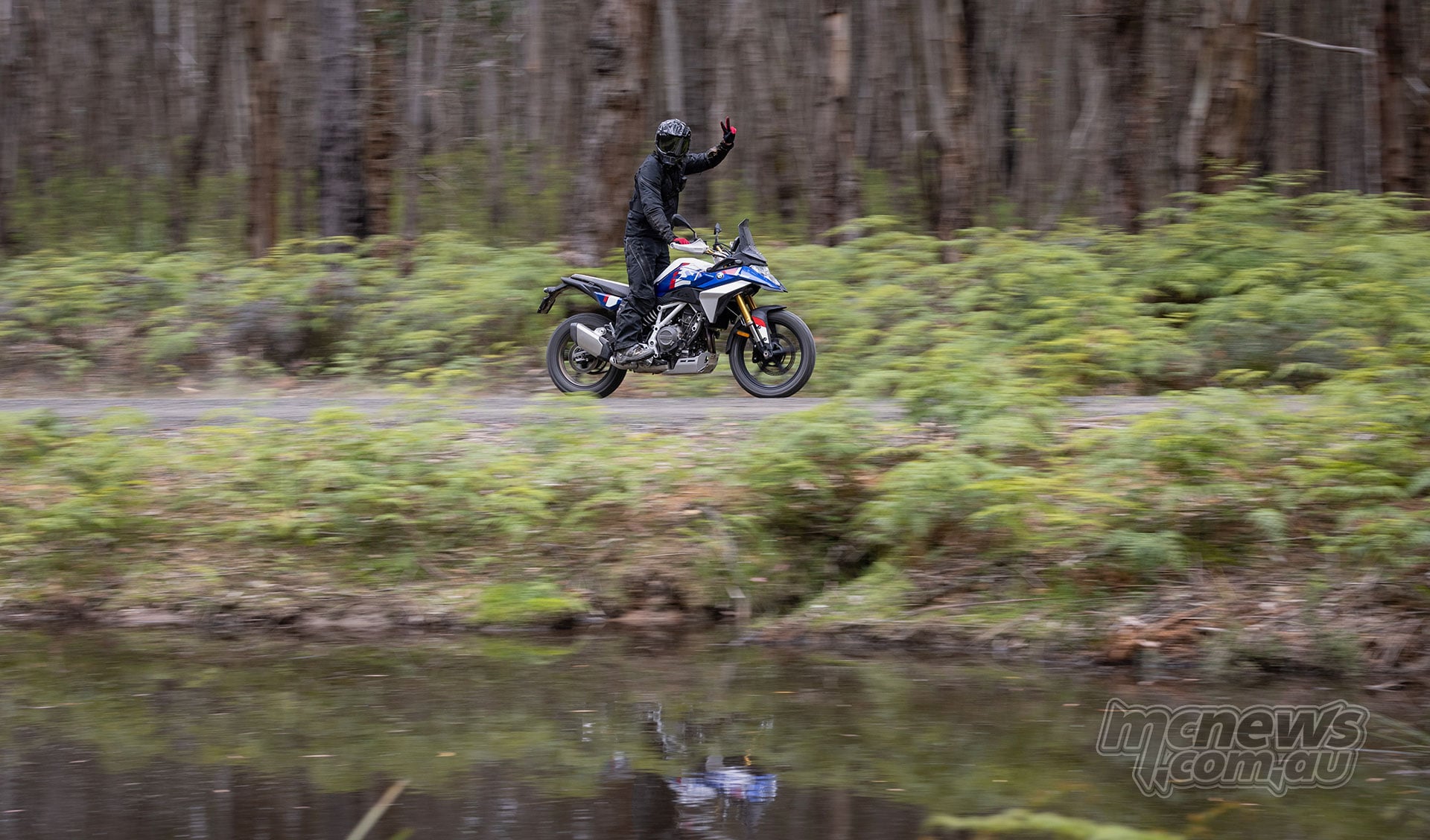
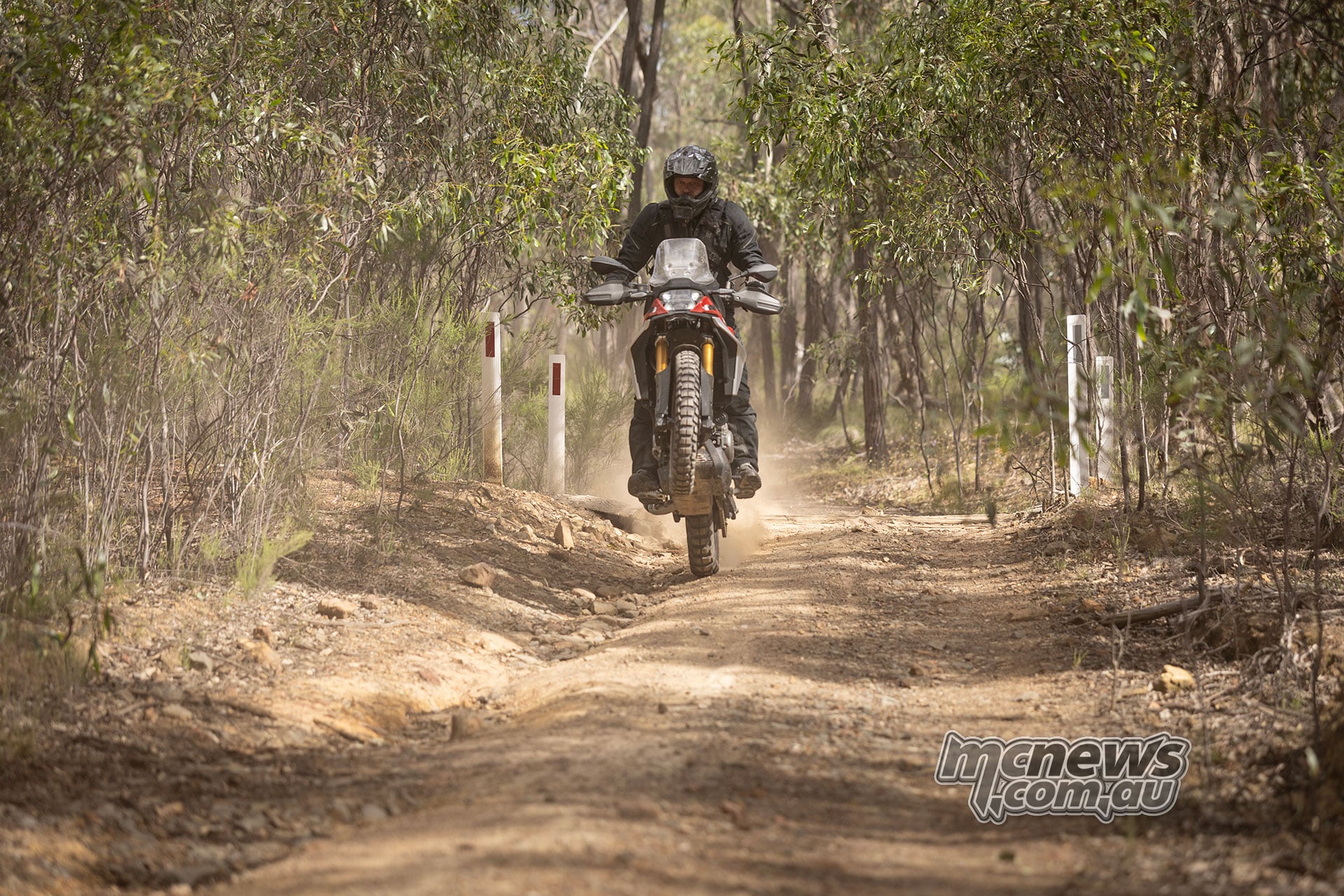
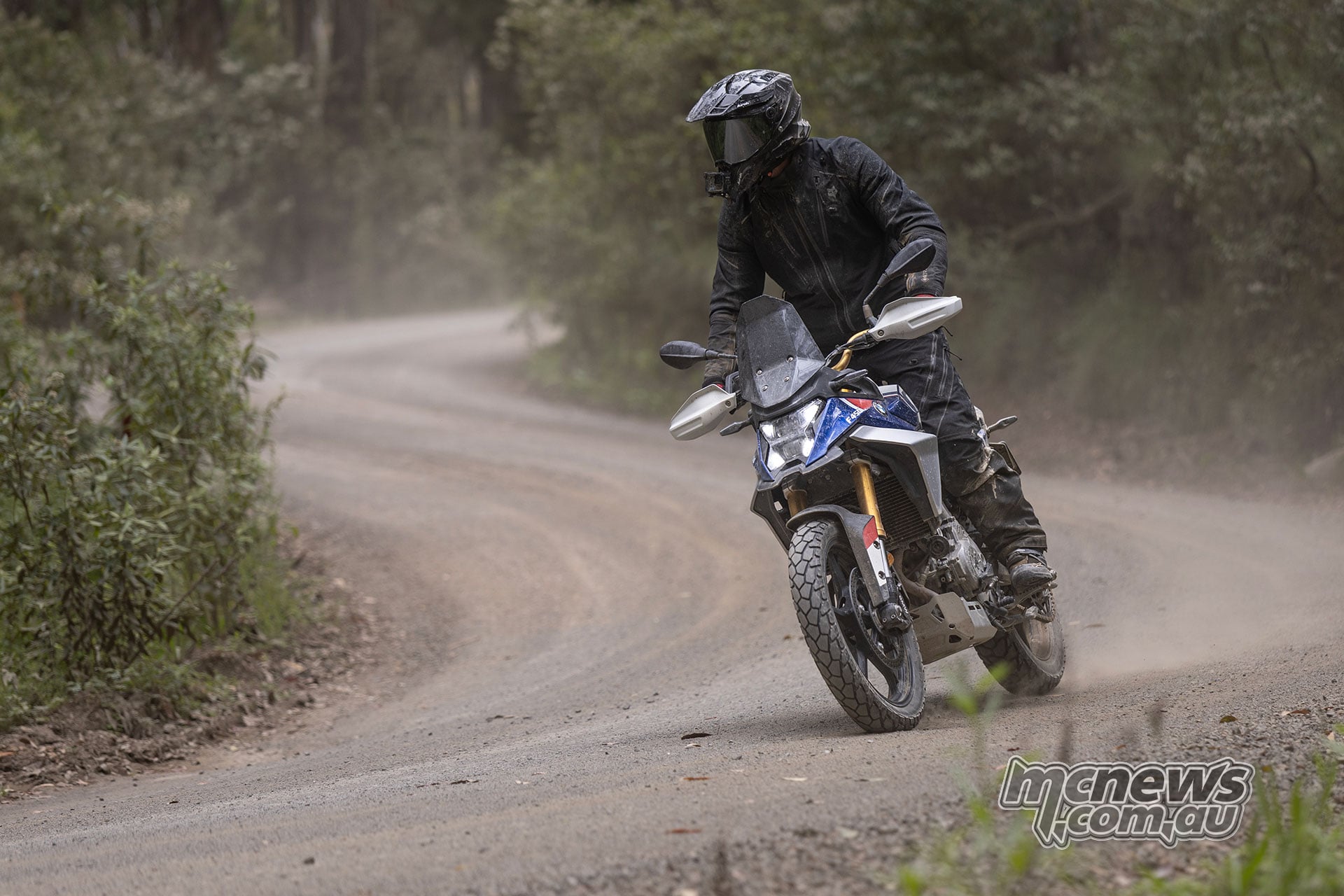
Ever since the bike was first teased at EICMA in 2024, adventure riders have been waiting impatiently for the production version to land. MCNews finally got to sample the new bike at the Australian press launch in Victoria and put it through its paces on quality gravel roads, fire trails, and some tarmac. I might have even found a puddle or two for splashy splashy pics…
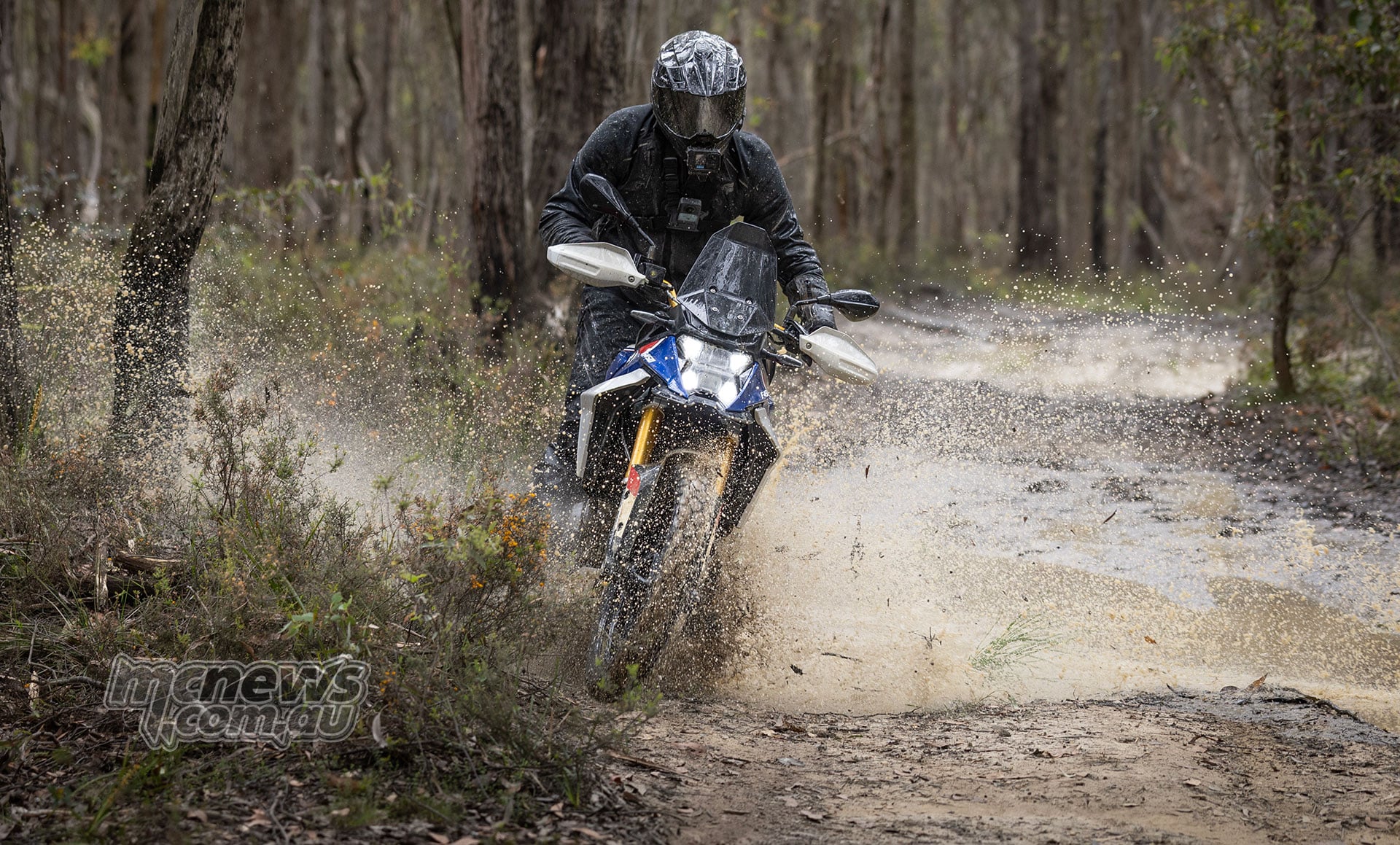
Let’s talk some high-level numbers in the engine department
First up, power-to-weight. Straight to the top of the class. Within a couple of kilograms of the KTM, with a touch more power and torque. That torque difference might not seem like much on paper, but it’s a massive difference once you’re on the bike.
| Motorcycle | Wet / kerb weight | Maximum power | Maximum torque | Power-to-weight |
|---|---|---|---|---|
| BMW F 450 GS | 178 kg | 46.9 hp @ 8,750 rpm |
43 Nm @ 6,750 rpm |
264 hp/tonne |
| KTM 390 Adventure R | 176 kg | 44.4 hp | 39 Nm | 252 hp/tonne |
| Kawasaki KLE500 | 194 kg | 44.8 hp @ 9,000 rpm |
42.6 Nm @ 7,500 rpm |
231 hp/tonne |
| CFMOTO 450MT | 195 kg | 43.6 hp @ 8,500 rpm |
44 Nm @ 6,250 rpm |
224 hp/tonne |
| Royal Enfield Himalayan 450 | 196 kg | 39.5 hp @ 8,000 rpm |
40 Nm @ 5,500 rpm |
201 hp/tonne |
Power is shown in mechanical horsepower, with ratios calculated before rounding.
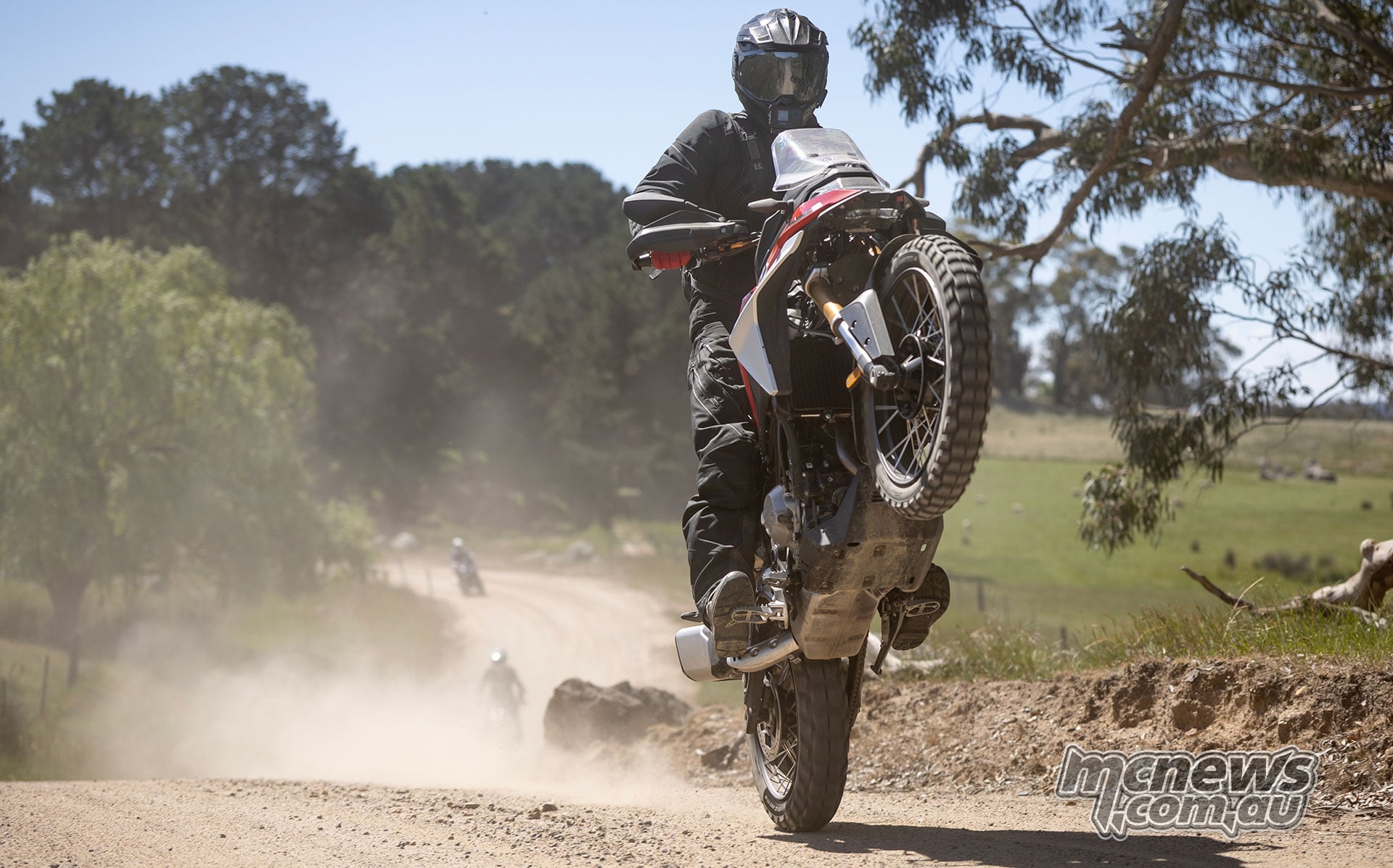
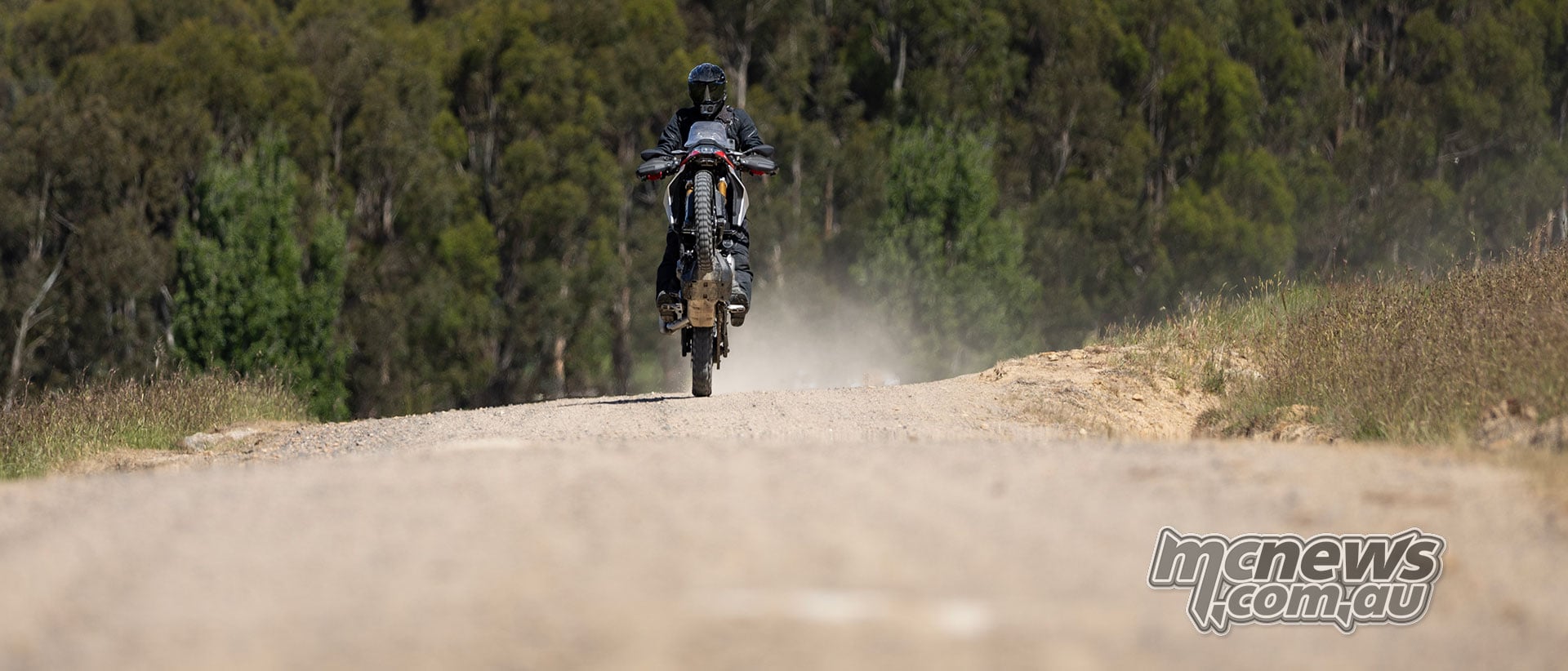
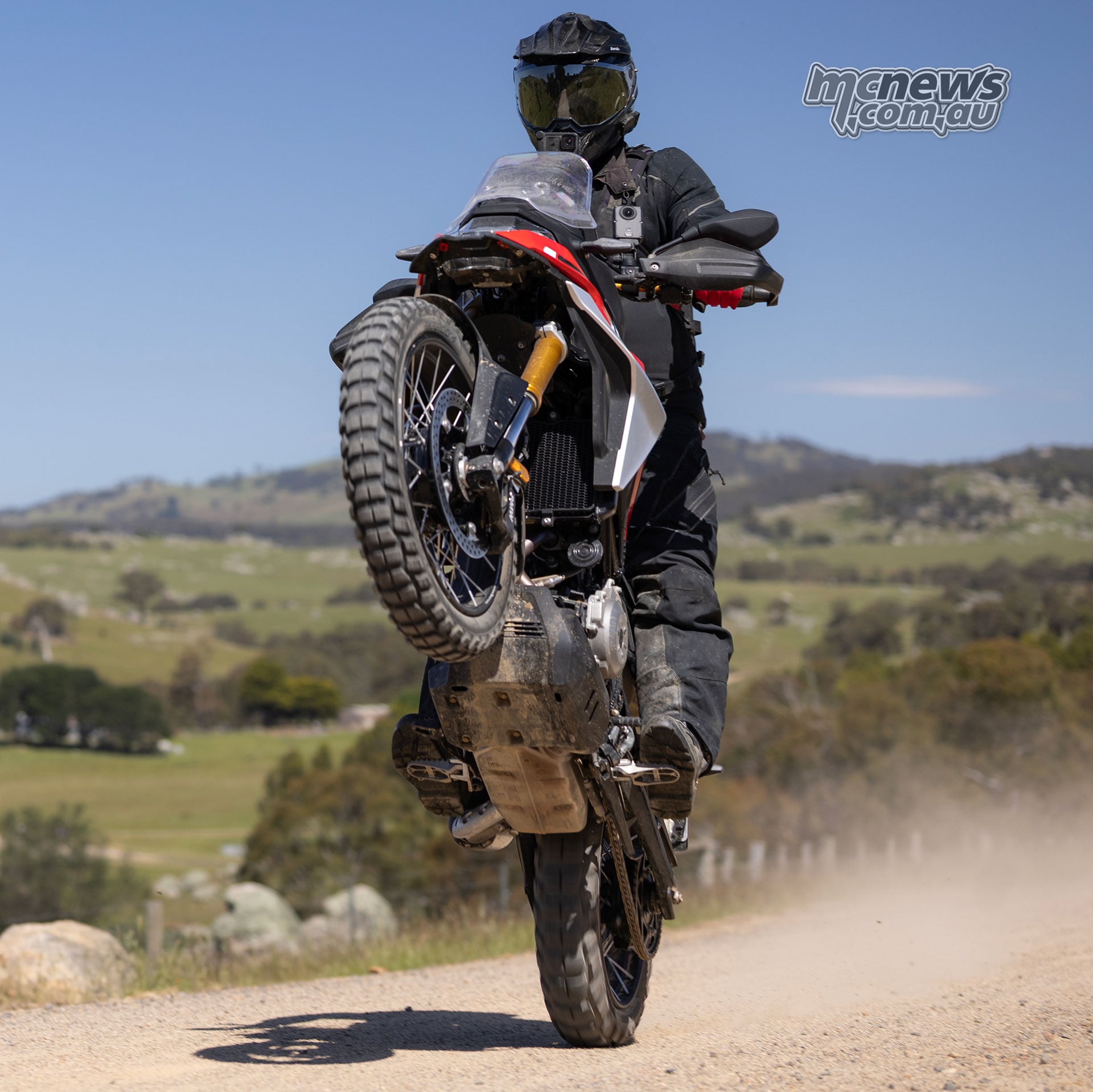
We were told that 80 per cent of the torque is available from as low as 3,000 rpm, and that’s how it feels. The littlest GS will lift the front wheel in second gear without the clutch and is easily the gruntiest-feeling engine in the class. It’s an absolute ripper.
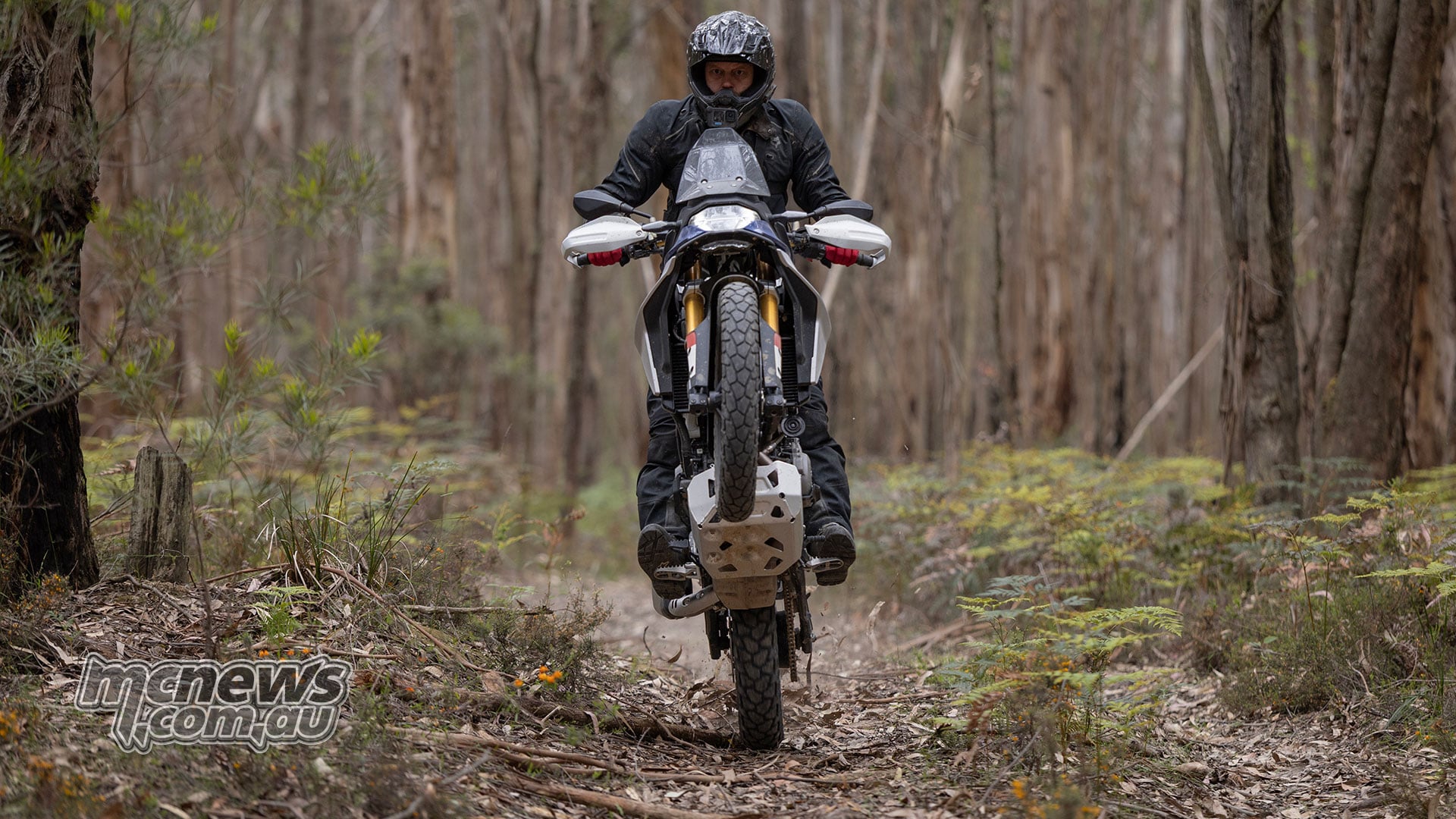
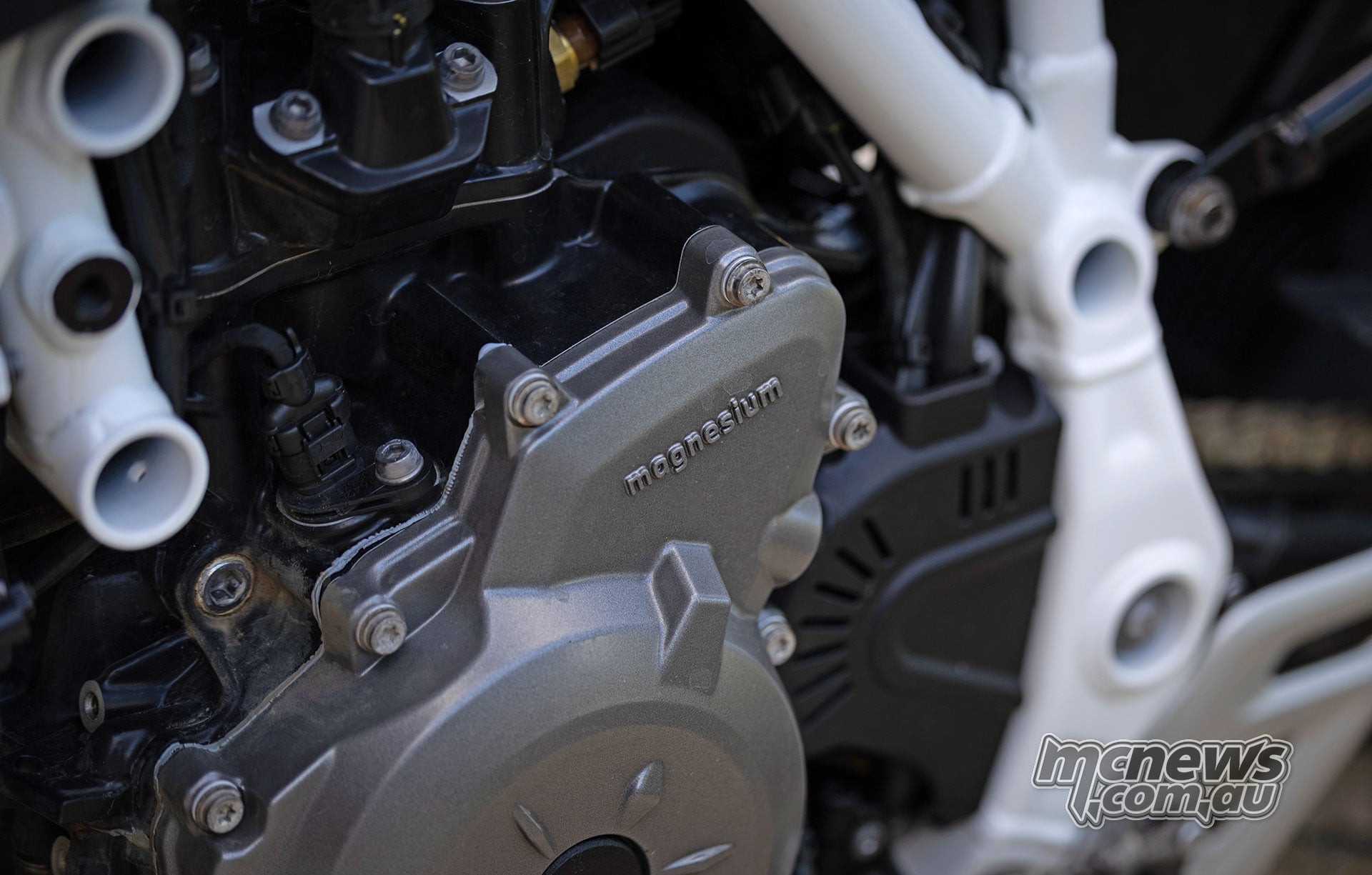
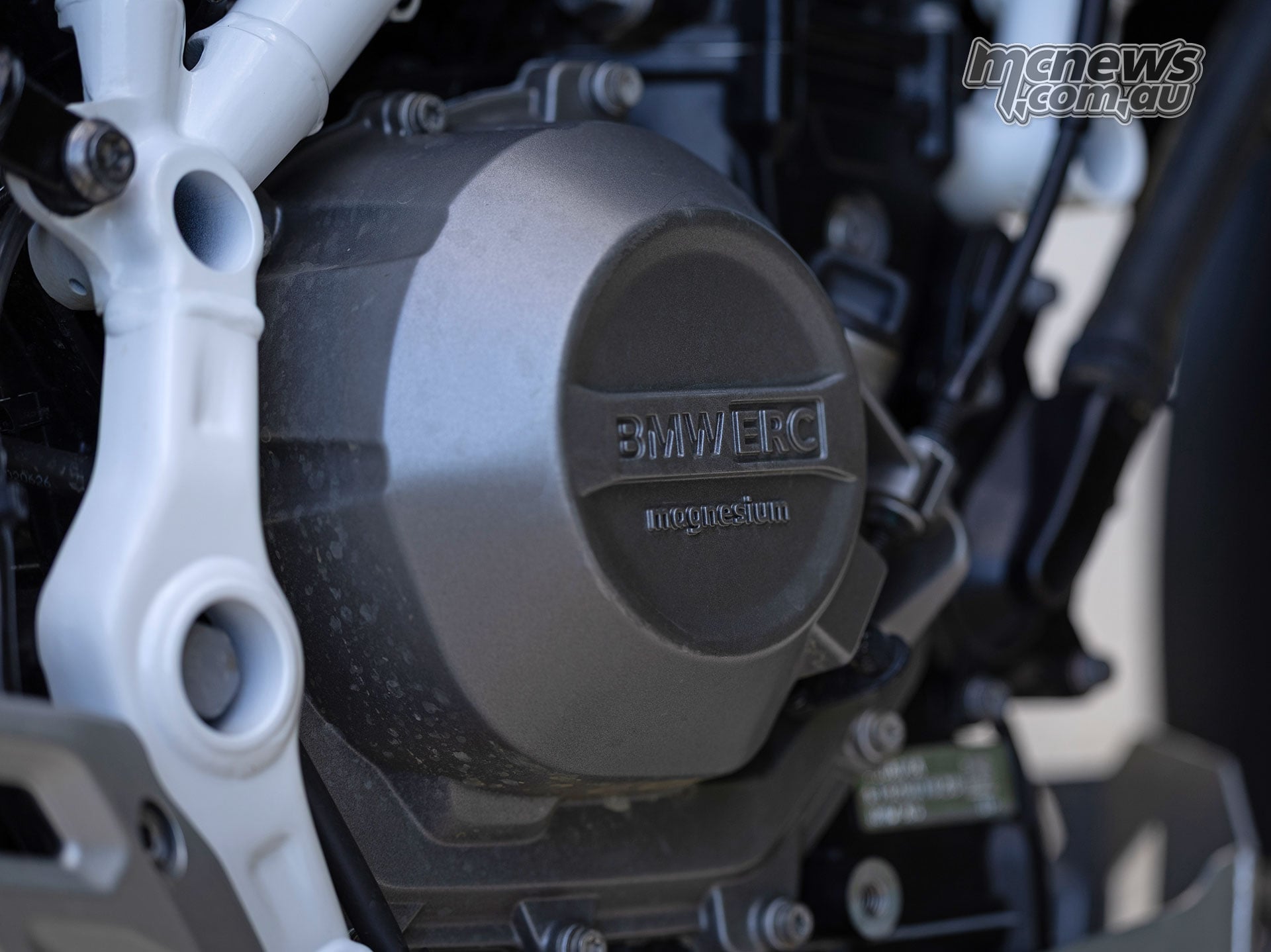
It’s actually a 420 cc parallel twin, one with a unique 135-degree crankpin offset that results in an uneven firing order and a terrific exhaust note. Methinks there’s a bit of a hooligan hidden away in there, wanting to be unleashed… The sound of one winding out, even with the stock pipe, is properly encouraging.
While it’s a short-stroke design, with a bore diameter of 72 mm and a stroke length of 51.6 mm, it doesn’t rely on revs to make power as that oversquare ratio might suggest. Power delivery is beautifully smooth from idle through to redline. It runs a 13:1 compression ratio, which is reasonably high (and explains the solid performance numbers), and it’s designed to run on 95 RON fuel. Something to keep in mind when planning remote trips.
Throttle feel is excellent, fuelling is spot on, and that quickshifter completes what I reckon is the best engine and gearbox package in the class. It’s a solid step ahead of everything else, which is not what I expected.
Suspension and packaging
With 180 mm of suspension travel, it has the most gravel-road-focussed spec in the class, with the KTM the most off-road-focused at 230 mm. It’s not as straightforward as you might expect, though, as they’ve managed to give the bike a healthy 220 mm of ground clearance, which is pretty much in line with the CFMOTO and Royal Enfield.
Likewise, the seat height and fuel range are around mid-pack. In fact, it’s probably easier to point to the outliers for differentiation here. The Himi gets the most range, the KTM the most suspension travel and the Kawi the lowest ground clearance. Here’s how it stacks up against the other bikes.
| Motorcycle | Suspension travel and adjustment | Ground clearance | Seat height | Tank | Indicative range |
|---|---|---|---|---|---|
| KTM 390 Adventure R | Front 230 mm (rebound, compression) Rear 230 mm (preload, rebound) |
272 mm | 870 mm | 14 L | ~310–400 km |
| Royal Enfield Himalayan 450 | Front 200 mm Rear 200 mm (preload) |
230 mm | 825 / 845 mm 805 mm with low seat |
17 L | ~400–475 km |
| CFMOTO 450MT | Front 200 mm (preload, rebound, compression) Rear 200 mm (preload, rebound) |
220 mm | 800 / 820 mm | 17.5 L | ~310–390 km |
| BMW F 450 GS | Front 180 mm (rebound and compression on Sport and Trophy) Rear 180 mm (preload, rebound) |
220 mm | 845 mm standard | 14 L | ~310–370 km |
| Kawasaki KLE500 | Front 210 mm Rear 196 mm (preload) |
185 mm | 870 mm standard | 16 L | ~320–400 km |
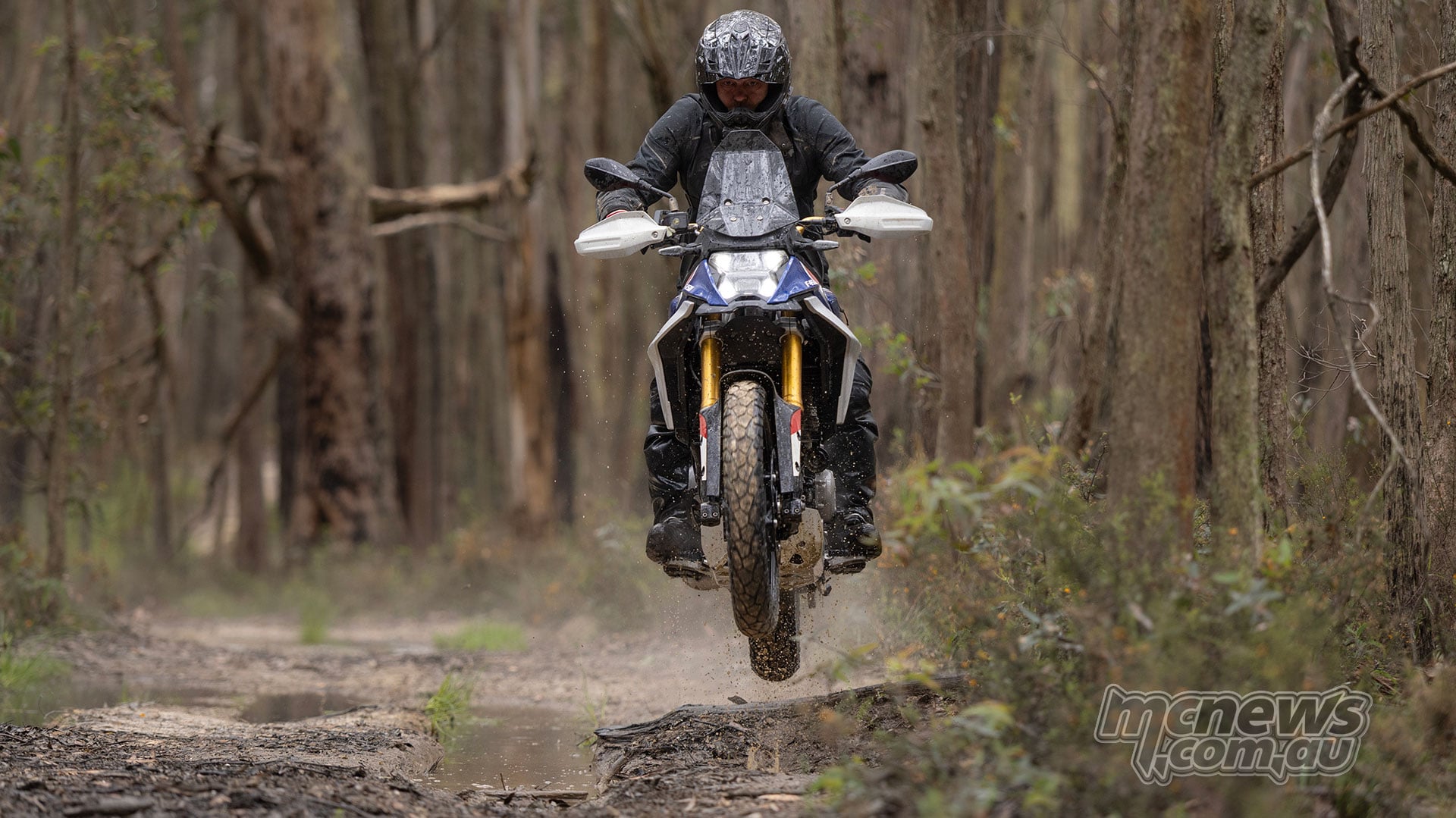
But here’s where the numbers don’t tell the full story. Even on the 4WD trails, on standard settings, there was no suggestion that the suspension wasn’t enough. Unless you’re expecting to tackle big hits at speed or do decent jumps over water bars, this setup will likely do the job for most riders.
Yes, it will bottom out on jumps on standard settings, but I don’t think it’s been designed with that in mind. The best way I can illustrate how well the launch bikes performed on the trail is to point out how surprised I was to see the 180 mm number when I started writing this review. If you’re on the fence due to that spec alone, I’d suggest you try to get a test ride. You might be surprised…
Tech hasn’t been overlooked either
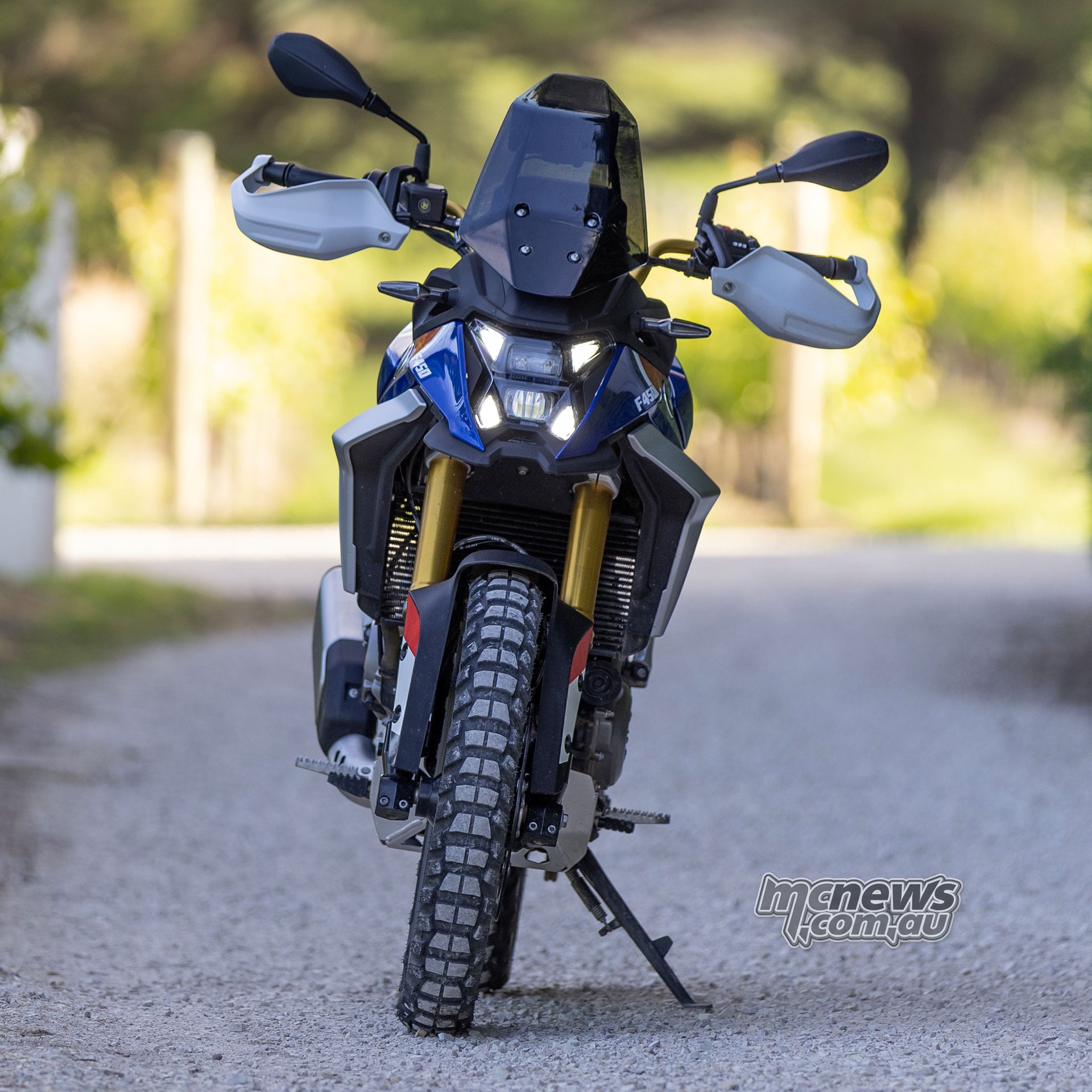
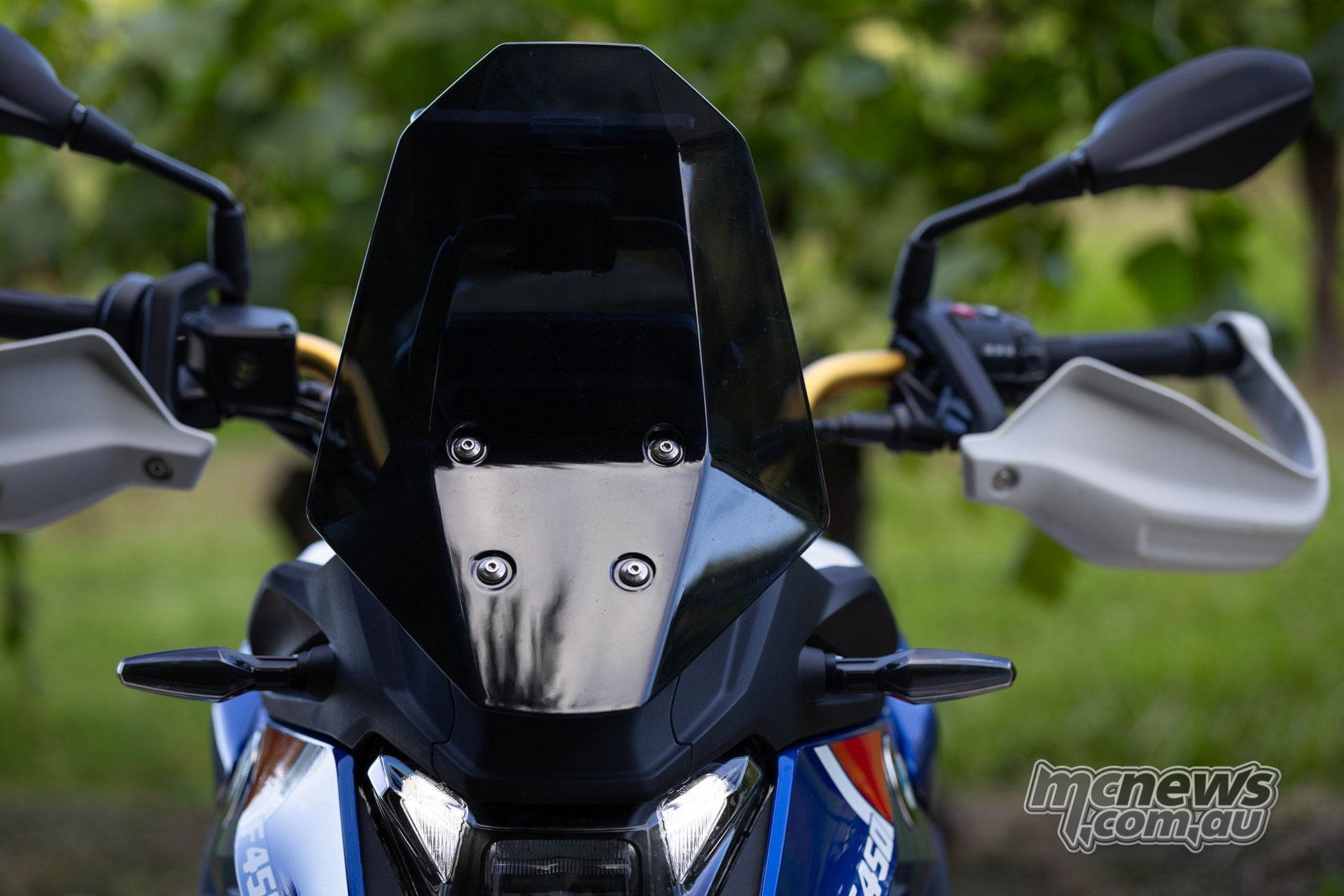
The other thing you can’t see from those tables above is arguably the second of three big selling points for the GS after power-to-weight. That’s build quality and standard tech. The BMW absolutely shines here, with a quick-shifter, heated grips, rider modes, and adjustable TC and ABS (on the fly!) all standard on the Sport or Trophy variants, which pretty much everyone chooses.
It’s easily the most premium-feeling offering in the segment, with the only thing absent from a tech perspective being cruise control, which sadly isn’t an option. Only the KTM gets that as an option.
The Beemer also gets some seriously good-quality switchgear and a 6.5-inch TFT dash, the same hardware and menu system used on the 450’s bigger siblings. It’s a nice touch, a clever way of introducing potential new customers to the GS experience.
Rewarding for all riders, not just beginners
The third major selling point is how usable the bike is for riders of all experience levels. And I’d group three aspects of the bike into the usability bucket.
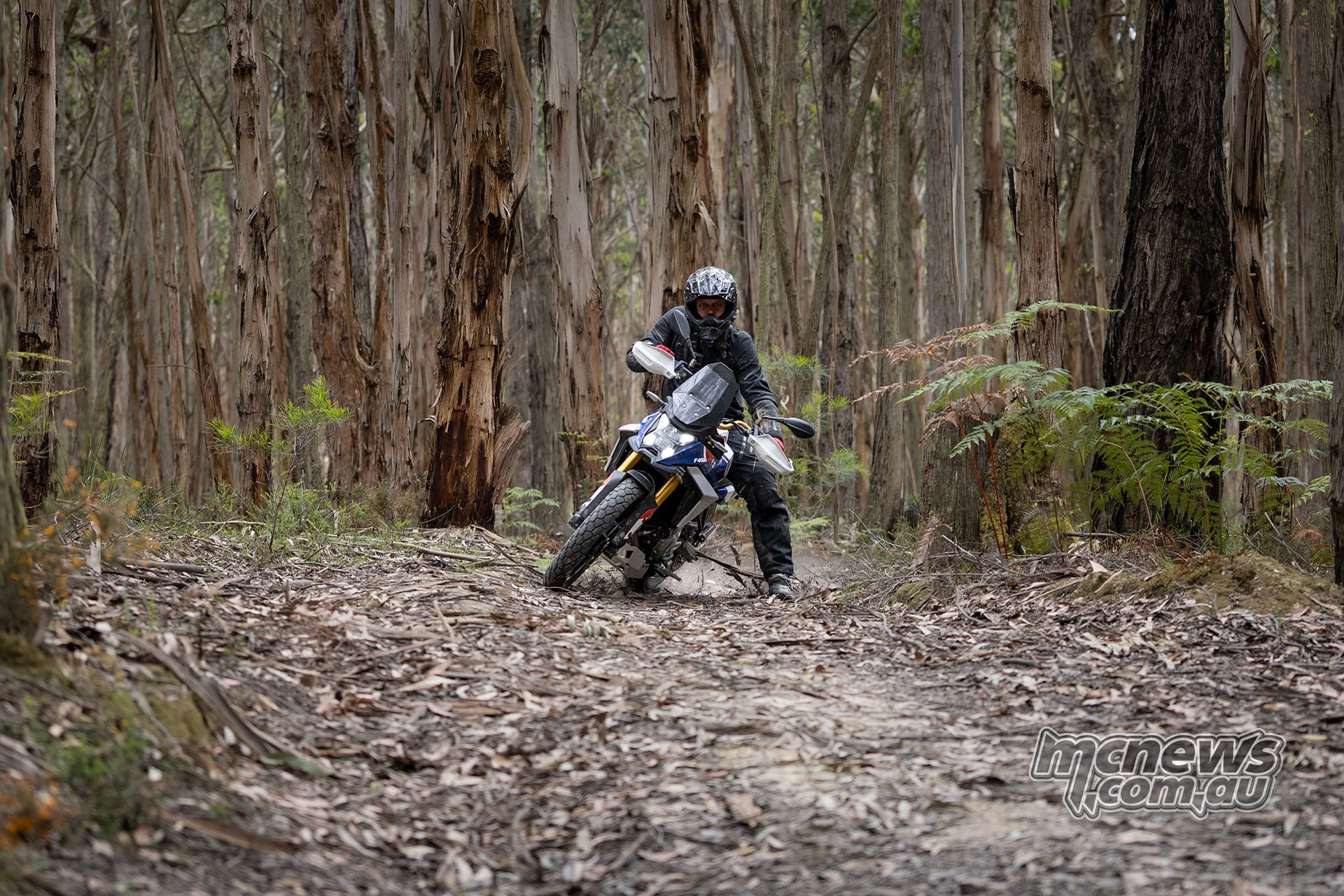
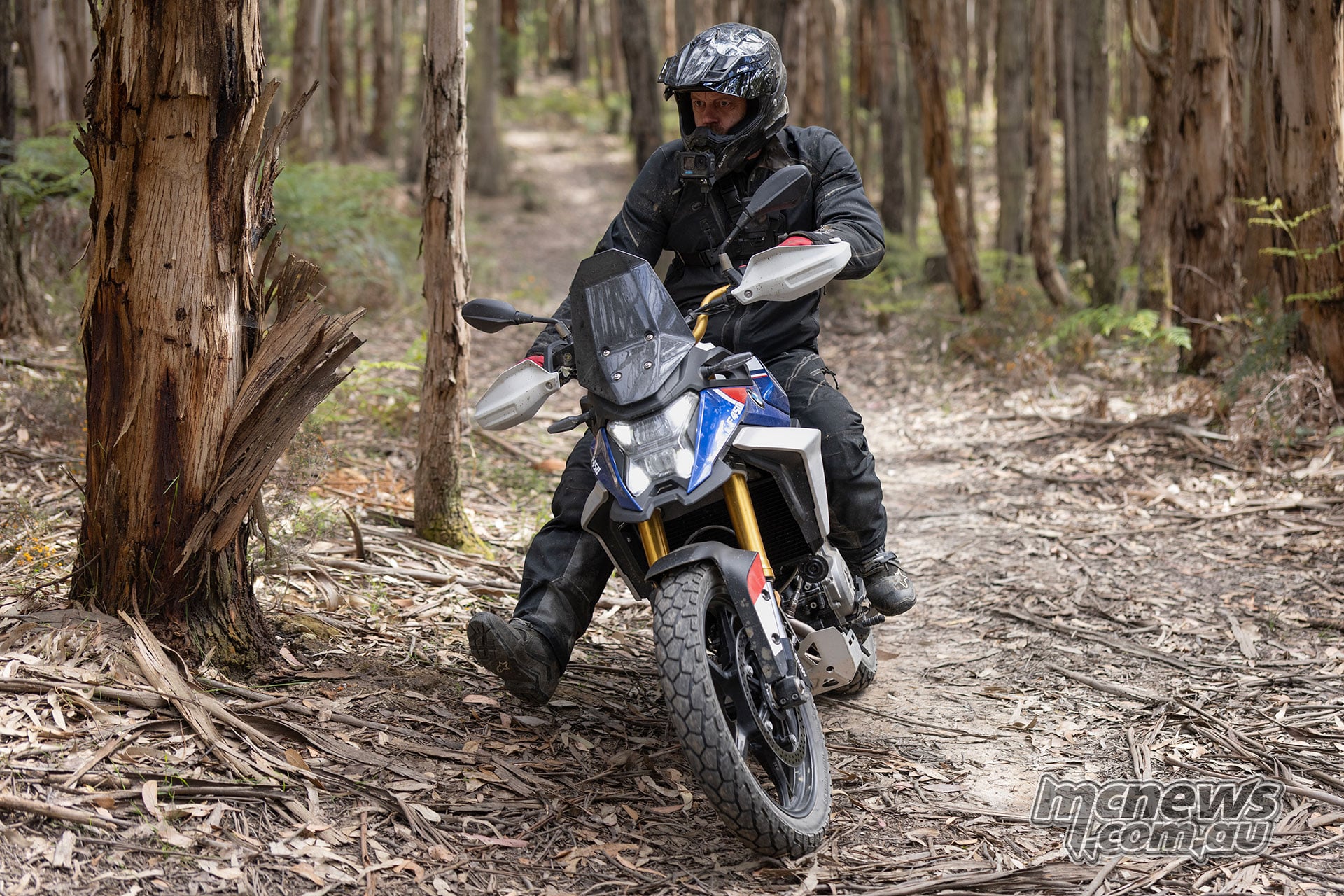
Let’s start with what BMW are calling their Easy Ride Clutch. A centrifugal setup not unlike a Rekluse for those who’ve used them before. Essentially, it’s a twist-and-go affair, which is especially helpful when picking your way between rocks or trees, or making tight turns on the trail.
Crucially, it still has engine braking when decelerating, so if you picture yourself rolling down a 4WD track, you can still count on that to help keep things tidy without always needing to ride the rear brake. With the excellent quickshifter, once on the move, you don’t actually have to touch the clutch at all.
For experienced riders who are used to using the clutch and might be worried about losing specific clutch techniques, you can still give the clutch a dip if you want to dial up some more revs for an obstacle or to lift the front, for example. It just has a slightly different feel.
In action, once first gear is engaged (using the clutch) and the clutch lever is released, the bike remains sitting still until you dial up the revs. On the launch bike, the clutch felt like it didn’t start engaging until just under 3,000 rpm, which seemed a little high to me at first. But more time on the bike had me getting more comfortable with it.
Personally, I’d still prefer the regular clutch, mostly from muscle memory, but the easy clutch has some drawbacks. You do lose the ability to use the clutch as a handbrake with the engine switched off, for instance. That said, I suspect if I rode one on and off for a few weeks, it would become second nature.
Interestingly, the top-spec Trophy variant is only available with the easy clutch. Which surprises me. It means you’d have to spec up the Sport variant with all of the added extras that the Trophy gets if you want the full experience but with a regular clutch. So you’d miss out on that lovely Trophy colour scheme!
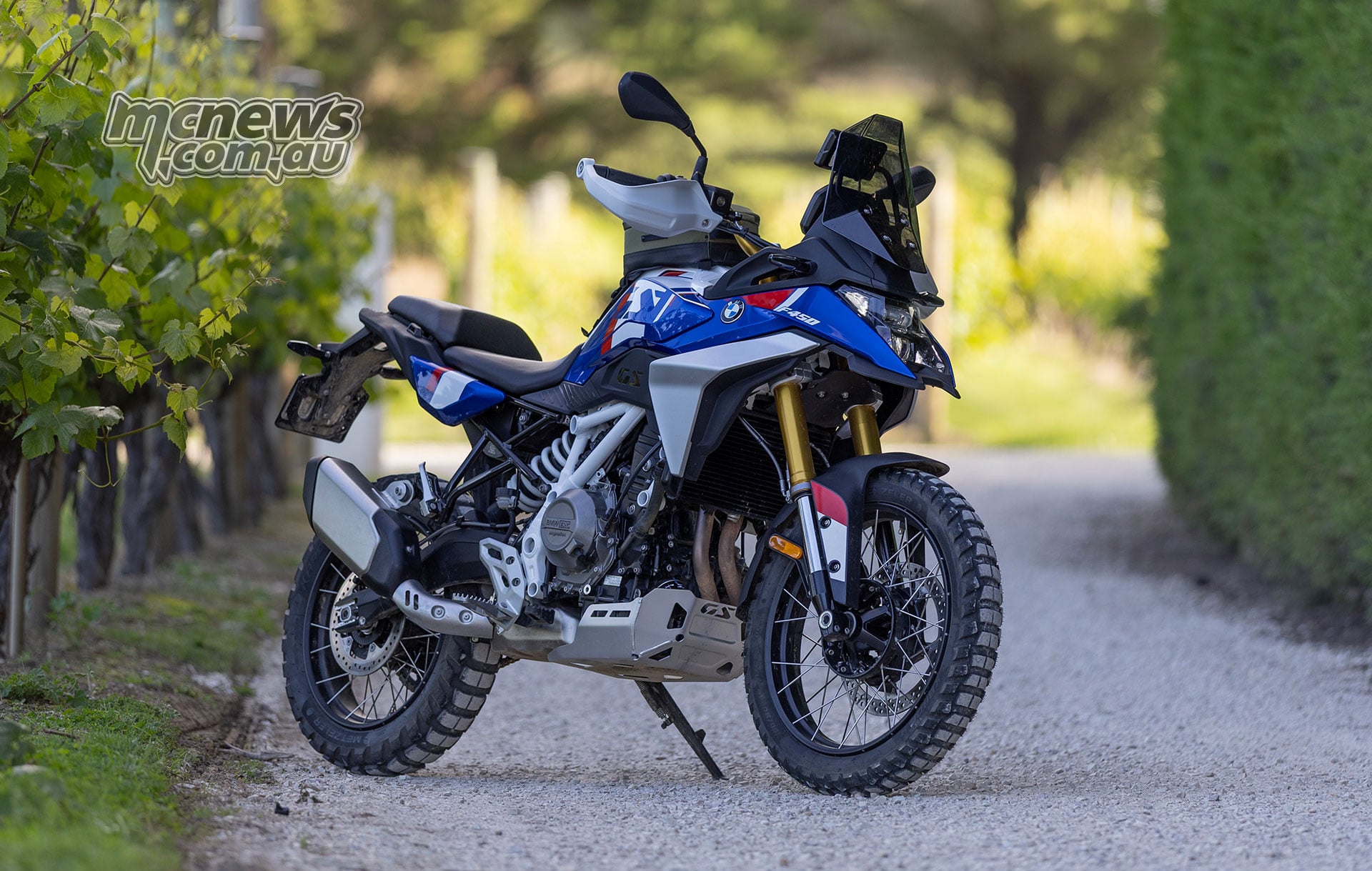
The two other aspects of the bike that greatly impact ease of riding are seat height and steering lock. The seat height is a relatively obvious one. It feels lower than the 845 mm spec sheet suggests. At 181 cm, I could comfortably put both feet flat on the ground.
That’s a huge confidence booster when moving the bike around at low speed or picking your way around obstacles on the trail. Throwing a foot out for a quick dab becomes child’s play in tight turns. Speaking of tight turns, that’s where the steering lock comes in. It has to be up there with the best on any bike I’ve ridden, allowing you to turn the bike around in a seemingly impossible space. So when you add the easy clutch, low seat height and super-tight steering lock together, doing spin turns on narrow trails becomes something to look forward to, not something to plan out because you’re on a big, heavy bike.
Pulling things up
Brakes are excellent. A single 310 mm disc on the front employs a four-piston monoblock Brembo caliper, and the rear is also from the Brembo family. It runs a ByBre single-piston caliper on a 240 mm disc. ByBre is Brembo’s wholly owned Indian brand (and short for ‘By Brembo’).
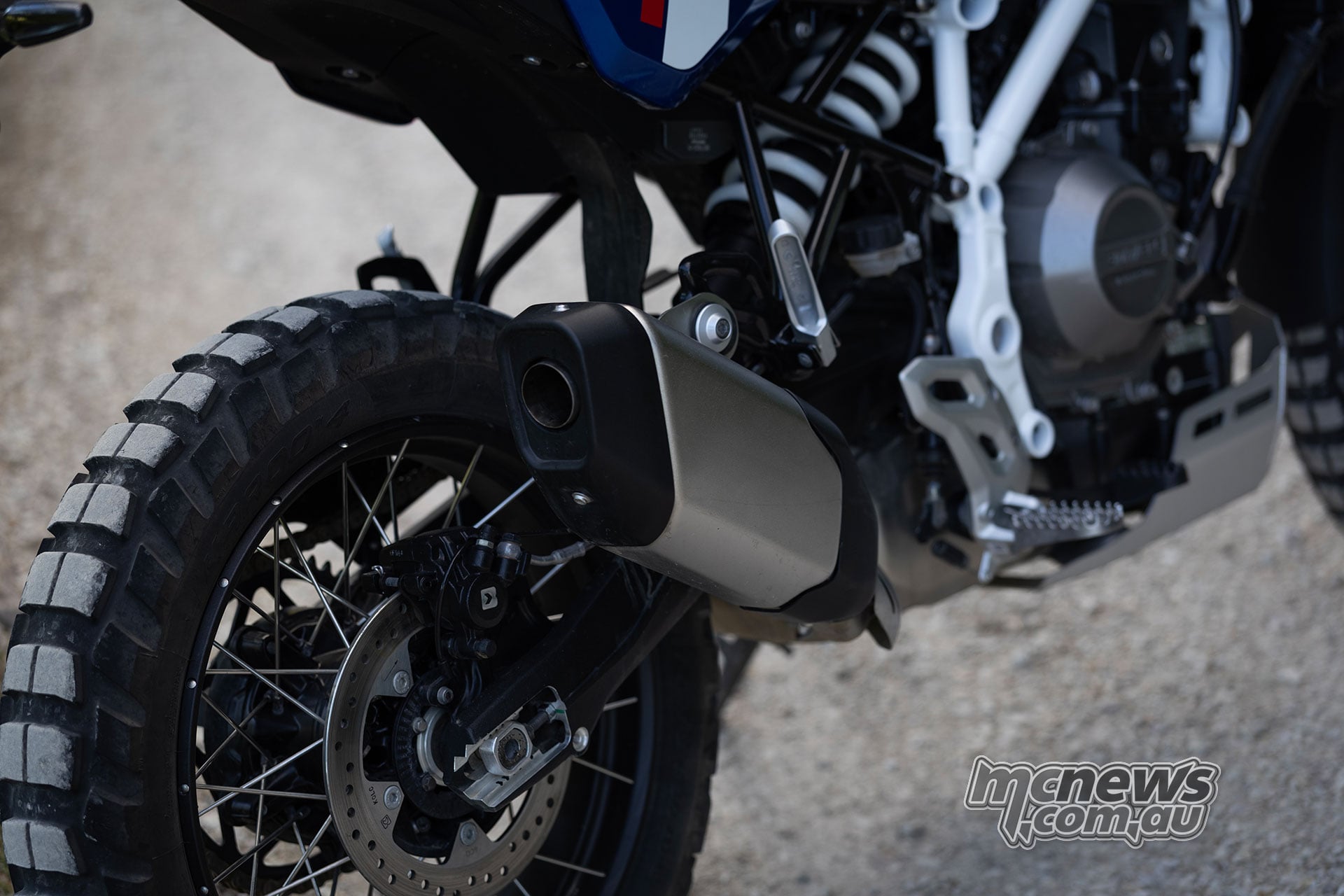
I found the rear to have more than decent feel, and I never felt the front was underpowered. In Enduro Pro mode, with the front ABS set to its most off-road setting and the rear ABS deactivated, I was perfectly happy.
Cast wheels as standard?
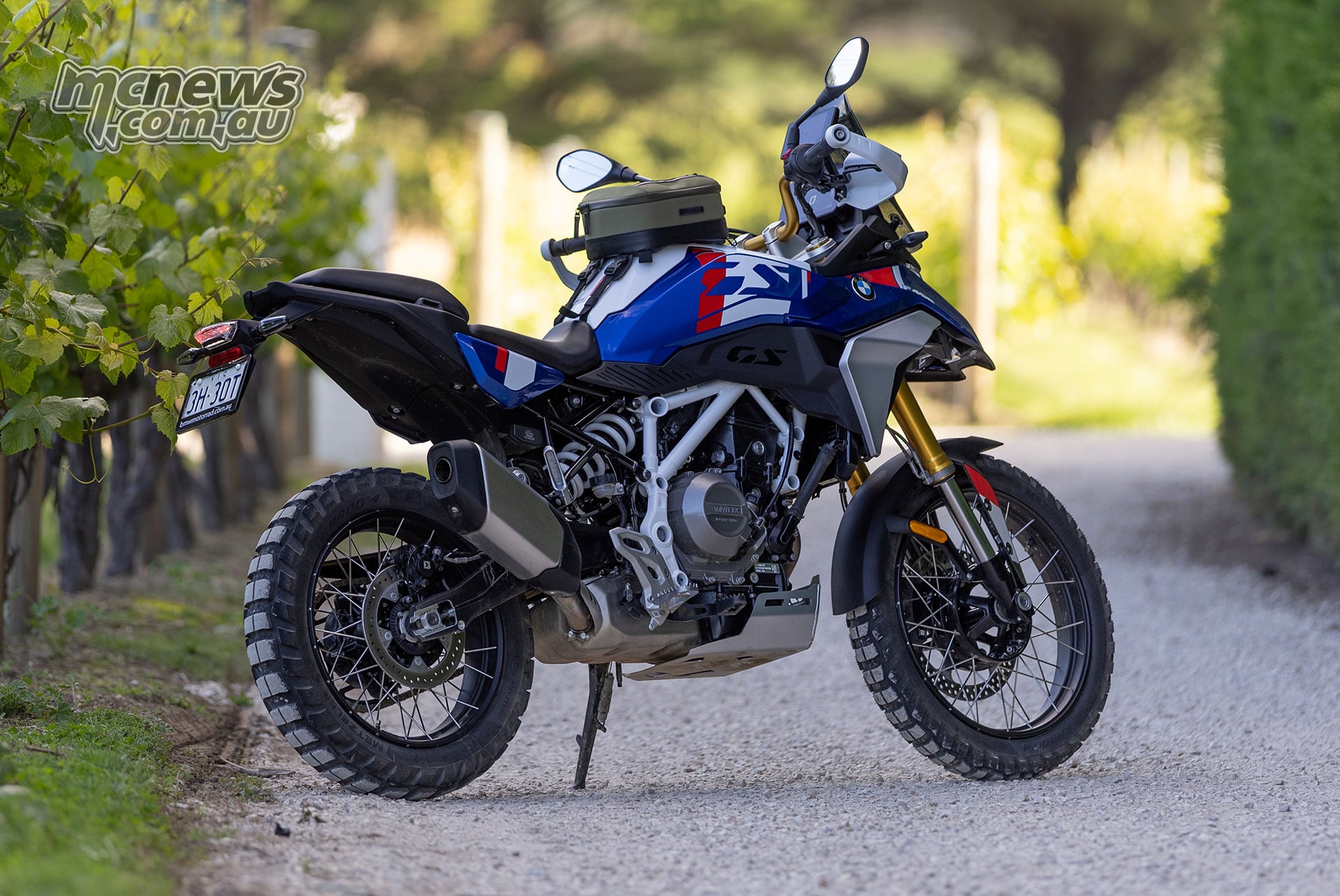
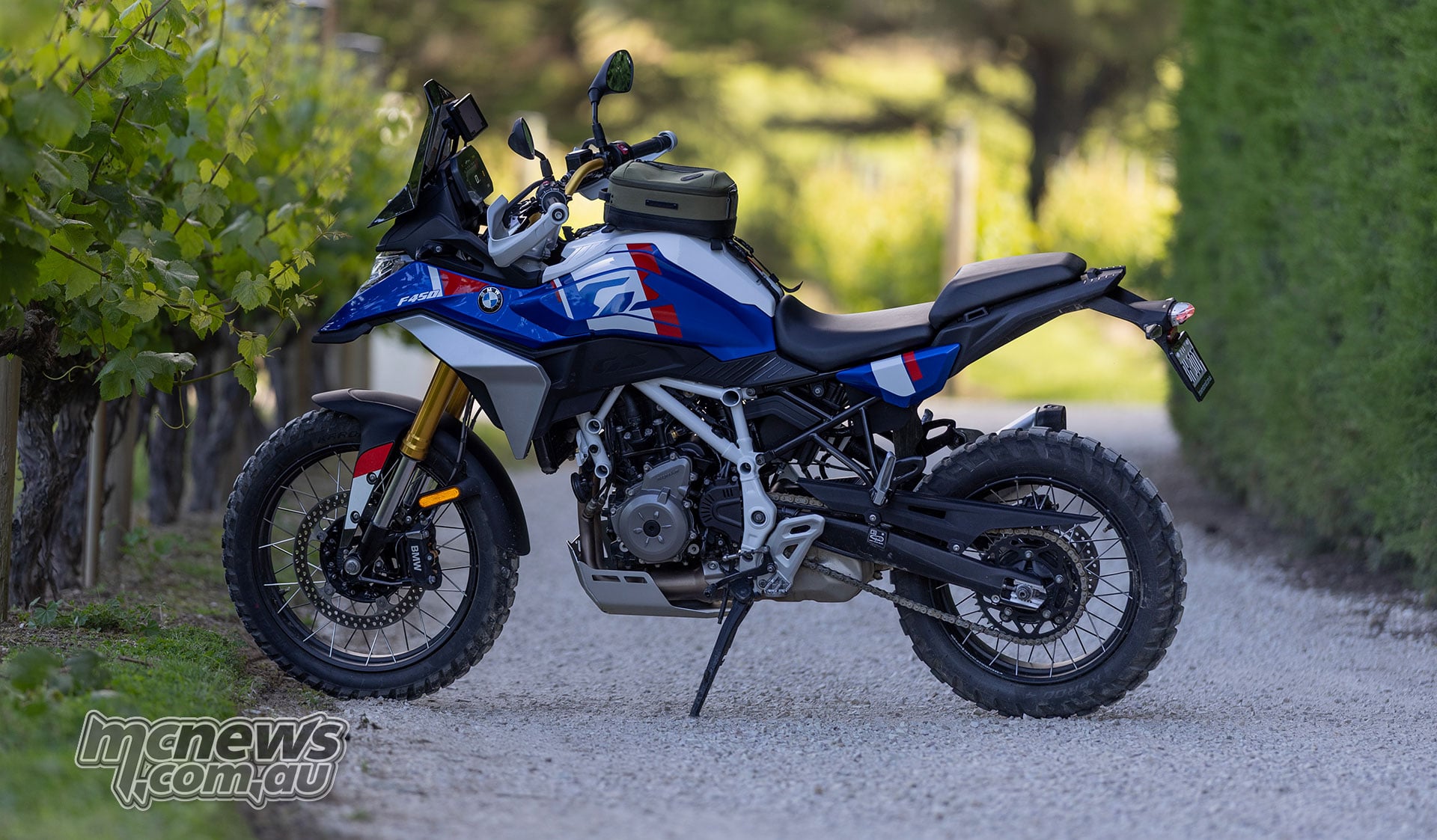
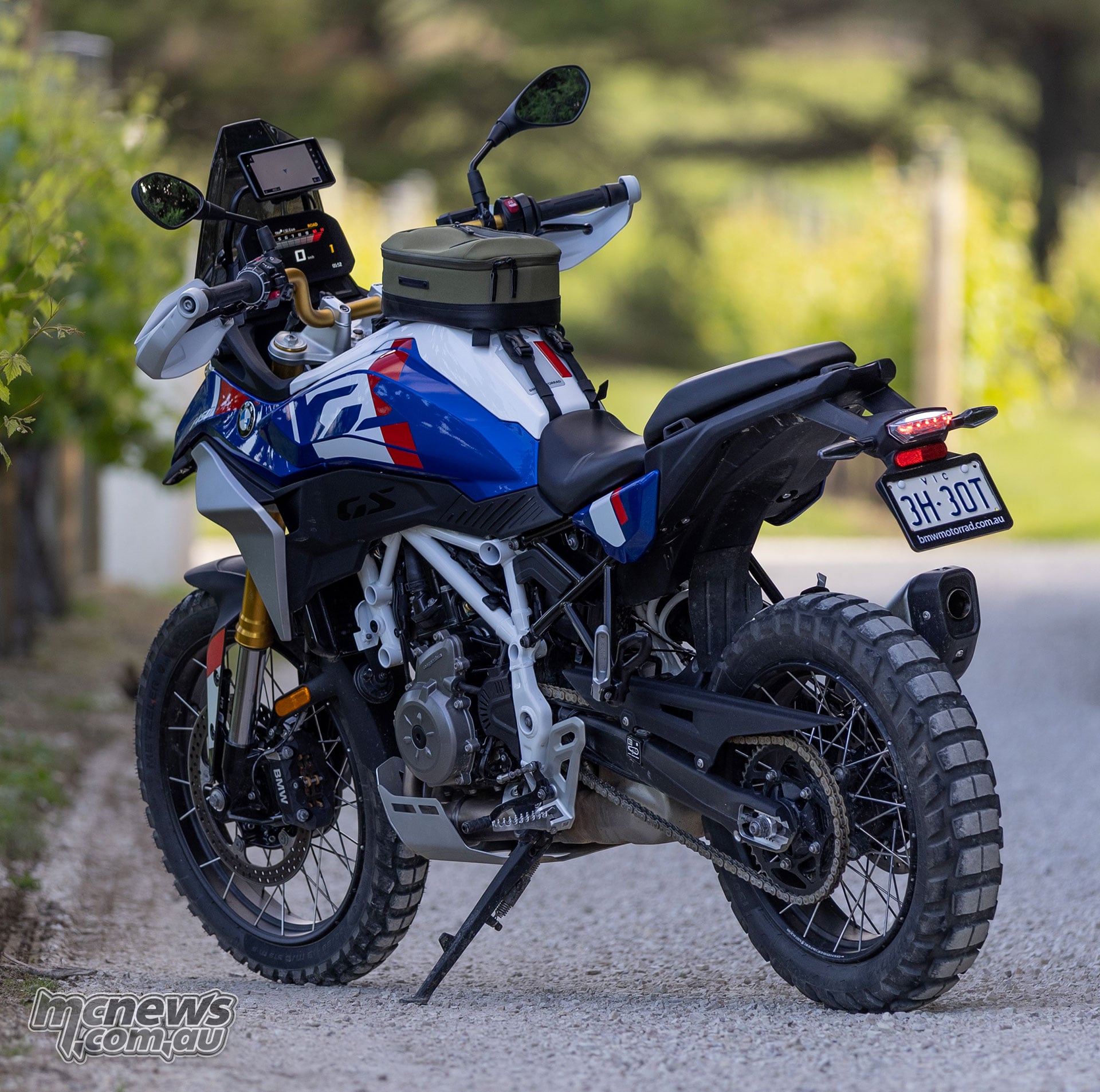
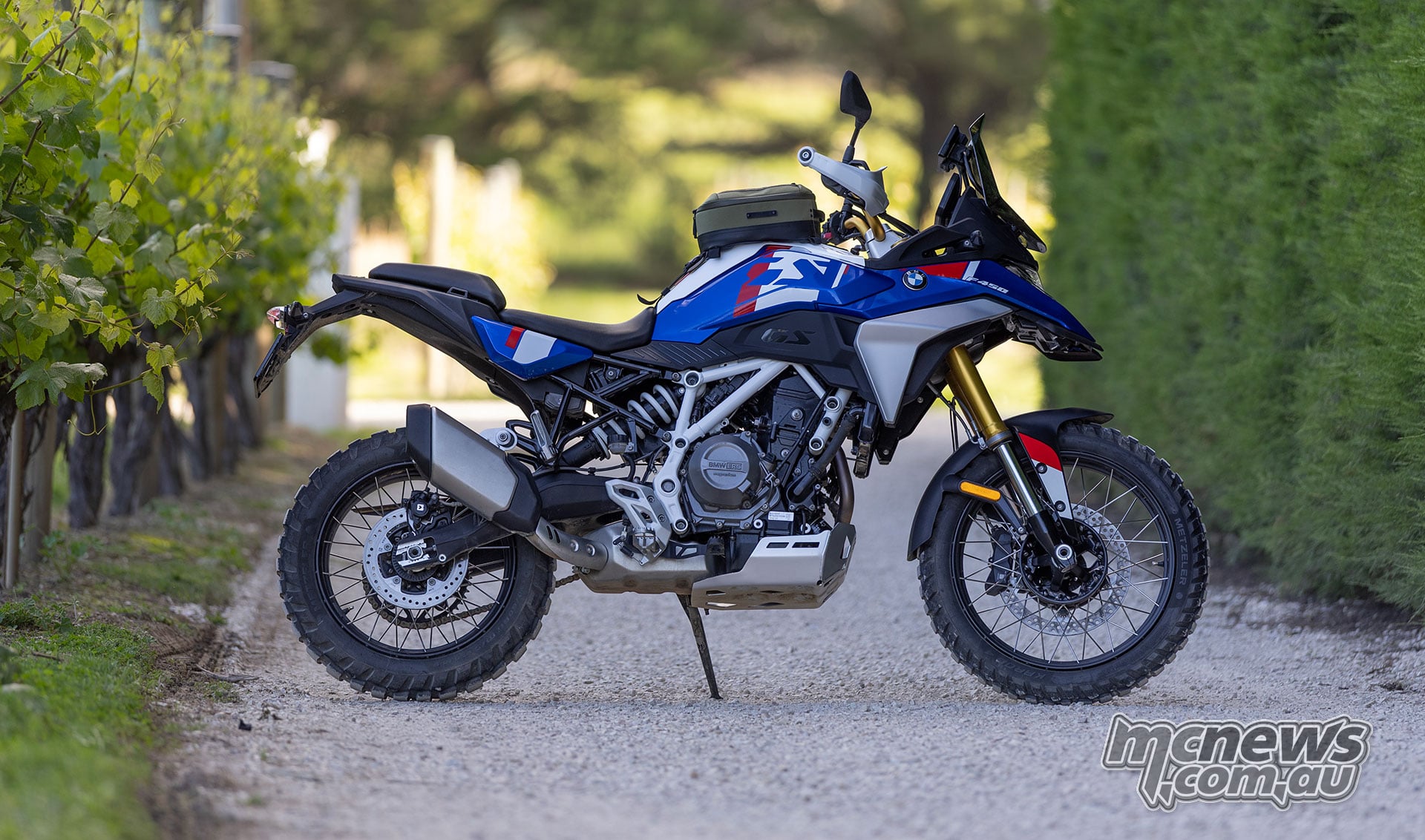
It comes with cast wheels as standard, in the more road/gravel-focused sizes of 19-inch front and 17-inch rear rather than a 21-inch front. Spoked wheels add about $1,500, and almost all customers are opting for them, according to the team from BMW Australia. Now, there are a few contributing factors here. You might first assume they’ve been a bit cheeky to keep the base price down. But you also need to realise that Australia is a small market in the grand scheme of things, and one of only a handful of markets with such a big focus on off-road riding.
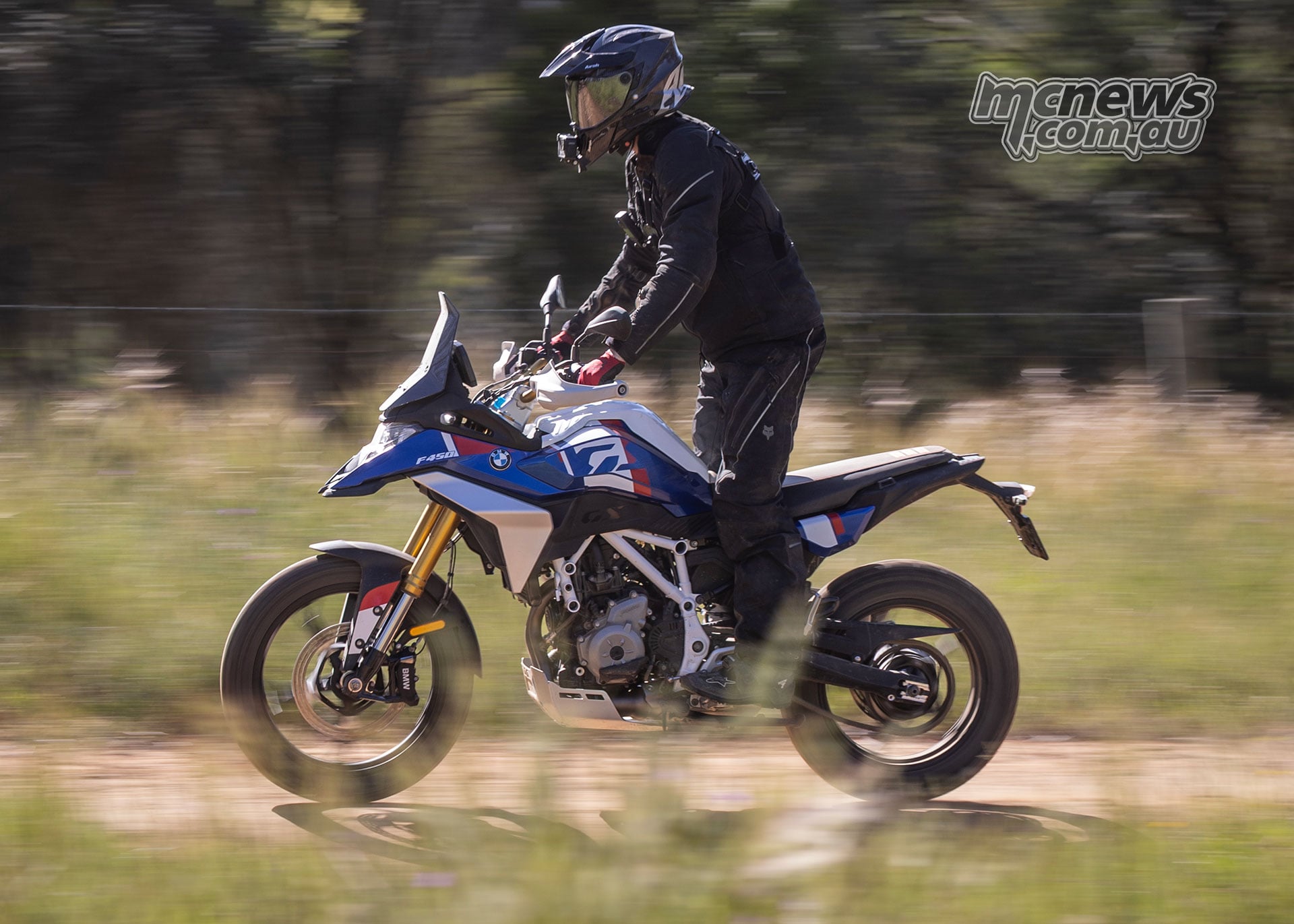
Add in the fact that post-COVID (yes, we’re still normalising even now, can you believe it?) getting supplies of the spoked wheels in the volumes needed proved a challenge. So they would have rightly prioritised the highest demand first. Road/gravel spec, rather than off-road brawler enduro spec.
Taking all of that into account, if I were to pull out my crystal ball and make a product strategy prediction, I’d guess an enduro spec might be in the pipeline in the next year or two, to be introduced just as the initial demand for this model starts to be met. Longer-travel suspension, more ground clearance, 21-inch front and 19-inch rear wheels? Oof. Wonder if we’ll see something like that at Red Bull Romaniacs…?
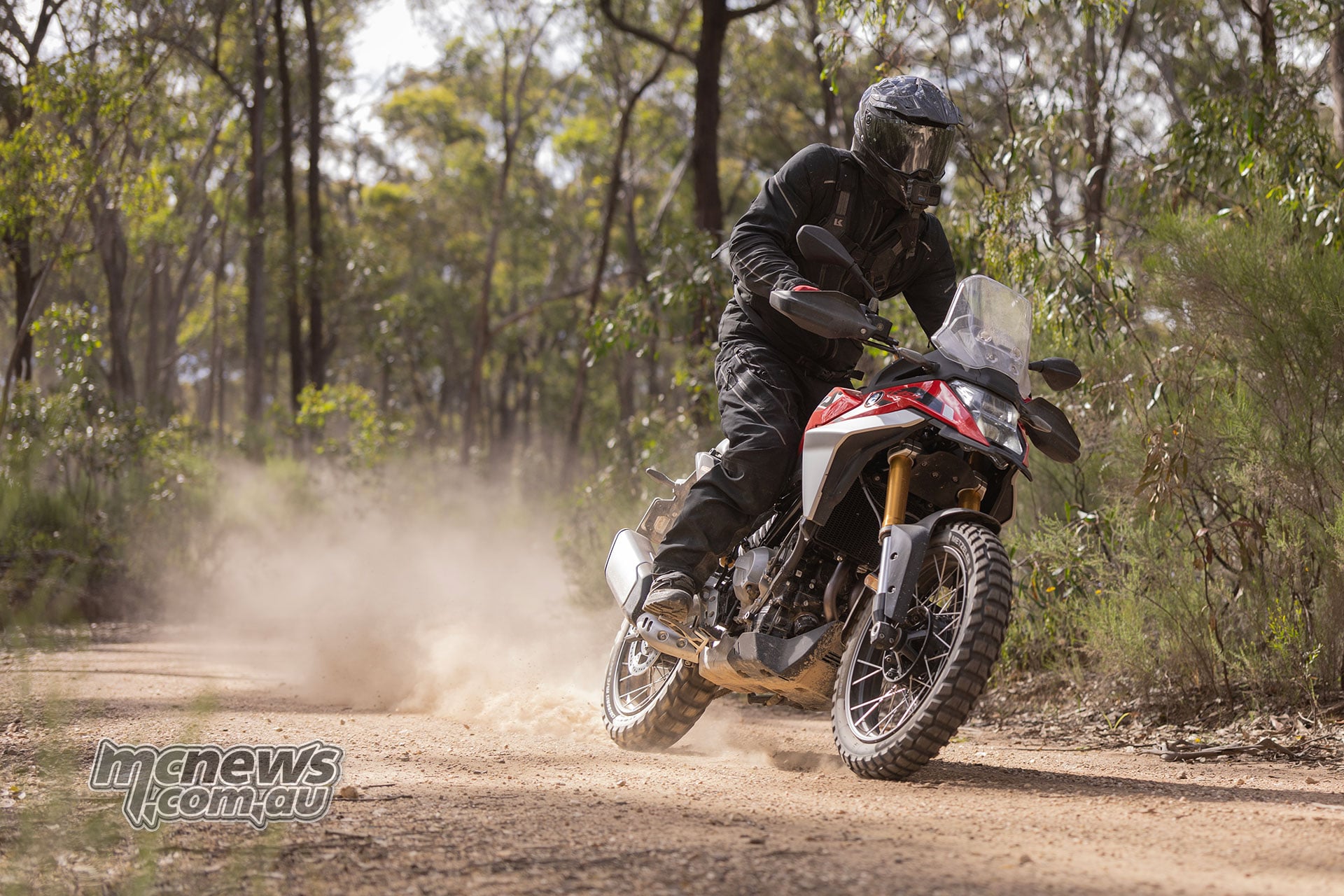
Back to the task at hand. How do they perform? The lighter cast wheels are slightly more eager and agile on the tarmac, as expected, but I definitely preferred the spoked wheels when hitting off-road bumps and potholes and picking through rougher 4WD tracks.
That little bit of extra weight adds some deflection control and stability amongst bumps and rocky terrain, and it still tips in just fine on tarmac. I would tick the spoked wheels option.
Final word
To say I was surprised by the little GS is a massive understatement. This bike is seriously capable and playful like no other in the class. Dripping with quality. Solid tech. Easy to ride and oh-so-encouraging. But most importantly, it’s FUN. BMW have dropped two fun bikes in recent times. I was equally blown away by the R 12 G/S last year and ended up giving it my Off-Road Bike of the Year gong. And now we have this little weapon.
This 450 GS is not a beginner’s bike. Labelling it as such would be massively underselling the bike’s capability and potential. It’s absolutely beginner-friendly, but you’d be underestimating the bike if you thought it was only for less experienced riders. There is plenty to enjoy here for riders of all capabilities.
At the risk of labouring the point on how much ‘potential’ this bike has up its sleeve, I’d love to ride the BMW Safari Enduro on one. That would be a lot of fun. I think with some aggressive rubber and a couple of mods, the littlest GS could be an absolute hoot.
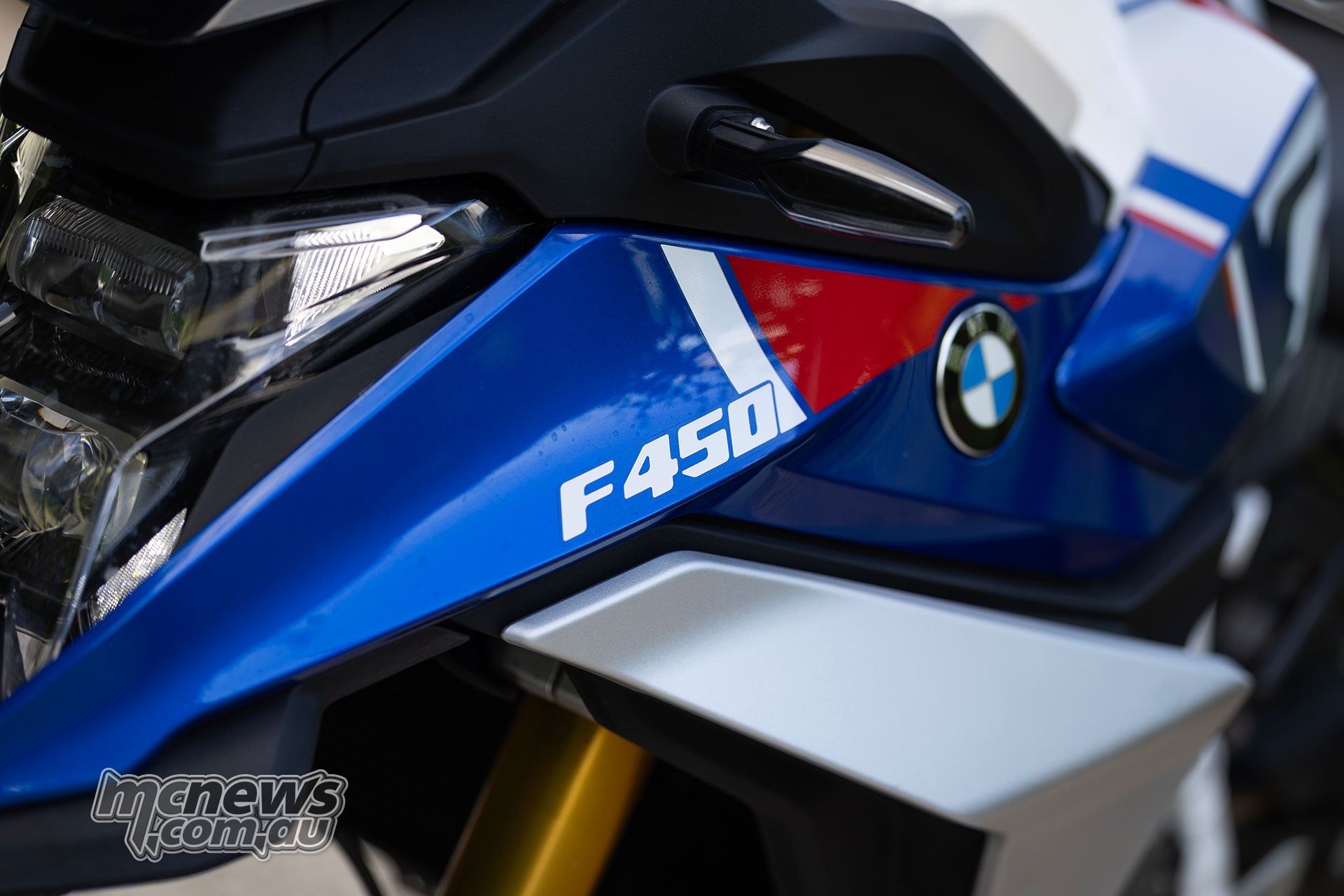
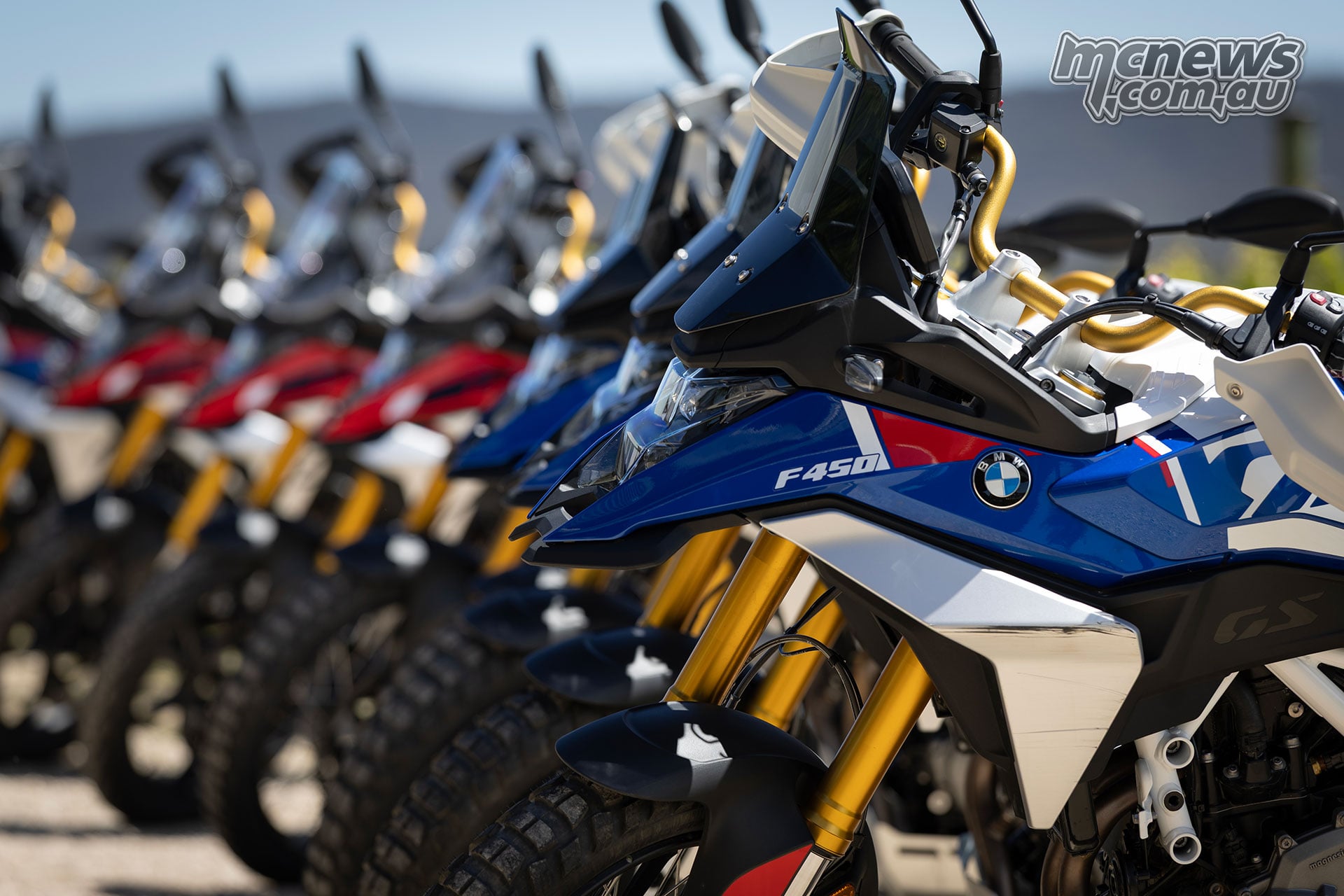
The first shipment of 400 bikes has already been snapped up, with the next batch due in Q2 2027. Pricing sits at around $12,700 ride-away for the red Sport model and $13,300 for the BMW blue-white-and-red Trophy model that gets the easy clutch and aluminium bash plate.
On top of that, you’ll want to add the spoked wheels, which are another $1,517.
There’s a whole bunch of BMW accessories ready to go, as you’d imagine. The one to look for is the Rallye pack, which includes the Rally seat, bar risers, engine case protection, TFT protector, and a tank pad.
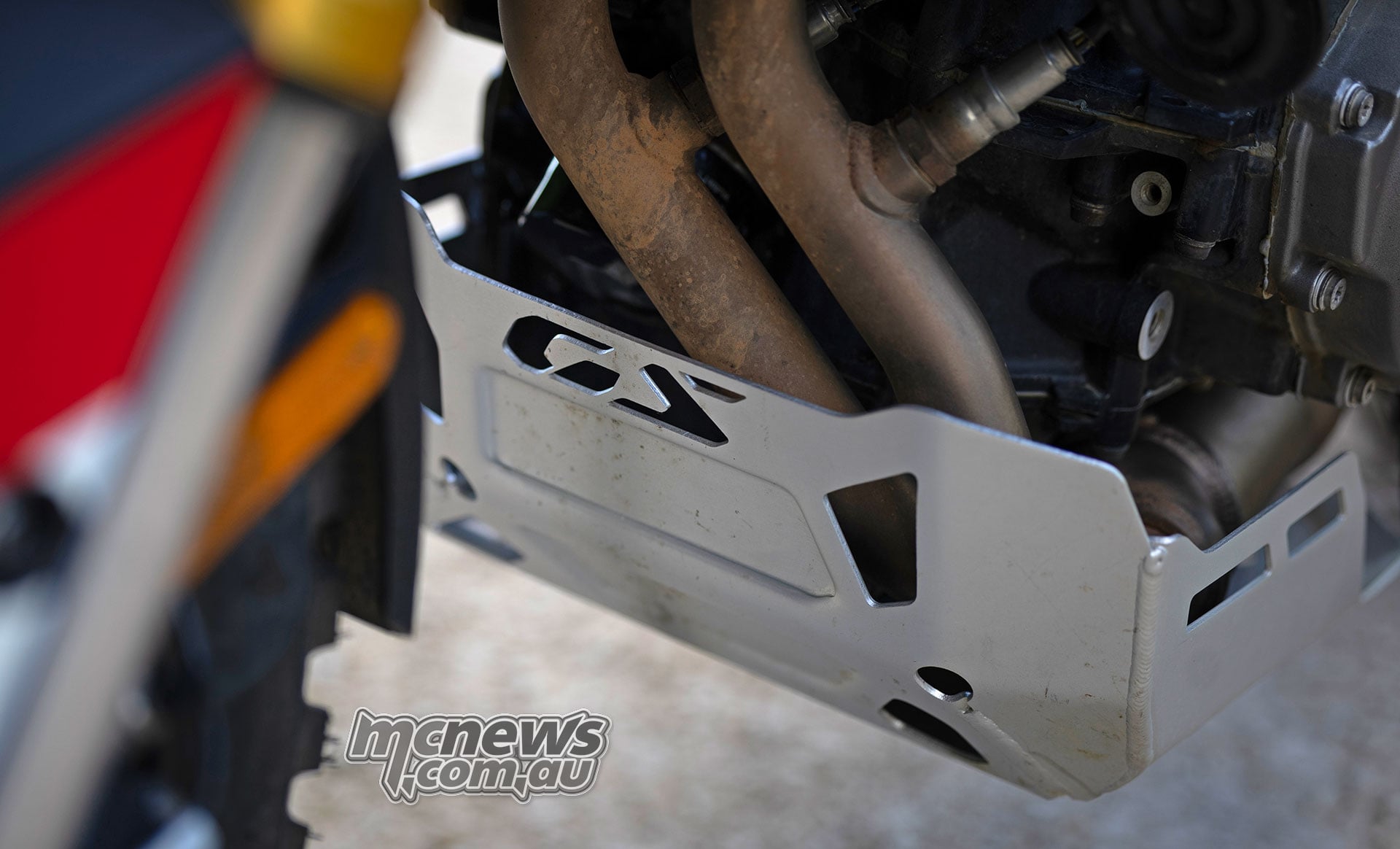
That bundle adds $990 to the bill (instead of $1,225 if you bought the parts individually). If you opt for the standard clutch on the Sport model, you’ll also want to tick the aluminium bash plate option for another $381.
So once you’ve ticked the spoked wheels and Rallye pack options, you’re sitting around the mid-15 grand mark. Certainly not the cheapest in the class… but I think this is a genuine case of getting what you pay for, and it comes with a class-leading five-year warranty.
BMW F 450 GS hits
- It’s just so playful. That engine feels WAY stronger than anything else in its class.
- Serious quality, great build, great tech. It shares the dash and switchgear with its bigger brothers.
- Properly accessible. Just as rewarding for experienced riders as for beginners, it has a whole lot of potential. This is not a beginner-only bike.
And misses
- It’s not cheap, but quality never is.
- Cast wheels are standard. No cruise control, even as an option.
- 180 mm suspension will be the limitation for harder-charging riders who want to take bigger hits and jumps. It’s fine for everyone else.
2027 BMW F 450 GS Specifications
|
Specifications
|
|
|
Engine
|
Water-cooled, two-cylinder, four-stroke
|
|
Timing
|
DOHC, 135-degree crankshaft journal offset
|
|
Displacement
|
420 cc
|
|
Compression
|
13:1
|
|
Bore x Stroke
|
72 x 51.6 mm
|
|
Max. Power
|
35 kW (48 hp) at 8750 rpm
|
|
Max. Torque
|
43 Nm at 6750 rpm
|
|
EMS
|
BMS-Z
|
|
Clutch
|
Multi-disc, wet clutch, mechanically actuated
|
|
Transmission
|
Six-speed transmission
|
|
Frame
|
Steel tubular space frame
|
|
Swingarm
|
Aluminium swingarm
|
|
Fork
|
KYB USD 43 mm fork (Rebound, compression adjustable on Sport/GS Trophy variants)
|
|
Shock
|
KYB WAD strut, preload and rebound adjustable
|
|
Travel
|
180/180 mm F/R
|
|
Front Brake
|
Single 310 mm rotor, Brembo four-piston caliper
|
|
Rear Brake
|
240 mm rotor, Bybre single-piston caliper
|
|
ABS
|
BMW Motorrad ABS Pro with cornering
|
|
Wheels
|
Alloy cast wheels, 2.50 x 19in, 3.50 x 17in
|
|
Tyres
|
100/90-19, 130/80-17
|
|
Wheelbase
|
1465 mm
|
|
Overall Length
|
2161 mm
|
|
Overall Width
|
869 mm
|
|
Saddle Height
|
845 mm
|
|
Ground Clearance
|
N/A
|
|
Trail
|
115 mm
|
|
Rake
|
28.1 degrees
|
|
Kerb Weight
|
178 kg
|
|
Fuel Capacity
|
14 L
|
|
Top Speed
|
165 km/h
|
|
0-100km/h
|
5.9s (claimed)
|
2027 BMW F 450 GS Images