

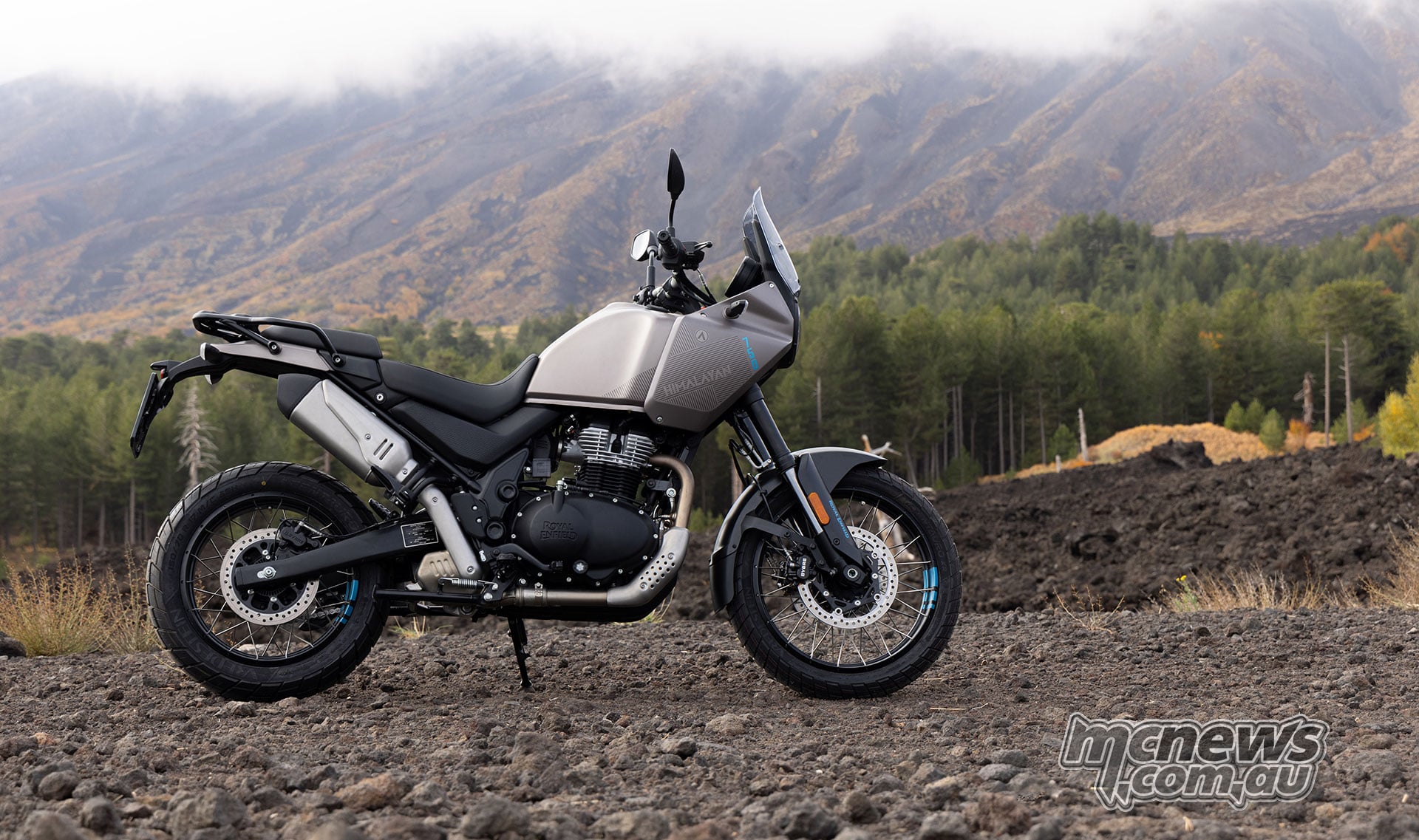
2027 Royal Enfield Himalayan 750
Royal Enfield has given the Himalayan a twin-cylinder heart and a much stronger touring brief, with the new 750 offering far more grunt, a relatively low seat, and an extensive equipment list in a package that could find plenty of friends in Australia if the price is right.
The 743 cc air/oil-cooled parallel-twin produces around 54 hp and 63 Nm, promising strong pulling power from relatively low revs. Cruise control, adjustable Showa suspension, tubeless wheels and purpose-built Givi luggage options help flesh out its credentials for longer journeys.
Previous Himalayan models have been learner legal, but the new 750 exceeds Australia’s 660 cc LAMS capacity ceiling.
At a claimed 223 kg with 90 per cent fuel and the standard centrestand, the 750 carries considerable weight despite its accessible 815 mm seat height. How well it carries that weight will be key to its off-road ambitions.
More torque for the longer journey
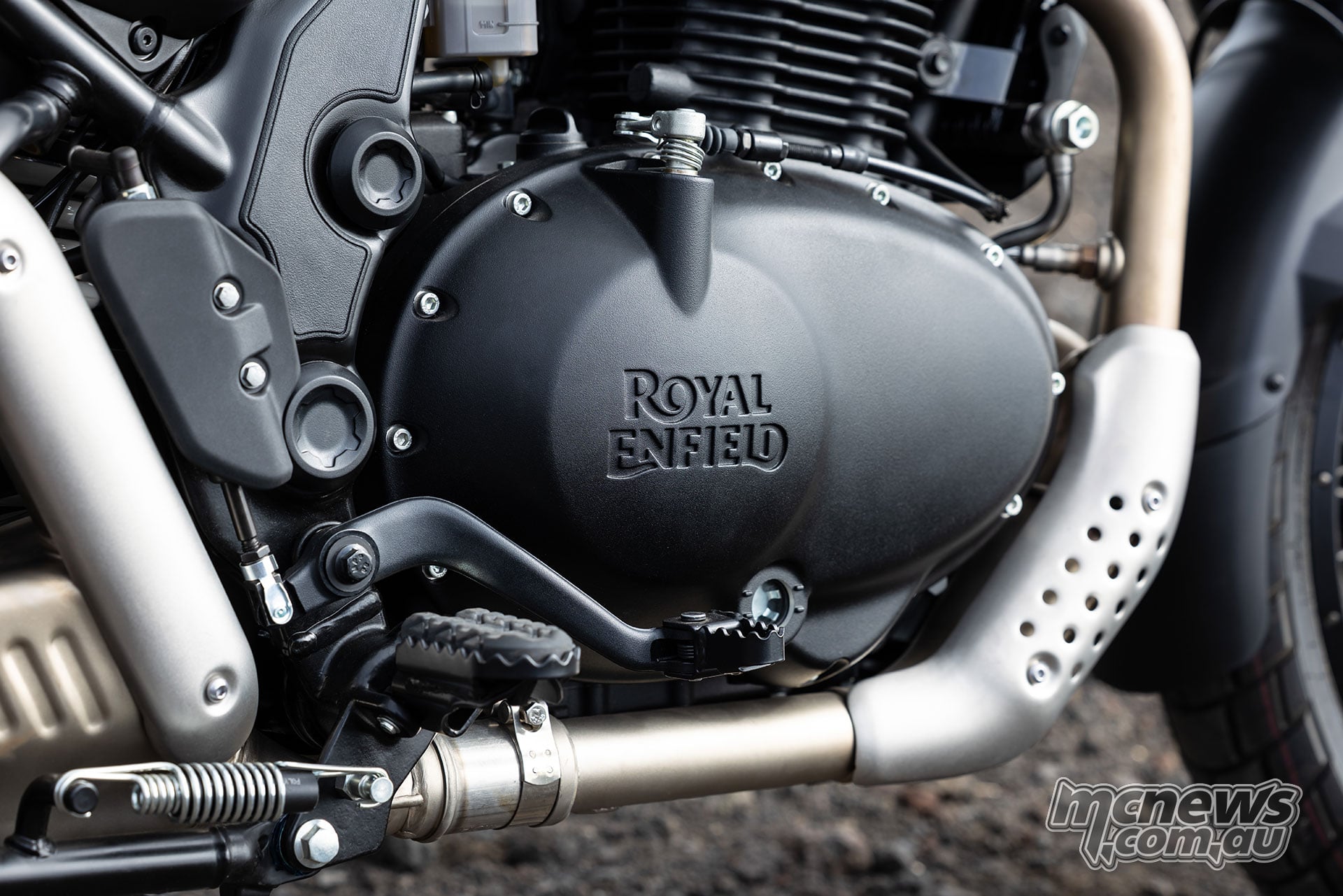
The new engine uses air/oil cooling and a single-overhead-camshaft layout, with an 83.5 mm bore and 67.8 mm stroke giving a displacement of 743 cc. Compression is a relatively modest 9.5:1, and drive reaches the rear wheel through a six-speed gearbox.
Peak power arrives at 7000 rpm, while maximum torque is delivered at 5000 rpm. Royal Enfield claims 90 per cent of that torque is available from 3500 rpm, and we know from 650 iterations of this engine just how flexible and fuss-free it is in the way it goes about business.
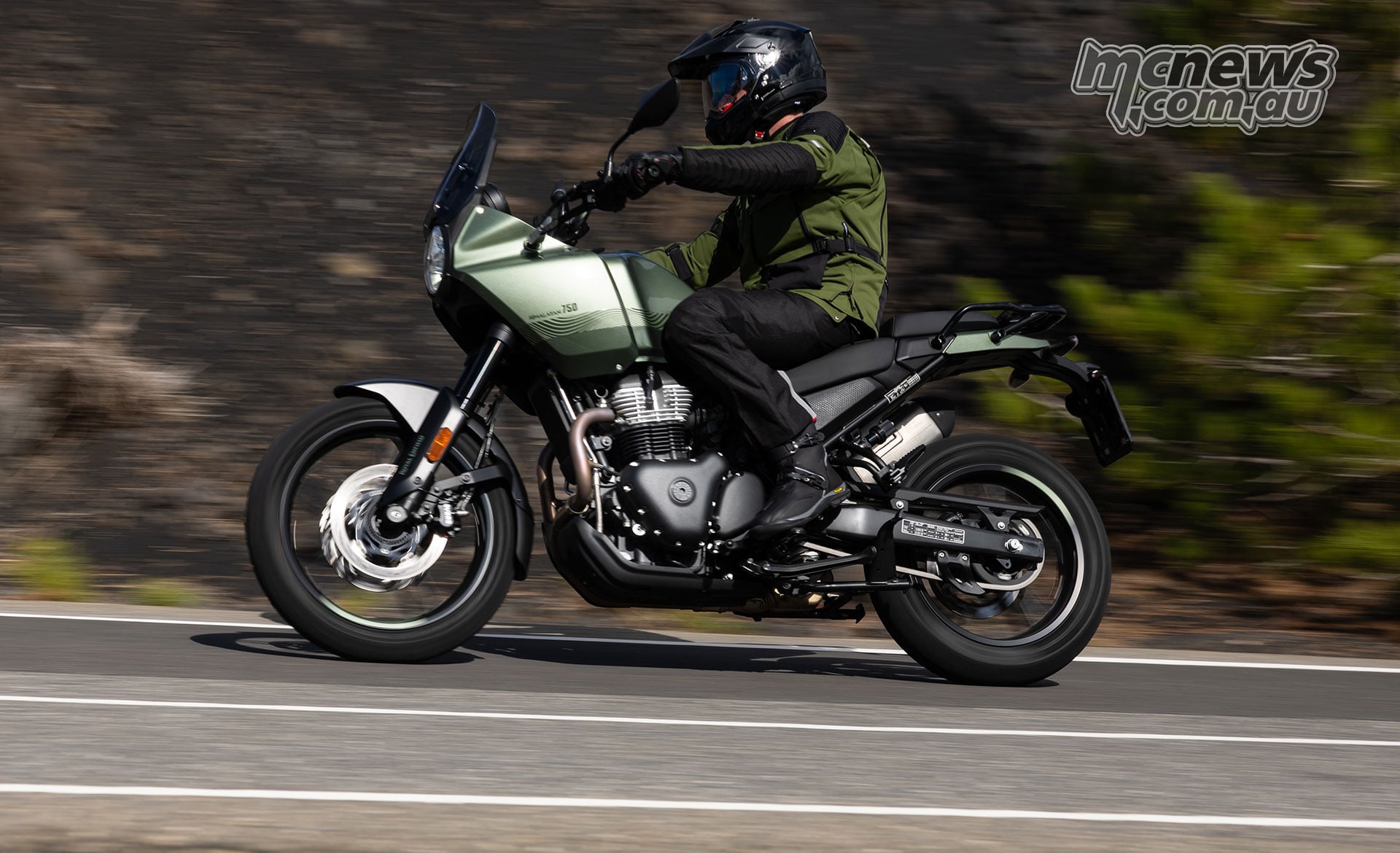
Compared with the Himalayan 450’s approximately 40 hp and 40 Nm, that represents useful gains of around 14 hp and 23 Nm. The additional torque should be particularly welcome when carrying a passenger and luggage, or making progress without constantly working through the gearbox. The Himalayan 450 engine is quite flexible but certainly does its best work when worked hard; the 750 will be at the opposite end of that spectrum, I’m sure.
Even so, 54 hp remains a relatively modest output for a motorcycle in the 750 class, particularly one carrying this much weight. The attraction likely lies in the engine’s character and promised bottom-end urge, which should make for an approachable, manageable companion. We’ll know how readily that translates into loaded touring and overtaking performance when we ride it.
A broader touring role alongside the 450
The chassis specification points towards a mix of road touring and gravel exploring. A box-section steel spine frame uses pressed-steel outriggers and the engine as a stressed member, while the wheel combination is a 19-inch front and 17-inch rear.
That smaller front wheel is a significant distinction from the Himalayan 450’s 21-inch hoop. Suspension travel is also reduced, from 200 mm at each end on the 450 to 190 mm at the front and 175 mm at the rear on the 750. Ground clearance drops from 230 mm to 205 mm.
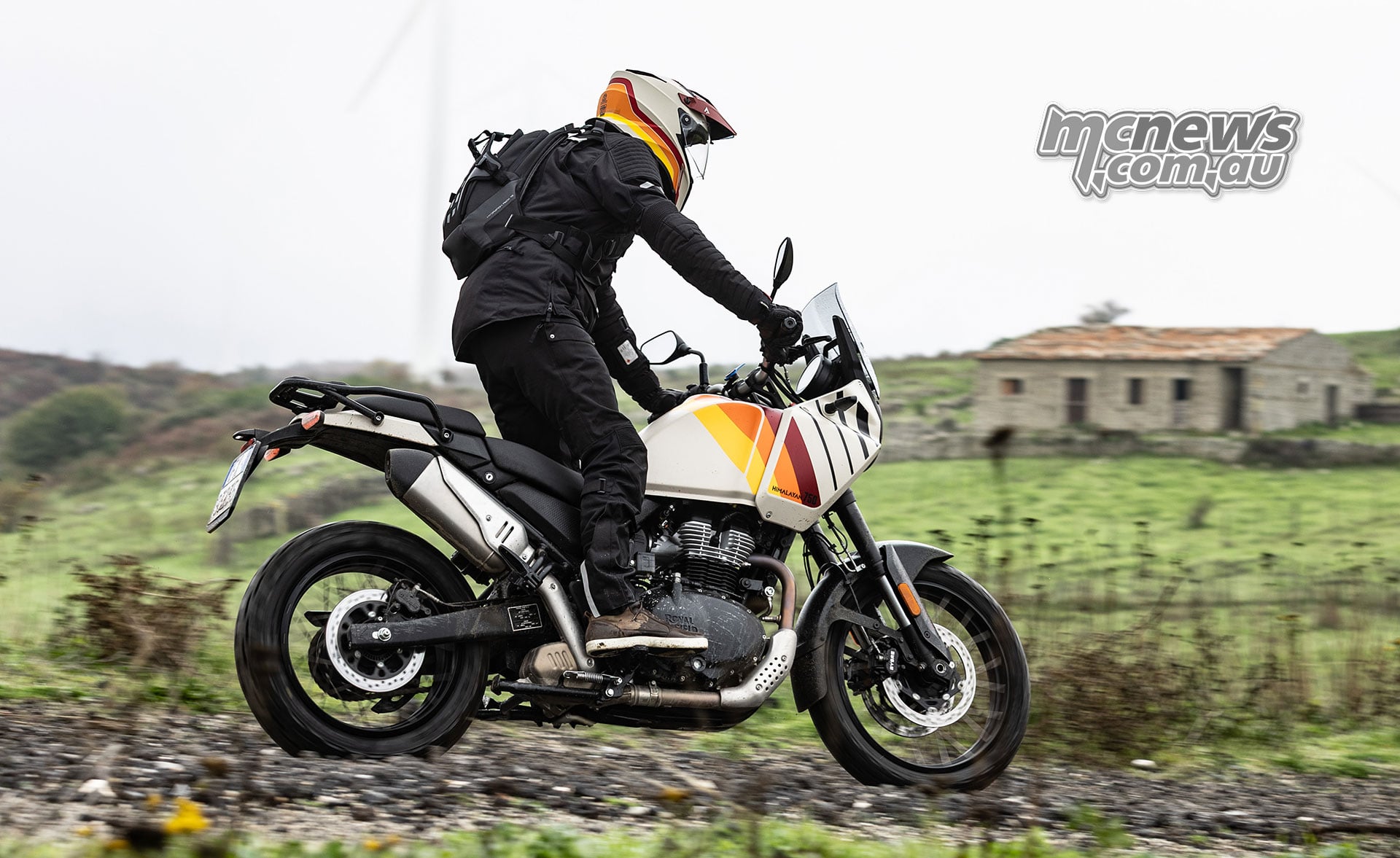
The 450 therefore retains some clear advantages for riders prioritising lower weight and rougher tracks. Its quoted 196 kg kerb figure is 27 kg below the 750.
An 815 mm seat should help more riders get their feet down, although that is only 10 mm lower than the 450’s lowest standard seat setting. Seat width and the way the mass is carried will also matter. A low seat is welcome, but 223 kg will still make its presence felt when manoeuvring, negotiating awkward ground or picking the bike up when your ambition outweighs your talent.
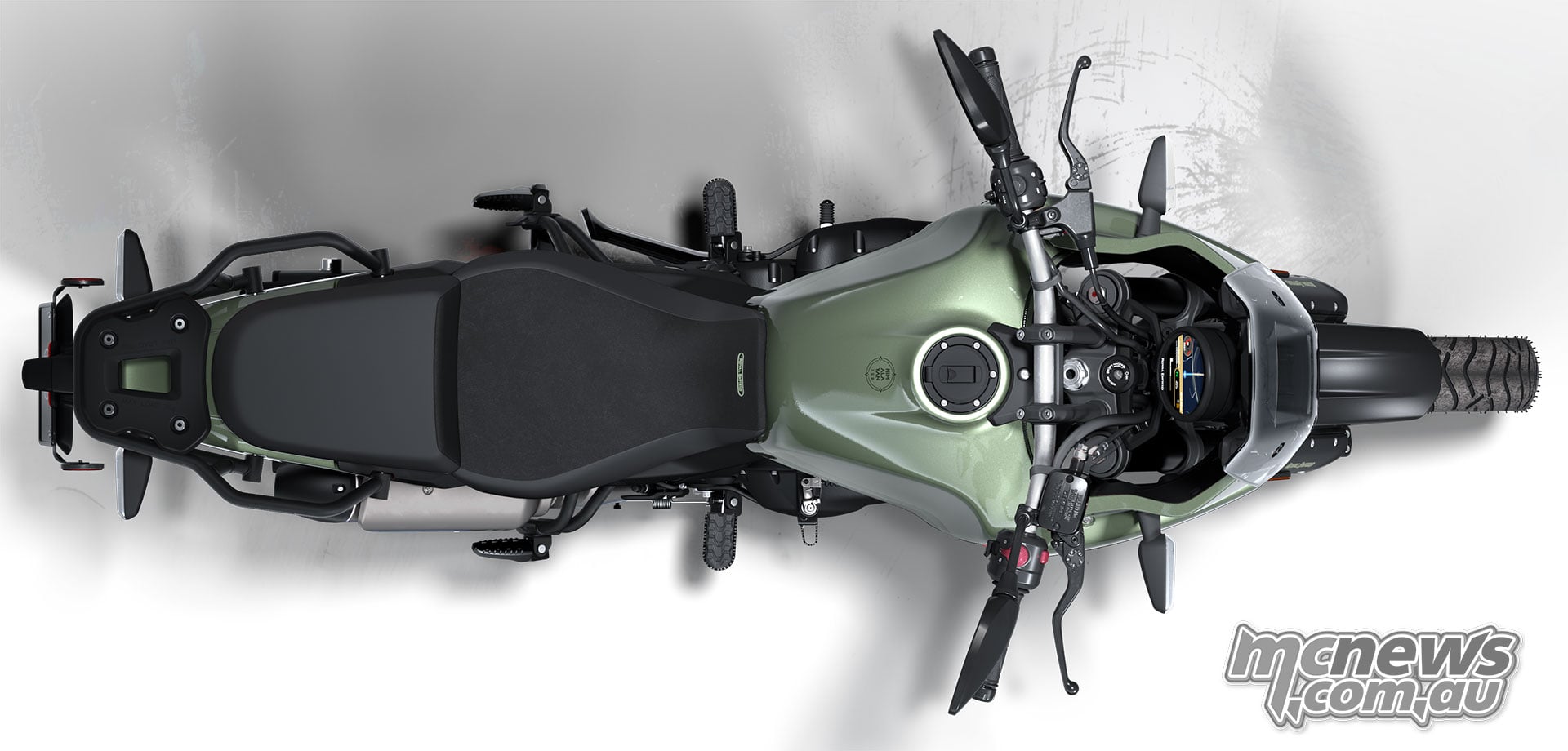
Standard seat height is 815 mm, with alternative accessory seats also listed.
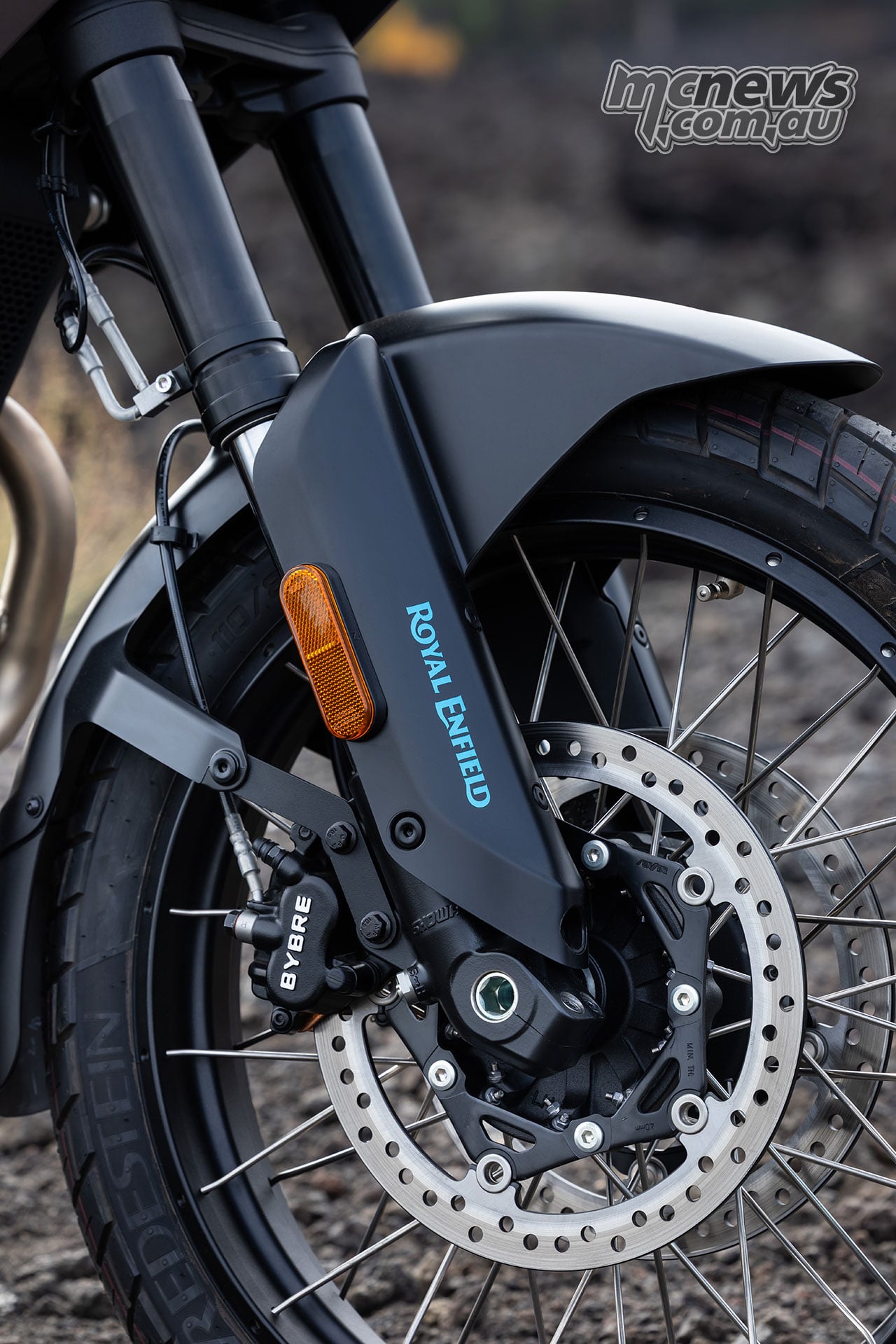
Adjustable Showa suspension and twin front discs
The suspension brings useful adjustment. The 43 mm Showa upside-down fork offers spring preload, compression and rebound damping adjustment, allowing riders to tailor the front end to their weight, load and preferences. That is a big step up on what we have seen before from Royal Enfield on any of their bikes.
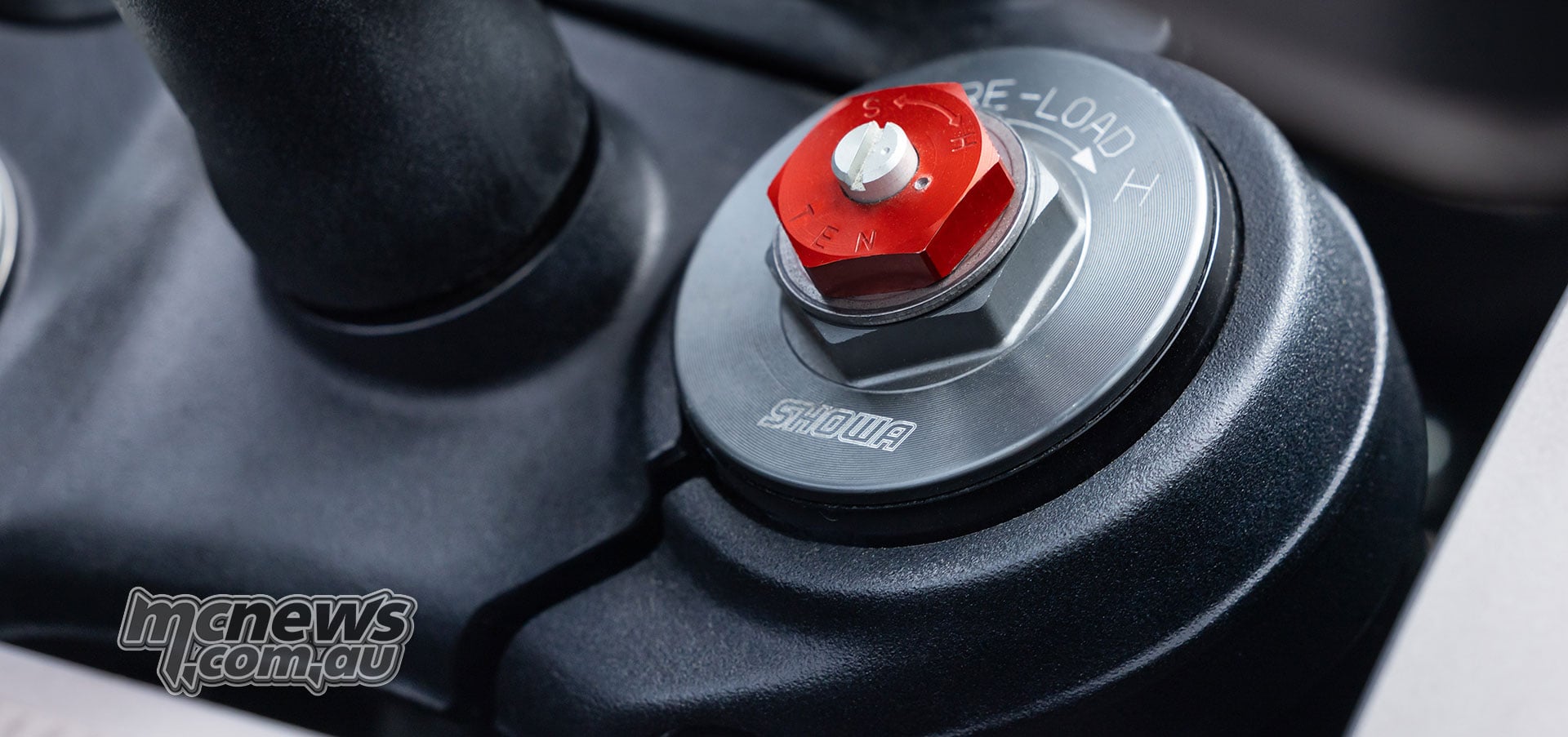
A linkage-operated Showa rear monoshock provides rebound damping adjustment and a remote spring-preload adjuster. The latter is particularly useful in a touring machine that may alternate between solo riding and carrying a passenger or luggage.
Braking hardware comprises twin 280 mm floating front discs with two-piston floating calipers, backed by a 255 mm rear disc and two-piston caliper. Tyre sizes are 110/80 R19 at the front and 150/70 R17 at the rear, with tubeless cast and spoked wheel options in the range.
A substantial electronics package
Royal Enfield continues to talk about uncomplicated adventure, although the 750 certainly comes with a substantial amount of technology. A six-axis inertial measurement unit supports cornering ABS and lean-sensitive traction control, while five riding modes alter throttle response and rider-aid settings.
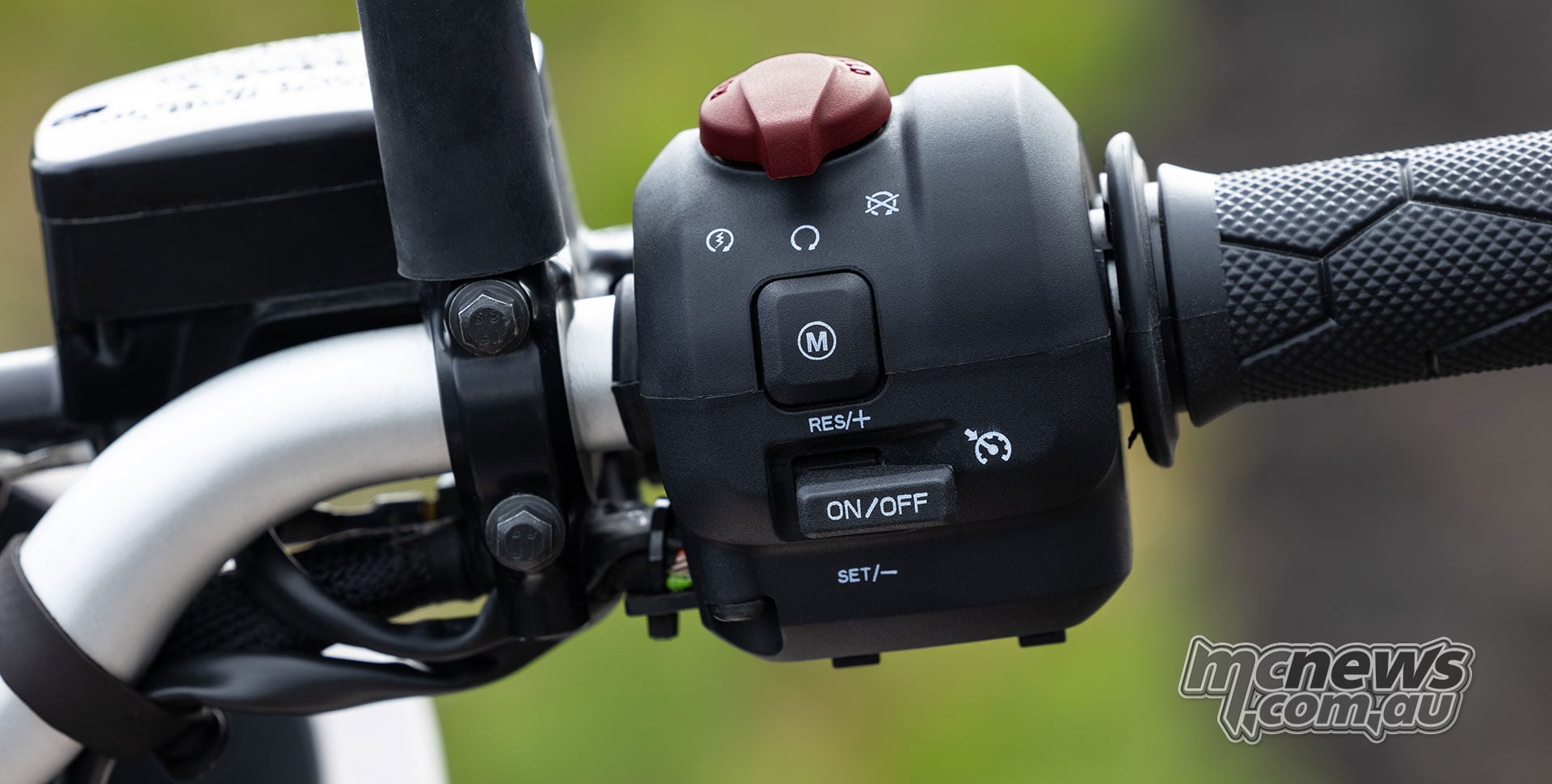
Those modes are Road, Road Sport, Rain, Trail and Custom. Rear ABS can be switched off, and the specification lists Low, Medium, High and Off traction-control settings.
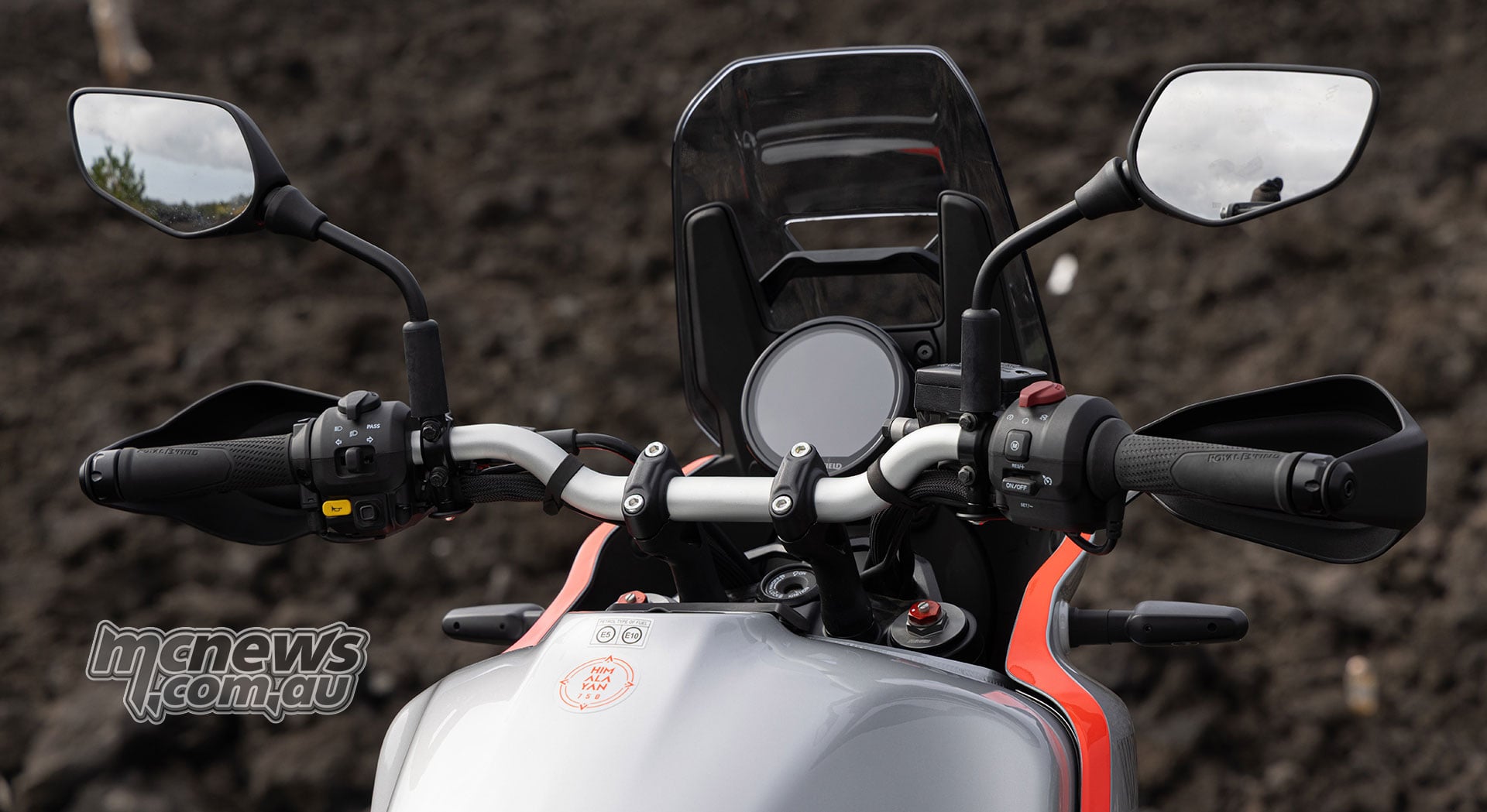
The four-inch circular TFT provides Wi-Fi and Bluetooth connectivity, navigation, and phone and music controls. Tyre-pressure monitoring is standard, and two USB-C outlets include a 27 W fast-charging port and a 10 W standard outlet.
Cruise control is one of the more worthwhile inclusions for the touring brief, with its controls grouped on the right switchblock. There are also self-cancelling indicators and an emergency braking warning function.
Touring equipment and luggage options
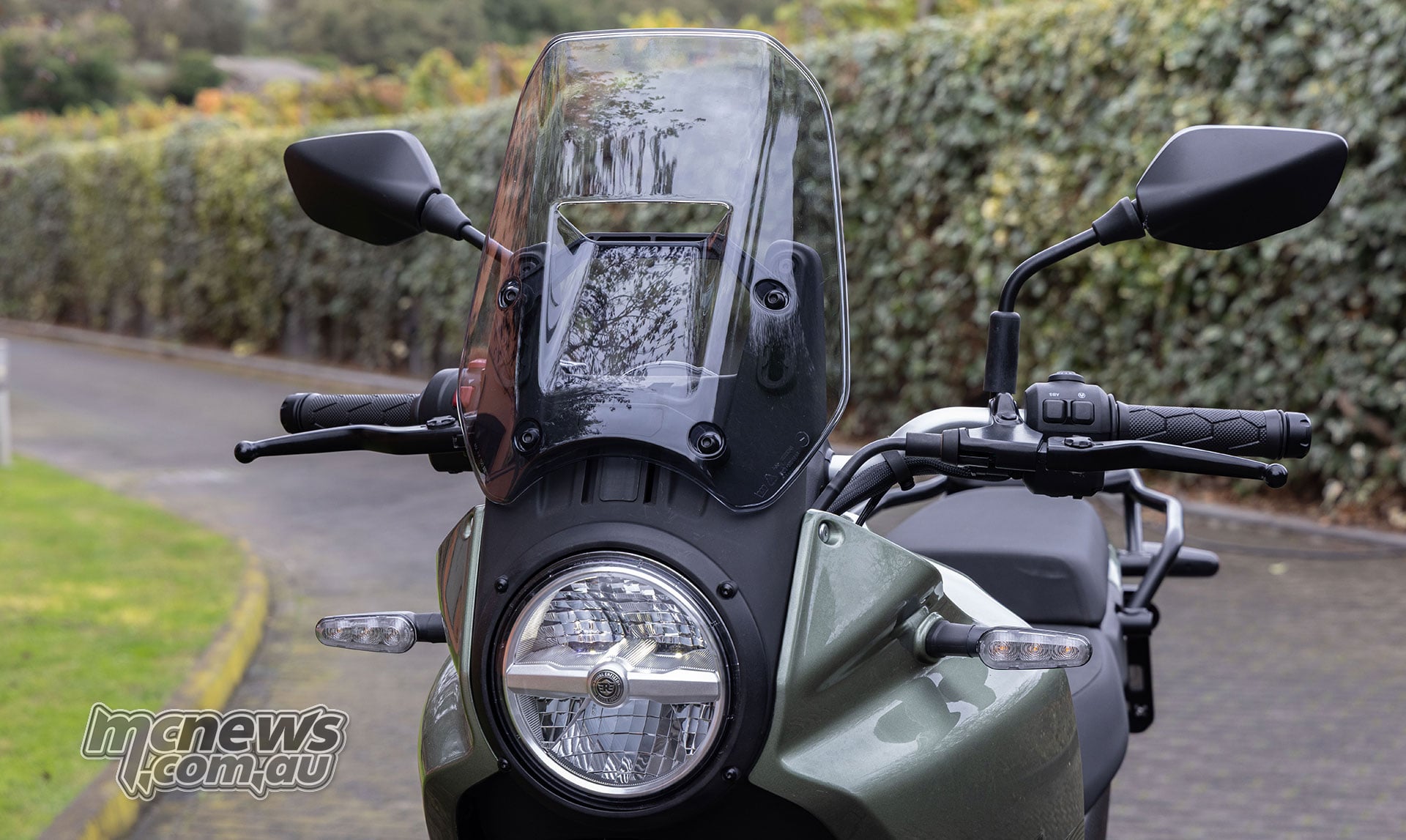
A five-position windscreen offers 60 mm of adjustment and sits above a new seven-inch LED headlight. Royal Enfield also lists alternative low and touring seats, allowing owners to tailor the accommodation beyond the standard separate rider and pillion seats.
The Antarctic Silver flagship is presented below with a touring package comprising a bespoke Givi top box, hard panniers, mounts and inner bags, along with heated grips, handguards and an aluminium skid plate.
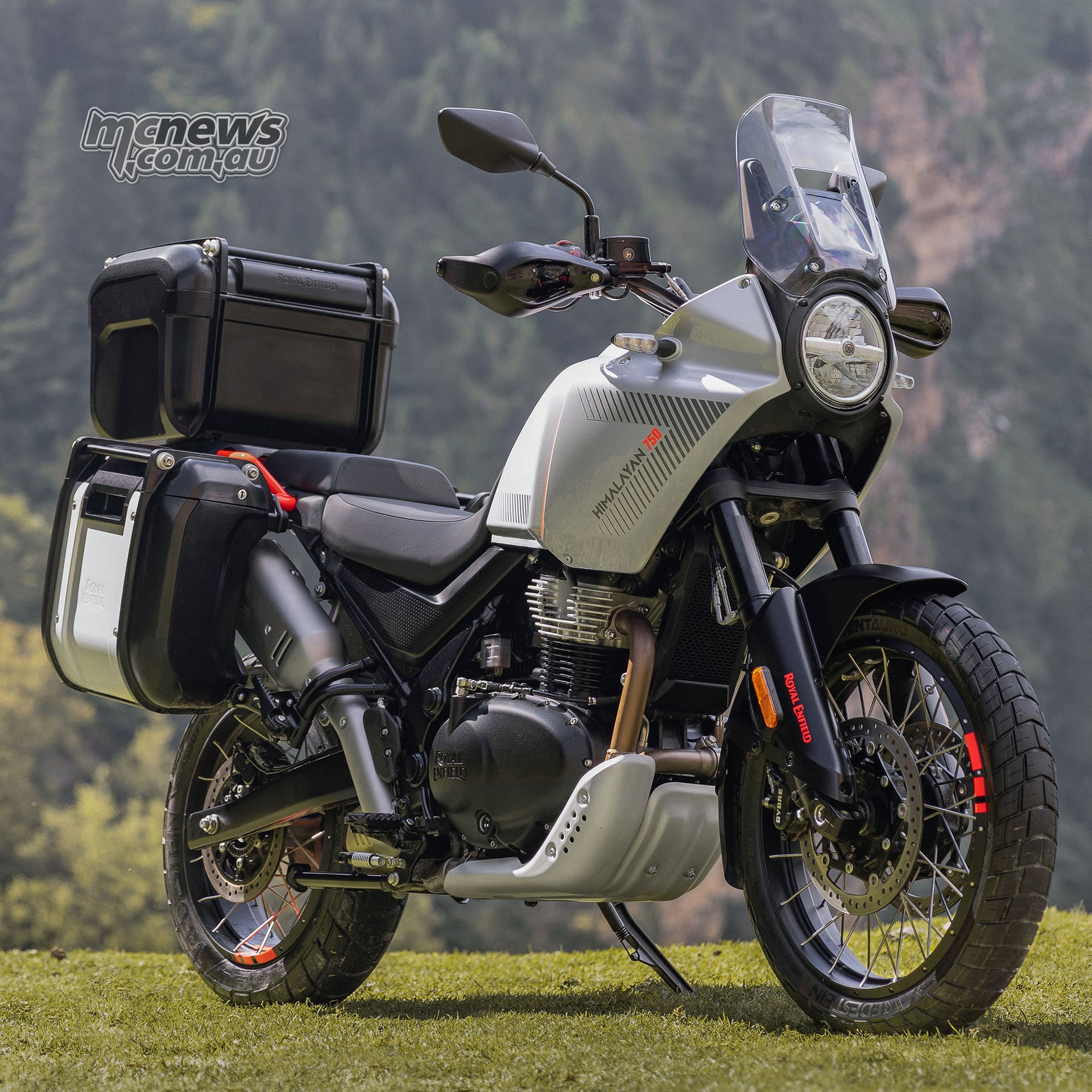
Soft luggage developed with Givi is also available. The specification lists a 194 kg payload with standard equipment, so riders planning two-up travel will need to allow for the combined weight of both occupants, their riding gear, fitted luggage and its contents.
Fuel capacity is listed as 17.8 litres in the detailed brochure. Other practical touches include forged aluminium gear and rear-brake levers with folding tips, along with magnesium engine covers.
Australian appeal will depend on the price
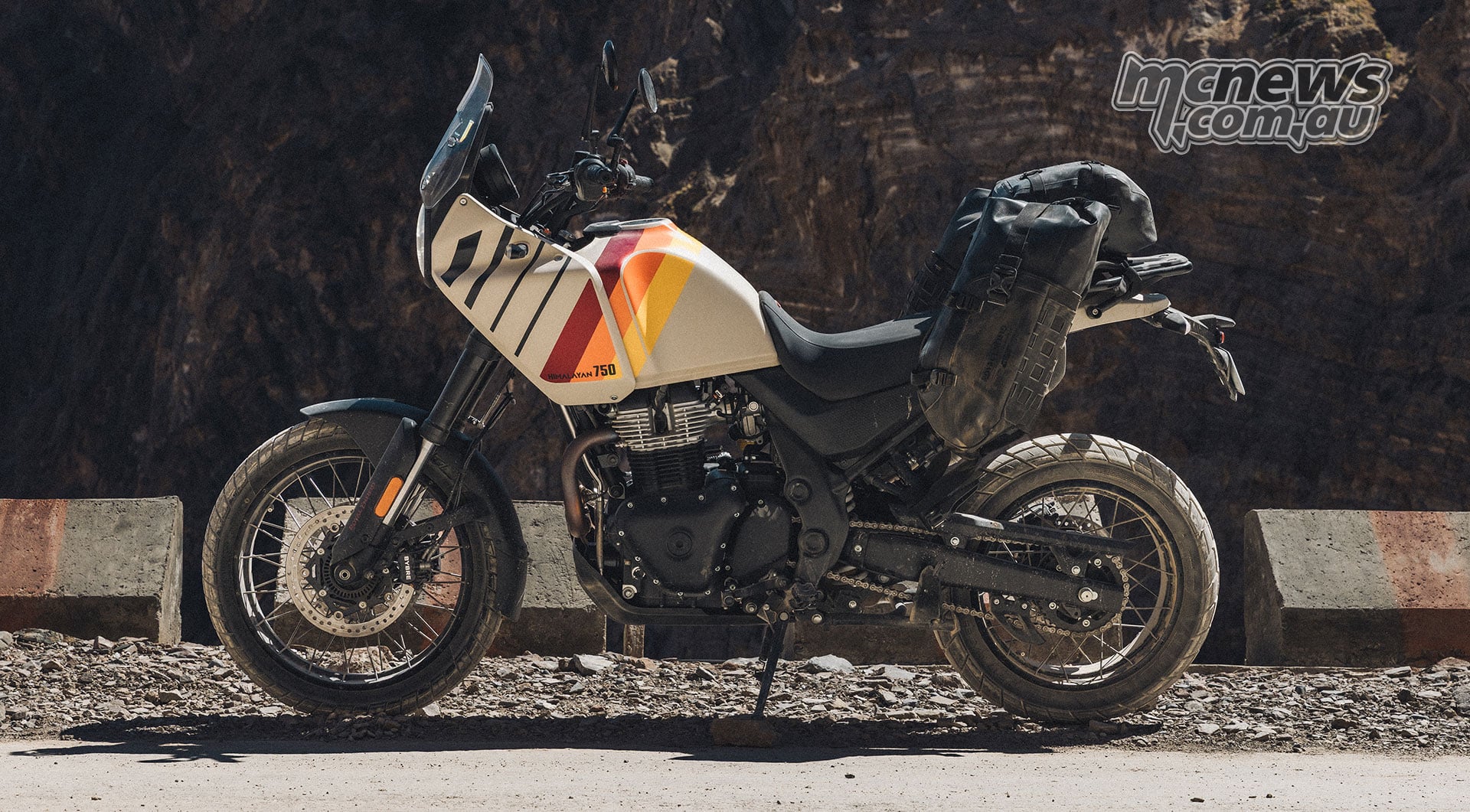
The announced range lists Aztec Green and Tectonic Black with cast wheels, Viking Bronze and Siberia White with spoked wheels, and the Antarctic Silver touring flagship.
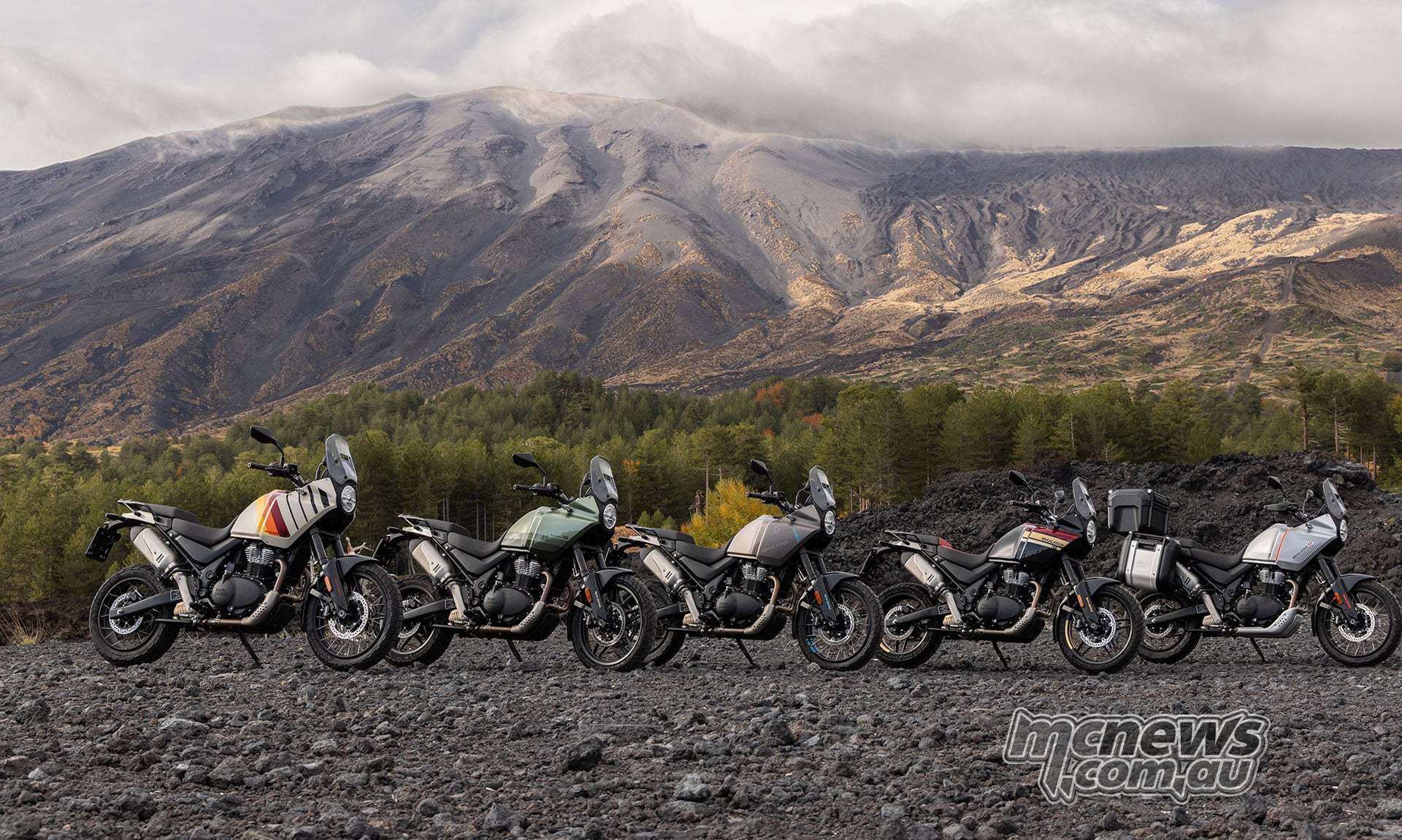
Australian pricing, availability and the local specification remain to be confirmed.
The 750’s traditional styling, promised low-rev torque and generous equipment could give it broad appeal among fully licensed Australian riders looking for an approachable touring companion. A sharp price would strengthen that proposition considerably. The weight will count against it for many, however, and its relatively modest performance means the extra capacity alone will not sell the story. However, we know from experience just how charming the Royal Enfield twins are in the real world away from the spec sheet.
Royal Enfield Himalayan 750 specifications
| Item | Specification |
|---|---|
| Engine | 743 cc air/oil-cooled parallel-twin, SOHC, four-stroke |
| Bore x stroke | 83.5 x 67.8 mm |
| Compression ratio | 9.5:1 |
| Maximum power | Approximately 54 hp at 7000 rpm |
| Maximum torque | 63 Nm at 5000 rpm |
| Transmission | Six-speed, wet multi-plate clutch |
| Frame | Box-section steel spine with pressed-steel outriggers; engine as stressed member |
| Front suspension | 43 mm Showa USD fork; preload, compression and rebound adjustment; 190 mm travel |
| Rear suspension | Linkage-operated Showa monoshock; remote spring-preload adjustment and adjustable rebound damping; 175 mm travel |
| Front brakes | Twin 280 mm floating discs, two-piston floating calipers |
| Rear brake | 255 mm disc, two-piston floating caliper |
| Rider aids | Six-axis IMU, cornering ABS, switchable rear ABS, lean-sensitive traction control, five riding modes, cruise control |
| Wheels | 19-inch front, 17-inch rear; tubeless cast or spoked options |
| Tyres | 110/80 R19 front; 150/70 R17 rear |
| Wheelbase | 1522 mm |
| Rake / trail | 27.9 degrees / 121.5 mm |
| Seat height | 815 mm |
| Ground clearance | 205 mm |
| Claimed kerb weight | 223 kg with 90 per cent fuel, oil and centrestand (APAC brochure) |
| Payload | 194 kg with standard equipment (APAC brochure) |
| Fuel capacity | 17.8 litres (APAC brochure) |
| Instruments | Four-inch circular TFT with Wi-Fi, Bluetooth, navigation and phone/music controls; TPMS |
| Charging outlets | Two USB-C ports: 27 W and 10 W |
| Australian price / arrival | To be confirmed |
Final Australian specification is to be confirmed.