


2027 Suzuki GSX-10R
Has the pursuit of ever more specialised superbikes left room for a fresh take on the everyday litre-class sportsbike? Suzuki reckons it does, and its new GSX-10R brings a warmly remembered and revered engine back into the discussion.
The K5-derived 999 cc four that has continued to win friends in the GSX-S1000 family now finds itself wrapped in a new sportsbike package, complete with clip-ons, winglets, revised chassis hardware and Suzuki’s most extensive electronic rider-assistance package yet.
With a claimed 150 hp, an 18-litre tank and cruise control, it offers an appealing road-riding proposition. Australian arrival is expected around mid-2027, but this bike seems to be taking us back to 2007, albeit with a myriad of electronic aids.
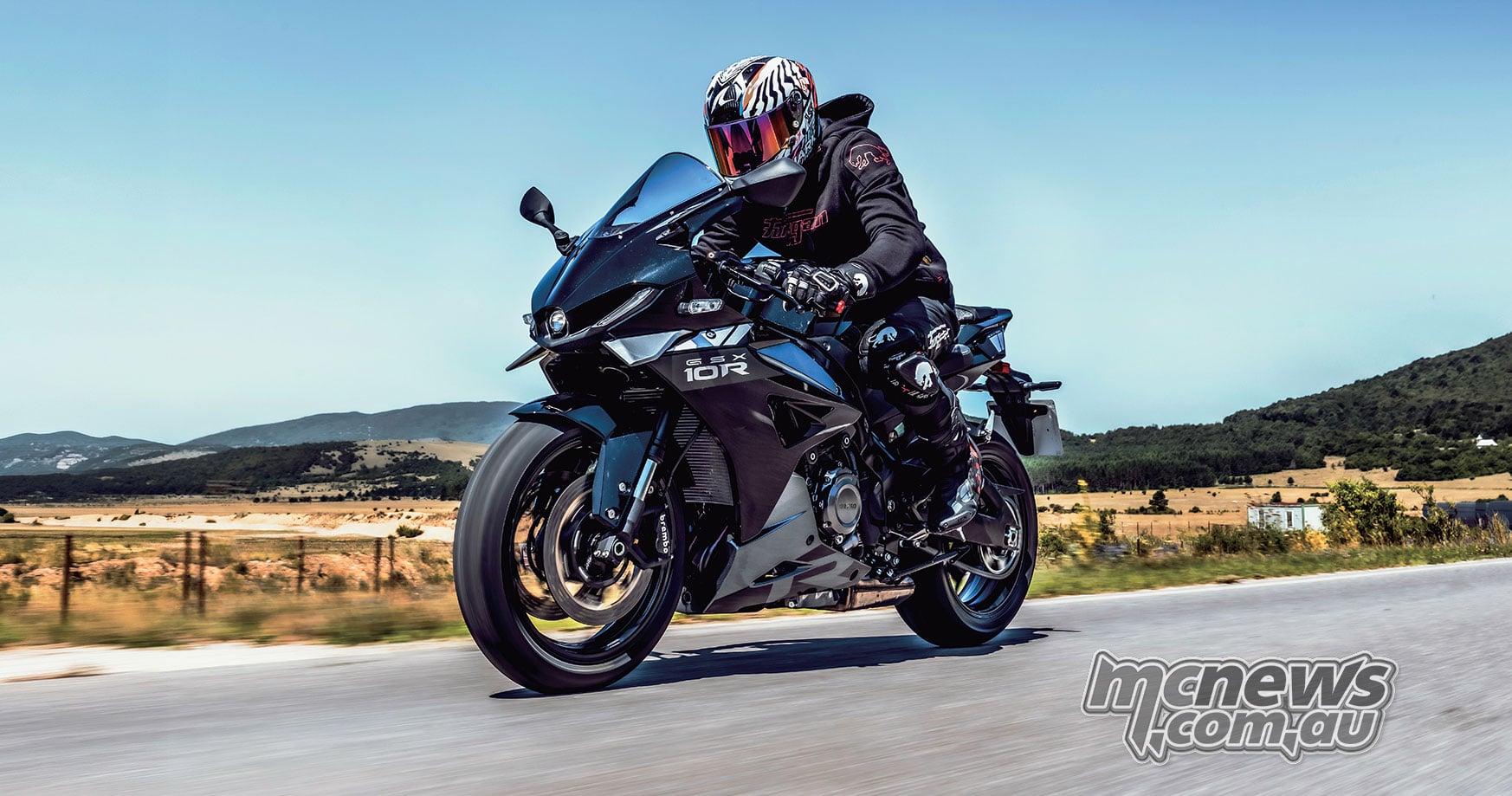
Suzuki already has a superbike
Suzuki still has the GSX-R1000R for riders drawn to its flagship superbike, as our recent Australian track test of the 2027 GSX-R1000R demonstrated. Wayne came away impressed with its stability, agility and beautifully linear engine.
That makes the heavy emphasis on racetrack photography in the GSX-10R images we have been supplied a little curious.
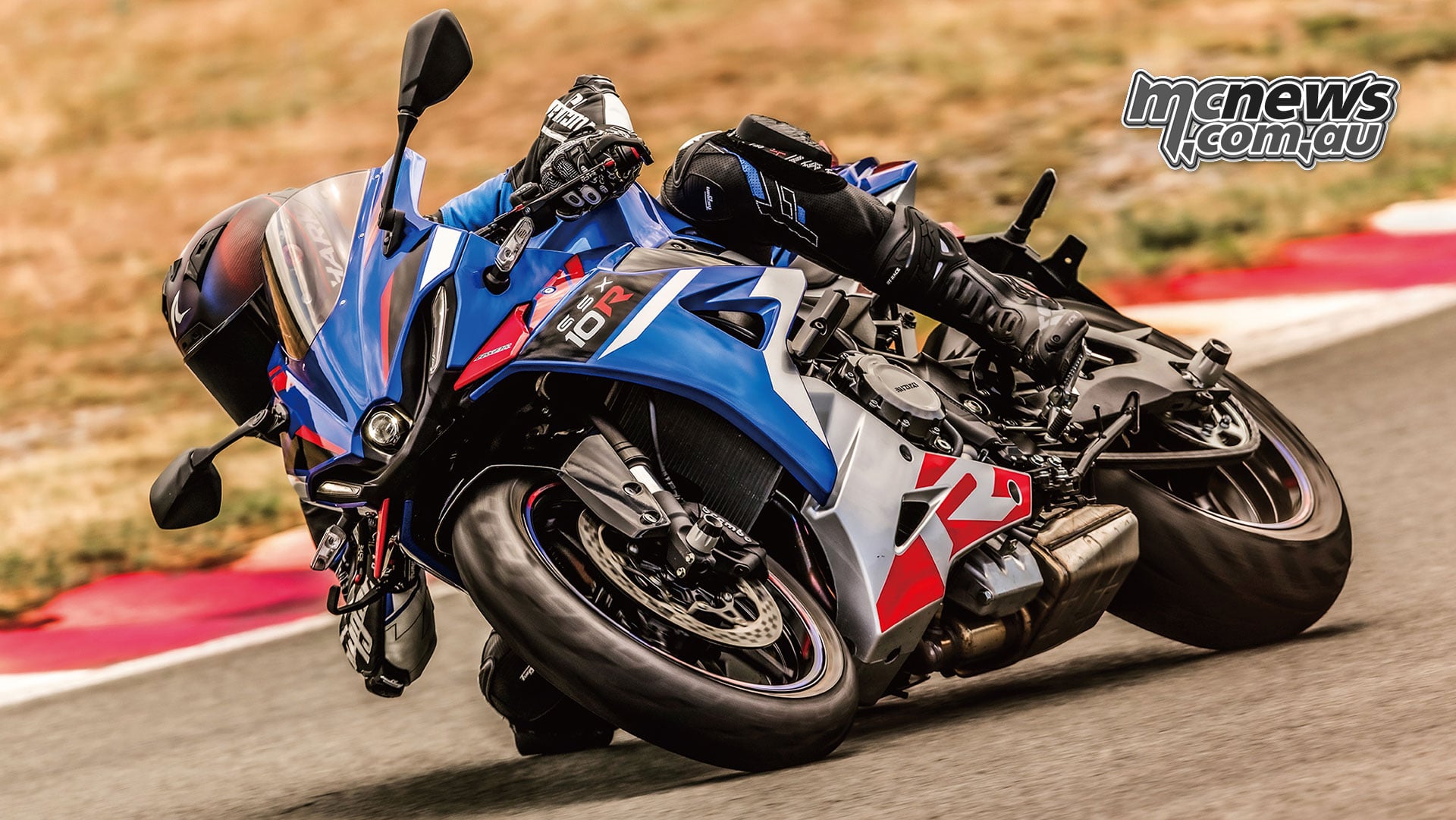
Suzuki describes a machine for commuting, touring, winding roads and track days. The attraction is a fully faired litre sportsbike with an engine whose flexibility we already rate highly, backed by enough chassis development to give that engine a more sporting home.
The K5 connection
There is a reason Suzuki keeps returning to this engine lineage. The original K5 GSX-R1000 helped establish a reputation for a muscular, versatile four-cylinder engine, and the architecture has continued to evolve through the GSX-S family.
The GSX-10R follows that branch of the family tree. Its 73.4 x 59.0 mm bore and stroke differ from the 76.0 x 55.1 mm dimensions of the current GSX-R1000R. This longer-stroke K5-derived platform developed through the GSX-S1000 has its own character and priorities.
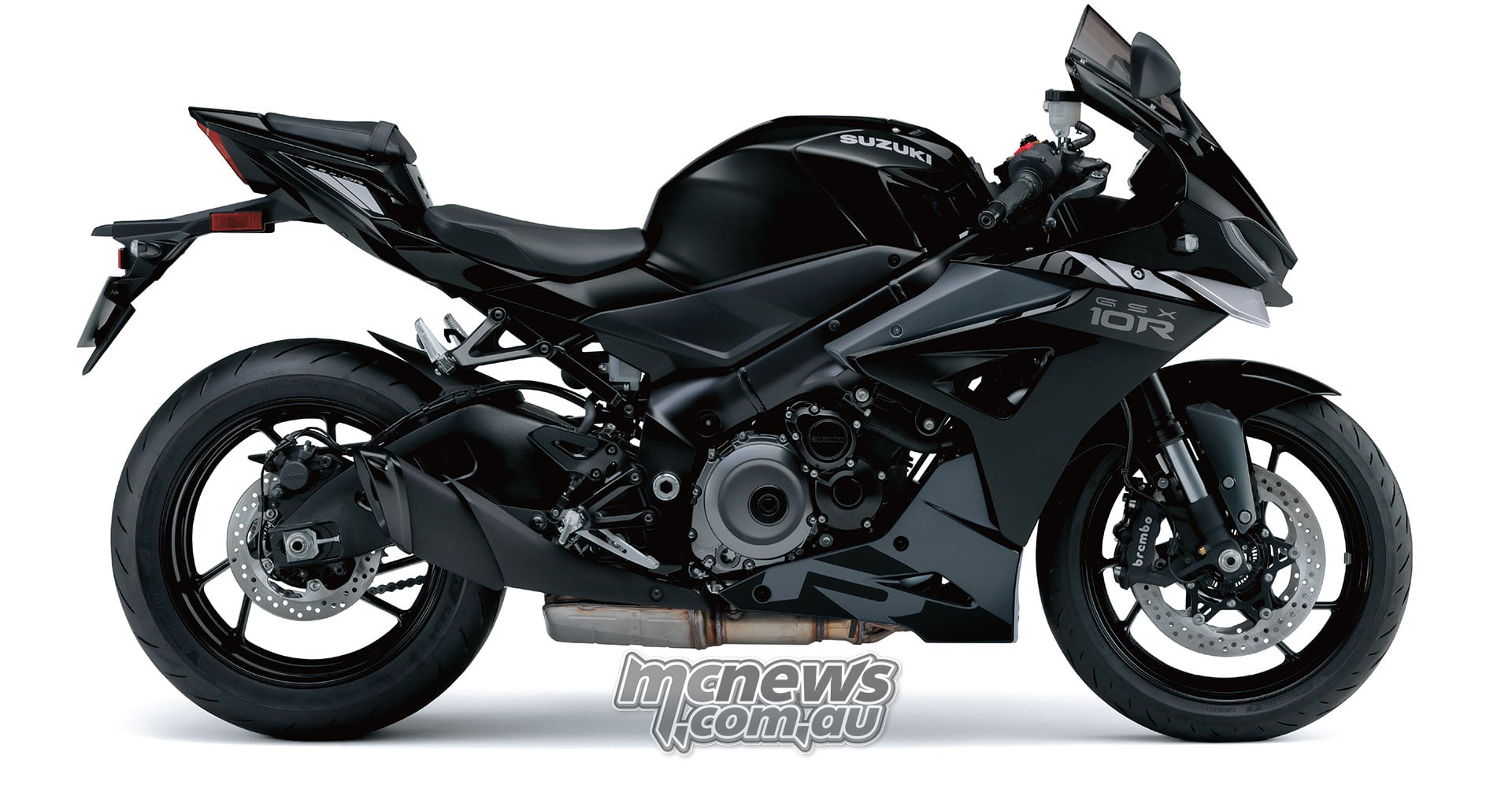
Peak output is quoted at 112 kW, or approximately 150 hp, at 11,000 rpm, with maximum torque of 106 Nm at 9250 rpm. Those are the same headline figures as the GX we rode recently, so the interest lies in how the complete GSX-10R package uses that performance.
In our GSX-S1000GT Panorama review, Vicko singled out the engine’s flexibility and strong bottom-end and mid-range delivery, along with the smooth driveline and excellent two-way quick-shifter. It was an engine happy to commute, cover distance or pick up the pace.
That impression was reinforced in our GSX-S1000GX test, where the smooth, muscular four and slick gearbox again stood out.
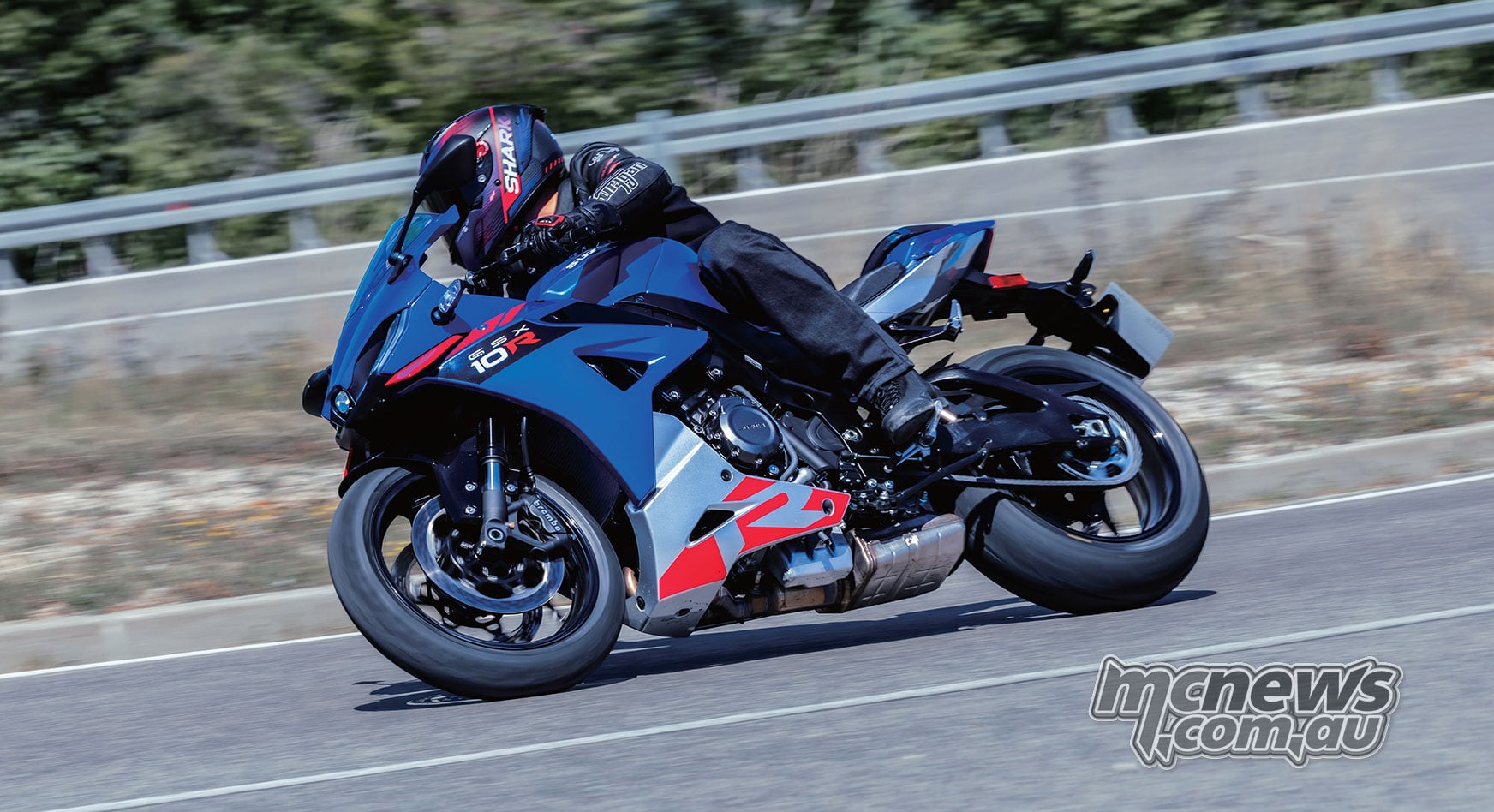
The latest version meets Euro 5+ requirements, with Suzuki detailing exhaust-valve and cam-chain revisions aimed at durability and reduced noise, along with changes to oil circulation. An assist-and-slipper clutch and bi-directional quick-shifter are part of the package.
A real sportsbike riding position
Suzuki says the GSX-10R’s riding position is equivalent to the GSX-R1000R’s. Its own ergonomic comparison places the two together, with the GSX-S1000’s higher handlebar position shown separately.
The clip-ons and higher, rearward footpegs make the intent clear. Riders hoping for the upright ergos of the GT or GX will not find that here.
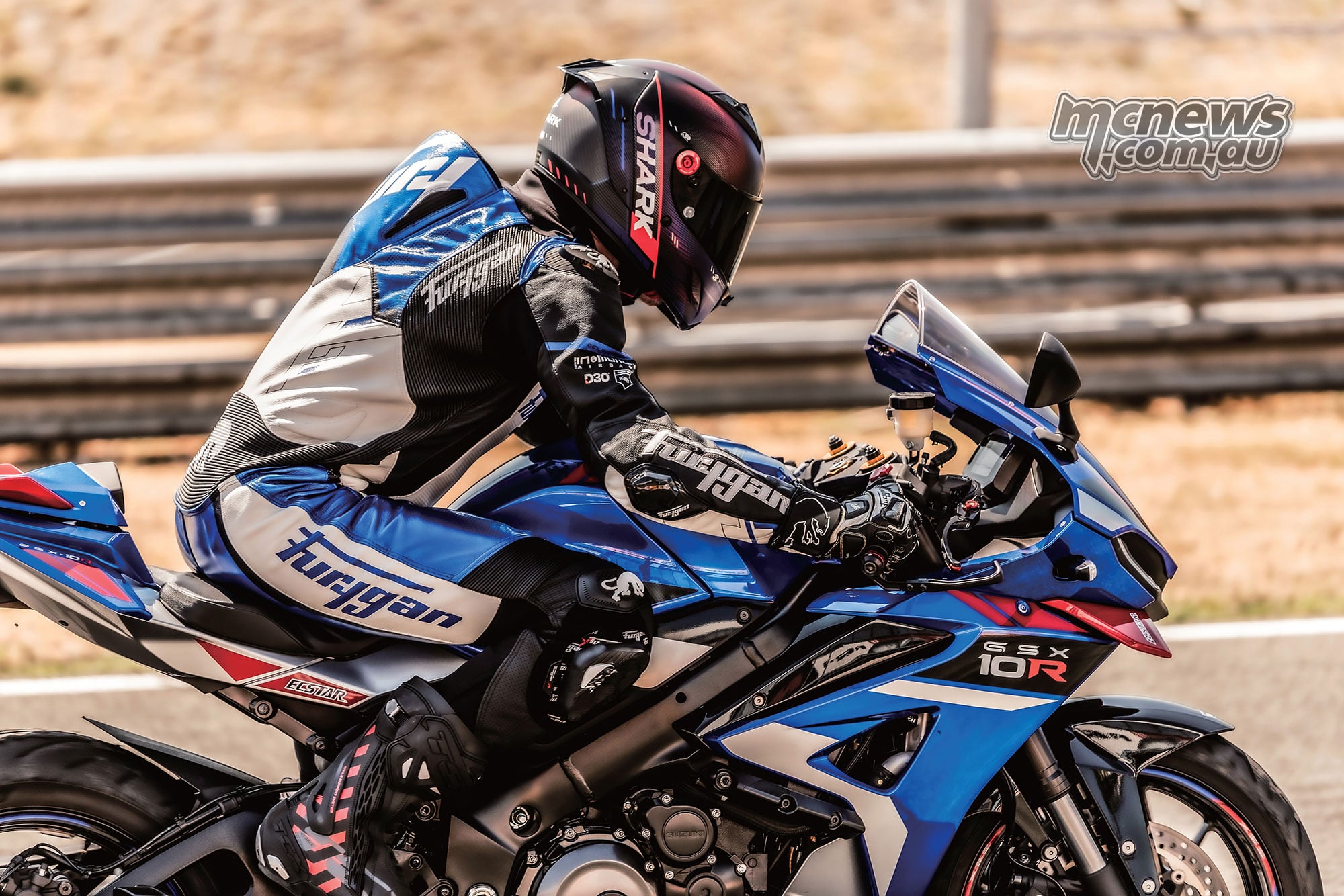
The newly developed rider seat is flatter to allow movement fore and aft, with softer padding than the GSX-R1000’s. The front of the seat has also been slimmed to help riders reach the ground, while its 810 mm height is 15 mm lower than the GSX-R’s quoted figure.
That may help accessibility at a standstill, although the claimed 214 kg kerb weight remains substantial. How the seating position, cushioning and suspension work together over a long road ride will be an important part of the eventual test.
Proper attention to the chassis
An aluminium twin-spar frame forms the basis of the chassis, with a newly designed aluminium swingarm, rear suspension linkage and shock. Suzuki has also revised the seat rails and increased footpeg-bracket rigidity.
The 43 mm KYB inverted fork is fully adjustable for preload, compression and rebound damping. The rear shock offers preload and rebound adjustment, plus separate high- and low-speed compression settings, giving riders scope to tune the bike for different surfaces and uses.
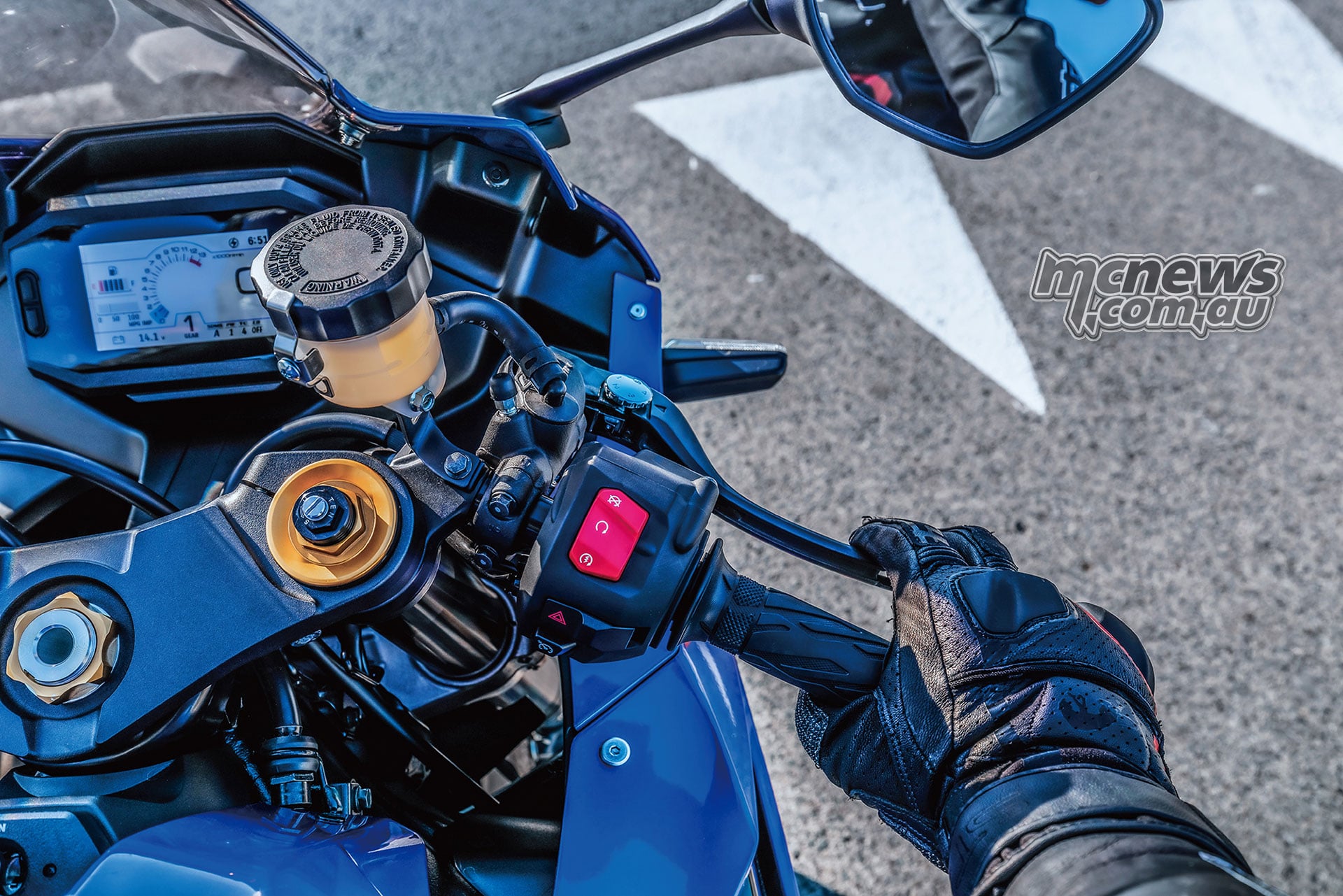
Steering-stem offset changes from the GSX-S1000’s 35 mm to 30 mm. An electronically controlled steering damper varies its damping with speed, aiming to combine stability at higher speeds with lighter steering at lower speeds.
Suzuki claims 53 degrees of cornering clearance, up from the GSX-S1000’s 48 degrees. Revised footpeg positioning and the exhaust-cover design contribute to that additional clearance. Still, 53 degrees is not pure sportsbike territory.
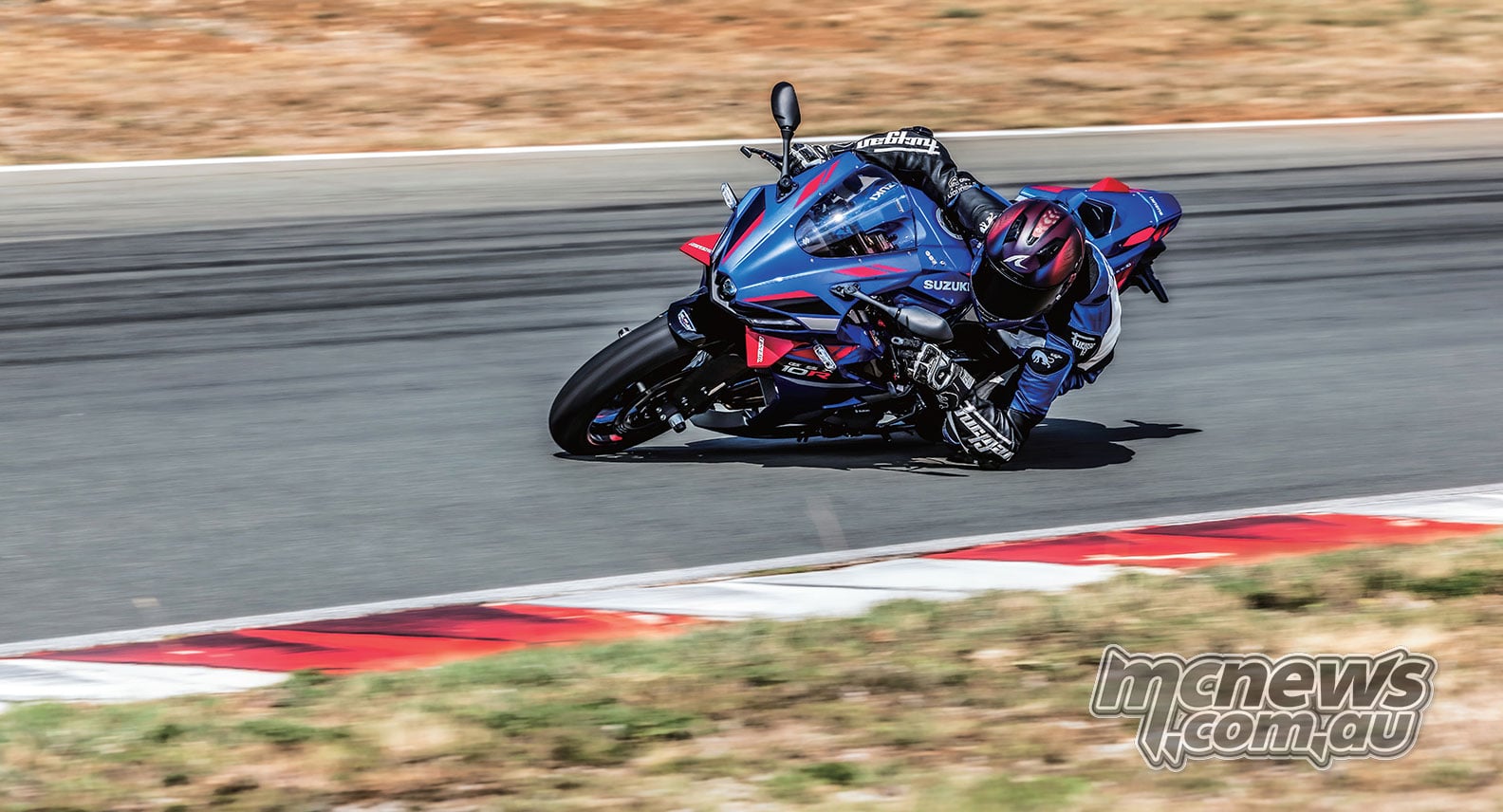
Bridgestone Battlax Hypersport S23 tyres are fitted, with a 120/70 front and a 190/55 rear on 17-inch wheels. The rear has a taller profile than the GSX-S1000’s 190/50, retaining the same nominal width.
Up front, Brembo calipers are paired with a radial master cylinder and discs developed for the model. Suzuki says it has worked on feel, stopping performance and heat resistance, while the electronic braking package takes lean angle, machine attitude and brake-pressure information into account.
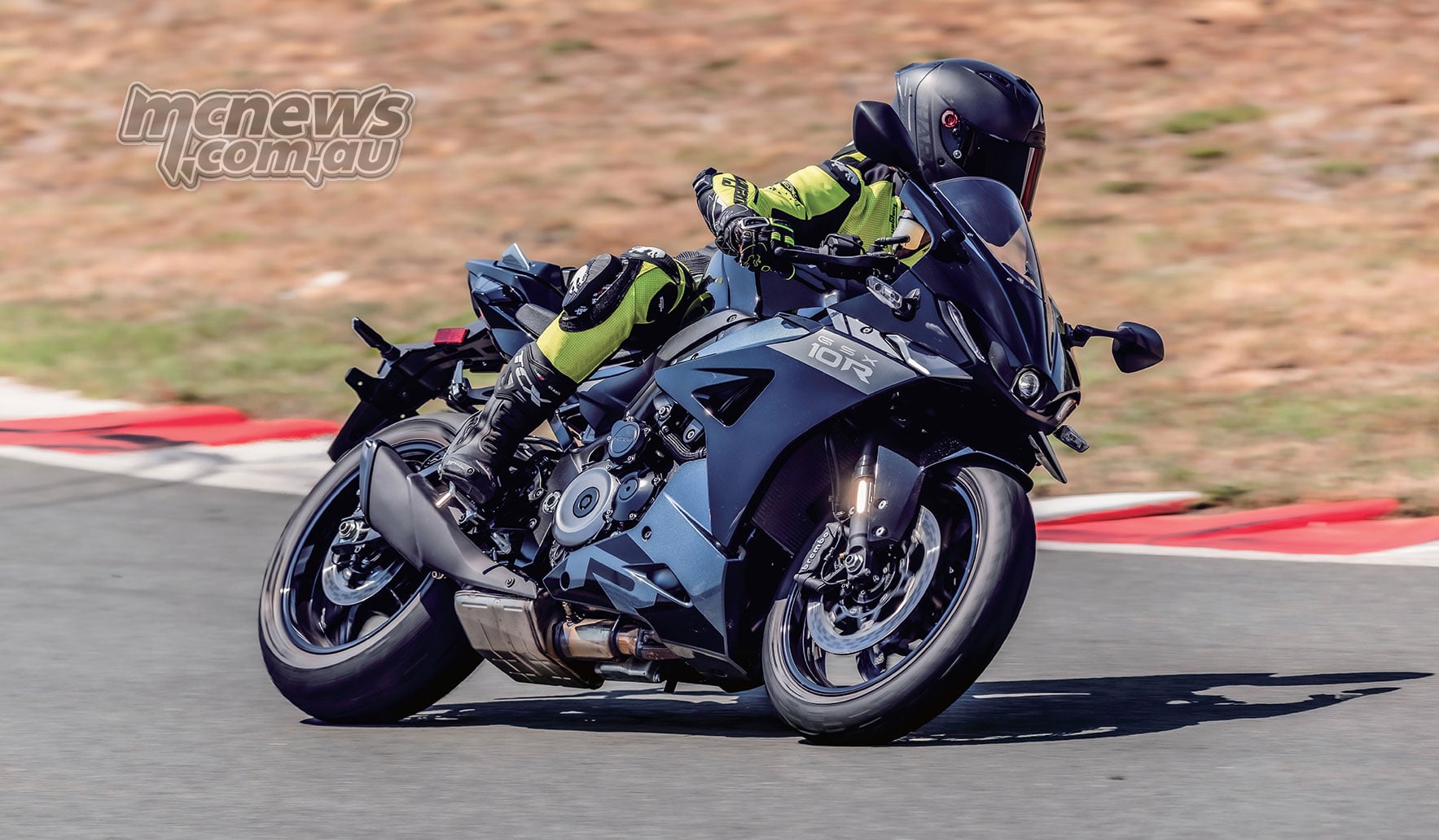
New slide control leads the electronics
Suzuki counts 15 electronic rider-assistance functions on the GSX-10R, its most extensive package to date. The headline addition is the brand’s first slide-control system.
Roll Torque Control uses lean-angle and wheel-speed information to manage drive before a slide develops. Slide control responds to lateral movement once it begins, while traction control intervenes further as needed.
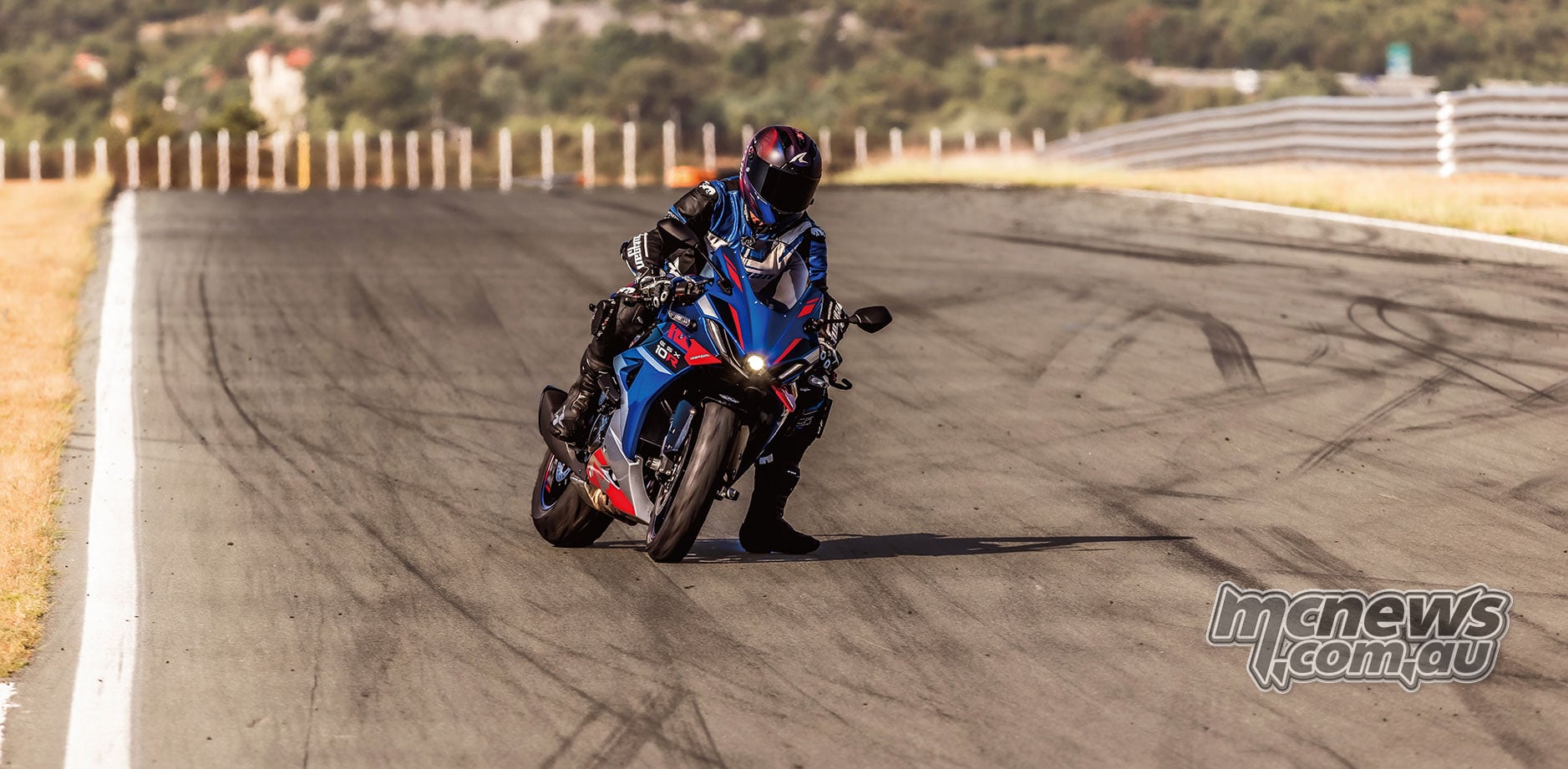
The supporting cast includes wheelie control, launch control, three throttle-response modes and adjustable engine braking with an anti-skid function. Suzuki says all three throttle maps retain the same maximum power, changing the response and delivery.
Cruise control incorporates curve-speed control, which can reduce speed through bends while cruise is engaged.
It also includes an active speed limiter and slope-dependent ABS control. The brake-hold system maintains rear brake pressure for about 30 seconds after stopping and works on level ground, downhill, and uphill.
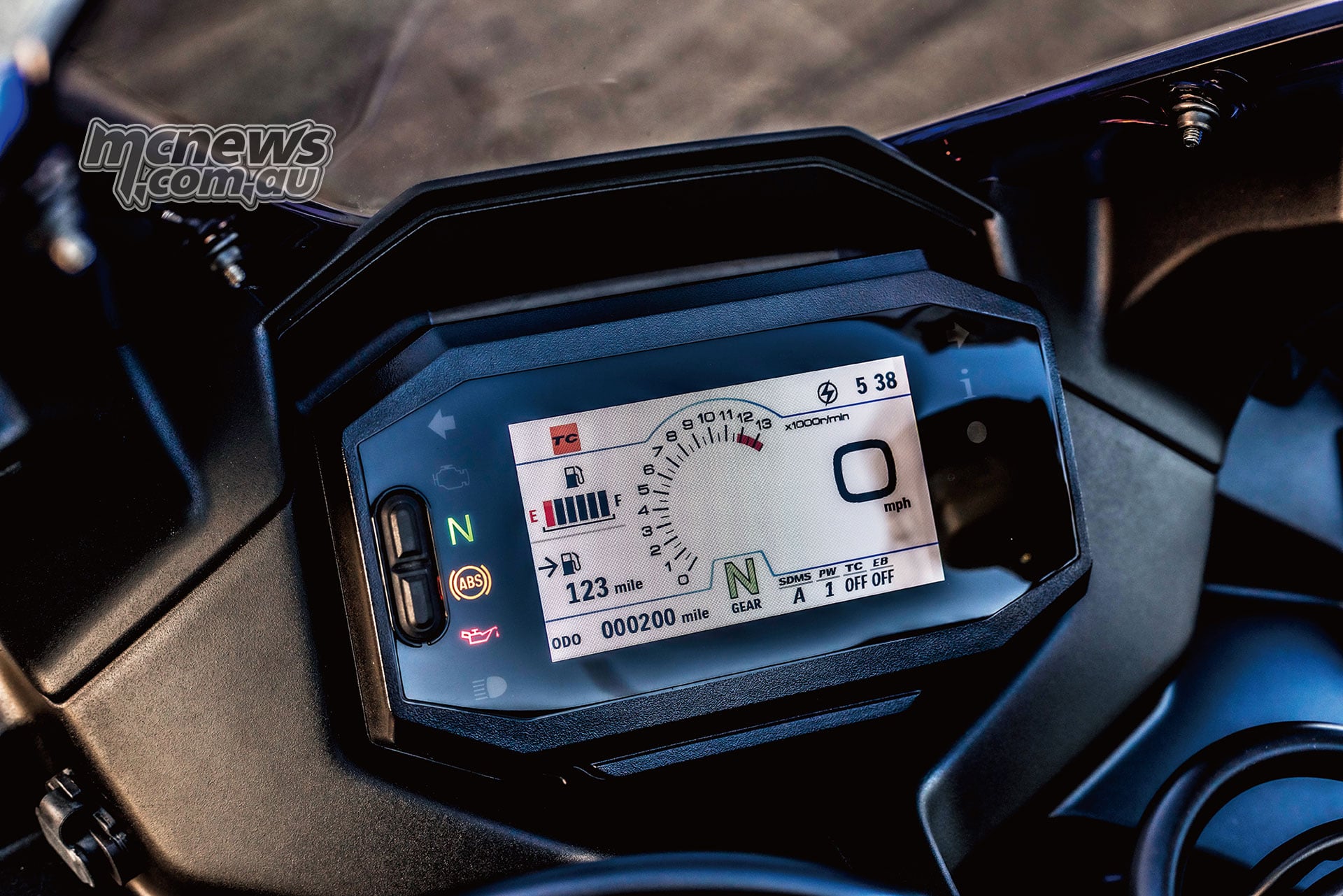
A colour TFT display supports Suzuki Ride Connect+ smartphone connectivity, including turn-by-turn navigation. USB-C charging and a lightweight lithium-ion battery are also included.
The sporting look has a purpose
The fairing and screen have been developed through wind-tunnel work and riding evaluation, with Suzuki aiming to accommodate a tucked-in rider while providing useful wind protection over longer distances.
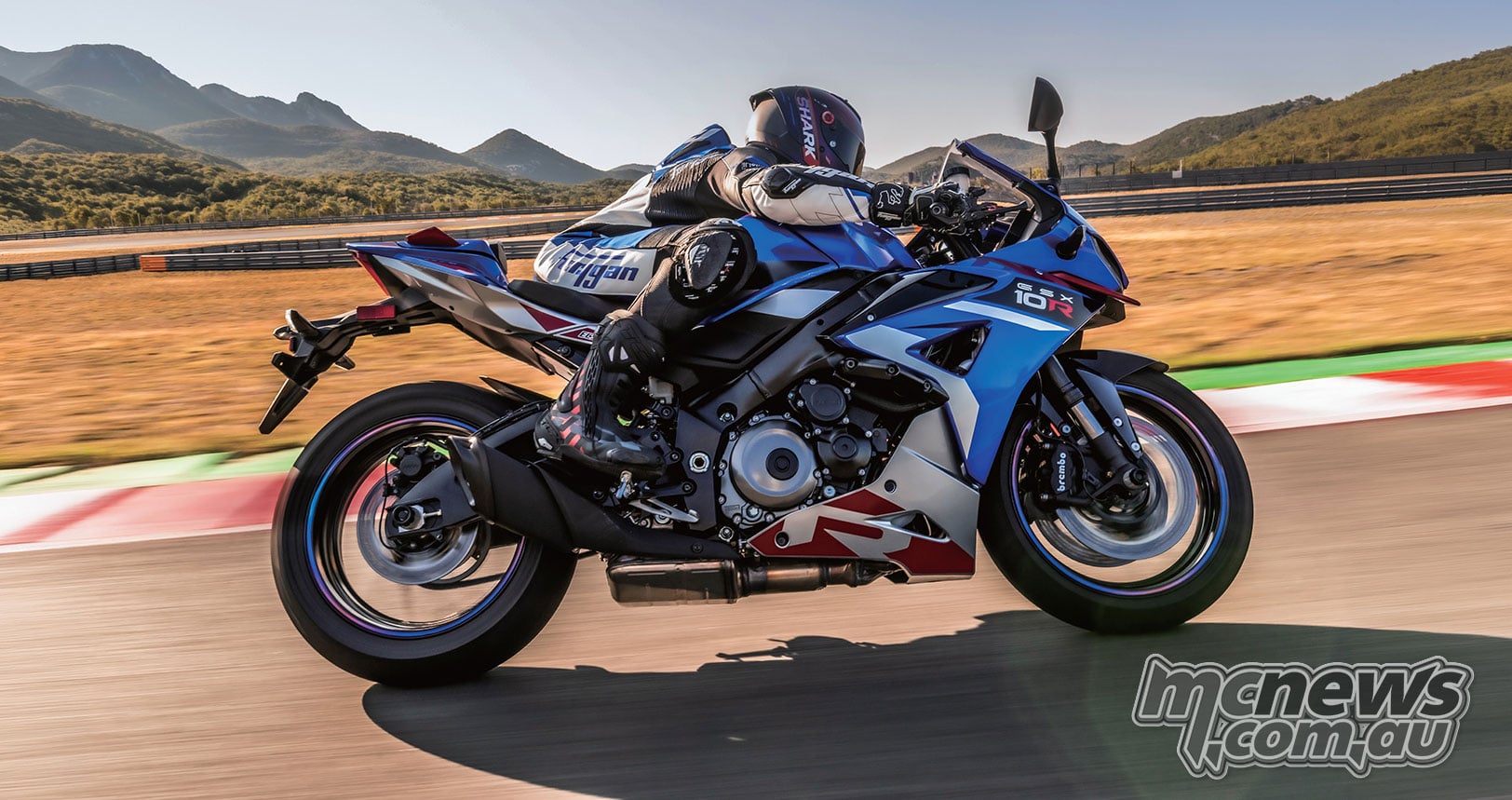
The forward-swept winglets are integrated into the bodywork. Suzuki says they generate downforce to help reduce front-end lift, with their design balancing that effect against steering agility. They are bright in this livery…
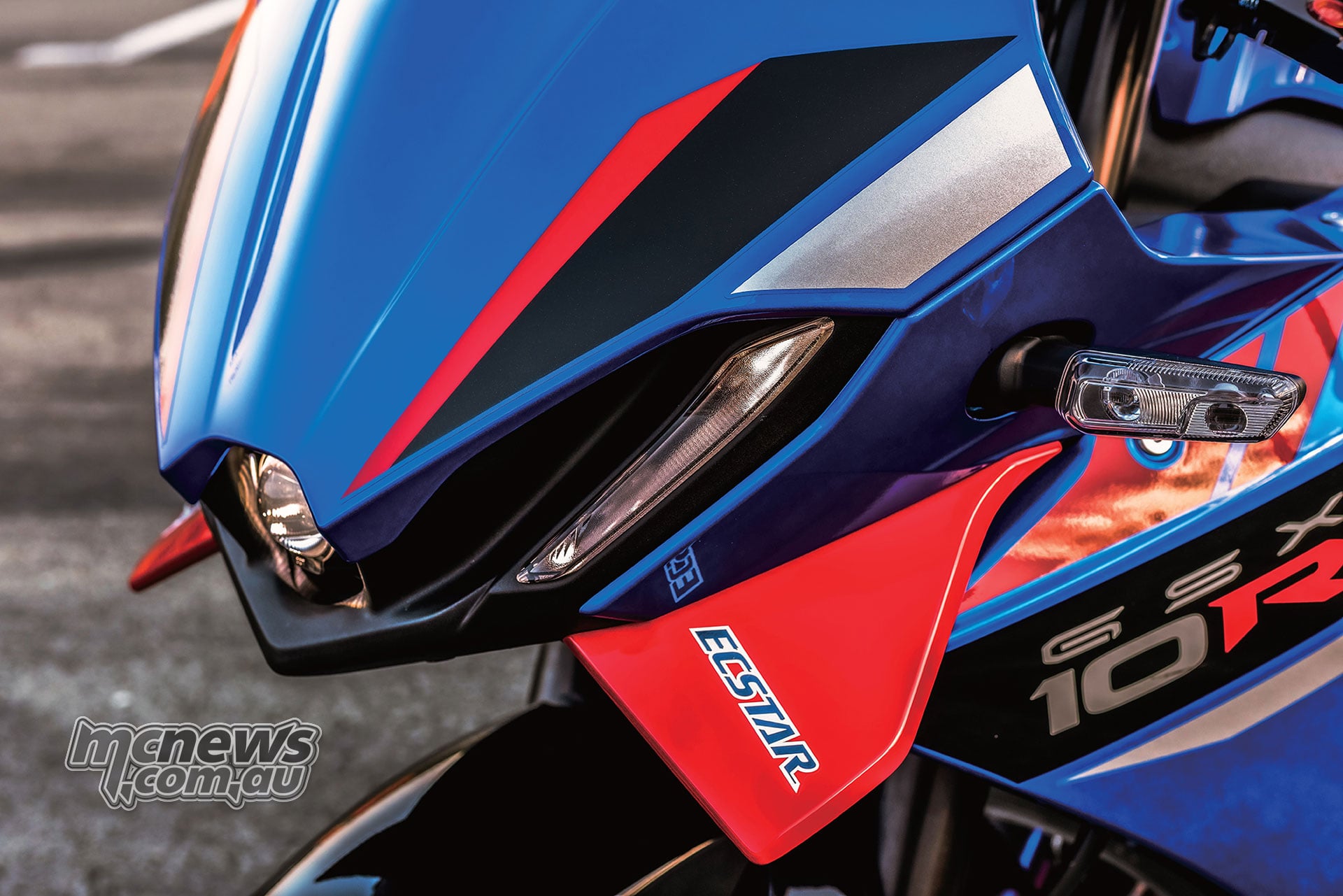
Lighting is LED throughout. Suzuki’s new Ground Beacon System uses the indicators to illuminate the ground around the bike, helping communicate the rider’s intended direction to other road users.
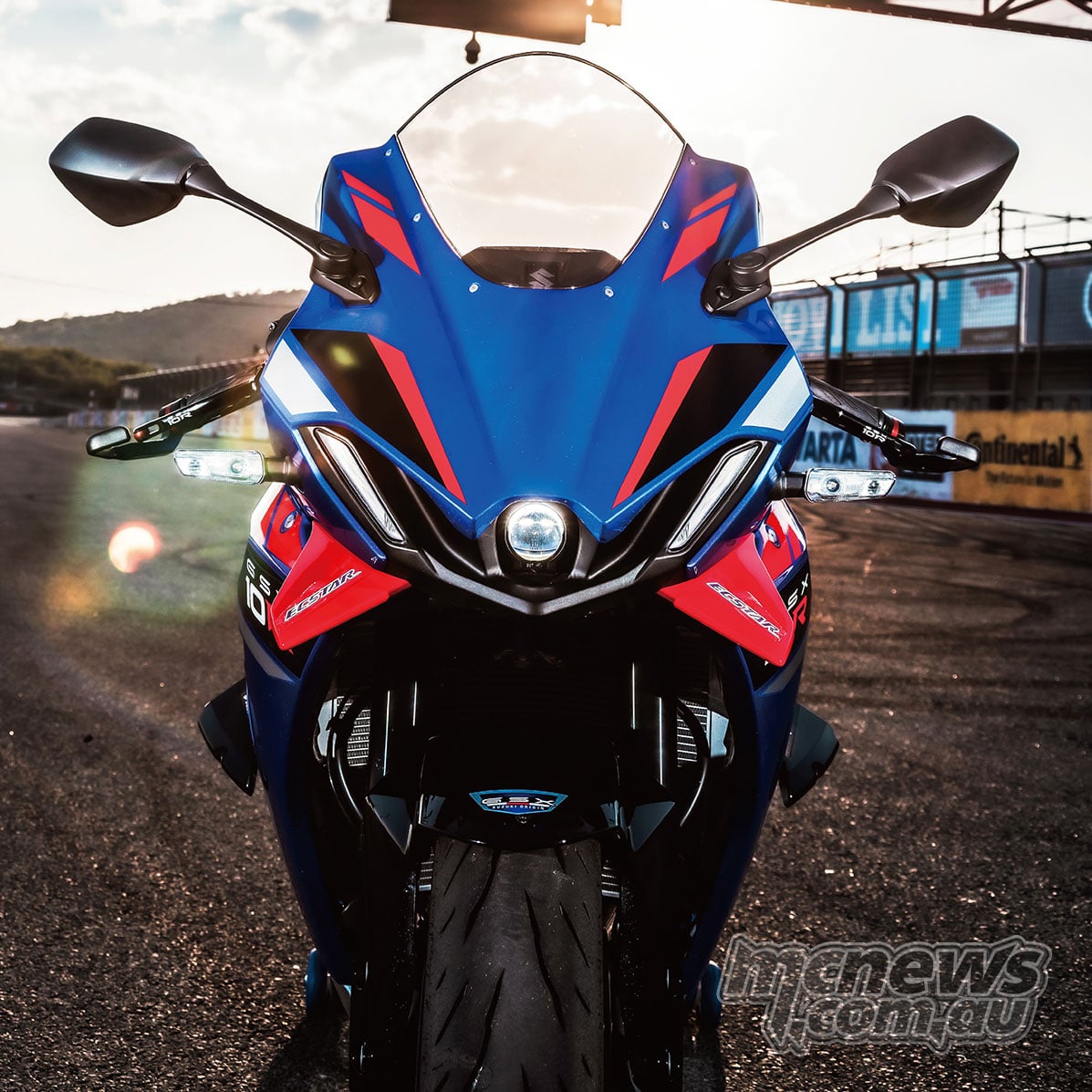
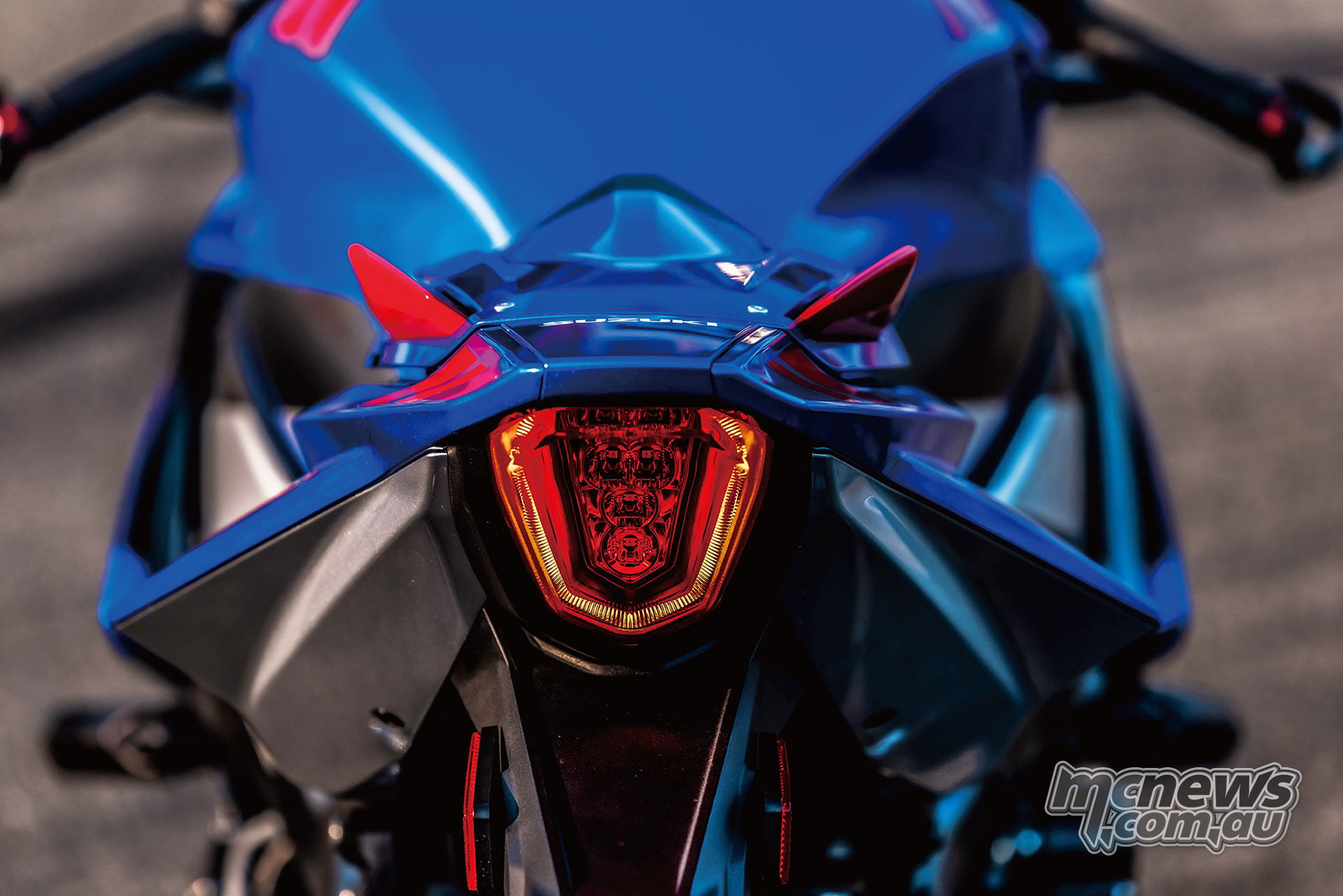
The compact tail has a separate passenger seat and an LED rear light, while a small storage compartment beneath the passenger seat is accessed by key. Up front, the 18-litre tank has been shaped to provide knee grip and room to move.
A return to real world sportsbikes?
The GSX-10R has the ingredients to make that question worthwhile. It has a proven engine platform whose road manners we have enjoyed in other models, a properly developed sporting chassis, and equipment that acknowledges there will be miles between the interesting corners.
The committed riding position and 214 kg kerb weight are part of the equation too. We still need to ride it to see how well Suzuki has balanced those elements, and Australian pricing will heavily influence its appeal.
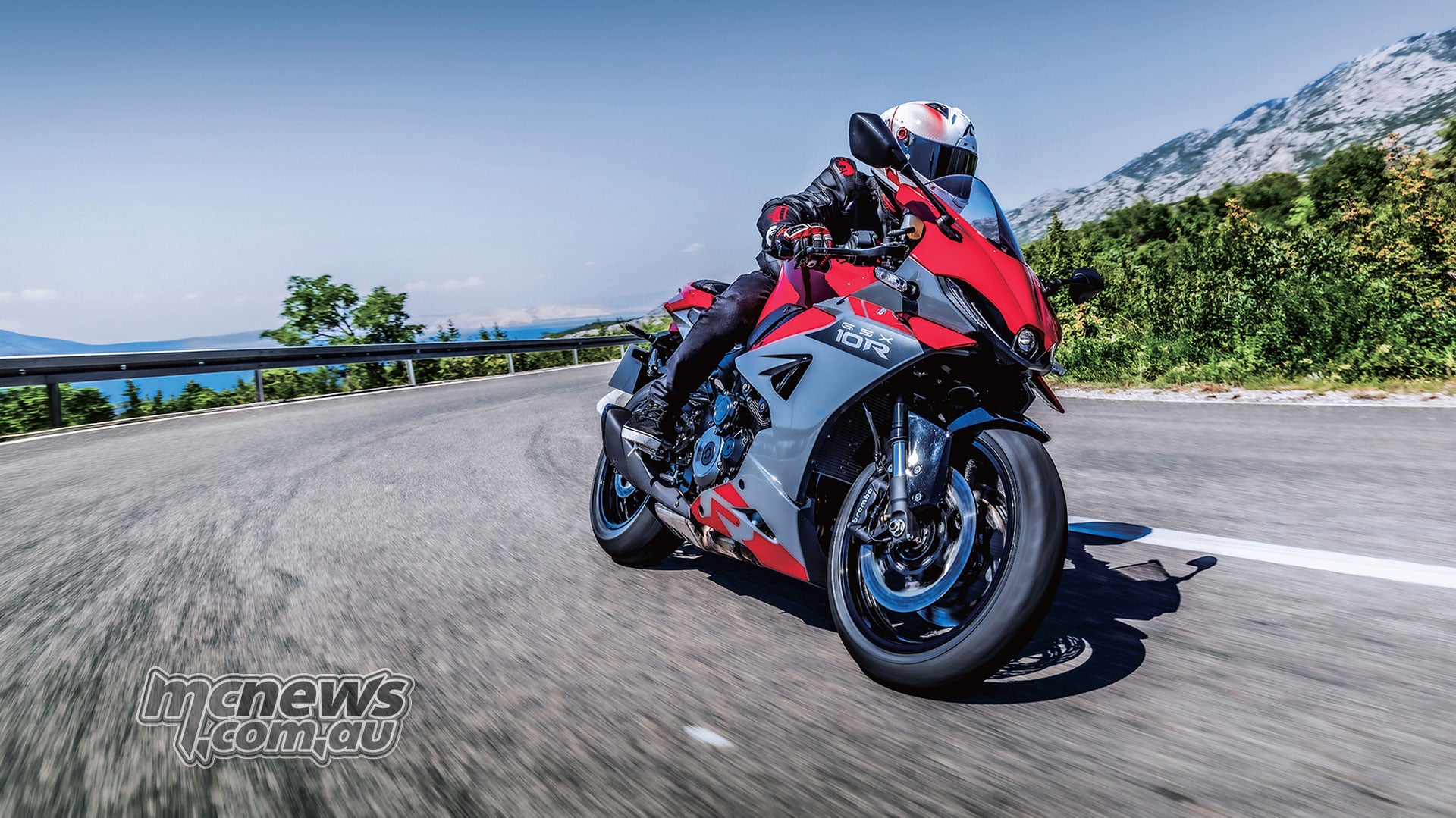
Australian arrival is expected around mid-2027, with local pricing and colour availability still to be confirmed.
For riders who still want a fairing, clip-ons and the sound of a litre four, the GSX-10R presents an interesting prospect. That K5 family tree has produced some very good motorcycles. There is every reason to be interested in its latest branch.
2027 Suzuki GSX-10R Specifications
| Specification | Suzuki GSX-10R |
|---|---|
| Engine | 999 cc, liquid-cooled, DOHC in-line four-cylinder |
| Bore x stroke | 73.4 x 59.0 mm |
| Compression ratio | 12.2:1 |
| Claimed power | 150 hp (112 kW) at 11,000 rpm |
| Claimed torque | 106 Nm at 9250 rpm |
| Transmission | Six-speed; assist-and-slipper clutch; bi-directional quick-shifter |
| Frame / swingarm | Aluminium twin-spar / aluminium |
| Front suspension | 43 mm KYB inverted fork; adjustable preload, compression and rebound |
| Rear suspension | Linkage-type monoshock; adjustable preload, rebound, high- and low-speed compression |
| Front brakes | Twin discs; Brembo calipers; radial master cylinder; cornering ABS |
| Rear brake | Single disc; ABS |
| Front tyre | 120/70 ZR17; Bridgestone Battlax Hypersport S23 |
| Rear tyre | 190/55 ZR17; Bridgestone Battlax Hypersport S23 |
| Rake / trail | 25 degrees / 100 mm |
| Wheelbase | 1455 mm |
| Dimensions (L x W x H) | 2130 x 740 x 1175 mm |
| Seat height | 810 mm |
| Ground clearance | 145 mm |
| Claimed kerb weight | 214 kg |
| Fuel capacity | 18 litres |
| Claimed consumption (WMTC) | 6.3 L/100 km |
| Emissions standard | Euro 5+ |
| Expected Australian arrival | Mid-2027 |
| Australian pricing | To be confirmed |
Final Australian specifications may vary.