

Shoei Personal Fitting System
Helmet sizing normally starts with a tape measure around the head and a choice between labels such as small, medium or large. That establishes the approximate size, but it cannot describe the shape inside that circumference.
Two riders can both wear a medium while having markedly different front-to-rear length, width and height. One may be squeezed at the temples while space remains at the forehead and back of the head; another may feel pressure front and rear while the sides barely make contact. A helmet can feel acceptable in the shop yet reveal a pressure point an hour or two down the road.
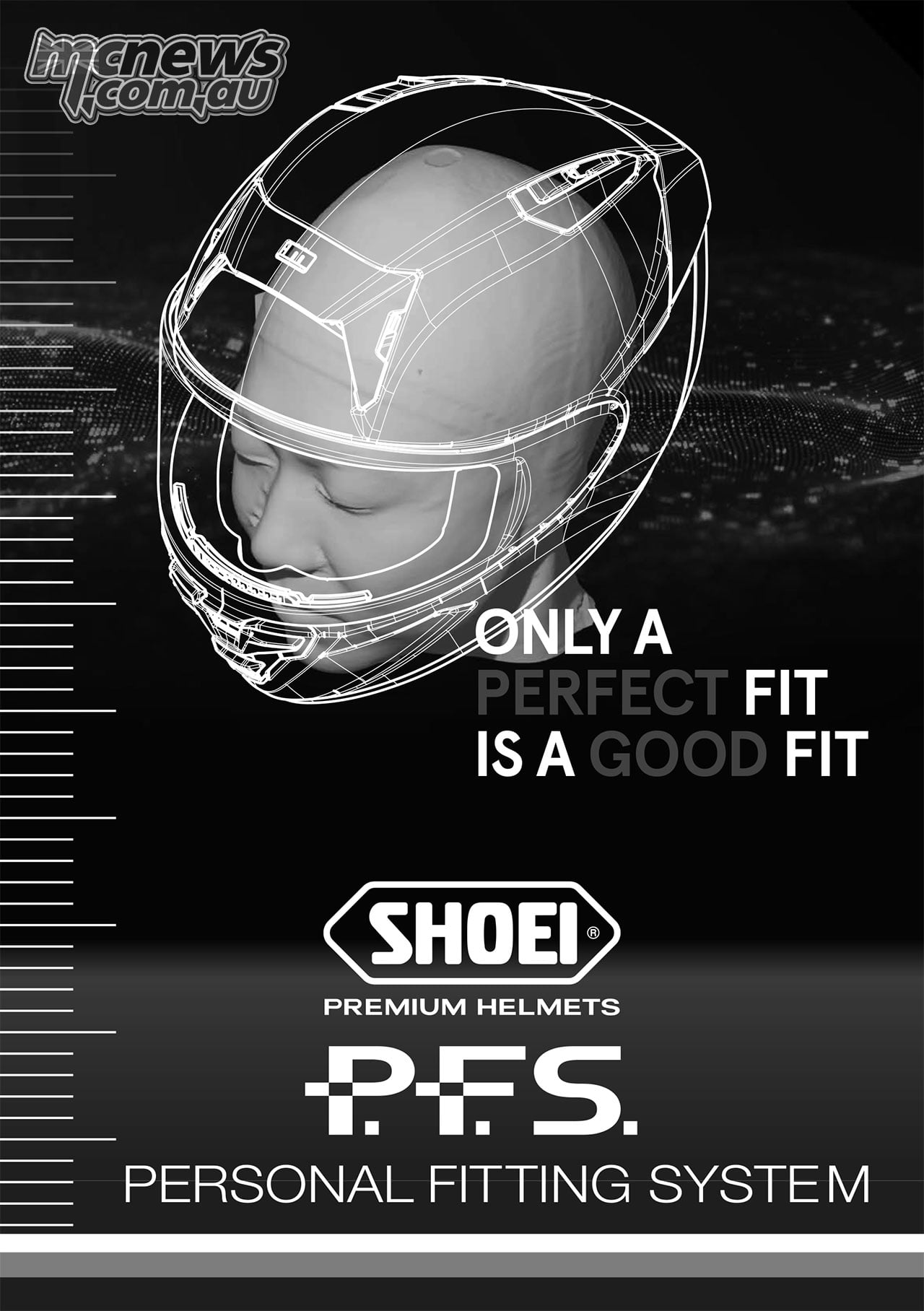
The Shoei Personal Fitting System, or PFS, has now reached Australian retail stores to address that problem precisely. It uses measurements, model-specific Shoei software and adjustment material fitted to the removable centre pad to distribute contact more evenly around an individual rider’s head.
It could also become a major point of difference for Shoei. Riders who have previously chosen between brands based on whichever standard internal shape came closest can now have a compatible Shoei fit tailored at the point of sale.
McLeod Accessories Shoei Product Manager Damien Irwin recently put two helmets through the process for us. I then gave my newly adjusted GT-Air 3 a reasonably persuasive first test: 1000 kilometres in one day, followed by another 1500 kilometres over the next two.
A medium is a size, not a head shape
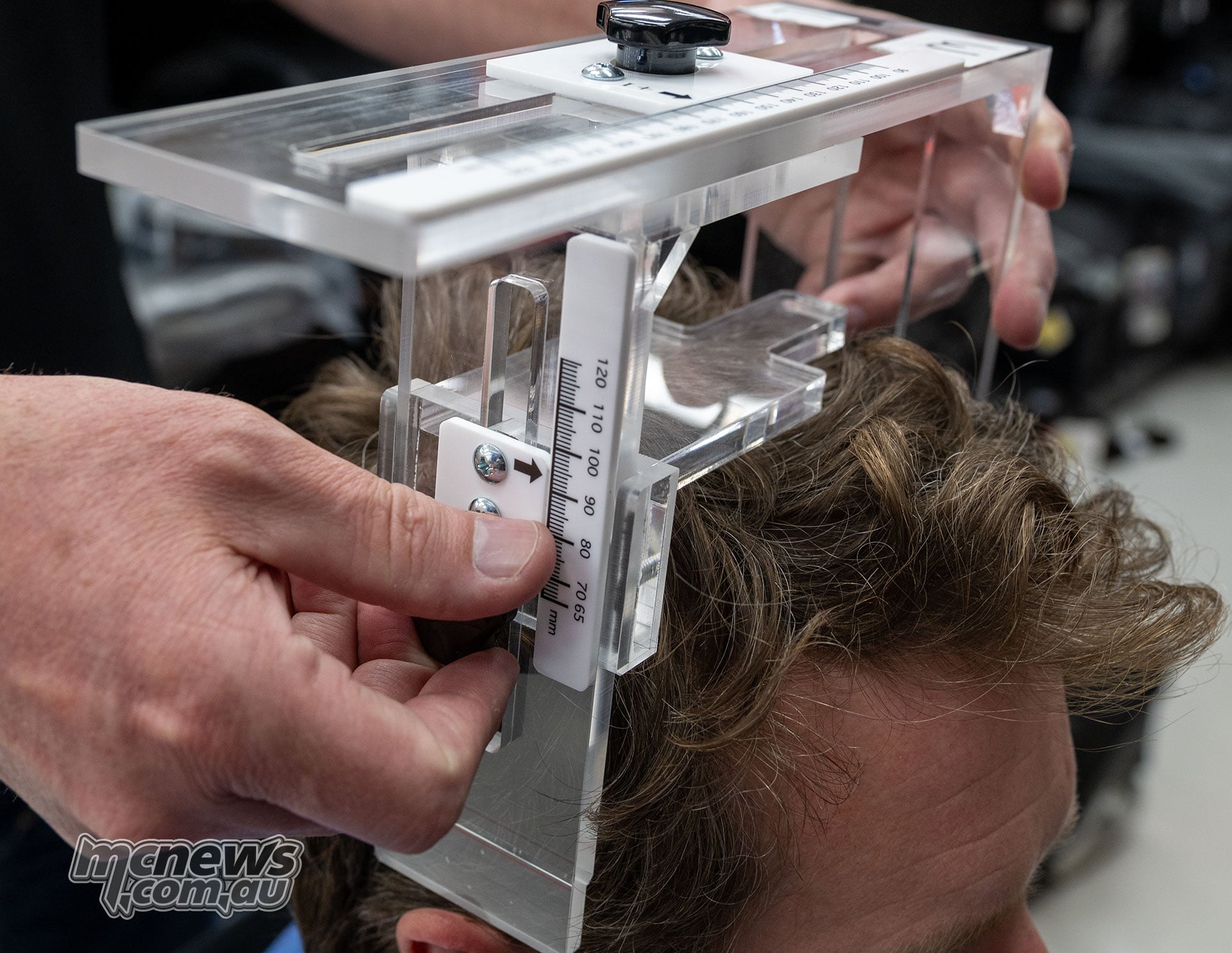
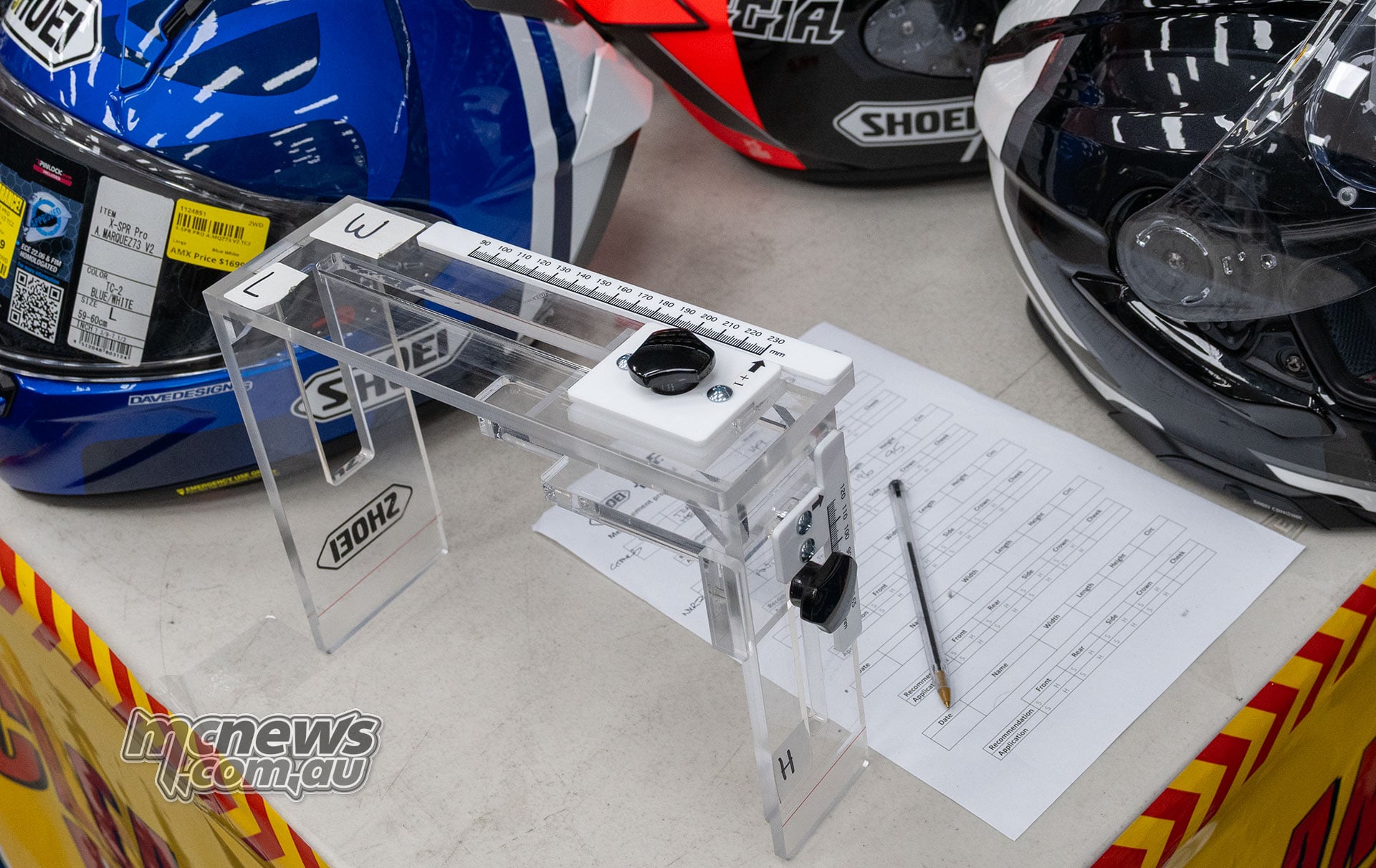
Ant and I had both been wearing medium helmets and had independently regarded medium as our best standard fit. The Shoei measuring rig recorded my head at 195 mm front-to-rear, 149 mm wide and 83 mm high above the reference point around the ears. Ant measured 196 mm long, 157 mm wide and 95 mm high. Our front-to-rear figures differed by only 1 mm, yet Ant was 8 mm wider and 12 mm taller.
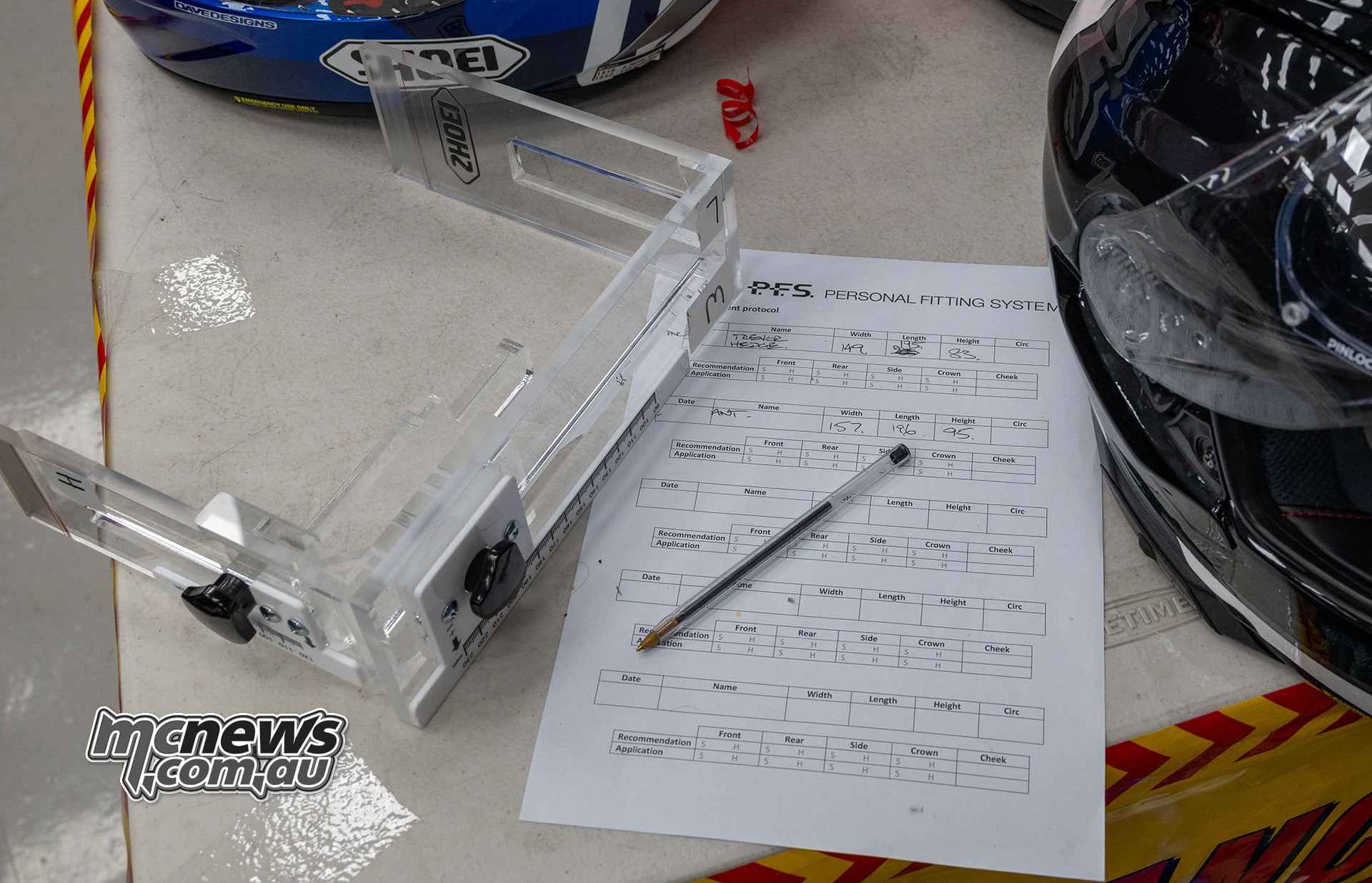
The software made the consequence obvious. It indicated that a small-size route could potentially work for me and a large-size route for Ant, while also calculating individual prescriptions for our existing medium helmets. PFS did not simply relabel one of us as small and the other as large; it showed that two riders who had both settled on medium by feel needed very different medium interiors to achieve even contact across our respective bonces. Before the measurements, neither of us had any idea just how dissimilar our head shapes were, yet we had both been wearing medium-size helmets for decades.
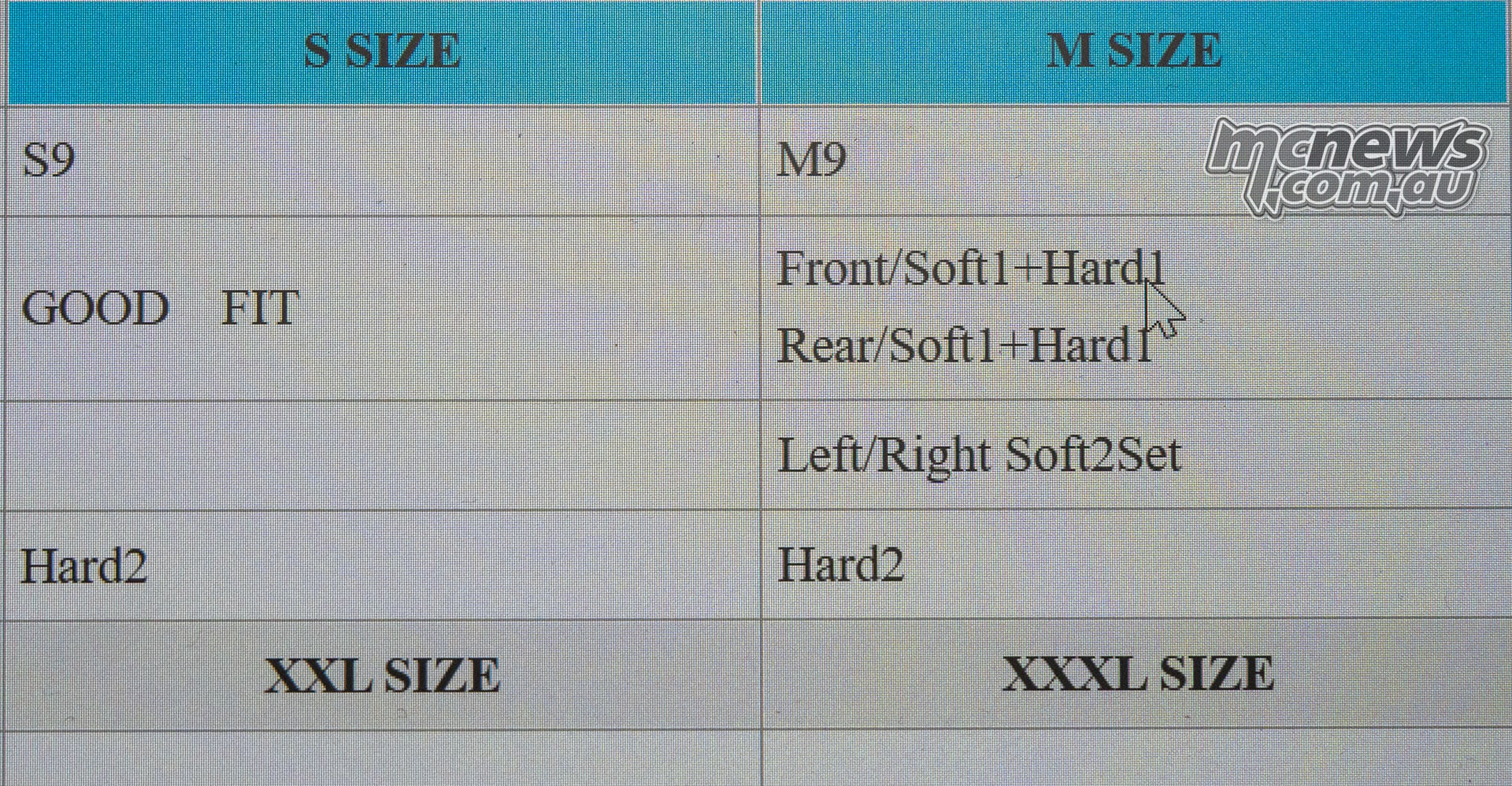
The resulting GT-Air 3 prescription called for soft and firm adjustment at the front and rear, soft padding through the upper and lower side areas, and firm padding at the crown. My standard 35 mm cheek pads remained in place.
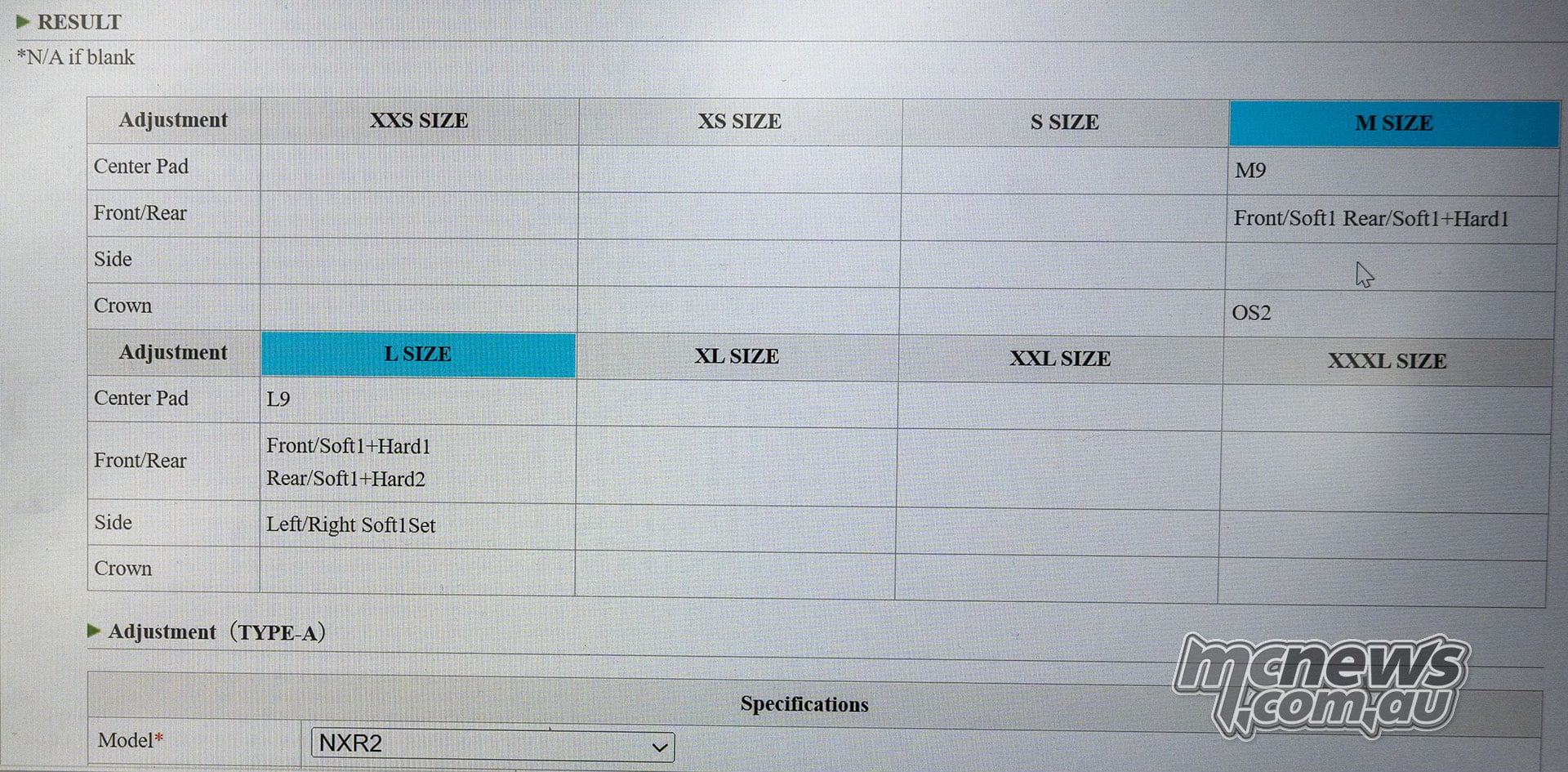
Ant’s medium prescription was notably different, with a lighter front build, no equivalent side-area build-up and a different crown setting. The M on our helmets was the same; the space that needed filling inside it was not.
The “Centre Pad 9” entry on my profile does not refer to the number of PFS pads added. Damien confirmed that it identifies the standard 9 mm centre liner supplied in my medium helmet – an M9. The equivalent standard liners in other sizes carry labels such as S9 or L9, with the letter identifying the helmet size and the number identifying the liner thickness.
Shoei also offers alternative complete liners separately from PFS. An M5 liner is 5 mm thick and provides a looser overall fit than the standard M9, while an M13 is 13 mm thick and tightens it. Those options change the general fit of the entire liner. PFS goes further by tailoring individual areas of the liner to the wearer’s measured head shape.
That prescription belongs to my head in a medium GT-Air 3. It is not a generic recipe for making a medium Shoei tighter, and it would not necessarily be repeated if the same measurements were entered for a Neotec 3, NXR 2 or another model. Shoei’s software stores the interior dimensions of each supported helmet and calculates the adjustment based on that particular shape.
“We can customise for people with long heads, tall brows or short brows. It is fully customised to each person,” Damien explained.
How Shoei PFS works
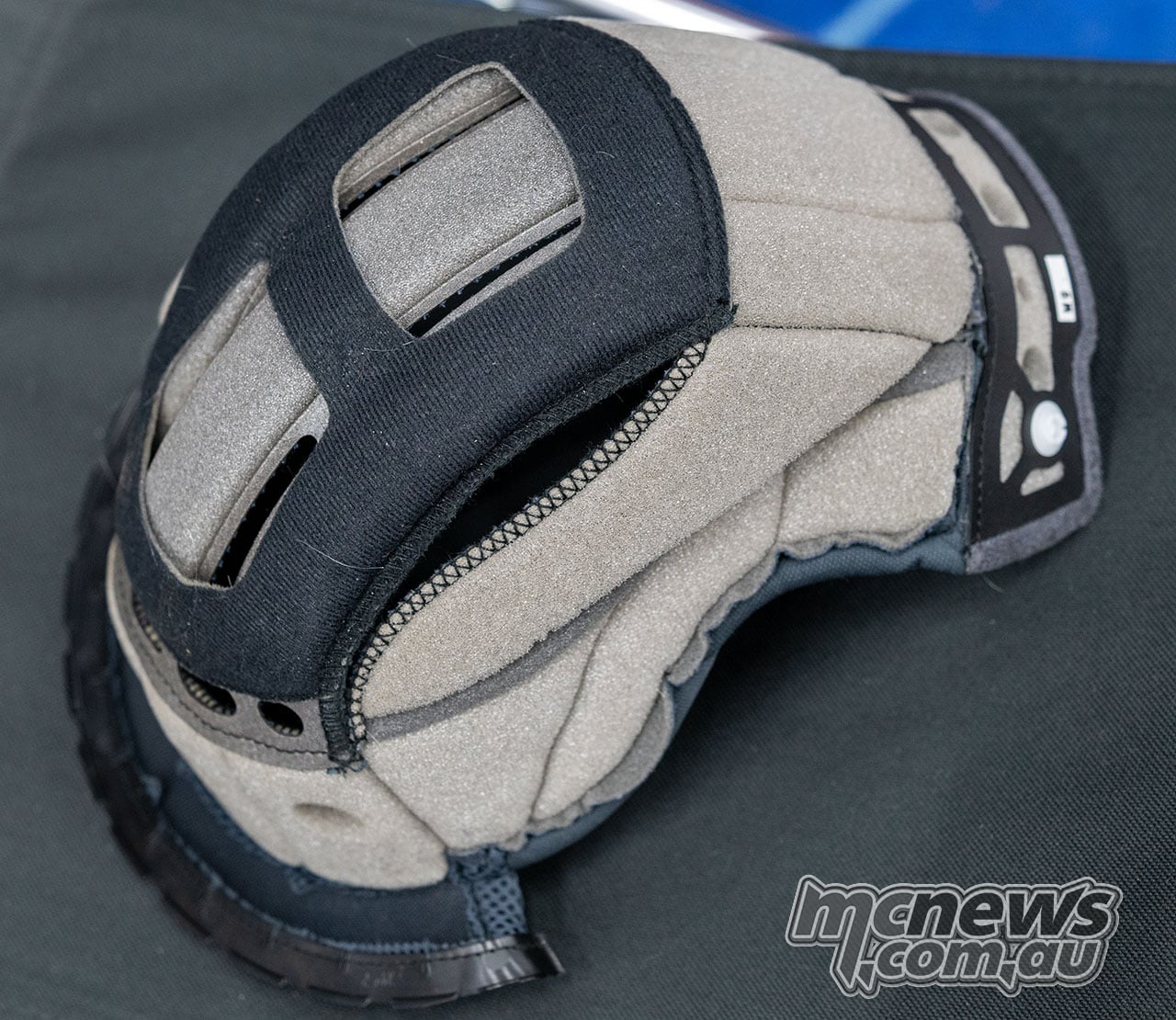
The first task remains choosing the correct base helmet size. PFS is not intended to turn an incorrectly sized helmet into the right one, nor does anyone grind, cut or alter the shell or the impact-absorbing EPS liner.
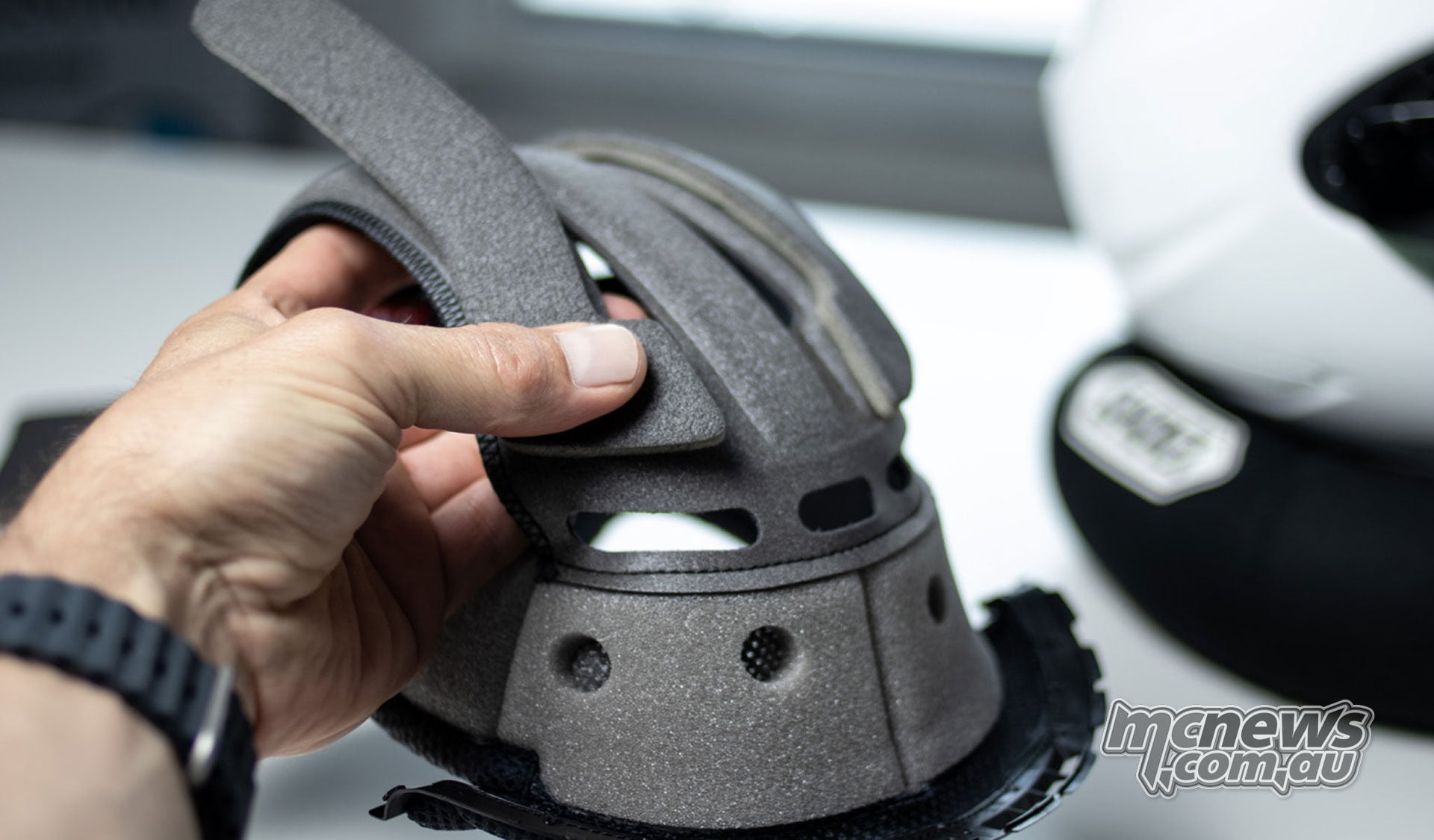
Instead, a trained fitter works with the removable comfort liner. Depending on the rider and helmet, configurable sections can be built up with Shoei’s prescribed adjustment pads or reduced where the liner design allows. The aim is snug, even contact rather than a helmet held in place by a few high-pressure areas with empty space elsewhere.
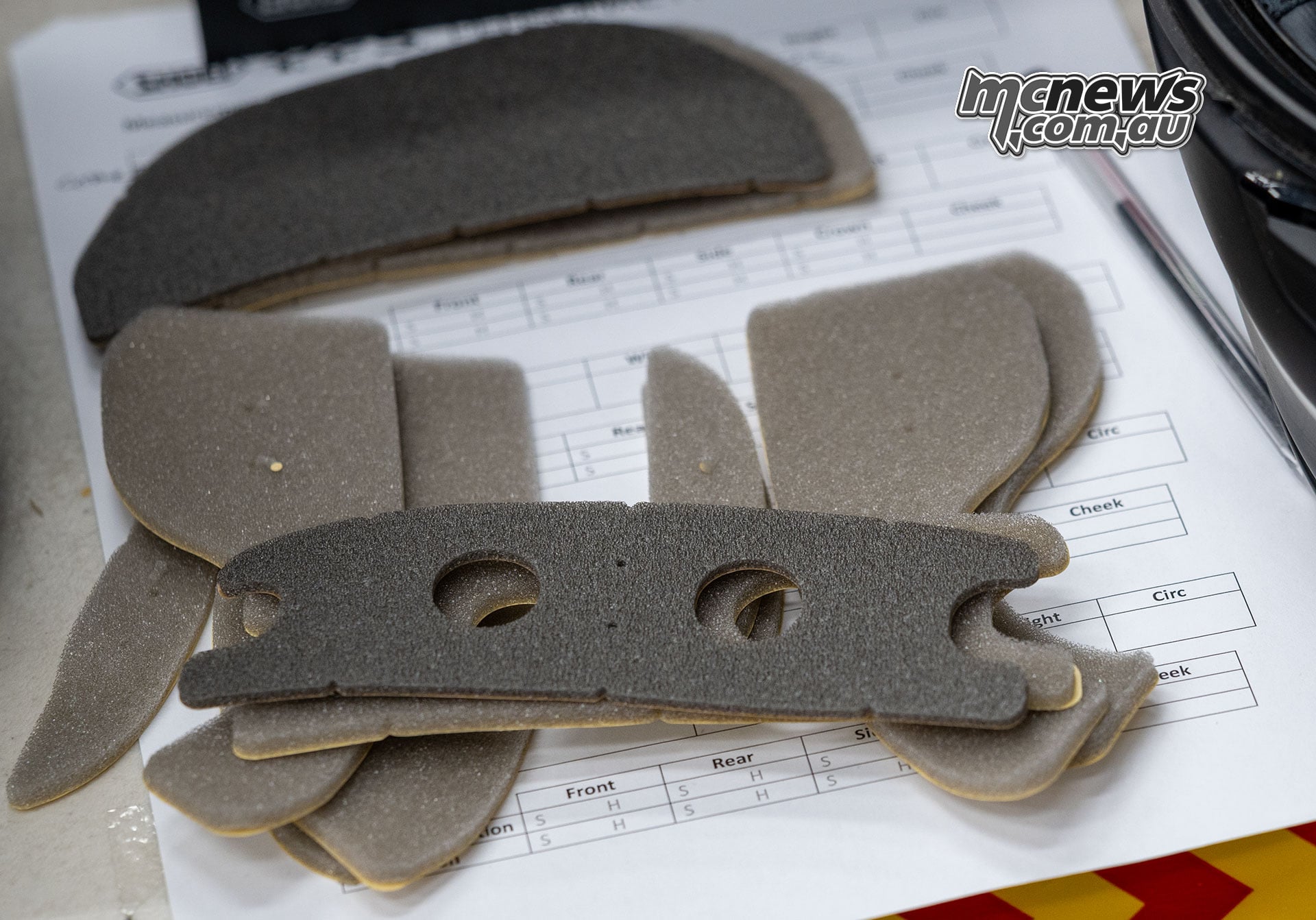
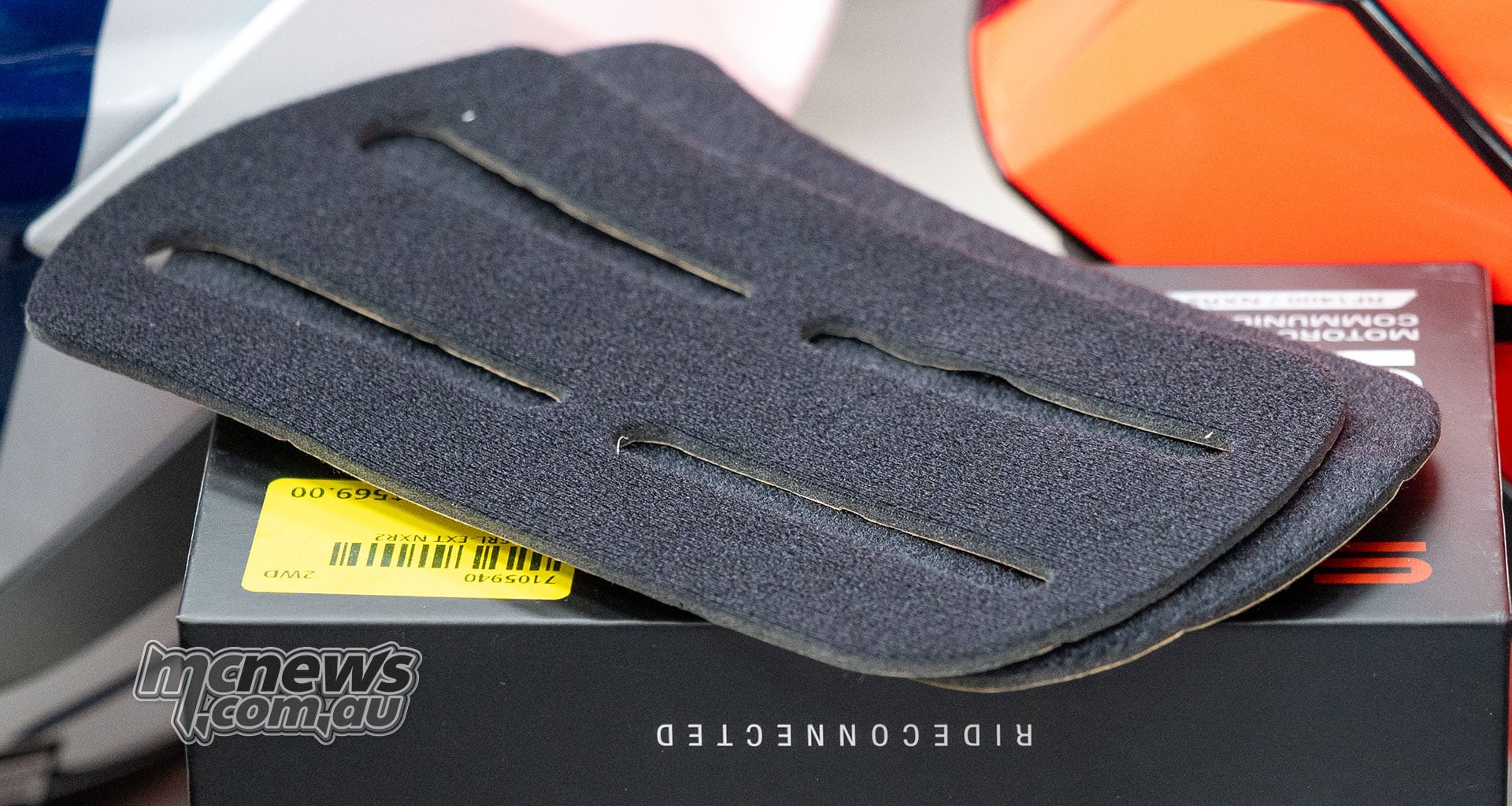
The dedicated measuring tool establishes the head’s front-to-rear dimension, side-to-side width and height above the ears. The fitter enters those figures, plus the helmet model and size, into Shoei’s software. It recommends where adjustments are needed and specifies the softer and firmer materials to use.
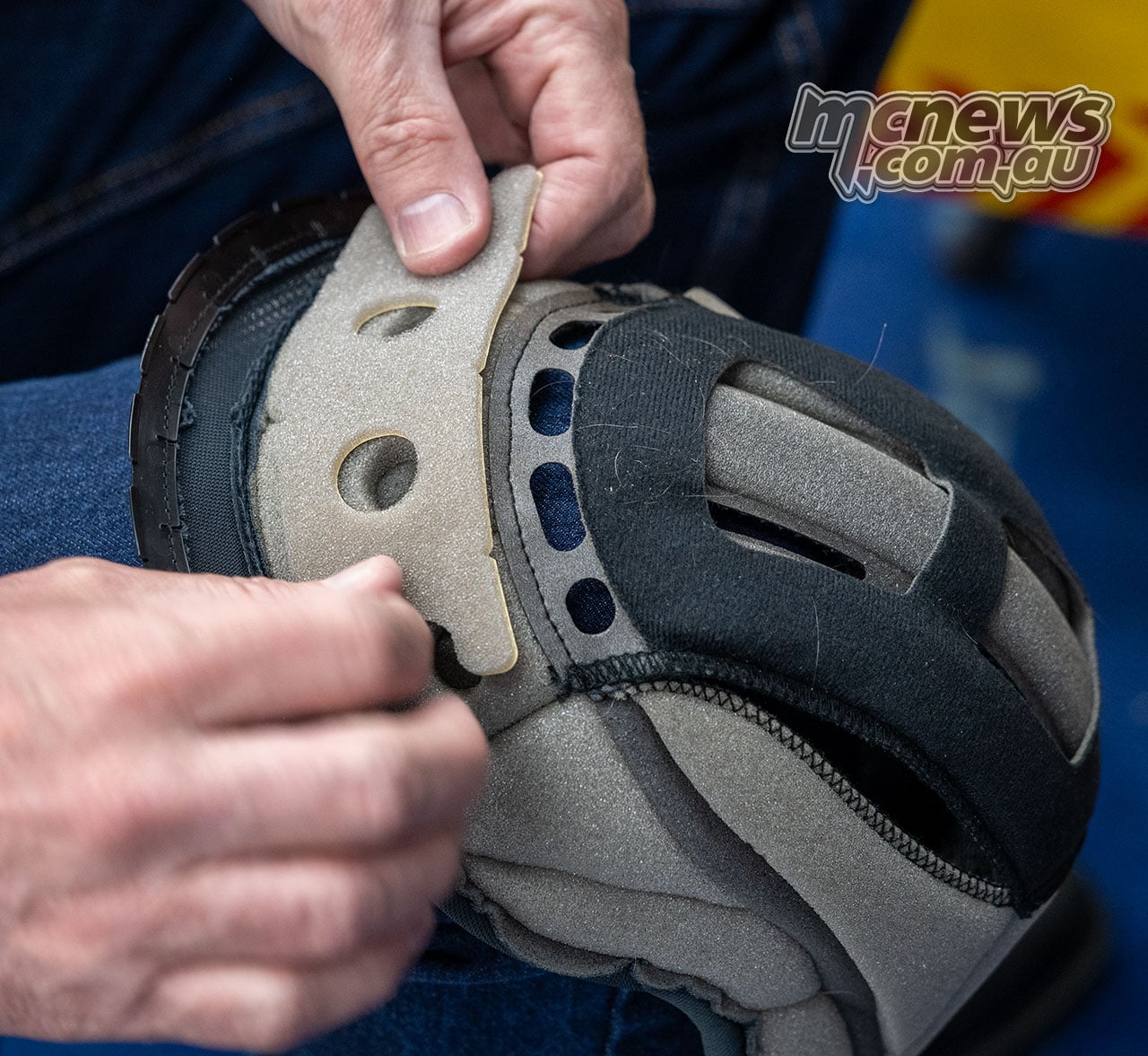
Damien described the softer pieces as the comfort layer placed towards the rider, while the firmer pieces do more of the dimensional work. He curved and attached each section to follow the centre pad, preserving the existing ventilation channels and openings. The modified liner remains removable and washable, and the adjustment material is intended to stay with it for the life of the helmet.
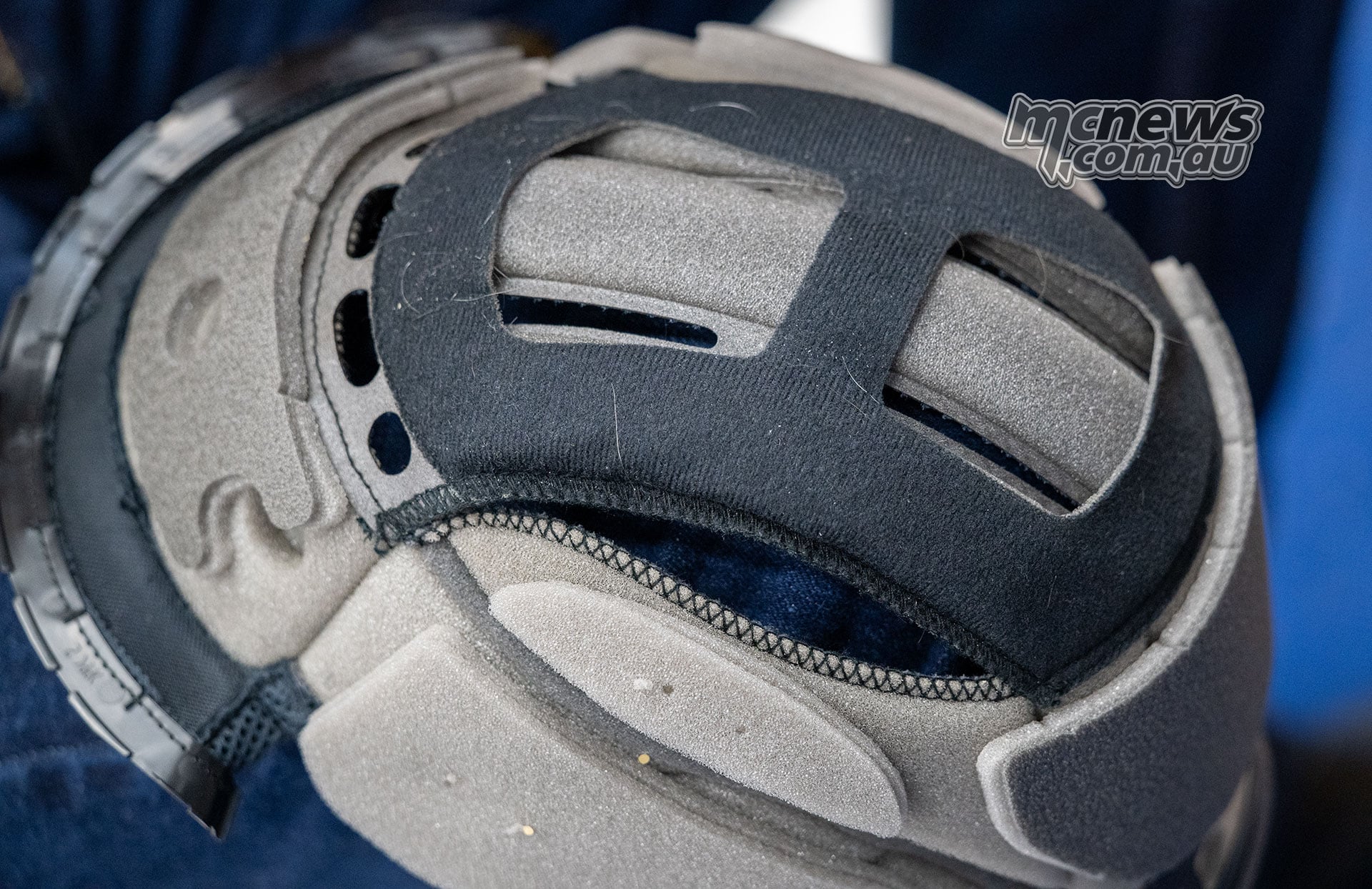
The software recommendation is a starting point, not the end of the fitting. The liner goes back into the helmet, the rider tries it on, and the fitter checks the result and fine-tunes it where necessary. Shoei’s customer material allows roughly 30 to 60 minutes for the complete process, while my fitting took about 45 minutes.
The PFS service covers the centre or crown pad, and the quoted price includes all PFS adjustment pads required there. Different-thickness genuine cheek pads can also alter the hold around the face, but they are separate components and purchases, not part of the PFS service itself.
Which Shoei helmets are eligible?
PFS is available for every current Shoei model sold in Australia and for some discontinued models. A customer-owned helmet must be the correct size, must not have been involved in an accident or otherwise damaged, must be less than five years old, and must have a clean and undamaged interior.
Eligibility for a discontinued model will also depend on the condition and availability of its removable liner. Some owners may need to purchase a complete replacement centre liner and cheek pads before PFS can be applied, so a participating store should inspect an older helmet before the work commences.
Why circumference alone can miss so much
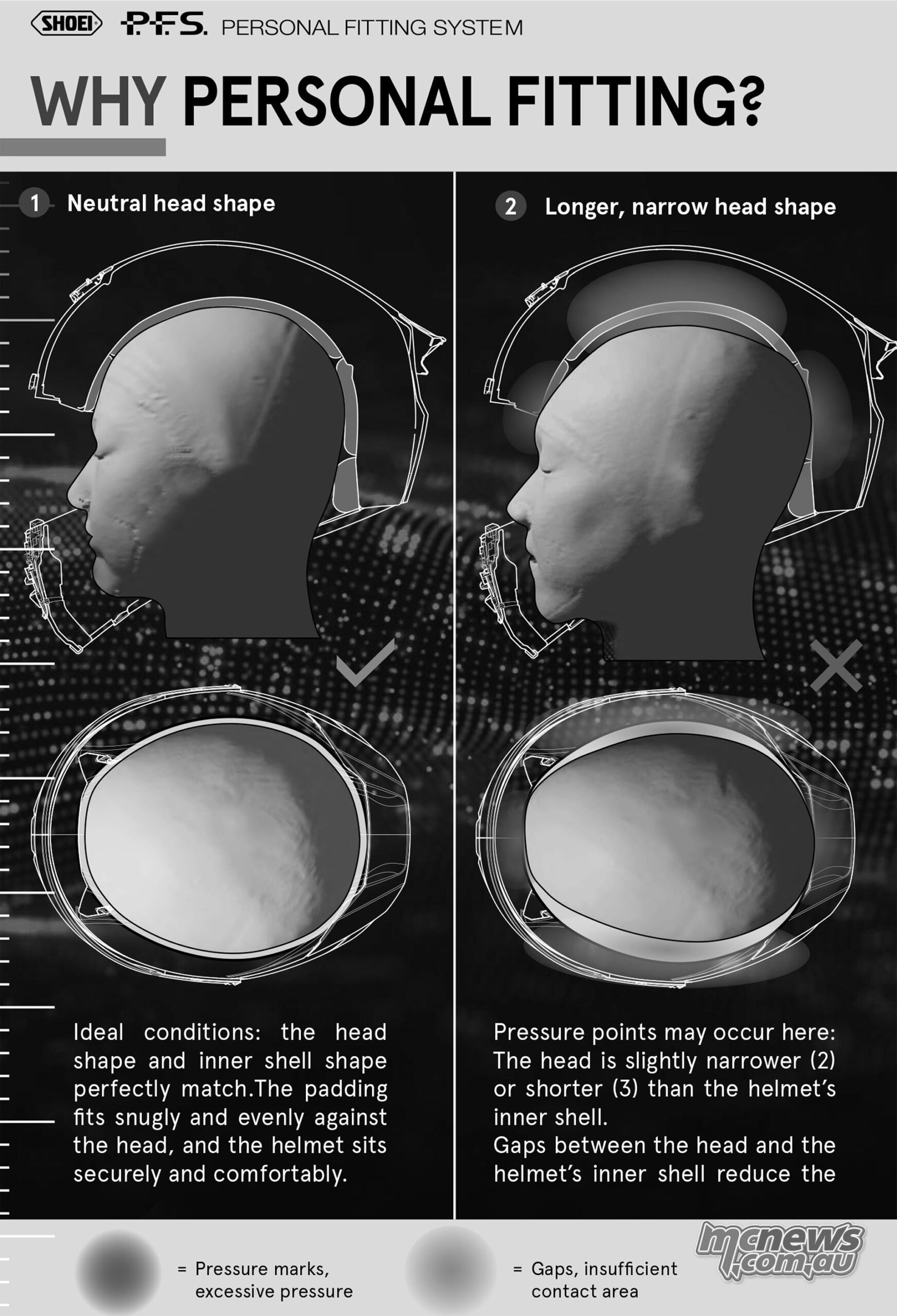
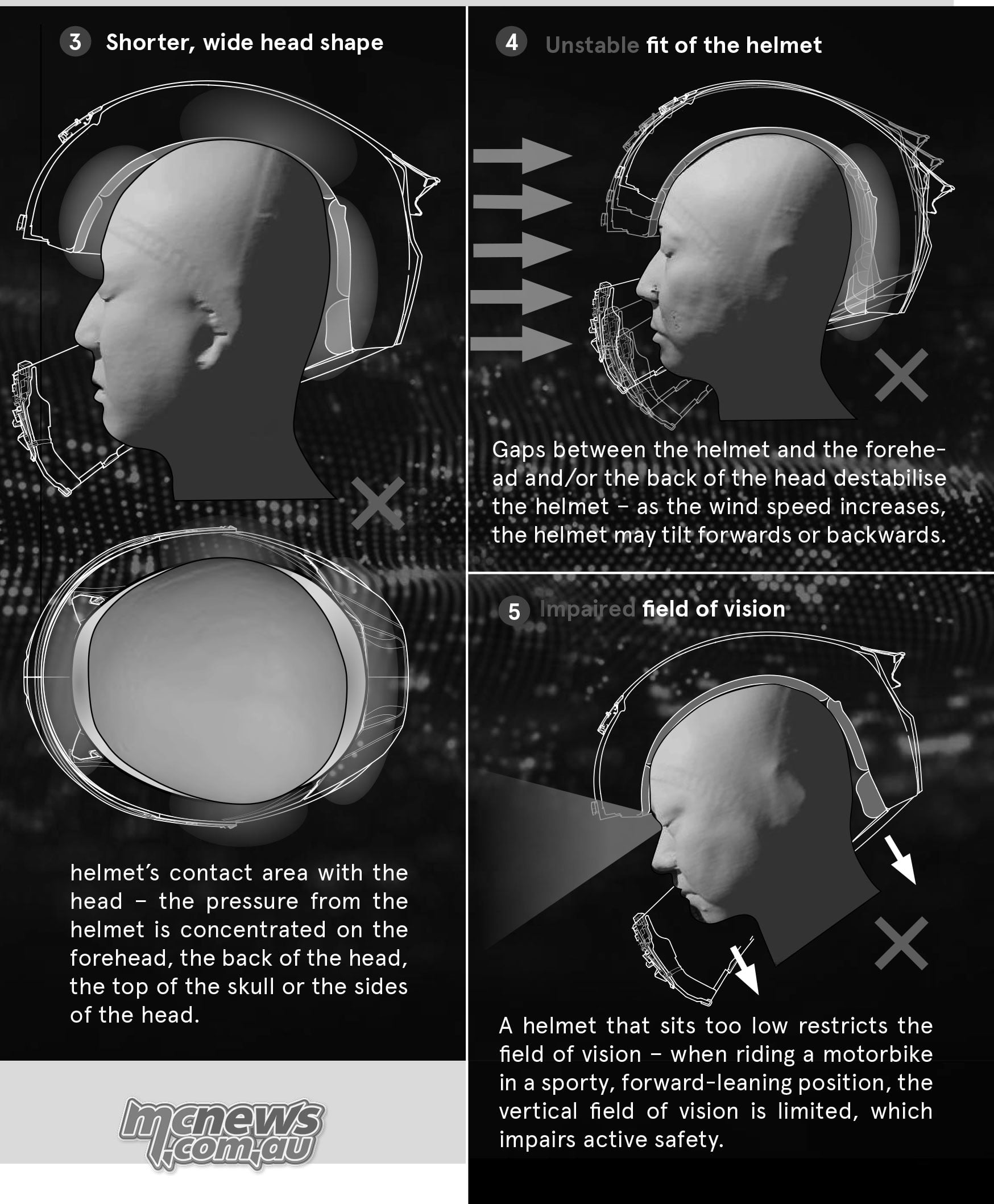
Damien offered a particularly revealing example from an earlier Australian fitting. A woman of Asian background measured as a medium across the width of her head, but her front-to-rear dimension corresponded to an extra-small. Moving her into an extra-small helmet would not have solved the problem because it would have been too narrow.
She therefore stayed in the correct medium base size. PFS prescribed three 3 mm layers at the front and another three at the rear, closing a combined 18 mm of unused space, along with 9 mm at the crown. After trying the completed helmet, she said she had never felt anything like it.
That example is also pertinent in a country as diverse as Australia. Damien explained that the internal EPS shapes used in Australian-market helmets certified to ECE 22.06 differ significantly from those in Japanese-market helmets certified to the JIS standard. Australian helmets use a medium-oval EPS profile with a removable comfort liner shaped to match, while the Japanese versions are shorter front-to-rear and wider across the head, producing a rounder internal fit with a correspondingly different comfort liner.
The visible outer-shell shapes remain the same, although shell sizing and aspects of internal shell construction can vary depending on the certification required in each market. PFS gives Australian retailers considerably more scope to accommodate riders whose proportions do not closely match the standard Australian-market interior.
The objective is not simply the absence of pain. Empty spaces concentrate the helmet’s holding pressure onto smaller areas and can allow it to move or tilt at speed. A helmet sitting too low can also compromise the rider’s upward field of view in a sporting riding position. A close, evenly distributed fit helps the helmet remain stable while avoiding isolated pressure points that can become distracting over a long day.
The immediate difference in my GT-Air 3
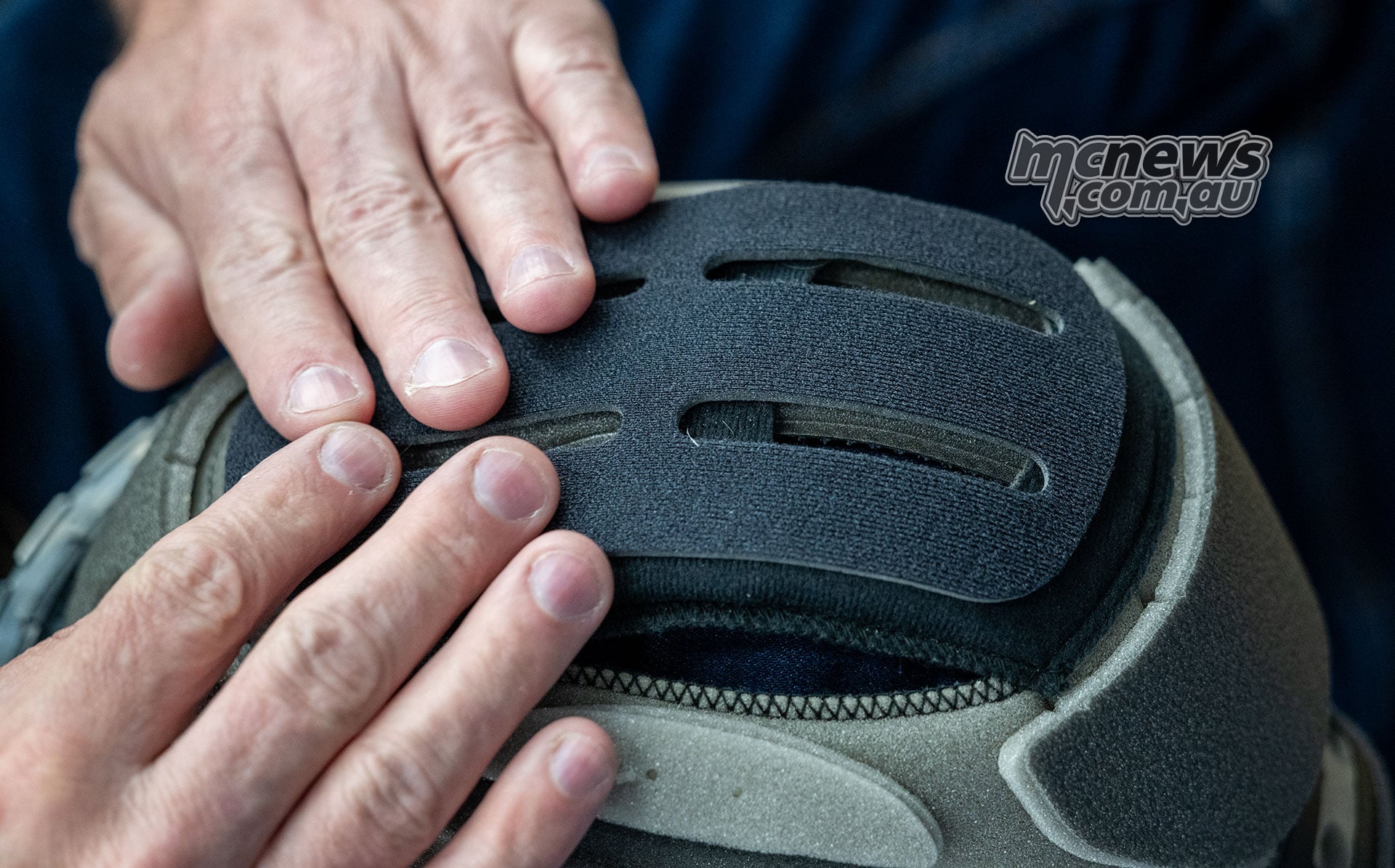
My GT-Air 3 was already three years old and had seen a fair amount of use across probably 50 or more different motorcycles. It is one of a range of Shoei helmets I regularly wear and certainly one of my favourites. It had been comfortable enough and relatively quiet before the fitting, which made the change considerably more instructive than comparing a new helmet with an old, worn-out one.
I had simply accepted that its main contact was around parts of the front and sides of my head. Until the PFS modification, I had no reason to think much about the lack of contact at the crown.
Once Damien had fitted the PFS prescription, the most obvious difference was contact across the top of my head. I could feel the firm crown padding in a way I had never experienced in a helmet. It was definite pressure, but not unpleasant or a hot spot; it felt as though an area that had previously done very little was now sharing the load.
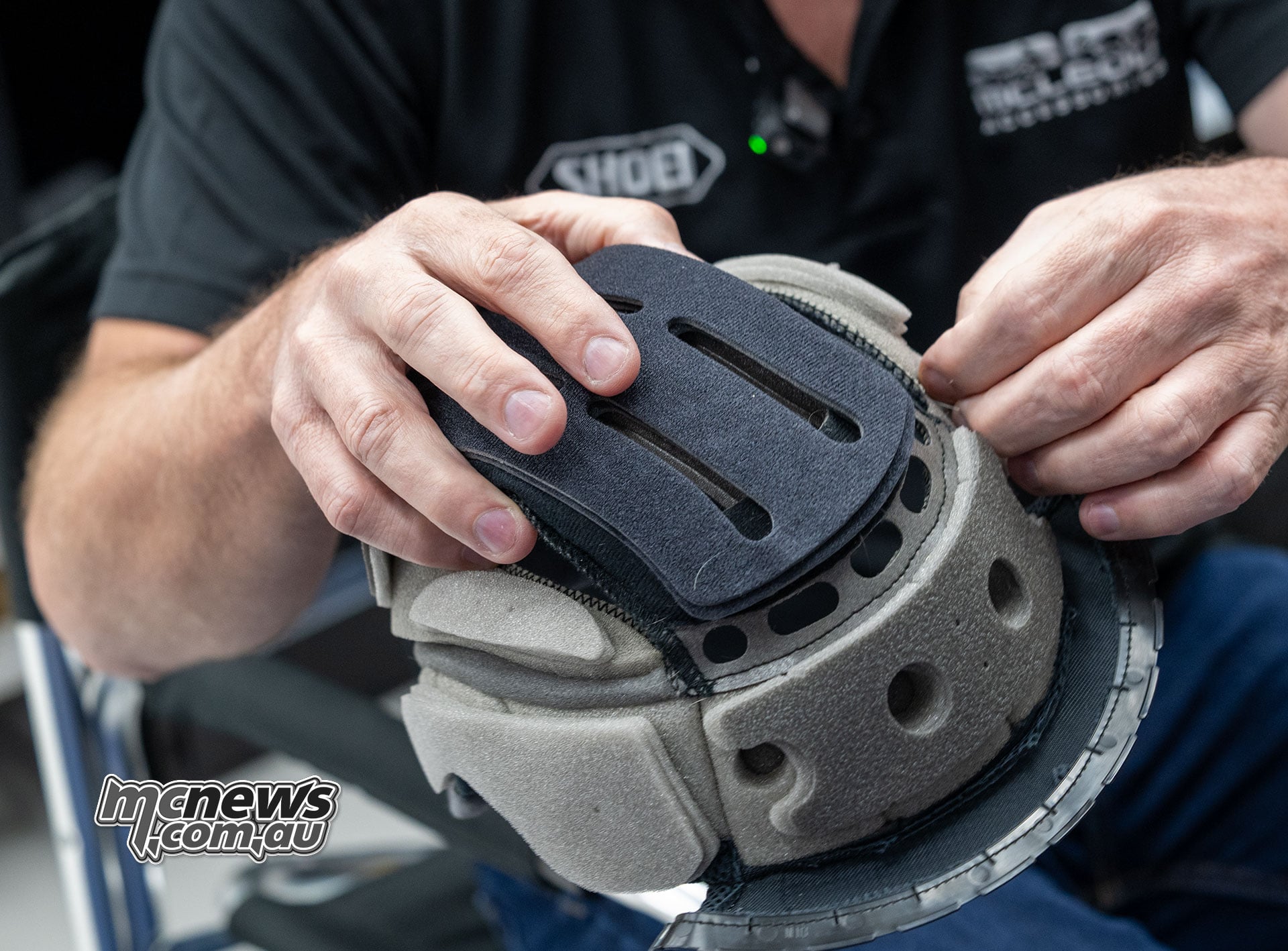
The softer material added through the sides was less obvious to me. The crown change was impossible to miss. After wearing the helmet for a while, the ventilation slots in the extra padding even left their pattern temporarily imprinted in my hair. My head felt considerably fresher than it looked.
A 2500 km first verdict
I left the fitting and went almost directly into a three-day, 2500 km run on the new Honda CB1000GT, beginning with 1000 km on the first day. The CB1000GT has a windscreen, but it is far from expansive, so the helmet was not sitting in an unnaturally still pocket of air.
In terms of how my head felt when the helmet finally came off that evening, it was the most comfortable long day I have spent in a helmet.
The newly apparent crown pressure did not develop into soreness or a headache. Instead, the more even all-round support prevented the sense that particular areas had been carrying the helmet for too long. By the end of the second day, I had largely forgotten about the crown pressure that had been so obvious when I first tried the modified helmet in the store.
There were no pressure points, and I did not find myself rubbing or scratching at my head when the helmet came off. What remained was simply comfortable, equal pressure across all the points where the helmet contacted my head – exactly what PFS says on the tin.
The other standout was noise. I do not wear earplugs because I cannot stand the faffing about – bad Trev – so the reduction was particularly obvious to me. This was a subjective back-to-back impression rather than a sound-level test, and PFS should not be mistaken for hearing protection, but my GT-Air 3 was noticeably quieter after the fitting.
Importantly, Damien had not closed or changed the open recess around my ears. Shoei has long designed its helmets so riders can still hear their surroundings, while Clause 6.5 of UNECE Regulation No. 22 requires that a helmet must not dangerously affect the wearer’s ability to hear.
Damien explained that the reduction I experienced came from filling unused spaces elsewhere in the helmet, which can reduce sound within those cavities and hold the helmet more consistently around the head. Whatever contribution came from damping, fit or stability, the on-road change was one of the clearest parts of the test.
I could detect no reduction in ventilation. The adjustment pads have airflow passages that align with those already present in the standard centre liner, leaving the helmet’s established air paths intact.
Since that initial 2500 km run, I have also worn the same GT-Air 3 on a Honda NX500, Honda Transalp, Yamaha Tracer 900 and MV Agusta Enduro Veloce. Those motorcycles place a rider behind very different screens and airflow patterns, yet my findings have remained consistent: the helmet is unquestionably more comfortable and considerably quieter than it was before PFS.
A second 2500 km test from Ant
Ant completed the same three-day, 2500 km ride alongside me on a Honda NT1100 after having his own medium helmet adjusted to his different measurements. Despite the contrast between our head shapes and the resulting liner prescriptions, he independently singled out reduced helmet noise as one change he noticed, along with a more even fit around his whole head.
He also rated the sound quality of the Sena SRL-EXT Bluetooth system higher than anything he had experienced previously. That part cannot be presented as a before-and-after PFS result, however, because the Sena was new to him at the same time as the fitting. Reduced background noise may help an intercom sound clearer, but there is no clean comparison here that separates the headset from the customised fit.
A fit that can follow you
Once the final result is confirmed, the fitting is entered into the Shoei PFS system and the customer can be emailed a fitment profile such as the one generated for my GT-Air 3. That provides the customer with a record of the measurements and changes made.
Each Australian PFS provider has an individual login and can access the records of customers fitted through that business. With the customer’s approval, the system retains the customer’s name and liner customisation details; Shoei can access the complete PFS records. An email address can be entered to send the profile to the customer, but the address itself is not retained in the system.
A different PFS retailer therefore cannot simply search for a customer fitted elsewhere. The emailed profile gives the rider a portable record they can present at another participating store.
If the same model and size are replaced, that profile can help reproduce the setup or prepare a spare liner. When changing to another Shoei model, the head measurements remain useful, but the different helmet must be entered so the software can calculate a new model-specific prescription.
If an issue only becomes apparent once the helmet has been worn on the road, or further adjustment is required as the liner settles, the customer can return to the store that performed the fitting and request a revision.
Shoei has offered the manual PFS process in Japan since 2012, according to Damien, and the company says more than 500,000 riders worldwide have now used it. Japan has since progressed to a 3D Personal Fitting System that digitally scans the complete head shape and produces a more extensively customised interior. Australia currently uses manual measurement and a pad-based system, but the Japanese setup indicates where the technology may eventually lead.
Shoei PFS price and Australian availability
At the time of writing, PFS is available through selected AMX Superstores listed on the AMX Shoei page. Bookings are made by contacting the participating store directly.
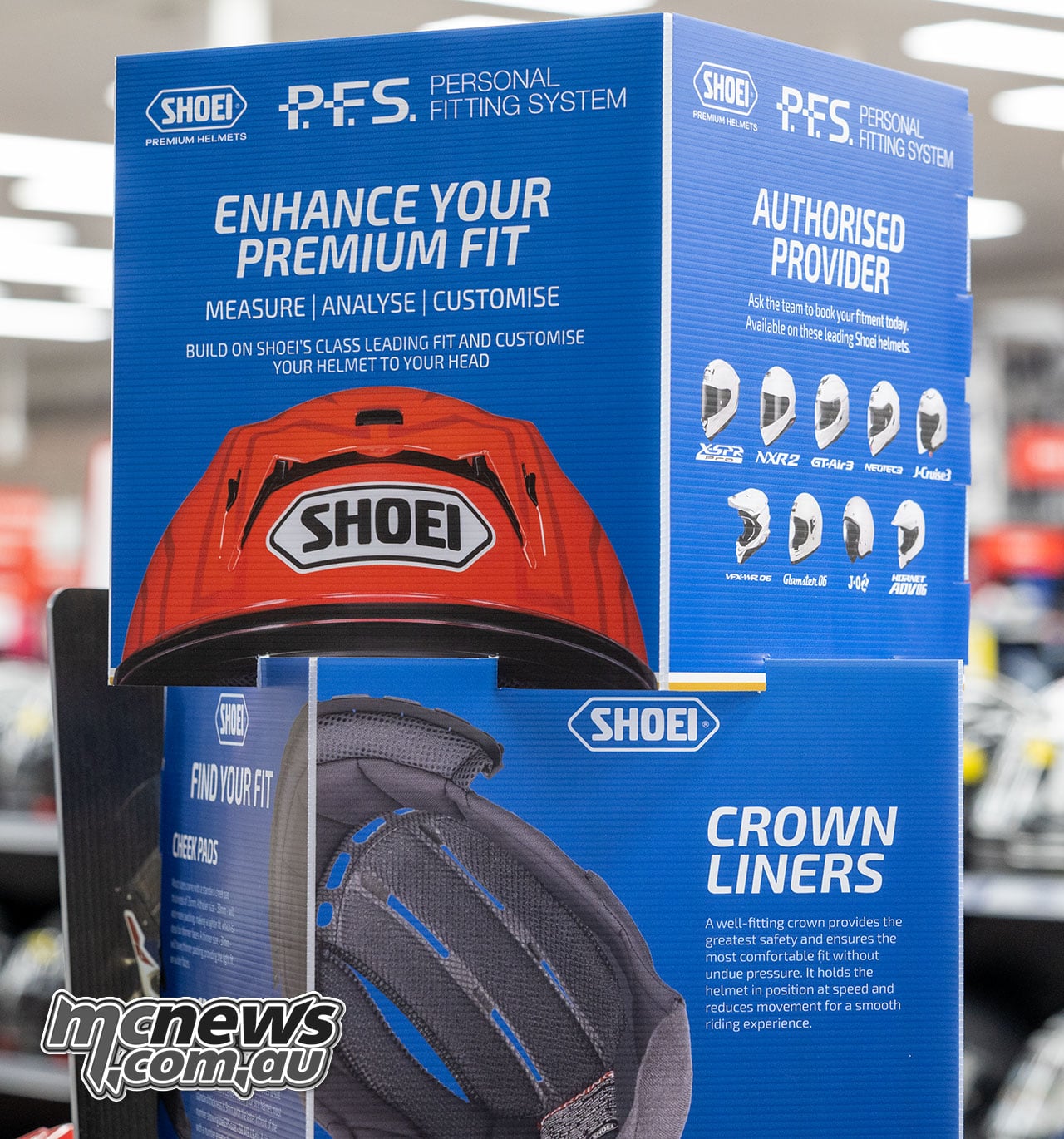
Helmet House and Cullys Yamaha also provide PFS in Western Australia. McLeod Accessories intends to expand the service progressively around the country as more dealership staff complete their training.
The recommended retail price is $100, including all PFS pads used in the centre liner. AMX is currently offering PFS for $50 with the purchase of every new Shoei helmet. Any different-thickness cheek pads required are sold separately; neither Ant nor I required them for our customisation.
Owners of an existing helmet should contact the outlet first to confirm model eligibility, helmet and liner condition, availability and appointment arrangements.
More than a comfort accessory
PFS is not a spectacular feature in the way of a new visor mechanism, shell material or ventilation system. Most of its work disappears inside the helmet. That may undersell its importance.
A rider experiences the fit every second the helmet is worn, and a helmet that becomes painful, moves at speed or continually demands adjustment can undermine an otherwise excellent design. Even riders like me, who thought their helmet already fitted reasonably well, may not realise how much unused space remains until it is measured.
For somebody comparing premium helmets, access to a trained fitter, a model-specific prescription and a record that can be used again could be sufficient reason to choose Shoei. After 2500 km in three days and subsequent use across another four very different motorcycles, my head felt fresher at the end of the day in my GT-Air 3, and the helmet was substantially quieter to my ears.