

The Morbidelli 500/4
Ambition Meets Harsh Reality
With Phil Aynsley
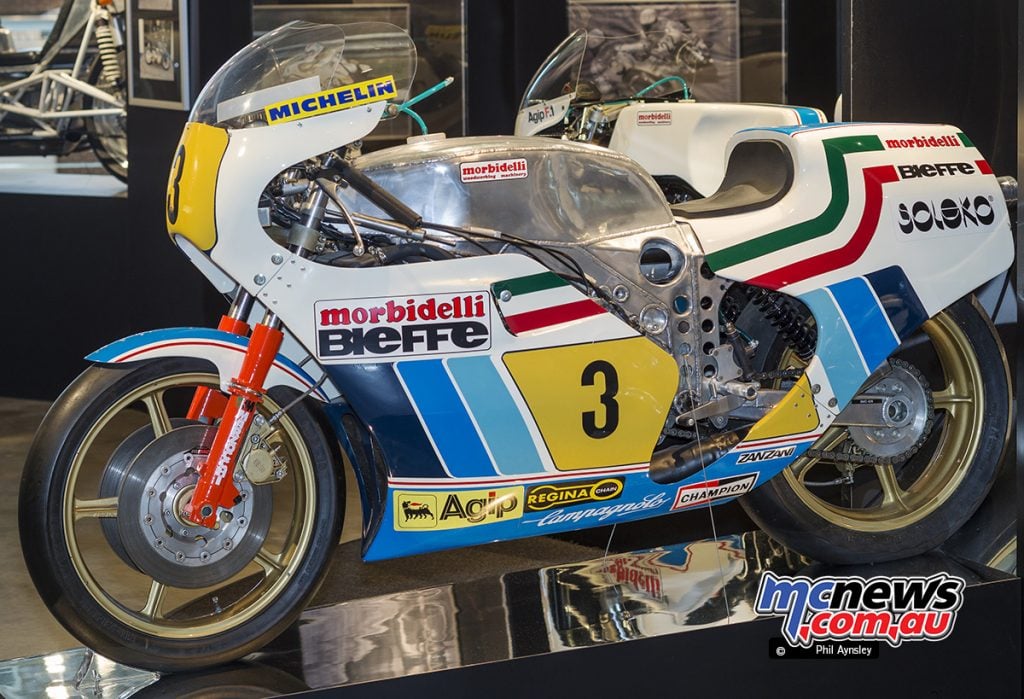
One of the more curious entrants in the 500cc Grand Prix class was the Morbidelli 500/4, developed from 1979 and raced, albeit with limited success, until the end of 1982.


From Tiny Singles to Multi-Cylinder Ambitions
Morbidelli was already well established in the smaller categories, thanks to competitive 50 cc and 125 cc machines. By 1973, the Italian factory began experimenting with four-cylinder designs at 350 cc.
The first 350/4 was an inline four-cylinder engine with horizontal cylinders, twin carburettors, and disc valves positioned above the cylinder bank. Development ended abruptly after it was discovered that Jawa had already patented a similar layout.
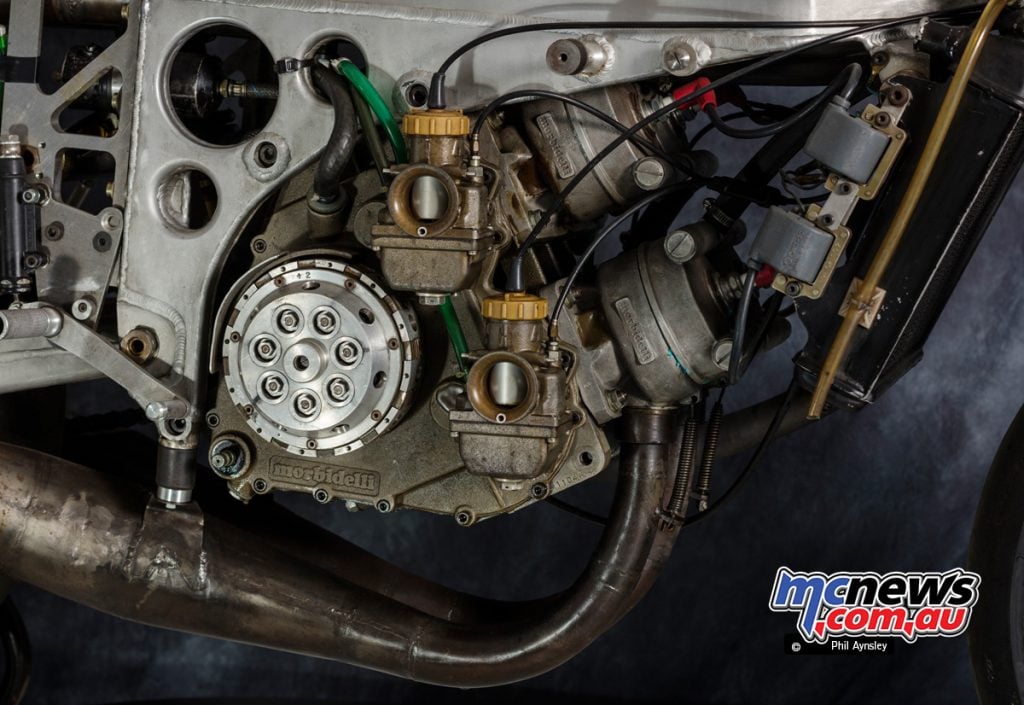
The second 350/4 was a water-cooled, disc-valve, square-four engine, essentially two horizontally parallel twins stacked one above the other. On paper, it was a rocket, 95 hp at 14,000 rpm, some 25 hp more than its rivals. In practice, however, crippling vibrations shattered the crankshaft coupling gears, forcing the output to be reduced to 65 hp.

The 500/4 Takes Shape
Drawing on those lessons, the 500/4 carried forward the square-four, water-cooled disc-valve concept, but with the cylinders tilted at a 40º angle from horizontal. Resources were minimal, Gianpiero Morbidelli quipped the team “consisted of four people if I was there”, and with a primary focus still on the 250 cc class, progress was slow.
In 1980, engineer Jörg Möller took over development. Reliability became the target, even at the expense of weight. Despite magnesium engine cases, the redesigned motor gained 10 kg. Specs included:
- Bore × Stroke: 55 × 52 mm
- Compression ratio: 13:1
- Carburettors: Four 34 mm Mikunis
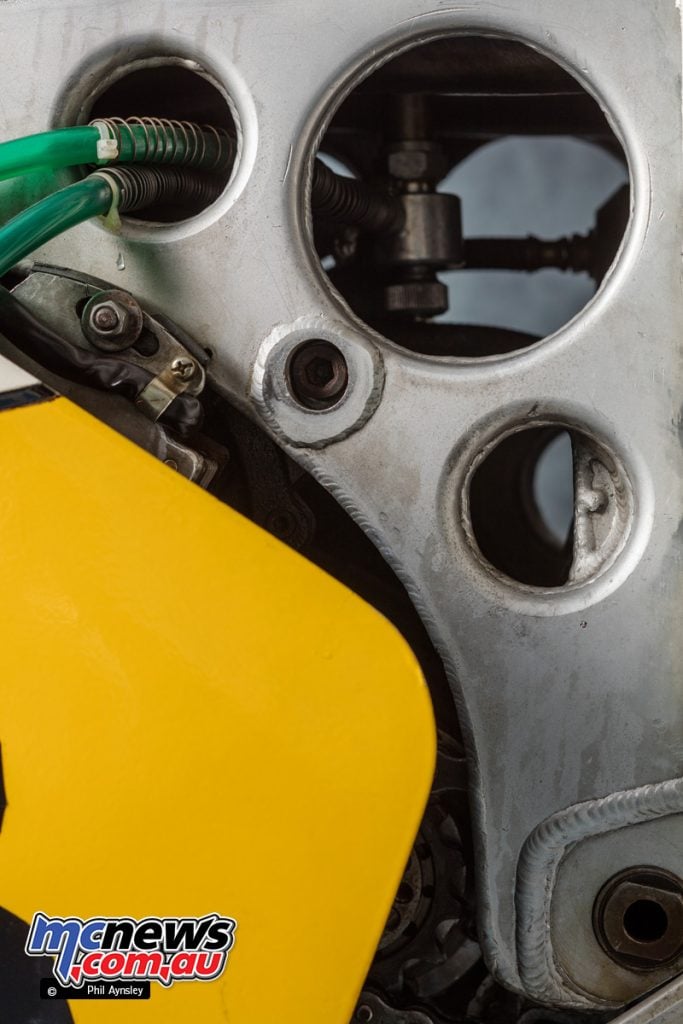
A new alloy monocoque chassis (2–3 mm wall thickness) offset the extra engine weight, saving about 10 kg.


On Track – Rossi, Pelletier, and Frustration
Rider Graziano Rossi (Valentino’s father) moved to Suzuki in 1980, so Romain Giovanni Pelletier was drafted in. His best result was 21st at the German GP.
Rossi returned in 1981 but endured a miserable season of DNFs, salvaging just two 11th places (Britain and Sweden). By then, the chassis had evolved and featured monoshock rear suspension.
Pelletier was back for 1982, but results didn’t improve much: he finished only four races, the best being 15th.



The Final Numbers
In its ultimate form, the 500/4 produced 130 hp at 11,500 rpm, weighed 135 kg, and could reach 290 km/h. On paper, it was respectable, but in practice, by this stage, it lagged far behind the factory-backed machines of Yamaha, Suzuki, and Honda.
The Morbidelli 500/4 remains a fascinating example of Italian engineering ambition colliding with the brutal realities of Grand Prix racing.