

Yamaha RW350 & RW700 Explore Adventure Scooters
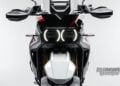
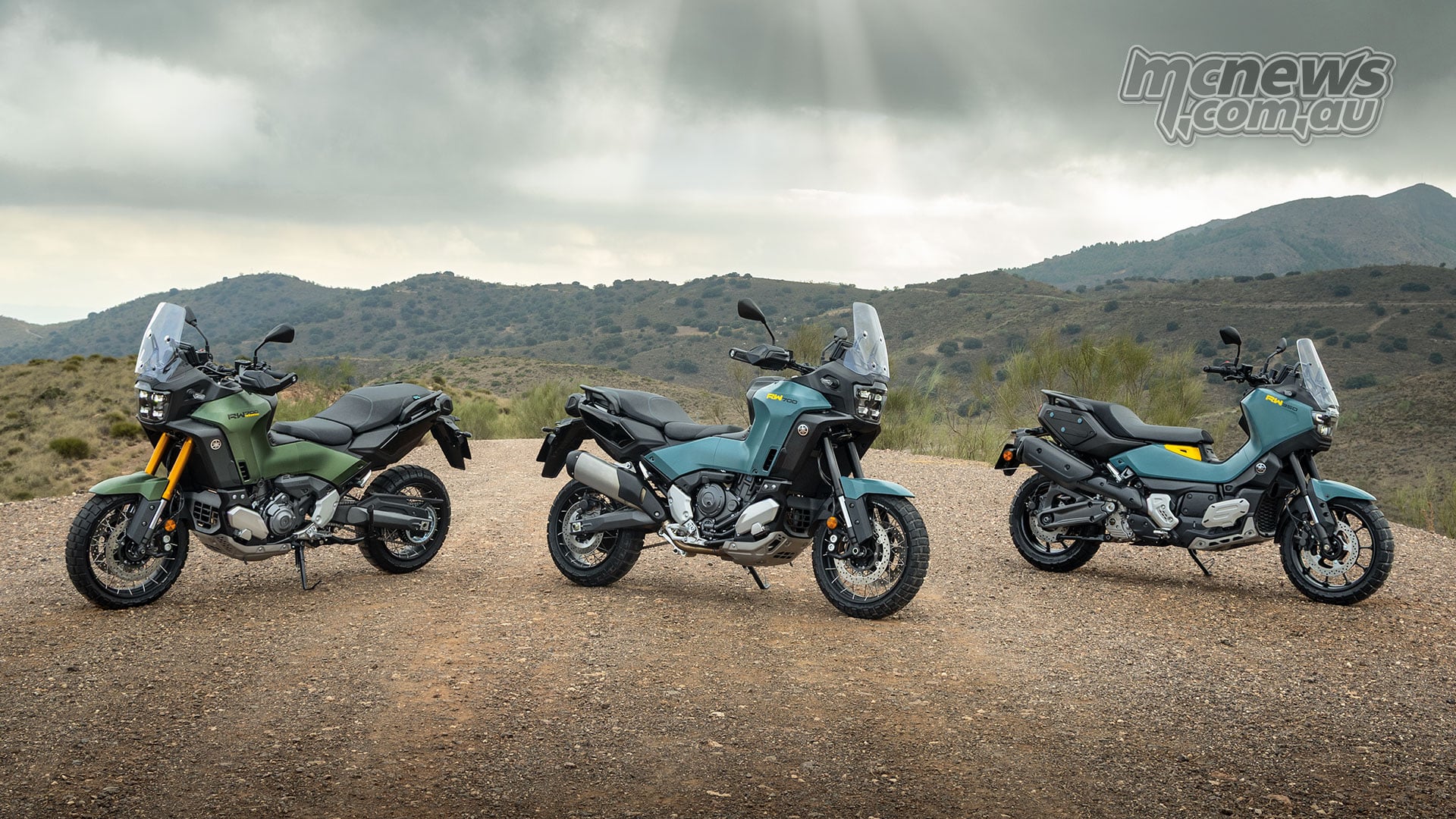
Yamaha has unveiled the RW350, RW700 and RW700 Explore, a new family of adventure scooters that mixes everyday practicality with the suspension, riding position and rough-road ambitions of an adventure motorcycle.
Yamaha Motor Australia has now confirmed that the RW350 and RW700 Explore will be offered here as 2027 models. The Explore will be the only RW700 variant available locally, with Australian prices and arrival timing still to be announced.
Honda has been here before, of course. The X-ADV750 and ADV350 have already shown there is a substantial market for machines that blur those boundaries, particularly in Europe. Honda reports more than 16,100 X-ADV sales across Europe in 2025, while the ADV350 was the continent’s biggest-selling scooter above 300 cc in 2024.
That success has surely helped spur Yamaha into action. There is money to be made here, and Yamaha has plenty of experience to draw upon from both its MAX scooters and its adventure motorcycles.
In Europe, and among buyers in Asian markets who can afford the step up to a premium scooter, the attraction is easy to understand. Automatic convenience, useful storage, weather protection and enough versatility to head beyond the city make a compelling combination.
Getting Australians to buy them could be a much tougher assignment. The current state of the roads in the eastern states makes scooters with some adventure chops an attractive proposition to shrug off the potholes that have been there long enough to be earmarked for heritage status.
Honda’s X-ADV750 has already demonstrated how good this formula can be, and I would be surprised if Yamaha’s new offerings were anything less than enjoyable to ride. The engineering is unlikely to be the biggest obstacle here. The word ‘scooter’ might be.
RW350: The one that could make the most sense
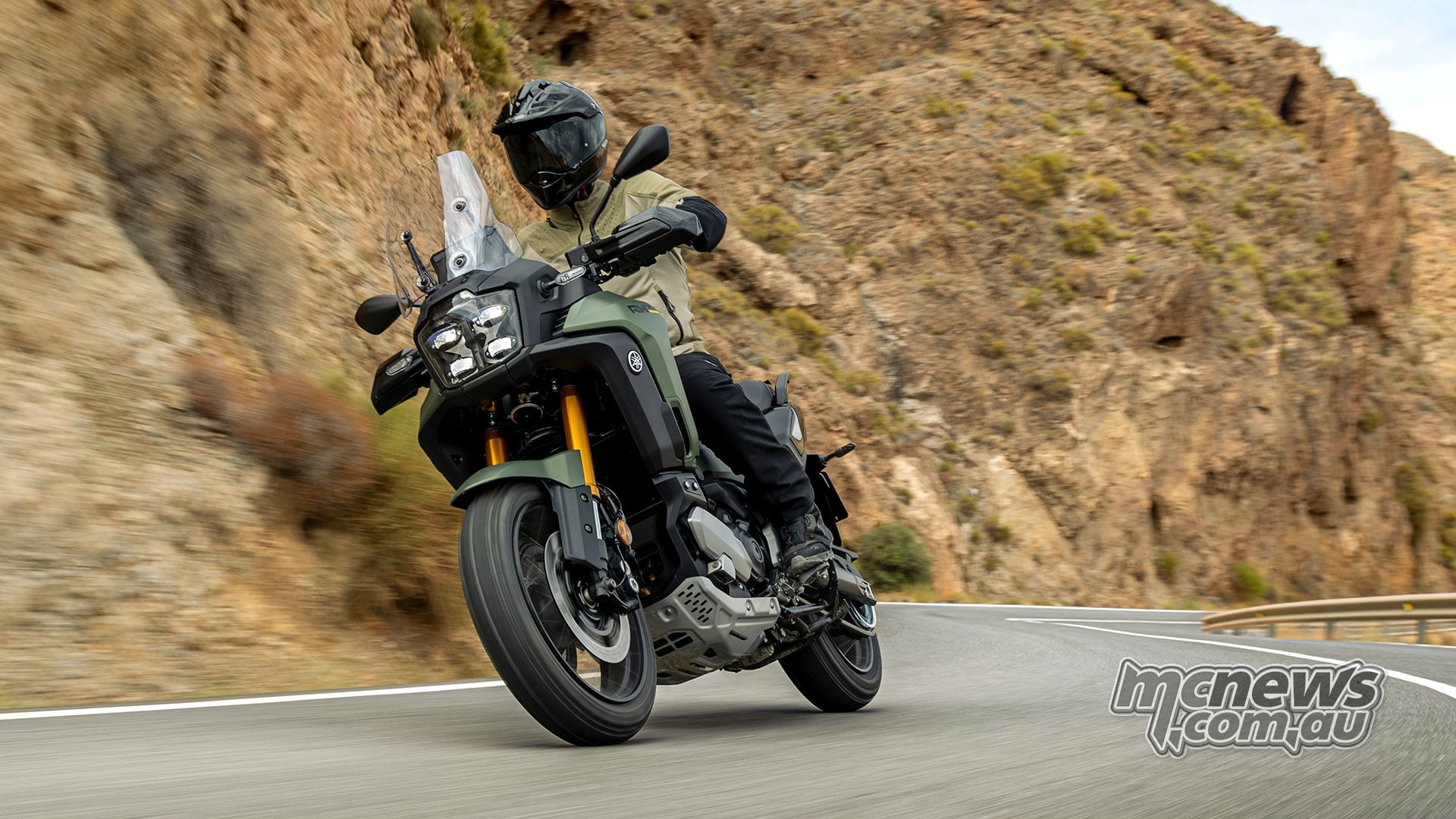
To my mind, something like the RW350 could be the perfect LAMS machine for many Australians. An automatic transmission, upright riding position, useful weather protection and somewhere to put your helmet would tick a lot of boxes for someone taking up riding.
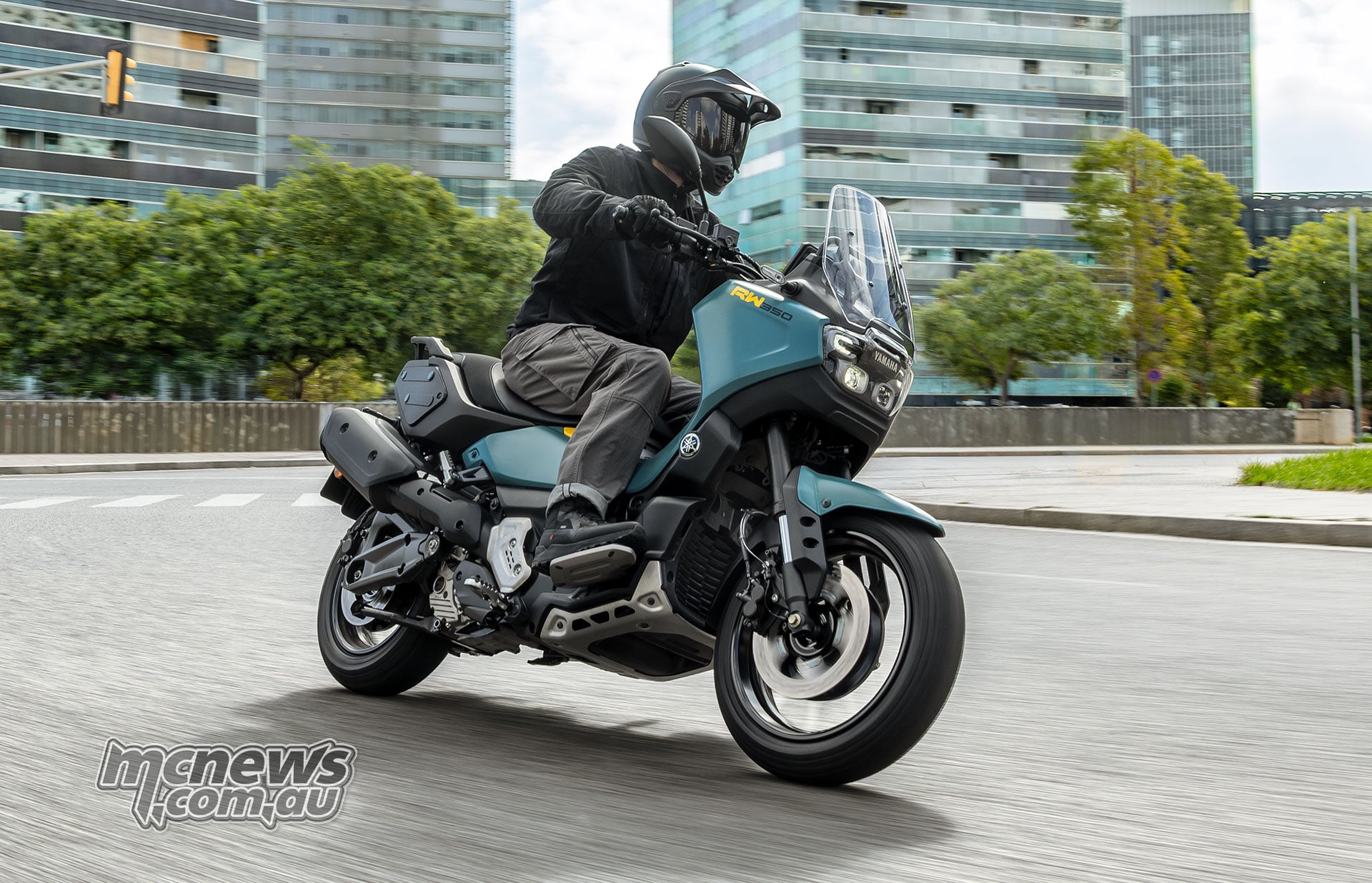
It could also suit plenty of experienced riders who want convenient transport through the week and something enjoyable for a weekend wander. Shopping, commuting and a run out of town are the sort of jobs many motorcycles actually do, regardless of the adventures promised in their brochures.
The challenge will be getting people to try one before deciding they need something that looks more like a conventional motorcycle.
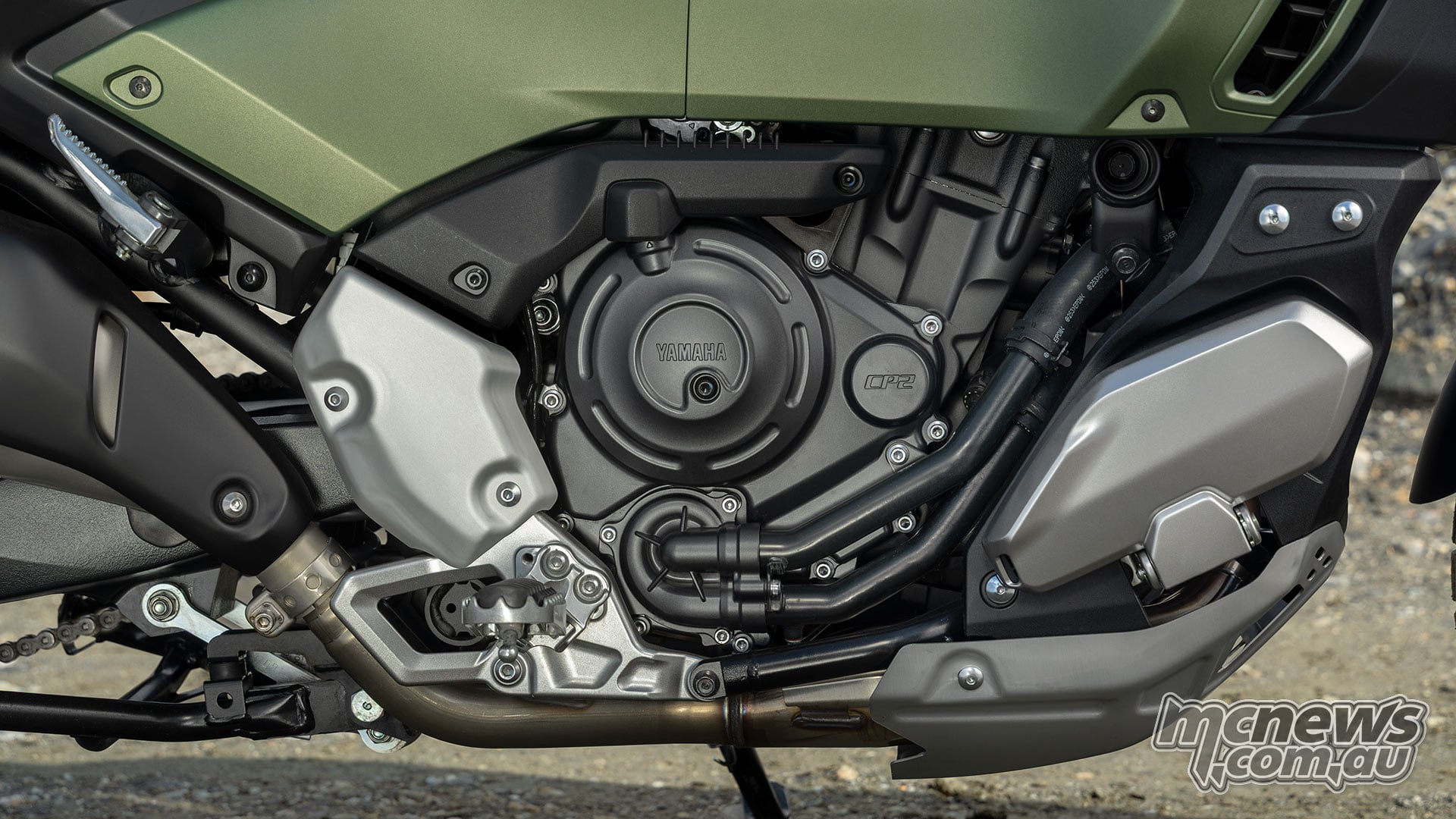
The RW350 uses an all-new 327 cc, liquid-cooled, four-valve SOHC single-cylinder engine with fuel injection and electronic throttle control. Yamaha has also developed a different approach to packaging the engine and continuously variable transmission.
Called Yamaha Dynamic Ride, the layout fixes the engine to the frame while the CVT unit pivots around the crankshaft axis. Compared with a conventional scooter arrangement in which the engine and transmission move together with the rear wheel, Yamaha says this substantially reduces unsprung weight and gives its engineers more freedom with the rear suspension layout.
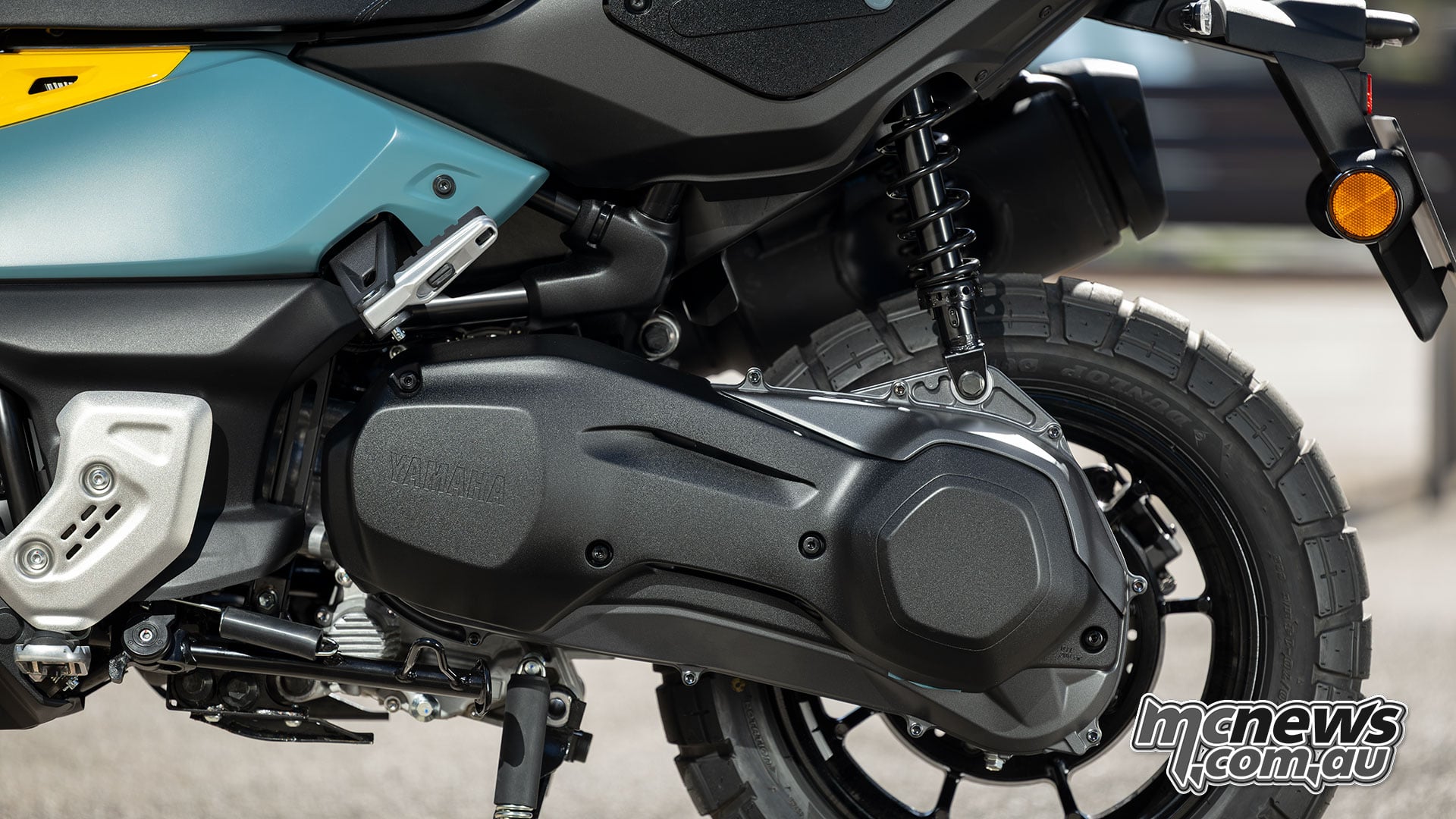
That helps when the rear wheel hits potholes, corrugations, and uneven surfaces. Keeping the engine’s mass out of that movement should help the suspension do its job. A four-axis balancer is also part of the new arrangement.
The chassis uses a steel backbone frame, a 37 mm inverted fork with 140 mm of travel, and twin rear shocks offering 105 mm of travel with seven preload settings. Cast wheels measure 16 inches at the front and 14 inches at the rear, wearing Dunlop D615 block-pattern tubeless tyres developed for the model.
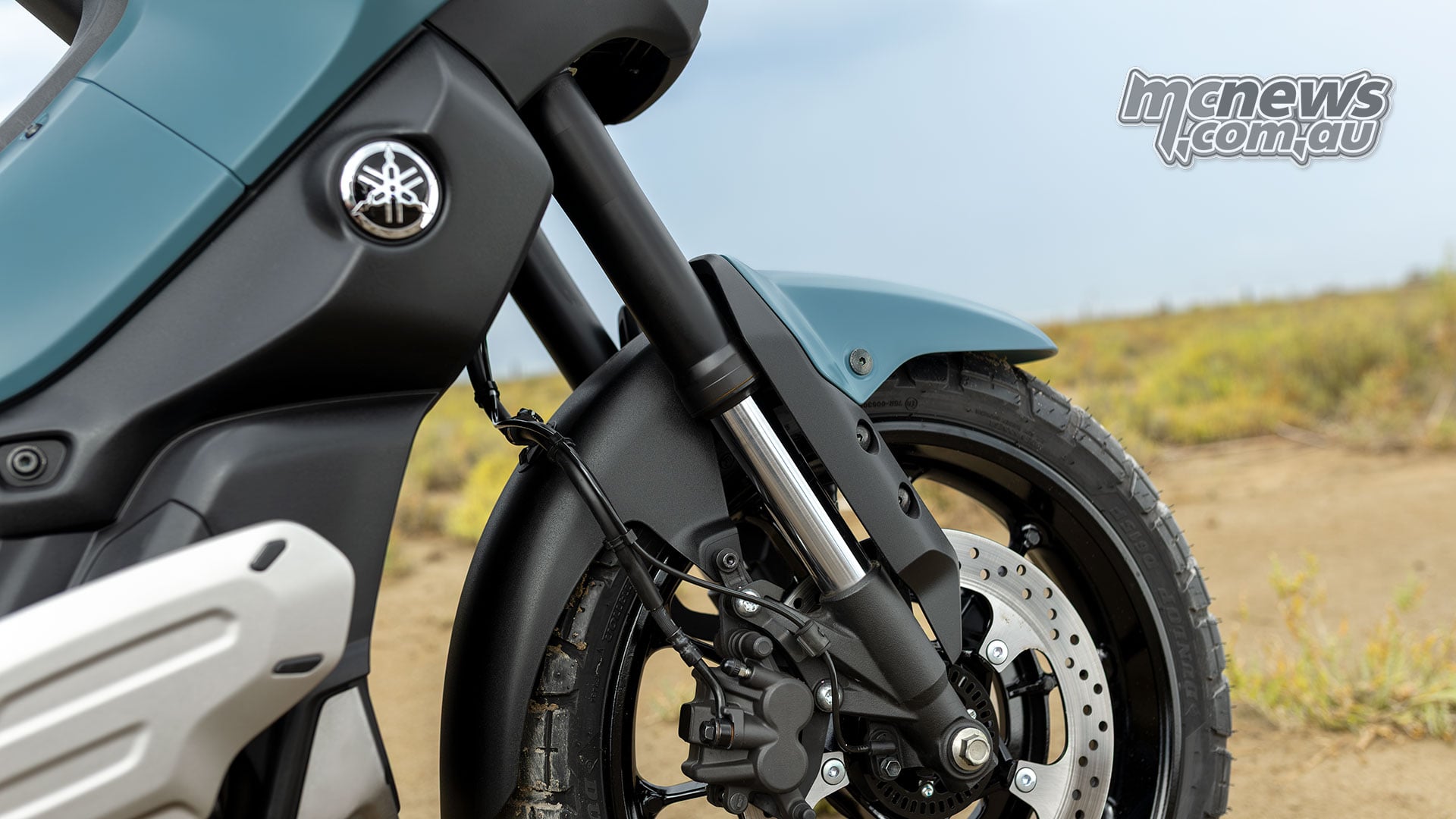
Ground clearance is quoted at a generous 185 mm, and a skid plate protects the underside.
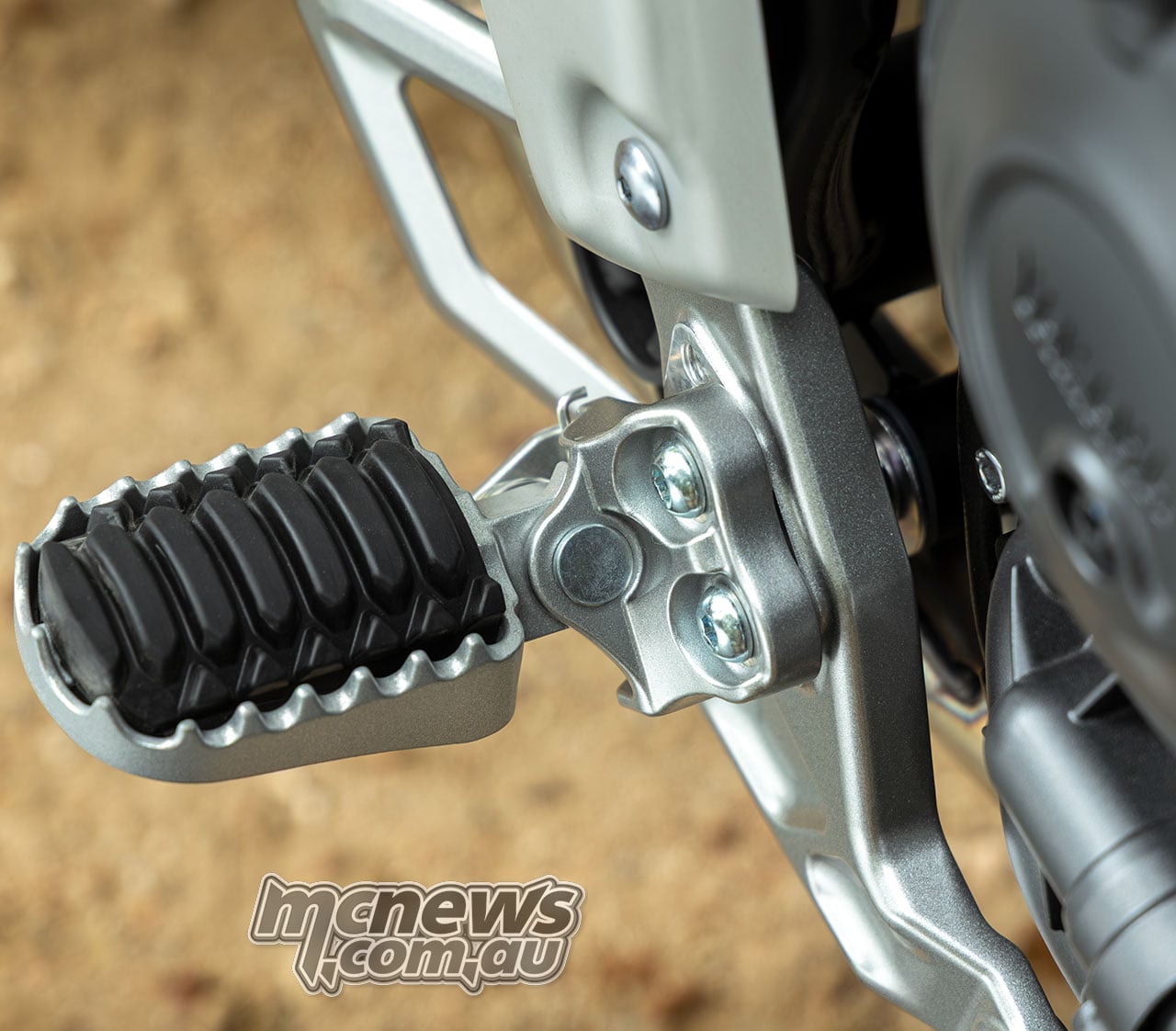
It has proper footpegs with removable rubber inserts for standing, plus folding footrests further forward for a more relaxed seated position. Yamaha has also tapered the seat to help riders move around and reach the ground. The Australian specifications now list an 810 mm seat height and a wet weight of 192 kg with a full tank and all fluids.
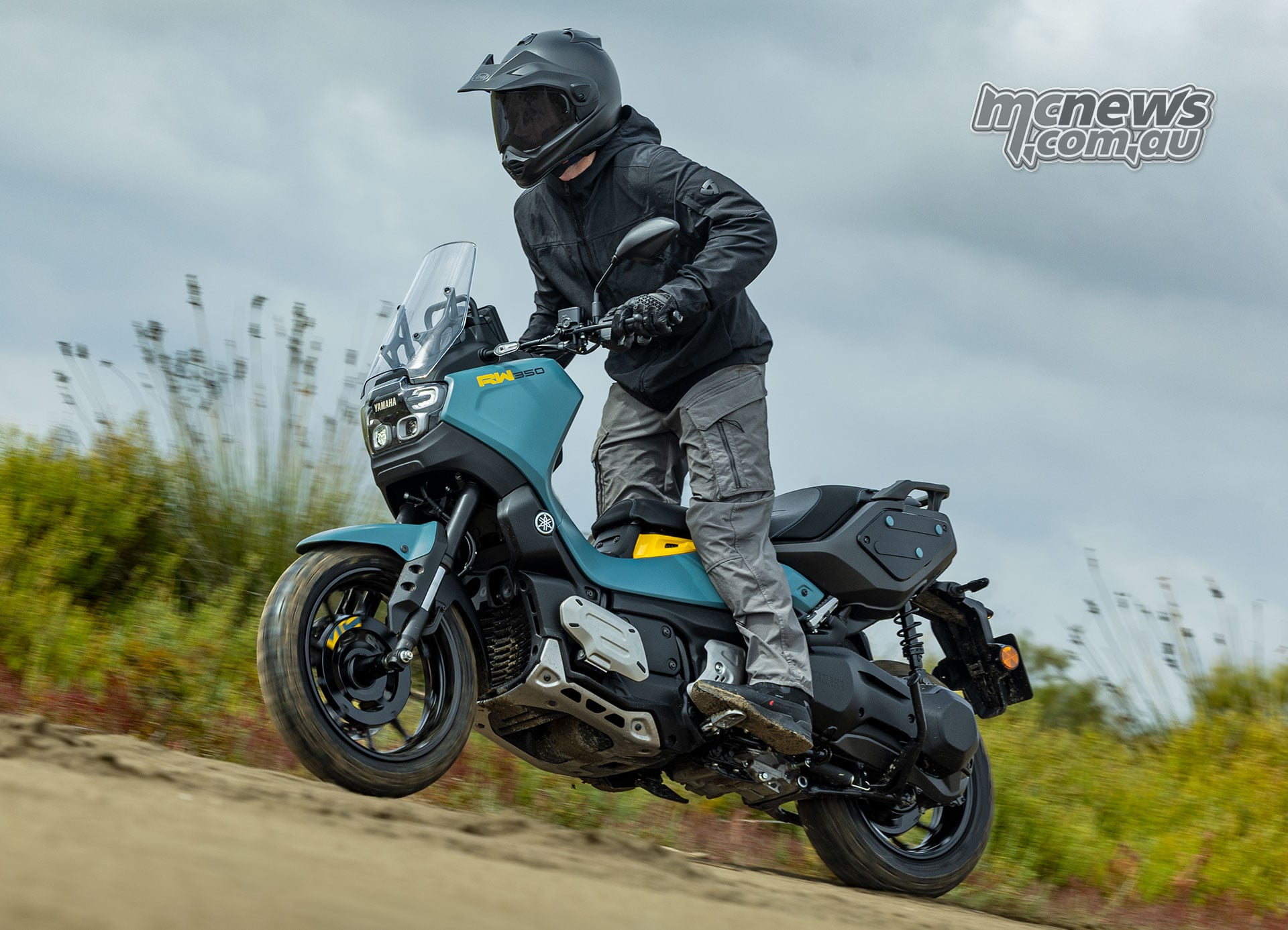
Cruise control on the smaller scooter, too
The RW350 gets Street, Explore and Eco riding modes, with different power-delivery and traction-control settings. Explore allows more rear-wheel slip for loose surfaces, while Eco softens the response.
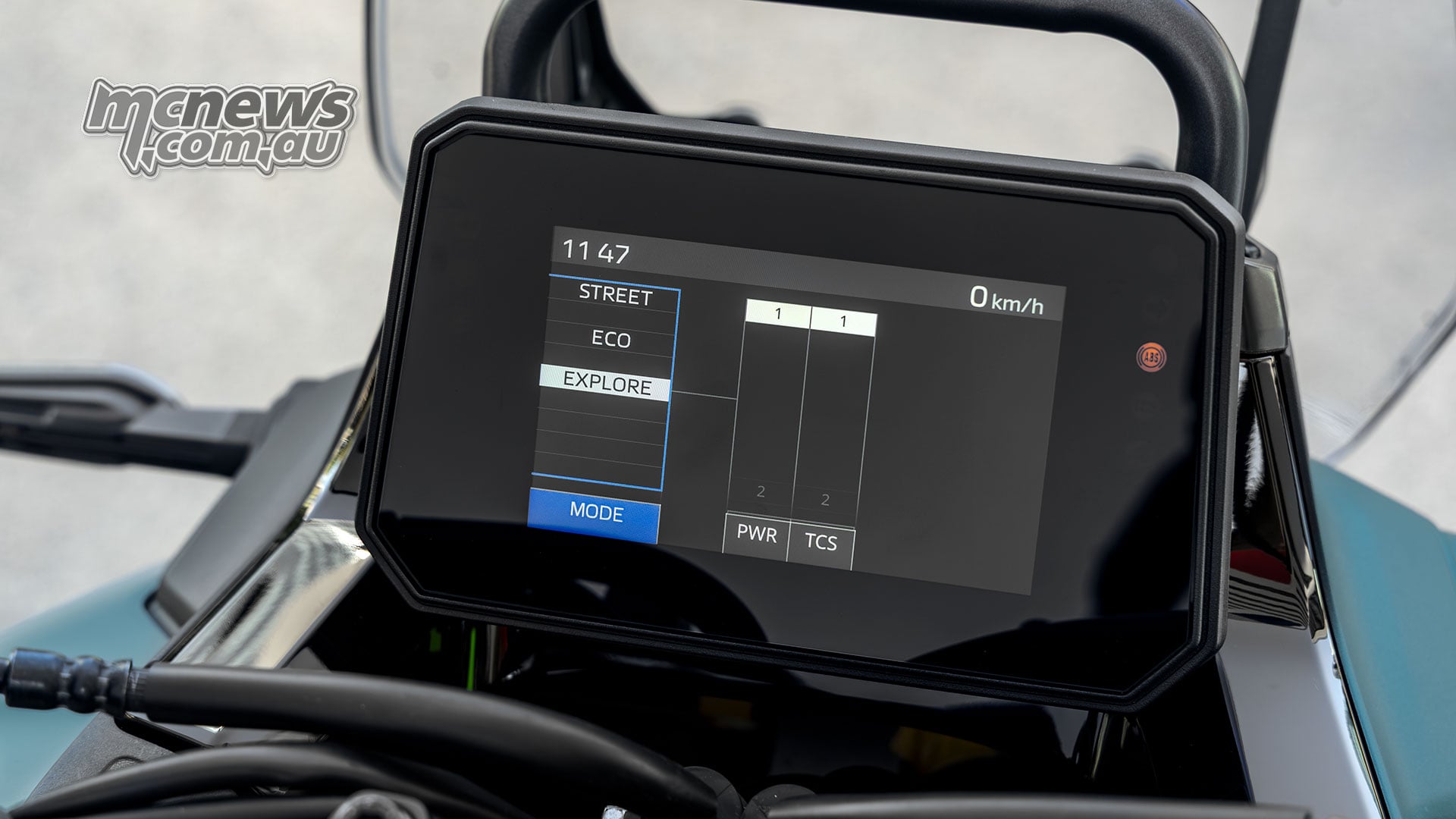
Cruise control is standard, which is a welcome inclusion on a machine that could see plenty of commuting and open-road use as it is pretty easy to lose your licence on a scooter too!
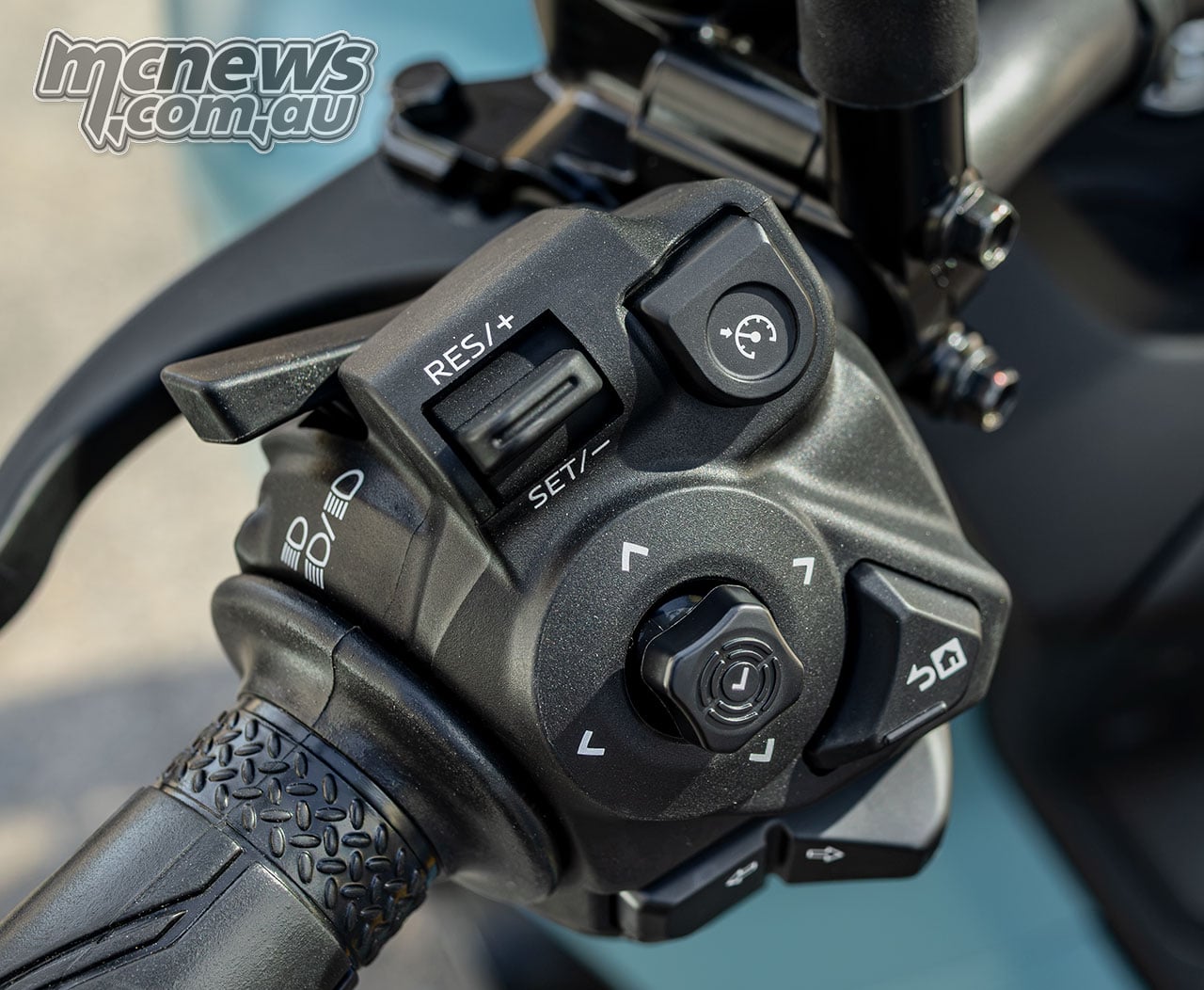
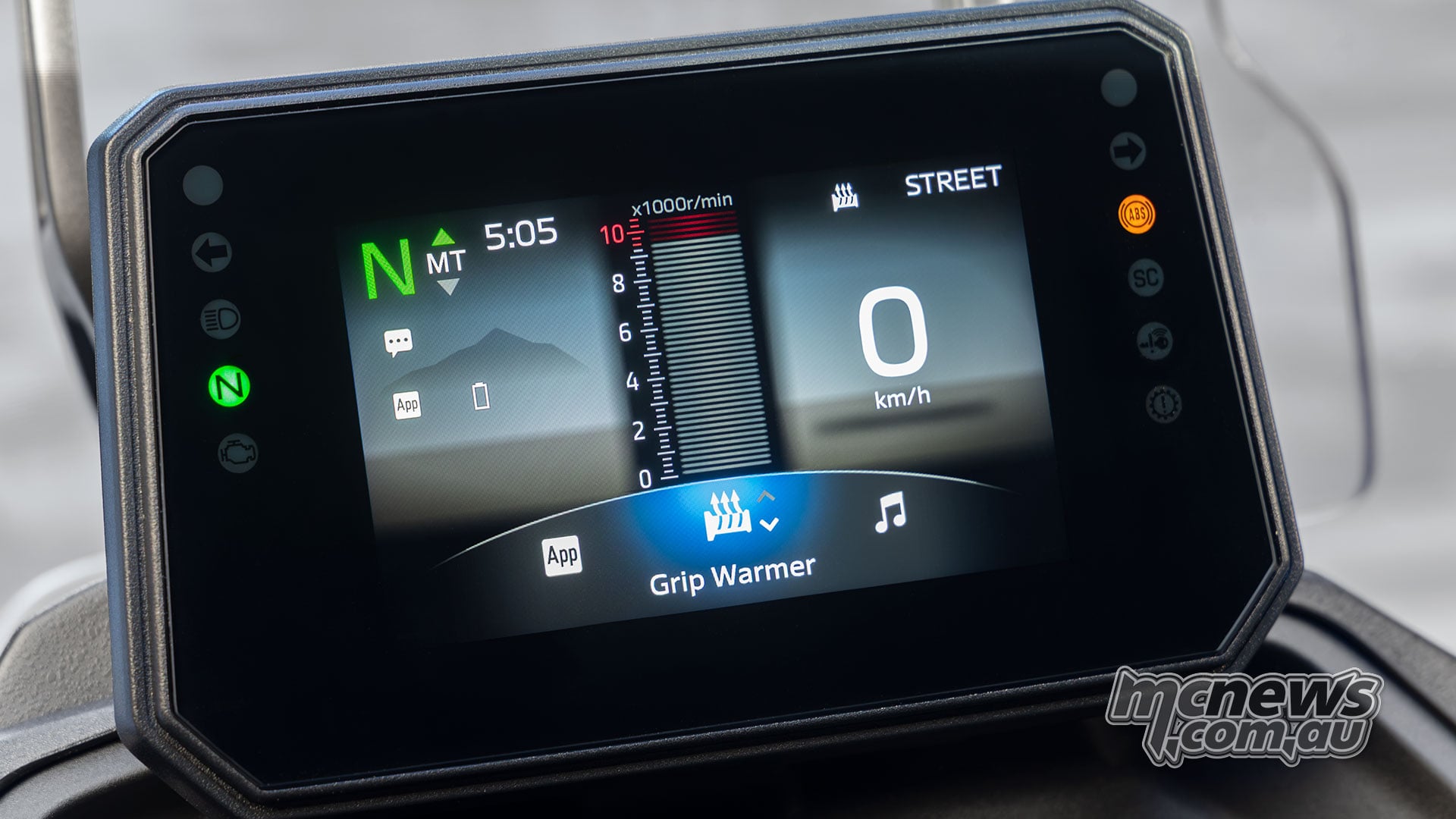
A five-inch colour TFT supports smartphone connectivity through Yamaha’s MyRide app and navigation through Garmin StreetCross. There is also USB-C charging, smart-key operation, LED lighting and self-cancelling indicators.
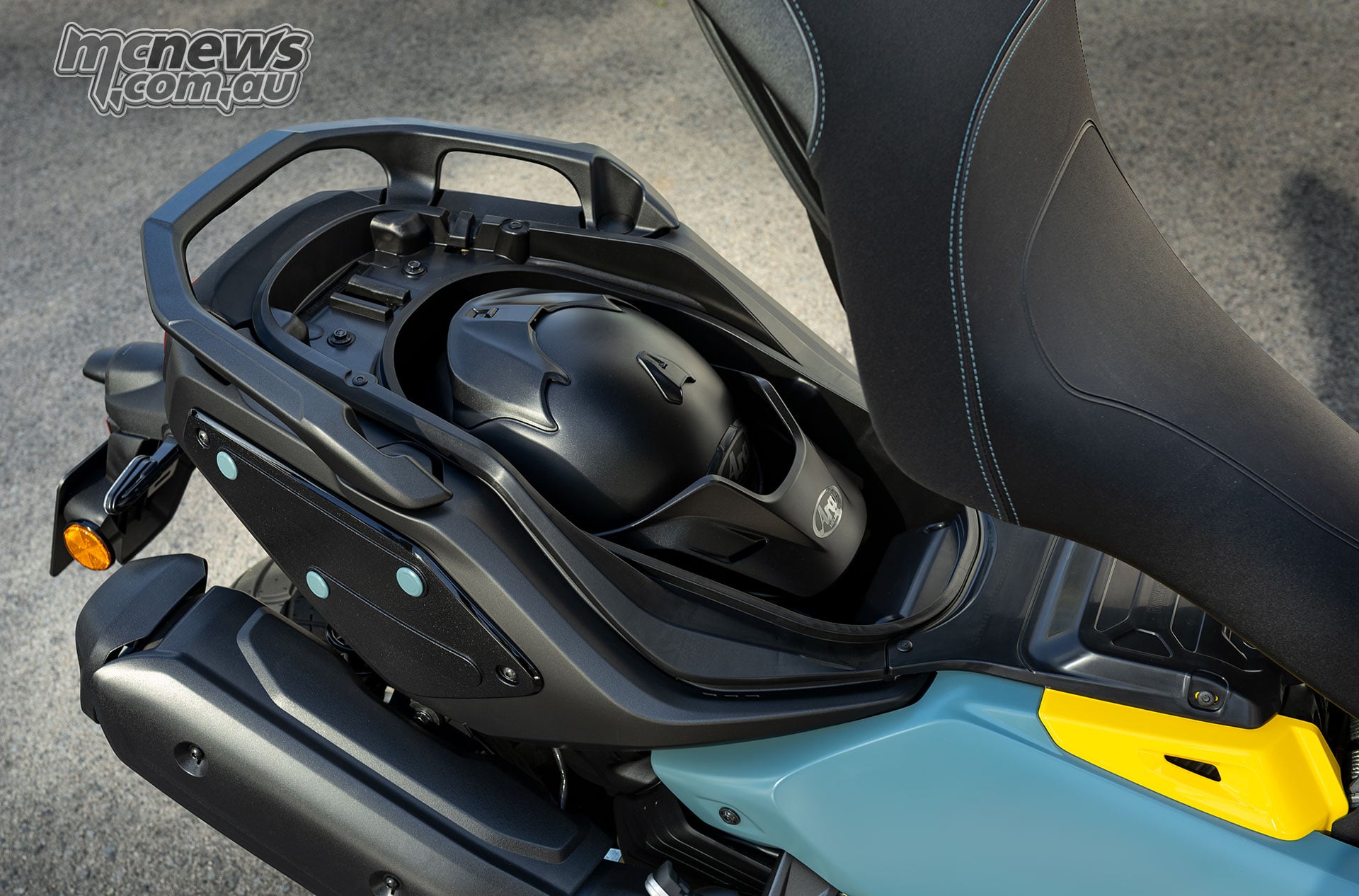
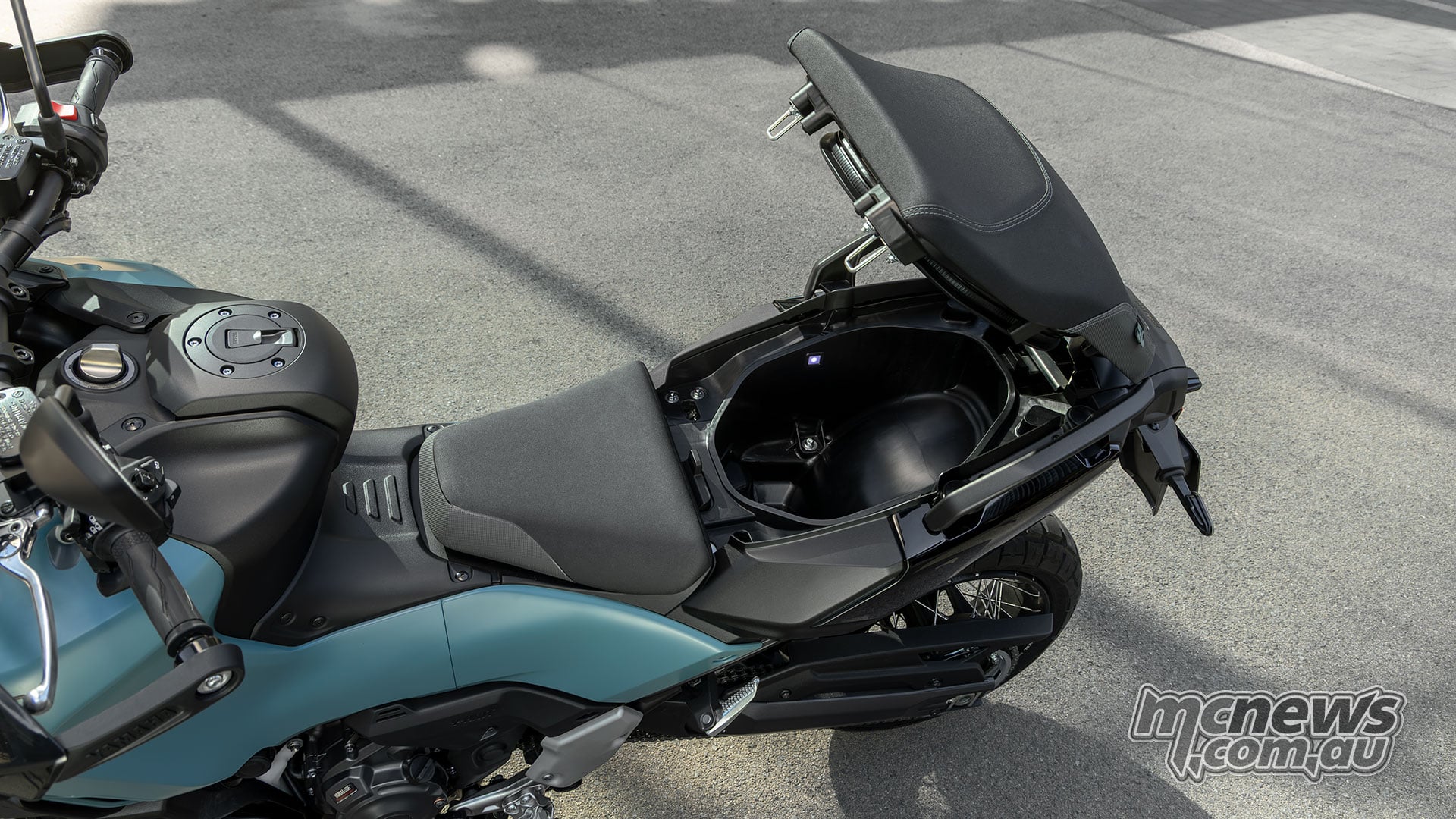
The fuel tank holds 13 litres, while Yamaha says the underseat compartment can accommodate a full-face helmet, depending on its size and shape. Australian colour choices are Sage Blue, Arashi Sand, Extreme Yellow and Midnight Black.
RW700 Explore: CP2 power with Y-AMT
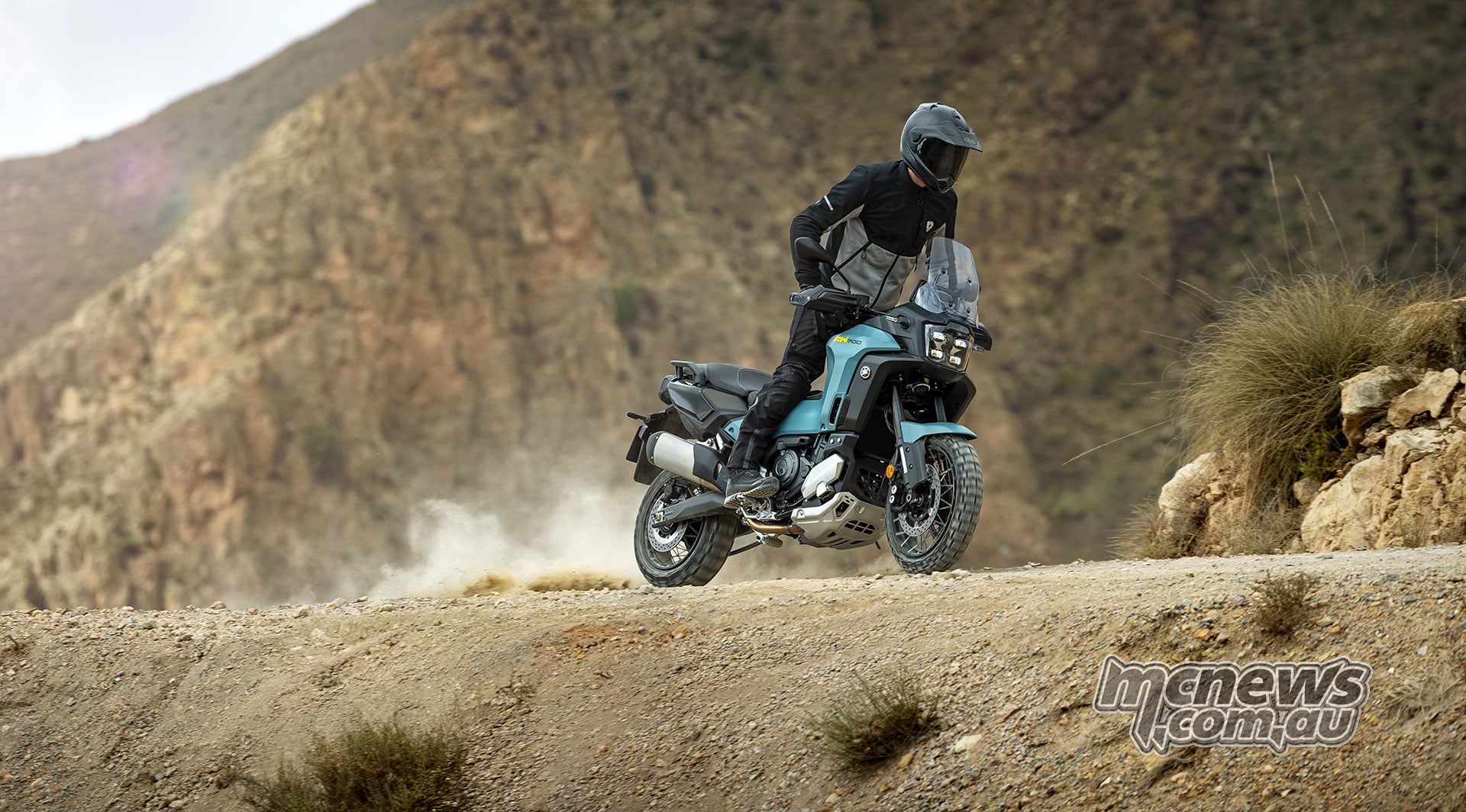
The RW700 Explore pairs Yamaha’s familiar 689 cc CP2 parallel twin with its Y-AMT automated manual transmission.
The six-speed transmission has no clutch lever or foot-operated gear lever. Riders can let the system shift automatically or select gears using a handlebar-mounted switch.
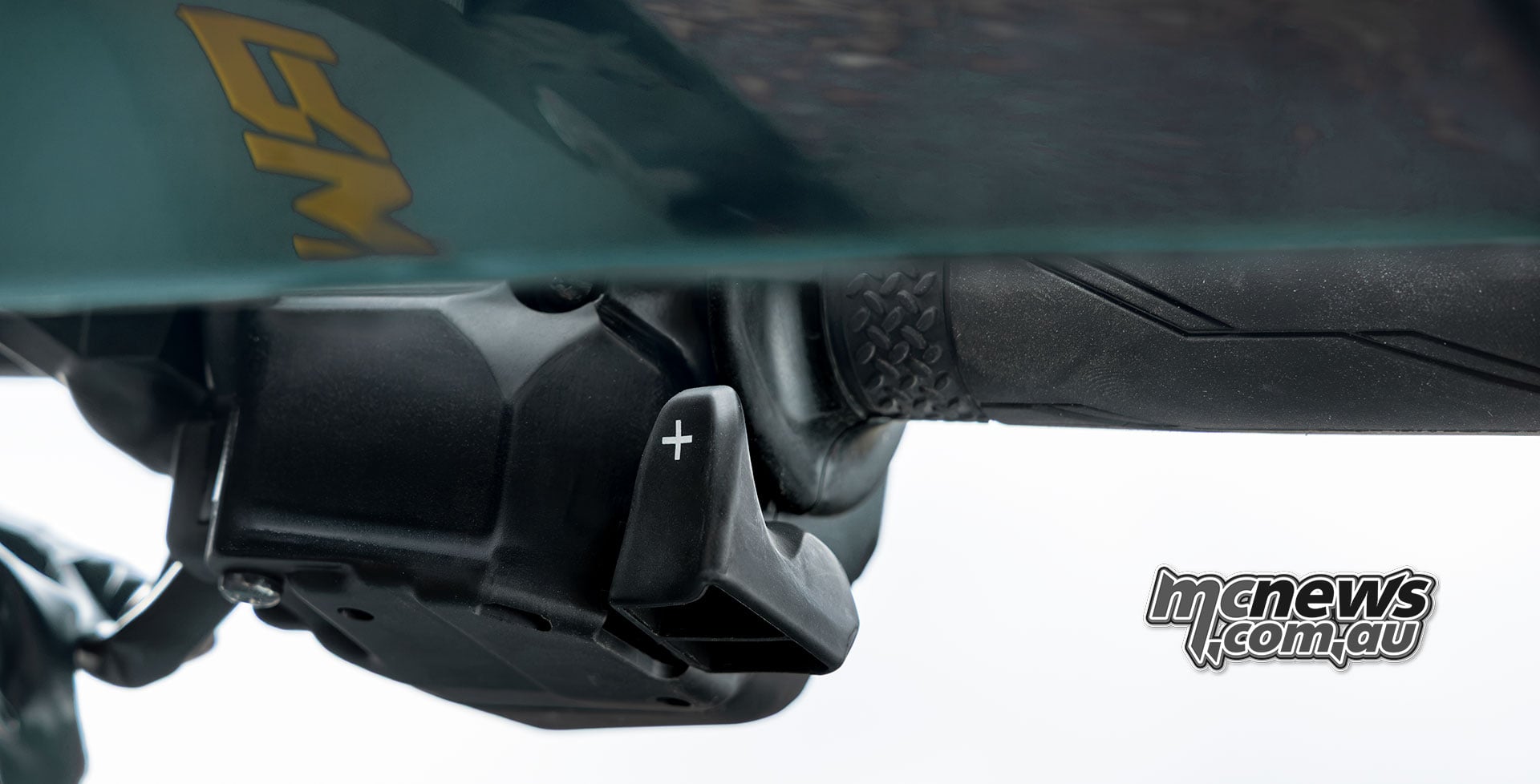
Yamaha adapted Y-AMT for this application, with changes aimed at smoother shifts and better off-road control. The handlebar switch has also been reshaped to suit the RW700’s controls.
A dedicated Gravel Shift strategy changes the automatic shifting behaviour on loose surfaces. It holds back upshifts after throttle application and while the rear wheel is sliding, helping the rider maintain a more consistent response. The system also reduces clutch engagement when it detects rear-wheel lock-up or hard braking to help prevent stalling.
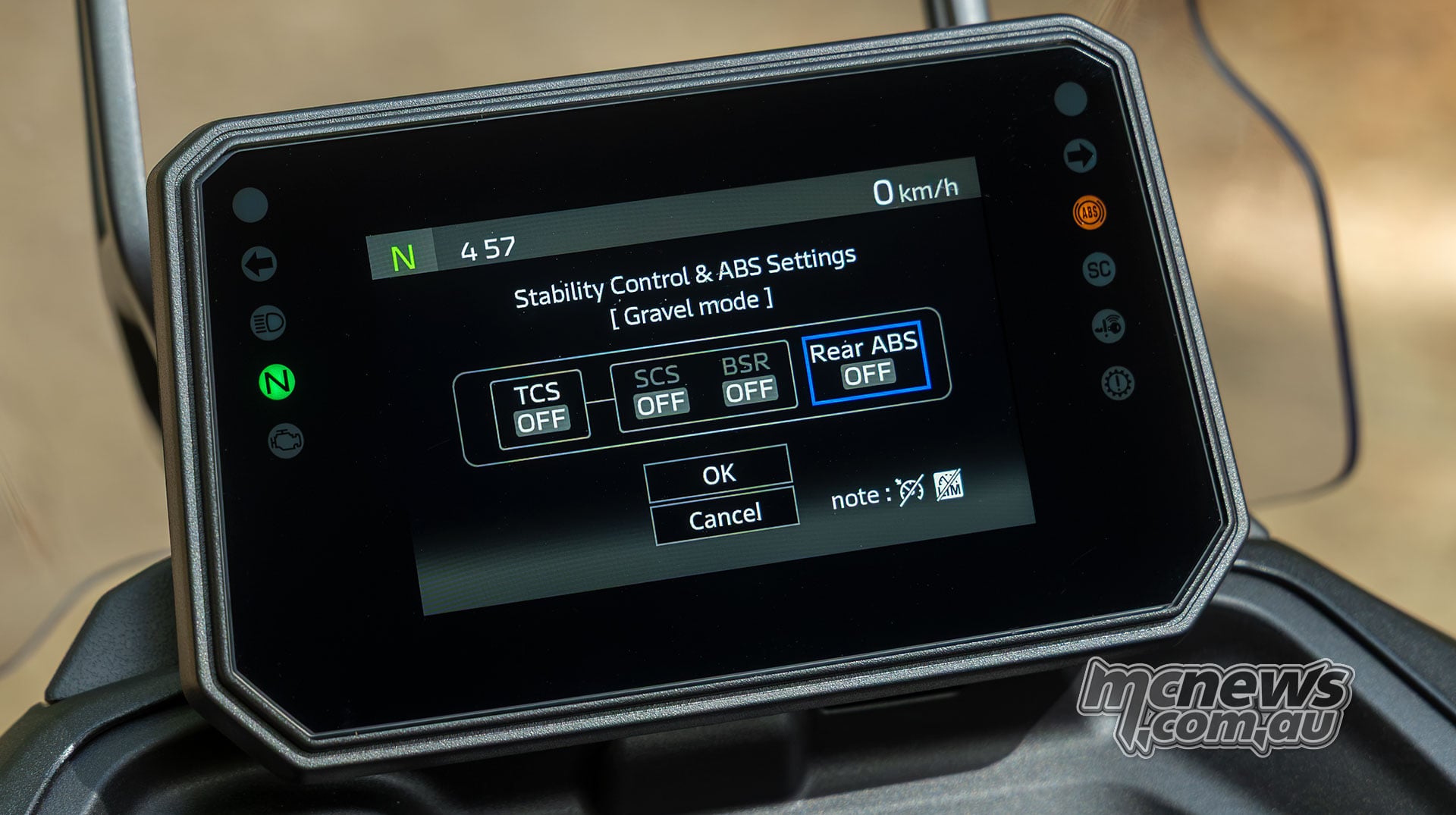
A six-axis IMU supports traction control, slide control and lean-sensitive brake control, while a back-slip regulator manages engine torque when the rear wheel threatens to lock. Street, Sport and Eco modes cover road use, with Explore and the customisable Explore+ settings intended for gravel. Rear ABS can be switched off in the gravel modes; we really hope wheelie control can be switched off too…
Cruise control and Yamaha’s variable speed limiter are standard.
More suspension and bigger wheels
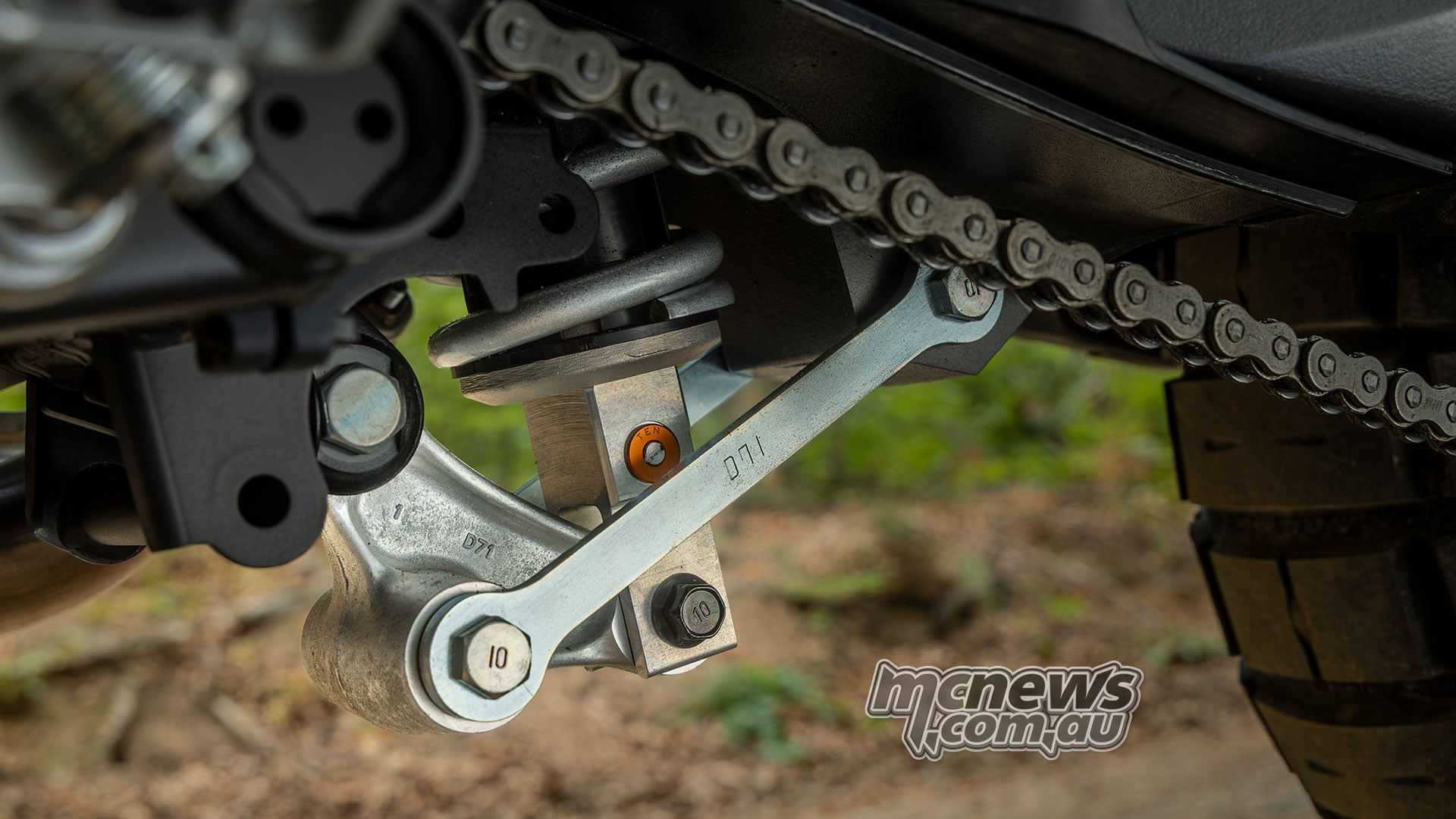
The RW700 uses a steel backbone frame, a 41 mm inverted fork with 160 mm of travel, and a linked rear monoshock offering 155 mm of travel with adjustable preload and rebound damping.
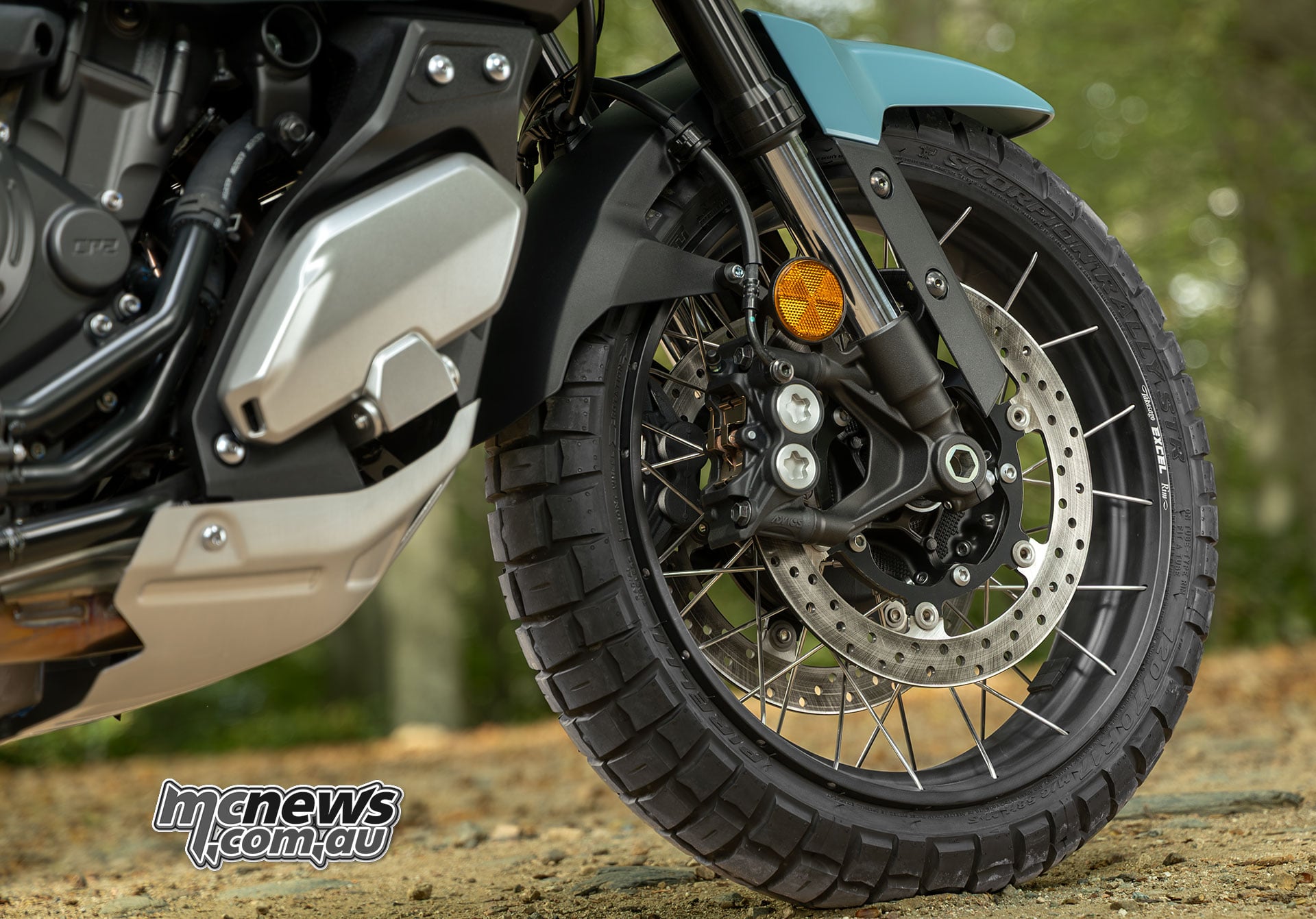
Wire-spoked wheels measure 17 inches at the front and 15 inches at the rear, fitted with Pirelli Scorpion Rally STR tubeless tyres. Twin 298 mm front discs are gripped by radial four-piston calipers, with a 267 mm rear disc.
Yamaha’s Australian specification table quotes a wet weight of 224 kg, an 810 mm seat height and 170 mm of ground clearance for the RW700 Explore. An aluminium skid plate, hand protection and a fixed windscreen are part of the package.
The footpegs offer four mounting positions, while folding forward footrests provide another place to stretch out. As with the smaller model, the seat and bodywork are shaped to let riders move between sitting and standing.
A 14-litre tank, five-inch TFT, smartphone connectivity, Garmin navigation, smart key and USB-C charging cover the practical side. Underseat storage is claimed to take a full-face helmet, again subject to its size and shape. The standard RW700 offered overseas comes in Sage Blue or Power Grey.
RW700 Explore adds comfort and adjustment
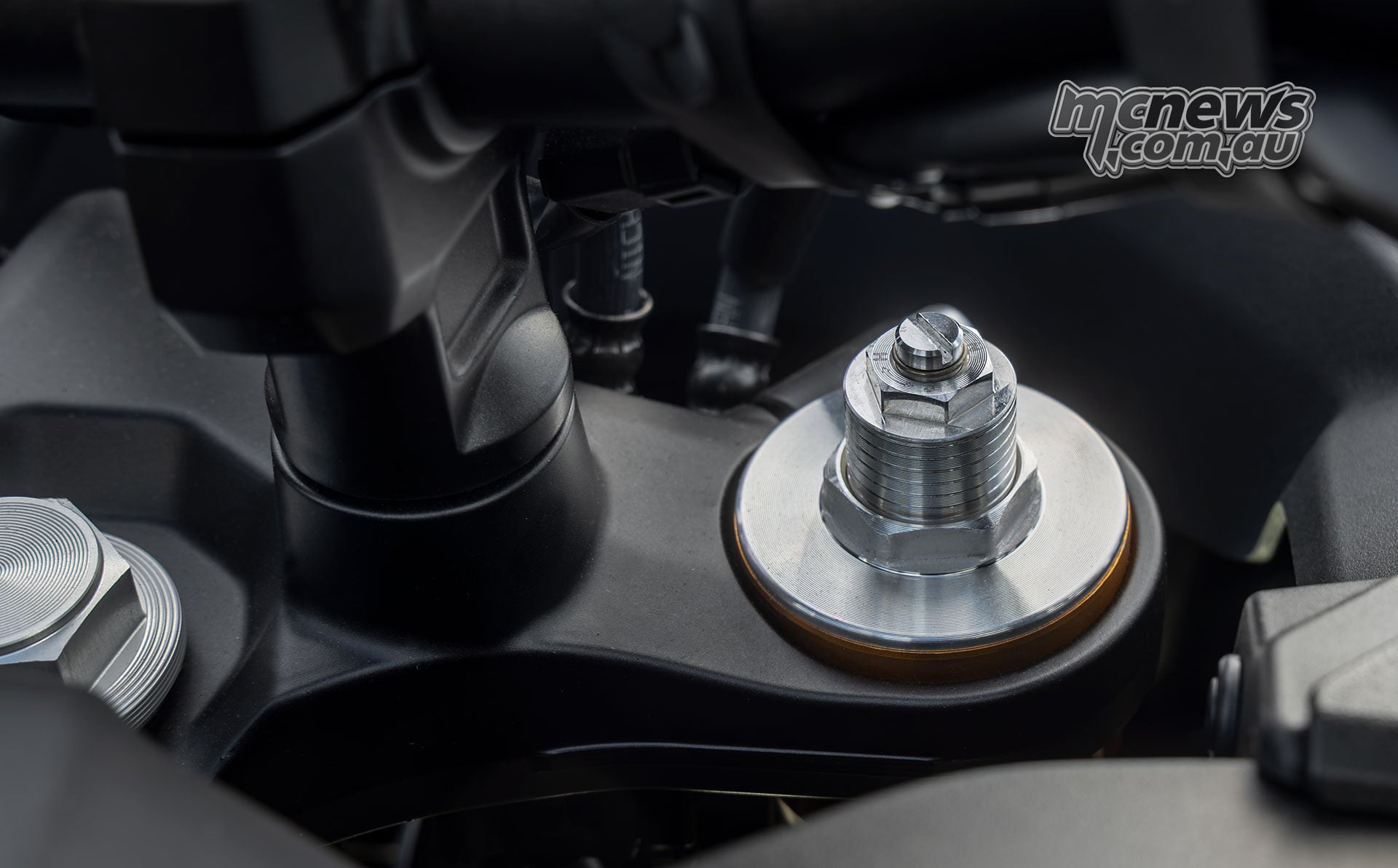
The RW700 Explore adds front-fork adjustment, with 15 mm of preload adjustment and 11 rebound-damping settings.
It also gets heated grips and a heated rider’s seat, each with ten settings, plus a centre stand and backlit switchgear. Australian colours are Forest Green, Sage Blue and Midnight Black, the latter with Sage Blue detailing.
Yamaha is also offering accessory luggage, including aluminium cases and soft bags, along with additional protection equipment for the RW range.
Australian specifications
| Specification | RW350 | RW700 Explore |
|---|---|---|
| Engine | 327 cc single-cylinder | 689 cc CP2 parallel twin |
| Transmission | V-belt CVT | Six-speed Y-AMT |
| Final drive | Gear | Chain |
| Front suspension | 37 mm inverted fork, 140 mm travel | 41 mm inverted fork, 160 mm travel |
| Rear suspension | Twin shocks, 105 mm travel | Monoshock, 155 mm travel |
| Front brakes | Single 282 mm disc | Twin 298 mm discs |
| Rear brake | 245 mm disc | 267 mm disc |
| Front / rear wheels | 16 / 14 inches | 17 / 15 inches |
| Seat height | 810 mm | 810 mm |
| Wet weight, full fuel | 192 kg | 224 kg |
| Ground clearance | 185 mm | 170 mm |
| Fuel capacity | 13 litres | 14 litres |
| Wheelbase | 1540 mm | 1585 mm |
| Warranty | Two years, unlimited kilometres | Two years, unlimited kilometres |
Could they start a new scooter movement?
These machines make a lot of sense for the way many people ride. Weather protection and storage are useful every day. Extra suspension travel could be just as welcome on a battered suburban road as on a gravel detour. The ability to stand on the pegs gives them another dimension beyond a conventional commuter scooter.
The RW350 is the one I would particularly like to see Australians give a chance. With suitable pricing and LAMS approval, it could introduce people to riding on something they continue to find useful long after their licence restrictions end.
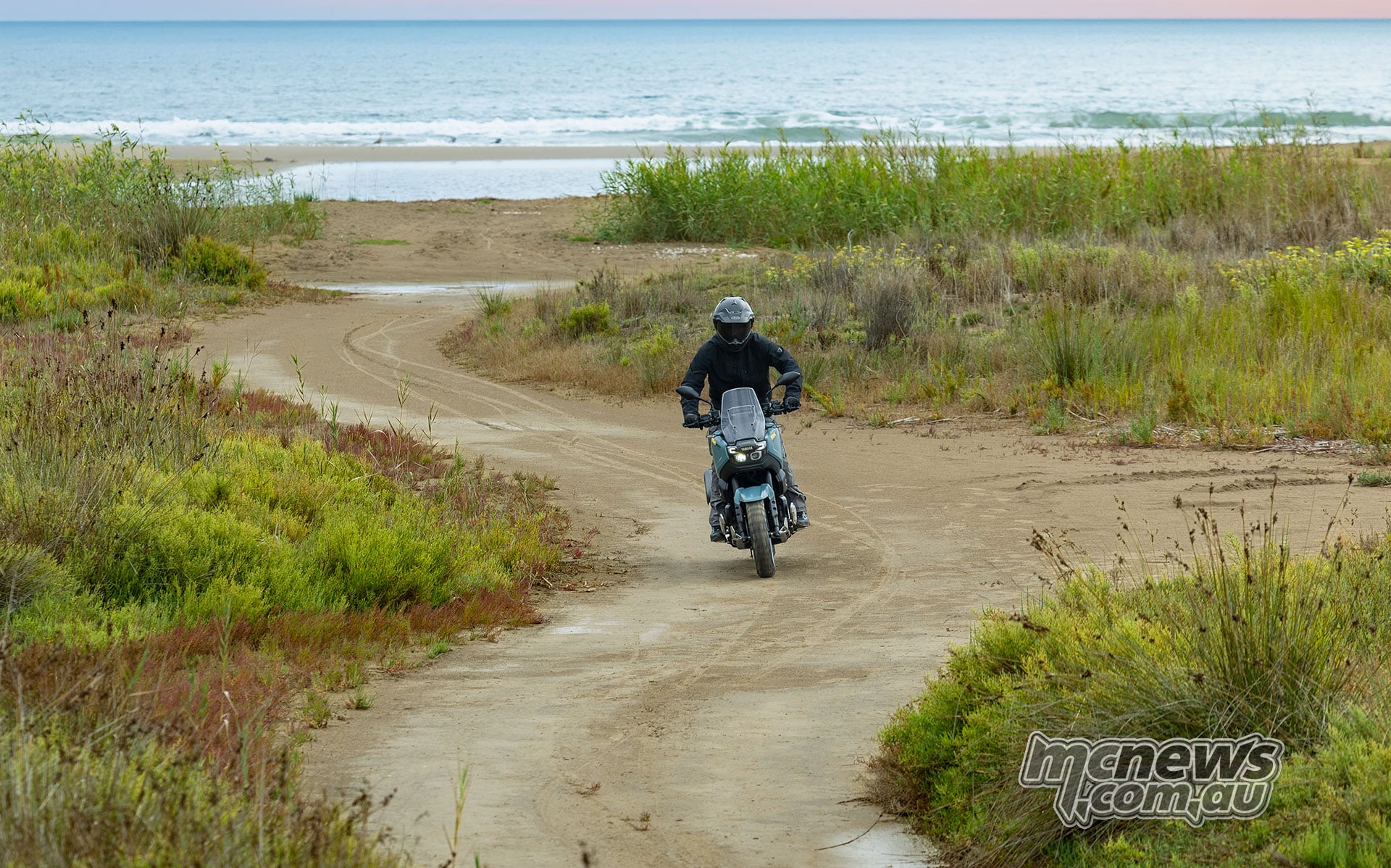
We still need the numbers to help buyers make that decision, and the main ones we need are prices…
Now, while I’m not young, I’m not old enough to have been a mod on a moped in the sixties. My own motorised two-wheel journey began on a pedal-start Motobecane 50 in the late eighties.
In Western Australia back then, I could ride a 50 cc moped at 16, although I still had to pass a riding test every bit as stringent as the one for a full motorcycle licence.
I broke three number plates off that Motobecane by taking wheelies a little too far back. Other hijinks might have involved skidding through shopping centre malls and using a railway pedestrian crossing to escape the cops. It went bush, too. Sometimes even on purpose…
That little Motobecane introduced me to the freedom and mischief you could find on two wheels. Perhaps something like the RW350 could give a new generation their own taste of that freedom, with rather less pedalling and breakdowns, as while I had an obscene amount of fun on that Motobecane, its engineering left a lot to be desired. That did at least teach me some mechanical skills…
Could the RW range help breed a new mods scooter movement? Stranger things have happened.