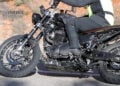


Triumph Bonneville T40
Retro character meets serious tech
Earlier today we took a broader look at Triumph’s 2027 model offensive, which will unfold over the final months of 2026 and includes an extensively revised Tiger 1200, a new Tiger 900 and perhaps most intriguingly, a Street Triple 798 powered by an engine developed for the 2027 Moto2 World Championship.
That initial preview also gave us our first look at another important addition – the Bonneville T40.
We now have the complete rundown on that bike, and the story goes considerably deeper than simply wrapping Triumph’s increasingly successful 400 cc single-cylinder platform in some handsome Bonneville clothes.
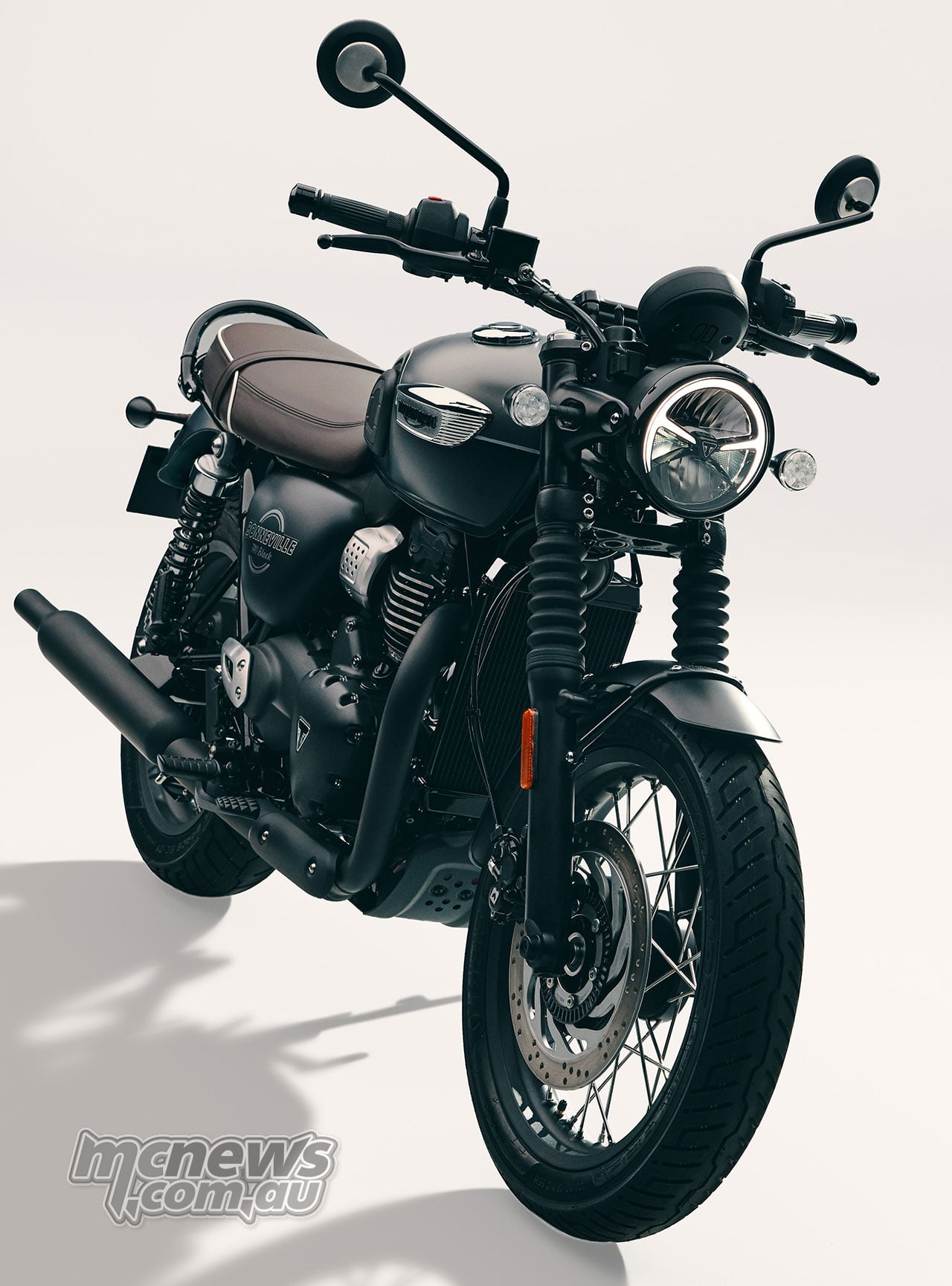
The Bonneville T40 and T40 Black receive a dedicated chassis, revised cylinder head, and their own markedly different engine tune, along with conventional twin-shock suspension, wire-spoked wheels, and a surprisingly sophisticated electronics package incorporating a four-inch TFT, five riding modes, cruise control, full-map navigation, and lean-sensitive rider aids.
Perhaps most interestingly, Triumph has resisted the temptation to chase headline horsepower. In fact, the T40 gives away a substantial amount of power to the other members of the TR-Series family in pursuit of a more relaxed, torque-focused Bonneville character.
A new route into the Bonneville family
The timing makes plenty of sense. Triumph’s 400s have already found a strong audience in Australia, and one rather broader than the small capacity might initially suggest.
When we recently tested the Tracker 400 and Thruxton 400, Triumph told us almost 1500 of its 400 cc machines were already on Australian roads.
More revealing was the demographic. Around 70 per cent of local Triumph 400 customers were over 40, while roughly 70 per cent were also new to Triumph. Thus, while the bikes might provide an accessible entry point for younger and newer riders, plenty of experienced motorcyclists are also deciding that a relatively inexpensive, manageable and nicely finished 400 can make a great deal of sense.
The Bonneville T40 potentially speaks to that mature audience more directly than any of the TR-Series machines to date.
Rather than trying to make the little single look faster, tougher or more aggressive than it really is, Triumph has leaned hard into traditional motorcycle proportions and its own heritage.
More than a Speed 400 wearing retro clothes
Triumph Chief Product Officer Steve Sargent says the brief was not simply to create a smaller Bonneville, but to deliver the style, character and ownership experience expected of a genuine member of the family.
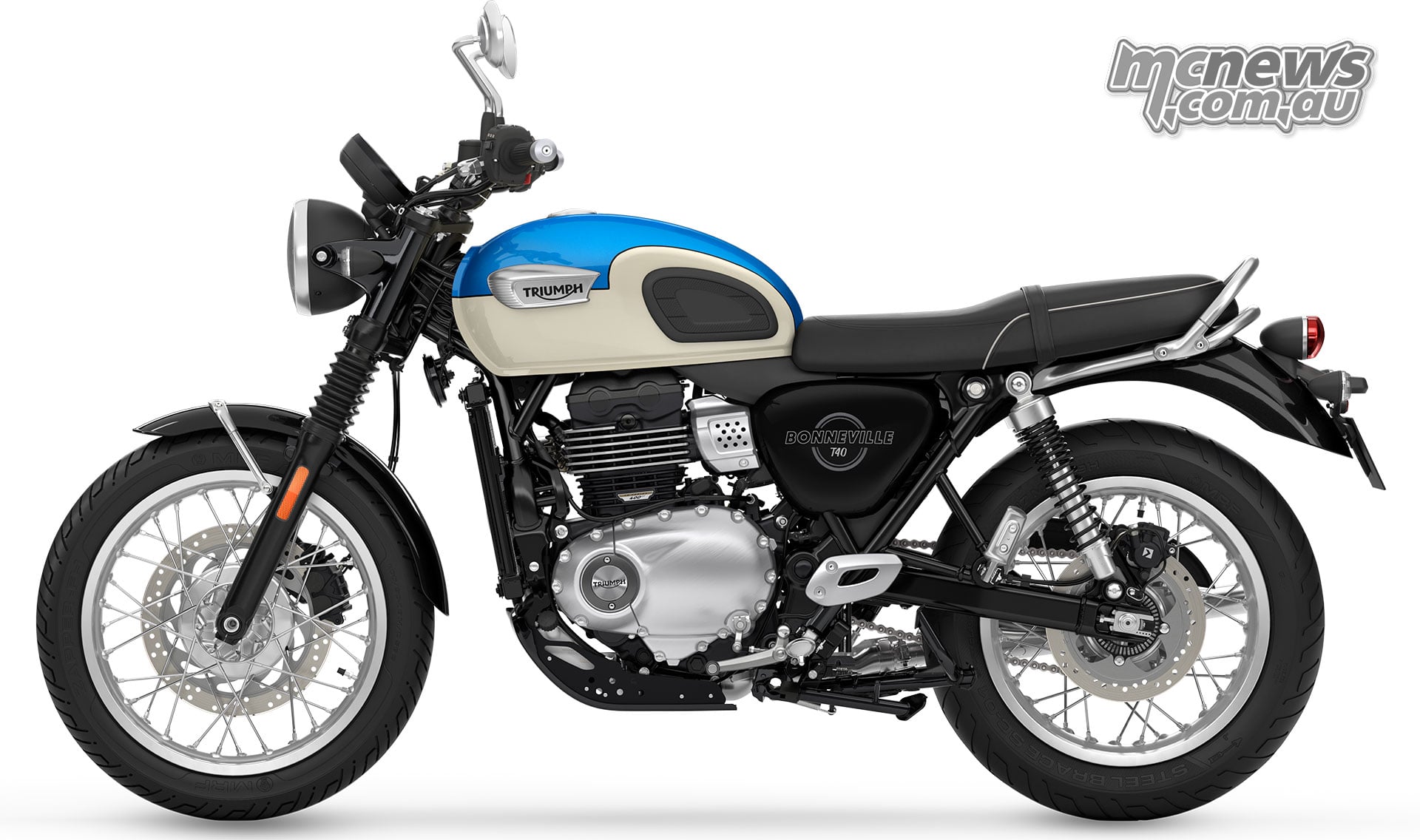
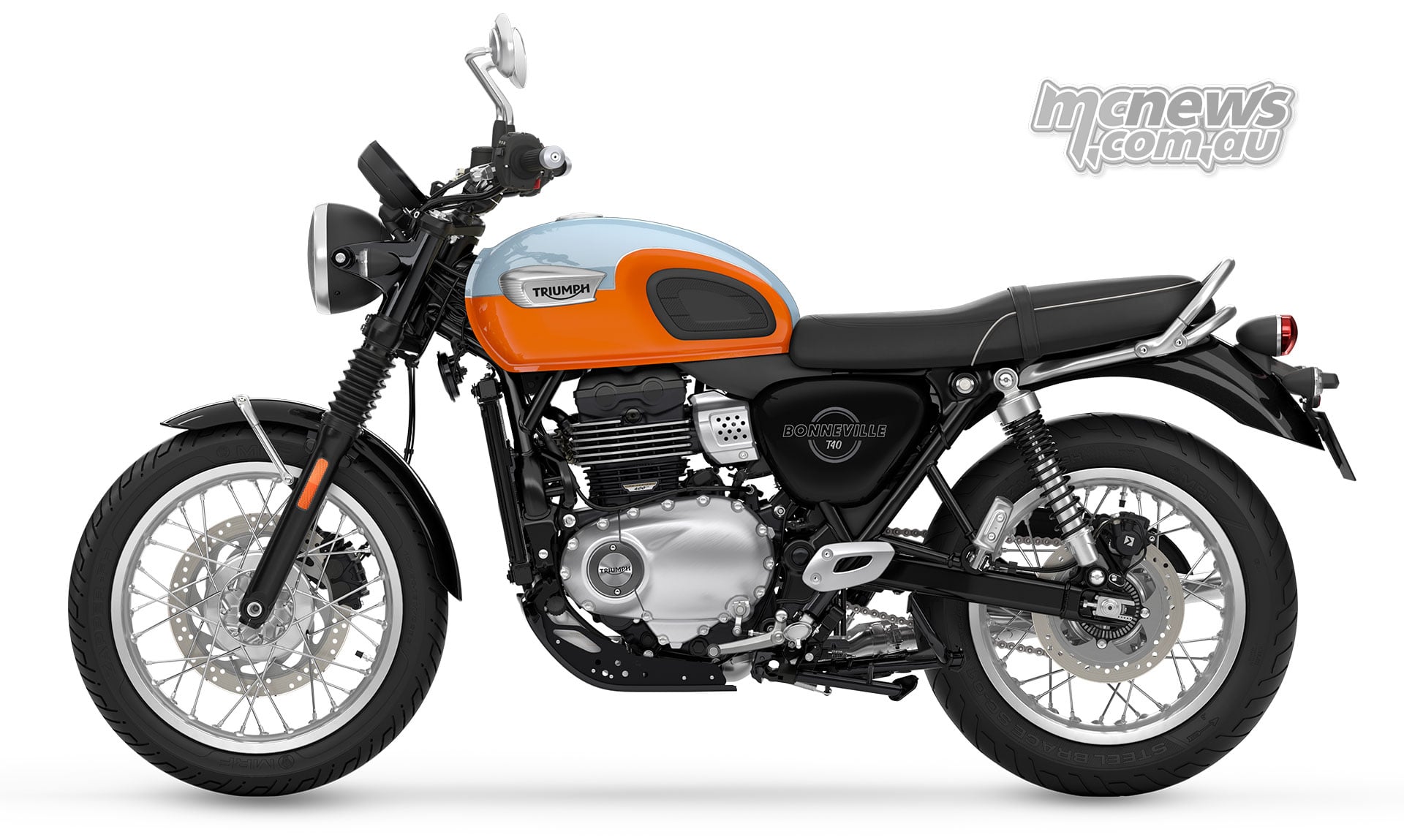
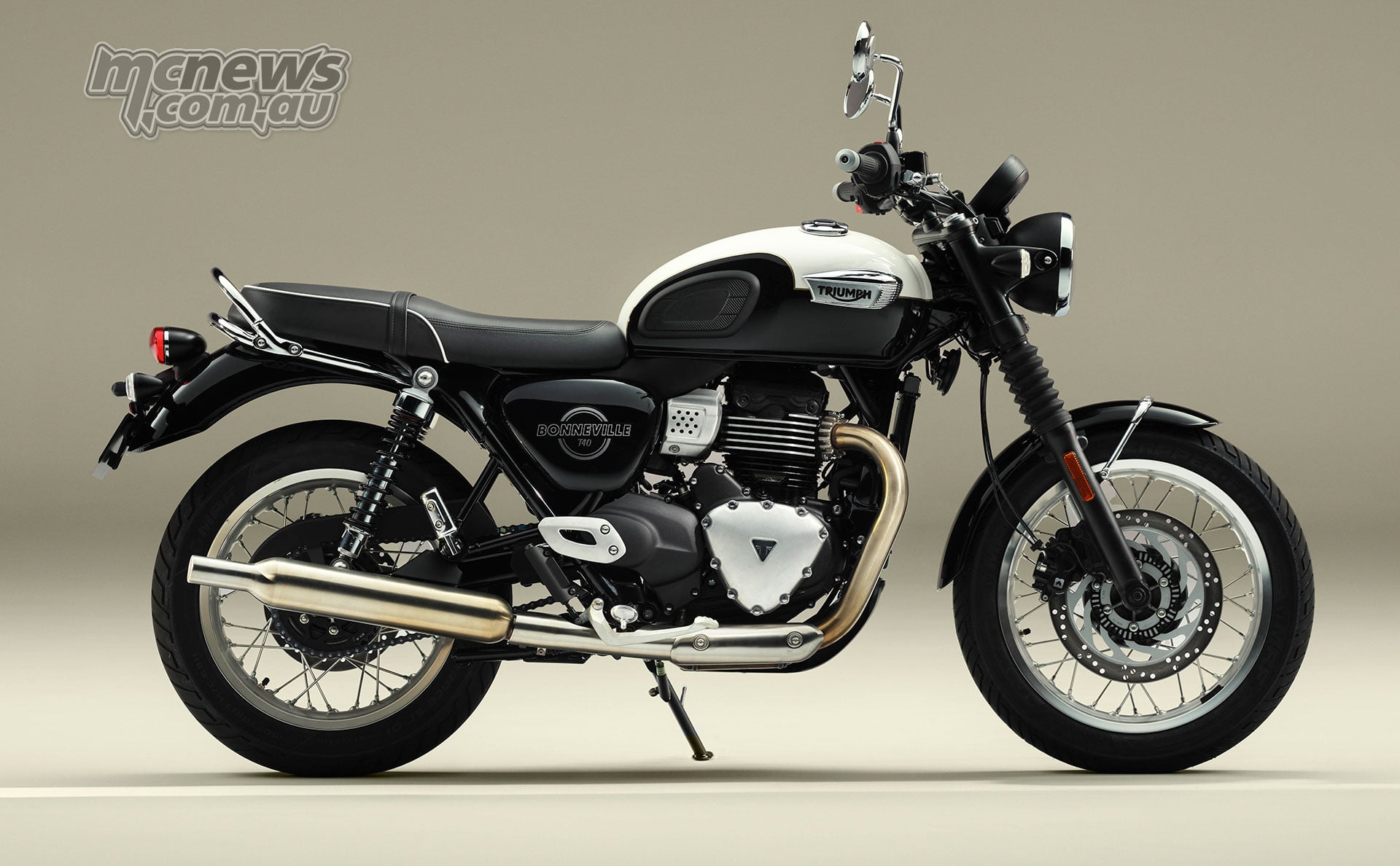
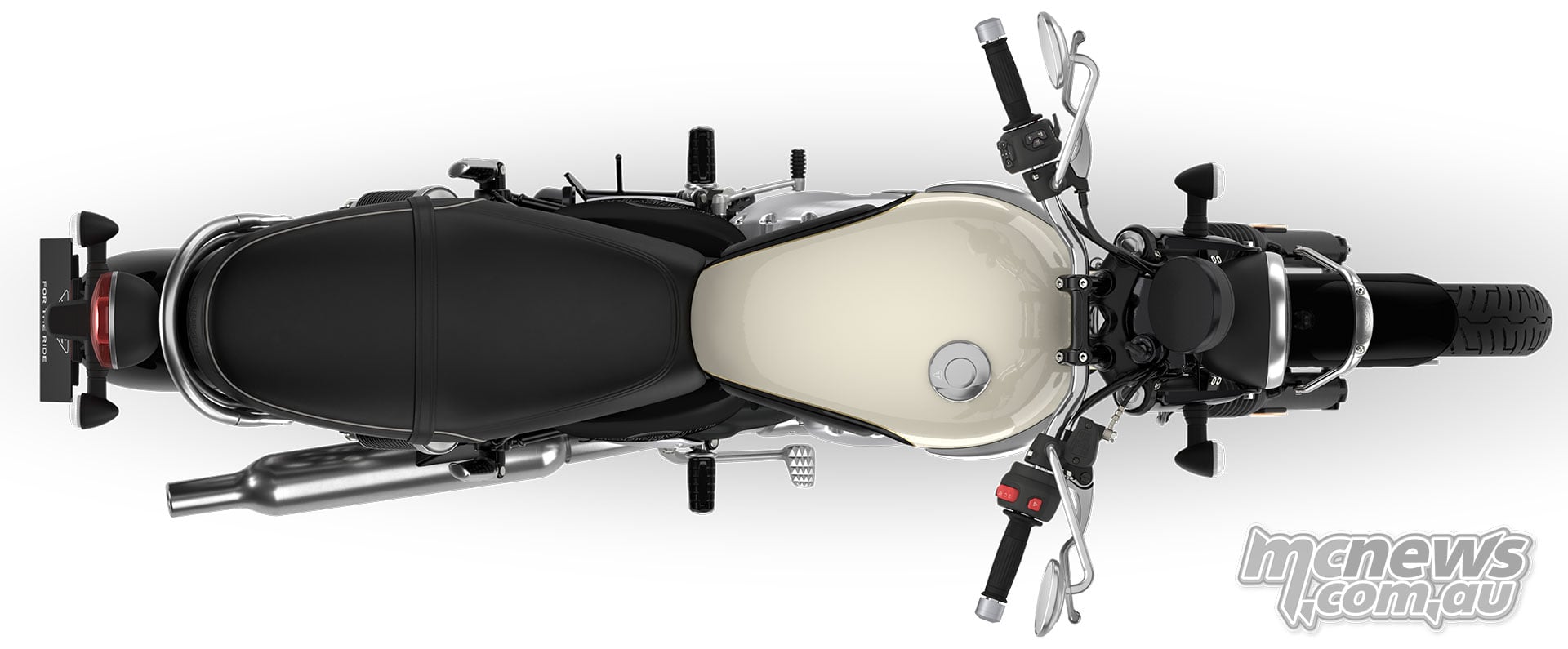
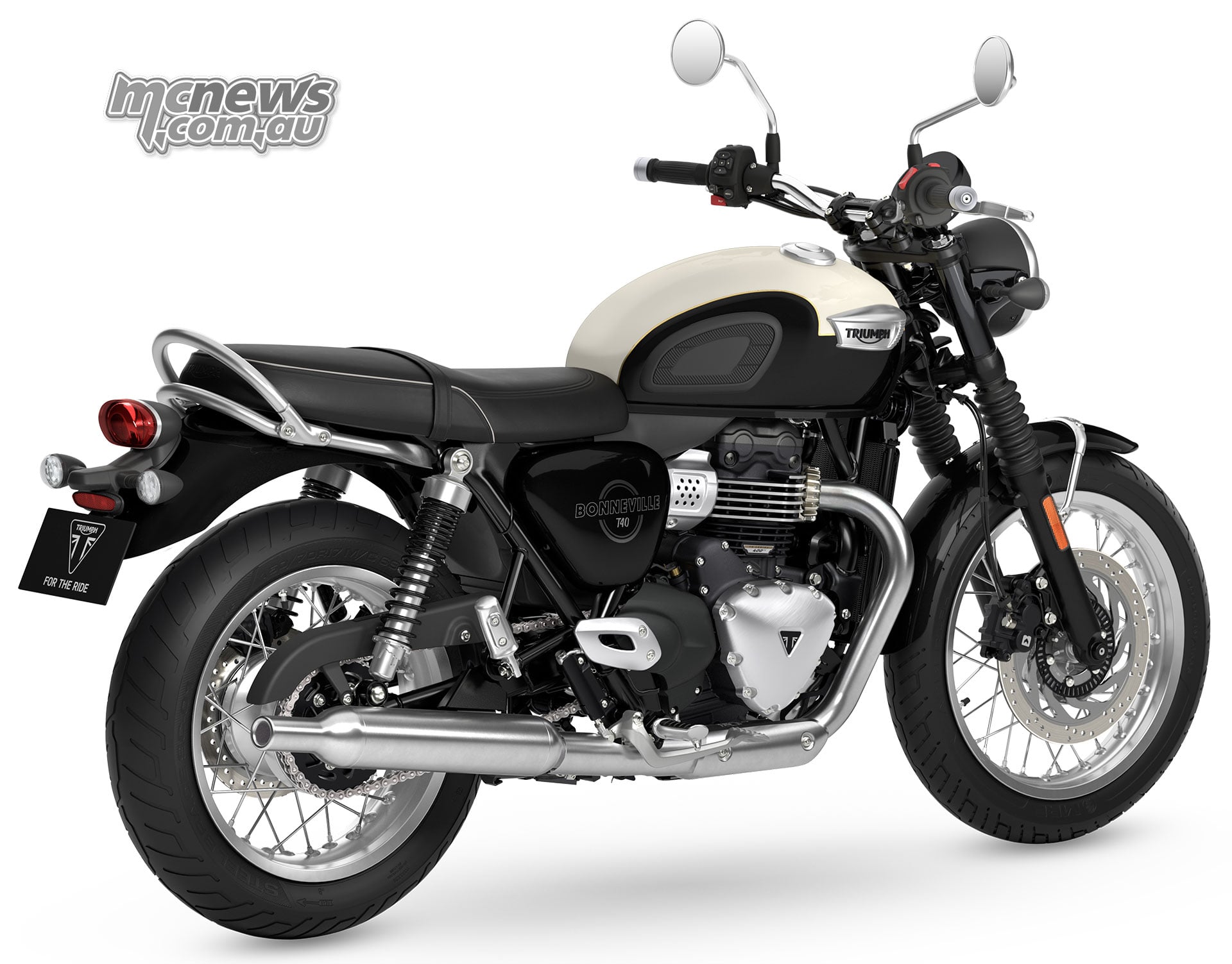
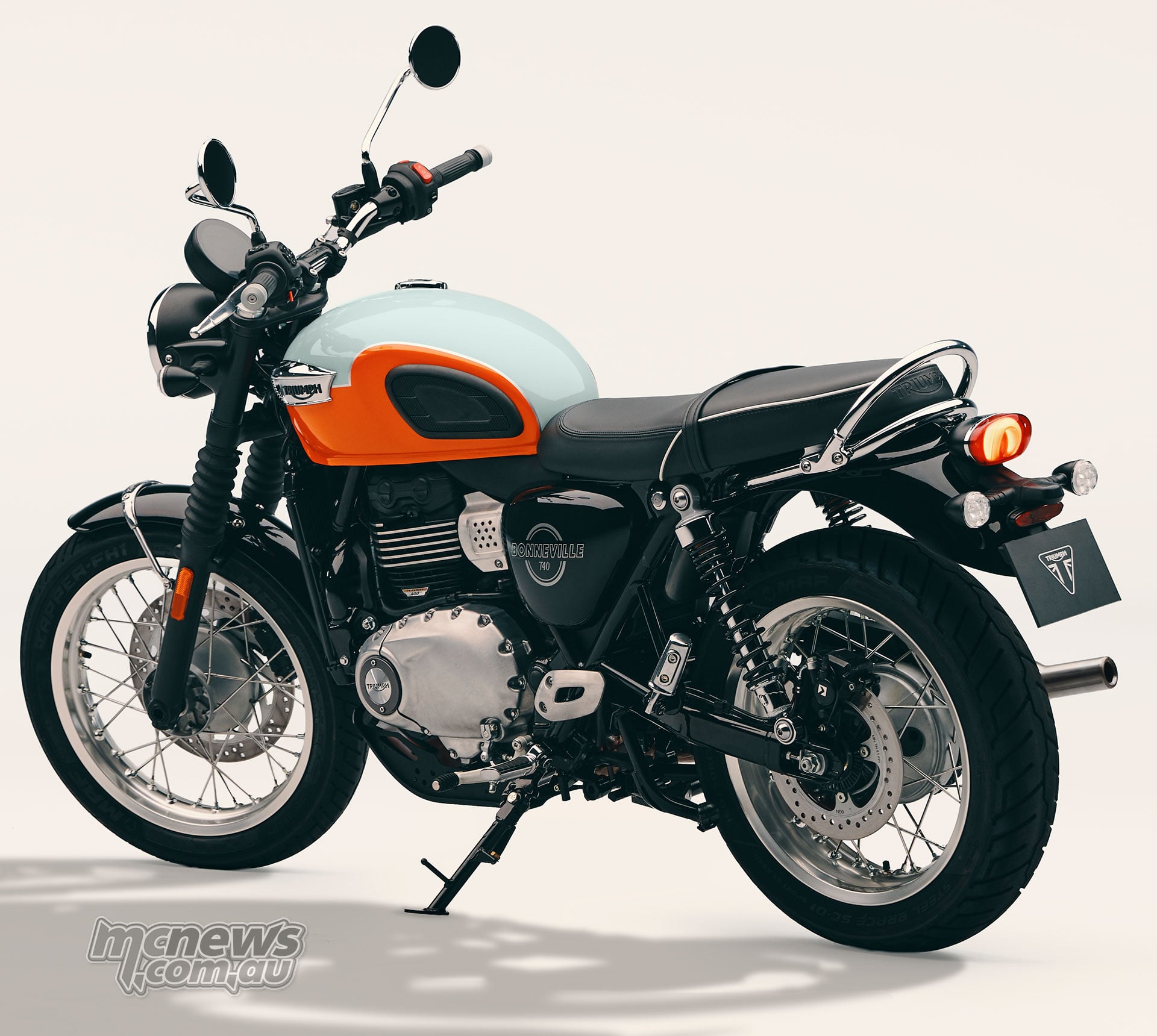
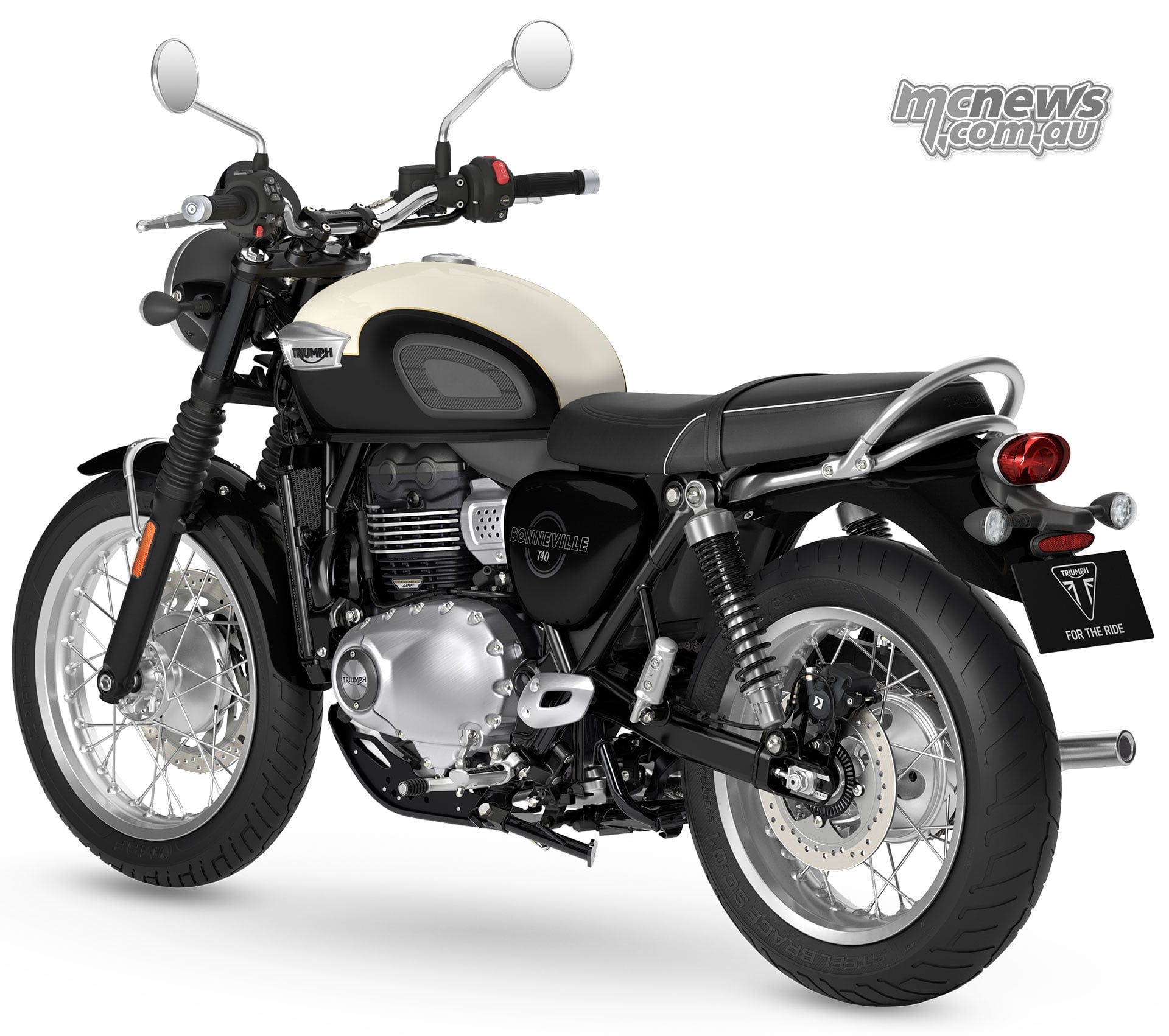
The teardrop fuel tank forms the visual centrepiece, accompanied by longer mudguards, a traditional round headlight, fork gaiters, wire-spoked wheels, twin rear shocks and a peashooter silencer.
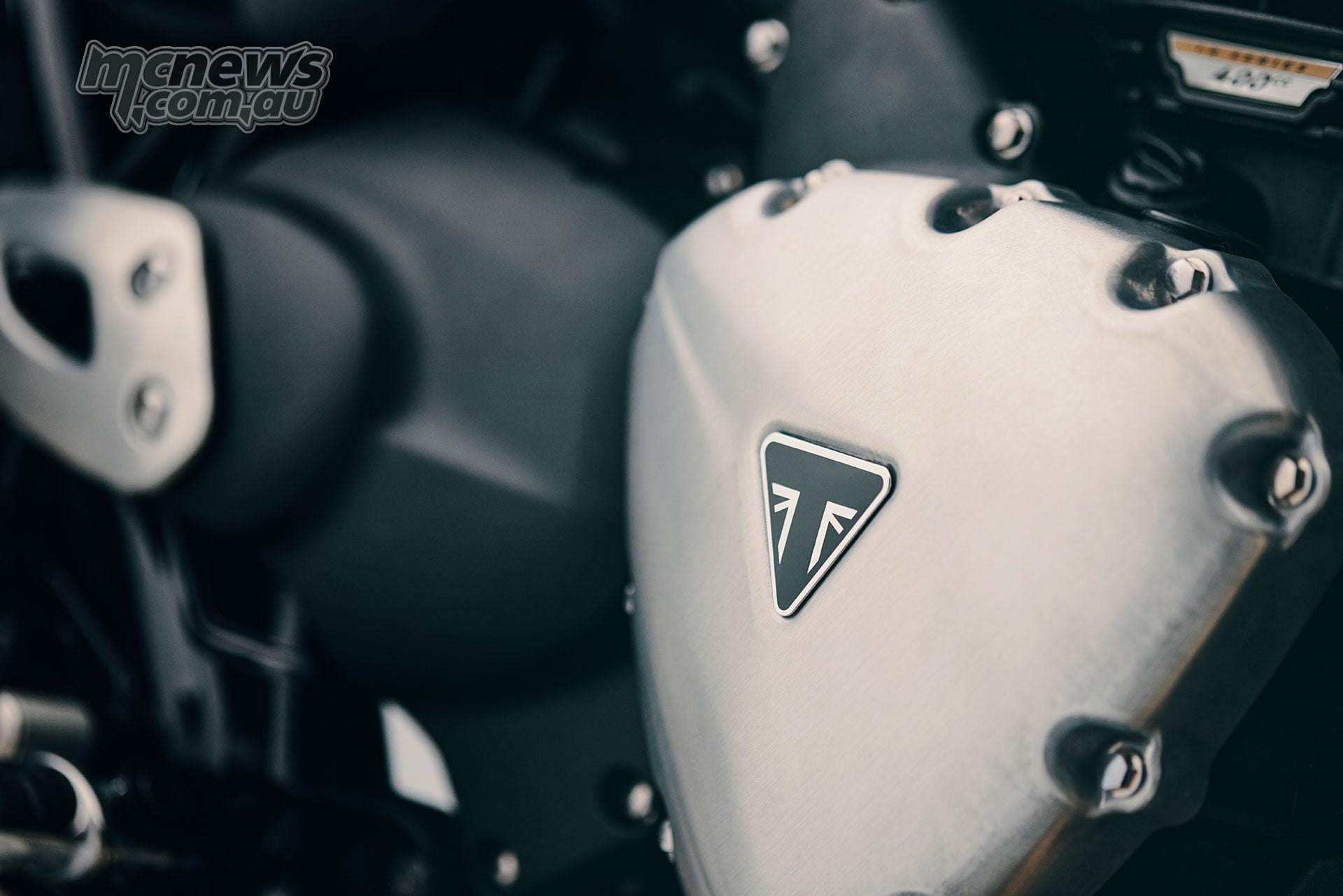
Bright machined fins on the cylinder head and large finned header roses link it to air-cooled Bonnevilles, while the standard T40 uses brushed-aluminium engine covers and a brushed stainless exhaust to add brightwork around the otherwise black engine.
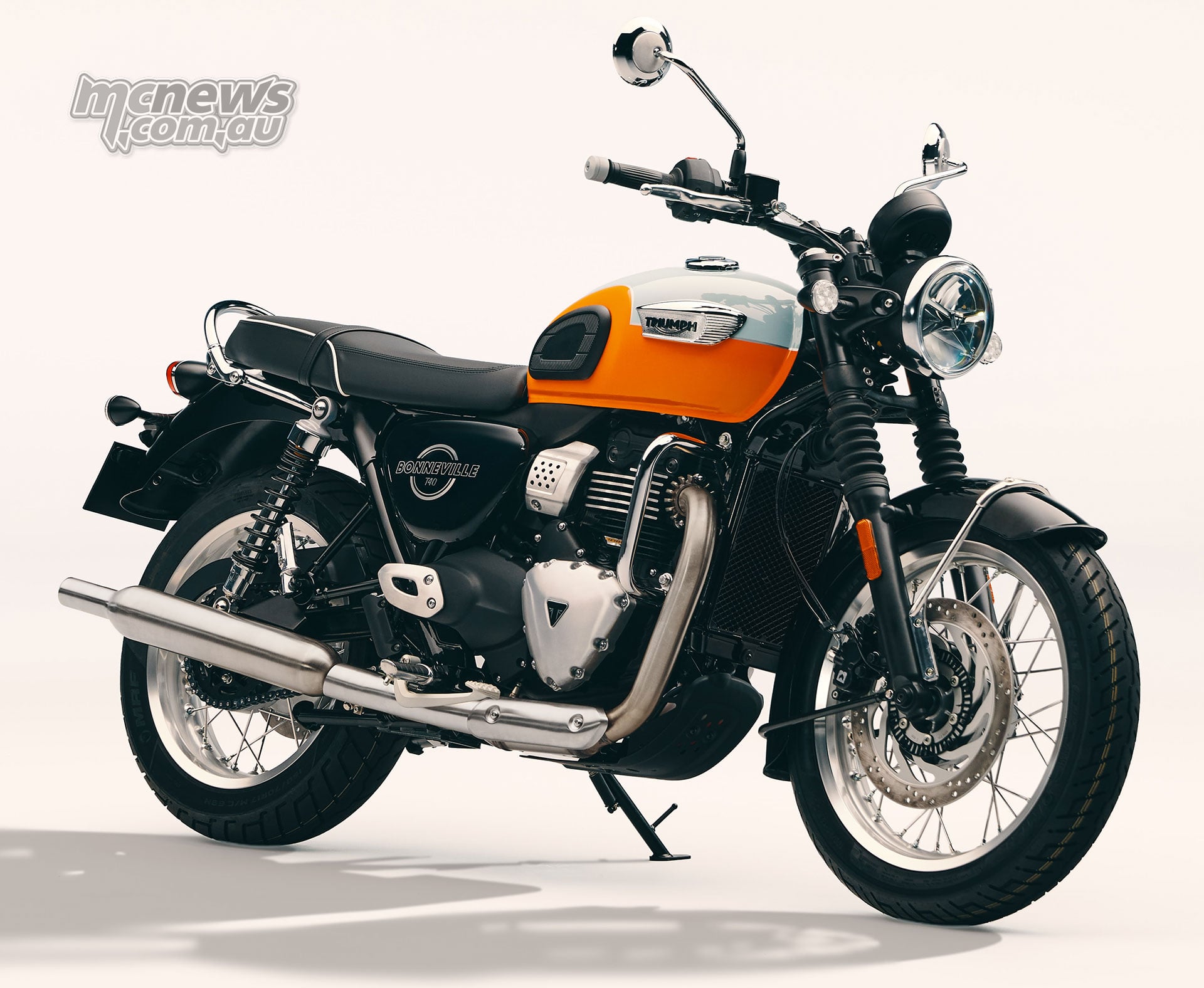
Triumph has also made an effort to hide the modern plumbing. Cables and hoses are routed to leave the single-cylinder engine exposed rather than burying it beneath wiring and cooling hardware.
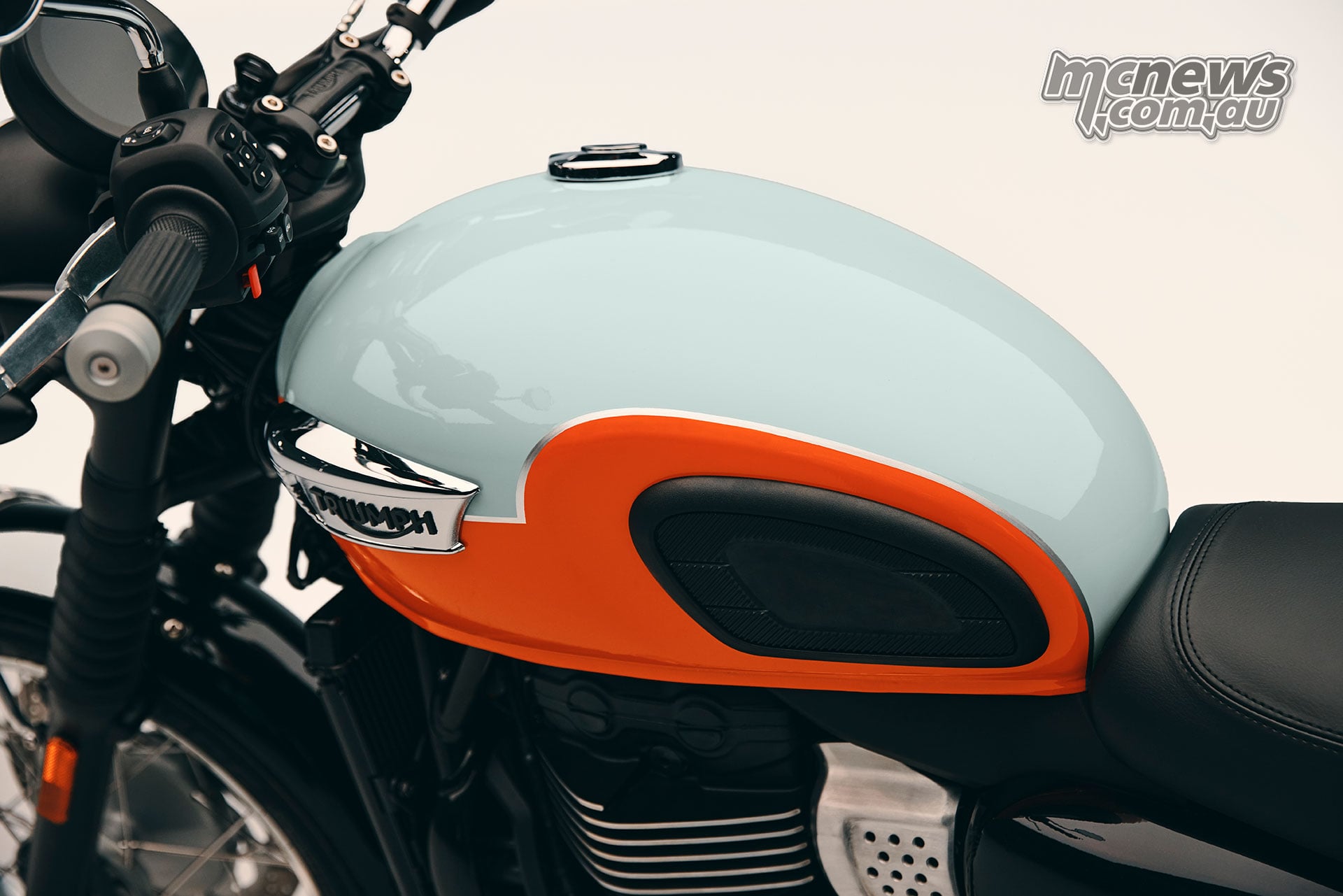
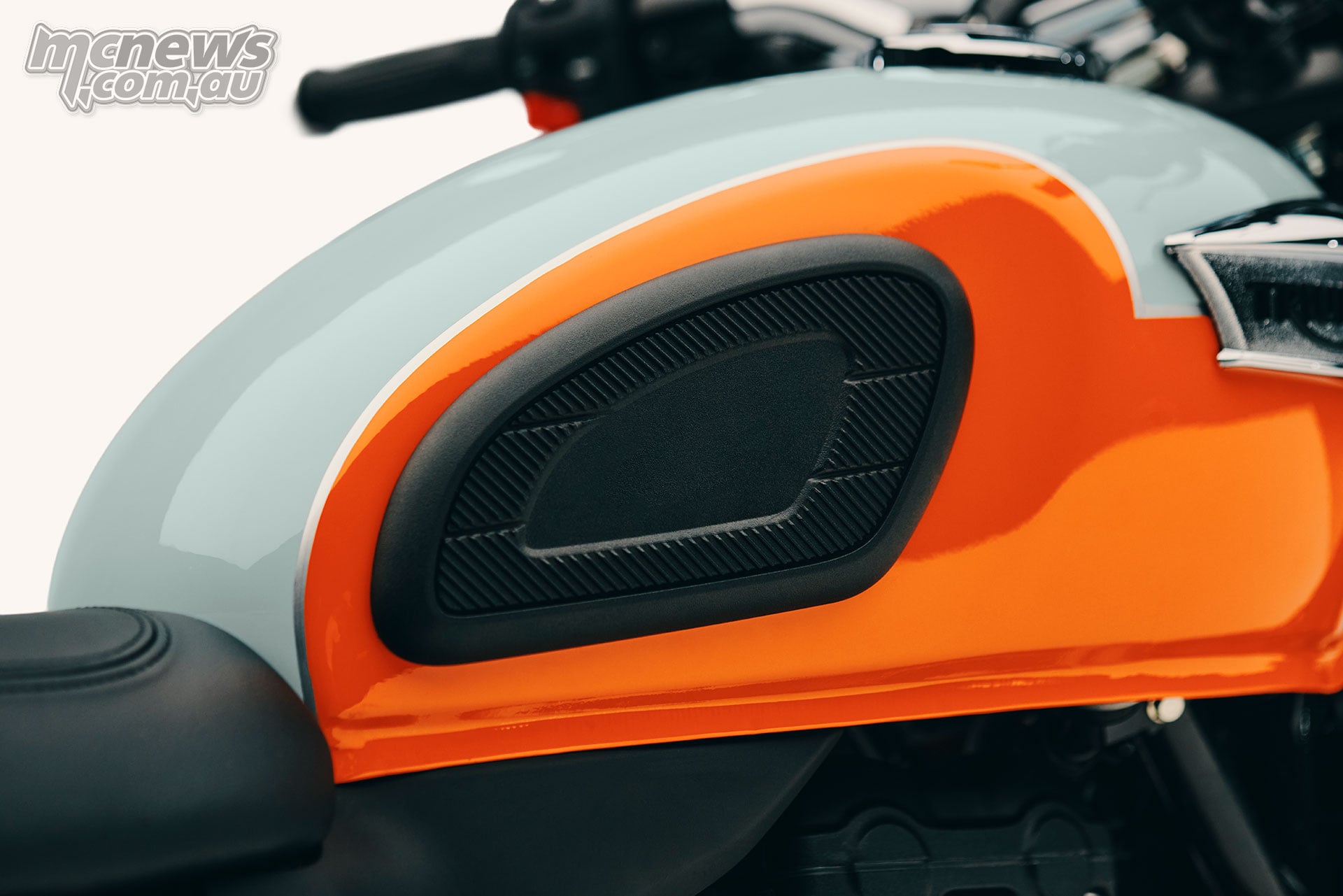
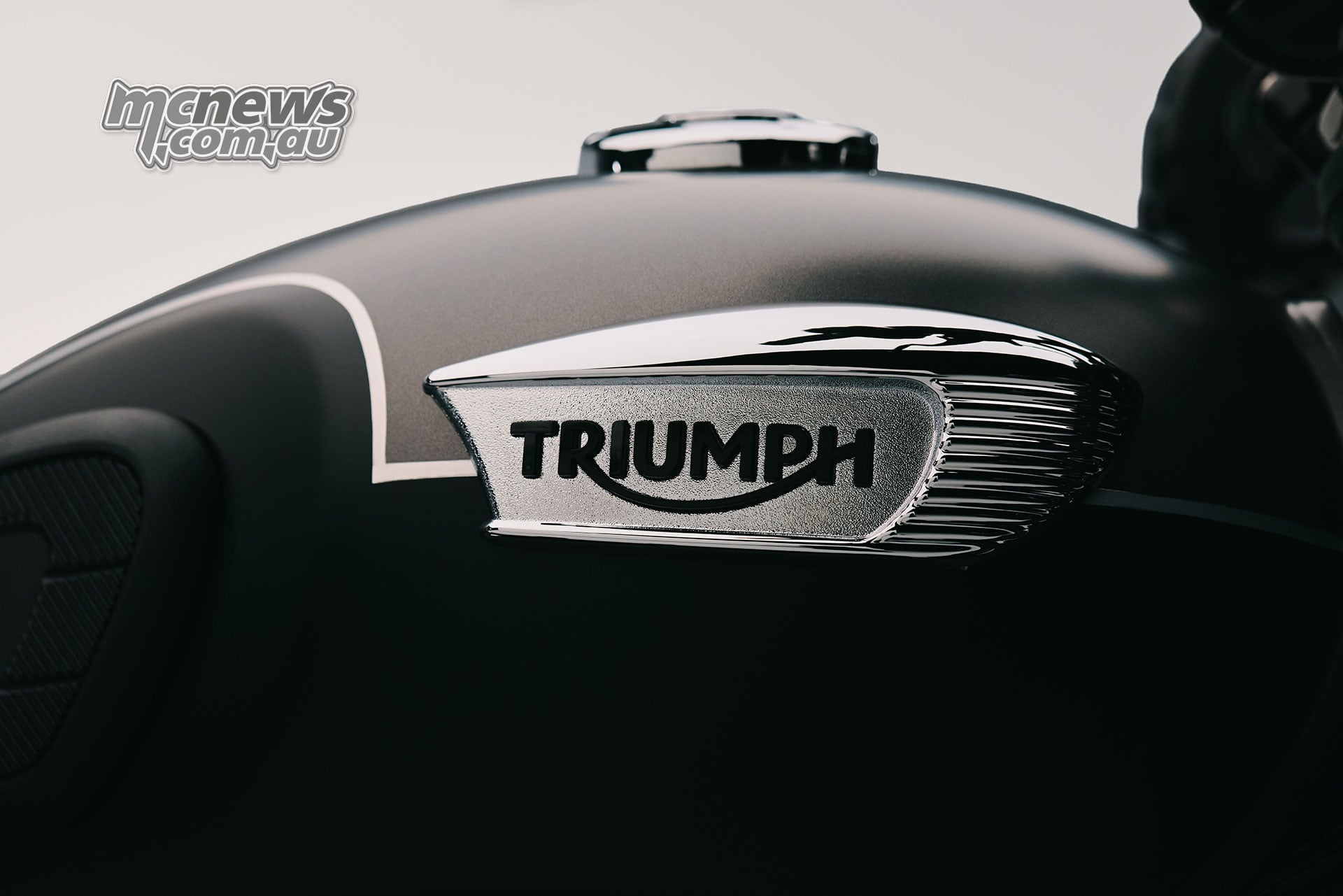
The tank itself receives the sort of treatment usually associated with Triumph’s larger Modern Classics, including two-tone finishes, coach lining, traditional rubber knee pads and the familiar three-bar tank badge.
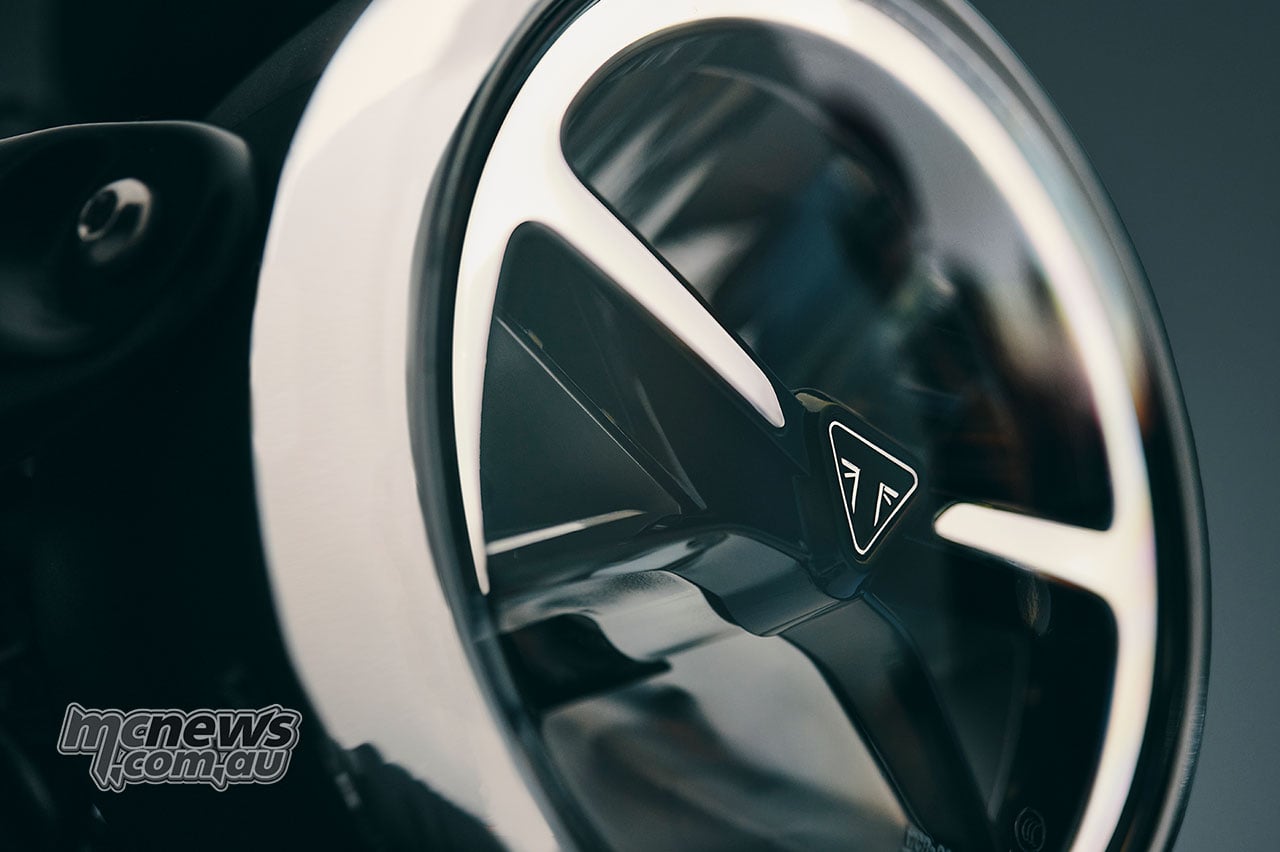
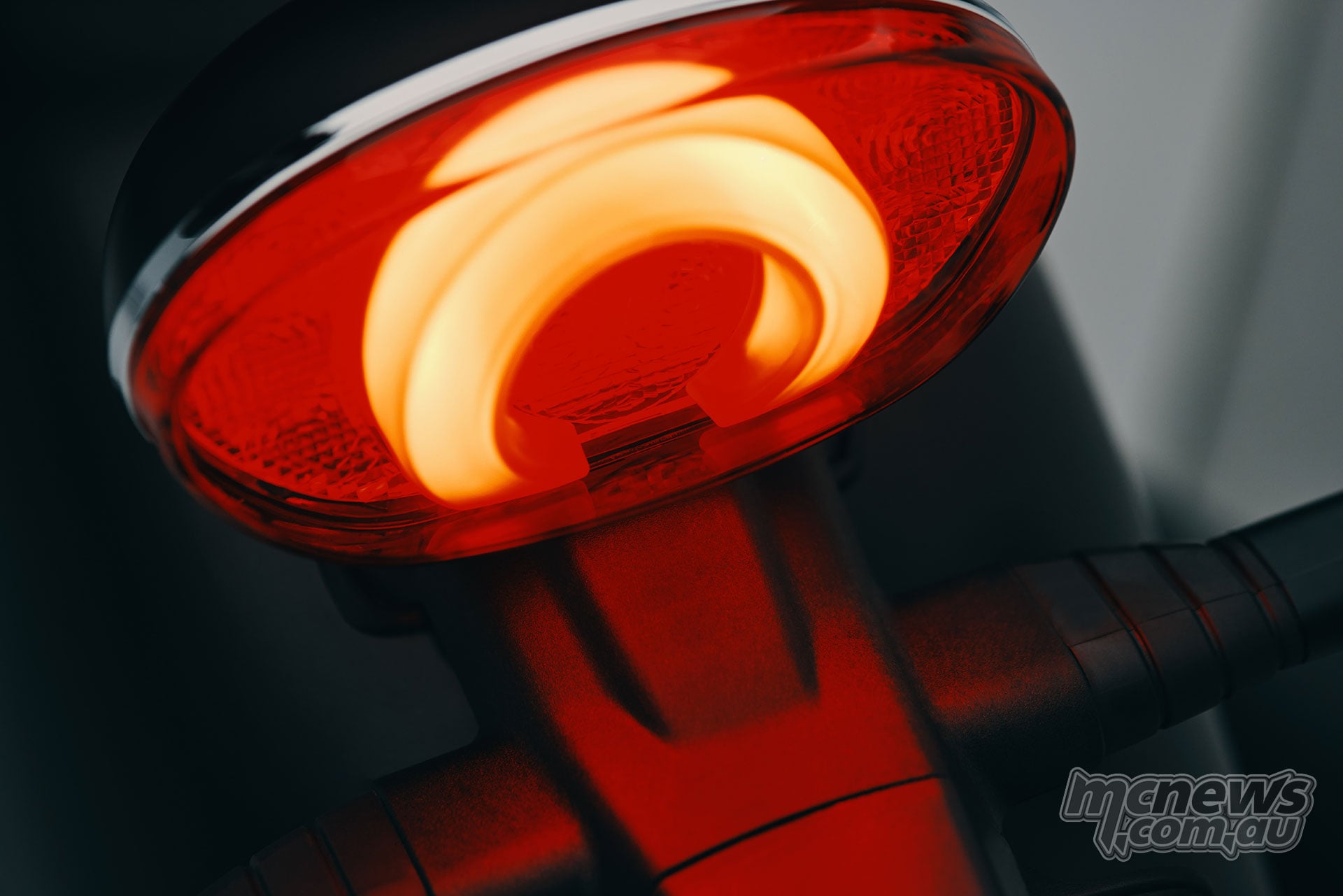
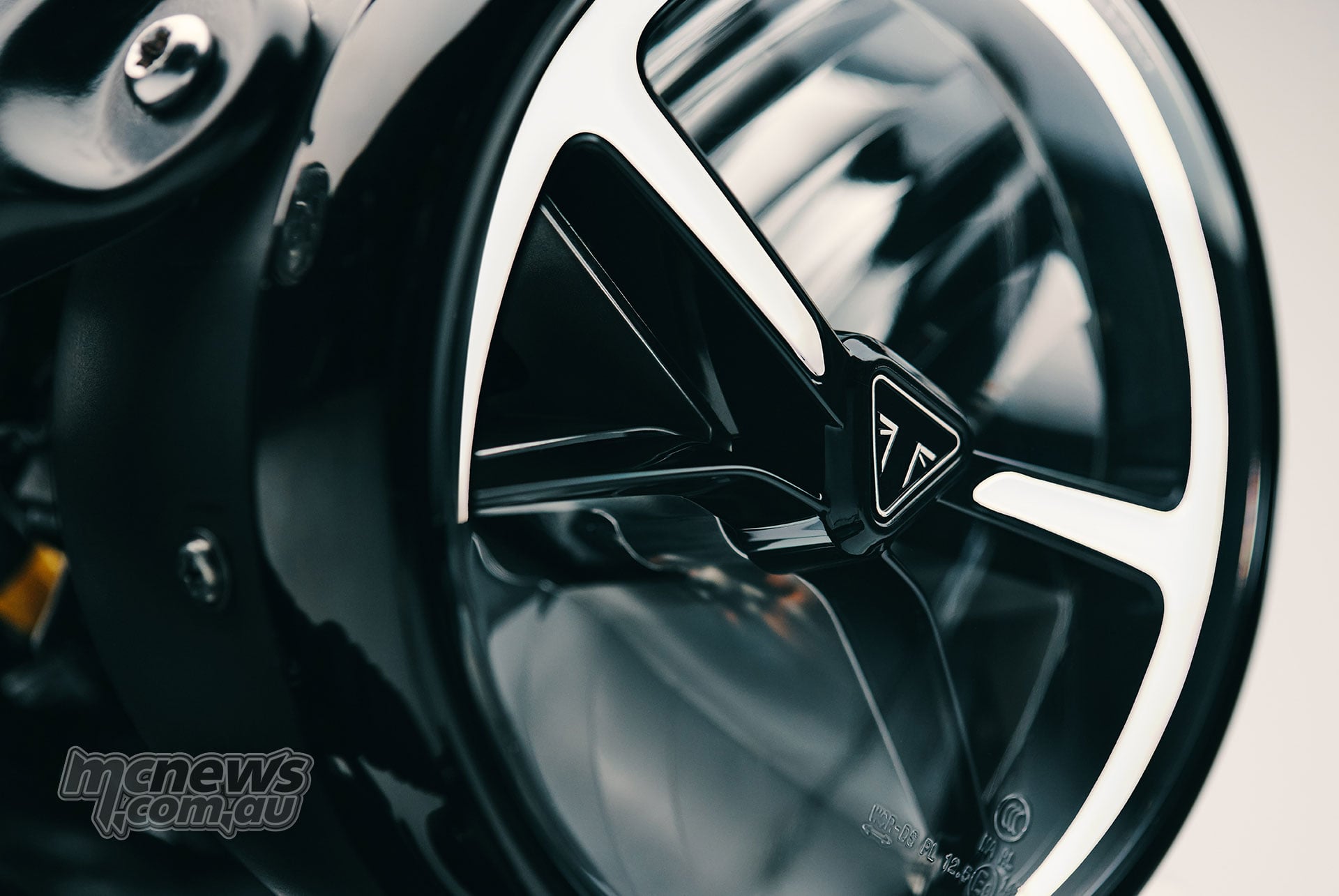
The headlight is similarly deceptive. It looks thoroughly traditional from a distance, but houses full LED lighting and a distinctive daytime-running-light signature.
The engine cases receive similar attention.
The 398 cc single takes a very different direction
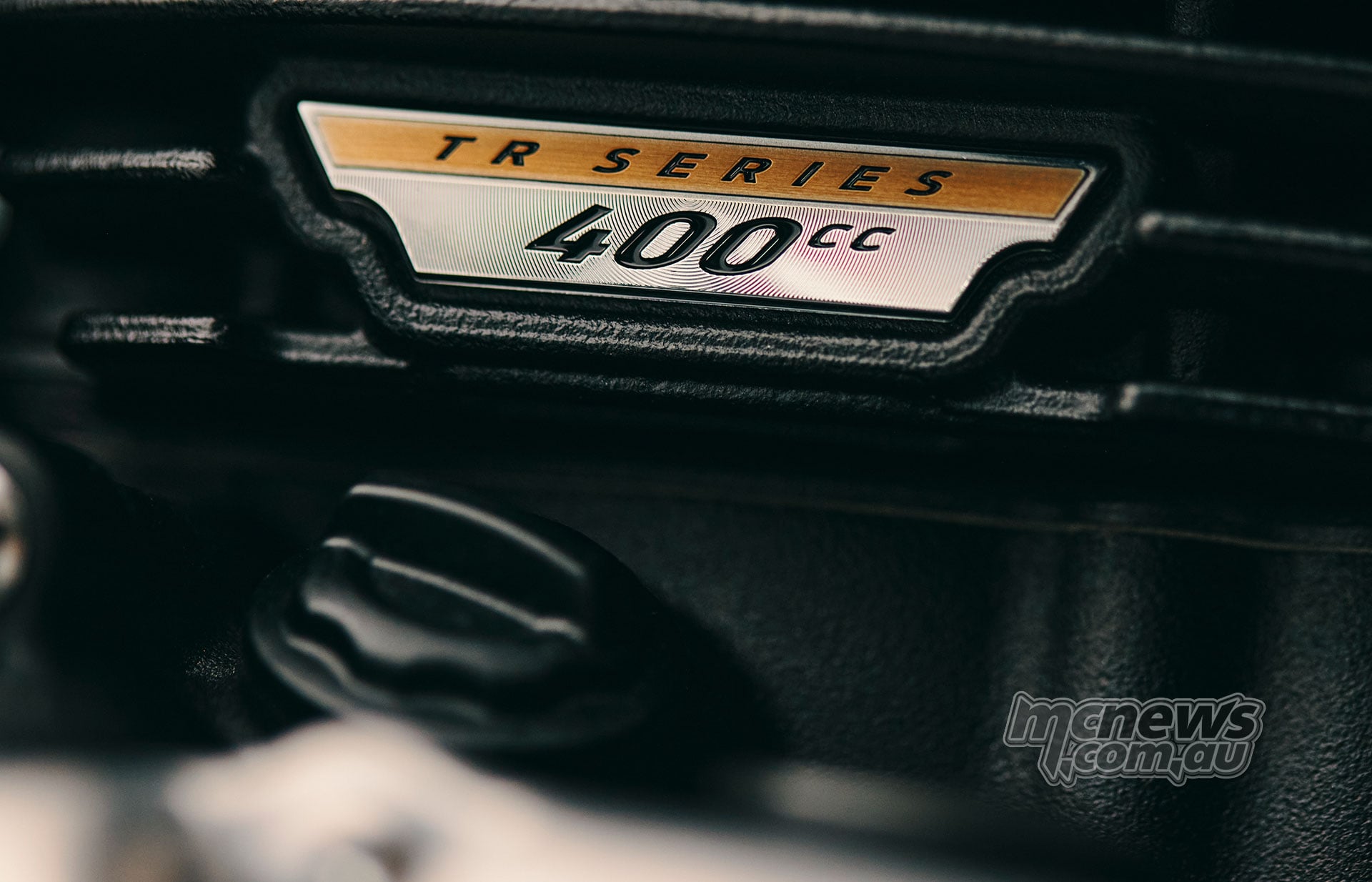
Underneath all of that traditional detailing remains Triumph’s familiar 398 cc liquid-cooled, four-valve DOHC single, retaining the same 89 x 64 mm bore and stroke and 12:1 compression ratio.
But the specification figures reveal just how differently Triumph has approached the T40. A revised cylinder head and dedicated Bonneville calibration produce 32 horsepower at 7000 rpm and 36 Nm at just 5000 rpm.
For comparison, the Tracker 400 and Thruxton 400 we recently rode make 42 horsepower at 9000 rpm and 37.5 Nm at 7500 rpm.
In other words, Triumph has given away a full 10 horsepower at the top end while moving maximum torque 2500 rpm lower down the dial.
The Tracker and Thruxton received extra revs and more top-end urge. The Bonneville heads go deliberately in the opposite direction, emphasising an accessible drive at everyday engine speeds, slower firing pulses, and a more relaxed feel. The idle speed has also been reduced, while the exhaust has been tuned to give the peashooter silencer a more distinctive single-cylinder beat.
That power figure is likely to spark plenty of internet debate because 32 horsepower doesn’t look particularly generous on a spec sheet, but it is still more than most of the retro 350-400 singles on the market.
The Speed 400 weighs 170 kg, the Tracker 173 kg and the Thruxton 176 kg. Even the wire-wheeled Scrambler 400 XC comes in at 186 kg. So the Bonneville is five kilograms heavier than the heaviest existing 400 and 21 kg heavier than the Speed 400, while making noticeably less peak power.
The question is whether the low-rpm calibration, low seat, relaxed ergonomics, and greater sense of physical substance combine into the easy-going Bonneville experience Triumph is aiming for.
Old-school presentation, decidedly modern electronics
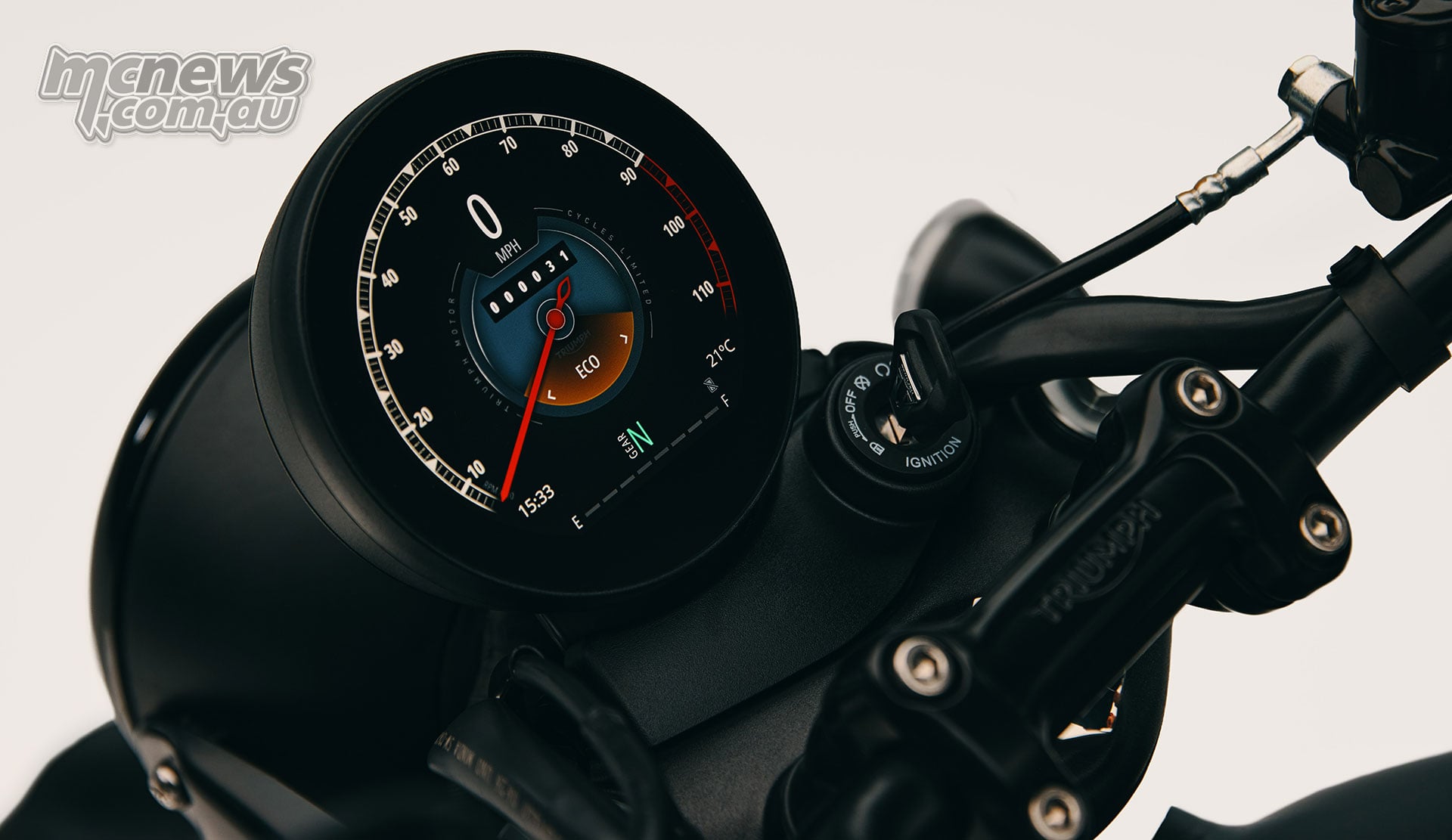
If the engine tune is deliberately relaxed, the electronics are anything but basic. The centrepiece is a new four-inch circular full-colour TFT.
Triumph has used the round housing to preserve the look of a conventional Bonneville instrument, and it even offers a selectable Heritage Mode that gives the TFT an analogue-style presentation.
Road, Rain and Eco riding modes are supplemented by two customisable modes. Each alters throttle response, traction control, and ABS behaviour, with preferred modes assignable to a quick-access menu.
Cruise control is standard. So too are Optimised Cornering ABS and Optimised Cornering Traction Control, both using lean-angle information rather than operating as conventional straight-line-only systems. That is a fairly remarkable level of electronic assistance on a 30 horsepower retro single.
The TFT also supports considerably more than basic phone pairing.
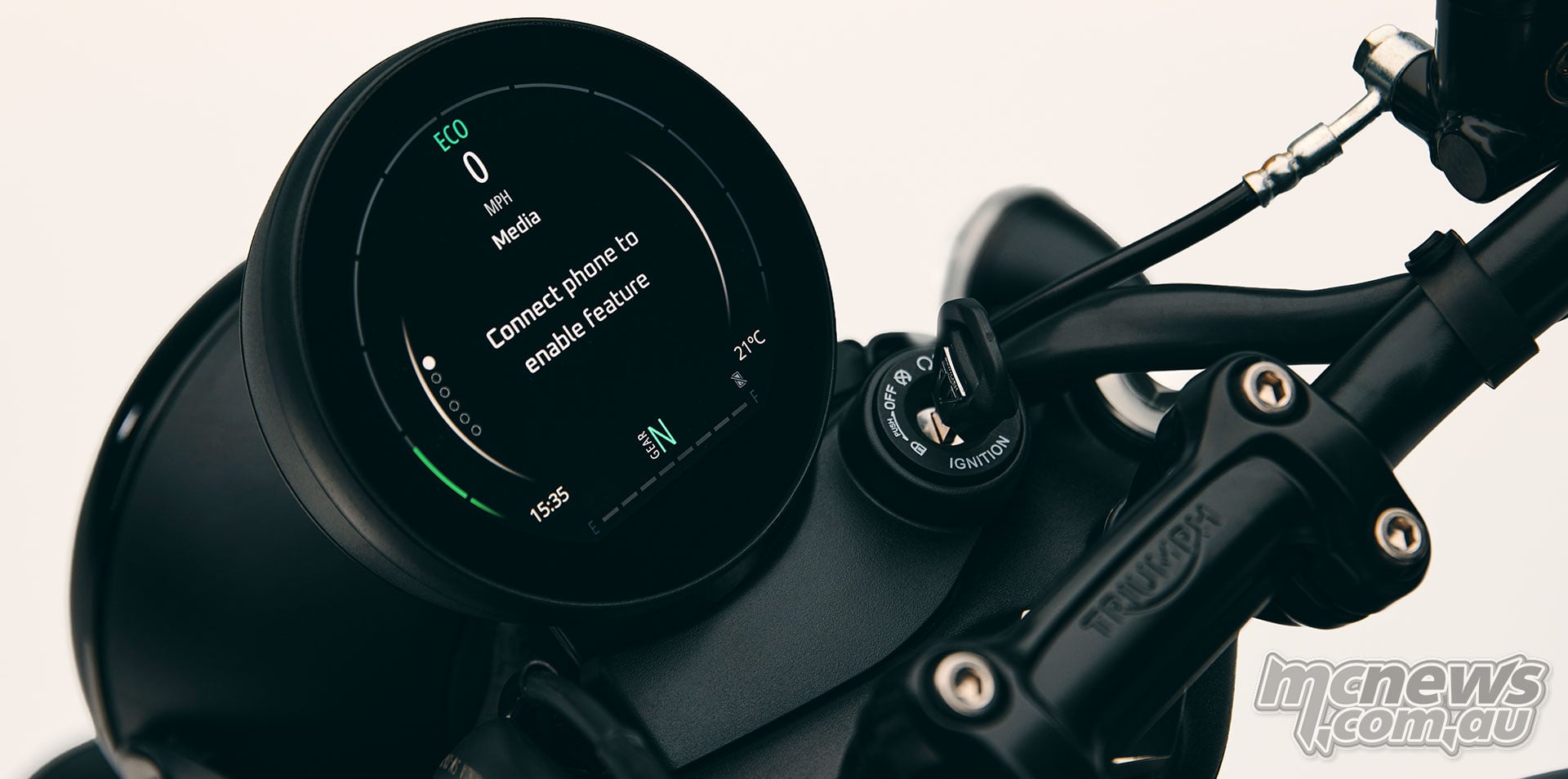
Triumph’s new Navigation App provides a full map view on the display, including speed-limit information, favourite destinations, points of interest and recent searches.
Routes can be planned before departure, waypoints added, journeys saved, GPX files imported and routes shared with other riders.
Calls, contacts and music control are also integrated, while five customisable display widgets can be accessed through the backlit left-hand switchblock.
A USB-C outlet is standard, along with self-cancelling indicators and Emergency Deceleration Warning, which automatically flashes the rear light under heavy braking.
Twin shock rear and an 18-inch front
The chassis follows the same philosophy as the styling. There are no upside-down forks or monoshock pretending this is a sports roadster in vintage clothing.
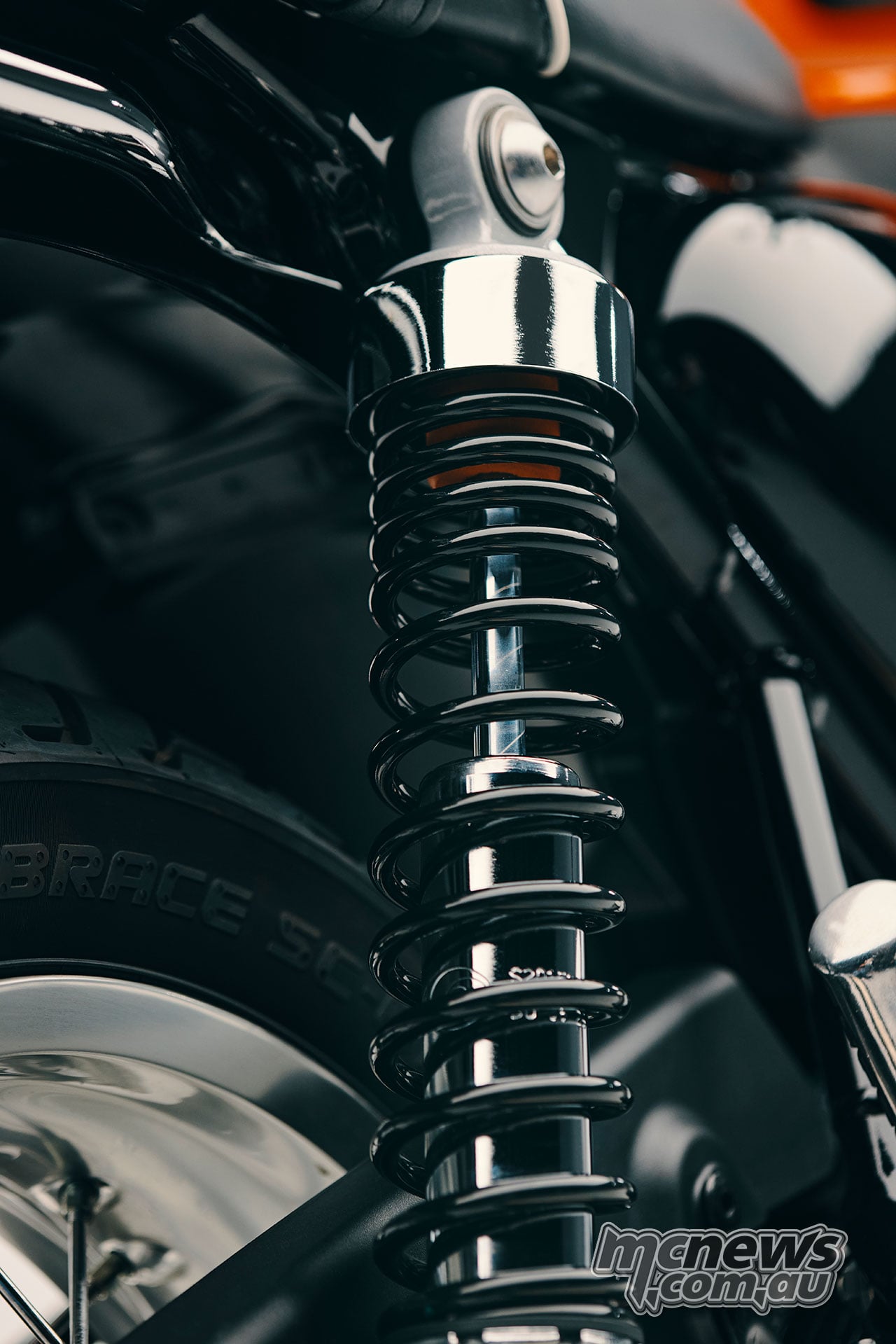
The T40 runs conventional 43 mm telescopic forks with 130 mm of travel and twin rear shocks, adjustable for preload and also offering 130 mm of travel.
The frame is a hybrid spine/perimeter tubular-steel design with a conventional twin-sided steel swing-arm.
One point worth noting is that the wheels use tubes rather than a tubeless spoke arrangement. 18 x 2.75-inch and 17 x 4.25-inch aluminium rims front and rear, laced with steel spokes. Tyres are 100/90-18 at the front and a fairly substantial 150/70 R17 at the rear.
Braking hardware is relatively modest compared with the electronics overseeing it. A single 310 mm fixed front disc is grasped by a twin-piston axial caliper, with a 255 mm rear disc and single-piston floating caliper. Braided lines are standard.
Low where it counts – but not especially light
The standard seat height is only 790 mm and an accessory low seat brings that down another 20 mm to just 770 mm. The combination of a low seat, upright bar and conventionally positioned footpegs should make the T40 relatively easy to manage once aboard despite that surprisingly substantial 191 kg wet figure.
Wheelbase is 1418 mm, rake 25.4 degrees and trail 100.4 mm. Those dimensions reinforce the impression that Triumph hasn’t simply tried to make another nimble little 400 roadster. The T40 is longer, heavier and more deliberately substantial.
The bench seat has generous padding for rider and pillion, and the 14.5-litre tank is larger than the 13-litre tanks fitted to the Tracker and Thruxton.
Triumph quotes fuel consumption at just 3.45 litres per 100 kilometres, which on paper gives the T40 the potential to comfortably exceed 350 kilometres between fills and perhaps stretch beyond 400 km in favourable conditions.
T40 Black changes the attitude rather than the recipe
The T40 Black is mechanically the same motorcycle but takes a considerably darker approach to presentation. Matt Pewter Grey and Matt Phantom Black paint is combined with gloss-black aluminium wheel rims, although the steel spokes remain bright and provide some welcome contrast.
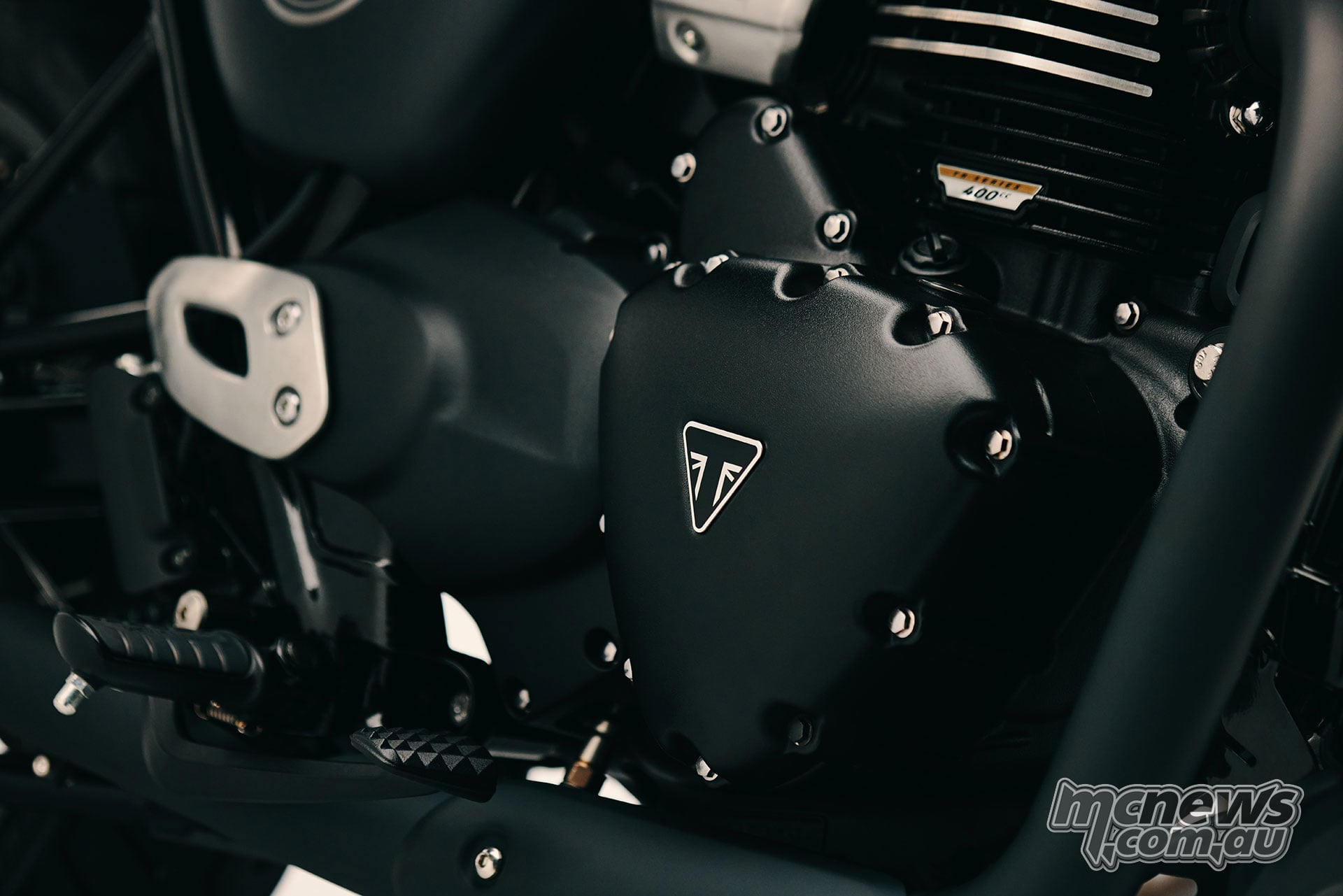
Engine casings are powder-coated black, as are the header and peashooter silencer.
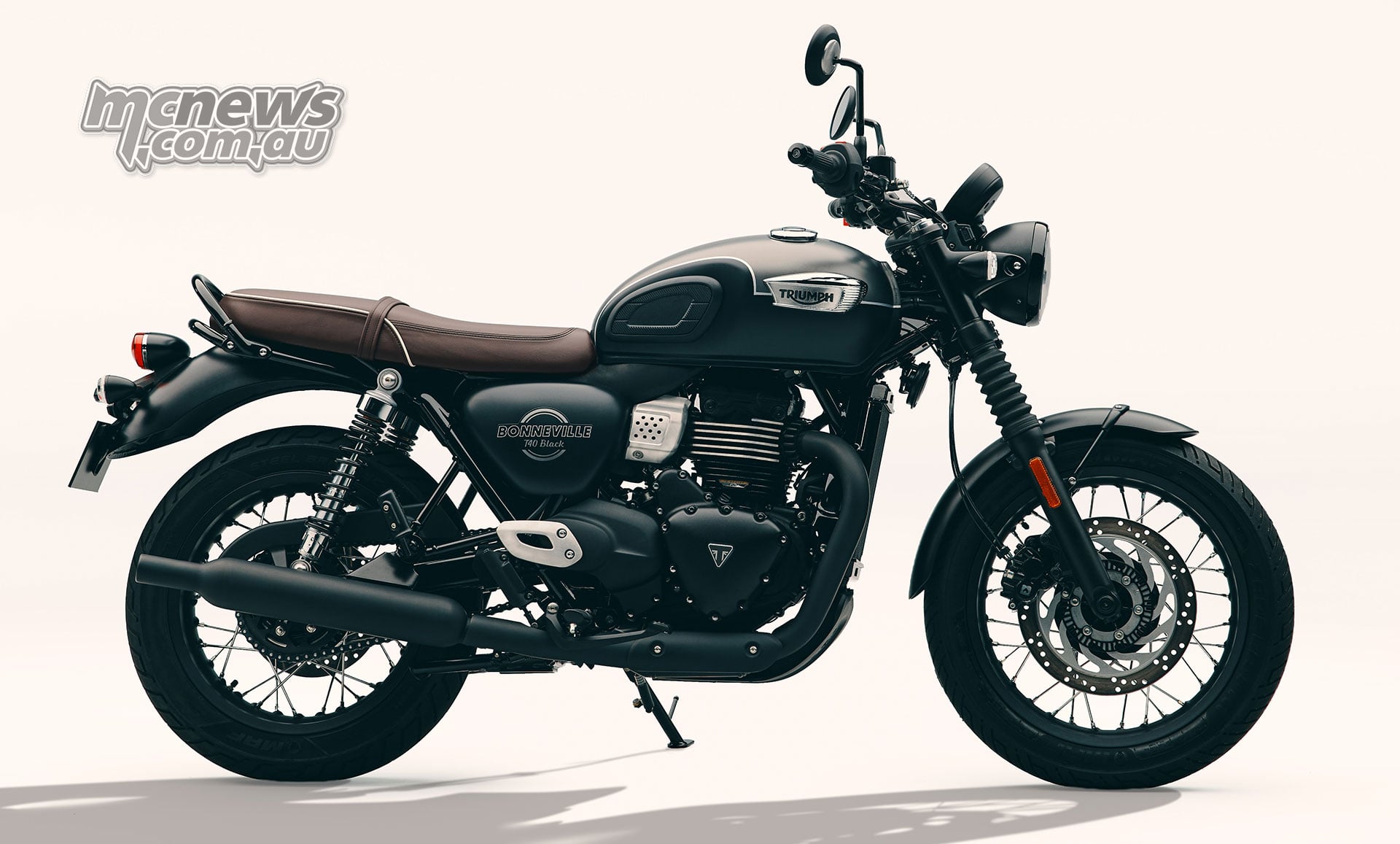
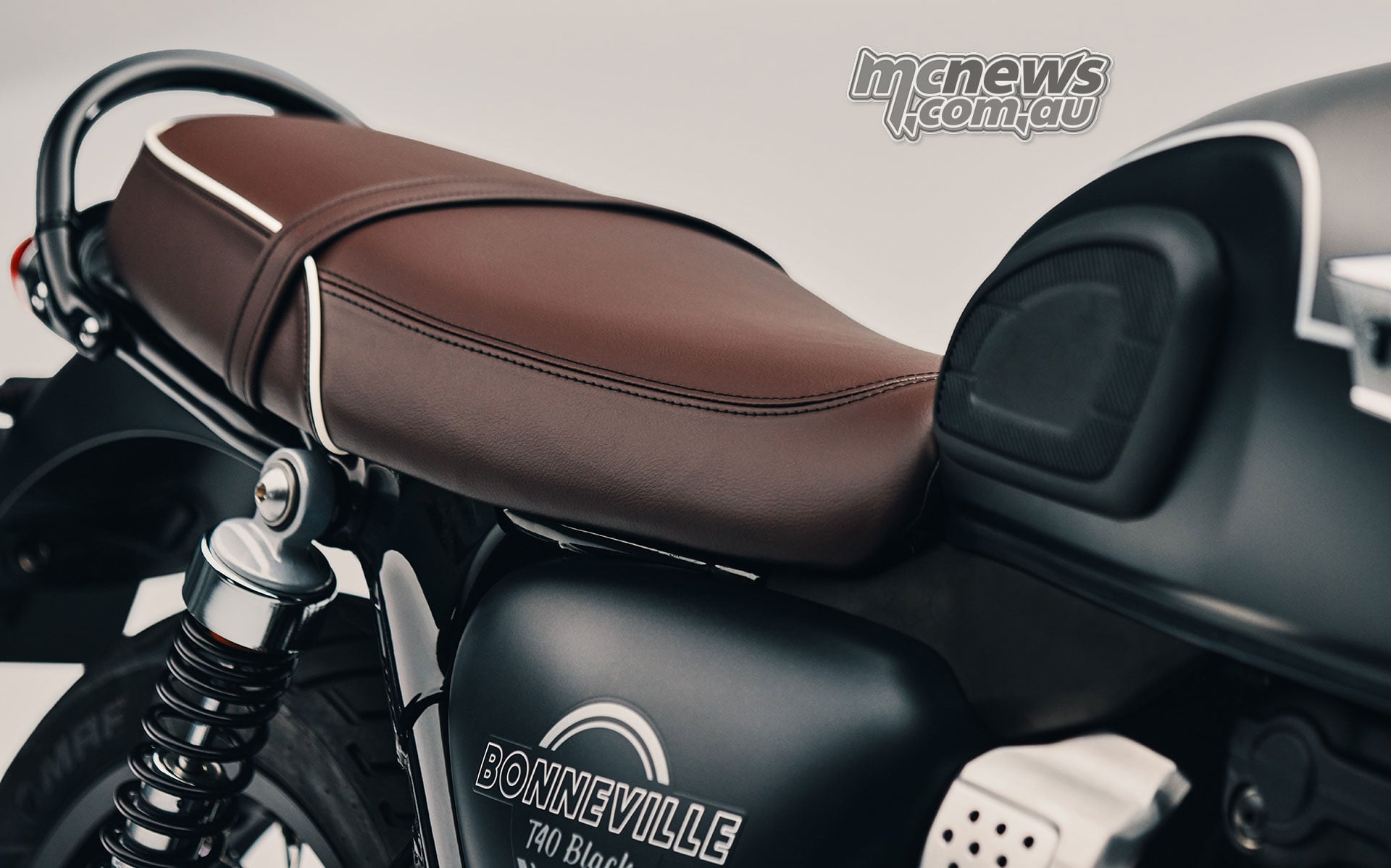
The brown bench seat is particularly effective against the otherwise subdued treatment, lending a warmer vintage note to what could otherwise have become simply another blacked-out special edition.
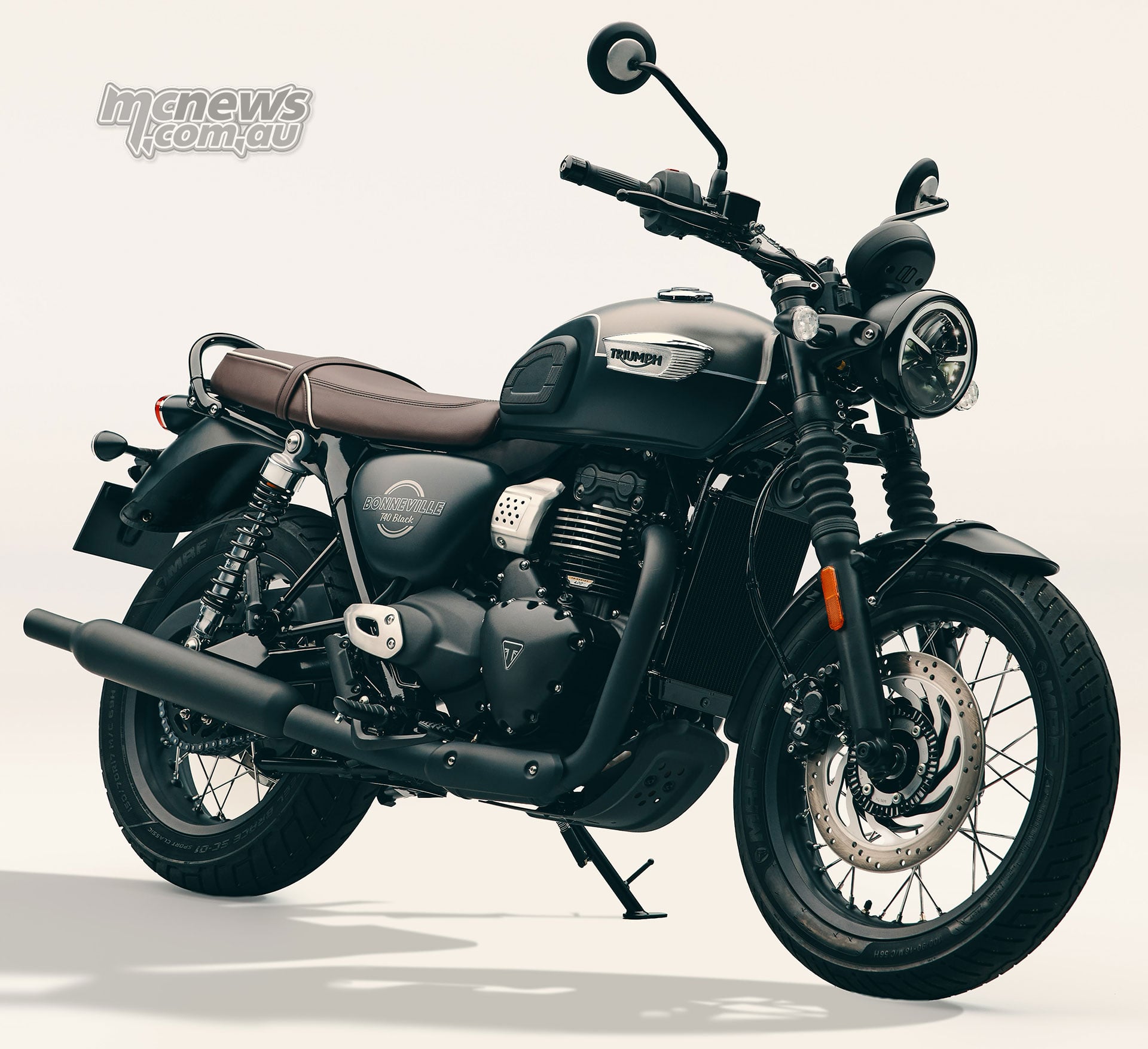
The tank treatment is particularly well judged. Triumph has wisely retained the three-bar tank badge as one of the strongest bright highlights.
The contrasting saddle is one of the details that works particularly well in the metal, with the white striping on the seat also continuing through to the tank.
Even the headlight treatment is darker, although its modern LED functionality remains unchanged.
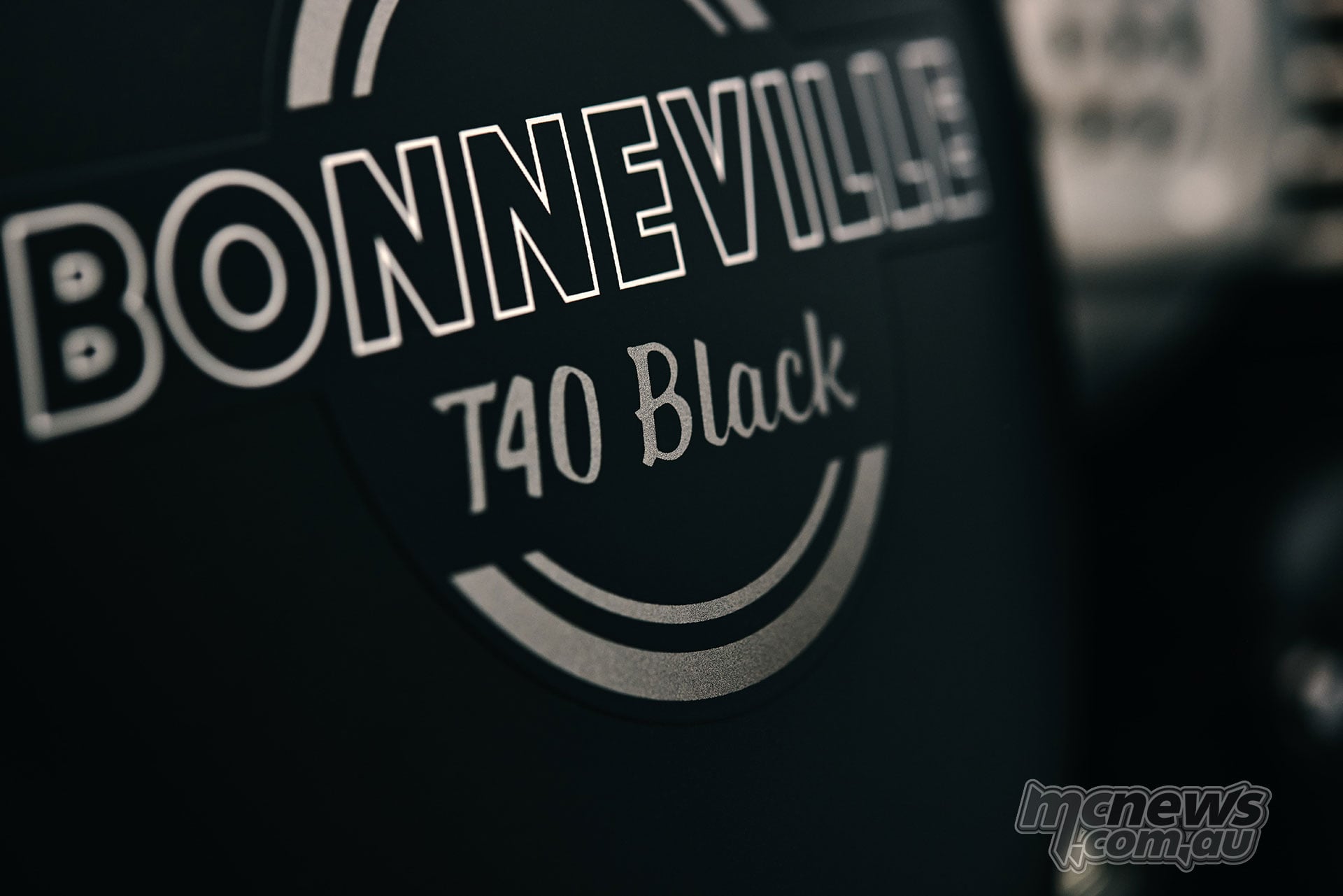
Plenty of details are also unlikely to jump out from ten metres away but reward closer inspection.
Four treatments at launch
The standard Bonneville T40 will be offered in three two-tone colour schemes.
Aegean Blue and Fusion White provides the brightest and perhaps most classically cheerful combination, while Meriden Blue and Tangerine Orange is considerably bolder.
New England White and Jet Black is the restrained option, while the separate T40 Black uses the aforementioned Matt Pewter Grey and Matt Phantom Black treatment.
All three standard T40 two-tone schemes feature hand-painted coach lining.
16,000 km servicing and a useful accessories catalogue
Service intervals are an impressive 16,000 kilometres or 12 months, which remains one of the stronger ownership arguments for Triumph’s 400 platform.
A range of Genuine Triumph Accessories will be available from launch, including the 770 mm low seat, a comfort seat and classic panniers.
The standard centre stand is another detail we are glad to see included rather than relegated to the accessories catalogue.
Australian pricing is yet to be announced and is expected in early 2027, ahead of the first Australian deliveries during the first quarter.
The T40 is not a budget Speed 400 with a different fuel tank, nor is it intended as a smaller-capacity performance bike. Triumph appears to be chasing the feel, appearance and ownership experience of a full-size Modern Classic while reducing the seat height, engine output, running costs and – eventually, we hope – the price of entry.
Given the strong Australian response to the existing 400s – including from plenty of riders old enough to remember when the Bonneville name meant something very different – this tasteful little single could prove to be one of the most broadly appealing additions to the family yet.
2027 Triumph Bonneville T40 / T40 Black Specifications
| ENGINE / TRANSMISSION | |
| Engine | Liquid-cooled, single-cylinder, four-valve DOHC |
| Capacity | 398 cc |
| Bore x stroke | 89 x 64 mm |
| Compression | 12:1 |
| Maximum power | 32 PS / 30 bhp (22.8 kW) at 7000 rpm |
| Maximum torque | 36 Nm at 5000 rpm |
| Fuel system | Bosch electronic fuel injection with electronic throttle control |
| Exhaust | Stainless twin-skin header system with stainless-steel silencer |
| Clutch | Wet multi-plate, slip and assist |
| Gearbox | Six-speed |
| Final drive | X-ring chain |
| ELECTRONICS / EQUIPMENT | |
| Riding modes | Road, Rain, Eco + two customisable modes |
| ABS | Optimised Cornering ABS |
| Traction control | Optimised Cornering Traction Control |
| Cruise control | Standard |
| Instruments | 4.0-inch circular full-colour TFT with Heritage Mode |
| Connectivity | Phone, music and contact integration |
| Navigation | Full-map Triumph Navigation App, GPX import and route sharing |
| Lighting | Full LED with DRL, self-cancelling indicators and Emergency Deceleration Warning |
| Charging | USB-C |
| Centre stand | Standard |
| CHASSIS | |
| Frame | Hybrid spine/perimeter tubular steel |
| Swing-arm | Twin-sided steel |
| Front wheel | 18 x 2.75-inch spoked aluminium rim, tubed |
| Rear wheel | 17 x 4.25-inch spoked aluminium rim, tubed |
| Front tyre | 100/90-18 |
| Rear tyre | 150/70 R17 |
| Front suspension | 43 mm telescopic forks, 130 mm travel |
| Rear suspension | Twin preload-adjustable shocks, 130 mm travel |
| Front brake | 310 mm fixed disc, twin-piston axial caliper, Optimised Cornering ABS |
| Rear brake | 255 mm fixed disc, single-piston floating caliper, Optimised Cornering ABS |
| DIMENSIONS / WEIGHTS | |
| Length | 2120 mm |
| Width | 818 mm |
| Height without mirrors | 1081 mm |
| Seat height | 790 mm |
| Accessory low seat | 770 mm |
| Wheelbase | 1418 mm |
| Rake | 25.4 degrees |
| Trail | 100.4 mm |
| Wet weight | 191 kg |
| Fuel capacity | 14.5 litres |
| OWNERSHIP | |
| Service interval | 16,000 km / 12 months |
| Claimed fuel consumption | 3.45 L/100 km |
| Emissions | Euro 5+ |
| Australian arrival | Q1 2027 |
| Australian pricing | TBC – due early 2027 |