


2027 Yamaha WR450F Review
Ever since the first WR450F arrived in 2003, Yamaha’s big-bore four-banger has earned a reputation for being tough and putting out a heap of power. It followed the WR400F and WR426F, two bikes that were giants in their day, and still takes its cues from the YZ450F motocrosser. There’s a reason people call these engines animals. That big Yamaha donk has always been a favourite of mine.
Yamaha’s thinking for 2027 is simple. If it’s easy to ride, it’s easy to ride fast. I agree. I’ve long said I don’t need huge horsepower. I need a bike that sticks to the ground and gives me the confidence to use the power it’s got. At Josh Green’s place, where we rode the new WR, there were plenty of tight turns, log-hops and climbs to find out if Yamaha had got it right.
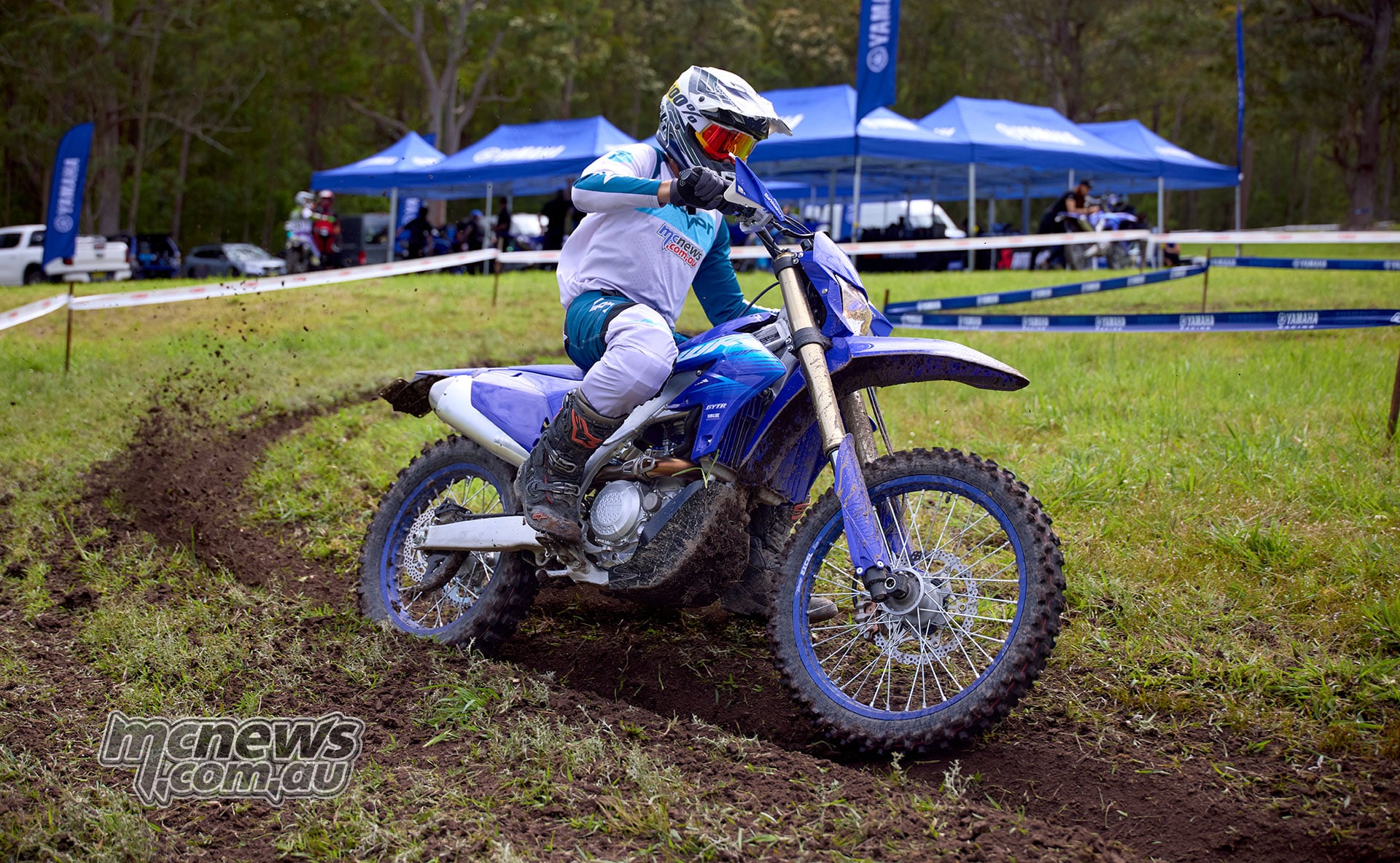
The big Yamaha donk has better manners
Yamaha has gone from a round intake port to an oval one, tweaked the cam timing and mapping, and added 17 g to the flywheel. The heavier flywheel gives the engine more inertia, which helps smooth out the response when you crack the throttle at low revs. Out on the loop, the throttle felt smoother and more consistent than on the previous model, and the bike never once flamed out.

Get up in the revs and it’s still got that signature arm-stretching Yamaha pull. Your knuckles turn white and your face starts rearranging itself as the thing pulls you through time and space. It takes a brave man to find the rev limiter on any Yamaha 450.
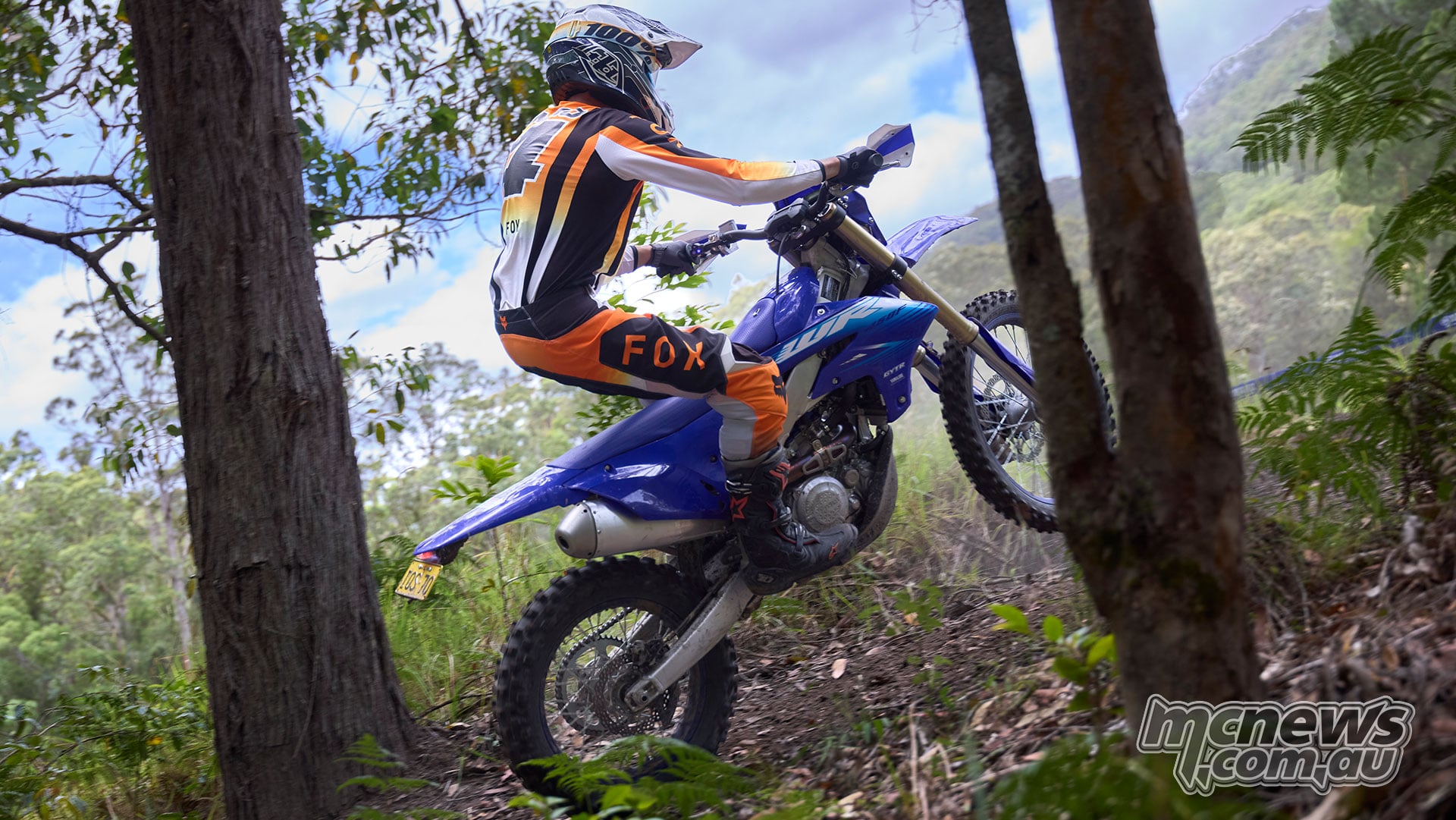
Down low, it no longer kicks like a mule when you get on the throttle. The power comes in more progressively, which makes it easier to wheelie as well. The giggle factor is off the scale.
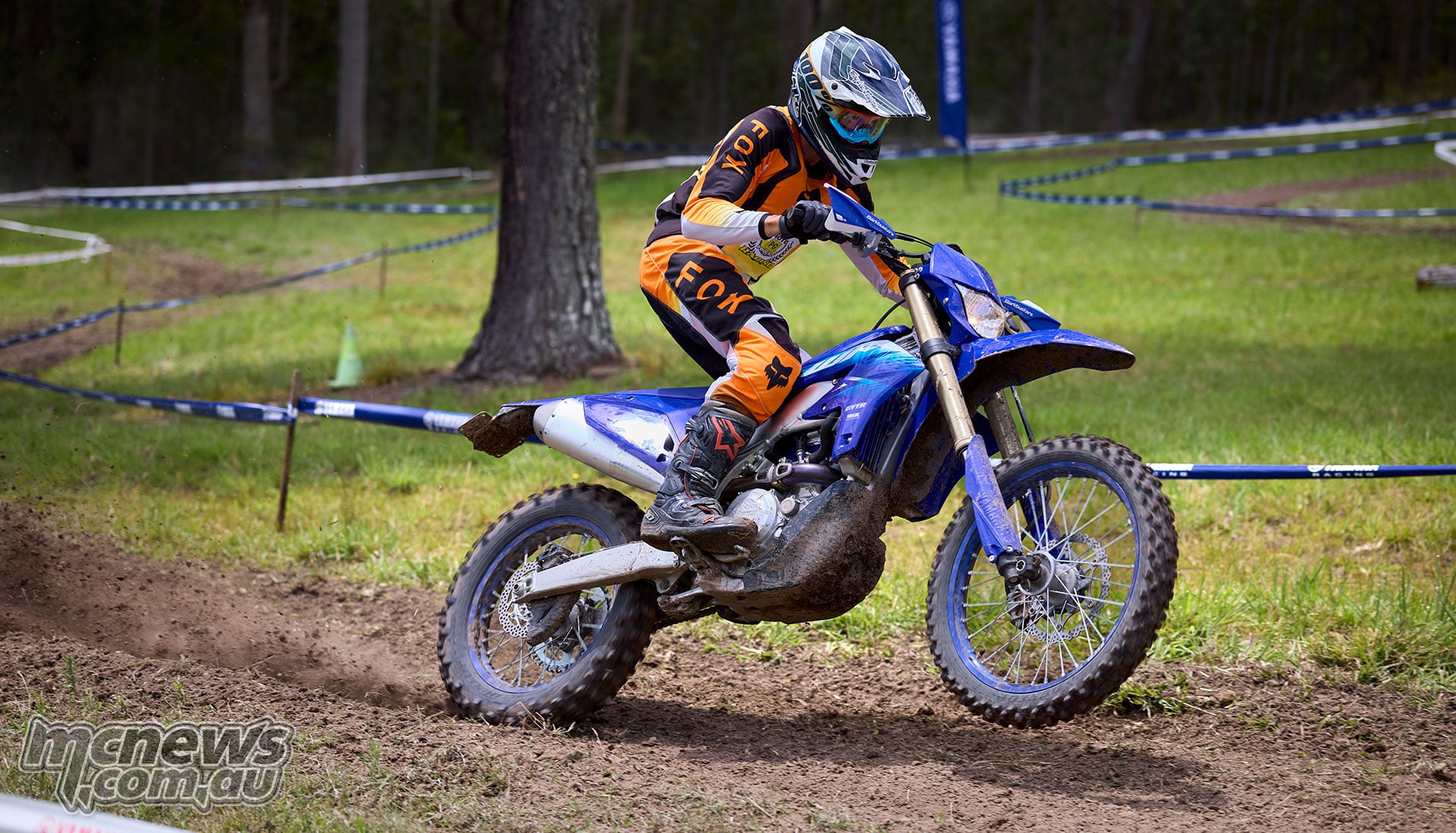
I could carry a higher gear through the tight stuff without worrying so much about stalling. The 2027 model ‘walks’ out of a corner that would have had the old one trying to dislocate your shoulders and sit you on your arse. That alone makes it a better bike in technical terrain.
A lighter clutch where it counts
The wide-ratio gearbox felt much the same as the previous model, which suits me fine. Yamaha has shortened the final gearing a touch, going from a 50-tooth rear sprocket to a 51-tooth one. The bigger change is the hydraulic clutch.
I used to swear by cable clutches because I figured there was less to go wrong. After riding hydraulics on a few test bikes and then on my own bike, I can’t go back. The WR has a lighter clutch spring load than the YZ450F, and Yamaha says it takes 15 per cent less effort at the lever. The WR also uses a different hose to suit its routing.

Fifteen per cent doesn’t sound like much until you’ve done a few passes through a tight turn straight into a log-hop, then had to work the clutch up a climb. That’s when I really noticed the light, smooth pull. It was a hot day, and we were doing plenty of slow riding. I had no arm pump or hand cramps, and the engagement point never moved.
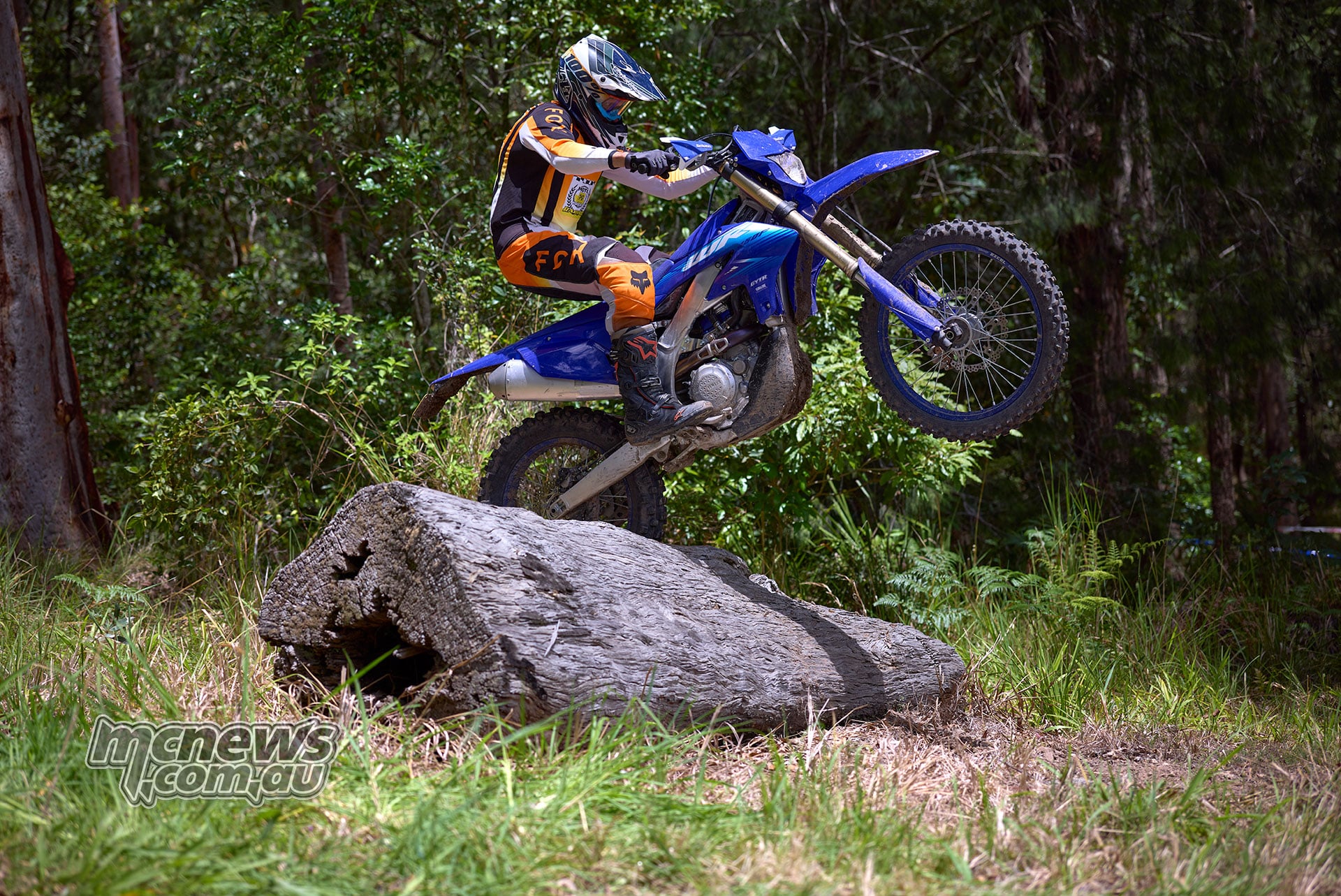
More feel from the front end
I’ve struggled to get the front-end feel I wanted from the Yamaha chassis since the YZ450F changed in 2023 and the WR followed in 2024. The high-speed stability has always been right up there. On my race bikes, I tried different fork springs and valving, and even tweaked the mapping to reduce engine braking. It all helped. The changes Yamaha made to the 2026 YZ and has now brought to the WR are a bigger step in the right direction.
There’s more material around the steering head to stiffen that area and more flex in the front down tube. The front engine mounts are thinner, and the rear mounts are asymmetrical. On the trail, the bike felt calmer and more settled. I could feel what the front tyre was doing and trust it more than I could on the previous WR.
KYB suspension still sets the bar for me
The stock suspension was a little stiff for my liking. In my experience, Yamaha suspension softens up noticeably after five to ten hours, so I wasn’t about to judge it too harshly on a brand-new bike. At 70 kg, I’d be inclined to go down a spring rate at both ends.
I left the settings alone on my bike. I did swap onto one where the forks had been slid up through the clamps and the compression softened. I didn’t find it an improvement. I’d start with the springs for my weight. As stock suspension goes, I still reckon the KYB gear is as good as it gets.
Most of the suspension changes are at the rear. The shock gets a new base valve with a 28 mm piston, revised oil passages to increase low-speed damping and a low-speed compression adjuster you can turn by hand. Yamaha was aiming to reduce front-end push and give the WR better turn-in and rear-wheel traction. With the chassis changes, the whole bike felt more compliant to me.

A smaller rear brake with more feel
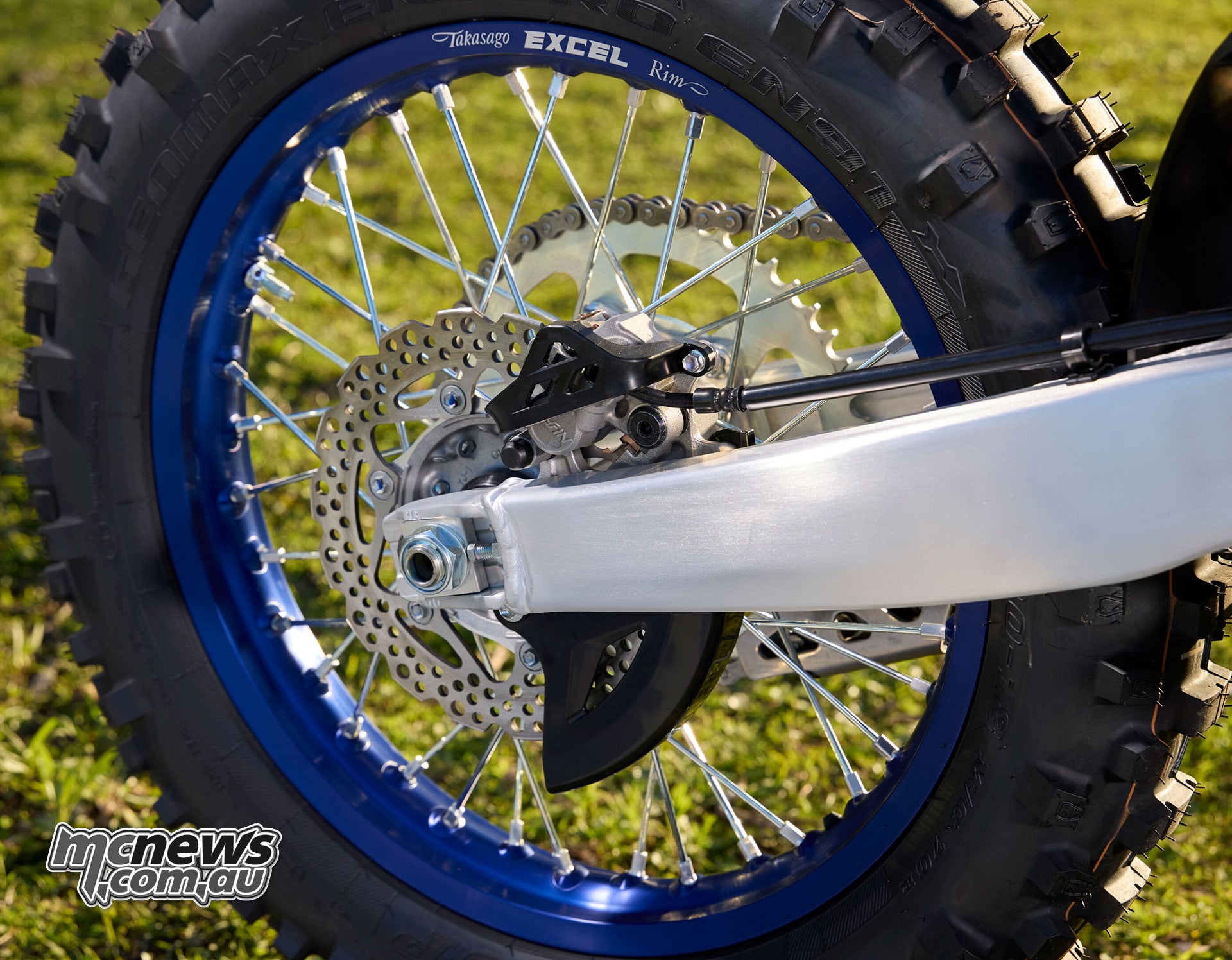
The Nissin front brake felt much the same as before, which is fine by me. At the back, Yamaha has gone to a 220 mm disc, down from 240 mm, along with a smaller 9.5 mm master cylinder and a 22.7 mm caliper piston. Yamaha puts the weight saving for the rear brake assembly at 180 g.
It felt just as strong as before, and I could feel when the rear was about to lock. That made it easier to pick my way through tight sections on loose ground.
Seat, tyres and a couple of things I’d change
The new seat cover lets you slide forward easily and gives you more grip in the other direction when you get on the gas. The standard Dunlop Geomax EN91s are decent tyres. If you’re getting serious about enduro, you might want something with a bit more bite for the terrain you ride.
I’d ask Yamaha for softer grips and for the braided front brake line to come fitted as standard. In my experience, Yamaha brakes tend to lose that firm, new-bike feel after about 20 hours. I’d like to see if the braided line helps keep it. Yamaha already includes one in the closed-course competition kit supplied with every Australian bike.
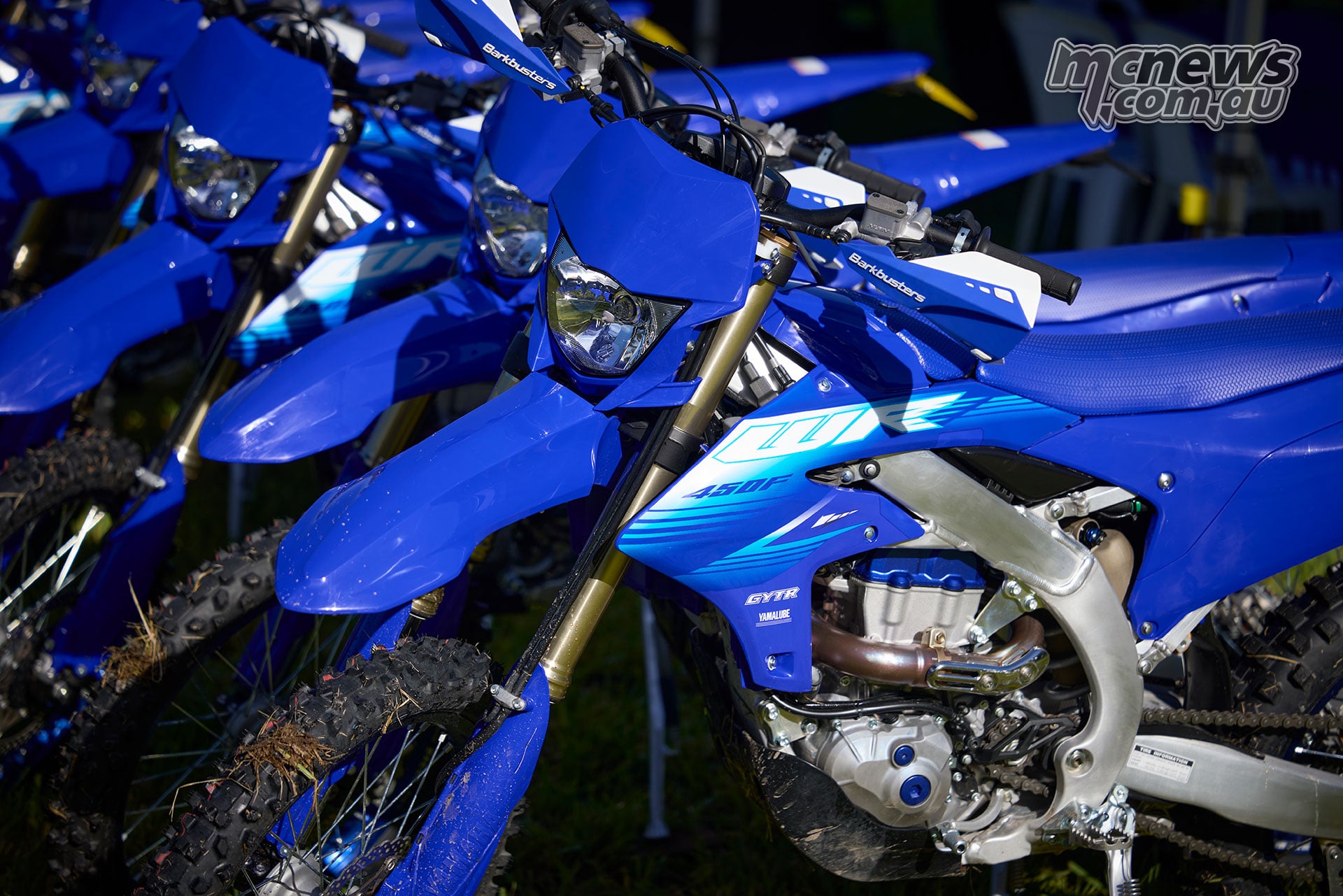
The Australian WR comes in ADR-compliant trim with a horn, mirrors and reflectors. You can fit the competition kit for closed-course use. There’s also Yamaha’s Power Tuner app for adjusting the mapping, and plenty of GYTR gear if you want to go to town customising it. There’s more on the Australian kit in our first look at the 2027 Yamaha WR450F.
The verdict
The new WR450F takes less effort to ride quickly through the tight stuff, and I still got that grin when I found enough room to open it up.
It’s closely based on the YZ450F, but it’s a long way from being a YZ with a headlight. The heavier flywheel, wide-ratio gearbox, WR mapping and suspension give it a character of its own. It’s still a formidable off-road weapon. Now I can use more of what it’s got.
2027 Yamaha WR450F Specifications
| Specifications | |
| Engine | 450 cc liquid-cooled DOHC four-stroke single, four valves |
| Bore x stroke | 97.0 x 60.8 mm |
| Compression ratio | 13.0:1 |
| Fuel delivery | Fuel injection |
| Transmission | Constant-mesh five-speed |
| Clutch | Wet multi-plate, hydraulic actuation |
| Final drive | Chain, 51-tooth rear sprocket |
| Front suspension | 48 mm KYB spring-type Speed Sensitive System fork, fully adjustable, 300 mm travel |
| Rear suspension | KYB single shock, fully adjustable, 306 mm travel |
| Front brake | 270 mm hydraulic disc |
| Rear brake | 220 mm hydraulic disc |
| Front tyre | 90/90-21 Dunlop Geomax EN91 FIM Enduro DOT |
| Rear tyre | 140/80-18 Dunlop Geomax EN91 FIM Enduro DOT |
| Length | 2170 mm |
| Width | 825 mm |
| Height | 1265 mm |
| Seat height | 955 mm |
| Wheelbase | 1470 mm |
| Rake | 27 degrees |
| Trail | 121 mm |
| Ground clearance | 330 mm |
| Fuel capacity | 7.4 litres |
| Wet weight | 116 kg with full fuel and fluids in off-road competition specification |
| Warranty | Three months, parts only |
| Colour | Team Yamaha Blue |
| Australian compliance | Full ADR compliance; closed-course competition kit supplied |
| Australian price | $19,049 Ride Away |
| Australian availability | Now |