

2027 Yamaha YZ250F Review
Yamaha’s 250F takes a major step
When MCNews was invited to attend the Australian media launch of the 2027 Yamaha YZ250F, and Trev decided to send me on his behalf, I felt like I had won something.
It sure felt like a prize. This was the first media launch of this particular bike anywhere in the world, and I was going to be among the first people outside Yamaha to ride it. That is a prize in my world.
We covered the full list of technical changes when the 2027 YZ250F was first revealed. This time, the important question was how all that engineering translated on track.

More than bold new graphics
The new YZ250F looks similar to its predecessor, but do not be deceived. This is a whole lot more than another round of “bold new graphics”.
The 2027 model receives its first completely redesigned engine in eight years, along with the latest YZ450F frame architecture, a hydraulic clutch, revised KYB suspension, a lighter rear brake package and updated bodywork and electronics.
The engine is the headline act. Compression rises from 13.8:1 to 14.1:1, while the intake and exhaust cut-outs in the piston crown have been revised to improve flow. Yamaha has also used a thinner top compression ring and a larger-diameter gudgeon pin.

The crankshaft now uses revised plain journal bearings, while the big-end pin diameter has grown from 30 to 32 mm. Yamaha has also added mass to the rotor, increasing the engine’s rotational inertia.
That does not create torque on its own, but it can help the engine maintain its delivery and drive. Whatever the individual contribution of each change, the stronger torque was immediately noticeable when I rode it.
While the rotor is heavier, the stator itself has been lightened. The electrical system also gains a new high-output Mitsubishi starter motor and a revised reduction ratio to reduce cranking loads and make starting easier.
Inside the cylinder head and valvetrain, two teeth have been added to the camshaft sprockets, one to the crankshaft sprocket, and four links have been added to the timing chain. The tensioner has been relocated to the cylinder head to suppress chain whip.

The intake side also adopts Yamaha’s first finger-follower arrangement on a YZ, using rocker-arm thinking derived from the YZF-R1. Dual intake-valve springs help control the valvetrain at high rpm, while the revised system reduces moving mass and allows more valve lift.
Together with the broader engine revisions, that lifts the rev limit by 700 rpm over the previous model.
A 250 that pulls like a bigger bike
Queensland Moto Park has tight turns that feed into long uphill pulls, and it proved an ideal testing ground. The new engine had no issue lifting the front wheel and carrying it all the way up the hills, even as I pressed my weight forward.
The extra 700 rpm meant the engine revved long, and for the first time on a 250 cc four-stroke I never once touched the limiter all day. There was simply no need. The power was strong from the bottom, carried cleanly through the mid-range and kept building at the top.

That broader spread also meant I could hold a gear longer rather than rushing every upshift. It did not feel like a peaky engine that needed to be bullied into its sweet spot; it just kept driving.
That is a particularly impressive trait in a 250, and it says plenty coming from a bloke who races 450s.

Even with the increase in performance, the revised airbox and exhaust allow the YZ250F to comply with current FIM and AMA noise requirements. The engine also moves to a dry-sump lubrication system, while fuel is delivered through a 44 mm Mikuni throttle body.
The compact five-speed tri-shaft gearbox has also been strengthened for 2027. The gears are wider, the number of engagement dogs has increased, and the shaft spacing has been revised to improve durability under the higher loads produced by the new engine.
The hydraulic clutch is a standout
The new hydraulic clutch uses a single conical disc spring in place of the previous coil-spring arrangement, while the primary gear and clutch basket are integrated into one steel unit.

The result is a more compact and durable assembly, with stronger clamping force, reduced drag and a more consistent engagement point, without the need to chase cable adjustment during a moto.
The clutch was one of the things that impressed me most. Yamaha has stuck with cable clutches for a long time, but for me the new hydraulic unit was worlds better.
If I had to describe it in three words, they would be light, smooth and positive. In fact, it was so good on track that I never really gave it a thought while riding. It was not until I got back to the pits that I stopped and considered just how well it had worked.
On the back section of the track, heading into a set of rollers, I would touch the clutch just enough to spike the revs and lift the front wheel into them.
Engagement was positive, smooth and seamless. The engine did not flare wildly or kick the bike sideways; it simply hooked up and drove forward. Perfect.
That is how you know a manufacturer has nailed something: the bike does exactly what it is designed to do so effortlessly that you almost forget the component is there.

The chassis was the other major win
The 2027 YZ250F uses the latest compact aluminium bilateral-beam frame architecture introduced on the 2026 YZ450F. Yamaha has then tuned the front and rear engine brackets for the smaller engine, aiming for the right balance of flex, stability, and front-end feel for a 250.
I think the 2027 YZ250F is the best-cornering YZ-F Yamaha has produced yet.
On previous models, I struggled to get the front tyre to bite and make the bike turn tightly on corner entry. The 2027 model has come a long way towards remedying that.
I could get it to turn very tight and lean down into a corner, even on off-camber bastards. The front-end feel I had on this bike is what I have been looking for from Yamaha for a long time.
It gave me more confidence to commit to a line, rather than waiting to see whether the front would push wide.
KYB suspension remains at both ends. Up front are fully adjustable, twin-chamber Speed Sensitive System forks with 310 mm of travel.
The fully adjustable rear shock offers 295 mm of travel and gains a tool-free low-speed compression adjuster, with settings revised to work with the new chassis and reduce bump reaction and pitching.
For the first time at a press launch, I threw a leg over the bike without changing anything in the suspension.

There were a couple of reasons for that. At 70 kg, I am right in the weight range most 250 motocross bikes are sprung to suit. I have also learned not to become too fixated on achieving a prescribed sag figure immediately, but to first assess how balanced the bike feels on the track.
If a bike is oversteering, I will generally add some sag. If it is understeering, I will reduce the sag. This time, though, I left everything alone and rode the YZ250F exactly as it would come off the showroom floor.
On the freshly prepared track at the beginning of the day, the suspension felt compliant and well balanced. As the ruts became deeper and I started attacking the corners more aggressively, however, I could feel the bike wanting to move wide under power on corner exit. It took a conscious effort to prevent that from happening.

After discussing it with Stephen Gall, we felt the issue was more likely related to the standard valving than something that could have been completely adjusted out with sag or clicker changes at the track.
As the surface continued to dry and harsher bumps developed, that became more noticeable. I began to feel some harshness through my hands, while the rear became less compliant over the rougher sections.
I still believe the standard spring rates were correct for my weight. To me, it felt more like a damping and oil-control issue than a spring-rate problem.
That needs to be kept in perspective. Most people spending this sort of money on a new YZ250F will be racing it, and serious racers generally have their suspension set up around their weight, speed and preferred tracks anyway.
The larger takeaway is that the new chassis works extremely well on the YZ250F platform. Yamaha has traditionally produced a very stable bike at higher speeds, but low-speed cornering has not always been its greatest strength.
The 2027 model is substantially better in tight corners than its predecessors while retaining that familiar high-speed stability. With the suspension tailored to the individual rider, I suspect it could be improved further.

Smaller rear brake, no obvious sacrifice
The front brake delivers the solid feel and strong stopping power expected of a bike at this level.
The larger changes are at the rear, where Yamaha has reduced the caliper piston from 25.4 to 22.7 mm, the master-cylinder piston from 11 to 9.5 mm and the disc diameter from 240 to 220 mm.
Changes to the hose material and rotor bolts contribute to a claimed 180-gram reduction in the rear brake system’s weight.
I expected to notice a different rear-brake feel because of the changes Yamaha had made, but in real-world use I could not detect any meaningful difference from the previous system.
That suggests the revised hydraulic ratio and smaller rotor have been carefully matched to preserve a familiar response, with the redesign primarily delivering its benefit through reduced weight rather than a dramatic change in performance.

I have a bad habit of carrying the rear brake a fraction too far into corners, so an overly sensitive, wooden or weak rear brake tends to make itself known to me fairly quickly.
I had no such issue with the YZ250F. The rear brake remained predictable and easy to control throughout the day.
A bonus ride on Yamaha’s race bikes
Yamaha also gave us media folk the chance to sample several of its race-team-prepared bikes.
A question I am often asked is: “How do the race bikes compare with the stock bikes?”
That is difficult to answer. How do I compare suspension that money cannot buy with stock suspension that everyone can buy? How do I compare a cockpit tailored to one professional rider with a standard production layout? How do I compare an angry race engine with a stock one?
I am not sure, but I will try.
The first thing to understand is that unless you have the skill to ride a race bike near its potential, owning one would offer very little benefit.
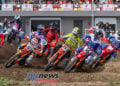
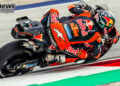
Among the bikes I rode were Aaron Tanti’s YZ450F, Lachlan “La La” Turner’s YZ250F and Hayden Draper’s YZ250F. I could only get the barest glimpse of what they would do when pushed properly. I am simply not fast enough to get the best out of machinery like this.
The engines did not merely rev hard; they gained revs incredibly quickly and delivered what felt like an endless flood of horsepower. Yes, even the 250s.
The brakes were much more aggressive than the production units, which makes sense. You have to be able to stop those hard-charging animals.

The suspension was considerably firmer than the stock package, but even at my pace it still worked to a degree.
The race bikes used different combinations of geometry, swingarms, linkages and shock dimensions, and those changes helped the suspension remain composed across a surprisingly wide landing window.
I could come up short and avoid the ugly slap you might expect from a stiff race bike, or jump long without feeling as though I was about to punch through the stroke.
The race packages showed what becomes possible when every component is tailored around a professional rider and race pace. Even so, the connection to the production platform remained obvious.
They were purebred race machines, but they still felt recognisably like Yamahas. That speaks volumes about the foundation Yamaha has built into the 2027 YZ250F.
Bodywork and Power Tuner updates
The 2027 YZ250F also receives bodywork similar to the latest YZ450F, including two-tone, two-piece side number boards, a more compact front number plate and a sharper, more rigid rear guard.
The honeycomb-pattern seat surface is directional: it allows the rider to move forward relatively easily while helping prevent the body from sliding rearward under acceleration. The overall layout remains slim, giving the rider room to move around the bike.

Yamaha’s Power Tuner app retains its detailed fuel and ignition mapping functions, but the simpler Quick Setting slide bar makes broader changes easier.
Traction-control and launch-control adjustment, engine and suspension setup guides, a lap timer and data functions are also included.
For 2027, the app also gains an ECU lock. Once activated, the engine cannot be started without the password, adding a useful layer of theft deterrence to a competition bike that lacks a conventional ignition key.
A couple of things I would still change
If there is one immediate comfort improvement I would like Yamaha to make, it would be fitting softer handgrips. The standard grips are simply too hard for my liking, and they did the harshness coming through my hands no favours once the track became rougher.
I would also like to see Yamaha continue developing the front-brake package. The brake on this new bike delivered a strong, solid response throughout the launch, so there were no issues with its performance on the day.
However, I have owned and raced plenty of Yamahas, and my experience with previous models is that the initially solid lever feel can diminish after about 15 to 20 hours of use.
A one-day launch cannot tell us whether the 2027 model will behave the same way over time, but a braided brake line as standard and perhaps a revised front master cylinder would be welcome additions.

2027 Yamaha YZ250F verdict
My real prize was the grin I had at the end of the launch.
The 2027 YZ250F has taken a genuine step forward, most notably in the engine’s strength and reach, clutch action, and willingness to carve a tight line.
The engine is an impressively strong powerplant, but it is the way that performance works with the improved front-end feel that makes the whole bike stand out. It pulls hard, revs long and lets you put it where you want it.
For me, this is the best-cornering YZ-F Yamaha has yet built and one of the most complete 250 four-stroke packages I have ridden.
That is a pretty good prize for a day at the track.

2027 Yamaha YZ250F Specifications
| Specifications | |
| Engine | Liquid-cooled, four-stroke, DOHC, four-valve single |
| Displacement | 250 cc |
| Bore x Stroke | 77.0 x 53.6 mm |
| Compression Ratio | 14.1:1 |
| Fuel System | Fuel injection, 44 mm Mikuni throttle body |
| Lubrication | Dry sump |
| Ignition | TCI |
| Starter | Electric |
| Transmission | Constant mesh five-speed |
| Final Drive | Chain |
| Frame | Aluminium bilateral beam |
| Front Suspension | Telescopic fork, 310 mm travel |
| Rear Suspension | Link-type swingarm, 295 mm travel |
| Front Brake | Hydraulic single disc, 270 mm |
| Rear Brake | Hydraulic single disc, 220 mm |
| Front Tyre | 80/100-21 51M tube type |
| Rear Tyre | 110/90-19 62M tube type |
| Length | 2185 mm |
| Width | 825 mm |
| Height | 1275 mm |
| Seat Height | 970 mm |
| Wheelbase | 1480 mm |
| Ground Clearance | 345 mm |
| Fuel Capacity | 6.2 litres |
| Wet Weight | 107 kg |
| Price / Availability | Team Yamaha Blue – $15,049 ride away, from August 2026 |
| Monster Energy Edition | $15,149 ride away, from September 2026 |