


Brembo takes majority stake in new Indian motorcycle ABS operation
Brembo has taken another step in its push to become a broader motorcycle systems supplier, signing a joint venture with Ningbo SAFE Brakes Systems to produce motorcycle ABS units for the Indian market.
The new company, BRSF Active Safety Solutions, will focus on local assembly and supply of anti-lock braking systems for motorcycles in India, with Brembo taking a 60 per cent majority stake in the venture.
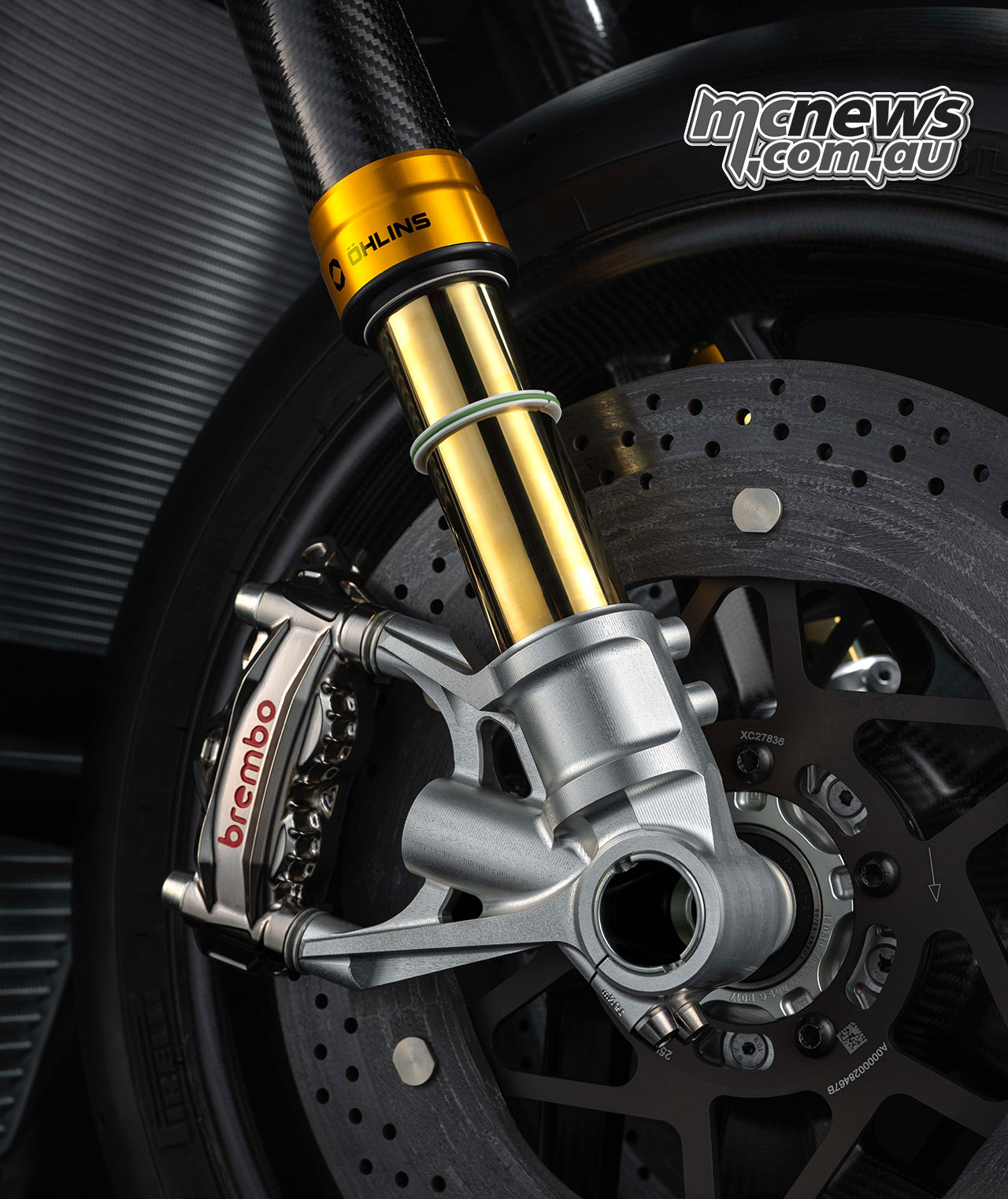
The agreement is the latest in a series of motorcycle-focussed moves from Brembo. The Italian braking giant has expanded well beyond calipers and discs in recent years, adding Danish brake pad specialist SBS Friction and Spanish motorcycle braking systems manufacturer J.Juan to its portfolio before completing its acquisition of Swedish suspension specialist Öhlins at the start of 2025. Brembo has also been investing in additional Asian production capacity, including a dedicated motorcycle braking systems plant in Thailand.
That broader strategy is now being applied to India, the world’s largest two-wheeler market, where Brembo sees a long-term opportunity tied to rising safety standards and greater ABS fitment across both commuter and higher-capacity motorcycles.

Indian ABS production
BRSF Active Safety Solutions will operate from a dedicated manufacturing facility at Chakan, near Pune, one of India’s major automotive and motorcycle manufacturing hubs. The site will sit alongside Brembo India’s existing plant.
The facility will use automated assembly lines, with Brembo stating that the project has been designed around quality, efficiency and progressive localisation of the supply chain. Around 50 people are expected to be employed initially, with staffing and production to ramp up in line with demand.
The joint venture remains subject to customary regulatory approvals.
Single and dual-channel ABS
The new operation will supply both single-channel and dual-channel ABS solutions for Indian motorcycle manufacturers. Single-channel ABS remains common on lower-cost motorcycles, while dual-channel ABS is increasingly expected on larger and more premium machines.
Brembo says more advanced technologies could also be introduced through the joint venture in future, depending on market requirements and changes to Indian safety standards.
The move also strengthens Brembo’s BYBRE business. BYBRE, short for “By Brembo”, is the group’s brand aimed at small- and medium-displacement motorcycles, and is already well established in India. Brembo India produces brake discs, fixed and floating calipers, front and rear master cylinders and ABS braking systems, with plants in Pune and Chennai.
Brembo and Ningbo SAFE Brakes
Ningbo SAFE Brakes Systems brings specialist ABS knowledge to the partnership. Established in 2014, the Chinese company develops and manufactures anti-lock braking systems for two-wheelers and has been a major player in China’s motorcycle ABS sector.
Brembo said the partnership would help it support the “progressive evolution of motorcycle safety standards in India”.
“The joint venture with Ningbo SAFE Brakes Systems reflects our commitment to supporting the progressive evolution of motorcycle safety standards in India,” said Andrea Paganessi, Motorcycle GBU Chief Operating Officer of Brembo. Leveraging our long-standing experience in the Indian market and by investing in local production and industrial capabilities, we aim to accompany the market’s transition toward more advanced braking solutions.”

Hill Shan, Founder of Ningbo SAFE Brakes Systems, said the joint venture would create a localised manufacturing base tailored to Indian requirements.
“Within this joint venture, our role is to translate this shared vision into an efficient and localized industrial operation,” Shan said. “Together with Brembo, we are establishing a manufacturing platform focused on quality, reliability and the specific requirements of the Indian motorcycle market.”
Part of a larger Brembo play
For Brembo, the Indian ABS venture is another step in a clear motorcycle-sector consolidation strategy.
SBS Friction added brake pad expertise, J.Juan broadened Brembo’s motorcycle braking systems capability, and Öhlins moved the group further into suspension and chassis-control territory. When added to existing brands such as Marchesini and AP Racing, Brembo’s portfolio now stretches well beyond the traditional image of red calipers on premium motorcycles.
India’s sheer scale makes that especially important. Brembo describes the country as the world’s largest two-wheeler market, with up to 25 million motorcycles and scooters, and says the market continues to show strong prospects for technological development and increased attention to safety. For motorcycle manufacturers in India, the appeal is likely to be a localised supplier.
For Brembo, it gives the group a stronger foothold in one of the world’s most important motorcycle markets at a time when safety regulations and consumer expectations are both moving in the same direction.